Short Essay on \’Siegfried Sassoon\’ (117 Words)

\’Siegfried Sassoon\’ was born on 8th September, 1886 in England. His full name was Siegfried Loraine Sassoon. His father Alfred Ezra Sassoon was a member of the wealthy Baghdadi Jewish Sassoon merchant family. Siegfried Sassoon was an eminent English poet and writer.

Siegfried Sassoon served during the first world war as a captain. At first he was very excited and felt honoured to be in the war and fighting for his country; but then, when he saw the horrors of the war at first hand, he began to speak out against it. He wrote some moving poetry about the hardships and tragedy felt in war. Siegfried Sassoon died on 1st September 1967 at the age of 80. 
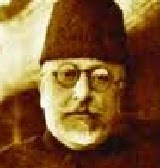
Short Biography of \’Maulana Abul Kalam Azad\’ (148 Words)

\’Maulana Abul Kalam Azad\’ was born on 11th November, 1888. His real name was Abul Kalam Ghulam Muhiyuddin. His father\’s name was Maulana Khairuddin, who lived in Bengal. His mother\’s name was Alia, who was an Arabian. He was married to Juleikha at the age of thirteen.

Maulana Azad was a journalist, author, poet and philospher. He started to publish the newspaper \’Al-Hilal\’ in the year 1912. Al-Hilal played an important role in forging Hindu-Muslim unity. He wrote many works, reinterpreting the holy Quran. He played an active role in the freedom movement of India. He became the first Education Minister of independent India.

Maulana Azad died on 22nd February, 1958. For his invaluable contribution to the nation, Maulana Abul Kalam Azad was posthumously awarded India\’s highest civilian honour, Bharat Ratna in 1992. His birth anniversary 11th November is declared as National Education Day by the Government of India. 

Short Biography of \’Maulana Abul Kalam Azad\’ (148 Words)

\’Maulana Abul Kalam Azad\’ was born on 11th November, 1888. His real name was Abul Kalam Ghulam Muhiyuddin. His father\’s name was Maulana Khairuddin, who lived in Bengal. His mother\’s name was Alia, who was an Arabian. He was married to Juleikha at the age of thirteen.

Maulana Azad was a journalist, author, poet and philospher. He started to publish the newspaper \’Al-Hilal\’ in the year 1912. Al-Hilal played an important role in forging Hindu-Muslim unity. He wrote many works, reinterpreting the holy Quran. He played an active role in the freedom movement of India. He became the first Education Minister of independent India.

Maulana Azad died on 22nd February, 1958. For his invaluable contribution to the nation, Maulana Abul Kalam Azad was posthumously awarded India\’s highest civilian honour, Bharat Ratna in 1992. His birth anniversary 11th November is declared as National Education Day by the Government of India. 

Short Biography of \’Maulana Abul Kalam Azad\’ (148 Words)

\’Maulana Abul Kalam Azad\’ was born on 11th November, 1888. His real name was Abul Kalam Ghulam Muhiyuddin. His father\’s name was Maulana Khairuddin, who lived in Bengal. His mother\’s name was Alia, who was an Arabian. He was married to Juleikha at the age of thirteen.

Maulana Azad was a journalist, author, poet and philospher. He started to publish the newspaper \’Al-Hilal\’ in the year 1912. Al-Hilal played an important role in forging Hindu-Muslim unity. He wrote many works, reinterpreting the holy Quran. He played an active role in the freedom movement of India. He became the first Education Minister of independent India.

Maulana Azad died on 22nd February, 1958. For his invaluable contribution to the nation, Maulana Abul Kalam Azad was posthumously awarded India\’s highest civilian honour, Bharat Ratna in 1992. His birth anniversary 11th November is declared as National Education Day by the Government of India. 

Short Article on \’Judiciary vs. Media\’ (250 Words)

The reach of the media, in the present times of 24-hour channels, is to almost every nook and corner of the world. Further, large number of people believe as correct that which appears in media, print or electronic. It is also necessary to always bear in mind that the judiciary is the last resort of redressal for resolution of disputes between State and the subject, and high and low.

The confidence of the people in the institution of judiciary is necessary to be preserved at any cost. That is its main asset. Loss of confidence in institution of judiciary would be end of rule of law. Therefore, any act which has such tendency deserves to be firmly curbed. For rule of law and orderly society, a free responsible press and independent judiciary are both indispensable. Both have to be, therefore, protected.

The judgments of courts are public documents and can be commented upon, analysed and criticized, but it has to be in dignified manner without attributing motives. Before placing before public, whether on print or electronic media, all concerned have to see whether any such criticism has crossed the limits as aforesaid and if it has, then resist every temptation to make it public.

In every case, it would be no answer to plead that publication, publisher, editor or other concerned did not know or it was done in haste. Some mechanism may have to be devised to check the publication which has the tendency to undermine the institution of judiciary.  

Short Article on \’Judiciary vs. Media\’ (250 Words)

The reach of the media, in the present times of 24-hour channels, is to almost every nook and corner of the world. Further, large number of people believe as correct that which appears in media, print or electronic. It is also necessary to always bear in mind that the judiciary is the last resort of redressal for resolution of disputes between State and the subject, and high and low.

The confidence of the people in the institution of judiciary is necessary to be preserved at any cost. That is its main asset. Loss of confidence in institution of judiciary would be end of rule of law. Therefore, any act which has such tendency deserves to be firmly curbed. For rule of law and orderly society, a free responsible press and independent judiciary are both indispensable. Both have to be, therefore, protected.

The judgments of courts are public documents and can be commented upon, analysed and criticized, but it has to be in dignified manner without attributing motives. Before placing before public, whether on print or electronic media, all concerned have to see whether any such criticism has crossed the limits as aforesaid and if it has, then resist every temptation to make it public.

In every case, it would be no answer to plead that publication, publisher, editor or other concerned did not know or it was done in haste. Some mechanism may have to be devised to check the publication which has the tendency to undermine the institution of judiciary.  

Short Article on \’Judiciary vs. Media\’ (250 Words)

The reach of the media, in the present times of 24-hour channels, is to almost every nook and corner of the world. Further, large number of people believe as correct that which appears in media, print or electronic. It is also necessary to always bear in mind that the judiciary is the last resort of redressal for resolution of disputes between State and the subject, and high and low.

The confidence of the people in the institution of judiciary is necessary to be preserved at any cost. That is its main asset. Loss of confidence in institution of judiciary would be end of rule of law. Therefore, any act which has such tendency deserves to be firmly curbed. For rule of law and orderly society, a free responsible press and independent judiciary are both indispensable. Both have to be, therefore, protected.

The judgments of courts are public documents and can be commented upon, analysed and criticized, but it has to be in dignified manner without attributing motives. Before placing before public, whether on print or electronic media, all concerned have to see whether any such criticism has crossed the limits as aforesaid and if it has, then resist every temptation to make it public.

In every case, it would be no answer to plead that publication, publisher, editor or other concerned did not know or it was done in haste. Some mechanism may have to be devised to check the publication which has the tendency to undermine the institution of judiciary.  

Short Paragraph on \’Thermos Flask\’ (175 Words)

The \’Thermos Flask\’ is a flask in which loss or gain of heat through conduction, convection and radiation has been reduced to a minimum. It is used for keeping a hot liquid hot and a cold liquid cold for a good length of time. The thermos flask consists of a double-walled glass flask placed on a spring within a metal casing, its mouth being closed by a cork stopper. The space between the walls is evacuated. The outer side of the inner wall and the inner side of the outer wall are silvered. The space between the vessel and the metal case is packed with felt or cork. The vaccum between the two walls of the glass bottle and the felt pad between the bottle and the metal case prevents the flow of heat due to conduction and convection. The silvered surface facing each other reduce radiation and absorption of heat to a minimum. Hence, heat can neither pass from the bottle to outside nor from outside into the bottle. Thus, a hot liquid placed in the bottle will remain hot and cold liquid cold for a sufficiently long time. 
 

Short Paragraph on \’Thermos Flask\’ (175 Words)

The \’Thermos Flask\’ is a flask in which loss or gain of heat through conduction, convection and radiation has been reduced to a minimum. It is used for keeping a hot liquid hot and a cold liquid cold for a good length of time. The thermos flask consists of a double-walled glass flask placed on a spring within a metal casing, its mouth being closed by a cork stopper. The space between the walls is evacuated. The outer side of the inner wall and the inner side of the outer wall are silvered. The space between the vessel and the metal case is packed with felt or cork. The vaccum between the two walls of the glass bottle and the felt pad between the bottle and the metal case prevents the flow of heat due to conduction and convection. The silvered surface facing each other reduce radiation and absorption of heat to a minimum. Hence, heat can neither pass from the bottle to outside nor from outside into the bottle. Thus, a hot liquid placed in the bottle will remain hot and cold liquid cold for a sufficiently long time. 
 

Short Paragraph on \’Thermos Flask\’ (175 Words)

The \’Thermos Flask\’ is a flask in which loss or gain of heat through conduction, convection and radiation has been reduced to a minimum. It is used for keeping a hot liquid hot and a cold liquid cold for a good length of time. The thermos flask consists of a double-walled glass flask placed on a spring within a metal casing, its mouth being closed by a cork stopper. The space between the walls is evacuated. The outer side of the inner wall and the inner side of the outer wall are silvered. The space between the vessel and the metal case is packed with felt or cork. The vaccum between the two walls of the glass bottle and the felt pad between the bottle and the metal case prevents the flow of heat due to conduction and convection. The silvered surface facing each other reduce radiation and absorption of heat to a minimum. Hence, heat can neither pass from the bottle to outside nor from outside into the bottle. Thus, a hot liquid placed in the bottle will remain hot and cold liquid cold for a sufficiently long time. 
 

Short Paragraph on \’Diabetes\’ (125 Words)

The \’Diabetes\’ is the disease of metabolism. It is caused due to the deficiency of harmone insulin and results from the imbalance of the endocrine glands. There occurs accumulation of sugar in the blood beyond the level that the kidneys can retain and this leads to passing of sugar in urine along with the minerals and water soluble vitamins. There is starvation of body tissue which results in rapid utilization of proteins and fats of the body, and consequent loss of weight. Diabetes may be controlled by-

(a) Adjustment of diet in order to relieve stress on the pancreas.
(b) Supply of sufficient quantity of insulin, if necessary, to reduce the level of blood sugar to normal level and to rendor urine free of sugar.
(c) Administration of antidiabetic drugs to stimulate the pancreas to produce more insulin. 
 

Short Paragraph on \’Diabetes\’ (125 Words)

The \’Diabetes\’ is the disease of metabolism. It is caused due to the deficiency of harmone insulin and results from the imbalance of the endocrine glands. There occurs accumulation of sugar in the blood beyond the level that the kidneys can retain and this leads to passing of sugar in urine along with the minerals and water soluble vitamins. There is starvation of body tissue which results in rapid utilization of proteins and fats of the body, and consequent loss of weight. Diabetes may be controlled by-

(a) Adjustment of diet in order to relieve stress on the pancreas.
(b) Supply of sufficient quantity of insulin, if necessary, to reduce the level of blood sugar to normal level and to rendor urine free of sugar.
(c) Administration of antidiabetic drugs to stimulate the pancreas to produce more insulin. 
 

Short Paragraph on \’Diabetes\’ (125 Words)

The \’Diabetes\’ is the disease of metabolism. It is caused due to the deficiency of harmone insulin and results from the imbalance of the endocrine glands. There occurs accumulation of sugar in the blood beyond the level that the kidneys can retain and this leads to passing of sugar in urine along with the minerals and water soluble vitamins. There is starvation of body tissue which results in rapid utilization of proteins and fats of the body, and consequent loss of weight. Diabetes may be controlled by-

(a) Adjustment of diet in order to relieve stress on the pancreas.
(b) Supply of sufficient quantity of insulin, if necessary, to reduce the level of blood sugar to normal level and to rendor urine free of sugar.
(c) Administration of antidiabetic drugs to stimulate the pancreas to produce more insulin. 
 

Short Paragraph on \’Insecticide\’ (85 Words)

Insects attack plants in all stages of growth. They damage stored products. They also cause heavy losses to wooden structure. Insects are also responsible for the spread of serious diseases. A chemical substance used to kill insects is called an \’insecticide\’. There are various types of insecticides:

(a) Inorganic Insecticides- These include Paris Green, Calcium Arsenate, Lead Arsenate, Sodium Fluoride, Calcium Cyanide and a number of others.
(b) Insecticides of a Plant Origin- These include Pyrethrum, Rotenone and Nicotine.
(c) Synthetic Organic Insecticides- The most common is DDT. 
 

\’National Hindi Day: 14 September\’ (100 Words)

\’National Hindi Day\’ or \’Hindi Diwas\’ is observed on 14th September every year. On 14th September 1949 Hindi was adopted as the official language of India. Since then, every year, 14th September is celebrated as Hindi Day in all Central Government Offices situated in India and abroad.

Hindi, the official language of India brings harmony and understanding between all the Indians. As per the article 343, the Indian Constitution adopted Hindi in Devanagri Script as the official language of the union under in 1950.

On this day many programs to promote Hindi are been organized across the country.