EduPub (Edupedia Publications Pvt Ltd) is a company dedicated to the development of the education, learning, research and innovation in the field of the research and books publication. We are pioneer in providing wide range of services to educational institutions, government agencies, individuals and corporates in the field of training and education, research and development, research and innovation. research and publication.
Radio broadcasting began in India in 1922. The Government owned radio station All India Radio dominated broadcasting since 1936.
Broadcasting in India actually began about 13 years before AIR came into existence. In June 1923 the Radio Club of Bombay made the first ever broadcast in the country. This was followed by the setting up of the Calcutta Radio Club five months later. The Indian Broadcasting Company (IBC) came into being on July 23, 1927, only to face liquidation in less than three years.
In April 1930, the Indian Broadcasting Service, under the Department of Industries and Labour, commenced its operations on an experimental basis. Lionel Fielden was appointed the first Controller of Broadcasting in August 1935. In the following month Akashvani Mysore, a private radio station was set up. On June 8, 1936, the Indian State Broadcasting Service became All India Radio.
The Central News Organisation (CNO) came into existence in August, 1937. In the same year, AIR came under the Department of Communications and four years later came under the Department of Information and Broadcasting. When India attained independence, there were six radio stations in India, at Delhi, Bombay, Calcutta, Madras, Tiruchirapalli and Lucknow. The following year, CNO was split up into two divisions, the News Services Division (NSD) and the External Services Division (ESD). In 1956 the name AKASHVANI was adopted for the National Broadcaster. The Vividh Bharati Service was launched in 1957 with popular film music as its main component
The phenomenal growth achieved by All India Radio has made it one of the largest media organisations in the world. With a network of 262 radio stations, AIR today is accessible to almost the entire population of the country and nearly 92% of the total area. A broadcasting giant, AIR today broadcasts in 23 languages and 146 dialects catering to a vast spectrum of socio-economically and culturally diverse populace.
Programmes of the External Services Division are broadcast in 11 Indian and 16 foreign languages reaching out to more than 100 countries. These external broadcasts aim to keep the overseas listeners informed about developments in the country and provide a rich fare of entertainment as well.
The News Services Division, of All India Radio broadcasts 647 bulletins daily for a total duration of nearly 56 hours in about 90 Languages/Dialects in Home, Regional, External and DTH Services. 314 news headlines on hourly basis are also being mounted on FM mode from 41 AIR Stations. 44 Regional News Units originate 469 daily news bulletins in 75 languages. In addition to the daily news bulletins, the News Services Division also mounts number of news-based programmes on topical subjects from Delhi and its Regional News Units
AIR operates at present 18 FM stereo channels, called AIR FM Rainbow, targeting the urban audience in a refreshing style of presentation. Four more FM channels called, AIR FM Gold, broadcast composite news and entertainment programmes from Delhi, Kolkata, Chennai and Mumbai. With the FM wave sweeping the country, AIR is augmenting its Medium Wave transmission with additional FM transmitters at Regional stations.
In April 2020, as per a survey by AZ Research PPL, commissioned by the Association of Radio Operators for India (AORI) Radio listenership in India touched a peak of 51 million.
Does radio have a future?
The consoles, connected watches and TV’s that we use every day will be just another way in which radio stations can broadcast and increase their audience numbers. Since its creation, radio has continually evolved with the times
Why Radio is still popular?
Portable and Inexpensive: Radio is portable among many modes of communication. They can be used in cars, stores, and other places, which helps to reach the targeted audience. According to researchers, broadcast radio reaches 99% of the Indian population today.
The Government decision for transition to the digital mode of transmission, AIR is switching from analog to digital in a phased manner. The technology adopted is the Digital Radio Mondiale or DRM. With the target of complete digitization by 2017, the listeners can look forward to highly enhanced transmission quality in the near future.
The International Financial Services Centres Authority (“Authority” or “IFSCA”), with an overall objective to promote the establishment of a world-class FinTech Hub, at GIFT International Financial Services Centre (IFSC) in India, launched the IFSCA (FinTech Incentive) Scheme for providing financial support to FinTech activities in the form of specific grant(s). The Scheme was notified vide Gazette Notification number IFSCA/2021-22/GN/022 dated 2ndFebruary, 2022.
This scheme shall be open to –
Domestic FinTechs seeking access to overseas markets;
Domestic FinTechs seeking listing on IFSCA recognised stock exchanges;
Foreign FinTechs seeking market access to IFSCs in India and work within the Authority’s regulatory framework;
Foreign FinTechs seeking access to domestic market under Inter-Operable Regulatory Sandbox (IORS) framework;
Domestic FinTechs extending business to the IFSCs either by way of authorisation or registration or through the regulatory sandbox.
The types of incentives for eligible applicants are:
FinTech Start-up grant- This grant shall be utilized for developing a product or a service and related ‘go-to market’ initiatives for a start-up with a novel FinTech idea or solution with a focus on converting the idea into an MVP.
Proof of Concept (PoC) grant- This grant shall be utilized for the purpose of conducting a PoC by an early or mature FinTech Entity (FE) in domestic market or overseas.
Sandbox grant- This grant shall be utilized by FEs to experiment with innovative products or services in a sandbox.
Green FinTech Grant- This grant shall be utilized towards developing solutions facilitating sustainable finance and sustainability linked finance, including ‘Environmental, Social and Governance (ESG)’ investments.
Accelerator Grant- This grant shall be utilized for supporting accelerators at the IFSC for capacity building, build capabilities around mentors, bringing investors, bringing more projects or PoC, tie ups, etc.
Listing Support Grant – The grant shall be utilized for supporting Domestic FE aspiring to go for listing on stock exchanges recognised by the Authority.
The Grants contemplated under this scheme shall be available to eligible FEs:
who are part of the Authority’s Regulatory or Innovative Sandbox;
which are referred to the Authority under a FinTech bridge arrangement with a Counterpart Regulator
which have either participated or are participating in any Accelerator or Cohort or Special Programme supported or recognised by the Authority; or
who are referred to by the entity(ies) including regulatory or supervisory bodies having Memorandum of Understanding (MoU) or collaboration or special arrangement with the Authority.
The detailed Guidelines of the Scheme for implementation as well as the Application Form are hereby being issued.
Please refer to IFSCA Circular (may be accessed at https://ifsca.gov.in/Viewer/Index/292 ) dated April 27, 2022 on “Framework for FinTech Entity in the IFSCs” to obtain authorisation as FinTech Entity (FE).
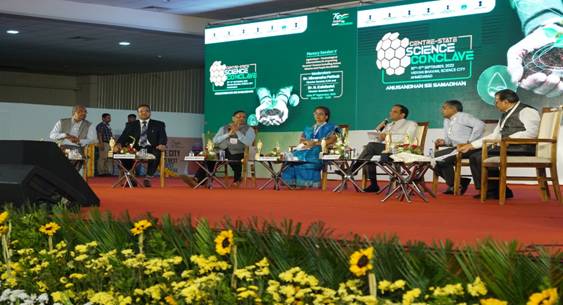
Technological interventions for processing, product development, sustainability, and export orientation that could improve farmers’ income were discussed at the Centre-State Science Conclave in Ahmedabad today.
“India is identified in the global arena for its strength in agriculture, and to continue with this position, we need to focus on S&T interventions in food and water,” said Dr. N Kalaiselvi, Director General, CSIR.
Dr. Himashu Pathak, Director General, ICAR,stressed on theadoption of a holistic approach to ensure production, protection, and sustainability for the agricultural system.
Dr. AK Singh, Deputy Director General, Horticultural & Crops Sciences, ICAR, spoke about the adaptation of technologies like ICAR-FUSICONT technology for medium and high-density plantations to bridge the yield gap, increase productivity, and collaboration to expand the online market places.
“With primary challenges focused on food grain production, the productivity of crops could be increased by using new techniques like genome editing,” Dr. KB Kathiriya, Vice Chancellor, Gujarat Agricultural University, Anand, pointed out.
D Srinivasa Reddy, Director, CSIR – IIIM, elaborated about the development of aroma-based entrepreneurs along with end-to-end technology. “While the purple revolution under CSIR-Aroma mission has empowered the farmers of several states, now floriculture mission has been initiated for crop diversification,” he added.
Shri Saurabh Bhagat, Secretary, Science & Technology, UT of Jammu & Kashmir, insisted on opportunities in horticulture and the establishment of demonstration farms.
“Sustainable agriculture technologies are being used to improve farmers’ economic conditions. Some of these are nano-fertilizers to increase soil fertility and IoT-based technologies to minimize the labour shortages,” said Dr. R Srinivasan, Member Secretary, S&T Council, Government of Tamil Nadu.
Shri N V Ramana, Samunnati Agri Enterprise, Hyderabad, pointed out that markets will have to be created for small farming sectors, technologies will have to be harnessed to enable non-linear scalability, and a digitally wrapped agri-ecosystem will have to be created.
The expert panelists at the agriculture session of the conclave organized by the Department of Science & Technology, Government of India, jointly with the Government of Gujarat at Science City, Ahmedabad, deliberated on challenges and their plausible solutions for improving agricultural income.
The Department of Water Resources, River Development and Ganga Rejuvenation, Ministry of Jal Shakti has launched the ‘Water Heroes: Share Your Stories’ contest. The 3rd edition has been launched on 01.12.2021 and will end on 30.11.2022 on MyGov portal. The 1st edition was launched from 01.09.2019 to 30.08.2020. The 2nd edition was launched from 19.09.2020 to 31.08.2021.
The objective of the contest is to promote value of water, in general, and for supporting country-wide efforts on water conservation and sustainable development of water resources. In accordance with the vision of Hon’ble Prime Minister Narendra Modi, a large population should be motivated to adopt the cause of water conservation in the country. The aim of the contest is to create awareness for water conservation by enhancing knowledge and sharing experiences of water heroes; and to create an attitude towards water conservation and management so that a behavioral change can be created amongst all stakeholders.
For the month of August 2022, there are six winners, they will get a cash prize of Rs. 10,000/- and a certificate, details given as below:
Divyansh Tondon:
He is from Meerut, associated with the campaign named “Paani Panchayat” under which they go to various villages, streets, towns, schools, localities and making public aware. He is vice president (Meerut Cantt.) Saarthi Social welfare society.
Vinay Vishwanath Gawas
He is a Project Director from Goa, campaigning about Rooftop Rainwater Harvesting and borewell recharge in Kelawade village, Keri sattari, Goa. The project is said to be built in collaboration with TERI.
Amit
He is a Gram Pradhan in Malakpura, Jalon, UP and was a Journalist in Delhi. He has done various activities for development such as providing healthy foods in the primary school of the village, working in plantation work, environment protection and Water purification through sedimentation activities.
Babita Rajpoot Ghuwara
She is from Chattarpur, Madhya Pradesh. She is involved in the construction of four check dams and two outlets and made bori bandahan.
Anurag Patel
Anurag Patel, District Magistrate, Banda in a considerable effort to conserve water ran two significant campaigns- ‘Jal Sanchay, Jeevan Sanchay’ and ‘Jal Kumbhi Hatao-Talab Bachao Abhiyan’. He took the initiative to remove water hyacinth from 126 ponds. He also took efforts to rejuvenate the Chandrawal River by digging up extra miles for renovation purpose. 664 ponds in Mirzapur and 101 in Janpad Farrukhabad was revived under his efforts.
Snehlata Sharma
Snehlata Sharma from Shivpuri District Block Badarwas, Piparodha Village has been doing a considerable and praiseworthy job in field of water conservation and management from the past 1 year. For creating awareness around the village about water and its conservation, she brought women in the forefront. She also generated awareness about the crops that uses less water in the field.
The contest is held monthly and may be seen on MyGov portal. To participate in the contest, one needs to post their success stories on water conservation efforts in the form of 1-5 minutes video, along with a write-up of 300 words and attach some photographs/ photos that depict the efforts. Also, the participants can share their videos (with the link to their YouTube video) on the MyGov portal (www.mygov.in). In addition to this, entries can be submitted at waterheroes.cgwb[at]gmail[dot]com .
Web hosting is an online service that makes your website’s content available to internet users. When you purchase a hosting service, you are renting space on a real server to store all of the website’s files and information.
Web servers provide the tools and technology required for your website to operate efficiently and safely. They are in charge of keeping the server operational, implementing security measures, and ensuring that information such as text, images, and other files are correctly transmitted to visitors’ browsers.
You will discover what web hosting is, how it functions, and the various kinds that are offered in this post.
How does web hosting work?
An actual computer called a server houses your website and runs continually so that users can access it at all times. Purchasing web hosting servers will enable you to keep all of your website’s data on the servers of your service provider.
All the files required to load your website will be transferred by the web host’s server once a user types your domain name into their browser’s address bar.
You can host a website on your own, but it takes a lot of technical know-how. Building a web server from the bottom up, including the infrastructure, hardware, and software, is what self-hosting entails. You will also be responsible for all ongoing maintenance.
Your website will operate properly and follow superior security measures thanks to a web hosting service provider. Furthermore, it simplifies some complicated aspects of website hosting, such as technical support and software installation.
Types of web hosting services
There are a lot of different types of web hosting services that offer a wide variety of packages for their customers to choose from. Depending on your requirements there is no one-stop solution to all types of web hosting service requirements. So, carefully choosing the best type of web hosting service to cater to your business needs is necessary for the future growth of your business. Some of these types are:-
1) Shared Hosting:-
Shared hosting allows multiple users to share the same server resources such as memory, processing power, and storage space.
Because of its simplicity and low cost, shared web hosting is an excellent choice for small businesses and personal websites that do not require elaborate settings or extra bandwidth. As a result, shared hosting is an excellent choice for newcomers who seek low-cost hosting to get started.
2) Virtual Private Server (VPS) Hosting:-
This type of web hosting involves your website sharing a physical server with other users, but the web host divides the server into virtual partitions for each user. As a result, each website hosted by a virtual private server receives resources.
VPS web hosting is an ideal solution for major blogs, eCommerce stores, and medium-sized websites that receive a high volume of visits.
3) Cloud Hosting:-
This web hosting system hosts websites on several virtual servers. As a result, if one server experiences heavy traffic or has a problem, the other servers will take over and keep the website operational.
Businesses with multiple websites and large-scale sites such as eCommerce shops may benefit the most from cloud hosting because it relies on a cluster of web servers to function.
4) Word Press Hosting:-
This type of CMS web hosting service provides a server environment tailored for WordPress in order to speed up site loading and prevent potential issues. However, websites produced with this popular content management system can still employ a variety of web hosting services (CMS).
The best WordPress hosting packages often include pre-installed themes, plugins for critical features like security and caching, and more tools.
5) Dedicated Hosting:-
Each dedicated hosting website is assigned its own physical server. Choosing dedicated hosting allows you to customize the server, choose your preferred software and operating system, and tailor the entire hosting environment to your needs.
Having your own on-site server is advantageous, but renting a dedicated server provides experienced support from your web host. As a result, dedicated hosting is ideal for large online firms with heavy traffic.
How to choose the best web hosting services
There are many different Web hosting options available from service providers, all with different features and pricing. When purchasing, be sure to watch out for the following:
Any restrictions on bandwidth and traffic; once you reach a particular volume, some web servers start charging more.
WordPress installations with one click or a built-in website builder that make it simple for you to launch your website rapidly.
Ample storage, especially since the large media files occupy a lot of space.
Your website hosting plan includes email hosting. For email hosting in general or for each individual account, many companies charge extra.
It is a one-stop shop due to the range of domain registration services offered. It is a headache to register your domain with one supplier and host it with another.
Excellent customer service that is accessible when you require it.
Shri Hardeep Singh Puri, Minister for Petroleum and Natural Gas, in a media event held on 9thSeptember 2022, witnessed signing of contracts for 31 Discovered Small Fields (DSF) blocks under DSF bid round-III and 4 CBM blocks under CBM bid round-V awarded to 14 E&P domestic companies.
During the event, Minister also unveiled the logo for India Energy Week (IEW) 2023, the Ministry’s flagship event taking place from 6th-8th February 2023 in Bengaluru, India.
In the Open House following the Contract Exchange event, the Minister highlighted the following:
• India has demonstrated great resilience in the face of global energy crisis;
• Government of India has taken several measures to minimize and mitigate the volatility of global crude oil and gas prices. Fuel price rise in India have been contained in comparison to exponential rise in developed countries. Most of the developed nations have witnessed significant inflation rise in Gasoline price by almost 40% during July 21 to Aug’22, while in India, gasoline price has reduced by 2.12%;
• The gas price of all the major trading hubs has seen massive increase during July 21 to Aug’22. Henry Hub of USA has seen increase of 140%. JKM Marker has seen increase of almost 257% and UK, NBP has increased by 281%. While in India CNG and PNG prices has been increased by only 71%.
• Even on LPG front, In the past 24 months, Saudi CP price (our import benchmark) almost increased by 303%. During the same period, the LPG price in India (Delhi) increased by less than a tenth of that figure i.e 28%
• under the visionary leadership of the Hon’ble Prime Minister, Government has been undertaking various initiatives to attract more E&P investment to increase self-reliance in the energy sector;
• India’s move towards a ‘gas based economy’ by connecting Indian consumers through the City Gas Distribution, enhancing regasification capacities, expanding pipeline networks and setting up CNG stations;
• Achievement of 10% blending of ethanol in petrol in May 2022, ahead of the November 2022 deadline, setting up of 2G refineries to make ethanol, and a host of other initiatives, is a symbol of Government’s resolve towards just energy transitions. The Green Hydrogen Mission, under which the Ministry is facilitating setting-up pilot scale and commercial scale green hydrogen manufacturing plants by refineries is a part of this commitment;
• The significance of the various social welfare schemes like the Prime Minister Ujjwala Yojna and its role in ending energy poverty, ensuring social upliftment and as a catalyst of social change cannot be emphasized enough.
On India Energy Week 2023, Minister stated that it would be a flagship event of the Ministry, and also the first major Energy event once India takes over G20 Presidency. The event will provide an unprecedented opportunity for regional and international leaders and CEOs to come together for strategic policy and technical knowledge sharing for energy justice and energy transitions
Railways, being a cleaner mode of transportation, not only helps automobile industry to quickly transport bulk volumes over long distances, but also gives opportunity to reduce their carbon footprint. Automobile traffic over Indian Railways has witnessed a tremendous growth during the recent past. This growth in automobile traffic has been the result of various initiatives viz. availability of specialized privately owned wagons. On the basis of the issues raised by the stakeholders in the automobile industry, including Society for Indian Automobiles Manufactures (SIAM), the Automobile Freight Train Operator (AFTO) policy has been liberalized from time to time. It allows automobile manufacturers to own their wagons specialized for their needs.
To accommodate SUV cars, new design of auto-carrier wagons is under finalization in RDSO in addition to existing BCACBM wagons.
To facilitate loading /unloading of automobiles, design-modification to the existing NMG wagons is also under execution (NMGH and NMGHS) based on the suggestions received from investors/logistics providers.
Also, for increasing short lead traffic, freight rate has been revised for NMG/BCCNR and BCACM wagons upto -1200 km. More terminals are being opened up for automobile traffic as per demands of the industry.
Presently, Indian Railway has a fleet of 90 NMG rakes. In addition, 43 BCACBM rakes have been inducted by approved Train Operators under AFTO scheme.
Number of rakes loaded
2019-20
1,599
2020-21
2,681
2021-22
3,344
2022-23 (till Aug)
2,206
Comparison with last year:
Number of rakes loaded
2021-22
2022-23
April
270
369
May
123
392
June
284
443
July
317
494
August
320
508
Therefore, volume of transportation of small passenger vehicles(cars) by railways has increased by 68% YoY during the first five months of the current FY.
Modal share in ‘domestic’ transportation of ‘passenger vehicles (cars)’*:
2013-14: 1.50%
2014-15: 2.08%
2015-16: 3.62%
2016-17: 4.13%
2017-18: 4.50%
2018-19: 7.06%
2019-20: 11.17%
2020-21: 14.71%
2021-22: 16.00%
* These are estimates based on transportation of cars only. Domestic traffic of 2-wheelers and commercial vehicles have not been taken into account.
A microphone is a device that translates sound vibrations in the air into electronic signals and scribes them to a recording medium or over a loudspeaker. Microphones enable many types of audio recording devices for purposes including communications of many kinds, as well as music vocals, speech and sound recording.
Types Of Microphone
There are three main types microphones based on construction -:
A microphone in which the sound waves cause a movable wire or coil to vibrate in a magnetic field and thus induce a current.
Key Advantages -:
1. Rugged and able to handle high sound pressure levels, like those delivered by a kick drum. 2. Provide good sound quality in all areas of microphone performance. 3. They do not require a power source to run 4. They are relatively cheap
Key disadvantages -:
Heavy microphone diaphragm and wire coil limits the movement of the assembly, which in turn restricts the frequency and transient response of the microphone Generally not as suitable as condenser microphones for recording instruments with higher frequencies and harmonics, such as a violin.
Dynamic microphones can be used for many applications, produce an excellent sound and are suitably rugged – great for traveling on the road. They are best avoided when recording high-frequency content on an important recording.
For reliable, everyday tasks you will not find a more multifaceted, trustworthy device than a good quality dynamic microphone.
Ribbon -:
A ribbon microphone, also known as a ribbon velocity microphone, is a type of microphone that uses a thin aluminum, duraluminum or nanofilm of electrically conductive ribbon placed between the poles of a magnet to produce a voltage by electromagnetic induction. Ribbon microphones are typically bidirectional, meaning that they pick up sounds equally well from either side of the microphone
Key Adavantages -:
1. Ribbon Microphones are very sensitive and accurate 2. Ribbon microphones have a very low noise 3. Ribbon microphones tend not to pick up lots of background noise 4. Ribbon microphones can be very expensive 5. Ribbon microphones are good to produce a thin and tinny sound
Key disadvantages -:
1. Ribbon microphones can be very large and heavy 2. Ribbon microphones are very sensitive to air movements 3. It is very difficult to achieve a tight polar pattern 4. The ribbon is fragile and susceptible to damage 5. Ribbon microphones are not as popular as dynamic microphones Ribbon microphones require more maintenance
Ribbon microphones are often described as the most natural-sounding microphones available, and for good reason: they condenser microphones that use a thin ribbon of aluminum foil to pick up sound (instead of a solid diaphragm).
Condenser/ Capacitor Microphones -:
A Condenser capsule is constructed similarly. It consists of a thin membrane in close proximity to a solid metal plate. The membrane or diaphragm, as it is often called, must be electrically conductive, at least on its surface. The most common material is gold-sputtered mylar, but some (mostly older) models employ an extremely thin metal foil.
When sound waves hit the diaphragm, it moves back and forth relative to the solid backplate. In other words, the distance between the two capacitor plates changes. As a result, the capacitance changes to the rhythm of the sound waves. Thus, converted sound into an electrical signal.
Key Adavantages -:
1. They have a Greater Dynamic Range than Ribbon or Dynamic Mics. 2. They Have a Better Frequency Response than Dynamic Mics. 3.They Have a Better Noise Floor than Dynamic or Ribbon Mics. 4. When Hit with Loud Transients, They Generally Sound Snappier than Dynamic or Ribbon Mics.
Key Disadvantages -:
1. The limited number of operating microphones at the same time and place. 2. The limited number of radio channels. Sound files can use up a lot of computer memory in a device. 3. Voice recognition system software is not as accurate as typing manually.
Condenser microphones are best used to capture vocals and high frequencies. They are also the preferred type of microphone for most studio applications.
Conclusion -:
Microphones are used everywhere, from stage performances, broadcasting, and even talking on the phone. The microphone is a transducer, a machine that changes one form energy to another form of energy. Microphones are an essential part of any audio recording system.
Television is the most powerful medium of mass communication that has ever existed. It has revolutionized our lives in many ways. Isn’t it a wonder that we can witness the events happening all over the world in the comfort of our drawing-room by merely switching on the Television? Today television has become an integral part of our lives. Television is a recent invention. Very few homes had television sets some fifty years ago. Also, till the 1990s Doordarshan was the only channel available to a vast majority of Indians.
Evolution Of Television-:
Today television has become an integral part of our lives. 1939, television broadcasts began in the United States also. Other countries began television broadcasting on a wide scale only by the 1950s. Second World War slowed down the rapid development of the new medium, but the post-war years made up for it. The limitations of the early camera forced the actors and anchors to work with impossibly hot lights. Imagine trying to read news with full makeup under a blazing light. The early television broadcasts were all black and white. The first successful program in color was transmitted by Columbia Broadcasting System (CBS) in the USA in 1953. From being a “radio with pictures” it acquired a unique style of its own. As a result of this, this phase is often called the “golden age” of television.
Important dates -:
1. 1936 – British Broadcasting Corporation (BBC) of Britain began the first television service in the world.
2. 1939 – Television broadcasts began in the US. The 1950s – Other countries began television broadcasting on a wide scale.
3. 1953 – The first successful program in color was transmitted by CBS in the USA.
1959- TELEVISION BEGAN IN INDIA ON AN EXPERIMENTAL BASIS -:
The early programs on these experimental broadcasts were generally educational programs for school children and farmers. Several community television sets were set up in Delhi’s rural areas and schools around Delhi for the dissemination of these programs. By the 1970s, television centers were opened in other parts of the country also. In 1976, Doordarshan, which was All India Radio’s television arm until then became a separate department.
1976- DOORDARSHAN BECAME A SEPARATE DEPARTMENT INDEPENDENT OF ALL INDIA RADIO (AIR) -:
Several community television sets were distributed as a part of one of the important landmarks in the history of Indian television, the Satellite Instructional Television Experiment (SITE). It was conducted between August 1975 and July 1976. Under this program, the Indian government used the American satellite ATS-6 to broadcast educational programs to Indian villages. Six states were selected for this experiment and television sets were distributed in these states.
1975-1976 SATELLITE INSTRUCTIONAL TELEVISION EXPERIMENT (SITE) -:
SITE was an important step taken by India to use television for development. The programs were mainly produced by Doordarshan which was then a part of AIR. The telecasts happened twice a day, in the morning and evening. Other than agricultural information, health and family planning were the other important topics dealt with in these programs. Entertainment was also included in these telecasts in the form of dance, music, drama, folk, and rural art forms. A major milestone in the history of Indian television was the coverage of the Ninth Asian Games in 1982. In addition to the domestic transmission, Doordarshan was also providing content for the broadcasters of many other countries. After 1982, there was a huge increase in the live coverage of sports by Doordarshan. Doordarshan provided national coverage for the first time through the satellite INSAT 1A. Also, for the first time, the transmission was in color.
1982- DOORDARSHAN PROVIDED NATIONAL COVERAGE FOR THE FIRST TIME THROUGH THE SATELLITE INSAT 1A. -:
By 1983, the government-sanctioned a huge expansion of Doordarshan. Several new transmitters were set up throughout the country. Thus towards the end of the 80s around 75 percent of the population could be covered by the transmitters. Many of the programs of Doordarshan like Hum Log, Buniyaad, and Nukkad were immensely popular.
1983- GOVERNMENT SANCTIONS HUGE EXPANSION OF DOORDARSHAN -:
In 1997, Prasar Bharati, a statutory autonomous body was established. Doordarshan along with AIR was converted into government corporations under Prasar Bharati. The Prasar Bharati Corporation was established to serve as the public service broadcaster of the country which would achieve its objectives through AIR and DD. This was a step towards greater autonomy for Doordarshan and AIR. However, Prasar Bharati has not succeeded in shielding Doordarshan from government control.
1997- ESTABLISHMENT OF PRASAR BHARATI -:
About 90 percent of the Indian population can receive Doordarshan programs through its network. From its humble beginning as a part of All India Radio, Doordarshan has grown into a major television broadcaster with around 30 channels. These include Regional Language Satellite Channels, State Networks, International Channel, and All India Channels like DD National, DD News, DD Sports, DD Gyandarshan, DD Bharati, Loksabha Channel, and DD Urdu.
Conclusion -:
Television as a medium of visual communication offers immense possibilities to overcome the illiteracy barrier and assists in the process of modernization. It has a marked role to play in furthering the cause 2 of education and has a unique advantage over the media. While it provides words with pictures and sound effects like the movies, it scores over the latter by its high intimacy and reaches the largest number of people in the shortest possible time the visual in it has ii an edge over sound broadcasting. It can also deal with topical problems and present known persons who can provide solutions. People learn through the eye and remember things better. periodical surveys about the public reaction to television programs have indicated that most of the programs telecast are rather dull. There is a lot to be done in them. The plays particularly are uninspiring and badly directed.
Criticism against Indian television is that like the All India Radio, it is the mouthpiece of the Government and the ruling party. The News Bulletins in Hindi and English and the news and views programs are heavily colored in favor of the Government and the party in power. Achievements of the Government are highlighted while the weaknesses are ignored. There is hardly any program: which allows free, frank, and straightforward criticism of the Governmental policies and the ruling party politicians. Therefore, there has been a demand for All India Radio and Doordarshan to be turned into autonomous bodies with no control and interference by the Government.
Once upon a time, there was a small publishing company called Edupub. The company specialized in creating educational books and materials for students of all ages. However, the company struggled to keep up with the ever-evolving technology in the education industry.
One day, the founder of Edupub, a young and innovative entrepreneur named Sarah, attended a conference on the future of education technology. At the conference, she met several developers who were working on interactive and immersive educational tools.
Sarah was inspired by the possibilities that these tools could bring to the educational publishing industry. She immediately set out to collaborate with these developers to create the next generation of educational materials.
After months of hard work, Edupub launched its first interactive book. The book combined text, images, videos, and interactive quizzes, all in one digital platform. Students could read, watch, and interact with the material, making learning a more engaging and immersive experience.
The interactive book was an instant hit, and soon, schools and universities all over the world began to adopt the technology. Edupub became known for its innovative and cutting-edge educational materials, and its popularity soared.
As the company grew, Sarah continued to push the boundaries of what was possible in educational publishing. She worked with developers to create virtual reality simulations, augmented reality textbooks, and even personalized learning platforms that adapted to each student’s unique learning style.
Edupub’s success caught the attention of investors, and the company received funding to expand its offerings even further. They began to partner with schools and universities to create customized learning experiences, tailoring the materials to fit each institution’s unique needs.
Years later, Edupub had become the go-to company for innovative and immersive educational materials. The company had changed the way students learned and provided new opportunities for educators to engage with their students. Sarah was proud of what she had accomplished, and her dedication to innovation had paved the way for a new era in educational publishing.
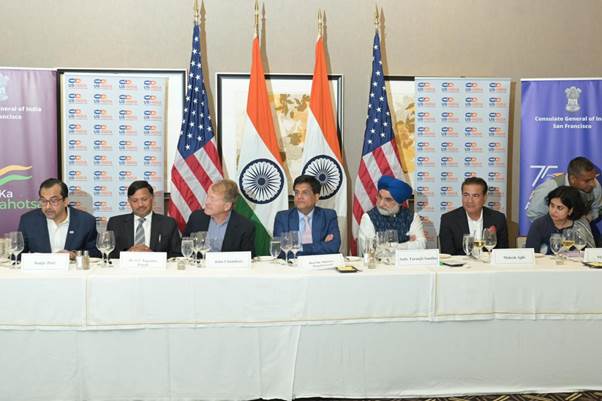
The Union Minister of Commerce and Industry, Consumer Affairs, Food and Public Distribution and Textiles, Shri Piyush Goyal has said that India today provides the best investment opportunity to the investors across the world and called upon investors in the US to avail the opportunities that India offers stressing that the next 25 years, the golden period of Amrit Kaal is the appropriate time to invest in India. He said this while addressing the US India Strategic Partnership Forum (USISPF) in San Francisco.
Speaking on India-US relations, Shri Goyal said partnership between India-US partnership is a ‘Partnership of Trust’, which rests on 3Ts of Trade, Technology and Talent. He noted that India-US relations are based on strong government to government engagement, people to people ties, large Indian diaspora, business to business relations, increasing bilateral trade, deep engagement in geopolitically relevant vibrant Quad, Ministerial Dialogue, IPEF and robust trade policy forum. Reaffirming India’s commitment to working closely in areas of mutual interest, Shri Goyal said focus is on further expanding the India-US relationship.
Recognizing that India and the US are natural partners in terms of competitive advantages and opportunities they offer to each other, Shri Goyal spoke about the talent that India has provided to the US and investment that the US has provided to India. He asked US investors to share newer ideas, suggestions on taking the India-US relations to the next level. Noting that both countries share tremendous interest in the world which is peaceful, open to business, and believes in democracy, transparency, Shri Goyal asserted that the two countries can work collectively to promote global security, stability and resilient supply chains and a growing economy.
Stating that India’s credibility has strengthened across the world in last few years, Shri Goyal
mentioned that we have taken transformative reforms and structurally prepared the economy for higher degree of honest business, recognizing and respecting integrity in business processes, reducing compliance burden, decriminalisation of laws, respecting and trusting and honesty of business persons.
Highlighting that India is a much more open economy now, Shri Goyal pointed out that India is opening up discussions with countries on subjects that were never taken up before such as gender, environment, small and medium enterprises, labour and anti-corruption laws. We are committed to providing growth opportunities both for domestic and foreign investors, he added.
In his speech, Shri Goyal highlighted the fact that lots of innovation is taking place in different fields and new areas are opening up in India such as Artificial Intelligence, Big Data, E Commerce, Edutech, Fintech, Agritech and Healthtech. He sought suggestions and ideas to explore the engagement further in areas around textiles, geotextiles, technology for testing labs.
Eating disorders are behavioral conditions characterized by severe and persistent disturbance in eating behaviors and associated distressing thoughts and emotions. They can be very serious conditions affecting physical, psychological, and social function.
The most common type of Eating disorders are -:
1. Anorexia Nervosa -: Anorexia is characterized by a distorted body image, with an unwarranted fear of being overweight.
2. Bulimia Nervosa -: A serious eating disorder marked by bingeing, followed by methods to avoid weight gain.
3. Binge Eating – People with the binge-eating disorder frequently consume unusually large amounts of food and feel unable to stop eating.
Additional eating disorders include:
1. Avoidant/resistant food intake disorder (ARFID)
2. Diabulimia
3. Other specified feeding and eating disorders (OSFED)
Physical Warning Signs of Eating Disorders -:
1. Dramatic or rapid weight loss
2. Compulsive or excessive exercise
3. Visiting the bathroom immediately after each meal
4. Loss of menses
5. Frequent stomach cramps or stomach pain
Emotional Warning Signs of Eating Disorders -:
1. Behavior changes (acting differently)
2. Isolation and withdrawing from others
3. Being less interested in daily activities
4. An increase in mood swings, irritability, or high anxiety
Warning Signs of Anorexia Nervosa -:
Anorexia is a potentially life-threatening illness characterized by the following eating disorder symptoms and signs: an abnormally low body weight, an intense fear of gaining weight, and a distorted perception of weight or shape. People with anorexia use extreme measures to control their weight, such as excessively restricting calories, over-exercising, and laxative or diet aid abuse.
Warning Signs of Bulimia Nervosa -:
Bulimia is a serious, potentially life-threatening eating disorder. It is typically characterized by episodes of bingeing on large portions of food and then voiding the food through purging, excessive exercise, or the use of diet pills or laxatives. Many people with bulimia also restrict their eating during the day, which often leads to more binge eating and purging.
Warning Signs of Binge Eating Disorder -:
People with binge eating disorder (BED) regularly eat too much food (binge) and feel a lack of control over their eating. Typically, they eat quickly or eat more food than intended, even when not hungry, or they may continue eating even long after they’re uncomfortably full. They may feel guilty, disgusted, or ashamed of their behavior and the amount of food eaten. Many times, they overeat in private. New bouts of bingeing usually occur at least once a week. Sufferers can be normal weight, overweight or obese.
Causes of Eating Disorder -:
1. Having a trauma history
2. Being pressured to look or act a certain way
3. Dealing with stringent sports performance requirements
4. Having high expectations for grades
5. Life transitions and developmental changes
6. Other challenging family dynamics
7. Perfectionism
8. Highly reactive to stress
9. High sensitivity
10. Low distress tolerance
11. Anxiety
Treatment for Eating Disorder -:
Nutritional Healing :
1. Develop a healthy relationship with food 2. Eat a variety of foods in a balanced way 3. Enjoy food in moderation
Family-based therapy is shown to improve eating disorder treatment outcomes increasing one’s chance of a full recovery. Family and caregiver support is especially critical for younger patients, but family involvement and family therapy are encouraged for all patients seeking help for eating disorders, including adults.
Medication :
In eating disorder treatment, medications may be prescribed to address physical health concerns and complications related to the eating disorder.
The history of the camera began even before the introduction of photography. Cameras evolved from the camera obscura through many generations of photographic technology – daguerreotypes, calotypes, dry plates, film – to the modern day with digital cameras and camera phones.
Camera obscura (Before the 17th century) -:
The forerunner to the photographic camera was the camera obscura. Camera obscura (Latin for “dark room”) is the natural optical phenomenon that occurs when an image of a scene on the other side of a screen (or for instance a wall) is projected through a small hole in that screen and forms an inverted image (left to right and upside down) on a surface opposite to the opening. The oldest known record of this principle is a description by the Han Chinese philosopher Mozi (c. 470 to c. 391 BC). Mozi correctly asserted that the camera obscura image is inverted because light travels in straight lines from its source. In the 11th century, Arab physicist Ibn al-Haytham (Alhazen) wrote very influential books about optics, including experiments with light through a small opening in a darkened room. It was wildly successful after debuting to the public in 1839 when both it and the calotype began introducing photography to the masses. Normally, having portraits taken was an activity exclusive to the upper classes. The cost and amount of time needed to produce such works were unreasonable for most working-class people. The speed of the camera, which only increased as time went on, made it possible for anybody to have quality portraits.
Early photographic camera (18th–19th centuries) -:
The development of the photographic camera, it had been known for hundreds of years that some substances, such as silver salts, darkened when exposed to sunlight.[9]: 4 In a series of experiments, published in 1727, the German scientist Johann Heinrich Schulze demonstrated that the darkening of the salts was due to light alone, and not influenced by heat or exposure to air.[10]: 7 The Swedish chemist Carl Wilhelm Scheele showed in 1777 that silver chloride was especially susceptible to darkening from light exposure and that once darkened, it becomes insoluble in an ammonia solution.[10] The first person to use this chemistry to create images was Thomas Wedgwood.
The first permanent photograph of a camera image was made in 1825 by Joseph Nicéphore Niépce using a sliding wooden box camera made by Charles and Vincent Chevalier in Paris.[10]: 9–11 Niépce had been experimenting with ways to fix the images of a camera obscura since 1816. The first photographic camera developed for commercial manufacture was a daguerreotype camera, built by Alphonse Giroux in 1839. Giroux signed a contract with Daguerre and Isidore Niépce to produce the cameras in France,[9]: 8–9 with each device and accessories costing 400 francs.[13]: 38 The camera was a double-box design, with a landscape lens fitted to the outer box, and a holder for the ground glass focusing screen and image plate on the inner box. By sliding the inner box, objects at various distances could be brought to as sharp a focus as desired. After a satisfactory image had been focused on the screen, the screen was replaced with a sensitized plate. A knurled wheel controlled a copper flap in front of the lens, which functioned as a shutter. The early daguerreotype cameras required long exposure times, which in 1839 could be from 5 to 30 minutes.
Within a decade of being introduced in America, 3 general forms of the camera were in popular use: the American- or chamfered-box camera, the Robert’s-type camera or “Boston box”, and the Lewis-type camera. The American-box camera had beveled edges at the front and rear, and an opening in the rear where the formed image could be viewed on the ground glass. The top of the camera had hinged doors for placing photographic plates. Inside there was one available slot for distant objects, and another slot in the back for close-ups. The lens was focused either by sliding or with a rack and pinion mechanism. The Robert’s-type cameras were similar to the American box, except for having a knob-fronted worm gear on the front of the camera, which moved the back box for focusing.
Early fixed images -:
The first partially successful photograph of a camera image was made in approximately 1816 by Nicéphore Niépce,[18][19] using a very small camera of his own making and a piece of paper coated with silver chloride, which darkened where it was exposed to light. His unhardened bitumen was then dissolved away. One of those photographs has survived.
Daguerreotypes and calotypes -:
After Niépce died in 1833, his partner Louis Daguerre continued to experiment and by 1837 had created the first practical photographic process, which he named the daguerreotype and publicly unveiled in 1839.[21] Daguerre treated a silver-plated sheet of copper with iodine vapor to give it a coating of light-sensitive silver iodide. After exposure to the camera, the image was developed by mercury vapor and fixed with a strong solution of ordinary salt (sodium chloride). Henry Fox Talbot perfected a different process, the calotype, in 1840. As commercialized, both processes used very simple cameras consisting of two nested boxes. The rear box had a removable ground glass screen and could slide in and out to adjust the focus. After focusing, the ground glass was replaced with a light-tight holder containing the sensitized plate or paper and the lens was capped.
Dry plates -:
Collodion dry plates had been available since 1857, thanks to the work of Désiré van Monckhoven, but it was not until the invention of the gelatin dry plate in 1871 by Richard Leach Maddox that the wet plate process could be rivaled in quality and speed. The 1878 discovery that heat-ripening a gelatin emulsion greatly increased its sensitivity finally made so-called “instantaneous” snapshot exposures practical.
The invention of photographic film -:
The use of photographic film was pioneered by George Eastman, who started manufacturing paper film in 1885 before switching to celluloid in 1888–1889. His first camera, which he called the “Kodak”, was first offered for sale in 1888. It was a very simple box camera with a fixed-focus lens and single shutter speed, which along with its relatively low price appealed to the average consumer.
35 mm -:
Some manufacturers started to use 35 mm film for still photography between 1905 and 1913. The first 35 mm cameras available to the public, and reaching significant numbers in sales were the Tourist Multiple, in 1913, and the Simplex, in 1914.
TLRs and SLRs -:
The first practical reflex camera was the Franke & Heidecke Rolleiflex medium format TLR of 1928. Though both single- and twin-lens reflex cameras had been available for decades, they were too bulky to achieve much popularity. The Rolleiflex, however, was sufficiently compact to achieve widespread popularity and the medium-format TLR design became popular for both high- and low-end cameras.
Instant cameras -:
Polaroid Model 430, 1971
While conventional cameras were becoming more refined and sophisticated, an entirely new type of camera appeared on the market in 1948. This was the Polaroid Model 95, the world’s first viable instant-picture camera. Known as a Land Camera after its inventor, Edwin Land, the Model 95 used a patented chemical process to produce finished positive prints from the exposed negatives in under a minute.
Automation -:
The first camera to feature automatic exposure was the selenium light meter-equipped, fully automatic Super Kodak Six-20 pack of 1938, but its extremely high price (for the time) of $225 (equivalent to $4,331 in 2021)[23] kept it from achieving any degree of success.
Digital cameras -:
Digital cameras differ from their analog predecessors primarily in that they do not use film but capture and save photographs on digital memory cards or internal storage instead. Their low operating costs have relegated chemical cameras to niche markets.
Digital imaging technology -:
The first semiconductor image sensor was the CCD, invented by Willard S. Boyle and George E. Smith at Bell Labs in 1969.[24] While researching MOS technology, they realized that an electric charge was the analogy of the magnetic bubble and that it could be stored on a tiny MOS capacitor.
Early digital camera prototypes -:
The concept of digitizing images on scanners, and the concept of digitizing video signals, predate the concept of making still pictures by digitizing signals from an array of discrete sensor elements. Early spy satellites used the extremely complex and expensive method of de-orbit and airborne retrieval of film canisters. Technology was pushed to skip these steps through the use of in-satellite development and electronic scanning of the film for direct transmission to the ground. The amount of film was still a major limitation, and this was overcome and greatly simplified by the push to develop an electronic image-capturing array that could be used instead of film.
Analog electronic cameras -:
Handheld electronic cameras, in the sense of a device meant to be carried and used as a handheld film camera, appeared in 1981 with the demonstration of the Sony Mavica (Magnetic Video Camera). This is not to be confused with the later cameras by Sony that also bore the Mavica name.
Early true digital cameras -:
In the late 1980s, the technology required to produce truly commercial digital cameras existed. The first true portable digital camera that recorded images as a computerized file was likely the Fuji DS-1P of 1988, which recorded to a 2 MB SRAM (static RAM) memory card that used a battery to keep the data in memory. This camera was never marketed to the public.
Digital SLRs (DSLRs) -:
Nikon was interested in digital photography since the mid-1980s. In 1986, while presenting to Photokina, Nikon introduced an operational prototype of the first SLR-type digital camera (Still Video Camera), manufactured by Panasonic.[48] The Nikon SVC was built around a sensor 2/3 ” charge-coupled device of 300,000 pixels. Storage media, a magnetic floppy inside the camera allows recording of 25 or 50 B&W images, depending on the definition.
Camera phones -:
The first commercial camera phone was the Kyocera Visual Phone VP-210, released in Japan in May 1999.[54] It was called a “mobile videophone” at the time,[55] and had a 110,000-pixel front-facing camera.[54] It stored up to 20 JPEG digital images, which could be sent over e-mail, or the phone could send up to two images per second over Japan’s Personal Handy-phone System (PHS) cellular network.
Schizophrenia is a disorder of the brain in which the person has lost touch with reality, and has symptoms like delusions, hallucinations, and bizarre beliefs. A person with schizophrenia has only one personality. The ‘split’ refers to the fact that their thinking, feeling, and behavior may not be consistent/congruent with one another (e.g., laughing while recollecting a sad story).
Schizophrenia sometimes can cause a person to behave violently, but not all with schizophrenia are violent. It is only a small minority of violent persons. Even these people are not violent all the time; they may become violent mostly when they are very ill. After a proper diagnosis and appropriate medication, a person with schizophrenia is no more or less violent than a person who does not have the disorder. Improved patients who are on treatment are no more dangerous than the general population.
Symptoms of Schizophrenia –:
The symptoms are classified into 5 types Behavioural, cognitive, mood, psychological, speech
1. Behavioural: social isolation, disorganized behavior, aggression, agitation, compulsive behavior, excitability, hostility, repetitive movements, self-harm, or lack of restraint
2. Cognitive: thought disorder, delusion, amnesia, belief that an ordinary event has a special and personal meaning, belief that thoughts aren’t one’s own, disorientation, mental confusion, slowness in activity, or false belief of superiority
3. Mood: anger, anxiety, apathy, feeling detached from self, general discontent, loss of interest or pleasure in activities, elevated mood, or inappropriate emotional response
4. Psychological: hallucination, paranoia, hearing voices, depression, fear, persecutory delusion, or religious delusion
5. Speech: circumstantial speech, incoherent speech, rapid and frenzied speaking, or speech disorder
• Also common: are fatigue, impaired motor coordination, lack of emotional response, or memory loss.
• Triggers may include:
• stress
• drug misuse
• chronic alcohol use
Causes of schizophrenia –:
1. Genetics
2. Structural changes in the brain
3. Chemical changes in the brain
4. Pregnancy or birth complications
5. Childhood trauma
6. Previous drug use
Can you prevent schizophrenia?
Researchers don’t completely understand what causes schizophrenia, there’s no sure way to prevent it. However, if you’ve been diagnosed with this disorder, following your treatment plan can reduce the likelihood of relapse or worsening symptoms.
Do People with schizophrenia need to be cared for in a hospital ?
Not all people with schizophrenia need to be hospitalized. The family can care for the person at home, by understanding the disorder and learning what kind of support the person needs, while diligently following the advice of the mental health professionals.
Is schizophrenia caused by bad parenting or abuse during childhood ?
Schizophrenia is not caused by bad parenting or abuse. The occurrence of schizophrenia is linked to the structure of the brain, and other risk factors: genetic, physical, emotional, and social. Adolescence is a period where some structural changes take place in the brain. One of the theories is that due to some faulty disruption that happens in the brain during adolescence, the teenager may be more vulnerable to developing the illness if other risk factors are also present.
When to seek help ?
If you believe you or a loved one is showing signs of schizophrenia, it’s important to seek immediate treatment. Keep these steps in mind as you seek help or encourage someone else to find help.
1. Remember that schizophrenia is a biological illness. Treating it is as important as treating any other illness. 2. Find a support system. Find a network you can rely on or help your loved one find one they can tap into for guidance. This includes friends, family, colleagues, and healthcare providers. 3. Check for support groups in your community. Your local hospital may host one, or they can help connect you to one. 4. Encourage continuing treatment. Therapy and medications help people lead productive and rewarding lives. You should encourage a loved one to continue treatment plans.
Treatment –:
Treatment includes medications and therapies –:
1. Medications – Antipsychotic and Anti-Tremor 2. Therapies – Support group, Rehabilitation, Cognitive therapy, Psychoeducation, Family therapy, Behaviour therapy, and Group psychotherapy
Schizophrenia is a lifelong condition. However, properly treating and managing your symptoms can help you live a fulfilling life. Recognizing strengths and abilities will help you to find activities and careers that interest you. Finding support among family, friends, and professionals can help you to reduce worsening symptoms and manage challenges.








 Eduindex
You must be logged in to post a comment.