DU Student Interns with Zayo Group

As winter quarter comes to an end, this is a great time to search for summer internship opportunities. The University of Denver’s Career and Professional Development department awards 8 undergraduate students with a $2,500 award if they land an unpaid internship for the summer. For most students, internships are a chance to gain experience in the workforce, a way to find out their strengths, and discover their interests.
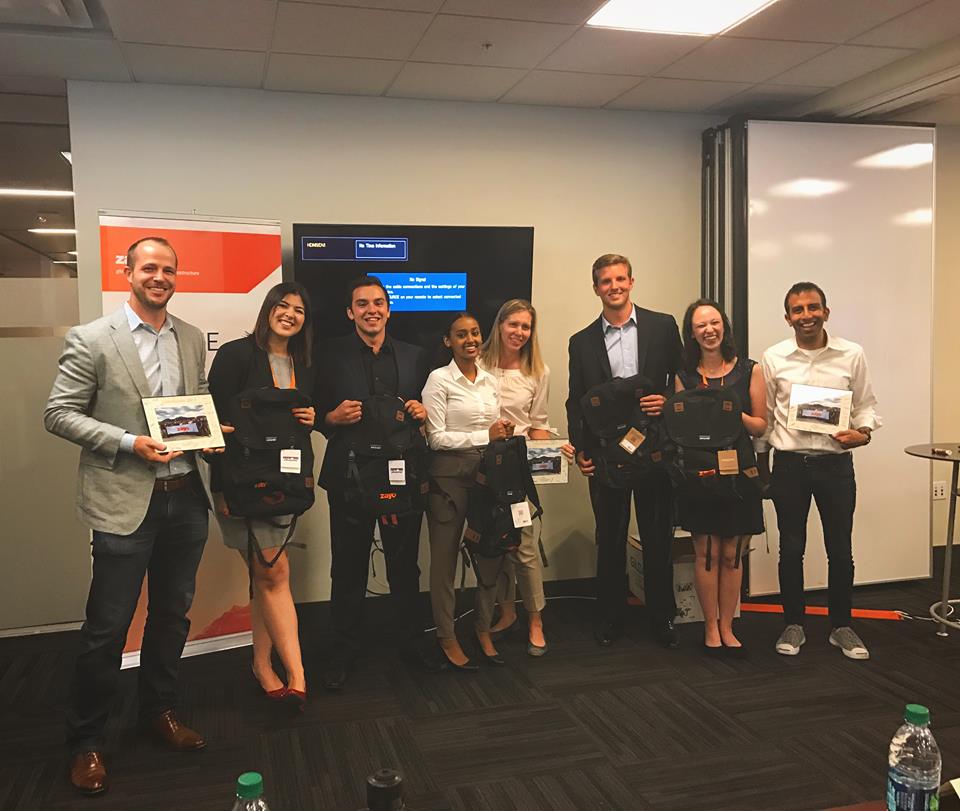
Last summer, Tyler Linnebur, a graduate student at the University of Denver, interned with a rapidly growing tech company, Zayo Group. While he was there, he was analyzing the company’s expense reports and, on occasion, presenting his findings to senior level management. He described his experience as being valuable. “I learned how to apply my studies in financial analysis and in using tools such as Excel, Google Drive, Tableau, and SalesForce.”
For Tyler, what was particularly exciting, “was getting to work with teams of full-time accountants and financial analysts, [and] seeing how people interacted and collaborated in the business world. [He] was included in a number of messages and email strings, team meetings, conference calls, and board meetings.” Tyler said, “I was pretty involved for a new guy.” For Tyler, these are great skills and accomplishments he can include in his master resume. Most students do not realize that such small details can contribute to great value for a potential employee; the key is learning to incorporate it correctly within their resume.
When asked about what other aspects of his internships Tyler enjoyed the most, he said that he cherishes the connections he made with his fellow interns and the programming that the internship program incorporated. “We went to hiking trails, happy hours, baseball games, tours, and workshops. There was a case competition among the 55 interns, where my team won 1st place and a Patagonia backpack for a prize! The summer ended with all the interns voting for each other for several superlatives. I was surprised when I was voted most likely to be a comedian! That summer I learned a lot, and I enjoyed an experience I will never trade!”
Career and Professional Development Staff are so happy that Tyler had the opportunity to experience a wonderful internship, and create not only meaningful memories and connections, but also grow his skills as a student and future employee. We wish you all the success in your future career and internships journeys, and we hope to hear your future stories (maybe as a comedian!).


Crowdfunding your graduate startup: pros and cons

You’ve been thinking about your next career step, and you’re pretty sure you’ve come up with a great idea for a business, product or innovation that could be a big hit with the right tools in place to deliver it. Great! So how do you go about making it a reality?
Well, once the initial sketching out of the idea is done, and you’ve developed a reasonably watertight plan for the subsequent development stages, it’s extremely likely that money will be the next major barrier you’ll run into. Without the requisite backing to finance bringing your great new business idea to market, it could be destined to remain little more than a pipe dream.
That’s why more and more people are taking advantage of crowdfunding platforms – the range and accessibility of which have grown exponentially in recent years – to provide that all-important initial startup capital.
However, while there are many reasons why it can be a fantastic way of securing early funds to help get your scheme off the ground, there are also a number of potential issues and concerns with crowdfunding models. It would be wise to consider all the points below before deciding whether it’s the right route for you and your plan:
Pros
It can be a cheaper way to get going. Many crowdfunding platforms essentially offer potential access to startup money without the typical loan-type burdens of scheduled repayments or interest, which you’d almost always be stuck with if you went a more traditional route via the bank.
It allows for smaller, uncredited investments and pledges. Other, more ‘formal’ creditor arrangements typically require a lot of legal groundwork that can block uncredited investors from being able to help you out.
It (usually) leaves your project in your hands. Some equity-type crowdfunding models allow investors to pledge backing in return for a degree of business control or shareholder power, but the more popular reward-based models generally mean you’ll retain full control of the business and any intellectual property associated with it after launch.
Backers represent tangible interest. If it’s likely that you’ll need to seek further support for launching your business or idea – for example, if crowdfunding is just a small part of a larger financial plan – then a successful public campaign represents a solid declaration of interest and support that can be very helpful in persuading other lenders.
It gives you options outside your immediate location. Seeking more traditional funding sources can often mean trawling local banks and creditors in your area, which is time consuming (and inherently limiting if you don’t live in a big city).
It allows you to tell a fuller story. A key part of putting together a good crowdfunding campaign is fully articulating why your idea is important and valuable. In doing so, you’ll get to develop a narrative, character and profile for your product or business, rather than simply having it appear on the high street or online and hoping your target market ‘gets it’.
It gives you a pre-launch support base. Appealing to relevant communities or key demographics in advance of your launch means you’re pre-engaged with right sorts of people before hitting the market.
Backers with wider influence can help spread your message. Trying to do everything through just your own channels is tough, but creditors or supporters who are interested enough to invest in your idea will likely also be interested enough to help you spread the word.
It gives you easy access to feedback. People who back your idea will usually be keen to share their views on how the early planning and development stages are shaping up, which can be incredibly helpful in gaining a wider perspective and making sure you deliver something customers want.
It can give you a foundation for future plans. Success in one crowdfunding campaign will sometimes mean you’ve also got a pre-built platform for publicising and funding your next idea, should you choose to develop one – your previous backers are right there.
Cons
You’ll need to offer rewards, and deliver them. Many crowdfunding models rely on you pledging tiered reward schemes for backers, to give them an incentive to donate. This demands careful thought and structuring to encourage people into higher pledge brackets through increasingly attractive benefits packages, and of course you’ll need to ensure you’re able to fulfil all promises later.
It’s unsuitable for complex projects. The idea or business model you’re pitching will need to be fairly simple and non-technical in order to get a good number of nonprofessional creditors on board; anything too complex or technical can often seem overly risky or confusing, and put off more casual backers.
It takes considerable time and effort. Planning and creating a compelling pledge drive includes myriad responsibilities such as developing those all-important multimedia elements, monitoring and responding to donations, supporting and developing the initiative with a well-executed social media campaign, and attending to constant queries and feedback from potential investors. All of this can quickly take on the weight of a part-time job – and, given that most crowdfunding campaigns are best suited to smaller funding targets, it can all feel a bit disproportionate to the amount you’re seeking from it.
There’s little scope for making any profit at the crowdfunding stage. This is particularly true with campaigns that are ‘all or nothing’ (meaning if you don’t secure your initial target amount, you get nothing from anyone – a very common model). Pressure to reach this baseline target often means setting the initial bar as low as you can, so it’s likely that you’ll only be covering very basic launch needs. This also requires any plans for rapid growth in phase two to be very carefully laid.
Your idea is made public before it’s ready to launch. In launching a crowdfunding campaign for a great idea, you’re always running the risk that someone who already has the capital you lack might see it and get in there first. However, bear in mind that copying is likely to happen if it’s successful anyway – just because you were first to market, that won’t necessarily stop someone with a higher profile launching their own version anyway. It’s part and parcel of the business world, unfortunately.
Failure doesn’t look great when it happens very publicly, and crowdfunding campaigns are inherently pretty public affairs. Even though it doesn’t indicate your idea was no good-by any means, it can be a big drain on momentum or moral, especially for team-based campaigns. (This con alone shouldn’t stop you from giving it a go, though, or trying again in future – many success stories failed to make their targets first time out.)
Adapting your idea can be difficult once people have started pledging support for it. Having to clearly define your precise plan in such a public way means that if you subsequently find you need to change elements of it, you risk losing that initial support or being tied in to all your original claims.
Negative reactions are immediately more visible. Not everyone is going to like every aspect of how your project develops or launches, and a successful crowdfunding campaign gives your backers a very public forum for broadcasting criticism during and after delivery. That’s fair, on many levels – but it’s something you’ll want to be mindful of as you go along.

What Should I Be When I Grow Up?

career path - multiple roadsDid you know that you need professional experience to get a job, even if you have no idea what you want to do?  Well, University Career Services has got you covered. Our highly trained staff can help you to explore your individual gifts, strengths, majors and career options. still not sure? Here are Several ways to work with a career advisor to gain career clarity and direction
Assessments 
Look at your personality and behavioral characteristics and strengths and how they align with potential jobs and majors. The tests we use most frequently with students and alumni are: the Myers-Briggs Type Indicator, Strong Interest Inventory and StrengthsQuest
  • Our career advisors can provide resources for and explain how to conduct informational interviews. Some key points to remember are:
    • Talk to people who are doing work that you are interested in.
    • Learn if this is the right job fit for you and make connections that have the potential to help you with your job and internship search.
    • If someone agrees to an informational interview, research his/her job and company and prepare questions before you meet. Just as important – always follow up with a thank you and any next steps you established during the informational interview.
    • Connect with alumni from any alma mater.  Us the LinkedIn Alumni Tool (under the “My Network tab, click “Find Alumni” in the drop down menu), Alumnifire, and don’t forget family, friends, staff connections and professors.
Set Goals and Make a PlanSetting goals  and making a plan to build your network and explore majors and career paths is essential for blazing your career path. Build your   professional experience, including internships, leadership roles, jobs, volunteer opportunities and student group participation or leadership.

4 Things You Need to Know to be Totally Future-Proof at Work

We’re all guilty of having those little panics when we worry if we’ve chosen the right career direction. It’s tough to know exactly what you want to do once your time at college is up, I mean, what if you have a sudden, random urge to move into another field? You’ve already switched your major twice.
In addition to that, new research from the FYA has recently revealed that a whopping 60% of students could in fact be chasing roles that are likely to be obsolete within the next 15 years thanks to technology.
It is now more important than ever to make yourself as indispensable as an employee as humanly possible, and that process begins now.
Eleanor Roosevelt warned us that ‘today is the oldest you’ve ever been, and the youngest you’ll ever be again,” which – albeit terrifying – certainly does get us pulling our socks up.  With the tech landscape moving at speed, it helps to have a few basic skills tucked into your tool belt to avoid the phenomenon known as ‘If only i’d known about this earlier’.
Here are 4 of them…

1. Basic Coding

Computer coding is now being taught at schools as standard from as early as ages 5 and 6. It is a skill soon to be considered as intrinsic to education as math and grammar, yet still one that many of us (namely those above the ripe old age of 5) missed the boat on.
Whilst we may be slightly more tech-orientated than the previous generation, we stand to be just as alien to the coding phenomenon as our parents are to Snapchat, which with more than 7.7 million jobs in the U.S requiring complex computing, poses a bit of a problem to those not versed in even the basics of computer science.
It’s now not even a skill written off as solely for future programmers or software engineers, but instead a universal, and a very necessary lesson in computational thinking, problem-solving and systematic ‘if logic’. Having a basic understanding of code will vastly increase your potential to be a valuable asset to a team, and keep the mind agile enough to bridge potential tech skills gap a little later on.

2. An Understanding of Languages

Thanks to technology, certain skills that were once necessary to business – such as quick arithmetic, thorough organization, or language translation – can now be done with the click of a button. While there’s no arguing that does make things easier, it also means that these skill sets are now much more of a rarity.
Speaking another language has been shown to improve perception and sequence memory, as well as the brain’s ability to multitask and concentrate. Listing even a basic founding of another language as a skill indicates to an employer that you are not only competent, but actually something of an investment.
Why? Because there is significant demand for individuals that understand the fundamental difference between translating a language and communicating it. An individual that can engage in real-time, and build a rapport with foreign partners will outrank someone clutching Google Translate every time.

3. A Little Science

Qualifications rooted in science (or STEM degrees as they’re known) have been deemed the most future-proof according to Alec Ross, author of ‘The Industries Of The Future’ – a sentiment also echoed by the UK Education Secretary, Nicky Morgan.
However, even if you’re not planning on following the footsteps of Newton or Einstein, exploring an interest in science hones an inquisitive nature which drastically improves reasoning and your ability to rationalize. Think of reading up on something Science-y as diversifying your skill sets.
In recent years many corporate companies have made it their mission to recruit more art graduates to avoid ‘linear thinking’ in the workplace. One savvy events company then combined the skills of a creative and a science brain to automate their entire birthday marketing campaign. If you’re an arts graduate with an interest in science, you’re the best of both worlds. You’ll not only be able to contribute creatively, but also demonstrate great awareness of the future business landscape and pitch equally outside of the box ideas. That sounds like one very enticing hire indeed.

4. The Importance of Adaptability

Exposure reduces fear. This is proven practice and a principle often used to treat anxiety and phobia. This goes to say that individuals who actively seek to push their boundaries of comfort, and remain in pursuit of new challenges, experience less fear in new situations than those that don’t. This is because of what psychologists and scientists refer to as ‘muscle memory‘. Turns out your brain needs to be exercised in the same way that you practice your tennis swing.
In the interest of becoming future-proof, the most effective skill we can hone is the ability to thrive in the unknown. Attend a talk on a subject you nothing about, or actually read that article you would previously scroll straight past. Keep the mind agile and inspired by new stimulus, because those that maintain the brain’s ability to adapt will be more confident approaching what the future has to bring, and be more responsive to change.
After all, remaining future-proof is about continuing your self-education – even after college. Listen to a TED talk, subscribe to an educational blog, watch the occasional YouTube tutorial and keep your eyes on the education category of the App/Play store. Your future-self will thank you for it.

4 Tips for Women Feeling Stuck in Their Careers

Glass ceilings, solidarity marches, and empowerment movements are all over the news today as women take figurative and literal steps to become an even larger force in the United States. Many women have founded fundraising groups, task force committees, and other active organizations in recent weeks, and they are starting to take their quest for empowerment to their careers. If you feel stuck in your career, take some inspiration from these women and do something about it. You may decide to change careers or push for the promotion you know you deserve. Our tips will help you shake up your career.
1. Know Your Strengths
Senior vice president and chief marketing officer of Principal, Beth Brady shares her experience in changing career paths in her Fortune article. She recommends that women who feel stuck should assess your assets and determine whether you have the skills and strengths that will make you competitive in your industry. If you lack them, start devising a plan to get to the next level and include mentors and industry associations as resources and for networking opportunities. Then, put your strengths to use and continue to develop them while you also learn a few new skills.
2. Talk to the Right People
You may be surprised to find that the more you talk to people, the more you find who also feel stuck in their jobs and who aren’t sure what they want to do with their lives even though they have degrees and jobs. Samantha Cole’s Fast Company article dives into advice from career coach Cheryl Palmer, in light of the fact that 15% of American workers detest their job. According to Palmer, informational interviews are networking essentials that provide a path to finding your passion. Women should narrow your options to a few careers, schedule appointments with people in those fields, and talk. You may find that people are willing to help you if you ask, they enjoy that you want to learn about their careers, and they become connections for future endeavors.
3. Consider Internal and External Job Opportunities
One of the best ways to determine whether you are stuck in your career is to make a list of pros and cons about leaving your position and then about leaving your company. Some women realize that they don’t want to leave their company, but they do want to take on a new role within it. Review internal and external job opportunities and determine which ones you qualify for in addition to which ones you would like to earn.
If you would be happy with a promotion, work for it. Talk to your superiors and make a case for yourself. If you have been hesitant to serve on a board or take on more responsibility because you are not sure if your company continues to be a good fit for you, accept the offer and try out your new role for a short time. The experience will help you learn new skills and put your strengths to the test, and it will give you a better idea of whether your current company is the place for you or not.
4. Consider Entrepreneurship
It could be that ultimately you want to be your own boss. The great news is that these days there are many ways to dip your toe into owning your own business without having to give up the security of your current job. For example, you can become a business owner in the sharing economy. Start a side gig as a tasker or virtual assistant. Sharing economy websites make it very easy to set up shop and find clients. Or you might work on the weekends as a tutor or take on some freelance copywriting or graphic design work, if that’s where your talents lie. These may not be the kinds of businesses you’d ultimately like to run, but they’re a great way to learn the ropes of business ownership while you’re still bringing in your day job paycheck.
5. Take Advantage of Your Ability to Choose
In the end, the decision to change your career or change your role in your current company is up to you. You may be your greatest obstacle to a new, exciting career that is more fulfilling and rewarding. Rather, you need to take advantage of your power of choice and do not allow yourself to stay stuck because of fear of the unknown.
You can choose to work with a career coach or mentor to determine your strengths. You can choose the networking opportunities that will work best for you, and you can choose whether to move up in your present company or pursue opportunities outside of your industry. The key is to realize that you don’t need to be stuck or settle for discrimination in your career.  Take charge!

A Retired Science Teacher Explores a New Path with Cannabis

Central Vermont resident Ann Ndione is a retired science teacher who enrolled in the UVM Cannabis Science and Medicine Program this fall. Ann, who studied Horticulture and Horticultural Therapy at the New York Botanical Gardens, talked to us about her experience in the new UVM online program.
studying-cannabis-at-uvm

Ann Ndione

Why did you enroll in the UVM cannabis certificate program?

I just retired and saw the program advertised. This is a time of transition for me and I am open to a new focus in life. The program looked very interesting and challenging, a perfect mix for me. It combines my love of plants and passion for science.

What aspect of the program have you enjoyed the most?

Actually, I have enjoyed all of it–though there is a ton of work. Since I have little to no current experience with cannabis, everything is new. I feel that the format of the online class has worked well. The cohort is amazing and there is so much learn from each member. I wish we could have a face-to-face gathering at some point.

How and when did you first become interested in cannabis in terms of healthcare and policy?

I have been peripherally following cannabis in the news and have a few personal connections where I wish I had known more about it.

After you complete the program, how will you use what you have learned?

This is definitely the million-dollar question. The course has ignited a passion in me to be an advocate for medical cannabis. I would love to work with growing and research, though that is probably not too likely. Perhaps with this program I could work at a Vermont dispensary. I am going to explore the options. I am also talking to many others about the program and sharing my knowledge. Busting the stigmas and educating the public is one tiny step toward getting cannabis rescheduled.

Why would you recommend the program to others?

I would recommend the program because it is rigorous, balanced, and uses science-based evidence to inform

An Aspiring Leader Looks to a Future in Business Sustainability

To describe Bianca Mohn as driven is an understatement.
The Lancaster, PA, native graduated from UVM in May with a business degree and is now a student in the UVM Sustainable Entrepreneurship MBA program. As an undergraduate, she majored in business administration, international business and marketing, and minored in French. She was a student in the UVM Honors College, served as president of the UVM Marketing Club, became program director of La Maison Française, and studied abroad in China.
Bianca Mohn

Bianca Mohn
Now she’s learning how to help businesses establish meaningful goals that honor the triple bottom line: people, planet, and profit.
Mohn talks to us about corporate social sustainability and how she’s learned that there’s more than one way to be an effective leader.

What interests you most about corporate responsibility?

What I find most exciting are business models that create so-called “win-win” situations. For example, there are companies that take recycled cans to produce rolled aluminum for cars, consumer electronics, packaging, and are making the world a better place by reducing environmental impact, creating jobs, and using technology in progressive ways. I am fascinated by companies that create value for everyone involved and are using technology to benefit people and the planet.

What are some of the challenges you see in sustainable business/entrepreneurship?

Many companies want to be forces of good, but struggle to make the leap between having a few sustainability initiatives on the side, as opposed to integrating sustainability into their entire business strategies. In the future, companies that fail to embrace sustainability will be left behind for those who are doing more than just making a financial profit.
From my research on corporate social responsibility for my senior thesis at UVM, I found that many companies on their websites listed lofty aspirations for changing the world, but few highlighted specific goals and metrics to support these goals. This is another challenge for sustainable businesses: determining how to establish meaningful goals and metrics to convey to stakeholders that these sustainability initiatives are effective and lasting.

What advice would you give both undergraduates and young professionals who are looking to advance their career and become a leader or manager?

For undergraduates looking for leadership experience on campus, my advice is simply to show passion and enthusiasm. The way I became a student leader in the UVM Marketing Club and La Maison Française was by demonstrating that I cared. This meant always attending club meetings, offering to help with projects, bringing new ideas, and getting excited about the activities that we were doing. If you show up, bring positive energy, offer your time, and follow through, people will notice and will want to give you leadership positions.
For undergraduates and young professionals looking to advance their career and become a leader, I think it’s important to keep in mind that everyone can be a leader with experience and ongoing skill development. Sometimes people believe that you have to be the most extroverted, talkative, and authoritative person in the room to be the leader. That’s simply not the case.
Leadership comes in many different forms, and there isn’t one way to be a leader. From my perspective, the leaders I admire most are exceptional listeners, they are the first to admit that they don’t know something, and they are always looking for feedback and for opportunities to improve themselves and their projects. They have a ton of positive energy and drive, they care deeply about the people they work with, and they love to learn.

Why did you want to earn a sustainable entrepreneurship MBA rather than a traditional MBA?

I am a firm believer in the power of business to make the world a better place. I was attracted to the sustainable entrepreneurship MBA (SEMBA) because of its unique approach to business education by integrating sustainability into all of the courses. Unlike traditional MBA programs that sometimes feature one or two sustainability courses on the side of the core business courses, in SEMBA the economy, environment, and society are integrated into everything we study.
As we observe the world around us, we see that we are living in times of great change and that new models are needed to face widespread issues relating to poverty and environmental decline. I am in SEMBA to learn about these new business opportunities that provide value not just to customers and stockholders, but to the larger stakeholders, namely members of society and the natural environment.

You were involved in many clubs and organizations during your undergraduate years at UVM. How did you find time to be such an active and successful student?

It was definitely overwhelming at times to juggle so many things at once. It’s a tall order as a student to find the right balance between academics, clubs, friends, exercise, sleep, and relaxing. I learned very quickly the importance of time management. What worked best for me was having a detailed schedule and planning in advance to make sure that I could do it all. It’s easy to procrastinate, but for me, having a full schedule of classes, clubs, and jobs made me more self-disciplined and focused. Also, I made sure to have a strong support network in all of my clubs so that when I had academics to prioritize, I could ask others to step up and take charge.

How would you describe UVM?

UVM will give you everything you need — and more — to grow, learn, and discover who you are within a supportive and generous community. If you have an idea, someone will listen. If you need help, someone will gladly offer a hand. If you want to start something new, someone will encourage you. If you are open to it, UVM will change you by offering you a million opportunities for personal growth along the way.

Skill Series #3: Written Communication

Why is it important to write well? What does ‘writing well’ mean, anyway? Every day I read resumes, cover letters, personal statements, essays and email and text messages. So do you.
Have you ever gotten a text that made no sense? Was the verb or subject missing? Maybe you thought that you knew what the person meant to say, but you had to guess.
Let’s start with some examples….
  • My courses in History and Philosophy taught me strong critical thinking skills.
Your courses taught you? YOU had nothing to do with amassing these skills? Don’t you think that YOU learned or developed critical thinking skills by taking courses in History and Philosophy?
  • Other responsibilities include progress toward degree meetings every semester.
What does this mean? Who made progress? And, what did this person do to advance the progress of these meetings?
  • I have developed a valuable database of employer relationships that get results.
Have you known databases that get results? I have not. I thought that people used databases and the information in databases to get results.
  • My educational experiences and my work experience have allowed me to develop exceptional interpersonal, clerical, analytical and leadership skills.
Your educational and work experiences gave you the opportunity to develop interpersonal skills – how did that work? Would it be accurate to say that while you pursued your education and gained work experience, YOU strengthened your interpersonal…..skills?
  • I am the daily liaison between coaches and instructor’s.
Your turn….what is the issue?
  • Young Democrats of UtahSalt Lake City, Utah May, – June 2006
               Volunteer Champagne Manager
 Have you spotted the typos?
  • I am interested in applying for the position of with you organization.
Did this person read the sentence out loud? How many problems do you see?
  • One who will make a positive contribution to your college.
Is this a sentence? Does it include a complete thought OR do you feel something is missing?
  • All of these experiences have shown that children and animals are forever bonded and the stories arising from that relationship inform us how to approach and respect
Be clear about what and who you are referencing. WHAT RELATIONSHIP is this person talking about? And WHO exactly are we approaching?
Whether you are writing a resume, an email or an academic essay, writing skills are critical.
Here are some tips for writing as clearly as possible to convey what you mean to say:
  • Use active tense: Experiences do not teach you. YOU learn skills by engaging in experiences and completing projects.
  • Be specific and include details: As a senior majoring in Anthropology, with a minor in History, I have traveled to WWI battlefields in Belgium and worked with forensic anthropologists to uncover the remains of soldiers who died in the trenches.
  • Use a font that is large enough to see. No one will read your work, no matter how excellent it is, if the person can’t see the text!
  • ALWAYS read what you have written out loud to yourself. That is the only way you will notice if you have left out a word or used the wrong phrase.
Resources in the Career Center Library:
Eats, Shoots & Leaves: The zero tolerance approach to puncuation, by  Lynne Truss
On writing well: an informal guide to writing nonfiction, by William Zinsser
Get to the Point!  by Elizabeth Danziger
Writing That Works, by Kenneth Roman and Joel Raphaelson
 

Adventures in Neuroscience: Understanding the Human Brain and Nervous System

The brain is the human body’s most complex organ. Weighing about 3 pounds in adulthood and consisting of billions of tiny cells, the brain—the central organ of our nervous system— holds the secrets to our personality, use of language, memories, and the way our body operates.
In July, UVM Associate Professor Alicia Ebert will teach Summer Academy’s Adventures in Neuroscience course to high school students.
The new course, which runs July 7 to Aug. 2, 2019, will introduce students to the dynamic and diverse field of neuroscience—the study of the nervous system, which includes the brain and the spinal cord. The field of neuroscience not only focuses on how the nervous system works under normal circumstances, but also how it functions in an individual suffering from neurological, neurodevelopmental, and psychiatric disorders.
precollege summer program

Alicia Ebert
In Ebert’s course, students will learn the basics of cellular, molecular, and behavioral neuroscience, and gain hands-on experience in a lab performing experiments to ask basic neurobiology questions. There will also be lab and facility tours to explore the breadth and depth of the field of neuroscience.
“We will spend time talking about the history of neuroscience, the foundational research that sparked the field, then touch on different types of neuroscience research,” she says. “With the lab tours and research experience, it should be a great entry into this field.”
The course is part of UVM’s Summer Academy, a four-week residential and online program offered to high school juniors and seniors who want to explore areas of study and earn transferable college credit.
Ebert, who began teaching at UVM in 2012, completed her undergraduate degree in molecular biology at the University of Wyoming, and earned her Ph.D. in Developmental Neuroscience at Colorado State University.
While growing up in Colorado, her high school genetics teacher inspired Ebert to major in molecular biology and eventually start on a career path toward neuroscience. “Mating fruit flies and performing crosses and genetic screens was amazing to me at the time and I wanted to know more,” she says.
Ebert became specifically interested in neuroscience as an undergraduate student at the University of Wyoming when she was a technician in a neuroscience lab that focused on nerve regeneration using mice.
Ebert’s current research focuses on zebrafish eye development. The eyes develop from forebrain tissues and then must migrate bilaterally to take up their final position on either side of the head.
She is interested in what mechanisms and molecules are involved in maintaining eye tissue cohesion as they undergo elegant movements of morphogenesis and migration. The lab is also interested in how the different neurons in the developing retina develop the appropriate characteristics and in the correct location.
“All of my research uses zebrafish as a model to understand the genes and pathways that are important in setting up the nervous system,” she says. “We predominantly focus on development of the eye, ear, and motor, and sensory systems. Summer Academy students will have an opportunity to observe and manipulate zebrafish embryos.”
Ebert is passionate about her subject matter and committed to keeping her courses informative and fun.
“I love teaching the content that I am excited about to students that are just as excited to learn,” she says. “The energy in my classes is infectious and makes for a fun learning environment.

China to move away from Science Citation Index in academic evaluation

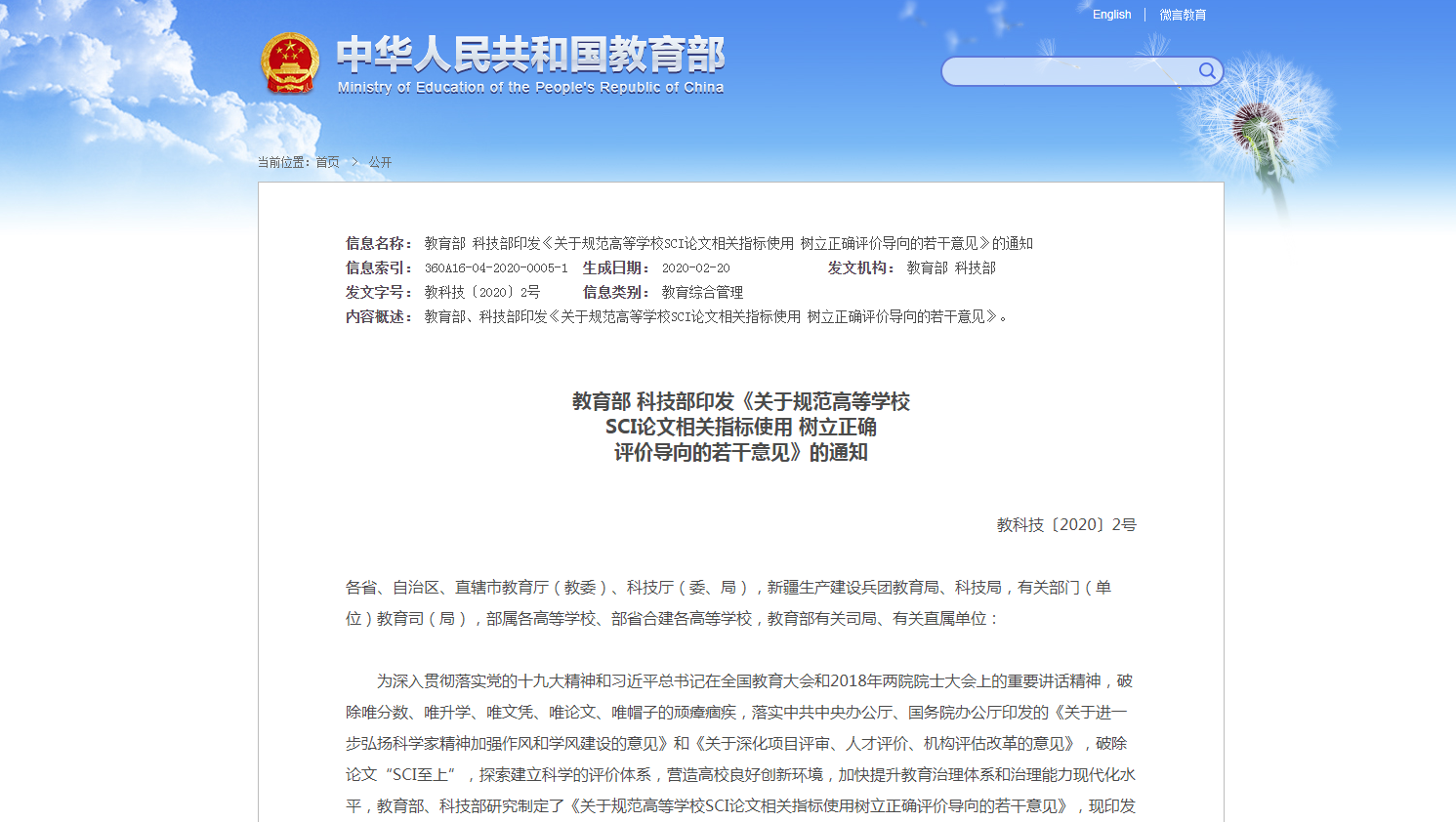
China’s Ministry of Education and Ministry of Science and Technology issued an official notice last week on regulating the use of Science Citation Index (SCI) papers in the evaluation system of universities and academic institutions across the country, calling for a break from the longstanding SCI-supremacy in assessing researchers and institutions.

The authorities issued clear guidelines on reversing the SCI-supremacy phenomenon in a move to change the current academic assessment and evaluation systems that are over-reliant on published papers, as well as to develop a more comprehensive evaluation system in academia.

According to the guidelines, the numbers of SCI papers, citations, and highly cited papers, as well as relevant factors like the Essential Science Indicators (ESI) rankings, have become core indicators for academic assessments, evaluations, rankings and corresponding policy making, such as educational resource allocation, in recent years.

China’s Ministry of Education and the Ministry of Science and Technology issue clear guidelines on reversing the SCI-supremacy phenomenon.

For citation, not for evaluation

Universities and academic institutes have been using SCI-paper and other relevant indexes as the dominant determinants to evaluate the research ability of students, teachers, and researchers, said Xie Gaodi, deputy director of the Center for Resource Science, Institute of Geographic Sciences and Natural Resources at Chinese Academy of Sciences, noting that an overemphasis on SCI papers when evaluating researchers neglect other capabilities.

The phenomenon of SCI supremacy is widely considered one-sided, excessive, and known for its distortion of information from SCI papers among scientific research evaluation systems at universities and other academic institutions in China.

There are a lot of limitations when SCI and its related indexes serve as a direct evaluation system, as it in essence is a citation databases for scientific literature used worldwide, said the official with the Ministry of Education in a statement released on February 23 briefing the guidelines.

It is also clarified that it is not a denial of SCI, nor a refusal to publishing papers.

The guidelines stresse that SCI papers should not be used as a prerequisite for personnel employment. /VCG Photo

The guidelines introduced several specific measures to abolish the phenomenon.

It pointed out that SCI papers should not be used as a direct basis for professional titles evaluation and occupational promotion, nor a prerequisite for personnel employment.

Higher education institutions are suggested not to set requirements on number of published papers for departments and individuals.

Academic institutions can no longer reward individuals and departments based on SCI papers alone, and the graduation and awarding degrees of students should not be restricted by the number of SCI papers and impact factors, the document said.

The guidelines call for a more comprehensive evaluation system in academia. /VCG Photo

‘To establish matters to eliminate’

The guidelines also pointed out that a sound assessment system should be developed, in which different weight of paper publication is put on the evaluation of different types of scientific research work.

For research in basic disciplines, evaluation should focus on the originality and scientific value of the research papers, instead of the number of SCI papers.

Application research and research in technological innovation should focus on the actual contribution of the research and the utilization of the results in real life, it said.

Universities should not list the number of SCI papers as a requirement for students to graduate or get degrees, according to the guidelines. /VCG

In addition, universities and education authorities should improve peer-review in talent evaluation.

Jin Li, vice president of Shanghai’s Fudan University, stressed that “to eliminate, it greatly matters to establish.” He noted that it is of great significance to establish a comprehensive evaluation system with more indicators that can effectively, fairly reflect the value of academic contributions.

Yuan Lanfeng, an associate professor at the University of Science and Technology of China, believe that it is a good opportunity for the academic institutes to improve their performance evaluation systems, and with the upgraded system, researchers serving in the institutes “will be encouraged to concentrate more on long-term studies instead of short-term papers.”

Achieving Sustainable Entrepreneurship from the Base of the Pyramid & Up

By Stuart Hart
We have come a long way since 2002 when along with my colleague, C.K. Prahalad, I first identified the Base of the Pyramid (BoP). This term encompasses the more than four billion people — approximately 60 percent of all humanity — who earn $8/day or less, and who comprise the very bottom of the global income pyramid. That moment of insight launched the BoP business movement, spawning numerous business ideas, programs, and entrepreneurial ventures, aimed at the poorest of the world’s poor.
The BoP also embraces a business approach that focuses on products, services, and enterprises that serve this population in away that is culturally sensitive, environmentally sustainable, and economically profitable. Inherently, the BoP is where entrepreneurs and companies can tackle the world’s biggest challenges; poverty, environmental degradation, hunger, social inequality, issues with enormous humanitarian and societal implications, via new disruptive business models, technologies, and strategies.
This movement and process of experimentation has been tarred by some as merely the latest form of business imperialism and profiting from the poor. And while mistakes have been made — the landscape is littered with the failed remains of BoP initiatives, like solar lighting and clean energy cook stoves — more and more success stories are emerging that herald a new dawn. A moment where failed “narrow” ventures are replaced by wider, compelling initiatives that by forming the entire business ecosystem, delivers scale and value to communities in multiple ways and not just via a single BoP product.

Building an Environment for Sustainable Entrepreneurship

Simply put, it is an umbrella business concept that simultaneously generates sustainable livelihoods, minimizes environmental impact, and produces profits for all participants and investors; partner with local communities to co-create prosperity at every step of the journey.
Cemex, Mexico’s largest cement company, provides a glimpse into the importance of co-creation and effectively reaching the BoP. The 1994 financial crisis in Mexico was a major blow to the company’s domestic business. However, Cemex executives noted that whereas revenues from upper- and middle-class customers dropped by half, cement sales to the poorest tier of the population were hardly affected. In fact, sales to the poor seemed to follow a completely different logic than those in the affluent market.
Cemex resolved to learn all they could about the needs and problems of the people in the urban slums and shantytowns where demand for the company’s cement was the strongest. A Cemex team decided to start by living in the shantytowns for six months, and their initial thinking focused around finding a way to make cement available in smaller, more inexpensive amounts, appropriate to the slum-dwellers’ needs. But after exploring the commercial potential of smaller “single serve” bags of cement, it became evident that this approach would not gain commercial traction.
It was only after spending several months living in this context and interacting intensively with families, did the team come to realize that the poor, do-it-yourself (DIY) homebuilders were facing a set of significant and unique constraints.
They learned the DIY builders in the shantytowns often took years to complete just one room and many more years to finish a small four-room house. The reason being that banks and other businesses will not engage with poor residents in informal settlements where the legal status of their property ownership is murky.
Haphazard design, combined with material theft and spoilage, conspire to make home construction a costly and risky proposition. Vendors prey upon the poor, selling them off-quality goods in quantities that are inappropriate because they have little bargaining power or ability to complain. Through dialogue and this unique understanding of the context, the Cemex team came to realize that addressing this larger set of challenges might make it possible for the poor to build much better-quality homes in less time, while also saving money on materials in the process. And, yes, they might also grow the cement business as well.
The team, in conjunction with local partners, co-created a new business model. Through its program called Patrimonio Hoy, which, roughly translated, means “Equity Today,” Cemex formed savings clubs that allowed aspiring homebuilders to make weekly savings payments. These savings clubs built upon the already prevalent Tandas, community savings plans that had been common in the marginalized sectors in Mexico for decades. In exchange, Cemex provided material storage and architectural support so that homes could be well-designed and built in sensible stages. Given its clout as a major buyer, Cemex could negotiate with material suppliers for the best possible prices and quality, something that the shantytown dwellers themselves were unable to do.
Participants in the program built their houses three times faster, with higher-quality materials and designs, and at two-thirds the cost. By 2010, the program has reached over 200,000 families in 22 Mexican states and was also operating in other Latin American countries such as Colombia, Venezuela, Nicaragua, and Costa Rica.

Sustainable Entrepreneurship from the Bottom Up

If you are inspired to change the world through the BoP movement, and meet and hear first-hand from some of the entrepreneurs and organizations confronting these global challenges, I encourage you to join us this summer in Burlington, Vermont. With “Sustainable Entrepreneurship from the Bottom Up” as our theme, Enterprise for a Sustainable World (ESW), and the University of Vermont School of Business Administration, in collaboration with BoP Global Network Labs from around the world, are hosting the second BoP Global Network Summit at the University of Vermont Davis Center on July 16 and 17.
I hope you will be able to join us, because our world is too important for business-as-usual.
Stuart HartStuart L. Hart is one of the world’s top authorities on the implications of environment and poverty for business strategy. He is the Grossman Endowed Chair for Sustainable Business and Professor at the University of Vermont’s Business School, S.C. Johnson Chair Emeritus in Sustainable Global Enterprise and Professor Emeritus of Management at Cornell University’s Johnson Graduate School of Management, where he founded the Center for Sustainable Global Enterprise

Networking Strategies for Graduate Students

Networking as a graduate student can seem intimidating, there is often a lot of pressure to find the right job. Much like networking after undergrad there are lots of things you can do to get your name out there and build your network. Below are 9 strategies to network as a graduate student:
  1. Connections through professors, supervisors, and mentors
Many of these individuals know others in the field and can connect you. They may be able to do an informal introduction or recommend you for a job that is posted. Make sure to express your career goals to these individuals so they can keep you in mind for jobs that they hear about.
  1. Seek out and attend professional development events
Events such as conferences and trainings are a great place to meet people in the field. Make sure you sit next to new people, introduce yourself to others in between sessions, and always be ready with your elevator pitch and questions! If you have the opportunity to present a poster or facilitate a session, those are also excellent ways to get your name out there and make connections.
  1. Join an industry association or professional groups:
Many member-based groups welcome student involvement and attendance at their events. Some even offer discounted memberships and organized mentoring and leadership development programs to students. Consider these associations as very fertile ground to cultivate your professional network for the present and the future. In-person networking garners huge benefits and moves relationships forward much faster than a solely online effort.
  1. Conduct informational interviews
Conduct informational interviews with professionals at your target organizations to get tips and advice for landing a position within the organization. Check out this informational interview tutorial from Quint Careers for tips on how to request a meeting and how to make the most of a conversation.
  1. Have a presence online to help build your network
Professionals utilize online tools and communities to develop and  solidify their business networks. LinkedIn is an example of a widely-accepted professional networking site. It is meant to increase your exposure rapidly and is easy to use for researching meaningful connections. Companies also use social media as a way to find out more about job applicants. A few keys to getting started; Clean up your existing social media to include only pictures and posts that promote your professional brand. This goes for all social media you are involved with, not just the site on which you are actively networking. And, proactively connect with others. You can start by looking for people who attended your high school and college. Include alumnae as well as individuals you already know.
  1. Develop a list of 10-20 target employers that match your passions and skill sets
Monitor their job sites weekly and follow these organizations on social media to watch for news and job postings. Search for contacts and companies that make sense for your desired route. Conduct a search by company name, industry, title, etc. On LinkedIn, most industries list multiple groups that you can join as well, helping to target your efforts in a more precise direction and to a smaller online group.
 Attend career fairs and other networking events
Have a goal in mind when attending a networking event. Some example goals are; Get business cards from 5 new contacts, talk to 3 different companies about your career interests, or find something in common with every person you speak with. This way you can go in with a plan rather than feeling overwhelmed by the need to network.
  1. Use Pioneer Connect and Pioneer Careers to identify jobs you’re interested in
There are many job postings throughout the year so keep an eye on those sites. You can also schedule a meeting with your career advisor to talk about your career goals. Then, if they see a post that aligns with your goals they can send it to you.
  1. Be sure to tell EVERYONE in your network that you are searching for a job!
Let them know your ideal job and ideal organization type. Your network includes faculty, classmates, friends, former supervisors, colleagues and relatives, even if those individuals are not in your field. People in your existing network will often help you uncover great job leads and contacts.
 Whatever way works best for you to network, go do it! It is never to early to start networking. Even the little things, like linked in, can potentially lead to a job. Even if you do not feel fully prepared, start the process today! It is better to do something than wait till the chaos of finals and graduation to network and search for a job. Your future self will thank you!
In order to take advantage of these networking strategies there are some things you should do to prepare:
  • Update your resume
    • Make sure that all of your graduate experiences are listed on your resume. Potentially add class, projects, or presentations you have done during your schooling. If you ever want your resume reviewed, the career counselors at DU are happy to meet with you and give you feedback!
  • Practice your elevator pitch
    • An elevator pitch needs to be brief but should give a good overview of who you are, what you want to do, and why it matters. Some strategies are to use a story as an example, use action packed words, and use relevant examples to the job you want. Make sure that you practice so that you can be confident when you have to say the pitch to a stranger. It is always great if you can end by connecting your experience and goals to the industry or individual you are talking to. Elevator pitches can be used at networking events, in informational interviews, follow ups after a quick introduction, or when you happen to meet someone who has connections to your industry!
  • Create questions for networking events
    • It is important to come prepared with some questions for any networking event. Make sure they relate to the field you want to work in, but here are a few examples of conversation starters:
      • Where do you work? What do you do there?
      • What did you study in college?
      • What advice do you have for someone like me trying to enter your field/industry?
      • Have you attended this conference/event before?
  • Have business cards
  • Create and promote your professional brand
    • Your professional brand can shine through your resume, LinkedIn profile, networking skills, your professional dress, and how well you interview. There is not one piece of your professional life that won’t benefit from maintaining a strong brand and professional image. Also, don’t forget the impact social media can have on your professional image. Below are some pieces of advice for creating your brand:
      • Differentiation– What are your strengths and how do you express them? Having different experiences that align with your goals and values strengthen your brand over other candidates.
      • Clarity– Be clear in how you dress, act, and speak; all of which should align with your who you are and your values. Expressing clarity through your actions helps establish a sense of trust among co-workers, employers, and other individuals to your professional life.
      • Authenticity– Being authentic also helps establish trust among the people you surround yourself with. Not being your true self and not having your behavior reflect your values, beliefs, and goals can create a contradicting image to your true self and your brand. If you are not your authentic self, the other pieces will not fall into place!
      • Consistency– Be consistent across the board with who you are and what your brand/ image is! This way, people will know what they can expect from you and your work ethic. When you are consistent with your message, your professional image and personal brand are at their peak!
    • Set clear career goals
      • At networking events, you will probably talk to company representatives about your career goals. Be clear about your short- and long-term career goals. By being clear about your skills and the position you are looking for, they can give you insights and advice on breaking into the industry.
    • Follow up
      • Make notes on the back of business cards you collect immediately after an event. Write down what you talked about or how you can remember them. After a big event create a spreadsheet to keep track of everyone’s name, company, date, and what you talked about. If you made a good connection, follow up with an email and/or connect with them on LinkedIn.

7 Tips to Succeed at the Career and Internship Fair

  1. Download the App—Check the online list of companies attending or download the Pioneer Life App for the most detailed information about who is attending, employer contact information and what positions they have open. Prioritize and do your research. Employers expect you to come prepared.
  2. Be Open to Exploring—Regardless of your class year, or if you are an alumni, think of the career fair as a great way to get to learn more about your career interests and companies that will be a fit for you.
  3. Get Your Resume Ready—Get your resume reviewed by a local employer during student resume review day or the alumni resume review day. We also have resume reviewers available at the fair for last minute feedback.
  4.  Dress—Dress like you would for an interview
  5. Prepare to Talk about Yourself—Employers expect you to state your name, degree, a couple of your skills as well as why you are interested in their company/position.
  6. Be Enthusiastic—Show your interest with a smile, firm handshake and good eye contact.
  7. Follow-Up—Within 24 hours send a brief thank you email and connect on LinkedIn.

What to do with a Media, Film, & Journalism Major?

Careers for Media, Film & Journalism Majors

WHAT IS A MEDIA, FILM, AND JOURNALISM STUDIES MAJOR?

The University of Denver’s program in media, film and journalism studies focuses on a broad-based understanding of the role and operation of the media in contemporary society. The program prepares students for the competitive and continually evolving communications market.

COMMON CAREERS FOR MEDIA, FILM AND JOURNALISM STUDIES MAJORS:

With a deep understanding of the media in contemporary society, many media, film, and journalism studies majors go on to work in the entertainment, public relations, film, government, nonprofit and media industries.

COMMON JOB TITLES HELD BY THESE MEDIA, FILM AND JOURNALISM STUDIES MAJORS INCLUDE:

  • book publisher
  • broadcaster
  • business writer
  • camera operator
  • copy editor
  • desktop publisher
  • reporter
  • magazine editor
  • media designer
  • marketing and sales
  • news anchor
  • photojournalist
  • technical writer
  • advertising director
  • producer
  • editor
  • graphic communications specialist
  • public relations specialist

PROFESSIONAL SKILLS OF MEDIA, FILM AND JOURNALISM STUDIES MAJORS:

In addition to the careers listed above, media, film and journalism studies majors are well-suited to fields that require the following skills:
  • solid core of writing, editing, new media technology
  • ability to collect and relay information efficiently
  • knowledge of history, foundation, and globalization of media theory
  • critical thinking skills in the reading and analysis of media texts

IS A MEDIA, FILM AND JOURNALISM STUDIES MAJOR RIGHT FOR YOU?

Still unsure if you should major in media, film and journalism studies? Schedule a session with a career counselor, attend our “Choosing a Major” workshop, and attend career events where you can network with employers that hire media, film and journalism studies majors and alumni who majored in media, film and journalism Studies. Also, schedule a session with the department chair, where you can explore other possible career paths.

ANALYZE THIS: PART I. TOP SKILL #4 IN THE EYES OF EMPLOYERS IS ANALYTICAL REASONING AND CRITICAL THINKING

According to the annual survey of the American Association of Colleges and Universities, one of the top skills sought by employers is a combination of critical thinking and analytical reasoning. Our own sample of 162 employers who attended the Job and Internship Fair in March 2016 has confirmed this finding: 89% of them were looking for candidates with this particular skill combination. These employers range from not-for-profits and businesses to government agencies and international organizations in various fields and industries.
What do the employers mean by “analytical” and “critical thinking” skills? Why are these skills so much in demand? Do you possess these skills? If you do, how would you demonstrate that to your potential employer? What activities would help develop analytical reasoning and critical thinking?
Find out this and more in my two part blog.
First, what are we talking about?
We are talking about two higher order cognitive skills. Both analytical reasoning and critical thinking help understand the information, topic, problem, data, etc. They enable one to tackle a problem and make the right decision in a more efficient way. However, these skills are not identical.
Analytical reasoning refers to a thinking process that entails breaking the information (topic, problem, data, etc.) into the parts, researching, and evaluating each part separately, to comprehend the complexity of the topicdiscover connections, causes and effects, patterns, etc.  
Critical thinking refers to a thinking process that entails coming up with questions, searching for flaws or strengths, evaluating possible scenarios, etc., to interpret the complexity of the topic based on the facts as well as prior knowledge and experience. Critical thinking involves figuring out the “Why?” and “Why not?”
For sure, I have simplified the definitions of these skills — there is much more to both analytical reasoning and critical thinking.
Why do employers look for analytical reasoning and critical thinking skills? 
There are three major reasons:
First, employers look for these skills because of the complexity of the today’s workplace. Such complexity involves multiple sources of information, numerous stakeholders, complex challenges (economic, social, or political), increasing competition, etc.  To achieve success in whatever organizations do (development or implementation of products, programs, services, projects or policies, etc.) in such complex environments, employers need analytical and critical thinkers who can grasp individual components and their relationships, as well as probe deeper to figure out what is important and what is not.
Second, many organizations have concluded that the decentralized structure of decision-making help them work more efficiently. This means that junior staff get more responsibilities to make decisions, come up with solutions, and recommend innovations. All these tasks call for good analytical reasoning and critical thinking skills.
Finally, the employer prefers new hires who will be able to become effective in their job as fast as possible. This requires figuring out how the organization operates, your tasks and expectations, where to get mentorship, communication channels, etc. To master all this information fast, the new hire should use analytical reasoning to understand these important components and their relations at the new workplace.
Obviously, different fields and industries would require their own analytical approaches and modes of critical thinking. Research assistants in the science fields would use different inquiry methods than research assistants in policy organizations. Business professionals of various specializations would employ different analytical tools to meet their goals. Educators, media and communications specialists, program coordinators or event planners — all would use different analytical approaches, strategies and techniques in their day to day job. However, the principles of analytical reasoning and critical thinking are universal, which makes them essential transferrable skills.
Now, while I am working on my second part of this blog, I would like to suggest that you get busy as well.
First,  put on your analytical reasoning cap and analyze your academic, internship, leadership, work and other experiences to find suitable examples of utilizing analytical reasoning and critical thinking skills.  Think of specific projects and tasks that you have accomplished where you had to figure out components (factors, aspects, steps), research, and evaluate them separately and together. Think of any examples where you identified information gaps, flaws, or thought through and/or suggested possible alternatives.
Next, put on your critical thinking cap and try to assess your performance on these tasks and think of specific ways you can continue further developing these skills.