Short Biography of ‘Bhimrao Ramji Ambedkar’ (Dr. B.R. Ambedkar) (130 Words)

‘Bhimrao Ramji Ambedkar’ was born on 14 April 1891 in Mhow town of Madhya Pradesh, India. He was the son of Ramji Maloji Sakpal and Bhimabai. His father served in the Indian Army at the Mhow cantonment. He became one of the first Dalit (untouchables) to obtain a college education in India. Eventually earning a law degree and doctorates for his study and research in law, economics and political science.

Bhimrao Ramji Ambedkar is popularly known as ‘Babasaheb’. He was an Indian jurist, political leader, philosopher, anthropologist, historian, orator, economist, teacher, editor, prolific writer, revolutionary and a revivalist for Buddhism in India. He became the 1st Law Minister of India. He became the Chairman of the Constitution Drafting Committee. For his contributions, he was awarded with ‘Bharat Ratna’.

Ambedkar died on 6 December 1956 at his home in Delhi. 
Short Essay on ‘Madhu Limaye’ (100 Words)

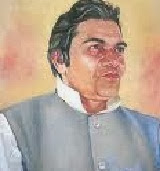
‘Madhu Limaye’ was born on 1st May, 1922 at Pune, India. His father’s name was Ramchandra Mahadev Limaye. He was educated at Fergusson College, Pune, India. He was married to Professor Smt. Champa Limaye.

Madhu Limaye was an Indian Socialist essayist and activist. He was the follower of Ram Manohar Lohia. He played an active part in the JP movement. Madhu Limaye was a freedom fighter. In 1955, Portugese put him in jail from where he wrote letters to his little son, Aniruddha, also called Popat. In retirement, through the 1980s, he continued to write. He was especially caustic on Constitutional issues. 

Short Essay on \’Govardhan Puja\’ (100 Words)

\’Govardhan Puja\’ is a famous festival of Hindus. It is widely celebrated in the northern part of India. This is the fourth day of Diwali. It is celebrated on the first day of Shukla Paksha of Karthik month according to Hindu Calendar. It is celebrated on the next day of Diwali festival.

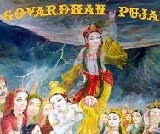
Govardhan Puja is a festival to worship Lord Krishna and Mount Govardhan popularly known as Govardhan Parvat. It is celebrated in commemoration of lifting the mountain Govardhan by Lord Krishna on his finger tip. The day is to worship Govardhan Parvat which is said to have saved its’ inhabitants from incessant rains. It symbolizes the importance of nature in our lives. 
 

Short Essay on \’Govardhan Puja\’ (100 Words)

\’Govardhan Puja\’ is a famous festival of Hindus. It is widely celebrated in the northern part of India. This is the fourth day of Diwali. It is celebrated on the first day of Shukla Paksha of Karthik month according to Hindu Calendar. It is celebrated on the next day of Diwali festival.

Govardhan Puja is a festival to worship Lord Krishna and Mount Govardhan popularly known as Govardhan Parvat. It is celebrated in commemoration of lifting the mountain Govardhan by Lord Krishna on his finger tip. The day is to worship Govardhan Parvat which is said to have saved its’ inhabitants from incessant rains. It symbolizes the importance of nature in our lives. 
 

Short Essay on \’Govardhan Puja\’ (100 Words)

\’Govardhan Puja\’ is a famous festival of Hindus. It is widely celebrated in the northern part of India. This is the fourth day of Diwali. It is celebrated on the first day of Shukla Paksha of Karthik month according to Hindu Calendar. It is celebrated on the next day of Diwali festival.

Govardhan Puja is a festival to worship Lord Krishna and Mount Govardhan popularly known as Govardhan Parvat. It is celebrated in commemoration of lifting the mountain Govardhan by Lord Krishna on his finger tip. The day is to worship Govardhan Parvat which is said to have saved its’ inhabitants from incessant rains. It symbolizes the importance of nature in our lives. 
 

Short Biography of \’Sardar Vallabhbhai Patel\’ (176 Words)

Full name of \’Sardar Vallabhbhai Patel\’ was Sardar Vallabhbhai Jhaverbhai Patel. He was born on 31 October 1875 in Nadiad, Gujarat, India. His father\’s name was Jhaverbhai Patel, who was a simple farmer. His mother\’s name was Laad Bai, who was a simple lady.

Sardar Vallabhbhai Patel was a very hard-working individual from his childhood. He used to help his father in farming and also took time for his studies. He became an Indian barrister and statesman.

Sardar Vallabhbhai Patel was one of the leaders of the Indian National Congress and one of the founding fathers of the Republic of India. He took active part in the struggle of India.

Sardar Vallabhbhai Patel became the first Home Minister and Deputy Prime Minister of India. He used strength and determination to bring together the many Indian princely states to form one united country- India as we know it today. He was often known as the \’Iron Man of India\’.

Sardar Vallabhbhai Patel died on 15 December 1950 at the age of 75. He will ever be remembered for his great works. 

Short Biography of \’Sardar Vallabhbhai Patel\’ (176 Words)

Full name of \’Sardar Vallabhbhai Patel\’ was Sardar Vallabhbhai Jhaverbhai Patel. He was born on 31 October 1875 in Nadiad, Gujarat, India. His father\’s name was Jhaverbhai Patel, who was a simple farmer. His mother\’s name was Laad Bai, who was a simple lady.

Sardar Vallabhbhai Patel was a very hard-working individual from his childhood. He used to help his father in farming and also took time for his studies. He became an Indian barrister and statesman.

Sardar Vallabhbhai Patel was one of the leaders of the Indian National Congress and one of the founding fathers of the Republic of India. He took active part in the struggle of India.

Sardar Vallabhbhai Patel became the first Home Minister and Deputy Prime Minister of India. He used strength and determination to bring together the many Indian princely states to form one united country- India as we know it today. He was often known as the \’Iron Man of India\’.

Sardar Vallabhbhai Patel died on 15 December 1950 at the age of 75. He will ever be remembered for his great works. 

Short Biography of \’Sardar Vallabhbhai Patel\’ (176 Words)

Full name of \’Sardar Vallabhbhai Patel\’ was Sardar Vallabhbhai Jhaverbhai Patel. He was born on 31 October 1875 in Nadiad, Gujarat, India. His father\’s name was Jhaverbhai Patel, who was a simple farmer. His mother\’s name was Laad Bai, who was a simple lady.

Sardar Vallabhbhai Patel was a very hard-working individual from his childhood. He used to help his father in farming and also took time for his studies. He became an Indian barrister and statesman.

Sardar Vallabhbhai Patel was one of the leaders of the Indian National Congress and one of the founding fathers of the Republic of India. He took active part in the struggle of India.

Sardar Vallabhbhai Patel became the first Home Minister and Deputy Prime Minister of India. He used strength and determination to bring together the many Indian princely states to form one united country- India as we know it today. He was often known as the \’Iron Man of India\’.

Sardar Vallabhbhai Patel died on 15 December 1950 at the age of 75. He will ever be remembered for his great works. 

Short Essay on \’Madhu Limaye\’ (100 Words)

\’Madhu Limaye\’ was born on 1st May, 1922 at Pune, India. His father\’s name was Ramchandra Mahadev Limaye. He was educated at Fergusson College, Pune, India. He was married to Professor Smt. Champa Limaye.

Madhu Limaye was an Indian Socialist essayist and activist. He was the follower of Ram Manohar Lohia. He played an active part in the JP movement. Madhu Limaye was a freedom fighter. In 1955, Portugese put him in jail from where he wrote letters to his little son, Aniruddha, also called Popat. In retirement, through the 1980s, he continued to write. He was especially caustic on Constitutional issues. 

Short Essay on \’Madhu Limaye\’ (100 Words)

\’Madhu Limaye\’ was born on 1st May, 1922 at Pune, India. His father\’s name was Ramchandra Mahadev Limaye. He was educated at Fergusson College, Pune, India. He was married to Professor Smt. Champa Limaye.

Madhu Limaye was an Indian Socialist essayist and activist. He was the follower of Ram Manohar Lohia. He played an active part in the JP movement. Madhu Limaye was a freedom fighter. In 1955, Portugese put him in jail from where he wrote letters to his little son, Aniruddha, also called Popat. In retirement, through the 1980s, he continued to write. He was especially caustic on Constitutional issues. 

Short Essay on \’Madhu Limaye\’ (100 Words)

\’Madhu Limaye\’ was born on 1st May, 1922 at Pune, India. His father\’s name was Ramchandra Mahadev Limaye. He was educated at Fergusson College, Pune, India. He was married to Professor Smt. Champa Limaye.

Madhu Limaye was an Indian Socialist essayist and activist. He was the follower of Ram Manohar Lohia. He played an active part in the JP movement. Madhu Limaye was a freedom fighter. In 1955, Portugese put him in jail from where he wrote letters to his little son, Aniruddha, also called Popat. In retirement, through the 1980s, he continued to write. He was especially caustic on Constitutional issues. 

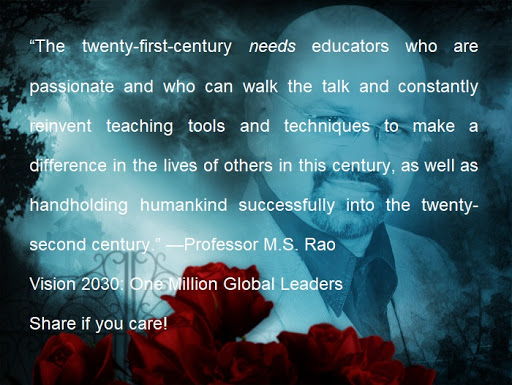
“The twenty-first-century needs educators who are passionate and who can walk the talk and constantly reinvent teaching tools and techniques to make a difference in the lives of others in this century, as well as handholding humankind successfully into the twenty-second century.” —Professor M.S. Rao

“The twenty-first-century needs educators who are passionate and who can walk the talk and constantly reinvent teaching tools and techniques to make a difference in the lives of others in this century, as well as handholding humankind successfully into the twenty-second century.” —Professor M.S. Rao
Vision 2030: One Million Global Leaders

Learning preferences – Part one

I will add the recording of the session to the web page as soon as I have sorted it. And guess what, the digital camera decided not to take the pic of the whiteboard properly, however, all the items are listed on the web page so apologies to those of you who prefer more visual methods. I think it was really interesting how the majority of you clustered together in the Celebrity Treasure Island Hunt for the prize as people preferring a diagrammatic map, step-by-step instructions and working in a group. The Index of Learning Styles Questionnaire will help you see the relevance of this merging of learning preferences. 

Second half of the Learning preference workshop 

The second part of the workshop is on Wednesday 17 September, 1205 to 1250 in H311 when we will have more discussion about learning preferences and look more in-depth at the different models for learning styles. I hope you get a chance before then to try out one of the learning styles questionnaires, with which you are not familiar. Some of the questionnaires are listed on the 50 ways website. Remember the VARK is a homegrown version of VAK. Don Clark’s webite – Learning Styles & Preferences – has a good overview of most of the learning styles. 

I will continue the discussion around learning preferences on here so it will be good to get your feedback. 

Short Essay on \’Rani Lakshmibai\’ (220 Words)

\’Rani Lakshmibai\’ was born on November 19, 1835 at Kashi. Her father\’s name was Moropant. Her mother\’s name was Bhagirathi Devi. Laxmi\’s childhood name was Manikarnika but affectionately she was called Manu in her childhood.

Rani Lakshmibai was married to Gangadhar Rao in 1842. Gangadhar Rao was the king of Jhansi. In 1851, the Rani had a son; he unfortunately died when he was barely four months old. Raja Gangadhar Rao could not bear the shock and after a long illness, he died on November 21, 1853.

Jhansi became a major center of the revolt of 1857. Rani Lakshmibai of Jhansi, began to strengthen security and started a volunteer army. Ordinary people also contributed to the revolt. In 1857, the kings of the neighboring state of Jhansi, Orchha and Datia attacked. Rani Lakshmibai defeated them successfully. In March 1858 the British army besieged the city of Jhansi. But Rani, with her adopted son Damodar Rao was able to escape. Rani died on June 18, 1858.

Rani Lakshmibai was the great heroine of the First War of Indian Freedom. She was the embodiment of patriotism, self-respect and heroism. Her life is a thrilling story of womanliness, courage, adventure, deathless patriotism and martyrdom. Rani Lakshmibai was the real meaning of the ideal heroine. She was proud of not just India but the world\’s women.