Cabinet approves Amendments/Extension/Repeal in Acts dealing with Goods and Services Tax, Value Added Tax and Excise Duty in view of merger of Dadra & Nagar Haveli and Daman & Diu

The Union Cabinet, chaired by the Prime Minister Shri Narendra Modi, has approved amendments/extension/repeal in the following Acts and Regulations dealing with Goods and Services Tax (GST), Value Added Tax (VAT) and State Excise, and for designation of Daman as Headquarter:


  1. the Central Goods and Service Tax Act, 2017 (No.12 of 2017) to be amended as Central Goods and Service Tax (Amendments) Regulation, 2020;
  2. the Union Territory Goods and Service Tax Act, 2017 (No. 14 of 2017) to be amended as Union Territory Goods and Service Tax (Amendments) Regulation, 2020;
  3. the Dadra and Nagar Haveli Value Added Tax Regulation, 2005 (No.2 of 2005) to be amended as Dadra and Nagar Haveli and Daman and Diu Value Added Tax (Amendments) Regulation, 2020;
  4. the Daman and Diu Value Added Tax Regulation, 2005 (No.1 of 2005) to be repealed as Daman and Diu Value Added Tax (Repeal) Regulation, 2C20;
  5. the Goa, Daman and Diu Excise Duty Act, 1964 (No.5 of 1964) to be amended as Dadra and Nagar Haveli and Daman and Diu Excise Duty (Amendment) Regulation, 2020;
  6. the Dadra and Nagar Haveli Excise Duty Regulation, 2012 (No.1 of 2012) to be repealed as Dadra and Nagar Haveli Excise Duty (Repeal) Regulation, 2020;
  • vii. Designation of Daman as Headquarter of Union Territory of Dadra and Nagar Haveli and Daman and Diu.


These amendments will lead to “Minimum Government, Maximum Governance” by way of having common taxation authorities: better delivery of services to the citizens by reducing duplication of work and improving administrative efficiency, will help in bringing more uniformity in Laws relating to GST, VAT and STATE EXCISE and it will also help to avoid any legal complications in the levy and collection of GST Tax, VAT, State Excise, including recovery of arrears Moreover, the said amendments not only bring uniformity in taxation laws but also strengthen the system of laws.


The U.T. Administration of Dadra & Nagar Haveli and Daman & Diu have taken a big step to realize vision of “Minimum Government, Maximum Governance” for the people of the two UTs, besides saving to government exchequer and ensuring uniformity, stability and consistency in day to day functioning of taxation authorities. This is achieved by making Amendments/extension/repeal in Acts dealing with Goods and Services Tax (GST), Value Added Tax (VAT) and Excise, and by designation of Daman as Headquarters of UT of Dadra and Nagar Haveli and Daman and Diu in view of merger of Dadra and Nagar Haveli and Daman and Diu on appointed date of 26.01.2020.

**********

Cabinet approves signing of MoU between Brazil and India for bilateral cooperation in the field of early childhood

The Union Cabinet, chaired by the Prime Minister Shri Narendra Modi, has given its approval for signing of Memorandum of Understanding (MoU) on Cooperation between the Ministry of Citizenship of the Federative Republic of Brazil and the Ministry of Women & Child Development of the Republic of India for bilateral cooperation in the field of early childhoods.

Benefits

It will strengthen the bonds of friendship between the two countries and increase bilateral cooperation on the issues of early childhood care.  Both countries will benefit from exchange of best practices of the respective countries in the field of early childhood.

*******

Cabinet approves Extension, of tenure of the Commission constituted under Article 340 of the constitution to examine the issue of sub-categorization within Other Backward Classes in the Central List

The Union Cabinet, chaired by the Prime Minister Shri Narendra Modi, has approved the extension of the term of the Commission to examine the issue of Sub-categorization of Other Backward Classes, by six months that is up to 31.7.2020.

The Cabinet has also approved addition of following Term of Reference to the existing Terms of Reference of the “Commission” –

“iv. to study the various Entries in the “Central List of OBCs and recommend correction of any repetitions, ambiguities, inconsistencies and errors of spelling or transcription.”


Impact:

The Communities in the existing list of OBCs which have not been able to get any major benefit of the scheme of reservation for OBCs for appointment in Central Government posts & for admission in Central Government Educational Institutions are expected to be benefitted upon implementation of the recommendations of the Commission. The Commission is likely to make recommendations for benefit of such marginalized communities in the Central List of OBCs.


Financial Implications:

The expenditure involved are related to the establishment and administration costs of the Commission, which would continue to be borne by the Department of Social Justice and Empowerment.


Benefits:

All persons belonging to the castes/communities which are included in the Central List of SEBCs but which have not been able to get any major benefit of the existing scheme of reservation for OBCs in Central Government posts & for admission in Central Government Educational Institutions would be benefitted.


Implementation strategy and targets:

Orders for extension of the term of the Commission and addition in its Terms of Reference will be notified in the Gazette ‘in the form of an Order made by the President, after receipt of the approval of the Hon’ble President to the same.


Background:

The Commission was constituted under article 340 of the Constitution with the approval of President on 2nd  October, 2017. The Commission, headed by Justice (Retd.) Smt. G. Rohini commenced functioning on 11th October, 2017 and has since interacted with all the Stats/UTs which have subcategorized OBCs, and the State Backward Classes Commissions. The Commission has come to the view that it would require some more time to submit, its report since the repetitions, ambiguities, inconsistencies and errors of spelling or transcription etc appearing in the existing Central List of OBCs need to be cleared. Hence the Commission has sought extension of its term by six, that is upto 31st July 2020 and also addition in its existing Terms of Reference.


**********

Cabinet approves Model MoU with foreign countries for unilateral/bilateral recognition of Certificates of Competency of seafarers

The Union Cabinet, chaired by the Prime Minister Shri Narendra Modi, has given its approval for the Model Memorandum of Understanding (MoU) for unilateral/bilateral recognition of Certificates, pursuant to Regulation  1/10 of International Convention on Standards of Training, Certification and Watchkeeping (STCW) for Seafarers, 1978 as amended to be signed between the Directorate General of Shipping, Government of India and its counterparts in foreign countries, with the approval of Minister-in-charge of Shipping and the Minister of External Affairs.

Benefits

The unilateral MoU would facilitate unilateral recognition by another country of the certificates issued by the Directorate General of Shipping to Indian seafarers, without seeking similar recognition by India of the certificates issued by that country.

Indian Seafarers, therefore, will be eligible to be placed on ships under the flag of that country for employment, thus leading to increased employment opportunities. The proposed bilateral MoU will enable India and another country with which such an MoU may be entered, to mutually recognize maritime education and training, certificates of competency, endorsements, documentary evidence of training and medical fitness certificates, issued to the seafarers who are citizens of respective countries in accordance with the provisions of regulation 1/10 of the STCW Convention.

The bilateral MoU would therefore, make the seafarers of both the countries to be eligible for employment on ships of either party based on the certificates so recognized.  India being a seafarer supplying nation with large pool of trained seafarers will stand to be benefitted.

**********

Cabinet approves MoUs among India, Tunisia and Papua New Guinea Electoral Commission for elections for cooperation in the field of electoral management and administration

The Union Cabinet, chaired by the Prime Minister Shri Narendra Modi, has given its approval for the proposal of the Legislative Department for allowing the Election Commission to enter into Memoranda of Understanding (MoU) with the Independent High Authority for Elections of Tunisia (ISIE) and the Papua New Guinea Electoral Commission(PNGEC) for elections for cooperation in the field of electoral management and administration.

Impact:

The MOUs would promote bilateral cooperation, aimed at building technical assistance/ capacity support for the Independent High Authority for Elections of Tunisia (ISIE) and the Papua New Guinea Electoral Commission(PNGEC) for elections for cooperation in the field of electoral management and administration, envisaging cooperation in the field of electoral management and administration and providing a leg-up to such bodies in conducting elections in their respective countries. This would also result in bolstering India’s international relations.

Background

The Election Commission has been participating in promoting cooperation in the field of election matters and electoral processes across the world with certain foreign countries and agencies by adopting the mode of Memorandum of Understanding (MoU) signed by the concerned parties. The Election Commission, a constitutional body, conducts the largest electoral exercise in the world. It is the responsibility of the Election Commission to organise free and fair elections in the country of about 85 crore voters with diverse socio-political and economic backgrounds. In recent years, the role being played by the Election Commission ensures greater participation of people in political affairs. India, today, is considered as the world’s ‘largest’ democratic country. The success of democracy in India has attracted the attention of almost every political system around the world.

In its pursuit of excellence, the Election Commission has been receiving various proposals from foreign electoral bodies for developing bilateral relations in the field of election and matters connected therewith. The Election Commission forwarded a proposal to the Ministry of Law and Justice, Legislative Department relating to signing of Memorandum of Understanding (MoU) by it with the Election Commission of Maldives on cooperation in the field of electoral management and administration.

These MoUs contain standard articles/clauses which broadly express promotion of cooperation in the field of electoral management and administration including promotion of exchange of knowledge and experience in the field of organizational and technical development of electoral process; support in exchanging information, institutional strengthening and capacity building, training of personnel, holding regular consultations; etc.


*******

Short Essay on ‘Season I Like Most’ (157 Words)

Among the seasons I like Rainy Season the most. The Rainy Season comes after the Summer Season. This season begins in the middle of June, and continues upto September in India. According to Hindu Calendar this season is felt in the months of Asaadha and Shravana. The Rainy Season begins in India when the South West Monsoon winds begin to blow over this country. During the season, the sky is generally overcast with cloud. The Rainy Season comes after the Summer Season, so, this season brings relief to the burning earth scorched in the summer heat.

The Rainy Season bring the Nature back to life. This Season is helpful to us in many ways. The soil becomes wet and the leaves of trees soothed and nourished with new drops of water. Trees look more and more green. It is a is a good season for cultivation. We enjoy rains. Sometimes, rains come along with lightning and thunder. 
 

Short Biography of \’Dr. Zakir Hussain\’ (210 Words)

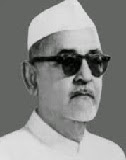
\’Dr. Zakir Hussain\’ was born on 8 February, 1897 at Hyderabad, India. His father\’s name was Fida Hussain Khan. His mother\’s name was Naznin Begum. His father died when he was only ten years old and his mother died when he was only fourteen years old.

Zakir Hussain took his early education at Etawah of Uttar Pradesh State. He received his doctorate in economics from the University of Berlin in 1926. Zakir Hussain took active part in the freedom struggle of India.

Zakir Hussain became the Governor of Bihar from 1957 to 1962. He became the second Vice President of India from 1962 to 1967. He was elected President of India and became the third President of India on 13 May 1967. During his presidential tenure Zakir Hussain died on 3 May 1969.

Dr. Zakir Hussain was the first Muslim President of India. He was the first Indian President to die in office. He was a great educationist and intellectual. He was awarded the Bharat Ratna, India\’s highest national honour, in 1963. A great humanist he served the national interests and secularism in the capacity of an educationist. Among the modern Indian thinkers, and more particularly among the nationalist Muslim leaders, the name of Dr. Zakir Hussain is always remembered with great respect. 

Short Biography of \’Dr. Zakir Hussain\’ (210 Words)

\’Dr. Zakir Hussain\’ was born on 8 February, 1897 at Hyderabad, India. His father\’s name was Fida Hussain Khan. His mother\’s name was Naznin Begum. His father died when he was only ten years old and his mother died when he was only fourteen years old.

Zakir Hussain took his early education at Etawah of Uttar Pradesh State. He received his doctorate in economics from the University of Berlin in 1926. Zakir Hussain took active part in the freedom struggle of India.

Zakir Hussain became the Governor of Bihar from 1957 to 1962. He became the second Vice President of India from 1962 to 1967. He was elected President of India and became the third President of India on 13 May 1967. During his presidential tenure Zakir Hussain died on 3 May 1969.

Dr. Zakir Hussain was the first Muslim President of India. He was the first Indian President to die in office. He was a great educationist and intellectual. He was awarded the Bharat Ratna, India\’s highest national honour, in 1963. A great humanist he served the national interests and secularism in the capacity of an educationist. Among the modern Indian thinkers, and more particularly among the nationalist Muslim leaders, the name of Dr. Zakir Hussain is always remembered with great respect. 

Short Biography of \’Dr. Zakir Hussain\’ (210 Words)

\’Dr. Zakir Hussain\’ was born on 8 February, 1897 at Hyderabad, India. His father\’s name was Fida Hussain Khan. His mother\’s name was Naznin Begum. His father died when he was only ten years old and his mother died when he was only fourteen years old.

Zakir Hussain took his early education at Etawah of Uttar Pradesh State. He received his doctorate in economics from the University of Berlin in 1926. Zakir Hussain took active part in the freedom struggle of India.

Zakir Hussain became the Governor of Bihar from 1957 to 1962. He became the second Vice President of India from 1962 to 1967. He was elected President of India and became the third President of India on 13 May 1967. During his presidential tenure Zakir Hussain died on 3 May 1969.

Dr. Zakir Hussain was the first Muslim President of India. He was the first Indian President to die in office. He was a great educationist and intellectual. He was awarded the Bharat Ratna, India\’s highest national honour, in 1963. A great humanist he served the national interests and secularism in the capacity of an educationist. Among the modern Indian thinkers, and more particularly among the nationalist Muslim leaders, the name of Dr. Zakir Hussain is always remembered with great respect. 

Short Essay on \’Bhai Dooj\’ (80 Words)

\’Bhai Dooj\’ is a famous festivals of Hindus. It is celebrated on the second day of Shukla Paksha in the month of Karthik according to Hindu Calendar. Bhai Dooj normally falls two days after Diwali festival.

On this day, sisters pray and wish for the long life, health, wealth and prosperity of their brothers. The brothers in return takes a lifelong vow to protect their sisters. On the day of Bhai Dooj, brothers and sisters reaffirm their pious bonds of affection.

Short Essay on \’Bhai Dooj\’ (80 Words)

\’Bhai Dooj\’ is a famous festivals of Hindus. It is celebrated on the second day of Shukla Paksha in the month of Karthik according to Hindu Calendar. Bhai Dooj normally falls two days after Diwali festival.

On this day, sisters pray and wish for the long life, health, wealth and prosperity of their brothers. The brothers in return takes a lifelong vow to protect their sisters. On the day of Bhai Dooj, brothers and sisters reaffirm their pious bonds of affection.

Short Essay on \’Bhai Dooj\’ (80 Words)

\’Bhai Dooj\’ is a famous festivals of Hindus. It is celebrated on the second day of Shukla Paksha in the month of Karthik according to Hindu Calendar. Bhai Dooj normally falls two days after Diwali festival.

On this day, sisters pray and wish for the long life, health, wealth and prosperity of their brothers. The brothers in return takes a lifelong vow to protect their sisters. On the day of Bhai Dooj, brothers and sisters reaffirm their pious bonds of affection.

Short Essay on \’Season I Like Most\’ (157 Words)

Among the seasons I like Rainy Season the most. The Rainy Season comes after the Summer Season. This season begins in the middle of June, and continues upto September in India. According to Hindu Calendar this season is felt in the months of Asaadha and Shravana. The Rainy Season begins in India when the South West Monsoon winds begin to blow over this country. During the season, the sky is generally overcast with cloud. The Rainy Season comes after the Summer Season, so, this season brings relief to the burning earth scorched in the summer heat.

The Rainy Season bring the Nature back to life. This Season is helpful to us in many ways. The soil becomes wet and the leaves of trees soothed and nourished with new drops of water. Trees look more and more green. It is a is a good season for cultivation. We enjoy rains. Sometimes, rains come along with lightning and thunder. 
 

Short Essay on \’Season I Like Most\’ (157 Words)

Among the seasons I like Rainy Season the most. The Rainy Season comes after the Summer Season. This season begins in the middle of June, and continues upto September in India. According to Hindu Calendar this season is felt in the months of Asaadha and Shravana. The Rainy Season begins in India when the South West Monsoon winds begin to blow over this country. During the season, the sky is generally overcast with cloud. The Rainy Season comes after the Summer Season, so, this season brings relief to the burning earth scorched in the summer heat.

The Rainy Season bring the Nature back to life. This Season is helpful to us in many ways. The soil becomes wet and the leaves of trees soothed and nourished with new drops of water. Trees look more and more green. It is a is a good season for cultivation. We enjoy rains. Sometimes, rains come along with lightning and thunder.