Short Essay on \’Season I Like Most\’ (157 Words)

Among the seasons I like Rainy Season the most. The Rainy Season comes after the Summer Season. This season begins in the middle of June, and continues upto September in India. According to Hindu Calendar this season is felt in the months of Asaadha and Shravana. The Rainy Season begins in India when the South West Monsoon winds begin to blow over this country. During the season, the sky is generally overcast with cloud. The Rainy Season comes after the Summer Season, so, this season brings relief to the burning earth scorched in the summer heat.

The Rainy Season bring the Nature back to life. This Season is helpful to us in many ways. The soil becomes wet and the leaves of trees soothed and nourished with new drops of water. Trees look more and more green. It is a is a good season for cultivation. We enjoy rains. Sometimes, rains come along with lightning and thunder. 

 

PM chairs the 32nd PRAGATI interaction

Prime Minister Shri Narendra Modi chaired the first PRAGATI meeting of the year 2020, today. It marked Prime Minister’s thirty-second interaction through PRAGATI – the ICT based multi-modal platform for Pro-Active Governance and Timely Implementation, involving Central and State governments.

In today’s PRAGATI meeting, PM discussed a total of eleven items, out of which nine are delayed projects. These nine projects, worth over Rs. 24,000 crores, are spread over nine states viz. Odisha, Telangana, Maharashtra, Jharkhand, Bihar, Karnataka, Andhra Pradesh, Kerala and Uttar Pradesh and three Union ministries. These include three from the Ministry of Railways, five from the Ministry of Road Transport and Highways and one from the Ministry of Petroleum and Natural Gas.

Progress under insurance schemes- PMJJBY and PMSBY schemes reviewed

Prime Minister in the meeting, reviewed the performance with regard to in grievances related to insurance schemes under Department of Financial Services viz. ‘Pradhan Mantri Jeevan Jyoti Bima Yojana’ (PMJJBY) and ‘Pradhan Mantri Suraksha Bima Yojana’(PMSBY).

Prime Minister also reviewed the progress under Crime and Criminal Tracking Network and Systems (CCTNS) project- a comprehensive and integrated system for effective policing through e-Governance.

In the previous thirty-one PRAGATI interactions, Prime Minister has reviewed a total of 269 projects with a total investment of Rs. 12.30 lakh crores. Prime Minister has also reviewed the resolution of grievance redressal related to 47 government programmes and schemes across 17 diverse sectors.

***

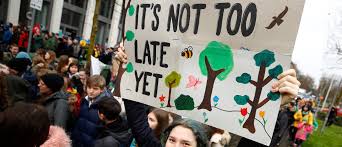
Address Climate Change Immediately―Share if You Care!

Can you imagine the planet in the 22nd century based on the current research findings? Can you imagine the status of precious humans and animals and their health conditions in the 22nd century?  You will find precious animals extinct and humans suffering from several health disorders and encountering unknown diseases.  If you want to prevent such a terrible future for humans and extinction of animals you must take appropriate steps immediately and earnestly. In fact, we are too late to take appropriate measures and implement the right strategies to check climate change. But it is better late than never. 
Climate change is a major issue globally. Global organizations and nonprofits have taken a serious note of it to ensure ecology and keep the planet safe for future generations. Unfortunately, the outcome is not effective as per the desired objectives because nations are not effective in implementing and people are not aware of its adverse effects.
Measures to Check Climate Change
It is a well-admitted fact that the earth has warmed up in some regions and got colder in other regions. You cannot blame the sun for it. It is the people who must own responsibility for their actions, improve their attitudes and adjust their behaviors to keep the planet safe. Here are some measures to be taken to ensure the mother planet safe. Don’t exploit nature. Live within your means. Use light bulbs that use less energy and more efficient heating and cooling systems. Avoid using plastic items. Be environment conscious. An integrated effort from all stakeholders including environmentalists, scientists, global organizations, nonprofits, and people is essential to combat climate change.
Conclusion
Each person must plant one sampling and maintain it regularly. As parents care for their children and see them growing every individual must care for the planted sampling and enjoy growing it into a tree. To conclude, mother nature is impartial and connects people irrespective of their communities and cultures. Hence, love mother nature and protect it for future generations.

Field trip – stone walls and landscape construction

Today I got out from under the fluorescent lights, and went on a field trip to see what Alan Ferguson and his landscape construction students were building. I followed Alan’s instructions to their secret location in Leith Valley, and knew I was in the right spot when I saw the team of 13 students busily working outside. The first sign that landscaping was in progress were the two stone pillars at the entrance to the property. They look magnificent and have a very stylish wrought iron gate attached. As part of the current project, students were building stone walls in the front yard of a very attractive villa. These are part of a small terraced garden.
It was interesting to watch Alan moving between the different students to help them in their different tasks. His teaching was like watching a conductor leading an orchestra – instead this time the stones were the music. Everyone had a different role in the team. Some students were carefully fitting parts of the stone jigsaw together, and others were cementing stones in place. Some students were wheeling barrows full of concrete for sealing the wall, or gravel for the walled garden, while others were conferring about the look of the wall and noting the irregularities.Everyone was a cog in the wheel. They were either working with someone else to decide on the best way to place a rock, or smooth the cement, or they were bringing materials for others to use. Some were practicing their skills in communication.
This was group work in action in an authentic situation. The practical construction work is underpinned by theory about the materials, and the principles of constructing a stone wall. The walls I saw were built from irregularly-shaped rocks, which were not easy to place, and some of those rocks looked pretty heavy. There was also chipping and shaping required as very few rocks fit neatly into the right spot in a wall. I am not sure of the correct terms for this process. And to add to the real live experience, while they worked on the walls, a few chickens wandered around to check things out. At one stage, a “wild” rabbit hopped past, pursued by one of the student’s children. That’s what I call flexible – working in a real location, amongst the livestock, and with a child in tow. Luckily the sun was shining though it got brisk when it disappeared behind the hill. If Alan hadn’t supported this flexibility, the student would have missed a day in class, and some pretty valuable hands on learning.
The construction of the stone walls and structures at the location in Leith Valley has been a three year project. Different groups of students have had the opportunity to work for a real client. Each group has constructed an aspect of the wall for the landscaped garden. Ideally, Alan would like to be able to teach the students to build stone structures like this on-site at the polytechnic, to take some of the pressure off having to have the walls “perfect” for a client.
As he said “That way they can make mistakes and it doesn’t matter, … they learn best by making mistakes”. Perhaps there is a compromise – some building on-site (which they already do when its wet) and some “real location” work – though the timeframes are tight as there are lots of things to learn for the Landscape Construction certificate.
The programme is one year long, and since it was changed to a unique programme and is not embedded in Horticulture, it is attracting students who are mainly interested in landscape construction. Apparently, this has helped with motivation levels as they are learning topics relevant to their path of study. I got a chance to talk to some of the students when they were having a breather and watching Alan sprinkling part of the wall and path to help the sand settle. A couple of students said they were looking forward to getting jobs so they could use their landscape construction skills. One student was intending to return to the landscaping firm for whom he had previously worked. The key to the skills they students were learning, according to Alan, was being able to practice the skills. What they were learning was just the start and required lots of practise.
I wonder if Alan would consider getting the students to build virtual stone walls to practice what they were learning in theory, before they went out on site to work? Not quite the same though is it? It really is about getting your hands dirty and wet, and braving the real outdoors, and learning from mistakes. Great work Alan, I really enjoyed “going on location”.

Short Essay on \’Rajendra Prasad Jayanti: 03 December\’ (230 Words)

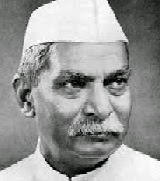
\’Rajendra Prasad Jayanti\’ is celebrated on 3rd December every year. It is the birth anniversary of Dr. Rajendra Prasad. Rajendra Prasad was born on 3rd December, 1884 in the Ziradei village, Siwan district of Bihar, India. His father\’s name was Mahadev Sahai, who was a scholar of Sanskrit and Persian languages. His mother\’s name was Kamleshwari Devi, who was a religious woman.

Rajendra Prasad was a good political leader, lawyer, statesman and social worker. He took active part in the freedom movements of India. He joined the Indian National Congress in 1911. He was elected as the President of the Indian National Congress during the Bombay session in October 1934. He was sent to Jail many times. He was elected the President of Constituent Assembly on 11 December 1946. Dr. Rajendra Prasad was elected the first President of the Republic of India.

Dr. Rajendra Prasad was subsequently awarded the Bharat Ratna, the India\’s highest civilian award. He authored many books. He was a great educationist and a man of world fame. High principles and ideals of Dr. Rajendra Prasad will always alive to show the right path. His birth anniversary is celebrated on 3rd December every year through out the country in a big way. Rich tributes are paid to him on this day. On this occasion several functions are organized at various places. Floral tributes are offered at his samadhi sthal. 

Short Essay on \’Rajendra Prasad Jayanti: 03 December\’ (230 Words)

\’Rajendra Prasad Jayanti\’ is celebrated on 3rd December every year. It is the birth anniversary of Dr. Rajendra Prasad. Rajendra Prasad was born on 3rd December, 1884 in the Ziradei village, Siwan district of Bihar, India. His father\’s name was Mahadev Sahai, who was a scholar of Sanskrit and Persian languages. His mother\’s name was Kamleshwari Devi, who was a religious woman.

Rajendra Prasad was a good political leader, lawyer, statesman and social worker. He took active part in the freedom movements of India. He joined the Indian National Congress in 1911. He was elected as the President of the Indian National Congress during the Bombay session in October 1934. He was sent to Jail many times. He was elected the President of Constituent Assembly on 11 December 1946. Dr. Rajendra Prasad was elected the first President of the Republic of India.

Dr. Rajendra Prasad was subsequently awarded the Bharat Ratna, the India\’s highest civilian award. He authored many books. He was a great educationist and a man of world fame. High principles and ideals of Dr. Rajendra Prasad will always alive to show the right path. His birth anniversary is celebrated on 3rd December every year through out the country in a big way. Rich tributes are paid to him on this day. On this occasion several functions are organized at various places. Floral tributes are offered at his samadhi sthal. 

\’Safer Internet Day\’ (110 Words)

\’Safer Internet Day\’ is observed in the month of February each year. This day is organised by Insafe to promote safer and more responsible use of online technology and mobile phones, especially amongst children and young people across the world. Safer Internet Day 2014 was celebrated on 11th February, 2014. 

On International Safer Internet Day, information are provided to people through Radio about avoiding online fraud in use of ATM and Debit Cards. Cyber ​​crime cell to make this day special programs for children and young people about the precautions to be taken during work in internet. Safer Internet Day make a personal promise to `Do One Thing\’ to stay safer online.
 

\’Safer Internet Day\’ (110 Words)

\’Safer Internet Day\’ is observed in the month of February each year. This day is organised by Insafe to promote safer and more responsible use of online technology and mobile phones, especially amongst children and young people across the world. Safer Internet Day 2014 was celebrated on 11th February, 2014. 

On International Safer Internet Day, information are provided to people through Radio about avoiding online fraud in use of ATM and Debit Cards. Cyber ​​crime cell to make this day special programs for children and young people about the precautions to be taken during work in internet. Safer Internet Day make a personal promise to `Do One Thing\’ to stay safer online.
 

\’Safer Internet Day\’ (110 Words)

\’Safer Internet Day\’ is observed in the month of February each year. This day is organised by Insafe to promote safer and more responsible use of online technology and mobile phones, especially amongst children and young people across the world. Safer Internet Day 2014 was celebrated on 11th February, 2014. 

On International Safer Internet Day, information are provided to people through Radio about avoiding online fraud in use of ATM and Debit Cards. Cyber ​​crime cell to make this day special programs for children and young people about the precautions to be taken during work in internet. Safer Internet Day make a personal promise to `Do One Thing\’ to stay safer online.
 

The Classroom Sleeper – Are We Paying Attention?

Source: Michael Wesch

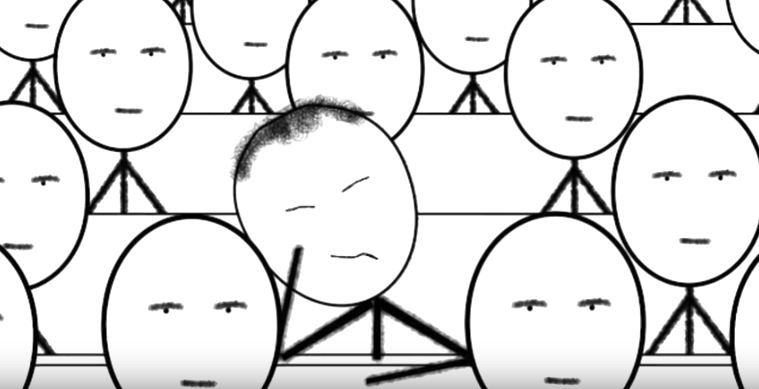
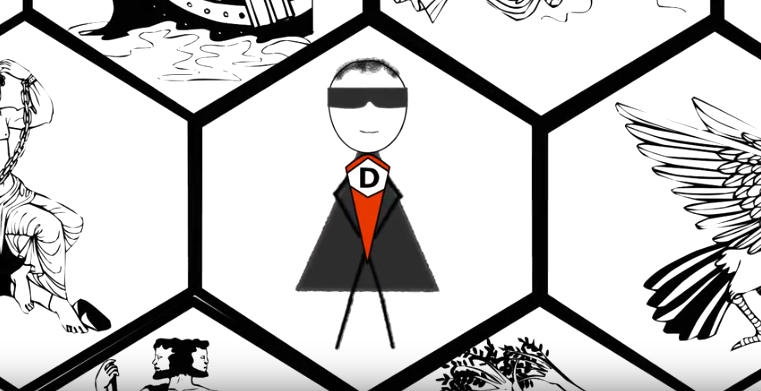
We’ve all had students in our classes over the years who sat in the back to put their heads down to sleep. This is not the student we’ve referred to as the “understudent,” who waits in the wings or quietly sits in the shadows of the room doing the required work. We’re not talking about the quiet ones, the introverts, or the “low verbals” either. The “sleeper” is different.

We recently showed a group of students preparing public service announcements one of our favorite videos called the \”Vision of Students Today,\” produced in 2007 by Michael Wesch, for its effective way to deliver a powerful message. That’s when we discovered his recent animated video titled “The Sleeper.”


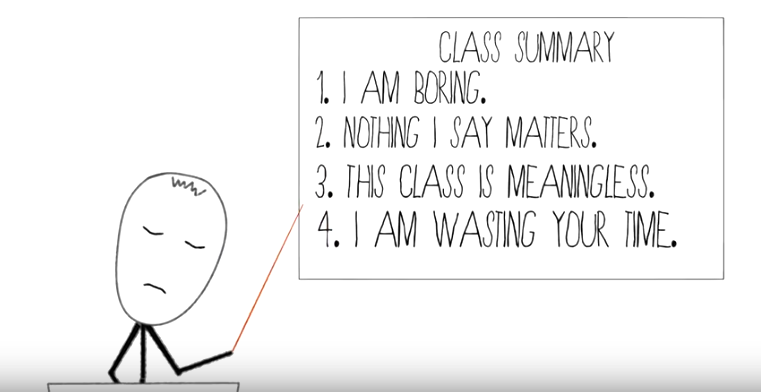
The message hit home. We’re positive that educators experienced the same frustration as the teacher in the animation, and perhaps even thought that the sleeper deliberately set out to annoy us. Some may have wondered if the student disengaged because of boredom, or questioned whether it was the material or their teaching style. For others, it’s personal and exasperating.

Source: Michael Wesch

Why are sleepers so unsettling?

Are they not paying attention, or are we?

How sensitive are we to students who disengage?


This becomes our challenge!

We should not be so quick to judge, or make assumptions about why they\’re tired. If we never stop to ask, we may never know the hidden talents that push students to stay up late to create something they are passionate about through sheer desire.

In an education system too focused on narrow pursuits, it misses the strengths, the interests, and the opportunities for not only the sleeper, but also for every other student as well.

Source: Michael Wesch

We need to stop and ask, make it personal, and tap curiosity. When we do, we just might find out something that surprises us.

Short Biography of ‘Madhu Limaye’ (100 Words)

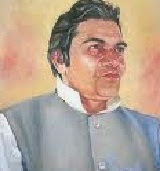
‘Madhu Limaye’ was born on 1st May, 1922 at Pune, India. His father’s name was Ramchandra Mahadev Limaye. He was educated at Fergusson College, Pune, India. He was married to Professor Smt. Champa Limaye.

Madhu Limaye was an Indian Socialist essayist and activist. He was the follower of Ram Manohar Lohia. He played an active part in the JP movement. Madhu Limaye was a freedom fighter. In 1955, Portugese put him in jail from where he wrote letters to his little son, Aniruddha, also called Popat. In retirement, through the 1980s, he continued to write. He was especially caustic on Constitutional issues.

Short Essay on ‘Sudha Chandran’ (212 Words)

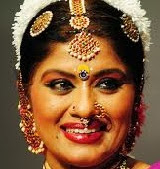
Sudha Chandran’ was born on 21 September 1964 in Kerala, India. She got her higher education from Mumbai, India. Sudha Chandran was born in a middle class family living in Mumbai, India. At the stage of three, she started learning Indian Classical Dance. Soon she became one of the most promising pupils of Bharat Natyam, a Classical Dance form.

Sudha had just turned sixteen when she and her parents set off on a vacation to South India. On their return journey, their bus was hit by a truck. It was a terrible accident and Sudha had fractured her leg. Unfortunately, the fractured foot got infected and lastely removed. She was fitted with an artificial foot.

Sudha resumed dance lessons. It was not easy at all with artificial foot. Her strong will and hard work paid off. Very soon she started dancing in front of an audience again. Soon she became very popular. Inspired by her story, in 1982 ‘Mayuri’, a Telugu film was made. She acted in the film herself. Later, in 1986, it was remade in Hindi, and called ‘Nache Mayuri’. After that she acted in many other films, too. Her television serials are also screened in several countries.

Sudha Chandran is much more than an a