Roadways project in Tripura

 The 49th Network Planning Group (NPG) meeting of PM GatiShakti National Master Plan (NMP) has recommended a roadways project in Tripura. Ms. Sumita Dawra, Special Secretary, Logistics Division, Department for Promotion of Industry and Internal Trade, Ministry of Commerce and Industry chaired the meeting of the NPG in New Delhi yesterday.

The road section of Khowai-Teliamura-Harina with a total length of 134.9 kms was considered for its improvement and widening to two lanes with paved shoulder of NH-208 in Tripura. It is a brownfield project with total cost of Rs 2,486 Crore. The project is planned with a multimodal connectivity approach; connectivity to industrial clusters and new SEZ namely Paschim Jalefa; efficient freight movement; reducing carbon footprint; optimized alignment and logistical efficiency.

The project road passes through Khowai, Gomati and South Tripura districts connecting places like Khowai, Teliamura, Twidu, Amarpur, Karbook and Harina in Tripura. It will also not only enhance connectivity interstate connectivity between Assam and Tripura but also give a boost to the economic and industrial activities in Tripura.

The planning of the project on NMP yielded the following key benefits-

  • Enhancing Logistics efficiency: By using NMP, the road length got reduced by 28 km (from 162 km to 134 km), thus reducing travel time by 2.5 hours.
  • Enhanced multi-modal connectivity: This project Corridor facilitates intermodal transport from Telimaura Railway Station and Manu Bazar Railway Station near Harina. The proposed road improves connectivity to the Airport at Agartala and proposed Multi-Modal Logistics Park (MMLP) at Udaipur.
  • Regional Connectivity: This corridor is very close to the Bangladesh border and it would connect Bangladesh through Kailashahar, Kamalpur and Khowai Border Check Post.
  • Connectivity to economic and social nodes: The road will boost connectivity to 4 economic nodes such as Industrial Cluster around Agartala, FCI depot, etc. and 13 social nodes such as Matabari Temple, Neer Mahal, Pilak Civilization Museum, Jampui Hills, Ambassa Eco Park, etc.
  • Facilitates Freight Movement from Kolkata to North Eastern States (majorly, Tripura, Mizoram and Manipur) to Bangladesh.
  • Boost to Industry and Exports Promotion: Project would facilitate movement of raw materials for Industry clusters in Tripura. Project would facilitate movement of manufactured goods like rubber, textile, bamboo, food processing etc., from economic nodes like i.e., SEZ located at Paschim Jalefa, Sabroom in South Tripura District and Industrial Clusters/Parks around Agartala and Udaipur.
  • The proposed road will connect North East India to Chittagong Port in Bangladesh. This would ensure EXIM connectivity.
  • Development in Tribal Area: Project enhances connectivity to 3 Tribal Districts- Khowai district, Gomati district, South Tripura district

The project is on Engineering Procurement & Construction (EPC) basis under Japan International Cooperation Agency (JICA) Official Development Assistance (ODA) Loan. The principles of PM GatiShakti NMP have been adopted during the planning of the road alignment. Alignment of the road is superimposed with data layers available on NMP Portal like railway lines, forest, power lines, water bodies etc. The intersections will be seen with forest and other sensitive zones to minimize environmental disruptions.

Institutional Mechanism of PM GatiShakti facilitated inter-ministerial consultations through NPG meeting for integrated planning and decision making. The 49th NPG meeting saw representation from Infrastructure Ministries/Departments including M/o Road Transport and Highways, M/o Railways, M/o Ports, Shipping and Waterways, M/o Civil Aviation, M/o Power, M/o Petroleum and Natural Gas, Department of Telecommunication (DoT), M/o New and Renewable Energy and NITI Aayog and from Tripura State Government, to discuss on the various aspects of the project.


****
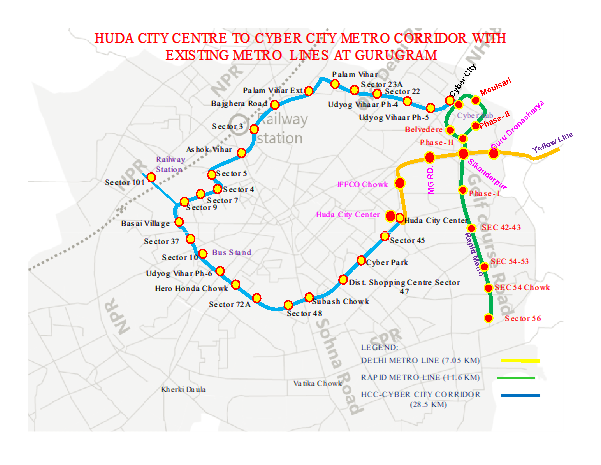
Metro Connectivity from HUDA City Centre to Cyber City, Gurugram with Spur to Dwarka Expressway

 The Union Cabinet, chaired by the Hon’ble Prime Minister Shri Narendra Modi, today approved Metro Connectivity from HUDA City Centre to Cyber City with Spur to Dwarka Expressway, Gurugram covering the distance of 28.50 km having 27 stations on the route. 

The total completion cost of the project will be Rs.5,452 crore.  This will be a standard gauge line of 1435 mm (5 ft 8.5 inches).  The entire project will be elevated.  The spur from Basai village has been provided for connectivity to depot.

The project is proposed to be completed in four years from the date of sanction of the Project and is to be implemented by Harayana Mass Rapid Transport Corporation Limited (HMRTC) which will be set up as a 50:50 Special Purpose Vehicle (SPV) of the Government of India and Government of Haryana after sanction order is issued.


Name of corridor

Length

(in KM)

No. of Station

Elevated/ Under Ground

Huda City Centre to Cyber City – Main corridor

26.65

26

Elevated

Basai Village to Dwarka Expressway – Spur

1.85

01

Elevated

Total

28.50

27


Benefits:

As on date there is no metro line in Old Gurugram. The main feature of this line is to connect New Gurugram with Old Gurugram. This network will connect with Indian Railway station. In next phase, it will provide connectivity to IGI airport. This will also provide overall economic development in the artea.

The detail of the approved corridor is as follows:

Particulars

HUDA City Centre to Cyber City, Gurugram

Length

28.50 Km

No of Stations

27 stations

(All Elevated)

Alignment

New Gurugram area

Old Gurugram area


HUDA City Centre – Sector 45 – Cyber Park – Sector 47 – Subhash Chowk – Sector 48 – Sector 72A – Hero Honda Chowk – Udyog Vihar Phase 6 – Sector 10 – Sector 37 – Basai Village – Sector 9 – Sector 7 – Sector 4 – Sector 5 – Ashok Vihar – Sector 3 – Bajghera Road – Palam Vihar Extension – Palam Vihar – Sector 23A – Sector 22 – Udyog Vihar Phase 4 – Udyog Vihar Phase 5 – Cyber City

Spur to Dwarka Expressway (Sector 101)

Design Speed

80 Kmph

Average Speed

34 Kmph


Proposed Completion Cost

Rs. 5,452.72 crore

GoI share

Rs. 896.19 cr

GoH share

Rs. 1,432.49 cr

Local Bodies Contribution (HUDA)

Rs. 300 cr

PTA (Pass through Assistance- Loan component)

Rs. 2,688.57 cr

PPP (Lift & Escalator)

Rs. 135.47 cr

Completion Time

4 Years from the date of Sanction of the project

Implementing Agency

Haryana Mass Rapid Transport Corporation Ltd. (HMRTC)

Financial Internal Rate of Return (FIRR)

14.07%

Economic Internal Rate of Return (EIRR)

21.79%

Gurugram estimated Population

Around 25 lakh


Estimated Daily Ridership

5.34 Lakhs – Year 2026

7.26 Lakhs – Year 2031

8.81 Lakhs – Year 2041

10.70 Lakhs – Year 2051


Route map of proposed corridor is as per Annexure-1.

Loan is being tied up with European Investment Board (EIB) and World Bank (WB).

Background:

Other Metro Lines in Gurugram:

a) Yellow Line of DMRC (Line-2)- shown as yellow in Annexure-1

i) Route length- 49.019 km (Samaypur Badli- HUDA City Centre; 37 Stations)

ii) Delhi portion- 41.969 km (Samaypur Badli- Arjangarh; 32 Stations)

iii) Haryana portion- 7.05 km (Guru Dronacharya – HUDA City Centre; 5 Stations)

iv) Daily ridership- 12.56 lakhs

v) Connectivity of proposed line with Line-2 at HUDA City Centre

vi) Date of commencement of operation at different stretches

Vishvidyalaya to Kashmere Gate

Dec 2004

Kashmere Gate to Central Secretariat

July 2005

Vishvavidyalaya to Jehangirpuri

Feb 2009

Qutab Minar to Huda City

Jun 2010

Qutub Minar to Central Secretariat

Sept 2010

Jehangirpuri to Samaypur Badli

Nov 2015


       This line is broad gauge 1676 mm (5 feet 6 inches gauge).

b) Rapid Metro Gurugram (Shown as Green in Annexure-1)

i) Route length-11.6 km

ii) Standard Gauge- 1435 mm (4 ft 8.5 inches)

ii) Line constructed in two phases.

  • First phase is loop between Sikandarpur to Cyber Hub with total route length 5.1 km, initially constructed by consortium of DLF and two companies of IL&FS group i.e. IERS (IL&FS Enso Rail system) and ITNL (IL&FS Transport Network Limited). The first phase was run by SPV named Rapid Metro Gurgaon Limited wef 14.11.2013.
  • Second phase is between Sikandarpur to Sector-56 with route length of 6.5 km, initially constructed by consortium of two companies of IL&FS i.e. ITNL (IL&FS Transport Network Limited) and IRL (IL&FS Rail Limited). This phase was run by SPV namely Rapid Metro Gurgaon South Limited since 31.03.2017
  • The operation was taken over by Haryana Mass Rapid Transit Company (HMRTC) since 22.10.2019 in terms of High Court order when concessionaire backed out to run this system
  • The operation of this line has been entrusted to DMRC by HMRTC. Prior to this DMRC continued to run rapid metro line wef 16.09.2019.
  • Average ridership of Rapid Metro Gurugram is about 30,000. In weekdays total daily ridership is about 48,000
  • Connectivity of proposed line with Rapid Metro Line is at Cyber Hub

Multi Modal Connectivity:

  • With Railway Station near Sector-5- 900 m
  • With RRTS at Sector-22
  • With yellow line station at HUDA City Centre

Sector wise map of Gurugram is enclosed as Annexure-2.

Project preparedness:

  • 90% land is Govt land and 10% private
  • Shifting of utilities started
  • World Bank and European Investment Bank approached
  • GC tendering under process

                                                                                                        Annexure-1


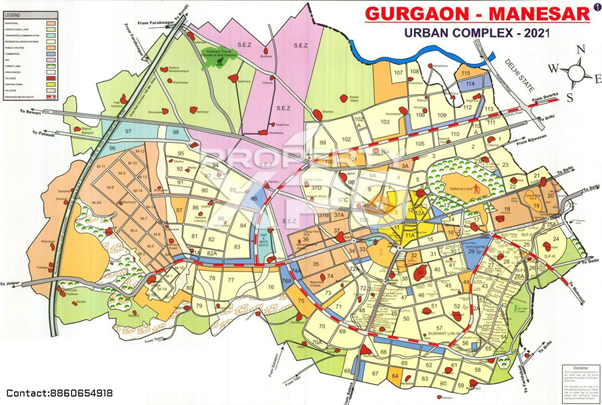
                                                                                                                                                                   Annexure-2


*****

World Food Safety

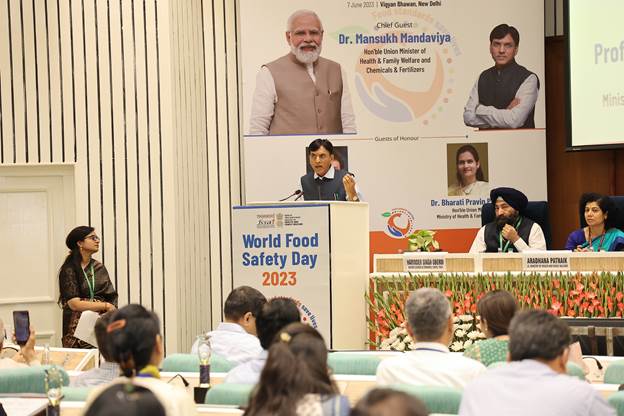
 The Food Safety and Standards Authority of India (FSSAI) reaffirmed its dedication to food safety and innovation by organizing an interactive session on June 7th, 2023 (Wednesday) at Vigyan Bhavan, in honor of World Food Safety Day. The event witnessed the participation of Dr. Mansukh Mandaviya, the Union Minister for Health and Family Welfare. The event was also attended by the Minister of State for Health and Family Welfare Prof S.P. Singh Baghel.

At the event, Dr. Mansukh Mandaviya unveiled the 5th State Food Safety Index (SFSI), which evaluates the performance of states and union territories across six different aspects of food safety. The release of this index coincided with the interactive session. Launched in 2018-19, the SFSI aims to foster healthy competition and catalyze positive change in the food safety ecosystem throughout the country, ultimately ensuring the provision of safe and wholesome food to all residents.

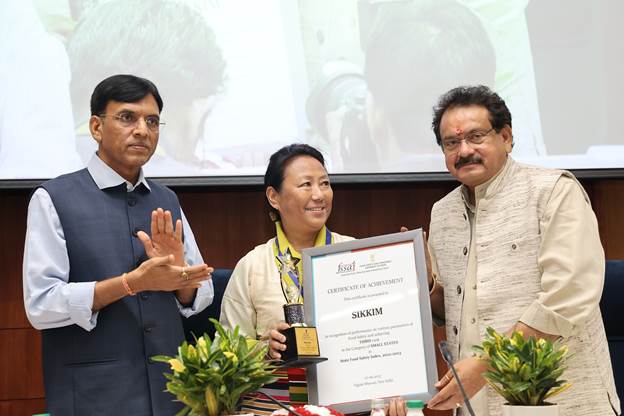
Recognizing the achievements of various states and union territories, Dr. Mansukh Mandaviya felicitated the winners based on their rankings for the year 2022-23. Among the larger states, Kerala secured the top ranking, followed by Punjab and Tamil Nadu Among the smaller states, Goa emerged as the leader, followed Manipur and Sikkim Additionally, Jammu and Kashmir, Delhi and Chandigarh secured the first, second, and third ranks respectively among the union territories. Dr. Mansukh Mandaviya also commended states that demonstrated significant improvement in their State Food Safety Index scores.

Furthermore, the Union Health Minister honored the winners of the Eat Right Challenge for Districts – Phase II. These districts showcased outstanding efforts in implementing plans to improve the food environment and raise awareness about food safety. Remarkably, most of the districts with exceptional results were located in Tamil Nadu, Madhya Pradesh, West Bengal, Uttar Pradesh, and Maharashtra. Out of the 260 participating districts, 31 successfully achieved a score of 75% or higher.

To commemorate the 75th anniversary of India’s Independence, as well as the International Year of Millets, the FSSAI envisioned organizing Eat Right Millets Melas across the country. These melas serve as platforms to showcase the diversity of cuisines, as well as millet recipes, in the country. In recognition of the outstanding efforts made by states and union territories, certificates of appreciation were presented to those states who have successfully conducted or Eat Right Millets Melas in their districts.

Dr Mansukh Mandaviya announced that 25 lakh food business operators will be trained by FSSAI in the next 3 years to ensure that food quality standards are met across the country. He also announced the setting up of 100 Food Streets across the country which meet the quality benchmark for food safety, hygiene, and nutrition. “Food quality is a part of wellness”, Dr Mandaviya remarked.

Dr. Mansukh Mandaviya conveyed his heartfelt appreciation for the invaluable contributions made by the members of the Scientific Committee and Scientific Panels. He emphasized their pivotal role in shaping evidence-based policies and regulations concerning food safety.  In this regard he said, “The expertise and recommendations of these esteemed professionals have been instrumental in formulating effective strategies to address emerging challenges and ensure the highest standards of food safety across the nation. This gathering provides a platform for scientific experts to engage in thoughtful discussions and deliberations regarding food safety regulations, as well as the standards-setting process.” In setting food safety standards for the country, the Minister said that we should look at our own traditions, and heritage in terms of diet, lifestyle, seasonality of food products, so we can set our own food standards in the world.

Dr. Mandaviya also unveiled several innovative initiatives by FSSAI, including the Rapid Food Testing Kit (RAFT) portal. This portal aims to streamline the operations of the RAFT Scheme, ensuring transparency and accountability. Applicants can now conveniently apply for approval online, and all steps, from application processing to certificate issuance and renewal, can be carried out electronically. This digitalization promotes a paperless operation of the RAFT scheme, which was launched in 2019 to encourage the adoption of advanced technologies for food testing, screening, and surveillance purposes.

As part of the event, the Union Health Minister released three manuals designed to enhance food safety practices nationwide. These manuals include the Manual of Methods of Analysis of Foods – Fish & Fish Products, Manual of Methods of Analysis of Foods – Cereal and Cereal Products – 2nd edition, and Manual of Methods of Analysis of Foods – Beverages: Tea, Coffee & Chicory.

These manuals are tailored to align with the latest technological advancements in food analysis, ensuring the safety and quality of food products. Stakeholders in the food industry, including food businesses, regulatory officials, and consumers, will benefit from the valuable guidance provided in these manuals.

Prof. SP Singh Baghel while congratulating the winners said, “Awards not just limited to certificates, but it has a larger impact. It also places greater responsibility on you as you go forward to do something even bigger.” On the importance of food safety, he said, “No matter how remote a place is, it boasts of fast food stalls, hence guaranteeing food safety standards becomes even more important in ensuring the health of our citizens.”

The event was attended by distinguished guests, including Aradhana Patnaik, Joint Secretary, Ministry of Health and Family Welfare, Shri G. Kamala Vardhana Rao, CEO FSSAI, Dr. Harinder Singh Oberoi, Advisor (Science & Standards, CODEX), FSSAI, prominent members of the Scientific Committee and Scientific Panels of FSSAI, senior officials from the State Food Safety Departments and Municipal Corporations/Smart City Offices, professionals in food and nutrition, development agencies, food businesses, and other senior officials of FSSAI.

******

Seva, Sushasan and Garib Kalyan are the hallmarks of nine years

 Union Minister of State for Skill Development & Entrepreneurship and Electronics & IT, Shri Rajeev Chandrasekhar, today said Indian economy’s turnaround in the past nine years has been possible because of Prime Minister Shri Narendra Modi’s leadership and his proactive policies.

“The three words—Seva, Sushasan and Garib Kalyan—define the journey of the nine years’ of the Narendra Modi Government. When Prime Minister Shri Narendra Modi took over in 2014, the economy was in the doldrums. There was widespread corruption and nepotism, and innumerable scams. He had the task of not only resurrecting the economy but also instilling hope, pride and trust of Government among the citizens. Nine years on, not only has he been able to clean up most of the mess, but has steered the country to become the fifth largest economy in the world,” the Minister said, while addressing a Vyapari Sammelan at Ambassa in Tripura.

 “What could not be achieved in 65 years, India under PM Modi ji has achieved in nine years. India will soon emerge as the third largest economy in the world, next to the US and China,” he said.

Shri Rajeev Chandrasekhar also addressed a press conference later along with Lok Sabha MP Rebati Tripura and spoke about the achievements of the Narendra Modi Government during its nine years’ reign. Drawing a comparison between the UPA rule and Prime Minister Shri Narendra Modi’s nine-years in power, the Minister said, “PM Modi ji has displaced politics of corruption, scams, misgovernance, oppportunistic coalition and dynasty to politics of ‘Seva, Sushasan & Garib Kalyan’.

The Minister arrived in Agartala this morning on a three-day visit to Tripura, during which he will be reviewing the Skilling opportunities being undertaken in the state.

As it was World Environment Day today, Shri Rajeev Chandrasekhar planted a sapling and called upon people to observe every day as World Environment Day. 

Earlier in the day, he met Dr Siddharth Shiv Jaiswal, District Magistrate Dhalai and reviewed the working of the self-help groups in the district. They discussed the challenges being faced by the groups with regard to capacity building and market linkages. He also discussed about the skilling initiatives taken up for creating jobs and entrepreneurships locally for the youth and about the challenges being faced by them.

Shri Rajeev Chandrasekhar also met party leaders like Shri Tapas Bhattacharya and Mahila BJP president Ajanta Bhattacharjee and spoke about issues concerning the state.

The Minister will be visiting Krishnapur tomorrow and will have an interaction with representatives of Janajati Beneficiary Sanmelan, among other engagements.

This is Shri Rajeev Chandrasekhar’s second official visit to Tripura after bbecomin Minister in Prime Minister Shri Narendra Modi’s Cabinet. He was here last time in August 2022 and had taken part in a Tiranga rally.

******

World Environment Day

 Addressing the gathering, the Prime Minister conveyed his best wishes to every country in the world on World Environment Day. Underlining the theme of this year’s Environment Day – the campaign to get rid of single-use plastic, the Prime Minister expressed happiness that India has been working continuously in this direction for the past 4-5 years. Shri Modi informed that India started working on two levels to get rid of single-use plastic in 2018. “On the one hand, we have banned single-use plastic while on the other hand, plastic waste processing has been made mandatory”, he said. Due to this, the Prime Minister said that there has been a compulsory recycling of about 30 lakh tonnes of plastic packaging in India which is 75 percent of the total annual plastic waste produced in India, and around 10 thousand producers, importers and brands have come under its ambit today.

The Prime Minister highlighted that India of the 21st century is moving forward with a very clear roadmap for climate change and environmental protection. Underlining that India has created a balance of Present Requirements and Future Vision, the Prime Minister stated that necessary help has been provided to the poorest of the poor while huge steps have been taken keeping in mind the energy needs of the future. “During the last 9 years, India has made an unprecedented focus on green and clean energy”, the Prime Minister said as he gave examples of solar power and LED bulbs that have helped in saving people’s money as well as contributing towards protecting the environment. Throwing light on India’s leadership during the global pandemic, the Prime Minister informed that India started Mission Green Hydrogen and took major steps towards natural farming to save soil and water from chemical fertilizers.

“In the last 9 years, the number of wetlands and Ramsar sites in India has increased almost 3 times as compared to earlier”, the Prime Minister said, as he informed that two more schemes have been launched today that further the campaign of Green Future, Green Economy. The Prime Minister noted that the ‘Amrit Dharohar Yojana’ has started today which will ensure the conservation of these Ramsar sites through public participation. In future, the Prime Minister elaborated, these Ramsar sites will become the center of eco-tourism and will become a source of green jobs for thousands of people. He further added that the second scheme is the ‘Mishti Yojana’which will help in reviving as well as protecting the mangrove ecosystem of the country. With this, the Prime Minister explained that the mangrove cover will be restored in 9 states of the country and help in mitigating the threat to lives and livelihoods in coastal areas from rising sea levels and disasters like cyclones.

The Prime Minister emphasized that every country in the world should think above the vested interests for the protection of the world climate. Pointing out that the model of development where the thought of developing one’s country and then worrying about the environment has been prevalent for a long time among big and modern countries of the world, the Prime Minister underlined that even though such countries achieved the goals of development, it was the environment of the whole world that paid the price. Even today, the Prime Minister continued, the developing and underdeveloped countries of the world are suffering from the flawed policies of a few developed countries. “For decades, there was no country to stop this attitude of some developed countries”, the Prime Minister said as he expressed delight that India has raised the issue of Climate Justice in front of every such country.

“In the thousands of years old culture of India, there is nature as well as progress”, the Prime Minister remarked as he credited its inspiration to India’s attention to ecology and economy. The Prime Minister said that as India is investing unprecedentedly in its infrastructure, it is focussing equally on the environment. Drawing comparisons of boost in economy and ecology, the Prime Minister gave examples of the expansion of 4G and 5G connectivity on one hand whereas the country’s increased forest cover on the other hand. He further added that while India built 4 crore houses for the poor, there has been a record increase in the number of Wildlife Sanctuaries as well as wildlife in India. Shri Modi also touched upon Jal Jeevan Mission and the construction of 50,000 Amrit Sarovars for water security, India becoming the 5th largest economy in the world and also joining the top 5 countries in renewable energy, increasing agricultural exports and also running a campaign for blending 20 percent ethanol in petrol. He also stated that India has become the base of organizations like Coalition for Disaster Resilient Infrastructure – CDRI, and the International Big Cat Alliance. 

Speaking about mission LiFE i.e. Lifestyle for Environment becoming a public movement, the Prime Minister highlighted that the mission is spreading a new consciousness about lifestyle changes to combat climate change. He mentioned that there was curiosity among the people when the mission was launched last year in Kevadia-Ekta Nagar, Gujarat but a month ago, a campaign was started regarding Mission LiFE where 2 crore people became a part of it in less than 30 days. He also informed about the organization of rallies and quiz competitions in the spirit of ‘Giving Life to My City’. “Lakhs of colleagues have adopted the mantra of Reduce, Reuse, Recycle in their everyday life”, the Prime Minister stated as he underlined that the basic principle of Mission LiFE is changing one’s nature to change the world. “Mission LiFE is equally important for the bright future of the entire humanity, for our future generations”, Shri Modi added. 

“This consciousness towards climate change is not limited to India only, the global support for the initiative is increasing all over the world”, the Prime Minister said. He recalled making a request to the world community on Environment Day last year where he had asked to share innovative solutions to bring climate-friendly behavioral change in individuals and communities. The Prime Minister expressed happiness that thousands of colleagues including students, researchers, experts from different domains, professionals, NGOs and common citizens from around 70 countries shared their views and solutions that are measurable and scalable. He also congratulated those who were awarded for their ideas.

Concluding the address, the Prime Minister said that every step taken towards Mission LiFE will become a strong shield for the environment in the times to come. He also mentioned that a collection of Thought Leadership for LiFE has also been released today. Shri Modi expressed confidence that such efforts will further strengthen the resolve for green growth.

*****

Jawaharlal Nehru National Solar Mission (JNNSM)

 The Navy, as a self-driven and environmentally responsible force, has always been committed towards environment protection and green initiatives. As guardian of the seas, the Navy employs a number of ships, submarines and aircraft that have high energy intensity, thus increased energy efficiency is paramount in every operation and process the Navy undertakes. Some of the noteworthy initiatives towards ‘Clean and Green Navy’, are elaborated in succeeding paragraphs.

IN has commissioned solar power with cumulative capacity of 15.87MW which is in line with the Navy’s objective of fulfilling Govt of India’s ‘Jawaharlal Nehru National Solar Mission (JNNSM)’ mission. These plants are grid-connected utilising single-axis sun tracking technology with computerised monitoring & control. Additionally, 16 MW capacity of SPVs are at various stages of execution.

As a maiden initiative, an indigenous make and patented retrofit device developed by M/s Chakr Innovations for reducing diesel engine emissions was installed on a shore-based Diesel Generator for long-term trials. Trials have indicated 70% reduction in Hydrocarbon, Carbon Monoxide, and Particulate Matter in the engine’s exhaust emissions. The retrofit device for diesel engine exhaust emission reduction is being inducted in a phased manner on all land-based Diesel Gensets, and once inducted, it would go a long way in enabling the Navy towards reducing the emissions levels further.

Towards combating oil spills at Naval harbourseco-friendly marine bio-remedial agents have been indigenously developed through NMRL. The state-of-the-art technology is unique in the maritime domain. The product consists of a combination of micro-organisms and their growth stimulant, which consume various types of oils such as diesel, lubricating, dirty oils etc, thus cleaning the seawater from any oil contamination and its consequent damage to the marine ecosystem.

Indian Navy in collaboration with IISc (Bengaluru) has operationalized a ‘first of its kind’ 100KW capacity AC plant in the country based on the natural refrigerant Carbon dioxide. This is a significant step towards reducing use of conventional HCFCs with high Global Warming Potential (GWP) by employing a natural refrigerant with GWP of 1 and is in line with Kigali Agreement of 2016 ratified by India. The plant has been installed at the Centre of Excellence (Marine Engineering), INS Shivaji for trials and exploitation. Till now, the plant has clocked 850 hrs of operation successfully.

Utilisation of Hydrogen as a potential alternate source of fuel is also being pursued by the IN, successful shore trials of Hydrogen Aspirated Diesel Engine have been completed which has enhanced clean combustion, thus reducing CO emissions significantly. The device has now been fitted onboard a ship for pilot trials. Further, in line with GoI initiative of Make in India, a developmental project on hydrogen fuel cell-powered ferry craft is also being pursued with shipyards. The use of alternate fuels, such as Used Cooking Oil-based biodiesel has also progressed in the last year to reduce vehicular emissions. A total of 192KL of B-7 blend biodiesel has been used in motor transport vehicles of the Navy.

To reduce the overall carbon footprint and enhance environmental sustainability, Indian Navy is ‘Geared Up and Committed’ to march towards pursuance of Green Initiatives, realizing the national aim, to ensure a ‘Greener and Cleaner future for our next generations’.

***

62 desiccation-tolerant vascular plant species in India's Western Ghats

 India’s biodiversity hotspot, the Western Ghats, is home to 62 Desiccation-Tolerant Vascular Plant Species which could have applications in agriculture, particularly in areas with scarcity of water.

Desiccation-tolerant vascular (DT) plants are able to withstand extreme dehydration, losing up to 95% of their water content, and they revive themselves once water is available again. This unique ability allows them to survive in harsh, arid environments that would be uninhabitable for most other plants. DT plants have been studied for their possible applications in agriculture, particularly in areas with limited water resources. In tropical regions, they are the predominant occupants of rock outcrops. 

In India, DT plants have been relatively understudied. Although rock outcrops are common landscapes in the Western Ghats (WG), knowledge of DT plants in the region is poor.

A recent study by scientists from Agharkar Research Institute (ARI) Pune, an autonomous institute of the Department of Science and Technology (DST), has identified 62 DT species in the Western Ghats, many more than the earlier known nine species.

The research published in the Nordic Journal of Botany provides an overview of Indian DT plants, with a special focus on the WG, and includes an inventory of species with their habitat preferences.

In the inventory of 62 species, 16 are Indian endemic, and 12 are exclusive to the Western Ghats outcrops, highlighting WG’s importance as a global DT hotspot. In addition to rock outcrops, tree trunks in the partially shaded forests were also found to be crucial habitats for DT species, as per the study.

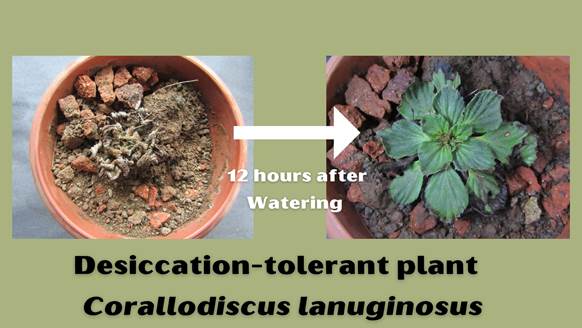
The team of researchers scrutinized outcrop species for their DT properties by seasonal field observations, followed by relative water content estimation protocols. Nine genera of DT plants are reported as new, also in a global perspective, with Tripogon capillatus representing the first record of an epiphytic DT angiosperm. The study also provides the first field observation-based proof of DT properties of the gesneriad Corallodiscus lanuginosus. Time-lapse video records the hydration process of this species.

The team led by Dr. Mandar Datar and involving Smrithy Vijayan, Aboli Kulkarni, and Bhushan Shigwan collaborated with Dr. Stefan Porembski from Rostock University Germany, who is recognized as an expert of tropical rock outcrops.

The findings of the study can provide valuable insights into the biodiversity and ecology of the Western Ghats and aid in the conservation of DT plant species. Besides, understanding the mechanisms by which DT plants can tolerate dehydration could lead to the development of crops that are more drought-resistant and require less water.

For further details, Dr. M. N. Datar (mndatar@aripune.org) 020 25325057 or 9850057605 corresponding author of the study, can be contacted.

Research paper details: Smrithy, V., Kulkarni, A., Shigwan, B. K., Porembski, S., & Datar, M. N. (2023). Desiccation‐tolerant vascular plants from Western Ghats, India: review, updated checklist, future prospects, and new insights. Nordic Journal of Botany, e03939. https://onlinelibrary.wiley.com/doi/abs/10.1111/njb.03939

A short video showcasing the desiccation tolerance of the plant Corallodiscus lanuginosus is available at https://youtu.be/DmCf-op_yKocapturing its fascinating time-lapse transformation.

Figure 1: Image of Corallodiscus lanuginosus


Unified Registration Portal For GOBARdhan

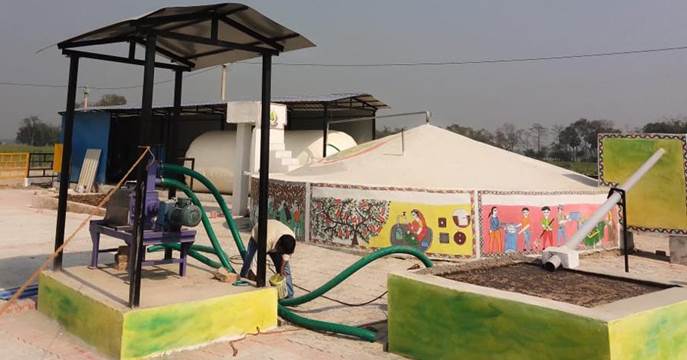
The Union Minister for Jal Shakti, Shri Gajendra Singh Shekhawat launched the Unified Registration Portal for GOBARdhan which will act as a one stop repository to assess investment and participation in Biogas/CBG sector at pan India level and more importantly streamline the process of setting up CBG/Biogas plants in India. Any government, cooperative or private entity operating or intending to setup a Biogas/CBG/Bio CNG plant in India can obtain a registration number by enrolling in this unified registration portal launched today. The registration number will enable availing of multitude of benefits and support from the Ministries & Departments of Government of India. States have been advised to get their CBG/Biogas plant operators registered on the portal on priority to avail existing and upcoming support from the Union Government.

Galvanizing Organic Bio-Agro Resources Dhan (GOBARdhan) is a vital umbrella initiative of Government of India, based on the whole of Government approach and aims to convert waste to wealth towards promoting circular economy. Government of India intends to build a robust ecosystem for setting up Biogas/Compressed Biogas (CBG)/ Bio-Compressed Natural Gas (CNG) plants to drive sustainable economic growth and promote a circular economy. As the nodal department for GOBARdhan, Department of Drinking Water and Sanitation (DDWS), Ministry of Jal Shakti has developed this portal, which can be accessed at https://gobardhan.co.in. The launch was attended, in virtual mode, by Additional Chief Secretaries/Principal Secretaries (In charge of rural sanitation) of all States/UTs and representation of various central Ministries and Departments.

Addressing the gathering, the Union Minister for Jal Shakti, Shri. Gajendra Singh Shekhawat said that this Unified Registration Portal of GOBARdhan is a perfect example of Cooperative Federalism as the stakeholder Central Ministries, all line departments of Centre and States have come together in development and deployment of the portal. He stated, “Our visionary Prime Minister gave us the responsibility of ensuring ‘waste to wealth’ to which effect we launched the GOBARdhan initiative. With more than 650 GOBARdhan plants and this portal, we have made significant achievement in our waste to wealth generation journey”. The Union Minister further said that the portal will not only ensure Ease of Doing Business (EODB) but with aggregated data from all Ministries & Departments across Centre and States, the initiative will also attract greater investment from the private players. “I hope and urge everyone present here today that we must continue our concreted efforts to ensure faster pace and progress of outcomes – ‘gati aur pragati’ of the GOBARdhan initiative”, he added. Sh. Shekhawat highlighted that registering of new projects on the portal is a pre-requisite to avail any benefit/support of GoI schemes and programs (GOBARdhan related) and in that context he urged all private operators as well as Government stakeholders to register at the earliest on this Unified Registration Portal.Sh. Shekhawat concluded his address by congratulating all the Officers and stakeholders for all their efforts towards developing the portal.

Speaking on the occasion, Secretary, Department of Drinking Water and Sanitation, Ms. Vini Mahajan said that the Portal was the result of extensive consultative process among all stakeholder Ministries. She informed that the Portal was made live to all States, Ministries and Line Departments for dry run, to sort all technical issues. The CBG Producers Association was also made to test and explore the functioning of the portal. Ms. Mahajan added that the Portal displays information on both existing as well as proposed GOBARdhan projects and will be a valuable tool for investors as well as entrepreneurs of the sector.

Sh. Jitendra Srivastava, JS&MD, SBM(G) & GOBARdhan informed that as on date, more than 650 GOBARdhan plants have been reported by different stakeholders. He added that the portal is available in the public domain to ensure transparency as well as making data available for research and related purposes.

The objective of GOBARdhan is to generate wealth and energy by converting cattle dung, agri residue and other organic waste into Biogas, CBG and bio fertilizers. This initiative comprises the entire gamut of schemes, programmes, policies promoting the conversion of organic waste like cattle dung, agri-residue etc. to biogas/CBG/Bio CNG. It encompasses schemes/programmes under various Ministries & Departments viz. Waste to Energy Scheme of M/o New and Renewable Energy, SATAT (Sustainable Alternative Towards Affordable Transportation) scheme of M/o Petroleum and Natural Gas, SBM(G) Phase II of DDWS, Agri Infrastructure Fund (AIF) of Dept. of Agriculture Cooperation & Farmers Welfare and Animal Husbandry Infrastructure Development Fund (AHIDF) of Dept. of Animal Husbandry & Dairy. GOBARdhan is being implemented in partnership with State Governments and Private Sector including entrepreneurs, societies etc. Any plant/project producing CBG/Biogas (more than 10 cuM/day) and bio slurry as principal outputs is eligible to be under the ambit of GOBARdhan.

GOBARdhan initiative is envisioned to contribute significantly towards reaching India’s climate action goals particularly achieving net-zero emissions by 2070. With the highest livestock population in the world, India produces vast amounts of animal waste. CBG/Biogas sector can play a crucial role in India’s energy transition, ensuring energy security and affordability, enhancing entrepreneurship, providing rural employment, and boosting local economies. Transitioning to CBG/Biogas can contribute to job creation for semi-skilled and skilled labor in multiple areas viz. waste collection, operations, construction etc. It will benefit rural people in general and women in particular from the use of clean fuel, improved cleanliness in villages and consequent improvement in health outcomes (through decreased incidence of vector borne and respiratory diseases). Initiative will also augment nation’s efforts toward achieving the Sustainable Development Goals (SDGs) viz. SDG 3: Good Health and Wellbeing, SDG 6: Clean Water & Sanitation, SDG 7: Affordable & Clean energy, SDG 13: Climate Action; amongst others. Further, the initiative contributes significantly towards circular economy, and Govt.  of India’s Mission LiFE.

It encompasses schemes/programmes under various Ministries & Departments viz. Waste to Energy Scheme of M/o New and Renewable Energy, SATAT (Sustainable Alternative Towards Affordable Transportation) scheme of M/o Petroleum and Natural Gas, SBM(G) Phase II of DDWS, Agri Infrastructure Fund (AIF) of Dept. of Agriculture Cooperation & Farmers Welfare and Animal Husbandry Infrastructure Development Fund (AHIDF) of Dept. of Animal Husbandry & Dairy. Other stakeholder Ministries are M/o Housing and Urban Affairs, D/o Agriculture Research and Education, D/o Rural Development, D/o Fertilizers, M/o Environment Forest and Climate Change, D/o Science and Technology, M/o Skill Development and Entrepreneurship.

The Union Government is firmly committed in its endeavor to build a robust CBG/Biogas policy ecosystem in India. Few initiatives which are in the pipeline, aim to strengthen CBG/Biogas supply chain with special thrust on aggregation of biomass, grid pipeline connectivity, enabling organic farming practices, supporting Research & Development and constant engagement across CBG/Biogas stakeholders.

*****

Shri Amit Shah addressed a press conference in Imphal

 On last day of his four-day visit to Manipur, Union Home Minister and Minister of Cooperation, Shri Amit Shah addressed a press conference in Imphal today. Shri Amit Shah appealed to all sections in violence-hit Manipur to maintain peace, hold discussions and promote harmony. He appealed to the people of Manipur to not to pay heed to rumors and maintain peace. On behalf of Modi Government, Home Minister expressed deep condolences to the families of those killed in Manipur violence.

The Union Home Minister and Minister of Cooperation said that a judicial commission will be set up under the chairmanship of retired Chief Justice of the High Court to investigate the Manipur violence. He said that a peace committee would also be constituted under the chairmanship of the Governor of Manipur, in which representatives of all sections would be included.

Shri Amit Shah said that under the relief and rehabilitation package by Government of India and  Government of Manipur an amount of Rs 10 lakh will be given to the next of kin of those who lost their lives in the violence. Government of Manipur and Government of India each will provide Rs 5 Lakh which will be given through DBT in their bank accounts. He said that for better and non-partisan coordination among all agencies which are working to maintain security in Manipur, an Inter-Agency Unified Command would be set up under the chairmanship of Security Advisor, Shri Kuldiep Singh. Home Minister said that 6 cases including 5 identified cases from all registered cases and one case of general conspiracy will be investigated by the special team of CBI. The cause of the violence will be investigated without any bias and discrimination and strict action will be taken to punish the guilty to prevent such incidents.

The Union Home Minister said that to ensure uninterrupted supply of essential commodities to Manipur, the Government of India has sent 30,000 MT of rice over and above the prescribed quota. Apart from this, arrangements have also been made for the supply of gas cylinders, petrol and vegetables. He said that supply of essential commodities to Manipur from rest of the country would also be ensured by setting up a temporary platform at Khongsang railway station. Shri Shah added that temporary helicopter facility is being started from Churachandpur, Moreh and Kangpokpi, which will provide transport facility to airport and remote places with charges of Rs 2000 per person only. He said that the rest of the cost of this service would be provided by the Government of India and the Government of Manipur. He said that out of 8 medical teams formed by the Government of India, 3 teams have reached Manipur and 5 teams will reach soon. These teams will provide health facilities in Moreh, Churachandpur and Kangpokpi areas.

Shri Amit Shah said that to ensure that the competitive examinations and education system continue without any interruptions for the students of Manipur, the officials of the Ministry of Education, Government of India, along with the officials of the Manipur Education Department, are preparing a concrete plan to arrange online education, examinations and distance education, which will be ready within 2 days. He said that necessary arrangements are being made to facilitate appearing before the Manipur High Court from Churachandpur, Moreh and Kangpokpithrough virtual medium. Shri Shah said that to ensure smooth functioning of all the arrangements in Manipur, a Joint Secretary level officers of Union Home Ministry and five Director level officers of different ministries will be present in the state.

The Union Home Minister and Minister of Cooperation said that the trial work on fencing of 10 kms border along the Myanmar and Manipur border has been completed by the Government of India, while the tendering process for 80 kms fencing work is also completed and the survey for fencing on the remaining border area is underway. He said that the biometric and eye impressions of people coming from neighbouring countries are also being taken, so that no one can incite violence in the region.

Union Home Minister said that any kind of violation of the Suspension of Operation Agreement will be dealt with strictly and will be treated as a breach of the Agreement. He said that all the terms of the agreement should be strictly followed by the concerned parties. Shri Shah said that people should surrender their weapons to the police as strict action will be taken against those found possessing weapons during the combing operation by the police.

Shri Amit Shah appealed to all civil society organizations that it is time to establish peace and increase harmony within the society. He said that everyone should work towards establishing peace and enabling an environment for discussion and harmony.

The Union Home Minister said that violence between two groups started in Manipur on 29th April after a decision given by the court. He said that for the last 6 years, Manipur has been free from bandh, blockade, curfew and violence and under the leadership of Prime Minister Shri Narendra Modi and Chief Minister Shri N. Biren Singh, the double engine government of Manipur has achieved unprecedented progress in all parameters of development in the state. He added that past 6 years are the years of development and peace in the history of Manipur. A number of initiatives have been taken including opening central institutions in the region, strengthening the infrastructure, bringing industrial investment, making Manipur education and sports hub of the Northeast by smoothly running the educational institutions.

Shri Amit Shah said that during his stay in Manipur, he met people from all the sections, visited temporary relief camps, and interacted with delegations and victims in Imphal, Moreh, Churachandpur and Kangpokpi. Shri Shah said that he also held a meeting with state cabinet ministers and women’s organizations. Apart from this, Shri Shah held meeting with about 22 Civil Society Organisations (CSOs) of Meitei community and about 25 CSOs of Kuki community. He also discussed measures to restore peace with intellectuals, professors, retired officers and people from every section of the society during the past 2 days. He said that discussions were also held with 11 political parties. Additionally, discussions were held with sportspersons and elected representatives of all parties.

Detailed Information of Union Home Minister Shri Amit Shah’s 4-day Visit to Manipur

*****

Coal Production Goes up to 76.26 Million Tonne in May 2023

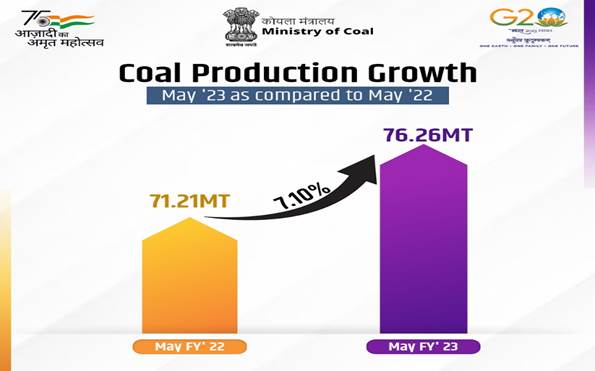
 The Ministry of Coal has achieved a remarkable feat with a substantial surge in overall  coal production during the month of May’23, reaching 76.26 Million Tons(MT), surpassing the figures of the month May’22 of 71.21 MT, representing an increase of 7.10%. The production of Coal India Limited (CIL) has increased 59.94 MT in the month of May’23 as compared to 54.72 MT in May’22 with the growth of 9.54%. The cumulative coal production has seen quantum jump of 149.41 MT in FY’ 23 as compared to 138.41 MT in FY’22 with a growth of 7.94%.

A picture containing text, screenshot, logo, designDescription automatically generated

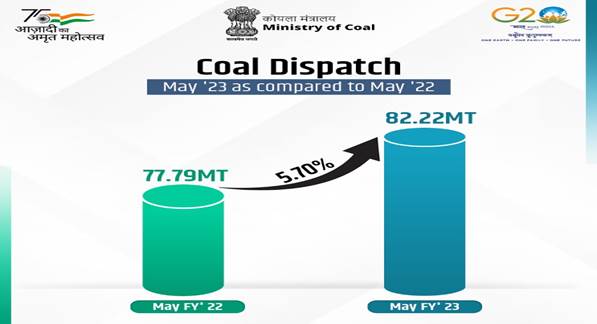
With increased First Mile Connectivity infrastructure,  coal dispatch in the month of May ’23 registered at 82.22 MT as compared to 77.79 MT in May ’22,  growth of 5.70%.  Coal dispatch from Captive and Commercial coal block has reported at 12.23 MT in May’23 in comparison to 10.47 MT in May ‘22 with the growth of 16.84 %. The cumulative Coal dispatch has registered remarkable increment of 162.44 MT in the FY 2023-24, up from 149.76 MT in the FY 2022-23, with an increase of 8.47%.

A picture containing text, screenshot, designDescription automatically generated

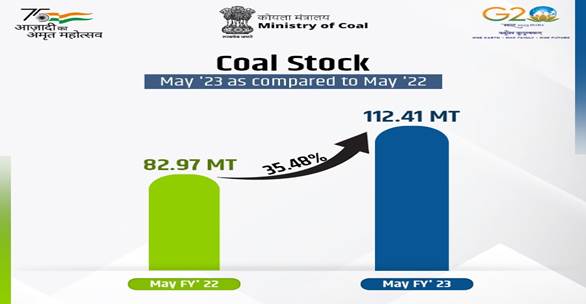
This Impressive upturn in offtake has resulted in a comfortable coal stock position, guaranteeing  reliable and abundant supply of coal lying at pithead coal stock at CIL, SCCL, stock at TPP(DCB) etc. The total coal stock as of 31st May 2023 is 112.41 MT, compared to 82.97 MT on 31st May 2022 with the growth of 35.48%.  The positive coal stock position has strengthened the capability to tackle unforeseen fluctuations in energy demand and ensures meeting the energy demands of the nation.

A picture containing text, screenshot, brand, logoDescription automatically generated

Furthermore, the availability of coal rakes, which play a crucial role in coal transportation, has remained consistently good throughout this period due to the initiative taken by the Ministry to augment rail connectivity infrastructure under PM Gati Shakti to ensure seamless evacuation of coal. This positive trend in rake availability has facilitated the smooth transportation of coal, minimized transportation bottlenecks, and ensured uninterrupted supply.

The Ministry is making constant efforts to augmenting coal production. The Ministry has already moved forward with a comprehensive plan for responsible development, placing strong emphasis on fostering conscientious coal mining practices that   prioritize the well-being of the environment and communities.

****      

10 Mouth-Watering, Must-Try Indian Dishes You Won't Want to Miss!

 10 Mouth-Watering, Must-Try Indian Dishes You Won’t Want to Miss!

9 years of Modi government

 Union Minister of State (Independent Charge) Science & Technology; MoS PMO, Personnel, Public Grievances, Pensions, Atomic Energy and Space, Dr Jitendra Singh today said that StartUp avenues unfolded in 9 years call for change of mindset.

The Union Minister said, the nine years of Narendra Modi- led government have been, without any doubt, youth centric but what is required is the change of mind set for optimum utilization of avenues and various initiatives provided for the youth of this country.

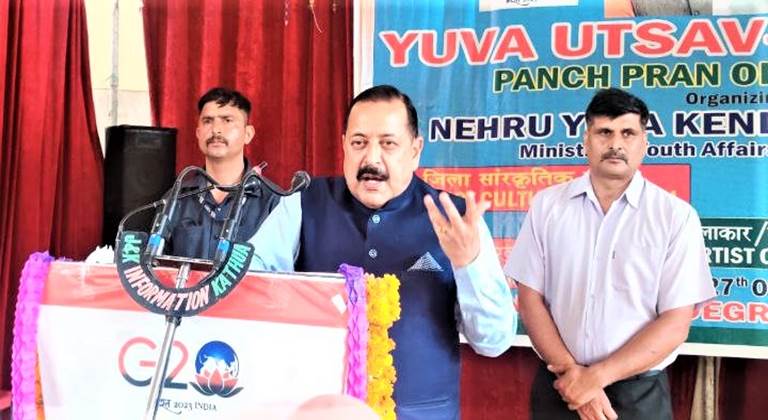
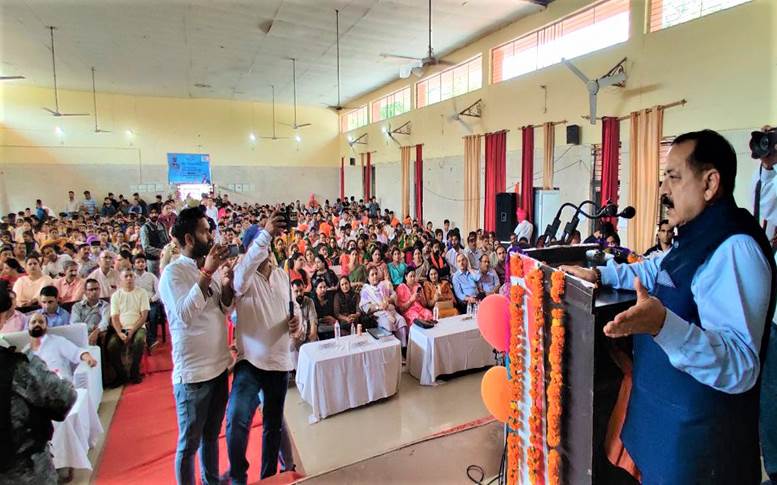
Dr. Jitendra Singh was addressing Y20 (Yuva Utsav) with the theme India@2047 organized by Nehru Yuva Kendra at Kathua in Jammu.

While addressing a large gathering of the youth, Dr. Jitendra Singh said, with plethora of opportunities knocking at the doorsteps of the youth of this country, the Prime Minister Narendra Modi led government is steadfast and dedicated for providing a level playing field for the youth at different levels. The best example being the abolition of interviews for the non-gazetted posts, more than 2000 rules scrapped many of which were hurdles for the youth of this country to grow, Dr. Jitendra Singh added.

Dr. Jitendra Singh said, under PM Narendra Modi, the start-up ecosystem in India is now ranked third in the world with more than 100 unicorns has been possible only because of the youth of this nation who has aspirations but earlier did not have the right kind of milieu and aspirational environment as provided under PM Narendra Modi.

Dr. Jitendra Singh said, the Aroma Mission is attracting Start-ups whose birthplace is J&K as thousands of persons have been trained and several and huge amount of farmers’ revenue generated so far throughout the country. The youth of Jammu and Kashmir must see Aroma Mission as one of the best opportunities in terms of start-ups knocking at their doors as the purple revolution in J&K offers attractive start-up avenues for the youth of J&K, Dr. Singh added.

Dr. Jitendra Singh today said, youth are catalysts of change and India’s future will be driven by the youth power as India is a youthful nation whose strength lies in its Yuva Shakti.

The Minister said, the image of India has changed due to the bold leadership of the prime Minister Narendra Modi, adding the Prime Minister has emerged as the tallest leader of the world, capable of handling any challenge through stable governance and administration.

Dr. Jitendra Singh said, before 2014, there were 145 Medical Colleges in the country and 265 more were added in the last nine years. Similarly, there were 725 universities in the country and 300 new universities were added. Road length of seven lakh kilometres was added in the country under the Pradhan Mantri Gram Sadak Yojna in the last nine years and Mudra loan of Rs. 23 lakh crore has been provided to the beneficiaries in the last nine years under Mudra Loan Scheme.

Dr. Singh further said, Jammu and Kashmir is on the path of renewed growth and development and successful culmination of G20 Meeting in Srinagar is a testament to this change as the Government is committed to transforming Jammu and Kashmir.


2ND CONVOCATION OF IIIT RANCHI

 The President of India, Smt Droupadi Murmu graced and addressed the 2nd convocation of Indian Institute of Information Technology (IIIT) Ranchi at Namkum, Ranchi today (May 25, 2023).

Speaking on the occasion, the President said that today India is moving towards entrepreneurial culture by strengthening the start-up eco-system and promoting self-reliance. In this context, scientific research and innovation has become an even more important topic in the country’s development discourse. It is only through research that new processes, products and designs can be developed that can help find innovative and sustainable solutions to emerging issues. She expressed confidence that higher educational institutions in India would enhance their research capabilities and produce talented students who would be technologically proficient and work for the welfare of citizens through innovations. She emphasized that technology should be used as an instrument of social justice.

The President said that India has the third largest tech start-up ecosystem in the world. We are already using smart devices that have made our lives easier. But such equipment and systems should be accessible to common people and should be in line with overall sustainability. This is where the role of the technologists becomes more challenging. For this they need to adopt a holistic approach in their thinking and work.

The President said that in the era of artificial intelligence, it is the responsibility of bright minds like students of IIIT Ranchi to increase efficiency by making best use of it. By saving time and resources, they can focus more on creative and sensitive tasks that require empathy and human touch. She urged them to think about how to use artificial intelligence to help divyangjan, senior citizens or other needy sections.

The President said that youth have immense potential to change the society and nation. Our youth can make a big contribution in making a conscious and developed nation. It is the duty of all of us to show the right direction to the youth and encourage them towards working for the progress of the country and society.

The President was happy to note that in just a few years of its inception, the faculty and students of IIIT Ranchi have underlined the importance of knowledge creation, and they are contributing through original research papers and publications in the reputed national and international publications. She also noted that IIIT Ranchi is making students future-ready through state-of-the-art laboratories and Research and Development Cells related to areas such as data science, bio-informatics, artificial intelligence and quantum computing. She expressed confidence that IIIT Ranchi would make its mark as a hub of research and innovation in the times to come.

The President urged IIIT Ranchi to collaborate with national and international organizations and industry and prepare the students for the upcoming challenges at personal and professional level. She said that apart from being technically skilled and educated, our youth should also be socially, mentally, emotionally and physically fit.

Click here to see full speech

********

Urban Climate Film Festival

 The first-ever Urban Climate Film Festival, that aspires to employ the powerful medium of  film to enlighten audiences about the environmental, social and economic impacts of climate change on urban settlements, is going to take place in New Town, Kolkata from 3rd to 5th June 2023.

16 films from 12 countries are scheduled to be screened, along with Q&A sessions with filmmakers in order to spark conversations about building climate-resilient cities and invite inputs from the public; further encouraging the citizens to undertake ‘environmentally responsible behavior’ in line with the U20   priority areas and the Hon. Prime Minister’s clarion call through the LiFE Mission.

Launched in New Delhi in March 2023, the film festival is being organised by National Institute of Urban Affairs, through the CITIIS program under the engagement events of U20 (the urban track of G20). The festival is supported by the Ministry of Housing and Urban Affairs, the French Development Agency (AFD), the European Union and the New Town Kolkata Green Smart City Corporation Limited.

The global call for entries for the festival had received an overwhelming response with 150 films submitted from 20 countries. These were evaluated by a jury that comprised:

  • Dr Surbhi Dahiya (Professor, Indian Institute of Mass Communication)

  • Dr Pranab Patar (Chief Executive, Global Foundation for Advancement of Environment)

  • Mr Sabyesachi Bharti (Deputy Director, CMS Vatavaran)

The festival will also celebrate World Environment Day on 5th June with a special closing ceremony, which will be graced by Mr. Didier Talpain, Consul General of France in Kolkata; Mr. Debashis Sen, Managing Director, West Bengal Housing Infrastructure Development Corporation; Mr. Hitesh Vaidya, Director, National Institute of Urban Affairs; Mrs. Meghna Pal, CEO, NKGSCCL; and Mr. Naim Keruwala, Program Director, CITIIS.

Entry to the Urban Climate Film Festival is free and open for all.

Attendees can view the screening schedule and register themselves for the festival here: https://citiis.niua.in/event/urbanclimatefilmfestival


Background:

The Urban Climate Film Festival was launched on 24th March at Alliance Française in New Delhi. After a successful run in Delhi, the festival travelled to Mumbai, where it was hosted at Alliance Française de Bombay. The festival in Delhi and Mumbai showcased a curated selection of films by a diverse pool of filmmakers from countries like India, France, Iran, and the USA. The screenings were complemented by panel discussions and special sessions where audiences interacted with filmmakers.

*********************

Creating a Pandemic-proof Infrastructure

During the last few years, the world saw a crisis that shook every aspect of human life. A crisis that comes once in many decades. Almost every country experienced a complete lockdown at some point in time. Many countries with previously thought-to-be world-class health-care systems have also been tried, pushed to the limit, and in some respects found wanting. The pandemic took all countries by surprise and the discussion on appropriate national and global strategies is very diverse. The COVID-19 epidemic has demonstrated what is at risk, upending the lives of families worldwide. Millions of people have died, and a generation of kids has experienced a learning catastrophe.

The two years of the pandemic highlighted the current inadequacies of our healthcare delivery system and the need for urgent improvisation. The two years have seen us go through harrowing times—patients died for want of hospital beds and oxygen; the ventilator supply ran dry; high infections led to a severe manpower crunch at hospitals; there were not enough vaccines available then. Our healthcare system had crumbled under pressure, and our frontline workers, both in public and private hospitals, had burned themselves out. And now with cases rising, there is fear of a return to the past among healthcare workers.

Although the pandemic has eased, the virus is still alive and mutating and more pandemics are expected to follow. In the wake of this scenario, it is important for the world community to better equip ourselves to tackle such situations in the future. It is the moment that we realise the importance and need to strengthen healthcare infrastructure globally. It is time to work on making a pandemic-proof healthcare system for the future. Below are the areas that need to be focused on:

  • ·         Curative services – there is a need for the expansion of telemedicine from triage, diagnosis, and follow-up services covering all conditions (acute to chronic). Making institutions adapt and become centres of knowledge dissemination- telemedicine and all possibilities of e- and m-health and provide knowledge to people at home, on what symptoms to look out for, where to test, how to self-care, etc for not only Covid-19 but for other conditions too.
  • ·         Improve primary health care – Better primary health care will help us protect against future pandemics. Improving primary health care includes recruiting, training, and prioritising healthcare workers, and establishing effective surveillance and response systems, building confidence in health services through community outreach.
  • ·         Improve logistics and supply – There are a lot of logistics that are needed in a healthcare system. Some examples include masks, gloves, PPEs, disinfectants, etc. Apart from there’s also the supply of syringes and the cold chain storage that’s been necessary to make sure that the vaccines are stored at the proper temperature and don’t go to waste.  Increased investments in this type of infrastructure will assist to guarantee that communities obtain the immunizations they require while also protecting them from future outbreaks.
  • ·         Promotive and preventive healthcare services – The pandemic has demonstrated that having an underlying condition like diabetes, hypertension or obesity predisposes one to complications, long hospital stays, and mortality. Because of all these reasons, COVID-19 has been categorised as a syndemic rather than a pandemic. It is necessary to provide preventive and promotive health services like boosting one’s immune system through diet, exercise, and supplements, in different formats, online, face-to-face, or through home visits.
  • ·         Mental health services – Mental health issues during the pandemic are threatening to become the next pandemic. Stress and mental health issues related to lockdowns affect everyone but tend to affect the weaker segments of society more severely. It is necessary to create awareness about mental health and make mental health services available, accessible, and affordable to all.

It is true that we need to build pandemic-proof health infrastructure. But does Covid-19 expose our health sector only or show us the reality of other aspects also? Working only on health will not be sufficient. We also need to improve our social, educational and political infrastructure. The world saw a huge dropout of students because of online classes during pandemic. Some of the major reasons given for dropping are fairly obvious: technology problems, lack of support, poorly designed courses, and technologically inexperienced educators. This demands due consideration and commitment. The epidemic has impacted numerous nations’ governmental and political systems, resulting in declarations of emergency, suspensions of legislative activity, isolation or death of multiple lawmakers, and postponing of elections owing to worries of viral transmission.Furthermore, in certain areas, the epidemic has posed various problems to democracy, causing it to be weakened and harmed. Hence, building a pandemic-proof political infrastructure will not only ensure an efficient response to tackle the crisis but also provide basic institutional support to the nation and to the world as a whole.

This is a unique moment where we have an opportunity to learn from this pandemic and prevent others in the future. The legacy of COVID-19 mustn’t be one of disruption and disparity, but instead a moment of monumental change.