Short Article on \’Child Labour in India\’ (400 Words)

In India, there are several temples of \’Bal Ganesh\’, \’Bal Gopal\’, ‘Bal Krishna’, ‘Bal Hanuman’ ie Childhood of God. According to Hindu philosphy, a child is considered to be form of God. India is better known to be the country of Dhruv, Prahlad, Lav-Kush and Abhimanyu, the children having talents wisdom, intelligency and warriership. Apart from this, present day picture of poor Indian child is very dark. The poor child is the most neglected, most exploited and the most abused. Female child is the most deprived and under privileged of the whole class of such children. The girls are not only withdrawn from schools and forced to indulge in child labour but they are even dragged in the prostitution.

Child labour is violation of human rights and is considered to be a ‘necessary evil’ in any country in the whole world.. It hampers their normal and natural physical, mental, spritual, intellectual, emotional, moral and social development. Children are doing work as domestic servants. They are employed in hotels, workshops, service stations, shops, construction sites and pulling rickshaws etc. They are even working in hazardous and unhygienic forms of labour in manufacturing factories.

Article 24 of the Constitution of India, 1950 says, “No child below the age of fourteen years shall be employed to work in any factory or mine or employed in any hazardous employment”. Indian legislature has also enacted the Factories Act, 1948 , The Children Act, 1960, The Child Labour (Prohibition and Regulation) Act, 1986 etc. for the protection of rights of children. Article 45 of the Constitution of India, 1950 casts duty on the State to pendeavour to provide free and compulsory education to the children. Article 25(2) of the Universal Declaration of Human Rights also states about the special care and assistance for the motherhood and children.

For the past few years, work done by the Government of India and the States Government in this issue is praiseworthy. Many new schemes and policies are introduced for the education and betterment of the children. But, this problem is still in existence in India even though all these policies are available in India.

There may no other opinion that child labour should be restricted and if possible completely vanished. It is a socio-economic national problem, which requires close analysis and practical solutions to meet with this burning question. 
Short Article on \’Child Labour in India\’ (400 Words)

In India, there are several temples of \’Bal Ganesh\’, \’Bal Gopal\’, ‘Bal Krishna’, ‘Bal Hanuman’ ie Childhood of God. According to Hindu philosphy, a child is considered to be form of God. India is better known to be the country of Dhruv, Prahlad, Lav-Kush and Abhimanyu, the children having talents wisdom, intelligency and warriership. Apart from this, present day picture of poor Indian child is very dark. The poor child is the most neglected, most exploited and the most abused. Female child is the most deprived and under privileged of the whole class of such children. The girls are not only withdrawn from schools and forced to indulge in child labour but they are even dragged in the prostitution.

Child labour is violation of human rights and is considered to be a ‘necessary evil’ in any country in the whole world.. It hampers their normal and natural physical, mental, spritual, intellectual, emotional, moral and social development. Children are doing work as domestic servants. They are employed in hotels, workshops, service stations, shops, construction sites and pulling rickshaws etc. They are even working in hazardous and unhygienic forms of labour in manufacturing factories.

Article 24 of the Constitution of India, 1950 says, “No child below the age of fourteen years shall be employed to work in any factory or mine or employed in any hazardous employment”. Indian legislature has also enacted the Factories Act, 1948 , The Children Act, 1960, The Child Labour (Prohibition and Regulation) Act, 1986 etc. for the protection of rights of children. Article 45 of the Constitution of India, 1950 casts duty on the State to pendeavour to provide free and compulsory education to the children. Article 25(2) of the Universal Declaration of Human Rights also states about the special care and assistance for the motherhood and children.

For the past few years, work done by the Government of India and the States Government in this issue is praiseworthy. Many new schemes and policies are introduced for the education and betterment of the children. But, this problem is still in existence in India even though all these policies are available in India.

There may no other opinion that child labour should be restricted and if possible completely vanished. It is a socio-economic national problem, which requires close analysis and practical solutions to meet with this burning question. 

Short Article on \’Child Labour in India\’ (400 Words)

In India, there are several temples of \’Bal Ganesh\’, \’Bal Gopal\’, ‘Bal Krishna’, ‘Bal Hanuman’ ie Childhood of God. According to Hindu philosphy, a child is considered to be form of God. India is better known to be the country of Dhruv, Prahlad, Lav-Kush and Abhimanyu, the children having talents wisdom, intelligency and warriership. Apart from this, present day picture of poor Indian child is very dark. The poor child is the most neglected, most exploited and the most abused. Female child is the most deprived and under privileged of the whole class of such children. The girls are not only withdrawn from schools and forced to indulge in child labour but they are even dragged in the prostitution.

Child labour is violation of human rights and is considered to be a ‘necessary evil’ in any country in the whole world.. It hampers their normal and natural physical, mental, spritual, intellectual, emotional, moral and social development. Children are doing work as domestic servants. They are employed in hotels, workshops, service stations, shops, construction sites and pulling rickshaws etc. They are even working in hazardous and unhygienic forms of labour in manufacturing factories.

Article 24 of the Constitution of India, 1950 says, “No child below the age of fourteen years shall be employed to work in any factory or mine or employed in any hazardous employment”. Indian legislature has also enacted the Factories Act, 1948 , The Children Act, 1960, The Child Labour (Prohibition and Regulation) Act, 1986 etc. for the protection of rights of children. Article 45 of the Constitution of India, 1950 casts duty on the State to pendeavour to provide free and compulsory education to the children. Article 25(2) of the Universal Declaration of Human Rights also states about the special care and assistance for the motherhood and children.

For the past few years, work done by the Government of India and the States Government in this issue is praiseworthy. Many new schemes and policies are introduced for the education and betterment of the children. But, this problem is still in existence in India even though all these policies are available in India.

There may no other opinion that child labour should be restricted and if possible completely vanished. It is a socio-economic national problem, which requires close analysis and practical solutions to meet with this burning question. 
Short Paragraph on \’Lightning Conductor\’ (140 Words)

The \’Lightning Conductor\’ consists of a long rod or a strip of metal running from the top of the building to be protected from destruction by lightning down to the earth. The upper end of the rod is furnished with sharp points and the lower end is fixed to metal plate well buried in wet earth. During a thunder storm, when a charged cloud passes above the points of the lightning conductor, induced charge of the opposite kind accumulates at the points. This results in charging of the air particles by contact around the points. This creates an electric wind directed towards the cloud. The cloud thereby becomes gradually discharged. If, on other hand, the difference of potential between the cloud and the conductor is so great as to produce a discharge, lightning conductor passes on the discharge to earth without damaging the building. 
 

Short Paragraph on \’Lightning Conductor\’ (140 Words)

The \’Lightning Conductor\’ consists of a long rod or a strip of metal running from the top of the building to be protected from destruction by lightning down to the earth. The upper end of the rod is furnished with sharp points and the lower end is fixed to metal plate well buried in wet earth. During a thunder storm, when a charged cloud passes above the points of the lightning conductor, induced charge of the opposite kind accumulates at the points. This results in charging of the air particles by contact around the points. This creates an electric wind directed towards the cloud. The cloud thereby becomes gradually discharged. If, on other hand, the difference of potential between the cloud and the conductor is so great as to produce a discharge, lightning conductor passes on the discharge to earth without damaging the building. 
 

Short Paragraph on \’Lightning Conductor\’ (140 Words)

The \’Lightning Conductor\’ consists of a long rod or a strip of metal running from the top of the building to be protected from destruction by lightning down to the earth. The upper end of the rod is furnished with sharp points and the lower end is fixed to metal plate well buried in wet earth. During a thunder storm, when a charged cloud passes above the points of the lightning conductor, induced charge of the opposite kind accumulates at the points. This results in charging of the air particles by contact around the points. This creates an electric wind directed towards the cloud. The cloud thereby becomes gradually discharged. If, on other hand, the difference of potential between the cloud and the conductor is so great as to produce a discharge, lightning conductor passes on the discharge to earth without damaging the building. 
 

Short Essay on \’Jai Prakash Narayan (JP Narayan)\’ (200 Words)

\’Jai Prakash Narayan\’ was born on October 11, 1902 in the village of Sitabdiara, Bihar, India. His father\’s name was Harsu Dayal Srivastava and mother\’s name was Phul Rani Devi. His father Harsu Dayal Srivastava was a junior official in the State Government Department. He was married to Prabhavati Devi in 1920.

Popularly known as \’Lok Nayak\’, Jai Prakash Narayan was a great freedom fighter and political leader. He was a leader (Nayak) of the people (Lok). He was dedicated social worker and took part in the Bhoodan Movement to give land to the poor and landless people of India. He is remembered especially for leading the opposition to Indira Gandhi in the 1970s and for giving a call for peaceful Total Revolution. He was an author too. His essay, \’The present state of Hindi in Bihar\’ won a best essay award. Lok Nayak Jai Prakash Narayan was awarded posthumously India\’s highest civilian award, the \’Bharat Ratna\’ in 1999. He was also awarded by \’Ramon Magsaysay Award\’ in 1965.

Jai Prakash Narayan died on 8 October 1979 in Patna, Bihar, India. He was a great Indian Hero and will always be remembered as the true patriot and sarvodaya leader of

Short Essay on \’Jai Prakash Narayan (JP Narayan)\’ (200 Words)

\’Jai Prakash Narayan\’ was born on October 11, 1902 in the village of Sitabdiara, Bihar, India. His father\’s name was Harsu Dayal Srivastava and mother\’s name was Phul Rani Devi. His father Harsu Dayal Srivastava was a junior official in the State Government Department. He was married to Prabhavati Devi in 1920.

Popularly known as \’Lok Nayak\’, Jai Prakash Narayan was a great freedom fighter and political leader. He was a leader (Nayak) of the people (Lok). He was dedicated social worker and took part in the Bhoodan Movement to give land to the poor and landless people of India. He is remembered especially for leading the opposition to Indira Gandhi in the 1970s and for giving a call for peaceful Total Revolution. He was an author too. His essay, \’The present state of Hindi in Bihar\’ won a best essay award. Lok Nayak Jai Prakash Narayan was awarded posthumously India\’s highest civilian award, the \’Bharat Ratna\’ in 1999. He was also awarded by \’Ramon Magsaysay Award\’ in 1965.

Jai Prakash Narayan died on 8 October 1979 in Patna, Bihar, India. He was a great Indian Hero and will always be remembered as the true patriot and sarvodaya leader of

Short Essay on \’Jai Prakash Narayan (JP Narayan)\’ (200 Words)

\’Jai Prakash Narayan\’ was born on October 11, 1902 in the village of Sitabdiara, Bihar, India. His father\’s name was Harsu Dayal Srivastava and mother\’s name was Phul Rani Devi. His father Harsu Dayal Srivastava was a junior official in the State Government Department. He was married to Prabhavati Devi in 1920.

Popularly known as \’Lok Nayak\’, Jai Prakash Narayan was a great freedom fighter and political leader. He was a leader (Nayak) of the people (Lok). He was dedicated social worker and took part in the Bhoodan Movement to give land to the poor and landless people of India. He is remembered especially for leading the opposition to Indira Gandhi in the 1970s and for giving a call for peaceful Total Revolution. He was an author too. His essay, \’The present state of Hindi in Bihar\’ won a best essay award. Lok Nayak Jai Prakash Narayan was awarded posthumously India\’s highest civilian award, the \’Bharat Ratna\’ in 1999. He was also awarded by \’Ramon Magsaysay Award\’ in 1965.

Jai Prakash Narayan died on 8 October 1979 in Patna, Bihar, India. He was a great Indian Hero and will always be remembered as the true patriot and sarvodaya leader of

How to convince students to share their ideas on a blog

Is a blog a good or a bad thing for sharing ideas with your classmates? Lets deal with the good stuff first. Blogs are a great way to share information – websites, photos, videos, the latest gossip, and of course your ideas, and what you are learning in class. Here are some examples of blogs to get you thinking.

It can be interesting to find out more about the people sitting opposite you in class – what they are interested in and what they believe in. So it is a good way to get to know each other better. You will probably be pleasantly surprised to read about others\’ hidden talents. It is a good way to see things from different angles and reading what others have written helps you to do this. And to state the obvious, blogging really can help your writing, and your learning especially when your classmates give you helpful hints.

Posting on a blog can also help you to express the ideas you might be too shy to say out loud. It is good practice for learning to express your ideas too. It is really cool when someone reads what you have written and leaves you a comment. Just knowing others are interested in your thoughts is a real confidence booster.And of course, it is a great way for your teachers to give you feedback about your work, and to challenge you to think. 

Sure it can be scary when you start to think that others will read what you have written, but it can also be addictive seeing how many people are reading your posts, and who is leaving comments.  The more you do it the easier it is and the better you get at doing it.

The main thing to remember is to be respectful to each other when leaving comments, and it is a great way to show that you are interested in their work. By posting to a blog and sharing what you are learning, you are hopefully going to have fun and do some learning at the same time. So you can learn from each other if you share your work with the class as well as the teachers, and if your blog is open on the web you might even get some interesting people looking at your work. 

It is also possible to set up a mobile blog where you can send texts, images and video directly to your blog….but that is another story, and one for you to explore. When you get really good at blogging you might even be able to attract advertising and make some money – lots of people do….but that is something for after class.

Short Essay on \’Harry Houdini\’ (141 Words)

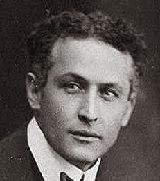
\’Harry Houdini\’ was born on March 24, 1874 in Hungary. His real name was \’Eric Weisz\’. His parents were Rabbi Mayer Samuel Weisz and Cecília Weisz. When Harry was still a baby, his parents decided to go and live in the U.S.A.

Harry Houdini was a great escape-artist. When he was nine years old he gave his first public performance. Houdini was so very interested in magic, that he practiced many tricks until they were perfect.

Houdini\’s most famous trick was to escape. On stage he would be tied up or locked up with chains and in a few minutes he would get free. He performed many other famous tricks. Some of his tricks were very dangerous.

Harry Houdini died on October 31, 1926 at the age of 52. He had shown in his life that he was ready to meet any challenge. 

Short Essay on \’Harry Houdini\’ (141 Words)

\’Harry Houdini\’ was born on March 24, 1874 in Hungary. His real name was \’Eric Weisz\’. His parents were Rabbi Mayer Samuel Weisz and Cecília Weisz. When Harry was still a baby, his parents decided to go and live in the U.S.A.

Harry Houdini was a great escape-artist. When he was nine years old he gave his first public performance. Houdini was so very interested in magic, that he practiced many tricks until they were perfect.

Houdini\’s most famous trick was to escape. On stage he would be tied up or locked up with chains and in a few minutes he would get free. He performed many other famous tricks. Some of his tricks were very dangerous.

Harry Houdini died on October 31, 1926 at the age of 52. He had shown in his life that he was ready to meet any challenge. 

Short Essay on \’Harry Houdini\’ (141 Words)

\’Harry Houdini\’ was born on March 24, 1874 in Hungary. His real name was \’Eric Weisz\’. His parents were Rabbi Mayer Samuel Weisz and Cecília Weisz. When Harry was still a baby, his parents decided to go and live in the U.S.A.

Harry Houdini was a great escape-artist. When he was nine years old he gave his first public performance. Houdini was so very interested in magic, that he practiced many tricks until they were perfect.

Houdini\’s most famous trick was to escape. On stage he would be tied up or locked up with chains and in a few minutes he would get free. He performed many other famous tricks. Some of his tricks were very dangerous.

Harry Houdini died on October 31, 1926 at the age of 52. He had shown in his life that he was ready to meet any challenge. 

Short Article on \’Spices are the Essence of Indian cooking\’ (252 Words)

Spices have been used since ancient times. They have been mentioned in the ancient Hindu scriptures for example Vedas, ancient Egyptian papyruses and the Old Testament. Although it was not until the Roman conquests that western countries discovered their culinary possibilities. Spices have always been believed to have healing and magical qualities. They have been used to cast spells, as incense in religious rites, to embalm corpses, to add fragrance to perfumes and as medicines. The word Spice comes from Latin \’Species\’, meaning a commodity of value and distinction. During their long and fascinating history, spices have often been more valuable than gold or precious stones and the trade of Spices has been an extraordinarily influential factor in history.

Many researchers have attempted to explain why hot Spices are pleasant to taste. It seems the burning sensation is the pain of nerve endings on the tongue. This releases endorphins, the body\’s natural painkiller, giving rise to pleasurable and even euphoric sensations.

Flowers, leaves, roots, bark, seeds and bulbs (the simplest of natural ingredients) are used in endless combinations to produce an infinite variety of flavours: sweet, sharp, hot, sour, spicy, aromatic, tart, mild, fragrant and pungent. Their tastes and aromas combine to create a kaleidoscope of exotic flavours to delight the palate. It is best to obtain spices in whole seed form and to grind them just prior to use.

Indian spices offer significant health benefits and contribute towards an individual\’s healthy life. They add flavour and nutrients to dishes without fat or calories! 

Short Article on \’Spices are the Essence of Indian cooking\’ (252 Words)

Spices have been used since ancient times. They have been mentioned in the ancient Hindu scriptures for example Vedas, ancient Egyptian papyruses and the Old Testament. Although it was not until the Roman conquests that western countries discovered their culinary possibilities. Spices have always been believed to have healing and magical qualities. They have been used to cast spells, as incense in religious rites, to embalm corpses, to add fragrance to perfumes and as medicines. The word Spice comes from Latin \’Species\’, meaning a commodity of value and distinction. During their long and fascinating history, spices have often been more valuable than gold or precious stones and the trade of Spices has been an extraordinarily influential factor in history.

Many researchers have attempted to explain why hot Spices are pleasant to taste. It seems the burning sensation is the pain of nerve endings on the tongue. This releases endorphins, the body\’s natural painkiller, giving rise to pleasurable and even euphoric sensations.

Flowers, leaves, roots, bark, seeds and bulbs (the simplest of natural ingredients) are used in endless combinations to produce an infinite variety of flavours: sweet, sharp, hot, sour, spicy, aromatic, tart, mild, fragrant and pungent. Their tastes and aromas combine to create a kaleidoscope of exotic flavours to delight the palate. It is best to obtain spices in whole seed form and to grind them just prior to use.

Indian spices offer significant health benefits and contribute towards an individual\’s healthy life. They add flavour and nutrients to dishes without fat or calories!