\’Application to the Principal of your school asking him or her to excuse you from attending the school assembly


13, Chanakyapuri,
Lucknow

January 11, 2014

The Principal
Central Academy,
Indira Nagar,
Lucknow

Subject: Application for seeking excuse from attending the school assembly

Respected Ma\’am,

With due respect and regards, I beg to state that I have been feeling unwell for over an hour, so I cannot attend the assembly today.

Please permit me to stay in the class during the assembly.

Thanking You.

Yours sincerely
      XXX
Class- VIII-A

\’Letter to your younger brother asking him to take precautions from junk food\’


Paradise Boys\’ Hostel
M.G. Marg,
Noida

12 January, 2014

Dear Shivam,

Yesterday I called mother and she told me that your weight is increasing day by day. I really got worried about you as I know that you are very fond of junk food. Though they taste very good but they are very harmful for our body. I would suggest that you take more and more green vegetables and salad as it is very nutritious and will help you to loose your excessive fat.

I am enclosing a CD with the letter so that you can see the harmful effects of eating junk food and also the exercises which will help you in loosing your weight.

Yours loving brother
     XXX 

\’Letter to your younger brother asking him to take precautions from junk food\’


Paradise Boys\’ Hostel
M.G. Marg,
Noida

12 January, 2014

Dear Shivam,

Yesterday I called mother and she told me that your weight is increasing day by day. I really got worried about you as I know that you are very fond of junk food. Though they taste very good but they are very harmful for our body. I would suggest that you take more and more green vegetables and salad as it is very nutritious and will help you to loose your excessive fat.

I am enclosing a CD with the letter so that you can see the harmful effects of eating junk food and also the exercises which will help you in loosing your weight.

Yours loving brother
     XXX 

\’Letter to your younger brother asking him to take precautions from junk food\’


Paradise Boys\’ Hostel
M.G. Marg,
Noida

12 January, 2014

Dear Shivam,

Yesterday I called mother and she told me that your weight is increasing day by day. I really got worried about you as I know that you are very fond of junk food. Though they taste very good but they are very harmful for our body. I would suggest that you take more and more green vegetables and salad as it is very nutritious and will help you to loose your excessive fat.

I am enclosing a CD with the letter so that you can see the harmful effects of eating junk food and also the exercises which will help you in loosing your weight.

Yours loving brother
     XXX 

Manifesto for Teaching Online – Transforming Assessment

This is one of the statements from the Manifesto for Teaching Online (Clara O\’Shea, 2012) discussed during the presentation: Assessment and the Manifesto for Teaching Online. This was the start of the online Transforming Assessment  webinars series – Rethinking assessment in a participatory digital world – Assessment 2.0. A recording will be available soon on the site.

In this project researchers from the University of Edinburgh investigated writing, assessment and feedback practices in a MSc in E-Learning programme. Students used blogs and wikis for their writing, some was peer-assessed once the students became familiar with how to blog. Clara  also said during her presentation that seeing how others are developing their arguments gives a better sense of how the ideas are unfolding. Feedback has an important role in this process. Affirming feedback as well as questions encourages students to respond more analogically – reflectively.

I also like another statement: \”A routine of plagiarism detection structures-in a relation of distrust.\” Clara believes that students need to be taught how to write well and cite correctly, and a culture of blame is not helpful. She also mentioned that the design of the assessments is key in preventing plagiarism I have to say that I agree. Clara wants us to take the Manifesto apart and discuss the statements….feedback in my opinion needs to stimulate critical thinking and extend students\’ knowledge and that is why I believe in giving formative feedback on summative assessments. It takes more work but the students are more likely to learn and develop a deeper knowledge of the concepts….more so than they might by just passing.

Short Essay on \’Most Important Person in My Life\’ (227 Words)

The most important person in my life is my mother. She does everything for me. She is very adorable and caring. My mother is a housewife. She is one of the people I respect and love the most. For me, my mother is the best mother in the world.

My mother is a kind-hearted woman. She takes time for me from her busy schedule. She helps me in studies and even plays with me. My mother teaches me more than any one else. She struggles a lot but never loses her patience and always makes a faith in herself. She not only inspired me the strength to overcome hardships in my life, but also provided me with valuable lessons of life.

My mother always shown me the right path for me. She is a diligent and determined woman. She always helps me in need. She loves me very much and supports me in everything I do or think to do. The most important thing is that she has helped me and I know that she will also do it further because she loves and bothers me a lot as compared to anyone. She gave me a lesson to appreciate this life as precious gift of ordinary life and enjoy it with happiness as she is the only one who brought me to this beautiful world.

! THANK U MOM! 

Short Essay on \’Most Important Person in My Life\’ (227 Words)

The most important person in my life is my mother. She does everything for me. She is very adorable and caring. My mother is a housewife. She is one of the people I respect and love the most. For me, my mother is the best mother in the world.

My mother is a kind-hearted woman. She takes time for me from her busy schedule. She helps me in studies and even plays with me. My mother teaches me more than any one else. She struggles a lot but never loses her patience and always makes a faith in herself. She not only inspired me the strength to overcome hardships in my life, but also provided me with valuable lessons of life.

My mother always shown me the right path for me. She is a diligent and determined woman. She always helps me in need. She loves me very much and supports me in everything I do or think to do. The most important thing is that she has helped me and I know that she will also do it further because she loves and bothers me a lot as compared to anyone. She gave me a lesson to appreciate this life as precious gift of ordinary life and enjoy it with happiness as she is the only one who brought me to this beautiful world.

! THANK U MOM! 

Short Essay on \’Most Important Person in My Life\’ (227 Words)

The most important person in my life is my mother. She does everything for me. She is very adorable and caring. My mother is a housewife. She is one of the people I respect and love the most. For me, my mother is the best mother in the world.

My mother is a kind-hearted woman. She takes time for me from her busy schedule. She helps me in studies and even plays with me. My mother teaches me more than any one else. She struggles a lot but never loses her patience and always makes a faith in herself. She not only inspired me the strength to overcome hardships in my life, but also provided me with valuable lessons of life.

My mother always shown me the right path for me. She is a diligent and determined woman. She always helps me in need. She loves me very much and supports me in everything I do or think to do. The most important thing is that she has helped me and I know that she will also do it further because she loves and bothers me a lot as compared to anyone. She gave me a lesson to appreciate this life as precious gift of ordinary life and enjoy it with happiness as she is the only one who brought me to this beautiful world.

! THANK U MOM! 

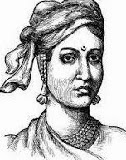
Short Biography of \’Rani Lakshmibai\’ (220 Words)

\’Rani Lakshmibai\’ was born on November 19, 1835 at Kashi. Her father\’s name was Moropant. Her mother\’s name was Bhagirathi Devi. Laxmi\’s childhood name was Manikarnika but affectionately she was called Manu in her childhood.

Rani Lakshmibai was married to Gangadhar Rao in 1842. Gangadhar Rao was the king of Jhansi. In 1851, the Rani had a son; he unfortunately died when he was barely four months old. Raja Gangadhar Rao could not bear the shock and after a long illness, he died on November 21, 1853.

Jhansi became a major center of the revolt of 1857. Rani Lakshmibai of Jhansi, began to strengthen security and started a volunteer army. Ordinary people also contributed to the revolt. In 1857, the kings of the neighboring state of Jhansi, Orchha and Datia attacked. Rani Lakshmibai defeated them successfully. In March 1858 the British army besieged the city of Jhansi. But Rani, with her adopted son Damodar Rao was able to escape. Rani died on June 18, 1858.

Rani Lakshmibai was the great heroine of the First War of Indian Freedom. She was the embodiment of patriotism, self-respect and heroism. Her life is a thrilling story of womanliness, courage, adventure, deathless patriotism and martyrdom. Rani Lakshmibai was the real meaning of the ideal heroine. She was proud of not just India but the world\’s women. 

Short Biography of \’Rani Lakshmibai\’ (220 Words)

\’Rani Lakshmibai\’ was born on November 19, 1835 at Kashi. Her father\’s name was Moropant. Her mother\’s name was Bhagirathi Devi. Laxmi\’s childhood name was Manikarnika but affectionately she was called Manu in her childhood.

Rani Lakshmibai was married to Gangadhar Rao in 1842. Gangadhar Rao was the king of Jhansi. In 1851, the Rani had a son; he unfortunately died when he was barely four months old. Raja Gangadhar Rao could not bear the shock and after a long illness, he died on November 21, 1853.

Jhansi became a major center of the revolt of 1857. Rani Lakshmibai of Jhansi, began to strengthen security and started a volunteer army. Ordinary people also contributed to the revolt. In 1857, the kings of the neighboring state of Jhansi, Orchha and Datia attacked. Rani Lakshmibai defeated them successfully. In March 1858 the British army besieged the city of Jhansi. But Rani, with her adopted son Damodar Rao was able to escape. Rani died on June 18, 1858.

Rani Lakshmibai was the great heroine of the First War of Indian Freedom. She was the embodiment of patriotism, self-respect and heroism. Her life is a thrilling story of womanliness, courage, adventure, deathless patriotism and martyrdom. Rani Lakshmibai was the real meaning of the ideal heroine. She was proud of not just India but the world\’s women. 

Using Technology To Turn Historical Photographs Into Animated Wonders

Source: Alexey Zakharov


Educators have always sought to add visual interest to their lessons, to support learning modalities and to provide illustrative examples of the topics under consideration. From postcards to prints, from filmstrips to YouTube, the power of pictures and movies to aid learning is undeniable. Now, various digital tools and editing applications are enlivening \”flat\” images in thrilling fashion. The animation of historical photos is bringing primary sources to life in ways unimagined by teachers and students a decade ago.

 \”The Old New World\” (Photo-based animation project) from seccovan on Vimeo.

Often called 2.5D, or \”the Parallax Effect,\” the rendering of motion within a still photograph allows the eye to traverse the image in a more fully realized manner. The forced examination of details, as foregrounds and backgrounds snap into focus, invites viewers to explore the entire depth of field. In adding movement to static characters, the past becomes relevant as observers imagine the seconds preceding and succeeding the camera\’s shutter. A crescendo of action added to a familiar scene places the spectator within the historical moment. Each detail now becomes tangible and palpable. Each setting contains nuance and fluidity.


Even more interesting for educators to consider are the ways these adaptations of primary sources reinforce the critical questions about dealing with pictorial artifacts: What role does the photographer or editor play in staging a photo? What is intentionally included, removed, or modified within a scene? Is any artificial capture of a moment truly \”real,\” and how much scholarly skepticism should students lend to every research source?


Adobe Photoshop, After Effects, and Audition are some of the most common tools to render photographs and paintings from 2D to 3D. The History Channel (and several truck commercials) use these effects regularly in their productions. Some excellent tutorials exist (where else?) on YouTube to practice creating these styles of videos (here and here).

 Fukushima – Images by Rebecca Lilith Bathory from chris lavelle on Vimeo.

At their most advanced, these animations ask us to reconsider the historical and the artistic record as changeless constants. At their most basic, however, these videos are just neat. They are inviting and clever. They lure in students and others to enjoy the study of history even more.


For other ideas about creating animations, check out:


Short Biography of ‘Nelson Mandela’ (294 Words)

‘Nelson Mandela’ was born on July 18th, 1918 in the village of Mvezo in Umtata, then a part of South Africa’s Cape Province. His story symbolizes a lifestyle struggle against apartheid in South Africa. It was a terrible form of institutionalized racism that held the South African society in it’s grip for a long time. It was not easy for Mandela to fight against it, as he too was among those who were oppressed by the system.

Before becoming actively involved in the anti-apartheid struggle, Mandela survived many years of his life as a subject of colonialism. As a child in Africa, Mandela was a victim of the European colonial project which involved ‘civilizing’ indigenous communities by silencing African ways of life in favour of a Euro-centric culture.

In the early 1960’s, Mandela was imprisoned for his stand against the racist laws of the government. He stayed in prison for nearly three decades but refused to compromise his position, which was to fight for justice and equality for all people.

A courageous and uncompromising hero, Mandela was a man of principles, strength and integrity. In 1994, he led the country to the end of apartheid and was elected the first black president of South Africa. He served as President of South Africa from 1994 to 1999. After he retired from public life, Mandela continued to embody the hopes and dreams of a free and equal world. He died on December 5th, 2013 at the age of 95 at Johannesburg, South Africa.

Nelson Mandela received more than 250 honours, including the 1993 Nobel Peace Prize, the US Presidential Medal of Freedom, the Soviet Order of Lenin and the Bharat Ratna. Today, Nelson Mandela, popularly known as ‘Madiba’ in South Africa, is a household name all over the world.

Chief of the Air Staff Air Chief Marshal RKS Bhadauria visits NCC Republic Day Camp

Chief of the Air Staff Air Chief Marshal RKS Bhadauria visited the National Cadet Corps (NCC) Republic Day Camp 2020 at Delhi Cantt today. The Chief of Air Staff inspected the Guard of Honour presented by the NCC cadets from the Army, Navy and Air Force. This was followed by a Band Display by the cadets.

The Chief of the Air Staff also inspected the well laid out ‘Flag Area’, prepared by the cadets from all 17 NCC Directorates, depicting various social awareness themes. He was given a brief by the cadets on their respective models.

Air Chief Marshal RKS Bhadauriavisited the ‘Hall of Fame’, a proud possession of the NCC, with display of rich archival collection of alumni photographs, models, motivational and other visual delights of the three wings of the NCC.Later, the Chief of the Air Staff and other distinguished guests witnessed a cultural programme by the cadets.

In his address, Air Chief Marshal RKS Bhadauria lauded the stellar role played by NCC in shaping the youth of the nation,enabling them to shoulder the responsibilities of building a strong India. He assured the NCC of the continued support of the Indian Air Force in conduct of its Air Wing activities.

***

Prime Minister Dedicates Four Refurbished Heritage Buildings in Kolkata to the Nation

The Prime Minister Shri Narendra Modi dedicated to the nation Four Refurbished Heritage Buildings in Kolkata today. These are Old Currency Building, the Belvedere House, the Metcalfe House and the Victoria Memorial Hall. The Union Minister of State (Independent Charge) for Culture and Tourism, Shri Prahlad Singh Patel and Governor of West Bengal Shri Jagdeep Dhankhar were also present on this occasion.

Photo Caption: The Prime Minister, Shri Narendra Modi addressed at the dedication ceremony of the four refurbished Heritage Buildings to the nation, in Kolkata.


Speaking on the occasion, Prime Minister termed it as a special day, as it begins a nationwide campaign to preserve India’s art, culture and heritage, and to Reinvent, Rebrand, Renovate and Rehouse them. Shri Modi said that India always wanted to protect and modernize its cultural heritage and structures. It is with this spirit that the Union Government has taken up the endeavour to develop India as major centre of Heritage Tourism in the World. He mentioned that five 5 Iconic Museums in the country will be made in keeping with the International standards. This is being started from the Indian Museum in Kolkata, which is one of the oldest museums in the world, he added.

Kindly click the link for the full speech of Prime Minister


Photo caption: The Prime Minister Shri Narendra Modi unveiled the ‘Ardhnarishwar’ sculpture at Old Currency Building in Kolkata in the presence of the Union Minister of State (I/C) for Culture and Tourism, Shri Prahlad Singh Patel and Governor of West Bengal Shri Jagdeep Dhankhar.


Speaking on the occasion the Union Minister of State (Independent Charge) for Culture and Tourism, Shri Prahlad Singh Patel said that it is a great privilege that the Prime Minister is dedicating these historical and heritage buildings in Kolkata to the Nation. The minister lauded the dedicated efforts of the officials of the Culture Ministry which helped the refurbished structures to come into being within the stipulated period. The renovated four heritage buildings are now open for the public. Our museum and the objects placed in it are the heritage of all of us. We all need to take care of them together, he added. Shri Patel also praised the art-works curated Old Currency Building, named Ghare Baire, from where the Prime Minister dedicated three other iconic and historical buildings of Kolkata, namely, Belvedere House, Victoria Memorial Hall and Metcalfe House.

Kindly click the link for details of the renovated heritage buildings


*****

Ordinance promulgated for amendment of MMDR Act and CMSP Act; paves way for growth in Coal and Mining sector

The ordinance for amendment in the MMDR Act 1957 and the CMSP Act 2015 has been promulgated. The Union Cabinet had earlier approved the amendments intending to open up new areas of growth in the coal & mining sector.

The amendments in the Acts would enable the following:

  1. Enhancing the  ease of doing business
  2. Democratization of coal mining sector by opening it up to anyone willing to invest.
  3. Offering of unexplored and partially explored coal blocks for mining through prospecting license-cum-mining Lease (PL- cum-ML).
  4. Promoting Foreign Direct Investment in the coal mining  sector by removing the restriction and eligibility criteria for participation.
  5. Allowing of successful bidder/allottee to utilise mined coal in any of the plant of its subsidiary or holding company
  6. Attracting large investment in coal mining sector as restrictions of end use has been dropped.

The details are as given below:

  1. Amendments in respect of Ministry of Coal

Amendment 1:            To provide for allocation of coal blocks for composite prospecting licence-cum-mining lease (PL-cum-ML)

Earlier, there was no provision for grant of composite prospecting licence-cum-mining lease (PL-cum-ML) in respect of coal/ lignite. A coal / lignite block could be either be allocated for PL or for ML. The Amendment has enabled the allocation of coal blocks for composite prospecting licence-cum-mining lease (PL-cum-ML) which will help in increasing of the inventory of coal/ lignite blocks for allocation. Coal blocks with different grades and in a wide geographical distribution will now be available for allocation.

The Sections involved were Section 4(2), 5(1), 8(4), 8(8), 8(9) and 31(2)(b) of the CMSP Act and Section 11A and 13(2) of the MMDR Act

Amendment 2:            Clarifying the power of Central Government to specify the purpose of allocation and that ‘any’ company can participate

There was lack of clarity earlier in the language of the provisions in the Acts leading to restrictive interpretation of the eligibility conditions in the auction. It has now been clarified that any company selected through auction/ allotment can carry on coal mining operation for own consumption, sale or for any other purposes, as may be specified by the Central Govt. allowing wider participation and competition in auction.

Thus, the companies which do not possess any prior coal mining experience in India but are financially strong and or have mining experience in other minerals or in other countries can now participate in auction of coal/lignite blocks. This would also allow the implementation of the 100% FDI through automatic route for sale of coal.

The Sections involved are 11A of the MMDR Act and Section 4(2) and 5(1) of the CMSP Act.

Amendment 3:            Flexibility in deciding the end use of Schedule II and III coal mines

Hitherto, the Schedule II and III coal mines could only be auctioned to companies that are engaged in specified end use. Now, the omission of sub-section (3) of Section 4 of CMSP Act has provided flexibility to the Central Govt. in deciding the end use of Schedule II and III coal mines under the CMSP Act. This would allow wider participation in auction of Schedule II and III coal mines, for a variety of purposes such as own consumption, sale or for any other purpose, as may be specified by the Central Govt.

Amendment 4:            Termination of the allocations made under the CMSP Act, their reallocation and compensation

The CMSP Act and the CMSP Rules were silent on subsequent allocation of coal mines upon termination of allocations made under the Act as well as rights and liabilities of the allottee, whose allocation has been terminated. With the amendment of Section 8 (insertion of sub section (13), (14) and (15) in CMSP Act), it is has become possible to provide for allocation of the coal mine to next successful bidder or allottee, subsequent to termination of its allocation along with the matters incidental to it. The Act now also provides for compensation to the allocattee whose allocation has been terminated.

Amendment 5:            Appointment of Designated Custodian in mines under production:

Earlier, there was no provision for appointment of designated custodian for management of the mines under production whose vesting/ allotment order has been cancelled. By amending the Section 18 of the CMSP Act, it is now possible for appointment of designated custodian for management of the mines, apart from Schedule II mines, which have come under production and whose vesting/ allotment order has been cancelled. It therefore addresses the issue of management and operation of the mines after their termination, which have come under production.

Amendment 6:            Dispensing with the requirement of previous approval in certain cases

With the amendment of the Section 5 and 17A of the MMDR Act, the repetitive and redundant provision requiring previous approval of Central government even in cases where the allocation or reservation of coal/ lignite block has been made by the Central Govt. itself has been done away with. This would significantly reduce the  time taken for operationalisation of coal/ lignite mines.

Amendment 7:            Entitlement to successful allocattee to utilise the coal mined in plants of Holding and Subsidiary company:

Earlier a successful allocattee was entitled to utilise the mined coal only in any of its plants. With the amendment of  Section 20(2)of the CMSP Act now the reference of Holding company and Subsidiary company has been added. This would make the successful bidder/allottee entitled to utilise mined coal in any of its plants or plants of its subsidiary or holding company.

Amendment 8:  Certain Consequential and clarificatory Amendments:

Certain consequential and clarificatory amendments were required in language of various provisions for smooth implementation of the CMSP Act. Section 9 and 20(1) of the CMSP Act have now been amended which has resulted in the clarification of language of Section 9 (related to priority of disbursal) Further, language of Section 20(1) has been clarified to avoid any arrangement between two coal linkage holders as the same is not subject matter of the CMSP Act.

  1. Amendments in respect of Ministry of Mines

Amendment 1:            Insertion of new section 4B (after section 4A) to enable the Central Govt. to prescribe conditions for ensuring sustained production by the holder of mining leases, who have acquired rights/approvals/clearances etc. transferred from the previous lessee, as per the provisions under section 8B, which is incorporated in this amendment:

The pre-amended MMDR Act, provided a time period of two years for the new lessee for starting the mining operation, whereas the newly introduced section 8B of this Act, provides for deemed acquiring of valid rights /approvals /clearances by the new lessee. The objective of the amendment is to ensure the continuity of production of minerals. Hence, there is need to specify the conditions for production by the new lessee, who will avail benefits of section 8B. Further, the Central Government derives power to prescribe the conditions for the new lessees to commence production without prejudice to the time period of two years for starting the production prescribed in Section 4A.

Amendment 2:            Amendment of Section 8A by introducing a proviso to clarify the intent of Section 8A(4) of the MMDR Act:

The previous section 8A(4) of the MMDR Act provided for auction of leases on the expiry of the lease. There existed scope for ambiguity about initiating the advance action/process  by the State Government for notifying the expiring leases for auction. With the amendment it has  been clarified that State Government can take up advance steps for auction of blocks before the expiry of lease period. This would ensure that the production of the minerals from such blocks can be seamlessly continued.

Amendment 3:            Provisions to ensure that the successful bidder of mining leases expiring under Section 8A(5) & 8A(6), shall acquire all valid rights / approvals / clearances; for a period of two years and within which period he/she shall apply for fresh licence:

The working mining leases of Odisha are expiring during 2020. These leases produced about 58 Million Tonne of iron ore, 1.80 Million Tonne of chromite and 0.77 Million Tonne of manganese during the year 2018-19.  Statutory clearances required to start the mining operations for the new leases have to be granted expeditiously to enable the new lessees to continue the mining operations.

The new lessee has to obtain 20 approvals to start the mining operations, of which 9 are related to different Central Govt. Ministries and the remaining are from the State Government. In normal course, the minimum time period required to obtain these approvals vary from two to three years. This whole process would delay the commencement of mining operations by the new lessees. Any delay in commencing the mining operations by the new lessee would adversely  affect the mineral production in the country, which in turn would impact the important downstream industries like steel, cement etc.

With the insertion of new section 8B (after section 8A) of the MMDR Act, the successful bidders of the mining leases expiring under section 8A(5) & 8A(6) of the MMDR Act, deemed to have acquired all valid rights/ approvals/ clearances/ licenses and the like; for a period of two years and can start mining operation without loss of time. Seamless continuance of mining operations is in public interest as this will prevent disruption in supply of raw material (mineral) to the industries.

The above amendments (1,2&3) pertaining to Mines will promote ease of doing business and will benefit the holders of auctioned brown field mining leases on expiry of their lease period starting from March 2020 and then from March 2030.

Amendment 4:            Provisions to enable the holders of Non-Exclusive Reconnaissance permit of deep seated minerals and other minerals of the national interest to obtain composite licence (PL-cum-ML) or Mining Lease:

The previous legislative provisions did not allow the non-exclusive reconnaissance permit holders to apply for mining lease. The private participation in exploration was therefore negligible. In order to enhance exploration of deep seated minerals a facilitating environment has been envisaged to be provided with the insertion of new proviso after sub-section 2 of section 10C. This amendment would allow NERP holders of deep seated minerals or any minerals of the national interest to apply for composite licence (PL-cum-ML) or Mining Lease. This would hence augment the exploration of the deep seated minerals and minerals of national interest, some of which are strategically important for the country.

Amendment 5:            Empowers the Central Government to frame rules in respect of newly introduced sections:

The difficulty of the Central Govt. which had to derive power to make rules to implement the provision of the amended Act has now been removed with the insertion of new clauses in sub-section 2 of section 13. This would give the Central Government power to frame subordinate legislation to implement the intent of the Ordinance.

*******