SWOT Analysis explained.

SWOT is an acronym for Strengths, Weaknesses, Opportunities and Threats. By definition, Strengths (S) and Weaknesses (W) are considered to be internal factors over which you have some measure of control. Also, by definition, Opportunities (O) and Threats (T) are considered to be external factors over which you have essentially no control.

SWOT Analysis is the most renowned tool for audit and analysis of the overall strategic position of the business and its environment. Its key purpose is to identify the strategies that will create a firm specific business model that will best align an organization’s resources and capabilities to the requirements of the environment in which the firm operates.

In other words, it is the foundation for evaluating the internal potential and limitations and the probable/likely opportunities and threats from the external environment. It views all positive and negative factors inside and outside the firm that affect the success. A consistent study of the environment in which the firm operates helps in forecasting/predicting the changing trends and also helps in including them in the decision-making process of the organization.

An overview of the four factors (Strengths, Weaknesses, Opportunities and Threats) is given below-

Strengths – Strengths are the qualities that enable us to accomplish the organization’s mission. These are the basis on which continued success can be made and continued/sustained.

Strengths can be either tangible or intangible. These are what you are well-versed in or what you have expertise in, the traits and qualities your employees possess (individually and as a team) and the distinct features that give your organization its consistency.

Strengths are the beneficial aspects of the organization or the capabilities of an organization, which includes human competencies, process capabilities, financial resources, products and services, customer goodwill and brand loyalty. Examples of organizational strengths are huge financial resources, broad product line, no debt, committed employees, etc.

Weaknesses – Weaknesses are the qualities that prevent us from accomplishing our mission and achieving our full potential. These weaknesses deteriorate influences on the organizational success and growth. Weaknesses are the factors which do not meet the standards we feel they should meet.

Weaknesses in an organization may be depreciating machinery, insufficient research and development facilities, narrow product range, poor decision-making, etc. Weaknesses are controllable. They must be minimized and eliminated. For instance – to overcome obsolete machinery, new machinery can be purchased. Other examples of organizational weaknesses are huge debts, high employee turnover, complex decision making process, narrow product range, large wastage of raw materials, etc.

Opportunities – Opportunities are presented by the environment within which our organization operates. These arise when an organization can take benefit of conditions in its environment to plan and execute strategies that enable it to become more profitable. Organizations can gain competitive advantage by making use of opportunities.

Organization should be careful and recognize the opportunities and grasp them whenever they arise. Selecting the targets that will best serve the clients while getting desired results is a difficult task. Opportunities may arise from market, competition, industry/government and technology. Increasing demand for telecommunications accompanied by deregulation is a great opportunity for new firms to enter telecom sector and compete with existing firms for revenue.

Threats – Threats arise when conditions in external environment jeopardize the reliability and profitability of the organization’s business. They compound the vulnerability when they relate to the weaknesses. Threats are uncontrollable. When a threat comes, the stability and survival can be at stake. Examples of threats are – unrest among employees; ever changing technology; increasing competition leading to excess capacity, price wars and reducing industry profits; etc.

SWOT Analysis is a strategic management tool that assists an enterprise in discerning their internal Strengths, and Weaknesses, and external Opportunities, and Threats, to determine its competitive position in the market.
Why were Noida's twin tower demolished.

The Supertech twin towers were demolished on Sunday (August 28). The demolition of the Emerald Court project in Noida is leading to a loss of about Rs 1,000 crore to developer Supertech. It also took nearly Rs 20 crore to raze the building. 

A part of Supertech’s Emerald Court project, the two 40-story towers, that stand on Noida-Greater Noida expressway, houses over 900 flats in an area of around 7.5 lakh sq. feet. The twin towers (namely Apex and Ceyane) are located at Sector 93A in Noida. One of the buildings has an altitude of 103 metres, while another is around 97-metre tall.

The twin towers are being demolished because of serious violations of building codes. Supreme Court said, the Noida Authority and Supertech had engaged in “nefarious complicity” and ordered the company to demolish the buildings at its own expense under the guidance of the Noida Authority.

The ‘Supertech Emerald Court’ housing society was proposed to be built in Noida’s Sector 93A in 2004. The next year, the Noida authority sanctioned the building plan that showed 14 towers and nine floors. 

But this plan was later revised. And in 2012, the Noida authority reviewed the new plan, in which the height of the twin towers was fixed at 40 floors.

Following this, Residents’ Welfare Association (RWA) of the society moved to Allahabad High Court stating that the construction was illegal. Accordingly, in 2014, the court directed the authority to demolish the twin towers within four months (at its own expense) from the date the order was filed.

Later, in August 2021, Supreme Court upheld the Allahabad HC order, and ordered the demolition, noting that the structures had come up violating construction norms.

The Supreme Court’s decision was the result of a number of petitions submitted by homebuyers in support of and opposition to the Allahabad High Court’s ruling.  According to the Supreme Court, August 28 had affirmed as the date of destruction.

For the demolition, about 3,700 kg of explosives were brought from Palwal (Haryana) to be used. It was a mix of dynamite, emulsions and plastic explosives.

Arch rivals India and Pakistan faceoff in Asia cup

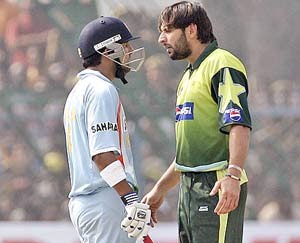
Pakistan’s Shahid Afridi and India’s Gautam Gambhir in an argument during a 2007 ODI in Kanpur

Sunday evening will be spiced up as the two arch-rivals India and Pakistan will lock horns in the T20 Asia cup match, to be played in the Dubai international stadium at 7:30 pm.

While India is Playing without Jasprit Bumrah and Harshal patel. Pakistan will have to carry on without the services of Shaheen afridi and Mohammad Wasim Jr.

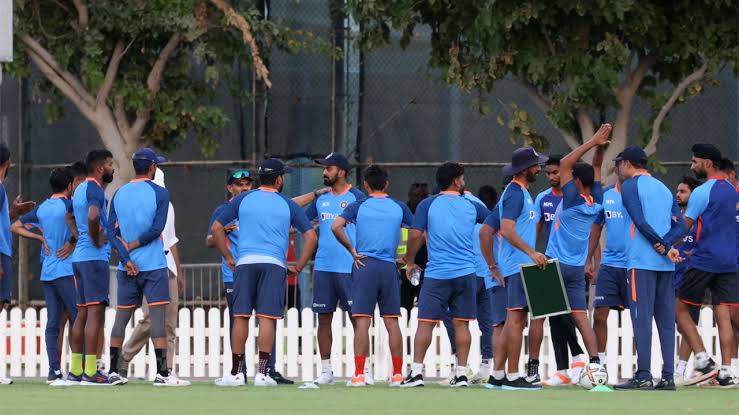
Team India

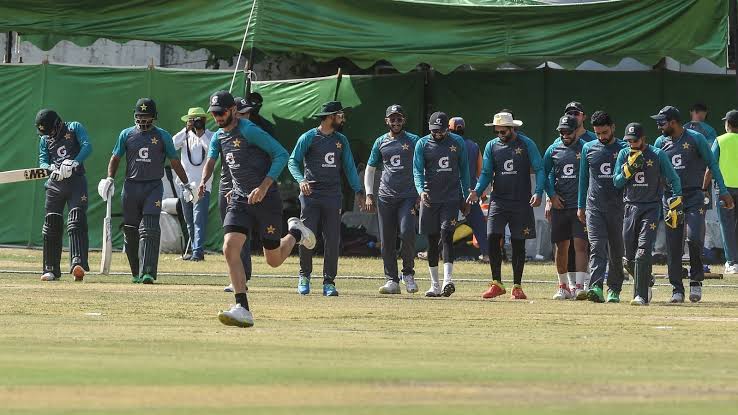
Team india practice session

The revival of Indian batting has reached a turning point. Since the lethargic Tournament that occurred last October in the UAE, much exertion has been put into attaining a do-over. Commencing on Sunday, there seems to be an opportunity to try it for the very first time in a cross competition. India could use an adversary that regularly wins in the UAE as a beginning point to determine whether their 180 degree batting turnaround will break their 15-year T20 WC winless streak subsequently this year.

With such a decent top, India currently has the chance to adhere to this destruction strategy after improving their batting results over the past ten months in every part of the Twenty20 game by accepting the dangers and benefits about not performing cautiously. After their respective sabbatical, KL Rahul and Virat Kohli return, giving VVS Laxman and Rohit Sharma a crucial decision to make at the start of this campaign. Hardik Pandya, Dinesh Karthik, and Ravindra Jadeja make up India’s 5-6-7 finishing axis, with Suryakumar Yadav and Rishabh Pant acting as useful floaters. However, with their back to regular fortitude and as a sign of the batsman dominance hierarchy, this strategy may need to be adjusted.

Tactics: In this year’s T20Is, 12 of Bhuvneshwar Kumar’s Twenty strikes had arrive inside the PowerPlay. India will seek to utilise this skill against a team with a top-3 and middle-order batting average of 42.35 and 15.59, accordingly, since January 2021, which shows a noticeable talent gap amongst sides. Since January 2021, Babar Azam and Mohammad Rizwan have scored 1000 or more runs in T20I, therefore breaking that opening partnership should be India’s top bowling priority.

Team pakistan

Team pakistan practice session

All tempo issues and decision-making difficulties for Pakistan are related to its bowling. Due to Shaheen Afridi’s injuries, Pakistan has now been hindered vs an outfit that has had trouble handling the left-hander in previous matches. Mohammad Wasim Jr. is now unavailable due to injuries sustained during practise.

Shahnawaz Dahani and Naseem Shah are Pakistan’s two quick bowlers, and they have a cumulative total of two T20 Internationals of encounter. Hasan Ali, who had not been initially selected after a lacklustre year with ball, is now returned to the side. With his left-armer-free bowling options, Babar Azam must be precise, while leggie Shadab Khan, making his first Limited – overs match since December 2021, must also get going right away.

Tactics: Babar must use his skills wisely in Shaheen’s absence against an enthusiastic Indian batting lineup. It is important to wisely utilise the large sizes of the Dubai stadium, especially in the PowerPlay overs, when India has struck 71 sixes in 37 innings since January 2021. Pakistan has only hit 30 of them throughout this time period (in 10 less innings), which helps put the level of risk-taking into perspective. Timing the insertion of leggies Shadab and Usman Qadir will also be crucial, depending on where Rishabh Pant bats.

Head to head encounter

India has a better 8-5 win ratio over Pakistan at Asia Cups. Five of 6 Asia Cup competitions among the two teams since 2010 have been won by India.

Expectations

Dew’s effect causes problems for teams that bowl second. However, India has prepared for this possibility by electing to bat first if it is feasible since their last participated overseas. In 16 T20Is played following the 2021 World Cup, India has batted first 12 times and has lost just three of those contests.

Key players

Virat Kohli, Babar Azam,Rohit Sharma, Mohammad Rizwan,Bhuvneshwar Kumar and Haris Rauf.

What Captains have to say before match

Rohit Sharma (India): “The mood in the camp is buzzing. It will be a challenge to play against Pakistan without a doubt. We do talk about our losses, that’s how we improve as a team. That loss [in Dubai last year] did hurt us at that point, but I think it’s been a while since that game has been played. We learn from our mistakes. For now, it’s a fresh start for us and obviously, the team is coming out of playing a lot of T20 cricket. We will not think too much about what happened in October, that was a long time back.”

Babar Azam (Pakistan): “No heat at all [between the two sides]. It’s normal and we have to adjust to everything as a professional. Every match is important for me and it is my responsibility as captain that I give my 100 percent. Injuries are part of the team. We have a good bench strength and we have a young battery of fast bowlers who have performed well and I have belief in them.”

Squad

India : Rohit Sharma(c), KL Rahul, Virat Kohli, Rishabh Pant(w), Suryakumar Yadav, Hardik Pandya, Ravindra Jadeja, Bhuvneshwar Kumar, Yuzvendra Chahal, Arshdeep Singh, Avesh Khan, Ravichandran Ashwin, Deepak Hooda, Dinesh Karthik, Ravi Bishnoi

Pakistan : Babar Azam(c), Mohammad Rizwan(w), Fakhar Zaman, Iftikhar Ahmed, Khushdil Shah, Asif Ali, Mohammad Hasnain, Shadab Khan, Usman Qadir, Haris Rauf, Naseem Shah, Shahnawaz Dahani, Mohammad Nawaz, Hasan Ali, Haider Ali

Sustainable Development.

Sustainable development refers to “the development which meets the needs of the present without compromising the ability of future generations to meet their needs.” Moreover, if we observe the term “sustainable development”, it means a development that heads over towards progress not decline.

The World Commission on Environment and Development popularized this concept in 1987. It aims to prevent the exploitation of natural resources and enrichment the natural resources. Basically, it is an action plan to help our future generations to live comfortable life. Sustainable development rests on three pillars – economic, social and environmental – which are often referred to as the triple bottom line. Achieving sustainable development requires balancing these three pillars in a way that meets the needs of present generations without risking the future generation.

We need many resources and a suitable environment to live our lives effortlessly. The population of the world is growing rapidly and so is the demand for resources. Human beings have been continuously exploiting resources and harming the environment.

In this condition, our future generations have to face a scarcity of resources to meet their needs and have to experience a less supportive environment. Sustainable development is the only solution to prevent this situation. It will prevent overexploitation and wastage of natural resources.

India is a rapidly developing country with a population of over 1.3 billion. The country faces many challenges in achieving sustainable development, including poverty, illiteracy, malnutrition, environmental degradation and climate change. In recent years, India has made progress in some areas of sustainable development, such as reducing poverty and increasing access to education and health care. However, much more needs to be done to meet the country’s development goals. There is a need for greater political will and financial resources to implement sustainable development initiatives in India. In addition, there is a need to raise awareness of sustainable development among the general public and create more coherent and coordinated policies at the national level.

India to be next global SaaS capital.

The Indian IT sector continues to charge ahead on its trajectory of growth and transformation, with SaaS (Software as a Service) setting the stage for the next wave of disruption, according to a study. 

India is home to about 100-plus unicorns across different segments with an accelerated pace of entrepreneurship and is rapidly emerging as a hub for SaaS start-ups, cited the study by EY and CII, titled “India: The next global SaaS capital.” 

Over 80 per cent of the SaaS promoters feel there is the need to build a robust talent pool, according to the EY-CII study. While the landscape is mainly driven by small and medium businesses with a focus on large enterprises, SaaS companies in the SMB market are structured very differently from those catering to the enterprise market.

“Macro-economic environment notwithstanding, the funding activity in the first two quarters of this year surpassed the funding activity in 2021 – which was a breakout year with over $4.3 bn in funding for SaaS start-ups,” said EY India.

According to other reports, the Indian SaaS market is expected to grow multi-fold by 2025, accounting for almost seven to ten per cent of the global SaaS market, from 2-4 per cent at present.

Led by Freshdesk and Zoho Corporation, India now has 18 SaaS unicorns as compared to one in 2018, with India being the third largest SaaS ecosystem globally, after the US and China. The number of SAAS companies in the country have more than doubled in 2021 as compared to 2019 and the funding too increased from $2.6 billion in 2019 to $6 billion in 2021.

According to the EY-CII report, SaaS providers are also doubling down on their customer acquisition, retention, and success strategies by upselling and cross selling to existing customers. The study also pointed towards the need for skill development in areas like product management and design to cater to the growing talent demand in the SaaS industry.

National Sports Day.

The national sports day in India is celebrated on 29 August on the birth anniversary of legendary hockey player Major Dhyan Chand Singh, Major Dhyan Chand Singh is regarded as India’s greatest hockey player of all time.

The late hockey player had led India to three Olympic gold medals in 1928, 1932 and 1936, he had scored over 400 goals in 22 years he was bestowed with India’s third-highest civilian owner Padma Bhushan in 1956

Dhyan Chand Singh also served in the Indian army and brought laurels to the country the first national sports day was celebrated on 29 august 2012. The day is observed also to spread awareness on the importance of sports to stay fit and healthy on this day the president of India honours eminent sports personalities with major awards including the Arjuna award major Dhyan Chand Khel Ratna award and the Dronacharya award.

Sport is very vital in the human’s life as it keeps us healthy, wealthy or active. There are several advantages of playing sports like it help us in building confidence, provides regular exercise, team-work, etc. Participating in sports also has psychological advantages like it relieves the stresses of everyday life.

The government understands the importance of national sports day & promoting sports as well. They have taken several initiatives for the development of sports like khelo India, National Sports Development Fund, and Scheme for Promotion of Sports among Persons with Disabilities, Scheme of Assistance for Anti-Doping Activities, etc. Khelo India is a very popular initiative taken by the government. The main aim of the Khelo India programme is to revive the sports culture in India at the grass-root level by building a strong framework for all sports played in our country and establishes India as a great sporting nation. This program was introduced by the ministry of sports and youth affairs. 

The Sports Authority of India is the premier sports body of the country which will spearhead India’s sporting ambitions and develop the environment to promote the sports culture in the country and sporting excellence.

Sports Authority of India is now in the process of formulating and implementing a series of reforms in the Sports Sector which will build on a holistic approach to the development of Sports and Physical Education. Sports Promotional Schemes of Sports Authority of India:

  • National Sports Talent Contest Scheme (NSTC) – for Sub-Junior level trainees
  • Army Boys Sports Company Scheme (ABSC) – for Sub-Junior level trainees
  • SAI Training Centres Scheme (STC) – for Junior level trainees
  • Extension Centre of STC /SAG
  • Special Area Games Scheme (SAG) – for Junior level trainees
  • Centre of Excellence Scheme (COX) – for Senior level trainees
  • COME and PLAY Scheme

education policies of India.

 EDUCATION POLICIES BY THE GOVERNMENT.

 Which schooling policies are the newest? Is this the very first? When was the initial education policy put into practice? Students may have inquiries about educational policy.

The Narendra Modi administration passed the most recent education strategy on July 29, 2020. The previous regulation, NPE 1986, was replaced by this one. This is the BJP’s inaugural educational strategy.

Key proposals of the national education policy, 2020

  •   The nep suggests changing the academic framework of the school from [10 + 2] of schooling to [5+3+3+4].
  • The duration of the undergraduate [UG] degree structure will be 3 or 4 years. There are currently numerous entries.
  • The government will stop offering the M. Philosophy program.

  • Under the new nep 2020, higher education institutions will now be able to offer a master’s degree that lasts just one year.

  • To avoid damaging hierarchies and silos between various fields of learning, there won’t be a clear division between the arts and sciences, between the curriculum and extracurricular activities, between academic and vocational streams, etc. The most crucial and required adjustments were made in this new educational policy. The implementation of this is crucial, and it has already started and received positive feedback.

 The first education policy.


In 1968, the Indira Gandhi administration established the first education policy. The Kothari commission (1964–1955) served as the foundation for this approach. This was renowned for its radical reconstruction and equal access to education.
1968’s education policy features.


  1. Free and compulsory education till the age of 14 years.
  2.  Improvement in status, emoluments, and competence of the teachers. 
  3. Three language formulas Hindi, Sanskrit, and international language especially English should be implemented.
  4. Equal education opportunities for all sections of society. 
  5. Subjects like science and mathematics should be an integral part of general education. 
  6. Agriculture and industry education.
  7. The quality of books should be improved. 
  8. Adult education program.

 National education policy 1986.

This was the second education policy of India and was launched under the government of Rajiv Gandhi. This basically works on two major things removal of disputants and providing educational opportunities.

 Key resolutions of education policy 1986.

  • Operation blackboard was launched by NPE in 1986 to expand primary education nationwide. That’s why the NPE 1986 was known as the child-centered approach.
  • Make provision for the employment of teachers from sc, st, and background. 
  • Expand scholarships to encourage pupils. 
  • Promote adult education as well as introduce open universities. [ IGNOU in 1985 ] 
  • Sarva Shiksha Abhiyan, mid-day meal scheme, Navodaya Vidyalaya [NVS] Kendriya Vidyalaya,[KVS] and use of information and technology in education started by the NPE 1986. 6. A national curriculum framework should be developed nationwide. 
  • It recommends strengthening institutions of national importance like UGC, NCERT, etc.

 National education policy 1992. 

This education is a modification of the old policy of 1986. This policy was implemented in 1992 by the government of P.V. Narasimha Rao. It was based on the ram Murthi commission led by chairperson Sri. Janardhan Reddy.

 Important points of education policy 1992.

  1. To accept +2 level as part of school education.
  2.  Greater emphasis was given to Samagra Shaksharta Abhiyan. 
  3. Operation blackboard as three classrooms and three teachers and should implement in upper primary classes.
  4. This was also recognized as a common minimum program in 2005. 
  5.  Adding a common entrance exam for the professional and technical programs.

India had four different education strategies up until this point, each of which was distinct in its own way. The government of Indira Gandhi deserves credit for the education strategy because she took the initiative and introduced the country’s first-ever education plan. Every policy, nevertheless, has many benefits, and we hope the students will take use of them. Education is the manifestation of perfection already existent in man, according to Swami Vivekananda. The manifestation of a person’s innate religious nature is their divinity.

Government policies regarding Education in India.

Before 1976, education was exclusively the responsibility of states; the Central government was only concerned with certain areas like co-ordination and determination of standards in technical and higher education, etc. In 1976, through a Constitutional amendment, education became a joint responsibility.

The Indian government has been trying to enhance the quality of education since the time of independence. There have been numerous policies and schemes that aimed at providing better education for everyone, irrespective of caste and religion. Indian constitution allows children with the right to education, which means that education isn’t just something that children want, it is their right.

The Indian government has had some long-term education policies along with some latest additions. Mentioned below are some of the best schemes that were framed to promote education in India-

Samagra Shiksha

Under this scheme, the government has decided to treat the school education from class 1 to 12 holistically and without segments. This scheme is framed to increase the efficiency of school education and provide students with better facilities to promote holistic growth. This has been done due to the long-time need for change in the education system of India.

Eklavya Schools

A lot of scheduled caste and minority people face issues like discrimination while trying to get educated; they generally don’t have enough money to have a proper education. This is why the government of India introduced this scheme. Under this scheme, special schools are to be made for scheduled caste and minority students that will provide basic education along with skill development in sports and other fields. This is being done to provide them equal opportunities.

Free education for poor

This was a masterstroke by the state government of Assam, and under this everyone with a BPL card will be allowed to avail free high quality senior secondary education, polytechnic and other degree courses from government institutions. This is done to help people to get an education even if they cannot afford it. This is sure to promote education in those areas.

Scholarships

One of the main reasons for people opting for not to educate their kids is due to limitations caused due to lack of money. Indian government runs a lot of scholarship schemes like Kanya Vidhya Dhan, which aims at providing funds for the education of girls. Similarly, there are a lot of other programs that cover meritorious students, minorities, etc.

Providing sanitation facilities

One of the main reasons for girls not attending schools in India was the lack of female sanitation facilities in government schools. Government has implemented a variety of policies and schemes to tackle this situation. Now over 80% of schools in India have proper sanitation facilities for students. This has worked efficiently till now and the government is planning to invest more in this area.

Gender education

Telangana government has announced that all the schools coming under their jurisdiction have to facilitate gender education to students compulsorily. This step will help in reducing the widespread inequality in gender in backward areas. Gender inequality is one of the main reasons as to why a lot of Indian kids don’t get a proper education.

Mid-day meals

This is one of the oldest running educational policies of the Indian government. Under this policy, primary schools in rural areas offer a one-time meal to their students. This policy has worked wonders and has been efficiently doing so for a long time now. The schools have to provide meals to students according to the government prescribed meal chart, to facilitate proper growth among students.

Free stationary and dress

Government schools have this policy for a long time now due to its efficiency. Under this policy, 2 members from a family that have a BPL card are allowed to get education from government schools without paying the fee. Stationery and schools dress are also provided to them.

ONLINE PROFESSIONAL DEGREE.

ONLINE PROFESSIONAL DEGREE

Imagine you are a bright student and a very ambitious student. You have certain aims and goals to achieve for which you need to study at the best place. You decided to study in London and counted your expenses and fees. I am sure everyone will hesitate at this moment. It’s not easy to spend lakhs and lakhs of money. Unfortunately, you cancel the plan but deserve to study at the best college, which is absolutely correct. 

What will you do? Will you stop chasing your dreams? Will you compromise with your dream? Or will you find another way to study the best course from the best place?

In this type of situation online learning can be a lifeline for you, Paul Levison said that” online learning can be a lifeline to those who have obstacles such as geographical distance or physical disabilities.”   If you are a student you must have experienced online learning in the past couple of years. If you are an employee you would have experienced working from home. The world is at your fingertips, the world is online now.  The education is vast, we have hundreds of degrees. Nowadays you don’t have to go to an institution and get a degree. This is a modern world, study online rather than studying abroad. You can perceive any degree or course from your home. Where there is a will there is a way. 

You can study professional degree online, and you have new technologies. 

 Advantages of studying online:-

  1. You can perceive a degree from the best institution you want to study.

  2. No need to migrate.

  3. You will have your comfort zone and preferred facilities.

  4. Economic problems will be less

  5. low course fees.

  6. Enough content to prepare yourself for challenges.

  7. Compete at national and international levels.

  8. No one will judge you.

  9. Availability of teachers.

  10. Feedback and reviews of teachers.

Every coin has two sides, if online learning has advantages, it will also have disadvantages.


Disadvantages of online learning:-


  1. Distraction and laziness.

  2. Video recommendation.

  3. Less motivation and seriousness.

  4. Less practical learning as compared to offline education.

  5. Natural issues like network and connectivity. 

  6. Social media attractions.

  7. An extra comfort zone will not allow us to study well.

  8. You will not enjoy campus recruitment.

  9. Less socialized.

What’s your point of view on online education?

 It’s okay if you are pursuing your degree online and it’s worthy. Everything in this world has advantages and disadvantages. Do not need to worry about it. Decide on online learning if your course is less practical and mostly dependent on your conversation. But if you are going for a course with includes more practical learning you must prefer offline learning. Suppose if you pursuing a language professional course, it’s okay if you complete it online but in case you are pursuing a degree in engineering or doctorate then it’s going to be tough for you to learn online, in those cases you should prefer offline learning. 

Education is the most powerful weapon in this world which can help you to change the world. Let the way of education be online or offline, it depends on you, how curious you are? How passionate you are?  A.P.J. Abdul Kalam said, ” you have to dream before your dreams come true.”


Online Professional Degrees.

Online degree courses are by definition, those courses which can offer a degree certificate from an accredited university or college upon completion of the course by a student through the online or digital medium of the Internet. Online courses are preferred by many students who want a flexible course where they can study at their own time and place. 

Indians saw a sudden rise in online education in recent times, bringing one of the most debated subjects in the field of e-learning. There are several Indian universities offering online courses in India, thus putting an end to the drawbacks of classroom-based learning, such as location, accessibility, transport, and cost. Moreover, thousands of students in India move to different countries to get higher education and professional prospects. With Indian universities providing online courses, students can gain world quality education at the comfort of their home. For many online learning has become a way to complete their higher education. It has become a boon for working professionals as well as anyone who has other engagements to opt for online courses as it doesn’t carve into their already busy schedule. Some of the most enrolled online courses by students are :

  • Online BA
  • Online B.Com
  • Online BSc
  • Online BBA
  • Online MBA
  • Online MCA
  • Online MSc
  • Online Accounting Courses
  • Online Language master course
  • Online Content Writing course

Various websites that are providing these certified courses are.

  • Udemy
  • Coursera
  • SkillShare
  • Upgrad
  • LinkedIn Learing
  • Edx
  • UdaCity
  • Code Academy
  • Future Learn
  • Alison

"Using UPI is not going to be chargeable" Clarified.

The RBI discussion paper issued earlier this month said, UPI as a fund transfer system is like IMPS and therefore, it could be argued that the charges in UPI need to be similar to charges in IMPS for fund transfer transactions.

To clarify, Ministry of Finance quoted  “UPI is a digital public good with immense convenience for the public and productivity gains for the economy. There is no consideration in government to levy any charges for UPI services,” the Ministry of Finance said in a statement.

The clarification came amid speculations that UPI transactions could be charged, as a discussion paper released by the Reserve Bank of India (RBI) on August 17 sought feedback related to the subject. “Charges for payment services should be reasonable and competitively determined for users while also providing optimal revenue stream for the intermediaries,” the central bank said in a release. The feedback received would be used to guide policies and intervention strategies.

In the context of UPI, the RBI, in the discussion paper, has questioned if UPI transactions are charged, they should be administered by the regulator, or whether they should be market determined. While clarifying it was not considering any service charge on UPI transactions, the finance ministry reiterated its support for the further adoption of the digital payments system.

Senior Citizen’s Day 21 August 2022: A Few points from UN Report on 'World Population Ageing 2019'

On the occasion of senior citizen’s day August 21, 2022, I salute senior citizens because I believe senior citizens are still the guiding spirit of any country, any society, or even any family. Senior citizens as per Income Tax’s interpretation in India, “An individual resident who is 60 years or above in age but less than 80 years at any time during the previous year is considered as Senior Citizen for Income Tax purposes. A Super Senior Citizen is an individual resident who is 80 years or above, at any time during the previous year”. According to the law in India, a “senior citizen” means any person being a citizen of India, who has attained the age of sixty years or above. The concept of World Senior Citizen Day was initiated by the former President of the United States, Ronald Reagan. He instituted it the day after signing a Proclamation on August 19, 1988. Later on December 14, 1990, the United Nations General Assembly (UNGA) declared August 21 as World Senior Citizens Day. Anyway, in the context of India, it may be mentioned that “according to Population Census 2011 there are nearly 104 million elderly persons (aged 60 years or above) in India; 53 million females and 51 million males. A Report released by the United Nations Population Fund and HelpAge India suggests that the number of elderly persons is expected to grow to 173 million by 2026. According to the Report of the Technical Group on Population Projections for India and States 2011-2036, there are nearly a 138million elderly persons in India in 2021 (67 million males and 71 million females) and is further expected to increase by around 56 million elderly persons in 2031. Both the share and size of the elderly population are increasing over time. From 5.6% in 1961 the proportion increased to 8.6% in 2011. The proportion increased to 10.1% in 2021 and is further likely to increase to 13.1% in 2031. For males, it was marginally lower at 8.2%, while for females it was 9.0%”.  (vikaspedia.in/social-welfare/senior-citizens-welfare).

In the context of world senior citizens, I wish to mention a few points from the Report on “World Population Ageing 2019” published by the Department of Economic and Social Affairs of the United Nations, New York, 2020. “Globally, there were 703million persons aged 65 or over in 2019. 1 The region of Eastern and South-Eastern Asia was home to the largest number of older persons (261million), followed by Europe and Northern America (over 200 million)”. Another important finding is “Over the next three decades, the number of older persons worldwide is projected to more than double, reaching more than 1.5 billion persons in2050. All regions will see an increase in the size of the older population between 2019 and 2050. The largest increase (312 million) is projected to occur in Eastern and South-Eastern Asia, growing from 261 million in 2019 to 573million in 2050. The fastest increase in the number of older persons is expected in Northern Africa and Western Asia, rising from 29 million in 2019 to96 a million in 2050 (an increase of 226 percent). The second fastest increase is projected for sub-Saharan Africa, where the population aged 65 or over could grow from 32 million in 2019 to 101 million in 2050 (218 percent). By contrast, the increase is expected to be relatively small in Australia and New Zealand (84 percent) and in Europe and Northern America (48 percent), regions where the population is already significantly older than in other parts of the world”. It may be noted here that “Not only has the absolute number of older persons increased globally but also the share of older persons in the total population has increased and is projected to continue to grow in all regions. The percentage of persons aged 65 or over worldwide has grown from 6 percent in 1990 to 9 percent in 2019 and is projected to increase further to 16 percent in 2050”. Lastly, I wish to mention from the Report that, “In 2019, the largest numbers of persons aged 80 or older were found in Europe and Northern America (53.9 million) and in Eastern and South-Eastern Asia (48.6 million). By 2020, more than half of the population at ages 80 years and above will live in Eastern and South-Eastern Asia (177 million), followed by Europe and Northern America (109 million.). The largest increments in the population at ages 80 and above – in all cases over 250 percent – are projected for Northern Africa and Western Asia, for Oceania, and for Eastern and South-Eastern Asia”. From the UN Report, it is evident that the longevity of senior citizens (65 years and above, UN has taken into account 65 years as a senior citizen) in the world has been increasing. 

I was born in a joint family and observed the behaviour of some citizens in our family and still cherishing their knowledge, wisdom, and guidance, which in one word is fantastic.  

RBI heading to curb prevailing inflation.

In the august meeting of the committee of the apex bank, the Reserve Bank of India (RBI) hiked the repo rate by 50 basis points to 5.4 per cent, its third hike in the current financial year continuing its fight to tame stubbornly high inflation.

The decision of the six-member Monetary Policy Committee (MPC) of the RBI, which met on August 3 to Aug 5, 2022 was largely in line with expectations. Financial markets were largely unchanged at mid day as the hike was on expected lines. The central bank said it would continue its stance of withdrawal of accommodation to ensure that inflation moves close to the target of 4 per cent over the medium term, while supporting growth.

RBI has been increasing policy rates since May, with a cumulative rate hike of 140 basis points being done so far, India’s retail inflation for June inched down in June to 7.01% from 7.04% in the previous month, but it remained above the 7% mark for the third successive month and above RBI’s 2-6% tolerance level for a sixth straight month.

But the estimates for July show that India’s inflation problem seems to have bottomed out sooner than the MPC thought. At its latest meeting earlier this month, RBI retained inflation projections for FY23 at 6.7% and estimated inflation to average 7.1% in the September quarter. There is more evidence that inflation in India has peaked for now, and it is likely to slow faster than RBI’s published trajectory, coming into the target band by October, according to our latest tracking estimates. The Central government working with RBI target to curb inflation from the economy in all possible way, the objective of these steps as expected by the committee is to lower the prices of basic commodity and works toward appreciation of the rupee against dollar.

गाँधी जी – एक ईमानदार इंसान

सत्य और अहिंसा के पुजारी महात्मा गाँधी के जीवन से जुड़े किस्से और कहानियां काफी रोचक रही हैं।आज भी गाँधी जी को श्रद्धांजलि अर्पित करने और सम्मान देने के लिए प्रतिवर्ष उनकी पुण्यतिथि पर याद किया जाता है। राष्ट्रपिता महात्मा गाँधी ने भारत की आजादी में महत्वपूर्ण भूमिका निभाई। उनका पूरा नाम मोहनदास करमचंद गांधी है लेकिन भारतीय स्वतंत्रता संग्राम में अहम योगदान और महान कर्मों से उन्हें राष्ट्र के पिता, महात्मा और बापू भी कहा जाता हैं।गाँधी जी बचपन से ही बहुत ईमानदार थे। यह बात इस छोटी सी कहानी से साबित होती है। एक बार स्कूल में शिक्षकों ने सभी छात्रों से कुछ अंग्रेजी शब्दों की स्पेलिंग लिखवायी। सभी बच्चों ने स्पेलिंग लिखी।शिक्षक ने सभी बच्चों की स्लेट्स इकठ्ठा की। उन्होंने देखा की गाँधी की स्पेलिंग गलत थी। उन्होंने गाँधी से इशारा किया की अपने पास के बच्चे की स्पेलिंग की नकल करो। लेकिन गाँधी ने ऐसा नहीं किया।परीक्षा के अंत में शिक्षक ने गाँधी से पूछा की तुमने नकल क्यों नहीं की? मैंने तुम्हें इशारा किया, तुमने देखा नहीं। तो गाँधी बोले, गुरूजी मुझे नकल नहीं करनी थी। शिक्षक बोले, तुम अकेले हो जिसका उत्तर गलत है।गाँधी बोले, मैं जानता हूँ गुरूजी पर मैं गलत रास्ता अपनाना नहीं चाहता। गाँधी के बचपन से जुड़ी इस घटना से यह पता चलता है कि महात्मा गाँधी बचपन से ही ईमानदार रहे थे।इसके साथ साथ गांधीजी एक जागरूक पत्रकार थे उन्होंने “यंग इंडिया”, नवजीवन और हरिजन जैसे समाचार पत्र प्रकाशित किए। उन्होंने समाचार पत्र का इस्तेमाल आंदोलनों के आयोजन में अहिंसा के उपयोग के संबंध में अपनी अनूठी विचारधारा और विचारों को फैलाने के लिए किया और पाठकों से ब्रिटेन से भारत की अंतिम स्वतंत्रता के लिए विचार करने, संगठित करने और योजना बनाने का आग्रह किया। साथ ही में गांधीजी एक कामयाब वकील भी थे।

"Make In India" explained.

Make in India program was launched by Prime Minister Narendera Modi on 25th September 2014 as an initiative to encourage various companies to manufacture in India. Make in India is an initiative under Atma Nirbhar Bharat Abhiyan which is dedicated to developing a modern independent India. Make in India’s movement is to attract foreign capital to invest in Indian manufacturing companies to create more employment options and to transform India into a global design and manufacturing hub. This initiative is to promoting manufacturing companies to produce goods and services in India instead of importing it from other countries and encouraging citizens to use the made in India products only.

The ideology behind the Make in India plan was to generate more employment, saving the nation’s money from exporting goods that can be or used to manufacture in India, and to create a conducive environment for investments. This movement can help to develop India to become a developed nation quickly. Make in India help to develop a modern and efficient infrastructure and open up new sectors for foreign capital especially after the 100% ownership of FDI. 

GoI aimed so many targets to be done successfully under the Make in India mission. A few of the objectives are listed out below:

  • A rise in the domestic value addition and technological depth in the manufacturing sector.
  • Raise in manufacturing sector growth to 12-14% per year.
  • Increase in the manufacturing sector’s share in the GDP to 25% by 2022.
  • Create 100 million extra jobs in the manufacturing sector by 2022.
  • Expanding the global competitiveness of the Indian manufacturing sector.
  • Creating required skill sets among the urban poor and the rural migrants to foster inclusive growth.
  • Having environmentally sustainable growth.

This program is destined to facilitate foreign direct investment and convincing Indian and foreign companies to produce their goods in India. Its key features are.

•    It is estimated that such facility of producing goods would increase the demand for employment in various sectors and would lead to better employment conditions.
•    This program is competent in attracting foreign currency to be invested in the Indian industrial sectors.
•    It would create a demand of skilled people in specific sectors, which would also create a requirement to train people in various sector and skills, to satisfy the demand of such industrial requirements.
•    It has already soared the position of India in the context of ease of doing business on its land. It has far more potential to take the India at much better ranking through this program alone.
•    It has cleared the vague picture of deciding FDI ratio in railways and defense sector and applied the determined terms in the form of this scheme.