Reasons for the failure of the Policy Implementation

Policy Implementation is the soul of Administration and Public Policy, one of the problem with Policy making in India is extreme fragmentation in the structure that fragmentation fails to acknowledge the action taken in one area have implications on another and may work at Cross purpose with policies of other sector. Implementation is not automatic that is more structured and scheduled. Implementation works as make or break the deal of Public Policy.

Effective implementation requires a chain of command, and the capacity to coordinate and control; often there are shortfalls in this exercise, more so in a developing country like India. Problem in the implementation of Policy are common in all countries, be they developed or developing. Even with relatively good administrative structure, Public Policy does not have it’s intended impact due to conceptual and political problem. Implementation deficit may be due to insufficiency of the requisite resources – of time, money or manpower.
Let’s discuss the implementation problem under the headings:

1) Conceptualization Issue of Policy Implementation

Conceptual Problem become the most crucial step in Policy Implementation that holds the high capacity to hinder the implementation. Understanding the nature of contextual problems, acknowledgement to those kind of policies and procedures which can address the inside problems. These conceptual problem majorly related to Policy design and anaylsis conflicts.

Policy Design Conflict

Hogwood and Gunn stressed if at the stage of Policy design, attention is given to potential problems of implementation; successful outcome will increased. In order to avoid major shortcomings in implementation take care of few preposition that prescribed by Hogwood and Gunn and Policy makers must ensure that:

A) Adequate time and sufficient resources are made available to the programme

B) No constraints in terms of overall resources, and even at each stage in the implementation process.

C) Policy must based on valid theory of cause and effect.

D) Single implementation agency that need not depend upon other agencies for success.

E) Good communication among co – ordination, various elements involved in the programme

The problem of Policy design in Poli design include ambiguous and ill – defined objective and inappropriate measure to achieve the stated goals. Lack of adequate political will, sufficient social support are other reason. For example, National Water Policy (NWP) adopted by Water Resource Council in 1987 was a wanted step in the direction of evolving national consensus. But, because of poor design remained unimplemented. NWP lacks the blue print

Policy Analysis Conflict

Implementation of Public Policy has also been hampered by conceptual weaknesses of Policy anaylsis. For instance, National health Policy (1983) was adopted without considering alternative Policy option. This inability to set priorities and evolve appropriate strategies for reduction in health problems by the state department

Policy Statement Conflict

Policy statement announced by the government contain ambiguous and contradictory terms, posing problems in implementation. The implementers at the field level often face a variety of issues because the policy statement lack clarity. Consequently, implementers use their own discretion while implementing them or they refer the statement back to the higher paths of Administration for clarification.

2) Political Pressure

Political Pressure in implementation always been evident and complex. This kind of pressure cannot let bureaucracy to work efficiently.

• Centralisation of Policy Process

Tassel between Central and state government relation has affected the policy implementation process adversely. Environment protection is heavily centralized. Although the central government has been enthusiastic in adopting innovative population, health, education and environmental policies and programmes as a result, health or environment quality has hardly improved in terms of availability of safe water, clean air, and provision of healthy living conditions.

• Unionisation of Bureaucracy

Another important of failure of Policy implementation is due to the Unionisation of civil services, at the lower level in particular. This has destroyed not only the work culture and discipline, but it also demoralized considerably the supervisory levels into withdrawal and promoting them to take least resistance. Higher and middle levels of bureaucracy are not so powerful and marginalized to give any relief to citizen in cases of corruption. Further, political interference by the political executive has compounded the marginalisation of higher bureaucracy thereby undermining it’s capacity to implement Public policies effectively.

• Politics of Interest Group

Many times, it is observed that the policies are not implemented because of to satisfy the interest groups. For example, several industries have little concern about environmental consequences of sitting decisions; industrialist influence the environmental Policy implementation process either directly or through business lobbies and representative of the business interests concerned. Pressure by industrial association during consideration of Environmental Protection Act in parliament resulted in a weakening of government and also forced the government to delay enforcement of enacted legislation. They are links with elites of ruling parties. It’s is, common for exertion of political influence in the environmental Policy process.

3) Bureaucratic Incompentency

Christopher Hood uses the term ‘Perfect administration’ in comparison to comparison to ‘Use of Perfect Competition’. He defines ‘ Perfect administration’ as a condition in which external elements of resources availability and political acceptability combine with administration to produce Perfect policy implementation.

• Lack of Adequate Institutional Capacity

The institutional structure and administrative capabilities for implementation of environmental laws and policies, for example, by no means Adequate in terms of political, social, and economic problem. Institutional structure includes the whole system of rules and regulations by which administrative tasks and responsibilities are clearly defined and juxtaposed with the capabilities of the administrators concerned. Let’s understand by example, when 30 industrial units, including few MNCs in West Bengal failed to comply with environment laws, the supreme Court had to play the role of the executive. In 1995 two judge bench of supreme Court expressed ” these multinational concerns have huge resources yet they are not bothered about protecting the environment”.

• Lack of Personnel and Financial Resources

Many policies will diffuse because of insufficient staff and lack of financial resources. Policies in developing nation have not been implemented in full scale owing to lack of trained staff. Well structured policies fail to attain the proper goals without competent Personnel. Implementation implies allocating personnel resources to the appropriate tasks and activities tasks and activities, motivating them to do well rewarding them for action. Regardless of their status, specialized knowledge, experience and qualifications, the programme personnel need to work as a cohesive team for the purpose of achieving policy results.

• Working under heavy pressure of Time

Pressure of time often creates the implementation gap. While fixing the time frame, the policy formulators do not take into consideration the prevailing conditions. The implementation agencies under pressure are unable to fulfill the targets allocated under the said Policy.

• No Administrative Will and Motivation

Without the conscious cooperation of implementers, nothing can be done. It is responsiblity of government to ensure the working conditions for implementers so that they will not lost their interest. Social policies have remained unimplemented largely for lack of administrative will and motivation. In current environment, officials are not likely to feel enthusiastic about implementing policies. Even when officials willing to implement environment laws, government undermined by manoeuvre of industrial bigwigs. Many of them fall to the dominance of economic interests and monetary temptations end up in formal enforcement of the regulation.

Cooperation and Coordination

Poor coordination and missing links among the administrative agencies have stood in the way of adequate and appropriate Policy actions. For example, at the administrative level, different department are concerned with implementing policies related to poverty alleviation programme. Gap in Policy implementation are found in population and family planning programme.

Lack of people’s participation

Public involvement in Policy Implementation such as education, population control, health, pollution control and forest conservation etc have tremendous pressure on administrative staff to cultivate results. By demonstration, protest and Public has tried to offset the power base of interest groups and lobbies that influence Policy Implementation in their favour.

The strength and endurance of the people’s movement for implementing and enforcing regulations have not been a link to that vests interest.

Conditions for proper implementation

W. William inakes an attempt to identify ways in which Policy failure can be prevented. He exhorst policy makers to pay more attention to implementation capacity like must underline few questions:

I) How capable are Policy makers in developing meaningful guidelines for and assistance to implementers?

II) How capable are implementers to do their work efficiently?

III) How well implementer articulated the Public Policy?

Mazmanian and Sabatier formulate a sufficient conditions of effective implementation;

I) The enabling legislation mandates Policy objective that are clear and consistent or at least provides substantive criteria for resolving goal conflicts.

II) The leaders of the implementing agency possess substantial managerial and Political skills. They are committed to statutory goals.

III) The programme is actively supported by organized constituency groups and key through out the implementation process, with the courts being neutral and supportive.

IV) The relative priority of statutory objective is not undermined overtime by emergence of conflicts of Public policies or by changes in relevant socio – economic conditions that weaken the statute’ s casual theory or political support.

Conclusion

Policy Implementation requires a wide variety of actions, including issuing Policy directives that are clear and consistent; creating organisational structure and assigning personnel with the information and authority necessary to administer the policies; coordinating personnel, resources and expenditure to ensure benefits for target groups and evaluating actions of personnel regarding implementation. Therefore, serious efforts are required for Policy Implementation at the level of Policy making itself, because it’s starts from beginning right from the policy making stage.

There’s tremendous gap between Public opinion and Public PolicyNoam Chomsky

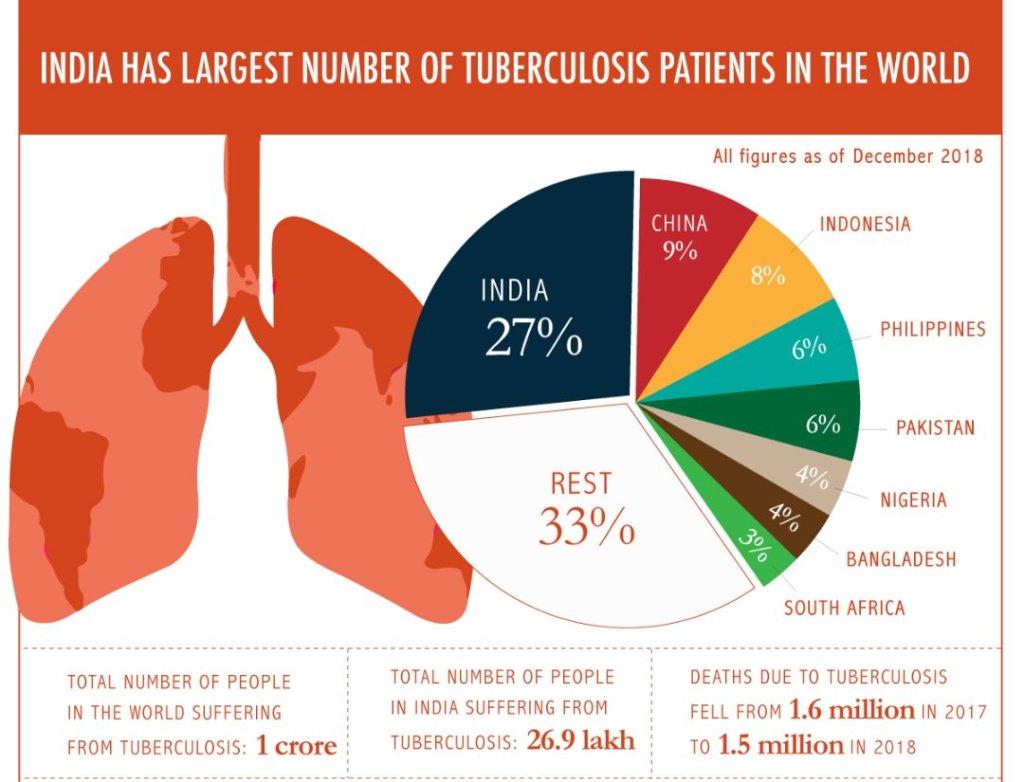
Tuberculosis in New self reliant India 2020

Source: World Health Organization

Tuberculosis is a pandemic globally become significant health threat in many countries. India top the list of having most tuberculosis patients. TB is airborne disease. Every year, India estimated TB patient is 28 lakhs, which is 27 per cent of the global total, almost 1200 TB patient die everyday, 10 every 3 minutes. In 2017, 204 TB cases per 1,00,000 encountered. India has the highest number of multi drug resistant TB (MDR-TB) cases in the world. Largest number of people living with multi resistance TB which normal dosage of Isoniziad and INH will not work on patient or first line drug of TB will not work on you.

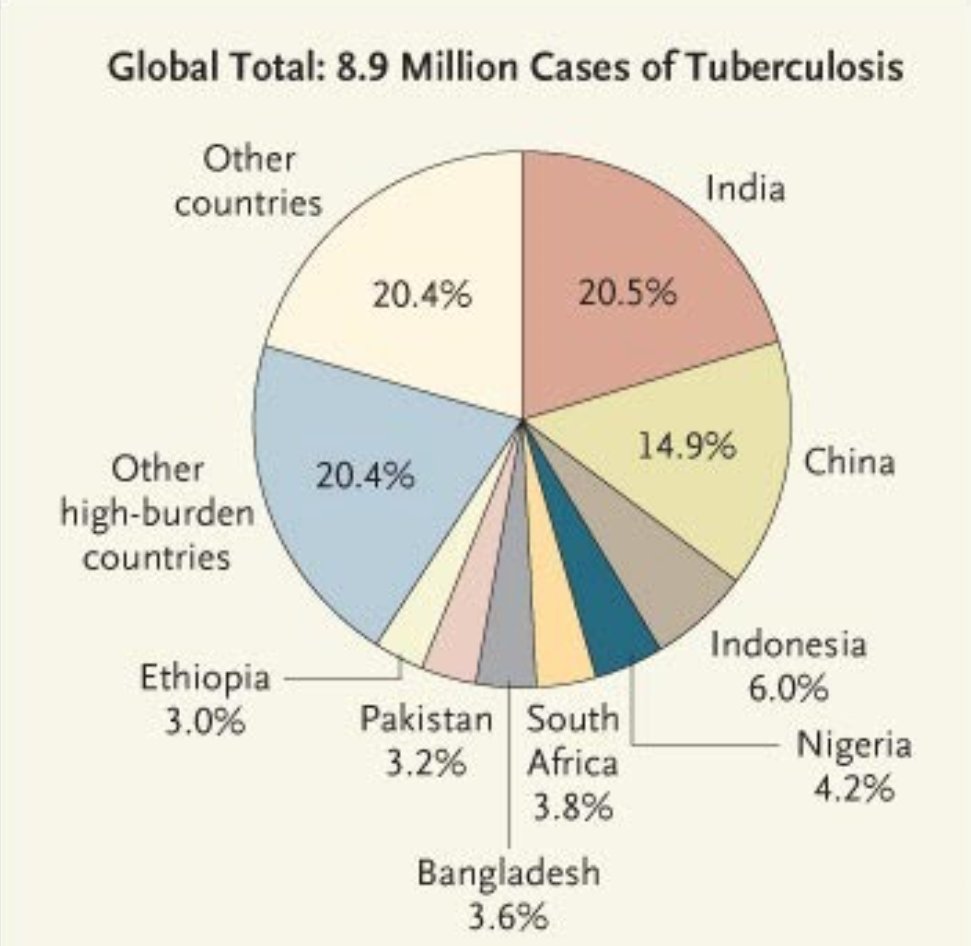
Source: The New England Journal of Medicine NEJM

According to Health Ministry & Welfare data explain, only 63 per cent of the patients infected with airborne disease and currently under treatment. Further, 1,47,000 patients are resistant to first and second line TB medicines. World Health Organization (WHO) reported India had 2.7 million new cases and 440,000 deaths due to TB in 2018 – the highest in the world. Despite such conditions India has not implemented goal measures effectively to control the spread of TB. Imagine if we are not capable to control TB then can we measure Coronavirus? when we have paucity of hospital, less number of health workers and doctors.

HISTORY OF TUBERCULOSIS IN INDIA

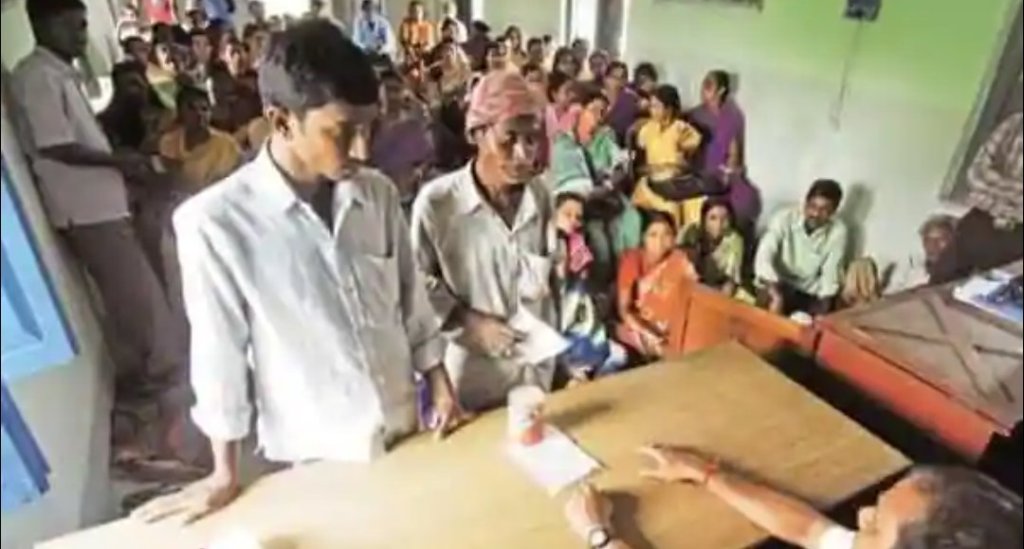
Credit: Mint (Tuberculosis Patients at a Govt hospital)

For TB patients first open air isolation institution and treatment of TB patients was started in Ajmer & almore 1906. The anti TB movement in the country gained momentum with TB association of India which was established in 1939.

The Bhore committee report issued in 1946 estimated that about 2.5 million patients required treatment in the country with 6,000 beds available. National Tuberculosis Control programme (NTP) was formulated in 1962. NTP was not implemented properly then revised into National TB Control Programme (RNTCP) was developed. Sir Joseph Bhore recommended re – modelling the health services integrate curative & preventive medicine at all levels. Bhore committee was not able to reach the plan , recognizing the lack of access to basic healthcare in rural areas, National Health Policy 1993 emphasized on primary care, commitment to provide “Health to all” by the year 2000. By 2000 India still not achieved most of the goals of the national health policy.

National Health Policy by 2010 & to increase public investment from 0.9% to between 20% which is 3% of GDP. National Rural Health Mission 2005 – 2012 was launched to provide Healthcare to rural population. Special focus on 18 states who has weak Healthcare system.

MEASURES TAKEN BY GOVERNMENT
Indian government launched the TB free India campaign, Target of elimination of TB in the country by 2025. DOTS – Directory observed Treatment ,it is a strategy to diagnose the TB through sputum testing.
CBNAAT – Catridge based Nuclei acid amplification test, this test help two ways to detect TB that whether person diagnose with TB, if it is TB is it MDR or the other one first line drug. First time central TB Division (CTD) introduced a quarterly ranking of TB elimination efforts by all the states and UTs. TB preventive Therepy (TPT) give financial expenditure which include in the assessment. Saksham project provide psycho – social counseling to TB patients.

Nikshay poshan yojana (NPY) scheme made to give financial support to TB patients for their nutritional diet. The Nikshay Ecosystem is the National TB information System which is one – stop solution to collected information of patients and manage program activity & evaluate through out the country.TB Harega Desh Jeetega – This strategy launched in September 2019 for fight against TB.

ARE GOVERNMENT MEASURES GOING WELL ON GROUND LEVEL

After implementing most of the best policies are not capable to eliminate TB. India known for the fact that “poor quality of Healthcare”. There is shortage of testing centres, DOT centres, and other facilities to identify and treatment of new TB patients. GOI has set a target of zero – tuberculosis deaths by the 2025 rather should focus on zero – tuberculosis patients till 2030.

Despite all the notable measures taken by the government still needs to robust efforts to improve the early diagnose for the appropriate treatment which is significant for ending of TB. We need to expand both laboratory network as well as diagnostic facilities to cover the whole nation under the umbrella of one program National TB Elimination Programme. Private sector plays crucial role in terms of providing mandatory tuberculosis treatment quality care.

The UN sustainable development Goals (SDGs) include ending the TB epidemic by 2030 under the Goal 3. India set target to eliminate TB by 2025 ( which is five years ahead of SDGs) appears ‘unrealistic’ , ‘unattainable’ as seeing today’s condition of India which requires high quality of care to each person. We need to increase TB services for those who are not able to reach the TB centres , increase the engagement of private sector facilities and support system of universal access to drug susceptibility testing and second line TB drugs.

GOI said that new tools resulting from greater tuberculosis research & development (R&D) which is important to prevent Economic losses. 30 per cent of Indian population infected with tuberculosis. Consequently, we need accurate level of care which helps for detecting tuberculosis infection. India need close coordination between Ministry of Science & Technology , Ministry of Health and Research oriented pharmaceutical companies together to reach target to fight against the Tuberculosis. India strictly implement the strategy of finding the TB cases rather waiting for patient with TB to reach to the hospital.Under the make in India program, development of a first line anti – TB drug was proposed in public sector.

Awareness about TB and its prevention among masses is important. Media campaigns must planned under the program to promote TB preventive measures swasth E – gurukul is one such initiative of WHO.

Union Health Minister , Harsh Vardhan said:

“we as a nation, need to come together to fight against tuberculosis and the stigma surrounding it so that every TB patient seek care with dignity and without discrimination. The community must act as a well spring of support and comfort for a patient”.

Union Health Minister Harshvardhan in press conference talking about social stigma around TB;

We must talk about the social stigma attach with Tuberculosis. Association of HIV with TB estimated 9 per cent of all HIV – TB deaths in the world, the second highest number globally 92,000 HIV – TB patients were accounted on annual basis.

If GOI implement all policies wisely and evaluate them in every 6 months we can reach to attain our goal to eliminate Tuberculosis from India. In rural areas, officers must help to detect TB before it become MDR by making reports of how many people each month diagnose with TB. If we do not take serious measures now it will be difficult to achieve the set target of “elimination of TB in 2025”.

Ismat Chughtai: A Voice with many Tunes

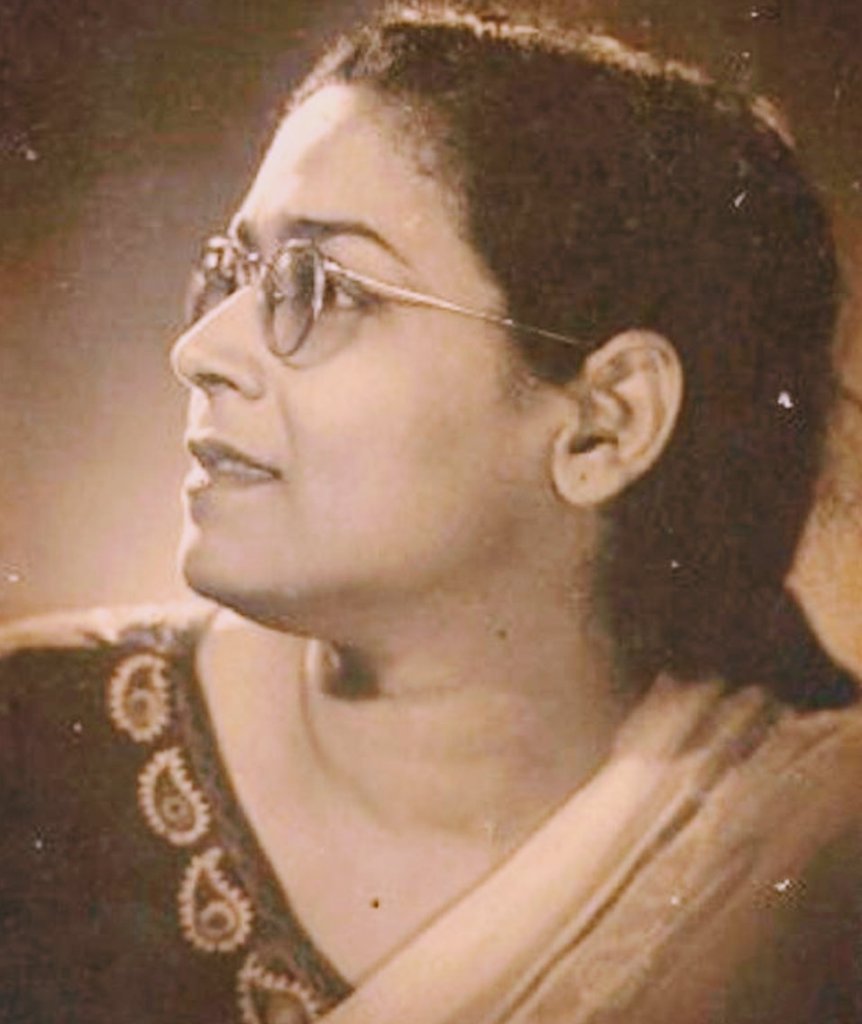
Credit: The Print

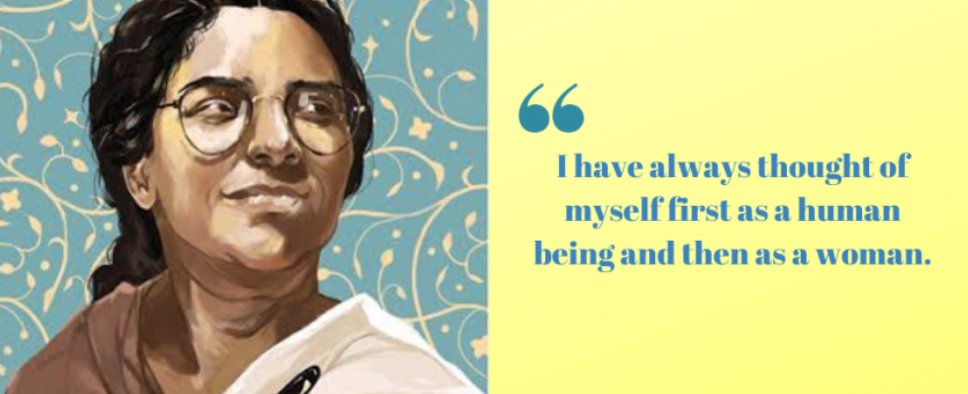
Ismat Chughtai was most profilic Urdu writer, novelist and filmmaker. She Published Short stories, novels, sketches, plays, radio plays. She wrote extensively on female sexuality, femininity, middle class morality and class conflict. She was born on August 21, 1911 in Badaun, Uttar Pradesh. Ismat Chughtai was born on August 21, 1915, in Badaun, Uttar Pradesh. Her father, Mirza Qasim Beg Chughtai, was a high-ranking government official. She was the youngest of nine siblings, all her sisters had been married until she gained awareness, thus, in her childhood, she only had the company of her brothers, and she continuously challenged their supremacy. Whether it was playing street football and climbing trees, she did everything that girls were forbidden to do at that time.

She studied up to the fourth standard in Agra, and till the eighth standard in Aligarh, but her parents were not in favor of her higher education, instead, they wanted to train her to become a decent housewife. But Ismat wanted to get further educated at any cost, she threatened to run away from home and become a Christian and enter into a missionary school if her education was not continued. Eventually, her father had to kneel in front of her stubbornness and she went to Aligarh and got admission in the tenth standard. Chughtai completed her Bachelor of Arts from Lucknow’s Isabella Thoburn college 1939 where she studied English, Polity and Economics and a teacher training course from Aligarh Muslim University in 1939, In 1941 Chughtai secured a job as a superintendent of Municipal Girls School, Mumbai.

Author’s Writing Guise

Her bold protagonists stood out from the ordinary, her outspoken approach jolted regressive minds & her rebellion themes raised many eyebrows. She is a Icon of women’s empowerment at the same time she was a women who understood the complexities of women’s mind, their surrounding and also their desires all of her writing reflected these complexities in lengths powerful voice of 20th century in Urdu literature, fearlessly talked by feminine sexuality through her powerful writing.

In her writing, we found the great regard to human psychology. She has raised issue of equality between men and women which did not suitable for patriarchal society. Ismat emphasizes on the point that women must treat as human not merely an object of copulation, she has her own physical & emotional needs that needs to be fulfilled and understood. Her writing was realistic with pierce understanding of human life that   relentlessly was main component of her artistic consciousness. Through the characters, she depicted the demons of society and tranformed them into joy and gratitude.

Ismat’s Exalted Fabrication of Work

Chughtai most prominent work was Lihaaf that explored the perspective of young girl under the theme of homosexuality. On the contrary, she did not want known by Lihaaf as she mentioned in her memoir, A life in words, Chughtai wrote: I am still labelled as the writer of Lihaaf. The story brought me so much notoriety that I got sick of life and whatever I wrote afterwards got crushed under it’s weights.

Kalyan, Ek Baat, Choten, Do haath, Badan ki khushboo, Amarbel and Aadhi Aurat Aadha khwaab among others. She constantly wrote about women related issues and their oppression they encounter. Her novel Tedhi Lakeer is one of the famous work in Urdu literature; it is  Magnus Opus position for her that ensured commentary on the state of the country pre – Independence. Ziddi, saudai, Ajeeb Aadmi were others novels of her. For Garm Hawa the film based on impact of partition she earned filmfare award for best story(that shared with kaifi azmi).

For her remarkable literary services, Ismat received many significant awards and prizes from government and non-government organizations. In 1975, she was awarded the Padma Shri by the Government of India. The Madhya Pradesh government awarded her the Iqbal Samman in 1999, the Ghalib Award and the Filmfare Award. On October 24, 1991, she died in physical form but very much alive forever through her work.

Credit : womenweb.in