The Fight is Not over Yet- Farmer’s Protest

“Let us not forget that the cultivation of the Earth is the most important labor of man. When tillage begins, other arts will follow. The farmer’s, therefore are the founders of the civilization.”

Daniel Webster

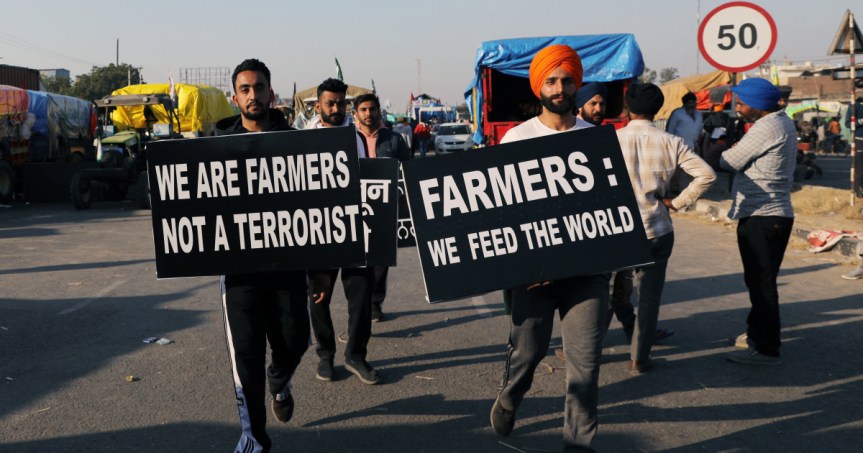
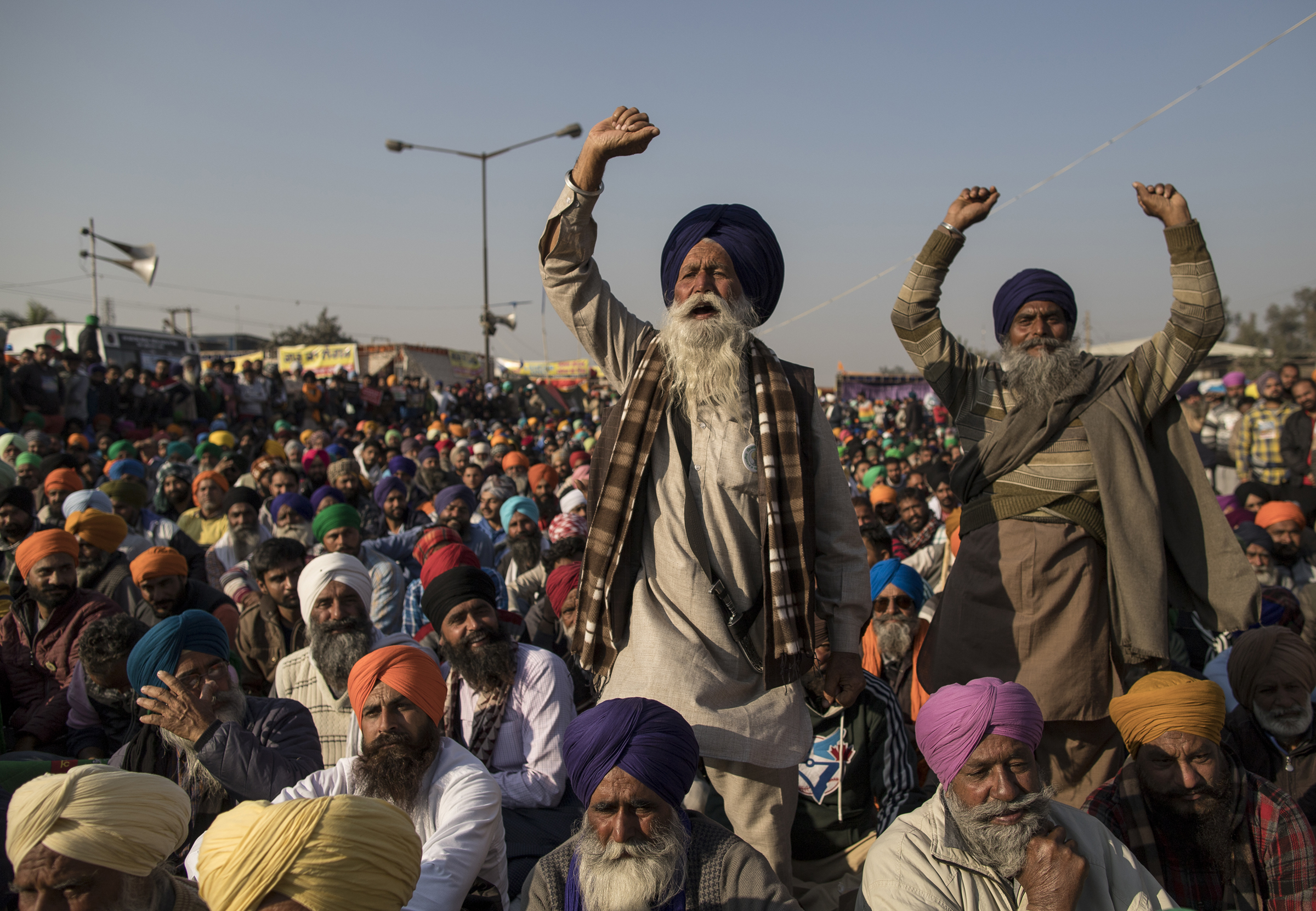
On August 9, 2020, Farmers from Punjab and Haryana laid siege to the national capital region. They are raising their voices against the recently passed farm bills. It has been five months since they have left their houses and have suffered hardships from the changed weather to farmer’s giving up and dying. But no beneficial approach has been taken for them, the fight continues to go on.

After 1947, the zamindari system was abolished in the nation. The farmlands were divided into smaller parts and the tiller became the owner of those parts but still they did not acquire bargaining power for their own crops which led to traders taking advantage of this drawback. Traders used to give credit then used to buy crops during the harvest season at lower prices. The farmer used to stay poor because he never got the good price for his crop production. To decide what the right price should be in the year 1960, when the country was going through the “Green Revolution”, APMC’S (Agriculture Produce Marketing Committees) were introduced which began to regulate the farm produce. Except the committee no one was allowed to buy produce from farmers. They will give traders a license and space to buy. In this system farmer is supposed to get different rates at which he wants to sell his production.
The Farmers' Protests Are a Turning Point for India | Time

But, till today unfortunately the farmers don’t decide the price the traders do. Even today the farmer is a price taker and not a price maker. No matter who makes the laws or tries to raise their opinions and concerns the atrocities have to be faced by the farmer’s.  As a result, they are dealing through several problems like lack of mechanization, soil erosion, agriculture marketing and so on. In India 76% of the farmer’s want to give up farming. The market needs to have a good buyer to pay a fair price. 

Amidst protest from the opposition and farmers organization, the monsoon session of the Lok Sabha passed three agricultural bills which were: – 

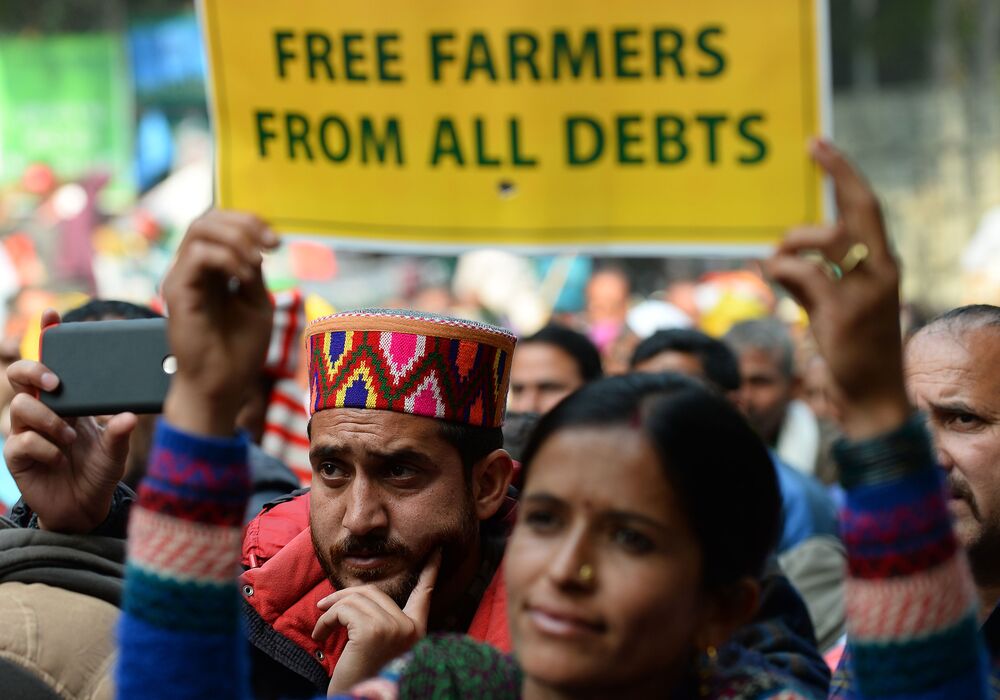
  1. Farmer’s Produce Trade and Commerce (promotion and facilitation) Bill, 2020 – to create a system where farmers and traders have the freedom to sell and purchase outside APMC’s, to promote barrier free inter state farmer produce, reduce facilitative framework for electronic trading.  If this is implemented the states will lose its revenue there are also chances that it may end the MSP based procurement system.
  • The Farmer (Empowerment and Protection) Agreement of Price Assurance and Farm Services Bill, 2020 – enable farmers too access modern technology, reduce cost marketing which will boost farmers income, effective dispute resolution. If this is implemented sponsors may not like to deal with small and marginal farmers, farmers who are into contract farming will get weak in terms of negotiating.
  • The Essential Commodities (Amendment) Bill, 2020- removing commodities like some important food items. Essential commodities, bring investment for farm infrastructure, help both farmers and consumers by bringing price stability. If this is implemented big companies will stock commodities, which means they will dictate whatever price they say.

Before helping the farmers, we should understand what problems they are facing. Firstly, we should strengthen the dispute redressal problem. There should be an intermediary body between the traders and the farmers. So, that they understand their rights and know what contract they are signing. They can get a guarantee for their crops and expand their growth if they have someone to help them. Secondly, they should have a bargaining power on what they have produced. This should be their basic right. Lastly if the government provides the farmers with people who can help them it will create massive trust on the government. 

The success or failure of the bill depends on the implementation. It will be unfair if the farmers think that this bill is their biggest enemy which is supposed to be helping them in ways which will change the entire agricultural system of the country. If the government genuinely wants to take up an initiative to help the famers and to end the protest, they should hear the perspective of the farmers because at the end of the day it is their livelihood which is being talked about. An industry that feeds you is worth fighting for.
Farmers' Protest Underscores Modi's Challenges Before Elections - Bloomberg

“India is a cradle of art and culture”

The Indian Culture is known to be the most versatile culture in the world. From the ethical values of our heritage, the social norms, many traditional customs in the country, Various belief systems present in each family to a state to a country as a whole, different political parties, beautiful artifacts and the present technology that have originated in or the country is associated with in the Indian land or subcontinent. The term which also applies and is used beyond our motherland India to countries and different cultures whose histories are considered to be strongly connected to India’s by its immigration phase, their colonization, or its influence. Indian culture has often been labelled and is popularly known as a combination of numerous cultures, and has been influenced by a history that is many millennials old, beginning from the Indus Valley Civilization.  Many elements of the Indian culture can be identified in the country and it proudly take prides in contributing in various mathematics, religions, philosophy of the world, different cuisines, various languages that are present (many words from English are influenced by Sanskrit, which is considered to be the oldest language in the entire human existence), its art which included dance, music, movies, sculptures, various art items and this has made a huge impact in the world.

Unique Customs And Traditions Of Indian Culture - IndianMirror Magazine

India is considered to have a long romance with the form of art which is the art of dance. The Hindu language  Sanskrit has texts like Nātyaśāstra which is Science of Dance and also Abhinaya Darpana which is the Mirror of Gesture. The Indian artform of dance is known to be taught in these ancient books and this is present in the country, according to Ragini Devi, who is an Indian classical dancer states that it is considered to be the expression of one’s inner beauty and the divine in a man. It is a deliberate form of art, nothing in this form of art is left to a chance, each gesture in dance seeks to communicate the ideas of an individual, each facial expression is the artist’s emotions which makes it personal and valuable for the viewers as everyone has a different way to approach art and that is the beauty of the dance forms and other forms of art in the country. In the Indian culture it’s drama and theatre has had a long history alongside its dance and music. Many plays which are performed by Indian artists are recognized by UNESCO as a masterpiece. One of the most renowned pieces of art in the country is its cave paintings from Ellora to Ajanta to Bagh and Sittanavasal there are a plethora of paintings and sculptures which are enough to testify the love of art, history and culture which is present in the country. 

“Everything Communicates” from the perspective of art and culture.

Art is a form of expression of inner feeling, idea, thought about something or the environment that exists around us. Art is the application or expression of human creative skills and imagination, typically seen in a visual form such as a painting or a sculpture, artists produce their works for appreciation and primarily for their emotional power and beauty. Art is something we all do. Art is considered to be an expression of our thoughts, our emotions, our intuitions, and desires, but it is considered to be even more personal than that: it is more about sharing the way we experience the world and our surroundings. It is the vision through our eyes how we look at the world which for many is an extension of an individual’s personality. From the ancient times, most ancient people have used images to communicate themselves. If we take an example of early caves art or the art of Egyptian hieroglyphics – visual arts can explore various concepts or ideas without it requiring any written statements. In a few situations’ words are sometimes included and that can be an effective complement to the form of art. Art has the potential to promote specific political viewpoints of individuals. Various artists have made numerous paintings, drawing, sculptures and created many other forms of art to challenge the assumptions of a community or an idea, to support important causes, and to explore deep personal questions in our minds. And throughout the history of the world, art has left a mark and is used for many purposes in the world. Communication through art can be achieved in numerous ways that don’t rely on words only. All the artworks that exist in the world communicate through elements we might fail or not notice at a first glance, like the choices of colours which are used or a composition or how the forms are either put together or not. Art serves as a means of communication; it serves as an intention of the artists to the people who are viewing the art. Art has immense amount of power to represent a person’s thoughts. With the help of Visual Arts, ideas and concepts have the potential and has travel through times and civilizations to reach the audience without textual presentation in their form of art that is how they communicated. For centuries and ages, people have used art to communicate various examples like Primitive Cave Arts and the present time murals that exits in the world. In Both the time frames of the past and present, there are so many art examples that exist in the world which does not require any written matter to communicate its meaning. To make the idea more understandable and impactful for people, various artists in the modern times use dialogues or words to complement their form of art to make people understand their thought process and that helps to reach the audience with the same feeling and intensity.

7 Tips to Finding Inspiration for Art | Frames Express Blog

Does Art Really Matter in Our Daily Lives?

Art is known to surround life, every individual in different locations, without us being aware of it fully.  Since time has been immemorial, art has existed as long as man has and has exited ever since. It is an integral part of our culture, which contributes in shaping our ideas, and vice versa, and it provides us with a deeper understanding of our emotions, increases our self-awareness, and more. To conclude that art is only confined to the artist or the painter, the dancer, the sculptor, the musician or the singer or other craftsman is to look at a needlessly rigid and a restricted view of life. Life itself is known to be art and though poets and artists may seem visionaries, they have a specific and distinct role to play in our being. Almost every individual has some form of art in their house—a hanging painting, framed photographs on walls, a decorative table center piece and even the main layout and design of a house is and can be considered as a form of art.  Art is not restricted purely for looking at it and admiring, a lot of it is functional too which we often don’t realize, especially when it comes to our living spaces and our daily lives.

Image of World Collaboration Limited edition Art Print (6 artists  collaboration) | Art, Drawings, Art drawings

Everything from a delightfully patterned cushion cover on the pillow or even a decorative plate and intricate designed teacups can be considered as a form of art.  Our brain is mostly conditioned to think that these type of items or things are not a form of art when it’s only for decoration. Another important element of form of art that adds value in our daily lives is Music, it is similar as art, and is considered to be a universal language and it holds importance in our daily lives which is indisputable. Subconsciously, when we hear music through various forms like on shows, commercials, radio and through other forms of media. Sounds, songs, instruments and music can make life extremely joyful and it can contribute heavily in lifting our spirits up and also till some extent improve our mental health and wellbeing. People think that technology and science are considered to be superior to art or any form of art.

Brain research shows the arts promote mental health

But art makes life worthwhile. It may not be as vital to fulfil our basic wants or necessities, but it does add value into our lives and brings colours in it as well. As we proceed our journey of a fast-paced life with quick decisions, moments, time and with many fragmented thoughts, art allows us to learn from every moment and to enjoy each moment and to make it memorable. Understanding our true emotions can help us heal from pain, grow and improve ourselves to become better humans. It helps in increasing our self-awareness and through that it can lead to more success professionally and personally. Through any form of art, we gain a better understanding of history, culture and tradition. It helps people in the present to build a better life for themselves.

I am Malala

By- Malala Yousafzai with Christina Lamb

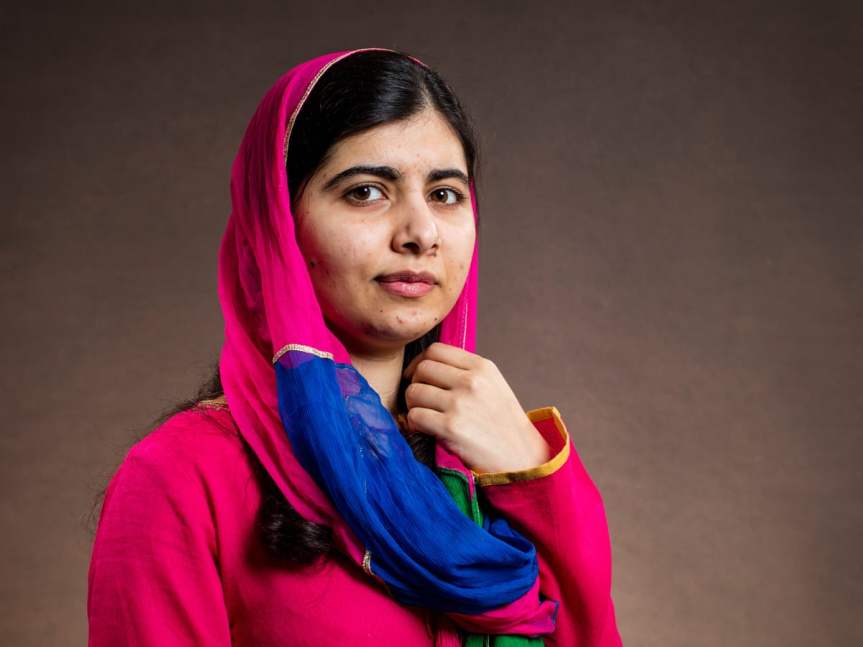
“We realize the importance of our voices only when we are silenced. Malala Yousafzai, a teenager known throughout Pakistan for her advocacy on women’s education and women’s rights. Standing up for women’s progress can be a risky business in countries like Afghanistan and Pakistan where vicious Islamic extremists have a strong foothold. She has publicly spoken for women education was shot in the head by the Taliban, in an attempt to silence her. She survived.

This near to death experience gave her a voice which could not be supressed and that progressed to her earning the Noble Prize when she was just 17, she has been continuing to fight for female education and her global scale has been increasing ever since. In Malala’s gripping book she tells a story of faith, hope and bravery.

Circumstances which brought her to the front of an international scene on female education are heart-wrenching and tragic, that involved Taliban taking over Pakistan, being forbidden to attend school because of her being a girl and was asked to stay at home and being shot in the head by the deadliest terrorist group in the world back in 2012. These are the situations which many would not be able to sail through, most would abandon and drown will fighting for what is right. But she did not budge. She kept a fierce front and continued to advocate for education for girl’s and women. After going through hell, her voice is stronger than ever and is also supported globally.

Overview

In the first half of the book, she describes the history of Pakistan, her family’s ancestors and Swat, which is the northern region of Pakistan where she used to live as a kid. She shares anecdotes about her childhood, her family. She gives the reader a glimpse of Pakistan through a women’s approach. Malala’s father founded the local school which she attended growing up, from a young age, she demonstrated strong character and soon began to ask her father why were women being treated so poorly in Pakistan. In response, he told Malala about Afghanistan, where the Taliban burned schools for young girls and forced them to wear full burkas. Her father’s goal was to make her understand that the poor treatment of women in Pakistan was actually not that bad, when he compared to the way women were treated in Afghanistan. This book is almost about her father, Ziauddin, who is a teacher, headmaster and a local activist. He is the dominant influence in Malala’s life and has been consecutively criticized for encouraging his intelligent child to be outspoken in a dangerous environment. According to Malala’s perspective, her father feels guilt and felt responsible for what had happened to her, but also is proud of her bravery and accomplishments. Ziauddin is a very progressive man in Western terms and considering where he belongs from. Her father is the leader of the local environmental movement, champion of girls’ education, woman’s rights advocate He has challenged the Taliban repeatedly at many public events. In one of the most memorable scenes from the book, Taliban mullah who was a local who was accompanied by village leaders, pay an evening call on the Yousafzai home to demand that Ziauddin needs to stop educating girls. Her dad not only pushes them back, but he also he kicks them out of the house. Malala carefully sees that her father speaks out in support of his ideals. she is heavily influenced by the conduct of her parents. She learns her father’s ideals and develops with her own impressive smartness, talent, bravery and determination. Malala’s fierce advocacy on behalf of girls’ education and women’s right is clear and forthright as her father’s. When the Taliban threats finally had shut down her school, she tells the journalists that: “They cannot stop me. I will get my education if it’s at home, school or some other place.” She has a mind of her own. She has her own voice as well. She conveys with humour, that her father is a romantic and idealistic man and her mother, is an illiterate Pashtun woman, who keeps the family grounded. It will be very interesting to see how, as she grows older, Malala will inculcate the strong and different models presented by her parents.  This book has raised many questions, In the year 2012, one of her impactful speeches led to a group of Taliban militants stopping her school bus on the way back home and shooting her in the head. Thankfully, Malala survived although she had to flee from her country her home and now lives in the United Kingdom continuing her fight for women’s right to education and their rights.

Final Thoughts:

this book should be used around the world to teach the importance of education and what impact it can make.  It is an extremely powerful book. Malala is someone we can all get inspired from. When you are reading this book, you will easily forget that she was just a child when most of these unfortunate events happened. This book is a fast read. It is suitable for people who are specialists in the region and ordinary people who are seeking to improve their knowledge of Pakistan, but will be especially engaging for those who are interested in the story of this inspiring young woman, whose life goals and contributions to the global community are just beginning. She used her misery and her tragic past to build a cause that matters and helps to solve the problems she sees as pressing. The fight is still going on and its needs our undivided attention.

Taking Care of your Mental Health during a Global Pandemic

“A soft reminder: not everything that weighs you down is yours to carry.”

The term “Mental Health” focus on our emotional, psychological and social wellbeing. It affects the way we perceive things, the way we feel and the way we react. It plays an important role in every stage of our lives from our childhood to our adulthood. Your health is more than what you are eating. It is also what you are thinking, saying and believing. We often tend to underestimate the importance of our mental health but, taking care of it is important, more than it is rewarding.

We began to hear about the virus outbreak in China during the last month of 2019, little did we all know that it would be identified as a global pandemic. On 25th of March,2020 the first lockdown was imposed in the country. The seriousness of the pandemic had intensified and the world was paused. During the lockdown everyone was paranoid and careful. A large number of people were stuck, they were away from their homes and families, there was a huge wave of unemployment and everything was falling apart. The only news that was telecasted was about how rapidly the virus is growing and it started to make people anxious. Every body was perplexed and overwhelmed.

 At the beginning of the outbreak, we were told to be isolated and strengthen our immunity, exercise at home and focus on our physical wellbeing, but what we kept neglecting was our emotional wellbeing. The most common feeling that millions of people are experiencing is loneliness. Being confined to a particular place and following the same monotony made a lot of people feel empty and lifeless. we weren’t focusing on how to take care of our emotions during the time and that has left us being on an emotional roller coaster with each day. All of us are in the midst of a global pandemic currently and it is undeniable that fear and anxiousness has spread rapidly among ourselves as well.

 This pandemic has given our lives a different meaning and has been recreational for a lot of people. We continue to build new normalcy during these times. Social media platforms have progressively churn out productivity contests every now and then, it is essential to remind ourselves that this is no competition that we are a part of, it is important to replace the feeling of guilt and let it go.

 Before corona virus had hit us, working from seemed like a cake walk but it has certainly caused a huge disbalance between work and personal space, one should allow themselves to give them breaks and assure that you are giving your mind and body some rest. Indulge in activities like cooking, reading, watching a movie, pursuing your hobbies or doing something that you’ve always wanted to do but never found the time to during these times. Start finding happiness in the small wins like being without your phone, cleaning the dishes, cooking something which you thought you never could and so on. If you feel that there is a lot going and it is constantly making you feel hopeless, take a step back and try to calm yourself if that doesn’t help talk to someone, express what you’re feeling. Resist yourself from checking the news and find a distraction. While video calling has helped creating a bridge between the people who are far from you, it is completely normal to crave for human touch.

During these hard times, an individual who is dealing through stress should make it a point to turn to the people who are optimistic and good listeners. Try to understand that your feeling is valid, in order to keep your mental health stable, it is important to acknowledge your feelings for that you can write it down, let it out or do something that relieves your stress. It is scientifically proven that exercising helps in reducing anxiety, negative emotions and boosts self-esteem. One of the main advantages of exercising regularly during a pandemic is having a proper sleep schedule.

An individual should practice mindfulness and gratitude during such challenging times. Its very important to count your blessings and make time for things that make you happy. Lastly, we should give ourselves credit for the days we made it when we thought we couldn’t have.

“Jingoism Ruins Lives”, Here’s Why

Jingoism is a term used to describe a political perspective that advocates the use of threats or military force in foreign relations, as opposed to finding a peaceful or diplomatic solution. Jingoism often contains strong elements of nationalism and moral superiority, and is often present in fiercely patriotic rhetoric. Modern day jingoism is often linked to chauvinism. In India jingoism as a concept has a long history, but it has taken a sudden rise in the recent years due to various factors, be it constant clash between Pakistan or china, whether it is the concept of ‘Hindutva’ or be it Kashmir. The feeling of jingoism is often attached with the notion of conquering and defeating other nations which leads to negative consequences. Every kid in an Indian household has at-least heard some stories about Pakistan or china being our enemy nation and how defeating them will be our victory. Nationalism is a feeling which is ascribed and built over with time, it is feeling that we learned and taught to have.

 Jingoism in India has been a part of the history and is by far the concept of ‘Hindutva’ which is believed by some people. From discrimination in the choice of meat to forcing opinions into the larger mass, the whole situation has now taken an even uglier turn.

Terrorism is a byproduct of jingoism. “Get tough on terror” new mantra and getting tough means bringing tougher laws. India has already enacted many laws against terrorism. Now the question arises what makes the law tough or how ‘tougher’ laws might deter or prevent terrorism. The implementation of reforms within the police and intelligence agencies is guaranteed to improve security and strengthen the country’s capability to prevent terror strikes. Biggest problem is that this hysteria and hyper-nationalism are adding muscle to a narrative that is being built to gain political mileage ahead of national elections. As the world’s largest democracy, we need to be careful about our actions and words. The consistent fight to achieve the status of who the best is still continues even after ages. Some people still have these orthodox perceptions in their minds and still have jingoistic feelings for their religion to extreme levels. I fully agree that nationalistic ideals should be respected but this is not what jingoism stands for. Jingoism is a chauvinistic sentiment that needs to change. 

What Makes a Good Journalist?

To be a good journalist one must possess multiple qualities like integrity, fairness, objectivity and truthfulness which are the key factors for building a powerful story with an impactful narrative. They are ought to be courageous in order to dig deeper into the matter and to comprehend the situation. But, one of the most underrated qualities of a journalist is empathy.

In simple terms empathy means an ability to grasp the emotions and feelings of others. In journalism it has a crucial role to play as it allows the journalist to dig deeper into the story. When we imply an empathetic approach to our work it encourages us to find out the intentions of the event, what thoughts went behind an individual to commit those actions which helps in going one step ahead in reporting. Moreover, if the event involves human impact it progressively helps to explore further. It is recognized as a tool that enables a connection with an individual. Empathy usually does not mean to become a part of the subject circumstances it is allowing the emotions created by those situations, a journalist’s job is to convey the data and meaning with human connectedness. This specific quality opens the conduit of connection which gives the data a soul.

Empathy performs a major role in regulating social relationships. It majorly occupies a central place fulfilling multiple roles and in news production. With this trait it enables to achieve extensive information at an interpersonal level. To inculcate empathy in journalism one needs to understand the party, express their understanding to them, seek confirmation from them if they feel comfortable and understood by the mediator and receive their confirmation. This approach is known as looping which is known is used by conflict mediators. Though, this method should not be misinterpreted in for taking an agreement. It focuses on having a genuine desire to understand better to what matters to the person who is being interviewed.

Empathy helps the presenter to find the right tone for the matter of subject, from reporting lighter stories to tragic stories. Allowing empathy to became a significant part of the process ensures that one has journalistic values of balance, fairness and accuracy. This quality is involved in story making and helps to create authenticity and relates to the news source as an individual. It can be understood by emotional labor. Incase this does not arise naturally it is needed to be performed to accomplish a task.  To reach an audience from a very different cultural, social, economic background one must practice empathy in their work.  Empathy provides a ground for dealing with emotions of the news protagonist and using it as a means in reporting and also affecting the emotional regulations of a journalist during news production. It is related to perceiving emotions of other people but also the deployment of emotions in the news and engaging the audience. Therefore, Empathy is a central resource in journalistic practice.

What is the present status of online journalism in India?

Digital journalism is different from traditional journalism. It is recognized to as being a form of journalism content being posted on the internet. It is in text, audio, video, it does not have any print attribute. It is undeniably much faster than traditional journalism which happens to be the most important reason for its rapid growth presently.

A cup of tea in the morning with the newspaper is the conventional to start mornings in India. But, since the past few years the romance of newspaper may soon be a nostalgic memory. The rapid growth of in mobile internet has coincided with the growth of online journalism as well. Today, there are nearly 500 Million users of the internet. With low-cost devices and better 3G/4G network being offered to the citizens the traditional journalism is slowly giving way to digital journalism.

Mobile applications like Inshorts, TOI (the times of India) mobile app, Quint, Jio News are producing internet content at a very fast pace. They give real time news in no time, which contributes in setting it apart from traditional journalism. Considering that we all have a busy life and don’t necessarily have the time to read a newspaper on a daily basis brevity plays a vital role in our lives today. A print journalist produces an in-depth article, whereas the news content is consumed on a five-inch mobile screen now a days. It is an interactive medium where the reaction and the response of the audience is also quick. Digital journalism is more of analysis than reporting.

There are many loopholes that comes with this as well, often online journalists are in a hurry to publish the news which sometimes overtakes the need to get it right. Anyone can change anything on an online media platform, which leads to less accountability. While the newspapers have the that luxury of time to verify before putting it out.

At the end, though it has a number of loopholes it continues to create an innovation in journalism and also is trying to overtake the position of traditional media. While a striking a balance between transparency, privacy, brevity, accountability, using the technology and data, is what will set apart a news organisation in the new age. 

A Tale of An Indomitable Woman

Laxmi Agarwal, was only 15 when her jilted lover had thrown acid on her and she had to bear the brunt of a monstrous attack. The motive of the attacker was vengeance for her refusal to marry him. She was burning alive on the road in excruciating pain and was screaming for help on the road. When the accident took place, she was in a state of shock. The only question that kept arising in her mind was “why me?” For two and a half months she refused to look at herself in the mirror, she failed to have the spirit to face what she had been through. Her heart and mind were filled with feelings of self -hatred and shame.

People around her especially women would call her names and taunted her. They faulted her for this heinous crime and questioned her upbringing which would leave her and her family tormented. She was scarred for her entire life and was traumatized that she had contemplated suicide. But thinking of the pain that she would cause to her parents, she decided to end such thoughts. Her attacker assumed that he would leave her trapped within the four walls of her house but little did he know that he had ruined her face not her dreams.

Change was afoot for Laxmi, she refused to be enslaved by the injustice caused to her, with her family’s support she bounced back powerfully. She had filed a Public interest litigation in the supreme court that dealt with acid attack crimes and also petitioned for the ban of the sale of acid which led to the court ordering central and state governments to curb the regulation of acid. After four years of trial her attacker was put behind the bars. Laxmi Agarwal was presented with the International Women of courage award by Michelle Obama, she was also given the International Women Empowerment Award from the Ministry of Women and Child Development, she has challenged the stereotypes and prejudices of the beauty community and has helped over 400 acid attack survivors with her NGO.

Putting myself in her shoes, at such a young age seeing your life colliding and having no control over is horrifying. Face is the first part of the body which is directly associated to your identity. It would have felt like someone has taken away my identity for the rest of my life. The look on my face would change how people would perceive me and that would have impacted me mentally as the psychological pain cannot be measured. Women like Laxmi are an epitome of courage and resilience going through a life changing event still led her to having a strong ground beneath her. She did not let anyone else decide what her life could be and took charge over it herself. Laxmi encourages people to fight against wrongful acts and stand up for themselves. She is undoubtedly an inspiration for not only acid attack survivors but also for every person who has faced injustice in their lives.

Gully Boy- A Movie that amplifies the voices of the streets

Zoya Akhtar’s film is a story about a guy who rises from the slums of Dharavi, Mumbai to become one of India’s best Rappers. It is loosely based on the underground street rappers Divine and Naezy. This movie is a delight to watch if you are a music lover or someone who is passionate about unconventional career paths, this will definitely move you and push you forward to make your dreams come true.  The story revolves around a guy named Murad which is played by Ranveer Singh, whose dreams are bigger than his realities and someone who does not believe in Slumdog Millionaires. He believes in telling his story through his music, his rap.  There are many layers to the film: its about Murad’s coming of age discovery of what he is and what he truly stands for. It’s about finding something that makes you alive, its about finding one’s expression, in this case which is poetry and rap. It also has a beautiful love story and in some ways a letter to the city of dreams – Mumbai, where skyscrapers overlook the slums of the city and everyone is rewarded in some way or the other.

Murad is a “slum-dog”. He is caught in a cycle of poverty. His rap defines his circumstances and his home as a hellhole. His snappish father (played by Vijay Razz) has brought home his second wife without considering his family’s feelings. He is a chauffeur who is in hope that education is the only medium which will set his son free, His principle conflict is his son’s “khwaab” – dream and his “ aaju baaju ki asliyat” the reality around him is something that he never stops reminding him, but his son has other ideas and aspirations which he wants to fulfill. He measures his life by waiting for his childhood friend and lover Safina (which is played by Alia Bhatt ) is a feisty yet ambitious girl who wants to break the barriers of the society and live on her own terms.  While waiting for her to come he starts humming to himself “ Apna Time Aayega” . Away from his classes in college and responsibilities that his family has put on him, he pours his heart on sheets of papers, his escape from his reality and a doorway to his dreams. His rap is about his abusive father, his mother’s plight, seeking freedom, finding himself, rising from any circumstance, his dreams and his realities.  The words are his. But the beat is missing.

Then enters MC Sher (which is played by Siddhant Chaturvedi). Murad falls head over heels in love with this rapper when he comes to his college. He starts to follow every moment of his on Facebook and goes underground. This is a place where rap battles take place in this world of fight club the only weapon is rap. Murad blends in this scene seamlessly and he knows his future is about to change. He knew this was his calling. He is also supported by Sky (played by Kalki Koechlin) who is a student in Berklee School of Music. She is the one who helps Murad and MC Sher to record their First Music Video.

Despite being overlong, this film is undeniably entertaining and is a portrait of a robust life forged by adversity, tenacity and the courage to dream. The dialogues, the lingo, punchlines, they’re real.  The lyrics, the beats, all scream for revolution. Azadi. The makers of the film have done a great job at creating an immersive cinematic experience. Undoubtedly, the main star of the movie is its music. Many rappers and artists came together in this film to give the best soundtrack possible to showcase the lives of struggling rappers. If Ranveer Singh is life of the movie, then the Music is the soul of Gully Boy. Some sharp observations about the society and the minorities, the world we live in and the place that it is becoming for the people with lesser means, talks about beauty standards, dreams and feminism – This movie has a lot to offer and a Must Watch for people who think that their circumstances cannot limit their spheres of dreams!

Social Network As the Main Way of Communication in the Modern World

Social Networking has become a predominant part in the modern world. It is recognized as a revolutionary powerful medium of communication. It has an enduring impact on the way people communicate and how it has become an indispensable part of our lives. It is routinely used for social interaction, access to information and news, spread information, generate awareness and so on. The significance of social networking can be seen in various fields like lifestyle, business, entertainment, news etc. The mass number of people using social media is increasing with time and that clearly specifies the importance of it. There are numerous benefits of being on a social platform that has contributed in enhancing the way the world works. Social networking is not only used to make brands and customers meet. In fact, it’s about connecting people from all over the world irrespective of their gender, caste, religion, colour etc. There are ways to grow you network on a social media platform tremendously. It increases connectivity in a modern world. From nations which are progressed to under developed nations everyone is grasping the benefits of social networking and utilizing its power to enhance their lives.

It has been a little more than a decade ever since social networking has made its place in our lives; the influence of social media has gone from an entertaining form to a fully integrated shares of nearly every aspect of daily lives of people. The beauty of the social world is that you can connect with anyone to share and learn irrespective of distance or educational background. Initially the world of social media gained attention because it could connect people from all over the world. It has become very easy for to educate people especially students via social media and networking. Anyone can learn any field of work or can connect with people from that field to have first hand knowledge about their areas of interests. One can update themselves from anywhere about anything. If you have a business, you can reach out to a larger audience in no time. Social networking can benefit in making communities come together, help noble causes, creates awareness among people and invites people to communicate.

However, on the other hand it has affected the world in a negative way as well.  At the end of the day, it is in the hands of the user to use its advantages or disadvantages. One of the major concerns of a social platform is privacy, personal data of anyone can easily be taken out from the internet. Many individuals have scammed and committed fraud through social media. It decreases face to face encounters with people and also lacks emotional connection which can have a huge effect on people. Using social media excessively can lead to having unrealistic expectations.

But nonetheless internet allows people to improve their quality of life in numerous ways. It encourages people to get out of their comfort zone and explore different spheres of life. Moreover, it has opened its access to inaccessible things. With millions of users, social media and networking are emerging as the main way of communication in the modern world.

HOW DISRUPTIVE TECHNOLOGY WILL BE TAKING OVER OUR LIVES

Disruptive Technology is recognized to be an innovation that creates a new market for consumers industries or businesses to operate in an efficient and progressive direction. This technology sweeps away the standard system of habits and replaces with ways that are superior. The reason why it’s important to inculcate disruptive technology is because it increases growth opportunities to companies, provides better and cheaper products to the consumers and helps to adapt new trends in the current world There are new forms of disruptive technology which are being discovered daily. Some examples -:

Artificial Intelligence–   It is an area of computer science that mainly emphasizes in the building of smart and intelligent machines which have the capability of doing tasks which are usually done by humans.

  • Examples–   Siri (Apple), Alexa (Amazon), Cortana (Microsoft), Google Now and so on.
  • 3D Printing – it is a process of creating three dimensional solid objects. This particular type of printing is done by creating layer by layers on an object to obtain the result. 
  • Examples- Homes, Prosthetic limbs and other body parts, edible 3D printing, Manufacturing.
  • Advanced Virtual Reality it is a stimulation which is computer generated in which a person can interact within the artificial three-dimensional environment which creates a virtual reality and can be experienced by using electronic devices.
  • Examples- flight stimulators, games, geographical studies, surgeries.
  • Drone Technology- Originally designed for the defence and aerospace industry, drones have made their way into the mainstream because of the increased degree of protection and performance they offer. Drones include a navigation system, GPS, sensors, high quality cameras, programmable controllers, and tools for autonomous drones.

Disruptive technology is considered to be an innovation that significantly make an effort to alter the way that consumers, industries, or businesses operate in the world today. Disruptive technology attempts to sweep away the systems or the habits which have been a part of the world since a long time and it replaces because it has attributes that are recognizably superior to conventional systems.

We tend to think that there is still time for Disruptive technology to take over the world but it has already started to make a huge place in human lives in the simplest things which exists in the current world which we forget like facial recognition, voice assistants, smartphones, maps and directions. Therefore, there is a possibility that disruptive technology will be taking over lives.

Freedom of Press

The freedom of the press signifies that media has the capability of communicating and elucidating information through several modes of communication. It is the absence of any statutory body controlling the propagation of information, knowledge, ideas and thoughts. According to the constitution of India it guarantees freedom of speech and expression to all its citizens under Article 19 which states that “All citizens shall have the right to freedom of speech and expression.” The Indian news press has the right to exercise and enjoy their freedom to engage in the business of disseminating news to the citizens of the country under the right to carry out any profession, trade, occupation, industry or business which is guaranteed under article 19(1) of the constitution.

Democracy in India is powerful and has its own terms and advantages but is not fully efficient in working without the presence of the media, specifically the free press. The media plays a crucial role in becoming the bridge between the people and the government. The press is considered to be the voice of the voiceless in the country, it is responsible in forming opinions and influence decision making for the people. Proper functioning of democracy requires citizens to be informed about the happenings in the country and even abroad, only they will be able to form rational opinions. It is the means through which people receive free flow of information which is essential to intelligent self-governance, that is, democracy. The press is held responsible to cater news which is relevant and accurate and serves the interest of the people. In today’s world freedom of press has become the heart of political and social intercourse. The fundamental principle which was included in freedom of press was the “right to know” therefore the freedom of press is essential and is important for the proper functioning of democratic processes in the country.

With great power comes greater responsibilities in terms of press, they are expected to cover the news and events in a responsible and respected manner. They should always ensure that they do not abuse the power it carries. If they convey false news and information it can lead to harming the reputation of a person or a section of the society, the damage that will be caused would be irreparable. Hence, they should take care and of it and always investigate any news item before reporting and publishing it. There have been times when the country has witnessed that the media is presenting distorted or twisted news that may have an element of truth but also an element of untruth, they should avoid yellow journalism and sensationalism. There should be freedom of press but with limitations.

Media is considered to be the watchdog of a democratic country. But in the recent years, there has been a visible drastic change as the press is now taking money, favours from the government, big corporate houses and is thus displaying all that news which are favourable to them. It is said that the media is losing its credibility but this can be prevented by practicing self-regulation which is a combination of standards which are set by one particular body without any views of external bodies. It is way a through which they can preserve their protection and government interference. The press is required to be held accountable for authentic news, as it is considered to be the fourth pillar of democracy. 

LGBTQIA+ – A Road to Love and Acceptance

“If you are in the closet and fall in love with someone of the same gender, it doesn’t automatically remove the same and the fear that’s kept you locked away. The love you are experiencing encourages you to face the reality that this is who you really are and also has the power to set you free. “

– Anthony Venn Brown

India has become more accepting towards the LGBT community over the years. Nonetheless, majority of LGBT people in the country fear the judgement, discrimination from the society who might see homosexuality as shameful or abnormal. During the British rule, homosexuality was considered to be unnatural and was declared to be a criminal offence under chapter 16, Section 377 of the penal code. Even after gaining independence homosexuality continued to remain an offence.

If one traces the path of the movement, the first gay protest was held on August 11, 1992. An organization which was called AIDS Bhedbhav Virodhi Andolan (ABVA) assembled people in front of Delhi Police Headquarters protesting against the rounding up of men from Connaught Place on charges of homosexuality. Due to the ignorance and insensitivity of people the protest couldn’t gain significant amount of support and outcome. The activists from ABVA continued to fight for equality and acceptance their enthusiasm to decriminalize homosexuality led them to file a public interest litigation in Delhi high court challenging the constitutionality of section 377. This PIL became the first attempt to raise concerns for legalizing homosexuality but unfortunately the organization couldn’t follow through the petition and the case was dismissed in 2001.

 In 1999, Kolkata hosted India’s first Gay pride parade which only had 15 attendees and was called Calcutta Rainbow Pride and was successful to spread the message which was being queer and being proud.

There are numerous reasons as to why accepting the community is important. Advantages of legalizing homosexuality will provide them with protection in terms of healthcare, finances and taxes which they have been denied too. It will reduce the number of crimes in the country. There have been many gay couples who want to start a family and have children, there are orphans in the world who would want to have a family and a house which they can call as their own this would benefit the adoption rate in a lot of countries. Despite of equality being given importance in the country the number of atrocities faced by the community is innumerable. People from LGBT have been hurt, mistreated, judged, humiliated and have been termed as mentally ill in the society. No matter what category of third gender they fall into at the end of the day they will always be considered to be humans. If we want to help them in any way, we should understand that more than support of the society they want their mere existence to be accepted, to make them feel that their emotions are taken into consideration.  If we as society build sensitivity for them everyone would feel safe, confident and accepted in their homes and families. No one deserves to suppress their identity and feelings of who they truly are.  

From 2010 the community has tirelessly raised their opinions and voices to grant them equal rights. There have been judgements that paved way for the community which are –

  • NAZ Foundation Judgement, 2014 – The first judgement to declare section 377 as unconstitutional which violates article 14, 15 and 16
  • NALSA Judgement, 2014 – for the first time in the country, transgender people were recognized as the citizens of the country.
  • Arun Kumar Judgement, 2019 – expanded the category of women to include transgender people to identify them as brides as well.

The turning point for the community was the year of 2018, when a five-judge constitution bench was headed dealing with section 377 “refers to unnatural offences’’ which was against the law of the nature. On September 06, 2018 Supreme court ruled those consensual sexual relations between adult is Not a Crime.  At the end, being a supporter of the community

I would conclude that as humans we hold no authority to tell anyone who they are supposed to fall in love with, there should be no judgements when it comes to Love – It is the highest form of mankind it heals and overcomes anything!