Feminism and Pseudo-feminism

“You educate a man; you educate a man. You educate a woman; you educate a generation.”

‘Feminism,’ in simple terms, means no gender should be treated with any injustice. They should receive equal treatment. But, off late, there’s developing a replacement sort of feminism that’s rightly called pseudo-feminism. Pseudo-feminists have a deep desire to remedy all the injustices inflicted on women, often by lashing out and demeaning at men. What they forget is that the fundamental essence of the movement towards feminism: equality. Another form of pseudo-feminism is comfort feminism. We often don’t know it , but pseudo-feminism is all around us, clandestinely hiding behind feminism. The women are crying everywhere for fair rights, but don’t waste a moment telling a man sitting on a Ladies Reserved seat to vacate it.
If true feminism were followed, then all of the victims should be treated equally. Victims would cease to be male or female but only victims of abuse. But this is sadly not the case. Pseudo-feminism shouts that men can’t be raped, that men can’t be tormented, which men who claim to possess been placed under such atrocities dwell cheats. When a lady is about ablaze , when she is raped, brutalized, stripped naked on the streets, forced to go away her studies to marry a person 3 times her age, when she is accused of being raped or teased when a lady is repeatedly beaten for refusing to pressurize her parents to pay a dowry when she is deemed to be inferior to her male counterparts, there’s a requirement to talk out if it had been a person who was stoned on the streets, raped, accused of a fake rape, doubted simply because he was a person , a real feminist will do an equivalent . As Steinem rightly said, a feminist is anyone who recognizes the equality and full humanity of girls and men.
Feminism may be a series of social movements, political movements, and philosophies aimed toward identifying, developing, and achieving gender, political, cultural, personal, and social equality. Feminism reflects the thought that societies favour the male point of view, which women in such societies are treated unfairly. Efforts to vary that include combating gender stereotypes and seeking to determine equal educational and professional opportunities for ladies to men. Feminist movements have advocated and still advocate for the rights of girls , including the proper to vote, hold position , work, earn fair wages, equal pay and reduce the gender pay gap, own land, obtain employment, enter into contracts, have equal rights within marriage and have maternity leave. Feminists also work to make sure access to legal abortions and social inclusion and to guard women and girls from rape, harassment , and violence .
Some scholars see feminist campaigns as a serious force behind major historical societal changes in women’s rights, especially within the West, where they’re credited almost universally with achieving women’s suffrage, gender-neutral language, women’s reproductive rights (including access to contraceptives and abortion), and therefore the right to contract and own property. Although feminist advocacy is, and has been, focused totally on women’s rights, some feminists, including Bell Hooks, argue in favour of including men’s liberation within their goals, because they believe that men also are harmed by traditional gender roles. Feminist theory, which emerged from feminist movements, aims at understanding the character of gender inequality by examining the social roles and experiences of women; it’s developed theories in a variety of disciplines to reply to gender issues.
Over the years numerous feminist movements and ideologies have evolved and represented different point of views and goals. Some sorts of feminism are criticized for less than taking white, middle-class, and college-educated perspectives under consideration . This critique led to the event of ethnically specific or multicultural feminism forms, including black feminism and intersectional feminism. Feminist theory is that the extension of feminism into fields of theory or philosophy. It includes research during a sort of fields including anthropology, sociology, economics, women’s studies, literary criticism, humanistic discipline , psychoanalysis, and philosophy. Feminist philosophy attempts to elucidate the disparity between men and ladies and focuses on gender roles, power dynamics, and sexuality.

Although opposing these social and political ties, much of the feminist philosophy is usually supported supporting the rights and interests of girls . Themes discussed in feminist theory include sexism, stereotyping, objectification, inequality, and patriarchy. Elaine Showalter describes the evolution of feminist theory as having three phases within the field of literary critique. the primary she calls “feminist criticism,” during which the feminist reader examines literary phenomena the ideologies. The second Showalter calls “gynocriticism” where “the woman is that the creator of textual significance.” The last phase she calls “gender theory,” during which she explores the “ideological inscription and therefore the literary effects of the sex/gender system”
There are feminists then pseudo-feminists come along. Pseudo-feminism suggests that ladies deserve more respect, or people of other sexes don’t deserve respect. Living during a culture where women face many challenges a day is that the worst thing is that some people hurt the term feminism. On social media, hardly anyone knows about feminism and that they find yourself being pseudo-feminist. Do pseudo-feminists actually need equal treatment? No, they need to make a world governed only by women. Will a lady be getting away with any wrongdoing? Women on social media who identify themselves as feminists want equality and recognition for ladies they think to deserve it. They’re getting to bash a lady if he’s their lesser wife or sister sort of a politician but they’re getting to support a lady bashing that very same politician . Hypocrisy and pseudo-feminism get a melting pot here.
Feminism is just about freedom and isn’t about judgment. people that recognize feminism don’t wear the feminist badge. These are the people that need a good education for his or her daughter, support their companion if she wants to be working within the field. Some women want to offer their husbands food; some women want to require more care of their house and youngsters than work. that’s not making them slaves; it’s up to them to make a decision what to try to to .
The world is making significant progress within the 21st century. citizenry are putting invention, technology, and science at their place. Humanity’s very definition is undergoing an enormous change and this point it’s about equality, gender rights and justice for everybody . The age-old debate between the sexes remains happening and that we are still fighting over superiority between men and ladies and a few events and incidents have recently vitiated the atmosphere. i’m intrigued by the recent debate and therefore the theme of feminism. Every civil man knows the concept of feminism by all accounts, and he values it wholeheartedly and supports it. This generation is conscious of all the problems and is sort of adamant about the very fact that ladies are nearly as good if not better than men and that we are seeing the change happening right before us. Women were presidents, prime ministers, chief executives everywhere the planet and therefore the ceiling was shattered and destroyed.
A feminist could be a person , woman, or anyone who believes sex shouldn’t be an element choose what women’s rights are. it’s an idea that strives for gender equality; it seeks to form it in order that women are given an equivalent education, an equivalent platform, and therefore the same opportunities that a person has in his life.
Pseudo-feminists also are labelled on the web as “feminazis” by keyboard warriors, they’re individuals who don’t completely grasp the definition of feminism and who attempt to find signs of injustice and violence albeit there’s none. Pseudo-feminists have managed to mutilate the definition of feminism from what it’s to a brand of man-hate, seeking any opportunity to hunt vengeance instead of equality.
Superstitions

In this scientific era of the many discoveries and inventions, science making the impossible possible with the blink of an eye fixed , there’s no place for superstition. Science and superstitions are poles apart. Yet they’re the 2 sides of an equivalent coin unknown of their interdependence.
Superstitions are self-imposed selfish beliefs, something imaginary yet unimaginable disbelief, or mere beliefs. But science – the foremost well-known and popular word of this era. Science as is believed to be something realistic which even makes the unreal real; the unachievable achievable.
But still, these two unrealistic and realistic, unimaginable and imaginable, never-ending and ever ending concepts are interconnected somewhere beyond the universe by some unpredictable threads of God.
1. Eat curd and sugar before heading out Eating curd and sugar before stepping out for something new and important is taken into account to be good luck because the consumption of curd features a cooling effect on the stomach and sugar which is added provides instant glucose which makes your work easier and successful. This combination is indispensable for Indians and its consumption was slowly linked to good luck.
2. Don’t wash or cut hairs on certain days Washing or cutting hairs on certain days like on Tuesdays or Thursdays are considered to be bad luck but there’s no truth during this because it was one among the water management practices. And moreover, during those days, barbers got a vacation on those days. So, just to offer them a vacation people don’t cut hairs on those days.
3. Swallow tulsi leaves never chew
Tulsi leaves shouldn’t be chewed, it must be swallowed. The science behind his is that the tulsi leaves contain a touch amount of arsenic. Thus, chewing it directly could end in degradation of enamel.
4. Bathe after attending a funeral ceremony Earlier bathing was necessary after attending a funeral ceremony but today it’s not like earlier as our ancestors didn’t have vaccinations against smallpox, hepatitis and other deadly diseases. So they came up with this ritual of bathing so on prevent themselves from infection from the body .
5. Menstruating women are considered impure and unclean: during a country like India, it’s very prevalent and this gave rise to several other superstitious beliefs. At that point women weren’t allowed inside the kitchen, temples, mosques, and other religious spots. They are not allowed to perform any household duties. The reason is that at that time of your time women are comparatively weak due to tons of blood loss. So, they are given complete rest. Moreover, ancient stone statues of God maintain a particular equilibrium with the atmosphere and should collapse if any disturbance occurs. As women release tons of warmth during this era , they’re not allowed inside the temple since this might cause a disturbance within the natural equilibrium and should result in cracks in the idols.
6. Lizard falling on human is bad luck
It is said to be bad luck but the scientific reasons behind this is often that the lizard releases poisonous chemicals from its body so as to guard themselves from enemies and if it falls on physical body or food, it’s sure to contaminate it. So, bathe is taken after it falls on someone.
7. Using lemons and green chillies to avoid buri nazar The nimbhu mirchi tadka is one among the commonly visible superstitions among the society whose use is usually encouraged due to the qualities of lemon and chillies as they both are rich in several vitamins Ad create certain acidic odour which helps prevent insects. Thus, our ancestors used this as a logo during ceremonies which now became a tadka.
8. Bats entering the house means death it’s considered to be a nasty omen. The real reason behind this superstition is that the bats bring tons of deadly diseases along side them and when there was no medical facility available during those days, people would die thanks to rabies, Ebola, Nipah and other illness brought in by the illness.
9. Ghosts residing in peepal trees
This myth continues to prevail even today. But the scientific reason behind this is often that the trees use CO2 during the day and releases oxygen but in the dark , it’s the opposite way round. So, once you sleep under the tree, the surplus CO2 level can cause you to feel heavy within the fist and suffocated which is related to the sensation of being possessed by some spirits.
10. Throwing coins in fountains and rivers bring good
Most currencies in past were made from copper and by throwing copper coins into rivers, our forefathers apparently ensured that they were consuming pure water. Science has it that copper has antimicrobial property and it can kill 99.9% of infection-causing bacteria. However, today neither can we use copper coins nor can we drink water directly from the river. This belief has brought in additional pollution than good luck.

Ouija Board

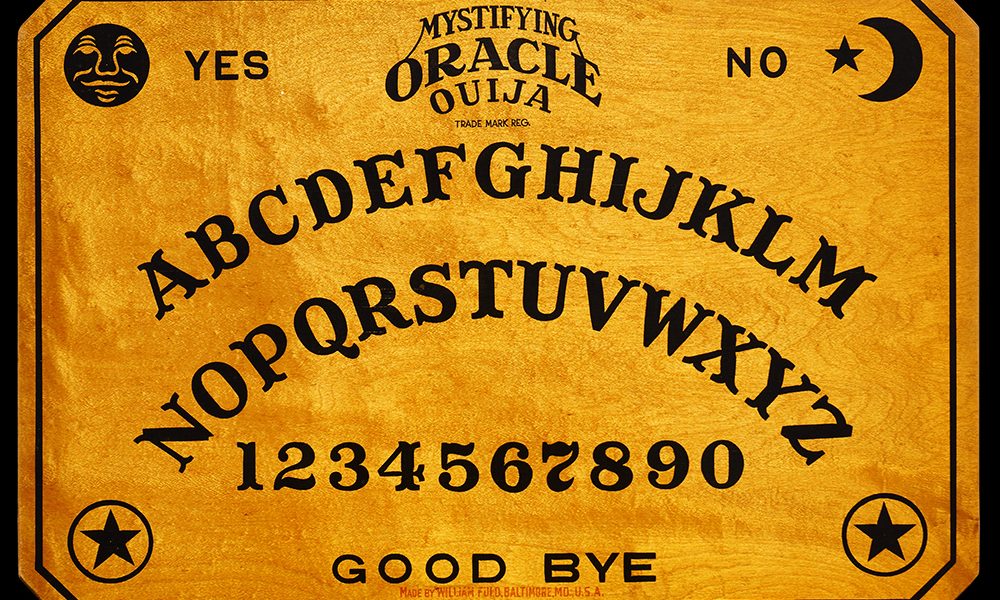
The Ouija Board was invented within the early 1890’s by William Fuld. It is now sold by Parker Brothers. An Ouija may be a small board with various symbols printed on its surface. These symbols include all letters of the alphabet, the numbers 1 to 9 and 0 and therefore the words yes and no. A smaller board, shaped sort of a heart, called a planchette or pointer is employed to direct the answers.
Two or more people rest an Ouija on their laps and press their fingers lightly on the pointer. One of them asks the board an issue . The pointer supposedly answers by indicating a word or variety or by spelling out words. According to people that believe the Ouija , spirits guide the pointer. Others think the fingers of the questioner influence the pointer. There are basic guidelines that ought to be followed for using Ouija boards. If any of you’re willing to undertake one you ought to inspect a number of the safe things to try to to to guard yourself or anyone else from possible harm. As many of us improvise an Ouija as a game, it’s always best to guard yourself. Where there’s no protection from evil forces extremely frightening things can occur. Sinister messages are often spelt out, claimed to return from the devil. As to prove that nobody person is purposely pushing the pointer, tales are told of all removing their fingers except one and therefore the pointer continuing to whiz around in manic fashion – or of the pointer jumping up within the air or hurling itself off the table and smashing. Also evil spirits are known to lie around who they’re tricking the users into further danger.
You have to be the judge of the knowledge you receive. To believe everything that comes through on the board simply because it’s from the opposite side is extremely gullible and is like believing everything that you simply read within the newspaper or see on TV. If your mind tells you there’s something wrong, there probably is. If the knowledge you’re getting seems new you, compare it with other channeled material and see if you’re comfortable with it. The important point to recollect here is LIKE attracts LIKE. Ouija boards work , but the type of beings you’re likely to draw in is directly associated with the extent of spiritual development of the participants and their intent. Remember an Ouija is simply a tool for contact which relies on no practice, learning or spiritual development to form it work. It’s like dialing a random central and hoping for the simplest . However, with practice, learning and spiritual development the probabilities of getting through to the proper person are greatly increased.
If used properly, the Ouija are often a positive tool to creating new friends and gathering information. However, you should not just stop there and rely on the board. Work on your own spiritual development and this may not only enhance your use of the board, but may render it obsolete – while at an equivalent time improving your whole life.

Spirituality

Many folks have explored Spirituality in our own ways. Although this quest is extremely individual (i.e., we all have our own personal definition of Spirituality), it’s collective in spirit. This is because Spirituality in people’s minds is synonymous with an enquiry for meaning, for purpose and direction in life.
In Sanskrit, Spirituality or Spiritual science it’s called Paravidya (Supreme science), while all other sciences are called Aparāvidyā meaning inferior science. By ‘science’, we mean modern science. Rationalists and most of the people think that science and Spirituality are two separate disciplines. However, Spirituality is that the knowledge of infinity, that is, knowledge of all subjects. It covers the entire physical world and therefore the subtle unseen world, all the physical and spiritual regions, all physical and subtle frequencies, energies and vibrations, all positive and negative entities and every one living beings and non-living beings within the whole Universe. Spirituality contains all the knowledge and memory of the past, present and future, from the start to the top of the Universe.
Spirituality is that the capacity of persons to transcend themselves through knowledge and love, that is, to succeed in beyond themselves in relationship to others and thus become quite self-enclosed monads.” Spirituality may be a dimension of a person’s being that’s actualized as a life project and practice. Spirituality may be a developed relationality instead of a mere capacity. It is not generic. For example, we will distinguish during a qualitative sense between a healthy and rigid spirituality, even within a spiritual tradition. A spirituality is as unique as a personality is exclusive . Spirituality can be religious or secular. A secular spirituality remains a “relationship between what one truly is and everything that is” (Peter Van Ness). A religious/secular spirituality, according to Schneiders, is “the experience of conscious involvement in the project of life integration through self-transcendence toward the ultimate value one perceives.” Generally, the term spirituality is that the human capacity for self transcendence, no matter whether that have is religious or not. Here, the activity of the human spirit, not Holy Ghost , could also be the reference. The fact is that no religion has complete ownership of the term spirituality as it once had with reference to the Holy Spirit, the product of a religious tradition. There are definite qualities of the word spirituality which are made clear in today’s secular and non secular uses of the word. First, it denotes an experience. It is not abstract idea, or theory or movement. It is, however, a personal-lived reality with both active and passive dimensions. It is something that is experienced. Secondly, it is an experience of a conscious involvement in a project. It is not temporary, but an ongoing and coherent approach to life, always consciously pursued. Thirdly, it involves one’s whole life as an integrative process. It is not a short lived attitude, but rather an attitude about life that others model. It involves a life-integration, mind and body, emotions and thought, activity and passivity, social and individual aspects of life. Spirituality promotes an integrated synthesis of ongoing growth and development. Fourthly, spirituality pursues a uniform self-transcendence toward ultimate values. It is positive and not negative in direction. It excludes narcissistic egoism and self-destructive behaviors and thoughts. There must be a self-transcendent quality which is ultimate. This may include personal or social well-being, the good of the earth, justice for all or union with God as an ultimate value. In a culture without a self transcendent attitude in the form of gratitude, humility, awe and some form of a spiritual outlook, healing personal growth and well-being are often compromised.
Regardless of who we are and where we come from – our got to experience happiness in our lives drives all our worldly pursuits. This need is common to all or any folks no matter cultural background, religion, gender, social or financial status, etc. However, through spiritual research, we have found that on average people experience happiness only 30% of the time.
One of the most reasons we experience unhappiness is thanks to problems in life. Everyone knows about the physical and psychological causes of problems in life. However, what many folks don’t know is that problems that are physical or psychological in nature can have a spiritual root cause. This means that albeit a drag is primarily thanks to spiritual reasons, it can manifest as a physical or psychological problem.

Generation Gap

Generation Gap is a term given to the gap or age difference between two sets of people; the young people and their elders, especially between children and their parents. Everything is influenced with the change of time- the age, the culture, mannerism and morality. This change affects every one. Generation gap is an endless social phenomenon. Every generation lives at a particular time under certain circumstances and conditions. So, all generations have their own set of values and views. Every generation wants to uphold the principles they believe . This is a problem that has continued for ages.
People born in several time periods under different conditions have their own views supported the circumstances they need been through. The patterns of life are changing continuously consistent with time. Everyone wants to measure and behave in his own way and nobody wants to compromise together with his or her values and views. There has always been a difference in attitude or lack of understanding between the younger and older generations. This attitude has augmented the generation gap and it’s becoming wider day-by-day. This gap now has started impacting our lives during a wrong way.
It is always good to possess a good range of ideas, views and opinions. It indicates how we are developing and advancing but sometimes this becomes worrisome when the views and concepts aren’t accepted by both the generations. Parents create a particular image in minds for his or her children. They want to mention their children with values that they need been mentioned with and expect their children to follow an equivalent . Parents want children to act in accordance with their values, as they believe, it’s for his or her benefit and would had best to them.
Children on the opposite hand have broader outlook and refuse to simply accept the normal ways. They want to try to to things in their own ways and don’t like going by any rulebook. Mostly, children experience conflict during their adolescence. They are desperately searching for self-identity. Parents sometimes fail to know the stress of this fast paced world. Ultimately, despite love and affection for every other both are drained out of energy and unable to grasp the opposite . Consequently there’s a scarcity of communication and abandoning on relationships.
Nothing are often as beautiful as a parent-child relationship within the world. It should be nurtured very delicately then it’s important to bridge the gap between the 2 generations. It is time to understand that neither is totally right nor wrong. Both the generations need to develop more understanding and acceptance for every other. Having a dialogue with one another calmly, with the thought of checking out conflict amicably in ideas, changing their mindset for every other and coming to a middle ground can be the foremost helpful instrument in bridging the gap between the 2 generations.
Spending longer with one another like family outings, vacations, picnics, shopping, watching movies together might be some effective ways to create up a robust bond with one another . Both the generations need to study the ways of the society during their growing period and have mutual respect for it. To reduce the friction between the 2 generations, both parents and youngsters need to give space to every other and define certain boundaries that the latter should respect an equivalent .
Generation gap occurs because society is constantly changing. It is the responsibility of both the generations to fill this gap amorously , affection and trust. Both the generations should have mutual respect for the views and opinions that they uphold and advance cautiously with the event of the society.
In order to shrink the generation gap, we must be open minded about learning from other generations. There is often a stigma within each generation that older or younger generations are wrong because their opinions and values are different. … there’s always room to grow and learn.

Social Media Detox

People realize drug detox, but there’s also what’s referred to as social media and digital detox, and lots of feel it’s an important thing that folks got to do.
When you put the words SOCIAL MEDIA DETOX into Google, this definition pops up:
“A social media detox may be a conscious elimination of social media use and consumption for a group period of your time . Generally, most social media detoxes are 30 days, but some people do seven days or maybe a year-long social media detox.”
Then on the primary page are the questions, “How do I take an opportunity from social media?” “What happens once you hand over social media?” “Why going off social media is good?”
Well, we all know why it’s good to require an opportunity from social media, regardless of how long you are doing it. Too much social media are often toxic and depressing. Studies have shown that an excessive amount of social media are often bad for you, and an opportunity from it’s not a nasty idea.
It could also make an excellent new year’s resolution, because as Psychology Today reports, “The early months of the year are traditionally a time for abstinence, introspection, and renewal. Another emerging tradition has become referred to as a digital detox. This refers to self-initiated periods of abstinence from using digital devices, especially abstention from social media.”
As this report continues, “Research indicates a significant increase in the usage of social media in recent years. This has become especially intense among young people.” This report cited a study that claimed that over 20% of students are on social media for five hours a day or more, which is clearly a lot.
Social Media Detox and Mental Health
As far as social media and mental health, this story mentions that many studies will tell you that “low levels of social media usage are associated with better mental health.” Spending an excessive amount of time on social media can affect your physical health also . As this story explains, “One study indicated that heavy usage of social media and digital devices could negatively affect the standard of sleep,” and an excessive amount of social media time can cause headaches and vision problems.
Studies from everywhere have shown that spending an excessive amount of time on social media are often potentially hazardous to your psychological state , and breaks, even now then , are strongly advised. One of the most important reasons is that social media can show distorted views of reality that make people feel inferior, like their lives can’t qualify to some celebrity or influencer. This often couldn’t be beyond the reality , and that we might not realize the grass truly isn’t greener on the opposite side, but it’s certainly easy to be convinced otherwise.
A social media detox, regardless of the time you spend faraway from it, be it hours, days, weeks, or maybe months, are often very beneficial to your psychological state . If you’re not able to take an enormous step faraway from it, little steps are certainly recommended. See how you wish it initially , then see if you’ll enjoy longer faraway from it and if it truly benefits your life and psychological state .
There’s no denying that social media has become an enormous a part of modern life. Apps like Facebook, Instagram, and Twitter help us stay connected with loved ones, catch abreast of news, and find out both beautiful destinations and galvanizing people. Yet you’ll find that spending hours on end scrolling through various feeds can leave you feeling anxious, drained, or dissatisfied. So how does one know if you’re in need of a social media detox? “Reflect on your habits and evaluate how social media causes you to feel and the way it impacts your life,” says Catherine Price, author of the way to hack together with your Phone and founder of Screen/Life Balance. “Is it negatively impacting your mental wellness? How about your productivity and creativity? Is it taking time away from the activities that make you happy?”
It’s important to notice that there’s nothing inherently wrong with spending time on social media, consistent with Price. “The important thing is to use it with purpose and intention,” she says. If, upon reflection, you are able to spot any negative effects that the apps have had on your life, then it’s time for a social media break.

Ideas  that will help to disconnect a little and have a happier, healthier relationship with social media from now on.

Delete your social media apps.

Detox with a buddy.

Talk to your friends and family.

Set time limits on your apps.

Practice meditation.

Get a real alarm clock.

Give your phone a bedtime.

Think of your attention as a valuable resource.

Ideally, you’re completely eliminating social media use and consumption. This means deleting and removing all social media apps from your phone, and in some cases where it’s possible, temporarily disabling your social media accounts. 

Ahoms vs Mughals. What is the story behind defeating Mughals?

While the Mughals were an invincible force everywhere, they never succeeded in getting a foothold in the North East India.  The North East was an attractive proposition for the Mughals, rich Brahmaputra flowing through many countries and hence a great trade opportunity, and by controlling this region, one could control the trade route. The region was fertile and it meant great agricultural bounty.

The story of Ahom dynasty of Assam vs Mughals is incomplete without the story of Lachit Borphukan.  He was one of the five Patra Mantri (minister) in the Ahom Kingdom. He was the ruler of Lower Assam during that period.

From 1615 to 1682, the Mughals attacked North East 17 times. In 1667, the Ahoms lost Guwahati (Pragjyotishpur) to Mughals and had to pay a war indemnity of 3 lacs rupees and ninety elephants. Two Ahom princesses were taken as hostages by the Mughal Army.  King Chakradhwaj Singha selected Lachit Borphukan to lead the forces and get Guwahati back from Mughal captivity. Lachit raised the army and seized Guwahati from the Mughals.  He was sure that Mughals will be back soon, and hence immediately started preparing for the next battle.  .  He was right, Mughals came knocking at their doors with a much bigger and powerful army.

The Battle of Saraighat

The Mughals did not take this defeat lightly and came back with 30000 soldiers, 15000 archers, 18000 Turkish cavalry, 5000 gunmen and over 1000 canons. This was a mighty fleet and defeating them looked like an uphill task. Lachit was brave and a master mind. He forced the Mughal army to fight at the Brahmaputra River. Lachit had identified the weakest link in the Mughal force – their navy. The Ahom army built multiple mud embankments around Guwahati so that the Mughals were forced to attack them through Saraighat using their Navy.

For the Ahoms, the knowledge about the terrain was a big advantage. During the battle, there was a time when Lachit Borphukan fell terribly ill and the morale of the Ahom army started dwindling. His response to his team was very clear “If you want to flee, go ahead… the King has assigned a responsibility to me and I will do it well irrespective of my health. Let the Mughals take me away. You report to the king that his general fought well following his orders”. His soldiers rallied and a fiercely fought battle resulted in a victory over the mammoth Mughal army.  The general was not fighting for fame, religion or the King. He was fighting for his motherland and its people. Every year, 24th of November is celebrated as Lachit Diwas in Assam.

Ahoms and their Navy

Ahoms always had a war strategy in place and that was about keeping invaders west of the river. The paik system ensured that each family in the Brahmaputra valley had to depute the male members whenever there was a war or any other extraordinary situation.  This implied a backup of army men whenever the need arise.

The Ahoms made excellent use of the terrain and developed perhaps India’s only “river specific” navy! Inside-out knowledge of the terrain was what made the guerrilla warfare highly effective and they called it “Daga Yuddha”!  Even towards the end of Ahom dynasty, their navy had more than 7000 sailors. There were sophisticated docks for boat building. They also knew how to build bastions (Pani Garh) in the middle of the river without using any existing island.

The Ahom war boats were smaller in size, but made up of wood from a specific tree, which would not sink even if overloaded. Each boat had a life of more than 10 years and was equipped with guns and artillery. The small boats were easy to maneuver in the river as compared to the large boats used by the Mughals. The Ahom boat men were expert in steering the boats in the battle field (river).

The mystery of India’s ‘lake of skeletons’

High in the Indian Himalayas, a remote lake nestled in a snowy valley is strewn with hundreds of human skeletons.

Roopkund Lake is located 5,029 metres (16,500ft) above sea level at the bottom of a steep slope on Trisul, one of India’s highest mountains, in the state of Uttarakhand.

The remains are strewn around and beneath the ice at the “lake of skeletons”, discovered by a patrolling British forest ranger in 1942.

Depending on the season and weather, the lake, which remains frozen for most of the year, expands and shrinks. Only when the snow melts are the skeletons visible, sometimes with flesh attached and well preserved. To date, the skeletal remains of an estimated 600-800 people have been found here. In tourism promotions, the local government describes it as a “mystery lake”.

For more than half-a-century anthropologists and scientists have studied the remains and puzzled over a host of questions.

Who were these people? When did they die? How did they die? Where did they come from?

One old theory associates the remains to an Indian king, his wife and their attendants, all of whom perished in a blizzard some 870 years ago.

Another suggests that some of the remains are of Indian soldiers who tried to invade Tibet in 1841, and were beaten back. More than 70 of them were then forced to find their way home over the Himalayas and died on the way.

Yet another assumes that this could have been a “cemetery” where victims of an epidemic were buried. In villages in the area, there’s a popular folk song that talks about how Goddess Nanda Devi created a hail storm “as hard as iron” which killed people winding their way past the lake. India’s second-highest mountain, Nanda Devi, is revered as a goddess.

Earlier studies of skeletons have found that most of the people who died were tall – “more than average stature”. Most of them were middle-aged adults, aged between 35 and 40. There were no babies or children. Some of them were elderly women. All were of reasonably good health.

Also, it was generally assumed that the skeletons were of a single group of people who died all at once in a single catastrophic incident during the 9th Century.

The latest five-year-long study, involving 28 co-authors from 16 institutions based in India, US and Germany, found all these assumptions may not be true.

Scientists genetically analysed and carbon-dated the remains of 38 bodies, including 15 women, found at the lake – some of them date back to around 1,200 years.

They found that the dead were both genetically diverse and their deaths were separated in time by as much as 1,000 years.

“It upends any explanations that involved a single catastrophic event that lead to their deaths,” Eadaoin Harney, the lead author of the study, and a doctoral student at Harvard University, told me. “It is still not clear what happened at Roopkund Lake, but we can now be certain that the deaths of these individuals cannot be explained by a single event.”

But more interestingly, the genetics study found the dead comprised a diverse people: one group of people had genetics similar to present-day people who live in South Asia, while the other “closely related” to people living in present-day Europe, particularly those living in the Greek island of Crete.

Also, the people who came from South Asia “do not appear to come from the same population”.

“Some of them have ancestry that would be more common in groups from the north of the subcontinent, while others have ancestry that would be more common from more southern groups,” says Ms Harney.

So did these diverse groups of people travel to the lake in smaller batches over a period of a few hundred years? Did some of them die during a single event?

No arms or weapons or trade goods were found at the site – the lake is not located on a trade route. Genetic studies found no evidence of the presence of any ancient bacterial pathogen that could provide disease as an explanation for the cause of deaths.

A pilgrimage that passes by the lake might explain why people were travelling in the area. Studies reveal that credible accounts of pilgrimage in the area do not appear until the late 19th Century, but inscriptions in local temples date between 8th and 10th Centuries, “suggesting potential earlier origins”.

So scientists believe that some of the bodies found at the site happened because of a “mass death during a pilgrimage event”.

But how did people from the eastern Mediterranean land up at a remote lake in India’s highest mountains?

It seems unlikely that people from Europe would have travelled all the way from Roopkund to participate in a Hindu pilgrimage.

Or was it a genetically isolated population of people from distant eastern Mediterranean ancestry that had been living in the region for many generations?

“We are still searching for answers,” says Ms Harney.

Split Personality Disorder

A multiple personality refers to dissociative identity disorder (DID), a mental disturbance where an individual has two or more distinct personalities. The thoughts, actions, and behaviors of every personality could also be completely different.
People with DID have two or more distinct personalities. They do not present as simple changes in traits or moods. A person with DID expresses significant differences between these alternate identities, which may even be mentioned as alters.
Trauma often causes this condition, particularly during childhood. While there’s no defined cure for DID, long-term treatment may help people combine their personalities into one.
Often, these personalities are completely different from one another . These fragmented personalities take hold of the person’s identity for a few time.
A person also maintains their primary or host identity, which is their original personality, and can answer to their first name . Their primary identity is usually more passiveTrusted Source, and that they could also be unaware of the opposite personalities.When a personality change happens, the new personality will have a definite history, a new identity, and different behaviors.

These split personalities, or alters, often have their own distinct:

  • name
  • age
  • gender
  • moods
  • memories
  • vocabulary

The exact explanation for DID isn’t fully understood. However, there’s a robust link between the condition and trauma. This may be particularly true for trauma or abuse during childhood. In Europe, the us , and Canada, 90% of individuals who experience DID are victims of severe trauma in childhood.
The condition represents someone who struggles to integrate and assimilate certain aspects of their own identity, which become disjointed over time.
When these other personalities take over, they often talk with a special vocabulary, and gesture differently. In some cases, one personality can also devour certain habits that the opposite doesn’t , like smoking, or becoming violent.
In the shift from one personality to a different , an individual may experience other symptoms. Some people can have anxiety, as they’ll be scared of the personality change. Some may become very angry or violent. Others might not notice or remember these transitions in the least , although another person may notice them.
Specific personalities may appear in response to certain situations. These symptoms can cause an individual significant distress, and disrupt their ability to measure their life normally.
A person with DID can also experience symptoms of other conditions, like self-harm. One study notes that quite 70%Trusted Source of individuals with DID have attempted suicide.
It takes time to diagnose DID. Misdiagnosis is common, and doctors got to observe a person’s symptoms, and dismiss other conditions.
To properly make a diagnosis, doctors got to see the various personalities and the way they affect the person.
Time is additionally a crucial think about seeing the complete scale of the symptoms. This is because people that seek help for DID commonly present with symptoms linked to other psychological state conditions.
Additionally, as DID often occurs alongside other disorders, doctors got to rule out the symptoms of other conditions before they create a diagnosis. As such, they’ll prescribe therapies or medications to treat these conditions first.
There is no specific cure for DID. However, many of us can help manage their symptoms and work to integrate their identities through regular psychotherapy. They can also ease the other symptoms with medication.

Cursed Items of World


1. The Cursed Mirror 

Myrtles Plantation in Louisiana, USA is said to be one of the most haunted places in the world. However, the most spooky item in the house is a mirror. Locals claim that the mirror is cursed and has the spirits of Sara Woodruff and her two children who were poisoned by their slave Chloe trapped inside it.     

2. Baker’s Wedding Dress 

Inside the Baker mansion in Altoona, USA is the wedding dress of Anna Baker who fell in love with an ironworker. Legends claim that Anna eloped from her home to get married to her lover but her father forcefully brought her back and locked her in the bedroom. She then refused to marry anyone else and spent the rest of her life alone. After her death, the members of the Baker family reported spotting Anna’s wedding dress at different places around the house. Some of them even saw the spirit of Anna Baker moving around the house dressed in the same wedding dress. 

3. Annabelle Doll 

The discovery of this doll dates back to 1970 when a mother bought it from an antique shop as a birthday gift for her daughter. Soon, the family noticed strange things happening inside the house related to the doll. The family then called for the help of renowned psychic investigators, Ed and Lorraine Warren who found that the doll possesses the spirit of a 7-year-old girl named Annabelle Higgins who was brutally murdered. The doll is now in the Occult Museum, Connecticut.  

4. Screaming Skull

The Burton Agnes Hall in Burton Agnes, England is home to a creepy paranormal object called the screaming skull. The screaming skull is believed to be of Katherine Anne Griffith who died in the same house after being attacked by bullies in 1620. Every night, a terrifying ghost is seen roaming around the skull making tremendous noise and scaring out everyone who tried to remove the skull. 

5. ‘The Hand Resist Him’ Painting 

The ‘Hand Resist Him’ painting by artist Bill Stoneham is probably one of the most haunted pieces of art. According to the artist, this painting is a representation of the doorway that connects our world with the world of the spirits. The owners of the painting have claimed that the characters in the picture move or disappear in the night.    

6. ‘The Anguished Man’ Painting 

Fascinated by the charm of ‘The Anguished Man Painting’, Sean Robinson inherited the painting from his grandmother and decided to hang the painting on the wall of his house. Soon after that, Sean and his family started experiencing paranormal events like cracking of the doors in the middle of the night and sudden blood-curdling screams from nowhere. Sean’s wife decided to investigate the origin of the painting and found that the artist who painted the painting committed suicide and before doing that he mixed his own blood with the paint that he used in making the painting. Learning this, the couple decided to hide the painting in the basement of their house in Cumbria. 

7. Peice Of Uluru Rock 

Uluru rock is a large sandstone formation in the southern part of the Northern Territory, Australia. Also known as the Ayers Rock, this place is sacred for the Aboriginal people of the area. This is the reason they request or rather advice the visitors not to take anything from the site. However, many tourists smuggled home small chunks of the formation and experienced bad luck, severe illness, terrible break-ups and even death of loved ones. 

8. Letta The Gypsy Doll

According to the locals of Romania, a Romanian man handcrafted a doll for his son Letta. Unfortunately, the boy drowned while playing with the doll and his spirit got trapped inside the doll. The man then decided to give the doll to the son of one of his workers. The child claimed that the doll talked to him while other successive owners reported that holding the doll or being around it causes a feeling of immense grief and makes them cry without reason.  

9. Bulgarian Phone Number 

There is a Bulgarian phone number +359 888 888 888 which was in use for 10 years and is now closed. The reason behind deactivating the number lies in the death of those 3 people who used it.  All of the owners of this number died shortly after getting the number registered on their name. The first owner died of cancer, while the other two were shot down without any solid motive. 

10. ‘The Crying Boy’ Painting 

The painting of ‘The Crying Boy’ was created by artist Giovani Bragolin and became famous quickly. It was then mass-produced and was found in many homes across Britain. However, soon many of these homes mysteriously caught fire. But the most disturbing part of the entire incident was that no matter how severe the fire was, the painting remained absolutely fine. Some regarded these fires as mere coincidences, but the undamaged paintings have not been bagged by a valid explanation till date. 

11. Robert The Evil Doll

Robert Otto was gifted a look-a-like doll by one of his servants who apparently hated the family. Neighbors of Robert used to hear him having a conversation with the doll. After his death, A couple bought the house and their 8-year-old daughter found the doll in the attic. The little girl often claimed that the doll was trying to kill her. The doll is now on display in a museum in Key West and is still believed to curse people.   

12. Hope Diamond 

Another cursed object that must be kept away from human reach is the Hope diamond. This famous jewel is of an unusually large size with a soothing blue shade and is worth $250 million. However, the diamond is believed to be cursed since the 17th century and brings great misfortune and misery to its wearer. Folklores state that a French merchant plucked the gem from one of the eyes of a Hindu idol in 1653 and ever since then, whoever owns this 115-carat blue diamond opens the door for bad luck.   

13. Thomas Busby Chair 

Popularly known as Busby’s stoop chair, this wooden furniture is cursed by the spirit of Thomas Busby who was known to ruthlessly murder people. Before getting hanged for his crimes, he requested to have a meal in his favorite local pub. Upon finishing his meal, he stood and said: “May sudden death come to anyone who dares sit on my chair” and ever since then, 63 people who dared to sit on the chair, met untimely and terrifying deaths. Later, the owner of the pub donated the chair to the Thirsk Museum, UK and it is still there, hung 1.5 meters off of the ground to prevent any further deaths. 

14. Elmo Knows Your Name 

Elmo, the popular Sesame street character had a doll version of it launched who was programmed to memorize his owner’s name. A young boy James Bowman was a big fan of Elmo so his mother decided to gift him one on his 10th birthday. However, a few days later, the Elmo doll began to chant  “Kill James” continuously. This made his mom throw away the accursed toy. After a couple of years, other such incidents came into light regarding the Elmo doll. 

15. The Woman From Lemb Statue 

The Women From Lemb was found in Cyprus in 1878 and is an eye-catching artifact carved from limestone. The statue is said to have been owned by four different families, each of them dying within a few years of obtaining the artifact. Terrified by the deadly history of the statue, the only surviving member of the last family donated the statue to the Royal Scottish Museum in Edinburgh, Scotland. However, things didn’t stop there. The museum curator who handled the statue was mysteriously murdered after a few days.  

16. Basano Vase 

Another cursed object that must not be touched is the Basano Vase that was made in the 15th century by an Italian maiden on her wedding night as a gift for her groom. Locals say that she was found murdered with the vase in her hand that very night. The vase was then passed on from families to families each claiming unfortunate deaths of loved ones. In 1988, it was offered to multiple museums but all of them refused to take it because of the curse on it. Where exactly it is now, remains unclear, but some say that it is buried in a lead coffin at an inaccessible place.   

17. Dybbuk Box 

The Dybbuk Box came into light in 2001 when Kevin Mannis purchased a wine cabinet and started having terrible nightmares. He then decided to gift the cabinet to his mother who suffered a stroke the very day she received it. Not just this, every person who ever owned that wine cabinet has reported experiencing horrible events. The last owner of the cabinet Jason Haxton found out that the box possesses the spirit of a malicious Jewish creature called Dybbuk, who has the ability to haunt and possess the living.  

18. The Iceman 

The mummy of Otzi aka the Iceman was found in 1991 in the Otzal Alps, Italy. It is believed that the Iceman belonged to 3000 BCE and his body was preserved because of the glacier that surrounded him after he died. However, soon after his discovery, people who were involved with his discovery began to die due to violent accidents. Forensic pathologist Rainer Henn died in a horrific car accident, Mountaineer Kurt Fritz died in an avalanche and Hiker Helmut Simon died after falling off from a dangerous hidden path. People believe that the discovery of Iceman is a curse and has the power to destroy mankind.   

19.Terracotta Army 

Terracotta Army in Shaanxi, China is a unique 2,200 pieces of funerary art which are regarded as one of the most massive archaeological discovery of modern times. However, it is nothing but a bearer of bad luck for all those seven farmers who discovered it in 1974. Soon after the discovery, their farmland was claimed by the government and their homes were demolished to make way for exhibition halls and gift shops. 

20. Belcourt Castle Chairs 

This former summer cottage in Rhode Island has a ballroom where you will find haunted chairs. Visitors have reported feeling chills racing up and down their spine while standing near the chairs or have felt a strange sensation of energy around them. Others have reportedly been pushed down from the chairs by an unseen force.     

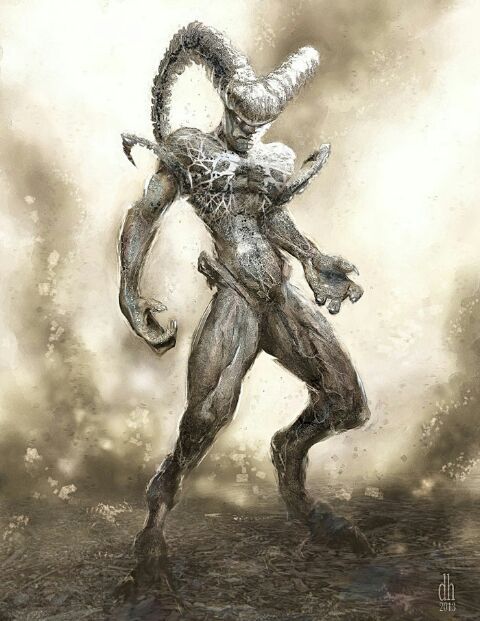
The Real Black Zodiac

The Black Zodiac is the dark counterpart of the Western Astrological Zodiac. Both of which originated from the Babylonian Zodiac. Through centuries of repeated reinterpretation and adaptation by numerous cultures including Greek, Roman, and Hindu, the original Zodiac was filtered to represent only the good side of one’s personality. This long history of revision eventually resulted into the modern Zodiac that became the pillar of Western Astrology.

As the name denotes, the Black Zodiac represents the evil side of the human creature. These demons are one’s inherent will and capacity to ultimately cause harm to oneself and others. This evil, however, should not be feared. Like good, it can be harnessed and turned into something useful.

Each of the Black Zodiac embodies the morbid traits that are as unique as each person. It is important to know, face, and nurture one’s demons in order to manipulate it for personal benefit.

The Tyrant: March 21 – April 19 (Aries)

You are greed in human form. You want the world and you will take it. The inability to feel contentment keeps you motivated. You can find happiness through the suffering of others. People are merely tools for you to use, abuse and discard.(if you ask me it sounds like fun to me but hey to each his own)

The Fallen Demon: April 20- May 20 (Taurus)

You are the Fallen Demon. Your past is a ghost that follows you everywhere. You have made mistakes and you live with the repercussions. People have wronged you and you will never forget. Others may see you as a broken man and they may be right. They may look down on you because you were defeated but you’ve been to hell and you will never go back. You will redeem yourself no matter what it takes.(hell yeah! Just a bit of glue and just like new and ready for more big homie)

The Basilisk: May 21 – June 20 (Gemini)

The Basilisk commands fear. Your stare is deadly but your bite is deadlier. You are built to harm and you know how to torment others. In the right situation, you can be very dangerous. All you need is provocation. Those who know your true nature regard you with equal fear and respect. Those who do not will find out in the worst of ways.(ummm…. ok! cool! Remaind me not to piss in you cereal )

The Serpent: June 21 – July 22 (Cancer)

The serpent is the symbol of wisdom and deceit. You are both cunning and clever. People may regard you as low, wretched and maybe even repulsive but you know how to use these to your advantage. Trust is a weakness that you can exploit outstandingly. Your virtues are insidious and your ways are elegant.(sound like my lawyer!)

The War Maiden: July 23 – August 22 (Leo)

The War Maiden is a paradox. You appreciate beauty and anticipate decay.  This conflicting nature of yours may be regarded as puzzling and ultimately disturbing by others, thus very few can see the beauty of your ways. Seeing through comforting lies enables you to embrace the hardships of reality. You stand in the thin line between the evil and the benign. (we could be best friends)

The Maelstrom: August 23 – September 22 (Virgo)

You are the Maelstrom. Like the wrath of god, you are most dangerous to the ones that you love the most. You may project a caring and compassionate image but you have the tendency to be possessive. What’s yours is yours alone; better destroyed by your hands than taken by others. You dwell on jealousy and you savor the fury that comes with it.(lets just be friends)

The Ravenous: September 23 – October 22 (Libra)

You are the Ravenous. Sanity is hanging by a thread. You’re inner demons are hidden away and they are aching to break free. This life of order and conformity to petty norms disgusts you. You long for that sweet day when you’ll be free to cause damage, pain and suffering to that special list of people that you have at the back of your head.

The Tempest: November 22 – December 21 (Sagittarius)

You are the tempest. Free and carefree. Nothing is more important than your desires. You’re pursuit of pleasure and contentment may bring suffering to others but that is not your problem is it? Those who stand in your way better hold their ground, for you will not hesitate to destroy them. Make no mistake, you are not hateful. You just don’t care at all.(am i on you way i can move no need to destroy me now)

The Leviathan: December 22 – January 19 (Capricorn)

You are the leviathan. A monstrosity in a dark abyss. The great potential that you possess is locked away for good reason but the mere thought of it is enough to strike terror, even to yourself. You fear your own demons because you know very well what they are capable of. But you are neither weak nor a coward. You’re struggle to gain control is a victory in itself.(dont fight them make friends with them)

The Beast: January 20 – February 18 (Aquarius)

Dwell in the dark long enough and you shall become darkness itself. The beast knows and accepts the evils inside him. You can point this evil in any direction yet you would rather point it inwards than set it loose on the people you care about. You are the master of your demons. You consume fury, pain and despair like a bitter drug.

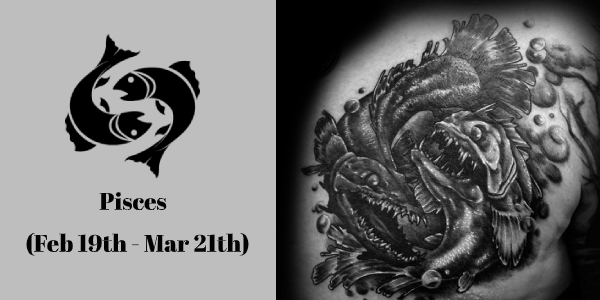
The Sword: February 19 – March 20 (Pisces)

The sword is a symbol of glory. Admired by the weak and coveted by the daring. Yet you remain true to your real purpose. You are designed to hurt after all. The cut is merely the beginning, followed by the rot of the injury then a shameful scar. You are a painful reminder to those who have failed to wield you. The sight of you is enough to torment. And they can’t help but to look can they?

The drawings are not the black zodiac sorry but couldn’t find how they look like but i did find the next best thing those drawings you see ware made

Illuminati

In a historical sense, the term “Illuminati” refers to the Bavarian Illuminati, a association that operated for less than a decade, from 1776 to 1785. This organization was founded by Adam Weishaupt, a German law professor who believed strongly in Enlightenment ideals, and his lluminatenorden sought to market those ideals among elites. Weishaupt wanted to teach Illuminati members in reason, philanthropy, and other secular values in order that they might influence political decisions once they came to power.
Illuminati, designation in use from the 15th century, assumed by or applied to varied groups of persons who claimed to be unusually enlightened. The word is that the plural of the Latin illuminatus (“revealed” or “enlightened”).
“It was pretty ambitious for six or nine guys, but they really wanted to take over the world,” says Chris Hodapp, the co-author of Conspiracy Theories and Secret Societies for Dummies with Alice VonKannon.
The Illuminati’s goals — and reputation — often exceeded their means, Hodapp notes. In its youth , the group was just a couple of individuals . And even at its largest, it only consisted of somewhere between 650 and a couple of ,500 members. The group grew thereto size by becoming a kind of cell within other groups — Illuminati members joined Freemason lodges to recruit members for his or her own competing secret society.
There were two sides to the historical Illuminati: their odd rituals and their ideals.
The Illuminati did plenty of unusual things. They used symbols (like the owl), adopted pseudonyms to avoid identification, and had complicated hierarchies like Novice, Minerval, and Illuminated Minerval that divided the ranks. In the beginning, Hodapp says, Illuminati members didn’t trust anyone over 30, because they were too set in their ways. Other reports of rituals are harder to verify , but we all know that members were very paranoid and used spy-like protocol to stay one another’s identities secret.
But while they were following these bizarre rituals, they also promoted a worldview that reflected Enlightenment ideals like rational thought and self-rule. Anti-clerical and anti-royal, the Illuminati were closer to revolutionaries than world rulers, since they sought to infiltrate and upset powerful institutions just like the monarchy.
Historians tend to think the Illuminati were only mildly successful — at the best — in becoming influential. (Though, of course, there also are those that believe the Illuminati successfully took over the planet — and still control it today. If an all-powerful group does dominate the planet , we probably wouldn’t realize it. Δ.)
It’s also difficult to untangle the success of the Illuminati from that of the Freemasons, which they infiltrated and commingled with. It’s even as tough to inform what influence the Illuminati actually had as against the influence people think that they had .
We do know the Illuminati had some influential members — along side many dukes and other leaders who were powerful but are forgotten today, some sources think writer Johann Goethe was a member of the group (though other sources dispute the claim). In a way, Illuminati influence depends on what you think about them. If you think their revolutionary ideals spread to other groups, like the French Revolution’s Jacobins, then they were successful. If you think that those ideas would have prospered regardless, then they were mainly a historical curiosity.
The Illuminati never completely disappeared from popular culture — it had been always burbling within the background. But within the mid-1970s, the Illuminati made a marked comeback because of a literary trilogy that gave the group the simultaneously spooky and laughable image it holds today.
The Illuminatus Trilogy, by Robert Shea and Robert Anton Wilson, depicted the Illuminati with ironic detachment. This trilogy became a countercultural touchstone, and its intermingling of real research — Weishaupt, the founding father of the important Illuminati, may be a character — with fantasy helped put the Illuminati back on the radar.
“It was an excellent example of the post-’60s ways of ironizing elite sorts of power,” Mark Fenster says. “That ironic vision of conspiracy theory is extremely cosmopolitan . You can be both a significant conspiracy theorist and joke about it.”
From there, the Illuminati became a periodic staple of both popular culture — as in Dan Brown’s massively popular novel Angels and Demons — and various subcultures, where the group is often intermingled with Satanism, alien myths, and other ideas that might are totally foreign to the important Bavarian Illuminati.
Uscinski clarifies that the majority Americans today don’t actually believe the Illuminati. In a survey of conspiracy theories he conducted in 2012, he says zero people claimed that groups like Freemasons or Illuminati were controlling politics. Even so, the Illuminati seem to continue our collective consciousness, serving because the butt of jokes and therefore the source of lizard people rumors .

Aghoris

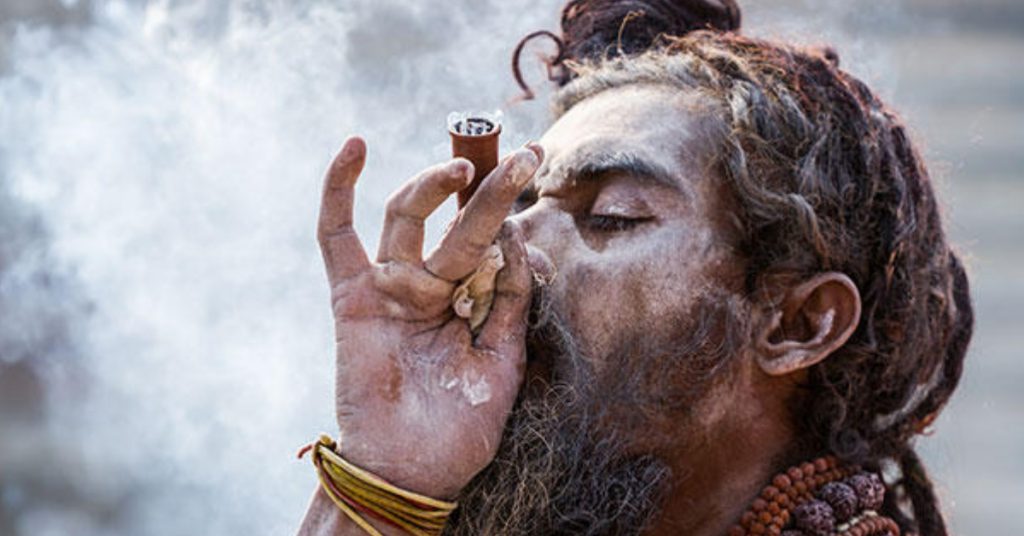
Who are Aghoris? Have you heard about them? Being in India, we most frequently encounter them in streets, temples etc but how often can we make an attempt to understand who they really are? Aghoris are sadhus belonging to an unconventional clan who are Shiva worshippers. While some believe that they need divine powers et al. think they’re sadhus with sorcery which may harm people. But undoubtedly they have a mystical personality. Let’s take a glance at a number of the facts about Aghoris.
1. ACCEPTING THE NAKED TRUTH
Aghoris are seen to be mostly naked and accepting of their bodies. You can see Aghori in completely naked bodies covered in ashes from the dead bodies. It definitely scares some people while some people find it enticing.
2. NO HAIRCUT
Aghoris let their hair grow long and believe no haircuts. After all, that’s how we were born and what better thanks to accept our natural self. You will never see Aghori briefly , trimmed hair.
3. CANNIBALISM
It is believed that these sadhus openly eat human meat. They eat already dead corpses and don’t kill to eat and hence nobody questions them. Found mostly in numbers in Varanasi, which is understood for its holy practices, these sadhus are accepted for who they’re . They are also known to eat garbage, human faces and also leftover foods.
4. LORD SHIVA IS EVERYTHING
Aghoris immerse themselves within the devotion of Lord Shiva. They believe that Lord Shiva is that the answer to everything as he’s omnipresent and absolute. They perform penance, which is of three kinds that are called Shiva Sadhana, Shav Sadhana, and Smashaan Sadhana. Some people also believe that they’re the incarnations of Lord Shiva.
5. CURE FOR ALL
Aghori’s are said to possess the cure for all the diseases. According to them, the human oil that they take from the pyre when the body is being burnt is extremely powerful and effective. They claim that they need the medicines for even the incurable diseases.
6. MEDITATING WITH CORPSE
Aghori’s are seen to be meditating during a cemetery on a corpse. They also stand on one leg to meditate over a corpse a bit like Parvati, the goddess standing on the chest of Lord Shiva. Now most folks dread to even go on the brink of the cemetery or dead bodies. So that definitely takes tons of guts.
7. INTERCOURSE WITH THE CORPSE
Aghori is understood to possess sexual activity with dead bodies. They say the rationale is just that they find purity in what’s considered by the main population as filth. Also, just like the believers of the goddess Kali, they assert that it’s the deeper desire of the goddess that they need to satisfy . Also, it’s known to be believed by them that doing sex with the dead give them supernatural powers.
8. NO HATE IN THE HEART
These sadhus share their food with the animals within the cremation ground. Be it a cow or a dog, every life is that the same for them. And they believe the one that hates cannot truly meditate. So, it’s important to measure a hate free life for sadhus to meditate.
9. SAGES AND THEIR AGES
Kina ram, the first aghori who set grounds for the rest of the aghoris is said to have lived for 150 years and his death happened in the late 18th century.
10. SURVIVAL FACTS
These sadhus survive the harshest and extreme weather . They are known to measure within the scariest jungles and also the snow clad mountains. They are also found within the hot desert, in conditions where a traditional person doesn’t survive well.
11. ONENESS OF ENVIRONMENT
Aghoris believe that everyone has Aghori in him/her. They believe that when a toddler is born he/she doesn’t distinguish between faeces, toys, and garbage. But the kid is later taught what’s good and bad consistent with society which is how it starts discriminating.
12. THE FACTS ABOUT DARK MAGIC
Aghoris are known to perform sorcery but to not harm anyone or anything but they assert that it heals them and increases their supernatural powers to speak to the dead. They perform tons of rituals, strange within the eye of a standard man to perform dark magic.

Online Education- The New Normal

The new normal in education is that the increased use of online learning tools. The COVID-19 pandemic has triggered new ways of learning. All round the world, educational institutions are looking toward online learning platforms to continue with the method of teaching students. The new normal now’s a transformed concept of education with online learning at the core of this transformation. Today, digital learning has emerged as a necessary resource for college kids and schools everywhere the planet . For many educational institutes, this is often a completely new way of education that they need had to adopt. Online learning is now applicable not just to find out academics but it also extends to learning extracurricular activities for college kids also . In recent months, the demand for online learning has risen significantly, and it’ll continue doing so within the future.
As with most teaching methods, online learning also has its own set of positives and negatives. Decoding and understanding these positives and negatives will help institutes in creating strategies for more efficiently delivering the teachings , ensuring an uninterrupted learning journey for college kids .
What Are The Advantages Of Online Learning?
1. Efficiency
Online learning offers teachers an efficient thanks to deliver lessons to students. Online learning features a number of tools like videos, PDFs, podcasts, and teachers can use of these tools as a part of their lesson plans. By extending the lesson plan beyond traditional textbooks to incorporate online resources, teachers are ready to become more efficient educators.
2. Accessibility Of Time And Place
Another advantage of online education is that it allows students to attend classes from any location of their choice. It also allows schools to succeed in bent a more extensive network of scholars , rather than being restricted by geographical boundaries. Additionally, online lectures are often recorded, archived, and shared for future reference. This allows students to access the training material at a time of their comfort.Thus, online learning offers students the accessibility of your time and place in education.
3. Affordability
Another advantage of online learning is reduced financial costs. Online education is way cheaper as compared to physical learning. This is because online learning eliminates the value points of student transportation, student meals, and most significantly , land . Additionally, all the course or study materials are available online, thus creating a paperless learning environment which is cheaper , while also being beneficial to the environment.
4. Improved Student Attendance
Since online classes are often taken from home or location of choice, there are fewer chances of scholars missing out on lessons.
5. Suits A Variety Of Learning Styles
Every student features a different learning journey and a special learning style. Some students are visual learners, while some students like better to learn through audio. Similarly, some students thrive in the classroom, and other students are solo learners who get distracted by large groups.
The online learning system, with its range of options and resources, are often personalized in some ways . It is the simplest thanks to create an ideal learning environment suited to the requirements of every student.
What Are The Disadvantages Of Online Learning?
1. Inability To Focus On Screens
For many students, one of the biggest challenges of online learning is the struggle with focusing on the screen for long periods of time. With online learning, there’s also a greater chance for college kids to be easily distracted by social media or other sites. Therefore, it’s imperative for the teachers to stay their online classes crisp, engaging, and interactive to assist students stay focused on the lesson.
2. Technology Issues
Another key challenge of online classes is internet connectivity. While internet penetration has grown in leaps and bounds over the past few years, in smaller cities and towns, a uniform reference to decent speed may be a problem. Without a uniform internet connection for college kids or teachers, there are often a scarcity of continuity in learning for the kid . This is detrimental to the education process.
3. Sense Of Isolation
Students can learn tons from being within the company of their peers. However, in a web class, there are minimal physical interactions between students and teachers. This often leads to a way of isolation for the scholars . In this situation, it’s imperative that the varsity leave other sorts of communication between the scholars , peers, and teachers. This can include online messages, emails and video conferencing which will leave face-to-face interaction and reduce the sense of isolation.
4. Teacher Training
Online learning requires teachers to possess a basic understanding of using digital sorts of learning. However, this is not the case always. Very often, teachers have a really basic understanding of technology. Sometimes, they don’t even have the required resources and tools to conducts online classes.
To combat this, it’s important for schools to take a position in training teachers with the newest technology updates in order that they will conduct their online classes seamlessly.
5. Manage Screen Time
Many parents are concerned about the health hazards of getting their children spend numerous hours watching a screen. This increase in screen time is one among the most important concerns and drawbacks of online learning. Sometimes students also develop bad posture and other physical problems thanks to staying hunched ahead of a screen.
A good solution to the present would be to offer the scholars many breaks from the screen to refresh their mind and their body.

The Stoneman

The stoneman is the ubiquitous Indian urban legend. Mumbai has its share of them, as does Kolkata.
His presence haunted Kolkata within the summer of 1989, when 13 people were murdered over six months. The first murder happened in June 1989.
The common thread in these murders were that the victims were all hit on their heads with an important stone. Besides, all 13 were homeless, pavement dwellers who slept in dimly lit areas.
They were killed after midnight or within the early morning hours. The police said all the victims were hit on the top with stones, a minimum of 30 kg in weight, when the victims were asleep. None of the victims might be identified as nobody came forward to say their bodies.
Most of the killings were in central Kolkata, adjoining the Howrah Bridge. No one has seen the stoneman, but the Kolkata Police suspects the killer is mentally unstable.
Though the killings ended by 1989-end, a couple of murders bearing the stone man signature are reported since. However, within the complete absence of any eyewitnesses or survivors, no clear-cut leads were available.
Massive deployments of police in various parts of the town in the dark were resorted to, and various arrests were made. The last such murder was in 2003.
After a spell of arrests during which a couple of “suspicious persons” were rounded up for questioning, the killings stopped. However, since there was no incriminating evidence, all those summarily arrested had to be released. One of those temporarily summoned wasn’t mentally fit be questioned, but the media and police were quick to notice that the killings had ceased. The name of that mentally imbalanced man was Duniarmalik Mohammad Ekram.