Give your views on participatory forest management and its importance in sustainable development and management.

 Participatory forestry refers to processes and mechanisms that enable those people who have a direct stake in forest resources to be part of decision-making in all aspects of forest management, from managing resources to formulating and implementing institutional frameworks.

Participatory Forest Management (PFM) is an approach to forest management that involves the participation of local communities in decision-making processes related to forest resources. This approach recognizes the importance of community involvement in the sustainable development and management of forest resources. PFM is crucial in achieving sustainable development and management of forests for the following reasons:

  1. Community Involvement: PFM involves the active participation of local communities in decision-making processes related to forest management. This approach recognizes the importance of local knowledge and the participation of local communities in ensuring the sustainable management of forest resources.

  2. Sustainability: PFM promotes the sustainable management of forest resources by ensuring that local communities have a stake in the management and conservation of forest resources. This approach recognizes the importance of balancing economic, social, and environmental considerations in forest management.

  3. Forest Conservation: PFM can help to promote the conservation of forest resources by involving local communities in the monitoring and protection of forest areas. This approach recognizes the importance of local communities in the protection of forest resources from illegal logging, forest fires, and other threats.

  4. Livelihoods: PFM can help to support the livelihoods of local communities by promoting sustainable forest-based activities such as agroforestry, eco-tourism, and non-timber forest products. This approach recognizes the importance of forests in supporting the livelihoods of local communities.

  5. Conflict Resolution: PFM can help to resolve conflicts between different stakeholders in forest management, such as government agencies, forest industries, and local communities. This approach recognizes the importance of building trust and cooperation between different stakeholders in forest management.

In summary, Participatory Forest Management is an important approach to achieving sustainable development and management of forest resources. It recognizes the importance of community involvement, sustainability, forest conservation, livelihoods, and conflict resolution in achieving this goal. By involving local communities in decision-making processes related to forest management, PFM can help to ensure that forest resources are managed in a way that balances economic, social, and environmental considerations.

What is Planning

What is planning

Planning is the process of setting goals, defining strategies, and determining the necessary actions to achieve those goals. It involves identifying the steps that need to be taken, the resources that will be required, and the timeline for completing each task. Planning is an essential activity for individuals, businesses, and organizations because it helps to ensure that resources are used efficiently and effectively to achieve desired outcomes. Planning can be short-term or long-term and can be used to address a wide range of challenges, from personal goals to complex business strategies.

NPV Net Present Value

NPV stands for Net Present Value. It is a financial metric used to evaluate the profitability of an investment or a project. NPV takes into account the time value of money, which means that money today is worth more than the same amount of money in the future.

The calculation of NPV involves discounting all future cash flows from an investment at a specified discount rate, which represents the minimum rate of return required by an investor to undertake the investment. The resulting sum is the present value of all future cash flows, which is then compared to the initial investment.

If the NPV is positive, it means that the investment is expected to generate returns greater than the required minimum rate of return and is considered a good investment. If the NPV is negative, it means that the investment is expected to generate returns lower than the required minimum rate of return and is considered a bad investment.

Advantages of NPV:

Time value of money: NPV takes into account the time value of money, which means that it provides a more accurate picture of the true value of an investment by discounting future cash flows to their present value.

Provides a clear decision rule: NPV provides a clear decision rule for investment appraisal. If the NPV is positive, the investment is expected to generate returns greater than the required rate of return and should be undertaken. If the NPV is negative, the investment is expected to generate returns lower than the required rate of return and should be rejected.

Considers all cash flows: NPV considers all cash flows associated with an investment, including initial investment, operating costs, and future cash flows. It provides a comprehensive evaluation of an investment and helps in making informed decisions.

Considers risk: NPV allows for the consideration of risk by adjusting the discount rate based on the level of risk associated with the investment.

Disadvantages of NPV:

Requires estimation: NPV requires the estimation of future cash flows, which can be difficult and uncertain, especially for long-term projects. Incorrect estimation can lead to inaccurate results.

Ignores non-monetary factors: NPV only considers the monetary aspects of an investment and ignores non-monetary factors such as environmental impact, social responsibility, and ethical considerations.

Dependent on discount rate: NPV is dependent on the discount rate used, which can be subjective and varies depending on the investor’s perception of risk and opportunity cost.

Ignores timing of cash flows: NPV assumes that all cash flows occur at the end of each period, which may not be the case for all investments. This can lead to inaccuracies in the evaluation of investments with complex cash flow patterns.

NPV Formula

C0 = Initial Investment

C1 is Cash Flow in First Year

r is discount rate e.g. 10 percent means 0.1

Learn NPV with an Example 

A company is considering an investment in a new project that requires an initial investment of $50,000. The project is expected to generate cash flows of $15,000 per year for the next five years. The required rate of return for the company is 10%.

What is the NPV of the project, and should the company invest in the project?

Solution:

To calculate the NPV of the project, we need to discount the future cash flows to their present value using the required rate of return. The calculation is as follows:

NPV = -Initial Investment + PV of Future Cash Flows

NPV = -$50,000 + ($15,000 / (1+0.1)^1) + ($15,000 / (1+0.1)^2) + ($15,000 / (1+0.1)^3) + ($15,000 / (1+0.1)^4) + ($15,000 / (1+0.1)^5)

NPV = -$50,000 + $12,105 + $10,777 + $9,797 + $8,997 + $8,334

NPV = $-641

The NPV of the project is negative, which means that the investment is expected to generate returns lower than the required rate of return. Therefore, the company should not invest in the project as it is not expected to be profitable.

Note: In this example, we assumed that the cash flows occur at the end of each year. If the cash flows occur at different time intervals, the calculation would need to be adjusted accordingly.

Sadhana Khamari

 1. https://www.track2training.org/2023/02/7-intriguing-facts-of-jagannath-puri.html

2.  https://www.track2training.org/2023/01/7-tips-to-crack-gate-2024.html

3. https://www.track2training.org/2023/01/different-opportunities-after-gate-exam.html

4. https://www.track2training.org/2023/02/5-must-visit-places-in-bhubaneshwar.html

5. https://www.track2training.org/2023/02/structure-of-earth.html

6. https://www.track2training.org/2023/02/vedic-literature.html

7. https://www.track2training.org/2023/02/noise-pollution-causes-preventive.html

8. https://www.track2training.org/2023/02/fact-devices-statcom-its-working.html

9. https://www.track2training.org/2023/02/indian-princess-who-married-korean-king.html

10. https://www.track2training.org/2023/02/women-empowerment.html

11. https://www.track2training.org/2023/02/drainage-system-of-india.html

12. https://www.track2training.org/2023/02/know-more-about-every-12-zodiac-signs.html

13. https://www.track2training.org/2023/02/story-of-dharmapada-legend-of-konark.html

14. https://www.track2training.org/2023/02/traffic-rules-and-regulations.html

15. https://www.track2training.org/2023/02/fundamental-rights-and-fundamental.html

16. https://www.track2training.org/2023/02/bronze-age-civilization.html

17. https://www.track2training.org/2023/02/second-world-war.html

18. https://www.track2training.org/2023/02/maa-kalijai-temple-beauty-of-chilika.html

19. https://www.track2training.org/2023/02/you-can-win-step-by-step-tool-by.html

20. https://www.track2training.org/2023/02/5-alarming-signs-that-you-might-not-be.html

21. https://www.track2training.org/2023/02/5-true-stories-prove-multiple-universes.html

22. https://www.track2training.org/2023/02/why-developing-countries-are-so-poor.html

23. https://www.track2training.org/2023/03/the-french-revolution-1789-1799.html

24. https://www.track2training.org/2023/03/dance-forms-of-india.html

25. https://www.track2training.org/2023/03/theories-about-lost-city-atlantis.html

26. https://www.track2training.org/2023/02/international-trade.html

27. https://www.track2training.org/2023/03/a-japanese-revolution-that-led-to.html

28. https://www.track2training.org/2023/03/the-revolt-act-of-1857.html

29. https://www.track2training.org/2023/03/indus-valley-civilization.html

30. https://www.track2training.org/2023/03/chola-art-and-its-architecture.html

31. https://www.track2training.org/2023/03/mauryan-empire-322-bce-184-bce.html

32. https://www.track2training.org/2023/03/did-cleopatra-really-die-by-snake-bite.html

33. https://www.track2training.org/2023/03/silla-first-korean-kingdom.html

34. https://www.track2training.org/2023/03/transients-in-power-systems.html

35. https://www.track2training.org/2023/03/how-did-plate-tectonics-led-to.html

36. https://www.track2training.org/2023/03/vertical-axis-wind-turbines-and-its.html

37. https://www.track2training.org/2023/03/purification-of-organic-compounds.html

38. https://www.track2training.org/2023/03/what-are-dwarf-planets.html

39. https://www.track2training.org/2023/03/preamble-of-indian-constitution.html

40. https://www.track2training.org/2023/03/what-is-open-system-interconnectionosi.html

41. https://www.track2training.org/2023/03/network-topology-and-its-types.html

42. https://www.track2training.org/2023/03/mandatory-military-service-in-korea.html

43. https://www.track2training.org/2023/03/pakhala-divas-unique-festival-of-odisha.html

44. https://www.track2training.org/2023/03/gudi-padwa-marathi-new-year.html

45. https://www.track2training.org/2023/03/disturbing-discovery-after-finally.html

46. https://www.track2training.org/2023/03/ssb-selection-process.html

47. https://www.track2training.org/2023/03/what-are-protective-devices.html

48. https://www.track2training.org/2023/03/structure-of-electrical-system.html

49. https://www.track2training.org/2023/03/ram-navami-2023.html

50. https://www.track2training.org/2023/03/use-of-metaverse-in-various-technologies.html

51. https://www.track2training.org/2023/03/best-places-to-witness-northern-lights.html

52. https://www.track2training.org/2023/03/impact-of-light-pollution-on-night-sky.html

53. https://www.track2training.org/2023/03/grimes-changes-name-of-her-and-elon.html

54. https://www.track2training.org/2023/03/red-thread-connection-in-chinese-culture.html

55. https://www.track2training.org/2023/03/marie-curie-first-woman-who-won-nobel.html

56. https://www.track2training.org/2023/03/discovery-of-uranus.html

57. https://www.track2training.org/2023/03/intriguing-facts-about-roman.html

58. https://www.track2training.org/2023/03/first-and-only-ruler-of-delhi-sultanate.html

59. https://www.track2training.org/2023/03/evolution-of-clocks.html

60. https://www.track2training.org/2023/03/ancient-indian-mathematics.html

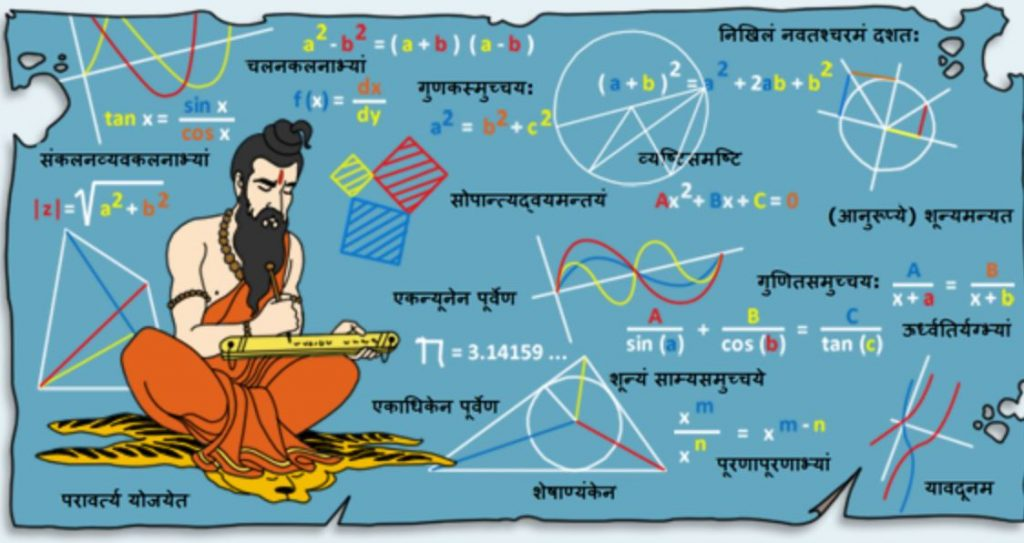
Ancient Indian Mathematics

India has a rich history of mathematics, with contributions spanning thousands of years. Ancient Indian mathematicians made significant discoveries in the fields of arithmetic, algebra, geometry, and trigonometry, laying the foundations for modern mathematics.


Source –
https://www.indica.today/

One of the earliest known texts on mathematics in India is the Sulba Sutras, which date back to the 8th century BCE. These texts describe geometric principles used in the construction of altars for Vedic rituals, and contain formulas for calculating the area and circumference of circles and the square roots of numbers.

In the 5th century BCE, the mathematician Pingala wrote the Chhandahshastra, which is considered to be the first known work on binary numbers. Pingala’s system of binary numbers is similar to the modern binary system used in computing, and was used to represent Vedic hymns as sequences of long and short syllables.

In the 3rd century BCE, the mathematician Aryabhata wrote the Aryabhatiya, a treatise on mathematics and astronomy that made significant contributions to the fields of algebra, trigonometry, and spherical geometry. Aryabhata developed the concept of zero as a number, and also introduced the sine, cosine, and inverse sine functions.

Another influential mathematician from ancient India was Brahmagupta, who lived in the 7th century CE. Brahmagupta wrote the Brahmasphutasiddhanta, a treatise on astronomy and mathematics that included formulas for solving quadratic equations, as well as the first known use of negative numbers in mathematical calculations.

In the 12th century, the mathematician Bhaskara wrote the Siddhanta Shiromani, which contained essential contributions to the fields of algebra and trigonometry. Bhaskara developed a method for solving indeterminate equations, and also gave a formula for calculating the sine of an angle using the cosine.

The Kerala School of Mathematics, which flourished in southern India between the 14th and 16th centuries, made significant contributions to the field of calculus. The mathematician Madhava is credited with the discovery of the power series, which was used to calculate the value of pi to an accuracy of 11 decimal places.

In addition to these specific contributions, ancient Indian mathematicians also developed several mathematical concepts and notation systems that are still used today. For example, the decimal system, which uses the digits 0-9 and place value to represent numbers, was developed in India and later spread to other parts of the world.

Evolution of Clocks

The evolution of clocks is a fascinating story that spans thousands of years, from the earliest timekeeping devices to the most accurate atomic clocks of today. In this article, we will explore the major milestones in the history of clocks and how they have shaped our understanding of time.


Creator –
Jorge Villa 

The earliest known timekeeping devices were sundials, which were used by ancient civilizations such as the Egyptians, Greeks, and Romans. Sundials work by casting a shadow on a marked surface, indicating the time of day based on the position of the sun in the sky. Although sundials were effective in providing a rough estimate of time, they were not very accurate and could only be used during daylight hours.

The invention of the mechanical clock in the 14th century marked a major leap forward in timekeeping technology. These early clocks used gears and springs to power the movement of the hands and were able to keep time more accurately than any previous device. The first mechanical clocks were large and expensive and were primarily used in churches and other public buildings.

The development of the pendulum clock in the 17th century was another major breakthrough in timekeeping technology. The pendulum clock uses a swinging weight to regulate the movement of the gears, making it much more accurate than earlier mechanical clocks. The invention of the pendulum clock made it possible for individuals to own their own timekeeping devices, and clocks soon became a common household item.

In the 19th century, the invention of the electric clock paved the way for even greater accuracy and precision. Electric clocks use a quartz crystal to regulate the movement of the hands, making them much more reliable than mechanical clocks. Electric clocks also allowed for the development of synchronized timekeeping systems, which made it possible for people all over the world to keep the same time.

The invention of the atomic clock in the mid-20th century was another major milestone in the history of timekeeping. Atomic clocks use the vibrations of atoms to keep time, making them the most accurate clocks ever created. Atomic clocks are now used in a wide range of applications, from satellite navigation systems to scientific research.

Today, clocks come in all shapes and sizes, from traditional mechanical timepieces to digital clocks and smartwatches. Although the basic technology behind clocks has remained largely unchanged over the centuries, advances in materials, electronics, and software have allowed for ever-greater accuracy and precision.

In conclusion, the evolution of clocks has been a long and fascinating journey, marked by major milestones in technology and innovation. From the simple sundials of ancient times to the sophisticated atomic clocks of today, clocks have played a vital role in shaping our understanding of time and the world around us.

First and Only Ruler of Delhi Sultanate – Razia Sultan

Razia Sultan was the first and only female ruler of the Delhi Sultanate in India. She ruled from 1236 to 1240 CE and was known for her bravery, intelligence, and administrative skills.

Razia was the daughter of Sultan Iltutmish, who had established the Delhi Sultanate after the decline of the Ghaznavid Empire. Iltutmish had several sons, but he chose Razia as his successor, as he believed her to be the most capable of ruling the empire.

Source – https://yourexamguide.com/

Razia’s reign was marked by several accomplishments. She introduced several reforms to the administration, such as improving the tax collection system and establishing a network of spies to gather information about the state of affairs in the empire. She also established a postal system, which improved communication and helped her maintain control over the vast empire. Razia was also a skilled warrior and led several military campaigns against neighboring kingdoms. She defeated the rebellious governor of Bhatinda, Malik Altunia, who had refused to recognize her as the Sultan. She also successfully repelled a Mongol invasion led by Genghis Khan’s grandson, Batu Khan.

Despite her many achievements, Razia faced significant opposition from the nobility, who were unhappy with being ruled by a woman. Her half-brother Ruknuddin Firuz, who had been appointed as her successor by the nobility, led a rebellion against her. Razia was defeated and imprisoned, and Ruknuddin became the Sultan. However, Razia managed to escape from prison and launched a counter-attack against her half-brother. She defeated Ruknuddin and regained the throne, but her reign was short-lived. She was betrayed by one of her advisors, Altunia, whom she had married for political reasons. Altunia, who had harbored resentment towards Razia for defeating him earlier, turned against her and had her killed in 1240 CE.

Razia Sultan’s legacy has endured through the centuries. She was a trailblazer for women in positions of power and challenged the traditional norms of her time. Her reign demonstrated that a woman could rule a vast empire effectively and competently. She is still celebrated as a symbol of female empowerment and has inspired several books, films, and television series in India.

Intriguing facts about Roman Architecture

Roman architecture is one of the most significant and influential architectural styles in history. It developed during the Roman Republic and continued to evolve during the Roman Empire. Roman architecture was characterized by its massive scale, technological innovations, and distinctive design elements that were used in buildings such as temples, public buildings, and aqueducts. The Romans were excellent builders and engineers, and they employed advanced construction techniques to create structures that were both functional and aesthetically pleasing. They used a variety of materials including stone, brick, and concrete, and they often incorporated decorative elements such as columns, arches, and domes into their buildings.

Colosseum
Image – © Mapics/stock.adobe.com

One of the most significant innovations in Roman architecture was the development of concrete. The Romans used a form of concrete that was made from a mixture of volcanic ash, lime, and water. This concrete was much stronger than other building materials of the time and allowed the Romans to construct massive structures such as the Colosseum and the Pantheon.

Another important element of Roman architecture was the use of arches and vaults. The arch allowed the Romans to span large distances without the need for columns or other supports. The vault was used to create ceilings and roofs that were both sturdy and visually impressive. The most famous example of a vaulted ceiling is the dome of the Pantheon, which is still considered to be one of the most remarkable feats of engineering in the world.

Roman temples were also an important part of their architectural heritage. The temples were usually rectangular in shape and featured a colonnade of columns on the front facade. The columns were often decorated with intricate carvings and designs, and they supported a triangular pediment on the top of the temple. The interior of the temple was usually very simple and contained an altar and a statue of the deity that the temple was dedicated to.

Public buildings were another important part of Roman architecture. These buildings included amphitheaters, forums, and basilicas. The amphitheater was used for gladiatorial contests and other public events, while the forum was a central gathering place for political and social activities. The basilica was a large public hall that was used for business and legal proceedings. The Romans were also famous for their engineering feats, particularly their aqueducts. These structures were used to transport water from distant sources to cities and towns. The aqueducts were made of a series of arches that supported a channel or pipe that carried the water. The aqueducts were often built on a grand scale, and some of them were over 50 miles long.

Roman architecture was an important part of their cultural heritage and continues to influence architecture to this day. The Romans were skilled builders and engineers who used advanced construction techniques to create massive structures that were both functional and beautiful. Their use of concrete, arches, and vaults allowed them to build on a grand scale, and their temples, public buildings, and aqueducts were among the most impressive structures of the ancient world.

Discovery of Uranus

The discovery of Uranus is an important milestone in the history of astronomy. Uranus is the seventh planet from the sun and is the third-largest planet in our solar system. It was discovered by Sir William Herschel on March 13, 1781. Herschel was a German-born British astronomer who had a keen interest in studying the stars and planets. He had built his own telescopes and was known for his expertise in optics.

Source – NASA

In 1781, while observing the night sky from his garden in Bath, England, Herschel noticed an object that he initially thought was a comet. However, as he continued to observe it over the course of several nights, he realized that it was something much larger and farther away than a comet. Herschel’s discovery of Uranus was significant for several reasons. First, it was the first planet to be discovered since ancient times. The other planets, including Mercury, Venus, Mars, Jupiter, and Saturn, had been known since ancient times, and Uranus was the first new planet to be added to the list. Second, it provided evidence that there were other planets in our solar system beyond the orbit of Saturn. Prior to Herschel’s discovery, it was believed that Saturn marked the edge of our solar system.

The discovery of Uranus was also significant because it challenged existing beliefs about the nature of the universe. At the time, it was believed that the planets orbited the sun in a predictable pattern based on their distances from the sun. However, Uranus did not follow this pattern, and its orbit was difficult to explain using the existing models of the solar system. This led astronomers to question their understanding of the laws of physics and the nature of the universe.

After Herschel’s discovery, astronomers around the world began studying Uranus in more detail. They found that it was a gas giant planet with a distinctive blue-green color. They also discovered that it had a system of moons and a ring system, similar to those of Saturn. Over the years, astronomers have continued to study Uranus using telescopes and space probes, providing new insights into the planet’s composition, atmosphere, and history.

To conclude, the discovery of Uranus by Sir William Herschel in 1781 was a significant event in the history of astronomy. It was the first new planet to be discovered since ancient times and challenged existing beliefs about the nature of the universe. Herschel’s discovery opened up new avenues for scientific inquiry and inspired generations of astronomers to study the planets and the stars. Today, Uranus remains an important object of study for astronomers, providing insights into the workings of our solar system and the universe beyond.

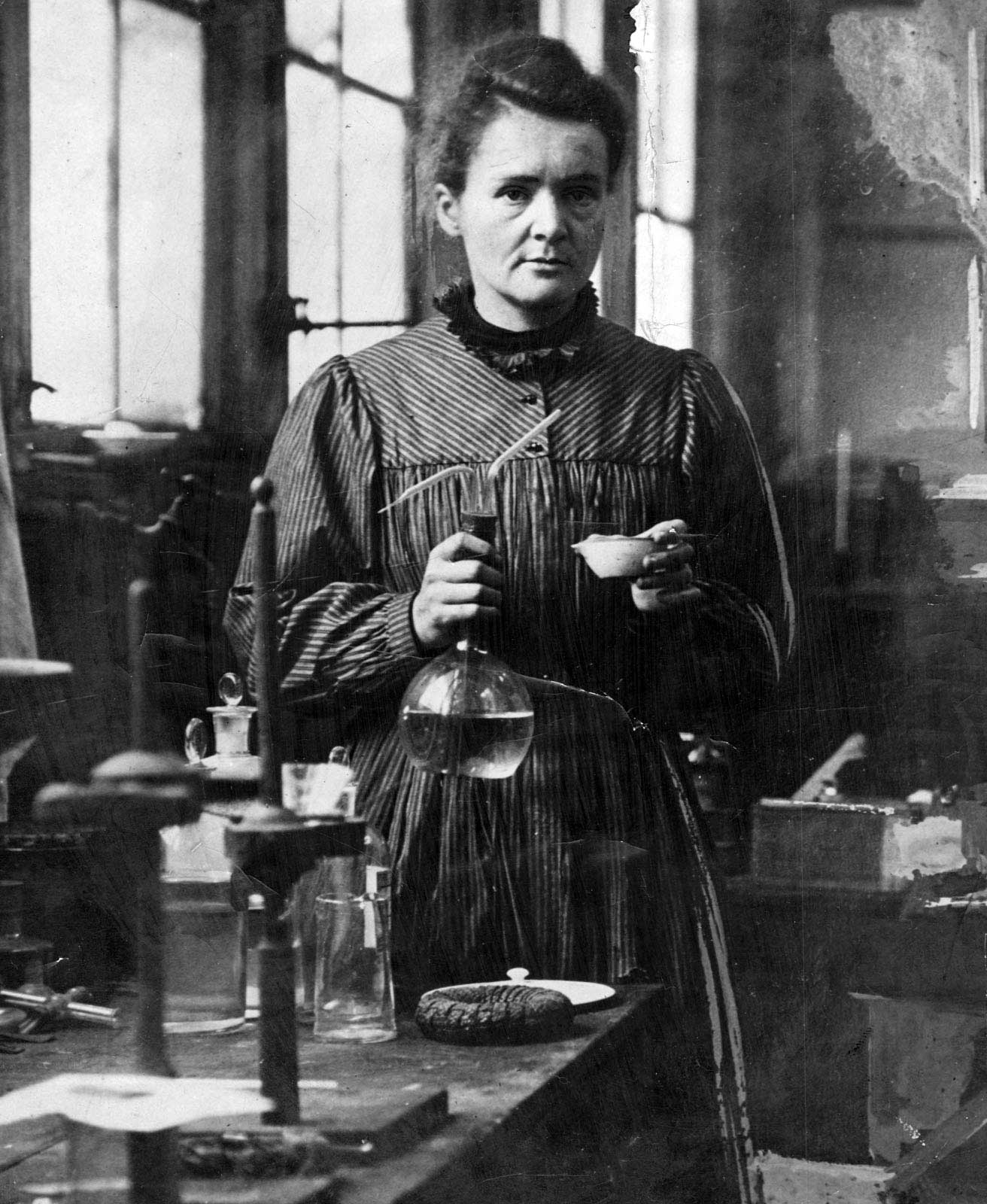
Marie Curie – The First Woman who won Nobel Prize

Marie Curie was a Polish-born physicist and chemist who is best known for her pioneering work in the field of radioactivity. She was the first woman to be awarded a Nobel Prize, and the first person to win two Nobel Prizes in different scientific fields. Curie was born in Warsaw, Poland in 1867, and grew up in a family of educators. She was a highly intelligent and curious child, and had a passion for learning from a young age.

Source – https://www.atomicarchive.com/

In 1891, Curie moved to Paris to pursue further studies in physics and chemistry. It was there that she met her future husband, Pierre Curie, who was also a physicist. Together, the couple began to study the properties of radioactive materials, a field that was still in its infancy at the time. They discovered two new elements, polonium and radium, and Marie coined the term “radioactivity” to describe the phenomena they were observing.

Their work on radioactivity earned them the Nobel Prize in Physics in 1903, making Marie the first woman to receive this prestigious award. However, their research also had significant consequences for their health, as they were exposed to high levels of radiation in their laboratory work. Pierre died in 1906 from a tragic accident involving a horse-drawn carriage, leaving Marie to continue their research alone.

In 1911, Marie was awarded her second Nobel Prize, this time in Chemistry, for her discovery and isolation of pure radium. She was the first person ever to win two Nobel Prizes, and remains the only person to have won them in two different scientific fields. Despite her success, Marie faced significant discrimination as a woman in the male-dominated scientific community of her time. She was not allowed to join the French Academy of Sciences until 1962, more than 30 years after her death.

Marie Curie’s contributions to science and medicine have had a lasting impact on our understanding of the world. Her work on radioactivity helped pave the way for modern cancer treatments, and her discoveries of new elements and their properties expanded our knowledge of the basic building blocks of matter. Her legacy also serves as an inspiration to generations of women and girls who aspire to pursue careers in science and technology.

In addition to her scientific achievements, Marie was also a dedicated humanitarian. During World War I, she used her knowledge of radiology to develop mobile X-ray units that could be used to diagnose and treat wounded soldiers on the front lines. She also served as a role model and mentor to other women in science, including her daughter, Irène Joliot-Curie, who also won a Nobel Prize in Chemistry.

Marie Curie died in 1934 at the age of 66, from complications related to her exposure to radiation. She was buried in the Panthéon in Paris, alongside other French national heroes, becoming the first woman to be interred there on her own merits. Today, she is remembered as one of the most influential scientists of the 20th century, whose groundbreaking discoveries continue to inspire and inform our understanding of the natural world.

Red thread Connection in Chinese Culture

The Red Thread is a popular metaphor that represents a common thread that connects people, events, and experiences throughout one’s life. It is a concept that is rooted in ancient Chinese folklore and is believed to be the guiding force that brings people together and helps them fulfill their destiny. In Chinese culture, the Red Thread of Fate is said to connect two people who are destined to meet, regardless of time, place, or circumstance. This thread is said to be tied around the ankles of the two people and is believed to be unbreakable, representing the unbreakable bond between them.

The Red Thread is often associated with the idea of synchronicity, which is the belief that events are connected in meaningful ways, even if they appear to be random or coincidental. This belief is rooted in the idea that the universe is a complex web of interconnected energies, and that everything that happens is a part of a larger, more significant pattern. It can be seen as a way of understanding the interconnectedness of our lives and the world around us. It encourages us to view our experiences as part of a larger story, and to recognize that every person we meet, every decision we make, and every event we experience is part of our unique journey.

In modern times, the concept of the Red Thread has expanded beyond its original meaning to include a broader sense of interconnectedness between all people and events. It is now used as a metaphor for the idea that everything in our lives is connected, and every experience we have is a stepping stone towards fulfilling our ultimate purpose.

In business and leadership, the Red Thread can be a powerful tool for building connections and creating a shared sense of purpose among team members. By identifying the common thread that connects each person’s experiences and goals, leaders can help their team members see how their individual contributions are part of a larger, collective effort.

In conclusion, the Red Thread represents the idea that everything in our lives is interconnected, and every experience we have is part of a larger story. Whether it is viewed as a mystical force that connects people, or a metaphorical thread that ties together our experiences, the Red Thread is a powerful concept that can help us understand the deeper meaning and purpose of our lives.

Grimes changes name of her and Elon Musk's daughter from EXA to a 'curiosity' symbol

Grimes confirmed to shortening her daughter’s unusual name.

Grimes, real name Claire Boucher, has recently disclosed that she has changed the name of her daughter with tech billionaire Elon Musk. Notably, the 35-year-old Canadian musician and Twitter CEO share two children: son X A-Xii (nicknamed X) and daughter Exa Dark Siderael Musk. (nicknamed Y). Her daughter was born secretly via surrogate and inadvertently revealed in a Vanity Fair interview in March 2022, when the journalist overheard a baby crying in Grimes’ home.

On March 24, Grimes tweeted a picture of herself and her daughter, twinning in red, with the caption ‘Y C’ and a dragon emoji in the center. She also stated that while she and Musk do not normally share images of their daughter in order to protect her privacy, she chose to post this image because the child appeared “fairly unrecognizable” in it. 

See the tweet here:

Previously, the couple had run into trouble over their son’s unusual name. Their first son, born in 2020, was initially named X Æ A-12 but was later tweaked to X Æ A-Xii as California law forbids the use of numbers in a legal name.

In a follow-up tweet, she confirmed that her daughter’s name had been changed. She said that Exa used to go by Y for short, but she has since decided that it is her new name. She also explained that the child’s name is meant to represent ”curiosity, the eternal question, .. and such.”

“She’s Y now, or “Why?” or just “?” (But the government won’t recognize that). curiosity, the eternal question, .. and such,” Grimes wrote on Twitter on Thursday. 

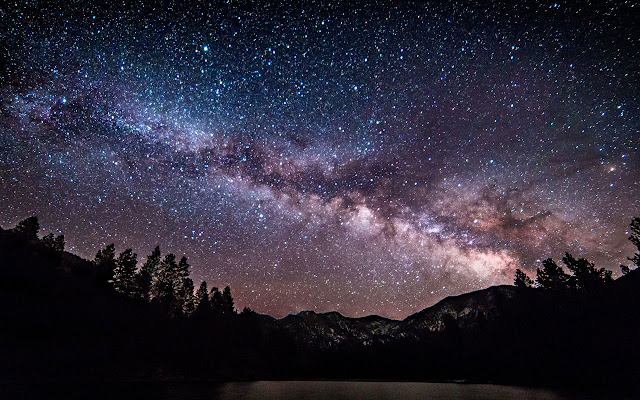
Impact of light pollution on the night sky

Light pollution is a term used to describe the excessive or unnecessary use of artificial lighting in outdoor spaces, leading to a considerable increase in the amount of light that reaches the sky. This phenomenon has had a significant impact on the night sky, affecting not only astronomical observations but also the environment and human health.


copyright – 2016 Joseph Cowdell

One of the most obvious effects of light pollution is the reduction of visibility of celestial objects such as stars, galaxies, and nebulae. In urban areas, where the artificial light is at its peak, the night sky is almost completely drowned out, and it is difficult to see anything other than the brightest stars. The Milky Way, which was once visible from any point on the Earth’s surface, is now invisible to more than two-thirds of the world’s population. This not only affects amateur and professional astronomers but also the general public who may have an interest in the night sky. The loss of this connection with the cosmos can have an impact on people’s sense of wonder and awe, and ultimately their wellbeing.

Light pollution also affects nocturnal wildlife, which rely on darkness for their activities. Light pollution can confuse and disorientate animals that use the night sky for navigation and can also disrupt breeding cycles, migration patterns, and other natural behaviors. This can ultimately lead to a decline in populations of various species, affecting the balance of the ecosystem. For example, the artificial lighting in coastal areas can disorientate sea turtle hatchlings, who rely on the moon and stars to guide them towards the sea.

The impact of light pollution on human health is also a growing concern. Exposure to artificial light at night can disrupt our circadian rhythms, which can lead to sleep disorders, depression, and other health problems. Studies have shown that exposure to blue light, which is emitted by electronic devices and LED lights, can suppress the production of melatonin, a hormone that regulates our sleep-wake cycle. This can affect our ability to fall asleep, stay asleep, and achieve restful sleep. Additionally, light pollution has been linked to increased rates of breast cancer, obesity, and other health problems.

Furthermore, light pollution has economic consequences, including increased energy consumption and higher energy bills. The unnecessary use of artificial lighting wastes electricity and contributes to greenhouse gas emissions, further exacerbating climate change. The cost of installing and maintaining outdoor lighting can also be significant, and many cities and municipalities are beginning to recognize the importance of reducing light pollution to save energy and reduce costs.

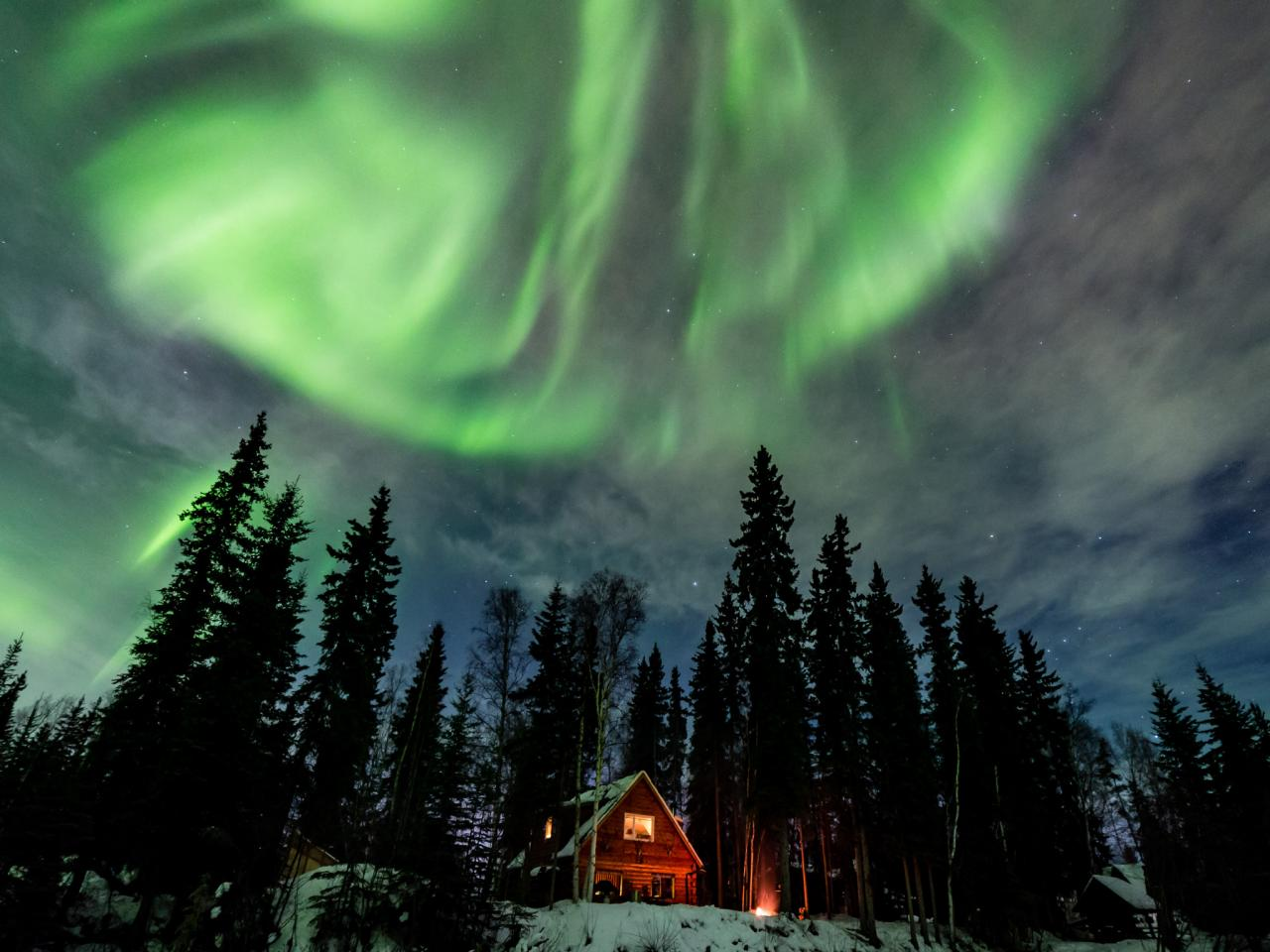
Best Places to witness Northern Lights

The Northern Lights, also known as Aurora Borealis, is a natural phenomenon that occurs in the Arctic and Antarctic regions. It is a breathtaking sight to see, and many people travel great distances just to witness this stunning display of lights. Here are some of the best places to view the Northern Lights listed below.

Source – https://www.travelchannel.com/

  1. Tromsø, Norway:

    Tromsø, located in Northern Norway, is considered one of the best places to see the Northern Lights. It has a mild climate and clear skies, making it an ideal destination for Aurora viewing. Tromsø also has a vibrant nightlife, making it an excellent location for those looking for both adventure and entertainment.

  2. Reykjavik, Iceland:

    Reykjavik is Iceland’s capital and is also an excellent location to witness the Northern Lights. Iceland’s geography is perfect for viewing the Aurora Borealis, and Reykjavik’s location in the country’s southwestern region makes it an ideal base for exploring the surrounding areas.

  3. Abisko National Park, Sweden:

    Abisko National Park is located in Northern Sweden and is one of the best places to see the Northern Lights. The area has a microclimate that helps keep the skies clear and the Aurora visible. There are also a variety of activities available, including dog sledding, snowmobiling, and ice fishing.

  4. Fairbanks, Alaska:

    Fairbanks, Alaska, is an excellent place to view the Northern Lights. The city is located under the Aurora Oval, which is a zone where the Northern Lights are visible more often than in other regions. Additionally, Fairbanks is home to the Geophysical Institute, which provides Aurora forecasts.

  5. Kakslauttanen Arctic Resort, Finland:

    Kakslauttanen Arctic Resort is located in Finnish Lapland and is one of the most unique places to see the Northern Lights. The resort has glass igloos that allow guests to view the Aurora from the comfort of their own bed. The resort also offers a variety of activities, including reindeer sleigh rides, snowmobiling, and ice fishing.

  6. Yukon, Canada:

    Yukon, located in Northwestern Canada, is another excellent location to see the Northern Lights. The area has a low light pollution, making it easier to see the Aurora. Additionally, there are a variety of activities available, including snowshoeing, dog sledding, and snowmobiling.

  7. Kangerlussuaq, Greenland:

    Kangerlussuaq is located in Western Greenland and is an excellent location for Aurora viewing. The area has little light pollution, and the Aurora can often be seen from the town. Additionally, Kangerlussuaq is home to the Northern Light Dog Sledding excursion, where visitors can see the Aurora while on a dog sled ride.

  8. Svalbard, Norway:

    Svalbard is located in the Arctic Ocean and is an excellent location for Aurora viewing. The area has a low light pollution, and the Aurora can often be seen from the town of Longyearbyen. Additionally, there are a variety of activities available, including dog sledding, snowmobiling, and ice caving.

In conclusion, there are numerous places to view the Northern Lights, each with its unique charm and attractions. Whether you’re looking for a luxurious resort or a rugged wilderness experience, there’s an Aurora destination for everyone. Remember to check Aurora forecasts and plan accordingly for the best chance of witnessing this natural wonder.

Use of METAVERSE in various technologies

The concept of a “metaverse” has been around for some time, but it has recently gained significant attention due to advancements in technology. The metaverse refers to a virtual world where users can interact with each other and with digital objects in a three-dimensional environment.


Source –
https://www.weforum.org/

One of the primary technologies driving the development of the metaverse is virtual reality (VR). VR technology has come a long way in recent years, with companies like Oculus, HTC, and Sony offering high-quality VR headsets. These devices allow users to enter a fully immersive virtual world, where they can interact with digital objects and other users.

Another technology that is important to the development of the metaverse is blockchain. Blockchain technology allows for secure and decentralized transactions, which is important for the creation of virtual economies within the metaverse. Blockchain-based currencies, such as Bitcoin and Ethereum, are already being used in some virtual worlds, and this trend is expected to continue as the metaverse becomes more popular.

Artificial intelligence (AI) is another technology that will be essential to the development of the metaverse. AI can be used to create intelligent agents that can interact with users in a natural way, enhancing the user experience. AI can also be used to create realistic virtual environments and characters.

The development of the metaverse will also require advancements in networking and cloud computing. As the metaverse becomes more popular, it will require massive amounts of computing power and bandwidth to support the large number of users and the complex virtual environments.

One potential use of the metaverse is in education. Virtual classrooms could be created where students can interact with each other and with digital objects in a way that is not possible in traditional classrooms. This could lead to more engaging and effective learning experiences.

The metaverse could also have significant implications for entertainment. Virtual concerts and sporting events could be held in the metaverse, allowing users from all over the world to attend. Virtual reality films and television shows could also be created, offering a new form of immersive storytelling.

Another potential use of the metaverse is in healthcare. Virtual reality therapy is already being used to treat a variety of conditions, and the metaverse could expand the use of this technology. Virtual support groups could also be created, allowing people to connect with others who are going through similar experiences.