REWARD Program with World Bank Team

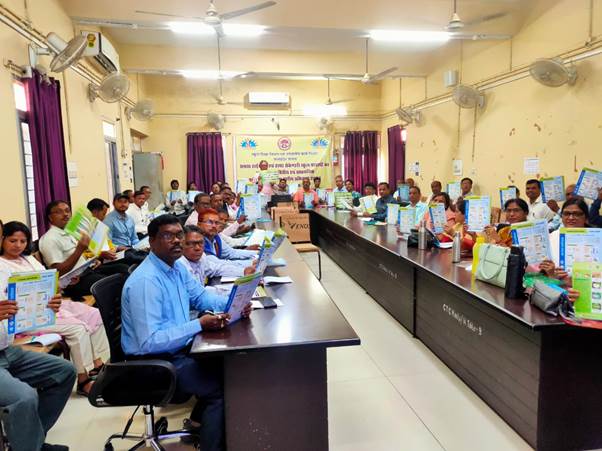
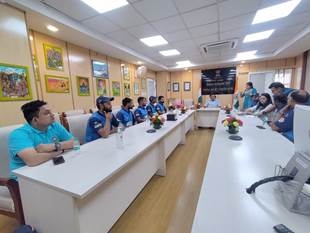
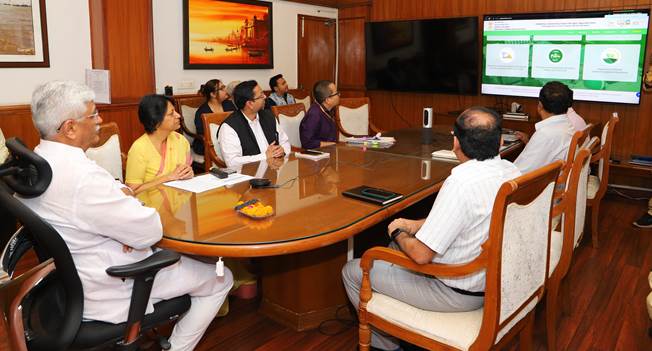
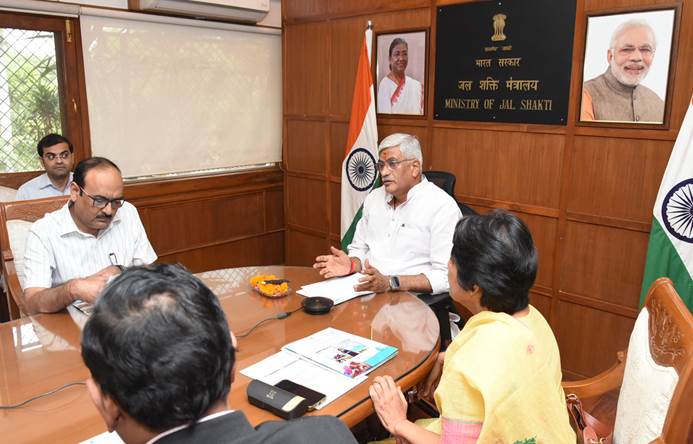
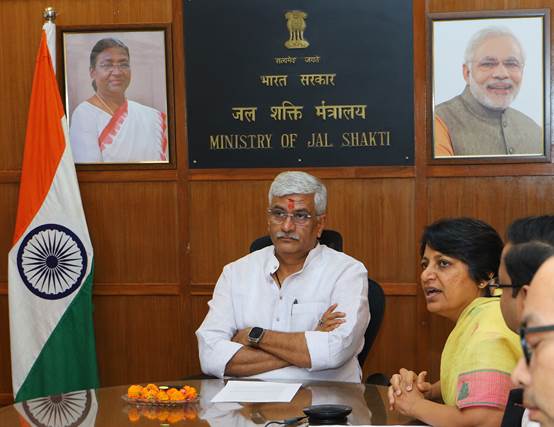
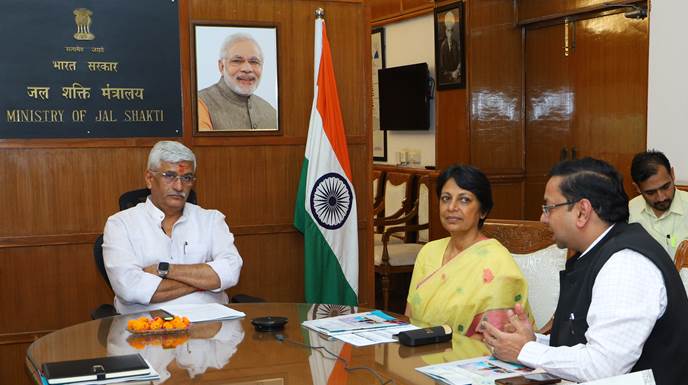
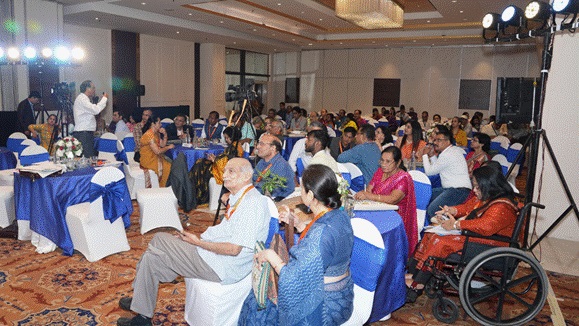
 The Secretary, Department of Land Resources (DoLR), Government of India (GoI) Shri Ajay Tirkey reviewed the Implementation Support Mission of World Bank Assisted Rejuvenating Watersheds for Agricultural Resilience through Innovative Development (REWARD) program.

REWARD is a World Bank assisted Watershed development program which is being implemented from 2021 to 2026. The Development Objectives of REWARD program is to “Strengthen capacities of National and State institutions to adopt improved watershed management for increasing farmers resilience and support value chains in selected watersheds of participating States”. The program is being implemented to introduce modern watershed practices in the Department of Land Resources in the Ministry of Rural Development and in the States of Karnataka and Odisha. The total budget outlay of REWARD program is USD 167.71 million over a program period of 4.5 years. This includes USD 115 million from World Bank [Karnataka (USD 60 million), Odisha (USD 49 million) and DoLR (USD 6 million)], USD 46.71 million from two participating States [Karnataka (USD 25.71) and Odisha (USD 21.0 million)] and USD 6 million from DoLR. The funding pattern is 70:30, between World Bank and States whereas it is 50:50 between World Bank and DoLR.

At the central level, the scope of the REWARD program covers management, monitoringcommunication and knowledge sharing functions by DoLR. At the State level, the REWARD program will be contiguous in scope to the WDC-PMKSY 2.0, and support implementation of key science-based activities and demonstrations which eventually aims at synergising broader perspective of WDC-PMKSY 2.0 in other States in India.

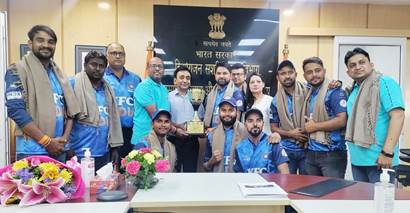
As a part of third Implementation Support Mission (ISM), the team of World Bank headed by Smt. Preeti Kumar visited DoLR & REWARD States for 3rd ISM to review the progress and to discuss about the plan of action for the next 6 months. After completing the mission, yesterday the team visited Department of Land Resources, Government of India to debrief the outcomes of ISM to the Secretary, DoLR. During the debriefing, the team felt that the progress of REWARD is on track and complemented the efforts of DoLR for the present progress and requested Secretary, DoLR for his continuous support to achieve the progress as per the Disbursement Linked Indicators of the program.

The other points discussed during the debriefing meeting includes strengthening of Centre for Excellence on watershed component which was established in Bengaluru under REWARD program, organizing National level workshop on science based watershed management, development of protocols for expansion of Land Resource Inventory (LRI) across the country on a pilot basis, providing LRI based digital advisory services to farmers and Exposure visits of REWARD officials etc.

Shri Nitin Khade, Joint Secretary (WM), Dr. C.P. Reddy, Senior Additional Commissioner, ISM members from World Bank, Experts of NPMU of REWARD program and other officials of DoLR attended the meeting.                                         

*****

8th Governing Council Meeting of NITI Aayog

 Prime Minister Shri Narendra Modi chaired the 8th Governing Council Meeting of NITI Aayog earlier today. The Meeting was held at the New Convention Centre, Pragati Maidan, New Delhi.  It was attended by Chief Ministers/Lt.Governors representing 19 States and 6 UTs.

Prime Minister stressed that the Centre, States and UTs should work as Team India and fulfil the dreams and aspirations of people for a Viksit Bharat @ 2047. He said that NITI Aayog can play a critical role in helping States to develop their strategies for the next 25 years and align the same with the National Development Agenda. He urged the States and UTs to work with NITI Aayog so that the country can take a quantum leap towards achieving its vision for the Amrit Kaal.

Prime Minister mentioned that NITI Aayog is taking multiple initiatives for strengthening cooperative and competitive federalism like the Aspirational Districts Programme (ADP) and Aspirational Blocks Programme (ABP). Both these programmes showcase the power of working together as Centre, States and Districts, and the impact of data-driven governance in improving the lives of common citizens at the grassroots level.

Prime Minister stressed on the need for States and Centre to promote Shree Anna in the International Year of Millets. He also deliberated on the need for working towards water conservation through the Amrit Sarovar programme. 

Prime Minister spoke about the importance of maintaining fiscal discipline at the State levels. He urged the States to proactively use the  Gati Shakti Portal not only for infrastructure and logistics but also for local area development and creation of social infrastructure.

Speaking about G20 meetings being held in the country, he said that while G20 has brought glory to India on the world stage, it has provided States the opportunity for global exposure. 

Prime Minister also spoke about the importance of skilling people with a view to meet global requirements, supporting MSMEs, developing the tourism potential of the country,  reducing compliances at the State level including decriminalisation of minor offences, creation of Ekta Malls. Talking about Nari Shakti, he highlighted the significance of women-led development. He also spoke about ending the menace of TB by 2025.

Chief Minister/Lt. Governors gave various policy level suggestions. They mentioned specific issues pertaining to the States which require Centre-State cooperation. Some of the key suggestions and best practices highlighted by them included in areas like opting for green strategies, need for zone wise planning, tourism, urban planning, agriculture, quality of workmanship, logistics, among others.

Prime Minister expressed his gratitude to the CMs and LGs for participating in the meeting and sharing their views and experiences. He said NITI Aayog will study the states’ concerns, challenges, and best practices and subsequently plan the way forward.

****

Roundtable conference with leading CEOs of Pharmaceutical industry

 Union Minister of Chemicals and Fertilizers, and Health and Family Welfare Dr Mansukh Mandaviya chaired a roundtable meeting with the leading CEOs of pharmaceutical industry in the country on the second day of 8th International Conference on Pharma and Medical Device Sector, here today. Ms. S Aparna, Secretary, Department of Pharmaceuticals was also present.

Lauding the growth momentum of the industry, the Minister said “the industry is progressing at a rapid rate, and to maintain our stature as the ‘Pharmacy of the World’, we need to focus on quality and affordable manufacturing with an increased focus on research and innovation.” Adding further Dr. Mandaviya urged the stakeholders to capitalize on the current opportunities, stating “substantial investment in terms of Production Linked Incentive schemes as well as upcoming drug parks are bearing fruitful results. To catalyze growth, we must maintain a degree of competitiveness to consolidate our presence in the world.”

Reiterating the government’s commitment and resolve, the Union Health Minister stated “the government is industry friendly and welcomes opportunities for collaboration. The government and industry, both integral to the nation’s progress, must work cohesively to achieve holistic growth.”

Affirming government support, Dr. Mandaviya invited the stakeholders to put forth their suggestions addressing the aspects of pricing, regulatory, policy and strategy, with the respective action points in a detailed presentation and due consideration will be given to facilitate further policy support and growth.

Underscoring the potential future growth of the industry, Ms. S Aparna, Secretary, Department of Pharmaceuticals urged the attending representatives to collate and collectively represent their perspectives adhering to the aforementioned four categories to facilitate policy makers, government in fostering a stronger ecosystem for all.

The roundtable brought together participants from over 60 companies represented by senior leadership, with several key players having a presence in the national as well as international markets. Shri N Yuvaraj, Joint Secretary, Department of Pharmaceuticals, Shri Awadhesh Kumar Choudhary, Senior Economic Advisor, Smt. Vinod Kotwal Member Secretary, National Pharmaceutical Pricing Authority, DCGI Dr. Rajeev Raghuvanshi, Chairman NPPA Shri Kamlesh Pant, various industry stakeholders and representatives of academia and associations were also present in the conference.

About International Conference on Pharma and Medical Device Sector:

The annual flagship conference will be conducted over two days – 26th May 2023 dedicated for India Medical Device sector on the theme “Sustainable MedTech 5.0: Scaling and Innovating Indian MedTech,” and 27th May 2023 dedicated for the Pharmaceutical sector on the theme “Indian pharma industry: Delivering Value through Innovation.

****

‘Yoga Mahotsav’ in Hyderabad

 The ‘Yoga Mahotsav’ witnessed a massive participation of 50,000 enthusiasts at the NCC Parade Ground here today. The event – organised by the Morarji Desai National Institute of Yoga (MDNIY), under the Ministry of Ayush was held to commemorate 25 days to the International Day of Yoga.

Hon’ble Governor of Telangana, Dr. Tamilisai Soundararajan graced the occasion as the Chief Guest as the Union Minister of Ayush Shri Sarbananda Sonowal; the Union Minister of Culture, Tourism & DoNER Shri  G Kishan Reddy; the Union Minster of State for Ayush Dr Munjpara Mahendrabhai actively participated in making this grand event a great success. Celebrities from the city like Padma Bhushan awardee & noted Badminton player & coach Pullela Gopichand; cine actors Srileela, Vishwak Sen, Krishan Chaitanya among other dignitaries were also witness to the electrifying atmosphere here today. Dr Ishwar V Basavaraddi, Director, MDNIY conducted the Common Yoga Protocol (CYP) as thousands performed Yoga in a spiritually uplifting atmosphere.

Speaking on the occasion, the Dr. Tamilisai Soundararajan said that this is a wonderful opportunity for all of us to celebrate Yoga as a festival of happiness, festival of health. She urge everyone to embrace yoga.  She further said that Yoga will make you happy, yoga will make you healthy, yoga will make you beautiful.”

Addressing the gathering, Shri   Sarbananda Sonowal said, “My heart is filled with joy to see massive participation in the Yoga Mahotsav by the people celebrating the cause of good health through Yoga. As a true sign of India’s glorious heritage, Yoga received an unprecedented boost when the world started celebrating Yoga every year on 21 June. Yoga has continued to reach more and more people around the world and has benefited all for their physical, mental and spiritual well-being. Yoga has surpassed all divisions of caste, creed, gender, religion and nationalities. In the whole world, people of all ages have embraced it for their benefit. The theme of IDY for this year is quite apt — Yoga for Vasudhaiva Kutumbkam. It perfectly echoes the mood, spirit and acceptance of Yoga at national and global levels. From villagers to city dwellers, from students to home makers to corporate employees – all are embracing Yoga to remain healthy both physically as well as mentally. The untiring efforts of our charismatic Prime Minister Shri Narendra Modi ji have resulted in ever increasing impact of Yoga and its acceptance by the world community. Today, the whole world is accepting Yoga as an unfailing vehicle of holistic health and well-being.”

Highlighting the novelties in the celebration of this year’s IDY, Shri Sonowal added that these novelties would be on international, national and local levels.

He informed, “On the International level, an Ocean Ring of Yoga will be created on June 21st when with the help of the Ministry of Defense, Ministry of External Affairs and the Ministry of Ports, Shipping and Waterways Yoga demonstrations at many ports, on many ships will take place and many friendly countries will also join hands in this exercise. Similarly, Yoga demonstrations will also take place from Arctic to Antarctica— countries falling on or near the Prime Meridian line will join the Yoga demonstration. The flight Decks of INS Vikrant and INS Vikramaditya will showcase Yoga demonstration in synergy. Under Yog Bharatmala. Indian Army, Indian Air Force, Indian Coast Guard and Border Road Organisation will join hands for Yoga demonstration at borders, coasts and Islands to form a Yog Bharatmala. Yoga will also happen on North and South Pole regions. Himadri — the Indian Research Base in Svalbard, Arctic as well as Bharati — the third Indian Research Base in Antarctica. At the local level, Panchayats, Anganwadis, Asha/ANM will be involved in Yoga demonstrations. Health and Wellness centres of both Health and Ayush Ministries, which are more than 1.5 lakh in the country and all the Amrit Sarovars (around 50 thousand) will have Yoga demonstrations. This year we will witness ‘Har Aangan Yog’ is going to happen in true spirit.”

Speaking on the occasion Shri G Kishan Reddy said, “Yoga is a wonderful gift of India’s rich heritage to empower humanity to remain hale & hearty. As all of us have congregated here, the massive turnout by all of you has affirmed people’s outpour of love for Yoga. This wonder of India’s culture was rejuvenated under the dynamic leadership of Prime Minister Shri Narendra Modi ji as it has now become a global movement towards living healthy. In today’s world, the role of Yoga in keeping one calm and focussed is immense. We must all embrace Yoga and keep doing it regularly thereby celebrating it always. Let us make this event a grand success as we move on to celebrate International Day of Yoga.”

In his welcome address, Dr Munjpara Mahendra said, “International Day of Yoga is now well known throughout the world. Thanks to the untiring and visionary approach of our Hon’ble Prime Minister Shri Narendra Modi ji, the ancient science of Yoga is now fast becoming part and parcel of wellness journey of almost all nations in the world. This 25 Day Countdown is an indication that IDY 2023 is just round the corner and I congratulate all of you again to be part of such an important event. I appeal to all to keep this torch alight.”

The event was also attended by Vaidya Rajesh Kotecha, Secretary, Ministry of Ayush; Joint Secretary, Kavita Garg, Ministry of Ayush among other senior officials of union government and state government of Telangana. The event was also attended by Table Tennis player Naina Jaiswal, actress Eesha Rebba, G Sridhar Rao of Patanjali Yoga Peeth, Nandanam Krupakar, Joint Secretary, National Yogasana Sports Federation among other dignitaries and guests.

****

Methods commonly used to substitute inconsistent values in a data set

There are several methods commonly used to substitute inconsistent values in a data set. Here are a few examples:
Mean/Median Imputation: In this method, the missing or inconsistent values are replaced with the mean or median value of the corresponding variable. This method assumes that the missing values are missing completely at random and replaces them with the central tendency of the variable.
Regression Imputation: In this method, the inconsistent values are replaced by predicting their values based on a regression model. The model is built using the other variables in the data set that are not missing or inconsistent.
Hot Deck Imputation: In this method, the inconsistent values are replaced with values from similar cases in the data set. Similar cases are identified based on a set of matching variables. This method preserves the pattern of the data and replaces missing values with observed values from similar cases.
Multiple Imputation: This method involves creating multiple imputations for the inconsistent values based on statistical models. Multiple imputations allow for uncertainty in the imputed values and provide a range of plausible values for each inconsistent value.
Expert Knowledge: In some cases, domain experts or researchers may have specific knowledge about the data and can manually substitute inconsistent values based on their expertise. This method relies on human judgment and expertise.
It’s important to note that the choice of method for substituting inconsistent values depends on the nature of the data, the extent of inconsistency, and the assumptions made about the missing or inconsistent values. Different methods may be more appropriate in different situations, and it’s essential to consider the limitations and potential biases introduced by the chosen method.
Among the options provided, the correct method to substitute inconsistent values in a data set is “Editing.” Editing involves identifying and correcting inconsistent or erroneous values in the data set. It typically involves a manual or automated review of the data to detect outliers, errors, or inconsistencies. Once identified, the inconsistent values can be corrected or replaced using appropriate methods such as imputation or removal. Coding and elimination, on the other hand, are not specific methods for substituting inconsistent values but can be part of the data cleaning process. Coding refers to assigning numerical codes or categories to represent certain values or variables, while elimination involves removing observations or variables from the data set.

Development of Unani Medicine System

 Ministry of Minority Affairs has supported Central Council of Research in Unani Medicine (CCRUM) and National Institute of Unani Medicine (NIUM) Bengaluru, under the Ministry of Ayush, for the promotion and upgradation of Unani Medicine facilities in India. Ministry of Minority Affairs has approved a grant of Rs. 45.34 Crores under Pradhan Mantri Jan Vikas Karyakram (PMJVK), a centrally sponsored scheme (CSS). This will support the upgradation of Unani Medicine facilities at Hyderabad, Chennai, Lucknow, Silchar and Bengaluru.

Ministry of Minority Affairs has sanctioned a total amount of Rs. 35.52 crores to CCRUM and Rs. 9.81 crores to NIUM. Ministry of Ayush appreciates the leadership of Union Minister MoMA Smt. Smriti Irani, under her able guidance, MoMA has granted funds for development and upgradation of Unani medicine facilities under MoA.

The grant has been approved for establishing various facilities of Unani Medicine at Hyderabad, Chennai, Lucknow, Silchar and Bengaluru locations. Central Council for Research in Unani Medicine (CCRUM) has been sanctioned a total amount of Rs. 35.52 crores and National Institute of Unani Medicine (NIUM), Bengaluru has been sanctioned Rs. 9.81 crores.

A centre for fundamental research in Unani Medicine at National Research Institute of Unani Medicine for Skin Disorders, Hyderabad will be established at a cost of Rs. 16.05 crores. Ministry has proposed cost of Rs. 8.15 crores for a preclinical laboratory facility at Regional Research Institute of Unani Medicine, Chennai, Rs. 8.55 crores for a centre of Ilaj bit Tadbeer (regimenal therapy) for musculoskeletal disorders at Central Research Institute of Unani Medicine, Lucknow, and Rs. 2.75 crores for a centre of Ilaj bit Tadbeer (regimenal therapy) for skin and lifestyle disorders at Regional Research Institute of Unani Medicine, Silchar.

NIUM, Bengaluru will get Rs. 5.55 Crores for establishing a Vishram Girah for patients’ attendants and Rs. 4.26 Crores for a skill centre of model Unani cosmetic care, a small-scale Unani pharmacy and Unani crude drug storage.

The proposals were considered by the Empowered Committee of the Ministry of Minority Affairs in its meeting held on March 02, 2023 and Rs. 4.86 Crores has already been released to the CCRUM as the first instalment (25%) of total sanctioned cost of its three projects at Chennai, Lucknow and Silchar. The grant of CCRUM project for Hyderabad and the projects of NIUM, Bengaluru would be released once their DPRs are approved and other technicalities finalized. PMJVK is an area development programme under which community infrastructure and basic amenities are being created in the identified areas.

******

Vande Bharat Express from Dehradun to Delhi

Governor of Uttarakhand Shri Gurmeet Singh ji, popular Chief Minister of Uttarakhand Shri Pushkar Singh Dhami, Railway Minister Ashwini Vaishnaw, Ministers of Uttarakhand Government, various MPs, MLAs, Mayors, Zilla Parishad members, other dignitaries, and my dear brothers and sisters of Uttarakhand! Many congratulations to all the people of Uttarakhand for the Vande Bharat Express train.

This train between Delhi and Dehradun will connect the country’s capital with Devbhoomi at a faster speed. Now the journey time between Delhi-Dehradun will also be reduced considerably due to this Vande Bharat train. The speed of this train is in its place, however, the facilities are also going to make the journey enjoyable.

Friends,

I have just returned from a trip to three countries a few hours ago. Today the whole world is looking at India with great expectations. The way Indians have strengthened our economy, the way we are fighting poverty, it has instilled the confidence of the whole world in us. Together we succeeded in meeting the challenge of the Corona, whereas many major countries continue to grapple with it. We launched the world’s largest vaccination campaign. Today India is being discussed all over the world. People from across the world want to come to India to see and understand India. In such a situation, this is a great opportunity for beautiful states like Uttarakhand. This Vande Bharat train is also going to help Uttarakhand in taking full advantage of this opportunity.

Friends,

Uttarakhand is Devbhoomi. I remember when I went to visit Baba Kedar, I muttered something spontaneously. These were in the form of Baba Kedar’s blessings and I had then said that this decade would be the decade of Uttarakhand. The manner, in which Uttarakhand is carrying forward the campaign of development, while keeping law and order paramount, is commendable. It is also important to preserve the identity of this Devbhoomi. And I believe that this Devbhoomi will become the center of attraction for the spiritual consciousness of the whole world in the near future. We have to develop Uttarakhand according to this potential as well.

The number of pilgrims visiting Char Dham Yatra every year is breaking all the previous records and setting new records. Right now, we can see devotees thronging to have darshan of Baba Kedar. Crores of devotees from all over the world come to the Kumbh and Ardh Kumbh held in Haridwar. Lakhs of people reach Uttarakhand during the Kanwar Yatra held every year. There are very few states in the country which attract such a large number of devotees. This number of devotees is also a gift and handling such a large number is also a herculean task. The double engine government is working with double the speed and with double the power to make this herculean task easy.

The BJP government is laying special emphasis on the Navratnas of development. The first is the reconstruction of Kedarnath-Badrinath Dham with an estimated cost of Rs 1300 crore, the second is the ropeway work of Gaurikund-Kedarnath and Govindghat-Hemkunt Sahib at a cost of Rs 2500 crore, the third is the Manaskhand Mandir Mala Mission to make the mythological temples of Kumaon grand, the fourth is promotion of home stays in the entire state. I am told that more than 4000 home stays have been registered in the state. The fifth is the development of 16 eco-tourism destinations, the sixth is the expansion of health services in Uttarakhand. A satellite center of AIIMS is also being built in Udham Singh Nagar.  The seventh is the Tehri Lake Development Project costing about Rs 2000 crore, the eighth is the development of Rishikesh-Haridwar as the capital of adventure tourism and Yoga and the ninth is the Tanakpur-Bageshwar Rail Line. Work on this railway line will also start soon. You must have heard a saying – icing on the cake. Therefore, Dhami ji’s government has given new impetus to the infrastructure projects here to string the garland of these Navratnas. Work on the Rs. 12,000 crore Char Dham mega project is going on at a rapid pace. With the completion of the Delhi-Dehradun Expressway, the journey between Dehradun and Delhi will become easier. Along with road connectivity, ropeway connectivity is also being developed in a big way in Uttarakhand. The Parvat Mala Yojana is going to change the fate of Uttarakhand in the near future. For this, our government is ending the wait of the people of Uttarakhand for this connectivity for years.

The Rishikesh-Karnprayag rail project will be completed in two-three years. More than 16,000 crore rupees are being spent on this project. After the completion of the Rishikesh Karnprayag Rail Project, a large part of Uttarakhand will become accessible to the people of the state and tourists. As a result, new opportunities for investment, development of industries and employment will be created here. And in the midst of this grand campaign of development of Devbhoomi, this Vande Bharat train will also prove to be a grand gift for the people of Uttarakhand.

Friends,

Today Uttarakhand is fast emerging as a tourism hub, adventure tourism hub, film shooting destination and wedding destination with the efforts of the state government. Today new places and tourist hubs of Uttarakhand are attracting tourists from India and abroad. They will also get a lot of help from the Vande Bharat train. Now Vande Bharat trains have started running in every corner of the country. Trains are the first choice of people wishing to travel long distances with family. In such a situation, Vande Bharat is now becoming the first choice of ordinary families of India.

Brothers and sisters,

The 21st century India can develop more rapidly by modernizing its infrastructure. Earlier, the parties which were in power for a long time never understood this need of the country. The focus of those parties was on scams and corruption. They were confined to nepotism. They did not have the strength to come out of nepotism. The previous governments also made lofty claims regarding high speed trains in India. Many years have passed since they made these claims. Leave aside the high speed trains; they could not even remove unmanned level crossings from the rail network. The situation of railway electrification was even worse. By 2014, only one-third of the country’s rail network had been electrified. In such a situation, it was impossible to even think of running a fast train. We started all-round work to transform the Railways after 2014. On the one hand, we started implementing the dream of the country’s first high speed train, on the other hand, we started preparing the whole country for semi-high speed trains. When, on an average, 600 km of rail lines were electrified every year before 2014, now 6,000 kilometers of railway lines are being electrified every year. See the difference between 600 kms and 6000 kms. As a result, more than 90 percent of the country’s railway network has been electrified. In Uttarakhand, 100 percent electrification of the entire rail network has been achieved.

Brothers and sisters,

This has been made possible because today there is the right intention for development, policy and trust. The increase in the railway budget in comparison to 2014 has directly benefited Uttarakhand as well. In the five years before 2014, on an average, less than Rs 200 crore was allocated for Uttarakhand. And just now Ashwini ji explained about it in detail. Less than 200 crore rupees for such a remote hilly area and lack of railways! The rail budget of Uttarakhand is 5,000 crore rupees this year. It is a 25-fold increase. This is the reason that today the railway is expanding to new areas of Uttarakhand. Not only railways, but modern highways are also expanding unprecedentedly in Uttarakhand. We understand how important this connectivity is for a hilly state like Uttarakhand. We understand the pain of how villages became deserted in the past due to lack of connectivity. We want to save the coming generation from that suffering. We are working hard today so that employment opportunities are created in Uttarakhand itself through tourism, agriculture and industries. This modern connectivity will also be very useful for easy access to our borders and convenience for our soldiers engaged in the defence of the nation.

Brothers and sisters,

Our double engine government is committed to the development of Uttarakhand. The rapid development of Uttarakhand will also help in the rapid development of India. And the country is not going to stop now as it has now gathered its momentum. The whole country is moving ahead at the speed of Vande Bharat and will continue to move ahead. Once again, many congratulations and best wishes to all of you for the first Vande Bharat Express train of Uttarakhand. And nowadays, people from all over the country are visiting Baba Kedar, Badri Vishal, Yamunotri and Gangotri. The launch of the Vande Bharat Express at the same time will be a very pleasant experience for them too. I once again bow down at the feet of Baba Kedar and greet the Devbhoomi and wish you all the very best. Thank you!


DISCLAIMER: This is the approximate translation of PM’s speech. Original speech was delivered in Hindi.

***

Assam Rozgar Mela

 Addressing the gathering, the Prime Minister congratulated the youth and their families who were recruited for government jobs in the Government of Assam. He recalled his visit to the state last month on the occasion of Bihu and said that the memory of the grand event which was a symbol of the glorification of Assamese culture, is still fresh in his mind. He noted that today’s Rozgar Mela is a reflection of the seriousness towards the future of the youth in Assam. Even before this, the Prime Minister said, more than 40 thousand youths have been given government jobs through the Rozgar Mela in Assam. He informed that appointment letters have been handed over to about 45 thousand youths today and wished a bright future for the youth.

“Assam is witnessing a new era of peace and development and this pace of development has spread positivity and inspiration in Assam.”, the Prime Minister said. Reflecting on the processes initiated by the Government of Assam to make government recruitment more transparent, the Prime Minister touched upon the ‘Assam Direct Recruitment Commission’ that has been formed to carry out the recruitment process in various departments. He mentioned that many recruitments could not be completed on time due to the earlier process where each department had different rules and the candidates had to appear for different examinations for different departments. He stated that all these processes have now been made very easy, and congratulated the Assam Government for this feat.

“All of us have taken a pledge to make our country a developed nation in the Azadi Ka Amrit Kaal”, the Prime Minister remarked as he stressed that the next 25 years of Amrit Kaal are as important as Seva Kaal. Underlining the importance of the appointees’ behavior, thinking, approach to work, and impact on the public, the Prime Minister emphasized that the new appointees will be the face of the Assam Government for every common citizen. He mentioned that society is becoming aspirational and no citizen wants to wait for development. “In this era of Twenty20 cricket, the people of the country want quick results”, Shri Modi said as he highlighted the need for government systems to transform themselves accordingly. He underlined the responsibilities of  Government employees in fulfilling the aspirations of the citizens of the country. The Prime Minister urged the appointees to move forward with the same dedication that brought them here and stressed that they can contribute to improving society and the system by being open to learning new things.

The Prime Minister underlined that lakhs of crores of rupees are being spent on modernizing India’s infrastructure at a very fast pace and gave examples of new highways and expressways, railway lines, ports, airports and waterways, these projects. He mentioned that employment and self-employment opportunities are getting a boost in every sector with every new infrastructure project. He gave the example of the requirement of engineers, technicians, accountants, laborers, and various types of equipment, steel and cement for the development of an airport. He also mentioned that employment opportunities are being created by the expansion of railway lines and their electrification. He touched upon the emphasis towards ease of living and stated that since 2014, the government has constructed about 4 crore pucca houses with facilities like toilets, gas connections, tapped water supply and electricity, and handed them to the poor. He lauded the contributions of the manufacturing sector, logistics, skilled workers and laborers who put effort into building these houses and arranging these facilities. The Prime Minister also highlighted the role played by Ayushman Bharat Yojana in employment generation and mentioned that many new hospitals and clinics have been established in the country. Shri Modi also recalled the privilege of dedicating AIIMS Guwahati and 3 Medical Colleges a few weeks ago. Dental colleges have also expanded in Assam in the last few years, he added.  Due to this, the Prime Minister said, employment opportunities have been created for the youth associated with the medical profession.

“Today, youth are moving forward in many such sectors which no one could have imagined ten years ago”, the Prime Minister said as he highlighted the startup ecosystem that has helped in creating lakhs of direct and indirect jobs in the country. He also mentioned the growing demand for drones in agriculture, social events, survey and defence sectors and said that it has created new opportunities for the youth.  The Prime Minister also touched upon the Atmanirbhar Bharat campaign which is contributing towards India’s growth by manufacturing crores of mobile phones in India.  Referring to the expanding broadband connectivity that is reaching every village, the Prime Minister said that it has encouraged employment and self-employment on a large scale. Shri Modi underlined that just one plan or one decision can impact the lives of people.

Crediting the policies of the present government, the Prime Minister underlined that a large number of youths from the North East are coming into the mainstream of development. “The Government is committed to fulfilling the dreams of the youth by giving new opportunities for employment and self-employment. We are also taking rapid steps towards building a new India”, the Prime Minister concluded.

*****

DS/TS


CONFERENCE ORGANIZED BY THE UNION MINISTRY OF TRIBAL AFFAIRS AT KHUNTI


 The President of India, Smt Droupadi Murmu graced and addressed  a Women Conference organized by the Union Ministry of Tribal Affairs at Khunti, Jharkhand today (May 25, 2023). 

Addressing the gathering, the President said that being a woman or being born in a tribal society is not a disadvantage. She shared that there are countless inspiring examples of the contribution of women in our country and that women have made invaluable contributions in social reform, politics, economy, education, science and research, business, sports and military forces and many other fields.  She said that for becoming successful in any field, it is very important that they recognize their talent and do not judge themselves on the scale of others. She urged women to awaken the infinite power that is within them.

The President said that both the social and economic aspects of women empowerment are equally important. She said that hardworking sisters and daughters of Jharkhand are capable of making a significant contribution to the economy of the state as well as the economic development of the country. She urged them to recognize their talent, and move ahead with confidence.

The President said that women power provides energy to the rural economy of Jharkhand. Therefore, it is very important to connect more and more women with self-help groups in Jharkhand and provide employment by their skill development. She expressed confidence that through this Conference, women would become more aware of their rights and various schemes run by the government in their interest.

The President said that the tribal society presents ideal examples in many fields. One of these is the non-prevalence of the dowry system in the tribal society. She pointed out that many people in our society, even the well-educated ones, have not been able to give up the dowry system till date.

Click Here for President’s Speech

*****

76th World Health Assembly

 Union Minister of Health and Family Welfare, Dr Mansukh Mandaviya delivered the keynote address at a side event session on “Heal in India & Heal by India” at the 76th World Health Assembly, in Geneva. He was joined by Shri S Gopalakrishnan, Special Secretary, Health Ministry.

Addressing the gathering, Dr Mandaviya noted that “with the vision of One Earth-One Health & to serve the global community, Govt of India has taken initiatives for value-based healthcare supported by Health Workforce Mobility & Patient Mobility under the visionary leadership of Hon’ble Prime Minister Shri Narendra Modi.” “The ‘Heal by India’ initiative is designed with an intent to increase health workforce mobility from India to different parts of the world to serve the world as per the Indian Philosophy of ‘Vasudhaiva Kutumbakam’ (The World is One Family), while the ‘Heal in India’ initiative seeks to provide “integrated and holistic treatment” to the world in India and enhance patient mobility for access to world class, affordable and quality healthcare services”, he stated.

Dr Mandaviya informed that “India is home to world’s oldest medical systems, Ayurveda. With its unique strengths coming to the fore, demand for AYUSH treatments like Ayurveda, Yoga, Siddha, Unani, and Homeopathy has increased across the world and the same is also promoted”.

Highlighting India’s G20 Presidency philosophy of “One Earth, One Family, One Future”, the Union Health Minister reiterated that “under the G20 Health Track, India has prioritized Health Emergencies, Prevention, Preparedness and Response with focus on One Health and Anti-Microbial Resistance (AMR); Strengthening cooperation within the Pharmaceutical Sector globally to improve access to safe, effective, quality and affordable Medical Countermeasures, that is, vaccines, therapeutics and diagnostics and  Digital Health innovations and solutions to aid Universal Health Coverage and improve Healthcare Service delivery at grassroots level”.

Emphasizing on the measures taken for strengthening healthcare ecosystem in India, Dr Mandaviya said that “India achieved an unimaginable pace of COVID vaccination & more than 2.20 billion doses have already been administered in India so far. Millions of vaccines were shared with the world through the ‘Vaccine Maitri’ initiative”.

The Union Health Minister stated that in order to create a resilient health care ecosystem, India has launched the Ayushman Bharat Initiative to cover all aspects of healthcare. “World’s largest Government funded health insurance scheme – Ayushman Bharat Pradhan Mantri Jan Arogya Yojana (AB PM- JAY) was launched in 2018. 1,50,000 Ayushman Bharat Health and Wellness Centres (AB-HWCs) are transforming the delivery of comprehensive primary health care services in India. Ayushman Bharat Digital Mission (ABDM) aims to bridge the gap amongst different stakeholders of the healthcare ecosystem through usage of technology. And PM-Ayushman Bharat Health Infrastructure Mission aims to build disease surveillance system, laboratory networks, building of infectious disease blocks across the country and augmenting research capacity with emphasis on One Health approach” he said.

Underscoring the impact of the COVID-19 pandemic on healthcare systems across the world, Dr Mandaviya stated that “the pandemic has demonstrated that health threats are not confined to national borders and requires a coordinated global response. It is in this context that India has been supporting in terms of capacity building of healthcare workers, coupled with harnessing digital technology as the way forward”.

Dr Mandaviya expressed deep gratitude to all the dignitaries for their participation in the meetingHe concluded his address by reiterating that “‘Healthcare for All’ is aligned with India’s guiding philosophy enunciated by our Hon’ble Prime Minister as “Sabka Sath, Sabka Vikas & Sabka Prayas”, meaning ”striving together, through collective efforts towards an inclusive growth”.

****

G20 Tourism Working Group Meeting

 The ‘Third G20 Tourism Working Group Meeting’, will be held from 22nd to 24th May 2023 in Srinagar, Jammu and Kashmir. This was informed by Secretary, Ministry of Tourism, Shri Arvind Singh while addressing a press conference at SKICC Srinagar today.

Giving details, Sh. Arvind Singh said, the stage is set for discussions and deliberations on final deliverables and there are two key deliverables of the Tourism Working Group, which include GOA Roadmap for Tourism as a vehicle for achieving sustainable development goals (SDGs) and G20 Tourism Ministers’ Declaration.

This is the only working group meeting taking place in Srinagar as part of G20 effort with excellent response from all the member countries, all the invited countries and the international organisations, having the highest participation registered compared to the first two Tourism Working Group Meetings at Rann of Kutch and Siliguri.

Sh. Arvind Singh further said, G20 member countries, invited countries, and international organizations will give valuable inputs and feedback on these two draft documents and after negotiations with G20 Member Countries on these drafts, final versions will be placed in the ‘Fourth Tourism Working Group Meeting’.

Sh. Singh informed, the ‘3rd Tourism Working Group Meeting’ will deliberate on the five key priority areas namely Green Tourism, Digitalization, Skills, MSMEs and Destination Management. These priorities are key building blocks for accelerating the transition of the tourism sector and achieve the targets for 2030 SDGs.

Shri Arvind Singh said that a side event on ‘Film Tourism for Economic Growth and Cultural Preservation’ will be organized on 22nd and 23rd May 2023, focusing on strategies to promote film tourism in J&K. The event will witness the participation of G20 member countries, invited countries, international organizations, and industry stakeholders. He also said that a draft ‘National Strategy on Film Tourism’ will be unveiled to provide a roadmap for harnessing the role of films in promoting tourist destinations.

Sh. Harsh VardhanShringla, Chief Coordinator G20 said, that it is the vision of Prime Minister Shri Narendra Modi that the message of India’s G20 Presidency is taken to the grassroot level through active Jan Bhagidari . Shri Shringla appreciated the efforts of Jammu and Kashmir Government to sensitise the people about goals and purpose of G20 through multiple public activities.

Chief Secretary J&K, Sh. Arun Mehta said, the change in J&K is evident on ground with the arrival of highest number of tourists (18.8 million) in 2022.

300 new tourist destinations will come  come up in Jammu and Kashmir seeing the influx of tourists with each destination providing enough to the tourists, said Sh. Mehta.

Sh. Mehta further said, the influx of highest number of foreign tourists to Jammu and Kashmir is a healthy sign for tourism in J&K.

During the 3rd Tourism Working Group meeting, the delegates will also visit the Art and Craft Bazaar organized by the State Government showcasing local handicrafts, work of artisans, signifying the importance of community participation. The delegates will also have ‘hands-on’ experience through DIY Activities at the Craft Bazaar.

During the press conference, it was also informed that the Ministry of Tourism is also promoting local products of Jammu and Kashmir by handing below souvenirs to delegates from ODOP like Paper Mache Box, Saffron from Pampore, Kawa Cups and Brass Spoon, Walnuts from Anantnag, Shopian and Kupwara.

This G20 Tourism Working Group meeting in Srinagar aims to strengthen economic growth, preserve cultural heritage, and promote sustainable development of the region.

The Ministry of Tourism, Government of India, welcomes the participation of delegates from G20 member countries, invited countries, and international organizations to collectively work towards advancing the tourism sector and achieving the UN sustainable development goals 2030.

The G20 event presents a unique opportunity to highlight the tourism potential and cultural richness of the region. A detailed presentation about the event was also made by Additional Secretary, Sh. Rakesh Verma, Additional Director General PIB Region, Sh. Rajinder Chaudhry and Secretary Tourism J&K, Syed Aabid Rasheed Shah were also present at the media briefing.


*****

G20 Tourism Meeting

 Ministry of Ports, Shipping and Waterways (MoPSW )embarkedupon  its much-anticipated 2 day Chintan Shivir at Munnar in Kerala. The Shivir was Chaired and inaugurated by Shri Sarbananda Sonowal, Union Minister of Ports, Shipping & Waterways and AYUSH in the august presence of  the Shri Shripad Naik, MoS, MoPSW and Tourism, Shri Shantanu Thakur, MoS, MoPSW, Shri Sudhansh Pant, Secretary, MoPSW and others including Chairpersons of all major ports, heads of the other organizations/PSU’s of the Ministry and senior officials.

Speaking on the occasion, Shri Sonowal lauded the commitment and hard work exhibited by MoPSW and each of the organizations in positioning India as a global leader in the maritime sector. Recognizing the significance of enhancing connectivity and fostering new business opportunities, he emphasized the Ministry’s goal to educate and create awareness among the common people too by highlighting the impact of the Maritime sector in simple language and  how it impatcs the lives of the common people.

“Under the dynamic leadership of our Hon’ble Prime Minister Narendra Modi, India has achieved a new reputation globally and the Ministry in coordination with all the major organizations are working to further boost and implement the vision of our PM towards making India Atmanirbhar.” the Minister added.

Shri Shripad Y Naik, MoS, MoPSW mentioned the excellent performance achieved during the FY-2022-23 in all aspects of port operations. He said, “The MIV 2030 launched under the leadership of PM Modi has led the blueprint of the actions that would lead us towards making India one of the leading blue economies of the world and we should try to achieve the determined targets”.

On this occasion Shri Shantanu Thakur, MoS, MoPSW stated,” India is one of the leading economies of the world and the considerable amount of work has been done towards infrastructure documentation in the Ports enhancing ease of doing business, increasing the share of renewable energy in the sectors and promoting ship building and ship repair”. He also added that now we should focus on making India a hub for Maritime training and strengthening Maritime institutions.

During the first day of the Chintan Shivir, the achievements and targets set during the previous Chintan Shivir were discussed. An exclusive session with the HoDs of the major ports, chaired by Shri Sarbananda Sonowal, focused on the innovative ideas of the ports. The other session focused on lighthouse tourism and how to become a global player in shipbuilding and enhance India’s tonnage.  Apart from this, the participants from various organisations shared valuable insights, paving its way for informed decision-making and effective implementation strategies.

The day two of the Chintan Shivir will focus on cargo handling by Major Ports, improving and optimizing port call procedures, digitalization and standardization, Inland waterways and coastal shipping enhancing cargo and good governance.


MJPS

National Convention of Modi Samaj in Ahmedabad

 Union Home Minister and Minister of Cooperation, Shri Amit Shah inaugurated the National Convention of Modi Samaj in Ahmedabad, Gujarat, today


In his address, Shri Amit Shah said that efforts are being made to unite the dispersed community, and it is a good sign for both the community and the nation. He said that this community has progressed ahead due to its continuous efforts and strength and it will get the representation. Shri Shah said that this society is blessed by Lord Shiva himself.

Union Home Minister and Minister of Cooperation said that Shri Narendra Modi has visited every village in Gujarat and inspired the youth and by forming an organization provided a unparalleled structure for bringing change in Gujarat. He said that on the basis of his public welfare works during his tenure as Chief Minister of Gujarat, Shri Narendra Modi became the Prime Minister of the country, and now as a Prime Minister, he is increasing India’s pride across the world.

Shri Amit Shah said that the previous governments always harassed and humiliated the OBC community and ignored them, Prime Minister Modi took many initiatives for giving respect to the OBC community and took many steps for the welfare of the OBC community in last 9 years. He said that many OBCs have been made Chief Ministers from our party, the constitutional status has been provided to the OBC commission by the government under the leadership of Prime Minister Narendra Modi and for the first time 27 ministers from the OBC community have been included in the Union cabinet.


Union Home Minister said that earlier there was no reservation for OBCs in Kendriya Vidyalaya, Navodaya Vidyalaya and NEET exam, but it has now been ensured by the government under the leadership of Prime Minister Shri Narendra Modi. He said that a venture capital fund for OBC young entrepreneurs has been set up. The amendment process in the OBC list was also initiated by the government under the guidance of Prime Minister Shri Narendra Modi.Shri Shah said that during the last 56 years rule of the previous governments, not a single initiative was takenfor ensuring respect for the OBC community, but Shri Narendra Modi has taken countless measures in the past 9 years, through which the OBC community is rising and achieving its due place.

Shri Amit Shah said that the Prime Minister Shri Narendra Modi has made efforts to provide all kinds of facilities to the poor because Shri Modi, himself was born in a poor household and became the Prime Minister of the country through the democratic process. For the first time, a person who came has seen such poverty became the Prime Minister of the country and Shri Modi, who understood the suffering of the poor, provided gas cylinders to the homes of about 13 crore people of the country, built toilets in 10 crore houses, gave houses to 3 crore people, more than 3 crore houses were provided electricity, all health facilities up to Rs. 5 lakh were given free of cost to 70 crore people and 5 kg food grains per person per month free of cost were provided to 80 crore people for two and a half years. ShriShah said that during the Covid-19 pandemic, considering everyone equal, Prime Minister Shri Narendra Modi provided the Corona vaccine to 130 crore people. He said that Prime Minister Modi has shown how technology can be used for every section of the society. He said that Prime Minister Shri Narendra Modi is using technology to provide facilities to the poorest of the poor. He said that Prime Minister Modi has eliminated corruption by linking many public welfare schemes of the government with DBT and sending their benefits directly to the bank accounts of the poor.

Union Home Minister and Minister of Cooperation Minister said that Rathore, Teli, Sahu community has made a huge contribution for the country and given the country such a Prime Minister who has worked to establish India’s pride in the world.When the President of America says that Prime Minister Shri Narendra Modi, you are very popular in America, and he wants your autograph, then every Indian feels proud. He said that the Indian economy which was earlier ranked 11th in the world, has moved up to the 5th position today and Prime Minister Modi has set a target that the Indian economy will become a $5 trillion economy by 2025. Shri Shah said that India ranks second in the world in smartphone usage and production, third in aviation market, third in automobile market, third in start-ups and ranks third in the world in renewable energy.He said that after the independence of the country, in comparison to the 50 years of opposition governments, the 9 years of government under the leadership of Prime Minister Shri Narendra Modi has many significant achievements.

**************

reports of rising cases of lumpy skin disease (LSD) in livestock of Darjeeling and Kalimpong districts

 Department of Animal Husbandry and Dairying under the Ministry of Fisheries, AH and Dairying acts promptly to address concerns of livestock farmers of Darjeeling and Kalimpong districts of West Bengal today, as suspected cases of LSD (Lumpy Skin Disease), a devastating disease of Cattle and Buffaloes are reported.

Union Cabinet Minister for the FAHD Shri Parshottam Rupala directed for prompt action on the letter of the Member of Parliament from Darjeeling Raju Bista about his concerns on the reports of rising cases of lumpy skin disease (LSD) in Kalimpong and Darjeeling districts of West Bengal.

The Department of Animal Husbandry and Dairying, GoI responded swiftly and has taken all necessary steps for providing technical and financial support in close co-ordination with State and district officials of AHD.

As per the verifications from the field, there are no deaths of cattle due to LSD in Darjeeling and Kalimpong. Around 400 unvaccinated cattle in Darjeeling and 2000 in Kalimpong were infected out of which 200 and 1200 respectively have already recovered. Treatment of other infected cattle is underway including ring vaccination of cattle in affected areas to check the spread of the disease. There are no reports of LSD in sheep/goats In both the districts and the infection is reported mainly in unvaccinated cattle. However, the situation is under control.

The Department has been implementing various measures for control of the disease which are as under:

  • Surveillance: The Department has already formulated the surveillance strategy through Exit Plan and circulated to all the states. Diagnostic facilities are readily available in the region and Regional Disease Diagnostic Laboratory (RDDL), Kolkatta has been authorized and financially supported for surveillance of cattle through PCR testing of LSD and the same was communicated to the state.
  • Vaccination programme: States have been advised regularly to undertake vaccination as per the controlled and preventive strategy. Uniform rates for purchase of the vaccines have been communicated to the state. Financial assistance under ASCAD with 60: 40 share is provided to the states including West Bengal.
  • Visit of RDDL officers to Kalimpong and Darjeeling: The central team consisting of one officer each from North Eastern Regional Disease Diagnostic Laboratory (NERDDL), Guwahati and Eastern Regional Disease Diagnostic Laboratory (ERDDL), Kolkata has been constituted to visit the affected area to assess the ground situation and to support the state AHD for control and containment of LSD in definite time line.

The Department of Animal Husbandry & dairying is taking all necessary steps including funding and technical support for timely control and prevention of LSD in the country. However, the field implementation lies with the state government as Animal Husbandry is the state subject.


*****

Kesavananda Bharati v. State of Kerala

 Kesavananda Bharati Sripadagalvaru & Ors. v. State of Kerala & Anr. (Writ Petition (Civil) 135 of 1970), also known as the Kesavananda Bharati judgement, was a landmark decision of the Supreme Court of India that outlined the basic structure doctrine of the Indian Constitution.[1] The case is also known as the Fundamental Rights Case. The court in a 7-6 decision asserted its right to strike down amendments to the constitution that were in violation of the fundamental architecture of the constitution.[2]

Justice Hans Raj Khanna asserted through the Basic Structure doctrine that the constitution possesses a basic structure of constitutional principles and values. The Court partially cemented the prior precedent Golaknath v. State of Punjab, which held that constitutional amendments through Article 368 were subject to fundamental rights review, but only if they could affect the ‘basic structure of the Constitution’. At the same time, the Court also upheld the constitutionality of the first provision of Article 31-C, which implied that amendments seeking to implement the Directive Principles, which do not affect the ‘Basic Structure,’ shall not be subjected to judicial review.

The doctrine forms the basis of power of the Indian judiciary to review and override amendments to the Constitution of India enacted by the Indian parliament.

The 13-judge Constitution bench of the Supreme Court deliberated on the limitations, if any, of the powers of the elected representatives of the people and the nature of fundamental rights of an individual. In a verdict divided 7–6, the court held that while the Parliament has ‘wide’ powers, it did not have the power to destroy or emasculate the basic elements or fundamental features of the constitution.[3]

When this case was decided, the underlying apprehension of the majority bench that elected representatives could not be trusted to act responsibly was unprecedented. The Kesavananda judgment also defined the extent to which Parliament could restrict property rights, in pursuit of land reform and the redistribution of large landholdings to cultivators, overruling previous decisions that suggested that the right to property could not be restricted. The case was a culmination of a series of cases relating to limitations to the power to amend the Constitution.

  1.  “Kesavananda Bharati … vs State Of Kerala And Anr on 24 April, 1973”. Indian Kanoon. Retrieved 24 June 2012.
  2. ^ Keane, Debasish Roy Chowdhury & John (21 December 2021). “From checks and balances to compliance: How the judiciary has responded to government pressure”Scroll.in.
  3. ^ “Kesavananda Bharati … vs State Of Kerala And Anr on 24 April, 1973”. Indian Kanoon. para. 787. Retrieved 24 June 2012.