

Author: Admin
Track2Training for students. Learn more on https://track2training.com
What are our 11 fundamental duties?
Journalism And Its Benefits

What is journalism?
The practice of journalism requires collecting, researching,
synthesizing, and presenting news and information. Additionally, it is a
byproduct of these actions.
Certain distinguishable traits and practices make journalism
distinct from other pursuits and outcomes. These characteristics not only set
journalism apart from other types of communication, but also make it essential
in democracies. History demonstrates that a society tends to have more news and
information the more democratic it is.
Benefits of Journalism
1. You may
get to travel

Since it’s difficult to cover news globally,
However, working as a sports or entertainment journalist occasionally allows
you to travel extensively.
While exploring and moving around, you can talk
about current events. Who doesn’t enjoy travelling, right? This, in my opinion,
is one of the greatest advantages of journalism.
2. You can
meet different people
No matter what profession you are in, exposure
is crucial for your personal development. When you work in journalism, you are
exposed to many different things, which aids in your recognition.
Meeting all of those folks enables you to make
some really great friends as well as realize how relative life is and how our
way of life back home is merely one of many other lives that people celebrate
across the world.

3. You can
share your ideas
The
capacity to further your opinions and convictions is another benefit of working
as a journalist. In general, you can publish anything you want as long as it
abides by local laws, especially if you’re a freelance journalist who doesn’t
work for a media company. As a
result, if you see something you disagree with, you could become more conscious
of it and thereby feel better.
.jpg)
4. You can
cover a variety of genres
In
general, journalism offers you a wide range of topics on which to write. You
can never learn everything because there are so many new things introduced
every day.

As a
result, you won’t ever run out of topics to write about, and you’ll have the
freedom to focus on the subjects you think will be most important to and
interesting to your readers.
The field
of journalism is not standardized. In fact, you will pick up fresh information
every day because you will be speaking with a range of people.
5. You will
never find it boring
If you work as a newscaster, you won’t become
bored. They have a wide range of jobs and frequently interact with different
people, so I’m confident they’ll always have topics of conversation.
Additionally, you typically work in unfamiliar
environments and face problems every day. Journalism is one of the never-ending
careers as a result, so if you’re curious and want to be surprised, being a
journalism specialist can be the best choice for you.
6. You can
create your new comfort zone

A great way to step outside of your comfort zone
is to become a journalist. Because we humans are generally afraid of making a
mistake, we tend to want to stay in our comfort zone and refrain from trying
too many new things.
This might be exceedingly limiting, though, as
character development occurs solely as a result of new experiences. In
journalism, you must be willing to speak with people you otherwise would not
have. Throughout your work, you’ll also discover some unexpected items.
How to Remember 17 Sustainable Development Goals
World Suicide Prevention Day
World Suicide Prevention Day
The International Association for Suicide Prevention (IASP) organizes World Suicide Prevention Day (WSPD), which is observed every year on September 10 and is supported by the World Health Organization (WHO). The occasion shows the world’s dedication to raising awareness of suicide prevention.

The WSPD 2022 theme, “Creating hope through action,” emphasizes the importance of taking action as a community to address this pressing public health issue. Suicide prevention in the region is a responsibility shared by all of us, including our families, friends, coworkers, educators, religious leaders, medical professionals, elected officials, and governments.
Objectives
The main objective of this day is to increase global awareness of suicide prevention. Promoting stakeholder cooperation and self-empowerment are goals that will help avoid self-harm and suicide. These can be accomplished by enhancing the skills of healthcare professionals and other key players, spreading encouraging and educational messages to the general public and vulnerable populations like young people, and promoting open dialogue on mental health at all levels of society—at home, at school, at work, etc. People who are thinking about or touched by suicide are also urged to share their experiences and get support from a professional.
Hope Through Action
.jpg)
People who commit suicide or attempt suicide have an adverse influence on their family, communities, and societies as a whole. The COVID-19 has further enhanced associated risk factors for suicide, such as loss of employment or financial resources, abuse or trauma, mental and substance use disorders, and obstacles to receiving medical care. More over half of those polled in Chile, Brazil, Peru, and Canada one year after the pandemic’s start said that their mental health had gotten worse.
Features of a Healthy Lifestyle

What is healthy
lifestyle?
A healthy lifestyle, put simply, is a way of life that
lowers your risk of developing serious illnesses or shortens your life
expectancy. Many dangerous illnesses can be averted by adopting certain
practices and avoiding others, even though we cannot completely prevent all
diseases.
What are the essential
features of a healthy lifestyle?
A healthy diet
• Eating a variety of foods in the right amounts and
sticking to a calorie intake that supports maintaining a healthy body weight
are both components of a balanced diet. Although everyone’s situation is
different, as a basic guideline, this should contain:

• A third of your daily dietary intake should consist of at
least five pieces of fruit and vegetables. According to data, those who achieve
this threshold have a lower risk of some malignancies and heart conditions.
• Starchy foods, especially those made with whole grains,
which have higher fibre and nutritional contents than white grains. Whole
grains have been found to support good gut bacteria and lower the risk of a
number of malignancies, type 2 diabetes, and heart disease.
• Lean proteins are crucial for cellular repair and offer a
variety of vitamins and minerals, notably fish, eggs, and white meat.
• Dairy products and products derived from them, which are a
good source of calcium and protein.
• Saturated fats in moderation.
Physical activity
The World Health Organization advises all adults to engage
in regular physical activity, including at least two sessions per week of
weight-bearing exercise, in addition to at least thirty minutes of moderate
aerobic activity daily. Being physically fit helps prevent secondary prevention
(i.e., the worsening of symptoms) of diseases like cardiovascular disease, certain
malignancies, diabetes mellitus, and osteoporosis.

Healthy body weight
The importance of maintaining a healthy body weight for
overall health and illness prevention cannot be overstated. Body mass index
(BMI), a measurement of body fat based on height and weight, is a valuable tool
for determining if a person’s weight is healthy. A BMI score of 18.5 to 24.9 is
considered normal; a score of 25.0 to 29.9 suggests an individual is
overweight; and a score of 30 or higher denotes obesity. BMI score and disease
risk are positively connected, with higher scores indicating a higher risk of a
number of diseases, such as:
• Diabetes type 2
• Heart condition
• Liver disease
• Hypertension
• Mood issues
• Reproductive disorder
• Cancer risk

Obesity and being overweight increase the risk of disease.
Tobacco use


There is no degree of tobacco usage or smoking that is
considered safe. Therefore, never having smoked is correlated with the best
health outcomes.
Eight million individuals per year pass away from smoking-related
illnesses, with smoking being directly responsible for 70% of lung cancer
cases. The esophagus, mouth, throat, pancreas, stomach, and liver are just a
few of the numerous bodily parts where it can cause cancer. Smoking harms the
heart’s tissue and circulation, raising the risk of vascular disease,
myocardial infarction, coronary heart disease, and stroke.
Moderate alcohol intake
.jpg)
One to two drinks per day for men and one drink per day for
women constitute a moderate intake of alcohol. Consuming alcohol at these
amounts raises the likelihood of bad health effects. For instance, excessive
consumption can boost blood triglycerides, which raises the risk of heart
attack and stroke. Additionally, it can cause heart arrhythmia, cardiomyopathy,
and excessive blood pressure.
WORLD PHYSICAL THEARPY DAY

WORLD PHYSICAL THEARPY DAY-
SEPTEMBER 8, 2002
Every year on September 8, there is a celebration of World
Physical Therapy Day. In order to keep people healthy and fit, it is important
to raise awareness of the vital role that physical therapists and treatments
for chronic pain play in society. Physical therapists work to repair lost or
damaged functionality, treat an injury or deformity, and instruct patients
about healthy lifestyle choices. Numerous illnesses, including cancer, fibromyalgia,
muscular dystrophy, and osteoarthritis, are associated with chronic pain,
including low back pain, cervical and thoracic discomfort, shoulder pain, and
headache issues.
5
FACTS ABOUT PHYSICAL THERAPY THAT WILL AMAZE YOU
Established in Canada
Physiotherapy was used to treat thousands of soldiers in
Canada during World War I; in fact, it was frequently used as the first line of
protection.
It can eliminate the
need for surgery
According to
research reported in the “Annals of Internal Medicine” in April 2015,
physical therapy can help people with lumbar spinal stenosis (LSS), a lower
back discomfort caused by a narrowing of the spine, avoid surgery
Physiotherapy and
physical therapy are the same
Many people mistakenly
believe that physical therapy and physiotherapy are two different things.
However, while this may be true in some other nations, in Canada, these two
terms are interchangeable.
It dates back
thousands of years
Hippocrates,
the founder of Western medicine, is credited with creating physiotherapy, and
it’s astonishing to learn that he used water therapy to cure his patients, that
continues to be in use today!
WHY PHYSICAL
THEARPY DAY IS IMPORTANT
Respecting
physical therapists
It is
commemorated to spread awareness of the vital role that physical therapists and
treatments for chronic pain play in helping people stay healthy and fit.
Overcoming
obstacles with physical therapy
Physical
therapy can help a person participate more actively in everyday activities
despite any physical restrictions. a great way to maintain your health
throughout your life.
Age-related
issues are better managed
As people
age, they may develop osteoporosis or arthritis, or they may need to have a
joint replacement. Physical therapists are experts at guiding patients through
the recovery process following joint replacement surgery and managing arthritic
or osteoporotic conditions conservatively.
INTERNATIONAL LITERACY DAY
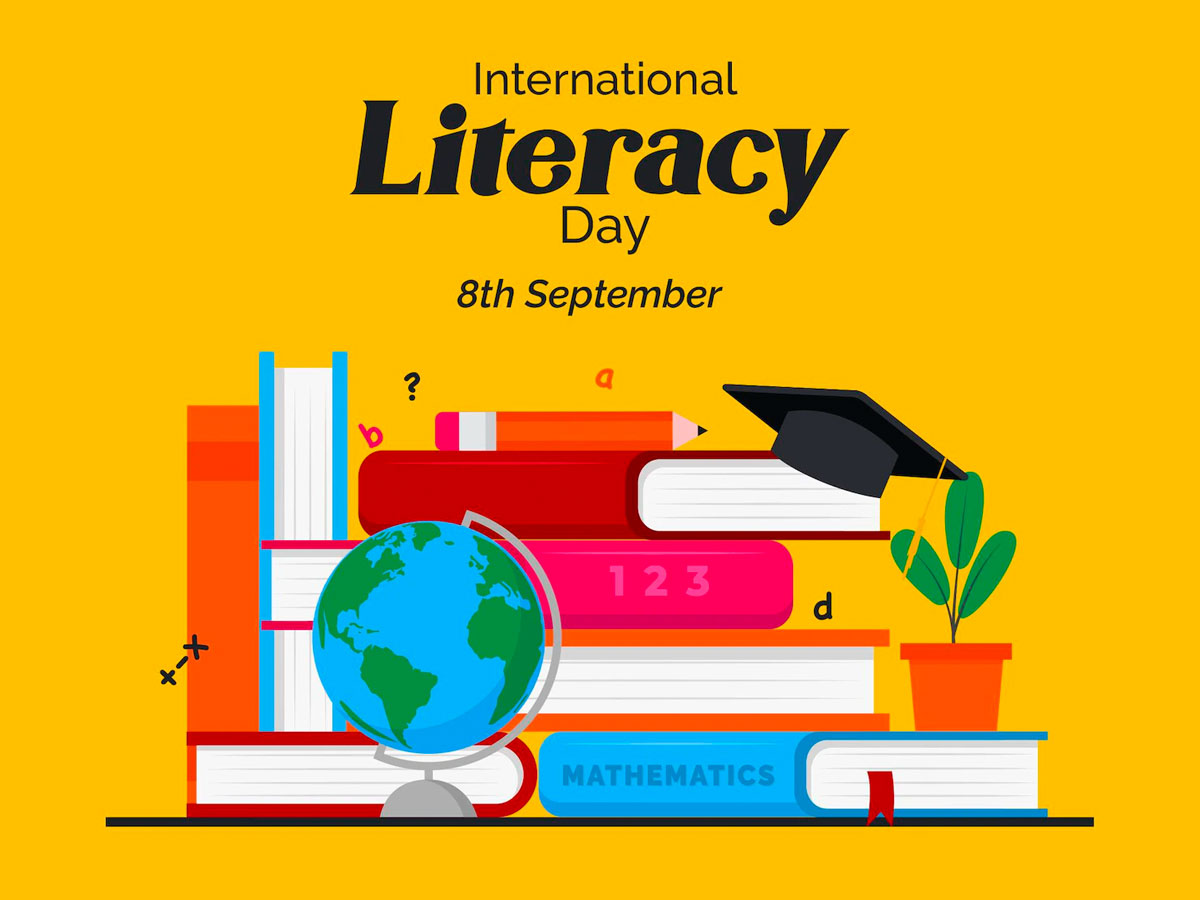
INTERNATIONAL LITERACY DAY- SEPTEMBER 8, 2022
Every year on September 8, International Literacy Day is
celebrated to bring attention to and concern for literacy issues that exist
both locally and globally. The United Nations Educational, Scientific and
Cultural Organization, or UNESCO, established International Literacy Day in
1966 “to remind the public of the importance of literacy as a matter of
dignity and human rights,” and it returns responsibility for the problems
of illiteracy to local communities where literacy begins, one person at a time.
HISTORY OF INTERNATIONAL LITERACY DAY
Despite significant improvements in literacy rates during
the more than 50 years since the first International Literacy Day, illiteracy
is still a major issue on a global scale. It is estimated that more than 750
million adults worldwide are illiterate. No country or culture on earth is
immune to the affliction of illiteracy, including the United States, where an
estimated 32 million Americans lack basic literacy skills.
What is literacy, exactly?
Literacy is described as
“the quality or state of being literate: educated…able to read and
write” in the Miriam-Webster Dictionary. You probably spend a lot of time
reading online, so it may come as a surprise to hear that there are people
living and working in your area who are unable to read not
only this post but also books, menus at restaurants, traffic signs, voting
ballots, instructions, prescription bottle labels, and cereal boxes.
Can you picture surviving in today’s world without the
fundamental skills of reading and writing? The goal of International Literacy
Day is to eradicate illiteracy in every local community around the globe.
The idea for International Literacy Day was initially
proposed during the Tehran, Iran-hosted “World Conference of Ministers of
Education for the Eradication of Illiteracy” in 1965. In the year that
followed, UNESCO took the initiative and established September 8 as
International Literacy Day, with the main objective being “…to remind
the international community of the importance of literacy for individuals,
communities, and societies, and the need for intensified efforts towards more
literate societies.” One year later, the world community took up the
challenge of eradicating illiteracy by taking part in the first International
Literacy Day.
TRADITIONS
OF THE DAY
A gift that is frequently taken for granted is literacy. In
our daily lives, reading is crucial. Being unable to read or write makes it
difficult to get around and prevents you from enjoying a wide variety of
things.
On International Literacy Day, groups and people step up
and use their literacy to support and encourage those who are having
trouble reading and writing. Volunteers from the community, including students
and working adults, tutor local children, donate books to local libraries, and
sponsor a student’s tuition and education to help them succeed in life.
To plan and carry out the best strategies for the abolition
of illiteracy, institutions, government- and international organizations hold
think tanks and debate forums in addition to organizing grassroots literacy
campaigns. They additionally hold fundraising events. Every year, a theme is
chosen for International Literacy Day as a means of raising public awareness of
a particular subject.
11 Creative ways to declutter your home
11 Creative ways to declutter your home
Whenever we heard the word declutter and to declutter anything, we often get bored or don’t want to do that particular thing but decluttering the unwanted things from our life as well as from our home is very necessary. Decluttering some things from our life is necessary for our improvement or growth in life is such important as decluttering our home to feel the freshness of our home and taking the positive vibes.
So let’s discuss some of the few ideas to declutter your home –
1. Making a to-do list – The first thing you should do is to make a routine or to-do list to declutter.If you make a to-do list you will not forget anything to do and serially one by one you can do all the things you have written in to-do list but make sure to keep in mind one thing that when you write all the works you will do in that day you will complete everything which is written in your to-do list.
2. Play a music while doing your work– Playing a music while doing your work you will never feel bored and it helping your mind cool and happy. Happy and energetic mind will always help you to do the things in better way.
3. Take one single room in a day– If you decide to do declutter your whole house then you will end up doing nothing because you will get tired and mainly bored. Take one room in a single day and organise all the work of that room and finish the room in that particular day. For example – if you have seven or eight rooms in our home. If you take one room ina a single day you will declutter your home in seven or eight days. So it’s not a very length process and you can do it .
4. Take 3 boxes to remove the unwanted things – You can take three boxes and name it recycle, no need, donation boxes and take one corner of the room and start working on that. When you will declutter the room you get many unuse clothes,papers or other stuffs. So take all the three boxes and keep the things according which you do not need. It will help get the things in a proper manner and it will take less time .
5. Making space in your room – You know your room better than others to keep in a better way. Making space in your room for necessary things if you want to add in your room. Some flowers or pots or a book shelf to look the room more beautifull so it’s important to make some space in our room
6. Donating things – When you decide that these things are of no use. Keep those things aside and donate it to others who need them because there are so many NGO’s, Ashram, Children welfare society whom you can donate and in return they will give you a lot of blessings. Donating others makes our mind,heart so happy. We feel like how much we can we are helping those who really need them.
7. Taking help – If you are not interested in decluttering your home type of person then you can take help from your family but not from friends. Cause friends will never understand how much you are attached to your room and your home. If you take help from your family they will u know you better and can help you out and they are also being attached to the home so then can give you better choice.
8. Decluttering your kitchen – Taking out all the unnecessary things from your kitchen to look more clean and clen. Kitchen is the very important part of our home from where our food has been cooked to eat.
9. Declutter your garden or surrounding – If you have small garden in your home then declutter all the bad things from your garden to look your garden very beautiful. Manage all the small plants in a proper way and cut all the damage or died trees which is not very good for your garden.
10. Declutter bathroom – Decluttering bathroom is also very necessary where our hygiene begins. Cleaning the bathroom and keeping fresh is the main thing we search for whenever we enter our own or others bathroom. Keeping a air freshner keeps your bathroom so fresh and smell beautifull. Arrange all the tubs and mugs to get more space in bathroom to wash clothes or having a bath.
11. Capturing before and after photos – Whenever you declutter a room or anything of your home take some corner and capture the before photos and see them well that how it really looks. Is it looking my room clean ? Is it my room looking very beautiful? After that start doing your work immediately and after decluttering all the rubbish things then capture some after photos and then you can see how it really looks so better. It will help you feel like you are best in doing anything.
So these are some of the best ways to declutter your home and making your home beautiful. If you are thinking to declutter your home then please follow these steps and go ahead. It will help you a lot.
Maria Theresa
Articles written by Maria Theresa)

1. https://www.eindex.org/2022/08/gender-roles.html
2. https://www.track2training.org/2022/08/need-for-disaster-management.html
3. https://www.track2training.org/2022/08/everything-everything.html Book Review
4. https://www.eindex.org/2022/08/british-english-and-american-english.html
5. https://www.eindex.org/2022/08/reinsurance.html
6. https://www.track2training.org/2022/08/stock-market-players.html
7. https://www.eindex.org/2022/08/online-professional-courses.html
8. https://www.track2training.org/2022/08/adr-and-gdr.html
9. https://www.track2training.org/2022/08/government-policies-for-education.html
10. https://www.track2training.org/2022/08/need-for-national-sports-day.html
11. https://www.track2training.org/2022/08/nobel-prize.html
12. https://www.track2training.org/2022/08/mutual-fund.html
13. https://www.track2training.org/2022/08/artificial-intelligence_27.html
14. https://www.track2training.org/2022/08/commodity-trading.html
15. https://www.track2training.org/2022/08/currency-trading.html
16. https://www.track2training.org/2022/08/need-for-sustainable-development-goals.html
17. https://www.track2training.org/2022/08/communication-in-cyberspace.html
18. https://www.track2training.org/2022/08/linux-and-open-source.html
19. https://www.track2training.org/2022/08/tour-to-rajasthan.html
20. https://www.eindex.org/2022/08/great-wars-of-20th-century.html
21. https://www.track2training.org/2022/09/right-to-information.html
22. https://www.track2training.org/2022/09/1st-war-of-independence.html
23. https://www.track2training.org/2022/09/kyoto-protocol.html
24. https://www.track2training.org/2022/09/the-united-nations.html
25. https://www.track2training.org/2022/09/video-jockey.html
26. https://www.track2training.org/2022/09/argentina.html
27. https://www.track2training.org/2022/09/genetic-engineering.html
28. https://www.track2training.org/2022/09/gemmology.html
29. https://www.track2training.org/2022/09/teachers-day.html
30. https://www.track2training.org/2022/09/australia-and-canada.html
About Teacher's Day
About Teacher’s Day
A teacher holds our hands, frees our minds, and touches our hearts. They are a friend, philosopher, and mentor. There is no way to minimise a teacher’s role. The day set aside for teachers in schools, colleges, and universities is known as Teacher’s Day in various nations around the world. The day varies from nation to nation. The fifth of October is celebrated worldwide as World Teachers’ Day. The custom of celebrating Teacher’s Day on September 5th in India dates back to 1962.
Dr. Sarvepalli Radhakrishnan was born in this year. He was a politician, philosopher, scholar, teacher, and his tireless efforts to advance education made his birthday a significant day in Indian history. On this day, we honour the excellent work of this outstanding person.
Actually, Dr. Sarvepalli Radhakrishnan was a likeable professor who was well-liked by his pupils for the example he always set in front of them. So, one day, his friends and pupils asked him to let them throw a spectacular birthday party for him. In return he remarked that it would be his delight and honour if they celebrate his birthday in favour of all instructors. Since then, the fifth of September has been celebrated as Teacher’s Day.
Speaking of the rest of the world, World Teachers Day was first observed on October 5th, 1994. This custom was established by UNESCO. The emphasis set by UNESCO was to recognise the dedication, success, and contributions that teachers have made to the field of education. Now, why is October 5 observed as Teachers’ Day? On this date in 1966, a special intergovernmental conference approved the UNESCO recommendation pertaining to teachers’ statuses.
Why do We Celebrate?
The most influential job in the world is teaching. Children’s minds are supposed to be shaped by teachers, and without knowledge, no one can survive in this world. Kids learn the exact value from their teachers, who transform them into responsible adults. So, nearly each united states celebrates Teacher’s Day. In India, we now celebrate Dr. Sarvepalli Radhakrishnan’s birthday with joy. He developed into a character with many defining characteristics and a beloved teacher by his students.
In the event that anyone wanted to celebrate his birthday in any way, he requested that it be observed as an honourable day for all the academics inside the United States. In India, we have fun these days at the birthday of Dr. Sarvepalli Radhakrishnan. He turned into a person of many exact traits and a favourite instructor amongst students. It turned into his request that his birthday ought to be celebrated as an honorable day for all the academics withinside the united states, in case a person is wishing to have fun his birthday at all.Therefore, to put it briefly, we commemorate Teacher’s Day because teachers have been the architects of society, and without them no civilization can proceed along the path of advancement.
In his book “Political Thinkers of Modern India,” he made a point about the value of teaching and education in a developing nation like Democratic India. He contends that teachers play a vital part in the development of nations and that they merit greater respect. He was not just a thinker and teacher, but also a philosopher.
A teacher is “the one who prioritises presentation to converge multiple currents of thinking to the same aim,” according to a book he previously authored on the Bhagwad Gita.
Most of the political figures of the period, including Jawaharlal Nehru, Mahatma Gandhi, and Dr. Rajendra Prasad, were supporters of his nation-building philosophy by the time he entered politics. His skills were shown in the sphere of politics also. He had the political acumen to foresee the obstacles and also has the necessary fortitude to chastise party leaders for their tardiness and slackness. He first alerted the former members of Congress to the grave dangers posed by corruption and nepotism in 1947. We are currently addressing it!
A standing ovation is obviously appropriate for such a man. Therefore, this day is observed in order to promote the ideals and principles of a true teacher.

About Teacher's Day
About Teacher’s Day
A teacher holds our hands, frees our minds, and touches our hearts. They are a friend, philosopher, and mentor. There is no way to minimise a teacher’s role. The day set aside for teachers in schools, colleges, and universities is known as Teacher’s Day in various nations around the world. The day varies from nation to nation. The fifth of October is celebrated worldwide as World Teachers’ Day. The custom of celebrating Teacher’s Day on September 5th in India dates back to 1962.
Dr. Sarvepalli Radhakrishnan was born in this year. He was a politician, philosopher, scholar, teacher, and his tireless efforts to advance education made his birthday a significant day in Indian history. On this day, we honour the excellent work of this outstanding person.
Actually, Dr. Sarvepalli Radhakrishnan was a likeable professor who was well-liked by his pupils for the example he always set in front of them. So, one day, his friends and pupils asked him to let them throw a spectacular birthday party for him. In return he remarked that it would be his delight and honour if they celebrate his birthday in favour of all instructors. Since then, the fifth of September has been celebrated as Teacher’s Day.
Speaking of the rest of the world, World Teachers Day was first observed on October 5th, 1994. This custom was established by UNESCO. The emphasis set by UNESCO was to recognise the dedication, success, and contributions that teachers have made to the field of education. Now, why is October 5 observed as Teachers’ Day? On this date in 1966, a special intergovernmental conference approved the UNESCO recommendation pertaining to teachers’ statuses.
Why do We Celebrate?
The most influential job in the world is teaching. Children’s minds are supposed to be shaped by teachers, and without knowledge, no one can survive in this world. Kids learn the exact value from their teachers, who transform them into responsible adults. So, nearly each united states celebrates Teacher’s Day. In India, we now celebrate Dr. Sarvepalli Radhakrishnan’s birthday with joy. He developed into a character with many defining characteristics and a beloved teacher by his students. In the event that anyone wanted to celebrate his birthday in any way, he requested that it be observed as an honourable day for all the academics inside the United States.Therefore, to put it briefly, we commemorate Teacher’s Day because teachers have been the architects of society, and without them no civilization can proceed along the path of advancement.
In his book “Political Thinkers of Modern India,” he made a point about the value of teaching and education in a developing nation like Democratic India. He contends that teachers play a vital part in the development of nations and that they merit greater respect. He was not just a thinker and teacher, but also a philosopher.

A teacher is “the one who prioritises presentation to converge multiple currents of thinking to the same aim,” according to a book he previously authored on the Bhagwad Gita.
Most of the political figures of the period, including Jawaharlal Nehru, Mahatma Gandhi, and Dr. Rajendra Prasad, were supporters of his nation-building philosophy by the time he entered politics. His skills were shown in the sphere of politics also. He had the political acumen to foresee the obstacles and also has the necessary fortitude to chastise party leaders for their tardiness and slackness. He first alerted the former members of Congress to the grave dangers posed by corruption and nepotism in 1947. We are currently addressing it!
A standing ovation is obviously appropriate for such a man. Therefore, this day is observed in order to promote the ideals and principles of a true teacher.
A standing ovation is obviously appropriate for such a man. So, this day is commemorated to promote the qualities and ideals of a true teacher.
There is a Recession of Immense Proportions in Education Funding
The statistics are all trending in the wrong way for public schools. Both test scores and violence are declining. Parents are yelling at school boards, and kids are sobbing on social workers’ sofas. The rage intensifies. Assertiveness is waning. Enrollment is decreasing. Attendance is declining. Bus drivers, substitute teachers, and teachers are all in short supply. Education and Qualification depend on every reason that disturbs students from learning.
Republicans are preparing political attacks this year that specifically target public school inadequacies as each phase of the epidemic presents new logistical challenges to be managed. An unprecedented crisis in public education affects practically every aspect of what educators do, from teaching arithmetic to counseling fearful kids to running the school.

Political conflicts are a significant aspect of education, putting school boards, teachers, and students in the sights of culture warriors. Schools are under fire for their pandemic decision-making, curriculums, racial equality policies, and even the books they keep in their libraries.
Republicans, who see education as a politically good topic, argue for greater “parental control” or the authority to question instructors’ decisions. The epidemic has been used by a fired-up school choice movement to offer alternatives to conventional public schools.
Lost Learning
Experts feared pupils sent to rural schools during the outbreak would suffer academically. They were accurate.
Dan Goldhaber, an education researcher at the American Institutes for Research, stated, “The learning losses have been severe so far, and honestly, I’m frightened that we haven’t stopped falling.”
Researchers may compare the performance of millions of pupils with what would be anticipated in the absence of the epidemic using data from the nationally conducted exam known as i-Ready, which evaluates students in reading and arithmetic three times a year. Significant decreases were noted, notably among the youngest kids and in arithmetic.
The lowest point came in the autumn of 2020, after a string of chaotic, remote-controlled courses for all pupils. Although there has been significant progress by autumn 2021, academic achievement was still below historical averages.
Consider the third grade, a crucial learning year that indicates future performance. In the autumn of 2021, 38 percent of third-graders were reading below grade level, up from 31 percent in the past. Thirty-nine percent of kids in arithmetic performed below grade level, compared to 29 percent.
According to a McKinsey & Co. research, schools with a majority of Black students were two months behind pre-pandemic levels while those with a majority of White students were five months behind. Students from low-income households, who already had poor academic performance, suffered the most. McKinsey researcher Emma Dorn proposes a “K-shaped” recovery in which children from higher-income families recover while those from lower-income homes continue to deteriorate.
“Some youngsters are making a full recovery and performing well. Some folks aren’t, she said. “I’m concerned that there may be a whole generation of pupils who are completely alienated from the educational system,” the author said.
Bus and Instructor Drivers Are Needed
As the omicron strain of the coronavirus swept the nation this winter and rendered many instructors ineffective, schools, already understaffed on a good day, had little room for mistakes. Teachers were forced to cover other courses during their planning times due to a significant lack of replacements, which moved preparation to the nights. The superintendent covered the middle school math and science courses on four days this school year because San Francisco schools were so broke. Sometimes, classes were left unattended or joined with other groups to form vast, unglorified study halls.
The National Education Association’s president, Becky Pringle, stated of the shortages, “The epidemic made an already grim situation much more catastrophic.”
In 2016, 1.06 persons were employed for each job posting. According to the Bureau of Labor Statistics, that ratio has continuously decreased, reaching 0.59 hires for every vacancy in 2016. The BLS estimated that there were 557,320 substitute teachers in 2013. The figure has dropped to 415,510 by 2020. Almost all districts mention the need for extra subs.
“Teachers are now experiencing widespread exhaustion, being down and out, and just running out of gas. Even before the epidemic, instructors were under pressure, but nothing had been taken away, said Jennifer Schlicht, a high school teacher in Olathe, Kansas, west of Kansas City.
According to research, shortages of teachers are especially severe in special education, among those who instruct English language learners, and among substitutes. Additionally, districts have lacked bus drivers during the whole school year, causing them to double up on routes, delay start times, and even cancel classes when necessary.
Lesson plans are being scrutinized by instructors, and detractors have targeted the teachers’ unions for demanding remote learning for a significant portion of the epidemic. Many instructors believe the situation will worsen since irate teachers will likely resign. And they claim that political smear campaigns worsen fatigue.
According to Daniel A. Domenech, executive director of AASA, The School Superintendents Association, “it’s simply created an atmosphere that people don’t want to be a part of anymore.” People want to look after children, not to be blamed, criticized, or penalized for doing so.
Teacher's Day

Teacher’s Day
Teacher’s day is celebrated on the 5th of September every year. First, it was celebrated in 1962. It was celebrated in the memory of our Vice President Dr Swarvapalli Radhakrishnan on his birth anniversary. It was celebrated as giving respect to our teachers. Today in every school, college, and university teacher’s day is celebrated. Students danced and sings songs for their teachers, and many programs were arranged, and then food was also arranged by the students. In India, the teacher’s day celebration is at the top list. Small children make teachers’ day cards, give them pen as a gift or other gifts them to give honour. Children take teachers’ blessings and many more events were organised to celebrate and enjoy teacher’s day. So in the end, we should be very thankful to our teachers, and professors for giving us the things we need. The support and the blessings they give to us. Without them, we are nothing so we are lucky to have wonderful teachers in our life.
Unrequited chest of love
Love a four-letter word but this word has the power to bend a person’s psychic to insanity.
The relationship is a beautiful stepping stone in the journey of love which is made of compassion, trust, comfort, and a romantic emotionally stabilizing atmosphere. This concept may seem to be a child’s play but in reality, it’s complicated.
Several factors such as perception, thinking patterns, priorities & level of dedication/ seriousness in a relationship differ.
A love story is like communication its beauty intensifies if it’s two-way. Otherwise, it can open doors to agony for one of the partners (or Both) in place of the cuddling bliss of happiness.
For a clearer picture, mostly one-sided love is met with the curse of moving in the dark desert of thoughts and self-doubt while serving the faith of being a guardian of some fascinating movements of the loved one.

Even the most powerful healer of all times “lord o’clock” is even helpless. You may laugh and talk but still, an emptiness exists inside the heart in the closed box with a bomb ready to explode even at a small instance of name similarity.
 Eduindex
You must be logged in to post a comment.