

Author: Admin
Track2Training for students. Learn more on https://track2training.com
E- LEARNING: A BOON OR BANE?
Our educational system has currently undergone a paradigm transition, not just in terms of resources and content, but also in terms of manner. E-books replaced hardcovers, Google Classrooms replaced project files, tablet displays replaced whiteboards, and virtual meetings replaced classroom contact.
The COVID-19 issue has already interrupted numerous industries, including education. The disappearance of conventional classrooms is one of the many casualties of COVID-19. While online courses existed before the pandemic, they had a distinct function for students, such as providing access to modules if they did not have the means or augmenting what they were taught in actual classrooms. Back then, online learning was never intended to be the primary form of instruction. However, because of social distancing restrictions and lockdowns, online classrooms have become the principal source of educational teaching for pupils of all ages. Sugarcoating the current situation does not assist or make it any easier for us: online learning is difficult. Education is intended to be passed on through human interaction. Storytelling was the original kind of education: people all over the world used stories to pass down knowledge, history, beliefs, and customs. Stories are vital to everything that makes us human. While the online learning platform is really beneficial, it takes away what we as people are designed for social thinking, meaningful interactions, and true connection. Humans have a basic need for food and shelter, but we also have a basic urge to belong to a community and develop connections. Most of our thoughts, behaviours, and feelings are motivated by the desire to be in a loving relationship, to fit in at school, to avoid rejection, to be well-liked, to have fun with friends, to get along with family, and to check in on social media. Life is tough, people are complicated, and transitioning from traditional schooling to online education is no easy task. But, just as every coin has two sides, there are certain positive elements to this transformation that cannot be overlooked. Online education enables on-time study, degree completion, and completion without any delay or gap. It’s a stroke of luck that you were born in the digital age, where you have the resources and means to profit from online education. Online schooling has its advantages. It provides ‘flexibility,’ since you may learn at your own speed using recorded videos. It also accommodates your comfort level and allows you to study from home. Online education has also proven to be a blessing for folks in need of sometime time’ in the middle of life’s hustle and bustle. This might be an excellent time to focus on regular sleep, regular exercise, good eating, and regular work hours. We can now enjoy that activity we put off for so long. I propose that you schedule certain study/work hours. Even in this new format, embrace the greatest things. Make it clear to your colleagues that you care about them. Find meaningful and one-of-a-kind methods to interact with others during this time. When things return to normal, your tenacity in the face of adversity will undoubtedly propel you ahead.
.jpeg)
DIWALI 2022- DELHI'S AIR POLLUTION INDEX
On Tuesday, the day after Diwali, Delhi’s air quality was the finest in seven years (October 25). This includes the epidemic years of 2020 and 2021. According to statistics from the Central Pollution Control Board, the AQI (air quality index) was 303 on Tuesday (CPCB). On Monday, Diwali, the temperature was 312. This signifies that the air quality was very bad on both days. An AQI of 301 to 400 is considered very poor. According to CPCB statistics, last year saw the worst post-Diwali air quality in Delhi since 2015, with an AQI of 462 recorded on the day after Diwali. This classified air pollution as ‘severe.’ Last year on Diwali, the AQI was 382. In four of the eight years since 2015, Delhi’s air quality has deteriorated to ‘severe’ the day after Diwali.
REASON BEHIND THE CLEAN AIR?
On Diwali, it was windy, and Gufran Beig, SAFAR’s original project director, noted that the wind speed helped reduce the collection of pollution. Furthermore, because Diwali fell early this year, the air is not yet chilly enough to trap pollution in the lower levels. Crop residue burning has also contributed nothing so far this year in Punjab and Haryana. The wind direction in Delhi, which has been westerly-southwesterly since Monday, has not been favourable for transporting stubble-burning smoke from the northwest, according to him.
According to a SAFAR forecasting system update, the percentage of stubble burning to PM2.5 levels in Delhi was approximately 5.6% on Tuesday. According to SAFAR statistics, the contribution of stubble burning to Delhi’s air on Diwali day (November 4) last year was 25%, and 36% on the day following Diwali.
Anumita Roychowdhury, executive director of research and advocacy at the Centre for Science and Environment, identified many variables. “Diwali occurred early, with milder weather and before the strong inversion conditions set in.” Wind speeds have been lower in comparison, and crop fires have not been as violent. “It’s tough to say whether or not there were fewer firework emissions,” she added.
What are the five essential features of a smart city
Smart City Features
-
Some typical features of comprehensive development in Smart Cities are described below.
- Promoting mixed land use in area based developments–planning for ‘unplanned areas’ containing a range of compatible activities and land uses close to one another in order to make land use more efficient. The States will enable some flexibility in land use and building bye-laws to adapt to change;
- Housing and inclusiveness – expand housing opportunities for all;
- Creating walkable localities –reduce congestion, air pollution and resource depletion, boost local economy, promote interactions and ensure security. The road network is created or refurbished not only for vehicles and public transport, but also for pedestrians and cyclists, and necessary administrative services are offered within walking or cycling distance;
- Preserving and developing open spaces – parks, playgrounds, and recreational spaces in order to enhance the quality of life of citizens, reduce the urban heat effects in Areas and generally promote eco-balance;
- Promoting a variety of transport options – Transit Oriented Development (TOD), public transport and last mile para-transport connectivity;
- Making governance citizen-friendly and cost effective – increasingly rely on online services to bring about accountability and transparency, especially using mobiles to reduce cost of services and providing services without having to go to municipal offices. Forming e-groups to listen to people and obtain feedback and use online monitoring of programs and activities with the aid of cyber tour of worksites;
- Giving an identity to the city – based on its main economic activity, such as local cuisine, health, education, arts and craft, culture, sports goods, furniture, hosiery, textile, dairy, etc;
- Applying Smart Solutions to infrastructure and services in area-based development in order to make them better. For example, making Areas less vulnerable to disasters, using fewer resources, and providing cheaper services.
New technology for retrofitting non-earthquake-resistant buildings can prevent major damage in old settlements
Researchers have found a solution for retrofitting old non-earthquake-resistant buildings with a technology that can prevent major damage to such buildings from earthquakes without compromising on their strength.
The technology called semi-confined unreinforced brick masonry (SC-URBM) can resolve the problem of spread of settlements in earthquake-prone areas with constructions that have been built without following earthquake-preventive building codes.
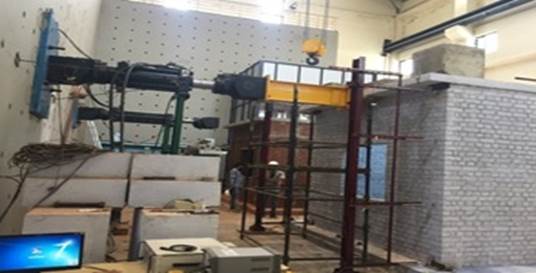
Historically, most buildings, technically called unreinforced masonry (URM), were not built using modern building codes. Thus they are much more likely to experience damage or collapse during an earthquake. URM buildings have traditionally been widely adopted worldwide due to inexpensive and locally available construction materials.
Just like in most developing countries located in earthquake-prone regions unreinforced brick masonry (URBM) has been a common practice in urban, semi-urban, and rural areas of India. Considering that major parts of India are under seismic zone III or above and most of the URBM buildings are old and structurally deficient, strengthening of URBM buildings located in earthquake-prone areas is extremely important.
Researchers from Indian Institute of Technology, Kanpur, have explored the extent to which retrofitting old buildings with SC-URBM technology can solve the problem. They found that SC-URBM can significantly enhance the energy dissipation capacity and ductility of the retrofitted building without compromising its strength. Hence such buildings would have resulting superior performance in comparison to URBM buildings during earthquakes.
The idea of the technology emerged from confined masonry, an earthquake-resistant construction system where the masonry walls are built first, and the concrete columns and beams are poured in afterward to enclose (confine) the wall. SC-URBM technology has a similar concept but does not need to be implemented at the construction stage. It involves embedding of reinforced concrete (RC) bands through the partial thickness of the wall and can be implemented or retrofitted in old buildings.
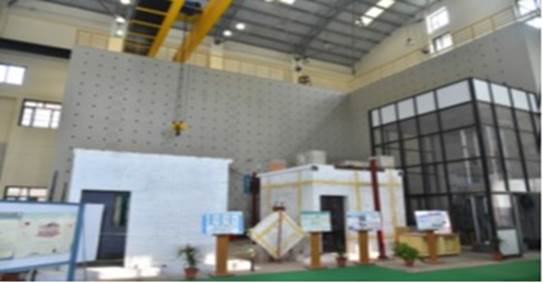
The researchers, Lakshmi Latha, Samit Ray-Chaudhuri, Suparno Mukhopadhyay, and Kunwar Bajpai, conducted experiments on two identical full-scale single-story brick masonry buildings — a completely unreinforced (URBM), and the other retrofitted with semiconfining horizontal and vertical reinforced concrete (RC) elements (SC-URBM).
The two buildings were subjected to a test called reverse slow-cyclic quasi-static loading protocol to quantify the improved seismic performance of the SC-URBM building compared to the URBM building. A Pseudo Dynamic Testing Facility (PDTF) for affordable experimental evaluation of earthquake resistance of full prototype structural systems developed with the guidance of Professor Durgesh C Rai under the Fund for Improvement of S&T Infrastructure (FIST) programme of the Department of Science and Technology (DST), Government of India was used for the tests. They proved that the technology provides better integral action of the confining elements and load-bearing walls to achieve enhanced seismic performance. The results were published in the ASCE Journal of Structural Engineering.
This technology for strengthening existing URBM buildings is not only architecturally aesthetic but can also be implemented easily by manpower available locally (masons).
Publication Link: https://ascelibrary.org/doi/10.1061/%28ASCE%29ST.1943-541X.0003460
Research Innovation Initiative Gathering (RIIG)
Secretary, Department of Science and Technology (DST) Dr. Srivari Chandrasekhar highlighted that materials for sustainable energy, scientific challenges & opportunities to achieving a sustainable blue economy, biodiversity, and economy would be the major themes and topics of the Research Innovation Initiative Gathering (RIIG) during India’s presidency starting from 1st December 2022.
He informed that discussions would be centered on developing the science for innovation and sustainable growth, connecting science and society, science for culture & heritage, traditional knowledge, and medicine.
“India is committed to implementing G-20 Research Innovation Initiative Gathering (RRIG) deliverables and seek support on the G-20 research and innovation agenda for India’s G-20 presidency next year,” said Dr. Chandrasekhar while representing the Minister for Science and Technology at the G-20 Research Ministers meeting at Jakarta.
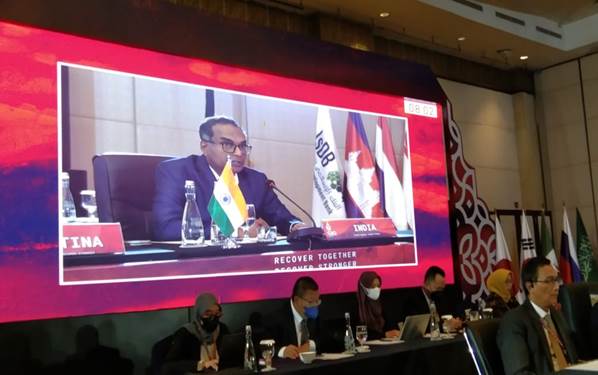
He elaborated on India’s evolution into a country with major global contributions in research and innovations and highlighted the country’s participation in international scientific collaborations.
“India is partnering in all the global forums, including the construction and establishment of mega-science facilities in India and abroad. We also partner with multilateral forums like UN, ASEAN, BRICS, BIMSTEC, SCO, G-20, etc. Science has to be global, and solutions to challenges should be regional,” he said.
“We aim to adopt a new approach that makes research infrastructure available for all stakeholders and finalising guidelines for Scientific Research Infrastructure Sharing Maintenance and Networks (SRIMAN). Besides, following global trends on a unified nationwide subscription-based model for knowledge, we are creating a central repository for all S&T data,” DST Secretary pointed out.
Dr. Chandrasekhar spoke about India’s efforts in enhancing domestic manufacturing capacity underlining how the country’s generic industry and vaccine manufacturing capability had supported global safety during the pandemic.
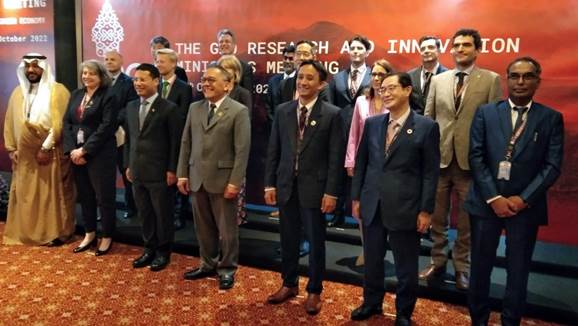
“We also promote a plurality of solutions for a variety of social, economic strata as well as geographical regions and focus on rural as well as urban problems in the country. Impact-based research evaluation is undertaken in a framework of research excellence keeping in mind local needs. Mainstreaming science communication has been taken up as a major challenge with the aim of increasing people’s participation in science,” he said.
“India has recently launched policies like Scientific Social Responsibility (SSR) and Corporate Social Responsibility (CSR) to disseminate scientific knowledge and also promote science and technology across the ecosystems. We also launched many programmes for gender equality in the country. Many national missions have been launched partnering with international players to work on cyber-physical systems health, education, energy, environment, agriculture, Industry 4.0, etc.,” DST Secretary pointed out, expressing confidence that collaborations will bring opportunities for G-20 partners and promote innovation as single point agenda for all in the group.
The Research Ministers meeting has been planned to be held in 1st week of July 2023.
IEPFA organises an Investor Education, Awareness and Protection Conference in Srinagar, Jammu & Kashmir
The Investor Education and Protection Fund Authority (IEPFA) under the aegis of Ministry of Corporate Affairs (MCA) organised an Investor Education, Awareness and Protection Conference in Srinagar, Jammu & Kashmir today at Kashmir International Conference. The Conference was inaugurated by Chief Guest, Union Minister of State for Ministry of Corporate Affairs Shri Rao Inderjit Singh.
The event was also graced by Guest of Honour Dr. Farooq Abdullah, Member of Parliament (Srinagar), Smt. Anita Shah Akella, CEO IEPF Authority & Joint Secretary, MCA, Shri Sanjay Shorey, Regional Director (Northern Region), Ministry of Corporate Affairs, Shri Hamid Bukhari Registrar of Companies (ROC) Srinagar and other dignitaries from the Union Territory of Jammu & Kashmir along with senior officials from IEPF Authority, India Post Payment Bank and Department of Posts, CSC e-governance, Institute of Company Secretaries of India, Kashmir Chamber of Commerce, Central Reserve Police Force.
During the inaugural session, Shri Rao Inderjit Singh and Dr. Farooq Abdullah released various major initiatives of IEPF Authority and MCA:
- IEPFA Mascot “Fundoo” which was selected through Jan-bhagidari after a month-long open contest on MyGov platform. The mascot is conceptualised with an idea symbolizing IEPFA’s vision of taking investor awareness to the last mile with the objective of making it easier to connect with its message, mandate and initiatives.
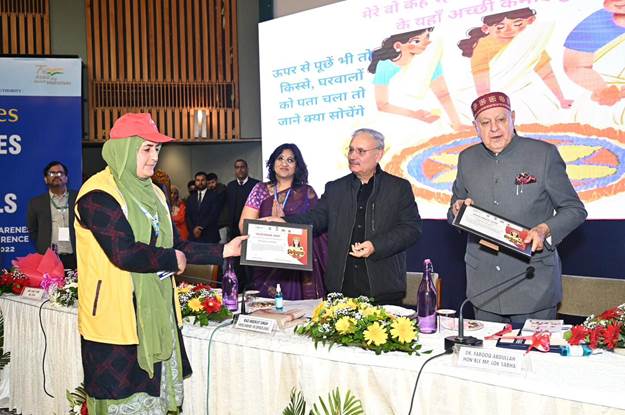
- “Niveshak Didi” which is a unique endeavour of IEPF Authority with India Post Payment Bank wherein Investor Education will be promoted in “By the women, for the women” concept. The Niveshak Didi i.e. female Dakiya has intense social connect to the rural population especially women. Three representatives Niveshak Didi from the valley were given certificates by the Chief Guest and Guest of Honour during the Conference.
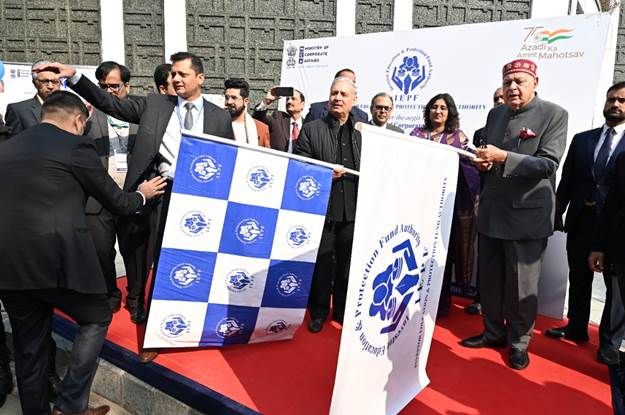
- “Niveshak Sarathi”, an investor awareness van was flagged by the Shri Singh and Dr Abdullah and is an initiative by IEPFA to promote financial literacy among people in far-flung areas by spreading knowledge through dedicated audio-visual and print material & a specially designed van equipped with a TV display, public announcement system, internet connectivity etc.
- “Investors’ Handbook” – a concise compilation of information on savings, budgeting, and investments and provide a vast knowledge of financial instruments in capsule form thereby enabling them to make informed and sensible financial decisions.
- “75 dedicated IAPs” in the Union territory of J&K to involve stakeholders of different segments of society in the caravan of Investor Awareness.
During his keynote address, Shri Singh appreciated IEPFA’s initiative of conducting the Conference on Investor Education & Awareness in Srinagar, Jammu & Kashmir. He also shared ideas, need and significance of spreading inclusive financial literacy, investor awareness & protection for overall economic growth and nation building.
The inaugural session was followed by a technical session on Financial Literacy as a tool for Economic development. The event was summed up with Nukkad Natak, quiz and other related activities on Financial Literacy involving School Students and other diverse audiences. The conference was attended by around 650 delegates which included students, professionals, academicians, housewives, artisans, CRPF personnel, panchayat representatives and general public from the UT of J&K.
ABOUT IEPFA
IEPF Authority has been established under sub-section (5) of section 125 of Companies Act, 2013 with the objective of promoting Investor Education, Awareness and Protection and for administration of the IEPF fund. It has undertaken a wide gamut of activities to accelerate the pace of investor education among the masses at large. Till date more than 65,000 Investor Awareness Programmes covering above 30 lakh citizens have been conducted by IEPFA. In addition, more than 28,000 claim refunds have been approved with transfer of about 1.6 crore shares and related dividends.
****
PSYCHOANALYSIS AND EDUCATION
Many movements and activities have arisen as a result of psychoanalysis, providing a drive to new schooling. It has altered the way education is seen and intended. Education is no longer regarded as a constraint to be overcome by external regulatory mechanisms such as punishment and incentives.
The goal of education is to develop the full person, including intellect and emotions, for socially beneficial objectives. Psychoanalysis has emphasized psychological motivations such as love, instinctual usage, permissiveness and forbearance, and the child’s own choice or desire. It has shed light on and explained the differences in the absorption of diverse disciplines among different youngsters. This suggests that some deficits, among other things, may be caused by emotional inhibition. Psychoanalysis has explained a child’s resistance to learning as a result of unfavourable environmental conditions, unsympathetic and critical teachers and parents, a lack of preparation, and emotional blocking caused by anxiety and aggression in the form of phobias or inharmonious parent-child or intra-parental relationships.
Thus, psychoanalysis emphasizes the significance of a suitable setting for children’s education. The atmosphere in school and at home should be designed to lower the likelihood of repression and raise the likelihood of sublimation. It should allow for spontaneous and creative actions as well as all sublimations. Psychoanalysis has emphasized the importance of play in children’s education. The numerous curricular and co-curricular activities in the school should be determined by play as well as other natural interests of children. Because of this emphasis on play, play therapy and play-way have emerged as essential strategies in the treatment of academic and emotional difficulties.
It is impossible to deny that psychoanalysis has fueled movements such as “child guidance,” “mental hygiene,” “paido-centrism,” and “child independence.” The latter popularised notions like ‘free discipline.’
Other contributions of psychoanalysis to education include the need to honouring the child’s individuality at an early age, examining the child’s early years, analysing behavioural norms from a fresh perspective, recognising the potency of the sex impulse, and sex education. However, one of the most significant contributions has been the knowledge of maladjustments in children’s behaviour and delinquencies in adolescence that psychoanalysis has provided. Emotional conflicts caused by poor inter-personal relationships within the family and repression of children’s unconscious needs and demands or reality have been highlighted as important causes, without underestimating the importance of inadequate environmental conditions such as broken homes, poor economic situations, bad neighbourhoods, inadequate school programmes, a lack of proper recreational facilities, and others.
To summarise, much of what is progressive in New Education can be traced back to the impact of psychoanalysis.

Why is water important?
Water is inarguably the most valuable biochemical of all. Without water, life would not exist on this planet. While it has a hundred thousand benefits, it can also be a nuisance if not used or managed correctly. However, in this article, we will talk only about the importance of water and its general chemical structure, which makes water, water!
Water as a major component of the human body:
It is believed that all humans are about 60% water. This includes your blood and all the bodily secretions as well. Water is also a crucial component of cells, typically forming around 70% to 95% of the mass of a single cell — that’s simply startling! It means we depend on water and cannot afford to lose it. Fun fact: losing about 10-15% of the water from your body can be fatal. A loss of 1
5-25% causes death!
Molecule of water:
Water is a polar molecule (a molecule with an uneven charge distribution) which has a general formula of H2O. Although it is a relatively simple molecule, water has some wonderful attributes. For example, the hydrogen bonds in water enable it to be strong, and as a result, it becomes difficult to convert water from a liquid to a gas. It requires a lot of energy to do so. By contrast, compounds with no hydrogen bond exist as a gas at average room temperature.
Importance to Marine life:
Water provides an ideal environment for all those organisms that reside inside water. Fishes, Crocodiles, Shrimps, Turtles, Sea-horses etc. All these animals (along with many others) survive in water. Their survival is made possible because of the fact that water contains dissolved oxygen, and many other useful minerals, which aid in the growth and development of marine life.
Importance to humans:
.jpeg)
We all quench our thirst with a glass of cold water every day. However, this is not the only thing water does. Your saliva is made up of water. Some hormones in your body are made up of water. Your tears are made up of water. Some enzymes (a biological catalyst that speeds up a rate of a reaction) are made up of water. For example, synovial fluid in your body is made up of water. Your sweat is made up of water. Almost everything in your body has something to do with water. This makes water an ultimate life-saver (you can sometimes silently say thanks to water, it wouldn’t mind).
Water as a transport medium in animals and plants:
Animals need a transport medium to distribute the required elements within no time throughout the body to carry out life processes. Thankfully, animals use blood as their transport medium. Blood is made up of water. Hence, it is safe to say that animals use water as a transport medium. Blood transports oxygen and nutrients.
As far as plants are concerned, plants also use water as a transport medium. Root hair cells take up water from the soil, and it is then transported throughout the plant with the help of xylem vessels.
Therefore, drink water, stay hydrated, and keep the water channels pure, for everyone!
Rishi Sunak – Prime Minister of United Kingdom
Rishi Sunak – Prime Minister of United Kingdom
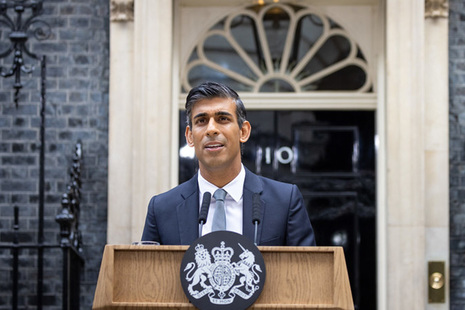
Rishi Sunak is a British politician who has served as Prime Minister of the United Kingdom and Leader of the Conservative Party since October 2022. He previously held two cabinet positions under Boris Johnson, lastly as Chancellor of the Exchequer from 2020 to 2022.
Rishi Sunak – Prime Minister of United Kingdom
Rishi Sunak – Prime Minister of United Kingdom
Rishi Sunak – Prime Minister of United Kingdom
Prime Minister, First Lord of the Treasury, Minister for the Union, and Minister for the Civil Service
The Rt Hon Rishi Sunak MP
 Biography
Rishi Sunak became Prime Minister on 25 October 2022.
He was previously appointed Chancellor of the Exchequer from 13 February 2020 to 5 July 2022.
He was Chief Secretary to the Treasury from 24 July 2019 to 13 February 2020, and Parliamentary Under Secretary of State at the Ministry of Housing, Communities and Local Government from 9 January 2018 to 24 July 2019.
Education
Rishi went to Winchester College and studied Politics, Philosophy and Economics at Oxford University. He was also a Fulbright Scholar at Stanford University (USA) where he studied for his MBA.
Political career
Rishi was elected Conservative MP for Richmond (Yorks) in May 2015 and served as a Parliamentary Private Secretary at the Department for Business, Energy and Industrial Strategy from June 2017 until his ministerial appointment.
Career before politics
Rishi spent his professional career before politics in business and finance, working internationally. He co-founded an investment firm working with companies in multiple geographies. He then used that experience to help small and entrepreneurial British companies grow.
Personal life
Rishi is married with two young daughters.
Prime Minister
The Prime Minister is the leader of His Majesty’s Government and is ultimately responsible for the policy and decisions of the government.
As leader of the UK government the Prime Minister also:
- oversees the operation of the Civil Service and government agencies
- chooses members of the government
- is the principal government figure in the House of Commons
As Minister for the Union, the Prime Minister works to ensure that all of government is acting on behalf of the entire United Kingdom: England, Northern Ireland, Scotland, and Wales.
First Lord of the Treasury
The First Lord of the Treasury is one of the Lords Commissioners of the Treasury. This role is usually held by the Prime Minister.
Since the 17th century, the Lords Commissioners of the Treasury have collectively carried out duties that were previously held by the Lord High Treasurer (head of His Majesty’s Treasury).
The Lords Commissioners of the Treasury also include:
- the Second Lord of the Treasury – the Chancellor of the Exchequer, who has most of the functional financial responsibilities
- Junior Lords Commissioners of the Treasury – other members of the government, usually government whips in the House of Commons
10 Downing Street is the official residence of the First Lord of the Treasury, and not of the Prime Minister.
Minister for the Union
As Minister for the Union, the Prime Minister works to ensure that all of government is acting on behalf of the entire United Kingdom: England, Northern Ireland, Scotland, and Wales.
Minister for the Civil Service
The Minister for the Civil Service is responsible for regulating the Civil Service.
The Civil Service (Management Functions) Act of 1992, allows the Minister for the Civil Service to delegate power to other ministers and devolved administrations.
This role was created in 1968 and is always held by the Prime Minister.
MULTICULTURALISM IN AUSTRALIA

Australia is a melting pot of cultures, ethnicities, and faiths. People from a wide range of cultural, ethnic, linguistic, and religious backgrounds helped to build this country. Since 1945, the lives of Australians have altered dramatically as a result of the aggressive immigration strategy (Brett 2003). Today, many diverse cultures have come together to call Australia home, and the majority of those cultures have accepted the Australian way of life. This essay will first provide a brief overview of Australian immigration history, including previous policies and the period of multiculturalism that dominated for several decades, before moving on to examine government practices and changes in immigration policies before, during, and after the Howard administration.
Multiculturalism refers to the integration of many cultures so that they can coexist happily and equitably as one. The history of human settlement in Australia began with the arrival of the first families of the existing aboriginal Australians. It is thought that Australia’s first indigenous tribes migrated from an unknown location in Asia about 50,000 years ago (Brett 2003). In 1606 a Spanish explorer sailed into the Torres Strait, which divides Australia from Papua New Guinea, to begin European discovery of Australia. Soon after, Dutch, French, and English explorers arrived and began mapping the continent. Australia was widely portrayed as a faraway and unappealing country for European settlement, yet it has deliberate and socioeconomic worth in the United Kingdom. The British control of the continent provided a solution for the relocation of criminals in its overcrowded jails, as well as a base for British naval operations. As a result, the British colonization of Australia started in 1788, and the colony quickly grew as free immigrants arrived from Britain and Ireland and fresh areas were freed up for cultivation.
However, the character of Australian migration altered dramatically with the discovery of gold in 1851. This gold rush era resulted in an early migration boom and the beginning of international migrations, with people arriving in significantly bigger numbers and from far more diverse origins than ever before. Over 600,000 individuals immigrated to Australia between 1851 and 1861.
Control of immigration altered when the colonies united in 1901. The immigration limitation act, popularly known as the “White Australian Policy,” was the first piece of legislation approved by the new parliament. Despite the comparatively significant number of Chinese citizens in Australia, this legislation insured that people who were not of European origin were not allowed to dwell there and also prohibited Asian migration for the next fifty years. With the onset of the First World War in 1914, migration nearly ended. Furthermore, formerly acceptable migrants from Germany, Hungary, Bulgaria, and Turkey were classed as ‘enemy aliens,’ and citizens from these nations were barred from entering the country for five years (Hodge 2006, p. 91). Churches and community groups such as the YMCA and the Salvation Army sponsored migrants, as they did after the conclusion of World War I. Small numbers also arrived on their own. As the United States attempted to curtail Southern European migration, an increasing number of young men from Greece and Italy financed their way to Australia. By the 1930s, a higher number of Jewish settlers began to arrive, many of them refugees from Hitler’s Europe.
Before World War II, Australia had a homogeneous European population and remained so for some time. During WWII, however, Australia became a haven for many non-European refugees, particularly from Asian nations. Malaysians, Filipinos, and Indonesians have established themselves in the nation. Australia aggressively sought these immigrants, and because of a rising economy and big infrastructure projects like the Snowy Mountain Programme, many of them found work. There were labourers from over thirty different countries who were not all of European ancestries. Seventy per cent of the workers in the project were foreigners who saw opportunities in coming to Australia.
The ambition of former Australian Prime Minister John Curtis of preserving Australia in the hands of its white European forebears did not last. Australia began to modify its White Australia policy in the 1950s. Non-European inhabitants were granted the right to petition for citizenship in 1956. Two years later, as a further measure of exclusion, the transcribing Test was eliminated. By the 1960s, mixed-race migration was becoming more common, and Australia signed its first migration pact with a non-European country in 1966. This was a significant step forward for Australia since it was the first time that both the political government and the Australian people decided to allow diverse cultures to coexist. Although diversity was recognized by the government and welcomed by the majority of Australians, there were significant problems during that period. Political concord on diversity was destroyed when opposition leader John Howard took a different stance on multiculturalism. Howard was a firm supporter of traditional Australian values. In 1988, Howard advocated for a variety of policy reforms, including a shift in the mix of migrants and a ‘One-Australia’ post-arrival policy. He stated that the rate of Asian immigration into Australia should be reduced for the sake of societal cohesiveness.
Multiculturalism is increasingly being embraced by national and state governments as a vocabulary of communal relations aimed at social cohesion. In July 2000, the Council for Multicultural Australia was founded and entrusted with executing A New Agenda for Multicultural Australia. Its mission is to promote the benefits of diversity in business and to supervise the application of a public service charter in a culturally varied society. The Howard administration issued its multicultural policy statement, Multicultural Australia: United in Diversity, in May 2003. It revised the 1999 New Agenda, established strategic orientations for 2003-06, and committed to establishing a Council for Multicultural Australia.
Australia received 123,000 new settlers in 2004-05, a 40% increase over the previous ten years. Sydney attracted the greatest number of immigrants (40,000 in 2004/05). The bulk of immigrants came from Asia, with China and India leading the way. There was also a large increase in Asian student numbers, as well as a continuous high number of Asian visitors. In 2005/06, the planned immigration influx more than quadrupled compared to 1996. As of 2007, immigration accounted for slightly more than half of Australia’s population increase. Immigration accounts for almost three-quarters of population growth in New South Wales and South Australia. The anticipated intake for 2007/08 was about 153,000, including 13,000 under the humanitarian programme and 24,000 New Zealanders under a unique trans-Tasman arrangement. During the Howard administration, the quota for skilled migrants increased dramatically in comparison to the quota for family reunions
Australia’s last multicultural policy, Multicultural Australia United in Diversity (2003-2006), was terminated in 2006. In late 2008, the Rudd Government launched a new multicultural advisory board.
Australia is not only far richer in experiences, but also has much stronger economic and social ties with other countries as a result of its broad multinational population. Multiculturalism has had an impact on Australian fashion, gastronomy, and culture since it defines what it means to be an Australian. Australia is proud of its multicultural society and values the range of cultures that continued global migration brings. Cultural variety affects and enriches all Australians; its success was accomplished by all Australians and should be treasured and embraced by all Australians.


You must be logged in to post a comment.