Key highlights
Move towards Atmanirbhar Bharat
· Several major initiatives have been launched during the year to make India self-reliant in the field of Defence manufacturing. Atmanirbharta in Defence is aimed at enhancing domestic manufacturing and making the country a net exporter in this field.
· ‘Make in India’ and ‘Armanirbhar Bharat’ have been given a major impetus during planning and procurement of equipment for Indian Army, wherein, there is endeavor to support the emerging defence industry in the Country.
· Induction of LCA (Tejas), Arudhra and Aslesha Radars, Astra Air to Air missile, Akash Surface to Air missile system, Advance Light Helicopter and Light Combat Helicopter etc. systems were added in IAF’s inventory proving IAF’s commitment to the vision of ‘Atma Nirbhar Bharat’.
· The MBT ‘Arjun’ Mk-1A was handed over to the Indian Army by Prime Minister on 14 Feb 2021 and Ministry of Defence (MoD) placed an order with Heavy Vehicles Factory (HVF), Avadi, Chennai for supply of 118 Main Battle Tanks (MBTs) Arjun Mk-1A for Indian Army on September 23, 2021.
· Advanced Electronic Warfare System ‘Shakti’, designed and developed by Defence Electronics Research Laboratory (DLRL) Hyderabad a laboratory of Defence Research and Development Organisation (DRDO), was handed over to Indian Navy on 19 Nov 2021 by Prime Minister Shri Narendra Modi.
· Indigenous Aircraft Carrier ‘Vikrant’ successfully accomplished its maiden sea voyage in August 2021. This milestone with few parallels reinforces confidence in the largest indigenously designed platform of Indian Navy and the resolve of countrymen in our quest for ‘Atmanirbahar Bharat’. Commissioning of Vikrant is being targeted by August 15, 2022.
· INS Visakhapatnam, first ship of Project 15B, was delivered by Mazagon Dock Limited to Indian Navy on October 28, 2021 at Mumbai and commissioned into IN on November 21, 2021 by the Raksha Mantri.
· Two sophisticated and potent platforms Karanj and Vela were commissioned on 10 Mar 21 and 25 Nov 21 respectively, with over 75 percentage of Indigenous content, having State-of-the-art weapon fit to strengthen our security apparatus in the Western Seaboard.
· The forthcoming DefExpo-2022, scheduled to be held at Gandhinagar, Gujarat from 10th to 13th March 2022, is being planned in line with Azadi Ka Amrit Mahotsav and the wide expanse of the domestic Defence Manufacturing Industry will be co-opted to showcase India @75.
· Raksha Mantri Shri Rajnath Singh handed over five Defence Research and Development Organisation (DRDO) developed products to the Armed forces and other security agencies at an event held at DRDO Bhawan, New Delhi on 14 December 2021, as part of Azadi Ka Amrit Mahotsav celebrations and iconic week of Ministry of Defence.
· Raksha Mantri Shri Rajnath Singh handed over six Transfer of Technology (ToT) agreements to seven public and private sector companies. Products handed over to the Armed Forces & Ministry of Home Affairs include Anti-Drone system, Modular Bridge, Smart Anti Airfield Weapon, Chaff Variants and the Light Weight Fire Fighting Suit.
· Air version of BrahMos supersonic missile was successfully test fired from supersonic fighter aircraft Sukhoi 30 MK-I on December 8, 2021. BrahMos is a Joint Venture between India (DRDO) and Russia (NPOM) for the development, production and marketing of the supersonic cruise missile.
· DRDO-developed supersonic missile assisted torpedo system was successfully launched on 13 December 2021.
· To provide autonomy and enhance efficiency, and unleash new growth potential in Ordnance Factories, the Ordnance Factory Board has been converted into seven new Defence Public Sector Undertakings while safeguarding the interest of all stakeholders. The new Defence PSUs have become operational from 1st October, 2021.
Women’s Empowerment in the Armed Forces
· Several initiatives have been undertaken by the Ministry of Defence towards empowering Women in the Services. Permanent Commission of women officers has been implemented in the Armed Forces.
· Prime Minister Shri Narendra Modi made an announcement during his Independence Day speech this year that all Sainik Schools, across India, will now be open for girls. All the Sainik Schools are now offering admissions to girls and more than 350 girls have been admitted so far.
· BRO appointed women officers to command important Road Construction Companies (RCC) along border areas. In Apr 2021, EE (Civil) Vaishali S Hiwase, a GREF officer took over the reins of 83 Road Construction Company and was employed on an important Indo-China Road connecting Munisairi-Bughdiar-Milam.
· Government has now allowed girls of the country to appear in the National Defence Academy examination. The necessary administrative training and policy changes have been made. The NDA June 2022 course will have the first batch of women cadets.
· First batch of women Naval Operations officers were inducted into rotary wing and joined the helicopter squadron INAS 336 at INS Garuda, Kochi on February 03, 2021. Lt Kumudini Tyagi and Lt Riti Singh have operated onboard warships as combat aircrew.
Swarnim Vijay Varsh
· India celebrated year-long Swarnim Vijay Varsh, marking Nation’s victory over Pakistan in December 1971 War, which led to creation of Bangladesh. This culminated with the celebration of Swarnim Vijay Diwas on December 16, 2021. Prime Minister Shri Narendra Modi recalled the great valour and sacrifice by the Muktijoddhas, Biranganas and bravehearts of the Indian Armed Forces on this momentous occasion.
· President Shri Ram Nath Kovind also witnessed the Swarnim Vijay Diwas parade at Dhaka in Bangladesh as a special invitee.
· Contingent of the Indian Army along with other Services participated in the parade in Bangladesh on 17th Dec 2021 to commemorate the 50th year of Victory in 1971 War and creation of new state of Bangladesh.
Strengthening border infrastructure
· A major thrust area of MoD in the border areas has been to enhance road and transport infrastructure aimed at strengthening defence preparedness as well as supporting local economic development in these areas.
· On 28 June 2021, Raksha Mantri Shri Rajnath Singh inaugurated 75 Projects of Roads and Bridges constructed by Border Roads Organisation (BRO) in six States and two Union Territories (UTs).
· BRO constructed road over Umling La Pass, in Eastern Ladakh, at 19,024 ft above sea level has now officially become highest motorable road in the world. Road was inaugurated virtually by Raksha Mantri on Dec 28, 2021.
· Raksha Mantri dedicated to the Nation 24 bridges and three roads, built by BRO in four States and two Union Territories, on December 28, 2021. Of the 24 bridges, nine are in Jammu & Kashmir; five each in Ladakh & Himachal Pradesh; three in Uttarakhand and one each in Sikkim & Arunachal Pradesh. Of the three roads, two are in Ladakh.
· BRO organised “India@75” Motorcycle Expedition to commemorate ‘Azadi ka Amrit Mahotsav’ by travelling across the country spreading message of National Integration, Nation Building and Road Safety Awareness. Expedition was flagged off by the Raksha Mantri on October 14, 2021. Defence Secretary flagged-in expedition on December 27, 2021.
NCC: In service of the Nation
· The cadets of NCC paid tribute to fallen heroes, war heroes and freedom fighters by organizing cleaning of statues and organising Poem Recitation, Nukkad Natak at 75 locations as part of celebration of Azadi ka Amrit Mahotsav celebrations in the month of August 2021. NCC also conducted felicitation of NoKs of Fallen heroes at 13 locations which were broadcasted live on Gallantry Web Portal.
· Each NCC Unit has adopted statue of prominent persons/ fallen heroes in their Area of Responsibility. NCC has adopted 2187 statues which are cleaned on weekly basis. One such event is live webcasted on Gallantry Web Portal every week since July 2021.
· The PM launched the NCC Alumni Association on 19 Nov 21 and was registered as the first alumnus of the NCC Alumni Association.
Contribution of MoD in fight against COVID-19
· The MoD proactively coordinated with the Armed Forces in whole heartedly contributing to the Nation’s fight against COVID-19. Defence Forces established quarantine facilities at 21 locations along with COVID 19 hospitals and 31 mixed hospitals.
- DRDO constructed 11 COVID Care hospitals at various locations across the country in Delhi, Ahmedabad, Lucknow, Varanasi, Gandhinagar, Rishikesh, Haldwani, Jammu, Srinagar, Guwahati and Imphal.
- Based on DRDO technology, 931 Nos. of Medical Oxygen Plants were installed & commissioned at 869 sites across the country funded by PMCARES, to make medical oxygen available to COVID patients.
· Anti-COVID-19 therapeutic application of drug 2-deoxy-D-glucose (2-DG) was developed by Institute of Nuclear Medicine and Allied Sciences, a lab of DRDO, in collaboration with Dr Reddy’s Laboratories (DRL), Hyderabad.
· INS Sharda of Southern Naval Command and a hired Multi-Purpose Vessel, MPV Meghna were deployed as part of IN’s initiative ‘Oxygen Express’ in Apr 21 to maintain supply of oxygen cylinders to island territories of Lakshadweep & Minicoy islands during peak of COVID.
Other key highlights of the year 2021
· Prime Minister Shri Narendra Modi inaugurated Defence Office Complexes at Kasturba Gandhi Marg and Africa Avenue in New Delhi on September 16, 2021. The construction was completed within a record time of 12 months, in the midst of the Covid-19 pandemic.
· Government has approved scheme for setting of Sainik Schools in partnership with NGO’s/Private schools/State Governments, etc on affiliation basis. In the first phase, it is proposed to have 100 Sainik Schools with 2-3 Schools from each State/UT.
· A concerted effort is being made to move forward from a Single Service approach to integrated planning and execution. Towards this, three Joint Doctrines have been formulated in the last one year, while four new joint doctrines namely Capstone, Space, Cyber and Intelligence Surveillance and Reconnaissance (ISR) are at an advantage stage.
· Numerous rounds of talks have taken place with the Chinese counterparts to deescalate the situation without compromising on India’s stand of ‘Complete Disengagement and immediate Restoration of status quo ante’. To this effect, 13 rounds of senior military commanders’ meetings have already been concluded.
· Inimical elements reenergised their attempts at disrupting peace in the valley by selective targeting of minorities and non-locals, however, proactive measures in the non-kinetic domain and intelligence based kinetic operations by the security forces have been able to counter the nefarious designs of Pakistan sponsored terrorist outfits.
· The Army has also ensured that the internal situation in the Jammu and Kashmir remained under control. In the year 2021, a total number of 165 terrorists were neutralised by the security forces in which 39 security forces personnel also laid down their lives. The normalcy so brought in by the security forces in year 2021 was amply evident wherein the tourism as well as local employment showed shown positive trend.
· The Indian Army constantly endeavoured to encourage young sporting talent as part of ‘Mission Olympics’ and the effort paid off with one Gold Medal bagged by Subedar Neeraj Chopra in Tokyo Olympics.
· The year 2021 witnessed inauguration ceremonies of two new Emergency Landing Facilities. The first was along NH-925A (Gandhav-Bhakasar stretch, Rajasthan) which was inaugurated by the Raksha Mantri on 09 Sep 21. On 16 Nov 21 successful landings were executed by Mirage-2000, C-130J and An-32 aircraft at ELF Sultanpur in Uttar Pradesh. Prime Minister, Chief of Defence Staff and Chief of Air Staff were on board the C-130J aircraft which landed on ELF as part of the inauguration ceremony.
· Joint Coastal Patrol (JCP) by ICG and Coastal Police for enhancing coastal security, enshrined in the Prime Minister’s Vision Document, was instituted in Aug 20. Despite challenges posed by COVID-19, enhanced co-ordination and synergy between local Coastal Police personnel and ICG units resulted in timely commencement of JCP on 15 Aug 20. A total of 383 sea sorties, 199 classroom instructions and 985 personnel have been embarked onboard for JCP sorties from 01 January to 16 December 2021.
· The procurement of 44 Microlight Aircraft Simulators and 60 Rowing Simulators has fructified during the year and delivery and installation is under progress. The simulators-based training has upgraded the Air Force and Naval Cadets training immensely.
· Air Marshal VR Chaudhari AVSM VM took over as the Chief of the Air Staff (CAS) on 30 SEP 2021. An alumnus of NDA, the CAS was commissioned in Dec 82 in the fighter stream of the IAF. He has flown more than 3800 hours on multiple fighter and trainer aircraft.
· Admiral R Hari Kumar took charge as the new chief of the Indian Navy on November 30, 2021. Kumar assumed charge as the 25th Chief of the Naval Staff (CNS) from outgoing Chief Admiral Karambir Singh who retired on superannuation after a career spanning over 41 years in service.
· The situation of Taliban takeover of Afghanistan posed a unique challenge for the Nation. IAF was called upon to evacuate Indians and some other nationals from Afghanistan. Evacuation activities were undertaken, first from Kandahar, then Mazar-e-Sharif and finally from Kabul. Chaotic situation existed in Kabul as a result of the withdrawal of troops belonging to US and its allies. IAF deployed its C-17 and C-130J aircraft for the evacuation. A C-17 each was utilised for evacuation from Kandahar (10 Jul 21) and Mazar-e-Sharif (10 Aug 21). In addition, five aircraft (four C-17s and one C-130J) were utilised between 15 and 28 Aug 21 to rescue 132 Govt officials, 316 Indian citizens and 126 persons of other nationalities.
· The country lost its first Chief of Defence Staff (CDS) General Bipin Rawat, his wife and 12 other personnel of the Armed Forces in a helicopter crash at Coonoor district in Tamil Nadu on December 08, 2021. They served the Nation with utmost diligence. General Bipin Rawat was an outstanding soldier. A true patriot, he greatly contributed to modernising the Armed Forces and security apparatus. As India’s first CDS, General Bipin Rawat worked on diverse aspects relating to the Armed Forces, including defence reforms.
Department of Defence
Inauguration of Defence Office Complexes at Kasturba Gandhi Marg & Africa Avenue in New Delhi
Prime Minister Shri Narendra Modi inaugurated Defence Office Complexes at Kasturba Gandhi Marg and Africa Avenue in New Delhi on 16 Sep 2021. The shifting of Defence hutments offices to new Defence Office Complexes at KG Marg and Africa Avenue will facilitate inception of Central Vista Project as part of which three CCS Building (Defence Enclave) also proposed to come up by (two CCS Enclave Complexes) Jun 2024 and Third Defence Enclave Complex by Dec by 2026. The project has been driven by the commitment to usher modern and innovative construction technology. The construction has been completed within a record period of 12 months, in the midst of the Covid-19 pandemic. Concomitantly, a seamless coordination was ensured by a Joint Coordination Committee (JCC) for manpower & space planning, allocation of space to stakeholders, completion and shifting process from hutments to Defence Office Complexes at KG Marg and Africa Avenue.
Setting Up Of 100 New Sainik Schools
Government has approved a scheme for setting of Sainik Schools in partnership with NGO’s/Private schools/State Governments, etc on affiliation basis. Interested parties in any State/Union Territory, can apply for affiliation to the Sainik Schools Society subject to their fulfilling of the qualifying requirements and adherence to affiliation bye-laws. In the first phase, it is proposed to have 100 Sainik Schools with 2-3 Schools from each State/UT, in a graded manner class-wise, starting from Class 6 onwards, with an effort to cover as many States and UTs as possible. These schools will be affiliated to partner with Sainik Schools Society of Ministry of Defence to create a system that combines academic rigor with a degree of discipline and regimentation. As envisioned in the National Education Policy these schools will also provide increasing focus on value-based education like our teaching of ancient times which will enable the children develop pride in its rich culture and heritage.
Admission of Girl Cadets in Sainik Schools
Prime Minister Shri Narendra Modi made an announcement during his Independence Day speech 2021 that all Sainik Schools will now be open for girls. Following the announcement, all the Sainik Schools have offered admission to girls and more than 350 girls have been admitted so far. The strength is likely to increase in upcoming Academic Sessions. Transformation of Sainik Schools from all boys schools to co-ed would facilitate personality and traits development. Best possible interaction methodology is being adopted in all schools. This decision has opened doors of quality training of girls cadets at par with boys.
Launch of Digital Interactive Screens at National War Memorial
After dedication of National War Memorial, it was felt that there is an imperative need to enhance the digital appeal of the prestigious monument for the visitors, dignitaries & public at large at the National War Memorial to have a modern and state-of-art Digital display platform/facilities installed at the memorial commensurate with the sanctity of the prestigious National monument for Audio-Visual display of information about the battle casualties along with citations/acts of bravery for easy access and to enhance visitors & public pay homage and tribute, digitally. In this connection an initiative was taken by MoD for Enhancement of Digital Appeal at National War Memorial for a wholesome experience to the visitors and four digital screens have been installed. Besides providing information to visitors, the digital screens have facilitated paying of virtual tribute at the National War Memorial with Augmented Reality (AR) feature which incorporates provision of virtual photograph with Battle Causalities, interactive screens to search Roll of Honour of 26,275 Battle Casualties and OTP-based registration of visitors.
The Website and App of NWM showcase the Memorial history, significance, concept and details of the Battle Casualties. The features incorporated in the website/app include multilingual interaction in 21 regional languages to facilitate easier comprehension for visitors from all over the country, user friendly features for specially/differently abled persons, creation and integration of 166 Bluetooth Beacons for location and live mobile mapping with virtual tour guide, audio commentary in 21 languages providing information on various battles/ wars, Param Vir Chakra awardees and guided routes within the Memorial, High Definition 360 degree view of the National War Memorial including Param Yodha Sthal, search facility to locate individual names amongst 26,275 battle casualties, online quizzes/events and provision for online donations to Armed Forces Battle Casualties Welfare Fund. Both Interactive Digital Screens and NWM Website/App for NWM were inaugurated by PM in ‘Rashtra Raksha Samarpan Parv’ at Jhansi on 19 Nov 2021.
Department of Military affairs
Appointment of Chief of Defence Staff (CDS) and creation of Department of Military Affairs (DMA) remains the most significant and transformative defence reform undertaken by any Government since Independence. Being seized of its import, the DMA has taken on the responsibility of spearheading several reforms within the military establishment towards ensuring optimum utilisation of scarce national resources, enhancing synergy and jointness between the Services and steering the modernisation of the military to face the ‘ever changing challenges of modern warfare’, as articulated by Prime Minister Shri Narendra Modi.
Under DMA, the Logistics structure is being fully revamped to make it more efficient. In this regard, three Joint Services Study Groups (JSSG) are developing common logistic policies for services that will enhance all supply chain functions such as planning, procurement, inventory-maintenance, distribution, disposal and documentation. A pilot project based on the establishment of Joint Logistic Nodes (JLN) each at Mumbai, Guwahati and Port Blair has already rolled off.
A concerted effort is being made to move forward from a Single Service approach to integrated planning and execution. Towards this, three Joint Doctrines have been formulated in the last one year, while four new joint doctrines namely Capstone, Space, Cyber and Intelligence Surveillance and Reconnaissance (ISR) are at an advantage stage.
In order to enhance Combat Capability and balance defence expenditure, more than 270 logistic installations of the Indian Army have been closed or scaled down, resulting in substantial savings to the exchequer, besides increasing the “Teeth to Tail” ratio. A holistic review of the training methodology is also underway to modernise, integrate and rationalise training as also ensure optimal utilisation of infrastructure and resources. Ten subjects have been fixed for conducting joint training among the three services. Of these, joint training has already started in Five areas.
Keeping in mind the goal of ‘Aatmanirbhar Bharat’, Department of Military Affairs, Ministry of Defence released the first Positive Indigenisation List of 101 items in August 2020 and the Second Positive Indigenisation List comprising of 108 items on 31 May 2021. These selected items will only be procured from domestic industry. These lists comprising major combat platforms, advanced weapon systems, armament and ammunition to make India self-reliant in Defence Sector. These lists besides signalling nation’s resolve to cut down import of defence hardware, are also a recognition of the growing capability of domestic industry in defence manufacturing, built over the last six years based on a number of transformational steps initiated by the Government.
· The work of establishing Theatre/Joint Commands is also progressing swiftly. The Study group reports have been analysed and implementation Roadmap is under deliberation.
· A ‘Tri–Services Joint working Group’ has also been setup to study and work out the nuances of integrating Communication Networks between the Services.
· A review is being done to right size/reshape the units of the Army.
The Department is striving to promote integration of the three Services through joint planning, for the best use of military capabilities. Military procedures are being worked out to integrate defence Planning, Procurement and Operations. Some other measures are also being progressed to rationalise the utilisation of existing resources.
Prominent among these are:
· Bring about reforms in the functioning of three Services aimed at augmenting combat capabilities by reducing wasteful expenditure.
· Promote use of indigenous equipment and usher greater self-reliance in the defence industrial sector.
· Ensure optimal utilisation of Infrastructure and rationalise it through jointness among the Services.
· Promote Jointness and Standardisation between Services.
· Promulgate Joint Staff Assignments for Career Progression and increase cross staffing.
· IVth Cadre review of the Armed Forces.
· Abolition of obsolete Rules and Acts.
· Review terms of deployment of Territorial Army.
The Department has proactively coordinated with the Armed Forces in whole heartedly contributing to the nation’s fight against COVID-19, evacuating more than 4000 Indian diaspora from Iran, Wuhan, China, Maldives, Sri Lanka and Iran. Defence Forces established quarantine facilities at 21 locations along with COVID 19 hospitals and 31 mixed hospitals nominated for national COVID pool. Defence Services were instrumental in setting up and operating medical facilities in Delhi (Narela, Shakurbasti and Delhi Cantt) and Bihar (Patna and Muzarfarpur). As part of International outreach, medical teams were provided and deployed at Maldives, Kuwait, Mauritius, and Comoros apart from assistance in terms of medical stores and items to China, Bhutan, Nepal, Mauritius, Seychelles, etc. Under operation Samudra Setu 2, IN ships were involved in transporting more than 1100 MT of liquid Oxygen, more than 14,000 oxygen cylinders with 314 kilo litres of oxygen and other critical medical aid to assist in the national effort against Covid.
The DMA has undertaken various steps towards opening up defence airspace. These initiatives have assisted in expanding the footprints of civil aviation industry in the country by facilitating the Flexible use of Airspace (FUA) & Joint User Aerodromes (JUA). A large number of initiatives have been instituted to ensure easy availability of defence airspace to the civilian operators, through accord of priority clearance for scheduled flights, time sharing of height bands, etc.
The country lost its first Chief of Defence Staff (CDS) General Bipin Rawat, his wife and 12 other personnel of the Armed Forces in a helicopter crash at Coonoor district in Tamil Nadu on December 08, 2021. They served the Nation with utmost diligence. General Bipin Rawat was an outstanding soldier. A true patriot, he greatly contributed to modernising the Armed Forces and security apparatus. His insights and perspectives on strategic matters were exceptional. As India’s first CDS, General Bipin Rawat worked on diverse aspects relating to the Armed Forces, including defence reforms. He brought with him a rich experience of serving in the Indian Army. The Nation will never forget his exceptional service.
Several initiatives have been undertaken by the Services towards empowering Women in Services. Permanent Commission of women officers has been implemented in the Armed Forces.
Some other key initiatives include:
· Induction of 10 women officers into the fighter stream of the Air Force.
· Appointment of women officers onboard ships.
· Streaming of Women officers into Seaking (Observer) and RPA streams of Navy.
· Appointment of women officers in Missions abroad.
· Induction of women personnel into the Corps of Military Police.
Department of Defence Production
To provide autonomy and enhance efficiency, and unleash new growth potential in Ordnance Factories, the Ordnance Factory Board have been converted into 7 new Defence Public Sector Undertakings while safeguarding the interest of all stakeholders. The new Defence PSUs have become operational from 1st October, 2021. The Government has decided to retain indents/orders worth more than Rs. 62,000 crore, pending with OFB post corporatisation, to ensure continuity in supply of strategic arms and ammunition to the Services. The 7 new Defence PSUs were dedicated to the nation on 15th October 2021.
Two Defence Industrial Corridors (DICs) have been established at Uttar Pradesh and Tamil Nadu to boost Defence manufacturing ecosystem in the country with intent to attract investment of Rs. 10,000 Crore in each DIC. To give further impetus to the growth of Defence Industrial Corridors, both the DICs have been integrated with the Prime Minister’s ‘Gati Shakti’ National Master Plan. Till date, Rs. 1401.68 Crore and Rs. 2252 Crore have been invested in Uttar Pradesh & Tamil Nadu DICs respectively.
Raksha Mantri launched the fifth edition of Defence India Startup Challenge (DISC 5) on 19th August 2021, as part of iDEX. The Challenges launched will act as a bridge between the requirements of the Armed Forces & Defence PSUs, and the solution providers, i.e. MSMEs, Startups, individual innovators, R&D institutes and academia. Under DISC-5, 35 challenges from Armed forces & Defence PSUs were thrown open to prospective Startups, Innovators, MSMEs to participate and become critical force multipliers in India’s defence ecosystem.
Apart from the above, in a big boost to the ‘Atmanirbhar Bharat’ campaign, and as a first for iDEX, the Indian Navy signed a Rs. 13 crore contract to procure country’s first indigenously developed Robotic Lifebuoys under the iDEX challenge “Unmanned Surface Vehicles”. The contract was bagged by a Startup – Saif Seas, based at Visakhapatnam.
The Government has approved a Scheme with an outlay of Rs. 500 Crore (2021-22 to 2025-26) to push innovation and support startups in Defence & Aerospace sector. This will enable more than 300 startups to participate in the new design and development projects.
The first contract for setting up first facility for manufacturing of 24 types of spares of Air Force, in Hyderabad have been concluded on 13th August 2021 under the Inter-Governmental Agreement (IGA) on “Mutual Cooperation in Joint Manufacturing of Spares, Components, Aggregates and other material related to Russian/Soviet Origin Arms and Defence equipment.
Aero lndia-21 was successfully conducted on three days from 03rd – 05th February 2021, as the world’s first hybrid Aerospace and Defence (A&D) exhibition since the impasse on public gatherings due to the Novel Coronavirus. The event has set a model for the world to emulate in the new normal. Despite the numerous challenges posed due to Covid-19 viz. restrictions on International travel, De novo event without a benchmark etc., Aero India witnessed 26,000+ visitors physically over three days and 5+ lakh visitors virtually. A total of 710 exhibitors put up their stalls/pavilions towards promotion of their products and capabilities in the A&D sector.
The forthcoming 12th edition of DefExpo-2022, scheduled to be held at Gandhinagar, Gujarat from 10th to 13th March 2022, is being planned in line with Azadi Ka Amrit Mahotsav and the wide expanse of the domestic Defence Manufacturing Industry will be co-opted to showcase India @75. On 25th October 2021, Raksha Mantri Chaired the Ambassadors’ Round-table for DefExpo-2022. The event was well attended with 97 nations participating. Ambassadors’ of many countries assured the Raksha Mantri of their participation at the highest level.
Raksha Mantri inaugurated several iconic events of the Department of Defence Production on 13th December, 2021 as part of the dedicated week of the Ministry of Defence to commemorate ‘Azadi Ka Amrit Mahotsav’. The events included a virtual exhibition ‘Path to Pride’ showcasing India’s 75-year journey and growth in Defence manufacturing alongwith public exhibitions at 75 locations across the country. Further, 7 unique curated ‘Defence Museums’ were also launched to inform, educate, and inspire the public. A booklet listing 75 commitments to the Nation was also unveiled during the ceremony.
Major achievements by DPSUs
Hindustan Aeronautics Limited (HAL) Light Combat Aircraft (LCA)-Tejas programme received a major boost with clearance from the Cabinet Committee on Security (CCS) on 13th January 2021 for procurement of ‘improved’ Tejas fighters and trainers from HAL. This will enhance the capabilities of domestic defence production sector. The total contract value of the LCA MK1A contract received by HAL from MoD is Rs 36468.63 crore.
Prime Minister dedicated the Arjun Main Battle Tank (MK-1A) with world-class capabilities to the Indian Army on 14th February 2021 in a function at the Jawaharlal Nehru Indoor Stadium in Chennai.
Mazagon Dock Shipbuilders Limited (MDL)’s Submarine ‘Karanj’ was commissioned on 10th March 2021.
INS Visakhapatnam (Destroyer) of MDL was delivered on 28th Oct 2021 and Commissioned into Navy on 21st November 2021 by the Raksha Mantri.
INS Vela (Submarine) of MDL was delivered on 09th November 2021 and commissioned into Indian Navy on 25th November 2021.
The Prime Minister handed over ‘SCG PS Zoroaster’, a Fast Patrol Vessel (FPV) built by Garden Reach Shipbuilders and Engineers Limited (GRSE), to Seychelles Coast Guard on 8th April 2021. The handing over ceremony was conducted in virtual mode.
BEML successfully commissioned & handed over largest indigenous 190 Ton electric drive Dump Truck to NCL, Singrauli on May 11, 2021.
Department of Ex-Servicemen Welfare
Welfares Schemes from the Armed Forces Flag Day Fund
Apart from the Defence Services Estimate (DSE) Budget, Armed Forces Flag Day Fund (AFFDF) is the major source of funding for welfare and rehabilitation of war widows, ESM and their dependents. The Government has been making all out efforts to increase its funding so that we are able to serve a greater number of ESMs/their dependents. During 2019-20, the collection was Rs.47 crore, which is the highest collection so far. During the last financial year 2020-21, despite the pandemic, a collection of around Rs.32 crores was made.
The rate of scholarship has been increased from Rs 24000 per year to Rs 30,000/- per year for boys and from Rs 27,000 per year to Rs 36,000/- per year for girls wef FY 2019-20.
The nomenclature of the Army Battle Casualties Welfare Fund (ABCWF) has been changed to Armed Forces Battle Casualties Welfare Fund (AFBCWF) for extending the benefits also to the battle casualties of Air Force and Navy. The additional ex-gratia amount has also been enhanced from the existing Rs.2 lakh to Rs.8 lakh for all Battle Casualties except Battle Casualties with disability less than 60%, where the amount has been enhanced from Rs 1 lakh to Rs 4 lakh per casualty.
Expenditure Done and Upcoming Expenditure
Financial assistance of Rs.133.31crore to 37,815 beneficiaries given so far in favour of the Ex-Servicemen/their dependents under various schemes funded from AFFDF during FY 2020-21. Besides these, an amount of Rs.1.67crore as financial assistance for serious diseases, purchase of modified scooter for disabled and grants to War memorial Hostels and Paraplegic Rehabilitation Centre at Kirkee and Mohali have also been given under the AFFDF.
An amount of Rs 35.27crore has been disbursed to 10,268 beneficiaries during the FY 2020-21 under the Prime Minister Scholarship Scheme (PMSS).
Indian Army
The Indian Army has been primarily focussed on maintaining its operational preparedness in line with India’s desire to ensure stability & dominance along the Line of Actual Control (LAC), carried out relentless counter insurgency/counter terrorist operations and maintained high training standards while constantly monitoring and reviewing emerging & future threats to our National security. Despite the challenges imposed by the COVID pandemic, the Indian Army has not just ensured force preservation but has also ensured that its operational readiness remains unaffected.
The unilateral and provocative actions by the Chinese to change the status quo by force, in more than one area on the LAC, has been responded in adequate measure. To resolve the issue, the militaries of the two countries have been engaged in dialogue at various levels. After sustained joint efforts, disengagement was carried out at many locations. Force levels in areas where disengagement has yet to take place have been adequately enhanced. Threat assessment and internal deliberations have resulted in reorganisation and realignment of forces in keeping with the Army’s mandate of ensuring territorial integrity and to cater for the major augmentation of PLA forces and military infrastructure. Troops continue to deal with Chinese troops in a firm, resolute and peaceful manner while ensuring the sanctity of India’s claims.
Upgradation and development of infrastructure along the Northern Borders is being carried out in a holistic and comprehensive manner, including roads, tunnels for all weather connectivity, four Strategic railway lines, additional bridges across the Brahmaputra, upgradation of bridges on critical Indo-China border roads and storage for supplies, fuel and ammunition. Major efforts have also been undertaken to identify dual use infrastructure.
Post a heightened situation on the Line of Control (LoC) for over five years, Director Generals of Military Operations (DGMOs) reached on an understanding in February 2021 for achieving mutually beneficial and sustainable peace along the LoC, which continues to sustain. The situation in the hinterland remains dynamic and fragile but under control. Inimical elements reenergised their attempts at disrupting peace in the valley by selective targeting of minorities and non-locals, however, proactive measures in the non-kinetic domain and intelligence based kinetic operations by the security forces have been able to counter the nefarious designs of Pakistan sponsored terrorist outfits. In the challenging times of global pandemic of COVID-19, the Indian Army rendered assistance not only to civil administration but directly to civil populace as well, by carrying out medical evacuations, provision of necessary supplies to needy and educating common people about nitty-gritties of COVID-19. The humane approach of the Army has been appreciated by one and all.
Overall security situation in the North-Eastern Region remained under control. A robust security stance coupled with calibrated, intelligence based & people friendly counter-terror operations by security forces have significantly curtailed the operational space available to terrorist groups, thereby triggering a steady decline in terrorist-initiated incidents. Resultantly, majority of the insurgent groups are in ceasefire. India-Myanmar Border being an important facet of the security calculus, due impetus to border guarding is being given by the Assam Rifles and the Army intend to progressively increase the number of battalions deployed for border guarding in times to come.
Swarnim Vijay Varsh
To commemorate 50 Glorious Years of 1971 War and creation of a new state, Bangladesh, Swarnim Vijay Varsh was celebrated all across the country. The Armed Forces conducted various events to commemorate the mega victory. Troops, officers as well as the senior commanders of all the three services participated with exuberance in these events. Indian Army also celebrated Swarnim Vijay Varsh in a mega and a befitting manner. A grand event was organised by the Army in the premises of National War Memorial in New Delhi from 11-16 Dec 2021. A motivational exhibition cum light and sound show was organised for the citizens of the country on Rajpath from 11-14 Dec 2021.
Footfall and enthusiasm of local populace during the event was a treat to see. Event was inaugurated by the Raksha Mantri and was attended by Raksha Rajya Mantri, the three Chiefs of Armed Forces, the Defence Secretary and other dignitaries. To facilitate the Mukti Jodhas of 1971 war, interaction was organised wherein Raksha Mantri interacted with 31 Mukti Jodhas from Bangladesh and several Indian Armed Forces veterans of 1971 war. On 16 Dec 2021 the event finally culminated with Prime Minister laying a wreath in NWM as also lighting the Swarnim Vijay Mashaals which came from various parts of country.
Contingent of the Indian Army along with the other Services participated in Swarnim Vijay Diwas parade at Bangladesh on 17th Dec 2021 to commemorate the 50th year of Victory in 1971 War and creation of new state of Bangladesh. President Shri Ram Nath Kovind witnessed the parade as a special invitee.
Implementation of jointness among three Services
Studies on tailor made Theatre Commands are progressing in a satisfactory manner in order to enhance jointness and integration amongst the three Services. A number of restructuring decisions have been taken and their effect will be visible in the coming months. There is a conscious effort to advance on two axes of modernisation and indigenisation simultaneously. Resultantly, handholding of indigenous defence manufacturing sector is being carried out in form of Technology Development Fund (TDF), iDeX and liaison with academia and start-ups.
Cooperation with Armies of Friendly Vountries
Army to Army relations with other friendly countries are deeply valuable and well established. It permeates all interactions and exchanges with officers and men of both Armies. High level visits from both sides are an upshot of such relations. The spectrum of cooperation with these countries has expanded to including technical cooperation and training in niche areas. The Indian Army is committed to support the armies of the neighbourhood in the areas of cooperation requested by them. Owing to the Indian Army’s standards of training, professional expertise and reliable defence technology, cooperation is being sought by these countries with the Indian Army and associated services. When necessary we have walked that extra mile to accommodate the requests of our neighbours. Defence cooperation with India’s strategic partners is focussed towards field of defence technology to support the ‘Make in India’ programme, as well as capability development of the Indian Army.
UN peacekeeping operations
The Indian Army’s participation in various peacekeeping operations has ensured peace in various parts of the world and has assisted India to carve a niche in UN affairs. The Indian Army currently has approximately 5,300 personnel deployed in eight United Nations (UN) Missions and is currently the third largest troop contributor to UN. It has developed nuanced understanding of various UN related issues like ensuring justice and equality and these capabilities are being appreciated throughout the world. Centre for UN Peacekeeping in India is being developed as ‘Centre of Excellence’ with specific emphasis on creation of state-of-the-art infrastructure and facilities.
HADR efforts of the Army
The Indian Army’s expertise in HADR Operations is well established and appreciated within India and abroad. We have considerable practical experience of successfully conducting such operations in India and the region. The Indian Army has undertaken initiatives for developing the capability of neighbouring armies in HADR aspects. The Indian Army is engaged with other Armies in sharing best practices and expertise of other Armies in HADR operations. Cooperation in HADR is routinely undertaken through exchanges in various forums and lessons learnt are included as part of Joint Military Exercises with FFCs. The Army recently conducted PANEX 21 (Pandemic Exercise) for BIMSTEC countries in Dec 2021 and Ex KONKAN SHAKTI with UK in November 2021 on HADR. Theme of both the Exercises was contemporary and realistic depicting a pandemic scenario along with a natural calamity in a contested environment.
Modernisation of the Army
Modernisation of the Army is progressing at a faster pace especially facilitated by the emergency procurement powers granted to the three Services. The focus of Indian Army is equally on platforms and capabilities. AKASH System, Quick Reaction Surface to Air Missiles (QRSAM), Main Battle Tank Arjun, BrahMos Missiles system, Advanced Light Helicopter (ALH), Light Utility Helicopter (LUH) and Light Combat Helicopter (LCH) helicopters are fine examples of Indian industry’s indigenously designed Hi-Tech and modern equipment. A total of 62 contracts valued at Rs 93,253 crore were signed during the last 3-4 years. In addition to the contracts concluded, currently 94 schemes valued at Rs 1,52,387 crores are at various stages of the procurement process. Out of these, 15 schemes valued at Rs 30,768 crores are at advance stages, wherein final sanction by the competent authorities is awaited. Thirty-five fresh Acceptance of Necessity (AoNs) of a total value of Rs 32,609/- crore have been obtained in the last one year, for initiation of fresh procurement cases, are in addition to contracts carried forwarded from previous years.
Atmanirbhar Bharat Abhiyan
The Indian Army is committed to the “Atmanirbhar Bharat Abhiyan” initiative of the Government. A number of indigenous design and development projects have been successfully completed with exclusive proprietary rights with the Indian industry. The focus areas are multi capacity drones/UAVs, counter-drone/UAV systems with various capacities, more accurate small arms, better protective equipment, longer reach and advance Artillery weapon systems, Air Defence systems covering entire range of threat spectrum, more potent and futuristic Electronic Warfare measures and better communication. The Indian Army has prioritised its procurement from Indian industry and is handholding numerous indigenisation projects right from design & development stage till the final trials stage. Several endeavours have been undertaken by the Indian Army to boost self-reliance in defence sector. In the current financial year till date, out of 20 AoNs, 19 are ‘Buy Indian’. Further, out of 19 contracts signed, 13 are indigenous worth Rs 33,871 crore. The Indian Army has also taken significant steps on leveraging Artificial Intelligence, 5G, Quantum technology to gain an edge over adversaries and for better management of its forces.
Increase in Proportion of Award of Honorary Commission
An increase in the proportion of Award of Honorary Commission (Hony Lt and equivalents ranks in other services) from 12 per thousand candidates to 15 per thousand candidates has been undertaken as on 13 Aug 2021. This has led to larger number of Junior Commissioned Officers retiring with higher ranks and financial benefits.
Permanent Commission to Women
Women Officers are serving proudly and confidently in various operational theatres of the Indian Army. With an aim to provide equal opportunities to women, the Indian Army has granted Permanent Commission (PC) to women officers at par with their male counterparts. With the grant of PC, women officers can aspire to achieve greater glory and shoulder higher ranks and responsibility. All women officers granted PC are undergoing special training courses and challenging military assignments to empower them for higher leadership roles in the Indian Army. PC to Women Officers in junior batches has also commenced, in which they are considered for PC in their 10th year of service. With grant of PC, the women officers are transcending into an era of gender parity and are gearing up to assume challenging leadership roles, akin to their male counterparts. A special mention is also made to the preparations that are currently underway at the National Defence Academy to induct women cadets from June 2022. A total of 1,700 women soldiers are planned to being inducted into the Corps of Military Police at the rate of 100 women per year (for 17 years). The first batch of women soldiers have successfully completed their training and have joined their units. This is a major development towards women empowerment in the country.
Women Candidates at NDA
Government has now allowed girls of the country to appear in the National Defence Academy examination. The necessary administrative training and policy changes have been made. The NDA June 2022 course will have the first batch of women cadets.
Women in other Ranks
Indian Army has commenced recruitment of women in other ranks in Military Police (MP). The first batch of 100 women MP passed out in May 2021 and have been posted to various units.
Making India proud in Tokyo Olympics
The Indian Army constantly endeavoured to encourage young sporting talent as part of ‘Mission Olympics’ and the effort paid off with one Gold Medal bagged by Subedar Neeraj Chopra.
Welfare of personnel, Veer Naris & Next of Kin
There has been a special focus on the welfare of the Indian Army personnel, Veer Naris, veterans and their families through empowerment initiatives like imparting education, skills and opportunities for resettlement courses. Continuous efforts are being made to ensure timely processing and effective resolution of queries for all Next of Kin.
Indian Navy
Operational Deployment
Mission Based Deployments
Indian Navy undertook Mission Based Deployments in Areas of Interest in the Indian Ocean Region (IOR) to safeguard national maritime interests and maintain continuous/near continuous presence in areas of significant maritime importance in the IOR. These deployments were in consonance with Hon’ble PM’s vision of ‘Security And Growth for All in the Region (SAGAR)’. IN ships and aircraft were regularly deployed in the Gulf of Oman/Persian Gulf, Gulf of Aden/Red Sea, South and Central IOR, off Sunda Strait, Andaman Sea/approaches to Malacca Strait and Northern Bay of Bengal. These deployments facilitated enhanced Maritime Domain Awareness, swift Humanitarian Assistance and Disaster Relief (HADR) assistance to IOR littorals, security to Indian and international maritime community and operational engagements with friendly navies through capability development and capacity building programmes. These deployments also enabled IN to be the ‘first responder’ and ‘preferred security partner’ across the IOR. Seven Mission Based Deployments were undertaken to keep the Malacca Straits, Java Sea, South China Sea Dondra-Malacca ISL and Gulf of Aden under surveillance.
Operation SANKALP
Amidst the increasing US-Iran tensions in the Gulf region, since Jun 19, IN has been undertaking Maritime Security Operation code-named Op SANKALP in the Gulf Region to ensure safe passage of Indian Flag Merchant Vessels (IFMVs) transiting through the Strait of Hormuz. Since execution, IN has deployed 27 warships and escorted approximately 305 Lakh Tonnes of cargo onboard 375 IFMVs, thereby provided a sense of reassurance to our seafarers, and protecting Indian owned hulls and the trade embarked on them.
Operation Samudra Setu II
In end Apr 21, IN launched Operation Samudra Setu-II to augment the national mission for meeting medical oxygen requirements. Accordingly, ten IN warships were deployed for nearly two months and traversed more than 53000 nm (nearly 100,000 km) as part of Samudra Setu-II. These ships transshipped 1150 Metric Tons of Liquid Medical Oxygen and 319.40 KL Oxygen in cylinders along with other medical aid {23 Empty Oxygen containers (20 MT) and other critical medical aid like Oxygen concentrators (173), Rapid Antigen Detection (RAD) Test Kits (10,000), PPEs (450) and Ventilators (140)}.
Oxygen Express
INS Sharda and a hired Multi-Purpose Vessel, MPV Meghna from the Southern Naval Command were deployed as part of IN’s initiative ‘Oxygen Express’ in Apr 21, to maintain supply of oxygen cylinders to island territories of Lakshadweep & Minicoy islands during peak of COVID pandemic.
Mission SAGAR
In response to requests from Friendly Foreign Countries and maritime neighbours, Indian Navy undertook transhipment of Liquid Medical Oxygen (LMO) and other medical equipment onboard IN Ships to five nations in IOR and South China Sea (SCS), under the overall ambit of Mission SAGAR.
Long Range Operational Deployments
IN Ships Ranvijay, Kora, Shivalik and Kadmatt were deployed on Long Range Operational deployment to South East Asia and Western Pacific countries from August–October 2021. IN Ship Tabar was deployed for Long Range Operational deployment to Western Europe and Arctic countries to participate in Russian Navy Day Celebrations and conduct bi-lateral exercises with Royal Navy and Russian Navy from June–September 2021.
IN Ships Kochi and Trikand were deployed on Long Range Operational deployment to Gulf region for conduct of bilateral exercises with regional navies in August 2021. The ships of first training Squadron were deployed for Long Range training deployment to Southern IOR countries viz Mauritius, Seychelles, Madagascar in March 2021 and Sri Lanka in October 2021.
Exercises with Foreign Navies
NAVDEX-21
IN Ships Pralaya and Mysore participated at NAVDEX- 21 from
20-25 Feb 21, at Abu Dhabi, UAE. This was the first time that two IN ships attended NAVDEX. Participation by Indian Defence OEMs and Shipyards included GRSE, MDL, GSL, BDL, DRDO, BRAMHOS, etc. GRSE was nodal agency for coordination and setting up of the India Pavilion during NAVDEX-21.
Ex LAPEROUSE
IN participated in multilateral Ex-Laperouse from April 05 – 07, 2021, in Bay of Bengal with French, Australian, Japan and US Navies. IN ships Satpura, Kiltan and IN aircraft P8I along with French Navy (FN) ships Tonnerre and Surcouf, US Navy (USN) ship Somerset, Japan Maritime Self Defence Force (JMSDF) ship Akebono and Royal Australian Navy (RAN) ships Anzac and Sirius participated in the exercise.
IN-European Union Naval Force (EUNAVFOR) Exercise
The maiden IN- EUNAVFOR Joint Naval Exercise was conducted in the Gulf of Aden from June 18 – 19, 2021. IN ship Trikand along with four warships from three other navies participated in the exercise (Italian Navy Ship ITS Carabinere, Spanish Navy Ship ESPS Navarra, and two French Navy Ships Tonnerre and Surcouf).
INDRA Navy 2021
IN and Russian Federation Navy (RuFN) Bilateral exercise INDRA Navy was conducted in Baltic Sea from July 28 – 29, 2021. RuFN ships Zelyony Dol, Odintsovo and IN ship Tabar participated in the exercise.
Cutlass Express
IN Ship Talwar participated in Exercise Cutlass Express 2021 at Mombasa, Kenya from 26 July – 07 August, 2021 conducted by US AFRICOM. 15 countries and five International organisations participated in the exercise. VBSS training of personnel from Kenya, Djibouti, Mozambique, Cameroon and Georgia was conducted onboard Talwar during the exercise.
Konkan 2021
IN and Royal Navy (RN) bilateral exercise Konkan was conducted at/ off Portsmouth, UK from August 12 – 17, 2021. RN ship HMS Westminster and IN Ship Tabar participated in the exercise.
Malabar 2021
Multi-lateral exercise between IN, USN, JMSDF and RAN ships was conducted in two phases from August 26 – 29, 2021 in the Philippines Sea and October 12 – 15, 2021 in the Southern Bay of Bengal.
SIMBEX 2021
IN and Republic of Singapore Navy (RSN) Bilateral exercise SIMBEX 2021 was conducted in the SCS from September 2 – 4, 2021. RSN ship Steadfast, Vigor and Archer class submarine along with IN Ships Ranvijay, Kora, Kiltan and IN aircraft P8I participated in the exercise.
Samudra Shakti 2021
IN and Indonesian Navy (IDN) Bilateral exercise Samudra Shakti was conducted at/ off Jakarta, Indonesia from September 21 – 22, 2021. IDN Ships KRI Bung Tomo, Malahayati and aircraft CN-235 and IN Ships Shivalik and Kadmatt participated in the exercise.
Konkan Shakti
Maiden Exercise Konkan Shakti, between India and United Kingdom Armed forces (Tri –Services Exercise) was conducted in the Arabian Sea from October 21 – 27, 2021. IN ships Kochi, Chennai, Kolkata, Teg, Talwar, IN aircraft P8I and MiG 29K along with United Kingdom Carrier Strike Group comprising Royal Navy Ships HMS Queen Elizabeth, Defender, Richmond and Auxiliary ship Fort Victoria participated in the exercise.
India-Singapore-Thailand Trilateral Exercise (SITMEX)
The 3rd SITMEX hosted by the Royal Thai Navy (RTN) was held from November 15-16, 2021 off Andaman Sea.
Assistance to Foreign Governments
Transportation of COVID Vaccines
A P-8I was deployed to Port Louis on January 22, 2021 to transport one lakh doses of COVID-19 vaccines, gifted by GoI. On January 23, 2021, one P-8I was deployed to Seychelles to transport 50,000 doses of COVID-19 vaccines, gifted by the GoI.
5th India – Singapore Defence Minsters’ Dialogue
The 5th edition of Defence Ministers’ Dialogue was held though VC on January 20, 2021. The Raksha Mantri of India and Minister of Defence, Singapore co-chaired the dialogue. DCNS attended the event, where ‘Implementing Arrangement on Mutual Submarine Rescue Support & Cooperation’ was signed.
Fast Patrol Vessel (FPV) – Seychelles
The Prime Minister handed over the newly constructed FPV PS Zoroaster to the President of Seychelles, during a virtual ceremony held on April 08, 2021. The vessel was constructed by GRSE, and delivered to Seychelles by an IN crew on February 15, 2021.
Lease of Passenger Variant Dornier to Mauritius
A Passenger Variant Dornier has been provided on lease for two years by IN to Maritime Air Squadron, Mauritius on September 09, 2021. The aircraft is on lease until a new Dornier aircraft is provided by India against a Defence Line of Credit.
Training of Foreign Naval Personnel in India
The Indian Navy has been instrumental in projecting its ‘soft power’ across the Indo-Pacific region through training of more than 15,000 personnel from over 45 Friendly Foreign Countries (FFCs) over the past few decades. Over the past five years, India has been the most preferred destination for training of foreign personnel from IOR littoral countries and beyond, with an average of 1000 foreign personnel undergoing training in India every year. This has been possible due to our sustained perseverance and constantly evolving training acumen through infrastructure augmentation and quality training faculty. The Indian Navy has been and would in future share and deliver the finest training in order to build capacity and everlasting relationships with FFCs.
Hydrographic FC Initiatives of IN.
42nd Indian Scientific Expedition to Antarctica
Hydrographic Survey team consisting of an Officer and a Hydro sailor is participating in the 42nd Indian Scientific Expedition to Antarctica from Nov 2021 to May 2022. They would be carrying out Hydrographic Survey off Larseman Hill and Princess Astrid Coast.
Humanitarian Assistance (HADR) & Search and Rescue (SAR) Operations
Kerala/Chellanam Flood Relief
The Southern Naval Command (SNC) was at forefront of relief operations during the floods in Chellanam, Kerala in May, 2021 wherein several teams were deployed to assist the Local administration in flood relief operations. In a similar situation at Kottayam in Kerala, assistance was provided by IN helicopters for ferrying relief material to the flood affected areas on October 17, 2021.
SAR Operation Post Cyclone ‘Tauktae’
Cyclone ‘Tauktae’ formed around 400 NM SSW of Mumbai on 15 May 21, tracked northward along the West coast of India making landfall near Diu as an ‘Extremely Severe Cyclonic Storm’ on May 17, 2021. During the Cyclone’s transit/landfall along the West coast, IN conducted extensive SAR operations.
HADR Assistance for Cyclone ‘Yaas’
A ‘low pressure area’ formed over East Central Bay of Bengal on May 22, 2021, intensified into a ‘Very Severe Cyclonic Storm’ and crossed coast on May 26, 2021 near Dhamra, Odisha and West Bengal. IN proactively deployed IN ships Mysore, Ranvijay, Kamorta and Shakti with HADR pellets for rendering assistance to civil authorities.
Diving Assistance at Meghalaya
Diving assistance was provided to Govt. of Meghalaya from June 12–July 06, 2021 for retrieving the coal miners trapped in flooded coal mine at East Jaintia hills. operation resulted in recovery of mortal remains of 03 coal miners
Flood Relief Assistance to Maharashtra & Karnataka
Based on request from the Civil administration received on July 22, 2021 for providing assistance at various districts in Maharashtra and Karnataka owing to floods, ten Flood relief Teams (FRTs), were deployed for rescue efforts in Maharashtra and Karnataka. Air sorties were flown by IN helicopters from Mumbai and Goa and one ALH was deployed at Ratnagiri for rescue mission. FRTs deployed in Ratnagiri District (Chiplun/ Khed), provided Meals Ready to Eat/packaged food and medical assistance to approximately 200 families. FRTs ex-Karwar deployed in Uttar Kannada District (Mallapur Taluk and Kaiga township) rescued over 235 stranded residents and brought them to safety.
Gujarat Flood Relief
A request from the Civil administration was received by Headquarters, Gujarat Naval Area on September 13, 2021 for providing rescue assistance at Rajkot and Jamnagar owing to floods due to incessant rains. Five Flood Relief Teams (FRTs) were deployed for assistance. More than 400 civilians were rescued and shifted to safe areas during the operation.
Commissioning and Launching/Start Production
Maiden Sea Trials of IAC1
Indigenous Aircraft Carrier (IAC) ‘Vikrant’ successfully accomplished its maiden sea voyage in August 2021. This land mark milestone with few parallels reinforces confidence in the largest indigenously designed platform of Indian Navy and the resolve of countrymen in our quest for ‘Atma Nirbahar Bharat’. Commissioning of Vikrant is being targeted by August 15, 2022.
Commissioning of Visakhapatnam
Visakhapatnam, the first ship of Project 15B, was delivered by Mazagon Dock Limited to the IN on October 28, 2021 at Mumbai and commissioned into IN on November 21, 2021 by Shri Rajnath Singh, Raksha Mantri.
Commissioning of Submarines
Two sophisticated and potent platforms Karanj and Vela were commissioned on 10 Mar 21 and 25 Nov 21 respectively, with over 75 percentage of Indigenous content, having State-of-the-art weapon fit to strengthen our security apparatus in the Western Seaboard.
Commissioning of IN LCUs L58 (Yard 2099)
IN LCU L58 was commissioned at Port Blair on March 31, 2021, by Lt Gen Manoj Pande, Commander-in-Chief, A&N Command. The ship is the last vessel in the series of eight LCU MK IV ships constructed by GRSE, Kolkata.
Commissioning of INAS 323
First ALH Mk III Squadron was commissioned at INS Hansa as INAS 323 on April 19, 2021, by Shri Shripad Yasso Naik, Raksha Rajya Mantri.
Induction of Advanced Light Helicopter
A new Flight comprising two Advanced Light Helicopters were inducted at INS Shikra on October 29, 2021.
Launching Ceremony of 7th Ship, Tushil
The ‘Launching Ceremony’ of 7th ship Tushil was held on October 28, 2021 at Yantar Shipyard, Kaliningrad, Russia, in the presence of Ambassador of the Republic of India to the Russian Federation and a delegation from IHQ MoD(N).
Decommissioning
Following IN ships were decommissioned in 2021:
|
Ser
|
Ship
|
Type of Ship
|
Date of Decommissioning
|
|
(a)
|
IN FAC T81
|
Fast Attack Craft
|
28 Jan 21
|
|
(b)
|
Rajput
|
Destroyer
|
21 May 21
|
|
(c)
|
Sandhayak
|
Survey Ship
|
04 Jun 21
|
|
(d)
|
IN FAC T 80
|
Fast Attack Craft
|
07 Oct 21
|
|
(e)
|
Khukri
|
Missile Corvette
|
23 Dec 21
|
Joint Logistics Node at Mumbai
Consequent to the directions given by the Prime Minister during CCC – January 2017, the Service HQs identified the areas for Inter-service synergy at Regional Command level. Accordingly, Government sanction letter was issued in Oct 20 and a Joint Logistics Node {JLN (Mbi)} was established in Western Naval Command, Mumbai wef April 01, 2021 with IN as the lead service.
Innovation and Indigenisation
IN has constantly strived towards achieving ‘Self-Reliance through Indigenisation’ and has synchronised the efforts in tandem with various flagship schemes of Govt of India, viz., ‘Make in India’, ‘Technology Development Fund’ and ‘Innovation for Defence Excellence’, in addition to procurement under the ‘Revenue’ route. IN has been the torch bearer amongst the three Services to leverage the distinct advantages of Govt schemes and has engaged actively with our industries ranging from Major to MSMEs including Start-ups; to encourage their active participation in our Indigenisation Programmes.
Induction of Niche Technologies
A wide range of niche technologies are being inducted to enhance long range precision attack capabilities. Loitering Munitions in land and sea based versions are being inducted to enhance the targeting capabilities. Additionally, containerised missile systems are being inducted to enhance the operational capability and to augment flexibility in operations.
Integrated Unmanned Roadmap for Indian Navy
In keeping with the evolving technological transformation globally, an Integrated Unmanned Roadmap for IN has been prepared by IN which was released by the Raksha Mantri on October 18, 2021 during Commander’s Conference. An unclassified version of the same is being formulated for reference by industry for focusing their R&D efforts.
IN Effort during COVID-19
COVID Care
INHS Asvini performed the dual role of a Tertiary Care Medical Facility for the whole of IN as well as a Covid Care Tertiary Hospital since the onset of Covid 19 Pandemic. The infrastructure and trained manpower were re-appropriated within the available resources. A 250 bedded tertiary care Covid set up was established by re-appropriating the existing beds. This includes 20 High-dependence unit and 10 ICU beds. Clientele included serving, veteran & their dependents & provided aid to Civil authority by providing trained Manpower to Covid Care Centers established in Delhi, Ahmadabad & Patna.
COVID Battle Field Nursing Assistant (BFNA) Training
BFNA training and refresher training is continued at naval hospitals pandemic to train non-medical personnel to take over duties of paramedical staff in COVID related duties. This manpower is available to be deployed at short notice to deal with medical emergency.
Airlift of Evacuation Pods
INAS 311 ex-Dega has the distinction of having pioneered the carriage of COVID Evacuation pods manufactured by NAY (K) in the Para Dornier for undertaking evacuation of patients. A sortie was undertaken on May 07, 2021 to Kochi Garuda for airlifting two COVID-19 Evacuation pods Ex-NAY(K) for use in the ENC.
Welfare and Empowerment
The Indian Navy is committed to the welfare, well-being and dignity of the women. It is a constant endeavour of Indian Navy to provide maximum support to women employees and women family members in order to maintain high morale and motivation at all times. IN has taken concerted efforts to ensure empowerment of women employees and their active participation in activities/ work at respective units.
Appointment of women to Frontline Combat Platforms
Woman Officers are being posted on frontline warships including INS Vikramaditya, which holds a strength of 04 women officers (including 02 NAI trainee officers), at par with male officers. Currently 28 women officers are appointed to ships and numbers are being progressively increased. Accordingly, the infrastructure onboard ships is being augmented to accommodate additional women officers. A progressively large number of women medical officers are being posted to afloat appointments in keeping with the extant policy of providing gender sensitive opportunities.
Woman Naval Air Operations Officers
In yet another first in history of Naval aviation, the first batch of women Naval Operations officers were inducted into the rotary wing and joined the helicopter squadron INAS 336 at INS Garuda, Kochi on February 03, 2021. Lt Kumudini Tyagi and Lt Riti Singh have operated onboard warships as combat aircrew post completion of their Seaking conversion. This is the first time in Indian Navy that women are operating from Helicopters. They are presently undergoing training at Kochi. This has given them the opportunity to operate complex weapons, sensors and equipment on modern aircraft.
Women on Foreign Operational Deployment
Further, the first woman officer was deputed to Maldives as part of operational crew for maiden Dornier deployment in September, 2020. Women officers have also been inducted in Remotely Piloted Aircraft (RPA) stream in 2021 and the first officer is presently undergoing RPA conversion training.
Important Activities
Golden Jubilee Celebrations
The year 2021 marks the 50th anniversary of magnificent victory of India in the 1971 war. The year is being observed as ‘Swarnim Vijay Varsh’ by the Services. Activities started on December 16, 2020 by observing Vijay Diwas in New Delhi and culminated on December 16, 2021. A wide range of multifarious events/ activities such as Maha Connect, Victory flame movement events, Goa Film festival, Webinar, Seminar, Special memorial service at Diu, Equipment and Weapon Pavilion and SVV flavour in all Navy week events was undertaken with appropriation facilitation of veterans and 1971 war gallantry award winner.
Award of President’s Colour
President and the Supreme Commander of the Armed Forces Shri Ram Nath Kovind awarded the President’s Colour to Indian Naval Aviation at INS Hansa, Goa on September 06, 2021 and to the 22nd Missile Vessel Squadron (Killers Squadron) at Mumbai on December 08, 2021.
Indian Air Force
The changes in technology fuelled the perennial quest for modernisation of Indian Air Force keeping the challenges-to-come in mind, throughout the year 2021. Thus, a plethora of activities spread over a large canvas, were carried out by IAF in the year. Salient activities undertaken during the year are enumerated in the succeeding paragraphs.
Eastern Ladakh
During the Eastern Ladakh contingency IAF moved its sensors, aerial platforms and associate equipment to the region to deal with any and every situation. The limitations and challenges posed by the terrain and weather were addressed with suitable adaptation and preparation. The IAF also provided the Indian Army with logistics and air maintenance support. The requirements of IAF and IA in terms of ISR were also effectively met.
Modernisation
The IAF added not only aircraft to its arsenal but also various Air Defence Systems and information technology systems. While doing this, it did not lose sight of ‘Atmanirbhar Bharat’. Induction of LCA (Tejas), Arudhra and Aslesha Radars, Astra Air to Air missile, Akash Surface to Air missile system, Advance Light Helicopter and Light Combat Helicopter are a testimony of IAF’s commitment to this vision. These systems were added in IAF’s inventory. In order to synergize efforts for make in India, IAF has set up a dedicated Make PMU (Project Management Unit) which would act as an umbrella for ensuring that the projects come to rapid fruition. First Firing Unit of MRSAM was formally inducted into IAF on 09 Sep 21 at AF Stn Jaisalmer by Raksha mantri Shri Rajnath Singh.
The year 2021 saw the total number of Rafale aircraft go up to 30. 19 Low Level Transportable Radars (LTTR) have also been supplied to IAF wherein BEL benefitted through the Transfer of Technology (ToT) as well.
A contract after approval of CCS was signed to pave way for induction of C-295 transport aircraft. IAF would be inducting 56 of these aircraft as replacement for its Avro fleet. Procurement of a Full Motion Simulator (FMS) for the C-295s is also included as a part of the contract. The year also saw the transfer of ownership, operations and maintenance of the two B777-300 ER aircraft from Air India to IAF for the purpose of VVIP operations.
Emergency Landing Facilities (ELFs)
The year 2021 witnessed inauguration ceremonies of two new ELFs. The first was along NH-925A (Gandhav-Bhakasar stretch, Rajasthan) which was inaugurated by the Raksha Mantri on 09 Sep 21. On 16 Nov 21 successful landings were executed by Mirage-2000, C-130J and An-32 aircraft at ELF Sultanpur in Uttar Pradesh. Prime Minister , Chief of Defence Staff and Chief of Air Staff were on board the C-130J aircraft which landed on the ELF as part of the inauguration ceremony.
Humanitarian Assistance and Disaster Relief (HADR)
Afghanistan Evacuation Operations
The situation of Taliban takeover of Afghanistan posed a unique challenge for the Nation. IAF was called upon to evacuate Indians and some other nationals from Afghanistan. Evacuation activities were undertaken, first from Kandahar, then Mazar-e-Sharif and finally from Kabul. Chaotic situation existed in Kabul as a result of the withdrawal of troops belonging to US and its allies. IAF deployed its C-17 and C-130J aircraft for the evacuation. A C-17 each was utilised for evacuation from Kandahar (10 Jul 21) and Mazar-e-Sharif (10 Aug 21). In addition five aircraft (four C-17s and one C-130J) were utilised between 15 and 28 Aug 21 to rescue 132 Govt officials, 316 Indian citizens and 126 persons of other nationalities.
Covid Related HADR Operations. IAF was called upon to augment medical oxygen supplies as part of the national effort towards COVID-19 mitigation during the second wave. IAF transport assets were tasked for various domestic and international commitments. This entailed a ‘surge’ type airlift operation (both domestic as well as international) which was sustained for more than 40 days at a stretch. 42 Heavy and medium airlift assets which included C-17, IL-76 and C-130Js were used for these operations. 3757 hrs were flown, airlifting 15306 Tons of COVID related medical equipment and supplies.
Other HADR Operations. Year 2021 saw a spate of natural disasters, namely the floods in Maharashtra and southern parts of the country, West Bengal, Bihar and Gujarat. Landslides due to heavy rains were also witnessed in Himachal Pradesh and Uttarakhand. Rains also created havoc in Madhya Pradesh. The IAF flew 855 sorties/776 hours, airlifted over 400 Tons of relief material and saved lives of more than 3000 persons.
Exercises
In this no war–no peace kind of a situation, IAF trained hard. Several exercises were undertaken nationally and internationally. A few salient ones are:
(a) Ex Zapad-21. A bi-service Indo-Russian exercise took place at Chakalovasky, Russia in Sep 21. IAF participated with one IL-76 aircraft.
(b) Ex Peace Mission. In Sep 21, an IL-76 aircraft of IAF participated in SCO exercise named Peace Mission-21.
(c) Ex Blue Flag and Ex with Egyptian Air Force. Three IL-78 aircraft along with five Mirage 2000 aircraft took part in multilateral exercise ‘Blue Flag’ in Israel during Oct 21. On their return journey, these IAF aircraft participated in an exercise with the Egyptian Air Force.
(d) Ex Yudh Abhyas 21. A C-17 aircraft of IAF participated in bilateral engagements with PACAF after induction of IA troops at Alaska, USA.
Revamped Official Website
The Indian Air Force launched a revamped website ‘indianairforce.nic.in’ with better visual effects and enhanced content and contemporary graphics. The website was designed and developed with in-house resources.
IAF Contribution Towards Efficient Use of Indian Air Space
The Indian Air Force and Ministry of Civil Aviation have jointly formed a mechanism for efficient use of airspace. To achieve this, airspace management cells at National and regional levels have been created to facilitate transit through restricted airspaces. This has resulted in reduced flying time for civil aircraft accruing savings for the airlines and reduction of carbon footprints. The Airspace Management Cells (AMC) are jointly manned by IAF and Airports Authority of India (AAI) personnel.
Along with the airspace, IAF has also been actively engaged with MoCA for sharing its airports for supporting the increased demands of civil aviation. Accordingly, 39 out of 53 IAF airfields and 08 Advanced Landing Grounds (ALGs) in North Eastern region have been opened for joint use to accommodate civil scheduled flights. This also includes flight operations under Regional Connectivity Scheme – Ude Desh Ka Aam Nagrik( RCS-UDAN).
Conclusion
The vision of the IAF is ‘to acquire strategic reach and capabilities across the spectrum of conflict that serve the ends of military diplomacy, nation building and enable force projection within India’s strategic area of influence.’ Towards this, the IAF is pursuing a focussed modernisation plan to transform into a strategic aerospace power with full spectrum capability. The IAF is striving towards self-sufficiency by promoting ‘Make in India’ through focused, sustained and evolved Indigenisation Programmes. IAF is committed to progressively reducing India’s reliance on foreign manufactured defence equipment and to continue to strive in supporting country’s ‘Make in India’ initiative.
Indian Coast Guard
Operations
With the increase in the assets of Indian Coast Guard (ICG) the impetus on Maritime Surveillance received the desired boost. Indian Coast Guard ships and aircraft are deployed daily towards surveillance efforts in the Maritime Zone of India.
Fire Fighting Assistance and Rescue of Crew from OSV Greatship Rohini (Owned by ONGC).
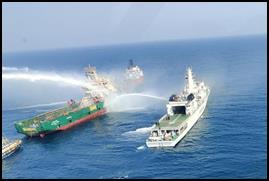
On 13 Feb 21, MF DSC distress alert was received from OSV Greatship Rohini (Call Sign AVHD) with 18 Indian crew in position 296 Prongs Lt 92 nm. On receipt of the information, ICG Ships Samarth & Samudra Prahari were diverted for assisting the distressed vessel.
ICGS Samarth reached datum on 13 Feb 21. On investigation with the distress vessel, the ship was informed that the fire occurred in Engine Room of the OSV Greatship Rohini while undertaking cargo operation near NQO Platform. Three crew were reportedly missing and one crew was reported with burn injury and required medical evacuation. CG Dornier ex-Daman also arrived overhead distressed vessel for aerial assessment. The injured crew was shifted via ship rescue boat to nearby NQO platform and was shifted ashore through ONGC Helo to Juhu Helibase for further medical treatment. ICG also requested ONGC ships in vicinity i.e MV Albatros and OSV Greatship Dipti for rendering assistance. ICGS Samarth and ONGC vessels continuously undertook boundary cooling.
Celebration of ‘Azadi ka Amrut Mahotsav’
In accordance to GoI directives for celebration of 75th anniversary of India’s Independence as ‘Azadi Ka Amrut Mahotsav’ commencing from 12 Mar 21, Indian Coast Guard was directed to undertook interaction with fishermen community at 75 coastal villages on the day of commencement. Twenty-five special CIPs were conducted at 25 various places along coastal villages.
Aid to Civil Authority
ICG Efforts during Extremely Severe Cyclonic Storm “TAUKTAE“
Consequent to prediction by IMD on 11 May 21 regarding development of a low pressure area over Southeast Arabian Sea and likelihood of formation of cyclonic storm over East Central Arabian Sea on 16 May 21, ICG had initiated preventive measures since 11 May 21. ICG lower formation Headquarters on west coast including Lakshadweep Islands and western Tamil Nadu coast alerted Fisheries authorities/association and commenced maintaining one to one liaison with State/Central Agencies through MRCC Mumbai and respective state/UT MRSC to account fishing boats and alert fishing boats at sea to take shelter in nearest port/return to base port. Regional Operating Centres (ROC) and Remote Operating Stations (ROS) commenced transmitting weather alerts in vernacular languages to warn fishing boats/mariners in their area of jurisdiction. Port authorities and merchant vessels at anchorages were alerted for initiating preventive measures and proceed to safety. ICG Headquarters based on the West Coast/Lakshadweep islands coordinated with local state/UT authorities for initiating preventive measures and also attended various coordination meetings for cyclone preparedness on video conferencing.
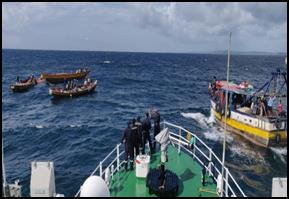
The weather alerts by ICG ships and aircraft were issued in vernacular language on VHF radio. MRCC Mumbai coordinated with various stake holders during the preventive stage and issued advisory to ONGC Control Room on 13 May 21 and 15 May 21 for alerting Oil Rigs and other vessels in Offshore Development Areas (ODAs) to take preventive measures for safety as per their SOPs, monitoring of all Offshore Support Vessels (OSVs)/ support vessels and initiate contingency measures. ICG establishments along the west coast and Lakshadweep islands coordinated with State/UT Fisheries Departments and 7535 Indian Fishing boats were accounted by the Fisheries departments at various ports/harbour/sea.
ICG Efforts Towards Severe Cyclonic Storm ‘YAAS’
Consequent to prediction by IMD regarding a low pressure over East Central Bay of Bengal and adjoining North Andaman sea around 22 May 21, ICG had initiated multiple preventive measures w.e.f. 18 May 21. ICG lower formation Headquarters on east coast including A&N Islands alerted
Port authorities and merchant vessels at anchorages alerted on weather requesting for initiating preventive measures and proceed to safety. ICG Headquarters based on the East Coast/A&N Islands coordinated with local state/UT authorities for initiating preventive measures and also attended various coordination meetings for cyclone preparedness on video conferencing. 12-15 ICG ships and 02-03 Dornier aircraft were deployed daily on east coast and A&N Islands for alerting fishing boats to take shelter, merchant vessels transiting through area to clear path of cyclone and merchant vessels anchored at various ports to pick up anchor and move to safe area.
The weather alerts by ICG ships and aircraft were issued in vernacular language on VHF radio. CGDHQ-6 issued advisory to ONGC for alerting Oil Rigs and other vessels in Offshore Development Areas (ODAs) to take preventive measures for safety as per their SOPs, monitoring of all Offshore Support Vessels (OSVs)/ support vessels and initiate contingency measures. ICG coordinated with operators and Single Point Mooring (SPM) operations were suspended by all operators due to impending cyclone.
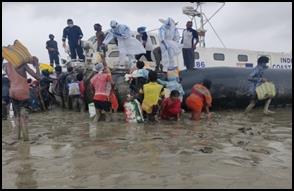
Evacuation of Stranded Personnel during Cyclone ‘YAAS’.
CGDHQ-8 Haldia received information from State Administration about stranded personnel at Nayachara Island on 26 May 21. Immediately, 02 Air Cushion Vehicles (ACVs) were launched and 77 stranded people from Nayachara Island were evacuated by hovercrafts.
Assistance to Neighbouring Countries/Foreign Vessels
Operation ‘Sagar Aaraksha-II’ off Colombo
MV X-Press Pearl a Singapore registered container vessel anchored about 9.5 nautical miles northwest of Colombo reported fire at No 2 hold on 20 May 21. The ship was awaiting permission to enter Colombo port and was carrying 1,486 containers carrying multiple type of cargo viz. Nitric Acid, LDPE, Sodium Hydroxide alongwith other chemicals and cosmetics. However, the fire was reported extinguished by pumping CO2 into hold using shipboard system. The fire was re-ignited on 25 May 21. The situation further deteriorated with rapid explosions on the vessel and converted to Major fire engulfing entire ship and the crew were evacuated safely. In order to contain the major fire onboard and to mitigate the potential threat to marine environment from the likely oil spill, assistance was sought by Sri Lankan authorities through High Commission of India (HCI) at Colombo and South Asia Co-operative Environment Programme (SACEP). Upon receipt of the request, an operation codenamed “Sagar Aaraksha II” was launched and ICGS Vaibhav undertaking surveillance in Gulf of Mannar (GoM) was diverted to augment the firefighting efforts. Additionally, ICGS Vajra was deployed from Tuticorin with five Divers and PR equipment/material for enhancement of support. ICGS Vaibhav and ICGS Vajra spearheaded the firefighting efforts in coordination with four OSVs viz. Posh Teal, Astro Capella, Boka Expedition and Panama using external firefighting systems. CG aircraft was launched from Chennai on 26 May 21 for aerial reconnaissance.
ICGS Samudra Prahari, a specialised Pollution Response Vessel was also deployed and the vessel arrived onscene on 29 May 21. ICGS Samudra Prahari, ICGS Vajra and ICGS Vaibhav carried out multiple FIFI runs on MV X-Press Pearl using AFFF and Seawater. Foam was continuously sprayed on the casualty with concentrated efforts at midship area and funnel. With consistent firefighting for a duration of six days, the fire was completely doused on 01 Jun 21.
On 09 Jun 21, the salvor confirmed that most of the bunker and other oil incinerated during fire and also the sheen near the vessel was not indicative of HFO/Oil spillage. The Operation ‘Sagar Aaraksha II’ was therefore terminated on 11 Jun 21. Operation ‘Sagar Aaraksha II’ provided a much needed succor to our neighbouring country in the line of Prime Minister’s Vision of “Neighbourhood First Policy” and succeeded in avoiding major maritime disaster.
Coastal Security
SOP on Joint Coastal Patrol (JCP) by ICG and Coastal Police
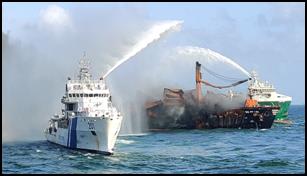
Joint Coastal Patrol (JCP) by ICG and Coastal Police for enhancing coastal security, enshrined in the Prime Minister’s Vision Document, was instituted in Aug 20. Despite challenges posed by COVID-19, enhanced co-ordination and synergy between local Coastal Police personnel and ICG units resulted in timely commencement of JCP on 15 Aug 20. A total of 383 sea sorties, 199 classroom instructions and 985 personnel have been embarked onboard for JCP sortiesfrom 01 Jan21 till to date.
Search & Rescue
National Maritime Search and Rescue Board Meeting
The 19th National Maritime SAR Board Meeting was conducted at Vigyan Bhawan, New Delhi on 25 Nov 21. The meeting was chaired by DGICG K Natarajan PVSM, PTM, TM Chairman, National Maritime Search and Rescue Board and Chief Guest were Dr. Sanjeev Ranjan, IAS, Secretary (Shipping), Shri Jatindra Nath Swain, IAS, Secretary (Fisheries). Fisheries officials from Tamilnadu, Gujarat & Kerala presented their status of various safety measures and initiatives being progressed.
SARCOMEX
SAR Communication Exercise (SARCOMEX) are conducted by ICG with adjoining countries MRCCs & RCCs to strengthen the Regional SAR services, develop interoperability and capacity building. ICG initiative to engage maritime nation in Indian Ocean Region has resulted in first hand exposure of MRCC operator on distress communication. During current year 2021 ICG engaged in 14 SARCOMEX with 11 countries.
(a) Government of India has designated Indian Coast Guard as the Indian implementing agency for SAR in Indian Ocean Rim Ocean Association (IORA).
(b) MoD, GoI has also nominated ICG as the Nodal Agency for SAR xin the Indo Pacific Region.
(c) During current year 2021, ICG units have saved 494 lives and have carried out 10 Medevac operations.
IMO Award for Exceptional Bravery at Sea
Every year, International Maritime Organisation (IMO) confers award for exceptional bravery at sea. The purpose of the award is to provide an unique, international recognition for those who, at the risk of losing their own life, perform acts of exceptional bravery, displaying outstanding courage at sea. This award is conferred on individuals or groups of individuals (viz ship/ SQN/ MRCCs/ MRSCs/ MRSSCs etc) who, perform acts of exceptional bravery in attempting to save life at sea or in attempting to prevent or mitigate damage to marine environment. Winner of the award is presented with a medal, which is accompanied by a certificate citing act of exceptional bravery performed. Government of India has approved forwarding of two nominations from ICG every year for ‘IMO Award for Exceptional Bravery at Sea’ w.e.f. 2014. The nomination of four ICG team members from Sarang for preparing the tow of the abandoned VLCC MV New Diamond on fire off Sri Lanka coast was forwarded by DGS to IMO as India’s nomination to IMO Bravery Awards 2021. IMO has awarded ‘Certificate of Commendation’ to the ICG team.
Approval-in-Principle for setting up of 29 MRSCc
MoD, GoI accorded Approval in principle for setting up of 29 MRSCs vide MoD letter No. 17(18)/2020-D(CG) dated 24 Jun 21 with an allocation of Rs. 43.89 crore under capital head Rs. 22.11 crore and under Revenue head. Rs. 21.78 crore.
International Cooperation
Visit of Indian Coast Guards Ships to Foreign Countries.
Overseas Deployment (OSD) of ICGS Samrat
ICGS Samrat with integral helicopter was deployed from 24 Oct 21 to 01 Nov 21 to Gan, Maldives for ferrying replacement ALH helicopter (CG 854) from Kochi to Gan, Maldives and bringing ALH helicopter (CG 853) from Gan, Maldives to Kochi for routines alongwith EEZ surveillance off Maldives.
Overseas Deployment (OSD) of ICGS Vajra
ICGS Vajra with integral helicopter (CG-817), ICGS Apoorva and CGDO ex 747 Sqn (CG), CGAE, Kochi visited Maldives from 20-24 Nov 21 to conduct Trilateral Maritime Exercise DOSTI-XV amongst Coasts Guards of India, Maldives and Sri Lanka to consolidate the professional and working relationship with the Coast Guard of respective countries.
Capacity & Capability Building of Foreign Coast Guard Agencies
Conduct of Maritime Law & Ops Course
ICG conducted Maritime Law and Ops Course at CGTC, Kochi for officers and sailors from 06 Sep – 01 Oct 21 and 04-22 Oct 21 respectively online due to COVID-19 pandemic. 16 officers and 21 sailors from Coast Guard agencies from FFCs viz; Bangladesh, Equatorial Guinea, Ghana, Ivory Coast, Kenya, Mauritius, Myanmar, Nigeria and Namibia were trained in the course.
Training and exercise
Training on Marine Oil Finger Printing
ICG and Japan Coast Guard (JCG) collaborate with each other under provisions of Memorandum of Cooperation (MoC) towards ‘Establishment of Collaborative Relationship to Combat Crimes at Sea and develop Regional Cooperation’ between ICG and JCG. As part of professional interaction and exchange of best practices, the National Strike Team of JCG conducted a two-day online training on ‘Marine Oil Finger Printing and Hazardous Noxious Substances Response’ for ICG officers on 22 and 23 Jun 21. ICG is the central coordinating agency for oil spill response in India and also Competent National Authority under SACEP for response to Oil and Chemical Pollution in South Asian Seas.
Trilateral Exercise ‘DOSTI-XV’ at Male
Trilateral Exercise ‘DOSTI-XV’ was conducted at Male between 20 to 24 Nov 21. ICG Ship Vajra with integral Chetak helicopter, Apoorva and ICG Dornier participated in exercise alongwith ships from Sri Lanka(CG) and MNDF(CG), Maldives. Maldives Defence Minister, ADG ICG, DG SLG, Chief of Defence Force (MNDF) and Commander, MNDF witnessed the DOSTI-XV exercise. During the exercise, for the first time officers from Bangladesh Coast Guard (BCG), Seychelles Coast Guard (SCG) and National Coast Guard (NCG) Mauritius participated as an Observers.
Aviation
Aero India Show 2021
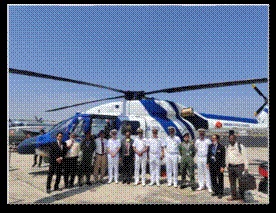
Asia’s largest military aviation exhibition ‘Aero India Show – 2021’ was held at Bengaluru from 04-05 Feb 21 by Department of Defence Production, MoD. The ICG ALH MK-III was the part of the fly past formation during the aero show. Various Aerospace, Maritime and Defence industry participated in the show to achieve the envisaged vision “Aatmnirbhar Bharat’. The ICG represented and show cased its aviation capabilities. A presentation was also delivered by DGICG on ‘Collaborative and Cooperative Mechanism for Ocean Peacekeeping’ during the IOR Seminar, conducted by DDP in Aero India 2021. Further ALH MK III Helicopter documents were accepted by DGICG accepted from Chief Managing Director HAL in presence of Raksha Mantri.
16 Advanced Light Helicopters (ALH Mk-III)
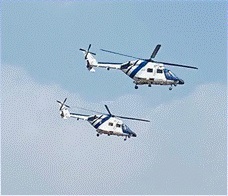
The ICG operates a mix of Fixed and Rotary wing aircraft to carry out its Charter including Surveillance, Interdiction, Search and Rescue, Medical Evacuation (MEDEVAC), Causality Evacuation (CASEVAC) etc. With the growing maritime trade and increased commercial activities in our Maritime Zones, there is a need for enhanced surveillance which necessitates commensurate fleet augmentation both for Fixed and Rotary wing platforms. Towards this end, a Contract for supply of 16 ALH Mk-III aircraft to the ICG was concluded with HAL, Bangalore on 29 Mar 2017. The helicopters are being fitted with 19 state-of-the-art equipment such as Surveillance Radar, EO-IR Pod, Medical Intensive Care Unit (MICU), AIS, TCAS, and ADELT etc. for maritime roles.
Major Events
Celebrations of ‘Azadi Ka Amrit Mahotsav” by ICG
To commemorate the 75th anniversary celebrations of our Independence and towards “Azadi Ka Amrit Mahotsav” on 15 Aug 21, Indian Coast Guard hoisted the National Flag at 100 inhabited and uninhabited Islands including.
17TH Investiture Ceremony
Defence minister Sh. Rajnath Singh awarded President’s Tatrakshak Medals (PTM) and Tatrakshak Medals (TM) to personnel of Indian Coast Guard for Gallantry/ Distinguished/ Meritorious service during 17th Investiture Ceremony conducted at New Delhi on 09 Oct 21. 21 Gallantry/ Distinguished/Meritorious medals awarded to ICG personnel by Defence Minister in a resplendent Investiture Ceremony. Defence Minister also interacted with awardees and their families post the ceremony. While speaking at the Investiture Ceremony at the National Stadium Complex, he said the growth of the maritime interest in India was made possible because of the morale, enthusiasm and energy shown by the ICG.
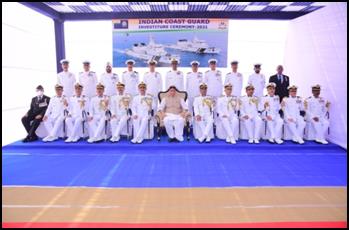
Visit of RM and General Bipin Rawat, Chief of Defence Staff
Raksha Mantri Shri Rajnath Singh and General Bipin Rawat, Chief of Defence Staff visited Coast Guard Headquarters on 09 Oct 21 and addressed Coast Guard Commanders and Senior officers during the 38th Coast Guard Commanders Conference conducted between 09-11 Oct 21. The Raksha Mantri was given a presentation on ICG operational and administrative developments by Director General K Natrajan, PVSM, PTM, TM that complies of ICG Operations including fire-fighting, Search and Rescue, Environment Protection, Anti-Drug trafficking and combating transnational maritime crimes etc. Capacities and capabilities of the Indian Coast Guard including issues pertaining to Coastal Security were also discussed during the visit.
Coast Guard Commanders Conference
38th Coast Guard Commanders Conference was conducted between 09-10 Oct 21 at ICG HQ, New Delhi. Raksha Mantri Shri Rajnath Singh inaugurated Conference and addressed Commanders/Senior officers of ICG during the Commanders Conference. The Raksha Mantri was also given a presentation on recent operational and administrative developments by ICG. A wide range of issues pertaining to further strengthening and progressing of ICG as well as legitimate legal maritime issues for safe, secure and clean seas were discussed indepth during the conference.
Commissioning of ICG Ship Vigraha
Indian Coast Guard Ship Vigraha, the 7th of Vikram Class Offshore Patrol Vessel (OPVs) constructed by Larsen & Toubro Ltd. Kattupalli, in line with PM’s vision of ‘Atmanirbhar Bharat- Make in India’ was commissioned at Chennai by Raksha Mantri Shri Rajnath Singh on 28 Aug 21 in the Presence of Shri T Thennarasu, Min of Industries, Tamil Nadu, Gen MM Naravane COAS, DG Krishnaswamy Natarajan, PVSM, PTM, TM, Director General Indian Coast Guard, Shri JD Patil, Director, L&T and other senior dignitaries of the Central and State Government.
Commissioning of ICGS Sajag
National Security Advisor Shri Ajit Doval commissioned ICGS Sajag, through video conferencing on 29 May 21 in the presence of Dr. Ajay Kumar, Defence Secretary and Director General K Natarajan, PVSM, PTM, TM, DGICG and other senior dignitaries of the central and state Government. ICGS Sajag is the 3rd in the series of 105 Mtr Offshore Patrol Vessel indigenously designed and built by Goa Shipyard Limited.
Commissioning of ICGS Sarthak
Director General K Natarajan, PVSM, PTM, TM, DGICG commissioned ICGS Sarthak on 28 Oct 21 in the presence of COMCG(W), DDG(P&P) & CMD(GSL). ICGS Sarthak is 105 Mtr Offshore Patrol Vessel (OPV) indigenously designed and built by Goa Shipyard Limited in line with Prime Ministers vision of ‘Make in India’, a fine example of ‘Atmanirbhar Bharat’. The ship will provide significant impetus to maritime surveillance prowess of Indian Coast Guard.
E-Induction of Advanced Light Helicopter (ALH) MK-III
On 12 Jun 21, signaling a new paradigm in Op preparedness, 03 Advanced Light Helicopter (ALH) Mk-III were inducted into ICG by Dr. Ajay Kumar, Defence Secretary, Govt. of India through video conferencing in the presence of Director General K Natarajan, PVSM, PTM, TM, DGICG and other senior dignitaries of the central and state Government.
Defence Research and Development Organisation
Handing over & Supply order of Main Battle Tank Arjun Mk-1A
The MBT Arjun Mk-1A is incorporated with many versatile and improved features over Mk-1, which makes it much more superior battle tank. Crew comfort, advanced land navigation system and enhanced night vision capabilities for both tank commander and driver are some of the progressions. It is a highly potent and dependable war-fighting machine.
The MBT ‘Arjun’ Mk-1A was handed over to the Indian Army by Prime Minister on 14 Feb 2021 and Ministry of Defence (MoD) placed an order with Heavy Vehicles Factory (HVF), Avadi, Chennai for supply of 118 Main Battle Tanks (MBTs) Arjun Mk-1A for the Indian Army on September 23, 2021. The order, worth Rs 7,523 crore, will provide further boost to the ‘Make in India’ initiative in defence sector and is a big step towards achieving ‘Aatmanirbhar Bharat’.
DRDO Designed and Developed Advanced Electronic Warfare Suite ‘Shakti’ handed over to Indian Navy
Advanced Electronic Warfare (EW) System ‘Shakti’ has been designed and developed by Defence Electronics Research Laboratory (DLRL) Hyderabad a laboratory of Defence Research and Development Organisation (DRDO) for Capital Warships of the Indian Navy for the interception, detection, classification, identification and jamming of conventional and modern Radars. The Shakti EW system will provide an electronic layer of defence against modern radars and anti-ship missiles to ensure electronic dominance and survivability in the maritime battlefield. This system will replace the earlier generation EW Systems of the Indian Navy. This system was handed over to Indian Navy on 19 Nov 2021 by Prime Minister Shri Narendra Modi.
DRDO Handed over Air Defence Missile System to Indian Air Force
The MRSAM (IAF) is an advanced network centric combat Air Defence System developed jointly by DRDO and Israel Aerospace Industries (IAI) in collaboration with the Indian industry comprising of private and public sectors including MSMEs. In a significant boost to India’s defence capabilities, the first deliverable Firing Unit (FU) of Medium Range Surface to Air Missile System was handed over to IAF on September 09, 2021 in the presence of Raksha Mantri.
Handing over of DRDO developed products to Armed Forces
Raksha Mantri Shri Rajnath Singh handed over five Defence Research and Development Organisation (DRDO) developed products to the Armed forces and other security agencies at an event held at DRDO Bhawan, New Delhi on 14 December 2021, as part of Azadi Ka Amrit Mahotsav celebrations and iconic week of Ministry of Defence.
He also handed over six Transfer of Technology (ToT) agreements to seven public and private sector companies. Earlier DRDO organised a Seminar on “Preparing for The Future” where Vice Chiefs of the Armed Forces and DRDO Scientists shared their views. Products handed over to the Armed Forces & Ministry of Home Affairs are Anti-Drone system, Modular Bridge, Smart Anti Airfield Weapon, Chaff Variants and the Light Weight Fire Fighting Suit.
Advanced Chaff Technology
Advanced Chaff Technology has been developed by DRDO to safeguard the naval ships as well as fighter aircrafts of Indian Air Force (IAF) against hostile radar threats and enemy missile attack. DRDO’s Defence Laboratory Jodhpur, has developed the advanced Chaff material and chaff cartridge-118/I in collaboration with High Energy Materials Research Laboratory (HEMRL), a Pune based laboratory of DRDO, meeting qualitative requirements of forces. Chaff is a passive expendable electronic countermeasure technology used worldwide to protect naval ship from enemy’s radar and radio frequency (RF) missile seekers. Successful development of Advanced Chaff Technology is another step towards Atmanirbhar Bharat.
Production lot of 12 Short Span Bridging System (SSBS)-10 m inducted into Indian Army
The SSBS-10 m plays a crucial role of bridging the gaps as a single span providing a wide, fully decked roadway, ensuring faster movement of the troops. This bridging system is compatible with Sarvatra Bridging System. The system will help in quick movement of troops and enhance the mobilization of resources.
Solid Fuel Ducted Ramjet (SFDR)
Solid Fuel Ducted Ramjet has been developed and flight tested by DRDO. During the test, air launch scenario was simulated using a booster motor. Subsequently, nozzle-less booster accelerated it to required Mach number for Ramjet operation. Success of SFDR propulsion technology is a significant milestone which paves way for development of long-range air-to-air missiles in the country.
Maiden launch of New Generation Agni P Ballistic Missile
New Generation Ballistic Missile Agni P was successfully flight tested. Agni P is a new generation advanced variant of Agni class of missiles.
Air Independent Propulsion (AIP) System
DRDO developed a full-scale Land-Based Prototype (LBP) for demonstration of Hydrogen Fuel cell-based AIP System, which when inducted by the Indian Navy would enhance the underwater endurance of conventional submarines. The indigenous system successfully completed 14 days of Endurance Trials. While there are different types of AIP systems being pursued internationally, fuel cell based AIP of DRDO is unique as the hydrogen is generated onboard.
Long Range Surface to Air Missiles (LRSAM)
LRSAM system has been jointly developed by DRDO and Israel Aerospace Industries (IAI), Israel to strengthen air defence capabilities of Indian Navy. The Missile system can provide point and area defence against various aerial targets including fighter aircraft, subsonic & supersonic cruise missiles. It is designed with active Radio Frequency (RF) seeker to identify, track, engage and destroy the target with high kill probability. Final production batch of LRSAM was flagged off completing the delivery within the given timeline.
ATGMs Helina (Army Version) and Dhruvastra (Air Force Version)
Helina and Dhruvastra are third generation, Lock On Before Launch (LOBL) fire and forget Anti-Tank Guided Missiles that can engage targets both in direct hit mode as well as top attack mode. The system has all-weather day and night capability and can defeat battle tanks with conventional armour as well as with explosive reactive armour. It is one of the most-advanced anti-tank weapon in the world.
Man Portable Anti-tank Guided Missile (MPATGM)
In a major boost towards Atmanirbhar Bharat and strengthening of Indian Army, DRDO flight-tested the indigenously developed low weight, fire and forget Man Portable Antitank Guided Missile (MPATGM). The missile incorporates state-of-the-art Miniaturized Infrared Imaging Seeker along with advanced avionics.
Vertical Launch of Short-Range Surface to Air Missile (VL-SRSAM)
The missile has been developed for the Indian Navy for neutralizing various aerial threats at close ranges including sea-skimming targets. Two vertical launches of the missile were carried out and on both the occasions, VL-SRSAM intercepted the simulated targets with pinpoint accuracy. The missiles were tested for minimum and maximum ranges.
New Generation Akash Missile (Akash-NG)
The successful flight trial of New Generation Surface to Air Akash-NG Missile was conducted from a land-based platform with all weapon system elements such as Multifunction Radar, Command, Control & Communication System and launcher participating in deployment configuration. The missile successfully demonstrated high manoeuvrability required for neutralising fast and agile aerial threats. Akash-NG weapon system will prove to be a force multiplier for the air defence capability of the Indian Air Force.
Maiden Flight Test of Akash Prime Missile
A new version of the Akash Missile – ‘Akash Prime’ was successfully flight tested. In comparison to the existing Akash System, Akash Prime is equipped with an indigenous active Radio Frequency (RF) seeker for improved accuracy.
Flight Test of Vertical Launch Short Range Surface to Air Missile
Vertical Launch Short Range Surface to Air Missile was successfully flight tested on 07 Dec 2021. The launch was conducted from a vertical launcher against an electronic target at a very low altitude. The launch of the system was conducted to validate integrated operation of all weapon system components including the vertical launcher unit with controller, canisterised flight vehicle, weapon control system etc. required for future launches of the missile from Indian Naval Ships. The first trial was conducted on 22 February 2021 and this is confirmatory trial to prove the consistent performance of the configuration and integrated operation.
Air version of BrahMos supersonic cruise missile
Air version of BrahMos supersonic cruise missile was successfully test fired from the supersonic fighter aircraft Sukhoi 30 MK-I on 08 December 2021. BrahMos is a Joint Venture between India (DRDO) and Russia (NPOM) for the development, production and marketing of the supersonic cruise missile. The launch is a major milestone in the BrahMos development. It clears the system for the serial production of air-version BrahMos missiles within the country.
Successful tests carried out for Pinaka Extended Range System, Area Denial Munitions & New Indigenous Fuzes
Successful tests of Pinaka Extended Range (Pinaka-ER), Area Denial Munitions (ADM) and indigenously developed fuzes have been carried out at various test ranges. The Pinaka-ER Multi Barrel Rocket Launcher System was successfully tested. The system is jointly designed by laboratories of Defence Research and Development Organisation (DRDO) – Armament Research & Development Establishment (ARDE), Pune and High Energy Materials Research Laboratory (HEMRL), Pune.
DRDO & Indian Air Force successfully flight-test indigenous Stand-Off Anti-Tank Missile
Defence Research and Development Organisation (DRDO) and Indian Air Force (IAF) flight-tested the indigenously designed and developed Helicopter launched Stand-off Anti-tank (SANT) Missile on 11 December 2021. The missile is equipped with a state-of-the-art MMW seeker which provides high precision strike capability from a safe distance. The weapon can neutralise targets in a range up to 10 kms. The SANT missile has been designed and developed by Research Centre Imarat (RCI), Hyderabad in coordination with other DRDO labs and participation from industries.
Supersonic missile assisted torpedo system
Defence Research and Development Organisation (DRDO) developed supersonic missile assisted torpedo system was successfully launched on 13 December 2021. The system is a next generation missile-based standoff torpedo delivery system. The system has been designed to enhance anti-submarine warfare capability far beyond the conventional range of the torpedo.
Enhanced Range 122mm Caliber Rocket
Defence Research and Development Organisation (DRDO) successfully test fired enhanced range versions of indigenously developed 122mm Caliber Rocket from a Multi-Barrel Rocket Launcher (MBRL) on 25 June 2021. These rockets have been developed for Army applications and can destroy targets up to 40 km. The rocket systems have been developed jointly by Pune-based Armament Research and Development Establishment (ARDE) and High Energy Materials Research Laboratory (HEMRL) with manufacturing support from Economic Explosives Limited, Nagpur.
Flight Tests of Indigenously-Developed Smart Anti-Airfield Weapon
Two flight tests of indigenously-developed smart anti-airfield weapon have been carried out jointly by Defence Research & Development Organisation (DRDO) and Indian Air Force (IAF). The two different configurations based on satellite navigation and electro optical sensors have been successfully tested. Electro optical seeker based flight test of this class of bomb has been conducted for the first time in the country. The electro optic sensor has been developed indigenously. The weapon was launched by an IAF aircraft.
Flight Trials of ABHYAS -High-Speed Expendable Aerial Target (HEAT)
ABHYAS is an expendable high-speed unmanned aerial target, being developed by DRDO. The configuration of ABHYAS is designed on an in-line small gas turbine engine and uses an indigenously developed MEMS based navigation system for its navigation and guidance. Three successful flight trials of ABHYAS were conducted from ITR Balasore, Odisha. During the test campaign, the user requirements were successfully achieved. The vehicle can be used as the target for the evaluation of various missile systems.
First indigenous 9mm Machine Pistol jointly developed by DRDO and Indian Army.
Infantry School, Mhow and DRDO’s Armament Research & Development Establishment (ARDE), Pune jointly designed and developed the 9 mm Machine Pistol in record time of four months. The weapon has huge potential as personal weapon for heavy weapon detachments, commanders’ tanks and aircraft crews, drivers/dispatch riders, radio/radar operators, closed quarter battle, counterinsurgency and counter terrorism operations etc. The weapon is named “Asmi” meaning “Pride”, “Self-Respect” and “Hard Work”.
Light Weight Bullet Proof Jacket
To make the soldiers more comfortable, light weight Bullet Proof Jacket (BPJ) weighing 9.0 kilogram, has been developed for the India Army. The importance of this vital development lies in the fact that each gram of BPJ weight reduction is crucial in enhancing soldier comfort while ensuring the survivability. This technology reduces the weight of the medium sized BPJ from 10.4 to 9.0 kg.
Single Crystal Blades Technology
Helicopters used in defence applications need compact and powerful aero-engines for their reliable operation at extreme conditions. To achieve this, state-of-the-art Single Crystal Blades having complex shape and geometry, manufactured out of Nickel based super alloys capable of withstanding high temperatures of operation are used. DRDO developed single crystal blades technology and supplied 60 of these blades to Hindustan Aeronautics Limited (HAL). Very few countries in the world such as USA, UK, France and Russia have the capability to design and manufacture such Single Crystal (SX) components.
CRPF Uses Casualty Transport Bike “Rakshita”
Rakshita, a bike-based casualty transport emergency vehicle was handed over to Central Reserve Police Force (CRPF). The bike ambulance will help in overcoming the problems faced by Indian security forces and emergency healthcare providers. Rakshita is fitted with a customized reclining Casualty Evacuation Seat (CES), which can be fitted in and taken out as per requirement, a head immobilizer, safety harness jacket, hand and foot straps for safety, adjustable foot rest, physiological parameter measuring equipment with wireless monitoring capability and auto warning system for driver.
Bilateral Innovation Agreement between DRDO & Directorate of Defence R&D, Israel
As a tangible demonstration of the growing Indo–Israeli technological cooperation, Defence Research and Development Organisation (DRDO) and Directorate of Defence Research and Development (DDR&D), Ministry of Defence, Israel have entered into a Bilateral Innovation Agreement (BIA) to promote innovation and accelerated R&D in startups and MSMEs of both countries for the development of dual use technologies and products in the areas such as Drones, Robotics, Artificial Intelligence, Quantum technology, Photonics, Biosensing, Brain-Machine Interface, Energy Storage, Wearable Devices, Natural Language Processing, etc.
DRDO signed framework MoU with MoRTH for Geo-hazard Management
Defence Research and Development Organisation (DRDO) has entered into a framework memorandum of understanding (MoU) with the Ministry of Road Transport & Highways (MoRTH) to strengthen collaboration in the field of technical exchange and co-operation on sustainable geohazard management. The MoU was signed between Dr G Satheesh Reddy, Secretary DDR&D & Chairman DRDO and Shri Giridhar Aramane Secretary MoRTH. As per the agreement, DRDO and MoRTH will co-operate in various mutually beneficial areas related to geohazard management. The initiative will ensure safety against the adverse effects of landslides and other natural calamities on national highways in the country.
DRDO Skill Development Centre for Fire Safety Training
Raksha Mantri Shri Rajnath Singh has inaugurated Skill Development Centre (SDC) for Fire Safety Training of Defence Research and Development Organisation (DRDO) at Pilkhuwa in Uttar Pradesh through virtual mode on 22 February 2021. The facility, created by Delhi based DRDO laboratory Centre for Fire, Explosive and Environment Safety (CFEES); is aimed at developing trained human resources, fire safety technology and products to save precious human lives and valued assets. DRDO facility would be utilised for imparting fire prevention and fire-fighting training to the Fire Service personnel of Indian Armed Forces, DRDO, Ordnance Factories, Coast Guard and defence undertakings. In addition, trainees from Bhutan,
Sri Lanka and other neighbouring countries would also be imparted training at the Centre.
DRDO Dare to Dream 2.0 Awards & launch of Dare to Dream 3.0
Raksha Mantri Shri Rajnath Singh felicitated the winners of ‘Dare to Dream 2.0’ Contest of Defence Research & Development Organisation (DRDO) and gave away awards to 40 winners – 22 in Individual category and 18 in Startup category. He also launched ‘Dare to Dream 3.0’ to promote innovators & startups and provide a platform for the young ignited minds in the country.
Dare to Dream is DRDO’s pan-India contest to promote Indian academicians, individuals and startups to develop emerging defence and aerospace technologies/systems. DRDO provides technical and financial support to the winners for realisation of their ideas under the Technology Development Fund (TDF) scheme.
Three products/systems indigenously developed by DRDO were also handed over to the Armed Forces
·ARINC818 Video Processing and Switching Module: The module, developed for the Indian Air Force, was handed over to the Vice Chief of Air Staff. It is a state-of-the-art module with high bandwidth, low latency, channel bonding, easy networking and will cater to 5th generation aircraft development programmes.
·Sonar Performance Modelling System: Developed for the Indian Navy, the system was handed over to Vice Chief of Naval Staff. It is useful for Indian Naval ships, submarines and under water surveillance stations etc.
·Bund Blasting Device Mk-II: The device, developed for Indian Army, was handed over to the Vice Chief of Army Staff. It is used to reduce the height of Ditch-cum-Bund obstacles to enhance the mobility of mechanised infantry during wartime.
Greater linkages between DRDO and academia
A Memorandum of Understanding (MoU) was also exchanged between Prof HA Pandya, Vice Chancellor, Gujarat University and Secretary Department of Defence R&D and Chairman DRDO Dr G Satheesh Reddy for establishing an Advanced Technology Centre ‘Sardar Vallabhbhai Patel Centre for Cyber-Security Research’ at Gujarat University for conducting directed research in cyber security.
Corporate Initiatives
Enabling Industry
DRDO has been nurturing as well as encouraging industry to take up defence manufacturing. Today, more than 2000 industry partners have joined hands with DRDO in delivery of components, subsystems, systems, platforms and technologies for Indian Armed Forces. Many industries have achieved the capability and the capacity to become the lead system integrator. The technology of all systems is transferred to the Indian Industry for production and supply
Many of the defence technologies developed by DRDO have good potential and utility for application in commercial market too and are transferred to the industry for commercial exploitation. DRDO nurtured industry partners have become part of global supply chain and have started exports of DRDO developed systems to friendly countries. Some of the initiatives to nurture Indian industry for defence production are as follows:
Transfer of Technology (ToT)
DRDO provides the relevant ‘know-how’ in the form of Technology Transfer Documents (TTD) and handholding support to Indian industry. Technology is transferred to Development cum Production Partner (DcPP) / Development Partner (DP) / Production Agency (PA) without any ToT Fee and to other industries with a one-time ToT Fee @5% of total project sanction cost. Royalty is not charged on net sales to Indian Armed Forces and other Govt Departments. 2% royalty is applicable for sales in Indian commercial market and exports. Details are available at website https://drdo.gov.in/transfer-.
Technology Development Fund (TDF)
In TDF, a corpus fund of Rs. 100 Cr has been created to enable Indian industries, specially MSMEs, for indigenisation of the defence products, sub systems and components. The fund may also be utilised for developing new technologies as required by DRDO, Services and DPSUs. The cost of each project under TDF can be up to Rs 10 Cr. The industry can get funding up to 90% of the project cost. Details are available at website https://tdf.drdo.gov.in.
DRDO Patents for Indian Industry
All patents and relevant intellectual publications are available on DRDO website. These can be used by Indian industry free of cost. For any further support, DRDO is ready for handholding and for working out the modalities.
Development and Production Partner
DRDO engages industry as Development Cum Production Partner (DcPP) /Development Partners (DP) / Production Agency (PA) during the execution of its projects and programmes. The selection of industries is carried out based on procurement rules and procedures.
Testing Support
A number of advanced test facilities & equipment are available at Labs for trial & testing of the products before acceptance by the User. DRDO provides access to the world-class high-end test facilities to Indian industries involved in designing, developing and manufacturing. The list of these Test Facilities is given on DRDO website. This assures development of high-quality defence products.
Evaluation and Certification Support
DRDO provides unique certification to niche industry for aerospace & crypto products. CEMILAC provides certification support to industry for military airworthiness. SAG, Delhi provides testing and certification support for IT and crypto products developed by industries on request of Services.
DRDO Products for Export
DRDO developed products have created interest among Nations. Some systems like radars, Akash missiles & simulation systems have been exported.
Enhanced Integration with Academia
A regular MTech program in Defence Technology has been launched by DRDO and AICTE to impact necessary theoretical and experimental knowledge, skill and aptitude in various defence technology areas. Program will motivate aspiring engineers help the country achieving Atmanirbhar Bharat. DRDO also signed MoU with Gujarat University, Ahmedabad, & Institute of Infrastructure Technology Research and Management, Gandhinagar for introduction of Defence Technology courses in their Post Graduate and B.Tech courses respectively and courses started from Feb 2021. Ten Centre of Excellences are operating to encourage research in frontier Science & Technology related to defence.
Contributions during Second Wave of COVID-19
The DRDO gave best when Nation needed most. DRDO has spread message of hope with its nimble transformation from missiles-maker to mask-designer and main battle tank designer to an innovator for saving lives. Summary of major efforts made by DRDO during the second wave of COVID-19 is listed below:
a. DRDO Covid Care Hospitals DRDO had constructed the 1000 bed makeshift hospital in Delhi in record time of 11 days during first wave. Based on this efficient and effective model of augmenting healthcare infrastructure, during more virulent second wave, DRDO constructed 11 more Covid Care hospitals at various locations across the country including Delhi, Ahmedabad, Lucknow, Varanasi, Gandhinagar, Rishikesh, Haldwani, Jammu, Srinagar, Guwahati and Imphal. These hospitals were constructed and made operational for meeting the local needs.
b. Medical Oxygen Plants (MOP) Based on DRDO technology, 931 Nos. of Medical Oxygen Plants were installed & commissioned at 869 sites across the country funded by PMCARES, to make medical oxygen available to COVID patients. These Medical Oxygen Plants are designed for a flow rate of 1,000 litres per minute (LPM). The system can cater to 190 patients at a flow rate of 5 LPM and charge 195 cylinders per day. The Medical Oxygen Plant (MOP) technology has been developed by DRDO based on the On‐Board Oxygen Generation for LCA, Tejas. These plants will overcome the logistics issues of oxygen transportation and help COVID-19 patients in emergency.
c. Oxycare Oxygen Supply System DRDO has developed a unique system, Oxycare which senses the individual’s SPO2 level and accordingly regulates oxygen supply from a cylinder. This helps to optimise the quantity of oxygen used by the patient. Funded through PMCARES, 1.5 lakhs such systems have been ordered by Govt. of India. Under this sanction, 1,00,000 manual and 50,000 automatic Oxycare systems along with non-rebreather masks are being procured.
d. 2-deoxy-D-glucose (2-DG)
An Anti-COVID-19 therapeutic application of the drug 2-deoxy-D-glucose (2-DG) was developed by Institute of Nuclear Medicine and Allied Sciences (INMAS), a lab of DRDO, in collaboration with Dr Reddy’s Laboratories (DRL), Hyderabad. Drug Controller general of India (DCGI) has approved the emergency use of this drug. It can be administered only upon prescription and under the supervision of a qualified physician to hospitalised moderate to severe COVID-19 patients as an adjunct therapy to the existing standard of care.
Conclusion
DRDO, being the guiding force, has made giant strides in strengthening self-reliance in complex defence technologies, weapon systems and platforms. The organization has been a torch bearer for advanced technology development and has provided thrust to Aatmanirbhar Bharat. In this endeavor, the initiatives, guidelines and policies rolled by the organization has created an ecosphere. DRDO alongwith academia, MSMEs, Production Agencies, Startup, TDF partners etc. form the part of the defence R&D ecosphere. This enabled ecosphere will achieve complete self reliance in defence; work coherently in new technological area; strive for better field worthy products; generate employment and harness new talents in the industry.
DRDO has also developed many technologies and products to combat COVID and has played an important role in indigenous development of ventilators, PPEs, masks, hospitals, COVID drug and oxygen plants during the critical time of pandemic. All these enabling technologies have led India into and era of Aatmanirbhar Bharat
Border Road Organisation
Infrastructure
Inauguration of 75 Projects of Roads and Bridges by Raksha Mantri
On 28 June 2021, Raksha Mantri Shri Rajnath Singh inaugurated 75 Projects of Roads and Bridges constructed by BRO in six States and two Union Territories (UTs). These Projects, 63 Bridges and 07 Roads, were dedicated to the Nation by Raksha Mantri in a ceremony which took place at Kyungam, 88 kms from Leh in the Union Territory of Ladakh. Chief Minister, Arunachal Pradesh, Shri Pema Khandu, Chief Minister, Himachal Pradesh, Shri Jairam Thakur, Chief Minister, Uttarakhand, Shri Tirath Singh Rawat, Chief Minister, Sikkim, Shri Prem Singh Tamang, Minister of State (Independent Charge) for Development of North Eastern Region & Minister of State, PMO, Dr Jitendra Singh; MP from Jammu & Kashmir Shri Jugal Kishore Sharma, MPs from Uttarakhand & Mizoram Shri Ajay Tamta & Shri C Lalrosanga respectively among those who attended event virtually.
Raksha Mantri virtually dedicated to the Nation 24 bridges & three roads built by BRO in four States & two Union Territories
Raksha Mantri dedicated to the Nation 24 bridges and three roads, built by BRO in four States and two Union Territories, through a virtual event from New Delhi on December 28, 2021. Of the 24 bridges, nine are in Jammu & Kashmir; five each in Ladakh & Himachal Pradesh; three in Uttarakhand and one each in Sikkim & Arunachal Pradesh. Of the three roads, two are in Ladakh and one is in West Bengal. The main highlight was the inauguration of India’s first indigenous Class 70 140-feet Double-Lane Modular Bridge, built at the height of 11,000 feet at Flag Hill Dokala, Sikkim and Chisumle-Demchok road at Umling La Pass at over 19,000 feet in Ladakh which also holds the Guinness World Record of world’s highest motorable road.
Guinness World Record for Constructing Highest Motorable Road
BRO constructed road over Umling La Pass, in Eastern Ladakh, at 19,024 ft above sea level has now officially become the highest motorable road in the world, a record previously held by a road in Bolivia at 18,953 ft enroute to volcano Uturuncu. On 16 Nov 2021, in an online ceremony organised by the official adjudicator from Guinness World Record, United Kingdom, the award was conferred to BRO, Lt General Rajeev Chaudhry, VSM, DGBR received the award on behalf of BRO. The 52 Km long road connecting Chismule to Demchok is approximately 15 km from the LAC and assumes strategic importance. Its construction is expected to enhance the socio-economic conditions of the locals and will promote tourism in the remote border areas of Ladakh.
Final Breakthrough Blast of Sela Tunnel
On 14 Oct 2021, Raksha Mantri Shri Rajnath Singh, through e-ceremony, carried out the last blast of 1555 m long Sela Main Tunnel (T2) in West Kameng District of Arunachal Pradesh. The tunnel is being constructed on important Balipara-Charduar-Tawang Road (B-C-T). Once completed the Sela Tunnel will be the longest bi-lane tunnel at altitude above 13000 ft, the second tunnel of Sela Tunnel project, of 980 m length, which started this year has also crossed the 700 m mark. The completion of tunnel in 2022 will facilitate uninterrupted move of troops across the important Sela Pass and will provide all weather connectivity to the regions ahead of Tawang till the important Indo-China borders.
Capability Development
Inauguration of Centre of Excellence on Road safety & Awareness (CoERSA) & Centre of Excellence for Roads, Bridges and Tunnelling (CoERBAT)
Raksha Mantri on 11 Jun 2021, inaugurated Centre of Excellence on Road safety & Awareness (CoERSA) & Centre of Excellence for Roads Bridges and Tunnelling (CoERBAT), established by BRO at Seema Sadak Bhawan. These Institutions were established by BRO with an aim to spread greater Road Safety Awareness amongst the public and also focus on aspect of Road Safety through Audit followed by analysis & remedial actions. CoERSA and CoERBAT will focus on institutionalising the knowledge gained over the years by BRO in development of roads, bridges, airfields and tunnels.
Adventure
Ind@75 BRO Motorcycle Expedition
The first of its kind “India@75 BRO Motorcycle Expedition” was flagged off by Raksha Mantri Shri Rajnath Singh from New Delhi on 14 Oct 2021. The 5th leg of the expedition is in progress and has so far completed 50 days since it was flagged off, the expedition will traverse approximately 20000 Kms with 75 Riders over 75 Days to celebrate India’s 75 Years of Independence, the aim of Expedition is to touch cord with the citizens on themes of “National Integration, Nation Building & Road Safety Awareness”. The Expedition will culminate on 27 Dec 2021 at New Delhi, Raksha Rajya Mantri Shri Ajay Bhatt is expected to Flag in the team.
Women Empowerment
Women Officers for construction of Important Infra in Border Areas
First time in the history, Border Roads Organisation appointed women officers to command important Road Construction Companies (RCC) along border areas. In Apr 2021, EE (Civil) Vaishali S Hiwase, a GREF officer took over the reins of 83 Road Construction Company and was employed on an important Indo-China Road connecting Munisairi-Bughdiar-Milam. On August 30, 2021, Major Aaina Rana took charge as CommandingOfficer, 75 RCC at Pipalkoti in Chamoli District in Uttarakhand and became the first Indian Army Engineer Officer to command a road construction company, also all three platoon commanders under her, Captain Anjana, AEE (Civ) Ms Bhawana Joshi, and AEE (Civ) Ms Vishnumaya K have together created the first-ever women RCC.
National Cadet Corps
Camp Training
The normal physical training has resumed in NCC from September 2021. All mandatory camps and adventure activities are being conducted.
Ek Bharat Shreshtha Bharat (EBSB)
NCC Cadets of all the State Directorates participated in the online EBSB weekly Camps every month. During these online webinars are conducted wherein three hours daily interactive sessions based on cultural exchange were organized, between the paired Guest & Host State Directorate cadets. NCC Cadets of all the State Directorates participated in the online EBSB weekly Camps every month. Total 196 online camps were conducted till Nov 2021.
Online Training During COVID
Due to the COVID situation Online Training continued during the Year 2020-21. Extensive use of Mobile Training App version 1.0 and Version 2.0 were resorted to by the Cadet for training. However, all certification examination was conducted offline.
Special National Integration Camps (SNICs)
A total of Six SNICs were conducted in the remote geographic extremities of the Nation at Srinagar/ Leh, Jaisalmer, Kakinada, Lakshadweep, Port Blair & Kohima/ Dimapur for a strength of 300 cadets each. SNIC Delhi was held between 08 Nov and 20 Dec 2021 with the strength of 50 cadets and 02 ANOs.
Flying Training.
Due to Covid 19 restricted flying was carried out in the training year 2020-21 and in the current training year. The efforts are on for formalizing the Flight Safety section of NCC Air wing. This would facilitate accident investigation within the time frame and timely implementation of CoI recommendations. Three directorates have procured simulators for introducing cadets to the flying environment.
Yachting Special Training Camps.
102 Naval cadets qualified Yachting All India Level I/II/III exams. Increase from one to four nodes has been undertaken. The same was conducted from 08 Dec to 15 Dec 2021 at Bhopal, Kochi, Vishakhapatnam and Goa.
Rock Climbing Training Camp (RCTC).
RCTC was conducted by NCC Directorate MP&CG for SD (273 cadets and 10 ANOs) and SW (273 cadets and 10 ANOs) cadets w.e.f 10 Nov to 28 Nov 2021 and 02 Dec to 20 Dec 2021 respectively in Gwalior (MP).
Republic Day Camp (RDC).
Republic Day Camp is conducted at Army Parade Ground, Delhi Cantt from 01 to 29 January, every year in Delhi. The Camp is attended by approx. 2070 cadets from all over India and approx. 15 Officers and 100-120 cadets of friendly foreign countries also attend the Camp from 15 January to 29 January as guests of the NCC. The Camp is traditionally inaugurated by the Vice President of India on 06 Jan and culminates with the Prime Minister’s Rally on 28 Jan. During RDC-21 the number of participating cadets was restricted to 597 due to COVID restrictions.
Attachment Training
(a) Increase in Army attachment, from 20000 to 28000, IMA attachment from 120 cadets to 250 cadets and OTA attachment from 50 cadets to 100 cadets, increase in Overseas Deployment (OSD) by IN vacancies is planned from 20 to 30 cadets.
(b) OSD with Coast Guard is being taken up.
Training App Launch Ver 01 & 02
NCC Training App Version 1 was launched by Raksha Mantri on 27 Aug 2020 through an online ceremony. NCC Training App version 2.0 was launched on 28 May 2021 by Def Secy. The App includes Brief on NCC, Syllabus, Precis, Interactive Videos, Frequently Asked Questions and also Query by Cadets. Online training of cadets under guidance of respective ANOs is under progress.
Azadi Ka Amrit Mahotsav events and Social Service and Community Development activities
Paying Tribute to Fallen Heroes
As part of celebration of Azadi ka Amrit Mahotsav in the month of August 2021, cadets of NCC paid tribute to fallen heroes, war heroes and freedom fighters by organizing cleaning of statues and organising Poem Recitation, Nukkad Natak at 75 locations. NCC also conducted felicitation of NoKs of Fallen heroes at 13 locations which were broadcasted live on Gallantry Web Portal.
Fit India Freedom Run 2.0
Fit India Campaign 2.0 was launched by Ministry of Youth & Sports Affairs on 13 Aug 2021. Cadets and Staff of NCC also actively participated in the event and are registered on portal directly as per the directions of MoYA. Event culminated on 02 Oct 2021. Around 12.5 lakh cadets participated in the event.
Clean India Campaign
NCC participated in the Clean India Campaign conducted under the aegis of Ministry of Youth & Sports Affairs in the month of Oct 2021. 260705 NCC cadets have participated in the Campaign.
Adoption of Statues
Each NCC Unit has adopted statue of prominent persons/fallen heroes in their Area of Responsibility. NCC has adopted 2187 statues which are cleaned on weekly basis. One such event is live webcasted on Gallantry Web Portal every week since July 2021.
Ganga Utsav
NCC participated in Ganga Utsav – A River Festival conducted under the aegis of National Mission for Clean Ganga (NMCG) from 1st to 3rd November 2021 to contribute towards conservation, rejuvenation of Ganga and other major rivers across the country through awareness programmes and youth participation. 41,228 NCC cadets participated in the event.
Vijay Shrankhala Aur Sanskritiyon Ka Maha Sangam
NCC conducted ’Vijay Shrankhala Aur Sanskritiyon Ka Maha Sangam’ mega event by carrying out felicitation of 75 fallen heroes of 1971 War at 75 locations across the country and congregation of cadets from all State Directorates at New Delhi for the mega event which showcased the culture of their respective region. This event was conducted from 28 Nov 2021 to 17 Dec 2021 and highlighted the theme of ‘Unity in Diversity’. Raksha Mantri was the Chief Guest for the closing ceremony.
Puneet Sagar Abhiyan
NCC now plans to carry out a nationwide campaign to Clean Sea Shores/Beaches of the plastic waste & other waste along the Sea Shores and increase awareness about importance of keeping the Sea shores free from Plastic waste. A total of 3,40,000 cadets from 127 Coastal Area NCC Units will participate in the month-long activity from 01- 30 Dec 2021.
Shaheedon Ko Shat Shat Naman
NCC plans to undertake a mega event ‘Shaheedon ko Shat Shat Naman’, throughout the Nation including the National Capital in concert with the Republic Day Celebration on 26 January 2022. In the event, NOK of each fallen heroes of all three services, pan India, will be visited by NCC Offrs/ Permanent Instructor Staff & Cadets of the State Directorates and presented with a plaque on 26 Jan 2022 at the same time when the PM pays homage to fallen heroes at the National War Memorial.
Swachhta Pakhwada at National War Memorial C Hexagon
A Swachhta Pakhwada will be conducted at National War Memorial C hexagon from 19-31 Jan 2022 to keep the general area of Rajpath and C Hexagon clean during Republic Day functions by spreading mass awareness, organizing cleanliness campaigns and supplementing efforts of other agencies tasked for maintenance of that area.
Induction of Simulators
Major emphasis of training has always been on outdoor activities but several restrictions are imposed on conduct of outdoor training especially in school/colleges located in towns/cites. To overcome space problem & impart training on weapon & equipments, training simulator for Army, Air & Navy cadets are being procured & few of them have already been installed also. Details of simulator are as under:-
(a) .22 Four Lane Simulators – 98
(b) Microlite Simulators – 40
(c) Rowing Simulators – 60
Sports Activities at National Level.
NCC cadets were indulged in sports activities depending upon COVID-19 situation prevalent in their area & as per schedule of National Sports Tournaments. Major Sports events in which NCC cadets showcased their talent are as under:
Jawaharlal Nehru Hockey Cup Tournament
This year NCC teams in Junior Boys (two team), Junior Girls and Sub-Jr Boys categories are participating in the prestigious Jawaharlal Nehru Hockey Tournament 2021, where they played against some of the best teams in the country. This year, NCC Junior Girls Team won Gold medal in the Jawaharlal Nehru Hockey Cup Tournament which was conducted from 29 Oct 2021 to 10 Nov 2021.
Inter Directorate Sports Shooting Championship (IDSSC)
IDSSC camp selection trials for All India G V Mavlankar Shooting Championship was conducted from 23 Sep to 02 Oct 2021 at Mhow by NCC Directorate MP&CG. All State Directorate participated in this event with (16 in previous years) 20 cadets each. The NCC Cadets qualifying the selection criteria will be part of DG NCC Shooting team for participation at the All India G V Mavlankar Shooting Championship.
All India GV Mavlankar Shooting Championship
Firing being one of the core training activities of NCC, shooting discipline enjoys special place in NCC sporting activities. Selected Cadets during the Inter Directorate Sports Shooting Championship participate in the National Rifle Association of India (NRAI) events like All India GV Mavlankar Shooting Championship Competition. NCC shooting teams have been performing well in the event for the last many years and this year 55 Cadet participated and NCC shooting team won following medals in XXXTH All India GV Mavlankar Shooting Championship Competition-2021: –
(i) Gold – 04
(ii) Silver – 04
(iii) Bronze – 02
Total 10
National Shooting Championship Competition
Every year NCC Shooting Team participates in the prestigious National Shooting Championship Competition (NSCC). This year 2021, 29 NCC shooters have been selected for 64th National Shooting Championship Competition. No medal was won by NCC Shooting Teams.
Expansion of Youth Exchange Programme.
Case for initiation of YEP was taken up with Govt of seven foreign countries i.e., Australia, France, UK, USA, Canada, Israel & Thailand through Defence attaches of Indian Embassy/ High Commissions in respective countries.
NCC Alumni Association
NCC Alumni Association has been registered under the Societies Registration Act 1860 to bring together all Ex NCC Cadets and uniformed persons, who have served in NCC for furtherance of aims of NCC and effectively participate in National Building Process. The PM launched the NCC Alumni Association on 19 Nov 21 and was registered as the first alumnus of the NCC Alumni Association.
NCC Training App
NCC Training App Version 1.0, to make online study material available 24 x 7, was launched by Raksha Mantri on 27 Aug 2021. The App is being used extensively by the cadets. This app has brought about a paradigm shift in training philosophy by ensuring easy availability of updated training material. Based on feedback from the environment, an upgraded version 2.0 (Bilingual) was developed and was launched on 28 May 2021 by Defence Secretary. Entire training material (Syllabus, Precis & FAQs) incl 225 Training Videos uploaded on app are available in Hindi & English and the cadets are utilizing it to the optimum.
NCC Digital Forum
NCC Digital Forum has been developed with assistance from My Gov and was launched on 24 Dec 2020 to encourage max number of cadets to contribute and share their experiences online. Upgraded version of the same was made operational in May 21. The forum provides for an unprecedented exchange of experiences amongst 15 lac NCC Cadets across the country thereby contributing towards National Integration and Nation Buildings. A large number of cadets have registered on the forum and are regularly contributing valuable contents.
Procurement of Cloth Khaki
The sanction of Raksha Mantri facilitated procurement of approx. 34 lakh metres of cloth Khaki thereby benefitting around 5.66 lakh Army NCC Cadets.
Procurement of Simulators
The procurement of 44 Microlight Aircraft Simulators and 60 Rowing Simulators has fructified during the year and delivery and installation is under progress. The simulators-based training has upgraded the Air Force and Naval Cadets training immensely.
Disbursement of Stitching Charges
The disbursement of stitching charges at the rate of Rs 332/- per cadet amounting to Rs 37.60 Crs was undertaken during the year on Direct Benefit Transfer (DBT) mode. The scheme has benefited approx. 5.70 lakh cadets.
Procurement of Vehicles
HQ DGNCC placed contracts for procurement of 325 nos. of vehicles (all types) against the deficiency of the NCC units. These vehicles are under delivery and would improve the training and administration standards considerably.
Procurement through GeM
All procurements are being undertaken utilizing GeM portal. The efforts of NCC have been appreciated by GeM authorities.




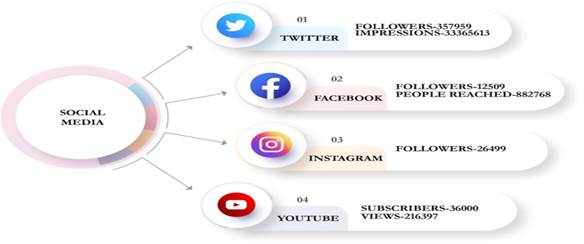



You must be logged in to post a comment.