City as a Physical Entity, Social Entity and Political Entity

 Physical Entity (Urban Area)

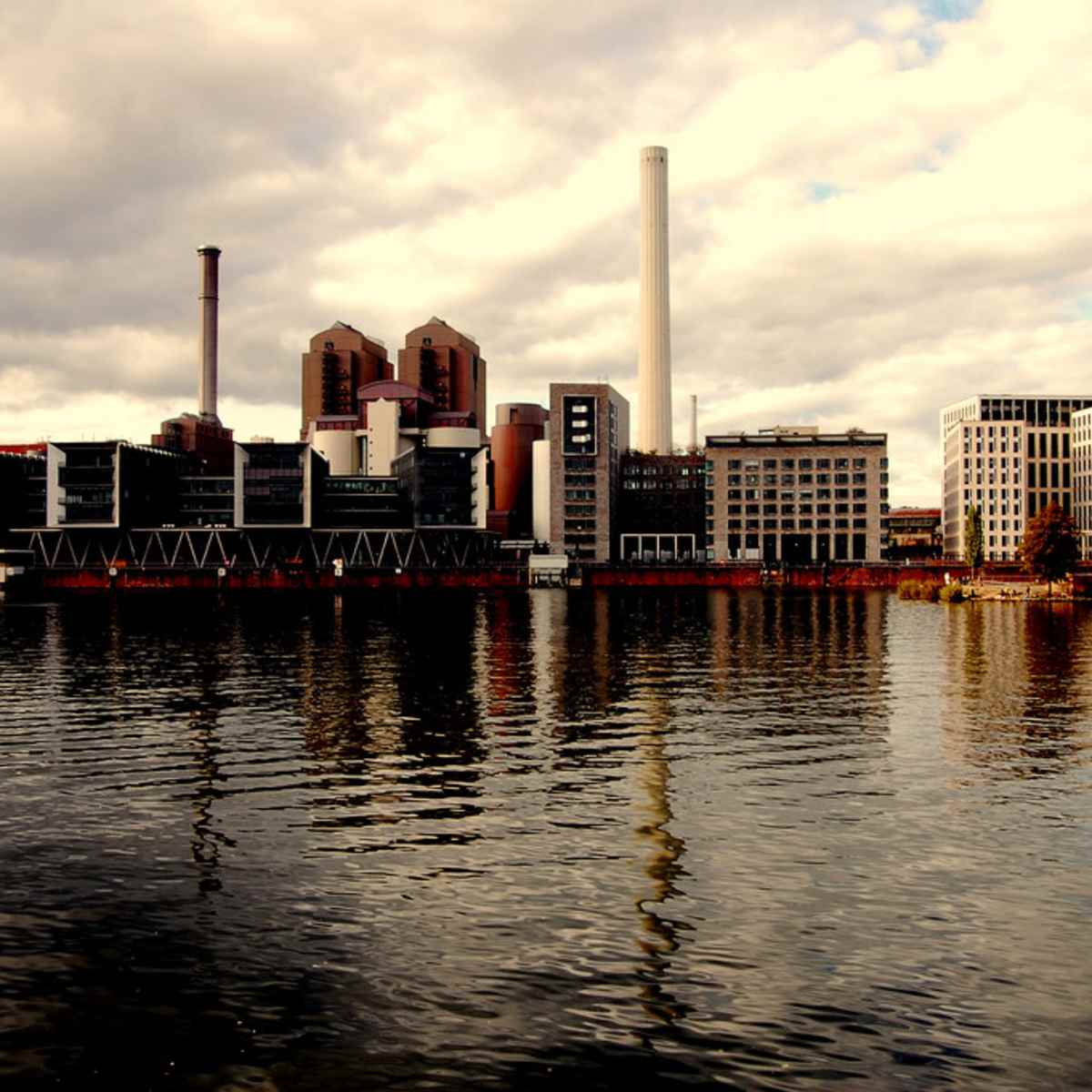
The first generic form of the city is the physical expanse or area of continuously built-up urbanization. The urban area is generally observable on a clear night from a high flying airplane. The urban area is simply the extension of urbanization. The urban area is not defined by jurisdictional boundaries, though where national statistical authorities define it is necessary to rely on building blocks such as census tracts and municipalities. 

Like metropolitan areas, urban areas can extend across sub national jurisdictional lines (such as state, provincial or regional boundaries) or in special cases, international boundaries. Various terms are used by national statistical authorities in the United Nations.

An urban area will never be the same as a municipality. Usually it will include many municipalities, though in the case of many geographically large municipalities, such as Shanghai, the urban area will be smaller than the core municipality. The Chicago urban area (population over 8,000,000) includes the city of Chicago and many other cities. Some nations formally designate urban areas, which are called “urbanized areas” in the United States, “unites urbaines” in France, “urban areas” in the United Kingdom and Canada, “urban centers” in Australia and “urban agglomerations” in India. An urban area is also an agglomeration. A conurbation is an urban area that forms when two or more urban areas grow together. Four definitions of the city are considered here. 

The first involves the city as a physical entity, or the area devoted to primarily urban uses. This Built City (BC) is perhaps the most familiar perception of the city, largely because it is relatively easy to visualize. The BC forms the core or basis of each of the other three definitions of the city. These are as follows: The Consumption City (an area within which most of the consumption of goods and services occurs in the BC); The Employment City (an area in which the bulk of the employed workforce works in the BC); and The Workforce City (an area upon which the BC draws for a given majority of its labour requirements). These four definitions of the city are brought together and shown to be interrelated.

The Functional City (Metropolitan Area)

The second generic form of the city is the functional expanse, which is also the economic expanse. The metropolitan area includes the built-up urban area and the economically connected territory to the outside. The economic relationship is generally defined by patterns of commuting to work into the urban area. Thus, metropolitan areas constitute labor market areas. Metropolitan areas can extend over subnational boundaries, except in rare cases where there is not free movement of labor (such as between Hong Kong and Shenzhen in China). Further, where free movement of labor is permitted by international agreements, metropolitan areas may cross national boundaries (such as in the European Union or between Switzerland and France, in the Basel and Geneva urban areas). 

Political Entity 

Political entities are basically systems of governing authority organized as governmental power structures. Empires, nation-states, city-states, and kingdoms are just a few examples of political entities. Most political entities are types of states, with the exception of stateless nations and autonomous regions. It is also important to note that when discussing a nation, we’re referring to a group of people with a shared language, religion, ethnicity or other cultural factors. 

Social Entity 

Social entity is an ideological concept in which a society or social structure is viewed as a “living organism”. From this perspective, typically, the relation of social features, e.g. law, family, crime, etc., are examined as they interact with other features of society to meet social needs. All elements of a society or social organism have a function that maintains the stability and cohesiveness of the organism. 

Important Functions of Transportation Network

 Cities play a vital role in promoting economic growth and prosperity of a nation. The development of cities largely depends upon their physical, social and institutional infrastructure. Transport demand in most Indian cities has increased substantially, due to increases in population as a result of both natural increase and migration from rural areas and smaller towns. Urban productivity is highly dependent on the efficiency of its transport system to move labour, consumers and freight between multiple origins and destinations. The primary function of transportation is the transfer of messages and information. It is also needed for rapid movement of troops in case of emergency and finally movement of persons and goods. The political decision of construction and maintenance of roads has resulted in the development of transportation system. The entire economic, social and political life of a modern country depends upon an efficient system of transport. The benefits of transport can be studied under the following categories. 

I) Economic Benefits/Functions 

The economic effects of good transport facilities are as follows. 

1) Extensive Market 

Transport helps in the assembly of raw materials and distribution of finished goods. It makes it possible to move goods from the place of production to the place where they are to be consumed. In the earlier days, there were only local markets due to the absence of safe means of transport. Now a days, trade is not restricted to the boundaries of a nation, but has spread throughout the world. Development of the efficient means of transport has knit together all the nations of the world into the one big world market. Even the perishable articles like fish, dairy products, meat etc. are being transported to distant places of the world. But for good transport facilities, such a development in trade and commerce would not have been possible. 

2) Mobility of Labour and Capital 

Transport reduces the rigours of immobility of certain factors of production. Mobility of labour and capital increases with the development of transport. An efficient network of transport services encourages the movement of people from one place to another. Labour can migrate to the place where they can get better job opportunities, which reduces the exploitation of workers. The development of Australia and United States would not have been possible without immigrations from Europe. With the development of transport, the investment of capital is also channelized to new lands and other places of the world. 

3) Specialization and Division of Labour 

Transport helps each region and country to make optimum and efficient use of its national resources. Each region can concentrate on production of those goods for which its resources are best suited. Thus, movement of goods and people from one place to another leads to specialization and division of labour which results in minimum wastage of resources and reduction in the cost of production. 

4) Economies of Large Scale Production 

Transport has helped the development of large scale industries. It would not have been possible for these industries to procure raw materials, gather large number of workers and sell the finished goods, without the efficient facilities of transport. Thus, transport has made possible the various economies of large scale production which tend to reduce unit cost of production and help the economy. 

5) Stability in Prices 

Transport facilities iron out wild fluctuations. Goods can be transported to places where there is scarcity and the prices are high from places where there is surplus and the prices are low. Such movement of goods helps in maintaining uniform prices throughout the country and further tends to equalize the prices of goods throughout the world.

6) Benefits to Consumers 

Improved means of transport benefit the consumers in many ways. The consumers can enjoy the benefit of use of many goods, which cannot be produced at their place, by transporting such goods from other distant places. Further, it helps in reducing the cost of goods of consumers and increases their purchasing power. 

7) Employment Opportunities and Increase in the National Income 

The various means of transport provide employment to millions of people throughout the world. The economic development of a country depends upon the improved means of transport. Thus, transport contributes substantially to the national income of the nations. 

8) Discouragement to Monopoly 

The scope of total income is extended by the development of the means of transport. As commodities can be quickly transported from one place to another, local producers cannot charge prices at their own will. This discourages monopoly and encourages competition. 

9) Development of Agriculture 

Transport has helped in the development of agriculture also. The business of agricultural products has grown to such a large extent only do to the efficient means of transport. It would not have been possible to use modern techniques of agriculture, improved quality of seeds and fertilizers, etc., but for good transport facilities. 

10) Industrial Development 

Transport facilitates the industrial development of a country. It helps the growth of industries by making available various factors of production. It would not have been possible to make such rapid industrial development without efficient means of transport. 

11) Increase in National Wealth 

Transport helps in increasing the national wealth of a country by facilitating agriculture, industry, trade and commerce. 

II) Social Benefits/Functions 

Transport has substantially influenced the life of the people. The various social advantages of an efficient transport are as follows. 

1) Discovery of New Lands 

Transport has helped the discovery of new lands and the growth of cities and urban areas. Due to the availability of long distance cheap transport, land has been utilized to the maximum advantage of the people all over the world. Even the waste lands are now being used. It also increases the value of land. 

2) Diffusion of population 

It reduces the concentration of population in the area of production. People can reach from distant places if there is an adequate and efficient system of transport. 

3) High Standard of Living 

Transport helps in the increase of production thereby raising the standard of living of the people. It is possible only through the means of transport that the ‘five M’s – Men, Material, Money, Machinery and Management’ can be assembled at the place of production. So, industries depend upon efficient system of transport and it creates new industries.

4) Mutual Understanding 

It removes the problem of distance, helps the people of different regions to come in contact with each other, encourages exchange of ideas and culture and promotes co-operation, understanding the cordial relations, amongst the people of the world. 

5) Ability to Face Natural Calamities 

Transport enables the society to face natural calamities such as famine, earthquake, drought, floods, etc. In such emergencies, commodities can quickly be transported to the places of mishap. 

6) Broadens the Outlook of the People 

Transport promotes mutual understanding. It has broadened the outlook of the people of the world and has knitted together all the nations of the world. 

7) Destroys Ignorance 

It promotes culture, removes prejudices and destroys ignorance. It helps in spreading knowledge and furthering the cause of education. 

III) Political Benefits/Functions 

In addition to the economic and social advantages, transport enjoys a great political significance. 

1) National Unity, Integration and Peace 

Transport helps in maintaining internal peace and national unity of a country. It brings about national integration. A vast country like India cannot be held together without efficient means of transport. Transport encourages economic and political interdependence by promoting specialization and division of labour and this strengthens the need for unity and national integration. 

2) National Defense 

Transport is essential for strengthening the national defense of a country. In the days of war, it is only through improved means of transport that the defense personnel, material and equipment can be moved rapidly to the border areas. Defense of a country, therefore, necessitates the existence of improved transport facilities. 

3) Political Awakening 

Efficient means of transport help in creating political awakening in the people and the growth of civilization. 

4) Source of Revenue 

Transport helps in increasing the national wealth and income of a country. It is also a source of revenue to the Government. 

Urban Structure and its Characteristics

 Urban structure is the arrangement of land use in urban areas. Urban planners, economists and geographers have developed several models that explain where different types of people and businesses tend to exist within the urban setting. Urban structure can also refer to urban spatial structure, which concerns the arrangement of public and private space in cities and the degree of connectivity and accessibility. 

The term “urban form” is used to describe a city’s physical characteristics. It refers to the size, shape, and configuration of an urban area or its parts. How it will be understood, structured or analyzed depends on scale. Characteristics of the urban form range from at a very localized scale, features such as building materials, facades and fenestration to at a broader scale, housing type, street type, and their spatial arrangement or layout. 

Elements of urban structure includes the following.

  • Natural environment 
  • Topography
  • Soil types (Bearing capacity) 
  • Water courses (Rivers, streams and lakes) 
  • Types of vegetation 
  • Climate and micro climate 
  • Environment characteristics
  • Landscape features 

Types of Urban Structures/Patterns

1) Grid Iron/Rectangular Pattern

The grid plan, grid street plan or gridiron plan is a type of city plan in which streets run at right angles to each other, forming a grid. The infrastructure cost for regular grid patterns is generally higher than for patterns with discontinuous streets. E.g. Plan of Chandigarh city. 
Costs for streets depend largely on four variables: street width, street length, block width and pavement width. Two inherent characteristics of the grid plan are frequent intersections and orthogonal geometry, facilitate pedestrian movement. The geometry helps with orientation and way finding and its frequent intersections with the choice and directness of route to desired destinations. 
In ancient Rome, the grid plan method of land measurement was called centuriation. The grid plan dates from antiquity and originated in multiple cultures; some of the earliest planned cities were built using grid plans.

Advantages 

  • Shorter routes 
  • Easy to extend 
  • Easy to find places 

Disadvantages 

  •  Associated with traffic congestion 
  •  Many intersections/robots
  •  Time consuming
  •  Fuel consuming
  •  Road rage/frustration

 Grid system

2) Radial/Concentric system 

Radial design offers a method for organizing visual material by arranging it around a central point. Features of radial city pattern include 
  • Inner outer ring roads linked by radiating roads 
  • Core has the business area 
  • Industrial area interspersed within the residential 
  • Periphery has green belts 

Advantages 

  • A direct line of travel 
  • Centrally directed flows 
  • Economics of a single point or origin point 
  • Less intersections 
  • Easier flow of traffic 
  • Aesthetic appeal 

Disadvantages 

  • Central congestion 
  • Local flow problems 
  • Difficult building sites 
  • Unplanned growth can create traffic problems
Radial/Concentric system

3) Linear System

The linear city was an urban plan for an elongated urban formation. The city would consist of a series of functionally specialized parallel sectors. Generally, the city would run parallel to a river and be built so that the dominant wind would blow from the residential areas to the industrial strip. As the city expanded, additional sectors would be added to the end of each band, so that the city would become ever longer, without growing wider. The sectors of a linear city would be 
  • A purely segregated zone for railway lines 
  • A zone of production and communal enterprises, with related scientific, technical and educational institutions 
  • A residential zone, including a band of social institutions, a band of residential buildings and a “children’s band” 
  • A park zone 
  • An agricultural zone with gardens and state run farms 

Advantages 

  • High accessibility 
  • Adaptability to linear growth 
  • Useful along limited edge 

Disadvantages 

  • Very sensitive to blockage 
  • Requires control of growth 
  • Lack of focus 
Linear system

4) Multi Centered System 

City grows from several independent points rather than from one central business district. 

Advantages 

  • Optional locations for focal activities and system terminals 
  • Good psychological orientation 
  • Adaptability to existing conditions 

Disadvantages 

  • Depends on stability to key locations 
  • Potential accessibility problems 
  • Tendency to dilute focal activities

Multi centered system

5) Irregular System 

No set pattern. It develops due to relief. e.g. goes around hilly areas. 

Advantages 

  • Creates aesthetic appeal due to different roads 
  • Less traffic congestion 
  • Less intersections 

Disadvantages 

  • Can get lost 
  • Travel longer distances
Irregular system

Selection of Site for an Ideal Town

 The important features to be considered with respect to the site of a town are as follows.

1.    Availability of the natural advantages
2.    Availability of electricity
3.    Available means of communication
4.    Climatic conditions
5.    Contours of the area
6.    Development of the surrounding area
7.    Drainage of the area
8.    Facility available for sewage disposal
9.    Fertility of soils
10.     Frequency of the floods
11.     Growth of the trees
12.     Nature of soil
13.     Position of lakes and streams
14.     Water resources, etc.
Requirements of New Towns
The two important facts which are to be carefully examined before deciding the requirements of new towns are as follows.

1) Function of the town
A new town is generally formed or developed for specific purpose. The purposes for which the towns may be designed are commerce, industry, culture, education, defense, health, recreation, government administration, etc. these purposes will help boost the economy, social welfare and political condition. Once the function of a new town known, size of population to be accommodated in the town can be worked out.
2) Welfare of the people
A new town should be designed for the welfare of the people. The welfare of the people is measured by three factors, namely, amenities, convenience and health.
General requirements
  •          Amenities such as sewer lines, water supply, electric power, etc.
  •          Education.
  •          Effective road networks.
  •          Planned growth of the town.
  •          Provision for future expansion.
  •          Proper location of public building.
  •          Parks and playgrounds.
  •          Provision of suitable bye-laws for the town.
  •          Recreation centres.
  •          Zoning of town into suitable zone.

Spatial Standards for Recreational Area

 The purpose of the recreation areas is to provide adequate recreational facilities to serve the residents of the development. Open space is any open piece of land that is undeveloped (has no buildings or other built structures) and is accessible to the public. Open space can include: Green space (land that is partly or completely covered with grass, trees, shrubs, or other vegetation). Green space includes parks, community gardens and cemeteries. Schoolyards, playgrounds, public seating areas, public plazas and vacant lots open space provides recreational areas for residents and helps to enhance the beauty and environmental quality of neighbourhoods. 

The opportunity to attain and maintain good physical and mental health is an inherent right of all residents of the planning area. The provision of outdoor recreation sites and related open space areas contributes to the attainment and maintenance of physical and mental health by providing opportunities to participate in a wide range of activities. An integrated park and related open space system, properly related to the natural resource base, can generate the dual benefits of satisfying recreational demands in an appropriate setting while protecting and preserving valuable natural resources. Finally, an integrated system of outdoor recreation sites and related open space areas can contribute to the orderly growth of the planning area by lending form and structure to urban.

Table Parks, playgrounds and open spaces


Accessibility, Mobility and Connectivity


Accessibility

It is defined as an access to activities. Accessibility (or just access) refers to the ability to reach desired goods, services, activities and destinations (collectively called opportunities). Access is the ultimate goal of most transportation, except a small portion of travel in which movement is an end in itself (jogging, horseback riding and pleasure drives), with no destination. It is important term in understanding travel time distances and cost between activity locations.

It is also refers to the ease of movement between places. it is the ability to reach opportunities that is beneficial, not movement itself. Accessibility is the quality of travel and takes place at the community and individual level through access management techniques to provide access to various land uses. It focuses on travel time, travel cost, travel options, comfort and risk while addressing the needs of all within the community. Mobility and accessibility are considered the “ying and yang” of transportation. The goal is to increase the overall capability of the transit system while not compromising efficiency and ease of access.

Mobility 

Mobility refers to the movement of people and goods. This recognizes both automobile and transit modes, but still assumes that movement is an end in itself, rather than a means to an end. Mobility is defined as access to transportation. It is important in travel demand models to determine choices available to a consumer. Mobility is the ability and level of ease of moving goods and services. 

Some examples of mobility include: Interstate highways providing designated truck lanes to increase the overall amount of goods transported, Bus Rapid Transit (BRT) systems with bus only lanes that increases the efficiency of moving people while removing automobiles from the roads. Congestion management systems are the trend in mobility due to the lack of funds and the land constraints to keep expanding the transit system infinitely. These systems manage travel demand through innovative ideas to increase volume and capacity. 

Mobility is how far you can go in a given amount of time. Accessibility is how much you can get to in that time. 

Connectivity

Connectivity is the relative location of an object to the destination centers. There are many different levels of hierarchy to connectivity. For example, subdivisions with many dead end cul-de-sacs may have poor connectivity with surrounding land uses. It may take a long time for a family living at the end of a cul-de-sac to get out of the neighborhood and to the main road right behind their house. The destination might not be that far away by distance, but by travel time it is. Traditional downtowns on the other hand usually have higher connectivity with surrounding neighborhoods. Residential areas designed with streets in a grid format adjacent to the downtown are often well connected with the business district and decrease the travel time and congestion.

Space Standards for Facility Areas and Utilities

 The planning of amenities and utility services include the facilities like educational, medical, transport, housing, electricity, post and telegraph, telephone exchange, police station, fire station, community hall and library, cinema theatre, swimming pool, stadium, open air theatre, religious building, auditorium, parks, play grounds, water supply, drainage, sanitation, burial ground etc.

 Medical facilities


Planning standards for civic amenities and community facilities

Other facilities

Water supply consumption

Desirable land use pattern (Percentage)


Traffic and transportation


Transit Oriented Development (TOD)

 One of the original and most popular definitions of the transit oriented concept came from Peter Calthorpe, an architect and proclaimed urbanist. According to Calthorpe TODs are: Mixed use communities within an average 2,000 foot walking distance of a transit stop and a core commercial area. TODs mix residential, retail, office, open space and public uses in a walkable environment, making it convenient for residents and employees to travel by transit, bicycle, foot or car. 

TOD integrates land use and transport planning and aims to develop planned sustainable urban growth centers, having walkable and livable communes with high density mixed land use. Citizens have access to open green and public spaces and at the same time transit facilities are efficiently utilized. 

TOD increases the accessibility of the transit stations by creating pedestrian and NonMotorised Transport (NMT) friendly infrastructure that benefits large number of people, thereby increasing the ridership of the transit facility and improving the economic and financial viability of the system. Since the transit corridor has mixed land use, where the transit stations are either origin (housing) or destination (work), the corridor experiencing peak hour traffic in both directions would optimize the use of the transit system. 

Transit oriented development is generally considered to be mixed use development near and oriented to, public transport facilities. Common TOD traits include urban compactness, pedestrian and cycle friendly environments, public and civic spaces near stations, and stations as community hubs. Typically, a multimodal TOD neighbourhood is built around a public transport station or stop (e.g. train station, metro station, tram stop, BRT stop (Bus Rapid Transit), bus stop or even ferry stop), surrounded by relatively high density development with progressively lower density development spreading outward from the centre. TODs are generally located within a radius of 400 to 800m from the transit stop. This is considered to be an acceptable walking distance at the start or end of a journey by transit. In some parts of the world, the TOD approach reaches further than single locations towards a network or corridor approach, which aims at realigning entire urban regions around rail transport and away from the car. 

Transit oriented development

Different Types of Transit Oriented Development

1) Single node TOD

This type consists of a single neighbourhood based around heavy rail stations. Its location can be urban or suburban. The development takes place in a circular pattern cantered on a train station. The radius varies from 0.5 km in the US (to allow for pedestrian access) to 2-3 km in the Netherlands (where bicycle access is more common). 

Single node TOD

2) Multi node TOD

This type is similar to the single node TOD but it reaches further than a single location to create a regional network of nodes around heavy rail stations. The nodes can be circular or semicircular. The location of TOD nodes follows a typical “beads in a string” pattern. This type of TOD aims at realigning entire urban regions around rail transport and away from the car. 
Multi node TOD

3) Corridor TOD

This type is encountered in urban areas, and is based around light rail or Bus Rapid Transit (BRT) stops (which are more frequent than heavy rail stops). The development pattern is linear or ribbon like along the transit line because the nodes (e.g., around tram stops) are near each other. TOD corridors are applicable to existing urban areas or planned urban extensions. 
Corridor TOD
In addition, the transportation hub should be located in the heart of the neighbourhood, within a 400m or 10 minute walk from residents. This central location reflects the importance of transit in the community and in the region as a whole. TOD comprises a mix of commercial, residential and institutional developments built to support a transportation hub and to encourage non motor vehicle mobility options, such as biking and walking, within the community. A TOD area could encompass a radius of as little as 0.5 miles or as much as 1 mile from a transit station.

Provisions of Town Planning Act

 To manage the transformation of India’s cities and towns and effectively manage new growth requires effective urban planning protocols, processes and institutions underpinned by effective legislation. To effectively manage the new growth, it is essentially means that the irregular landholdings and plots will have to be given regular shapes they must be ordered each plot must be given access; infrastructure services such as water supply and drainage must be provided; land must be appropriated for providing roads, parks, social amenities, and low income housing, development controls must be prescribed to result in a good quality built form and levy development or betterment charges to offset the cost of developing the physical and social infrastructure. 

Town Planning Act 

India Due to the rapid industrial growth coupled with increasing level of urbanization during mid-century, the recognition of the need for viewing urban development as one whole integrated development in which each sector has a definite role to play and not in unrelated manner, was felt by the town planners. Town Planning Law is not new in India. The history of town planning legislation in India dates back to early part of the 20th century when the erstwhile Bombay Presidency took the lead in enacting the first town planning legislation in the country viz. The Bombay Town Planning Act, 1915 which came into force on 6th March, 1915. 
This Act was then followed by other provinces later on. The Bombay act of 1915 mainly provided for; 
  • The preparation of Town Planning Schemes (TPS) for areas in course of development within the jurisdiction of local authority 
  • The recovery by planning authority of betterment contribution from the owners of benefited lands. 
It was observed that T.P. schemes prepared under the 1915 act resulted in the piecemeal planning having no relation with the adjoining areas. Thus, to have a planned development of every square inch of the land within the municipal limits the need for another. 
Statutory process of master plan formulation in India was inspired by the erstwhile comprehensive planning system envisaged under the Town and Country Planning Act, 1947 of United Kingdom.

Model Regional and Town Planning and Development Law, 1985 

Town and Country Planning Organization (TCPO) formulated the Model Town and Country Planning Law in the year 1960. This model Act was revised by TCPO in year 1985 as “Model Regional and Town Planning and Development Law” to enact a comprehensive urban and regional planning legislation in all the States and UT’s (Union Territories). The main contents include;
  • Constitution of State Regional and Town Planning Board by the State Government for the purpose of advising on the delineation of the region for the planned development 
  • Directing the preparation of metropolitan, regional and area plans by the metropolitan, regional and area planning and development authorities 
  • Setting up of metropolitan, regional and area planning and development authorities for different urban and rural areas within the State to undertake preparation of development plans and to enforce and implement them 
  • Coordinating the planning and implementation of physical development programmes
Model Law provided 3 steps for the administration of this law. 
  1. Preparation of existing land use map 
  2. Preparation of an outline development plan and comprehensive development plan and their enforcement 
  3. Preparation of detailed schemes of development or redevelopment as envisaged in the plans and their implementation 
Based on the Model Regional and Town Planning and Development Law,1985 ,many states enacted their Town and Country Acts. However, states like Haryana, Rajasthan and UT of Chandigarh do not have comprehensive Town and Country Planning Acts. Out of 7933 Towns, about 2032 towns have Master Plans (1483 notified +549 under preparation). 

Principles and Objectives of Town Planning

 Principles of Town Planning

Town planning cannot be studied in isolation. It involves the study of various subjects such as engineering, architecture, surveying, transportation planning etc. The intention of the town planning is to satisfy the needs of our future generations and prevent the haphazard growth of the town. Some of the guiding principles of town planning are as follows.
1. Zoning
The town should be divided into suitable zones such as commercial zone, industrial zone, residential zone, etc. and suitable rules and regulations should be formed for the development of each zone.
2. Green Belt
Green belt is non-development zone on the periphery of the town. It prevents the haphazard sprawl of the town restricting its size. In essence, a green belt is an invisible line designating a border around a certain area, preventing development of the area and allowing wildlife to return and be established. Greenways and green wedges have a linear character and may run across the town and not around the town.
3. Housing
Housing has to be carefully studied and designed to suit the local population. Care should be taken to see that there is no development of slums since it would be responsible for degrading the life of the citizens. There are various types of housing styles. When a landuse plan is made, zones for independent housing, midrise buildings, high rise buildings are allocated. 
4. Public Buildings
Public buildings should be well grouped and distributed throughout the town. Unnecessary concentration of public buildings should be avoided. Factors such as parking facilities, road widths have to be taken into consideration while allocating the space for public buildings.
5. Recreation Centres
Recreation centres have to be given importance while designing a town. They are necessary for the recreational activities of the general public. They include parks for walking and cycling, amusement parks etc.
6. Road Systems
Road network hierarchy is very important. The efficiency of any town is measured by the layout of its roads. A nicely designed road system puts a great impression in the minds of people, especially the visitors to the town. The provision of a faulty road system in the initial stages of town formation proves to be too difficult and costly to repair or to re-arrange in future.
7. Transport Facilities
The town should be provided with suitable transport facilities so that there is minimum loss of time from place of work to the place of residence. Efficiency in transport facilities includes both public and private networks. Public transportation network includes access to buses, trains, trams and trolleybuses. Efficiency in using the public transport will determine the success of that town in terms of design.

Objectives of Town Planning
The main objectives of the town planning may be summarized in three words viz. Health, Convenience, Beauty and Environment.
1. Health 
To make right use of the land for the right purpose by proper division of land called zoning such as residential, commercial industrial, institutional and recreational etc. inorder to avoid the encroachment of one zone upon other for smooth and orderly development of the town or city without causing future conflicts. To create and promote healthy conditions and environments for all the people – rich and poor, to live, to work, to play or relax.
2. Convenience 
The object of convenience is meant in the form of various needs of the community such as social, economic, cultural and recreational amenities etc. Public amenities requiredfor the proper upkeep of the citizens include water supply, sanitation, electricity, post,telegraph, gas etc., proper sites for industrial, commercial, business enterprises toencourage them in trade with cheap power, transport services, drainage etc. Recreational amenities include open spaces, parks, gardens and playgrounds, for children and town halls stadiums, community centers, cinema houses, and theatres for adults.
3. Beauty 
To preserve the individuality of the town by developing it on its most suited natural conditions. To preserve the aesthetics in the design of all elements of town or city plan, which includes preservation of trees, natural greenery, improved types of domestic buildings and buildings of civic dignity and beauty, architectural control on public as well as semi-public buildings, ancient architectural buildings, temples, churches, mosques andbuildings of cultural and historical importance.
4. Environment
It is an important factor in town planning. The environment of the town should be in such a way that people can lead their normal activities with least difficulty. The complex problems of modern society such as tiresome travel to work, long hours of work, limited time spent within the family and community, etc. has led to serious problems in the lifestyle of the people living in the towns, therefore, town planning is mainly concerned with brining about a better relation between man and his environment. 

Problems faced by the town due to lack of proper planning

 1. Lack of essential amenities like electricity, watersupply and drainage.

2. Uncontrolled development of the town.
3. Unhealthy conditions.
4. Development of slums.
5. Defective road system resulting in the formation of narrow streets and lanes.
6. Heavy traffic congestions during the peak of hours of working period.
7. Haphazard location of some industrial units of small and medium scale.
8. Inadequate open spaces for parks and playgrounds.
9. Noisy atmosphere in some localities.
10. Waste disposal problems.
11. Housing problems.
12. Lack of public awareness for community benefits andexploiting means of amenities and
      utility service facilities provided by the concerned authorities.
13. Lack of engineering infrastructure.
14. Inadequate ware houses and industrial sites.
15. Defective locations of schools.
16. Inadequate space on the main roads for footpath and town squares, circles etc.

Aims/Benefits of Town Planning

 Town planning has gained a lot of importance today. New towns are being developed. It has become very important for the town planners to concentrate on old development as well as the new development. It is essential that old and new development are linked properly. Energy efficiency in planning should be the goal of any town planner, urban designer or an architect. The aims of town planning are as follows.

1. To correct the past errors as far as possible. 
2. To provide civic aesthetics of the town. 
3. To attempt an orderly appropriate and balanced
    arrangements of land use.
4. To develop healthy, attractive and efficient 
    environment in the city. 
5. To promote a high level of culture. 
6. To create and maintain an attractive central core 
    and make it the cultural, financial, commercial and
    entertainment centre. 
7. To provide an interrelated balanced transportation
    system adequate to meet the needs of everyone in
    the urban community. 
8. To encourage the attraction, retention and
    expansion of a sufficient number and variety of 
    industries and business activities to provide jobs 
    to the people and to get more income to
    municipality. 
9. To create a sense of dignity, identity, pride and
    responsibility in the social environment. 
10. To suggest the schemes which will control the
      future growth and development of the city. 
11. To insure against the possible future errors
12. To concentrate for development of full potentials
      of human resources through wide variety of 
      programmes, facilities and other incentives. 
13. To establish and maintain a consistent housing
      policy providing for decent housing open to 
      all persons in the community at reasonable  
      prices and rents. 
14. To encourage vigorous programmes of 
      inspection, maintenance of health environment in
      the city. 
15. Suggestions will be given to provide maximum
      housing facilities as per the income through   
      various concerned authorities. 
16. To encourage the development of neighbourhoods
      as social and recreational units and promote the 
      neighbourhood organizations and involvement in
      the improvement of local services, facilities, 
      transportation and living conditions. 
17. Suggestions will be made for efficient
      transportation facilities in the city including new 
      roads, widening the roads repairing maintenance
      depending upon the localities and functional 
      zones. 
18. To develop parks and recreation facilities to 
      optimum standards based on local needs 
      preserving as many sites of natural and
      historical significance as possible. 
19. To provide maximum educational and medical 
      facilities. 
20. To provide maximum utility service facilities 
      to reach all people of the city. 
21. To promote maximum co-operation between
      Government and public to get the benefits of  
      development schemes of urban development.
22. To implement effective measure of slum 
      clearance programmes in the city and controlling
      the further development of slum in the city. 
23. Suggestions will be made to demolish old 
      structures of public and private houses. 
24. To suggest relocation, redevelopment and 
      renewal of structure in the city. 
25. To create maximum green and open spaces in 
      the urban limit. 
26. Measures will be suggested to control the
      pollution of air, water, noise etc. 
27. Improvement and modernization of water supply,
      sewerage, electricity etc. 
28. Improvement of site development for residential 
      industrial, public and semi-public use.

Town Planning Process

 All stages of actions from defining the objectives till implementation and review of any planning project in the planning process. In plan preparation, the physical planning should associate with the socio-economical, geographical, political factors, for achieving the objective in desired direction. The various stages of planning process are as follows.

1.Identification and definition of problems  
Various problems with reference to the results obtained by studies and surveys and with reference to the objectives are identified.
2. Defining the objectives 
Here the objectives of the planning are identified. The general objectives of any planning of urban area is
  •     To regulate growth
  •     To nullify the bad effects of past growth
  •     To improve the transportation facilities
  •     To optimize the resources utilization
  •     To balance population and economic activities
  •     To promote social integration among different   categories
  •    To promote a convenient comfortable, beautiful and healthy environment

3. Studies and survey 
The following studies and surveys are taken up for plan preparation. 
  •  Identification of growth(physical, economical, social, cultural, institutional, administrative and political)
  •    Identification of trend and direction of growth
  •    Traffic survey
  •    Study on demography
  •    Climate

4. Analysis of data and preparation of study maps 
The data obtained is analyzed – observations and conclusions have to be derived out of the studies and surveys. The short-term objectives and long-term objectives are identified – various study maps, charts and graphs are prepared.
5. Fore-casting 
Period of demographic projection is prescribed. Forecasting of about migration, employment, industrialization and other rapid urbanization possibilities are to be made.
6. Design 
This is an important aspect in the planning process. Need to relate existing pattern, interactions and trends is to be examined. Preparation of development plans, formulation of zones, alteration to the existing zoning regulations, widening of roads etc. are made in detail here. Alternatives are also made for effective and quick implementation of plan. The plan should also be able to cope with sudden and unexpected events. Possibility of changing from one strategy to another should be designed at the same time keeping in view its practicability and the total expenditure involved.
7. Fixation of priorities 
Since all the proposals cannot be taken up at one time due to financial and administrative difficulties, priorities should be fixed for taking up the implementation depending upon the importance and urgency.
 8. Implementation
Implementation is the most important stage where all the earlier efforts to prepare plan is to be put into practice to achieve the objectives. The authority, which takes up the implementation, is to fulfill all the required legal obligations in time – zoning regulations, land acquisition for road widening and for other purposes is taken-up.
 9. Review, evaluation and feedback
The work of implementation has to be monitored by taking – up periodical inspections and obtaining review reports. Feedback is essential periodically. The plan should be flexible for modifications depending upon the necessities.
Types of Surveys
Surveys can broadly be divided into two categories depending on the area upon which they are to be conducted. They are:
1. Regional Surveys
They are those surveys, which are done over a region dealing with physical factors like topography, physically difficult land, geology, landscape etc. Physical economic factors like agricultural value of the land, mineral resources and water gathering lands, areas with public services, transportation linkages etc. Social economic factors like areas of influence of towns and villages, employment, population changes etc.
2. Town Surveys
They are done at much small scale and apart from the above data collected from the regional surveys it also includes
  •    Land use surveys
  •    Density surveys
  •    Surveys for the age and condition of the buildings
  •    Traffic surveys

Other social surveys for conducting proper survey, primarily relevant enquiries should be framed in the form of questionnaires for presentation, when required.
Techniques of Surveys
1. Self-surveys (i.e. mailing questionnaires to the persons to be surveyed )
2. Interviews (i.e. by asking questions to the people to be surveyed )
3. Direct inspection (i.e. when the surveyor himself inspects the situations concerned )
4. Observers participation(i.e. when the observer himself participate in acquiring the data 
    required)
Approaches to Planning
1. Comprehensive planning 
The traditional four-step planning process – the identification of problems and issues; the establishment of goals and objectives; data collection and analysis; and plan preparation and implementation.
2. Issue-oriented planning
Some communities do not get around to planning until a problem or a crisis has occurred. Issue-oriented planning focuses attention on the problems and issues of greatest concern to a community at a   particular point in time. This is an “old-fashioned   approach” to planning,  
3. Functional planning
Functionalplanning is a slower version of comprehensive planning.
4. Strategic planning 
Major emphasis should be placed on the selection and application of strategies to resolve identified issues and attain desired goals. The principal steps in strategic planning are 
  • Scan the environment and select key issues.
  • Formulate goals or missions for the key issues.
  • Analyze each issue, developing a list of community strengths and weaknesses.
  • Develop strategies that are realistic and take into account those strengths and weaknesses.
  • Implement strategies using public and private resources.
  • Monitor and update the plan to ensure implementation.

5. Vision-based planning
Imagines what a community should look like in the future and then develops a plan to achieve that vision. This visioning process is unique, but it is often included as an element of a variety of master plans. It is a positive approach to planning and can be very inspiring. 
6. Urban planning (urban, city, and town planning)
It is a technical and political process concerned with the control of the use of land and design of the urban environment, including transportation networks, to guide and ensure the orderly development of settlements and communities.
Elements of City/Town  Planning 
1.  Communication & Transportation
2.  Built up Area
3.  Open space (Parks, Playgrounds, Recreational unit)
4.  Public utility services  (Electricity, Gas, Telephone, Fire safety)
5.  Public amenities (Post office, Bank, Police, Solid waste disposal, Petrol pump, Court)

Town Planning

 The art and science of ordering the use of land and siting of buildings and communication routes so as to secure the maximum practicable degree of economy, convenience and beauty. It is an attempt to formulate the principles that should guide us in creating a civilized physical background for human life whose main impetus is thus foreseeing and guiding change. 

                                 
Town planning is an art of shaping and guiding the physical growth of the town creating buildings and environments to meet the various needs such as social, cultural, economic and recreational etc. and to provide healthy conditions for both rich and poor to live, to work and to play or relax, thus bringing about the social and economic well-being for the majority of mankind. Planning is the process of deciding in advance what is to be done, who is to do it, how it is to be done and when it is to be done. It is the process of determining a course of action, so as to achieve the desired results. It is a process of decision making. It involves the creation and maintenance of a plan, such as psychological aspects that require conceptual skills.  
Planning means pre-thinking and pre-arranging  things before an event takes place so as to achieve good results in health, convenience, comfort and happiness of all living beings. Planning is a process of helping a community, identify its problems and its central values, formulating goals and alternative approaches to achieving community objectives, and avoiding undesired consequences of change. This process of planning results in frameworks for coping with change. Some are physical elements such as streets, roads and sewer lines. Some are concepts that serve as guides to action, such as the goal of becoming a major distribution center or of encouraging investment in the core of the city. Some are regulatory, reflecting the desires of the community to encourage good development and discourage bad development.

“A city should be built to give its inhabitants security and happiness” – Aristotle
“A place where men had a common life for a noble end” – Plato