Content Writing Internship for Successful Career in Media

 🌟 Cultivating Brilliance Through Daily Writing: A Call to Track2Training Interns! 📝🌈

Dear Esteemed Track2Training Interns,

Welcome to a journey of self-discovery, growth, and impact with Track2Training NGO! As you embark on this exciting internship, we invite you to embrace a transformative habit that holds the potential to elevate your skills, amplify your voice, and leave a lasting imprint on the world – the habit of daily writing.

Why Daily Writing Matters:

  1. Clarity of Thought: Daily writing serves as a powerful tool to clarify your thoughts, helping you articulate your ideas with precision and coherence.

  2. Self-Reflection: It provides a unique opportunity for introspection, enabling you to explore your experiences, challenges, and triumphs on this enriching journey with Track2Training.

  3. Skill Enhancement: Writing consistently hones your communication skills, a crucial asset in any professional setting. It empowers you to convey complex ideas concisely and persuasively.

  4. Creative Expression: Unlock the doors of creativity! Through writing, you can unleash your imagination, foster innovative thinking, and find novel solutions to the challenges you encounter.

  5. Documentation of Progress: Track your personal and professional growth. Your daily musings will become a testament to your development, forming a valuable record of your internship experience.

How to Cultivate the Habit:

  1. Start Small: Begin with bite-sized writing sessions. Whether it’s jotting down observations, summarizing your day, or expressing your aspirations, every word counts.

  2. Set a Routine: Integrate writing into your daily routine. Whether it’s morning reflections, lunchtime musings, or evening summaries, consistency is the key to building this habit.

  3. Embrace Variety: Experiment with different writing styles – essays, reflections, poems, or even short stories. Embracing variety keeps the process engaging and dynamic.

  4. Create a Writing Space: Find a quiet, comfortable space where you can focus solely on your thoughts. This dedicated space will serve as your creative sanctuary.

  5. Celebrate Progress: Take a moment to appreciate your commitment. Celebrate milestones, no matter how small, and acknowledge the positive impact your daily writing is bringing to your personal and professional life.

Our Challenge to You:
Let’s embark on a 30-day writing challenge together! Commit to writing every day for the next month and witness the transformative power of this simple yet profound habit. Share your insights, challenges, and triumphs with your fellow interns, creating a supportive community of aspiring writers within Track2Training.

Remember, your words have the potential to inspire, inform, and ignite change. Let your daily writing be the catalyst for your personal and professional evolution.

Here’s to the magic that unfolds when pens meet paper and ideas take flight!

With enthusiasm and encouragement,

Training Co-ordinator
Track2Training NGO 🌍🚀

Scholarship for African Scholars to Study in USA

 Types of scholarships that are often available for African scholars in the USA. Keep in mind that scholarship offerings can change, so it’s crucial to check with the respective organizations and institutions for the latest updates. Here are ten types of scholarships that African scholars may explore:

  1. Fulbright Foreign Student Program:

    • Administered by the U.S. Department of State, the Fulbright Program offers scholarships for international students, including those from Africa, to pursue master’s or doctoral degrees in the United States.
  2. MasterCard Foundation Scholars Program:

    • This program aims to provide comprehensive scholarships to talented but economically disadvantaged African students for undergraduate and postgraduate studies at partner institutions in the USA.
  3. African Women’s Public Service Fellowship:

    • Offered by the Oprah Winfrey Leadership Academy for Girls, this fellowship supports African women pursuing graduate studies in public policy, public administration, international affairs, and other related fields at select U.S. institutions.
  4. Aga Khan Foundation International Scholarship Program:

    • While this program primarily focuses on scholarships for postgraduate studies worldwide, it also provides support for African students pursuing higher education in the USA.
  5. The African Palliative Care Association (APCA) Scholarships:

    • APCA provides scholarships for African healthcare professionals, including scholars, interested in gaining expertise in palliative care. These scholarships may cover training or academic programs in the USA.
  6. Master’s Degree Scholarship in Education for Sustainable Energy Development (ESD):

    • Offered by the Education for Sustainable Energy Development (ESD) Leadership Program, this scholarship supports African students pursuing a master’s degree in sustainable energy development in the USA.
  7. Joint Japan/World Bank Graduate Scholarship Program:

    • While not specific to Africa, this program offers scholarships to students from World Bank member countries, including many African nations, to pursue graduate studies in development-related fields, including those available in the USA.
  8. Rotary Foundation Global Grants:

    • Rotary International provides Global Grants that support graduate-level coursework or research for sustainable, high-impact projects. African scholars can explore opportunities for funding their studies in the USA through this program.
  9. African Leaders of Tomorrow (ALT) Scholarship Program:

    • This program, managed by the Canadian Bureau for International Education, offers scholarships to African students pursuing master’s or doctoral programs in public administration, public policy, or a related field in Canada and the USA.
  10. Next Generation Social Sciences in Africa Fellowships:

    • Administered by the Social Science Research Council (SSRC), this fellowship program supports the next generation of African scholars in the social sciences, including those pursuing doctoral degrees in the USA.
  11. Below is a table featuring scholarship programs for African scholars and their official websites. Please note that URLs are subject to change, so it’s advisable to verify the information on the respective websites.

    Scholarship Program Official Website
    Fulbright Foreign Student Program Fulbright Foreign Student Program
    MasterCard Foundation Scholars Program MasterCard Foundation Scholars Program
    African Women’s Public Service Fellowship Oprah Winfrey Leadership Academy
    Aga Khan Foundation International Scholarship Program Aga Khan Foundation
    African Palliative Care Association (APCA) Scholarships APCA Scholarships
    Master’s Degree Scholarship in Education for Sustainable Energy Development (ESD) ESD Leadership Program
    Joint Japan/World Bank Graduate Scholarship Program World Bank Scholarships
    Rotary Foundation Global Grants Rotary Foundation Global Grants
    African Leaders of Tomorrow (ALT) Scholarship Program ALT Scholarship Program
    Next Generation Social Sciences in Africa Fellowships SSRC – Next Gen Social Sciences

    Remember to check the eligibility criteria, application deadlines, and any updates on the official websites for the most accurate and current information.

It is important for prospective scholars to thoroughly research and verify the availability and eligibility criteria of these scholarships and also explore additional opportunities that may arise in subsequent years. Additionally, contacting the relevant embassies, educational institutions, and international organizations can provide up-to-date information on available scholarships for African scholars in the USA.

Travel grants for African scholars

 Travel grants for African scholars play a crucial role in facilitating academic and professional development by providing financial support for individuals to attend conferences, workshops, and other educational events. These grants are designed to overcome economic barriers, enabling scholars to participate in international academic exchanges, share their research, and collaborate with peers from around the world. The primary aim is to foster a diverse and inclusive global academic community.

African scholars can often find information on travel grants, scholarships, and fellowships:

  1. African Academy of Sciences (AAS):

    • Website: www.aasciences.africa
    • The AAS provides various funding opportunities, including travel grants, to support African researchers and scholars.
  2. CODESRIA (Council for the Development of Social Science Research in Africa):

    • Website: www.codesria.org
    • CODESRIA offers research grants and fellowship programs for African scholars in the social sciences and humanities.
  3. African Union Research Grants:

    • Website: au.int/en/rgra
    • The African Union Research Grants program supports African researchers and scholars with grants for research activities, which may include travel.
  4. African Studies Association (ASA):

    • Website: www.africanstudies.org
    • ASA provides information on grants, fellowships, and travel awards for scholars interested in African studies.
  5. Next Einstein Forum (NEF):

    • Website: www.nef.org
    • NEF offers various opportunities for African scientists, including travel grants and fellowships to attend conferences and events.
  6. International Foundation for Science (IFS):

    • Website: www.ifs.se
    • IFS supports early-career scientists in developing countries, including African nations, with research grants that may cover travel expenses.
  7. Association of African Universities (AAU):

    • Website: www.aau.org
    • AAU provides information on scholarships, grants, and fellowships for African scholars in collaboration with its member institutions.
  8. Carnegie African Diaspora Fellowship Program:

  9. Research for Health in Humanitarian Crises (R2HC):

    • Website: www.elrha.org
    • R2HC provides grants for research related to health in humanitarian crises, including opportunities for African researchers.
  10. Wellcome Trust:

    • Website: wellcome.org
    • Wellcome Trust offers funding opportunities for researchers, and while it is a global foundation, it supports projects and researchers from Africa.

Please note that the availability of travel grants may change, and it’s essential to regularly check the respective websites for the most up-to-date information and specific application details. Additionally, scholars should explore opportunities offered by national and regional funding bodies within their own countries or regions.

Key aspects of travel grants for African scholars include:

  1. Access to Global Opportunities:
    Travel grants open doors for African scholars to access global academic opportunities that might otherwise be financially out of reach. Attending international conferences and workshops allows scholars to engage with cutting-edge research, gain exposure to diverse perspectives, and build networks with professionals in their field.

  2. Knowledge Exchange:
    These grants facilitate the exchange of knowledge and ideas between African scholars and their international counterparts. The cross-cultural interactions foster a rich academic environment, leading to collaborative research projects and the dissemination of African perspectives on global issues.

  3. Professional Development:
    Travel grants contribute significantly to the professional development of African scholars. Exposure to different academic environments, methodologies, and research practices enhances their skills and broadens their horizons. Scholars return home with new insights and experiences that can positively impact their home institutions and communities.

  4. Capacity Building:
    By supporting the attendance of African scholars at conferences and workshops, travel grants contribute to capacity building in the region. Scholars bring back updated knowledge and methodologies, which can be shared with colleagues and students, ultimately enhancing the overall academic landscape in Africa.

  5. Community Building:
    Participation in international events supported by travel grants helps in building a sense of community among African scholars. Networking opportunities create lasting connections that can lead to collaborative projects, joint research initiatives, and mentorship relationships.

  6. Promoting Diversity and Inclusion:
    Travel grants play a role in promoting diversity and inclusion within the global academic community. By overcoming financial barriers, these grants ensure that African scholars are represented at international forums, contributing to a more equitable distribution of knowledge and expertise.

  7. Showcasing African Research:
    Travel grants empower African scholars to showcase their research on a global stage. This not only raises the profile of individual scholars but also highlights the diverse and valuable contributions of the African academic community to the broader world.

  8. Building Global Perspectives:
    Exposure to international academic environments through travel grants helps African scholars develop global perspectives on their research areas. This broader outlook is beneficial for addressing global challenges and finding innovative solutions.

In conclusion, travel grants for African scholars play a pivotal role in fostering academic excellence, promoting diversity, and facilitating global collaboration. These grants contribute not only to the professional growth of individual scholars but also to the overall development of the academic landscape in Africa.

Social Audit Advisory Body (SAAB)

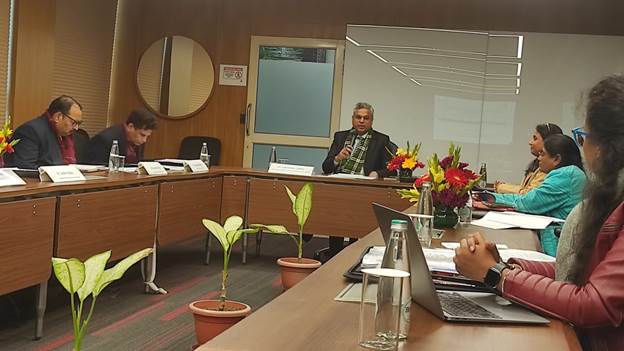
 The 1st meeting of the Social Audit Advisory Body (SAAB) was held on 18th January 2024 at conference hall, Dr Ambedkar International Centre, New Delhi. The Meeting was chaired by the Secretary, Department of Social Justice & Empowerment. This advisory body, a first of its kind, has been established to guide the Ministry in institutionalizing social audits for its various schemes.

Representatives from key ministries and academic institutions, including the Ministry of Health & Family Welfare, Department of Persons with Disabilities, Ministry of Women and Child Development, Department of Social Justice & Empowerment, Ministry of Rural Development, National Institute of Rural Development, Tata Institute of Social Sciences, Delhi School of Social Work and Indian Institute of Public Administration are members of this advisory body.

The meeting commenced with a welcome address by the Director of the National Institute of Social Defense (NISD). Ms. Pratima Gupta, Deputy Director General of the Statistic Division of DoSJE -cum – convener of SAAB presented an overview of social audits, emphasizing on the importance of this social accountability tool in promoting transparency and accountability.

The Joint Secretary and Financial Advisor, Mr. Sanjay Pandey shared insights into the journey of institutionalizing social audits within the department, underscoring the commitment to ensuring effective implementation.

The Secretary, Department of Social Justice & Empowerment in the keynote address, highlighted the transformative power of social audit processes in raising community awareness and amplifying the voices of citizens. He emphasized the pivotal role of social audits in bringing transparency and driving corrective actions based on valuable feedback from citizens.

The Department of Social Justice and Empowerment has taken a pioneering step by establishing the National Resource Cell for Social Audit (NRCSA) to ensure social audits through dedicated Social Audit Units at the state level. The NRCSA team presented the approach of social audit processes developed and implemented by the department and their significant impact on the schemes’ effective implementation.

Members of the SAAB provided valuable inputs to strengthen the social audit process and align it more closely with the principles of social justice. The Secretary-DoSJE commended the team for their dedicated work and new initiatives to social audits adopted and expressed his hope that the success of these social audits under DoSJE could also serve as a guiding example for other government departments.

***

Parakram Diwas at Red Fort on 23rd January

 Prime Minister Shri Narendra Modi will participate in Parakram Diwas celebrations at Red Fort on 23rd January at 6:30 PM.

In line with the vision of the Prime Minister to take steps to duly honour the contribution of luminaries who played a significant role in the freedom struggle, the birth anniversary of Netaji Subhas Chandra Bose was started being celebrated as Parakram Diwas in 2021. The programme being held this year at Red Fort will be a multifaceted celebration seamlessly weaving together historical reflections and vibrant cultural expressions. The activities will delve into the profound legacy of Netaji Subhas Chandra Bose and the Azad Hind Fauj. Visitors will get an opportunity to engage with an immersive experience through exhibitions of archives, showcasing rare photographs and documents that chronicle the remarkable journey of Netaji and the Azad Hind Fauj. These celebrations will continue till 31st January.

During the programme, Prime Minister will also launch Bharat Parv, which will be held from 23rd to 31st January. It will showcase the country’s rich diversity with Republic Day Tableaux and cultural exhibits, featuring efforts of 26 Ministries and Departments, highlighting citizen centric initiatives, vocal for local, diverse tourist attractions, among others.  It will take place in the Ram Leela Maidan and Madhav Das Park in front of Red Fort.


***

Pradhanmantri Suryodaya Yojana

 Immediately after his visit to Ayodhya on the auspicious occasion of consecration of  Suryawanshi Bhagwan Shri Ram, Prime Minister chaired a meeting to launch “Pradhanmantri Suryodaya Yojana” with the target of installing rooftop solar on 1 crore houses at his residence at Lok Kalyan Marg.

During the meeting, Prime Minister said that the power of the sun can be harnessed by every household with a roof to reduce their electricity bills and to make them truly aatmanirbhar for their electricity needs.

Pradhanmantri Suryodaya Yojana aims to provide electricity to low and middle-income individuals through solar rooftop installations, along with offering additional income for surplus electricity generation.

The Prime Minister also directed that a massive national campaign should be started to mobilize residential segment consumers to adopt rooftop solar in large numbers.

The Prime Minister, Shri Narendra Modi has announced ‘Pradhan Mantri Suryodaya Yojana’ under which 1 crore households will get rooftop solar. 

PM Modi said “today, on the auspicious occasion of the consecration of life in Ayodhya, my resolve has been further strengthened that the people of India should have their own solar roof top system on the roof of their houses.

The first decision I have taken after returning from Ayodhya is that our government will launch “Pradhanmantri Suryodaya Yojana” with the target of installing rooftop solar on 1 crore houses.

This will not only reduce the electricity bill of the poor and middle class, but will also make India self-reliant in the field of energy.”

The Prime Minister posted on X :

“सूर्यवंशी भगवान श्री राम के आलोक से विश्व के सभी भक्तगण सदैव ऊर्जा प्राप्त करते हैं।

आज अयोध्या में प्राण-प्रतिष्ठा के शुभ अवसर पर मेरा ये संकल्प और प्रशस्त हुआ कि भारतवासियों के घर की छत पर उनका अपना सोलर रूफ टॉप सिस्टम हो।

अयोध्या से लौटने के बाद मैंने पहला निर्णय लिया है कि हमारी सरकार 1 करोड़ घरों पर रूफटॉप सोलर लगाने के लक्ष्य के साथ “प्रधानमंत्री सूर्योदय योजना” प्रारंभ करेगी। 

इससे गरीब और मध्यम वर्ग का बिजली बिल तो कम होगा ही, साथ ही भारत ऊर्जा के क्षेत्र में आत्मनिर्भर भी बनेगा।”

****


***

Exploring a Diverse Spectrum of Knowledge: A Journey through Educational Portals

 In the digital age, where information is at our fingertips, educational websites play a pivotal role in disseminating knowledge to a global audience. Join us on a journey through a diverse spectrum of educational portals that cater to various aspects of academia, research, and literary exploration.


  1. Eduindex (https://eduindex.org/):
    Kicking off our exploration, Eduindex stands as a comprehensive educational hub covering a wide array of topics. From academic articles to research papers, this site is a treasure trove for learners and scholars alike, providing valuable insights and resources.

  2. International Journal of Research (http://internationaljournalofresearch.com/):
    For those engaged in scholarly pursuits, the International Journal of Research serves as an esteemed platform. It offers a space for academicians and researchers to publish their findings, fostering the exchange of knowledge on a global scale.

  3. Pen2Print (http://www.pen2print.org/):
    As we venture further, Pen2Print emerges as a versatile platform for authors and writers. Specializing in print and digital publications, this site facilitates the dissemination of literary works, encouraging creativity and expression.

  4. Edupedia Publications (http://edupediapublications.org/):
    Edupedia Publications takes us into the world of academic publishing. Aiming to bridge the gap between researchers and readers, this platform provides an avenue for sharing scholarly content and contributing to the academic discourse.

  5. International Journal of Research (http://internationaljournalofresearch.org/):
    Returning to the International Journal of Research, we delve deeper into its commitment to advancing academic excellence. By promoting high-quality research, this platform contributes significantly to the growth and development of various fields of study.

  6. Track2Training (http://track2training.com/ and http://track2training.org/):
    Moving into the realm of skill development and training, Track2Training serves as a valuable resource. With a dual online presence, it caters to both domains, offering courses, insights, and opportunities for personal and professional growth.

  7. Edupedia Publications (http://edupediapublications.com/):
    Edupedia Publications, with its additional domain, reinforces its commitment to fostering scholarly communication. This dual presence highlights its dedication to facilitating the exchange of knowledge through various channels.

  8. Sahitya Samhita (http://sahityasamhita.org/):
    Transitioning to the world of literature, Sahitya Samhita emerges as a platform dedicated to the literary arts. This site celebrates creativity, providing a space for writers and enthusiasts to explore and showcase their literary prowess.

  9. EduPub (www.edupub.org):
    Our journey concludes with EduPub, a multifaceted platform encompassing education and publishing. With a broad scope, EduPub contributes to the educational landscape by offering a range of resources and services.

In this interconnected digital era, these educational portals stand as beacons of knowledge, each contributing uniquely to the collective growth and enlightenment of individuals across the globe. Whether you are a student, researcher, writer, or enthusiast, these platforms offer a wealth of resources to explore and enhance your understanding of the vast world of academia.

Balanced Lifestyle

 In the hustle and bustle of modern life, we have a lot of stress. Even I must say now that stress is normal for today’s generation. Everyone is stressed and it’s normal to be stressed sometimes but long term stress can harm your health. Everyone is changing their lifestyle like late sleep, lack of nutrition, drugs and alcohols etc etc. Because of all this stuff we are doing wrong for our life. Changing lifestyle are affecting your mental as well as physical health. 

Some key elements that contribute to a fulfilling and balance life style. 

Nutrients

Proper sleep

Stress management

Time management

Workout

Nutrients

  • Nutrients

Now a days our generation is not taking proper nutrients. They are prioritizing junk food instead of healthy food. However, a healthy diet plays a crucial role in healthy lifestyle. Green veggies, eggs, fruits, dry fruits can fulfill your maintenance of your full body performance. A balanced lifestyle begin with a healthy diet so it’s important to take a proper diet on a regular basis. 

  • Proper sleep

Sleep is a vital component of all the living beings. Establishing a consistent sleep routine and creating a comfortable sleep environment are essential for resortaive sleep. Proper sleep improves mental health as well as physical health. 

  • Stress management

Stress management can help you to balanced a quality life and also lessen your stress. It’s natural to be stressed sometimes but long term stress can cause your physical as well as mental health. So if you are suffering from stress from more than two or three weeks then you should definitely talk to your psychologist. You can talk to your closed ones or your friends. Because you would know that you can share them anything without any judgement. Go to the spas, read novels, and also listen music. Music is the best therapy for stress management. 

  • Time management

Manage your time according to your schedule. Set your goals, break them into smaller and establish a routine. It will be easy to succeed in your life also manage your time. Don’t waste your time without any reason. Use your time in an effective way. Time is very precious and also it is the key to achieving the personal as well as professional success. 

  • Workout

Regular exercise plays a vital role in the balanced lifestyle. When you are physically fit then you can easily achieved your goals. Your mental health will be fine. Regular workout helps you to maintain the body weight and also boost your energy levels. Find an activity which you enjoy and improve your mental and physical health.

Launch of “Alliance for Global Good- Gender Equity and Equality” by India at World Economic Forum

 At the World Economic Forum’s annual meeting at Davos, Switzerland held from 15-19 January 2024, India participated in the spirit of “Vasudhaiva Kutumbakam”, ready to shape a common future marked by global cooperation, aligning with the overarching WEF theme for the year, ‘Rebuilding Trust’.

At WEF 2024, the Indian official delegation was led by Smt. Smriti Zubin Irani, Union Minister of Women & Child Development and Minority Affairs along with Shri Hardeep Singh Puri, Union Minister of Petroleum & Natural Gas, Housing & Urban Affairs, Shri Ashwini Vaishnaw, Union Minister of Railways, Communications, Electronics & IT, Shri RK Singh, Secretary, DPIIT, Ministry of Commerce & Industry and other senior officers of the Government of India.

 One of the key takeaways from the Forum meeting was the announcement of the launch of a “Global Good Alliance for Gender Equity and Equality” with the support and endorsement by WEF and Government of India.

The idea of this alliance emerged from the G20 Leaders’ Declaration and India’s abiding commitment to the cause of women-led development as propounded by Prime Minister  Shri Narendra Modi.

The primary and stated objective of this new Alliance is to bring together global best practices, knowledge sharing and investments in the identified areas  of women’s health, education, and enterprise.

The Alliance will be taking forward the commitments of the G20 leaders for the benefit of the larger global community as a follow up to the activities of the Engagement Group and initiatives under the G20 framework, inter alia, the Business 20, Women 20 and G20 EMPOWER.

At the announcement of the launch of the Alliance, Smt. Smriti Zubin Irani said “On a street where money walks and politics talks, we were able to bring together the best of industry, enterprise and humanity in this grand Alliance.” She further spoke about India’s achievements including its spectacular inclusive  growth story.

The Alliance has garnered support from industry leaders, including Mastercard, Uber, Tata, TVS, Bayer, Godrej, Serum Institute of India, IMD Lausanne, and over 10,000 partners from industry.

Supported by the Bill and Melinda Gates Foundation, the alliance will be housed and anchored by the CII Centre for Women Leadership. The World Economic Forum has come on board as a ‘Network Partner’ and Invest India as an ‘Institutional Partner’.

Given India’s abiding commitment to Vasudhaiva Kutumbakam – ‘One Earth, One Family, One Future’ and its continued efforts towards “Sabka Saath, Sabka Vikas and Sabka Prayas” this ‘Alliance for Global Good- Gender Equity and Equality’ is poised to be a force to reckon with on all gender related issues.

This year’s unique initiative at WEF, led by Union Minister of Women & Child Development was a first ever women leadership lounge (We Lead lounge) by CII and BMGF.

The lounge hosted various panel discussions and meetings on the themes of “Women-led Development” and increasing women’s participation in the economy, bridging the digital gender gap, engendering women’s health, etc. The lounge also showcased handicrafts by women entrepreneurs and products from tea and coffee board of India.

“We Lead” lounge facilitated the much-needed conversation around the message of global prosperity powered by women.

Smt. Smriti Zubin Irani participated in eight sessions at the WEF, including, ‘Restoring Faith in the Global Systems’, ‘BRICS in Expansion’, ‘Can India Seize its Moment’, and ‘Country Strategy Dialogue on India. Her enriching interventions in these sessions brought to focus the GOI policies and initiatives with special emphasis on gender equality and women-led development.

On the sidelines of WEF, the Union Minister held bilateral meetings with leaders from around the world, HE Noor Ali Alkhulaif Minister for Sustainable Development Kingdom of Bahrain, H.E. Mrs. Karien van Gennip, Deputy Prime Minister and Minister for Social Affairs and Employment of the Netherlands and H.E.Ms. Karoline Edtstadler, Federal Minister for the EU and Constitution, Federal Chancellery Republic of Austria and discussed  issues of common interest and possible collaborations

****

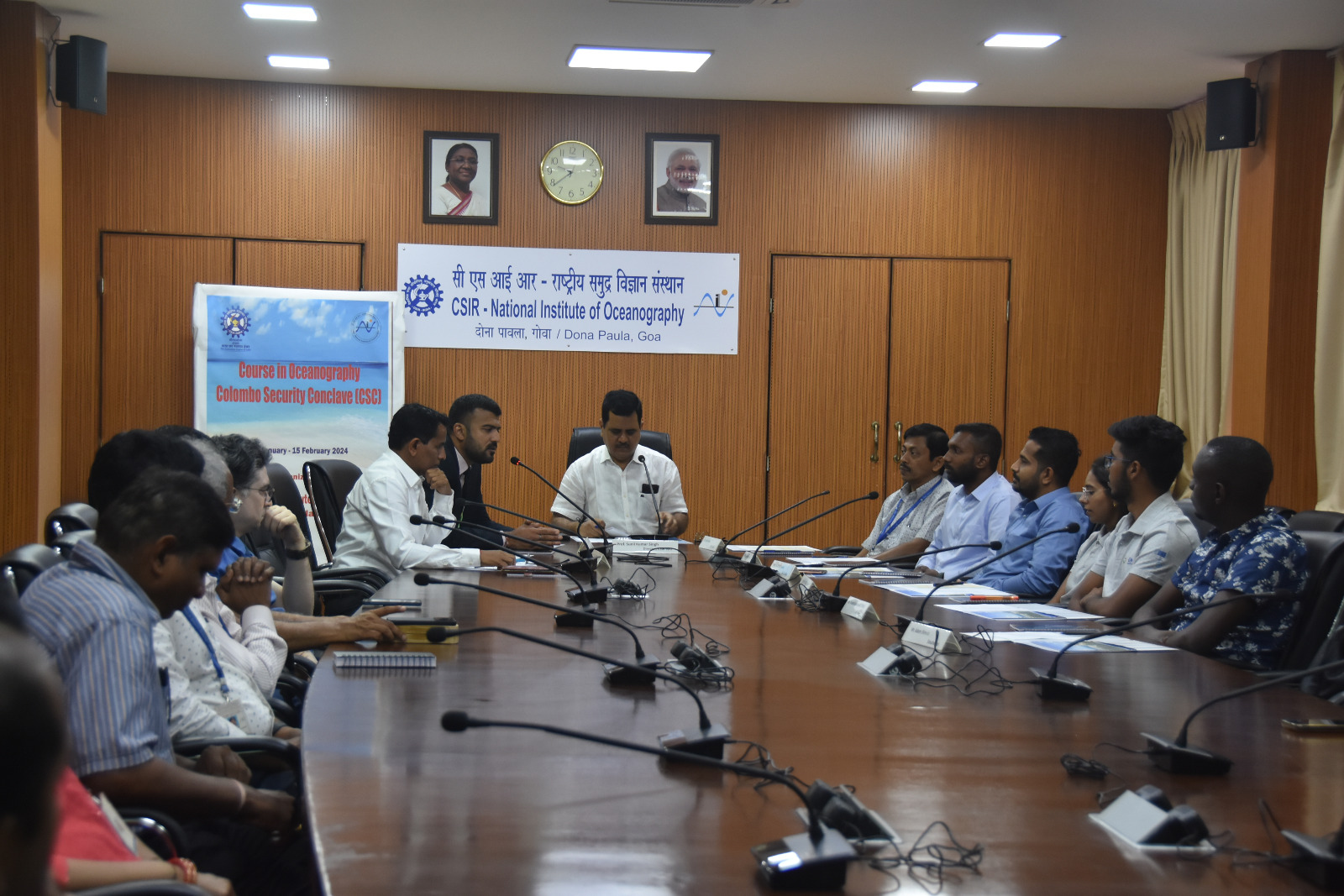
CSIR – National Institute of Oceanography (NIO) Initiates Month-long Oceanographic Certificate Course for Colombo Security Conclave (CSC) Member Countries

 In a significant step towards fostering collaboration and capacity building in the field of Oceanography, CSIR – National Institute of Oceanography (NIO) has commenced a month-long certificate course for the member countries of the Colombo Security Conclave (CSC). The inaugural session of this pioneering initiative took place on January 15, 2024.

This educational endeavor is a direct outcome of the maiden CSC Oceanographers and Hydrographers conference, which transpired in Goa and Hyderabad in November 2022. Following this conference, scientists from CSC nations jointly conducted two expeditions in the Indian Ocean Region from June to September 2023. Another joint expedition in the Antarctic, launched in December 2023, is currently underway.

During the inaugural address, Prof. Sunil Kumar Singh, Director of CSIR-NIO, emphasized the crucial role of littoral nations in comprehending the complexities of the Indian Ocean Region. The month-long certificate course is being coordinated by Dr Manguesh Uttam Gauns, Senior Principal Scientist & Head, Biological Oceanography Division.

Participants in the course will delve into various facets of Oceanography, addressing the profound impacts of climate change on the Indian Ocean and around the world. The program includes interactive discussions, the exchange of best practices, and hands-on project work to enhance practical knowledge.

The course is anticipated to facilitate a rich exchange of ideas and contribute to the growing body of knowledge in Oceanography. The engagement aims to enhance the capabilities of the participating nations in addressing environmental challenges, fostering sustainable practices, and promoting scientific cooperation.

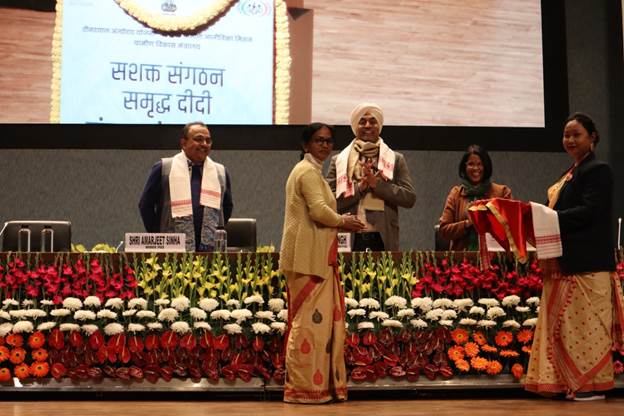
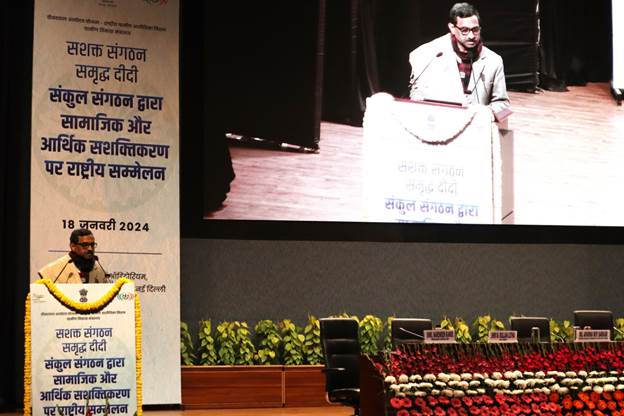
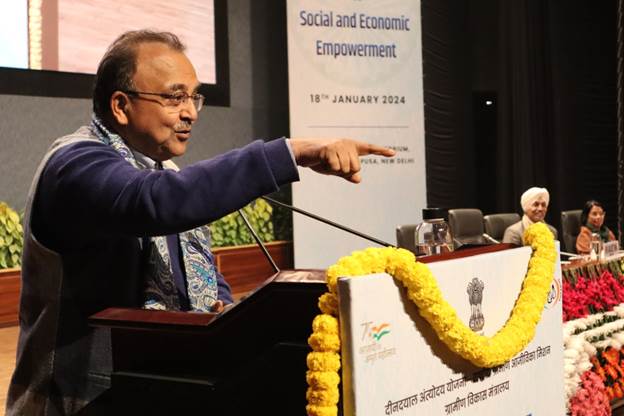
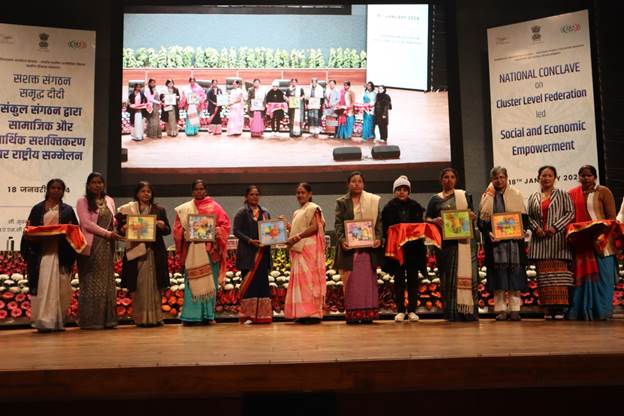
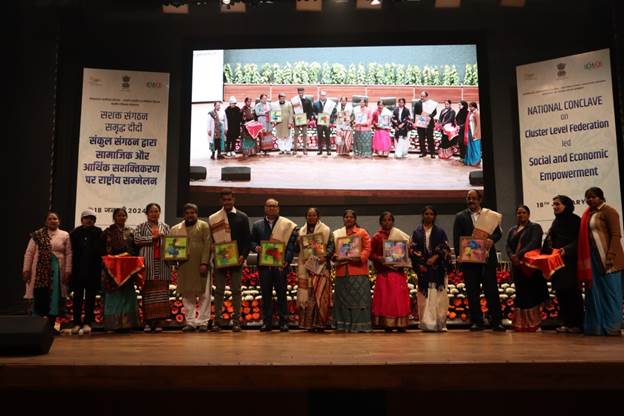
DAY-NRLM organised National Conclave on Cluster Level Federation (CLF) led Social and Economic Empowerment

 Secretary, Ministry of Rural Development Shri Shailesh Kumar Singh has emphasised on the whole of government and whole-of-society approach and stressed on the need for the CLF to extend its focus beyond the farm sector. Shri Singh highlighted the importance of diversifying livelihood sources, specifically emphasizing secondary and tertiary avenues. Shri Shailesh Kumar Singh was addressing a National Conclave on Cluster Level Federation (CLF) led Social and Economic Empowerment, which was organised by Deendayal Antyodaya Yojana – National Rural Livelihood Mission (DAY-NRLM) with the support of its partner organisations, PRADAN and TRIF.

The conclave was held to reflect on the collective power of Cluster Level Federations (CLFs) promoted under DAY NRLM and its members in reshaping the socio-economic landscape.


Guest speaker, Secretary, Ministry of Steel, Shri. N N Sinha shared insightful perspectives and emphasized the significance of “Lakhpati Didi” as a crucial starting point for the journey towards livelihood intensification. However, he stressed that this concept should evolve beyond being merely a Lakhpati Didi, aiming for broader and sustained impacts.


During a significant segment titled “Enabling CLF as Sustainable Institutions,” Shri Amarjeet Sinha, Chairman, Public Enterprises Selection Board (PESB), spoke of the significance of CLF-led economic development while urging participants to embrace a broader perspective. He emphasized the need to envision the big picture, advocating for a comprehensive approach guided by an overarching vision.

Additional Secretary (MoRD) Shri Charanjit Singh spoke on the broad objective and DAY-NRLM’s perspective on CLF-led socio-economic empowerment. Emphasizing the significance of PRI-CBO (Panchayati Raj Institution-Community Based Organization), he underscored the need for collaborative efforts between these entities.

Conversations during the course of the conclave delved into governance aspects, leadership, decision-making, audits, and compliance. The conclave also focused on addressing multi-dimensional poverty and fostering synergy among individual entrepreneurs, producer collectives, and stakeholders involved in the production-marketing cycle in its various focussed sessions.

Panel discussions were also held on themes like strengthening governance of CLFs; contextualized planning, building backward and forward Linkages; and role of CLFs in addressing multi-dimensional aspects of poverty; bringing synergy among Producer Collectives and Cluster Level Federations. The community leaders from CLFs across the country shared their experiences during different sessions.

******

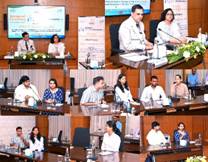
NCGG’s 2nd Internship Programme in 2024 successfully completed, research papers of 8 interns accepted for publication

 The 2nd batch of NCGG Internship Programme 2024 was successfully completed at the National Centre for Good Governance (NCGG), New Delhi on January 17th 2024. The NCGG Internship Programme is a short-term engagement of ‘selected students’ intends to provide exposure to the public policy and governance related issues to students for mutual benefit. The second batch of the NCGG Internship Programme received more than 300 applications, of whom 8 interns were chosen based on exceptional academic achievements and dedicated commitment to their respective domains. In two internship programs in 2024, 24 Interns have successfully submitted their research papers on diverse subjects of public policy.

The inaugural session was addressed by Shri V. Srinivas, IAS, Secretary, Department of Administrative Reforms & Public Grievances, and Department of Pension and Pensioners’ Welfare, Government of India, and the Director General of NCGG and Dr. Gazala Hasan Assistant Professor and Course Coordinator firmed up the research subjects. The 8 interns engaged with subject matter experts – Dr. Naveen Sirohi, Associate Professor at the Indian Institute of Corporate Affairs, Dr. Kusum Lata, Associate Professor at the Indian Institute of Public Administration, Dr. Shyamli Singh, an Assistant Professor at the Indian Institute of Public Administration, Shri Apruv Kumar Mishra, Consultant at the Economic Advisory Council to the Prime Minister, Dr. Malvika Upadhya, Post-Doctoral Fellow at the Institute of Eminence, University of Delhi, and Dr. Neha Aneja, Assistant Professor at the Faculty of Law, University of Law, Delhi University.

The 8 interns thereafter undertook the responsibility of choosing a specific domain for their internship, aligning their selections with their educational backgrounds. Weekly review meetings on Saturday were held with the 8 interns at the level of Director General and progress closely monitored. Throughout the 3-month-long Internship Programme (October’23 to January’24), mentorship to the Interns was provided by Dr. Kusum Lata, Associate Professor, IIPA, Dr. Shyamli Singh, Assistant Professor, IIPA, Dr. Josyula Srinivas, Associate Professor of Practice, Indian Institute of Management, Visakhapatnam, Shri Apurv Mishra, Consultant, Economic Advisory Council to the Prime Minister, and Dr. Neha Aneja, Assistant Professor, Faculty of Law, University of Delhi.

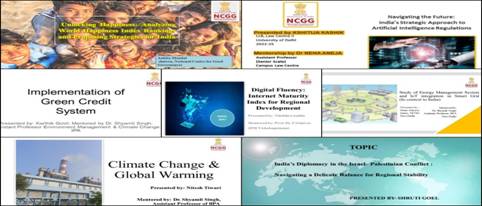
The 8 interns submitted their research papers on 17 January 2024

  • Ms. Ankita Mondal paper on ‘Unlocking Happiness: Analyzing World Happiness Index Rankings and Proposing Strategies for India.’
  • Mr. Nilabhra Auddy paper on ‘Digital Fluency – Internet Maturity Index for Regional Development,’ 
  • Mr. Karthik Govil paper on  ‘Implementation of Green Credit Systems.’
  • Ms. Gauri Sakaria paper on ‘Study of Energy Management System and IoT Integration in Smart Grid (In context to India)
  • Ms. Kshitija Kashik paper  on ‘Navigating the Future: India’s Strategic Approach to Artificial Intelligence Regulations,’
  •  Mr. Nitesh Tiwari paper on ‘Climate Change & Global Warming: Paris Agreement.’
  • Ms. Shruti Goel paper on ‘India’s Diplomacy in the Israel – Palestinian Conflict: Navigating a Delicate Balance for Regional Stability.’

These impactful papers will be compiled into a compendium, accessible to the public through publication on the NCGG’s website.


***

Central Geological Programming Board (CGPB)

 The 63rd Central Geological Programming Board (CGPB) meeting organized by Geological Survey of India (GSI), Ministry of Mines will be held on 22nd January 2024 in Bhopal, Madhya Pradesh.

The meeting will be held under the Chairmanship of Shri V.L. Kantha Rao, Secretary, Govt. of India, Ministry of Mines. It will be attended by Shri Sanjay Lohiya, Additional Secretary, Ministry of Mines, Shri Janardan Prasad, Director General, GSI and other senior functionaries of different Ministries, State Directorates of Mining & Geology, PSUs, representatives from private mining industry, Mining associations and other stakeholders.

On this occasion, GSI will hand over the Report on Geological & Geotechnical investigation of Joshimath Township, Chamoli District, to Uttarakhand Govt. The Mineral Map of the newly carved out UT of Ladakh will also be released on this occasion along with other significant publication of GSI.

Review of Follow-up Action on the Agenda items of 62nd CGPB Meeting as well as the new agenda items proposed by the stake holders will be discussed amongst the members of the Board. Subsequently, the Field Season Proposals of GSI for the year 2024-25 will be placed before the Board for discussion.

GSI has formulated about 1055 scientific programs for the year 2024-25, which includes 392 Mineral Development projects (G2;G3;G4; and Offshore Explorations) that has the potential to generate auctionable mineral blocks in near future. Other 133 projects with mineral bias or Mineral Discovery Projects (RMT; Research Project; C-MAP;GT; MPA; Multispectral/Hyperspectral projects) having potential for generating promising areas for future exploration in G4 stage will be taken up. Within the exploration activity, the major thrust has been given on the exploration of strategic & critical and fertilizer minerals. A total of 188 projects on these strategically important mineral commodities like REE, RM, Graphite, Lithium, Vanadium and PGE etc. have been proposed for the year 2024-25, which is almost a jump of 50% from previous year’s target.

Also 111 projects under Natural Hazard Studies/Public Good Geoscience have been taken having societal benefits. Among these, 25 programmes are being taken up on State request/Disaster Management Authorities which includes programme mostly covering the Natural Hazards and 43 programmes are in collaboration with universities / agencies / under sponsorship of different authorities like IITs, NGRI, DRDO, NRSC-ISRO, University of Hyderabad, ASI, CGWB Ministry of Jal Shakti, SJVNL, NWDA, Indian Railways, BRO and State Irrigation Departments etc.

In the post lunch session of the meeting, a two-hour session has been earmarked on the recently launched National Geoscience Data Repository portal, to brief stakeholders about this cloud-based portal, that will host all pre-competitive baseline geological data and mineral exploration data as a single point of truth, making it available to all participants in the mineral and mining sectors. An exhibition showcasing the activities of GSI will also be held during the meeting.

About CGPB

The Central Geological Programming Board (CGPB) is an important platform of the Geological Survey of India (GSI), Ministry of Mines wherein the Annual Field Season Program (FSP) of GSI is placed for discussion and to avoid duplication of work.  The members of CGPB and other stakeholders like State Governments, Central/ State Government Mineral Exploration Agencies, PSUs and Private Entrepreneurs place their requests for collaborative work with GSI. Based on the priorities set by the Government of India and the importance and urgency of proposals presented by the members and stakeholders, the Annual Programme of GSI for survey & mapping, exploration, Research and Development, multidisciplinary catering to societal projects and training & capacity building programmes during the forthcoming financial year is given a final shape after due discussion and deliberations held at the topmost level at CGPB meeting, chaired by the Secretary, Ministry of Mines, Government of India.

The Ministry of Mines, Government of India, vide notification dated 18th August 2023, had revamped/ reconstituted the CGPB Committee into 12 theme-based groups. The main objective of this reconstitution is to enable the States and other Stakeholders to accrue benefit from wider participation and interaction with GSI to further their activities and avoid duplication. It was felt that it would provide a forum for better coordination between Central and State level stakeholders by encouraging the regular functioning of State Geological Programming Boards (SGPB), set up by the State Governments. It was decided that the 12 Committees for the various sub-sectors would comprise members and invitees from the concerned States and Agencies engaged in activities in the field relevant to that particular sector and present their recommendations to the CGPB.

About Geological Survey of India

The Geological Survey of India (GSI) was set up in 1851 primarily to find coal deposits for the Railways. Over the years, GSI has not only grown into a repository of geo-science information required in various fields in the country but has also attained the status of a geo-scientific organisation of international repute. Its main functions relate to creating and updating of national geoscientific information and mineral resource assessment. These objectives are achieved through ground surveys, air-borne and marine surveys, mineral prospecting and investigations, multi-disciplinary geoscientific, geo-technical, geo-environmental and natural hazards studies, glaciology, seismo-tectonic study and carrying out fundamental research.

GSI’s chief role includes providing objective, impartial and up-to-date geological expertise and geoscientific information of all kinds, with a focus on policy making decisions, commercial and socio-economic needs. GSI also emphasizes on systematic documentation of all geological processes both surface and subsurface, of India and its offshore areas. The organization carries out this work through geological, geophysical, & geochemical surveys using the latest does so by using the latest and most cost-effective techniques and methodologies.

GSI’s core competence in survey and mapping is continuously enhanced through accretion, management, coordination and utilization of spatial databases (including those acquired through remote sensing). It functions as a ‘Repository’ for the purpose and uses the latest computer-based technologies for dissemination of geoscientific information and spatial data, through cooperation and collaboration with other stakeholders in the Geo-informatics sector.

GSI, headquartered in Kolkata, has six regional offices located in Lucknow, Jaipur, Nagpur, Hyderabad, Shillong and Kolkata and state unit offices in almost all states of the country. GSI is an attached office to the Ministry of Mines.