Importance of Imprints of Publication House

Daily writing prompt
What is your favorite holiday? Why is it your favorite?

Imprints of a publication house play a significant role in the book publishing industry, serving various strategic and market-oriented purposes. Here are some of the key roles and functions of imprints:

Photo by George Milton on Pexels.com
  1. Specialization: Imprints often focus on specific genres or niches, such as science fiction, romance, academic publications, or children’s books. This specialization allows the imprint to cater to a particular audience, develop expertise in that genre, and build a strong brand identity that readers come to recognize and trust.
  2. Brand Differentiation: Large publishing houses may have multiple imprints under their umbrella, each with its own brand identity. This differentiation helps publishers market their books more effectively to target audiences. For example, a publisher might have one imprint dedicated to mainstream literary fiction and another to avant-garde poetry.
  3. Editorial Independence: Imprints can operate with a degree of editorial independence, which allows them to cultivate a distinct editorial style and attract authors who resonate with their specific aesthetic or value system. This independence can be crucial in fostering creativity and innovation within the broader constraints of a large publishing house.
  4. Marketing and Sales: By segregating books into different imprints based on genre or target demographic, publishers can streamline their marketing and sales strategies. Each imprint can develop specialized marketing plans that cater to its particular audience, which can be more effective than a one-size-fits-all approach.
  5. Attracting Talent: Authors often choose to work with particular imprints because of their reputation, editorial staff, or the specific books they have published. A strong imprint can attract high-quality manuscripts, which in turn strengthens the imprint’s brand and market success.
  6. Management Efficiency: Having separate imprints allows a large publishing house to manage its portfolio more efficiently. Each imprint functions as a semi-autonomous unit with its own management team, which can lead to quicker decision-making and greater responsiveness to market changes.
  7. Historical or Legacy Reasons: Some imprints are retained because they have a long-standing history or have acquired a legacy of quality and prestige. Authors and readers alike may feel a connection to these imprints based on their historical significance.

Imprints thus serve as crucial tools for publishers, helping them manage a diverse range of books and authors while maintaining focus and specialized expertise in various segments of the market.

The Benefits of Traditional Book Publishing with Publishers Like Edupedia Publications Pvt Ltd

Daily writing prompt
Have you ever been camping?

In an era dominated by digital media, the value of traditional book publishing remains significant. Publishers like Edupedia Publications Pvt Ltd play a crucial role in nurturing authors and bringing quality content to readers. Traditional publishing houses offer numerous advantages that are hard to replicate in self-publishing platforms. Here are some key benefits of working with a traditional book publisher:

Photo by Andrea Piacquadio on Pexels.com

1. Professional Editing and Production

One of the most significant advantages of traditional publishing is the professional editing services provided. Edupedia Publications, like many traditional publishers, employs skilled editors who work closely with authors to refine their manuscripts. These services go beyond mere proofreading; they enhance the structure, clarity, and overall quality of the text. Additionally, the publisher handles all aspects of production, including formatting, cover design, and typesetting, ensuring that the final product is aesthetically pleasing and professionally produced.

2. Quality Assurance

Traditional publishers have a reputation to maintain and, as such, are invested in the quality of the books they publish. This means rigorous peer review and quality checks that help ensure the content is accurate, well-researched, and of high editorial standards. For academic authors, this can also mean enhanced credibility and recognition in their field.

3. Marketing and Distribution

Another significant advantage is the comprehensive marketing and distribution networks that traditional publishers provide. Edupedia Publications Pvt Ltd, for instance, would typically manage the marketing of your book, which includes promotional activities, distribution to bookstores, and presence at book fairs and other events. They also handle listing on various retail platforms and may run advertising campaigns, author interviews, and book signings. This extensive distribution network ensures that the book reaches a wide audience, increasing its sales potential.

4. Financial Investment

With traditional publishing, the publisher assumes all financial risks. From the initial stages of manuscript development to marketing and distribution, the publisher covers all expenses. Authors may receive an advance against royalties and will earn royalties from sales without the burden of upfront costs. This financial model allows authors to focus more on their writing without worrying about the investment needed to publish and market their book.

5. Prestige and Validation

Being published by a recognized publishing house like Edupedia Publications Pvt Ltd lends an author prestige and serves as a form of validation of their work. This can be particularly important for new authors trying to establish themselves. The prestige associated with a reputable publisher can open doors to more opportunities in writing and related fields.

6. Long-term Partnership and Career Development

Traditional publishers are interested in building long-term relationships with their authors. They invest in the author’s growth and career development, which can be incredibly beneficial for new and established authors alike. This partnership can lead to subsequent book deals and opportunities for broader exposure, including translations and international sales.

7. Rights Management

Publishers like Edupedia Publications manage the rights associated with the book, which can include foreign rights, audio books, e-books, and even film and television rights. They have the expertise to negotiate deals that can further an author’s career and ensure that their work is protected under copyright laws.

Conclusion

While the rise of self-publishing has democratized the process of bringing books to market, traditional publishing remains a strong force, particularly for authors who seek professional quality and broad distribution. Companies like Edupedia Publications Pvt Ltd offer a full suite of services that can dramatically benefit authors, from enhancing the quality of their work to ensuring it reaches the widest possible audience. For many authors, the benefits of traditional publishing align closely with their career goals and aspirations, making it a compelling choice in their publishing journey.

Conference organized on ‘Challenges and Prospective Solutions in Inland Waterways and Shipbuilding’

 Ministry of Ports, Shipping and Waterways (MoPSW), Government of India, along with Cochin Shipyard Limited (CSL) and Inland Waterways Authority of India (IWAI) recently organized a two-day conference in Kochi ,Kerala (23-24th April) on ‘Challenges and Prospective Solutions in Inland Waterways and Shipbuilding’, bringing together various state departments, industry experts and stakeholders to delve into pressing issues within the maritime sector. The conference, which featured four insightful sessions, focused on the imperative of decarbonizing the maritime industry and addressed critical challenges in inland water transport and shipbuilding. Participants actively engaged in sharing key challenges faced by them and suggested possible interventions by the government in order to swiftly achieve the cargo modal shift to waterways, apart from boosting domestic shipbuilding.

Shri R Lakshmanan, Joint Secretary, MoPSW said “The two-day conference at Kochi successfully facilitated enriching discussions encompassing India’s key priorities including Green Transition of Inland Waterways, establishment of a dedicated Sectoral Maritime Development Fund, promoting domestic shipbuilding, etc. This is one among many such meetings being conducted by the ministry to identify and address the key challenges faced by the maritime stakeholders in achieving the targets set forth in Maritime Amrit Kaal Vision 2047.”

The inaugural session brought to the fore MoPSW’s decarbonization efforts in the Inland Waterways sector being spearheaded by IWAI and CSL by deployment of Green Hydrogen Fuel Cell Inland Vessels, aligning with MoPSW’s Harit Nauka Guidelines. Varanasi has been selected as the pilot location for immediate deployment on NW-1, with expansion plans informed by pilot learnings. It was discussed that discussions are ongoing with potential players for facilities such as bunkering, etc. Furthemore, it was informed that due to its low emission qualities, Methanol is also actively considered as one of the key green fuels for EXIM Vessels globally as seen in the recent case of Maersk’s deployment of Methanol Powered Ships. Going forward, it was suggested to explore mechanisms of developing indigenous development of Methanol marine engines in the country as a progressive step towards Green Transition of Inland Vessels.

Ongoing roundtable discussion at the conference in Kochi

The afternoon session delved into the pressing financing needs of India’s shipping sector, underscoring the mammoth investment requirement of approximately Rs 70-75 Lakh Crore as outlined in the Maritime Amrit Kaal Vision 2047. Despite this substantial need to support the country’s projected trade and economic expansion, there’s a notable absence of forthcoming finance sources, including bank credit and foreign investment. The discussion illuminated various financing challenges encountered by Indian maritime stakeholders, particularly in the shipping sector.

These challenges include the non-availability of long-term funding, which is crucial for sustainable growth, along with lower interest rates. Additionally, the presence of fixed sectoral lending limits as per RBI credit concentration norms poses a significant hurdle, restricting the availability of credit by capping each bank’s exposure to individual companies or networks of companies. Moreover, the lack of asset-based financing by Banks/Financial Institutions (FIs) acts as a deterrent for shipping sector borrowers.

In response to these challenges Shri R Lakshmanan, Joint Secretary, MoPSW, shared insights into the ministry’s proactive efforts. The ministry is actively working on establishing a dedicated Maritime Development Fund, akin to established sectoral Financial Institutions such as Power Finance Corp. Ltd, REC, IRFC, etc. This fund aims to cater to the unique and substantial funding requirements of the maritime sector, enabling the implementation of specific initiatives such as shipbuilding, decarbonization, green energy adoption, technology innovation, and manpower training and development.

Industry stakeholders warmly welcomed this initiative and provided valuable feedback, recognizing its potential to address the pressing financing needs and propel the holistic development of the maritime sector as envisioned in Maritime Amrit Kaal Vision 2047.

 

Water Metro operating in Kochi


The programme’s evening agenda included a tour of the Kochi Water Metro and projects under the Inland Waterways Authority of India (IWAI), highlighting the strategic focus on bolstering river cruise tourism, advancing urban water transport networks along inland waterways, and fostering the growth of coastal shipping. The government recognizes IWT as a more economical and environmentally friendly mode of transportation.

In Day 2 of the conference, for the first session, stakeholders from various sectors including inland vessel operators, cruise operators, vessel builders, ship management companies, cargo owners, state water transport departments, and Kochi water metro convened to address challenges and explore possible interventions. Discussions centered on traffic patterns along NW-3, NW-8, and NW-9, alongside initiatives aimed at optimizing cargo movement. These efforts align with the goal of boosting the modal share of Inland Water Transport (IWT) to 5% by 2030 and 7% by 2047, as outlined in Maritime Amrit Kaal Vision 2047.
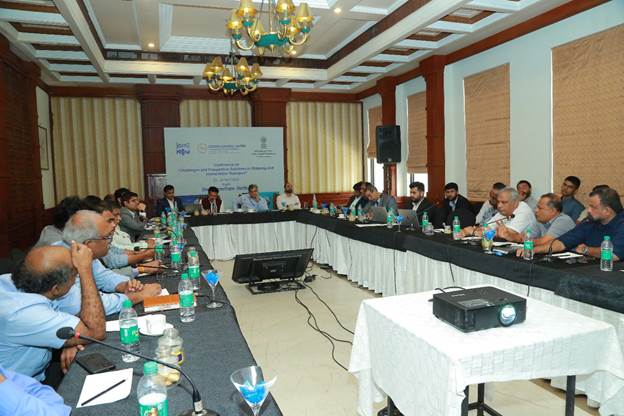
Stakeholders strategize ways to enhance inland water transport modal share during a dynamic conference session

The final session of the two-day conference centered on India’s shipbuilding capacity, highlighting its current global ranking at 22nd with less than 1% of global share. Discussions underscored the nation’s heavy reliance on foreign fleets for cargo movement, resulting in significant foreign exchange expenditure. Stakeholders engaged in dialogues to understand and highlight financing and operational challenges faced by shipbuilders and owners, emphasizing the role of interventions in existing policies and necessary reforms to boost the Indian fleet size and ownership.

Key topics included enhancing frameworks, increasing research and development efforts, and advocating for global promotion of MAKV 2047 to attract international investment in Indian shipbuilding. Participants were encouraged to submit their challenges, interventions, and policy suggestions post-conference for further consideration. With aspirations to become one of the top 5 shipbuilding nations by 2047, India is strategically focusing on expanding ship ownership and tonnage responsibly, thereby unlocking significant commercial opportunities within the shipbuilding sector.

***

World Energy Congress 2024: IREDA CMD highlights need for Innovative Financing Solutions for New and Emerging Renewable Energy Technologies

 Chairperson & Managing Director of Indian Renewable Energy Development Agency Ltd. (IREDA) Shri Pradip Kumar Das participated in a panel discussion on “The New Interdependencies: Trust, Security and Climate Resilience”, at the 26th edition of World Energy Congress in Rotterdam, Netherlands.

During the discussion, the IREDA CMD shared insights into India’s journey towards energy transition and underscored IREDA’s crucial role in advancing renewable energy adoption within the country. He said that India’s ambitious goal of achieving 500 GW of non-fossil-fuel energy capacity by the year 2030 positions it as a beacon of hope in the global fight against climate change. He also highlighted India’s commitment to achieving Net Zero emissions by the year 2070. He pointed out that with rapid progress in renewable energy sector, India stands fourth globally in renewable energy installed capacity.

As the largest pure-play green financing NBFC of the country, IREDA plays a pivotal role in expediting energy transition. The CMD emphasized IREDA’s efforts in facilitating financing for energy transition projects, through utilization of innovative financial instruments to mitigate risks and encouraging private sector involvement in the renewable energy sector.

A group of people sitting on a stageDescription automatically generatedA group of people sitting on a stageDescription automatically generated

The World Energy Congress panel also discussed the ongoing global energy crisis, with the CMD stressing the importance of diversification and robust infrastructure to ensure energy security. He emphasized the significance of integrating regional markets through strong power networks. He also proposed the mandate of allocating 4%-5% of Assets Under Management (AUM) from domestic pension / insurance funds into renewable energy bonds, to deepen the bond market and increase additional global and local investments.

In conclusion, the CMD reaffirmed IREDA’s constant commitment to a green economy. The company continues to attract investments, foster technological advancements, and advocate for policy reforms. The CMD said that as India progresses towards achieving Net Zero emissions by 2070, IREDA remains at the forefront, guiding the way towards a sustainable and secure energy future.

Senior Vice President, Europe & Head of Country, UK, bp, Ms. Louise Kingham CBE; Global Energy & Resources Strategy Leader, EY, Mr. Andy Brogan; and Administrator, Panama Canal Authority, Mr. Ricuarte Vásquez Morales were the other participants in the panel discussion on “The New Interdependencies: Trust, Security and Climate Resilience”, held on 24th April, 2024.

JEL Classification Codes

 Subject Area of JEL codes

A:General Economics and Teaching 

B:Methodology and History of Economic Thought 

C:Mathematical and Quantitative Methods 

D:Microeconomics 

E:Macroeconomics and Monetary Economics 

F:International Economics 

G:Financial Economics 

H:Public Economics 

I:Health, Education and Welfare 

J:Labor and Demographic Economics 

K:Law and Economics 

L:Industrial Organization 

M:Business Administration and Business Economics; Marketing; Accounting; Personnel Economics 

N:Economic History 

O:Economic Development, Technological Change and Growth 

  • O00 – General
  • O1 – Economic Development
  • O10 – General
  • O11 – Macroeconomic Analyses of Economic Development
  • O12 – Microeconomic Analyses of Economic Development
  • O13 – Agriculture; Natural Resources; Environment; Other Primary Products
  • O14 – Industrialization; Manufacturing and Service Industries; Choice of Technology
  • O15 – Human Resources; Human Development; Income Distribution; Migration
  • O16 – Financial Markets; Saving and Capital Investment; Corporate Finance and Governance
  • O17 – Formal and Informal Sectors; Shadow Economy; Institutional Arrangements
  • O18 – Urban, Rural, Regional, and Transportation Analysis; Housing; Infrastructure
  • O19 – International Linkages to Development; Role of International Organizations
  • O2 – Development Planning and Policy
  • O20 – General
  • O21 – Planning Models; Planning Policy
  • O22 – Project Analysis
  • O23 – Fiscal and Monetary Policy in Development
  • O24 – Trade Policy; Factor Movement Policy; Foreign Exchange Policy
  • O25 – Industrial Policy
  • O29 – Other
  • O3 – Innovation; Research and Development; Technological Change; Intellectual Property Rights
  • O30 – General
  • O31 – Innovation and Invention: Processes and Incentives
  • O32 – Management of Technological Innovation and R&D
  • O33 – Technological Change: Choices and Consequences; Diffusion Processes
  • O34 – Intellectual Property and Intellectual Capital
  • O35 – Social Innovation
  • O38 – Government Policy
  • O39 – Other
  • O4 – Economic Growth and Aggregate Productivity
  • O40 – General
  • O41 – One, Two, and Multisector Growth Models
  • O42 – Monetary Growth Models
  • O43 – Institutions and Growth
  • O44 – Environment and Growth
  • O47 – Empirical Studies of Economic Growth; Aggregate Productivity; Cross-Country Output Convergence
  • O49 – Other
  • O5 – Economywide Country Studies
  • O50 – General
  • O51 – U.S.; Canada
  • O52 – Europe
  • O53 – Asia including Middle East
  • O54 – Latin America; Caribbean
  • O55 – Africa
  • O56 – Oceania
  • O57 – Comparative Studies of Countries

P:Economic Systems 

Q:Agricultural and Natural Resource Economics; Environmental and Ecological Economics 

R:Urban, Rural, Regional, Real Estate, and Transportation Economics 

Y:Miscellaneous Categories 

Z:Other Special Topics 

Value of ISBN for Conference Proceedings

Daily writing prompt
What are your favorite emojis?

The International Standard Book Number (ISBN) is a unique identifier for books, allowing for more efficient marketing and distribution. ISBNs are pivotal in the publishing world, extending their utility to the realm of academic and professional conferences. This article explores the significance of ISBNs for conference proceedings, emphasizing their role in cataloging, credibility, and accessibility.

Photo by Angelika Siafa on Pexels.com

What is an ISBN?

An ISBN is a numeric identifier that is unique to each edition and variation (except reprints) of a book or book-like resource. The ISBN system was developed to provide a universal, standardized method to identify and track books in the international marketplace (International ISBN Agency, 2017).

ISBN for Conference Proceedings

Conference proceedings compile the contributions of participants at conferences, workshops, and symposia, often serving as a detailed record of the presented work. The assignment of an ISBN to these proceedings consolidates several benefits:

  1. Standardization and Cataloging
    • ISBNs facilitate the standardization and systematic cataloging of conference proceedings in bookstores, libraries, and databases. This standardization ensures that each entry is recognized globally and can be accessed through international library systems.
    • As explained by the U.S. ISBN Agency (n.d.), each ISBN corresponds to a specific publisher, title, edition, and format, aiding in efficient data management and retrieval.
  2. Accessibility and Distribution
    • With an ISBN, conference proceedings can be distributed more broadly, reaching a global audience. This distribution is not limited to physical copies; digital versions also benefit from ISBNs, making them readily available through e-book retailers and digital libraries (Smith, 2015).
    • The ease of access provided by ISBNs helps in disseminating knowledge shared during conferences, thus extending the educational impact and fostering further academic and professional collaboration.
  3. Credibility and Recognition
    • Assigning an ISBN to conference proceedings lends credibility and a sense of legitimacy to the published work (Thompson, 2019). It signals that the content has passed certain publishing standards and is worthy of public and academic recognition.
    • This credibility is crucial for researchers and professionals who cite these proceedings in further studies or use them as references, ensuring that their sources are reliable.
  4. Archival Value
    • ISBNs help in the archival process of conference proceedings, making them easier to catalog and store in academic archives and libraries. This archival is essential for historical documentation and longitudinal studies, providing a traceable record of academic progress and discourse over time (Johnson & Wilmington, 2018).
  5. Ease of Citation
    • For academic work, ease of citation is imperative. ISBNs provide a straightforward way to reference conference proceedings, which is essential for authors who need to cite these sources in subsequent publications (Davis, 2021).
    • Standard bibliographic details associated with ISBNs facilitate correct and consistent citations across various fields and publications.

Conclusion

The use of ISBNs for conference proceedings is more than a mere administrative formality; it is a strategic approach to enhancing the visibility, accessibility, and impact of scholarly work. By providing a standardized system for identification, ISBNs not only aid in the effective distribution and cataloging of academic materials but also enhance their credibility and archival quality. As the academic community continues to globalize, the importance of such standardization only grows, underlining the critical role of ISBNs in scholarly communication.

References

  • International ISBN Agency. (2017). ISBN Users’ Manual – International edition (7th ed.). Retrieved from [https://www.isbn-international.org/content/isbn-users-manual]
  • U.S. ISBN Agency. (n.d.). What is an ISBN? Retrieved from [https://www.isbn.org/what-is-an-isbn]
  • Smith, J. (2015). Digital distribution of academic journals and its impact on scholarly communication. Journal of Academic Publishing, 6(3), 95-112.
  • Thompson, R. (2019). The role of ISBNs in the promotion of academic knowledge. University of California Press.
  • Johnson, L., & Wilmington, S. (2018). Archiving and academic success: The role of digital repositories in preserving conference proceedings. Journal of Library Science, 44(2), 158-174.
  • Davis, M. (2021). Effective referencing of conference proceedings in academic papers. Journal of Academic Research, 11(1), 134-150.

HUMAN SOCIETY IS MAKING THE MISTAKE OF FORGETTING THE IMPORTANCE OF FORESTS

 Human society is making the mistake of forgetting the importance of forests. Forests are life givers. The reality is that forests have preserved life on earth, said the President of India, Smt Droupadi Murmu while addressing the officer trainees of Indian Forest Service (2022 batch) at their convocation ceremony at the Indira Gandhi National Forest Academy, Dehradun today (April 24, 2024).

The President said that today we talk about the Anthropocene Age, which is the period of human-centric development. During this period, disastrous results have emerged along with development. Unsustainable exploitation of resources has brought humanity to a point where the standards of development have to be re-evaluated. She stressed on the importance of understanding that we are not the owners of the earth’s resources, but we are trustees. Our priorities should be ecocentric along with anthropocentric. In fact, only by being ecocentric we will be able to be truly anthropocentric, she stated.

The President said that in many parts of the world the loss of forest resources has occurred very rapidly. Destruction of forests is in a way – destruction of humanity. It is a well known fact that conservation of earth’s biodiversity and natural beauty is a very important task which we have to do very quickly.

The President said that human life can be saved from the crisis through conservation and promotion of forests and wildlife. We can repair the damage at a faster pace with the help of Science and Technology. For example, the Miyawaki Method is being adopted in many places. Artificial Intelligence can help in identifying suitable areas for afforestation and area specific tree species. She stated that there is a need to assess various such options and develop solutions suitable to the geographical conditions of India.

The President said that the chariot of development has two wheels – tradition and modernity. Today human society is bearing the brunt of many environmental problems. One of the main reasons for this is a special type of modernity, the root of which is the exploitation of nature. Traditional knowledge is neglected in this process.

The President said that tribal society has made the eternal laws of nature the basis of their life. People of this society conserve nature. But, under the impulse of unbalanced modernity, some people consider the tribal community and their collective wisdom primitive. Tribal society has no role in climate change but the burden of its ill effects is disproportionately more on them.

The President said that it is very important to understand the importance of the knowledge accumulated by tribal society over centuries and use it to improve the environment. She stated that their collective wisdom can help us move forward on an ecologically sustainable, ethically desirable and socially justifiable path. She stressed that we will have to unlearn many misconceptions and relearn from the ideals of a balanced lifestyle of the tribal society. We have to move forward with the spirit of climate justice.

The President said that the Industrial Revolution in the 18th and 19th centuries increased the demand for timber and other forest products. New rules, regulations and methods of forest use were adopted to cope with the demand. To implement such rules and regulations, the Imperial Forest Service, the predecessor service of the Indian Forest Service, was formed. The mandate of that service was not to protect the tribal society and forest wealth. Their mandate was to promote the objectives of the British Raj by exploiting India’s forest resources to the maximum.

Referring to the mass hunting of wild animals during the British period, the President said that when she visits museums where animal skins or severed heads adorn the walls, she feels that those exhibits are telling the story of the decline of human civilization.

The President said that she was confident that the officers of the Indian Forest Service had become completely free from the colonial mentality and outlook of the former Imperial Forest Service. She stated that IFS officers not only have to conserve and augment India’s natural resources but also use the traditional knowledge in the interest of humanity. They have to protect the forest wealth by synchronizing modernity and tradition and advancing the interests of the people whose life is based on forests. By doing this, they will be able to make a contribution that is truly inclusive and congenial to the environment.

The President said that the Indian Forest Service has given many officers to the country who have done unparalleled work for the environment. IFS officers such as Shri P. Srinivas, Shri Sanjay Kumar Singh, Shri S. Manikandan have sacrificed their lives in the line of duty. She urged the officer trainees to make such officers their role models and mentors and move forward on the ideals shown by them.

The President urged IFS officers to spend time among the tribal people in the field and earn their affection and trust. She said that they should learn from the good practices of the tribal society. She also urged them to take ownership of their responsibilities and become a role model.

Click here to see the President’s speech in Hindi.

***

The Importance of Book Publication Before Retirement from a Professorial Career

Daily writing prompt
When is the last time you took a risk? How did it work out?

In the academic world, the adage “publish or perish” underscores the critical importance of publication to a professor’s career. However, as professors approach retirement, the publication of a book can serve as a capstone to their academic journey, offering a synthesis of their life’s work, contributing to their field’s body of knowledge, and securing their legacy. Here, we explore the value of publishing a book before retiring, particularly through academic publishers like Edupedia Publications Pvt Ltd, which offers tailored services to help educators consolidate their scholarly contributions.

Photo by Anna Shvets on Pexels.com

Legacy and Contribution to Knowledge

For many academics, the culmination of a lifelong career in education and research is epitomized in the publication of a book. This work not only encapsulates their significant contributions but also ensures that their methodologies, insights, and innovations persist beyond their active years in the academia. According to a report by The Chronicle of Higher Education, many retiring professors view book publication as a means to leave behind a tangible legacy that will inspire and inform future generations of scholars and practitioners (Chronicle of Higher Education, 2022).

Reflecting on a Career’s Worth of Knowledge

The process of writing a book allows retiring professors to reflect on their careers, distill decades of research and teaching, and articulate their philosophical and practical viewpoints. This not only aids the academic community but also provides a reflective practice for professors themselves, offering them a sense of closure and accomplishment. As noted in a study published in the Journal of Higher Education Outreach and Engagement, the act of writing can provide senior academics with a means to revisit and reevaluate their work through a new lens, often leading to new insights even at the end of their careers (Smith, J., 2019).

Educational Impact and Continuing Influence

Publishing a book can extend a professor’s influence far beyond their immediate academic circle. Through textbooks, monographs, or compilations of research, retired academics can continue to shape their fields, contribute to curriculum development, and influence current and future students. Edupedia Publications Pvt Ltd, known for its focus on academic publications (www.edupub.org), provides platforms and services that facilitate this process, ensuring that the academic’s work is accessible and impactful.

Financial and Professional Benefits

Beyond the academic and philosophical benefits, publishing a book can also offer financial advantages. Royalties from book sales provide a passive income stream, which can be particularly beneficial in retirement. Moreover, a well-received book can lead to speaking engagements, consultancies, and other professional opportunities that enrich a professor’s retirement both intellectually and financially.

Facilitating the Transition with Edupedia Publications Pvt Ltd

Choosing the right publisher is crucial. Edupedia Publications Pvt Ltd specializes in academic and educational publishing, offering a range of services from editorial support to global distribution. Their expertise in handling the specific needs of retiring academics ensures that the publication process is smooth and that the final product aligns with the professor’s vision and academic standards.

In conclusion, the publication of a book before retirement is more than a milestone; it is a beacon that continues to illuminate the path for future explorations in the field. It offers a unique opportunity for professors to summarize and share their life’s work, influence future generations, and transition smoothly into retirement with a lasting contribution to their academic community. As such, engaging with experienced publishers like Edupedia Publications Pvt Ltd can greatly enhance the quality and reach of their final scholarly contributions.

Countries List for Collaboration in Research

  1. Afghanistan
  2. Angola
  3. Bangladesh
  4. Belarus
  5. Belize
  6. Benin
  7. Bhutan
  8. Burkina Faso
  9. Burundi
  10. Cabo Verde
  11. Cambodia
  12. Cameroon
  13. Central African Republic
  14. Chad
  15. Comoros
  16. Congo
  17. Cook Islands
  18. Côte d’Ivoire
  19. Cuba
  20. Democratic People’s Republic of Korea
  21. Democratic Republic of the Congo
  22. Djibouti
  23. Dominica
  24. Equatorial Guinea
  25. Eritrea
  26. Eswatini
  27. Ethiopia
  28. Gambia
  29. Ghana
  30. Grenada
  31. Guinea
  32. Guinea-Bissau
  33. Guyana
  34. Haiti
  35. Iran
  36. Kenya
  37. Kiribati
  38. Kyrgyzstan
  39. Lao People’s Democratic Republic
  40. Lebanon
  41. Lesotho
  42. Liberia
  43. Madagascar
  44. Malawi
  45. Maldives
  46. Mali
  47. Marshall Islands
  48. Mauritania
  49. Micronesia (Federated States of)
  50. Mozambique
  51. Myanmar
  52. Nauru
  53. Nepal
  54. Nicaragua
  55. Niger
  56. Niue
  57. Palau
  58. Papua New Guinea
  59. Republic of Moldova
  60. Rwanda
  61. Saint Helena
  62. Saint Lucia
  63. Saint Vincent and the Grenadines
  64. Samoa
  65. Sao Tome and Principe
  66. Senegal
  67. Sierra Leone
  68. Solomon Islands
  69. Somalia
  70. South Sudan
  71. Sudan
  72. Suriname
  73. Syrian Arab Republic
  74. Tajikistan
  75. Timor-Leste
  76. Togo
  77. Tokelau
  78. Tonga
  79. Tuvalu
  80. Uganda
  81. Ukraine
  82. United Republic of Tanzania
  83. Vanuatu
  84. Yemen
  85. Zambia
  86. Zimbabwe

Exploring SPSS Software: A Comprehensive Guide to Its Usefulness

 Statistical Package for the Social Sciences (SPSS) is a powerful software tool widely used for statistical analysis in social science. It is also utilized by market researchers, health researchers, survey companies, government entities, education researchers, marketing organizations, data miners, and others. The ability of SPSS software to handle large data sets, its user-friendly interface, and its robust data handling techniques make it a staple in the field of data analysis. Here, we delve into what makes SPSS so valuable, its key features, and how it is used in various research arenas.

Key Features of SPSS

1. User-Friendly Interface:

SPSS has a straightforward Graphical User Interface (GUI) that allows users to manipulate their data and perform complex statistical analyses with simple menu options and dialog boxes. This ease of use makes it accessible for those who may not have an extensive statistical background.

2. Data Management:

SPSS excels in data management, allowing users to perform case selection, create derived data, and perform data transformations. Its ability to handle large datasets effectively with minimal performance loss is a significant advantage for users dealing with extensive data.

3. Broad Range of Statistical Tests:

From simple t-tests and ANOVA to more complex analyses like factor analysis and cluster analysis, SPSS supports a wide array of statistical procedures. This versatility makes it an invaluable tool for comprehensive data analysis.

4. Output and Reporting:

The output from SPSS is well-organized and highly readable. Tables, charts, and graphs can be easily exported to other applications like Microsoft Word or Excel, enhancing report generation and presentation of results.

5. Scripting Capabilities:

SPSS includes a scripting language known as Syntax, which provides a layer of programmability that enhances reproducibility and customization of analyses. Users can automate routine tasks and complex analyses, saving time and reducing the potential for human error.

Usefulness of SPSS in Various Fields

Education

In educational research, SPSS is used to analyze test results and educational outcomes to determine the effectiveness of curricula and teaching methods. Statistical methods help in understanding the impact of various teaching interventions.

Healthcare

SPSS is pivotal in healthcare research for analyzing clinical trial data and other medical data. It helps in understanding patient outcomes, treatment efficacy, and medical cost analysis, which are crucial for evidence-based practice.

Market Research

Market researchers use SPSS to analyze survey data, consumer preferences, and market trends. This information is crucial for making data-driven decisions that can lead to successful marketing strategies and business growth.

Government and Public Policy

For government agencies, SPSS is used to analyze data related to socioeconomic issues, public health, and policy effectiveness. These analyses can inform public policy decisions and improve governance.

Challenges and Considerations

Despite its many benefits, SPSS does come with challenges. It can be costly, which may be a barrier for individual researchers or smaller organizations. Additionally, while user-friendly, there is a learning curve associated with mastering all its features and capabilities.

Conclusion

SPSS software remains a robust tool for statistical analysis across various fields. Its comprehensive features facilitate complex data analysis and decision making. Understanding how to harness the power of SPSS can unlock a wealth of insights in data, contributing significantly to research and business strategies. As technology evolves, continuing to update and refine one’s skills in SPSS will be essential for maintaining a competitive edge in data analysis.

Exploring the Adaptive Large Neighborhood Search (ALNS) Algorithm: Enhancing Optimization in Complex Systems

 The Adaptive Large Neighborhood Search (ALNS) algorithm is a modern heuristic method used to solve complex optimization problems that are too difficult or time-consuming for traditional optimization techniques. Since its introduction, ALNS has been effectively applied in various fields such as logistics, transportation, and scheduling, showcasing its flexibility and robustness. This article delves into the workings of the ALNS algorithm, its applications, and the benefits it offers over conventional methods.

Understanding the ALNS Algorithm

The ALNS algorithm is an extension of the Large Neighborhood Search (LNS) approach. LNS works by iteratively destroying and repairing parts of a given solution to explore the solution space more broadly than classical local search methods. The ‘adaptive’ component of ALNS comes from its ability to dynamically adjust which neighborhood structures are used based on their past performance during the search process. This adaptability makes it particularly effective for solving problems where the landscape of possible solutions is rugged or highly constrained.

Key Components of ALNS

  1. Destroy and Repair Operators: The core of the ALNS algorithm involves two types of operators:

    • Destroy operators dismantle parts of the current solution, removing certain elements to create a partial solution.
    • Repair operators then attempt to complete this partial solution into a feasible full solution, typically by adding elements in a way that optimizes certain criteria.
  2. Selection Strategies: ALNS uses a probabilistic method to select which destroy and repair operators to apply, often based on their performance. These strategies may include roulette wheel selection, tournament selection, or other adaptive mechanisms.

  3. Acceptance Criteria: To escape local optima, ALNS employs sophisticated acceptance criteria such as simulated annealing or threshold accepting, which allow for occasional acceptance of worse solutions to foster broader exploration.

  4. Learning Mechanism: Throughout its execution, ALNS adapts the probabilities associated with each operator based on their efficacy in improving solution quality, hence learning which strategies work best given the problem context.

Applications of ALNS

ALNS has been successfully applied in numerous domains where optimization is crucial:

  • Logistics and Distribution: For routing vehicles in a way that minimizes travel time or fuel consumption while meeting delivery constraints.
  • Scheduling: In environments such as manufacturing plants, hospitals, and airlines, where resources must be allocated efficiently to tasks over time.
  • Telecommunications: In network design and management to optimize the routing of data and minimize latency or packet loss.

Advantages of Using ALNS

The adaptive nature of ALNS offers several advantages over more static optimization algorithms:

  1. Flexibility: It can be tailored to a wide variety of problem types without substantial changes to the core algorithm.
  2. Efficiency: By focusing on more promising areas of the solution space, ALNS often finds better solutions faster than non-adaptive methods.
  3. Robustness: It is less likely to get trapped in local optima, leading to more reliable performance across different instances of a problem.

Challenges and Future Directions

While ALNS is powerful, it is not without challenges. The choice of destroy and repair operators, as well as the tuning of parameters like the cooling schedule in simulated annealing, require expert knowledge and can significantly impact performance. Future research is directed towards automating these aspects to make ALNS more accessible and effective.

Additionally, integrating ALNS with other optimization techniques, such as genetic algorithms or machine learning models, could potentially open up new avenues for solving even more complex problems.

Conclusion

The Adaptive Large Neighborhood Search (ALNS) algorithm represents a significant advancement in the field of heuristic optimization. By dynamically adjusting its strategy based on the problem at hand, ALNS offers a powerful tool for industries facing complex logistical, scheduling, and distribution challenges. As research continues to refine and enhance this adaptable approach, its applications are likely to expand, further cementing its role as a critical component in the optimization toolkit.

List of Experts for Getting Expert Opinion

 There are many professions where individuals can provide expert opinions based on their specialized knowledge and experience. Here is a list of some professions commonly sought for expert opinions across various fields:

  1. Medical Doctor – Expertise in healthcare, treatments, and patient care.
  2. Psychologist – Expertise in mental health, behavior, and cognitive processes.
  3. Lawyer – Expertise in legal matters, advocacy, and legal interpretations.
  4. Engineer (various types like Civil, Mechanical, Electrical) – Expertise in design, construction, and analysis of systems and structures.
  5. Financial Analyst – Expertise in finance, markets, and economic strategies.
  6. Forensic Scientist – Expertise in crime scene investigation and evidence analysis.
  7. Environmental Scientist – Expertise in environmental impact, conservation, and sustainability.
  8. IT Specialist – Expertise in information technology, cybersecurity, and software development.
  9. Educator – Expertise in educational theories, practices, and curriculum development.
  10. Social Worker – Expertise in human behavior, community resources, and social support systems.
  11. Economist – Expertise in economic theory, market behavior, and economic policies.
  12. Architect – Expertise in building design, urban planning, and construction management.
  13. Historian – Expertise in historical research, cultural analysis, and historical interpretation.
  14. Art Critic – Expertise in art history, art styles, and critique of artistic works.
  15. Meteorologist – Expertise in weather patterns, climate change, and atmospheric sciences.
  16. Statistician – Expertise in data analysis, probability, and statistical modeling.
  17. Pharmacist – Expertise in medications, pharmaceutical sciences, and healthcare.
  18. Nutritionist/Dietitian – Expertise in food, nutrition, and dietary counseling.
  19. Occupational Therapist – Expertise in therapeutic care, rehabilitation, and activity-based interventions.
  20. Real Estate Appraiser – Expertise in property valuation, market trends, and real estate.

The Importance of ISBNs in Book Publication: Understanding Its Benefits

Daily writing prompt
What makes you nervous?

In the world of book publishing, obtaining an International Standard Book Number (ISBN) is a critical step for authors and publishers alike. This unique identifier does more than just catalog a book; it facilitates its distribution, sales, and even its recognition in the literary market. This article explores what ISBNs are, how they function within the book publishing industry, and the myriad benefits they offer.

Photo by Suzy Hazelwood on Pexels.com

What is an ISBN?

An ISBN is a 13-digit number that uniquely identifies books and book-like products published internationally. Instituted in 1970, the ISBN standardizes the identification of books, making it easier for publishers, booksellers, libraries, and readers to find or reference a specific book.

How is an ISBN obtained?

Publishers apply for ISBNs from the ISBN agency in their country. In the United States, for instance, Bowker is the official source of ISBNs. Each ISBN is unique to a particular edition and format of a book. This means that the paperback, hardcover, e-book, and audiobook versions of the same title will each have different ISBNs.

Benefits of ISBNs

1. Market Accessibility

An ISBN is essentially a passport for entering the global book market. It allows books to be sold in bookstores, both physical and online, and to be included in the inventory systems of book retailers worldwide. Without an ISBN, a book’s reach is severely limited.

2. Efficient Distribution and Logistics

The ISBN system helps streamline the distribution and logistical processes involved in book selling. Retailers and distributors use ISBNs to track inventory, order stock, and manage sales records. This efficiency is crucial in the modern market where the accurate tracking of sales data is vital for success.

3. Data Collection and Sales Tracking

ISBNs facilitate the collection and analysis of sales data, enabling publishers and authors to measure a book’s performance in various markets. This data is crucial for making informed decisions regarding marketing strategies and future print runs.

4. Eligibility for Awards and Listings

Many literary awards and competitions require an ISBN for entry. Additionally, having an ISBN allows a book to be listed in various bibliographic databases which are used by libraries and academic institutions, thus increasing its potential audience.

5. Professional Credibility

Publishing a book with an ISBN lends professional credibility. It signals that the book meets international standards for publishing and is taken seriously by the industry stakeholders. This is particularly important for self-published authors who are looking to establish themselves.

6. International Recognition

An ISBN provides a book with international recognition, allowing it to be easily identified and ordered from anywhere in the world. This is invaluable for authors seeking to reach an international audience.

7. Rights Management

An ISBN helps in managing rights associated with a book, especially in the digital market. It helps delineate different formats and editions, ensuring that royalties are accurately distributed according to sales.

Conclusion

The use of ISBNs in book publication is more than just a procedural necessity; it is a strategic asset that enhances a book’s visibility, accessibility, and success in the market. For authors and publishers aiming to maximize their book’s potential, obtaining an ISBN is an essential step. Not only does it streamline sales and distribution processes, but it also opens doors to wider markets and provides the necessary tools for effective marketing and rights management. In the evolving landscape of publishing, the ISBN remains a cornerstone of professional and efficient publishing practice.

Future of Technologies in Schools for Teaching and Learning

 In the rapidly evolving landscape of education, technology plays a pivotal role in shaping teaching methods and learning experiences. Educational technologies, often referred to as EdTech, encompass a wide range of tools, platforms, and innovations designed to enhance both teaching and learning. This article explores the current impact of these technologies in schools and anticipates future trends that could further transform the educational environment.

Current Impact of Educational Technologies

  1. Digital Classrooms: The introduction of smartboards, tablets, and laptops in classrooms has transformed the traditional teaching model. Teachers can now integrate multimedia resources like videos, interactive simulations, and eBooks to make learning more engaging. Digital tools also offer personalized learning experiences for students, allowing them to progress at their own pace.

  2. Learning Management Systems (LMS): Platforms like Google Classroom, Moodle, and Blackboard streamline course management and foster communication between teachers and students. LMS tools facilitate the distribution of assignments, grading, and feedback, and provide a centralized hub for resources, enhancing the organizational aspects of education.

  3. Adaptive Learning Technology: Powered by artificial intelligence, adaptive learning technologies can tailor educational content to meet the individual needs of students. These systems analyze student responses to adjust the difficulty of tasks and recommend resources suited to each learner’s pace and understanding level, thus improving educational outcomes.

  4. Virtual and Augmented Reality (VR/AR): VR and AR technologies are beginning to make their mark in schools by providing immersive learning experiences. VR can transport students to different times and places, offering a vivid way to learn history or science, while AR overlays information on the real world, enriching the context and depth of study subjects.

Challenges and Considerations

Despite the benefits, the integration of technology in education comes with challenges. The digital divide is a significant concern, as not all students have equal access to technology and internet connectivity. Schools must address these disparities to ensure equitable learning opportunities. Additionally, there is the issue of screen time, which needs to be managed to prevent negative impacts on students’ health and social skills.

Future Trends

Looking ahead, several trends are likely to dominate the educational technology landscape:

  1. Artificial Intelligence (AI): AI is expected to become more sophisticated, providing not just personalized learning paths but also predictive analytics that can forecast student performance and identify areas needing intervention.

  2. Internet of Things (IoT): As schools become smarter, IoT devices could automate many aspects of school management, from attendance tracking to resource allocation, making operations more efficient.

  3. Blockchain Technology: Although in its nascent stages in education, blockchain could revolutionize how educational credentials are stored and shared, making them more accessible and verifiable across the globe.

  4. Collaborative Technologies: As remote learning becomes more common, technologies that enhance collaboration across distances will be crucial. Tools that simulate a classroom environment online, allow real-time feedback, and facilitate group projects will be particularly valuable.

Conclusion

Educational technologies are undoubtedly transforming the landscape of education, offering new opportunities for engagement and learning. While there are challenges to overcome, particularly in terms of access and effective integration, the future holds immense potential for further innovations. As schools continue to adapt and embrace these technologies, the focus must always remain on enhancing educational outcomes and preparing students for a rapidly changing world.

How to Calculate Sample Size for Case Study

 When planning a case study, especially in a research context that involves comparing groups or analyzing treatment effects, determining the appropriate sample size is crucial to ensure that the study has sufficient power to detect a meaningful effect if one exists. Sample size calculation for case studies often depends on the specific statistical test you plan to use and the desired precision of the results. Below, we will outline a basic approach to sample size calculation for a case-control study, which is a common type of analytical case study design used in epidemiology and other fields.

Sample Size Calculation for a Case-Control Study

In case-control studies, researchers typically want to detect whether the exposure rate significantly differs between cases (affected by the condition of interest) and controls (not affected). To calculate the sample size, you would typically use the following formula derived from the principles of estimating proportions in two independent samples.

Formula:

�=((�1−�/2+�1−�)2⋅(�1(1−�1)+�2(1−�2))(�1−�2)2)

Where:

  • � = the number of participants needed per group (case group and control group).
  • �1−�/2 = the Z-value from the standard normal distribution holding the upper �/2 tail (for a 95% confidence interval, this value is typically 1.96).
  • �1−� = the Z-value from the standard normal distribution holding the upper � tail (for 80% power, � is 0.2 and �1−� is approximately 0.84).
  • �1 = the expected proportion of exposure in the case group.
  • �2 = the expected proportion of exposure in the control group.
  • (�1−�2) = the minimum difference in exposure proportions that you want to detect, deemed clinically or practically significant.

Steps for Calculation:

  1. Define Parameters:

    • Determine �1 and �2, the proportions of the characteristic of interest in the case group and control group, respectively. These are often based on previous studies or pilot data.
    • Choose the significance level � (commonly 0.05 for a 95% confidence level) and the power 1−� (commonly 0.8, meaning the study has an 80% chance of detecting a true effect).
  2. Calculate the Z-values:

    • Find �1−�/2 and �1−� from standard normal distribution tables or using a statistical software.
  3. Plug in the values into the formula:

    • Use the proportions and Z-values in the formula to calculate �.
  4. Adjust for design:

    • If the case-control ratio is not 1:1, adjust the sample sizes proportionally for each group.
  5. Consider Dropouts:

    • Adjust � for each group to account for potential dropouts or nonresponse, ensuring the final sample is robust enough to conduct valid analyses.
  6. Final Calculation:

    • Calculate the total sample size required by adding the adjusted sizes of the case and control groups.

Example Calculation:

Suppose you expect 30% of cases (p1 = 0.30) and 15% of controls (p2 = 0.15) to have been exposed to a risk factor, and you want to detect this difference with 80% power and a 5% significance level.

  1. �1−0.025=1.96 (for 95% CI)
  2. �1−0.2=0.84 (for 80% power)
  3. Plug these values into the formula:
    �=((1.96+0.84)2⋅(0.30(1−0.30)+0.15(1−0.15))(0.30−0.15)2)
  4. Compute the result.

Using this formula and steps, you can determine the appropriate sample size for your case-control study to ensure it has adequate power to detect significant differences between groups.