What is Leadership?

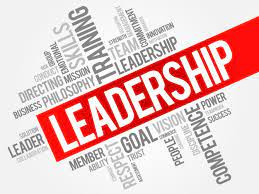
Leadership, according to Peter DeLisle, is the ability to influence others, with or without authority. All successful endeavors are the result of human effort; thus, the ability to influence others is a derivation of Interpersonal Communications, Conflict Management, Problem solving. Leadership is a direct function of three elements of interpersonal effectiveness.

  1. Awareness : Awareness is a state of consciousness. It is the ability to recognize yourself, others, events and situations in real time.
  2. Ability : Ability to learn and understand technical issues is the basis of our careers – Ability to communicate, Ability to resolve conflicts, Ability to solve problems and make decisions.
  3. Commitment : Taking decisions without recognizing the impact in both positive and negative manner. To be dedicated and keeping engage.

Attributes or Characteristics of Leader

  • Guiding vision : Effective leaders know their strength to pursue the objectives and achieve the goals.
  • Passion :Leaders have a positive outlook on who they are, and they love what they do.
  • Integrity : Leaders know who they are, effective leaders are also aware of their weaknesses. They only make promises they can follow through on.
  • Honesty : Leaders convey an aura of honesty in both their professional and their personal lives.
  • Trust : Effective leaders earn the trust of their followers and act on behalf of their followers.
  • Risk : Effective leaders take calculated risks when necessary, to achieve their objectives . They learn from the
    mistake and use it as an opportunity to explore other avenues.
  • Dedication : The effective leaders are dedicated to their charge. The leader gives himself or herself entirely to the task when it is necessary.

Leadership Styles

1) Persuasive Leadership
• Leader engage his team through cooperation.
• Explains projects and values, stimulates, encourages, mobilizes resources.
• Remains accountable for every decision.
• Flexible on methods, supports co-workers.

2) Authoritative Leadership
• An Authoritative leader is self committed , gives instructions, structures the team activities.
• Sets precise objectives, defines evaluation criteria, solely accountable for decisions.
• Does not accept co-workers requests, does not accept failure.
• Always decides- does not listen

3) Delegative Leadership
• Defines the rules, mission and the responsibilities
• Plans and organizes the teams activities.
• Gives autonomy, only when required.
• Fosters mutual respect through expertise.

4) Democratic Leadership:
• Supports team work and offers collective projects
• Always encourages the team members to express freely
• Takes into account the individuals needs
• Fosters positive work environment and engages his team in decision making process.

Tips for better Leadership
• Be a good role model.
• Be clear about your rules and expectations.
• Leave room for input.
• Reward employees for good behavior.
• Be liked.
• Stamp out ‘them and us’ culture
• Honor the business roots
• Be passionate, enthusiastic and proud• Communicate effectively.
• Know your limits
• Learn from the past
• Keep meetings productive
• Walk your talk
• Presentations
• Motivational skills

How to build a good Team ?

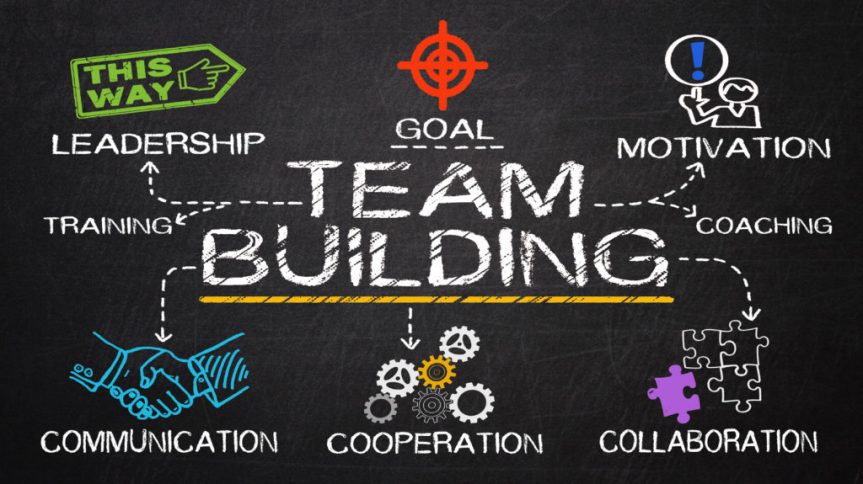
A team is a group of people working together towards a common goal. Creating an opportunity for people to come together to share concerns, ideas, experiences, and to begin to work together to solve mutual problems and achieve common goals.

Team Development Life Cycle

  1. Forming : In this stage high dependence on leader for guidance and direction. Little agreement on team. Individual roles and responsibilities are unclear. Leader must be prepared to answer lots of questions about the team’s purpose, objective and external relationships.
  2. Storming : In this stage decisions don’t come easily within group. Team members compete for position Clarity of purpose increases but plenty of uncertainties exist. Compromises may be required to enable progress.
  3. Norming : In this stage agreement and consensus forms among team. Roles and responsibilities are clear and accepted. Big decisions are made by group agreement. Commitment and unity is strong. The team discusses and develops its processes and working style. There is general respect for the leader and some of leadership is shared.
  4. Performing : The team clearly knows “why it is doing ?” and “what it is doing ?” . The team has a shared vision. There is a focus on over-achieving goals. Disagreements occur but now they are resolved within the team positively. The team is able to work towards achieving the goal. Team members look after each other. The team does not need to be instructed or assisted.
  5. Adjourning : Adjourning, is the break-up of the group, hopefully when their task is completed successfully, their purpose fulfilled; everyone can move on to new things, feeling good about what’s been achieved. From an organizational perspective, recognition of and sensitivity to people’s vulnerabilities during this fifth stage is helpful. Feelings of insecurity would be natural

Characteristics of a Good Team

  • Everyone participates actively and positively.
  • Team goals are understood by everyone.
  • Everyone takes initiative to get things done.
  • Each teammate trusts the judgment of the others.
  • The team is willing to take risks.
  • Everyone is supportive of the project and of others.
  • Team goals are given realistic time frames.
  • Everyone is focused on the ultimate goal of the project.

Common Team Problems

  • Overbearing or dominating participants
  • Unwilling to become involved
  • Unquestioned acceptance of opinions as facts
  • Rush to accomplishment
  • Quarreling members
  • Disconnected/lack of contact between members

Groups members should avoid the following behaviors –

  • Being overly aggressive toward other members.
  • Withdrawing and refusing to cooperate with others.
  • Horsing around when there is work to be done.
  • Using the group as a forum for self-confession.
  • Talking too much about irrelevant matters.
  • Trying to compete for attention and recognition

Importance of English

We all people in the world speak many languages as like Hindi, Marathi, English, British Gujarati but English is one of the most important and beautiful language in the world. It is spoken in every part of the world. It is the mother tongue of about thirty cores people and an equal number of people us English as their second languages. It has the largest vocabulary and it continues to grow up with the progress in subjects like computer, science, technology, advertising, politics, economies, etc.

Many more words are flawing into English language. Knowledge of English is essential in every walk of lief because it is widely used in almost every field like commerce, politics, film industry, tourism, etc. important books on literature, science and technology are mostly available in English.

In your future English language is very important for every people because the important of the English. This language is a state level language. English is very useful language because many important exams, business are in the English language.

English is a very rich and useful language. We must learn to read, speak and write English very well. I like English languages very very much, because this given many important benefits. English is very beautiful and very easily language to learn to all people in the world Today’s generation is a English generation. So I request to all people that they all learn English.

What is Intruders ?

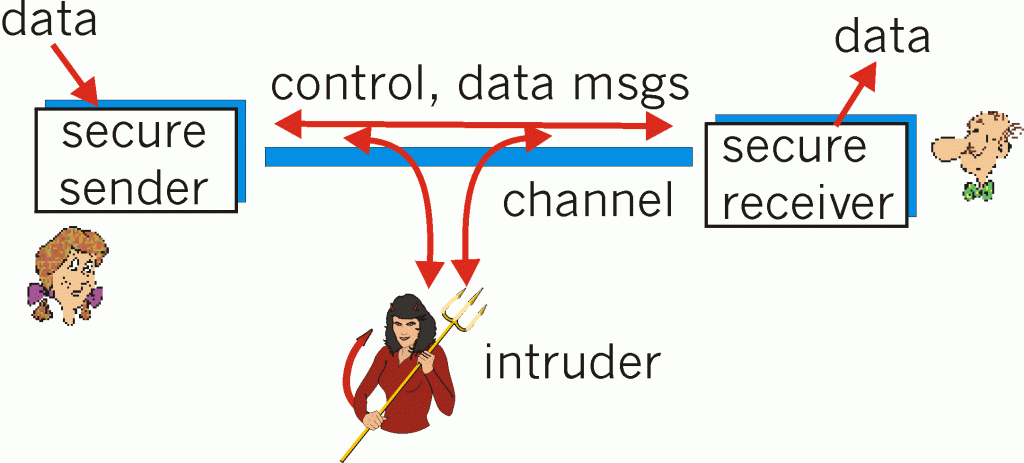
One of the two most publicized threats to security is the intruder (the other is viruses), often referred to as a hacker or cracker. Significant issue for networked systems is unwanted access either via network or local.

Classification of Intruders

  1. Masquerader : An individual who is not authorized to use the computer and who penetrates a system’s access controls to exploit a legitimate user’s account. The masquerader is likely to be an outsider.
  2. Misfeasor : A legitimate user who accesses data, programs, or resources for which such access is not authorized, or who is authorized for such access but misuses his or her privileges :the misfeasor generally is an insider.
  3. Clandestine user : An individual who seizes supervisory control of the system and uses this control to evade auditing and access controls or to suppress audit collection. User can be either an outsider or an insider.

Intruders : Intrusion Techniques

The objective of the intruder is to gain access to a system or to increase the range of privileges accessible on a system. Most initial attacks use system or software vulnerabilities that allow a user to execute code that opens a back door into the system. Typically, a system must maintain a file that associates a password with each authorized user. If such a file is stored with no protection, then it is an easy matter to gain access to it and learn passwords. The password file can be protected in one of two ways:

  1. One-way function : The system stores only the value of a function based on the user’s password. When the user presents a password, the system transforms that password and compares it with the stored value.
  2. Access control : Access to the password file is limited to one or a very few accounts.

On the basis of a survey of the literature and interviews with a number of password crackers, [ALVA90] reports the following techniques for learning passwords:

  1. Try default passwords used with standard accounts that are shipped with the system. Many administrators do not bother to change these defaults.
  2. Exhaustively try all short passwords (those of one to three characters).
  3. Try words in the system’s online dictionary or a list of likely passwords. Examples of the latter are readily available on hacker bulletin boards.
  4. Collect information about users, such as their full names, the names of their spouse and children, pictures in their office, and books in their office that are related to hobbies.
  5. Try users’ phone numbers, Social Security numbers, and room numbers.
  6. Try all legitimate license plate numbers for this state.
  7. Use a Trojan horse to bypass restrictions on access.

Intrusion Detection

Inevitably will have security failures, So need also to detect intrusions so can
 Block if detected quickly
 Act as deterrent
 Collect info to improve security
Assume intruder will behave differently to a legitimate user, But will have imperfect distinction between.

Software Verification Methods

Software Verification : Verification is the process of manually examining / reviewing a document. The document may be SRS, SDD, the program itself or any document prepared during any phase of software development.

The objective of any verification method is to review the documents with the purpose of finding faults. Many methods are commonly used in practice like peer reviews, walkthroughs, inspections, etc. Verification helps in prevention of potential faults, which may lead to failure of software. Verification and validation activities may be performed after the implementation phase. However, only verification is possible in the phases prior to implementation like the
requirement phase, the design phase and even most of the implementation phase.

1) Peer Reviews

Any type of testing (verification or validation), even adhoc and undisciplined, is better than no testing if it is carried out by person(s) other than the developers / writers of the document with the purpose of finding faults. We give the document(s) / program(s) to someone else and ask to review the document(s) / program(s). We expect views about
the quality of the document(s) and also expect to find faults. This type of informal activity may give very good results without spending any significant resources.

Many studies have shown the importance of peer review due to its efficiency and significance. Our thrust should be to find faults in the document(s) / program(s) and not in the persons who have developed them. The activities involved may be SRS document verification, SDD verification and program verification. The reviewer may prepare a report
of observations and findings or may inform verbally during discussions.

2) Walkthroughs

Walkthroughs are more formal and systematic than peer reviews. In a walkthrough, the author of the document presents the document to a small group of two to seven persons. Participants are not expected to prepare anything. Only the presenter, who is the author, prepares for the meeting. The document(s) is / are distributed to all participants. During the meeting, the author introduces the material in order to make them familiar with it. All
participants may write their observations on any display mechanism like boards, sheets, projection systems, etc. so that every one may see and give views. After the review, the author writes a report about findings and any faults pointed out in the meeting.

The disadvantages of this system are the non-preparation of participants and incompleteness of the document(s) presented by the author(s). The author may hide some critical areas and unnecessarily emphasize on some specific areas of his / her interest. Walkthroughs may help us to find potential faults and may also be used for sharing the documents with others.

3) Inspection

Many names are used for this verification method like formal reviews, technical reviews, inspections, formal technical reviews, etc. This is the most structured and most formal type of verification method and is commonly known as inspections. The presenter is not the author but some other person who prepares and understands the document being
presented. This forces that person to learn and review that document prior to the meeting. The document(s) is / are distributed to all participants in advance in order to give them sufficient time for preparation.

Important points are displayed by some display mechanism so that everyone can see them. The moderator, preferably a senior person, conducts such meetings and respects everyone’s views. The idea is not to criticize anyone but to understand their views in order to improve the quality of the document being presented. Sometimes a checklist is also
used to review the document. After the meeting, a report is prepared by the moderator and circulated to all participants. They may give their views again, if any, or discuss with the moderator. A final report is prepared after incorporating necessary suggestions by the moderator. Inspections are very effective to find potential faults and problems in the document like SRS, SDD, source code, etc.

A Social Reformer : Bhaurao Patil

Bhaurao Patil we born at Kumbhaj, a village on the banks of the river Warna on 22 nd september, 1887. Though agriculture was the main occupation of his family, Bhaurao’s father, Paigonda Devgonda Patil, preferred to work as a clerk in the Renenue Department of the Government of Bombay.

Bhaurao patil came to Kolhapur after the latter completed his primary education. He was admitted in a Jain students hostel run by the orthodox Jain Community. It was during his stay at Kolhapur that Bhaurao came under the influence of the Satya Shodhak Samaj. In his own district, the heroes of the underground resistance movement of 1942-45 received considerable help form Bhaurao Patil. He urged that every village should have a school and every village school should have a trained teacher. For several years he concentrated more on the opening of teacher training colleges and primary schools rather than secondary schools. He wanted his students to be self-reliant, and they were expected to learn while they earned their bread.

Bhaurao lived long enough to see his Rayat Shikshan Sanstha grow like a banyan tree. He was widely acclaimed as a great educator of the masses. A few days before his death on 9th may 1959, in the University of Poona conferred on him an honorary degree of Doctor of letters. This was surely one of the glorious moment in his ardous life when he felt happy over the public recognition and appreciation of the noble cause which he upheld against all odds. Today Bhaurao Patil was not in our but he always remember to all peoples through his work.

Disaster Management

A disaster is a sudden, calamitous event that seriously disrupts the functioning of a community or society and causes human, material, and economic or environmental losses that exceed the community’s or society’s ability to cope using its own resources. Though often caused by nature, disasters can have human origins. Disaster Management can be defined as the organization and management of resources and responsibilities for dealing with all humanitarian aspects of emergencies, in particular preparedness, response and recovery in order to lessen the impact of disasters. Disaster management Is a systematic process of planning, organizing, and leading in order to effectively manage the after-effects of a disaster. It aims to reduce the negative impact or consequences of adverse events.

Types of disasters

Disasters can be classified as natural, man-made and human-induced.

Ex. of natural disasters :
Earthquakes
Volcanoes
Floods
Cyclones

Ex. of man-made disasters :
Nuclear leaks
Chemical leaks / spills
Terrorist activities
Structural collapse

Ex. of human-induced disasters :
Global warming
Large scale deforestation
Large scale biological warfare

Disaster Management Cycle

Disaster management is an enormous task. Disasters are not confined to any particular location, neither do they disappear as quickly as they appear. Therefore, it is essential that there is proper management to optimize efficiency of planning and response. Due to limited resources, collaborative efforts at the governmental, private and community levels are necessary.

Disaster Management, and Methodology

Disaster management is a cyclical process; the end of one phase is the beginning of another Timely decision making during each phase results in greater preparedness, better warnings, reduced vulnerability and/or the prevention of future disasters.
Mitigation: Measures put in place to minimize the results from a disaster.
Examples: building codes and zoning; vulnerability analyses; public education.
Preparedness: Planning how to respond.
Example: preparedness plans, emergency exercises/training; warning systems.
Response: Initial actions taken as the event takes place. It involves efforts to minimize the hazards created by a disaster.
Examples: evacuation, search and rescue; emergency relief.
Recovery: Returning the community to normal. Ideally, the affected area should be put in a condition equal to or better than it was before the disaster took place.
Examples: temporary housing; grants; medical care.

VARIOUS PHASES OF DISASTER MITIGATION

Disaster prevention
These are activities designed to provide permanent protection from disasters. Not all disasters, particularly natural disasters, can be prevented, but the risk of loss of life and injury can be mitigated with good evacuation plans, environmental planning and design standards. In January 2005, 168 Governments adopted a 10-year global plan for natural disaster risk reduction called the Hyogo Framework. It offers guiding principles, priorities for action, and practical means for achieving disaster resilience for vulnerable communities.

Disaster preparedness
These activities are designed to minimise loss of life and damage – for example by removing people and property from a threatened location and by facilitating timely and effective rescue, relief and rehabilitation. Preparedness is the main way of reducing the impact of disasters. Community-based preparedness and management should be a high priority in physical therapy practice management.

Disaster relief
This is a coordinated multi-agency response to reduce the impact of a disaster and its long-term results. Relief activities include rescue, relocation, providing food and water, preventing disease.

Disaster management in India

In order to manage the various kinds of disasters occurring sporadically in various parts of India, The Disaster Management Act, 2005 provides for the constitution of the following institutions at national, state and district levels.
National Disaster Management Authority
State Disaster Management Authorities
District Disaster Management Authorities
National Institute of Disaster Management and
National Disaster Response Force

Mineral Resources and Associated Problems

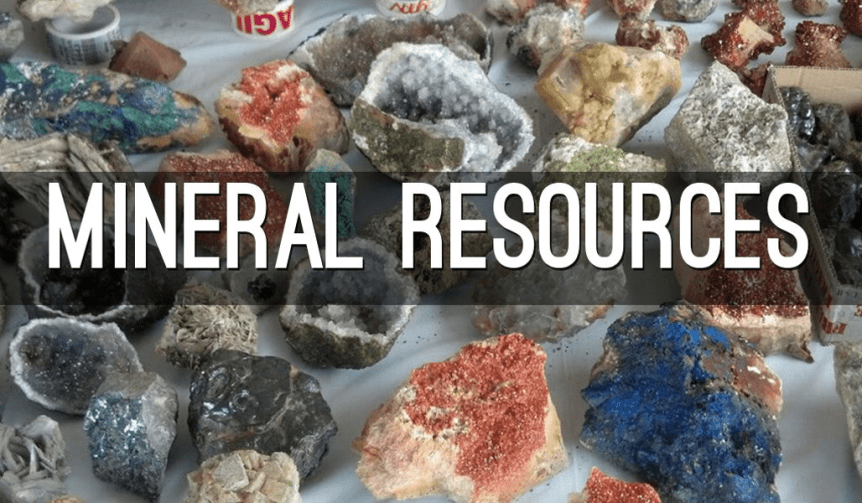
Mineral resources are the one , from which usable material are extracted economically from the concentrated elements, compounds, minerals or rocks from the earth. Minerals are site specific  and finite. Minerals are naturally occurring chemical compounds formed through inorganic processes under the crust of the earth. Their presence in the Earth’s crust is the result of geological processes operating over a long period of time. The distribution of these minerals resources is uneven throughout the Earth. India is rich in 35 minerals such as iron, aluminum, manganese, chromium, limestone, mica, etc. Minerals have important contributions in the economic & industrial development of a country.

Types of Minerals

  • Metallic Minerals – Pure Metals are obtained by chemical process. 11 metallic minerals are available in India. Ex. Iron, copper, gold, bauxite, manganese, etc.
  • Non-Metallic Minerals – Used in their naturally occurring state. 52 non metallic minerals are found in India. Ex. limestone, manganese, mica, gypsum, coal, dolomite, phosphate, salt, granite, etc.
  • Fuel Minerals – Are utilized as fuel. Ex Coal, Petroleum, Natural Gas, etc.

Types of Mining

Surface Mining

  • A mine in which ore lies near the surface & can be extracted by removing the covering layers of the rock & soil.
  • Almost all surface mining operations are exposed to the elements & require no roof support.
  • EX. Coal, Copper, Iron, Crushed Stone, Aluminum etc.

Sub Surface mining

  • Digging tunnels or shafts into the Earth to reach ore deposits.
  • Ore, for processing, & waste rock, for disposal, are brought to the surface through the tunnels & shafts.
  • EX. Natural Gas, Petroleum

USE & OVEREXPLOITATION

  • Mining is hazardous occupation
  • Rapid depletion of high grade minerals
  • Wastage of upper soil layer and vegetation
  • Environmental problems
  • Productive land into mining and industrial areas.
  • Air, water and land pollution.
  • Consumption of energy resources like coal, petroleum, natural gas etc.
  • Directly degrades the fertile soil surface thus effect ecology and climate.

EFFECTS

  • Deforestation and desertification
  • Extinction of species
  • Rapid depletion of high grade minerals
  • Forced migration
  • Wastage of upper soil layer and vegetation
  • Soil erosion and oil depletion
  • Ozone depletion
  • Greenhouse gas increase
  • Environmental pollution
  • Natural hazards

STATUS OF MINES IN INDIA

India produces as many as 86 metals & minerals. u80 % of mining in India is for coal. India has over 3500 legal mines. Illegal mines is the major problem in the country. i.e.180000. Over 1 million people are employed in this industry. Mining has adversely affected biodiversity, ecosystem, local culture, and community.

CASE STUDY : Bauxite deposits of Kolhapur

It was started in 1968 by Kolkata based Indian Aluminum Company, later became HINDALCO. Bauxite and laterite from aquifers in ground water thus change the ground water conditions. It cause loss of vegetation. Rehabilitation and afforestation is essential.

PROTECTION PLAN

  • Afforestation on mining site.
  • Formation of contour trenches in mining site.
  • Formation of green belt along the roads.
  • Parks & gardens in the township area & green belt around it is developed.

Biomass Power Generation

Biomass is waste material from plants or animals that is not used for food or feed; it can be waste from farming (like wheat stalks) or horticulture (yard waste), food processing (like corn cobs), animal farming (manure), or human waste from sewage plants.

Electricity generated by Biomass

Power Generation

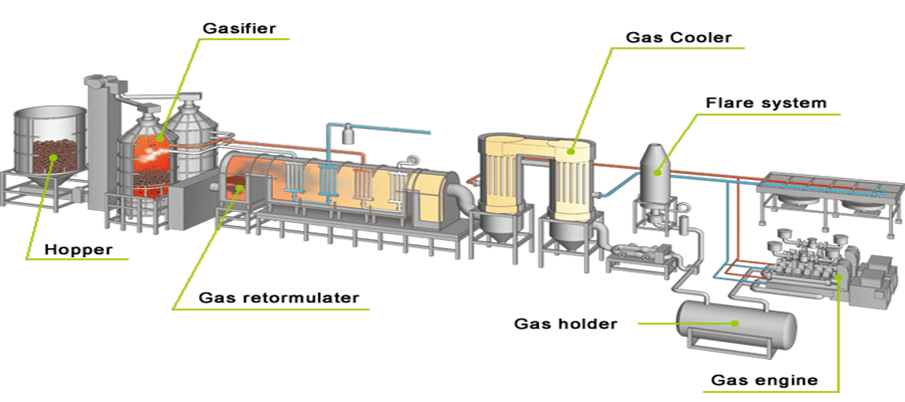
In a direct combustion system, biomass is burned in a combustor or furnace to generate hot gas, which is fed into a boiler to generate steam, which is expanded through a steam turbine or steam engine to produce mechanical or electrical energy. Biomass is the boiler fuel that produces steam to operate a steam turbine and generator to make electricity. Several components required like furnace , boiler , pumps , fans , steams , turbines , generator, condenser, cooling tower .

Scope

India produces a huge quantity of biomass material in its agricultural, agro-industrial, and forestry operations. Over 500 million tonnes of agricultural and agro-industrial residue alone is generated every year. This quantity, in terms of heat content, is equivalent to about 175 million tonnes of oil. This quantity of biomass is sufficient to generate 15 000–25 000 MW of electrical power. Electricity can also be generated from biomass grown on wastelands, road and rail track side plantations, etc. The total electricity generation potential from biomass could reach a figure of about 100 000 MW.

Advantages

  • Renewable
  • Carbon Neutrality : Biomass reduces this because the fuel is a natural part of the carbon cycle, unlike oil and other fossil fuels. The only carbon that is released into the atmosphere from biomass fuels is what was absorbed by the plants during their lifecycles.
  • Less Dependency on Fossil Fuels
  • Low Cost in Comparison To Fossil Fuels
  • It Reduces Waste
  • Availability : Much like with the sun and water, they can be found practically anywhere on the planet.

Disadvantages

  • It’s Not Completely Clean
  • High Costs In Comparison To Other Alternatives
  • Large space required
  • It Requires Water
  • It Has Inefficiencies

Why Group Discussion is important ?

A GD is a methodology used by an organization to gauge whether the candidate has certain personality traits and/or skills that it desires in its members. In this methodology, the group of candidates is given a topic or a situation, given a few minutes to think about the same, and then asked to discuss the it among themselves for 15-20 minutes.

Why GDs :

The reason why institutes put you through a Group discussion and an interview, after testing your technical and conceptual skills in an exam, is to get to know you as a person and gauge how well you will fit in their institute. The Group discussion tests how you function as a part of a team. As a manager, you will always be working in teams, as a member or as a leader. Therefore how you interact in a team becomes an important criterion for your selection. Managers have to work in a team and get best results out of teamwork. That is the reason why management institutes include GD as a component of the selection procedure.

Company’s Perspective :

Companies conduct group discussion after the written test so as to check on your interactive skills and how good you are at communicating with other people. The GD is to check how you behave, participate and contribute in a group, how much importance do you give to the group objective as well as your own, how well do you listen to viewpoints of others and how open-minded are you in accepting views contrary to your own. The aspects which make up a GD are verbal communication, non-verbal behavior, conformation to norms, decision-making ability and cooperation. You should try to be as true as possible to these aspects.

Reasons for having a GD 

  • It helps you to understand a subject more deeply.
  • It improves your ability to think critically.
  • It helps in solving a particular problem.
  • It helps the group to make a particular decision.
  • It gives you the chance to hear other students’ ideas.
  • It improves your listening skills.
  • It increases your confidence in speaking.
  • It can change your attitudes. 

Strategies for Improving GD Skills

  1. Observe : Attend as many seminars and tutorials as possible and notice what other students do. Ask yourself:
  • How do other students make critical comments?
  • How do they ask questions?
  • How do they disagree with or support arguments?
  • What special phrases do they use to show politeness even when they are voicing disagreement?
  • How do they signal to interrupt, ask a question or make a point?

2. Practice : Start practicing your discussion skills in an informal setting or with a small group. Start with asking questions of fellow students. Ask them about the course material. Ask for their opinions. Ask for information or ask for help.

3. Participate : Take every opportunity to take part in social/informal discussions as well as more structured/formal discussion. Start by making small contributions to tutorial discussions; prepare a question to ask, or agree with another speaker’s remarks.

Do’s

  • Speak pleasantly and politely to the group.
  • Respect the contribution of every speaker.
  • Remember that a discussion is not an argument. Learn to disagree politely.
  • Think about your contribution before you speak. How best can you answer the question/ contribute to the topic?
  • Try to stick to the discussion topic. Don’t introduce irrelevant information.
  • Be aware of your body language when you are speaking.
  • Agree with and acknowledge what you find interesting.

Don’t

  • Shout. Use a moderate tone and medium pitch.
  • Lose your temper. A discussion is not an argument.
  • Use too many gestures when you speak. Gestures like finger pointing and table thumping can appear aggressive.
  • Dominate the discussion. Confident speakers should allow quieter students a chance to contribute.
  • Draw too much on personal experience or anecdote. Although some tutors encourage students to reflect on their own experience, remember not to generalise too much.

Renewable Energy Sources

Energy is an important input for development. It aims at human welfare covering household, agricultural transport & industrial complexes. Due to population explosion the demand for various forms of energy has got increased many folds. Renewable Resources can be generated continuously in nature & are inexhaustible. These resources can be used again & again in an endless manner.

RENEWABLE TECHNOLOGIESWIND POWER

  1. WIND POWER :

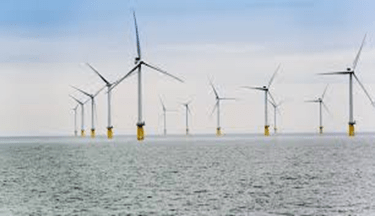
Wind is an emissions-free source of energy. It is harnessed by making use of wind mills. Number of wind mills are installed in cluster are called wind farms. Minimum wind speed required is 150km/hr. A windmill converts wind energy into rotational energy by means of its blades. The basic principle of every windmill is to convert kinetic energy of wind into mechanical energy which is used to rotate the turbine of electrical generator to produce electricity.

2. HYDROPOWER

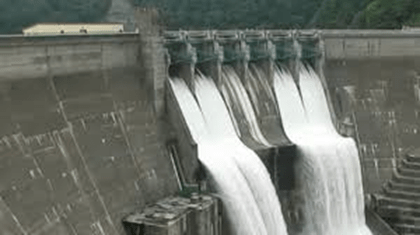
Hydropower or hydroelectricity refers to the conversion of energy from flowing water into electricity. Modern hydro turbines can convert as much as 90% of the available energy into electricity. Hydroelectric power generates about 10% of the nation’s energy. Hydropower is fueled by water, so it’s a clean fuel source, meaning it won’t pollute the air like power plants that burn fossil fuels, such as coal or natural gas.

3. TIDAL ENERGY

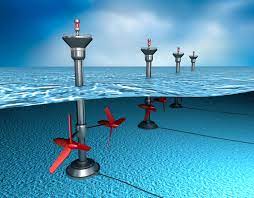
It is harnessed from the tides produced in the ocean. The turbine and generator converts the movement of water coming from change in tide, the kinetic energy, into electricity. Tidal Energy has an expensive initial cost which may be one of the reasons tidal energy is not a popular source of renewable energy.

4. SOLAR ENERGY

Solar energy as energy obtained from the sun. Solar energy is the cleanest and most abundant renewable energy source. It can be used in many appliances like Solar heat collectors, Solar cells, Solar cookers, Solar water heaters Solar power plant, Solar furnace.

Top 10 Residential Uses for Solar Energy

Biodiversity In India

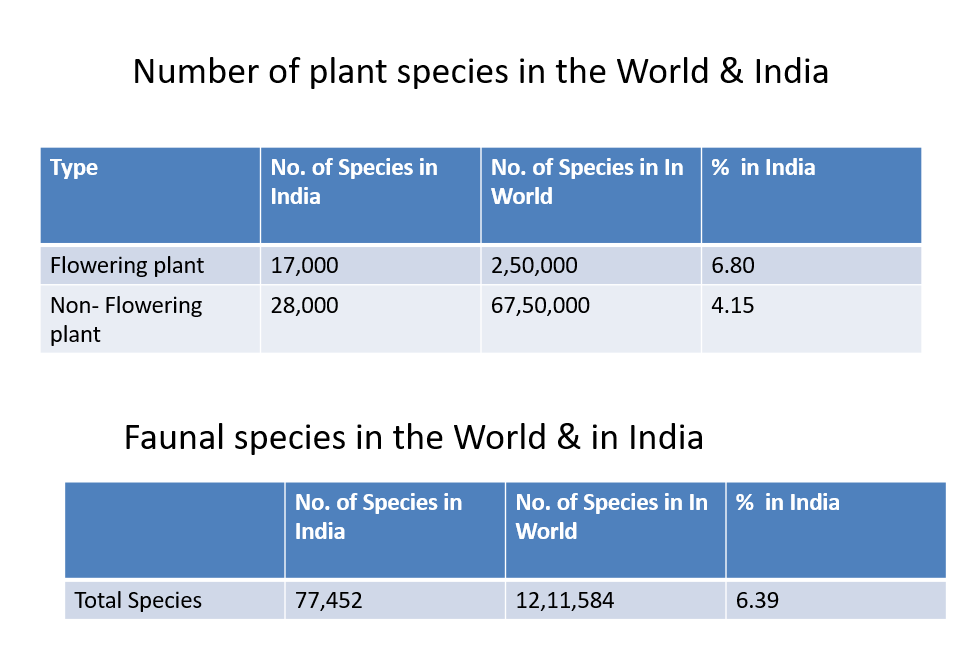
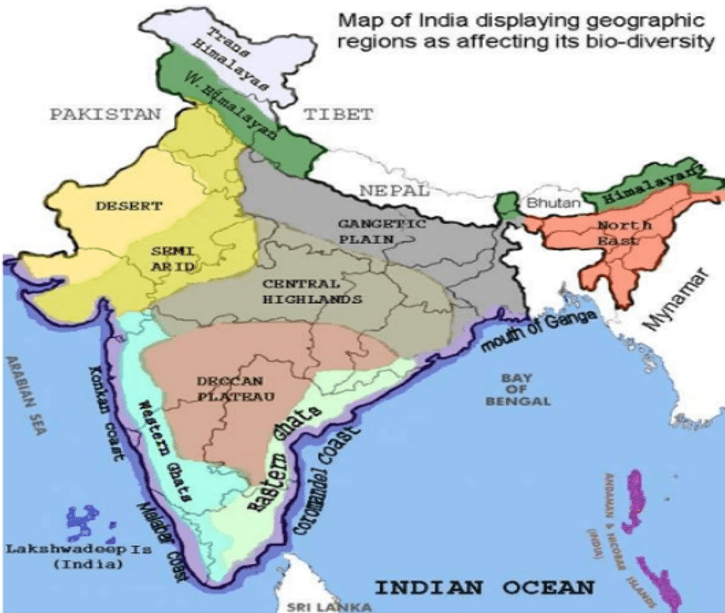
Biological diversity’ means the variability among living organisms from all sources including, inter alia, terrestrial, marine and other aquatic ecosystems and the ecological complexes of which they are a part; this includes diversity within species, between species and of ecosystems. The word Biodiversity means Gk. Bios- Life, diversity- forms. The occurrence of difference species of organisms with the whole range of their variants (Biotypes) & genes adapted to different climates, environments along with their interactions & processes. This term was coined by Walter G. Rosen- 1985. Biodiversity refers to the numbers, variety and variability of living organisms and ecosystem. It includes all terrestrial, marine and other aquatic organisms. Also covers diversity within species, between species as well as variations among ecosystems.

Biodiversity has contributed in many ways to the development of human culture, and, in turn, human communities have played a major role in shaping the diversity of nature at the genetic, species, and ecological levels.

Types of Biodiversity

  • Genetic diversity – Diversity of genes within a species. i.e. genetic variability among the populations and the individuals of the same species. Genetic diversity is the total number of genetic characteristics in the genetic makeup of a species. Ex. Domestic Dogs. Humans have created distinct breeds of dogs within the species by selectively breeding individuals.
  • Species diversity – Diversity among species in an ecosystem. “Biodiversity hotspots” are excellent examples of species diversity. Species diversity is defined as the number of species and abundance of each species that live in a particular location. Each species is distinct from other species in form & character such as cow & goat. Species diversity is the most common level to describe biodiversity of any area.
  • Ecosystem diversity – Diversity at a higher level of organization, the ecosystem. To do with the variety of ecosystems on Earth. Ecosystem diversity deals with the variations in ecosystems within a geographical location and its overall impact on human existence and the environment. EX. deserts, forests, grasslands, wetlands and oceans. Ecological diversity is the largest scale of biodiversity, and within each ecosystem, there is a great deal of both species and genetic diversity.

VALUES OF BIODIVERSITY

1. Consumptive value : The most important point of consumptive use is that some rural communities closets to the forests or other natural areas can prosper through the sustainable harvesting of wildlife species. Hunting, Direct consumption-herbs, plants, mushrooms are all consumptive uses.

2. Productive Value : Products that are commercially harvested for exchange in formal markets. Each species is valuable to human. The global collection of genes, species, habitat & ecosystems is a resource that provides for human needs. It is also essential for human survival in the future. This is often then only value of biological resources that is reflected in the income accounts.

3. Social Value : Social value of biodiversity refers to religious and cultural importance. Trees are worshiped as God. ex. Banyan tree, Peepal Tree. Flowers, Tulsi leaves are offered during pooja.

4. Ethical Value : ‘All life must be preserved’ based on ‘Live & let live’. This means we don’t use the species directly or indirectly, but we feel sorry about the loss of species. They have a existence value.

5. Aesthetic Value : It is related to the beauty of biodiversity. The pleasure, excitement & visual peace of any area. Concept of Eco- tourism & willingness to pay are gaining grounds, leading to monetary estimate for aesthetic value of biodiversity.

6. Option Value : The option values of biodiversity suggests that any species may be proved to be a valuable after someday. At present the potentials/ uses/ values are unknown. Ex. Growing technology field is searching new species for causing the diseases of cancer & AIDS.

HOT SPOTS OF BIODIVERSITY

biodiversity hotspot is a bio-geographic region that is both a significant reservoir of biodiversity and is threatened with destruction. The term biodiversity hotspot specifically refers to 25 biologically rich areas around the world that have lost at least 70 percent of their original habitat. The original 25 hotspots covered 11.8% of the land surface area of the Earth.

THE WATER ACT 1974

The water  act was enacted by parliament act, 1974 purpose to provide for the prevention of control of water & the maintaining or restoring of wholesomeness of water. As on day, it is applicable in all the states of India. It extends to the whole of India except the State of Jammu & Kashmir. This Act having 64 sections Divided into 8 chapters.

OBJECTIVES

  • Prevention  &  control of water pollution
  • Maintaining or restoring the wholesomeness of water
  • Establishment of board for prevention & control of water pollution.
  • An act to provide for the levy & collection of access on water consumed by persons carrying on certain industries & by local authorities.

Constitution of central Board

  • Chapter   3 deals with Constitution of central Board
  • The terms & conditions of the services of the members, disqualification, holding of board meetings & other committees.
  • Members- Chairperson- Environment expert
  • Officials not exceeding 5- nominated by Central Government
  • Representative not exceeding 3- Agricultural, fishery, industry etc.
  • persons not exceeding 2- companies or cooporatations owned.

Constitution of State Board

  • Chapter  4 deals with Constitution of central Board
  • The terms & conditions of the services of the members, disqualification, holding of board meetings & other committees.
  • Members- Chairperson- Environment expert
  • Officials not exceeding 5- nominated by state Government
  • Representative not exceeding 5- local authorities functioning with state government.
  • persons not exceeding 3- Agricultural, fishery, industry etc.
  • persons not exceeding 2- companies or cooporatations owned.

Constitution of Joint Board

  • Two or more states or Union Territory or Union Territories can constitute a Joint Board with agreement for a specific period.
  • Chairman
  • Two Officials- Appointed by state government.
  • One person- Local authority
  • One representative- Agriculture, fishery, trade etc
  • Two persons- companies or cooporatations owned.

Functions of Central Board

The central board may establish or recognize a laboratory or laboratories to enable the Central Board to perform its functions under this section efficiently. Central Board may- Delegate any of its functions under this act generally or specially to any of the committees appointed by it. Do such other things & perform such other  acts as it  may think necessary for the proper discharge of its functions & generally for the purpose of carrying into effect the purposes of this act.

Powers & Functions of Central Board

  • Advice to central government for prevention & control of water pollution.
  • Co-ordinate the activities of the state board & resolve disputes
  • Provide technical assistance
  • Plan & organize the training.
  • Collect, compile & publish technical data
  • Lay down the standards for a stream or well
  • Establish laboratories.
  • Plan & organize nation wide program for prevention & control of water pollution
  • Plan comprehensive program for prevention & control of water pollution.
  • Advice to State government
  • Encourage, conduct & participate in investigations & research relating to problems of water pollution & prevention.
  • Inspect sewage or trade effluents, works & plants for treatment.
  • Lay down, modify or annual effluent standards for the sewage & effluents.
  • Evolve economical & reliable methods of treatment for local conditions.

Prevention & Control of water pollution

  • Powers of entry and inspection
  • Power to take sample and procedure
  • Report preparation in triplicate.
  • Use of well or stream for disposal is prohibited.
  • Accidents in area, information should be carry to state board.
  • Have powers to close, prohibit, regulate any industrial operation.

Penalties

Person held guilty he is punishable with imprisonment which may extend to three months or fine up to 10000 rs. Or both. Any person disposes any polluting matter into any stream or well he is punishable for 6 years with fine.

Machine Learning Algorithms

According to Arthur Samuel (1959), Machine Learning is a field of study that gives computers the ability to learn without being explicitly programmed.

Tom Mitchell (1998) Well-posed Learning Problem: A computer program is said to learn from experience E with respect to some task T and some performance measure P, if its performance on T, as measured by P, improves with experience E.

Machine learning algorithms

  1. Supervised learning
  2. Unsupervised learning
  3. Reinforcement learning

Supervised learning

It is machine learning task of at function that maps an input to on output based on example input-output pair. Basically Supervised learning is learning in which We teach or train the machine using data which is well labelled that means Some data is already tagged with correct answer. We pass data, train it and predict output.

Example 1 – House price prediction : In this data set can be given a which contain locality, size of house, age, no. of rooms, price at which it sell. In this are example locality, size of house are independent variables from which we can we predict house price. In this we can take prices of other houses to train our data. We take real prices map them and can predict price.

Example 2 – If we have different kinds of Fruits. To train the machine with all different Fruits one by one like shape of fruit, colour. Since machine has already learned from previous data this time it will classify fruit with its colour and shape and give output.

  • supervised learning allows collecting data and produce data output from previous experience.
  • It helps to solve various types of real world computation problems.

Unsupervised learning:

It is the training of machine using information that is neither classified nor labeled and allowing the algorithm to act on that without guidance. In this past data is pointless and we need to club similar data together. There is no way to measure similarity before we run the program. It is less accurate.

Example 1 – Google news : In google news, clustering where they use to club similar types of news together. They find some keywords, club similar news and show it on feed.

Example 2 – Feature selection : Assume that we want to predict how capable an applicant is of repaying a loan from the perspective of a bank now, we need to help the bank set up machine learning system so that each loan given to applicant who can repay the loan. So by gathering the Information about applicants average monthly income, debt credit & history we can predict this

Reinforcement learning

It means to establish & encourage a pattern of behavior. It is area of machine learning concerned with how software agent ought to take actions in an environment in order to maximize the notion of cumulative reward.

Example 1 – Chess game : In chess game there are different types of pieces which can move differently. The next move will depend om opponent move or your previous. It is trial and error and decision is dependent.

Example 2 – Web system configuration : there are so many parameters in web system and the process of tuning the parameters requires a skilled operator. This can be automated by using reinforcement machine learning technique to learn from different trial & error phases.


What is Software Testing ? Types of testing – Alpha, Beta, Acceptance

“Testing is the process of executing a program with the intent of finding faults.”

Testing is an important aspect of the software development life cycle. It is basically the process of testing the newly developed software, prior to its actual use. The program is executed with desired input(s) and the output(s) is/are observed accordingly. The observed output(s) is/are compared with expected output(s). If both are same, then the
program is said to be correct as per specifications, otherwise there is something wrong somewhere in the program. Testing is a very expensive process and consumes one-third to one-half of the cost of a typical development project. It is largely a systematic process but partly intuitive too. Hence, good testing process entails much more than just executing a program a few times to see its correctness.

Testing is the process of demonstrating that errors are not present.

The purpose of testing is to show that a program performs its intended functions correctly.

Testing is the process of establishing confidence that a program does what it is supposed to do.

Customers may use the software in different and strange ways. Their involvement in testing may help to understand their minds and may force developers to make necessary changes in the software. These three terms are related to the customer’s involvement in testing with different meanings.

Alpha Testing

These terms are used when the software is developed as a product for anonymous customers. Therefore, acceptance testing is not possible. The alpha tests are conducted at the developer’s site by the customer. These tests are conducted in a controlled environment and may start when the formal testing process is near completion.

Beta Testing

The beta tests are conducted by potential customers at their sites. Unlike alpha testing, the developer is not present here. It is carried out in an uncontrolled real life environment by many potential customers. Customers are expected to report failures, if any, to the company. These failure reports are studied by the developers and appropriate changes
are made in the software. Beta tests have shown their advantages in the past and releasing a beta version of the software to the potential customer has become a common practice. The company gets the feedback of many potential customers without making any payment.

Acceptance Testing

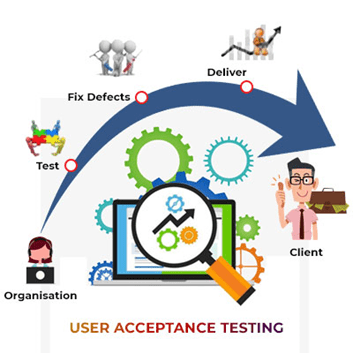
This term is used when the software is developed for a specific customer. The customer is involved during acceptance testing. He/she may design adhoc test cases or well planned test cases and execute them to see the correctness of the software. This type of testing is called acceptance testing and may be carried out for a few weeks or months. The discovered errors are fixed and modified and then the software is delivered to the customer.