
The Untold Story of the Cinema Godfather

One of the biggest tragedies to happen to motion pictures was less about what happened on the big screen but something that happened off camera at the very beginning of the story of the moving image. It was one train ride to Paris that wiped French inventor and artist Louis Le Prince’s name out of the books of history.

Born on 28 August 1841 in Metz, Le Prince was the son of a respected officer of the Lágion d’Honneur, a French order established by Napoleon in 1802. His family referred to him as “Augustin” and English-speaking friends would later call him “Gus”. He grew up spending time in the studio of his father’s friend, the photography pioneer Louis Jacques Mandé Daguerre, from whom the young Le Prince allegedly received lessons relating to photography and chemistry and for whom he was the subject of a Daguerrotype, an early type of photograph.

His education went on to include the study of painting in Paris and post-graduate chemistry at Leipzig University, which provided him with the academic knowledge he was to utilize in the future. Having studied all art, physics and chemistry at university, the Frenchman moved to Leeds where he met, fell in love with, and married English artist Elizabeth ‘Lizzie’ Whitley. Together the new couple began a school of applied art named the Leeds Technical School of Art. Soon they were well-renowned for their work combining photography on metal and ceramic. The family later moved to the US for some years while Louis managed a small group of French artists there.

It was also in the US that Le Prince began to build his sixteen-lens camera and experiment with film stock. In 1886 he created a 16-lens camera and applied for an American patent on 2 November of the same year, receiving this at the beginning of 1888; on 16 November 1888, he received a British patent for his invention. The Le Prince Single-lens Cine Camera, proved to be one of the most ground-breaking inventions of early cinema. While the contraption, which utilises paper-backed stripping film, may appear primitive by today’s standards, evidence that the equipment was successful in projecting moving images means that Louis Le Prince’s movies pre-date those of Edison and the Lumières by over half a decade.

In a cruel twist of fate however, it was a single day that erased the French inventor’s name as the original inventor of the motion picture camera. Once content with his creation, Le Prince had the first public exhibition of his work and his motion pictures scheduled in New York during September, 1890. Yet he never made it, disappearing just on the 16th of that month, never to be seen again and baffling authorities and film theorists for over 100 years. Following the death of his mother, Le Prince had travelled to Dijon, France to visit his family and spend time with his brother, Albert. Having dropped him at the train station with all of the material for his presentation and a suitcase said to be containing his latest patents, his brother waved him off … only for Le Prince never to arrive at his destination. French authorities and Scotland Yard launched an investigation immediately, but not a single passenger on the train reported seeing Le Prince onboard. Le Prince was officially declared dead in 1897. His disappearance for over a century has been riddled with many theories with rivalries with inventors such as Thomas Edison and heavy debt being listed as explanations.

For the most part, his work went largely unacknowledged among the wider public. However, thanks to the continued efforts of his family and the city of Leeds, where he’s considered a local legend, Le Prince’s work has been recognised in recent years. In 1930, there was a bronze memorial plaque unveiled in his honour and he was featured in the 1966 Jacques Deslandes documentary “The Comparative History of Cinema”. In September 2016 a documentary about Le Prince from Leeds filmmaker David Wilkinson, “The First Film” , played at the Morris-Jumel Mansion in New York. This was 126 years after Le Prince was set to screen his first films in the very same building.

Nationalization of Banks

Despite the provisions, control and regulations of the Reserve Bank of India (RBI) , banks in India except the State Bank of India (SBI), remain owned and operated by private persons. By the 1960s, the banking industry had become an important tool to facilitate the development of the Indian economy. At the same time, it had emerged as a large employer, and a debate had ensued about the nationalization of the banking industry. The then Prime Minister of India, Indira Gandhi, expressed the intention of the Government of India in the annual conference of the All India Congress Meeting in a paper entitled Stray thoughts on Bank Nationalization.

The decision came at the end of a troubled decade. India was buffeted by economic as well as political shocks. There were two wars—with China in 1962 and Pakistan in 1965—that put immense pressure on public finances. Two successive years of drought had not only led to food shortages, but also compromised national security because of the dependence on American food shipments to keep hunger at bay. Fiscal retrenchment through a three-year plan holiday had hurt aggregate demand as public investment was cut.

Thereafter, the Government of India issued the Banking Companies (Acquisition and Transfer of Undertakings) Ordinance, 1969 and nationalized the 14 largest commercial banks with effect from the midnight of 19 July 1969. These 14 banks included: Allahabad Bank (now Indian Bank), Bank of Baroda, Bank of India, Bank of Maharashtra, Central Bank of India, Canara Bank, Dena Bank (now Bank of Baroda), Indian Bank, Indian Overseas Bank, Punjab National Bank, Syndicate Bank (now Canara Bank), UCO Bank, Union Bank of India United Bank of India (now Punjab National Bank). These banks contained 85 percent of bank deposits in the country. Within two weeks of the issue of the ordinance, the Parliament passed the Banking Companies (Acquisition and Transfer of Undertaking) Bill, and it received presidential approval on 9 August 1969.

As a result of this nationalization, it led to an impressive growth of financial intermediation. The share of bank deposits to GDP rose from 13% (1969) to 38% (1991), the gross saving rate rose from 12.8% (1969) to 21.7% (1991). Gross Domestic Savings almost doubled as a percentage of national income in the 1970s. The reach of the banking system also increased and banks were no longer confined to the metropolitans and reached remote areas of the country, thus promoting rapid growth in agriculture, small scale industries and development of these remote and backward areas. The nationalization furthered India’s growth process, particularly during the Green revolution.

There were also some harmful effects of the nationalization. The primary purpose for which the nationalization was done i.e. extending bank facilities to rural areas was also unfulfilled and many areas of the country including Uttar Pradesh, Chhattisgarh and the North Eastern part remain unbanked. It failed to eradicate poverty and scaling down of wealth inequalities. Financial inclusion was only increased post the implementation of the Jan Dhan Yojana. Moreover, multiple public sector banks also suffered due to political interference. Banking was no longer done on professional and ethical grounds. It resulted in lower efficiency and poor profitability. The performance of these banks on the basis of branch expansion and number of deposits never surpassed the numbers shown by private banks.

Bank nationalization was the beginning of a broader political economy strategy in the 1970s- a decade where economic growth barely outpaced population growth. This nationalization did succeed in certain areas such as financial deepening cause of the rapid spread of branches but eventually, it did more harm than good. As of 2021, there are a total of 12 nationalized banks in India.

Obsessed with OCD

Obsessive-compulsive disorder (OCD) is a disorder in which people have recurring, unwanted thoughts, ideas or sensations (obsessions) that make them feel driven to do something repetitively (compulsions). The repetitive behaviours, such as hand washing, checking on things or cleaning, can significantly interfere with a person’s daily activities and social interactions.

The English term obsessive-compulsive arose as a translation of the German word Zwangsvorstellung meaning ‘obsession’. The term was used in the first conceptions of OCD by Carl Westphal. Westphal’s description went on to influence Pierre Janet, who further documented features of OCD.

In the early 1910s, Sigmund Freud attributed obsessive–compulsive behaviour to unconscious conflicts that manifest as symptoms. Freud describes the clinical history of a typical case of “touching phobia” as starting in early childhood, when the person has a strong desire to touch an item. In response, the person develops an “external prohibition” against this type of touching. However, this “prohibition does not succeed in abolishing” the desire to touch; all it can do is repress the desire and “force it into the unconscious”. Freudian psychoanalysis remained the dominant treatment for OCD until the mid-1980s, even though medicinal and therapeutic treatments were known and available, because it was widely thought that these treatments would be detrimental to the effectiveness of the psychotherapy. In the mid-1980s, this approach changed and practitioners began treating OCD primarily with medicine and practical therapy rather than through psychoanalysis.

From the 14th to the 16th century in Europe, it was believed that people who experienced blasphemous or other obsessive thoughts were possessed by the devil. Based on this reasoning, treatment involved banishing the “evil” from the “possessed” person through exorcism. The vast majority of people who thought that they were possessed by the devil did not suffer from hallucinations or other “spectacular symptoms” but “complained of anxiety, religious fears, and evil thoughts.” In 1584, a woman from Kent, England, named Mrs. Davie, described by a justice of the peace as “a good wife”, was nearly burned at the stake after she confessed that she experienced constant, unwanted urges to murder her family.

What exactly are obsessions and compulsions?

Obsessions are thoughts, images or impulses that occur over and over again and feel outside of the person’s control. Individuals with OCD do not want to have these thoughts and find them disturbing. In most cases, people with OCD realize that these thoughts don’t make any sense.  Obsessions are typically accompanied by intense and uncomfortable feelings such as fear, disgust, doubt, or a feeling that things have to be done in a way that is “just right.” In the context of OCD, obsessions are time consuming and get in the way of important activities the person values. This is extremely important to keep in mind as it, in part, determines whether someone has OCD — a psychological disorder — rather than an obsessive personality trait.

Compulsions are the second part of obsessive-compulsive disorder. These are repetitive behaviours or thoughts that a person uses with the intention of neutralizing, counteracting, or making their obsessions go away. People with OCD realize this is only a temporary solution but without a better way to cope they rely on the compulsion as a temporary escape. Compulsions can also include avoiding situations that trigger obsessions. Compulsions are time consuming and get in the way of important activities the person values.

Treatments include:

There’s no cure for OCD. But it may be able to manage how the symptoms affect your life through medicine, therapy, or a combination of treatments.

  • Psychotherapy: Cognitive behavioural therapy can help change the thinking patterns. In a form called exposure and response prevention, the doctor will put you in a situation designed to create anxiety or set off compulsions. The patient will learn to lessen and then stop their OCD thoughts or actions.
  • Relaxation: Simple things like meditation, yoga, and massage can help with stressful OCD symptoms.
  • Neuromodulation: In rare cases, when therapy and medication aren’t making enough of a difference, the doctor might suggest devices that change the electrical activity in a certain area of your brain. One kind is transcranial magnetic stimulation. It uses magnetic fields to stimulate the nerve cells. A more complicated procedure, deep brain stimulation, uses electrodes that are implanted in your head.
  • TMS (transcranial magnetic stimulation).  This unit is a non-invasive device that is held above the head to induce the magnetic field. It targets a specific part of the brain that regulates OCD symptoms.

Notable people with OCD

British poet, essayist and lexicographer Samuel Johnson (1709–1784) also suffered from OCD. He had elaborate rituals for crossing the thresholds of doorways, and repeatedly walked up and down staircases counting the steps. He would touch every post on the street as he walked past, only step in the middles of paving stones, and repeatedly perform tasks as though they had not been done properly the first time.

The American aviator and filmmaker Howard Hughes (1905-1976) was known to have OCD. Friends of Hughes have also mentioned his obsession with minor flaws in clothing.

Taxation of the Rich

On July 20, 2021, the world’s richest man: Jeff Bezos flew to space alongside his brother Mark Bezos. The suborbital flight lasted over 10 minutes, reaching a peak altitude of 66.5 miles (107.0 km). The flight qualified him as an FAA commercial astronaut. It is estimated that this short flight cost Bezos $10-20 million, a mere drop in the bucket for the Amazon CEO who is reported to have a net worth of $177 billion. This minimal cost which only lifted a short flight could have lifted the burden of those struggling in the world. This brings up the question: Should the rich be taxed more?

But first what do we mean when we talk about “the rich”?

These are:

  • The well-off: About 9% of the households in the U.S. have income greater than $200,000, and they get almost 45% of all pre-tax income, according to the Tax Policy Centre.
  • The really rich: the top 0.4% of households—have incomes above $1 million a year and get 13% of all pre-tax income. Since the 1980s, those at the very top have enjoyed faster growing incomes than the rest of America. The Congressional Budget Office estimates that the best-off 1% of American households (average annual income $1.8 million in 2016) saw their inflation-adjust incomes before taxes nearly triple between 1979 and 2016; the next best-off 9% saw theirs grow by 75% while everyone else saw their pre-tax incomes rise by 33%.

The talk of tax rises is common — and there is a growing appetite for taxing the wealthy, which has been out of favour since the 1970s. In the US, the Democrats control all three branches of the federal government for the first time since the early Obama years. The Biden administration is planning the first major tax hike since 1993, which will include higher taxes on higher earners. The COVID-19 pandemic has ravaged the economy, and the high unemployment and extremely low interest rates provide ample justification for budget deficits. Still, in the years ahead, many feels that the U.S. government needs more revenue, in order to fund urgent fiscal priorities such as infrastructure, healthcare and education. As policy-makers search for new revenues, those at the top of the income distribution are natural targets for tax increases, since their incomes have grown the most rapidly in recent decades.

Several Democratic presidential candidates propose to raise taxes on the rich to raise money both to pay for their spending agenda and to reduce income inequality. They argue that the people who have benefited the most should bear the burden of the cost of programs that help the rest of the population. In light of the widening gap between economic winners and losers, they would use the tax code to reduce inequality more aggressively than today’s tax code does, and they devote some of the revenues to fund programs that benefit those less well-off. They also point out that the average tax rate paid by people at the top has fallen.

The arguments against progressive taxes on wealthier people are well-known: tax people less and you incentivise wealth creation. You prevent wealthy people from becoming tax exiles and stop money fleeing offshore; if you give the rich more, they spend more and everyone is richer. A related issue is the idea, that philanthropy from the rich can replace some of the work of taxation. An example is the Gates Foundation, which has given away more than $50bn since its inception. Yet, philanthropy as a substitute for government spending brings its own problems. One is that billionaires can choose their causes in a way that governments cannot. Philanthropy tends to benefit causes such as the arts and the environment over ones such as alleviating poverty and poor health. A further problem here is that allowing philanthropy to take over from taxation is another way of ceding power from the state to the wealthy whose influence is already cause for concern.

Senator Bernie Sanders described it as: “What kind of nation are we when we give tax breaks to billionaires, but we can’t take care of the elderly and the children.” Will the rich be taxed or will they continue basking in their well of wealth without a care in the world?

Little Women : A classic for the ages

by Louisa May Alcott

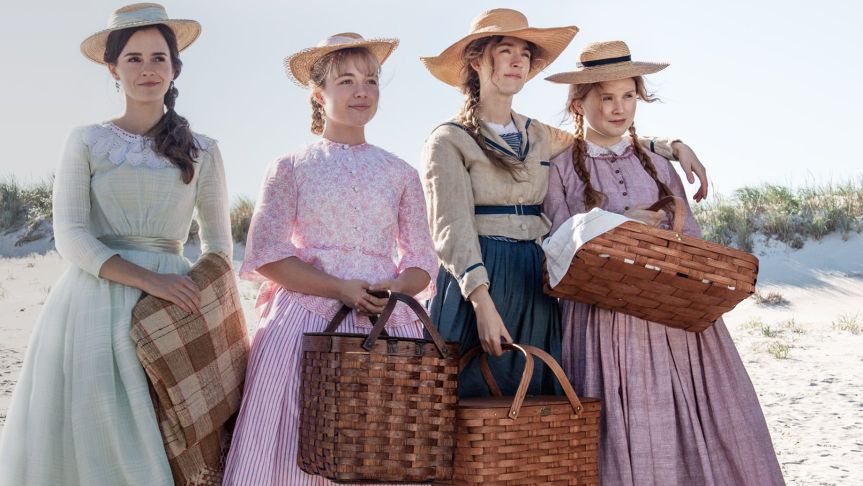
Although it hadn’t won any awards at the time of its release, multiple film adaptions, television shows, plays and retellings are a testament to the cult that surrounds the book “Little Women” by author Louisa May Alcott (1832-1888). Published in two volumes in 1868 and 1869, Alcott wrote the book in response to a request from her friends and family to write a book for young girls. The first novel was a huge success and struck a chord with readers and Alcott was flooded with letters requesting the second volume immediately. She quickly wrote the next volume to accommodate them. Eventually, the two volumes were released as one novel in 1880.

The novel continues to be very widely read and the ambitious female characters in it contributed to the rise of feminism in 20th century America. It revolves around the story of the four March sisters: Margaret “Meg”, Josephine “Jo”, Elizabeth “Beth” and Amy as they live their lives and grow into adults. The girls must contend with learning to become good women and learning about who they are as people with the help of their mother and father.

While on the surface it may come across as a simple story about the four March girls’ journeys from childhood to adulthood, Little Women centres on the conflict between two emphases in a young woman’s life—that which she places on herself, and one which she places on her family. In the novel, an emphasis on domestic duties and family detracts from various women’s abilities to attend to their own growth. For Jo and, in some cases, Amy, the problem of being both: an individual skilled at what they do and to be a dutiful woman creates conflict and pushes the boundaries set by nineteenth-century American society.

At the time when the novel was composed, women’s status in society was slowly increasing. As with any change in social norms, however, progress toward gender equality was made slowly. Through the four different sisters, Alcott explores four possible ways to deal with being a woman bound by the constraints of societal expectations: marry young and create a new family, be subservient and dutiful to one’s parents and immediate family, focus on one’s art, pleasure, and person, or struggle to live both a dutiful family life and a meaningful professional life . While some of the March sisters conform to society’s expectations of the role that women should play, the others initially attempt to break free from these constraints and nurture their individuality. Eventually, however, settling into a more customary life. While Alcott does not suggest that one model of womanhood is more desirable than the other, she does recognize that one is more realistic than the other.

The novel contains five intrinsic aspects: character, theme, setting, plot, and writing style. It is an unusual example of young adult literature of the time because Alcott gives her character with both faults and virtues, avoids teaching to reader, writes in a simple but accurate style, employs simple and often humorous dialogue. Heart-warming and emotional, Little Women by Louisa May Alcott has stood the test of time, and indeed deserves the title of being the cult classic we all know.

Save our home

“The earth provides enough to satisfy everyone’s need but not enough to satisfy everyone’s greed” This quote by the father of our nation Mohandas Karamchand Gandhi is now amongst his most well-known. But what does it really mean? It means that the earth has abundant resources to satisfy everyone’s needs but, in our greed, and hurry to develop, we have been recklessly exploiting these resources. In the name of development, we have indulged in activities such as deforestation, overgrazing, encroachment into forest lands, overuse of ground water, use of plastics, etc. The exploitation of natural resources not only harms the environment but may cripple the future generations of the development process itself. 

The world is increasingly managed in a way that maximises the flow of material from nature, to meet rising human demands for resources like food, energy and timber. As a result, humans have directly altered at least 70% of Earth’s land, mainly for growing plants and keeping animals. These activities necessitate deforestation, the degradation of land, loss of biodiversity and pollution, and they have the biggest impacts on land and freshwater ecosystems. About 77% of rivers longer than 1,000 kilometres no longer flow freely from source to sea, despite supporting millions of people. The main cause of ocean change is overfishing, but 66% of the ocean’s surface has also been affected by other processes like runoff from agriculture and plastic pollution. In addition, fewer varieties of plants and animals are being preserved due to standardisations in farming practices, market preferences, large-scale trade and loss of local and indigenous knowledge

The wildlife population is in a fall around the world, driven by human overconsumption, population growth and intensive agriculture, according to a major new assessment of the abundance of life on Earth. On average, global populations of mammals, birds, fish, amphibians and reptiles plunged by 68% between 1970 and 2016, according to the WWF. Two years ago, the figure stood at 60%. Latin America and the Caribbean recorded the most alarming drop, with an average fall of 94% in the populations of vertebrate wildlife. Reptiles, fish and amphibians in the region were the most negatively affected, driven by the overexploitation of ecosystems, habitat fragmentation and diseases. Africa and the Asia Pacific region have also experienced large falls in the abundance of wildlife, dropping 65% and 45% respectively. Europe and Central Asia recorded a fall of 24%, while populations dropped 33% on average in North America. According to the UN’s global assessment report in 2019, due to human activity one million species on the planet are at a risk. Deforestation and the conversion of wild spaces for human food production have largely been blamed for the destruction of Earth’s web of life. It has been highlighted that 75% of the Earth’s ice-free land has been significantly altered by human activity, and almost 90% of global wetlands have been lost since 1700.

The Earth is dying and is up to us, the future generation, to protect it from all the harmful toxins and other pollutants. We only have one home with limited resources which we share with a billion other species of wildlife. Steps have to be taken no matter how small to save our beautiful mother planet and leave a home for our future generations.

A rainy July for 2 Indian cities

Indian monsoon, the most prominent of the world’s monsoon systems, which primarily affects India and its surrounding water bodies. It blows from the northeast during cooler months and reverses direction to blow from the southwest during the warmest months of the year. This process brings large amounts of rainfall to the region during June and July.

After meagre rains were received, Mumbai saw a downpour through the night and in the early hours of July 16th, leading to 27 roads being inundated, 85 bus routes diverted and 250 people evacuated from the Mithi River banks. Extremely heavy rain was recorded at the India Meteorological Department (IMD) Santacruz observatory at 253.3mm, which is the second highest 24-hour rainfall in a decade.

In 2019, the city had recorded 375.2mm which was the highest 24-hour rain in the months between 2015 and 2020. In 2018, it was 184.3mm, 163.4mm (2017), 114.5mm (2016) and 61 mm in 2015.

The meteorological department classifies 15.6-64.4mm in 24 hours as moderate rain; 64.5-115.5mm rain as heavy; 115.6-204.4mm as very heavy; and over 204.5mm as extremely heavy rain. Moderate to heavy rain is likely in the city and suburbs with the possibility of heavy to very heavy rain at isolated places, said the IMD.

The Extremely heavy rain left 27 city roads waterlogged— areas like Hind Mata, Gandhi Market, Sion Road number 24, Wadala Bridge, Chunabhatti, Siddharth Nagar in Goregaon, RCF, Chembur Phatak, Milan Subway, roads leading to eastern freeway. As per the BMC (Brihanmumbai Municipal Corporation) data, between 4am to 7 am, the city recorded 36mm rainfall, 73mm in the western suburb and the highest 75mm in the eastern suburb of Mumbai.

The Mithi River crossed a dangerous mark following which so far about 250 people have been evacuated from Kranti Nagar slum which is located at the bank river. After the rains took a break following the evacuation of people, the water level of the river went down to 2 metres from 3.7 metres. After that, most of the evacuated people returned to their places. The IMD has predicted moderate rain in the city and suburbs with possibility of heavy rainfall at isolated places, the civic official said, adding that the city will witness high tide of 4.08 metres on Friday at 4.26 metres.

Meanwhile, the city of Hyderabad witnessed heavy rains on the night of July 14th, which went on till the next morning. According to the IMD, Hyderabad records, at 69mm, this day was the third rainiest July day for Hyderabad in the last 10 years. The city recorded 115.1mm of rain on July 21, 2012 followed by 86.4mm on July 12, 2013. It was after seven years that Hyderabad witnessed this kind of rain in 24 hrs.

Several localities in the city, including Hayathnagar, Uppal, Saroornagar and Saidabad received heavy rains overnight. Meanwhile, Bandlaguda, Uppal received the maximum rainfall of 212.5 mm, followed by Vanasthalipuram, which witnessed 192.3 mm rain. Kapra, Serilingampally, Khairatabad, Golconda and Marredpally also experienced moderate rains.

Several other districts including Rangareddy, Medchal-Malkajgiri, Yadadri-Bhuvanagiri, Jangaon, Rajanna Sircilla and Jagtial also received heavy rainfall. Chegunta in Medak received the highest rainfall of 227.5 mm on Wednesday. According to the forecast by Indian Meteorological Department (IMD), Hyderabad, the city will witness cloudy sky throughout the day, accompanied with light showers at isolated places.

Digital Marketing

Digital marketing is, as the word suggests, the use of digital media to market products. There are multiple websites like Amazon, eBay, Flipkart, etc., where people can buy products. With the availability of these websites, to purchase a product, one doesn’t have to leave the house if one doesn’t want to. It can be seen as a new philosophy and business practice emerging with improvements in technology. Digital marketing makes shopping easier for the consumer. If a seller knows what his target audience wants, it makes marketing products to them much easier.

Types of Digital Marketing

  • SEO (Search Engine Optimization)

Search Engine Optimization helps with the expansion of online visibility in results that come up in search engines. What happens is that if a business ranks high on the search engine results page (SERP), the number of visitors that your website gets is increased. With the use of SEOs, passive visits to your page can become active and receive more traction.

  • Search Engine Marketing

Search Engine Marketing is a technique where a business or a company can buy a particular advertising space. This can be seen on search platforms like Facebook Paid Promotions, or even Google or Instagram. One example is Pay Per Click advertising. It is, as the name suggests that the marketer pays the search engine for every click that a user makes.

  • Content Marketing

To amplify visibility, reputation, and to advertise itself, a lot of attention and effort has to be put into the content. The content has to be precise, good quality, transparent, and sharp so that it stands out and boosts SEOs.

  • Social Media Marketing

Social media now plays a very crucial role in the promotion of the goods and services of any company. It connects with a much more comprehensive range of people in a more intimate way. It is easy to gain feedback or engagement from social media. Social media is also used to place orders, which makes it so much simpler for the user to find the page, see if it is trustworthy, based on interactions by other customers, and also place orders with no hassle. These companies don’t just post content that relates to their product. Making statements on current situations or having posts only for the sake of engagement and witty commentary can all help have a large customer base. This enables visibility and also promotion of the product itself.

Importance of Digital Marketing

Today we live in a technologically advanced world where anything is possible through the internet. Digital marketing functions and is possible only because of the internet. It is the core of what digital marketing is. In a society where we struggle with scarcity and rising prices, digital marketing is the way to turn that around. The internet is easily accessible by everyone in any part of the globe. It is no longer reserved for a specific stratum of society. It is now easier to connect with people without even having to meet them.

It is also incredibly convenient for people to buy anything required from the internet without taking a foot outside of their homes. It saves time and shows a person the various reviews people have left. A person can easily compare prices on multiple websites and pick what is best suited to their needs. It is beneficial to those who are disabled and can help them get their work done and live a life of independence.

It also helps businesses themselves. The traders can advertise for less money, or even for free if one knows how to do it well. Products can often go viral without any money being invested in marketing. It mainly helps small businesses and helps them get traction.

Digital marketing majorly helps all kinds of businesses take off. It is a vital source of marketing in this day and age. This form of marketing shows how one can take advantage of technology and further their business. The internet has made the world a smaller place and digital marketing just helps build bridges between the business and the customer. After all, “It’s hard to find things that won’t sell online.” – Jeff Bezos

Hum Do Aur Hamare Do

The Two-child policy is a government-imposed limit of two children allowed per family. It is used for some population groups in China, has previously been used in Vietnam, and has lately been discussed in the Philippines. Although not by law, in the 1970s, citizens of Hong Kong were also highly encouraged to have two children as a limit, and it was used as part of the region’s family planning strategies. One country which has also started to adopt this child policy to control its high population is the world’s largest democracy: India.

Multiple states have adopted this policy by prohibiting people with more than two children from serving in the government. Seven states:  Andhra Pradesh, Bihar, Gujarat, Maharashtra, Odisha, Rajasthan and Uttarakhand have laws barring couples with more than two children from contesting local body elections. In 2017 this policy was adopted by the North Eastern state of Assam with those having more than two children would be ineligible for government jobs. Some states have repealed policies; the state of Chhattisgarh introduced a policy in 2001 and repealed it in 2005. On July 10th 2021, the state of Uttar Pradesh, India’s most populous state, had announced draft legislation which would see anyone with more than two children denied state benefits, subsidies and government jobs. After a family has two children, there will also be incentives if one of the parents undergoes voluntary sterilisation. The state’s draft law includes incentives for two-child couples if one of them opts for voluntary sterilisation, including soft loans for construction or house purchases and rebates on utility bills and property taxes. The bill says that because of the state’s “limited ecological and economic resources at hand, it is necessary and urgent that the provision of the basic necessities of human life are accessible to all citizen”.

The implementation of a one-child policy will help to control the population. Not only will the policy help control head counts, but it will also provide advantages socially and economically. With reference to China’s one child policy, the plan of birth control could reduce India’s increasing unemployment. The fall in birth rate offers a demographic dividend, as the economically productive proportion of the population grows more rapidly than the general population. Without the rapid decrease in fertility, China’s economy would not have grown by 7-8% in a year. Thus, job opportunities would not be created for more people to be employed. With the decrease in population, competition among citizens was lowered and unemployment was alleviated. India needs such a change with the existing number of unemployed. Population control can also help reduce carbon emission in India and help alleviate climate change. India is among the top 5 countries with the highest carbon emission in the world. According to the Emissions Database for Global Atmospheric Research, India ranks number 4 in the world in carbon emission, with up to 2.5 million carbon dioxide emission in 2015. The implementation of the policy will help to decrease emission. China is an example of avoiding excess carbon emission with the population control policy. From the one-child policy, China avoided around 300 million births, meaning she has averted 1.3 billion tonnes of carbon dioxide in 2005 based on average world per capita emissions of 4.2 tonnes. From controlling population growth, this can help suppress the increasing carbon emission in India. As a result, would help slow down the exacerbating global warming and the consequences that come with it.

When diving deep however there may be some problems with this policy. People are quick to point out that India is a country with a booming technology industry, one that primarily relies on young people. There is a fear that restrictions on having children will produce a shortage of the educated young people needed to carry on India’s technological revolution. There are already well-documented problems with China’s one-child policy (1979-2015). Worst of all, there is a major gender imbalance resulting from a strong preference for the male child. Another criticism of two-child policies in India is that the laws violate women’s rights. Human rights activists argue that the laws discriminate against women right from birth by encouraging the abortion or infanticide of females. The two-child policies also create incentives for men to divorce their wives and abandon their families if they want to run for political office.

Every coin has two sides. Only time will tell if this policy will prove to be successful at combating the various issues which have arisen with India’s high population growth.

Violence in Games : How Desirable ?

The UEFA Euro 2020 Final was a football match that took place on 11 July 2021 at the Wembley Stadium in London. Originally scheduled for 12 July 2020, the tournament had been postponed due to the COVID-19 pandemic. The match was contested by Italy and England. Italy won the final 3–2 on penalties, following a 1–1 draw after extra time. Italy won the European Championship since their first win in 1968. While the world was rejoicing Italy’s feat, it didn’t go well with England fans who were furious at their favourite team’s loss. Violence gripped the streets of London as England fans attacked Italian fans.

Sports are one of the things that people across the world take pleasure in and bond over. Sports can be wonderful, beautiful thing. However, they can also be incredibly toxic. Sports fans can generally be seen as loud and annoying and obnoxious about their team. This is a fair observation, and it’s perfectly fine and usually harmless to be outspoken about your support for your team. However, when your team wins or loses and you start to riot and overturn cars in the street, then it becomes a problem. It’s one thing to be decked out in your team’s colours, cheering on the players. It’s another thing however, to shout and celebrate in the street when your team is victorious. But property damage is crossing the line into the reckless kind of behaviour that needs to stop.

Pre-match, the Wembley stadium had to be briefly locked down after hordes of ticketless fans had breached sections of the stadium and stormed the concourse. Fences were torn down and thrown aside, with multiple eyewitnesses suggesting thousands had pushed in. This breach prompted violence and videos surfaced, capturing an adult punching a kid in the head inside the stadium, while a group of men kicked an Asian male while he was on the floor.

People need to take a step back and realize there are more important things in the world. People get into this weird state of mind where they put on the fan goggles and all rational thought goes out the window. Online platforms make it even worse. People can be downright nasty to other people for the sake of “the sport.” People will curse out others and send them hate and threats just because their opinions are different, they support another team, or they don’t like their team. Post the final, the England team football players Bukayo Saka, Jadon Sancho and Marcus Rashford were subjected to racial abuse online after missing penalties which contributed to England’s Euro 2020 final defeat to Italy. The three football players took the last three penalties – two of which were saved – during England’s 3–2 loss on penalties, and were all immediately targeted with racist language and emojis on their social accounts.

Sport in its purest form is a great display of athleticism that can be fun and rewarding to watch, but hinging your entire existence upon it and using it as an excuse to be a gross, terrible person is something that needs to be gone from sports and sports culture. Afterall at the end of the day, it’s just a game.

The Bhujia Badshah

One of India’s biggest sweet, snacks and restaurants, Haldiram’s is easily one of the most recognizable food brands in the Northern part of India. The company has its humble origins dating pre-Independence in 1937 by the father of Ganga Bhishen Agarwal who used to sell Bhujia in Bikaner, Rajasthan. Agarwal later left his family due to a dispute and started selling namkeen on the street which was prepared by his wife at home.

In 1946, the first Haldiram store was opened which sold Bikaneri Bhujia. The name “Haldiram” has his origin in Agarwal’s nickname given by his mother. The Bhujia sold by Haldiram’s was reinvented by the addition of moth flour which made it thinner, this change proved to be successful and increased the income manifolds.

By the early 1930s, the price of bhujia went up from 2 paise a kilo to 25 paise, making it a successful business venture for the whole family to live off. Merchants on their way to Kolkata stopped by to purchase this bhujia for friends and family back home and the seeds of a global empire began to be sowed. When Ganga Bhishen went to Kolkata to attend a wedding ceremony, who knew that at this time his life as well as the appeal of the bhujia was to be changed forever. He had an idea to open a shop in Kolkata. This was their first branch out of Bikaner and laid the foundations of expansion of this successful bhujia business in 1970.

While the second generation did not expand the business further, it was his grandsons Manhoharlal and Shiv Kishan who took the business to Nagpur and the capital Delhi. Business in Delhi began in 1983 in Chandni Chowk but, unlike the other cities they had ventured into, bhujia was not a unique product in Delhi. The brothers faced immense competition from established players such as Ghantewala and Bikanerwala. As a strategy, they differentiated themselves by focusing on adjusting flavours and innovation to meet the needs of the market and soon began to break even. Once business picked up, they turned their apartment into a factory, where the entire family pulled long sleepless nights, trying to keep up with demand. Soon, the single Chandni Chowk location was not enough and Manohar Lal began looking for factory space to begin large-scale production. The first factory was set up in the late ’80s. After that, distribution became one of their greatest strengths, one of the secrets to their success in the capital. This was followed by restaurants in major cities in India and countries abroad including the United States, Canada and Thailand.

Currently Haldiram is producing more than 400 products. It offers all different categories of Veg frozen food, various types of Namkeen snacks and a variety of sweets. A testament of their success is that today at railway stations and stalls around the country, the ₹5 Haldiram’s bhujia packet is used as currency, as a substitute for loose change.

Ganga Bhishen Agarwal left for the heavenly abode on 23rd February 1980 but he wouldn’t have imagined that one day his products will sell globally and it would be a business with a net worth of ₹7,130 crore.

Small Scale Industries: helping in a BIG way

Small Scale Industries (SSI) are those industries in which manufacturing, providing services, productions are done on a micro scale. Small scale industries play an important role in the social and economic development of India. These industries do a one-time investment in machinery, plants, and industries which could be on an ownership basis, hire purchase or lease basis.

The SSI sector produces a wide range of industrial products such as food products, beverage, tobacco and tobacco products, cotton textiles, wool, silk, synthetic products, jute, hemp & jute products, wood & wood products, furniture and fixtures, paper & paper products, printing publishing and allied industries, machinery, machines, appliances and electrical machinery. The SSI sector also has a large number of service industries.  The small-scale sector in India embracing of a diverse range of units from traditional crafts to high- tech industries.  The number of SSI working units (registered & unregistered) in India totalled 11.4 million in 2003-04-80.5 percent of which are proprietary concerns and 16.8 percent are partnership firms and private limited companies. They have always played an important role in the economies of all major industrial countries. The Report of the Working Group on Micro, Small and Medium Enterprises (MSMEs) growth for 12th 5-year Plan (2012–17), unveils that the sector accounts for 45% of the manufacturing output and 40% of the total exports of the country. Further the Ministry of MSME’s (2017) highlights that the MSMEs accounted for 30.74% of GDP in the year 2014–15. Current economic forecast or survey interprets that with the Indian Economy growing at an average of 7% per annum, it is likely to become a $5 trillion economy by the year 2025. Hence, the development of the MSME sector is essential and it is considered to be the backbone of the Indian economy. Small-scale industry is playing a paramount role in the industrial landscape of our country.

The growth in employment in this sector over years has been noteworthy. The small-scale industries have shown splendid progression in their quantity, production, employment and exports. The cumulative number of units has increased from 105.21 lakhs in 2001-02 to 115.22 Lakhs in 2003-04 to 630 lakhs as of 2020. The number of individuals employed in small scale units too, has gone up from 249.09 lakhs in 2001- 02 to 273.97 lakhs in 2003-04 to 11 crores in 2020. Exports from small scale sector account for nearly 35 percent of the gross value of exports from our country. Total value of exports of this sector has increased from Rs. 71,244 crores in 2001-02 to Rs. 86,013 crores in 2002-03 to a value of $14740 crore and by 2022 it is expected that MSMEs will contribute 60% to India’s total exports. The total value of production of small-scale units comes to nearly 40 percent of the total value of industrial output of the country. Over the years an inspiring trend in exports has been observed in the dimension of increase in exports of unconventional products from this sector.

The SSI has emerged as an ever-changing phenomenon of the Indian economy. At the national level, this sector has performed extremely well and enabled our country to attain industrial diversification. SSIs have made a portentous endeavour to increase in employment fortunes and productivity prospects. If its potential is properly harnessed, it can help in accentuating the pace of balanced regional progress apart from creating employment opportunities.

A computer screen: the new classroom of the modern age?

The outbreak of COVID-19 affected all sections of society since the first case recorded in China in late 2019. People were asked to quarantine themselves in their homes to prevent the spread of this virus. Despite its negative effect on other sectors, the pandemic was a boon for a few viz online shopping sites and also a rapid increase was seen in e-learning as compared to the traditional classroom method of education.

Even before COVID-19, there was already a high growth and adoption in education technology, with investments in e-learning apps reaching a value of $18.66 billion in 2019 and the overall market for online education is projected to reach $350 billion by 2025. The pandemic however challenged the education system across the world and forced educators to shift to an online mode of teaching overnight. Many academic institutions that were earlier reluctant to change their traditional approach were left with no alternative option but to shift entirely to e–learning. Whether it was language learning apps, virtual tutors, tools for video conferencing or online learning software, all had a significant surge in its usage since the pandemic hit.

While some believe that the unplanned move to online learning – with no training and little preparation – will result in a poor user experience, others believe that a new hybrid model of education will emerge, with significant benefits. There have already been successful transitions amongst many universities. The Imperial College, London started offering a course on the science of coronavirus, which is now the most enrolled class launched in 2020 on the site coursera. The e-learning method offers teachers an efficient way to deliver lessons to students. Videos, PDFs, podcasts, can be used as a part of lesson plan. By extending the lesson beyond traditional textbooks to include online resources, teachers are becoming more efficient educators. The online learning system, with its range of options, can be personalized in many ways. Some students are visual learners, while some prefer to learn through audio. Similarly, some students thrive in the classroom, and others are solo learners. It is the best way to create a perfect learning environment suited to the needs of each student.

There are, however, challenges to overcome. Some students without reliable internet access and/or technology struggle to participate in digital learning; this gap is seen across countries and between income brackets within countries. While internet penetration has grown in leaps and bounds over the past few years, still in smaller cities, a consistent connection with decent speed is a problem. Without a consistent internet connection for students or teachers, there can be a lack of continuity in learning. This is detrimental to the education process. Online learning also requires teachers to have a good understanding of digital forms of learning. However, this is not the case. Very often, teachers have a very basic understanding of technology. To combat this, it is important for schools to invest in training teachers with the latest technology updates so that they can conduct their classes seamlessly.

Parents and students are also concerned about the health hazards of spending hours staring at a screen. This increase in screen time is one of the biggest disadvantages of online learning taking a toll on students ‘eyesight. Sometimes students also develop bad posture and other physical problems due to staying hunched in front of a screen.

Major world events are often an inflection point for rapid innovation – a clear example is the rise of e-commerce post the SARS pandemic (2002-2004). While we have yet to see whether this will apply to e-learning post-COVID-19, it is one of the few sectors where investment hasn’t dried up. What has been made clear through by this pandemic is the importance of disseminating knowledge across borders, companies, and all sections of society. If online learning technology can play a role here, it is incumbent upon all of us to explore its full potential. From chalks and blackboards to smart boards to laptops -the education sector has jumped the boundaries of a school wall…the journey has just begun.

Song of the Little Road

by Satyajit Ray

Set in the 1910s in Bengal, this film originally known in Bengali as Pather Panchali is the first feature length film of one of India’s most acclaimed and celebrated directors: Satyajit Ray (1921-1992). The film focuses on an impoverished Brahman family in a Bengali village with the youngest member Apu being one of the central characters. It is his story that Ray focuses on in his two feature length films : Aparajito (The Unvanquished, 1956) and Apur Sansar (The World of Apu, 1959) thus making this movie the first in Ray’s critically acclaimed Apu Trilogy.

The film centers around Apu and his family members including his elder sister Durga, his priest of a father who dreams of being a poet and a playwright and his mother who is often engaged in a battle with his father’s cousin who she resents for stealing their food from the kitchen while she struggles to feed her children. The film is a slice of life and one that displays the harshness of reality for a family living in dire poverty. Since Apu’s mother is often busy, taking care of the family, it is Durga who cares for him like a second mother, often teasing him and sharing the simple joys of life with him like sitting under the cool shade of a tree, viewing the mind-boggling pictures through a travelling vendor’s bioscope or watching a folk theatre performed by a troupe or even chasing and salivating at the sweets of the candy man despite their empty pockets.

The film blindsides the viewer by showing a child’s perspective of the world. Be it Apu and Durga’s fascination with all the vendors and their goods or their wealthier friend’s jewellery and beads. A soundtrack composed by Pandit Ravi Shankar which includes mainly tunes played on the sitar, transports us to the village and its peace; free from the worries of the hustling-bustling cities.

Starring mostly amateur actors and a first-time director at the helm, the film struggled in its funding but was ultimately funded by the government of Bengal, giving Ray the opportunity to finish his masterpiece. Once released, the film was an astounding critical and commercial success. Grossing 100 million through positive word of mouth, the film received accolades from various national and international organizations the most noticeable being The National Film Awards and a screening at the Cannes Film Festival. The film cemented Satyajit Ray’s career as a director and placed India on the world cinema map. It created a new genre of film-making in which authenticity and realism were the primary themes, breaking the norms of traditional Indian filmmaking. The film may not hold the test of time from a technical stand point due to its poor print quality and damage to the original negatives, but from a story telling standpoint, the film still strongly puts forward its themes of poverty and child-like wonder, that are as relevant today as they were in a film that released 66 years ago.