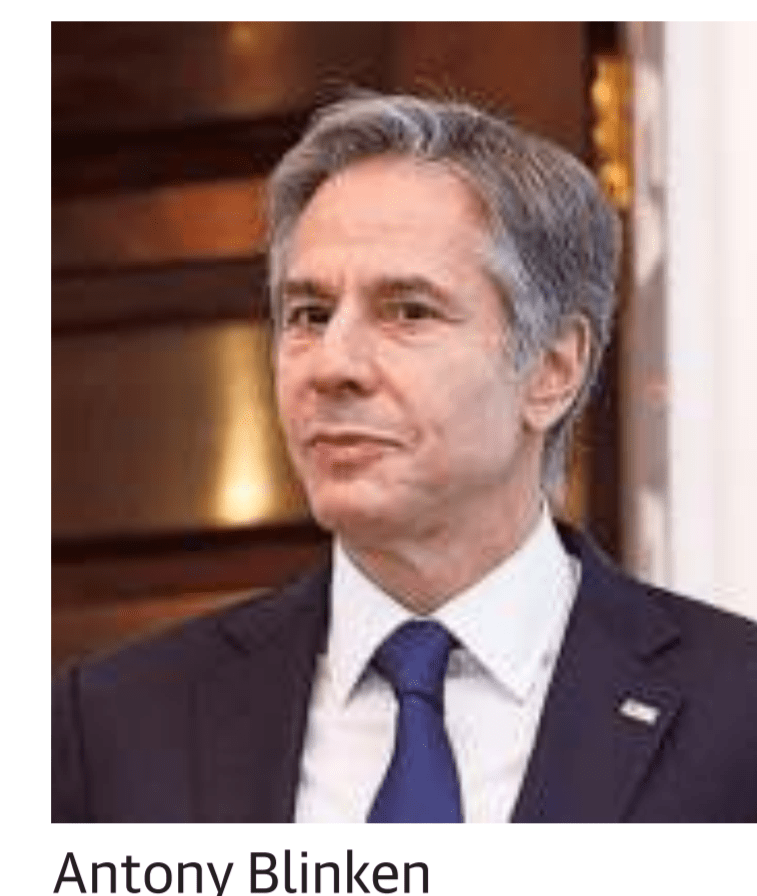
Anthony Blinken mayvisit India ‘very soon’

US. Secretary of State An-
thony Blinken is expected to
make his first visit to India
“very soon”, sources said,
indicating that planning for
the visit is under way for a
meeting as early as next
week.
“The dates are still being
fnalised,” an ofcial told
The Hindu, confrming the
visit, while another ofcial
said meetings were being
scheduled in New Delhi at
the “end of July”.
Mr. Blinken’s visit is ex-
pected to prepare the way
for the Quad summit and bi-
lateral meetings between
Prime Minister Narendra
Modi and U.S. President Jo-
seph Biden due to be held in
Washington later this year,
and is also expected to dis-
cuss the emerging situation
in Afghanistan, including
Taliban advances after the
U.S. troop pull-out with In-
dian ofcials. Mr. Blinken’s
proposed visit, which is yet
to be announced, could
coincide with the 3-day visit
of Afghanistan Army Chief
Lt. Gen. Wali Mohammad
Ahmadzai to Delhi.
India and the U.S. have a
wide array of bilateral rela-
tions to discuss and Mr. Bi-
den has made it clear that
the America’s Indo-Pacifc
strategy that includes India
is an area of importance,
particularly given increasing
tensions between the U.S.
and China.
India and the U.S. have
pending talks on a free trade
agreement and India’s de-
mand for a restoration of its
GSP status for exports, res-
cinded by the previous
Trump administration, and
the two sides will discuss
improving economic, de-
fence, energy cooperation,
and cooperation on coun-
tering COVID-19. The U.S.’s
Quad initiative to produce a
billion vaccines is based on
Indian production.

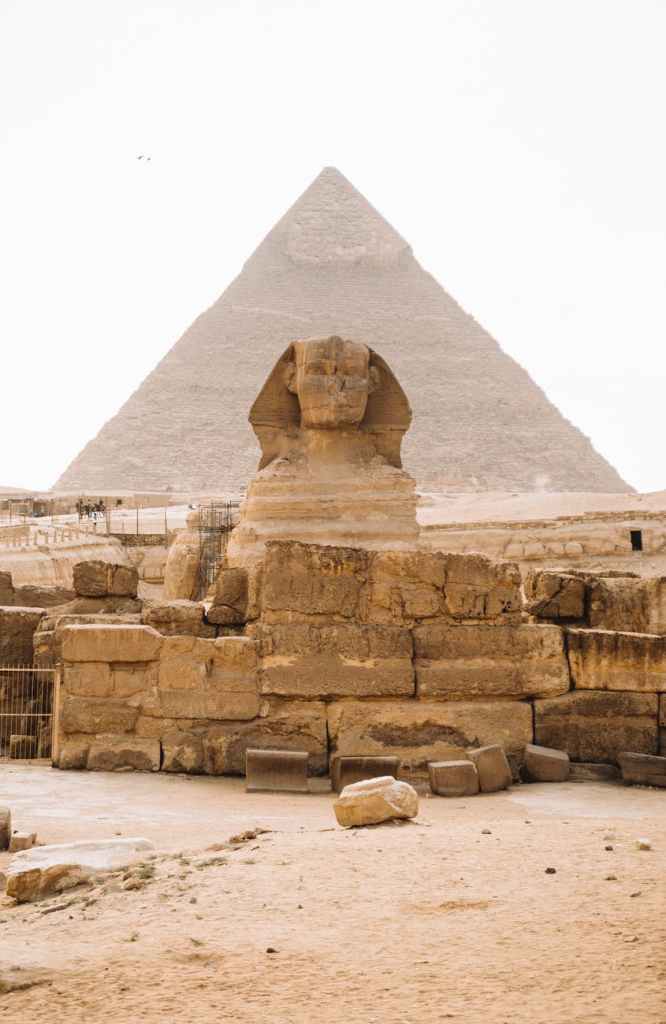
Egypt takes centre stage in West asian affairs

Egypt

• Capital – Cairo.

• Borders with:
 Libya – west
 Sudan – south
 Israel – Northeast

• Strategic location – Hub for trade routes between Africa, Europe, and Asia.
 Enhanced with opening of the Suez Canal.

• Topography – dominated by the Nile River.

• Official language – Arabic

• 2013 – Overthrew its first democratically elected
government.

• $12 billion aid package from Saudi Arabia, the
United Arab Emirates (UAE) and Kuwait. • West Asian deposits – grants for the import of petroleum products.

West Asian politics

• Influenced by the active role played by Saudi
Arabia and the UAE.

• Role of Egypt – reluctant.
• Qatar Blockade – role of Egypt was not much intense.
 2017 – Arab transport blockade against Qatar in order to punish for its ties with radical Islamist groups.
 To pressure reducing its diplomatic and economic relations with Iran.

• Egypt regained influence – Good and abled
management of its economy – facilitated Egypt.
 Egyptian Economic reforms, 2015.
 Foreign exchange reserves of $40 billion by 2018.
 Growth rate of 5.6% in 2019.

Present Developments in West Asia

• Israel-Palestine conflict – negotiations by the
Egyptian diplomats and intelligence officers.

• Turkey – anxious to reopen its relations.

• Tripartite grouping
 Intent to broaden regional engagements.
 For Egypt – opportunity to move beyond its traditional dependence on Saudi Arabia
and to assert its leadership in the region.
 Coalition – near-bordering land mass and a considerable domestic agricultural and
industrial capacity.
 Extensive cooperation in energy connectivity
and reconstruction areas.

Challenges

• Ethiopia’s “Grand Ethiopian Renaissance Dam” on the Blue Nile
 Concern – source of around 95% of Egyptian fresh water.
 Fear – Restrict this access to fresh water – “existential threat”.

 Egypt tackling with
 Diplomatic engagements with Sudan, Uganda, Burundi, Rwanda and Kenya.
 Major dam and hydropower project in
Tanzania.
• Strained relations with Turkey – Libyan peace
process and the East Mediterranean.
 Delineated energy claims in the Mediterranean sea – in conflict with Turkey’s claims. • Present scenario of pandemic
 Unemployment on a rise.
 Economy – slowed down recovery.
 Percentage of workers without adequate income increased.
 Poverty rate – 2% higher than in 2015.
 Concern – might compel Egypt to seek assistance from the Gulf States.

Entry tax

• Central government – Entry tax in states – State
governments control over the goods which enter
their boundaries.

• Entry tax – Fee levied by the state governments
on the transfer of goods from one state to another.
 Type of indirect tax levied.

• The State Entry Tax Act maintains rates for the
goods of each state.
 Tax rates vary for each state.

• Enforcement of entry tax -Department of
Commercial Taxes of that state.

• Essential commodities – Usually do not attract entry tax.
 Varies from state to state depending on the state’s policies.

• Entry Tax has been replaced by the Goods and Services Tax (GST)
 Inter-state movement of goods – IGST (Integrated GST)
 Intra-state transfers – CGST (Central GST) and SGST (StateGST).

Issues with sedition law

Sedition

• Offence related to the conduct or speech that is inciting people to rebel against the authority of a state or government.

• Punishable under Section 124A of IPC, 1860.
 Section inserted to IPC in 1870.
 Intent of the section – To punish an act of exciting feelings of disaffection towards the government, with disaffection being
distinguished from disapprobation.
 Differentiation important for freely voicing feelings against the government
as long as they obey govt.’s lawful authority.

Issues with Sedition law

• Low conviction rate under the section 124A IPC.
 Failure to convict due to lack of evidence.

• Vague definition, especially of the term disaffection – Difficult to differentiate disaffection and disapprobation.
 Leads to simple criticism being construed sedition – Suppressing dissent.

• Affects fundamental right of freedom of speech.
 Free speech – Most significant principle of democracy, human right,
liberty.
 Yardstick used for distinguishing harm is to be ‘high’.

 Reality – Both ‘provocative’ and ‘innocuous’ speeches or writings treated as same.

Judicial interpretations enables it to continue.

Kedar Nath Singh v. State of Bihar, 1962 – SC attempted an attenuated interpretation of the provision.
 Upheld the validity of section 124A.
 Not sedition – As long as the criticism or comment of a
citizen does not incite people to violence against the
Government established by law or with the intention of
creating public disorder.
 ‘Public disorder’ considered to be a necessary ingredient
of section 124A IPC by the courts.
 Author – Lessened the severity of the section –
Restriction imposed on free speech could not be declared
unconstitutional.
• Misused by the police or govt.
 Criminalise strident political criticism and
accuse as being ‘antinational’.

 3 political reasons:
a) To suppress criticism and protests against particular policies/projects of the government.
b) To criminalise dissenting opinion of rights defenders/lawyers/activists and
journalists.
c) To settle political scores.

• Relic of colonial legacy and is unsuited in a democracy.
• Recent development –

 Supreme Court and CJI – Indicated their intention to reconsider the sedition
provision.
 Might lead to new guidelines and safeguards for using section 124A
meticulously.

Conclusion

• Section 124A should be struck down.

Health care system in India

• NITI Aayog document – ‘Investment Opportunities in India’s Healthcare Sector’

 Promotes further privatisation of health care
 Explores the pandemic as business opportunity for the health “industry” to grow.
• Author – Importance of public health and an enhanced government role in
health delivery services.
• Story of 2 states (model) Kerala and Maharashtra comparison
 Both are big states – comparable state GDPs
 Kerala COVID mortality – 0.48%
 Maharashtra COVID mortality – 2%.
 Reasons
 Huge differences in the effectiveness of public health systems
 Kerala has more government doctors compared to Maharashtra
 Kerala also has a higher proportion of government hospital beds
 Kerala allocates over one and half times higher funds on public health every year in per capita terms compared to Maharashtra.
 Weak public health system has proved to be a critical deficiency
 Clear message: a neglect of public health systems means large-scale, avoidable losses of lives.

Lacunae in the health care system

  1. Resource allocation
  2. • Central vista project – ₹20,000 crores
  3. • Could be utilised for setting up oxygen plants,
    numerous lives would have been saved.
  4. • Paltry allocation for National Urban health
  5. • Last time allocation – Rs. 1000 crores (amounts to Rs 2 per individual per month)
  6. • Parliamentary Standing Committee – Suggested
    allocating ₹1.6 lakh crores for public health during the current year (almost doubling of the present central health Budget)

2.To regulate the private players in health sector

• High Pricing
 COVID-19 care often costs ₹1 lakh to ₹3 lakh per week in large private hospitals
 Massive hospital bills – untold distress even among the middle class.

• Unregulated drug use
 Eg. Drug Remidesvir was used in COVID patients without valid evidence on
efficacy
 Indiscriminate use of steroids culminated

  • Mucormycosis infections

• Effective implementation of Clinical Establishments (Registration and Regulation)
Act
 Only 11 states have implemented it
 Not effectively implemented due to a major
delay in notification of central minimum
standards, and failure to develop the central framework for regulation of rates.

• In essence : Need to regulate the private
hospitals. And invest more in the public health

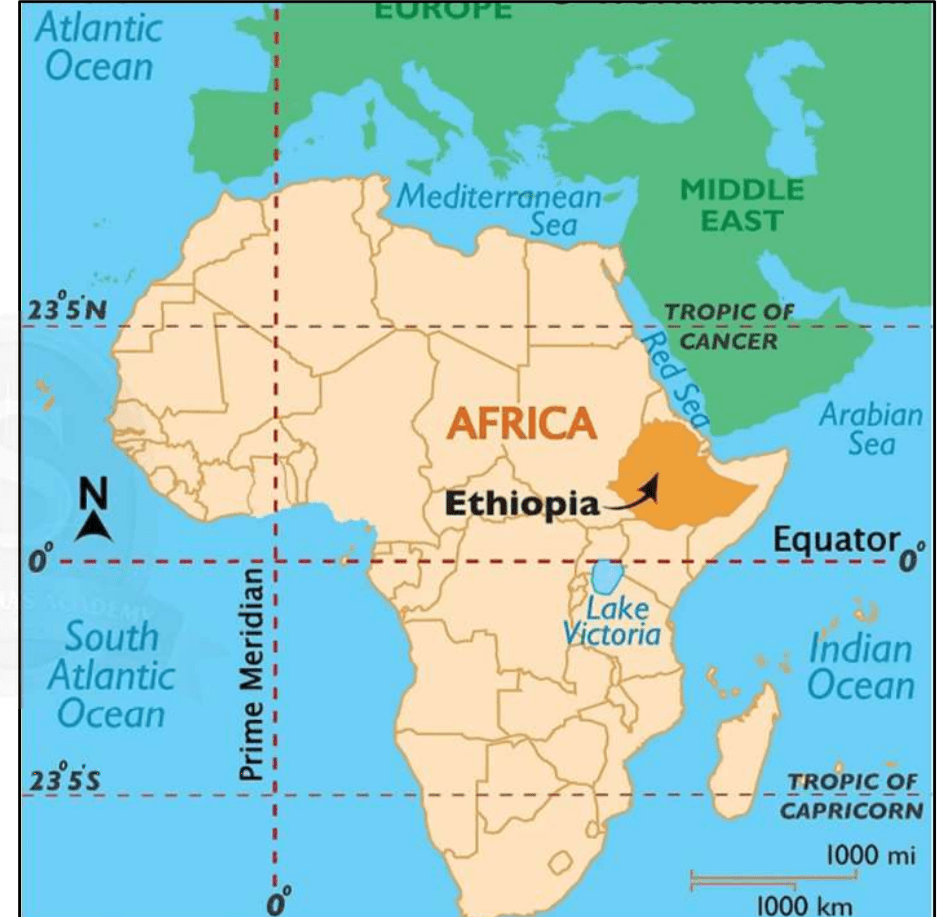
Ethiopia

• Situated – Horn of Africa – Eastern Africa.

• Capital – Addis Ababa.

• Lies completely within the tropical latitudes.

• Borders with
 Eritrea – North
 Djibouti – Northeast
 Somalia – East
 Kenya – South
 South Sudan, Sudan – West.

Source -world altas

Topography

• One of the most rugged in Africa

• Built on four geologic formations

• High central plateau with some mountains.

• Elevation – highest just before the point of descent to the Great Rift Valley
 Splits the plateau diagonally.

• Number of rivers cross the plateau
 Blue Nile flowing from Lake Tana.

Economy

• Based on agriculture – coffee, major agricultural
export crop.

• Limited reserves – gold, platinum, copper, potash,
natural gas, hydropower.
Population

• Highly diverse.

• Most – Speak a Semitic or Cushitic language.

• More than 77 different ethnic groups – own
distinct languages within Ethiopia.

• Africa’s oldest independent country.

• Second largest in terms of population.

Political structure

• Federal republic under the 1994 constitution.
 Prime minister – Head of government
 Titular president – Head of state.

• Bicameral legislature – House of Peoples
Representative & House of the Federation.

• Prime minister – Designated by the ruling
party in the House of Peoples’ Representatives.

• Nominates candidate for the presidency and subjected to a vote by both legislative
houses.

Local government

• Structure – allows the country’s ten regions a
significant amount of autonomy.

• Regional state – Headed by a president elected by the state council

• Cities – headed by a chairman.

• Regions – own parliaments, security forces and the right to a referendum for independent rule.

Ethiopia’s Tigray crisis

• Issue – Conflict between PM Abiy Ahmed’s party and the Tigray People’s Liberation Front is escalating.

• Conflict – Traced back to the time when Abiy Ahmed – the prime minister came to power in 2018.

Tigray region
 Wealthier than other parts of the country,
 It has got a well-trained army.

• Tigray People’s Liberation Front – fighting
for the autonomy of Tigray and reconstitution of Ethiopia on the basis of ethnically autonomous regions.
 Its Authority considerably reduced since Abiy took office.
• Ongoing conflict – 2 different political
ideologies for supremacy and control in the country.

• Tigray held local elections.

• PM ordered troops to counter a Tigray rebel
attack on federal army barracks.
 Result – Killing of several civilians.

• United Nations and Amnesty International –
Accused Ethiopia of war crimes, ethnic cleansing and the resort to rape and hunger
as weapons of war.

Scrutiny power

Administration of Delhi

• Delhi – sandwiched between UP and Haryana.

• NCT or The National Capital Territory of Delhi.
 Area – 1,500 sq.km.
 Includes parts of Haryana, Uttar Pradesh, and Rajasthan.

• States Reorganization Act, 1956 created the UT of Delhi – governed by a Lieutenant Governor.

• L-G acted on the advice of the Central government – answerable to the President of India.

• 1966 – the Delhi Administration Act brought
the Delhi Metropolitan Council.
 56 elected and 5 nominated members.
 Headed by the Lieutenant Governor.
 No legislative powers.
 Advisory role in the Government of Delhi.

The Constitution (69th Amendment) Act


 Inserted Article 239A and 239AB.
 Advisory Council replaced by a full-fledged Legislative Assembly.
 Delhi became a Special Union Territory and known as the NCT of Delhi.

 L-G – huge powers vested – appointed by President on the advise of Centre.
 Land, Law & order and Police – retained in
centre’s control.

• Delhi Government
 No control over 3 primary bodies – Reserved Subjects.

  1. Delhi Development Authority (DDA).
  2. Delhi Police.
  3. Municipal Corporation of Delhi (MCD).
     Complete control – PWD, Delhi Jal Board,
    Ministry of Power, Health & Sanitation, and
    Transport & Education

• Power struggle between central govt and NCR govt.

• 2018 SC judgment – L-G should act on the advice of the elected government.
 Except on three reserved subjects – police, public order and land – discretion of L-

Issue

• Committee of Delhi Assembly summoned a
senior official of Facebook:
 Accusation – spreading fake news and triggering widespread violence.
• Facebook resisted summons on grounds –

  1. It is beyond the powers of the legislature.
  2. IT Act is a central law and Delhi legislature has no jurisdiction.
  3. L&O is a subject of centre – Delhi legislature has no jurisdiction.
    Supreme court verdict
  4. • Upheld the authority of the committee of Delhi
    Assembly – to summon the senior official of Facebook
  5. • Legislative Assembly does not only perform the function of legislating – also has “inquisitorial” and “recommendatory” powers.

• Implications
 Emphasised the importance of federalism and importance of elected government at the NCR level.
 Social media platforms’ responsibility toward the many legislatures will increase – avenue for scrutiny of social media platforms by other States.

Dominica high court granted bail to mehul choksi

The Dominica High Court
has granted bail to fugitive
diamantaire Mehul Choksi,
allowing him to travel to An-
tigua and Barbuda for treat-
ment of his neurological
condition, local media there
reported.
The court has granted a
consent order by Choksi’s
legal team permitting him to
go to Antigua, where he has
been staying as a citizen
since 2018 after he left India,
after depositing 10,000
Eastern Caribbean dollars
(approximately ₹2.75 lakh)
as bail money to seek medi-
cal attention from a special-
ised neurologist, Nature Isle
News reported.
The court has also stayed
the ongoing trial before a
magistrate for his alleged il-
legal entry into Dominica on
May 23, till his return, it
said.
The court order has come
as a major jolt to Indian ef-
forts to bring back Choksi,
wanted in the ₹13,500-crore
scam in the Punjab National
Bank, from Dominica,
where he was held for illegal
entry after his disappea-
rance from Antigua and
Barbuda.
“Dominica courts fnally
upheld the rule of law and
rights of a human to be
treated in the medical facili-
ties of his choice,” Choksi’s
lawyer Vijay Aggarwal said.

Online racism faces by English players

•Black players in the England
football team have been
subjected to a storm of on-
line racist abuse after their
defeat in the fnal of Euro
2020.

•Marcus Rashford, 23, Ja-
don Sancho, 21, and Bukayo
Saka, 19, were the targets of
the abuse after they missed
their spot-kicks.

•The comments have
prompted a police investiga-
tion and wide condemna-
tion.

•“For some of them to be
abused is unforgivable,”
Southgate told a news confe-
rence. “Some of it has come
from abroad (we have been
told this), but some of it is
from this country.”

•British Prime Minister
Boris Johnson condemned
the abuse while Prince Wil-
liam, who is president of the
Football Association, said
he was “sickened”.

Bara Hindu Rao firing case

Five men, including two
contract killers, have been
arrested in connection with
a fring incident in Bara Hin-
du Rao area, which left two
passers-by dead three days
ago, police said on Sunday.
Danish, the key conspirator,
who is the partner of arrest-
ed builder Feroz, too was
among the arrested.
Two pistols with fve car-
tridges were seized from Ra-
hul alias Charlie (23) and Hi-
manshu (21), both from
Nand Nagri. The third ar-
rested man is Mehtab, who
is a relative of the abscond-
ing suspect, said DCP
(North) Anto Alphonse.
During initial investiga-
tion, it was found that the
complainant Haji Naeem
and his nephew Munib
shared rivalry with other
builders of Sadar Bazar and
Bara Hindu Rao. Munib had
managed to get a stay on the
construction of a building at
Ahata Kidara, which was la-
ter demolished. Upset, the
builder conspired with his
partner to settle scores.
He then got into touch
with Mehtab, the partner’s
relative, to eliminate Munib
and Naeem. Technical sur-
veillance was mounted and
sources were deployed to
nab the accused. Acting on a
tip-of, Rahul was appre-
hended from Civil Lines and
the others were arrested la-
ter, police said.

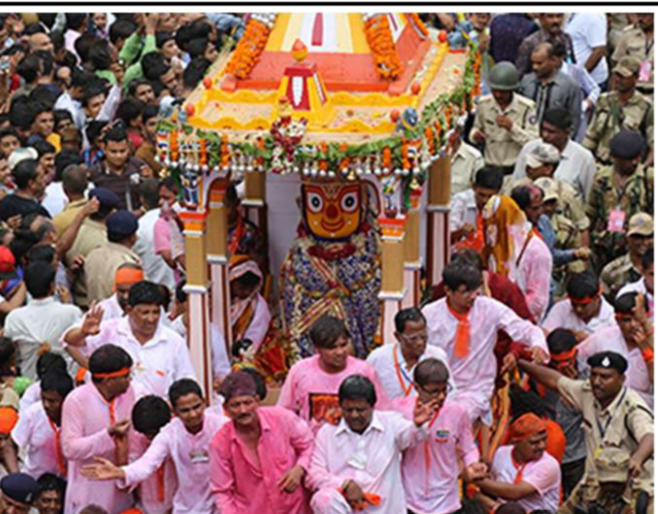
Shree Jagannathji temple

• Situated in Ahmedabad, Gujarat.

• Established 460 years ago – beside river Sabarmati.

• Main deities – holy trinity – Lord Jagannath, Lor Baldevji, Goddess Subhadra Ji.
 Idols installed in the temple by sadhu Shree Sarangdas ji.
• Sadavrat – yeoman service – meals every day to 1000 to 1200 needy, poor persons
including saints irrespective of caste, creed and religious distinction.

Rath yatra

• Also referred as Ratha-yatra, Ratha-jatra

  • ‘Chariot festival’ – public procession in a
    chariot carrying a deity.
  • • Particularly annual Rathayatra conducted in
    Odisha, Jharkhand, Gujarat, West Bengal
    and other East Indian states.
  • • Chariot carrying holy trinity and the
    Sudarshana Chakra.

• Shree Jagannathji temple Rathayatra – introduced in 1878.
 Conducted on the Ashadhi Beej every year.
 Starts with pahind vidhi – cleaning the way
for the chariots using a golden broom.
 Led by 15 to 20 elephants in decorative dress + group of trained athletes performing aerobatics + disciples with
decorative flags of the temple.
 Finally comes the Holy Trinity on chariots pulled by devotees.

Failures and shortcomings outweigh benefits:RERA

Background:

•Indian Real Estate sector- largely unregulated till 2016.
 Unfair practices affecting the homebuyers adversely.
 Need to regulate the sector to ensure transparency and accountability.

Real Estate (Regulation and Development) Act, 2016 (RERA)

• For reforming the sector, encouraging greater
transparency, citizen centricity, accountability
and financial discipline.

• An Act to establish the Real Estate Regulatory Authority and an Appellate Tribunal.
• Objective: To ensure regulation and promotion of
real estate sector in an efficient and transparent manner; protect the interest of the home buyers.

Key provisions of RERA

• States shall establish the Real Estate Regulatory Authority.
 Two or more States or UTs may establish one single Authority.
 Govt may establish more than one Authority in a State or UT.

• 31 States/Uts – notified rules under RERA.

• 30 States/Uts – set up Real Estate Regulatory
Authority.

• 24 States/Uts – set up Real Estate Appellate Tribunal.

Composition: a chairperson and not less than two whole time Members
 Selection Committee: Chief Justice of the HC/nominee; Dept Secretary dealing with
Housing and the Law Secretary.
 Removal: Only through an order made by the State- after an inquiry made by a Judge of the High Court
removal Grounds for : adjudged as an insolvent; convicted of an offence involving moral turpitude; became physically or
mentally incapable etc

Real Estate Appellate Tribunal

• A person aggrieved by order of the Authority-
may appeal before it.

Advantages: Timely delivery of apartments to
buyers, online availability of accurate details of a project, mandatory clearances and after sales services.

Disadvantages: Many projects outside the
ambit of the law; lack of transparency on the
RERA website.

Unlawful Activities Prevention Act And Watali judgement

Unlawful Activities Prevention Act And Watali judgement

• Enacted in 1967. 

• Purpose – provide for more effective prevention of certain unlawful activities of individuals and associations. 

• Deals with prevention of terrorist activities and related matters. 

• Powers to the central government:

              If declared unlawful – to impose all-India bans on associations.

THE UNLAWFUL ACTIVITIES (PREVENTION) ACT, 1967

2. Definition— (1) In this Act, unless the context otherwise

requires,—

(o) “unlawful activity”, in relation to an individual or association, means any action taken by such individual or association (whether by committing an act or by words, either spoken or written, or by signs or by visible representation or otherwise),—

(i) which is intended, or supports any claim, to bring about, on any ground whatsoever, the cession of a part of the territory of India or the secession of a part of the territory of India from the Union, or which incites any individual or group of individuals to bring about such cession or secession; or

(ii) which disclaims, questions, disrupts or is intended to

disrupt the sovereignty and territorial integrity of India; or

(iii) which causes or is intended to cause disaffection

against India;

•Can declare a person or an

organization as a terrorist or

terrorist organisation if Participating in acts of

terrorism.

 Prepares for terrorism.

 Promotes terrorism or is otherwise involved in terrorism.

 • Investigation of cases – State police and National Investigation Agency.

Issues in UAPA act 

• Act does not define terrorism.

 • Definition of unlawful activity – covers almost every kind of violent act. 

• No objective criteria for categorization of an

individual as a terrorist.

 • Does not provide any opportunity to the individual –

to justify the case before the arrest. Information declaring a person a terrorist – can be withheld for 6 months. 

• Those arrested can be imprisoned up to 180 days

without filing a charge sheet.

• Union Home Ministry’s data – in 2016 and 2019 only 2.2% of cases registered under the

UAPA resulted in conviction.

Watali Judgement

• Supreme Court’s interpretation of UAPA – affected all later judgements involving UAPA. 

• Accused remain in custody throughout the trial – even if evidence produced against the

the accused is invalid.

 Essentially excluded the admissibility of evidence at the stage of bail.

• Bail applications – courts must presume that every allegation made in FIR is correct. 

• Bail obtained only if the accused produces material to contradict the prosecution.

 Burden of proof rests on the accused.

 • Precedent used by High courts to unavoidably refuse bail.

 • Author – denial of bail for activist Stan Swamy- systemic abuse of majoritarian authority -disregard for the rule of law.

 Way forward regarding the judicial precedents – High courts should also examine,interpret and validate the constitutional laws.

Indian cabinet

Council of ministers 

The Constitution of India provides for a parliamentary system of government or Cabinet form of government modelled on the British pattern, the council of ministers headed by the prime minister is the real executive authority. 

Salient Features of Cabinet form of government

•Dual executive: There are two executives – the real executive and the Nominal executive. 

•Nominal executive is the head of state (president)   

•Real executive is the head of government (Prime minister)

•The party with the greatest representation forms the government

•Dual Membership – ministers are members of both legislature and executive 

•Collective Responsibility- PM and his council of ministers are collectively responsible to the Loksabha

The word Cabinet has not been mentioned anywhere in the constitution except in Article 352. Instead, the constitution gave detailed provisions regarding Council of ministers  

•Art 74 

◆There shall be a Council of Ministers with the Prime Minister at the head to aid and advise the President who shall, in the exercise of his functions, act in accordance with such advice

◆The advice tendered by Ministers to the President shall not be inquired into in any court

Art 75

Appointment: The Prime Minister shall be appointed by the President and the other Ministers shall be appointed by the President on the advice of the Prime Minister

  A person who is not a member of either House of Parliament can also be appointed as a minister. But, within 6 months, he must become a member of either House of Parliament, otherwise, he ceases to be a minister

EXAMPLE : Recent example of Uttarakhand CM

Strength: The total number of ministers, including the Prime Minister, in the Council of Ministers shall not exceed 15% of the total strength of the LokSabha. This provision was added by the 91st Amendment Act of 2003

Tenure: The ministers shall hold office during the pleasure of the President

Collective responsibility: The council of ministers shall be collectively responsible to the LokSabha

Every minister shall have the right to speak and take part in the proceedings of either House, any joint sitting of the Houses and any Committee of Parliament of which he may be named a member. But he shall not be entitled to vote.

Composition of the Council of ministers:

●The council of ministers consists of three categories of ministers are 

     1. Cabinet ministers

       2.Ministers of state  

     3.  Deputy ministers

The difference between them lies in their respective ranks, emoluments, and political importance

Cabinet ministers head the important ministries of the Central government like home, defence, finance, external affairs, and they play an important role in deciding policies.

Ministers of state are attached to cabinet ministers and they work under the guidance of cabinet ministers. However, MoS can also be given independent charge of the Ministry. They are not members of the cabinet and do not attend the cabinet meetings unless specially invited.

Deputy Ministers-Next in rank are the deputy ministers. They are not given independent charge of ministries but are attached to the cabinet ministers or ministers of state and assist them in their administrative, political, and parliamentary duties. They are not members of the cabinet and do not attend cabinet meetings.

parliamentary secretaries- They are the members of the last category of the council of ministers. They have no department under their control. They are attached to the senior ministers and assist them in the discharge of their parliamentary duties.

According to the Transaction of Business rules (1961), Prime Minister can constitute cabinet committees for smooth functioning of business of the government.

At present there are 8 Cabinet committees

•Cabinet Committee on Political Affairs

•Cabinet Committee on Economic Affairs

•Cabinet committee on Appointments

•Cabinet Committee on Security

•Cabinet Committee on Parliamentary Affairs

•Cabinet Committee on Accommodation

•Cabinet committee on Investment

•Cabinet committee on Employment and skill development

Cabinet secretariat:

The Cabinet Secretariat facilitates smooth transaction of business in Ministries/ Departments through enforcement of Transaction of Business Rules, 1961.  The Secretariat assists in decision-making in Government by ensuring Inter-Ministerial coordination. Cabinet Secretariat also provide secretarial assistance to Cabinet committees


Cyber attack

Cyber-attack

• Attack, via cyberspace – targets an enterprise’s use of cyberspace for the purpose
of disrupting, disabling, destroying, or maliciously controlling a computing
environment/infrastructure or destroying the integrity of the data or stealing controlled information.

• Leads to loss of money, theft of personal information, theft of financial and medical
information – damages reputation and safety.

• common types – Malware, Phishing, Man-in-the-
middle attack, Denial-of-service attack, SQL injection etc.

Malwares

• Malicious software.

• Software installed on a victim’s computer
without consent.

• Compromises the operation of a system by performing an unauthorized function or process.

• Breaches a network through a vulnerability –
typically when a user clicks a dangerous link or email attachment → installs risky software.

• Includes spyware, ransomware, viruses, and
worms.

Ransomware

• A type of malware – prevents from accessing someone’s computer or data on it.

• Encrypts files on a device and blocks access to key
components of the network.

• Result – computer becomes locked or the data is stolen,
deleted or encrypted.

• Extortion attack – payment demanded to unlock the
computer or access the data.
 Victim asked to contact the attacker via an anonymous email address or follow instructions on an anonymous web page.
 Payment demanded in a cryptocurrency such as
Bitcoin
Impact:
 Loss of money.
 devastating to an individual or organization.
 severely impacts business
processes.

• Infamous ransomware attacks
 WannaCry malware/ransomware – 2017
 Petya Ransomware – 2016
 Ryuk ransomware – 2018 etc.