Have you ever regretted for not picking up a book earlier? I sure have. Here’s an ode to one of these books!
‘Everyday I saw clouds dropping lower and lower like omnious waves. The hills were blue, their outline rimmed in black, and the trees were still. Then fierce, hissing rain would cover the land like the sea’.
I’m regretting now, I’ve never had bookish regrets like this for years. This book is an enchantress, an absolutely beautiful enchantress. The stories are lulling, it pulled me in to picturize the narration, to dream, to contemplate. The folklores, the enchanting description of nature, breathtaking portrayal of the Arunachal Pradesh gave me a book hangover. This book is certainly a tidbit for those who love reading contemporary Indian Writings in English.
PLOTLINE ANALYSIS
‘The Legends of Pensam‘ by Mamang Dai is a collection of short stories. They are all interconnected. There’s a story of a widow Pinyar and her son, interwoven in the folklore of supernatural being Miti Mili, the beliefs of indigenous people, their exquisite narration of the ancient stories are told in the mercurial prose.
The stories portray the colonial period, the Japanese wars, the landscape of Arunachal Pradesh, one of my favorite stories in this collection is ‘the words of women’. The story revolves around the rural women working in the mountains, cutting wood, cracking dry bamboo and carrying it back to the village, the raw portrayal of their demeanor. The generations of the families and their curiosity about learning the stories of the village are evocative.
CONCLUSION
Pensam means ‘In between’, the beautiful title syncs magically with the balmy stories. I picked this book up last month for the Northeast Readathon but I couldn’t read it, I was procrastinating relentlessly to read this beauty. I regret it now. I should’ve read this book earlier. Don’t be like Lavanya, if you are looking for a warm, sweet, beautiful short story collection! Get this right away guys!
Despite having a basic premise and a simple narrative with a predictable climax, the film doesn’t fail to bring you that smile you wish for, after having watched a feel-good inspirational film. It’s also a bonus if you’re interested in Indian classical music.
Our protagonist is Peter Johnson, a young man who is introduced to us as a diehard fan of Tamil superstar Vijay, so much so that he skips exams to watch his films first-day first-show. The transition that Peter’s character undergoes from a carefree lad crazy about a film star to someone well-disciplined and obsessed with music is the highlight of the film. What connects these two Peters is the love for beats, whether he played them on drums to celebrate Vijay’s success, or to become an ace Mridangam player. That’s what the title of the film suggests – beats are omnipresent, and there’s no particular way to follow them.
Sarvam Thaala Mayam
Interpretation
At its core, it’s essentially a Dronacharya-Ekalavya story, but has much more to offer. Although Peter surrenders himself to renowned mridangam player Vembu Iyer, he soon realizes that the path is going to be difficult. Society is cruel, and talent is not all that it takes to succeed. The commentary on caste/class distinction raises the obvious question: Isn’t art supposed to be for everyone who wants to pursue it? Peter’s father is a Mridangam manufacturer, who is in love with the instrument in his own way, not as a musician but as a builder. The father-son conflict regarding how to view the same object, one as a means of livelihood and the other as a subject of passion, is especially interesting.
I guess the film reinstated my belief about art being subjective, and the fact that rigidity in art is never a good idea. I would say I loved the film because it gave me what I wanted to see, which may not work for everyone. However, it is still a lovely watch, and I would ask you to go for it if you want something sweet and lighthearted. My only issue was that the female lead didn’t have much to do except playing a love interest.
In around 70 minutes, Picasso is a breezy watch. The story is simple, straightforward and heartwarming, and apart from the main takeaway that is the beautiful father-son relationship, you also get immersed in the world of Marathi Sangeet Natak, specifically the art of Dashavatar folk theatre as described before the end credits. Majority of the film is a detailed enactment of one such play, which keeps you yearning for a big screen experience of the same, if not the experience of watching such performances live.
Picasso 2019
Interpretation
But the father-son relationship is not the sole thing to explore here. It more of an artist-artist relationship, one extending a supporting hand to another, although it may not be mutual at the moment. Pandurang is a sculptor, and also an actor on stage. He provides for his family with whatever he earns, which is never enough. He has inspired his son Gandharva to paint, who has made him proud by winning a prestigious competition that can eventually give him a chance to learn art in Spain. But Pandurang cannot afford even the 1500 bucks needed to compete for the next round. Gandharva is heartbroken, but decides to spend the whole night watching his father perform on stage – one artist accepting his defeat, and eager to see the other flourish.
The scene in the frames above touched the right chords of my heart. We see a frustrated Pandurang trying to apply makeup on his face, while the cigarette dangling from his fingers makes it difficult for him. He knows he isn’t going to make much money tonight, and he is equally heartbroken as his son for having refused him. But then Gandharva helps out his father, painting his face as he would paint a canvas. Pandurang looks lovingly at his son and flashes a teary smile. Gandharva appears to be a true artist at this moment, whether he makes it to Spain or not.
Sheltered from world beyond the ocean surface, a young sea monster ventures to a small coastal town disguised as a human boy. This movie unfortunately falls to an unreasonably high standard having been produced by Pixar Animation Studios. Sparing a few exceptions, there is an expectation that any given Pixar film will be in discussion for best movie of the year. While Luca certainly will not be talked about in any such manner & pales in comparison to Pixar’s other creations, it is far from a bad movie. This movie offers enough charm & heart to be generally enjoyable to almost any viewer. The environment is established well & the characters are all relatively likable. The animation, while not superb, is competently crafted.
The humor is mostly effective, with the physical comedy rendering the best laughs for me personally. The only aspect that didn’t work for me was that of the emotional investment. While there is some tension to be felt throughout the conflicts, the motives are never relayed strong enough for me to feel the weight behind some of the decision making. The climax went for deep emotion that just never struck. I don’t mean to sound redundant, but this just failed to capture that special Pixar spark. Outside of that, there is nothing necessarily wrong with this movie. It’s a harmless, entertaining watch for a young family movie night.
Worlds divided amidst war, a driven young warrior sets off to find a legendary dragon in hopes to reunite the community as one. While Disney Princesses are a trademark in the studio’s animated productions, I can’t say modern original creations like Elsa or Moana have really captured that magical spark for me. Raya, on the other hand, turned my head. The characters in written & showcased in a way that demonstrates deep understandable complexities while also crafting her into not only a likable protagonist, but a badass heroine as well. Per usual with Disney & their related properties, the quality of the animation cannot go unrecognized either. The script itself has its fair share of issues, including gaping plot holes & dialogue that is clearly pandering towards younger audiences, but nothing ever really compromised the enjoyment of the experience in a distracting way.
No movie is ever perfect, but it’s a huge compliment when it’s flaws can feel insignificant in the grand scheme of things. The one part that I had a harder time looking past was the execution of Awkwafina’s character. While she is undoubtedly a talented actress & comedian, I feel like she was given too much improvisational freedom for comedic relief that it made her character feel somewhat shallow. The writing was there for the character but I still had a difficult time building an emotional connection. My last minor complaint is that the music choices occasionally did not suit the tone of a given scene. As I said before though, this movie left me feeling positive about it once the credits rolled. It’s an engaging story & I would easily recommend giving it a chance if you haven’t already.
‘What can one say of childhood grief? That it is lonely. That it is invisible. That it is denied the vocabulary granted to adult despair. That it shifts, mutates, but seldom vanishes. That it casts a mark. My sisters and I, were sorrow stained.’
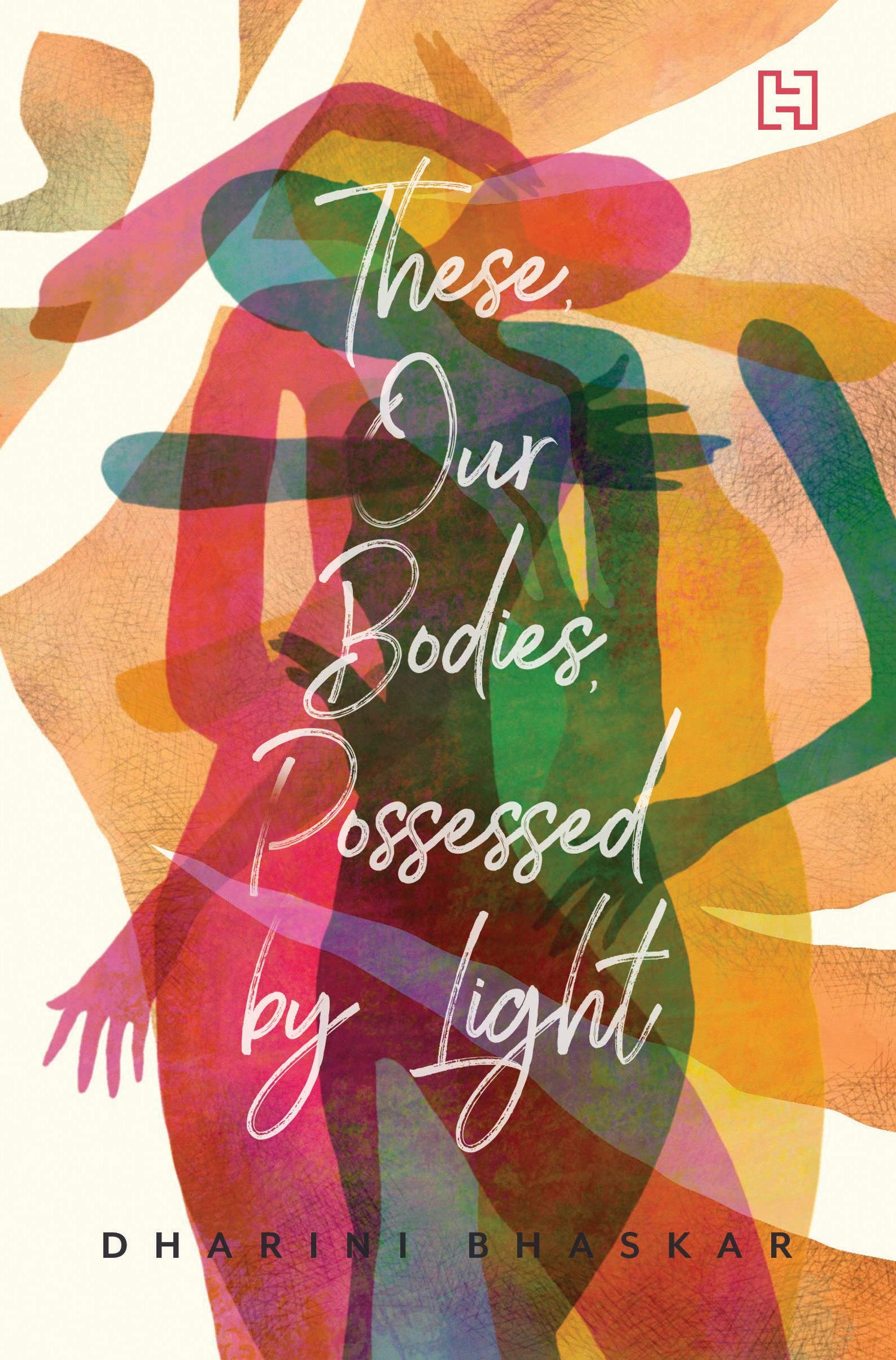
‘These Our Bodies Possessed by Light’ by Dharini Bhaskar.
Central Theme
This is that book you want to sink your teeth into, heedlessly you try to embrace the characters and before putting it down, your eyes won’t tear away from the pages. This is that cavernous, mercurial prose I’ve been wanting to read everytime I pick up a book. I was effortlessly sliding down into the souls of Saroja, Vanaja and Deeya, into their sorrows, happiness, unearthliness. Some of their emotions got no name, it strikes you hard, it’s evocative but it’s got no name.
Plot Analysis
Let’s start with Amamma, Amamma in 1943 as Saroja, brushing her pinky finger with Venu’s, feeling the utmost ecstacy and suddenly Ranga overstrips him and imprisoning Amamma, she’s now traveling with Ranga in a bullock cart, faraway, faraway from Venu. Saroja becomes Amamma and Amamma forgets her memories. Her story ends here with indelible pain and forgotten memories.
Karthik writes letters to Vanaja in 1980s,’Dear Vanna’ he starts, he scrawls with love, he weds Vanaja and leaves one night, leaving his three children, Karthik goes away, farway from Vanna, somewhere colder than Bombay. Here, Vanaja scrawls, ‘Dear Karthik’ she starts, and ends every letter with ‘Is it cold? Hope to see you soon in Bombay’. Vanna becomes Vanaja, her story ends here with indelible memories and forgotten pain.
Deeya is now struggling to find premonition of love (vaguely translated from Japanese phrase ‘koi no yokan’) in an old man Sahil, her love for Sahil suffocates her, and Deeya’s story doesn’t end here, unlike Amamma and Vanaja, Deeya’s story starts in the ending.
Closure | These Our Bodies Possessed By Light – Book Review
Every page has a strange evasiveness, the story of these three women and many other women in this book will not get erased from your heart for years, it stays there. It stays in your heart and asks you to draw a conclusion.
‘These, Our Bodies, Possessed by Light‘ by Dharini Bhaskar is an ambiguous story of broken souls. It encapsulates a lot of emotions, as I have mentioned above some emotions are nostalgic and anonymous, the father issue of Deeya and her struggles in the relationships are strikingly profound. Dharini Bhaskar has weaved a storyline that bewilder and astonish you at the same time.
“He realized that any form of pain needed time to turn itself into art… In the cold face of tragedy, in the heat of pain reality, no one could express its gravity in poetry or any other form of art. Time has to work on sense of loss, squeeze the heart over lonely days and nights to churn out art from pain”
Solitude has two different interpretations, it sculpts your soul to experience the most beautiful occurrences in the world, it makes you contemplate your existence, Solitude has an immense power to transform you, on the other hand, Solitude turns you cold, rigid, numb, the pain it’s inflicted upon you never fades, it deteriorates your heart and makes you yearn for the beautiful memories.
‘Shamal Days’ by Sabin Iqbal cloaks the second interpretation, this book is petrifying and strikingly veristic. Thinking about the novels I’ve read on expatriates’ issues, those novels intrigued, fascinated and overwhelmed me, but ‘Shamal Days’ emotionally destroyed me. I’m still traveling with Abbas and his regrets. I carry the cumbersome thoughts inside my mind, the thoughts of Abbas, Ratnam, Matt, Abimanyu, ‘Mirror’ magazine, Abdullah and Ed. The characters are flickering inside me.
The pivot of the story
This book unravels the horrifying issues that were happening in 1990s along with the life of our protagonist Abbas, set in Arabian Gulf, the story is told in a haunting, atmospheric narration. Abbas, our protagonist works at a small newspaper ‘Mirror’ in an anonymous country in Arabian Gulf. ‘Mirror’ is a hub of expatriates, the journalists are from different regions, China, India, Africans, Pakistanis. Abbas, who lived a lonely life since his school days, decides to work in Arabian Gulf without settling down in Allepey, his hometown in Kerala, India. Abbas travels with guilts, regrets, longing for those days he’s lost. His dark memories, memories of cheating, subjected to abuse in his childhood and the hoaxer inside Abbas plagues him.
From searching Saddam Hussain and arresting him in the end, the story delineates the political issues alongside the regretful decisions of Abbas. Sabin Iqbal has weaved the convulsing political issues with the disturbing personal life of Abbas. The characters are divergent, repulsive and conflicting. The realistic portrayal of expatriates in the Arabian Gulf is astonishing, the author has also created the backdrop with the Palestinians’ struggles and Zionists’ attack on Palestine, though the author has not extensively portrayed in the novel, the author sends a shiver down our spine in the very first page.
Conclusion
The novel ends with the quest, with a strange determination, the audacity of the few characters are flickering in the end, the novel is certainly a page turner with the Abbas’ interview with Saddam Hussain, the Sheiks in the Arab, the government controlling journalism in a desert country and the unforeseen betrayals of the characters. ‘Shamal Days‘ is haunting and idiosyncratic.
It’s incredible how one can get inspired by a bundle of words that are woven into a book. Books are an ocean of knowledge, some give you the scientific edge while some teach you the best life experiences. It’s the way that these books manage to hover around your peripheral vision even after you put down the book that gets me flustered each time. With that being said, here are my two new picks for reading!
This massively helpful, lucid and honest book by Vex King holds space for you to achieve genuine inner healing, let go of trauma(subtle or significant) whilst letting you be yourself. Taking charge of your inner healing is one of the best things you can do for yourself. If you’re willing to do the work, this book helps you achieve that and more with brilliant actionable techniques that would transform your mind, heart and soul! This outstanding read gently helps you to overcome the hurdles that sit deep in the mind, allowing you to unlock your own inner superpower with compassionate understanding, love and heart wrenching yet beautiful illustrations. He eloquently puts life into perspective while debunking some of the misinterpreted perspectives.
The book is aptly named, because going through this process and finding release from your inner pain really is like a high-a feeling of liberation, empowerment that’s addictive! So, get ready to make space for more joyful and immersive life experiences. Here’s to fulfilling healthier relationships and most importantly being a much better you, the one you deep down know, you are! This book is for everyone as we all have surely been through something unpleasant at least to some degree which governs our lives in a not-so-positive way and to change the fact – please do get this book right away!
Have you read about your country’s history extensively? (Other than reading in the text books)
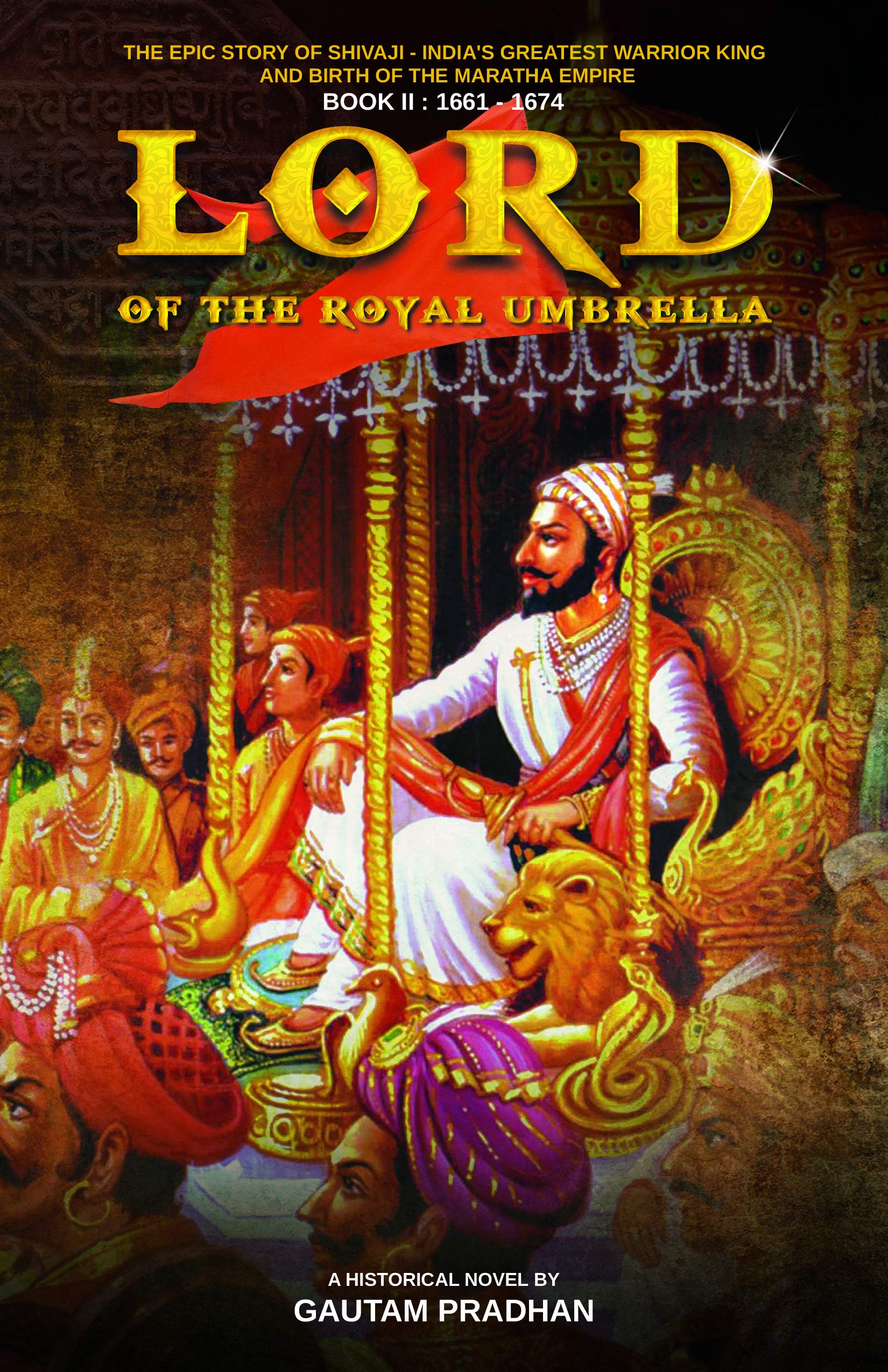
Lord of Royal Umbrella by Gautam Pradhan is a sequel to ‘300 Brave Men’. These two books narrates the story of a brave Indian king Chhatrapati Shivaji. Reading the first book was an amazing experience for me as reading about Indian kings always piqued my curiosity. ‘Lord of the Royal Umbrella’ isn’t an exception. This book elaborates the prowess of Shivaji and the obstacles he’d encountered by the imperial powers. The book starts with the gripping setting in the fort of Chakan, North of Pune. Shivaji’s army skirmishes against the imperial Mughal army, the stoical acceptance of Shivaji’s army will send goose pimples all over the readers.
‘What kind of men’ are these, Shaista Khan wondered. He could not help but admire the stubborn resilience of Marathas.’ The story flows with the colossal setting and extraordinary diction, the flow of the incidents and the language are perfectly adorning this grand historical novel.
The author has extensively sketched the characters pertaining to the grandeur of the storyline. He makes the readers view the landscape with his embellished and picturesque writing style. Writing a historical novel certainly has its own challenges, the perfect portrayal of the Shivaji’s character and the historical events apprises the readers about the boundless research work of author. This book also has the illustrations of maps that literally made me visualize the historical events mentioned.The characters are sketched quintessentially with exquisite descriptions of their dispositions.The tendency of the characters is pertaining to the mood of a typical historical fiction.
The story of ‘Lord of the Royal Umbrella’ is not merely elaborating the battlefield, the storyline also revolves around Shivaji’s astuted temperament and judicious sovereignty. The political moves of Shivaji are certainly quick witted. Gautam Pradhan’s writing style heightens the intensity of the story. If you are looking for a colossal historical novel, I would recommend you this book.
Comment down below if you’ve got any awesome recommendations too!
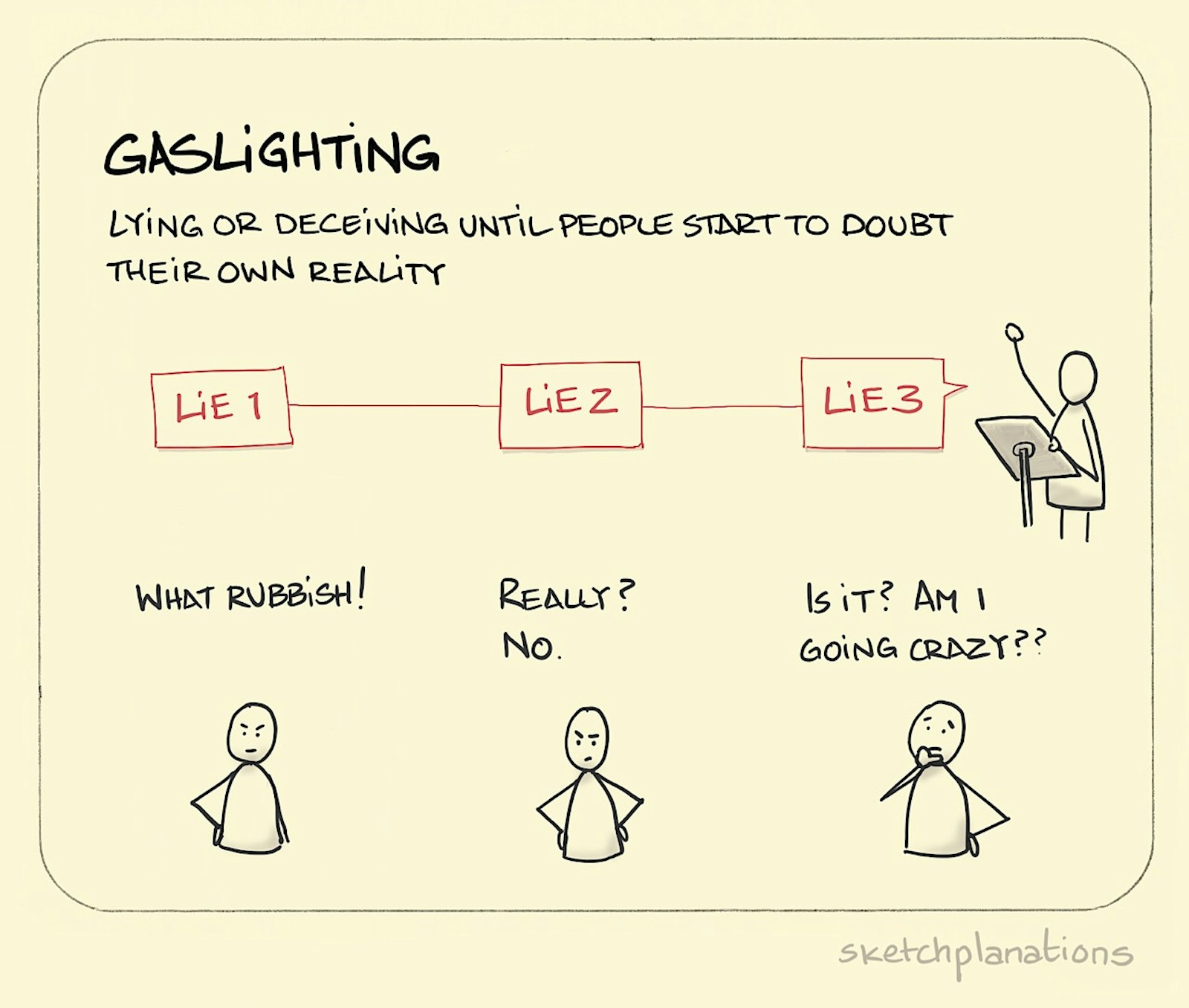
Talking about ‘GASLIGHTING’, I got acquainted to this term in 2020 when I was reading a book called ‘Milkman’ by Anna Burns, the storyline revolves around the people of an unnamed town invalidating the protagonist’s feelings through hearsay and gossips. The prose of Milkman suffocated me because of excruciating gaslighting and strangling circumstances.
Gaslighting is an emotional abuse, where the abuser make a victim feel like ‘Everything is happening inside their head’, Gaslighting invalidates your emotions, manipulate your feelings. Sometimes, you might gaslight yourself in the journals. Journaling might feel therapeutic to some, few might not feel comfortable with journaling their thoughts, and that’s completely okay! However, There come times when you try journaling to feel calm but instead of feeling calm, journaling just made you anxious! that happens because you are constantly gaslighting yourself in your journals.
Self- gaslighting in journals
You are invalidating your thoughts, your feelings and emotions, you write as if your emotions are insignificant, but every emotion of yours is valid. You relentlessly repeat what others feel about you in your journals. ‘May be that is who I am’, ‘She/he is right’, I’m not supposed to feel this way’, ‘I’m overthinking a lot like how my friends are accusing, ‘I should not feel overwhelmed’
If you are journaling like this, you are definitely doing it wrong. Remember, journals won’t judge, you don’t have to please your journals. Don’t ever invalidate your emotions. Write whatever you feel in your journal, not what others feel about you! Whatever pain it is that you experience, remember, the poison leaves bit by bit. Be patient, you’re healing. The more we fight our pain, the longer it remains within us. If ignored, you’ll find yourself feeling irritated often, having angry outbursts or crying at small things.
How do I overcome it?
Even when sometimes it feels like there is nothing but emptiness, nothing to continue for, or the fire you once had within you has gone out, don’t give into the thought that you will feel this way forever. Thoughts pass, feelings change, hearts mend & perspectives gain clarity – it just takes a little trust, hope and meeting yourself halfway. Especially now while we have the gift of time, reflect on how you were living before lockdown, analyze the people you spend time with, the environments you spend your time in, the food and drinks you consume, the job that you do, the conversations you have, the TV/music/reading materials that you invest your time in – observe them – are they helping you or are they harming you? Read more about how spending time on good things plays a massive role here.
Everything you engage in today will have an impact on your tomorrow. We’re so busy telling the world to be kind, yet we have such little compassion for ourselves. If you do one thing for yourself today – give yourself a break.
Comment down below if you have any suggestions or just feel the need to be heard. We’re here for you.
This insightful read introduces and guides you towards inculcating positive steps that benefit both – the planet and us. It’s a complete guide to a zero waste lifestyle. Being more mindful about our consumption and striking a healthy balance between what’s good for the environment, what’s good for us and a harmonious co-existence with all other living beings would be the takeaway!
This essential book is authored by 2 passionate sustainability enthusiasts – Sahar Mansoor and Tim de Riddler who draw inspiration and illustrate their personal stories to strengthen their case. I have been wanting to move towards a more sustainable lifestyle for a while now so the tips mentioned in the book were pretty helpful and challenged my take on certain topics which helped me realise my standpoint and where I need to be headed.
Take it slow, read every chapter which is topic-specific, reflect and start by implementing at least one or two if you’re just starting out or a few new ones if you’re already begun your sustainability journey. Every little deed towards a greener lifestyle goes a long way and if every little choice we make is rooted in respecting the diversity of our incredible nature , we’d be making this world much better place to live in.
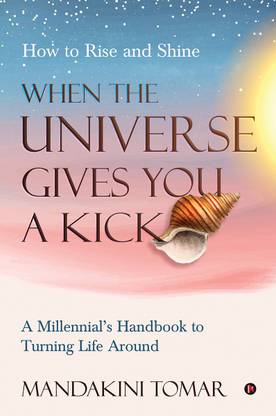
This is a compelling, positive, comforting and outstanding book by Mandakini Tomar which aims at raising our consciousness and uplifting our souls by getting us back in touch with our spiritual roots. It helps the reader think a little more clearly about the power of choices, defining the right values, importance of self-awareness, necessity for self-transformation and most importantly to align yourself spiritually and emotionally! With a pragmatic approach this book is remarkably transformative yet simple. Turn it over to any page and you’d be inspired!
I loved how inclusive and diverse the author has been in laying out facts and drawing wisdom from, whilst covering the entire spectrum of realizing our inner power! It’s an extremely insightful ,remarkably inspiring and lucid read that helps you in a holistic way and elaborates on many topics such as love, intuition, ego, flexibility and merged within some fascinating lines in inspirational crafted approaches! The book has a trinity approach : STOP, START & LEARN, and it has a rich compelling prose, poetries, dialogues that helps us to understand every detail and soak in the main concepts way clearly.
Comment down below your favorite books of the season!
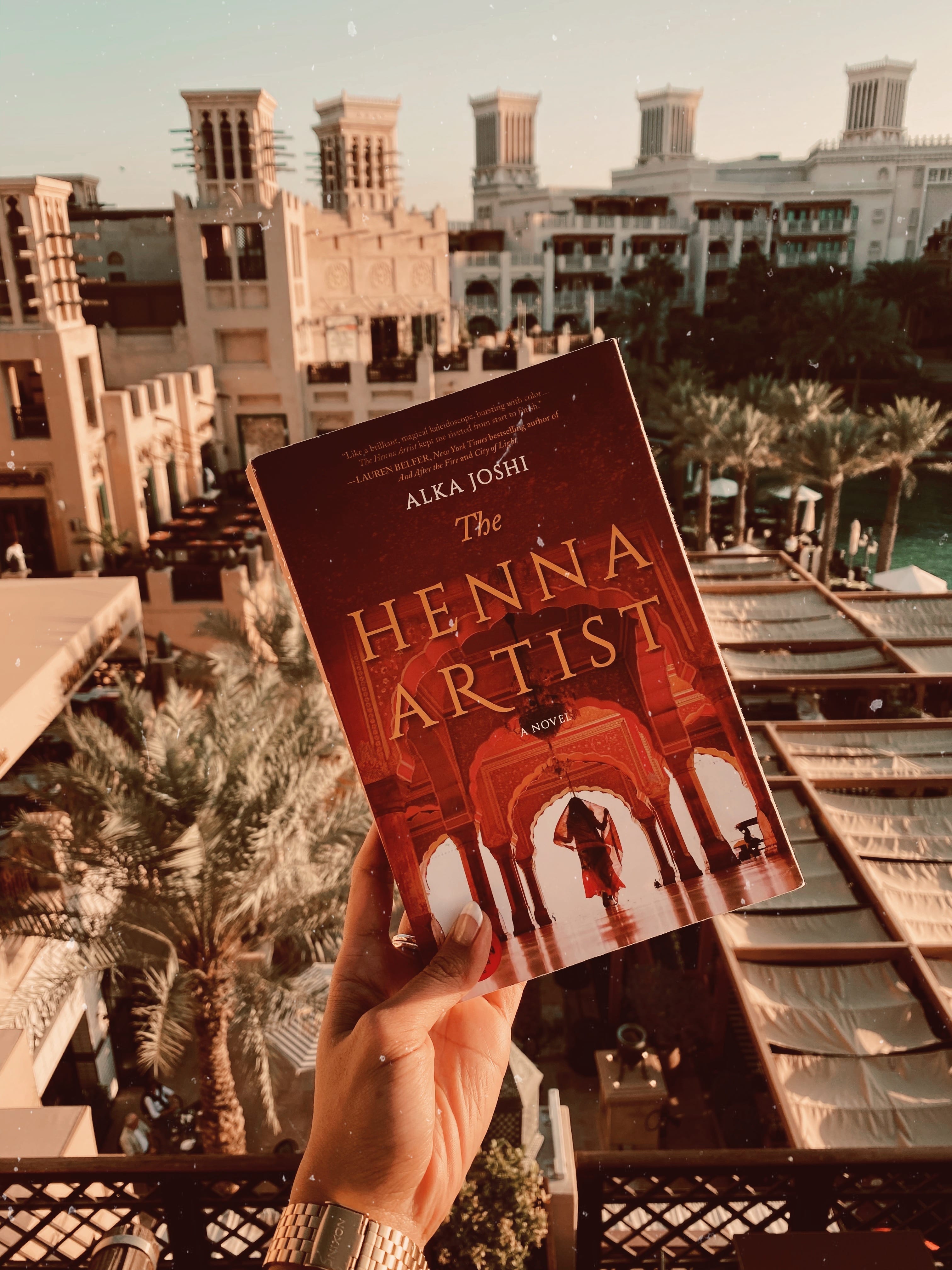
The Henna Artist is Alka Joshi‘s debut novel that was published in early 2020. It instantly became a NY best seller, a Reese Witherspoon book club pick and currently being developed into a TV series. Furthermore, it was longlisted for the Center for Fiction First Novel Prize.
Why may The Henna Artist be worth your time?
The Henna Artist is a captivating, engrossing and beautifully written historical fiction set in India in the 1950s.
The story follows Lakshmi, a strong-willed and decisive young woman who ran away from her marriage and family to the pink city Jaipur to become the talk of the town henna artist, herbalist and confidante for the elite circle of Jaipur ladies. Lakshmi’s talent, together with her determination and focus, rewarded her with the security, freedom and independence she strived for. A major life event takes place in Lakshmi’s personal life that forces on her new circumstances requiring tough decisions. Later on, we realize that this turning point was actually the catalyst for Lakshmi to reevaluate her priorities, free herself from the limitation of attachments and become closer to her true self and her real purpose.
Shedding light on social issues
This is a story abouy struggle, freedom, women’s choices, prostitution, abortion, ethical codes, early marriage, teenage pregnancy, perseverance, resilience, self-worth and forgiveness. It is a story about womanhood.
The Henna Artist is a compelling story with vivid rich descriptions that has the power of transporting the reader to that era written in a way that triggers all senses to truly enable the reader to picture the events and feel with the characters. The book is packed with cultural details such as henna art, natural and herbal medicine, Indian cuisine and family customs and traditions.
Closure
I truly enjoyed reading this novel and it made me think a lot more about my roots. Moreover, I am eagerly looking forward to reading the recently published sequel ‘The Secret Keeper of Jaipur’.
Comment down below your review of the book or suggestions for my next read!
The study of culture can be collocated along two tenacious and prominent themes: Diversity and Change. A person’s upbringing, and living environment is what makes them diverse from others. It is the differences between all cultures and sub-cultures of the worlds regions. People’s need to adapt and alter to physical, biological and cultural aspects to survive is the pivot of the second theme, change. Culture usually changes for these two reasons: selective transmission or to stand the test of changing needs. This means that when there is a dearth of a food source, we change the way we live. There could be forced redistribution of, or relocation from ancestral domains due to external and/or internal forces.
Culture is the framework for our emotive and behavioural norms. Our culture can ascendant neural activity during various cognitive functions. The Cultural neuroscience of the self report by Shinobu Kitayama and Jiyoung Park suggests that culture “both constructs and is constructed by the mind and its underlying brain pathways”. According to this report, the mechanism has to do with the brain’s pliability (its ability to adapt to long-lasting engagement and have pre-formulated behavior stores as muscle memory. The capacity of our brains to undergo structural changes from recurrent daily tasks is commendable. A link to the research has been attached below.
Many neuroscience researches are spreading knowledge on how culture shapes our functional anatomy, prejudices our brains, controls our neural activity, and even impacts the way we represent ourselves and others in our minds. That being said, culture is learned, dynamic, symbolic, shared ad systematic. Edgar Schein right said, “Culture consists of the shared beliefs, values, and assumptions of a group of people who learn from one another and teach to others that their behaviors, attitudes, and perspectives are the correct ways to think, act, and feel.” Attached below is a link to an article about his culture triangle.
Cultural exchange must be viewed as a form of cross-pollination of the society. Culture and language are reflections of one another, for better and worse, and so we must take great care with the impact of our words.
To gain an understanding of the usage of the word “temper” in the phrase “to lose one’s temper”, it would be useful, first, to note its appearance as a segment in the words “temperature”, “temperate”, and “temperament”.
Etymology refers to the study of the origin of a word and the historical development of its meaning.
The Etymology and Science
When we dig into the etymology of the word “temper”, we are led to examine its origin in the context of humoral pathology (four humors) – as developed in ancient Greece and Roman societies, who in turn borrowed from the much older Ayurveda system of “tridoshas” (vata, pitta, kapha). Aristotle focused on the four elements (air, fire, water, earth) as the building blocks of the universe (Plato developed it further). Hippocrates (who was greatly influenced by Ayurveda) developed the theory of the four humors – blood, bile, phlegm, and water. These and other thinkers believed that the four elements and the four humors determined the behavior of all created things, including the human body. Some of the noted thinkers of the time characterized all behavior into four types: melancholic, phlegmatic, choleric, and sanguine. The information about Hippocrates’ theory of four humours has been carefully studied from https://exploringyourmind.com/hippocrates-theory-four-humors/
The four behaviours of a human
Thus, the overall behavior of a human or overall disposition could be described as “temperament”. Subsequently, a 16th century Roman physician, Galen, proposed that the temperament was dependent on temperature. Therefore, he stated that all sickness was “distemperature”. Attach below is a link to help you learn more about etymology and its sublime magic!
We can now make the connection between temperate (which generally refers to mild – neither too hot nor too cold), temperature, and temperament. Seen in this light, losing one’s temper refers to losing that temperate state, and moving to distemperature (both in physical and mental sense) – and that was perhaps most outwardly manifest when someone exhibited anger.
You embark on a journey knowing the destination inclusive of tribulations and rewards enroute, and chart out a plan accordingly. When destiny devices digressions from the plan, you adjust your sails and navigate in the directions of the wind. You realize as you sail, that the tides have been high and low; the sea and the weather, unpredictable; making the journey more challenging. The expedition keeps unfolding immeasurable joy and inexplicable pain as you are completely unaware of destiny’s disposition. At times, the turbulent waves rock your confidence to sail further and at times, the placid tides rock your mast gently to keep you afloat. The sea is sometimes fierce with thunderstorms, and the tilted sideways push you overboard, but sometimes calm and quiet, and the lucid sky above lulls you. The journey, invariably, becomes both dicey and appealing. The Sirens lure you, the lotus eaters’ land sedate you, Circe enslaves you for a while and the Cyclops scare you to death. Caught in the storm and very rough waters, smiting the sounding furrows and visiting Hades momentarily become regular maneuvers. Nonetheless, your ship is cruising safe because on the cruise to unknown destinations, you aren’t alone. Since the day you set foot to embark on this mysterious journey, there have been sailors of various stations and ages travelling alongside.
What do I encounter along the way?
Some helped you on the poop to hold the mast against heavy storms, some helped you to anchor the ship on shores you needed to explore; the aged and experienced helped you with the compass, the abled ones bailed out the water from the vessel and the concerned ones lent their shoulders when you were sea sick and tired. Of course, you had a few who left you in lurch when the ship was sinking, a few who moved ashore and onto another ship for better cargo, a few who used you as a bait to catch a big fish and a few who took away your life jackets letting you come onboard in fear and agony. Nevertheless, you have been successfully navigating to reach newer lands because the ones who are guarding you are comparatively large in the barge to the few, who have made you weak and killed your confidence for wanton joy of theirs. With nothing to defeat the might of your journey, you continue to row rigorously and rhythmically to the tunes of the reassuring, ravishing seas. Half-way you pause the journey on the calm seas, and gratefully thank both the ones who have helped you sail at ease and the few who have taught you the endurance to weather any storm. The cruise has crossed arches of achievements, disappointments, success and failures and has managed to stay afloat, and with age and experience you realize that though you cannot change the direction of the winds still you can adjust your sails and make your journey exciting. You are the captain of your ship, so continue ‘To strive, to seek, to find, and not to yield’.
Perspective is a cathartic thing. We all have it, knowingly or unknowingly. It is like a background process that keeps running no matter what. Now what is it exactly? In my view, it’s sometimes nothing more than a preconceived notion.
It seems to be the thin line between sanity and insanity. What’s correct in my perspective might not be correct in yours.
I am a person who believes that anything that doesn’t touch you from the inside, that doesn’t make you think can’t hurt you physically and mentally. The greatest thoughts are the ones which we have when we are silent because that’s the time when we introspect. We keep analyzing everything. That’s my perspective.
Perspective, perspective, perspective…everything you do is either right or wrong in someone’s perspective, including you. All these are notions that are influenced by our cultural background, the people around us and our inner thoughts. All these notions make us jump to conclusions that are often false.
Considering your perspective as the only right one is where we mess up. If I have a notion that dark skinned people aren’t beautiful, then how am I ever going to admire the smile of a dark skinned child? How can I admire the minute details of beauty that nature has bestowed upon us? How will I be able to walk barefoot on rain-soaked grass and enjoy it?
The best thing that we can do is to understand there is beauty in everything and everyone. That will put so many things into place and make this a world for everyone to truly live in and not jst survive. Analyze things, think about them, try to look at the bright side. Understand why you love or hate something. Do not let these notions take control of your thoughts.
Empty your mind before you start something because it helps to not have a pre-conceived notion about something. Allow yourself to see more than just what your eyes want to show you.
Why was the stock market roaring in the early 2021? How did the American video game retailer company’s shares whipsaw from $17.5 USD to $347.51 USD in a matter of weeks. How did a bunch of investors pack in loads of cash while one prominent hedge fund got a loss of more than a 100 Billion USD? How did ‘Big Short’ investor Michael Burry make a 1,500% gain on GameStop during its Reddit-fueled rally.
Find out the answer in this article. Let’s understand a few terms before we get down and dirty!
A hedge fund is an alternative investment that is designed to protect investment portfolios from market uncertainty, while generating positive returns in both up and down markets
Short-selling: The reverse of the generic buy low, sell high – sell high, buy low. For example, if the gold price for the day is Rs.50000 per 10 gm and you believe the price is going to drop in a couple of months. You borrow the stocks, sell it and buy it back later when it is Rs.45000/ 10 gm, thereby making a profit of Rs.5000.
Negative float position- in simple terms, negative float implies that withdrawals are exceeding deposits in an account. Short sellers borrow more stocks than there were shares available to trade in the market.
GameStop, an American video game and gaming merchandise retailer announced the closure of many stores and shares that could be bought for as low as $3.25 USD on Jan 12, 2021. Opportunistic hedge funds thus began short-selling GameStop. The good people of r/WallStreetBets—an irreverent subreddit for stock market noticed that the Melvin hedge fund and other firms had taken so many short positions that there was a negative float position created. Invigorated, a huge number of them plotted to buy the stocks, but not sell them so that the hedge funds don’t get to buy them and return the shares, thereby incurring losses. This was a massive supply-demand gap case. This made the share prices skyrocket from $17.5 USD to $34.7 USD to $50 USD to $150.3 USD to $347.51 USD. Melvin’s has closed its position now but at a huge loss.
Michael Burry, the founder of the hedge fund Scion Capital, which closed in 2008, invested 16.46 Million USD on GameStop, earning back 260.6 Million USD, giving him a margin of 1500% profit.
Hedge funds short-sell shares and create a pressure on it so that its price keeps falling down for their own profit which drives losses for many retail investors. Melvin’s hedge fund had also short sold Tesla’s shares a long time ago which made the prices fall for a bit. Tweets from Elon Musk and Venture Capitalist Chamath Palihapitiya (Former senior executive at FB, CEO of Social Capital) encouraged the crowd furthermore to take manipulation of the stock market out of the hands of hedge funds and into the hands of “the people.”
That’s how the power finally went from the rich to the common!
Sita Devi, Malala Yousafzai, Arunachalam Muruganantham, Justin Trudeau, Jim Parsons – they have one thing in common – Feminism.
Equality is like gravity. We need it to stand on this earth as men and women, and the misogyny that is in every culture is not a true part of the human condition.
Joss Whedon
A whole lot of us choose not to be called feminists due to the envelope of wrong teachings of ancient patriarchy. Despite standing for nothing but inclusivity and equality, it is seen as a gimmick to assert the dominance of women over men, something that it is just “anti-men.” This is the root cause of the negative connotations attached to feminism. Years of wrong, limited portrayals in the media have stereotyped a feminist as the one uncouth woman who drinks, smokes carelessly, abuses shamelessly, does not understand the need to get married, hates pink, and loathes men. That is definitely not what feminism specifically stands for.
lindgrensmith.com
The #MeToo movement has made a ton of heads turn and as it forged ahead, feminism reached the level of cultural relevance that it hadn’t been subjected to in years. Now, a major item of cultural discourse, it has definitely led to the ‘clear as mud’ conversations as quite a lot of the population was unaware of the basic terminology of feminism.
One can’t give a single definition to the word ‘feminism’, but in short, it signifies putting a full stop to gender discrimination and focusing on gender equality. There’ve been different types of feminism that’ve come into the picture. Instead of describing them separately, feminism was divided into different phases based on the timeline called the “waves of feminism.” You might think that this history is a straightforward arc. The reality is that there are many sub-movements building on (and standing against ) each other. That being said, the wave metaphor serves as a good starting point. It doesn’t tell the whole story, but it helps outline it.
The First-wave feminism of the early 1900s had a fairly simple goal: have society recognize that women are humans too, not property. However, it only focused on the privileges and freedom of white women primarily.
The Second-wave feminism of the 1960s, built on first-wave feminism challenged women’s roles in the society. Traditional gender and family roles were questioned and the theory of Queer population was more in discussion. Women were now given access to male-dominated spaces, promoting equality. The system was questioned of being inherently patriarchal and that only an overhaul could liberate women.
While first and second-wave feminism had largely neglected racial disparities within gender, the Third wave brought attention to it. The term ‘intersectionalism’ was brought into the picture – how different kinds of oppression – like those based on gender and race – intersect with each other.
Social media has lobbed the movement into the technological age. The fourth wave emphasizes on inclusivity and trans rights are a big part of the conversation, too.
Half-knowledged people say that the misogyny faced by women today is idealized by Sita who faced similar things in her life too. The despotism tolerated by Sita has set a baseline for torment in our culture for the women to follow today. However, this is untrue. The truth had just lost its translation. She had her own fight against the patriarchal world but she rose above her status to show free will and courage to stand up against injustice. In the end, she stopped looking for any saviour and reclaimed her honour and defied what she thought was wrong.
Feminism does not associate itself only with equality of women. It addresses the issues of caste, race, disabilities, and more. By the same token, it works to liberate men from the toxicity of society. It serves as a means to uplift marginalized people who were denied equality historically. Hence, trying to shun it by using the concept of ‘equalism’ would be like overlooking the centuries of trauma and injustice. Its aim now is fighting kyriarchy ( a social system or set of connecting social systems built around domination, oppression, and submission) as well.
It’s the perception of feminism that needs a change. The only bad guy here is the structural oppression which affects every person – man or woman, in some way. A man tied in the shackles of patriarchy needs a voice too and that’s the perk of feminism. It is time to stop looking at it in the wrong light as it would only drive you away from the reality of intersectional problems.





















 Eduindex