MAGGIE JORDAN BY EMMA BLAIR

ABOUT THE AUTHOR:

Emma Blair was a pen name for Scottish actor and author Iain Blair, who began writing in his spare time and whose first novel, Where No Man Cries, was published in 1982. During a writing career spanning three decades he produced some thirty novels, but his true identity remained a secret until 1998 when his novel Flower of Scotland was nominated for the RNA Romantic Novel of the Year award. He was one of Britain’s most popular authors and his books among the most borrowed from libraries.
Iain Blair died in July 2011.

ABOUT THE BOOK:

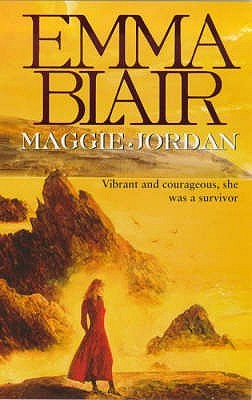
The book Maggie Jordan by Emma Blair is about a vibrant and courageous woman Maggie Jordan named after the book. The book was originally published in 1990. Set in the 1930s and 1940s, “Maggie Jordan” traces the life of a young Scottish woman from the carpet mills of Glasgow to the battlefields of the Spanish Civil War. Maggie Jordan. Praise for Emma Blair:’An engaging novel and the characters are endearing – a good holiday read’ Historical Novels. All the tragedy and passion you could hope for .Romantic fiction pure and simple and the best sort – direct, warm and hugely readable. Women’s fiction at an excellent level. ‘Emma Blair explores the complex and difficult nature of human emotions in this passionately written novel’.

THE PLOT:

Seventeen year old Emma Blair was living with her beautiful family and also working in The Haven Hotel in the village of Heymouth. The time when most of Maggie Jordan’s family are killed in the freak flood in the small coastal village of Heymouth. Now her only living family is her elder sister Laura and her husband John McNair with their twins. In the middle of all the unfortunes in Heymouth, Maggie Jordan encountered Howard Taft, the journalist who is one the persons, going to be the reason for her happiness. After the loss of her family Maggi Jordan moved along with her elder sister Laura and John to Glasgow. There she managed to find herself a job in Glasgow carpet mills. But her poor fate also followed her there in the form of John who tried to rape her. In between she met Nevil Sanderson in Glasgow carpet mills where she is working, with whom she got engaged.

Nevil Sanderson suddenly decides he must go to Spain and join the Republicans in their fight against Franco. Although she struggles on without him, Maggie eventually realises her place is by his side and journeys to Spain to join him. But the newly promoted Nevil has become distant and ruthless, and is fiercely jealous of her new friendship with American journalist Howard Taft. Years later, married and with an eight-year-old daughter, Maggie has returned to Glasgow. Astonished when Howard reappears, bringing light and laughter back into her life, she is forced to take decisions – decisions which threaten to destroy even the vibrant and courageous Maggie Jordan.

FAVOURITE LINES:

‘But all the middle of the valley was a place to rest in, to sit and think that troubles were not if we would not make them. To know the sea outside the hill, but never to behold it”

“Every time he looked at the line and wizened face it was as though he’d been punched hard in the stomach”.

“That was a job which never got any easier, particularly where children were concerned. Just her luck to be in charge of the ward that morning. Just her rotten luck!”

The author was trying to tell us the struggles and how much pain a woman can bear. But he dragged a little extreme by playing with a woman’s pain. After all she is a human.

WHEN AND HOW TRANSPORT AND COMMUNICATION CAME TO EXISTENCE?

The Victorian era witnessed great strides been taken in the fields of transport and communications. There was a remarkable improvement in the social life of England during the 19th century. With the introduction of steamships, railways, penny post, telegram and cables the entire society underwent a dramatic change. Life I was never the same again. The slow pace of the stage coach disappeared and the age of speed arrived.

RAILWAYS THE MOST IMPORTANT MEANS OF TRANSPORT:

The most important means of transport in the Victorian period was the railway. It was the outcome of experience conducted to find the best method of moving coal from mines to places where it was required. As Trevelyan puts it “the railways were England’s gift to the world”. The first efficient steam engine was made by James watt in 1769 this engines which was stationary were used at first to pump water out of mines or to operate the power loom in factories it was only later that these engines were used in vehicles the year 1819 is an important one in the history of steamship because the Atlantic ocean was cross for the first time by a ship fitted with steam engines “The Savannah”. The story of the railways is even more exciting. It brought about a complete revolution in the way of life and in the landscape of the country. Richard Trevithick what’s up pioneer of locomotives in 1804 steam carriage transporter carload of passengers for the first time. George Stephenson produced an engine which was used chiefly to carry coal. The first two railways lines in the world were built one between Stockton and Darlington and another between Liverpool and Manchester.

POPULARITY OF THE BICYCLE:

The popularity of railways founded the death knell of roads and canals. The public mail coach and the heavy family coach disappeared from the roads. They continue to exist on by roads connecting me railway station and the towns. The roads regain their importance only when the motor vehicles came into use. One thing that help the roads to regain their long lost importance was the fashionable use of the bicycle. The common use of the motor car and motor bicycle was yet to come when Queen Victoria died in 1901.

PENNY POST:

Many innovations were made in the area of communications in the 19th century. An outstanding development in the means of communication was the establishment of the penny post in 1840. It was the result of unselfish and tireless efforts of Sir Rowland Hill who was originally a teacher by profession.Post had been a government Monopoly in England’s in strain of James I. There was a tax on letters but it was very difficult to impose its deadly sins private travellers smuggled letters. The introduction of the penny post sending letters was a costly affair and something which the poor could not afford. Rowland Hill’s proposed hello rate of postage would increase the revenue of the state by increasing the volume of male, all postage rate should be the same without regard to distance and all mail should be prepaid for which he suggested a device which was known as the postage stamp. He he faced a lot of opposition in suggesting the postage stamp, from the indifference statement and uninformed civil service. Carlyle (a great writer of that time) in one of his letters to his mother expressed anxiety that the art of letter writing will become worsen. The letter writing system was very helpful to many and that was the first time for the poor, in the history of mankind to communicate with their loved ones from whom they were separated. It was a success.

ELECTRIC TELEGRAPH:

The same decade of penny post also witnessed the introduction of electric graph which was based on the invention of Samuel Morse. After the many difficulties Samuel Morse was able to build his first telegraph line in the United States from Baltimore to Washington in 1843. The next year he sent his first message “What hath God wrought”. Later after the spreading of telegraph lines, the inventor Samuel Moses was rewarded by many governments of Europe. The first telegraph company was formed in 1846 had 17 offices in London by 1854. the first successful cable was laid in 1866 and in 1870’s Stearns and Edison developed method of sending more than one messages over the wire at a time.

TELEPHONE:

The telephone was the most popular and easiest means of communication. It was invented by Alexander Graham bell and naturalized American. In 1856 with an apparatus embodying the results of office studies in the transmission of sound by electricity and this invention with modification and constitutes the modern telephone. After two years when Graham bell visited England he demonstrator is invention before Queen Victoria. Only per the support given by her, the first telephone exchange was opened in England in 1879 with 7 or 8 subscribers. Many telephone companies were organised in Great Britain in the cause of the next few years. The uses of telephone communication began to be appreciated the government gradually took over the service. It is today one of the easiest means of communications.

LITERARY CRITICISM

Criticism is the branch of study concerned with defining, classifying, expounding and evaluating works of literature. Criticism deals with all branches of poetry, drama and novel and even criticism. The realm of literature consists mainly of three activities are the power to create, the power to appreciate and the power to criticise. Unlike the other two, the power to criticise may be an acquired power. The process of criticism is one of asking and answering rational questions about the literature and the study of the individual works of writers.

WHO IS A CRITIC?

A critic is who examines a work of literature and pronounces judgement upon it. It is the assessment of merit. According to Walter Pater criticism is a art of interpreting art. Carlyle also consider criticism as interpretation. This is a comprehensive view because criticism is more than interpretation or judgement. Arnold defines criticism as a disinterested endeavour to learn and propagate the best is known and thought in the world. According to Hudson the chief function of criticism is to enlighten and stimulate. Criticism helps the reader to partake in the great vision a work of literature presents. No analysis or criticism of a literary work alone can be substitute for our personal mastery of it. Criticism only help us to go forward. Bacon said, “some book may be read by deputy”. Good criticism helps the reader to penetrate into the heart of the work and to distinguish between what is permanent and what is temporary in it.

TWO MAIN FUNCTIONS OF CRITICISM:

JUDGEMENT AND INTERPRETATION – Every effort at judgement leads to appreciation. The purpose of a critic is to penetrate into the heart of the work he criticises. He should disengage its essential qualities of beauty and power. He should distinguish between different levels of values. He should elucidate the artistic principles which have controlled the work. As Pater said “To feel the virtue of the poet or the painter, to disengage it, to set it forth, these are the three stages of the critics’s duty”.

APPROACHES TO CRITICISM:

1. CLASSICAL- criticism held sway till the 18th century. Aristotle’s poetics was held as the master key to the treasure of literature by the classical critics. This type of criticism stands for judgement based on absolute standards and established conventions. It laid emphasis on the judicial function of criticism and advocated right judgement as the first step towards right appreciation. Classical criticism is severely restricted the free play of the critical faculty because it was bound by rules and standards laid down in ancient times.

2. ROMANTIC- criticism which began with wordsworth is subjective. It list down that every work of art carries with it its own rules of enjoyment and there is no need to search for rules outside the work. It also begin to prop into the view point of the writer. Romantic critic is not concerned with outside standards he expresses what he personally feels in studying a work of literature. Wordsworth who initiated romantic criticism with the preface to the Lyrical ballads, Coleridge and Shelly were the other significant Romantic critics. Romantic criticism came under attack by the modern critics like T.S. Eliot, T.E. Hulme and I.A. Richards. modern criticism is based upon sound knowledge of the past and it respects tradition as exemplified in the writings of TS Eliot.

KINDS OF CRITICISM:

1. Theoretical criticism- is in which the property is common to all literature can be set out in a system of principles and these principles can be applied to a literary work while interpreting and evaluating it.

2. Inductive criticism- is based on the assumption that there are laws of literature binding on the writers. Inductive criticism are purely scientific kind of literary criticism advocated by Professor Moulton.

3. Judicial criticism- is a contest to inductive criticism it is concerned with the question of the order of merit among literary works.

4. Impressionistic criticism- is part of romantic criticism which items to express the field qualities of a work and its impressions on The reader.

5. Practical criticism- is concerned with the study of particular works for writers on the basis of general principles.

6. Pragmatic criticism- view the literary work as something constructed in order to achieve certain effects on The reader.

7. Expressive criticism- judges the work by its sincerity or genuineness in expressing the writers vision or state of mind.

QUALIFICATIONS OF A CRITIC:

W.H. Hudson says the “True critic is one who is equipped for his task by a knowledge of a subject which in breadth and soundness, far exceeds our own and who moreover is endowed with special faculties of insight an penetration and comprehension”.

The critic must be entirely free from bias of all kinds of individual tastes, bias of education, bias of creed, sect, party, class and nation. The critic must be a person with scholarship. The critic must have proper training and technical skill to render scholarship serviceable. A critic should have thorough knowledge of one great literature besides his own. The critic must not go to the extremes. He should show a measure of celebrity and perspective in his pronouncements.

THE KITE RUNNER BY KHALED HOSSEINI

ABOUT THE BOOK:

The Kite Runner is the first novel by Afghan-American author Khaled Hosseini. Published in 2003 by Riverhead Books.

It tells the story of Amir, a young boy from the Wazir Akbar Khan district of Kabul, whose closest friend is Hassan. The story is set against a backdrop of tumultuous events, from the fall of Afghanistan’s monarchy through the Soviet military intervention, the mass transfer of refugees to Pakistan and the United States, and the rise of the Taliban regime.The heartbreaking story of the friendship between a wealthy boy and the son of his father’s servant, The Kite Runner is a beautifully written novel set in a country that is in the process of being destroyed. It is about the power of reading, the price of betrayal, and the possibility of being saved from the sin; and an exploration of the power of fathers over sons, their love, their sacrifices, their lies. The Kite Runner is an unusual and powerful novel that has become a beloved, one of a kind classic.

THE PLOT:

Moving back and forth between Afghanistan and California, and spending almost 40 years, the story begins in Afghanistan in the peaceful 1960s. Our protagonist Amir is a child in Kabul. The most important people in his life are Baba and Hassan. Father Baba is a wealthy indegenous merchant, who is worried about his son who always spend time in writing, he love to do (the mother died giving birth); Hassan is his sweet-natured playmate, son of their servant Ali and a Hazara (Persian speaking ethnic group). Native people have always dominated and kind of degraded Hazaras, so Amir can’t help teasing Hassan, even though the Hazara strongly defends him against neighborhood bullies like the “sociopath” Assef. The day, in 1975, when 12-year-old Amir wins the annual kite-fighting tournament is the best and worst of his young life. He bonds with Baba at last but  Hassan when the latter is raped by Assef. And it gets worse. With the still-loyal Hassan a constant reminder of his guilt, Amir makes life impossible for him and Ali, ultimately forcing them to leave town.  Amir becomes a writer and marries a beautiful Afghan. Baba dies of cancer. Then, in 2001, the past comes roaring back. Rahim, Baba’s old business partner who knows all about Amir’s being taken down for an offence , calls from Pakistan. Hassan has been executed by the Taliban; his son, Sohrab, must be rescued. Will Amir wipe the slate clean? So he returns to the hell of Taliban-ruled Afghanistan and recover Sohrab from a Taliban leader (none other than Assef) after a terrifying showdown. What is Amir going to do with Sohrab? Will he recover from his guilt after all what he did to Hassan and be able to go through all his traumatic past?

FAVOURITE LINES:

”When you kill a man, you steal a life. You steal his wife’s right to a husband, rob his children of a father. When you tell a lie, you steal someone’s right to the truth. When you cheat, you steal the right to fairness. There is no act more wretched than stealing.”

“It may be unfair, but what happens in a few days, sometimes even a single day, can change the course of a whole lifetime.”

“And that’s the thing about people who mean everything they say. They think everyone else does too.”

It is the first time i felt more frustated about the protagonist. Personally, his actions are not likely at first but nearing the climax the development of the character Amir is so amazing. Although the story is more than emotional, sometimes so relaxing and felt warm.

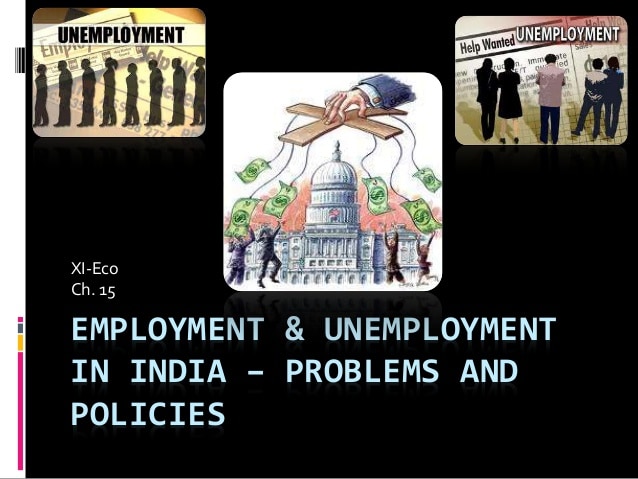
RURAL AND URBAN UNEMPLOYMENT AND ITS CAUSES IN INDIA

Unemployment refers to a situation in which the workers who are capable of working and willing to work do not get employment. Unemployment also refers to a situation where the persons who are able to work and willing to work, fail to secure work or activity which gives them income or means of livelihood.

RURAL EMPLOYMENT:

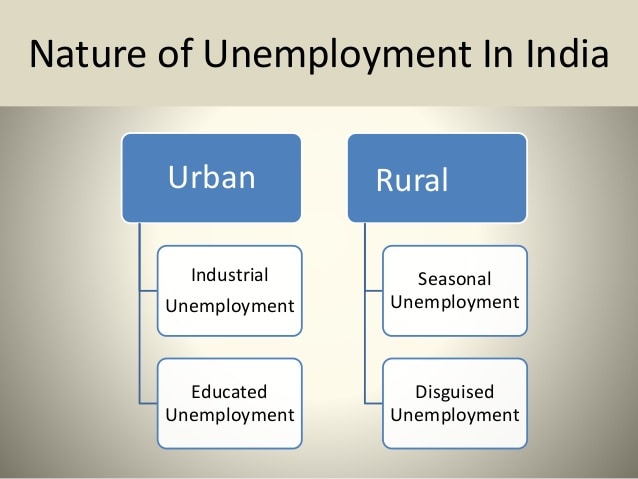
In Rural employment, both unemployment and underemployment exist side by side. The increasing population implies an increasing pressure on land. This pressure on land has resulted in an increase in number of agriculturists, and this has largely contributed to the problem of ununtilized labour in the agriculture sector.

1. SEASONAL UNEMPLOYMENT- caused by seasonal varieties in production or demand or both. When the works are engaged in a particular work or occupation, get employment only for a limited period and remain idle for the remaining period.

2. DISGUISED UNEMPLOYMENT- In Indian villages, people are found to be apparently engaged in agricultural activities. In such a situation, even if many works are withdrawn, same work will continue to be done by fewer people. It follows that all the workers are not needed to maintain the existing level of production. The contribution of such labourers to production is zero or near zero.

URBAN EMPLOYMENT:

Urban employment is largely the off-shoot of rural employment. With the growing process of making of peasantry very poor in the wake of introduction of the capitalist system of farming, and in the face of increasing pressure of population on land, a mass departure of population from rural areas to urban areas take place.

1. STRUCTURAL UNEMPLOYMENT- caused by structural changes like rapidly growing population, fall in the rate of capital formation, technological change etc., in the economy. It is of long run nature.

2. DISGUISED UNEMPLOYMENT- A person is apparently employed bit their marginal product is zero. Marginal product means the product and the produce added to the existing production due to the addition of new employee/ worker.

3. EDUCATED UNEMPLOYMENT- Even a person who is educated/trained and skilled fails to obtain a suitable job suited to his qualification he is said to be educated unemployed.

4. OPEN UNEMPLOYMENT- The labourers when live without any work and they dont find any work to do they come under the category of unemployment. Educated unemployment and skilled labourers unemployment are included in open unemployment. The migration from rural to urban areas in search of work is very often found in India is an example of open unemployment.

5. UNDER UNEMPLOYMENT- refers to the underutilization of manpower available both in terms of time and skill. If a master of engineering graduate work as a clear or an office assistant in an office, he is underutilized in terms of man power.

6. VOLUNTARY UNEMPLOYMENT- Though jobs are available some person may want to remain idle come under the category of this kind. The people who do not have the mind set to work regardless of their economic position and lazy people are included in this category.

7. NATURAL UNEMPLOYMENT- Unemployment ranging between 2 to 3% in the country is considered natural and inevitable. This minimal percentage of unemployment cannot be eliminated at all.

CAUSES OF UNEMPLOYMENT:

The unemployment problem in India has assumed alarming dimensions since independence.

1. POPULATION GROWTH- The galloping in population of our country during the last decades has increased the unemployment problem in the country.

2. INSUFFICIENT RATE OF ECONOMIC PROGRESS- The rate of growth is inadequate to absorb the entire labour force in the country. The opportunity of employment are not sufficient to absorb which are taking place as result of the rapidly increasing population in India.

3. ABSENCE OF EMPLOYMENT OTHER THAN AGRICULTURE- Agriculture is the principle area of employment in the country A major cause of rural unemployment refers the extremely low rate of growth of agriculture.

4. JOINT FAMILY SYSTEM- Existence of joint family system in India promotes disguised unemployment. Usually the members of a family work on their family farms or do family business.

5. SLOW DEVELOPMENT OF INDUSTRIES- Industrialization is not rapid in our country and industrial labours finds few job opportunities. The surplus labour in the agriculture sector labour is not absorbed by the industrial sector.

6. INAPPROPRIATE TECHNOLOGY- An important cause in the urban industrial sector is the use of inappropriate technology. Instead of using technology suited to our requirement of utilizing abundant labour supply available in the country, western modern highly capital-intensive technology is adopted which minimizes use of labour.

The need of hour to fight poverty and unemployment is to have belief approach towards education system and employment generation programmes in rural areas through recent initiatives such as skill India which is a campaign launched by Prime Minister Damodardas Modion 15 July 2015 which aim to train over 40 crore people in India in different skills by 2022.

CHEMICAL HEARTS

ABOUT THE MOVIE:

Richard Tanne’s “Chemical Hearts,” an adaptation of Krystal Sutherland’s YA novel Our Chemical Hearts. The genre is so thick in the film you can barely see through them, and yet, at the same time, “Chemical Hearts” believe in expressing. This makes the film a very unpredictable experience, and it is here that the movie really shines.”Chemical Hearts” suffers from a somnolescent tone, and its mood is often dull and slow, at odds with the high school romance. These things are all undeniable, and yet the thin emotions helps make “Chemical Hearts” a deeply felt teenage melodrama.

THE PLOT:

Henry Page has always wanted to be a writer. In narration, he shares his frustration that nothing has ever really happened to him, and therefore he has nothing to write about. Enter the new girl in school, Grace Town . Grace walks with a cane, reads Pablo Neruda for fun, and has a dark past. Henry wants to be a writer, but other than that he has almost no defining characteristics, except for his love of gluing together broken pieces of pottery. (Later in the film, Grace shouts at Henry, “I’m not one of your vases!” Just in case you didn’t get it.) Grace and Henry are chosen as co-editors of the school newspaper, and forced to work together closely.As Grace begins to let Henry into her life, she shows him an abandoned factory with a pool containing koi fish. He falls in love with her. He follows her one day and finds her at the grave of a man who, judging from the tombstone, died as a teenager. The dead man was Grace’s boyfriend was killed in a car accident and that Grace had been in the car when it happened, causing her disability.

On the anniversary of the car accident, Henry goes to her house and learns that she has been living in the room of her deceased boyfriend, with his mother and father. She finds Henry there and they argue as she is clearly still in love with a dead man. Henry cannot handle this information and they break up. As Henry’s and Grace’s senior year comes to an end, they avoid talking to one another at the school. Grace leaves the newspaper after taking some time off school.Their encounter is an emotional one and they hug, but then go their separate ways.

GRACE POINT OF VIEW:

Since “Chemical Hearts” is told from Henry’s point of view, we see Grace through his eyes, and she is a very intresting figure, so stays cold and distant towards him at first it’s not clear why he keeps pursuing her, and why she keeps allowing it. If she’s so  uninterested in him, then why exactly do they keep hanging out? A mini-montage is employed, showing the friendship blossoming, with Henry cracking jokes and Grace laughing hysterically. Nothing we have seen in Henry up until this point tells us he’s this funny, and what on earth could he be saying that would make glum Grace laugh so hard? Using a montage like this is a cheat, skipping steps that really need to be dealt with, or at least acknowledged.

There are tragedies in Grace’s past, of course, and her disabling injury is the least of it. She doesn’t share her story all at once, and Henry is often left confused and hurt, feeling she has been withholding information. . She is not there to help Henry learn, grow, change. This is part of “Chemical Hearts”‘ subversion. Any idea we may have that Henry is there to help her love again or trust again or heal is completely kicked to the curb once the true lay of the land is revealed. There’s a very messy movie here, kicking around within all the melancholy. “Chemical Hearts” is really about the chaos and confusion of teenage life, of going through experiences love, sex, heartbreak for the first time and the huge impact these experiences have on the body and the nervous system.

The movie really expresses how a person mourn for their loved ones. Even though Grace met a nice guy like Henry, she couldn’t help herself from grieving for her dead boyfriend. I thought that she should have at least tried to give herself a chance for being happy. But in the end she disappointed herself and Henry too.

TAMIL NADU ECONOMY

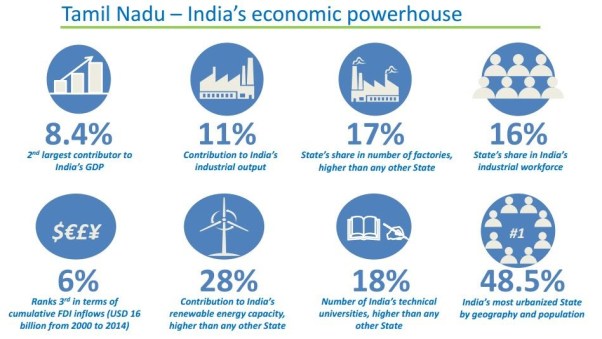
The economic and social development of states in India are not uniform. The western region and southern regions are better off than the other regions. Tamil Nadu is geographically eleventh largest and population wise third largest. Tamil Nadu fares well with many achievements. It stands second to second in terms of contribution to GDP, third highest in terms of capita income, investment, Foreign Direct Investment (FDI) and industrial output. It has been ranked as the most economically free state by the Economic Freedom.

In social and health sector also Tamil Nadu’s performance is better than many other states and better than national average in terms of health, higher education, IMR and MMR.

PERFORMANCE OF TAMIL NADU ECONOMY:

Some of the states like Gujarat and Maharashtra seem to perform well in some of the economic indicators. Kerala tops in literacy, IMR and MMR. In recent years Tanil Nadu’s performance is outstanding and far ahead of all other states in the spheres of health, higher education, growth of MSMEs, poverty alleviation and employment generation. The reason for the relative success of Tamil Nadu lie in extending social policies to cover most of the population. For instance the publisher distribution system, midday meals and public health infrastructure have near universal coverage.

PER CAPITA INCOME:

The per capita GSDP of Tamil Nadu also ($ 2,200) which is higher than that of many other states in India. Per capita GSDP of Tamil Nadu is nearly 1.75 times higher than the national average, as per 2018 data. In term of the per capita income in Tamil Nadu was 1,03,600 in 2010-11 and it has increased to 1,88,492 in 2017-18 as per the budget figures 2018.

HIGHLIGHTS OF TAMIL NADU ECONOMY: Growth of SGDP in Tamil Nadu has been among the fastest in India since 2005. Poverty reduction in Tamil Nadu has been faster than that in many other states. Tamil Nadu contains a smaller proportion of India’s poor population. Tamil Nadu is the second largest contributeor to India’s GDP. Tamil Nadu ranks 3rd in terms of invested capital (2.29 lakh crore ) and value of total industrial output (6.19 lakh crore). Tamil Nadu ranks first among the states in terms of numbers of factories with 17% share and industrial workers of the country. Tamil Nadu is placed third in health index as per the NITI AAYOG report. Tamil Nadu has a highest Gross Enrolment Ratio in higher education. Tamil Nadu has the largest number of engineering colleges. Tamil Nadu has emerged as a major hub for renewable energy. Tamil Nadu has highest credit Deposit Ratio in Commercial and cooperative banks. It has the highest ranks first on investment proposal filed by MSMEs.

“If the nature of the work is properly appreciated and applied, it will stand in the same relation to the higher facilities as food is to the physical body”

-J.C. Kumarappa

Tamil Nadu state has come third after Kerala and Punjab in a health index report. The neo natal mortality rate is 14 lower than that of many other states and that the under 5 mortality has dropped from 21 in 2014 to 20 in 2015.

The Tamil Nadu economy which is not rich in natural resources has good record of agricultural growth, industrial progress, infrastructural development and good record of strong growth of service sector especially banking, education, transport and tourism. It occupies top three ranks in health index, education, development of MSMEs. It has good record of poverty allevation and employment generation. India in general and Tamil Nadu in particular need to work to eliminate female foeticide,reduce the population lying in slums, sleeping on roadsides, beggers and rag picker. Development is meaningless as long as the eyesore continues.

WANT TO KNOW ABOUT INDIAN ECONOMY

A country’s growth is usually measured by National income, marked by Gross Domestic Product (GDP). The GDP is the total monetary value of the goods and services produced by that country over a specific period of time, usually one year. The level of economic development also indicated by Human Development Index (HDI), Physical Quality of Life Index (PQLI), and National Happiness Index (GNHI).

Indian economy is the seventh largest economy of the world. Being one of the top listed countries. In terms of industrialization and economic growth, India holds a strong position with an average growth rate of 7%.

STRENGTHS OF INDIAN ECONOMY:

1. INDIA HAS A MIXED ECONOMY- Indian economy is a typical example of mixed economy. This means both private and public sectors co-exist and function smoothly. Some of the fundamental and heavy industrial units are being operated under the public sectors. The private sectors has gained importance. This makes it a perfect model for public-private partnership.

2. AGRICULTURE-Agriculture being the maximum pursued occupation in India. It plays an important role in its economy as well. Around 60% of the people in India depend upon agriculture for their livelihood. Green revolution and inventions in bio technology have made agriculture self sufficient and also surplus production. The export of agriculture products such as fruits, vegetables, spices vegetable oils, tobacco, animal skin etc.

3. AN EMERGING MARKET- India has emerged as vibrant economy sustaining stable GDP growth rate even in the midst of global down trend. This has attracted significant foreign capital through FDI and FII. This also makes it an emerging market for the world.

4. EMERGING ECONOMY-India bags the seventh position in terms of nominal Gross Domestic Product (GDP) and third in terms of Purchasing Power Parity (PPP). Indian economy has a place among the G20 countries.

5. FAST GROWING ECONOMY-Indian economy is well known for high and sustained growth. It has emerged as the world’s fastest growing economy in the year 2016-17.

6. FAST GROWING SERVICE SECTOR-The service sector, contributes a lion’s share of the GDP in India. The sectors like Information Technology, BPO have contributed to the growth of the economy.

7. LARGE DOMESTIC CONSUMPTION-With the faster growth rate in the economy the standard of living has improved a lot. The standard of living has considerably improved and life style has changed.

8. RAPID GROWTH OF URBAN AREAS- Urbanization is a key ingredient of the growth of any economy. There has been a rapid growth of urban areas in India after independence.

WEAKNESS OF INDIAN ECONOMY:

1. LARGE POPULATION-India stands second in terms of size of population next to China. Population growth rate of India is very high and this is always a hurdle to growth rate. The population growth rate in India is as high as 1.7 per 1000.

2. INEQUALITY AND POVERTY-There exist a huge economic disparity in Indian economy. The proportion of income and assets owned by top 10% of Indian goes on increasing. This has led to an increase in the poverty level in the society.

3. INCREASES PRICES OF ESSENTIAL GOODS-Even though there has been a constant growth in the GDP and growth opportunities in the Indian economy. The continuous rise in prices erades the purchasing power and affects the poor people, whose income is not protected.

4. WEAK INFRASTRUCTURE-Even though there has been a gradual improvement in the infrastructural development in the past few decades, there is still a scarcity of the basic infrastructure like power, transport, storage.

5. UNEMPLOYMENT-With growing youth population, there is a huge need of the employment opportunities. The Indian economy is characterised by jobless growth.

6. OUTDATED TECHNOLOGY- The level of technology in agriculture and small scale industries is still outdated and passed.

CURRENT INDIAN ECONOMY:

In 2019-20, India’s GDP was Rs 146 trillion. In other words, India had produced goods and services worth Rs 146 trillion that year. Then, in the last financial year, that is, in 2020-21, it fell to Rs 135 trillion. That’s the fall of minus 7.3% we were talking about earlier.

“India will be a global player in the digital economy” -Sundar Pichai, CEO Google

THE BAD MOTHER’S HANDBOOK BY KATE LONG

ABOUT THE BOOK:

“The Bad Mother’s Handbook” is a Domestic fiction by the author Kate long. The book was originally published in 2004. “The Bad Mother’s Handbook” is the first novel of Kate Long. The book was also adapted into a movie by the same name.

THE PLOT:

“The Bad Mother’s Handbook” is the story of a year in the lives of three women Charlotte, Karen and Nan. Karen is the mother in her thirties raising a teenage girl Charlotte. Charlotte is an highschool girl. Karen’s mother Nan is suffering from Alzheimer.

1997, the year Blair was elected and Diana died; and the year that changed everything for Charlotte, Karen and Nan. Charlotte is doing her A-levels and she is pregnant . Karen, her mother is thirty three and she is about to be a grandmother. How cuffed is she with that? And then there is Nan, who is not bothered about her granddaughter’s pregnancy. She has other things on her mind.

For Seventeen year old Charlotte cooper, it became too late to find out her pregnancy. Despite her efforts to finish her school, to handle her angry mother and cope up with her loving but slightly crazy Nan, she is pregnant. And the boy who is responsible for her pregnancy doesn’t  want to take any responsibilities.

  Charlotte’s mother, Karen, is trying to convince herself that there are worse things than becoming a grandmother at thirty-three. For instance, there’s wanting to kill Charlotte for the mess she’s made of her life.Karen uncovers a scandalous family secret involving her own birth, and then falls back with her ex-husband. So much for perfect timing.


In the meantime, Karen’s mother, Nan, is having a trouble with names (sometimes her own). But that doesn’t keep her from retaining a few things she’d rather forget. Of course, Nan knows that everything will work out fine for Charlotte and the baby–these things usually do. Now, if only she could put the pieces of her own fragmented memory together, she might have an interesting tale or two to share.

In this funny novel, three generations of mothers learn that it’s the simplest mistakes that can change your life forever. With wit and wisdom, Kate Long proves that there are as many kinds of mothers as there are daughters, but the love that binds them all is what truly matters.

FAVOURITE QUOTES:

‘there’ll never be equality of the sexes till men can get pregnant.”

“Everyone’s history is the product of someone else’s; what we think of as our own experience is only what’s has been bestowed on us by others and you can’t walk away from that. And Why should you?”

“I don’t know which is worse; fear or boredom.”

MY OPINION FROM READING THE BOOK:

“The Bad Mother’s Handbook” remind me that there is neither a perfect time nor a perfect way to be a mother.

THE BOOK THIEF BY MARKUS ZUSAK

ABOUT THE BOOK:

The Book Thief is an historical novel by Australian author Markus Zusak. This book is published in 2005 and is one of the international best sellers. The book was also adapted into a movie with the same name.

THE PLOT:

The narrator of the book thief is death. The death introduce himself and visits a small girl Leisel meminger. The story follows the small girl Leisel meminger, after she attains the age in Nazi Germany during World war II. After her brother’s death her mother deciding to give away her.  There she was exposed as a book thief when she was mourning near her brother’s grave she encountered a gravedigger missing his diary in the ground. Without missing the moment she looted the diary without the man’s knowledge. After She has been adopted by her foster parents Hans and Rosa Hubermann. She started to get along with the boy named Rudy Steiner. Leisel starts to like the place and the people.Even though the Nazi regime horrors her at some times. Hans Huberman taught Leisel to read and write first in her bedroom and then in the basement. Because he wants her daughter to share her powerful thoughts through words. Beginning to steal books, now she started to write her own story. When she started helping her foster mother by collecting laundry, she developed a friendship with mayor’s wife Ilsa Hermann, who allows her to read books  in her library and later started to steal them.

Then the Hubermann family get visited by a Jewish man named Max Vandenberg. With him Leisel get close by sharing her language and words which she was taught by her father. But few days later max decided to leave Hubermann’s house. He afraid that Hubermann’s activities will draw suspicion. Eventually as a punishment Hans application for to join National Socialist German workers party is approved. A while later Leisel see Max among the Jewish prisoners in the street, she joins him and get kicked away by the soldier.

After Hans returns home, bomb falls on Leisel street in Mulching. Leisel at that  time working on her manuscript was the only survivor. She was rescued by the the workers and collected the ashes of her manuscript. She is taken by Mayor and his wife Ilsa Hermann. A while later she walks into the river where her friend Rudy saved a book that they theft together but dies without saying a good bye. In 1945, Leisel works in the tailor shop owned by Rudy’s father when max invites her and have an emotional reunion.

Many years later, Leisel died of aging in Sydney, Australia. She was happily married and has three children. She has never forgotten Hans, Rosa, Rudy and her brother. The narrator of the book, death collects her soul and gives her the manuscript. She asks the death to read the book, but death is unable to understand. He cant understand the duality of human beings. The final words by death is “I am haunted by humans”.

MY FAVOURITE QUOTES FROM THE BOOK:

“The only thing worse than a boy who hates you: a boy that loves you.”

“Even death has a heart.”

“It kills me sometimes, how people die.”

PERSONAL THOUGHTS:

The Book Thief was my first favourite book since i started reading books. The ending of the book have left me pain and empathy. It hardly take me two days to think other than the book. I was so hard whether to feel happy for Leisel like how she  atleast had Max in her life and her children whom was there for her when she dies or to feel sorrow for her, how traumatic was her childhood. When she was young and fragile she lost her only brother and her mother left her. Still she had her foster parents and Rudy but the chaos happened in her nation had left her alone. Not as a girl in her teen but as a human in that very young age she lost the persons with whom she can call family and felt happiness . I sometimes use to think that how i wold have handled all this pain and loss of my loved ones. The thought itself breaks me. Even though it is a fiction its hard to convince myself. Atleast death itself was with her till her death. Even death has some humanity.

GIRL IN THE BASEMENT

We all have heard many news about girl or girl child or woman being sexually harassed and abused by men. In most of the cases the culprit is or the culprits are the victim’s close relations like friend, boyfriend, even brother and father.

How much long can you stay at one place without stepping outside a room. Just think kept locked in room for one day. But you will be shocked and get anger, empathy, sorrow all at a time when you hear about a incident that happened in Austria. In Austria, a girl named Elisabeth Fritzl has been kept locked in the basement for 24 years by her own father Josef Fritzl and also he used her as a sex slave. The most horrible thing is he fathered seven kids with his own daughter.

FRITZL CASE:

The cased was emerged in 2008 when a woman named Elisabeth Fritzl told the police in the town of Amstetten, Austria.The girl was raped several times by her father Josef Fritzl in the closed concealed area in the cellar of their own family home.

Josef Fritzl married Rosemarie with whom he had three sons and four daughters including Elisabeth. Elisabeth was began abused by his father when she was Eleven. After Elisabeth completing her education at age of 15, she joined a course to become waitress. In 1983, she ran away from her house and bought back by police after three weeks. Then she completed her waitress course and also pursued a job.

HOW SHE WAS CAPTIVATED:

In 1984, Elisabeth was 18 years old. Josef Fritzl asked his daughter Elisabeth to help him to install a door in his newly built cellar complex. She also agreed and went happily to help her father. But she had no idea how monstrous her father is and this is going to be her last time to see her family and the outside world in 24 years. After reaching the basement she was drugged, tied up and chained to a bed by her father. He kept her captivated for 24 years and raped her several times and fathered seven children. Elisabeth’s mother Rosemarie filed a missing person report. After a month Fritzl handed some letters to police that he forced her daughter to write. The letters are postmarked Braunau telling that Elisabeth became tired of living with her family. So she ran away from them and also don’t want them to come for her. If they do she would leave the country. They believed that she joined a religious cult.

ELISABETH AND HER SEVEN CHILDREN:

After the captivity, Fritzl visited Elisabeth almost everyday or three, four times a week. He constantly raped her to punish her. Elizabeth first baby died shortly after birth. She gave birth to her second child that was taken from her by her father. Fritzl put the baby before his house door and the baby was found by Rosemarie . She took the baby believing that the baby was abandoned by his parents. So they decided to raise the baby but Rosemarie doesn’t know the truth. The same was followed for the next two babies. Fritzl and his wife, who were approved by local social services authorities as their foster parents. Officials said that Fritzl doubtlessly  explained how three of his infant grandchildren had appeared on his doorstep. The family received regular visits from social workers, who saw and heard nothing to arouse their suspicions.

With no medical care, and given just disinfectant and a pair of dirty scissors, Elisabeth gave birth to seven babies in the cellar.

In 1994 after  another three children Kerstin, Stefan and Felix. Fritzl enlarged the room and provided the room with all kind of basic necessities like radio, television, food etc. Elizabeth taught her children to read and write. If they try to escape, Fritzl punish them by shutting off the lights or refusing to give food for days. They were threatened to be gassed if they try to escape. They received electric shocks as an punishment.

Fritzl had been planning the underground prison for years, excavating the garden and even building a swimming pool over the complex where barbecue guests swam, unaware Elisabeth and her children was trapped in her hellish prison below.

ESCAPE:

Kerstin’s fell into illness in April 2008 was the beginning of the end of Elisabeth’s ordeal. In an uncharacteristic act of mercy, Fritzl drove the 19-year-old to hospital where she was instantly taken into intensive care.

Police concerned about the deathly pale girl put out an appeal for her mother to contact them and Elisabeth, watching them on a TV in the cellar, begged her father to set her free.

Incredibly, he relented, driving her to hospital and telling police that the family had recently been released from the sect.But when officers managed to get Elisabeth alone, she revealed the whole shocking story – on condition she was never to see her father again.

The first thing she said was “No one will believe me.”

Even after all this all the cruelty done by Fritzl, the lawyers tried to portray him as a loving father. After all the testimony, Josef Fritzl was sentenced to life imprisonment. He is still in Garsten Abbey jail. Elisabeth and her children were given therapy and treatment. I hope that now they are leading a happy and normal life.

WHY  GEOFFRRY CHAUCER IS CALLED AS THE FATHER OF ENGLISH LITERATURE?

Geoffrey Chaucer is the first person to write well known poems and stories in the language of the common people of his time.

HIS LIFE: (c. 1340-c. 1400)

From the records of his time it is found, his name is mentioned with some references and remarks. These references and remarks in his poems are sum of what we know about his life. His birthdate is unclear. But from some documents it is accepted as 1340. He was born in London. He entered the household of the wife of the Duke of Clarence and saw military service and caught there. He is often mentioned as the person of royal pensions and bounties and was confirmed in his offices and pensions. In 1386 he was sent to Italy on one of his diplomatic missions. He was the first poet to be buried in poet’s corner in Westminster Abbey.

HIS POEMS:

The poems of Chaucer poems cannot be confirmed with certainty, but from interval evidence they can as a rule approximately dated.His poems are divided into French, the Italian and the English stages.

The poems of French stage are modelled upon French originals. The style is clumsy and immature. The longest poem is The Romaunt of the Rose, a lengthy allegorical poem written in octosyllabic couplets and based upon Le Romaunt de la rose of Guillaume de Lorris and Jean de Meung. This poem is only a fragment of 8000 lines. The Italian stage shows advancement than the first. Handling of the meters, the technical ability is greater. The Hous of fame, a poem in octosyllabic couplets, is one of the dream allegory type. The Legend of Good Women is the first known attempt in English to use the heroic couplet, which is handled with great skill and freedom. The English group contains work of the greatest individual. The Canterbury Tales is one of his achievements. Chaucer draws together twenty nine pilgrims including himself. The journey of the pilgrim is to tell two tales in the outward journey, and two on the return. Chaucer’s own Tale of Melibeus and The Parson’s Tale are composed in powerful and versatile species of the heroic couplet.

The first thing that strikes the eye is the unique position that Chaucer’s work occupies in the literature of the age. He was the man of the world, mixing freely with all types of mankind and he used his opportunities to observe the little peculiarities of human nature. Chaucer’s best descriptions of men, manners, and places are the first rank in their beauty, impressiveness and humour.

The bisy larke, messages of day,

Salueth in her song the morwe gay,

And firy phoebus riseth up so brighte

That all the orient laugheth with the lighte.

-The knight’s Tale

The prologue contains generous material to illustrate Chaucer’s power in describing his fellow men. In the literature of his time, the humour of Chaucer is healthy and delightful. As a story teller his narrative posses a curious stealthy speed. In poetical technique, English literature owes much to Chaucer. Chaucer is no great lyrical poet but in some of his, he shows a skill that is as good as the very best apparent in the contemporary poems. He stands alone, and for nearly two thousand years none dare claim equality with him.

This experimentation by many critics, authors, literariness etc, left a lasting mark upon English poetry is a contribution of Chaucer’s that is also cause for considering him the father of English poetry. He also one of the persons to contribute new words to English language.

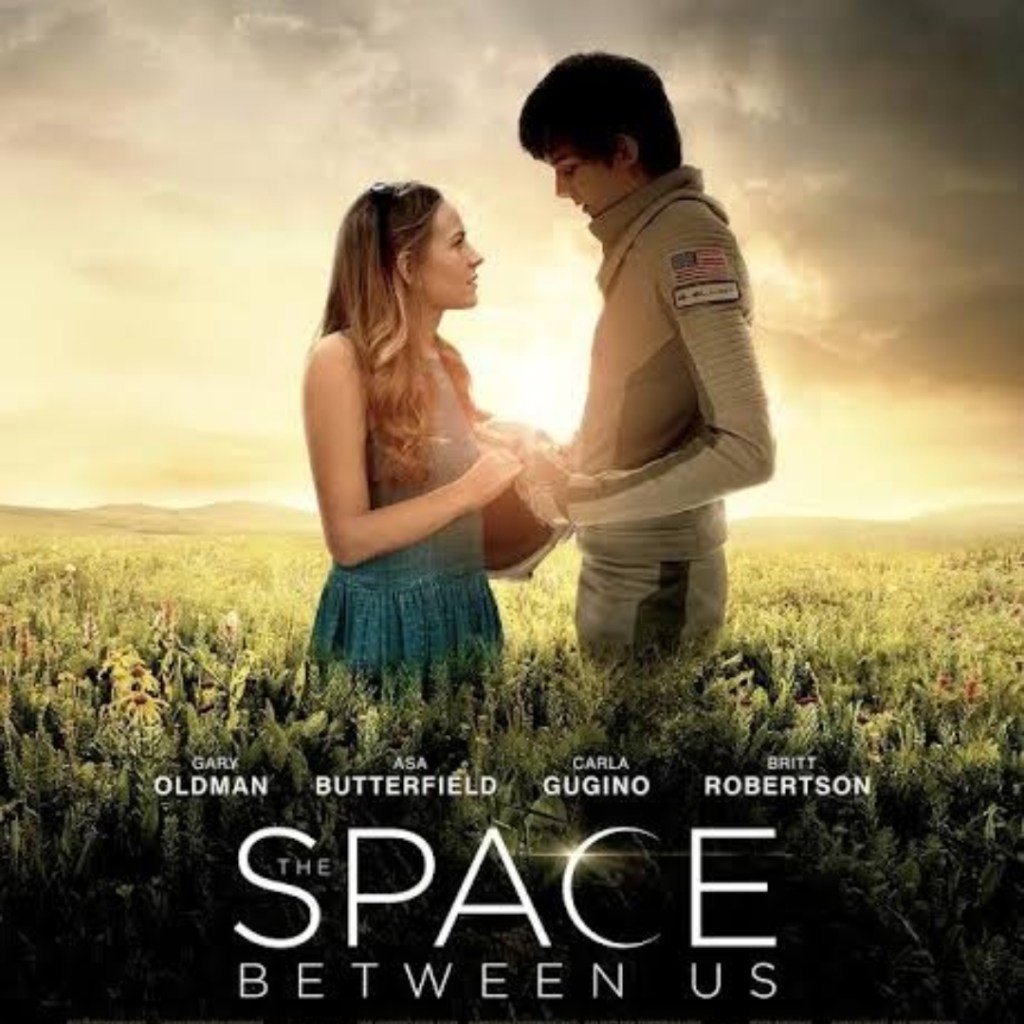
THE SPACE BETWEEN US

Love. We heard people talk about love and in love. But how many of you really believe in love. I use to think or wonder sometimes how a person could love another person other than his/her family and friends with all their heart without any expectations. More specifically how could you fell in love in his/her at their first sight. They are literally strangers.

Do you believe in long ship relationship? But do you believe that there is a boy way travelled all the way space to find his father which is also a kind of love. You may think how this could be possible. No, it is not. But it is possible in movies. The movie is “The space between us”.

ABOUT THE MOVIE:

The space between us is a American movie released in 2017. It is romantic science fiction film directed by Peter Chelsom. The story follows a teenage boy Gardner Elliot whose mother Sarah Elliot is an astronaut who is sent to mars. There she is found to be pregnant and dies while giving birth to him. Then the boy visits Earth and starts to search for his father with the help of a clever girl.

MAIN CHARACTERS:

Gardener Elliot, Sarah Elliot, Nathaniel Shepherd, Kendra wyndham and Tulsa.

PLOT:

The Multi billionaire Nathaniel Shepard who is the Chief executive officer Genesis plans to launch the first mission to mars and also did. During the travel to mars, one of the astronauts Sarah Elliot find out she is pregnant. In the mars itself she gave birth to her son and dies from eclampsia. But the baby,s father is unknown. Nathaniel ordered to keep the baby Gardner Elliot in the mars itself as a secret. He is afraid that the environment that was surrounded by him during the birth  made him to adapt himselve their. If he returns to earth it will bring difficulties in surviving and may also cause him death. Gardener is raised by astronaut Kendra Wyndham and the other scientists on Mars.

SIXTEEN YEARS LATER:

To know about his mother, Gardener hacks into a robot with the help of it he got access to his mother’s personal belongings. He finds a wedding ring of his mother and a video of Sarah Elliot and a man in a beach house. They seemed so close which convinced Gardener that the man is his father and he decided to find him. Gardener use to talk with a girl Tulsa from earth via internet chatroom. Tulsa is a common girl without any background but cleverness. She is a normal street girl from colorado. She believes that Gardner is confined to penthouse due to osteogenesis imperfecta(A group of inherited disorders characterised by fragile bones that break easily). They use to talk daily and he promise’s her to visit her someday.

Kendra video chat with Nathaniel and director Tom chen about Gardener’s wish to visit the earth. But Nathaniel highly refuses that he cant be able to adapt to earth atmospheric pressure. In order to visit he have to undergo risky surgery to increase his bone density and do some trainings. Gardener only listened to the surgery and training. He didn’t care about Nathaniel and others concern. All he wanted is to visit the earth as soon as possible to meet Tulsa and to find his father. After the surgery and training he boards to earth along with other astronauts.

After reaching Earth, Gardener was kept isolated at NASA because of his body conditions. He was very mad at director Tom who refused to allow him outside. He was also taken some medical tests which clearly shows that Gardener cannot live in Earth very long. On the same night he escapes from the place and found Tulsa convinced her to find his father. Nathaniel and Kendra discovered that Gardener body contains troponin and indicative of an enlarged heart which cannot handle the earth atmospheric pressure. So they followed Gardener. Gardener and Tulsa found the man Neka who married Gardener’s parents.

Tulsa with the help of her computer and with the help of Neka located the place in the video of Sarah and the other man. They travelled to summer land in California. During their travel Gardener tell the truth about him but Tulsa refused to believe him. At somepoint Gardener collapses and admitted in hospital. From the X-rays carbon tubes Tulsa finally believes that Gardener is really from mars. Gardener started to get afraid that he will die so he want to find his father before he dies. They both escaped from the hospital and reached the beach house that they saw in the video. There they found that the man from the video is Sarah’s brother not Gardener’s father. Hearing that he runs to sea to die.

Nathaniel and Gardener arrived there and saved him with CPR. There Gardener finds that Nathaniel is his real father. Kendra, Tulsa and Nathaniel took Gardener to Dream chaser and launched him into orbit to stabilize him. Now Gardener is free from Earth’ gravity. Soon after, Gardener boards a space shuttle to Mars after a emotional seperation with Tulsa. Kendra adopts Tulsa who is determined to join Gardner on Mars. She joins training program in NASA. Gardener is seen back on Mars with Nathaniel.

PANDEMIC POVERTY AND ITS CAUSES IN INDIA

The word poverty itself kind of making me feel poor. Because that one word alone hold so much pain, sympathy, empathy and so on. Then think about the people who are suffering from poverty. The country we live in is known to be well developing nation with respectable economic growth. But at the same time the poverty is still a major problem.

Especially during this pandemic poverty has hit people in different ways. Middle and lower class people who has managed to survive at the start of the pandemic have completely lost their will to survive in the end. We even heard of some sensitive news that people died of covid not being able to get treated without any access to money. Still some people couldnt able to get food and shelter.

WHAT IS POVERTY?

Poverty refers to a situation when people are deprived of basic needs of life. It is often characterized by inadequacy of food, shelter and clothes. A state of situation when there is a lack of essential needs of subsistence. The study of poverty is a complex one because there is no easy way, or standard definition of who is poor or who is not. The living conditions of people has been widely used to get an idea of their situation. It is situation when someone experience a fundamental loss in well being.

According to Human Rights Commission’s Report, Poverty is seen “As a failure to meet the basic needs or to remain deprived from such needs is a state of poverty. The basic human need include not only food, clothing and dwelling, but also health and education’.

CAUSES:

The continuous problem of poverty in the country is the results of many factors and need to be identified in order to be addressed properly.

1. POPULATION BURDEN:

The growth of population in the country has till now exceeded the growth of economy and also ended up in poverty. India is known to be second most populated country in the world. But this Covid-19 has taken many lives that even may be our loved ones. In this pandemic, in rural areas, size of the family is bigger and that means in lowering the per capita income values and ultimately lowering of standard of living. Still the population is one of the major causes of poverty.

2. POOR AGRICULTURAL INFRASTRUCTURE:

Agriculture is the backbone of India and Indian economy. But old farming practices, lack of proper irrigation infrastructure, lack of knowledge of crop handling has affected the productivity. Sometimes lack of working lead to decreased wages become the reason for attaining daily needs of the labourers family pushing them into poverty. Pandemic have locked us all inside the home. But for the farmers they are being seperated from their soul, their farming land which feeds them and also us.

3. UNEQUAL DISTRIBUTION OF ASSETS:

This occurs with the economy changing directions rapidly. Upper and middle income groups sees a faster increase in earnings than lower income groups. Also assets like cattle, land are distributed disproportionately among the population. In India it is said that 80% of the wealth is controlled by 20% of the population.

4. UNEMPLOYMENT: 

Another big factor which is the cause of poverty in the country. Many youngsters without the job become the major cause of the poverty. Work from home for the people with jobs sounds good to earn and feed their family but what about the people who are unemployed. Even before the covid there were no proper jobs for youngster in the nation.

5. INFLATION:

Inflation is an increase in prices of goods overlapping with the fall in the purchasing value of money. After the long lockdown, the Government has permitted to open the particular stores. This made the consumers to sell the products with a little higher price. Upper and middle class people have survived the situation but lower class people have suffered a lot.

5. EDUCATION AND LITERACY:

Online classes have  become the normal classes. In rural areas, families have managed to provide their child or children the proper education. But not all have enough money to provide their kids education some only have enough resources to feed their children. They have to prefer food than education. Children started to contribute to families by taking up the jobs. On the other hand, lack of education and illiteracy prevent individuals from getting better paying jobs and they get stuck at jobs offering minimum wages.

7. LACK OF SKILLED LABOURS:

Lack of adequate vocational training makes the huge labour force available in India largely unskilled. Lack of education, much lesser higher education is also a factor.

8.GENDER INEQUALITY:

The weak status attached with women, deep rooted social criticism and force fitting, being dominated renders about 50% of the country’s population unable to work. The women of the family as a dependent that needs to be fed instead of contributing to the family income. There is no need to talk about their equality during this situation.

The pandemic also brought out many good wills to help the people suffering from poverty. Its all in the hands of future generation to create a poverty less nation. We are not talking about to give away all your money to poor but just one hand helping another hand. Stay away from corruption.

CIVIL SERVICES EXAMINATION

Nowadays, exams become the thing that brings us fear, anxiety, etc., Especially during this pandemic all our academic and studies has been changed from live classes to online classes. For some online classes can be a flex but not for all. Speaking of exams, we all know about competitive exams which has been conducted all over the world to students to get into some point and also it is set as an start for their higher studies and career. Exams like Civil services examination, Indian Economic Services examination, GATE etc.

WHAT IS CIVIL SERVICES EXAMINATION? :

Civil services examination is one among the top most competitive examinations conducted by Union Public Service Commission for recruitment to various civil services for the Government of India. There are around 24 services which come under civil service categories such as IAS, IPS, IFS, IRS etc.

NAME OF THE RECRUITING BODY:

Union Public Service Commission (UPSC)

TYPES OF SERVICES:

IAS, IPS, IFS and more than 20 services with 712 vacancies which also include 22 vacancies for benchmark disablility persons

CANDIDATES ELIGIBLITY:

The person who is taking up the exam should be 21 to 32 years old.

EDUCATION:

A degree holder (recognized by UGC/AICTE) of any major is a eligible person to take up the exam.

AGE LIMIT AND NO. OF ATTEMPTS:

The total no of attempts and age limit of exam are based on community which differ from one to one.

PROCESS OF EXAMINATION:

The eligible persons first level exam will be Preliminary exam with two papers total of 400 marks. The qualified person can move on to next level which is main exams with 9 papers total of 1750 marks. The last level will be the interview (oral) for 275 marks.

HOW TO PURSUE:

To pursue civil service and Defence service as a carrer the individual should deserve some reputation or achievement because civil service and defence service does not merely offer them another job for earning livelihood, it provides a great opportunity to realize their potentials. The person should enjoy every assignment, activity to really purse his/her job. They should have the satisfaction of serving the country, and eventually lead the country.

HOW A EXAM CAN FULFILL THE DREAMS OF SEVERAL GENERATIONS? :

In the recent years Civl services and other services have fulfilled dreams among several generations in India. Civil services have attracted a wider pool of talents. A large number of professionals led by Engineers, IT and Management professionals, doctors, lawyers and other meritorious students who could have got lucrative jobs with the corporate sector have started appearing in the civil service exams. The main reason of their attraction is the balanced combination of class, status and power. It is well known that all the civil services Examination through its various stages, tests a canfldidate’s suitability to top rank position of Indian bureaucracy.

REAL AIM OF AN CIVIL SERVICES EXAMINATION:

The exams aim is not only to provide them job by testing his/her subject knowledge but also his understanding and interpretation. The preparation of the exam entails much more than the academic grasp of the subject. An ideal candidate beside acquiring depth knowledge of the subject but also have to work upon building his logical reasoning. They should alsna work upon problem solving and writing skills along with developing cheerful and optimistic outlook towards life.

All these are secondary, first the person should be confident about themselve. They have to face more struggles than they could think about. The fear of rejection can make you to not to try. So first face that fear then face the problems.