We are what we eat

Many of us are raised with the common myth that we will become weak if we don’t eat fish or meat. But we can discredit this myth if we look at an elephant that not only survives on just leaves and branches but also thrives in good health.

Many of us are raised with the common myth that we will become weak if we don’t eat fish or meat. But we can discredit this myth if we look at an elephant that not only survives on just leaves and branches but also thrives in good health. 

Like elephants, some of the strongest animals of the world are strictly vegetarian. When a person realises this, his spiritual nature begins to awaken; he starts experiencing many changes from within. One of them is the development of 
a sensitivity through which the relationship between his body and his soul takes a new meaning and importance.

The inner vision of the soul reveals aspects to his personality that he did not know or felt before. His subtle energies become more tangible and he begins to judge for himself whether the food his body has ingested is really healthy for him or not. 

The question that arises now is “Why follow a vegetarian diet?” The answer is simple. Human beings by nature are non-violent. The true nature of the human soul is peace and tranquility.

Spiritual energy accumulates while practising non-violence. In this world, there is so much anxiety, tension, irritability and injustice which can be attributed to the dietary habits of human beings, because some of the food that one eats has all these vibrations of violence and negativity.

Hence, it is advisable to avoid eating food that comes through violence or the act of killing. A healthy body is one that is kept clean both from within and outside. When we feed the mind as well as the body with love, the atmosphere around us will also become peaceful and loving to live in, because our mental state has a definite and direct impact on the atmosphere around us. There are many benefits in preparing food in a peaceful and happy mental state. And, when we eat food prepared in such a manner, we will feel happy and positive. That will surely, in turn, improve the quality and longevity of life.

Racism – It Is a Reality

Racism has been a part of our society for many years. The sad truth is that it is more prevalent than ever. It seems every day you hear the stories of racism being played out in every corner of our society.

The fact is that as long as people ignore it and act like it doesn’t exist, the worse it will get. The only way to resolve a problem is to admit and take responsibility for having a problem. The election of President Obama exacerbated the issue of racism, but let’s not be so naïve as to think the problem wasn’t already there. It seems racism rears its ugly head when one race feels threatened by another race.

I believe fear is what encourages racism and hate. What needs to happen is for people who are tired of all of the hate decide that we will no longer tolerate racism and hate in our workplaces, schools, police departments or any other part of our society. It is not far fetched to think this could happen. It will take people to not turn a blind eye when you see or experience racism.

I think people tend to ignore racism if it does not directly affect them, but think about this, what if someone hated you or your child just because of the color of their skin? Imagine how that would affect your life. Wouldn’t you be afraid to leave your home? Afraid to allow your child to go to school? Afraid of losing your job? Afraid to drive your car at night in fear of being harassed? These are all real realities for some people that live in our society. Is it fair for someone to live in so much fear just because their skin color is different?

The best thing we can do for the future of our country is to refuse to tolerate racism on any level.

It is not impossible to stop the trend of racism, but it will take people being more conscious of it, and every now and then taking a stand that may be unpopular in your social circles. I wish I could say that there was an easy solution to this problem, but there isn’t.

Some people just feel that others are inferior to them and not worthy of the same lifestyles and comforts that they enjoy. I personally believe that you should be treated with respect and dignity in this country if you work hard, pay your taxes and abide by the law. There is no one race that owns this country and has the right to tell others, who is worthy to be here and who is not based on a person’s skin color.

Have you ever heard someone say that they are not racist, but admit if someone of another race moved next door to them, they wouldn’t like it? These people are racist.

Racism is very hurtful because it makes you feel like no matter how hard you work or how much money you make, you will never be good enough to live in certain neighborhoods or have your children attend certain schools.

For those of you that feel that racism is a thing of the past, I am here to tell you that it is alive and well in our society, and until people recognize the problem, and put stricter laws in place to combat this problem, it will continue. If you have friends or family that spout racist views, educate them and let them know they are destroying the fabric of this country by holding on to racism and hate.

Importance of feedback in the recruitment process

A couple of years back I was shortlisted for a well-known, reputed multinational organization and I had to appear for their recruitment drive. I had to report there at about 8:30 AM and the recruitment process consisted of GD followed a couple of rounds of interview. After clearing the GD and the first interview round, I appeared for the last round of interview. It was a managerial and HR round and mostly consisted of questions about me. I answered whatever they asked me and I could understand from their non-verbal expressions, that they were quite satisfied with my answers. I came out of my interview, getting a feeling of being shortlisted. But to my utter surprise, I was rejected. I left the building, thinking about where I went wrong considering the fact that I gave my best out there and they also seemed to be impressed by me. I was puzzled and confused and I really hoped at that time, that they should have told me after my rejection where I went wrong and where I can improve.

All I wanted at that time was feedback. Feedback would have clearly responded to my questions of   rejection and would have left me – less confused. Essentially feedback is considered to be the last and the most crucial step in the entire recruitment process. But sadly, many companies fail to provide a reason of their doings, let alone a plausible one. Companies should understand that when candidates are signing up for them, they should at least respect our decision by providing a platform where we can share our thoughts easily. In the recent times, feedback is considered to be a crucial step and a recruitment process is considered to be incomplete without this step.

Why feedback is considered to be a very important step is due to these reasons:

  1. Feedback ensures the transparency of the recruitment process of an organization. It remove the fuzziness involved in the process of selection.
  2. Candidates better understand what went wrong in the process and it makes them stronger when they appear for the next drive.
  3. Feedback, if solicited from the candidates, help the recruiters to understand any loopholes in the recruitment process and it also provides an avenue for the recruiters to improve themselves.
  4. Ensures transparency of the company which can promote the employer branding and can also be a tool or a source of great competitive advantage.
  5. Word of mouth is a tool which can make or break an organization. As in the case of mine, if feedback was provided, even though I did not get selected, I would have definitely spread the good word for that company.

The process which most company fails to understand is very simple. Our industry thrives on feedback and to get a very first-hand experience of how any program appeals to the mass, one should definitely implement the feedback step in each and every process. From a candidate’s perspective, I can say that it is not feasible to get selected in every company, but if I am giving sometime for one company, I might as well know what went wrong for me to be rejected from that company.

As for companies, they should understand – Respect works in both ways.

Source – Self

How to leave with respect when laid off

Abdul Kalaam once said – “Love your job but NEVER fall in love with your company”.

Desperate times calls for desperate measures. At least that’s what some of the reputed, well known and no-so-known companies have done in the recent times, owing to the pandemic. Many a companies are trying to cope with the lashes of COVID-19 by cutting costs, eliminating positions and retrenching people. Positions that were once considered to be very crucial to the functioning of the business were just scraped off from the hierarchy and employees occupying those positions were handed a ‘good-bye’ note.

But there is a stark difference in how some of the companies decided to do so. In some companies, the CEO was very transparent in explaining why there is a necessity to lay off people and they felt extremely sorry while doing so. They wrote long, meaningful mails and they at least tried to empathise with the laid off employees. And then there are other companies who’s CEOs just mailed a short message conveying that they are being laid off without any note of sorry or explanation, forget about transparency. But whatever be the mode or the reason of laying off, we as employees should understand that it is best for business and instead of leaving on a bad note, we should make sure to leave with respect and on a good note.

There is no doubt that we might be feeling very smitten inside, but we should not let that feeling empower us to destroy everything that we have accumulated over the years. Now, one must be wondering how to do so amidst such emotional times. I would like to suggest a few ways by which one can leave on a good note even when things might have not worked in their way. Some of those suggestions are:

  1. Try to not dwell on the negative emotions. At the time of lay off, one might feel very low about it, but try not to feed into the negative emotions. Instead of that, one should think about one’ achievements, successes and milestones at the company. Think about what was your best contribution and what worked for you and try to harvest on that.
  2. Try to work out a plan to handover your work. Since one is working remotely, one must be very methodical and careful while handing over very confidential information such as clients’ list project reports and other such documents so that others’ can plan out the work. It is very okay to feel about withholding information, but one should not do so because one should understand that it is not the end of one’s career.
  3. Draft a proper good bye mail. Draft a short and clear mail, intended to one’s colleagues, friends and other people in one’s office network. Make sure to include your contact details – mostly phone number and personal mail id so that people can stay in touch with you. Also one should not forget to give a note of thanks to everyone, in spite of all differences. Such a habit will definitely help one in one’s career while searching for other jobs.
  4. Try to build and amend bridges at the time of leaving. One should talk to the close colleagues, confidantes and the network of peers and mentors, so that they can assist to find a new job in this landscape.

These are the very few steps one should take to ensure that even though things did not quite work out well for you, there is always a way to make things better at some other place.

‘Networking is the key to one’s success.’

Source – Self

Education system due to Covid ’19:

As we can see, because of this pandemic covid’19 there are millions of people who have lost their employment without their consent. There are hundreds of many individuals who also haven’t earned salaries even after struggling too hard for their valued employment till now. Infact there are many families that don’t even have housing to stay in because of the rents they’ve been staying in.

So even after observing all these conditions, students will still be paying entire fees for the coming academic year. 

2020-21.

I can’t digest at the extent that all lectures will be held online owing to the lockout, no usage can be made of college premises such as classes, libraries, computer laboratories, research labs, sporting facilities, canteens, why are students expected to charge for these things? Why are students receiving threatening calls from college premises saying they would refuse to compensate for their academic year, if they do not pay?Why are those students who already paid their fees are tortured because the students who cant afford to pay fees that if they don’t pay fees online lectures wont be conducted. Why there is no understanding from the parents point of view about for the problems they are facing to even handle their home chores.

In such situations many parent are targeting even teachers for which they are not at all responsible. Teachers too are not getting salaries on time from colleges or schools. Infact these teachers are too being forced to influence the children to pay their fees.

And without purpose teachers are often abused by both colleges as well as students. while they are struggling to understand about this modern technology method of teaching, they are told from one side college to keep online lectures and from other side students not showing any interest in online lectures and abusing them.

Parents and students who assume that pressuring teachers over these problems would make them fulfill their requests, but it’s absolutely false. Since the major game is played by college premises and administrators. They’re utilizing all the powerful resources.

They are neither reducing the fees of students nor paying salaries to teachers incharged  . 

Parents and teachers should lodge complaints against these colleges for the advantages they ‘re taking through this tough period. 

Colleges can either postpone online lessons or not accept any tuition from the enrolled students in these schools for a period of three months from April 1 to July 1 or before the start the of offline / physical school courses.

Nevertheless, some states who tried to look at the concerns and had already filed petitions among them, the Punjab government, on Thursday, nonetheless, had ordered schools to release maximum wages for workers and not to ask parents to pay books, uniforms and transportation fees and stated that no school should charge students fees on the pretext of online teaching classes during the lockdown. 

Although many parents have reached out to the Delhi government over the time requesting waiver of fees, no decision in this regard has yet been taken. 

And with that we will all be waiting in the expectation that the government will take actions taking into consideration our circumstances and writs.

Standard of Living

A standard of living is the level of wealth, comfort, material goods, and necessities available to a certain socioeconomic class or a certain geographic area. The standard of living includes basic material factors such as income, gross domestic product (GDP), life expectancy, and economic opportunity. The standard of living is closely related to quality of life, which can also include factors such as economic and political stability, political and religious freedom, environmental quality, climate, and safety.

The standard of living is often used to compare geographic areas, such as the standard of living in the United States versus Canada, or the standard of living in St. Louis versus New York. The standard of living can also be used to compare distinct points in time.

For example, compared with a century ago, the standard of living in the United States has improved greatly. The same amount of work buys an increased quantity of goods, and items that were once luxuries, such as refrigerators and automobiles, are now widely available. Also, life expectancy has increased, and annual hours worked have decreased.

Standard of Living vs. Quality of Life

The terms standard of living and quality of life are often believed to mean the same. While they may overlap, there is a difference between the two. A standard of living generally refers to wealth, comfort, material goods and necessities of certain classes in certain areas—or more objective characteristics, whereas a quality of life is more subjective and intangible, such as personal liberty or environmental quality. Characteristics that make up a good quality of life for one person may not necessarily be the same for someone else.

A distinction is sometimes made between standard of living and standard of life. Standard of living refers to our usual scale of expenditure, the goods we consume and the services we enjoy, our attitudes and values. Standard of life is a much wider term. It refers to one’s ideals in life. It includes a person’s expenditure on his non-material requirements. “Simple living and high thinking” is a common axiom. “Simple living” hints at a low standard of living, but “high thinking” refers to a high standard of life. Mahatma Gandhi had a low standard of living but a high standard of life.

The following are the main factors on which the standard of living in a country depends:

Level of National Income or Output:

The fundamental reason for the differences in the levels of living between different countries is the difference in their levels of national income. The level of national income depends upon the total volume of production in the country. Those countries having higher national income or output enjoy a higher standard of living, while the countries having lower national income or output have a lower standard of living. The main reason why the standard of living is much higher in the U.S.A. than in India is that the level of national output in the U.S.A. is much higher than that in India.

Now the question arises:

Why do some countries produce more than others? This brings us to the question of levels of productivity.

Level of Productivity:

The total amount of goods and services which a country can produce, and hence the standard of living it can provide to its people, depends upon the levels of productivity in different branches of economic activity such as agriculture, industry, transport, etc. The higher the productivity per person engaged in agriculture, industry, etc., the higher will be the national output and the standard 01 living of the people. The difference in productivity is the major cause of differences in standards of living between different countries.

Terms of Trade:

Another factor which accounts for the differences in the levels of living between different countries is the rate of exchange between goods exported and goods imported. The rate of exchange between exports and imports is called the terms of trade. The terms of trade show how much of the goods a country imports can be obtained by a unit of the goods it exports. The terms of trade can be measured by taking the ratio of price-level of its exports to the price-level of its imports.

Size of Population:

Still another important factor which determines the standard of living of the people of a country is the size of its population. Given the total national income or output of a country, the greater the size of its population, the lower will be its average standard of living. It is the per capita income which determines the average standard of living in a country.

The per capita income of a country is determined by the total national income and the size of its population. Thus, the difference in the size of the population also accounts for the difference in the standards of living between people of different countries.

Distribution of National Income:

Another determinant of the standard of living of the people of a country is the distribution of national income among the population. If there is large inequality in the distribution of income, then the standard of living of a few rich people will be very high, while the standard of living of the masses of the people will be extremely low.

General Price Level:

Another factor determining the standard of living of a people is the general price level in the century. Given the national income, the standard of living of the people will be lower when the price at high and higher when the prices are low. Different price levels prevail in different counties. This also accounts for the differences in standards of living of the people between different countries. Other things being equal, if the price level in country A is higher than in B, the standard of living will be lower in A than in B.

Level of Education:

Another factor responsible for the differences in stan­dards of living is the difference in the level of education. Educated people tend to have a higher standard of living than the uneducated. You cannot expect a higher living standard from the illiterate and ignorant people. Even if the illiterate and uneducated people happen to have large incomes, they would either hoard them or squander them in useless social ceremonies or by indulging in evil habits such as drinking, gambling, etc.

It is often hard to determine the standard of living years after divorce when the modification issue arises. It is also costly to then have to reconstruct the records and perform the analysis. The issues can be raised in a proceeding to modify support–but the better practice is to ensure that the issue is appropriately addressed before the case is settled or goes to trial – especially for the spouse who is ordered to make the payments and wants to keep the door open to reduce or terminate them.


Finance Commission

What is the Finance Commission?

The Finance Commission is a constitutional body formed every five years to give suggestions on centre-state financial relations. Each Finance Commission is required to make recommendations on: (i) sharing of central taxes with states, (ii) distribution of central grants to states, (iii) measures to improve the finances of states to supplement the resources of panchayats and municipalities, and (iv) any other matter referred to it.


Composition of transfers:

The central taxes devolved to states are untied funds, and states can spend them according to their discretion. Over the years, tax devolved to states has constituted over 80% of the total central transfers to states. The centre also provides grants to states and local bodies which must be used for specified purposes. These grants have ranged between 12% to 19% of the total transfers.

Over the years the core mandate of the Commission has remained unchanged, though it has been given the additional responsibility of examining various issues. For instance, the 12th Finance Commission evaluated the fiscal position of states and offered relief to those that enacted their Fiscal Responsibility and Budget Management laws. The 13th and the 14th Finance Commission assessed the impact of GST on the economy. The 13th Finance Commission also incentivised states to increase forest cover by providing additional grants.
15th Finance Commission: The 15th Finance Commission constituted in November 2017 will recommend central transfers to states. It has also been mandated to: (i) review the impact of the 14th Finance Commission recommendations on the fiscal position of the centre; (ii) review the debt level of the centre and states, and recommend a roadmap; (iii) study the impact of GST on the economy; and (iv) recommend performance-based incentives for states based on their efforts to control population, promote ease of doing business, and control expenditure on populist measures, among others.


Why is there a need for a Finance Commission?
The Indian federal system allows for the division of power and responsibilities between the centre and states. Correspondingly, the taxation powers are also broadly divided between the centre and states. State legislatures may devolve some of their taxation powers to local bodies.

The centre collects majority of the tax revenue as it enjoys scale economies in the collection of certain taxes. States have the responsibility of delivering public goods in their areas due to their proximity to local issues and needs.
Sometimes, this leads to states incurring expenditures higher than the revenue generated by them. Further, due to vast regional disparities some states are unable to raise adequate resources as compared to others. To address these imbalances, the Finance Commission recommends the extent of central funds to be shared with states. Prior to 2000, only revenue income tax and union excise duty on certain goods was shared by the centre with states. A Constitution amendment in 2000 allowed for all central taxes to be shared with states.
Several other federal countries, such as Pakistan, Malaysia, and Australia have similar bodies which recommend the manner in which central funds will be shared with states.

Commission considerably increased the devolution of taxes from the centre to states from 32% to 42%. The Commission had recommended that tax devolution should be the primary source of transfer of funds to states. This would increase the flow of unconditional transfers and give states more flexibility in their spending.


The share in central taxes is distributed among states based on a formula. Previous Finance Commissions have considered various factors to determine the criteria such as the population and income needs of states, their area and infrastructure, etc. Further, the weightage assigned to each criterion has varied with each Finance Commission.
with the weight assigned to them.


• Population is an indicator of the expenditure needs of a state. Over the years, Finance Commissions have used population data of the 1971 Census. The 14th Finance Commission used the 2011 population data, in addition to the 1971 data. The 15th Finance Commission has been mandated to use data from the 2011 Census.
• Area is used as a criterion as a state with larger area has to incur additional administrative costs to deliver services.
• Income distance is the difference between the per capita income of a state with the average per capita income of all states. States with lower per capita income may be given a higher share to maintain equity among states.
• Forest cover indicates that states with large forest covers bear the cost of not having area available for other economic activities. Therefore, the rationale is that these states may be given a higher share.

Grants-in-Aid
Besides the taxes devolved to states, another source of transfers from the centre to states is grants-in-aid. As per the recommendations of the 14th Finance Commission, grants-in-aid constitute 12% of the central transfers to states. The 14th Finance Commission had recommended grants to states for three purposes: (i) disaster relief, (ii) local bodies, and (iii) revenue deficit.

Time waits for no one

Time can also heal things whether external wounds or feelings. Time is the ultimate thing that we cannot measure. time comes and goes it’s our duty how we utilise that time in what manner time is something which is important for everybody you may delay but time will not wait for anyone Time once lost is lost for ever. It can never be regained. It can never be captured. It is the most potent factor. Even the strongest and powerful monarchs have been helpless before time. Even they could not command time to stop. So, we should be careful about the importance of time. We should never waste it. We are successful in life only when we make the best use of time.

To ensure best use of time in life, one needs to be very punctual. Punctuality avoids inconvenience and tension. It offers great opportunity, which, if struck properly brings big results. Opportunity once lost is hardly regained. Proper use of time brings success and achievements. Doing everything in time should be the guiding principle of life.

Man has limited years to live, but there is lots of work to do. So, he should live a purposeful life. He should make maximum use of each and every moment. Time is precious. It should be valued. We should make use of it in best possible way.

Farmers have to keep a close watch of time because they follow strict schedules for planting and harvesting. Their farming schedules are based on the weather and if they delay their planting or harvesting time by even a day, it will spell disaster for them because time will not wait for them. We should have respect for time and not misuse it. You may have heard of this famous saying, “To realize the value of one year, ask a student who failed an examination. To realize the value of one month, ask a mother who gave birth to a premature baby. To realize the value of one minute, ask a person who just missed his train.

To realize the value of one second, ask someone who just avoided an accident”. Time is precious; even one second of your life is valuable. So, do not waste it. Let us have respect for time and time will show the same respect to us.

Time is measured by the hours, days, years and so on. Time helps us to make a good habit of organizing and structuring our daily activities. No one can escape the passing of time. We all subjected to aging and mortality.

Time plays a significant role in our lives. If we better understand the time value, then it can gain experience and develop skills over time. Time can also heal things whether external wounds or feelings.

Everyone has to realize the value of time and spend it unwisely. Such people waste their time and keep unnecessary thinking can backward to them and lost their future. Everyone has to do focus on their important task every day. we should always focus on time once it goes never come again fix your goal just work on it and achieve before time goes.

Judiciary as a third organ of government

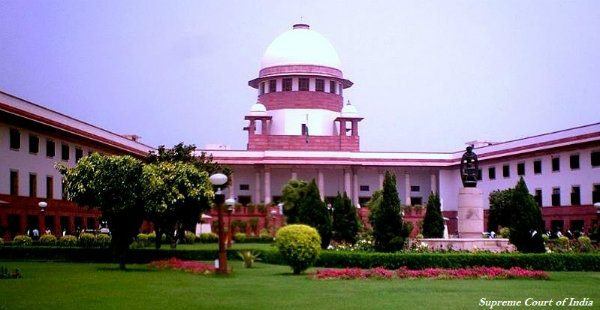
The Supreme Court of India is the highest authority of the judiciary. 

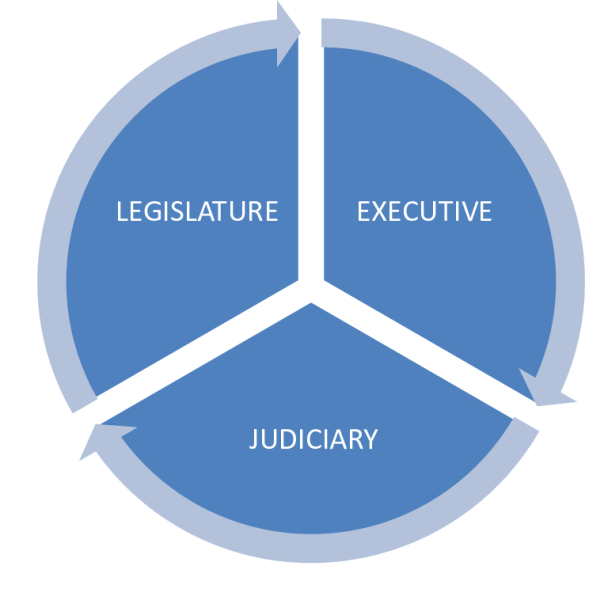
The Judiciary is the third organ of the government. It has the responsibility to apply the laws to specific cases and settle all disputes. The real ‘meaning of law’ is what the judges decide during the course of giving their judgements in various cases. From the citizen’s point of view, Judiciary is the most important organ of the government because it acts as their protector against the possible excesses of legislative and executive organs. Role of Judiciary as the guardian-protector of the constitution and the fundamental rights of the people makes it more respectable than other two organs.

Functions of Judiciary and Its Importance:

1. To Give Justice to the people:

The first and foremost function of the judiciary is to give justice to the people, whenever they may approach it. It awards punishment to those who after trial are found guilty of violating the laws of the state or the rights of the people.

The aggrieved citizens can go to the courts for seeking redress and compensation. They can do so either when they fear any harm to their rights or after they have suffered any loss. The judiciary fixes the quantity and quality of punishment to be given to the criminals. It decides all cases involving grant of compensations to the citizens.

2. Protection of Rights:

The judiciary has the supreme responsibility to safeguard the rights of the people. A citizen has the right to seek the protection of the judiciary in case his rights are violated or threatened to be violated by the government or by private organisations or fellow citizens. In all such cases, it becomes the responsibility of the judiciary to protect his rights of the people.

3. Guardian of the Constitution:

judiciary acts as the guardian of the Constitution. The Constitution is the supreme law of the land and it is the responsibility of the judiciary to interpret and protect it. For this purpose the judiciary can conduct judicial review over any law for determining as to whether or not it is in accordance with the letter and spirit of the constitution. In case any law is found ultra vires (unconstitutional), it is rejected by the judiciary and it becomes invalid for future. This power of the court is called the power of judicial review.

4. Advisory Functions:

Very often the courts are given the responsibility to give advisory opinions to the rulers on any legal matter. For example, the President of India the power to refer to the Supreme Court any question of law or fact which is of public importance.

5. To Conduct Judicial Inquiries:

Judges are very often called upon to head Enquiry Commissions constituted to enquire into some serious incidents resulting from the alleged errors or omissions on the part of government or some public servants. Commissions of enquiry headed by a single judge are also sometimes constituted for investigating important and complicated issues and problems.

Independence of Judiciary led by Supreme Court

The Indian Constitution protects the citizens from any partial judgment. And, this gives the power to the judiciary to make decisions based on the rules of the law, in case of any dispute. Due to such authority, the judiciary of the country is an independent body. The courts of India are not controlled by the government and do not represent any political authority. Such independence allows the judiciary to ensure that there is no misuse of power by any section of the government.

The independence of judiciary calls for ‘separation of powers’. This basically means that both the legislature and the executive branches of the government, cannot interfere with the functions and decisions of the judiciary. So, in order to successfully execute their independent authority, the judges of both high courts and the Supreme Court must be appointed without any influence or interference from other branches of the government. Also, it is very difficult to remove a judge from his/her office, once appointed by the judiciary.

Unlock 3.0

Increase of Corona cases has become routine in India,now government is focusing on unlock 3.0 by giving permissions to movie theaters and gyms

government is planning to shutdown the schools and colleges as usually,only movie theaters with 25% capacity are permitted

Government is planning to conduct entrance exams like jee mains,meet in September inspire increasing of Corona cases

India has crossed 14Million cases

100% Solarization of the Sun Temple and Konark Town

Full Solarization Program

The scheme envisages setting up 10 MW grid-connected solar project and various off-grid solar projects such as solar trees, solar drinking water kiosks, off-grid solar power plants with battery storage etc. The scheme would fulfill all of Konark town’s energy needs with solar power. The scheme receives the funding of about Rs. 25 Crores from the Government of India through the Ministry of New & Renewable Energy (MNRE) from 100 per cent Central Financial Assistance (CFA). Odisha State Agency for the Production of Renewable Energy will introduce the scheme.

Konark Temple

A combination of two words ‘Kona’ and ‘Arka’ is the word Konark. Kona stands for Corner and Arka means Sun. And it is the ‘Sun of the corner’ when combined. Konark Sun Temple is situated on the north-eastern corner of the Puri and was built in the 13th century by King Narasimhadeva I of the Eastern Ganga Dynasty (1238-1264AD), dedicated to god of the sun, Konark.

Architecture of Konark Temple

The massive wheels and horses give the temple a resemblance to the Konark’s chariot of seven horses. The rest of the building is a typical Orissa temple. The outer walls were lavishly decorated with elaborate carvings, but internal carving There was no use of pillars The Shikharas were known as rekha deuls in this school. The mandaps were called Jagamohan. It is also known as the Temple’s Kalinga style Architecture Wheel Various hypotheses have been promoted about the importance of Konark wheel. According to others, twelve pairs of wheels mark the twelve months of the year and the twenty-four wheels mean twenty-four hours a day, and the eight main spokes mean pahars (three-hour period) a day. According to others, the wheels of the chariot have been interpreted as the ‘Wheel of Life’. They portray the cycle of creation, preservation and achievement of realization. Such 12 pairs of wheels may probably also represent the 12 signs of the zodiac.

Seven Horses of the Temple

The image of these seven horses described in different ways The seven horse, which pull the sun temple eastwards towards the dawn, reflects the seven days of the week These seven horses at Konarak are the seven colours visible in a rainbow-VIBGYOR. The seven horses are named after these seven colors: Sahasrara (Violet), Indra-nila (Indigo), Nila (Blue), Haritaha (Green), Pita (Yellow), Kausumbhaha (Orange) and Rakta (Red).

Black Pagoda

Konark temple was named the “Black Pagoda” in European sailor accounts as early as 1676 because its great tower appeared black Second reason, its magnetic force that pulled ships into the shore and triggered shipwrecks. Similarly, the Jagannath Temple in Puri was called the “White Pagoda”. The Konark is the third element of Odisha’s Golden Triangle. The first link is Jagannath Puri and the second link is Bhubaneswar (Capital city of Odisha) Konark temple was initially built on the sea bank but now the sea has receded and the temple is a little away from the beach. Power and New & Renewable Energy Minister R K Singh said, “The Government of India has launched the scheme with the intention of taking forward the dream of Prime Minister (Narendra Modi) to establish the historic sun temple town of Konark in Odisha as ‘Surya Nagri’ to convey a message of synergy between the modern use of solar power and the ancient sun temple and the importance of promoting solar power

250+ apps under the government’s eye; likely to be banned due to security concerns

The Center banned 59 Chinese-linked apps on June 29, including TikTok, Shein, UC Browser and BeautyPlus, saying they were harmful to the country’s sovereignty, integrity and security. After last month ‘s ban on TikTok and 59 other Chinese devices, the government has produced a new list of apps to investigate whether they pose any danger to national security or the privacy of individuals. This time, 275 Chinese phones, including PubG, Zili, Resso, AliExpress, and ULike, have been kept on the radar. Included on the list are apps from other Chinese Internet and Tech majors such as Meitu, LBE Tech, etc. While a subsidiary of South Korean video game company Bluehole created PubG game for smartphones, it is also sponsored by China’s most valuable internet giant Tencent. Zili is owned by Chinese e-commerce company Alibaba, Xiaomi, Resso and ULike are owend by ByteDance and AliExpress.

India is the largest market of PubG

PubG has produced about 17.5 crore installations to date, according to estimates from device intelligence firm Sensor Tower. PubG, is a smartphone game sensation that millions of subscribers alone in India, millions more in the world, mostly teenagers and children. The application is a shooting game based in a battle-royale format.

AliExpress is a China-based online shopping company, operated by the Alibaba Group. Launched in 2010, it consists of small businesses in China and other locations, such as Singapore, that offer products to online buyers from around the world. It contrasted eBay as sellers are independent and use the site to deliver goods to buyers over 300 million unique users in India from Chinese internet companies.

According to the government sources, these apps were red-flagged for security reasons, while others were classified for data sharing violations and privacy concerns. Additionally, the government is examining the alleged flow of data from these apps to China that poses a threat to the sovereignty and integrity of India. Meanwhile, the Ministry of Electronics and Information Technology (MeitY) has sent 77 questions to the 59 Banned-Chinese apps.  The Centre has asked questions like whether they censored content, worked on behalf of foreign governments or lobbied influencers, among others.  The ministry has also given these companies three weeks to respond, i.e, first week of August.

The ban was enforced under Section 69A of the Information Technology Act read with the related provisions of the 2009 Rules of Information Technology (Procedure and Safeguards for Public Blocking of Access to Data), it said. The govt also cited concerns about the transfer of data on Indian users abroad without authorization.

Conjectures of goals

Referring to as goal specificity , one of the most empirically validated sets of things for behavior change and that’s thinking about your goals in a very specific way. Many misconceptions till date have marked that if human stimulus doesn’t respond in a rational and encouraging way about their goals and foreseeing them would also a be a huge fiasco in the coming days. Setting your goals using a couple of techniques that can make your goal achievement a lot easier. The specificities of how we all think when we have goals, like some of you may have goals for some of the stuff we mentioned, but to actually actualize those, you have to consider them as goals. The apparent statistic or researches make it clear to the point where the conjectures of goal setting comes to a conclusion. The quantitative specificity with which you define your goal, it turns out really seems to matter. And it matters in the way that you get specific about the task in the way you’re going to do it, that specificity seems to give you a plan of how to enact it. And so, apparently we can see that across a bunch of different studies. The actual upshot is, for whatever goals you’re thinking about, make those goals incredibly specific. Like the who, what, where, when, all those different parts, write them down, see it quantitatively, and that will help you.

PARAMOUNT : knowing what the goal is. It’s this idea that you’re visualizing your positive future outcomes, everything, how awesome it would be once you get your goal , it just gets better and better when you actually brief it. Know where your true authentic interest is. By contrast, if you only think about the obstacles, you dwell on how hard it is then you’re never going to get around to doing anything. However, if you actually take the time, to again, intentionally and effortfully do both, first indulge in how great it would be and then think about what the obstacles are. It turns out that you now have visualized both things that you need to succeed. And this is what mental contrasting is.

How Easy or Difficult it is to Start a Business in India?

India has improved drastically in the World Bank’s ‘Ease of Doing Business’ 2020 international ranking by moving up to 63 out of 190 countries in the list. India was at rank 130 in a list of 189 countries in 2016. A sudden jump in rank from 130 to 63 is definitely remarkable and shows true business potentials of new India. Although this sounds good there is a lot more to be done for India to continue rising up. Hrishikesh Datar, Founder and CEO of Vakilsearch, a technology driven company empowering Indians with access to trustworthy legal solutions for entrepreneurs, gives his insights into what more can be done to push India further up the ranking.

The World Bank has said “In the year of 2015, India eliminated the paid-in minimum capital requirement and streamlined the process for starting a business. More reforms are ongoing—in starting a business and other areas measured by Doing Business—though the full effects are yet to be felt”.

Doing business in India – a country which the economic pundits say will be the world’s second-largest economy by 2030 (with China top and the USA pushed into third place). Going back a decade or so this assertion might have seemed nothing more than a fantasy, but everybody now seems to agree that India is finally going places. With a rapidly growing population of 1.3 million which boasts a vibrant middle class and a demographic which is heavily weighted towards youth, the potential of India seems almost limitless.

In the past, many developed economies saw India as a destination for the low-cost outsourcing of back-office or R&D-type functions and, whilst this area of the economy continues to thrive, India needs to be viewed in a very different light these days. India is, quite simply, the world’s largest potential market for goods and services. Where China has already developed much of its infrastructure and service economy, India still has enormous work to do. Look around on the streets of Delhi, Bangalore or Chennai and the need for development is obvious – move into the second or third tier cities and this need becomes even more acute.

What does all of this point to? Opportunities. India is a land of endless possibility where the people are aspirational, energetic, open and eager for progress.

Research

The biggest mistake organisations make when looking at India as a market is that they fail to do adequate research. To say that India is enormous would be a massive understatement. A country with 1.3 billion people, multiple languages, ethnicities, climates and geographies cannot be approached as a homogenous unit. You can’t really have an ‘India strategy’ – you probably need multiple India strategies.

The first question has got to be is: ‘Is India the right market for your products or services at this stage of your development, taking into consideration the current needs of India?’ This is not an easy question to answer. So many factors come into play when addressing this – what is your price point, and how does that sit against the competitive landscape in India? Who are your major competitors and how are they faring? Can you afford to invest in India knowing that the returns might not accrue for a number of years? Which city or region would be a good starting point?

All of these questions need answers, but good quality information is not always easy to come by in India. You will need to engage people on the ground in India who can really get under the skin of the local market and get back to you with honest, trustworthy answers to key strategic questions. Don’t convince yourselves you can do all your research via a laptop back in your office or home– you quite simply can’t.

Finding Manpower

India is full of really great potential employees. On the whole, Indians are well-educated, ambitious, enthusiastic and motivated. Lack of local talent definitely isn’t the issue; finding and retaining good people though can be very difficult.

The Indian employment market is very fast-moving. Indians are always on the lookout for ways of improving their career prospects, job titles and income. How are you going to convince good people that you offer them a bright future? Why should they join your company when there is a myriad of opportunities for the type of people you are looking for?

Culture in India

The underlying factors which drive Indian business culture are deeply rooted in the country’s religious, societal and ethnic past. People are often fooled into thinking that because Indian’s often speak good English and because the country has a western-influenced history, that the cultural challenges they might face will be minimal. Nothing could be further from the truth.

You simply cannot hope to succeed in India unless you gain a very good understanding of the local cultural landscape.

Though with huge efforts of Indian government like launching a start-up India portal, Mudra Loan scheme for MSME (medium small & micro enterprises), there’s a lot to be done in collaborate efforts of Indian citizens and Indian government to get into top economic powers of the world.

Problem of Food Wastage in India

Food is the most fundamental among the essential necessities of life . Food squander is the serious issue in our nation which brings down country head with disgrace because numerous individuals passes on every day because of craving.

FOOD WASTAGE

Food wastage primary rotates around any type of food , crude or cooked utilized or unused disposed of or proposed .At wide level it is additionally enhanced into different classes and suggestions, for example, the sort of food squander, the structure it is delivered/created by and materials and wellspring of waste.

ABOUT THE MAGNITUDE OF FOOD WASTAGE IN INDIA

As per reports by the UN’s Food and Agriculture Organization (FAO), about 40 percent of India’s new products of the soil – worth a yearly $8.3bn or thereabouts – perishes before arriving at buyers. Every year, some 21m metric huge amounts of wheat, particularly grain – a sum practically equivalent to Australia’s all out yearly creation – spoils in India in light of ill-advised capacity in the guardianship of the legislature controlled Food Corporation of India.As indicated by an ongoing report by the Indian Institute of Management in Kolkata, cold storerooms are accessible for only 10 percent of India’s transitory produce – and are for the most part utilized for potatoes – to meet India’s hearty interest for chips. The investigation gauges that India needs stockpiling offices for another 370m metric huge amounts of short-lived produce.

CAUSES

1.Weddings blamed for colossal food squander

The monetary development of India won’t tally if the nation individuals bite the dust for hunger.

For imagining families are simply squandering the nation food by surpassing the food things to show there freshly discovered affluence. 1/5 of food served at weddings and get-together s is disposed of, “It’s a criminal waste,” The huge amounts of food squandered at get-together s the nation over every day stands out pointedly from the food deficiencies, frequently verging on constant starvation, looked by a huge number of poor Indians.

2.Inadequate capacity framework

In spite of a great many Indians heading to sleep on an eager stomach, the nation is letting food worth an incredible Rs 44,000 crore go squander every year because of absence of sufficient stockpiling infrastructure.The Saumitra Chaudhuri Committee, comprised by the Planning Commission in 2012, has assessed the nation’s cool stockpiling prerequisite as 61.3 million ton as against the current limit of around 29 million ton.

  1. Awareness

What to state illetrate individual , educated are doing same thing.People are uninformed of the issue the nation is confronting bcz they have cash and they usuallu would prefer not to mind at all until and except if they face a similar circumstance. Indeed, even adminstration resembles a visually impaired framework simply disregarding the fundamental development of the country.

4.Food Waste-to-Energy Conversion

The problem of waste administration stumbles into geologies and its gravest causal specialist, i.e., urban ism, is a worldwide wonder. In any case, its implications are moderately progressively articulated in creating countries by virtue of improved ways of life and changing utilization designs. The developing populace and expanding customer request are prompting unnecessary utilization of accessible assets and age of gigantic measure of various sort of squanders, which is rising as a chronic issue in urban social orders.

5.Lack of transport offices

We in India need appropriate transportation offices to connect with the market just as chilly stockpiling’s for new produce and food crates.The new produce carried on these long excursions is once in a while cooled or concealed, but instead oppressed – particularly in summers – to the rankling sun, making high paces of waste.

Remedies

  • As an individual,” Food that we BUY, EAT and WASTE is legitimately identified with the Global emergency we are confronting. It may be know to all of you that once in a while we eat everything that we purchase. So how about we make it a highlight BUY WHAT WE NEED and EAT WHAT WE BUY”.
  • At the shopper level, we can diminish our commitment to food and vitality
  • squander by taking basic, fundamental strides at home, in the supermarket and at cafe’s.
  • first of all, plan a food menu before each outing to the supermarket so it’s simpler to monitor when vegetables, products of the soil perishables should be eaten consistently.
  • Careful consideration ought to likewise be given to how food is put away and enclosed by the fridge so it doesn’t ruin as fast, and shoppers ought to make sure to purchase just what they will eat.
  • We ought not squander food in our plate , any place we are bcz the food which is going to squander or squandered is the guardian angel of others life.
  • Modernization in the food flexibly chain and increment foriegn speculation , better gathering machines , advancements , food bundling and so forth steps should received by the organization. Japanhas different laws relating to the various reasons for food wastage, for example, Container and Packaging Recycling Law’, ‘Food Wastes Recycling.

“ARRANGE YOUR BAD HABITS AS WASTE NOT FOOD”

Its an opportunity to wake up and this isn’t the obligation of just organization however every single individual .So before squandering a solitary bit of food consistently recall that we are just answerable for Food emergency.