Be Kind First, Be Right Later.

Why Facts Don’t Change Our Minds

 An economist once wrote, “Faced with a choice between changing one’s mind and proving there is no need to do so, almost everyone gets busy with the proof.”

Leo Tolstoy was even bolder: “The most difficult subjects can be explained to the most slow-witted man if he has not formed any idea of them already; but the simplest thing cannot be made clear to the most intelligent man if he is firmly persuaded that he knows already, without a shadow of doubt, what is laid before him.”

What’s going on here? Why don’t facts change our minds? And why would someone continue to believe a false or inaccurate idea anyway? How do such behaviors serve us?

The Logic of False Beliefs

Humans need a reasonably accurate view of the world in order to survive. If your model of reality is wildly different from the actual world, then you struggle to take effective actions each day. 

However, truth and accuracy are not the only things that matter to the human mind. Humans also seem to have a deep desire to belong.

Humans are herd animals. We want to fit in, to bond with others, and to earn the respect and approval of our peers. Such inclinations are essential to our survival. For most of our evolutionary history, our ancestors lived in tribes. Becoming separated from the tribe—or worse, being cast out—was a death sentence.

Understanding the truth of a situation is important, but so is remaining part of a tribe. While these two desires often work well together, they occasionally come into conflict.

In many circumstances, social connection is actually more helpful to your daily life than understanding the truth of a particular fact or idea. The

We don’t always believe things because they are correct. Sometimes we believe things because they make us look good to the people we care about.

False beliefs can be useful in a social sense even if they are not useful in a factual sense. For lack of a better phrase, we might call this approach “factually false, but socially accurate.”  When we have to choose between the two, people often select friends and family over facts.

This insight not only explains why we might hold our tongue at a dinner party or look the other way when our parents say something offensive, but also reveals a better way to change the minds of others.

Facts Don’t Change Our Minds. Friendship Does.

Convincing someone to change their mind is really the process of convincing them to change their tribe. If they abandon their beliefs, they run the risk of losing social ties. You can’t expect someone to change their mind if you take away their community too. You have to give them somewhere to go. Nobody wants their worldview torn apart if loneliness is the outcome.

The way to change people’s minds is to become friends with them, to integrate them into your tribe, to bring them into your circle. Now, they can change their beliefs without the risk of being abandoned socially.

Facts don’t change our minds. Friendship does.

The Spectrum of Beliefs.

If someone you know, like, and trust believes a radical idea, you are more likely to give it merit, weight, or consideration. You already agree with them in most areas of life. Maybe you should change your mind on this one too. But if someone wildly different than you proposes the same radical idea, well, it’s easy to dismiss them as a crackpot.

One way to visualize this distinction is by mapping beliefs on a spectrum. If you divide this spectrum into 10 units and you find yourself at Position 7, then there is little sense in trying to convince someone at Position 1. The gap is too wide. When you’re at Position 7, your time is better spent connecting with people who are at Positions 6 and 8, gradually pulling them in your direction.

The most heated arguments often occur between people on opposite ends of the spectrum, but the most frequent learning occurs from people who are nearby. The closer you are to someone, the more likely it becomes that the one or two beliefs you don’t share will bleed over into your own mind and shape your thinking. The further away an idea is from your current position, the more likely you are to reject it outright.

When it comes to changing people’s minds, it is very difficult to jump from one side to another. You can’t jump down the spectrum. You have to slide down it.

Any idea that is sufficiently different from your current worldview will feel threatening. And the best place to ponder a threatening idea is in a non-threatening environment. As a result, books are often a better vehicle for transforming beliefs than conversations or debates.

In conversation, people have to carefully consider their status and appearance. They want to save face and avoid looking stupid. When confronted with an uncomfortable set of facts, the tendency is often to double down on their current position rather than publicly admit to being wrong.

Books resolve this tension. With a book, the conversation takes place inside someone’s head and without the risk of being judged by others. It’s easier to be open-minded when you aren’t feeling defensive.

Arguments are like a full frontal attack on a person’s identity. Reading a book is like slipping the seed of an idea into a person’s brain and letting it grow on their own terms. There’s enough wrestling going on in someone’s head when they are overcoming a pre-existing belief. They don’t need to wrestle with you too.

Be Kind First, Be Right Later

A  brilliant writer once wrote, “Always remember that to argue, and win, is to break down the reality of the person you are arguing against. It is painful to lose your reality, so be kind, even if you are right.”

When we are in the moment, we can easily forget that the goal is to connect with the other side, collaborate with them, befriend them, and integrate them into our tribe. We are so caught up in winning that we forget about connecting. It’s easy to spend your energy labeling people rather than working with them.

The word “kind” originated from the word “kin.” When you are kind to someone it means you are treating them like family. This, I think, is a good method for actually changing someone’s mind. Develop a friendship. Share a meal. Gift a book.

Be kind first, be right later.

Spiritual Teachings of life: Bhagavad Gita

Bhagavad Gita is a Hindu scripture said by lord Krishna to Arjuna during mahabhart fight. It was said in sanskrit language. Lord Krishna gave this knowledge to arjuna when he was in dilemma due to the result of fight which would led to deaths of many people along with his relatives & many of his loved ones. At that time krishna acted like a counsellor and said Bhagavad Gita.

It is often said that whenever a person is in dilemma then he can find the solutions of his problems just by opening and reading any of the page of Bhagavad Gita. It is actually said by lord Krishna for the future world and one can feel and relate it with their life just by reading it. It has been translated in 75 languages till now including hindi and english. It teaches us a lot to live a happy and peaceful life in this world.

It teaches us that a person can become anything they want to, if they work hard towards their goal with full belief. Person is made with his believes, whatever he believes in, he becomes that. Person who focuses on his deed, instead of fruit he will get, can only become successful in his life.

It teaches us to live in present, it tells us that life is neither living it in the past nor in the future, it is the present moment which we should live. Person without fear, illness, hatred and addiction can get peaceful life in this world and in the paradise. If our mind is not calm, it is difficult to control it, but we can make it possible by practicing. Those who don’t have control on their mind, their minds act like a enemy for them. If we don’t have control over our senses and thoughts then our mind won’t be calm and those whose mind is not calm can’t get peace and without peace, happy life is not possible.

It tells whatever happened, happened for a good, whatever is happening, happening for a good, whatever will happen in future that will also be for good, what was yours, so you are crying? What had you brought that you missed, what had you made that is destroyed? Whatever you took, took from here only, whatever you gave, gave here only, what is yours today, was someone else’s yesterday and will be someone else’s tomorrow. Change is the law of universe. So, don’t become upset over things. We brought nothing to this world and won’t take anything along with us after dying.
History says yesterday was delightful , science says tomorrow will be delightful , but real dharma says if our mind and heart is good and truthful then it will be delightful everyday.

The day we forgets the difference between you and me, our and others, small and big, that day everyone becomes ours and we ourselves becomes of others.

#NoExamsInCovid trends on social media

Covid-19 : Due to the spike in corona cases, students and parents all across the country are demanding for the exams to cancel. A large group of parents filed a petition against conducting CBSE exams in July in pandemic situation in Supreme Court.

HRD Minister Ramesh Pokhriyal conducted review meetings with CBSE, NTA, and the School Education and Literacy department of MHRD. CBSE, NEET and JEE all were supposed to be conducted in July, but corona cases rising rapidly becoming a risky time for students. Amid all these, #NoExamsInCovid are trending over Twitter. Memes are being shared for cancellation of exams.

The student body, National Students’ Union of India (NSUI), has demanded the cancellation of ICAI CA and ICSI CS exams 2020 which are scheduled from July-end to mid-August.

CBSE had informed the Supreme Court that a decision would be made on the CBSE exams in July within June 23.HRD Minister Ramesh Pokhriyal Nishank has been holding regular consultations on the issue, as well as demands for postponement or cancellation of the National Eligibility cum Entrance Test (NEET) and JEE (Joint Entrance Exam), entrance examinations for admission to medical and engineering courses.

Any further postponement in the CBSE’s school Board examinations will also lead to further delays in college admissions and the higher education schedule for the next academic year, said an official. If the examinations are cancelled internal assessment scores may be considered instead, along with the student’s performance in the examinations already completed.

However, students are sharing memes on social idea for expressing their views on exams. We can only wait for further announcements.

Global warming…

Global warming is the ongoing rise of the average temperature of the Earth’s climate system due to greenhouse gases released as people burn fossil fuels.

CAUSES OF GLOBAL WARMING

Global warming causes due to increasing concentration of greenhouse gases in the atmosphere mainly from human activities such as burning fossil fuels, deforestation, and farming.

  1. Burning fossil fuels- When we burn fossil fuels like coal, oil and gas to create power for our cars and generate electricity, it will lead to CO2 production in the atmosphere.
  2. Deforestation and tree clearing- Plants and trees play a very important role in regulating climate as absorb CO2 from the atmosphere and give back O2. Forests act as carbon sinks and it keeps global warming to 1.5 degree Celsius. But human are consistently clearing the vegetation for farming, making infrastructure or to sell tree products such as timber. When these are removed or burnt which again release CO2 back into atmosphere which contribute into global warming.
  3. Agriculture & farming- Livestock like sheep and cattle produce methane, a greenhouse gas. Some fertilizers that farmer use also release nitrous oxide, which is also a greenhouse gas.

Global warming occurs when CO2 and other air pollutants and greenhouse gases, collect in the atmosphere and absorb sunlight and solar radiation that have bounced of the earth’s surface. Normally, these radiation would escape into space but these pollutants trap the heat which causes the planet to get hotter. These pollutant lasts for years to centuries in the atmosphere.

EFFECTS OF GLOBAL WARMING

  1. It leads to extreme weather events such as heat waves, droughts, cyclones, bizzards and rainstorms.
  2. It leads to flood as trees have the water holding capacity in the roots and we cut the trees then chances of flood increases.
  3. Prolonged periods of warmer temperature typically soil and underbrush to be drier for longer periods, increase the risk of wildfire.
  4. Global warming also effects on ocean. Ongoing effects include rising sea level due to thermal expansion and melting of glaciers and ice sheets and warming of ocean surface leading to increased temperature stratification.
  5. Warmer water cannot contain as much oxygen as cold water, so heating is expected to lead to less oxygen in the ocean which leads to oxygen depletion.

These are only some effects. There are many more effects, so it is necessary to do something to reduce global warming.

HOW CAN WE REDUCE GLOBAL WARMING

  1. Apply 3Rs in your life- Reduce, Reuse, Recycle. Use reusable products instead of disposable products. Eg: reusable water bottle. Buy products with minimum packaging to reduce waste. Always recycle things like paper, plastic, newspaper, glass and aluminium foil.
  2. Use less heat or air conditioner. Adding insulation to your walls and attics and installing weather stripping and caulking around doors and windows can lower your heating cost more than 25% by reducing the amount of energy you need to heat and cool your home.
  3. Replace regular light bulbs with LED bulbs, they are even better than CFLs.
  4. Use cycle and walking instead of using cars. Try to check out options for carpooling. If you are driving make sure that your car is running efficiently.
  5. Use less hot water, set your water heater at 120 degrees to save energy. Buy low-flow showerheads to save hot water and about 350 pounds to CO2 yearly.
  6. Save electricity and reduce global warming by turning off the lights when you leave the room and use only as much light you need.
  7. Try to plant a tree once in a year. Trees will absorb CO2 and give off O2 which helps to reduce global warming.

Try to apply these small steps and save your earth from global warming. It is your earth and it is your responsibility to save earth.

Experimental Archaeology: Hides and Leather in Bronze Age

Introduction

The term experimental archaeology is a way of describing the collection of facts and theories that have been assembled through a careful reconstruction and function of ancient remains.
This topic attempts to provide a brief description of the example to show the advantages and disadvantages of various approaches to this varied subject. Let us take the example of hide and leather from the Bronze Age and interpret the application of experimental archaeology in it.
Paleolithic cave paintings depict figures wearing skins and furs, and excavations at these sites have revealed an active leather industry. Flint instruments, including knives, scrapers, and awls used for removing flesh, have been found in addition to wooden poles and beams used for beating and draping hides.

Later Neolithic and Bronze Age sites have yielded leather dagger sheaths, scabbards, shields, etc that indicates that leather manufacture was mastered early in human history. Those leather manufacturing underwent various step by step procedures, that has been mentioned and explained in the next section.

Hide and Leather- Methodology
The experiments on hide and leather have been made, as ancient methods of preparing and tanning hides appear to be well understood. Analysis of surviving materials has also contributed to this. A recent experiment on leather-working involved the production of a shield comparable in appearance to a surviving Irish specimen. The shield presented special problems, because it had to be ribbed, hardened and made waterproof. After a cold soak to soften the leather, it was scrubbed to remove any excess tannin, and then beaten into a wooden mould. The drying process took three days, with regular hammering to prevent shrinkage. After this the shield was functional, but would soften under damp conditions. In Ireland, and Scotland, it would without doubt be necessary to make some precaution against the damp, so that the shield would not collapse. Various methods of hardening and waterproofing were attempted, and the most practical were the use of boiling water either poured on to the shield or employed as a dip, and immersion of the shield in hot wax or beeswax could be used for approximately 30 seconds, to allow penetration of the wax through the leather.

Bronze Age Yetholm type copper alloy shield (c.1300-975BC)

Both methods were successful in producing stiffened shields capable of withstanding prolonged damp conditions, particularly the wax-impregnation method. The experiment continued with the production of a metal shield of comparable thinness and hardness to the Late Bronze Age shields from Aberdeenshire, Yetholm etc. This and one of the leather shields were selected for the final experiment to test their capabilities in standing up to blows and thrusts of sword and spear. The metal shield was cut and slashed to pieces by the first blows. The leather shield withstood repeated heavy blows of a copy of a Bronze Age sword specially sharpened for the occasion.

Bronze Age swords and shields.


Purpose

Actually the metal shields were not suitable for actual physical conflict, but the leather shields could have served a useful function in battle. It is the aim of archaeology to obtain more information and new sources of information to add to the foundations of knowledge upon which our culture is based.

Experimental archaeology, when employed scientifically and with an awareness of its limitations, can add materially to our sources of knowledge about the past, and may be considered as an important way in which archaeology can come to grips with the mental processes, plans and activities of prehistoric man.

Therefore, in a nutshell it can be said that the purpose of experimental archaeology in recreating hide and leather shields of the Bronze Age is to understand the ancient methods that underwent in making of those shields in the pre historic period, so that the essence of those ancient methods could be understood.

FOOD SPOILAGE

Food is considered contaminated when unwanted microorganisms are present. Most of the time, the contamination is natural, but sometimes it can be artificial too.
NATURAL CONTAMINATION occurs when microorganisms attach themselves to foods while the foods are in growing stages.
ARTIFICIAL CONTAMINATION occurs when the food is handled or processed such as when fecal bacteria enter food through improper handling procedures.
CAUSES OF FOOD SPOILAGE:

  1. Growth and Activity of microorganisms – Bacteria, yeasts and molds are microorganisms that cause food spoilage. They produce various enzymes that decompose various constituents of food.
  2. Enzyme activity – Action of enzymes start the decomposition of various food components after death of plants and animals.
  3. Chemical reactions – These are the reactions that are not catalyzed by any enzyme. E.g. Oxidation of fats
  4. Vermin – It includes weevils, ants, rats, mice, birds, larval stage of some insects. Vermin are important due to asthetic aspect of their presence, possible transmission of pathogenic agents and consumption of food.
  5. Physical changes – These include changes caused by freezing, burning, drying, pressure etc.
    SOURCES OF FOOD CONTAMINATION. PHYSICAL SPOILAGE is due to physical damage to food during harvesting, processing or distribution. The damage increases the chance of chemical or microbial spoilage and contamination because the protective outer layer of food is broken and microorganisms can enter through it. CHEMICAL SPOILAGE in food are responsible for changes in the color and flavor of foods during processing and storage. After harvesting, chemical changes begin automatically within foods and lead to deterioration. Every living organism uses specialized proteins called enzymes to drive the chemical reactions in its cell. After death, enzymes play an important role in the decomposition of living tissues in a process called as autolysis (self-destruction) or ENZYMATIC SPOILAGE. MICROBIAL SPOILAGE is due to bacteria, yeasts or molds. They produce various enzymes that decompose various constituents of food. • Besides natural microorganisms, foods can be contaminated with different types of microbes coming from outside sources such as air, soil, sewage water, humans, food ingredients, equipments, packages, insects, etc.

The primary sources of microorganisms in food may include –

  1. Soil and Water – Soil grows agricultural produce and raise animals and birds which might contain several microorganisms. Also, these microbes can multiply in soil and their numbers can be even very high as expected. Fecal materials may also contaminate soils which can act as a source of microorganisms. Sewage water can also contaminate crops with variety of microorganisms when sewage water is used as a fertilizer. So, Sewage must be always treated before using as a fertilizer.
  2. Plants and plant products – The inside tissue of food from plant sources are essentially sterile except for few porous vegetables such as radish, onion and cabbage. Also it has been observed that some plants produce natural metabolites that can limit the presence of microorganisms in those particular foods. Fruits and vegetables contain a variety of microorganisms on their surface and their presence and number depends on various factors such as disease of the plant, storage, etc.
  3. Food utensils – Many different microorganisms can contaminate food utensils from which they can transmit to human body and make them ill if pathogenic. Proper cleansing and sanitization of food utensils is required before serving food in them.
  4. Food handlers – Food handler is a person who touches or handles food. The microorganism may be transmitted from his hand to the food and may be harmful for the person consuming that particular food. The microbes can come from animals or from the environment.
  5. Animal hides and skins – Food animals and birds normally carry various indigenous microorganisms some of which are pathogens and are responsible for food-borne diseases in humans. The number of these microorganisms is less than10/g.
  6. Air and dust – Microorganisms may be present in dust and moisture droplets in the air. The microorganisms which are present in air may be transient or variable depending on the environment. Some pathogenic microorganisms may cause air-borne diseases.

Dealing With Anger Issues

Emotions are part of human life. An emotion is how we feel and we all feel certain things a certain way and it’s okay to express them. Happiness, sadness, anger,  anxiety, love etc are all emotions every human experiences in his life. While feeling every emotion at a point of time is completely fine, what matters is how you express them. Expressing an emotion a certain way, with love and care can build a lot of relationships and strengthen various bonds, but some ways of expressing emotions can also cause damage and become harmful to your surroundings. One of those very powerful as well as dangerous emotions is anger. Feeling angry is fine and is important at times, but there is a right way to express it and to deal with it. Throwing your anger out on a certain person might be disastrous to your relationship with them or their mental health in specific. Extreme anger can also cause mental issues like anxiety issues, panic attacks, depression, etc. But the positive side of this is that there are many ways to deal with it and control it.  Here are some ways you can control your anger so it does not prove to be detrimental to your relationships with people around you or at work-

  1. Music- Music is a great way to deal with anger issues as it relaxes the body as well as the mind. Music therapy is used all around the world to cure depression, anxiety, anger issues as well as other mental illnesses. A good soothing song can put you in a good mood and make you feel relaxed when you are feeling angry. So next time you feel angry and you feel like you are going to go over the edge ,sit down and listen to your favourite playlist. 
  2. Meditation- Meditation is a great way to gain control over your mind and cure anger issues and other mental health issues. Meditation is highly underrated but has some very unique and powerful long-term benefits. Meditating every day in the morning for 20 minutes can help you be more focused throughout your day and gain control over your anger so you don’t harm yourself and your ambience. 
  3. Exercise- Exercise is a great way to release tension in your body and mind and it can help you think straight. Exercising increases the circulation of blood in your body and makes your mind feel more in control. As we have all heard a healthy mind is the result of a healthy body. Exercising can release stress that is built up in your mind and help you take command. 
  4. Healthy Diet- It is a common misconception that food does not affect your mental health.  Like having a good diet with all the important vitamins and minerals can keep your Body in good shape, it can also keep your brain and mind in a healthy condition. Being hungry often increases stress and makes a person get irritated quicker. Eating well will not only make you feel good but also help you concentrate on your work better. 

So next time you feel angry. Try one of these and save yourself and the people around you. 

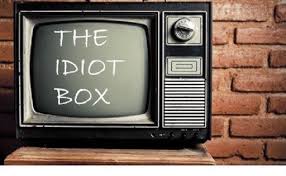
TELEVISION AS AN IDIOT BOX: A PERSPECTIVE

Television in the 20th century emerged as a potent medium of entertainment, information and education. It has a profound way of influencing our thought process, attitudes and beliefs and it all hinges on the amount of television we watch. When children are exposed to this device, initially the box attracts and eventually, it starts distracting. A child develops a fondness for programs and over a while, the tendency to watch for long hours increases. Ultimately a child ends us spending considerable time watching TV. It is a herculean task to strike a balance between physical activities, homework, house chores and leisure time, especially for school going kids. As they devote time to television, striking balance becomes ever tricky, and a child becomes a victim of hyperactivity. With eyes glued to the box, the idiot box holds a child’s attention entirely, cutting him/ her from the rest of the world.

We understand that the environment is a great teacher, and one must move out to learn and explore life. But now that this child is living inadvertently in isolation, alas there rises a threat to overall development. Yes, the world of TV provides numerous experiences; it offers knowledge that otherwise wouldn’t be available to us. Studies also reveal that learners learn faster and better from TV than classroom instruction and even retain information for a longer duration. There’s a catch though- Not all content is suitable to be viewed by children. There is a dramatic increase in violence, coarse language, murder, crime and emotional ‘atyachaar’. Children entering into adolescence and children already in it are quite vulnerable to such feeding. They are uncritical of the information they receive and may commit acts under its influence, which can bring nothing but bad name. In this day and age, there are complaints of poor conduct, antisocial behaviour and aggressive attitude displayed by children at home. Who’s the culprit? The Idiot Box is one of the many things which condition such behaviour in intense viewers.

Wasting time is an inherent shortcoming of TV. Viewer’s reading ability also suffers. There is no benefit to our academic skills and other skills. Children don’t view programs which their parents want either way. Activities like active play outside with friends, eating dinner together with family or reading are compromised. The Idiot box also takes away time, particularly from sports, music, art or other activities that require practise to become skilful.

There are so many points that go against the television:

  1. It increases the spending habit as people want to upgrade to HD connections and also to bigger LEDs. Children wish to game consoles which further adds to the family cost.
  2. It has detrimental effects on a child’s brain. A child, when growing up, may struggle to engage socially.
  3. Book writer Stephen King believes that watching television kills creativity. Many say it shuts down critical thinking. The noise emitted from screens is so mesmerising to kids that it captures their attention entirely separating them from people around.
  4. Interacting with other children and people is essential for personality development. The lesser a child engages with them; difficulty generates, and there are complaints of poor conduct and antisocial behaviour.
  5. There are some instances where overexposure to TV leads to poor grades at school and develops aggressive behaviour.
  6. Too much junk food on TV can mean too much desire for it.
  7. Some people watch it for pass time. What they don’t realise is that becoming a follower of a daily soap can be taxing their mind. All sorts of anxiety, frustration and depression can happen.
  8. TV appeals more to emotions than logic. People watch it more for fun than learning.
  9. TV addicts can feel that they have lost a friend if they prolong their TV viewing.

Even adults can’t escape the magnetic charm of the idiot box. Excessive TV viewing is contributing to sleep problem, behaviour problems, obesity, laziness, and leads to several health issues. A homemaker subject to too much daily soap viewing will not gain much, and even if she does, the chances are that more negativity will be taken than positivity. The Idiot box lastly provides only a monologue; there’s no scope for dialogue. And we humans must reciprocate to learn, to clear our doubts, to move forward in life and to take the right decision. The only idiot delivers one-way communication; therefore, TV is an Idiot box.

Moving on

someone can be madly in love with you and still not be ready. They can love you in a way that you have never been loved and still not join you on the bridge. And whatever their reasons you must leave. Because you never have to inspire anyone to meet you on the bridge . You never ever have to convince someone to do the work to be ready. There is more extraordinary love, more of love that you have never seen , out here in the wide and wild universe .And there is the love that will be ready for you . will have your back . If you are in a place where you think you or your significant other is not ready just pick up your shit and leave. Yes collecting everything and leaving is not easy but after a awhile , the hurt hurts less . You start to see reason , understand why they did what they did .Knowing that is takes two hands to clap. Learn that everyone you meet will not stay in you life forever. Sometimes , they are a passing character in the chapter of your book .There to teach you certain lesson, to help you experience different things in life – different emotions, to grow , and maybe to show you how to love yourself better. find your worth.

Some of these characters will be difficult to replace when their time has come to an end in a chapter of your life. But , it is important to learn and to see the necessity to let them go, even if you don’t want to.

At the beginning, it will hurt. Its the kind of hurt that will leave you crying till you fall asleep at 3 am, puffy eyes, nose blocked and swollen . The kinda that follows you everywhere – reminding you of the memories you had once shared at particular places you pass by. the hurt that leaves you thinking that if you ever meant anything to them . Heartbreak is inevitable,especially with the people you love . But if its one thing that i have learnt it would be : you cannot have expectations .

You cant expect them to love you back the same way that you love them , with the same amount of intensity, and that my friend is the sad truth. The way you love someone- that does not determine the way that person is going to love you back . You can have multiple connects with people , but that does not necessarily mean that they are meant for you, and darling , its the same with love . This applies to both friendship and relationships, as we hate to admit it.

The hardest part about losing someone you love is not the goodbye, rather than learning to live without them and learning to let’em go. And what fuels that hurt is how they are able to move on easily without you.But can you blame them? Honestly you can’t . My mum always said, “If you really love that person , you will want them to be happy.Even if that means that they are gonna be happy without you , you will respect that and let them go. Just because you want them to be happy ” But what if I don’t want to let them go ? would you rather be happy with someone who doesn’t feel the same kind of happiness with you? that bothered me, a lot honestly. the one thing that people crave is being love and valued. However when you look for love, to find that healing to fill that void they have left – i have found that it never really works out. Its not purely genuine? I feel its more of a forced connection because you want to fill that void. you crave that drug and rush called’ ” love” because its a beautiful feeling. However the best kind of love something that i find the purest, is unexpected love . Because you are not looking for something, you are not looking for healing . Sometimes through the people that we meet , we find healing . And the world doesn’t seem bitter after all.

They help you get back onto your feet , but you are much stronger now . Stronger than before, aware. Aware of how love can be so fragile and pure and strengthening yet it has the power to break, shatter and destroy. Wiser as to who you allow yourself to love.

Education Includes Learning?

Education is something that is done to you. Learning is something you do for yourself.

                 ~ Joi Ito

Rightly said, learning is for yourself, your life, your dreams, your experiences, your journey, while education is something we get from others. It gives us access to the knowledge that is already there and we just need to study and remember it. Do you remember how many years of your life you have spent on studying or how many years yet to give up on this? I calculated it today and it blew my mind! In my eighteen years of life, I have given almost my entire life to study till date. Still there is one question nudging me inside out, what would I call it; years of my education or years of my learning?

As a kid I was always encouraged to study and get good marks. Marks were always the deciding factor and they defined me as a good student or weak student. I never wanted to be in weak category so I gave my best to get those numbers and still I am giving my best. During my primary classes I was often rewarded by my parents based on my mark sheet. I didn’t understand the importance of education back then, but I know now and I feel it wasn’t a best way to encourage me or any other student. It was like parents using gifts as a bribe in exchange for good numbers by their kids. Are we just trying to get educated and have a mark sheet with us for rest of our lives? Studious is not always the best. I am not doubting the importance of education but there’s only one thing I wonder and that is “should we be focusing more on learning rather than this mark sheet stuff”.

From my personal experience, I spent most of my school life being a spod. I used to get good marks and lots of appreciations and trust me that’s not bad either but only educating and not learning is bad. When I developed my interest more in literature my loved ones supported me no matter what.  When it was “show time” 12th standard, I couldn’t achieve that much. It did hurt to see my low scores, my parents were affected more than ever and there was one more thing nudging us like a weed “clucking magpies”. Coming out all these things my family supported me. All my glorious mark sheets of previous classes with amazing numbers are now lying down nicely in my cupboard drawer while I am achieving my dream from learning.

However if you ask me today, I am applying zero percent of what I studied back then, in my day to day life. Instead what is helping is the learning and experience I had shared at every point of life. All those numbers are now forgotten, the only thing matters is my learning and experiences.

While I was studying some formula for trigonometry back in my school days, I often used to think who will teach us how to deal with life and its situations or it is meant to be learning in a hard way!

What we don’t know about Ocean?

Ocean cover 70 % of Earth’s surface and still we human know more about the surface of the mars than Earth’s oceans,but just about time scientist our making progress but there is still lot of work in targeting the fully-mapping of Earth’s Ocean.The Seabed 2030 Project launched in 2017 have made a progress , the scientist have successfully mapped 19 percent of the Earth’s ocean.The GEBCO_2019 Grid was the first global bathymetric grid released which remarkably collected depth data of 5.6 million squares for the seabed 2030 project.The project is a collaboration between the Nippon Foundation of Japan and GEBCO. This initiative has been assisted by 133 contributors,and partners.The seabed project 2030 target to generate the definite map of the earth oceans so that it can be available to all.

However ,the fulfillment of this project would improve the human understanding about the Earth’s ocean all together with tides and tsunami and even it help in underlying data cables evidently improving data access for everyone .

Let’s start exploring the facts about Earth’s oceans which might you don’t know.

Internet |Undersea Cable

Since most of you might not know that 99 % of International data is transferred by wires at the bottom of the ocean surface.Recently ,Google has announced about its third private undersea internet cable network which will run between Europe and Africa.

Gold in the Ocean

It might make you surprise that according to National Ocean Service, Earth’s oceans hold somewhat about 20 million pounds of gold,but you fortunate to take it since it so diluted that it’s measured in parts per trillion. For over a years scientist are trying to find a way to extract gold from sea water but everything has proven to be pointless.

Marine Life

Marine life is still unexplored by humans .We have only explored 10% of marine life.An estimated 50-80% of all life on earth is found under the Earth’s ocean surface .But there’s a progress ,on average 2000 species are found every year.

Tsunami

Tsunami is a series of wave produced by an underwater earthquake .In 2004 ,Tsunami takes way 230,000 lives in a matter of hours.This was the deadliest tsunami ever experienced .

Ocean helps us breathe

Over more than half of the oxygen come from Earth’s ocean .That’s right .Every time we breathe we should thank oxygen Since 70 percent of the oxygen in atmosphere come from arine photosynthesizers , like phytoplankton and seaweed.

Ocean is really very very deep than that we imagine

The average ocean depth is 2.3 miles.The deepest part of the ocean is known as Challenger Deep and is located below the western Pacific Ocean in the southern end of the Mariana Trench.Challenger Deep is approximately 36,200 feet deep.

In last i want to say save the ocean.Don’t forget it provide to oxygen to survive and they contain 97% of water and moreover it take carbon dioxide from atmosphere hence reduce risk of climate change .To live we need healthy oceans. We have to take precautionary measure from our side.Unfortunately people are becoming careless,over 50% of sea turtles found dead because they are eating lot of plastic .If we want to save marine life ,stop using plastic.Even your small steps will altogether help to make a big change .Encourage your friends and family to help in saving the oceans.

Please let me know your thoughts in the comment below and have a wonderful day.

Indian Politics and the Chinese Factor

The brutal killing of 20 personnel of the Indian Army, including a colonel-level officer, by China’s People’s Liberation Army (PLA) in the Galwan Valley on the night of June 15 will reverberate across India for a long time to come. Indian security personnel — from the armed forces, paramilitary forces, and the police — have often given their lives in the quest to defend India’s territorial integrity, sovereignty and the Constitution. And as often, their contribution is forgotten.But Colonel Santosh Babu and the 19 other men killed in the line of duty will stay on in public memory for three reasons. First, this was the first time since 1975 that Indian blood was shed defending the border against China. Two, the nature of the killing was brutal — PLA, in what India has called a “pre-meditated” attack, violated norms of war. And India and China are not even officially at war. And finally, their killing has highlighted the place of Ladakh in general, and Galwan Valley in particular, as essential to India’s territorial imagination.

This, then, can make June 15 — or Ladakh 2020 — the moment when, for two generations of Indians, the security threat from China has become tangible and real. It can make it the moment when discussions about the “competitive-cooperative” relationship with China and how to navigate great power politics will move beyond the rarefied seminar circuits of elite analysts and assume a strong place in public consciousness. And it can make it the moment when China becomes an issue in Indian domestic politics, strongly tied to public opinion, partisan positions, and the idea of nationalism.

The intersection of domestic politics and foreign policy is old. Indeed, a lot of scholarship suggests that foreign policy itself is the extension of domestic politics and is shaped substantially by it.

Fathoming the Depth of Their Relationship

The tensions between China and India are real, but they will eventually prove to be aberrant. There are three good reasons for believing that: one historic, one economic, and one strategic.

First, China and India sealed their borders in modern times, but in the 2,000 years preceding the conflict of 1962, the two countries enjoyed strong economic, religious, and cultural ties. By the second century bc, the southern branch of the Silk Road—an interconnected series of ancient trade routes on land and sea—linked the cities of Xi’an in China and Pataliputra in India. Trade on the Tea and Horse Road, as the Chinese called it, was a significant factor in the growth of the Chinese and Indian civilizations. Seen in that light, the closing of the Sino–Indian border—not the border’s reopening—is the anomaly.

In fact, Buddhism traveled from India to China in 67 ad along the Silk Road. In those days, the relationship between China and India was one of mutual respect and admiration. The monk Fa-hsien (337 to 422 ad), who traveled from China to India to study Buddhism, referred to the latter as Madhyadesa (Sanskrit for “Middle Kingdom”), which is similar in meaning to Zhongguo, the word the Chinese used to describe China. In the 1930s, no less a scholar than Beijing University’s Hu Shih said that the sixth century ad marked the “Indianization of China.” Even today, visits by Chinese and Indian leaders include a trip to a Buddhist shrine in the host nation.

There was also much goodwill after the birth of the two modern states, India in 1947 and China in 1949. During the 1930s, India’s future prime minister Jawaharlal Nehru frequently wrote about how India supported the struggles of fellow Asians under the foreign yoke. He organized marches in India in support of China’s freedom, organized a boycott of Japanese goods, and in 1937 sent a medical mission to help the Chinese. India was the second non-Communist country, after Burma, to recognize the People’s Republic of China, in 1950. Five years later, India supported the idea that China should attend the Bandung Conference, in Indonesia, which led to the creation of the Non-Aligned Movement, an alliance of developing countries that supported neither the United States nor the Soviet Union. In those heady years, one slogan heard in India was Hindi Chini Bhai Bhai (“Indians and Chinese are Brothers”). The slogan hasn’t been forgotten; China’s premier, Wen Jiabao, repeated it in 2006 when he visited the Indian Institute of Technology in Delhi.

Second, economists tell us that neighbors tend to trade more than other nations do. An official committee set up to encourage commerce between China and India recently suggested that bilateral trade could touch $50 billion by 2010. Even the official numbers understate the potential, according to economists who use gravity models to estimate what the trade between two countries should be. Such models calculate potential bilateral trade as a function of the size of the nations, the physical distance between them, and other factors such as whether they share a language, a colonial past, a border, membership of a free-trade zone, and so on. Sino–Indian trade today is up to 40% less than it could be, according to those models. Moreover, Sino–Indian trade is more balanced than China’s trade with the United States and Europe; the latter countries’ large deficits cause political friction.

Third, China and India, after they cut themselves off from each other, evolved in complementary ways that reduced the competitiveness between them. What China is good at, India is not—and vice versa. China instituted sweeping economic reforms in 1978 and has steadily opened up thereafter. A balance-of-payments crisis forced India’s reforms in 1991, but because of political factors, liberalization has been slow and piecemeal there ever since. China uses top-down authority to channel entrepreneurship; in fact, the government is the entrepreneur in many cases. India revels in a private sector–led frenzy, and its government is incapable of efficiency. China struggles to control fixed asset investment, while India is constrained by scarce capital. China welcomes foreigners, shunning only those who are not part of its power structure. India shuns foreigners and mollycoddles its own. China’s capital markets are nonexistent; India’s are among the best in the emerging markets. And so on. There are no two countries more yin and yang than China and India.

Getting the Best of Both Worlds

These complementarities pose both an opportunity and a threat. It’s easy to spot the advantages of treating China and India synergistically and getting the best of both worlds. Companies can use China to make almost anything cheaply. They can turn to India to design and develop products cost-effectively; they can also hire Indian talent to market and service products. For instance, China’s Lenovo, which purchased IBM’s PC business in 2005, recently moved its global ad-management function from Shanghai to Bangalore. That’s because India has a highly creative and sophisticated advertising industry.

To be sure, Chinese and Indian companies will compete intensely with each other. That doesn’t mean that the rise of one will necessarily be at the expense of the other. For instance, as the Chinese government tries to develop a software industry, Indian companies such as Infosys, Tata Consultancy Services, and Satyam have been among the first to recruit Chinese engineers. Does that mean they are sowing the seeds of their own destruction? Not really. Most Indian companies have gone into China to provide software services to their multinational clients. Chinese firms will try to compete for those contracts, even as Indian companies fight for a share of the local Chinese market. China will gain from having a software industry, but the benefits may not come at the expense of India’s software industry.

The Current Backlash

In a hardening of stance in the backdrop of tensions at the Indo-China border, the government has decided to ask state-owned Bharat Sanchar Nigam Ltd (BSNL) not to use Chinese telecom gear in its 4G upgradation, which is being supported as part of the company revival package, according to sources. The development comes at a time when Indian and Chinese armies are engaged in a standoff in Pangong Tso, Galwan Valley, Demchok and Daulat Beg Oldie in eastern Ladakh. The standoff has stirred anti-China sentiments in India, with protesters and some trade bodies like Confederation of All India Traders calling for a boycott of Chinese products in protest to border standoff. Amid the face-off between Indian and Chinese troops in Galwan Valley, hashtags like “HindiCheeniByeBye” and “BharatVsChina” were trending on Twitter.

The Indian strategic community has long recognised China as a threat. The border dispute and Beijing’s efforts to change the facts on the ground by its consistent incursions; its claim over Arunachal Pradesh, particularly Tawang; the large trade deficit; China’s firm support to its “all-weather friend”, Pakistan, now buttressed by the China-Pakistan economic corridor; its efforts to box in India by encouraging regimes hostile to New Delhi in the neighbourhood; its moves to thwart India’s legitimate ambitions (such as permanent membership of the Security Council or entry into the Nuclear Suppliers Group); and its ambitions to establish new style imperialism through the Belt and Road Initiative have all been closely noted and are a part of the institutional memory of the government of India.

But along with this, there is also a recognition of the power asymmetry between the two countries. India’s economy is much weaker; its military and technological capabilities don’t match up to China; its State capacity is more limited; and in the maze that is international politics, China is a more significant player and India cannot rely on partnerships and external bandwagoning. Along with it, India — at this stage of its economic development — needs foreign capital and investment, and deepening economic interdependence with China has been seen as a way to both neutralise the competitive elements and aid Indian development.

The killings of June 15 have suddenly woken a large number of citizens to the fact that Pakistan is an important, but perhaps not the most important, security challenge India confronts. The Chinese willingness to assert itself abroad under President Xi Jinping, and the power differential with India, makes it a more serious adversary. The calls for boycotting Chinese goods may be populist and rooted in ignorance of economic realities but they reflect the emerging mood about China, which is going beyond suspicion to a degree of loathing.

The evolution of public opinion is bound to have an impact on political discourse. And that is why even a prime minister such as Narendra Modi — who has proudly worn the badge of nationalism and presented himself as a security hawk — had to face tough questions, not just from critics but also more independent observers, about his claim on Friday night that there is no external presence in Indian territory. The Prime Minister’s Office, on Saturday, came up with a clarification. But the response to his initial statement is instructive. Indian public opinion is not in the mood to tolerate even the hint of a territorial concession to China anymore.

This, then, will have an impact on the politics of nationalism in India. The Bharatiya Janata Party (BJP) — by disengaging with Pakistan till it acts on terror and through the surgical and air strikes under its term in office — has projected itself as a staunchly nationalist force. But now, it will have to be accountable for its actions on China too. The well-meaning advice to the Opposition not to “politicise” the national security issue may go unheeded, for if the ruling dispensation has benefited from weaponising national security for electoral ends, the Opposition will seek to emulate the same. Expect the BJP to talk about Pakistan, and expect the Opposition to counter it with China from now on. Ladakh 2020 has introduced the China factor into Indian politics. Its consequences will be long-lasting.

Brain damage due to Covid-19

During the third week of March, as the pandemic coronavirus that causes Covid-19 was beginning to grip the city of Detroit, an ambulance sped through its streets to Henry Ford Hospital. Inside, a 58-year-old airline worker struggled to understand what was happening to her. Like hundreds of other Covid-19 patients flooding the city’s emergency rooms, the woman had a fever, cough, and aching muscles. But something else was happening too—something that had made her suddenly disoriented, unable to remember anything but her name.

Doctors at Henry Ford tested the woman for Covid-19, and she came back positive. They also ordered CT and MRI scans. The images showed a brain aflame, its folds swelling against the patient’s skull. On the computer screen, white lesions dotted the gray cross-sectioned landscape—each one filled with dead and dying neurons in regions that normally relay sensory signals, regulate alertness, and access memories. On the screen they appeared white. But in the electrical grid of the patient’s brain, those areas had gone dark.

Her doctors diagnosed a dangerous condition called acute necrotizing hemorrhagic encephalopathy, or ANE, which they detailed in the journal Radiology last month. It’s a rare complication known to occasionally accompany influenza and other viral infections, though usually in children. With the flu, scientists believe such brain damage is caused not so much by the virus itself but by squalls of inflammation-inducing molecules called cytokines, which are sometimes produced in excess by the body’s immune system during an infection. Scientists are still trying to figure out if the same is true for Covid-19, or if the coronavirus called SARS-CoV-2 is actually invading the nervous system directly. It’s an open question, the answer to which could have wide-ranging implications for how doctors diagnose and treat Covid-19 patients.

By now you’re probably familiar with the typical hallmarks of Covid-19, the disease that has so far killed more than 125,000 people around the world: fever, cough, difficulty breathing. But stories of other, stranger symptoms—headaches, confusion, seizures, tingling and numbness, the loss of smell or taste—have been bubbling up from the frontlines for weeks. Published data on how frequently the disease manifests in these types of neurological symptoms is still sparse, and experts say they likely occur in a minority of the 2 million officially tallied Covid-19 infections worldwide. But for physicians, they are important because some of these new symptoms may require a different line of treatment, one designed for the brain rather than the body.

The medicines we use to treat any infection have very different penetrations into the central nervous system,” says S. Andrew Josephson, a neurologist at UC San Francisco. Most drugs can’t pass through the blood-brain barrier, a living border wall around the brain. If the coronavirus is breaching the blood-brain barrier and infecting neurons, that could make it harder to find effective treatments.

Right now, many doctors are trying a two-pronged approach. The first is finding antiviral drugs that can knock back how fast SARS-CoV-2 replicates. They often combine that with steroids, to prevent the immune system from going overboard and producing inflammation that can be damaging on its own. If doctors knew people had coronavirus in their brains, that would alter the equation. Unlike the lungs, the brain can’t be put on a ventilator.

As the world continues to battle a deadly pandemic, scientists from across the world are working on finding out more about the virus and how it affects us.

Neurologists outline how coronavirus infection damages the brain
Scientists have conducted a comprehensive review of how the novel coronavirus affects the brain and classified the brain damage caused by the virus into three stages.

The study, published in the Journal of Alzheimer’s Disease, may help assess the long-term effects of the infection on the brain.

The researchers stressed on the need for Covid-19 patients to receive a brain MRI before leaving the hospital. The team pointed out that understanding the nature and severity of the neurological deficits in Covid-19 patients can help find ways to promote healing of the brain.

The team concluded that brain damage due to Covid-19 occurs in three stages.

In the first stage, the virus damage is limited to epithelial cells of nose and mouth. The main symptoms include transient loss of smell and taste.

In the second stage, the virus triggers a cytokine storm — toxic proteins released as a result of an overactive immune system. This begins in the lungs and travels through the blood vessels to all the organs, leading to the formation of blood clots that cause strokes in the brain.

In the third stage, an ‘explosive level’ of cytokine storm damages the blood-brain barrier — the protective insulation layer in blood vessels of the brain. As a result, blood content, inflammatory markers, and virus particles invade the brain and patients develop seizures, confusion, encephalopathy or can even go into a coma.

A drug under trial for Covid-19 treatment may increase risk of bacterial infections
Studies in mice suggest that a class of drugs known as interferons, which are being tested as possible Covid-19 therapy, may increase a patient’s susceptibility to bacterial infections.

The study, published in the journal Science, suggests that the susceptibility to bacterial infections depends on how long patients are exposed to interferons and when they receive it.

Interferons are naturally secreted proteins that help fight viral infections in the lung. Type III interferons (IFN- λ) have attracted much attention, because, unlike other IFNs, they show antiviral effects without driving inflammatory responses.

Although clinical trials exploring use of IFN-λ against SARS-CoV-2 have begun, the long-term effects of these drugs on lung physiology remain largely overlooked.

Researchers studied the lungs of mice exposed to a synthetic viral RNA. In these animals, IFN-λ secreted by cells caused damage to the lung tissues, which increases susceptibility to lethal bacterial super-infections.

Covid-19 RT-PCR tests give false negative results if used too early
Testing people for SARS-CoV-2 too early in the course of the infection is likely to result in a false negative test, even though they may eventually test positive for the virus.

The study, published in the journal Annals of Internal Medicine, indicates that a negative test does not guarantee that a person is not infected by the virus.

The research team from US’ Johns Hopkins University said that patients who have a high-risk exposure should be treated as if they are infected, particularly if they have symptoms consistent with Covid-19.

For the study, the team reviewed RT-PCR test data from seven prior studies, including two pre-prints and five peer-reviewed articles. The studies covered a combined total of 1,330 respiratory swab samples from a variety of people.

The team found that people were 67 per cent more likely to test negative in the four days after infection. When the average patient began displaying symptoms of the virus, the false-negative rate was 38 per cent. The test performed best eight days after infection, but even then one in five people who had the virus had a negative test result.

A gradual strategy, where people start venturing out of their homes in two phases, would be optimal for exiting the lockdown to minimise deaths from Covid-19 while also protecting the economy, scientists suggest.

The researchers from University of Oxford in UK propose that half the population should be released approximately 2-4 weeks from the end of the initial infection peak. Then, after a waiting for another 3-4 months, to allow for a potential second peak to pass, everyone else can be allowed to venture out.

The researchers suggest that the younger part of the population, who are less susceptible to Covid-19, be let out in the first phase, although they will need to be regularly monitored with tests.

Read completely

If you are in a thought of reading this ensure that you decide without reading it. If you have already started reading it then ensure to read it completely. Know completely before you speak. Listen completely before you know. You don’t know until you know it completely. The repeated mistake we keep on doing is ‘not listening’. We make excuses to ourselves as though we know everything by knowing something. People hate to listen because it requires lot of patience. People like to speak because its the easiest job ever.You can’t judge a post without completely looking at it.

Do it completely else give up. Knowing half things bothers the most because if we don’t know we shut our mouths. Knowing nothing is better these days. If you have started then don’t stop. We don’t know until we know completely. If you start something end it by finishing it, not by giving up. These habits play a vital role and reflect in every possible action. If you can’t read completely then you can’t write completely, you can’t think completely. You should habituate to do anything completely. Develop the habit of doing the thing in full-fledged manner. Doing for the sake of doing isn’t considered as doing. You should have done it if you were doing it in the past.

Compete to complete the thing that you have started. Perfection evolves through completion. Try to be patient to become perfect. Read throughout because you never know until you read something completely. Nothing goes in vain. Try to read and try to listen from others. Don’t always try to express only from our side. Take the things from the other end as well. Everyone can speak but none listens. A good speaker isn’t always a good listener but good listener is always a good speaker. Things become tough when we speak because we have no control over it. Things become easier when we listen. The attitude of never giving up starts building up from habit of going through something completely. Don’t leave even a little bit of food in the plate. Don’t leave a single chapter for choice in the examination. Leaving a question for choice describes your way of choosing options and waiting for the opportunities to come. We can define one’s character by the way they eat. Even tiniest things matter the most. They decide the way we life and portrays us in such a manner. We may find it crazy but it’s true.

If you stop in the middle you can’t survive till the end. Starting is simple but ending is tough. The fighting spirit and the fire for desire aren’t the things that come instinctly. They have been developed in the course of time. Habituate the actions that are necessary for survival. May not be something regarding your career. But if you try to develop such things which effect your personality and social growth. The most foremost thing that should be developed is the ability to listen. Everyone hears, no one listens. Give yourself a push to succeed in your life. Character is a process not a result. Try to built it with you. The process must be able to change you in such a manmer that it reflects your personality. Focus on one thing because people try to do multiple tasks at same time. Doing multiple tasks is not at all a problem but doing it at parllely doesn’t make sense. The only thing I want you to develop is a habit which eventually turns your character and helps you in buliding personality.

If you have completed reading this post keenly. Completing doesn’t ensure finishing it. If you haven’t read it thoroughly please make sure that you read it again. I don’t expect you to follow all those things I mentioned there. I only expect you to read completely. Not understanding this post is not at all a problem. But reading it completely made you to complete it. You had atleast read this post patiently until you finished. You didn’t end it in the middle or even you didn’t skip the reading. Push yourself to read it completely. Develop the habit of completing which will surely help you. If you are not interested then don’t start reading but if you have started then don’t stop because no one know until he goes completely.

“Questioning the Healthy State of Milk”

Food is the necessity of our life and we cannot live without it for obvious regions. People and our ancestors have travelled distances in search of better and pure food. Food consists of various constituents helpful for our body to grow well and thus perform well. Proteins, vitamins, some fats and fibre along with carbohydrates helps our body to generate its own energy which helps us to perform our day to day activities. Also some of these helps our body to develop a protective shield which is our immune system which do protect us from various harmful bacteria and virus and thus fight them back, keeping us healthy and fit. Humans have been eating various foods for the purpose of taste and dissolved energy sources in them. Milk is one of them and has helped our dynasties to build up the desired strength from it’s richness in desired components. Milk has been the basics of life as soon as a new baby is born. Mammals feed their babies with their own milk initially which not only keeps the new one  feeded but also provides the necessary antibodies and proteins which help him/ her to survive the  new environment and protect them by building a strong immune system

We shifted to animals excreted milk be it cow, goat or sheeps. As we came to know about the nutrition and taste in those dairy products which could be made from these. But with times  people’s mindset has seen a change and have shifted to dairy diets thus food which is not made from dairy products and especially milk. Various controversies have come up and people have made a number of claims which do suggest the negative effects of milk on human health. People have come up with the thought that milk and it’s product causes:

  1. Bones to be brittle
  2. Cancer 
  3. Disease related to cardio
  4. Allergies
  5. Pesticide in these products

There have been researches and studies which do find relation between milk and it’s cancer causing possibilities.These could be breast cancer, or prostate cancer especially.But from different sources and collecting on a wider scale it was found out to be healthier than unhealthy. Rather various studies on a contrary came up with the possibility of how milk can be healthy for cancer patients as it do build a protective wall and immune system.But still the risk of Prostate cancer was seen as they increase the quantity of milk products in their diet with this also is believed to be incorrect by many scientist and food expert, also no significant result could find any relation between milk causing bones to be brittle, cardiovascular disease and many others. But people do believe that these do consist of pesticides as cattle and other animals do feed on them might have them.But The milk or the products we consume are fully tested and purified and all these adultrants are removed from them, thus making it healthier to drink but facts regarding allergies have been found real especially the acne. 

But we know that milk has the desired nutrients, fast, proteins responsible for making our body stronger and healthier. But the other factors which do make these products as suffering is the treatment with cow, as they are impregnated over and over so as to obtain milk from them. Also they are killed when they become non productive to us. But we acknowledge that milk is an important part of our lives and we can not just stop utilizing it. But what could be the other source? Plant based milk is a good option, which includes soy milk  and has equal constituents like those of normal milk. There are other sources like almond, coconut and many more. But there are some other ways to make milk also. Various technologies and machines have come up which can prepare alternative milk and identical to the dairy ones this is done by fermentation and gene modifying bacteria. 

“Milk is not harmful for humans and not for other animals but it’s production does let to increase in animals suffering. So we need to surely come up with the ideas so as to reduce the harm effect and increase its usage and spread it with more of its benefits and make people around us and the coming generation more healthy and fit”.