Protect Children Labor, Now More Than Ever .

Children around the world are regularly engaged in hazardous activities that affect their mental, physical, social or educational development. Every year World Day Against Child Labor Day is celebrated on 12 June to provide a growing and developing environment for children to live a dignified life. In 1919, the International Labor Organisation (ILO) was founded and in 2002″World Day against Child Labour” was established to abolish child labor.

Impact of COVID-19 on Children

World Day against Child Labor 2020 focuses on the impact of COVID-19 on child labor. The COVID-19 pandemic has a huge impact on Livelihoods of the labor market and children are often the first to suffer. The economic slowdown has forced millions of children to left their school and opt for minimal jobs to support their parents for the livelihood. This year, the World Day Against Child labor is being conducted as a virtual campaign and organized jointly with the Global March Against child labor and the International Partnership for Cooperation on Child labor in Agriculture.  

If children are provided with a suitable environment to enjoy their life, surely they will contribute to the economic and social growth of the countrySo stop child labor, protect the right of children, and support them.

Startup Bubble is Bursting!

Eight years ago, all we could think of was the neo-modernity that came with the innovative concepts of Startups across the globe along with a plethora of opportunities and new perceptions. It was the prime subject of most of the investor conferences and the esteemed journals.
Multiple companies emerged with the new wave of ongoing startups and various evolutionary innovations took place as a result of the new wave. Gradually it established itself as the most promising business conception across the globe and people of the new generation found it inevitable to survive in the new world with all its modern technological advancements.

However, amidst this global expansion of the startup business, a shift in its global approach has started to take place.
Investors kept on investing, valuations kept on rising and falling and the start-up business started going towards its verge of collapsing from the scene.

The Research from venture capital First round suggests 47% start-up founders seem to believe that the current business scenario is residing inside a methodological tech bubble and 32% think that it is about to burst.

For months and years, people have tried to turn a blind eye to the possibility but eventually the idea of the bubble has started to strike a sense of fear and insecurity of in the hearts of tech lovers and those passionate about the future of start-ups. This sense of uncertainty tends to affect the production which eventually leads to a loss of technical and practical production in the long run.

The year 2000 saw various collapses of the internet businesses followed by Ciscos production value dropping by 86%, which led to the sense of uncertainty and insecurity in the minds of the investors and clients.

The main concern that led to the emergence of this doubt was the fact that not enough money was getting produced by the start-ups in the field of technological advancements compared to the capital that was being invested by the investors on a regular basis. For instance, apps like Snapchat went on causing huge amount of eyebrow raising and finger wagging despite the fact that millions of dollars had been invested upon its making!

A critical approach has to be taken into consideration in order to detect the exact location of the bubble, which will help in the probable steps that might be taken to dismantle the supposed decline of the start-ups in the new future. One of the main steps, according to the optimists, is to keep on believing in all its positive productivity which comes with a firm sense of confidence and trust in the process. It is like a long term plan is about to come to an end due to some unavoidable issues and problematic situations where the only option is to come up with more original rules and plans that will help the market to reestablish itself from its ashes.
However, many believe that the sense of unnecessary pessimism might be one of the leading factors that will lead to the supposed bursting of the bubble, if there is any. Therefore, no matter how hopeless and nonsensical it may sound, the belief and trust upon the field of start-ups should be intact.

INDIA AND CHILD LABOR!

Starting from accompanying maid to officially working as an underage child, supporting family, and taking over responsibilities on shoulders. A child goes through a lot when he is below the poverty line. In our country, the government shifts the poverty line in spite of making people move upward and releases stats stating there are fewer people below the poverty line in comparison.
For example, maids help in household works, sometimes they are accompanied by their children, the Chotu who brings tea at your working hours in the office.

What is child labor? Working at a young age is just an incomplete definition of child labor. Child labor implies the ill treatment or utilization of children through any aspect of work that binds children, obstructs their ability to give attention to schooling, and is mentally, physically, socially, or purely harmful. Poverty is considered as the basic reason behind the working of a child. Upscale nations like the US, Europe, and Canada account for just 1% of the crew whereas Asia accounts for about 22%.
History. In 1757, the battle of Plassey ie the British gained power in conquered states of Bihar, Bengal, and Orissa. The states were prominent for agricultural work in the country, so after the battle, the British took advantage of the innocence of children. Also, kids were unaware of their rights, they were forced to work as children due to poverty, unemployment, and many such crises. The demand for laborers was also at the peak and children were enrolled for fewer payments.

Stats of India. The country was the home to the highest number of illegal workings of children in 2015. As agriculture was one of the most active occupations in the country, so to cover-up family issues and financial crisis children we’re a helping hand. In the list of giving birth to India’s child labor hubs, Uttar Pradesh is on top and it accounts for approximately 20% of India’s child laborer. Combining Bihar, Uttar Pradesh, Rajasthan, Madhya Pradesh, and Maharashtra summaries for over half of India’s total child labor population. There are differences in urban and rural areas. Child labor is prominent in rural areas. About 80% of working children live in villages and most of them are part of agriculture practices while others are engaged in household industries and hazardous works. In fact, boys are pushed to do hazardous work compared to girls(according to the International Labour Organization’s World Report on Child Labour 2015).

The positive thing that was seen after decades was a spectacular fall in child labor in the last two decades. For example, there was a considerable 45% decrease in child labor between 2004-05 and 2009-10, due to plans like Right to Education, MNREGA, Mid-Day Meal, which gave children an encouragement to study. https://www.savethechildren.in/resource-center/articles/statistics-of-child-labour-in-India-st
ate-wise

Child labor affects the mental and physical condition of a child. It results in malnutrition, misuse, premature aging, increases drug dependency, sexual abuse, etc.
Child labor can have lifelong negative consequences on children’s physical, mental, and social
development, robbing them of a chance to play and learn,”
said UNICEF Executive Director
Henrietta Fore. “We need to address the root causes that push children to work, like poverty
and violence. We also need concrete solutions to ensure that families have alternative income
sources and children have access to quality education and protective services.”

https://www.ilo.org/global/about-the-ilo/newsroom/news/WCMS_728159/lang–en/index.html


Change in perspective can bring change in the country.

WHAT ARE THE OPTIONS FOR STUDENTS POST COMPLETING THEIR GRADUATION IN AUSTRALIA

Australian educational culture is very rich and has really high standards. Some of their universities are globally recognised. If any student is getting a graduation degree from any university in Australia it will be popular and well recognised among companies in Australia and in other countries too. This can definitely be an advantage for the students to secure a job. However, students often get confused about what should they do post completing their graduation in Australia. Here are few options for the students which they can do after their graduation.


Students who want to study further after achieving their graduation degree to gain higher qualification, they can start the Masters course. While starting post graduation programme, students need to get connected with the alumni groups for guidance because in the alumni group some can share their experience regarding works, employments, any new courses or social events, which can be extremely helpful for other students. Higher degrees or courses in Australia are highly competitive and to clear the entrance exams conducted by the universities, high standard of English language is a must. There are few categories in the post graduate qualifications offered by Australian universities, such as, diploma courses which involves two years of study and Masters degree and Doctoral degree or phD. Any kind of Doctoral degree requires three to four years of study. Doctoral degree is the most valuable and most desirable degree. For the students who are opting for Masters degree, there are three types of Masters degree –
1) Coursework masters – after completing bachelor degree students can go for this course which requires project work and research.
2) Research masters – students who have completed their bachelors can apply for this course which consists of researching and making thesis.
3) Profesional masters – students who are done with their graduation and have any sorts of work experience can go for this course which is a work based project. It requires professional experience.

These are few options for the students who want to study further after completing their graduation.


There are many fields to explore for the students who want to work after they complete their graduation. Newly grads can also try their hands in those fields, they are passionate about. Agriculture, tourism, mining and manufacturing these are the most strong industries in Australia. So, it is advised to the students to surely try in these fields. Students who are willing to work immediately after graduating should definitely join few courses and trainings for getting jobs in Australia. This will help them to secure a job successfully. To work in Australia after studies the students need to be very careful with their course selection. Most of the Australian companies and the employers do not run behind the name of the top class universities. So, students who have not graduated from renowned universities need not to worry. It is not always needed to chase behind the best college or university, instead they should focus more on the course they are choosing for themselves. The course should be profitable for them for a long run. An excellent communication skill specially in English language is required to get any job in Australia. The candidate should communicate clearly and effectively without hesitation. The professional skills of the candidate is extremely important to fetch a job. If the candidate has professional experience in his/her domain and have a proper portfolio to show them, that can be extremely helpful. Students who are planning to get a job in Australia after completing graduation, it is advised to them to apply for Australian PR or citizenship if they do not have it already. It is really hard to find the companies who hire the candidates without a permanent citizenship.


There are numerous options for studying further and for start working in Australia. It totally depends upon the students what they want to do after completing their graduation. Melbourne, Sydney, Brisbane, Canberra these are the few cities which are extremely student friendly. In Australia and even in other countries millennials are always in a cut throat completion both in academic fields and professional fields. So, the students have to be confident and stay focused in their lives whichever they want to do after graduating.

The story of a story: origin of rumour

People always try to create a story since it’s a story. Something which meant to happen will never be a story and something which happened will never become a story. Story has a separate value that lies within the truth of the incident.

Gilgamesh (right) and Enkidu offending the gods by slaying the Bull of Heaven.

The greatest happening will never be treated as story because it’s already treated as something else known as history. The word “hiSTORY” itself has a story within it. The story is never a story when story is created as story. The story always lie in lies because the truth never unveils the story. The begging of the story is ending of the truth. The first story has no place in the history because it is told in the future.

Let me guess what you might guess,but neither Adam nor Eve’s did it. The first written story that has come down to us is “The Epic of Gilgamesh”. It is a mythologized account of an historical figure, Gilgamesh, a ruler of the Sumerian city-state of Uruk, believed to have ruled sometime between 2700-2500 BC.

Using the world’s most powerful tool namely the story people talk about it and make a way to gain popularity by faking it as reality. The story has a power to modify and manipulate the people to belive the story and make them to spread and thus develops the thread of stories and make it a reality. The story is always a story but it will not remain as a story. People believe the people not the story. People not only make the stories but aslo make them to believe it. People should stop believing in storytellers because they are stories.

The story is the origin of rumour. People became tired of believing the stories. So people started talking about people and eventually made stories out of people which turned into the people’s story. People never get bored to talk about people and hence stories. The people’s stories are framed as rumours. Rumour can be referred as a currently circulating story or report of uncertain or doubtful truth. No body like to gossip because it is not a rumour. Rumour spreads like tumour and we cannot control it once it’s out of the hand.

Humans always know what they do and always do what they not to. Humans talk to humans about humans. Talkin is good, gossiping is admirable, but spreading rumours is offensive. People should think before spreading about the news because after spreading there is no need to do it so. Think before you talk and don’t act after you did. Acting is so easy because that is what everyone does. The most difficult thing to do is to stop talking. People only stop talking is the moment before they start to talk. If you can’t stop talking then don’t start. If you start talking then don’t spread. Spreading the rumours is more dangerous than spreading a communicable disease like corona.

If we stop believing people then we stop believing stories. The deaf are more luckiest people because they don’t get a chance to listen to the conversations of wicked humans. Their thought process is free from thinking about the people who they might think might be thinking of them. Become deaf while hearing such rumours because it is the only way to do it.

PULSES- STRUCTURE, COMPOSITION AND PROCESSING

WHAT ARE PULSES?
Pulses are basically a fruit part of leguminous crops that are harvested solely for the seeds. Dried beans, lentils, and peas are the most common known and consumed pulses. Pulses do not include crops which are harvested green – these are the vegetable crops. Also excluded are those crops used mainly for oil extraction and leguminous crops that are exclusively used for sowing purposes.
Generally, all pulses have a similar structure, but differ in color, shape, size and thickness of the seed coat.
Mature seeds have three components – Seed Coat, Cotyledons and Embryo.
The seed coat or hull accounts for 7-15% of whole seed mass, cotyledons accounts for 85% of total seed and embryo for 1-4%.

STRUCTURE
The external structures of the seed are testa (i.e. seed coat), hilum, micropyle and raphe.
• The testa is the outer most part of the seed and covers almost all of the seed surface.
• The hilum is an oval scar on the seed coat where the seed was attached to the stalk.
• The micropyle is a small opening in the seed coat next to the hilum.
• The raphe is a ridge on the side of the hilum opposite to the micropyle.
When the seed coat is removed from the grain, the remaining part is the embryonic structure. The embryonic structure of the pulse consists of two cotyledons (or seed leaves) and a short axis above and below them These two cotyledons are not physically attach to each other except at the axis and a weak protection is provided by the seed coat to these cotyledons. Thus, the seed is usually vulnerable to breakage. The outermost layer of the seed coat is the cuticle, and it can be smooth or rough.
• Both the micropyle and the hilum are related to the permeability of the testa and to water absorption.

COMPOSITION
Carbohydrates – 55-65%
Proteins – 18-25%
Fat – 1-4%
Minerals – 1-3%
Fibers – 1-5%

PROCESSING OF PULSES

There are various steps involved in processing of pulses:

  1. SOAKING – Soaking in water is the first step in preparing pulses for consumption. It reduces the oligosaccharides of the raffinose family. It also reduces the amount of phytic acid in pulses.
  2. GERMINATION – It improves the nutritive value of food pulses. The ascorbic acid content of pulses increase manifold after 48 hours of germination. The germination process decreases or eliminates most of the anti nutritional and toxic factors in several pulses.
  3. DECORTICATION – It is a simple method to soak the seeds for a short time in water, the husk takes up more water than the seeds and may be easily separated by rubbing while still moist. In the alternative, the soaked grains may be dried and the husk is removed by pounding and winnowing. Roasting also renders the husk easier to separate.
  4. COOKING – It destroys the enzyme inhibitors and thus improves the nutritional quality of food pulses. It also improves the palatability of the pulse.
  5. FERMENTATION – This process increases the pulse digestibility, palatability and nutritive value. It also improves the availability of essential amino acids and thus, the nutritional quality of protein of the blend.
  6. PULSE MILLING – The removal of the outer husk and splitting the grain into two equal halves is known as milling of pulses.

Corona making destruction in India, Lockdown Tool re-generated.

In our country, the cases of Corona arises more than 2.25 lakh, with nearby 9,000 kills. The situation is drastically making the environment terrible. The show of Corona just go beyond the limit, and now it is going to make a socially transmitter in every state of India.

The state government are totally failed in handling it. Due to mis- management and lack of vigilant, the administration are totally missed out the control over Corona.Noew for this situation, LOCKDOWN is coming into action for controlling the no of cases. Maharashtra Government already decided to regulate it in a few weeks.

It is clearely determined that Unlocking of India is now giving the consequences of it. Lockdown is the someway the first and last tool that can slow down the speed of Corona and after 2.5 months lockdown period, we as a citizen really experience it. But Govt also have to make a plan for poor and labour class people for their survive in that period.

PRODUCTIVITY

Let’s define productivity. Productivity is a measure of efficiency of a person completing a task. We often assume that productivity means getting more things done each day. Wrong. Productivity is getting important things done consistently. And no matter what you are working on, there are only a few things that are truly important.

Being productive is about maintaining a steady, average speed on a few things, not maximum speed on everything.

Top Productivity Strategies
Eliminate Time Wasting Activities by Using the Eisenhower Box:

This simple decision matrix will help you take action, organize tasks, and get more done. The great thing about this matrix is that it can be used for broad productivity plans (“How should I spend my time each week?”) and for smaller, daily plans (“What should I do today?”).
Warren Buffett’s “2 List” Strategy: How to Maximize Your Focus and Master Your Priorities: This method comes from the famous investor Warren Buffett and uses a simple 3-step productivity strategy to help you determine your priorities and actions. You may find this method useful for making decisions and getting yourself to commit to doing one thing right away.
The Ivy Lee Method: The Daily Routine Experts Recommend for Peak Productivity: This productivity strategy is straightforward: Do the most important thing first each day. The Ivy Lee Method is a dead simple way to implement this strategy.
The 15-Minute Routine Anthony : There is one common problem with the approach of ranking your priorities and doing the most important thing first, though. After ranking your priorities for the day, if the number one task is a really big project then it can leave you feeling frustrated because it takes a long time to finish. Writer Anthony Trollope, however, developed a solution to this common problem.

Simple Ways to Be More Productive Every Day
Step 1: Manage your energy, not your time.
If you take a moment to think about it, you’ll probably realize that you are better at doing certain tasks at certain times. What type of energy do you have in the morning? Afternoon? Evening? Determine what tasks each energy level and time of day are best suited for.

Step 2: Prepare the night before.
If you only do one thing each day then spend a few minutes each night organizing your to–do list for tomorrow. When I do it right, I’ll outline the article I’m going to write the next day and develop a short list of the most important items for me to accomplish. It takes 10 minutes that night and saves 3 hours the next day.

Step 3: Don’t open email until noon.
Sounds simple. Nobody does it. It took me awhile to get over the urge to open my inbox, but eventually I realized that everything can wait a few hours. Nobody is going to email you about a true emergency (a death in the family, etc.), so leave your email alone for the first few hours of each day. Use the morning to do what’s important rather than responding to what is “urgent.”

Step 4: Turn your phone off and leave it in another room.
Or on your colleague’s desk. Or at the very least, put it somewhere that is out of sight. This eliminates the urge to check text messages, Facebook, Twitter, and so on. This simple strategy eliminates the likelihood of slipping into half–work where you waste time dividing your attention among meaningless tasks.

Step 5: Work in a cool place.
Have you ever noticed how you feel groggy and sluggish in a hot room? Turning the temperature down or moving to a cooler place is an easy way to focus your mind and body. (Hat tip to Michael Hyatt for this one.)

Step 6: Sit up or stand up.
When you sit hunched over, your chest is in a collapsed position and your diaphragm is pressing against the bottom of your lungs, which hinders your ability to breathe easily and deeply. Sit up straight or stand up and you’ll find that you can breathe easier and more fully. As a result, your brain will get more oxygen and you’ll be able to concentrate better.

Step 7: Develop a “pre–game routine” to start your day.
My morning routine starts by pouring a cold glass of water. Some people kick off their day with ten minutes of meditation. Similarly, you should have a sequence that starts your morning ritual. This tiny routine signals to your brain that it’s time to get into work mode or exercise mode or whatever mode you need to be in to accomplish your task. Additionally, a pre–game routine helps you overcome a lack of motivation and get things done even when you don’t feel like it.

You get one, precious life. How do you decide the best way to spend your time? Productivity gurus will often suggest that you focus on being effective rather than being efficient.

Efficiency is about getting more things done. Effectiveness is about getting the right things done. Peter Drucker, the well-known management consultant, once encapsulated the idea by writing, “There is nothing so useless as doing efficiently that which should not be done at all.”

In other words, making progress is not just about being productive. It’s about being productive on the right things.

But how do you decide what the “right things” are? One of the most trusted approaches is to use the Pareto Principle, which is more commonly known as the 80/20 Rule.

The 80/20 Rule states that, in any particular domain, a small number of things account for the majority of the results. For example, 80 percent of the land in Italy is owned by 20 percent of the people. Or, 75 percent of NBA championships are won by 20 percent of the teams. The numbers don’t have to add up to 100. The point is that the majority of the results are driven by a minority of causes.

Here’s another example:

Jeff Bezos, the founder of Amazon, worked on Wall Street and climbed the corporate ladder to become senior vice-president of a hedge fund before leaving it all in 1994 to start the company.

If Bezos had applied the 80/20 Rule in 1993 in an attempt to discover the most effective areas to focus on in his career, it is virtually impossible to imagine that founding an internet company would have been on the list. At that point in time, there is no doubt that the most effective path—whether measured by financial gain, social status, or otherwise—would have been the one where he continued his career in finance.

The 80/20 Rule is calculated and determined by your recent effectiveness. Whatever seems like the “highest value” use of your time in any given moment will be dependent on your previous skills and current opportunities.

The 80/20 Rule will help you find the useful things in your past and get more of them in the future. But if you don’t want your future to be more of your past, then you need a different approach.

The downside of being effective is that you often optimize for your past rather than for your future.

Here’s the good news: given enough practice and enough time, the thing that previously seemed ineffective can become very effective. You get good at what you practice.

The process of learning a new skill or starting a new company or taking on a new adventure of any sort will often appear to be an ineffective use of time at first. Compared to the other things you already know how to do, the new thing will seem like a waste of time. It will never win the 80/20 analysis.

Delhi’s mismanaged fight with Corona virus

Corona virus or as its scientifically referred as Covid-19 has brought the world to its knees. How it got here, who is responsible, when will the vaccine be created and many other questions regarding to it are up to debate. However, one thing that is definitely the need of the hour is to get this disease to a halt, to decrease the number of patients. What the world needs, is a game plan which can deliver successful results. We need to flatten the curve should we want to open up the country again. So far India hasn’t shown such promise, with the number of cases increasing every day, we see a sharp increase in the graph since the partial reopening. One such country that boasts xero cases is New Zealand.

New Zealand has been able to reduce its number of cases to the point where they were able to announce zero reported cases due to a number of reasons. They have a rather small population, only 5 million or so, which is much lesser than most of the worst hit nations, India included. Another major factor is the decisive and fast action that the New Zealand government took to ensure rapid containment of the disease. They also used stringent lockdown measures in order to decrease the rate of spread of infection. Their alertness and strict policies ensured that the disease slowed due to a near inexistent halt. However, they were lucky enough that their population was low, because for a country the size of India, with its population density its very difficult to pull this task off. What doesn’t help is the state and central government bickering in order to gain an upper hand and increase their public popularity. Many states aren’t yet equipped to handle the sudden increase of patients. In Delhi, patients have to wander from hospital to hospital for treatment of coronavirus. Some of those admitted to hospitals have also gone missing. In Covid-designated Lok Nayak Jai Prakash (LNJP) Hospital, the bodies could not be accounted for. Bodies of dead people are being piled up in hospitals such as state-run LNGP and centre-run Safdarjung hospital. With such ill-equipped state of various states across the country its hard not to feel disheartened and try to approach the courts. However, in many cases that too is no longer an option, as two advocates filed PILs in Delhi High court to ask for an extension of lockdown due to the increasing tread of number of cases. Both the PILs gave good points in favour of an extended lockdown in Delhi, as it would provide a much-needed breathing space to the facilities concerning the virus and also in some manner break the transmission cycle. The plea also gave forward estimates of one lakh COVID-19 cases in the national capital by end of June and the number would escalate to around 2.25 lakh by mid-July and over 5.5 lakh by July end which the Delhi government themselves admitted. Strict measures are of the utmost importance to stop the increasing graph. However, the Delhi HC declined the PILs and did not give reasons as to why they were not entertained.

What happens next is for all of us to see.

Body shaming – The guilt Of Happiness

Did you ever stop and think about how often we are told to change our appearance? Magazines constantly offer tips about how to lose weight “in days,” appear slimmer “instantly,” and hide our “imperfections”… without actually knowing anything about us, much less our appearance. This is one example of body-shaming, and it is everywhere. Sitcoms so frequently use overweight characters’ bodies as the basis of many of the show’s jokes. It has become the norm to criticize aspects of our bodies as some type of bonding experience with friends – if we all hate our bodies; it somehow makes us feel connected and united. Body-shaming (criticizing yourself or others because of some aspect of physical appearance) can lead to a vicious cycle of judgment and criticism. Messages from the media and from each other often imply that we should want to change, that we should care about looking slimmer, smaller, and tanner. And if we don’t, we worry that we are at risk of being the target of someone else’s body-shaming comments.

Body-shaming manifests in many ways:

1) Criticizing your own appearance, through a judgment or comparison to another person. (i.e.: “I’m so ugly compared to her.” “Look at how broad my shoulders are.”)

2) Criticizing another’s appearance in front of them, (i.e.: “With those thighs, you’re never going to find a date.”)

3) Criticizing another’s appearance without their knowledge. (i.e.: “Did you see what she’s wearing today? Not flattering.” “At least you don’t look like her!”).

No matter how this manifests, it often leads to comparison and shame, and perpetuates the idea that people should be judged mainly for their physical features.

This leads to the question: if it has such harsh consequences, why is body-shaming so common? An example we often discuss at the Braintree Adolescent Intensive Outpatient Program (IOP) is dealing with conflicts with peers. Why, when we are upset, annoyed, or intimidated by someone, do we default to criticizing their appearance? “Whatever, she’s ugly,” can be a go-to defense in these situations, particularly during adolescence and the young-adult years. In some ways, it feels easier to shoot for something that will hurt, like targeting physical appearance, rather than expressing what is really going on emotionally. Saying, “I’m really hurt by how my friend treated me,” or “I’m terrified of losing this friendship” opens us up and makes us more vulnerable, and therefore feels easier to bury underneath the body-shaming comments that rush to mind.

How do we challenge this? In situations like those listed above, expressing true feelings rather than physical criticisms can be a great first step. While recently discussing this with the Adolescent IOP, several patients admitted that it is hard to identify ways of expressing frustration without using body-shaming, as this has become an almost automatic response.

Practice identifying why you are upset about a situation. For example, it’s unlikely that you’re mad at a friend because she’s breaking out, and more likely that you’re upset about a miscommunication or feeling of rejection. Practice thinking it, and eventually, verbalizing it.

Identify who in your life is body-positive – or even body-neutral. Think of people who celebrate their body for what it can do, and people who refuse to comment on others’ physical appearances. Spending time with these people can be especially helpful while you are struggling with your own internalized body-shaming, and help you view yourself – and others – more positively.

Confront those who perpetuate body-shaming. Once you’ve become more aware of your own body-shaming behaviors, you may notice how often your friends, family or co-workers do it. Talk to them. Discuss why it bothers you and help them see how it may also be hurtful to them.

Find something (or things!) you LIKE about your body. We spend so much time witnessing advertisements about how to make our eyelashes millimeters longer and how to get whiter teeth that it’d be nice to counter some of that by celebrating what we do have. Maybe, despite your body image struggles, you love a new hairstyle you discovered. Maybe you’ve noticed how much stronger you feel with balanced eating. Find something physical or nonphysical that makes you YOU and celebrate it every day.

Body Shaming’ — these two words itself says a lot about their intent. It has, in fact, become a serious issue in our society today. Aishwarya Sharma, a fashion activist and founder at Figuramoda, gave HerZindagi, her insight on what is body shaming, what happens when you experience it and how does one deal with it.

Technically, Body shaming is defined as being ‘inappropriate, negative statements and attitudes toward another person’s weight or size’. But, it is so much more than just that. It is one of the most serious forms of bullying, harassment and humiliation and usually experienced by more women than men today.

Fat shaming involves criticizing and harassing overweight people about their weight or eating habits to make them feel ashamed of themselves.

The belief is that this may motivate people to eat less, exercise more, and lose weight.

In the majority of cases, the people who fat-shame others are slim and never had to struggle with a weight problem.

Research shows that much of the discussion on obesity on social media involves fat shaming, which often turns into harassment and cyberbullying — especially against women

In fact, there are entire online communities where people gather to make fun of overweight people.

However, stigma and discrimination against overweight people cause major psychological harm and worsen the problem.

Discrimination causes stress and negatively affects people.

In the case of overweight individuals, this stress can drive them to eat more and gain more weight .

In a study in 93 women, exposure to weight-stigmatizing information made those who were overweight — but not normal-weight — eat more calories and feel less in control of their eating (4).

In another study in 73 overweight women, those who watched a stigmatizing video ate 3 times as many calories afterward compared to those who watched a non-stigmatizing video

Numerous other studies support that any type of fat shaming causes overweight people to become stressed, eat more calories, and gain more weight .

I was always body shamed and here is my voice over this.

At Age of two my appetite was made,
Ate 1 kg of tandoori chicken I was said.
Food being my only escape,
Became my enemy in a cape.
I Was told I would look beautiful,
When I grow thin and tall.
Mirrors are an unhealthy reminder,
If I glimpse I have to glare,
Insecurity fiddles with my fingers.
To check the imperfections,
To pinch fat between my fingertips,
To ridicule and compare every curve and discoloration.
But ,I am happy the way I am.
I have curves, here and there,
Cellulite and stretch marks appear too
I love them, why do they care.
Small, medium, large or bigger,
It is just a label after all.
Why desperately try to fit in,
Instead choose comfort and stand tall.
People will continue to laugh,
Like their body, their minds are thin.
I Pay no heed to them now ,
Carrying some extra weight is not a sin.
What matters is how healthy you are,
Take care of yourself the way you want to,
Do not worry, as long as you’re fit.
Ignore the vanity and march ahead,
Paint your life with your own color chart.
Size sometimes does matter,
Only when it comes to the heart.

Weight discrimination — including fat shaming — leads to stress and causes overweight and obese people to eat more.

This form of bullying may not only cause additional weight gain but is also linked to depression, eating disorders, reduced self-esteem, and an increased risk of various other mental and physical problems.

The Termites of Indian education

The Indian education system, like the Indian bureaucratic system, is Victorian and still in the 19th century. Our schools are still designed to produce clerks for an empire that does not exist anymore.

History of Indian Education System

The history of Indian education has its roots to the ancient ages where they followed the Gurukul system – a system where the students resided in the house of their teacher until the teacher felt that he has imparted all that he could. The subjects taught varied from Sanskrit to Scriptures to Mathematics to Metaphysics and the knowledge attained would be passed on to the future generations. However, this system was changed during the Colonial era when the British set up schools that followed a curriculum confined to subjects such as Mathematics, Science etc. While the ancient system included more interaction with the nature, the modern system was more classroom oriented.

Why is change required?

In 2014, India’s global education ranking slipped to 93. This, together with a series of scams faced by the Indian education sector, calls for an immediate need to bring reforms in our education system. Indian Education System has been synonymous with ‘Examinations’, ‘Board Exams’, ‘Entrance Exams’, ‘Marks’, etc. A student in India is left with the options of choosing from Science, Humanities or Commerce after he/she finishes his tenth grade. However, the trend shows that more and more students are opting to go abroad for further studies after completing their post-graduation in India. As per the statistics of The U.S. Council of Graduate Schools’ offers of admission to Indian post-graduate students, the admissions are up 25 per cent for 2013-14 from the previous year, compared to a 9 per cent increase for all countries.

INDIAN EDUCATION SYSTEM – A CALL FOR REFORM
Education is the founding stone of a country’s economy. A country that fails to provide its citizens the right to education lags behind in every way.
History of Indian Education System

The history of Indian education has its roots to the ancient ages where they followed the Gurukul system – a system where the students resided in the house of their teacher until the teacher felt that he has imparted all that he could. The subjects taught varied from Sanskrit to Scriptures to Mathematics to Metaphysics and the knowledge attained would be passed on to the future generations. However, this system was changed during the Colonial era when the British set up schools that followed a curriculum confined to subjects such as Mathematics, Science etc. While the ancient system included more interaction with the nature, the modern system was more classroom oriented.

Why is change required?

Some of the reasons for this soaring number of students not opting India to pursue their further education are:

(1) Lack of top-quality programmes offered by Indian colleges.
(2) Poor quality of teachers. Teaching is not considered as a lucrative career option in India. Most of them end up in this career as they couldn’t find jobs elsewhere.
(3) Outdated syllabus taught in most of the colleges.
(4) Lack of state-of-art infrastructure in the top colleges.

Reforms should begin with schools

Schools play a vital role in shaping a person’s social and professional growth. The conventional schools in India focus on nurturing the children to face the competitive world outside. Examinations and assignments are encouraged by them as tools to assess the capability of the students. Whether a child was knowledgeable or not depended on the marks he/she scored. Many activists today who oppose the Indian Education system are of the opinion that the schools teach the students in learning things by-rote and not to understand things through application. National Survey conducted few years back reveals that, more than 80% of the school principals in India blame rote-learning as the reason for poor standards to learning in students passing out from schools. Of these, nearly 70% of them felt that the curriculum followed in India today did not give sufficient scope for creative thinking.

“Focus should be on Skill-based Education: Give a man a fish and you feed him one day, teach him how to catch fishes and you feed him for a lifetime”

Latest trends in the Indian Education System

A typical Indian classroom is characterized by long hours of lectures by the teacher with very little focus of the students ability to comprehend. However, Indian Education system today is seeing many technology-driven innovations for students. Smartclass from Educomp is such an example. Smartclass is essentially a digital content library of curriculum-mapped, multimedia-rich, 3D content. It also enables teachers to quickly assess how much of a particular lesson students have been able to assimilate during the class. Once a topic is covered, the teacher gives the class a set of questions on a large screen. Each student then answers via a personal answering device or the smart assessment system. The teacher gets the scores right away and based on that, she repeats parts of the lesson that the students don’t appear to have grasped. Another example is the launch of YouTube channel Edu India, which is an Indian curriculum focused education channel. Some other players in this sector who have come up with innovative ideas in changing the education system are Everonn Education, NIIT, Core Education & Technologies, IL&FS, Compucom, HCL Infosystems, Learn Next, Tata Interactive Systems, Mexus Education, S. Chand Harcourt and iDiscoveri. We also see a lot more schooling options available today as a replacement to the conventional mainstream system. In his article, Vaibhav Devanathan of LaughGuru has emphasized that the high-level of stress in students caused by the mainstream schools have given rise to various alternative methods of schooling in India like Montessori schools, Krishnamurti schools, Home-Schooling and Gardner’s Model.

Future

Indian Education Systems predominantly follows the system laid by the British. Although we can boast of having the IITs, IIMs and some of the best law and medical colleges, India’s contribution to the world of innovation is close to none. Our education system should therefore focus on churning out not just engineers, but also entrepreneurs, artists, scientists, writers etc. all of whom are influential in the development of the economy.

Along with improved administration, the system needs an overhaul to address India’s human capital crisis effectively
As we embark upon a new decade, India celebrates the 10th anniversary of its Right to Education Act (RTE), which went into effect in April 2010. While the RTE has been censured for its limited focus on governance and learning outcomes, its achievement in improving access to schooling is undeniable. It has also served as a rallying point for a wide range of stakeholders to intervene in the sector.

But as is well-established by now, India’s learning outcomes remain stubbornly low. Quality concerns around education are seldom viewed as a political priority. But these concerns cannot be ignored for much longer, especially in light of India’s human capital crisis, reflected in unemployment statistics. Furthermore, as economist Shamika Ravi writes, those with higher education are less likely to be employed than those without: “It says something about the quality of Indian education; too many engineers and other professionals are waving around degrees that are relatively worthless.” The 2030 Skills Scorecard by the Global Business Coalition for Education reinforces these concerns — in 2030, India will have the highest number of secondary school graduates in South Asia, but nearly half of them will lack the skills to enter the job-market.

Until now, the band-aid response to such crises has been to establish a Ministry of Skilling, instead of more profound reforms in school education. Moving forward, India must extricate itself from this unstable equilibrium and view education within a larger human capital framework. In the upcoming decade, India’s education sector must focus on both scale and substance, addressing the learning problem at a system-wide level, while also recalibrating the raison d’etre of the education system itself.

Strengthening administration
In the past, even the most sophisticated education policies and curriculum frameworks have failed to live up to their promise, owing to weak administration. Strengthening the pillars of governance in the education sector is of undeniable importance. The state’s role is central, as Julia Gillard, former Prime Minister of Australia and Chair of the Global Partnership on Education writes: “Like any good orchestra conductor, governments must get a diverse collection of instruments, each playing its own notes, to produce a sound of coherent splendour.”

Over the past few years, several States, including Haryana, Rajasthan, and Himachal Pradesh, have taken ownership to drive large-scale changes in how education is administered. In many of these States, the starting point has been the integration of schools. Historically, government schools have emerged organically without a coherent strategy, sometimes serving just a handful of students, causing a large, unwieldy school network. The state’s capacity to manage such a system, however, is limited with inadequate frontline administration, information gaps, and large vacancies among faculty.

Optimising for the number of schools is complemented with interventions directed at infrastructure improvements, adequate staffing of teachers, school leaders, and frontline officials, and developing the capacity of these staff. Alongside is a strong focus on ‘remediation’ to enable all students to achieve grade-level competency. In terms of administration, programmes across States appear to share some common elements: management information systems to improve review and monitoring; communications across all levels of government, leveraging technology such as video conferences and WhatsApp; and project management protocols at the State, district, and block levels.

In Rajasthan, where the International Innovation Corps worked with the Department of Education alongside other players, the State focussed on developing approximately 10,000 “model” secondary schools — one in every gram panchayat — with quality infrastructure and prioritised staffing under the Adarsh programme. Headmasters of these schools were subsequently designated Panchayat Education Officers and trained to mentor other schools. Such efforts reduced teacher vacancies from 50 per cent to 19 per cent over four years, and created a cadre of frontline administration that regularly monitors schools. The State has defied national trends to witness a reverse migration of students from private to government schools, and both the National Achievement Survey and Board results point to improvements in secondary school outcomes.

Other States have similarly seen positive results. For instance, in Haryana, an evaluation by Gray Matters India estimates that students in 94 of the 119 blocks are now “grade-level competent.” This has been attributed to the Saksham Haryana Programme. The programme has instituted new mechanisms for data collection and analysis, and a restructuring of planning, coordination, mentoring, and monitoring at the district- and block-levels.

Building on such successes, the NITI Aayog and three States — Odisha, Madhya Pradesh, and Jharkhand — are in the process of scaling such efforts through the SATH-E programme. Additionally, 14 of the 30 indicators for the NITI Aayog’s new School Education Quality Index are concerned with governance processes, including availability of teachers, training, and accountability and transparency.

Revaluation of outcomes
This focus on building the capability of the state to better manage the education system is an important shift in the sector, and the aforementioned examples demonstrate how to go about it. But despite their successes, these should be viewed as starting points. These efforts remain focussed on the public school system. For more meaningful change, it is imperative to transition from seeing the government as just a provider to a regulator and facilitator.

There has recently been an increasing sense of competition, with governments claiming how their schools are out-performing private schools. While this may induce a positive pressure to perform, the reality is that apart from an elite few, the bulk of private schools are under-resourced and have little regulation of quality, safety, or outcomes.

More fundamentally though, improving implementability needs to be complemented with a recalibration of intent. India’s education system continues to be centred on standardised and ambitious curricula, students grouped by age instead of learning levels, and high-stakes board examinations. The consequence is, as economist Karthik Muralidharan writes, a “sorting system,” not a human capital system. In this context, we should question if administrative strengthening, by itself, is merely improving the management of a faulty process, perpetuating a mass-production model of education — or the ‘Prussian Model’ — that may have outlived its utility.

Traditionally, education systems around the world have followed a linear logic of prioritisation — expanding schooling access, improving working to improve the quality of core academic subjects, and finally, focussing on cultivating the skills needed to thrive in the world. But, Rebecca Winthrop, as co-director of the Center for Universal Education, finds, there exists a 100-year gap between the educational attainment of those in developed versus developing countries. At the same time, there is uncertainty about the skills required for a rapidly changing world. What are the outcomes we want schooling to generate, and are they adequate to produce the qualities for individuals to contribute meaningfully to society and the economy? These factors, Winthrop explains, imply an urgent need to break away from this linear logic and “leapfrog” by transitioning to a system that expands its idea of outcomes from literacy and numeracy to a “breadth of skills” —the larger set of skills that are needed in a changing world, including critical thinking, collaboration, and problem-solving.

Fixing administration is an important but belated response to the state capacity problems. A new policy must capitalise on this energised administrative apparatus to redefine the broader objectives of the education system. This will require a fundamental reengineering of assessments mechanisms, a mass behavioural change to facilitate a shift in focus from high-stakes examinations, and new partnerships between stakeholders — parents, students, teachers, frontline administrators, and NGOs.

An “outcomes-focus” is undoubtedly critical, but should be underpinned by an overarching human capital strategy. In a few years, a generation of students, who would otherwise not have access to an education, will have completed a full cycle of schooling thanks to the RTE. But over the next decade, the key priority that education policy must seek to address is to make sure that schooling isn’t just an end for students, but a ladder to opportunity.

Rohan Sandhu was formerly Associate Director at the International Innovation Corps, and is currently at the Harvard Kennedy School. This article is by special arrangement with the Centre for the Advanced Study of India, University of Pennsylvania.

Technology can be a great teaching ally too. The existing digital content helps teachers engage the classroom effectively. In the coming years, we will see a rise in the incorporation of Learning Management System (LMS) into the K-12 sector. LMS aids in planning and delivering education course and also tracking its delivery. An LMS will help a teacher plan the curriculum in-depth and also track the learning progress. The detailed reports will inform teachers about the deviations encountered in the well-defined learning path so that action can be taken to mitigate these deviations.

There has been a rise in e-learning content. However, a major part of the available content is ineffective in engaging students and improving learning outcomes. Thus, parameters to evaluate content will have to be set. The role of government bodies is paramount in promoting such initiatives.

Thus it can be inferred that in the next few years, the k-12 sector will witness improved learning outcomes. It will be able to provide an environment conducive to increased student engagement and improved teacher performance.


Current Gaps In Access To Justice In India

INTRODUCTION

The Constitution of India mandates equality before law, yet informal practices of exclusion and inequality continue to plague our legal systems. Lack of legal awareness, affordable legal aid, delays and inefficiencies in court, and corruption within law enforcement are all impediments on the road to justice. šInternational human rights standards and modern legal systems unanimously affirm that equitable treatment under law is a fundamental component of democracy. Yet in practice, injustice is rampant across the world, with its largest democracy, India, proving to be no exception. Across the world, socially and economically vulnerable groups bear the brunt of these abuses. “The United Nations has learned that the rule of law is not a luxury and that justice is not a side issue. We have seen people lose faith in a peace process when they do not feel safe from crime. We have seen that without a credible machinery to enforce the law and resolve disputes, people resorted to violence and illegal means.”

– Kofi Annan, Secretary General, UN (1997 – 2006)

Standing in the way of India’s growth story

• India ranks 76 / 176 on Transparency International’s Corruption Perceptions Index

• India ranks 77 / 113 for ‘Regulatory Enforcement’ on the World Justice Project’s Rule of Law Index, 2016

• Wages and business lost annually due to time spent in court hearings amounts to 0.48% of India’s GDP

Access to justice: Building blocks and gaps

Historically, the State’s obligation to ensure access to justice was restricted to:

1.Creation of laws that protected all citizens equally, and

2.Entitlement of every person to defend claims in courts.

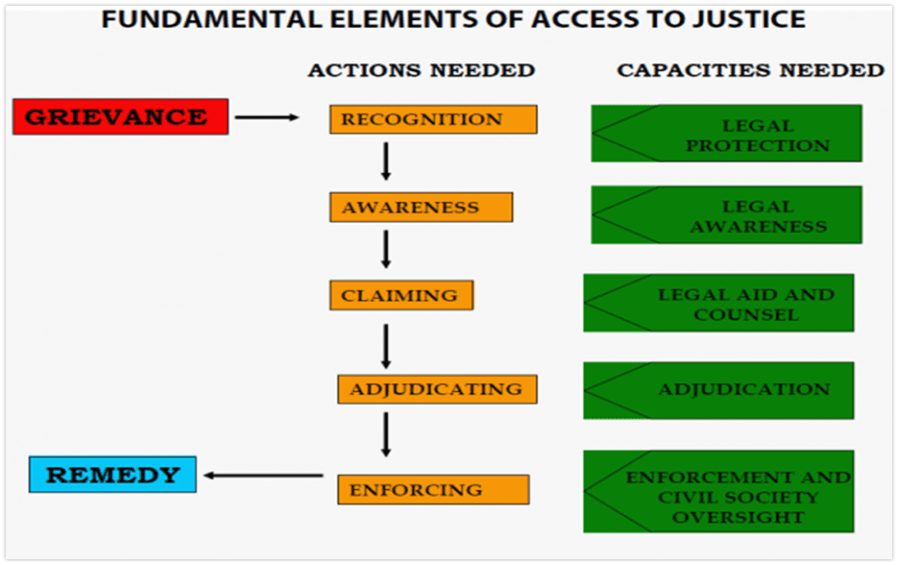
For decades after Independence, the Indian government made no efforts to facilitate a population-wide understanding of the law or to encourage use of judicial systems. In 1976, however, India introduced Article 39A to the Constitution, which recognized the right of economically disadvantaged individuals to free legal aid. While this amendment was a step towards bridging the gap between having a justice system and enabling its use, it has had limited success in truly reducing this gap on the ground. In order to address inherent power imbalances in India today and ensure universal access to justice, it is essential to widen the discourse from merely strengthening legal institutions to also increasing citizens’ legal empowerment (i.e. the ability to understand, use and shape the law to secure justice). Access to justice needs to be extended to include all the elements needed to help citizens and individuals seek redressal for grievances (against individuals or the State) and to demand that their rights be upheld.

4 Step Framework To Improve Access To Justice

“Sometimes even highly educated people have a problem understanding, and therefore interpreting, the correct meaning of some of our laws… an attempt should be made to simplify the language of the law so that anyone who reads judgments and laws can easily understand their true meaning.”

 – Manmohan Singh, former Prime Minister of India Make laws accessible and comprehensible for legal empowerment

šMake laws accessible and comprehensible for legal empowerment

 This will enable each citizen to know of and take legal recourse when his/her rights are violated.

š Streamline case management processes in courts

This will reduce the period of time for which litigants are embroiled in the system, as well as build greater trust in the system.

š Drive accountability and support police and prison systems

This will help these agencies operate more sensitively and effectively to uphold the rights of all citizens including victims, accused, undertrials and the most marginalized

šEnsure high quality, affordable legal aid

If one should choose to access courts, guarantees every individual a chance at a fair trial, regardless of economic and social background

“Child Labor – A Question To Humanity”?

Today’s era has become completely the opposite world which man ideally ever thought of. Clean environment, fresh water to drink and pure air to breath, with no discrimination and everyone considered equal under god’s eye and especially the Constitution. But man had changed and challenged various aspects as per his own greed and worked forward with them so for his own good. This isn’t limited to the innocent living beings also, the ones.Considering the fact and the greed to just let the work being done,he hasn’t let children out of these and rather indulge them at such an early stage of their life so as to get his work done.Life hasn’t been so easy for every individual as they stepped into the world. Nothing got them so easy going and rather had to sacrifice at an early stage of life. With a disbelief in such a act of child labor with around 152 million children around the world still in the act as per the survey till 2019. ..

Talking about child labor  which generally is banned in various countries, is still being practised around various parts of the world. These small children are let to do work by their parents so as to earn more money for their living. As per the reports of “International Labor Organization”,around 22000 of these innocent souls give their lives working around the globe each year. This is really a sad fact to hear, but is the hard truth, which these people who involve them at work don’t care. These children have been working in hazardous conditions, which is affecting their health and deteriorating day by day. It’s shocking that around 88 million of boys and 64 million of girls have been a part of this brutal act of child labor. Many of us believe that this shouldn’t be done and such kind of acts must be stopped, but still many of children every year are led to work at the age when they should study and enjoy life peacefully. 

“Indian Constitution bans child labor under the fundamental rights which defines the right for and of children to be free and compulsory education. Under the age of 14 years. UNICEF has been working in the efforts to reduce and eliminate this acts of child labor through various laws and policies defining complete freedom for these innocents.But what really matters is the strong implementation of these rules, and to be followed around the world.” 

We need to understand that every individual especially these innocent kids have the right to be and feel free and must not be forced to work even if they wish for before the age as per the law. They must be motivated to study and play which should help them grow both physically, emotionally and mentally. Every child must be treated equally irrespective of it’s background, caste and religion. Humanity is the biggest religion, which gives us the message to spread Peace, Harmony, Brotherhood and sense of Unity, and we must follow and respect it. 

“We must not led our coming generation to be shown the darker path of life, struggles, hardships and pain are a part of life but at the right stage and age, don’t let them lose out their innocence in the greed of more money, let them live their freedom, with education and let them win the world with the rights they truly deserve”. 

.

Importance of Career Counseling

After important milestones in education all folks faces this question ‘what next’ after class 10th, after class 12th and after graduation. Career counseling can help altogether the main milestones in one’s career. Firstly, to make a decision a stream and subject combinations, to make a decision the graduation course, and then, to make a decision the post graduation and career option

In school a helpless 16 year old is faced with the selection of varied streams – Humanities, Science with mathematics, science with biology and Commerce, and therefore the only career guidance he has is the opinion of his parents, his teacher’s judgment based on his marks and the comments of his friends and neighbors. A class 11th -12th student together with his subject combinations is flooded with agencies providing various entrance preparation and colleges luring his / her attention. What help he has parents, teachers and admission counselors whose only job is to put the scholar in college and course where they’re going to get commission. A graduate who is doing the course because the oldsters wants him/ her to try to to it or he wasn’t sure of the other and thus is doing the course is also confused about career choices.

We strive to form a progressive world today, where technologies are booming there are many opportunities with various fields where one can make a far better career so guidance provides guidance to an individual to possess a transparent glimpse on what to pursue and the way much duration it takes to finish the course and costs .In today’s world there are also multiple career choices starting from medicine to mass communications, engineering to event management, marine biology to information technology, culinary arts to music.

Choosing a field of study that’s not really suited to your interests or skills could prove disastrous. And that’s where career counseling comes in.

How career counseling works?

Career Counseling involves scientifically developed aptitude tests and personality tests that helps a career counselor give the simplest suited career advice to the scholar supported his report of his aptitude and personality. Human capacities are infinite and may never be measured, nor are we to gauge of what one can do. Every person has unique characteristics, for everybody has his or her own strengths and weaknesses. The key is to identify these unique qualities is through Psychometric Test and career counseling.

What does career counseling offer?

Making an Informed Choice to Choose a Career

Career counseling sessions helps the students to know the pros and cons of the different streams, courses and educational options and the career path it offers, thus the students can make an informed choice, and obtain a career assessment that helps avoid the danger of change in career path later in life. The importance of pinpointing the work cut out for every person can only be gauged when one sees the agony of utmost job misfits. So a career counseling and guidance is needed to help organize ones thoughts and ideas on career related decisions. It can boost the morale and confidence and provides new directions to the scholars which can be beneficial for the entire society. Career counseling helps students discover their true potential and interest in various subjects so as to assist them choose the proper career. Several institutes, including schools and colleges, today offer guidance through a series of aptitude and IQ tests. The tests usually have multiple-choice questions, which don’t got to be prepared for in any way.

Guidance to students

Career counseling is that the guidance given to a student on the road he/she should fancy achieve his/her goals. The advice and counseling provided is predicated on three deciding factors — personality, aptitude and interest.

No confusions

Friends and family can fairly often provide incorrect guidance because their parameters of judging a career choice might differ. A counselor is objective while giving guidance, with no considerations aside from aptitude and interest.

Job Satisfaction

Choosing a career that matches one’s aptitude and personality itself translates into professional success and recognition . The main aim of guidance is to assist students choose a field that’s in tune with their skills and their job expectations. Thus, with the assistance of guidance , most candidates find yourself choosing the proper career, and perform their utmost , which ultimately helps them succeed.

Though not many faculties in India give guidance to students, if your school doesn’t provide you professional counselors, you’ll always seek the assistance of independent counselors. It is always better to hunt professional guidance instead of choose something that the entire herd goes for.

Challenges Associated with Career Counseling

Encouraging Parents and students to take part in counseling is very difficult as people still have a perception that it is time-consuming.

For example in India, there are still 60% of individuals who don’t take career advice 70% of individuals under 14 say they need had no careers advice while 45% of people over 14 have had no or very poor/limited advice.

Over the previous couple of years, there has been a rise within the number of scholars choosing courses aside from engineering. While this is often a positive sign, there’s no doubting the very fact that engineering still remains a dominant choice of scholars pursuing higher studies.

People in India still have a perception that Government service is a secure career so they hesitate to take part in counseling sessions.
Financial problems often provide a drawback in students career even if he/she is good in studies students they visit the career fairs but fails for admissions due to lack of money.

Monsoon in India: Downsides

The seasonal monsoons rains have already made its way in Southern India and will soon be entering the mid-plateau area (western ghats) of India within two to three days. The monsoon season is truly a blessing for the whole country ,be it crops, irrigation, water bodies or even for hydroelectricity and the most important one is that monsoon rains are used in ground water storage which is essential for multiple purposes.

Every year we expect a good replenishment of monsoon rains from the month of July till the month of September, Indian economy is an agro based economy, our farmers are highly dependent on the monsoon season for their crops. Fifteen percent of India’s GDP is covered by agriculture alone. The farmers look forward to a good monsoon season which not only waters their major crops (Eg-rice, pulses and cotton) but also fills the nearby water bodies to avoid drought like conditions.

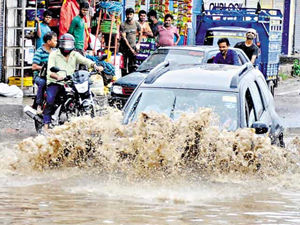
But there are some disadvantages as well, on numerous occasions monsoons have become the cause of flooding, the 2019 monsoon created havoc b breathing flood like situation in various parts of Maharashtra which is usually not the case, this damages vehicles, property and much more.eg-During the 2019 Monsoon season specifically during the month of august and September most of the cities in both the states were affected by flood like situations causing rail and road damage, it was said to be the heaviest monsoon in the last 27 years, it cause huge crop damage and also led to deaths. One of the worst cities affected by monsoon almost every year is Mumbai.

Disease de facto-

It is also one of the biggest causes behind vector diseases like malaria and dengue due to water logging and stagnant water which becomes a house of for these deadly creatures. India has 15 million cases of Malaria on an average every year during the monsoon season with around 16,000 deaths every year.

Water logging and drainage woes-

Monsoon also causes water logging and creates problem in drainage system, leading to blocked drain, overflow of sewage water and many other problems. Heavy monsoon can also be disastrous to crops as well as it can destroy the most essential crops of the coming season which can lead to farmers facing a huge amount of loss.

Landslide and mudslides

Due to monsoon may areas become prone to landslides, and can destroy villages and farms causing people to lose their livelihood along with their living. This also destroys land and can cause levelling problems.eg- the Malin landslide which took place in a village (Ambegaon Taluka) in Maharashtra caused displacement of so many villagers, the landslide devoured the whole village. The death toll reached 136 and the villagers had to re-built their lives from scratch.

Soil erosion-

Also soil erosion is common as heavy monsoons leads t runoff and in many cases this lead to soil erosion, due to soil erosion many trees are uprooted due to heavy rainfall as their roots have no soil to hold onto and the roots are more exposed to being damaged as the layers of soil drastically have been swiped out due to the torrential rains.

Monsoon comes with its many beneficiaries but too much of it can cause disdain and wreck damage to people, property and much more.

Abdhi Upadhyay