Alcohol and Drug Abuse

Alcohol and drug abuse is one of biggest problems the world faces today. It is not only a personal problem that dramatically affects people’s lives, but is a major social problem that affects society as whole.

Drug abuse is mainly caused by rapid social, economic and technological changes which under certain circumstances, weaken the sense of family and reduce the sense of belonging to other people, groups and places. Stability of relationships, environment and expectations is a powerful force in helping people manage their lives, especially important for children and young adults. In some societies, the classical problem of balancing discipline and control of children with nurturing support to encourage their exploration, understanding of the world and self-realization may be complicated by substance abuse problems as well as a wide range of other conditions. Alcohol abuse and other substance abuse have been studied among family members. It is well known that having biological relatives with alcoholism increases the risk in individuals for alcohol problems. Persons who are heavy users of alcohol or other drugs may show psychiatric symptoms such as depression, severe anxiety etc. 

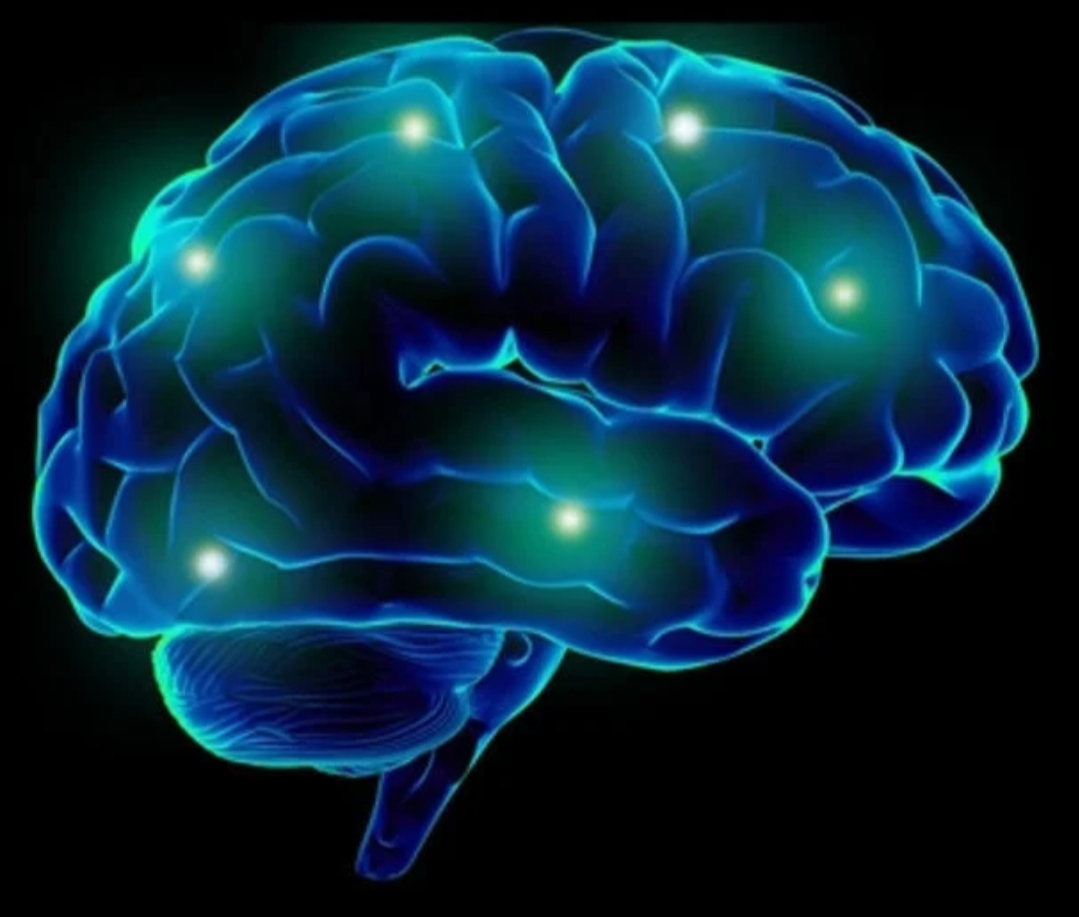
The most widely used addictive substances include alcohol and tobacco which are harmful causing extensive damage to the individual mind and body along with other diseases. All of these substances have several important characteristics in common as alter the function of the human brain and have an impact on behavior . Despite this, they are widely used throughout the world and they burden society by increasing social and economic costs for productive enterprises .

Drug addiction is difficult to treat as it is a chronic disease and requires intense, on-going care and is a long term process. Treatments such as behavioral counselling, medication , medical devices and application used to treat withdrawal symptoms and also treatment for mental health issues like depression and anxiety are the various ways to overcome drug addiction and stay drug-free.

Concerning alcohol, it remains one of the most widely used addictive substance with alcohol abuse being considered to be an age old problem. Alcoholism is the reflection of socio-cultural factors of an individual and sometimes society as a whole. For may people, this is a part of their daily life. People who have been drinking excess amounts of alcohol for longer periods of time come under the category of alcohol abuse. These people put themselves in the risk of developing serious and persistent changes in various organs including the brain. The effect of alcohol on the organs may be direct or indirect depending upon the general health status of the person. The studies have suggested that the brain functions are affected due to the interaction of alcohol with multiple neurotransmitter systems. Alcohol abuse also leads to different nutritional deficiencies and diseases as alcoholic people suffer from vitamins and minerals deficiencies. Also alcohol has been found to be associated with diseases like tumors, cancers, numerous digestive diseases and other conditions. 

Both alcohol and drug abuse requires a global approach, given their serious consequences to the social , professional and personal environment of the individuals and the society. Hence it is necessary to educate all individuals and spread awareness among people about the realities of addiction for a better society and for improving the lives of millions worldwide.
Have we been treated right?

If I ask you to think about something, you can decide not to. What if I can make you feel something? Now, I have your attention.

Although I would like to start by putting up points on how important a woman is in our lives, let just know what SHE really is?

A true definition would say, “An adult female person” but what about materiality? Like we say a woman plays many roles in her life, she is a mother, a daughter, a wife and a sister. She has to make many sacrifices in order to make everyone happy. The life cycle of a female from a female fetus to a woman is not an easy task; she has to face a lot of problems, thousands of social norms are tagged with her the day she steps outside of her house. We gained independence long ago, but still we all are trapped in age-old traditional beliefs and of course there are exceptions. We as a liberal society failed to change the mindsets of the other orthodox Indians; instead we started discriminating them from us considering them as old-fashioned people. We as so called modern people haven’t reached any milestone. Following all the society rules, woman forgets to live her life. There are so many questions asked to her following by restrictions and humiliations and gradually her life becomes a question, still she tries to live her life to the fullest without letting anyone realize about her twinging heart and how badly she wants to get out of it. Being liberal isn’t also serving us right. There are still cases of female foeticide, rape, acid attacks and what not. Some people (especially men) tend to help women, whenever something awful happens social media is flooded with “justice” posts and the reality is all are hypocrites, showing your sincerity by spreading awareness on social media and not implementing it on yourself doesn’t make you any less of a culprit. There’s hell of a difference in being liberal and saying that you are liberal. There are many people who need to immaculate their minds, on one hand they say “we shouldn’t judge” but on the other hand girls are being judged by the length of their dress. If someone is wearing a short dress she is considered as slut and they blame her that “her dress is too short or too revealing”, and then they consider it as open invitation for any kind of miss happening regardless of knowing the fact that the dress isn’t wrong your thinking is wrong.

Living in a metro city doesn’t make you modern, you need to evolve yourself with time to make yourself modern. My mother taught me about the difference between good and bad touch and I always asked her a question, why do I need to be extra cautious while traveling by metro or bus?, and I got an answer recently I was traveling by metro and the blue line was crowded as usually I boarded the train, I was traveling in common coach, women’s coach was already overcrowded (for those who might think why didn’t I board in women’s coach). Some middle aged man was standing behind me and he was trying to harass me by rubbing his lower body against mine. what was my fault? Was it wrong to choose the common coach? I couldn’t stand that I only had two options either moving aside silently accepting the harassment, accepting that men are like that or I could have shouted and in answer to that he would have said “madam bheed hai metro mien apko itni hi problem hai toh mat safar kiya karo”. I chose the third option I took out my pen and attacked on his leg with it just as silently as he was trying to that heinous activity. It did hurt him; I was able to hear that painful sigh as he couldn’t shout in the metro. That day I wasn’t afraid and I am proud of myself.  I was not rescued by a prince; I was the administrator of my own rescue! And the irony is all this happens in a country where a woman is seen as an incarnation of goddess. There are always exceptions, there are some people out there who aren’t hypocrites, who stand against this, who support us and who truly believe that if women will grow it will help the nation to grow. All the women out there should know “whenever you stand, stand tall; you don’t need heels, you just need a goal.”  

5 places to visit in India.

So, today I am gonna tell that what are the best places to visit in India according to me. So yeah lets just start.

1. The Golden Triangle: it consists of 3 places, Agra, Delhi and Jaipur. All the three places are not far from each other and they contain some of the most famous and iconic sights in all of the India. These three places together are known as the Golden Triangle. Jaipur is known as the ‘pink city’ it consists of colorful bazaars and many more. It is the capital of Rajasthan. Delhi is the capital of India. It  is a fascinating and vibrant modern city littered with important historical relics of empires past. Last but not the least, Agra is home to the most beautiful monument in the India, i.e., the Taj Mahal.

2. Varanasi: it is a spiritual place. India has attracted spiritual seekers since time immemorial and the holiest places to visit in India, and one of the oldest inhabited cities in the whole world, is the ancient city of Varanasi situated on the banks of the holy Ganges river. And it is believed by the people of Varanasi that if you die there then you are free from the cycle of death and rebirth.

3. Rajasthan: The desert state of Rajasthan is India at its most colourful and flamboyant. Rajasthan, the land of the Maharajas, is packed with history, ancient forts and extravagant palaces. Rajasthan consists of many famous places like Jaipur(pink city) , Udaipur(blue city) and many more.

4. Kerala: The tropical, laid back, luscious state of Kerala, known as ‘God’s own country’ in the far South of India is one of the most relaxing places to visit in India. Kerala is a complete contrast to busy North India and makes the perfect relaxing break. It is famous for its gorgeous languid backwaters and they are one if the must see places of India.

5. The Indian Himalayas: If you’re more of a mountain person and want to escape the heat there are still many places to visit in India that will delight you! There’s really something special about the majestic Indian Himalayas and it’s not just the cool air and stunning mountain vistas,  you can also visit spectacularly colourful Buddhist monasteries and get a taste of the serene and beautiful Tibetan culture. Some of the top mountain destination include Himachal Pradesh and Dharmshala, the home of the Dalai Lama, Darjeeling, Leh and Ladakh, Sikkim and many more.

Ofcourse there are many more destinations like The Golden Temple in Amritsar, the beaches of Goa, night life of Mumbai, etc.

Role of media in democracy

Democracy means  A system of government in which all the people of a country can vote to elect their representatives. Media came into existence in 1780 with the introduction of a newspaper namely ˜The Bengal Gazetteâ™ and since then it has matured leaps and bounds. It has been playing a very important role in shaping human minds.

Role of media

Media plays a crucial role in shaping a healthy democracy. It is the backbone of a democracy. Media makes us aware of various social, political and economical activities happening around the world. It is like a mirror, which shows us or strives to show us the bare truth and harsh realities of life.

The media has undoubtedly evolved and become more active over the years. It is the media only who reminds politicians about their unfulfilled promises at the time of elections. T.V news channels  excessive coverage during elections helps people, especially illiterates, in electing the right person to the power. This reminder compels politicians to be upto their promises in order to remain in power.

Television and radio have made a significant achievement in educating rural illiterate masses in making them aware of all the events in their language. Coverage of exploitative malpractices of village heads and moneylenders has helped in taking stringent actions against them by attracting governments attention.

The media also exposes loopholes in the democratic system, which ultimately helps government in filling the vacuums of loopholes and making a system more accountable, responsive and citizen-friendly. A democracy without media is like a vehicle without wheels.

In the age of information technology we are bombarded with information. We get the pulse of the world events with just a click of a mouse. The flow of information has increased manifolds. The perfect blend of technology and human resources (journalist) has not left a single stone unturned in unearthing rampant corruption in politics and society . Thanks to technology that has brought a kind of revolution in journalism.

Impact of media

The impact of media is really noteworthy. Excessive coverage or hype of sensitive news has led to communal riots at times. The illiterates are more prone to provocations than the literates. Constant repetition of the news, especially sensational news, breeds apathy and insensitivity. For instance, In Dhananjoy Chatterjee case, the overloaded hype led to death of quite a few children who imitated the hanging procedure which was repeatedly shown in most of the T.V. news channels. There is a plethora of such negative impacts. Media should take utmost care in airing or publishing such sensational news.

Commercialization has created a stiff competition in media. In order to outdo each other print media has often gone one step further in publishing articles, cover stories, etc.
Media experts say this is one of the means of attracting readers who are glued to T.V. news channels, which have cropped up swiftly in a recent past and they believe this is a cheap form of journalism.

Conclusion

No one is perfect in this world and so is the media. Here I am not degrading the media, rather I would say there is still a lot of scope for improvement by which media can raise upto the aspirations of the people for which it is meant. I cannot think of a democracy without active and neutral media. Media is like a watchdog in a democracy that keeps government active. From being just an informer it has become an integral part of our daily lives. With the passage of time it has become a more matured and a more responsible entity. The present media revolution has helped people in making an informed decisions and this has led to beginning of a new era in a democracy.

Unlock 1: How to keep yourself safe

We all are suffering from a global pandemic i.e., Covid-19 now a days. After 4 stages of lockdown now, we are in the stage of unlock 1. In the lockdown we were relatively safe because we all were at our homes, but now in unlock 1 as most of the places got relaxation, from the shops to religious places, restaurants etc. So our city again become crowded as it was earlier with hundreds and thousands of people and vehicles on road. And as our work places also opened, so we have to go outside for work, and again we have to face the same crowd and traffic and in our office also we are meeting with so many people. So it is necessary to take some precautions so that we can save ourselves from Covid-19.

WHAT SHOULD WE DO

  1. Always cover your face with the mask while going out. Never use same mask again. Change the mask regular and always keep an extra mask with you.
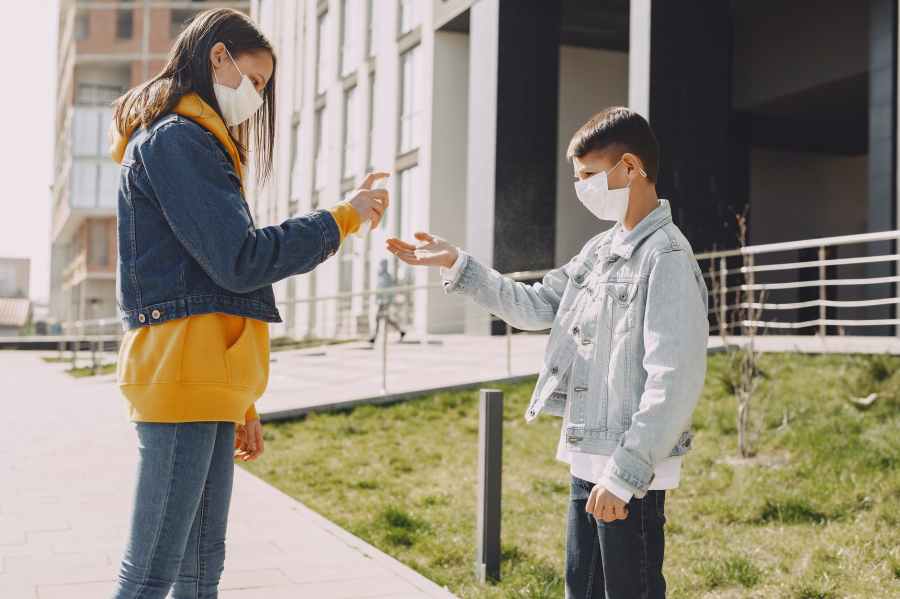
  2. Always carry alcohol based sanitizer and clean the hand with it frequently or after touching handles, corridors etc.
  3. Avoid public transport as it increase the chances of spread of virus. If you don’t have your own vehicle, try to use auto or cabs.
  4. Carry your own food and water bottle at your work place. Try to avoid canteen food and sharing food with others.
  5. If your are sharing car with your collegues, it is okay that 3 people are travelling in one car but try to avoid AC and keep the windows open. Before carpooling make sure that any of the ppassengers don’t have any symptom of Covid-19.
  6. Make sure that your office is regularly sanitized. All the workers and staff’s temperature should be checked at the entrance and everyone should be sanitized before entering the office premises.
  7. At the work place maintain 1metre distance with others. Avoid face to face with others. Try to use mobile phones for attending meetings or any conversation.
  8. Don’t unnecessarily touch your face, nose and mouth. Sneeze in your elbows or use tissue. Throw the tissue in a covered dustbin.
  9. Do not handshake or hug.
  10. Avoid sharing your belongings with other like towel, pens etc.
  11. If you have any symptom of Covid-19 like headache, sore throat, fever then avoid going out or contact with people. In home also keep yourself quarantined, avoid to come contact with your family members and immediately contact the doctor and get the check up done.

We know that it is very difficult time for all of us. Regularly increasing cases of Covid scaring us. We don’t have any vaccine or medicine for this. So the only way to stop spreading the virus is to take necessary precautions to keep us safe. If we keep us safe then only we will be able to care our family and nation.

So take all necessary precautions and try your best to save you and your family. If we together try we will definitely able to defeat this virus.

The Great Indian Wedding: A need or a want?

The constitution of marriage dates back to years. Since human civilisation marriages are considered an important, integral and sacred practice in India so much so as to that individuals not wanting to get married face serious judgement and criticism even in this centuary. If I start talking about ‘societal norms’ in our nation that will become a whole new different blog in itself but what I’ll be writing about today is how worthy is an awe-inspiring, magnificent Indian wedding and is there really a need for one?

The Statics

Around 20% of all loan applications received from young Indians aged 20-30% in the year 2018-19 were for funding their marriage and many also use their personal loan to fund their weddings. The data accounting for loans that the middle class people take from unauthorised places to sponsor weddings will become unquantifiable. An article in times of India recently stated that food worth around Rs.339 crore goes wasted in Indian wedding functions in Bangalore alone. The study said that about 84,960 marriages are held at 53 marriage halls in Bangalore every year. About 943 tonnes of high-calorie quality food is wasted in these halls annually. This is the statistical data of just one state of our nation, imagine the soaring high data of the whole nation. All this when hunger remains no.1 cause of death in the world and 1/3rd of the world’s hungry people live in India. 836 million Indians survive on less than Rs.20 a day and while you read this blog today about 20 crore Indians will sleep hungry tonight. In a country like India where malnutrition is embedded, hunger is a widespread too.

The Crux

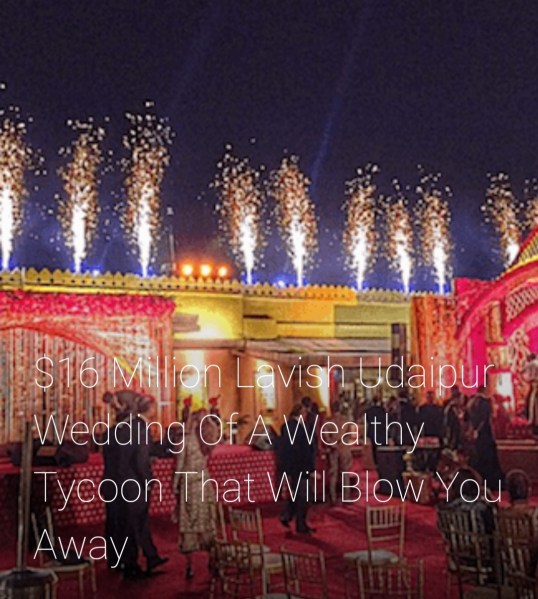
Through the above data and the introduction what I am trying to imply that there is an already an existing wide gap in terms of resource distribution and opportunities in our country. How fair is it for one to spend lakhs on a wedding functions while lakhs go to bed sleep without even a one course meal in the entire day. I do not nullify or disregard one’s need to celebrate and cherish their happiness in life but it could be done in a way that will bring happiness for the underprivileged too. Instead of serving your relatives with 4 course meal in a 5 star hotel, one can chose to offer food to the needy. There isn’t really a need for a lavish wedding just to satiate one’s socio-economic status. What people need to do is celebrate weddings as a private affair with their close and loved ones and make sure to help the needy too according to their capability. India celebrates 10 million weddings in a year! If the status symbol shifts from organising grand ceremonies to helping the poor, imagine the extent to which social stigmas like malnutrition, poverty, lack of shelter, medical facilities etc. can be curbed. I have tried to explain the thought through extravagant food bills in Indian wedding and malnutrition rate but there exists numerous ways to restrict unwanted expenses and channelize it’s financial benefit to the one in need. A bill was also passed in Lok Sabha in 2017 to check the ‘show of wealth’. According to the bill if any family spent more than 5lakhs on a wedding, they’ll have to contribute 10% of the amount on marriage to a girl from the underprivilege section of the society. Irrespective of legal bindings or restrictions, people have to develop self-consciousness and sensitivity. As Gandhiji said the earth has enough for everyone’s need but not for everyone’s greed. So it’s time people look beyond their greed and aid in fulfilling everyone’s need. This way we can have an effective and efficient utilisation of our resources and move towards an egalitarian society. So the next time you plan or organise a wedding make sure to have demarcations between your needs and wants!

When words fail music speaks

“One good thing about music, when it hits you, you feel no pain.”

Music is the best ever medicine for all types of emotional pain and hurt . You can say it is the stress buster. Music has been an important part of every human culture, both past and present. Everyone needs music in any emotional condition either they are happy, sad, stressed or whatever you feel. Music can make you happy , stress-free at any stressed or tensed situation. Music can become your best friend and always help you to overcome from any worst feeling. Music choice vary person to person some of them listen pop music, some listen suffi song, some listen soft music etc everyone has their different choices, every situation demand different music according to their need. It can play a part in brain development, learning,mood and even your health. Music distribute throughout the brain not work on any specific area.

One of the most common affects music has, is that it can alter our mood, feeling, and stimulating the formation of certain brain chemicals. When you listen to music you actually like , your brain release a neurotransmitter called Dopamine. So basically music can makes us feel good. It can play a part in brain development, learning, mood and even your health. One interesting thing is that when someone is sad they often reach for sad music and they find that it helps them feel better. In the last few decades neuroscientist have make enormous breakthrough in understanding how our brain works by monitoring them with instruments fMRI. Through brain scans we find that musicians have different brain than non musicians. People who plays an instrument has bigger, better conneced and more sensitive brain. It also never too late to start learning ab instrument.

Another Interesting thing is how listening music can affect our exercise routine. As our body realises we are tired and want to stop excercising it send signal to the brain to stop and wants a break. Listening to music can compete for our brain attention and can help us override those signal of fatigue.

Music that is soothing and relaxing can help students to beat stress, anxiety, release pressure, overcome tension during their study period and during exam also. But only instrumental and soft music or music without lyrics . During long study sessions music can aid endurance. Help them to make it easy. According to Kaiser family Foundation poll 87%, listening to music was the most popular side activity for those who balance studying with another activity.

It can also improve blood flow in way similar to statin, lower your level of stress releasing hormone cortisol and ease pain. Listening to music before an operation can even improve post surgery outcome.

Actually their are a lot benefits of listening music some of them are mentioned below.

  • Improves sleep efficiency- reduce BP
  • Enhance mood
  • The brain responds to music the same way it respond to something that you eat
  • Listening to music while exercising can significantly improve your work out performance. Increase stamina & physical performance.
  • Enhance focus
  • Playing music regularly will physically alter your brain structure
  • The chills you get when you listen to music, is mostly caused by the brain releasing while anticipating the peak moment of song.
  • Boosts creativity
  • There are few activities in life that utilizes the entire brain, and music is one of them
  • Reduce stress and eases anxiety

Music is the best way of expressing your feelings. And you can encourage a lot of people by motivational and folk songs and generate a lot of emotions.
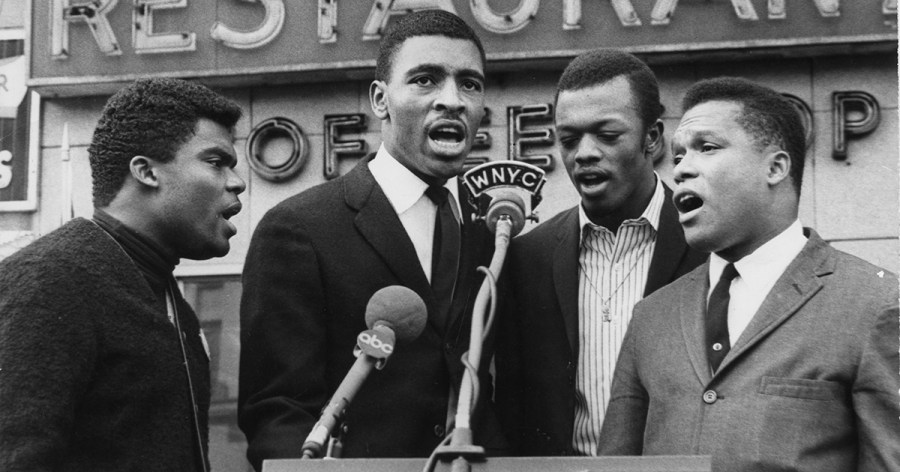
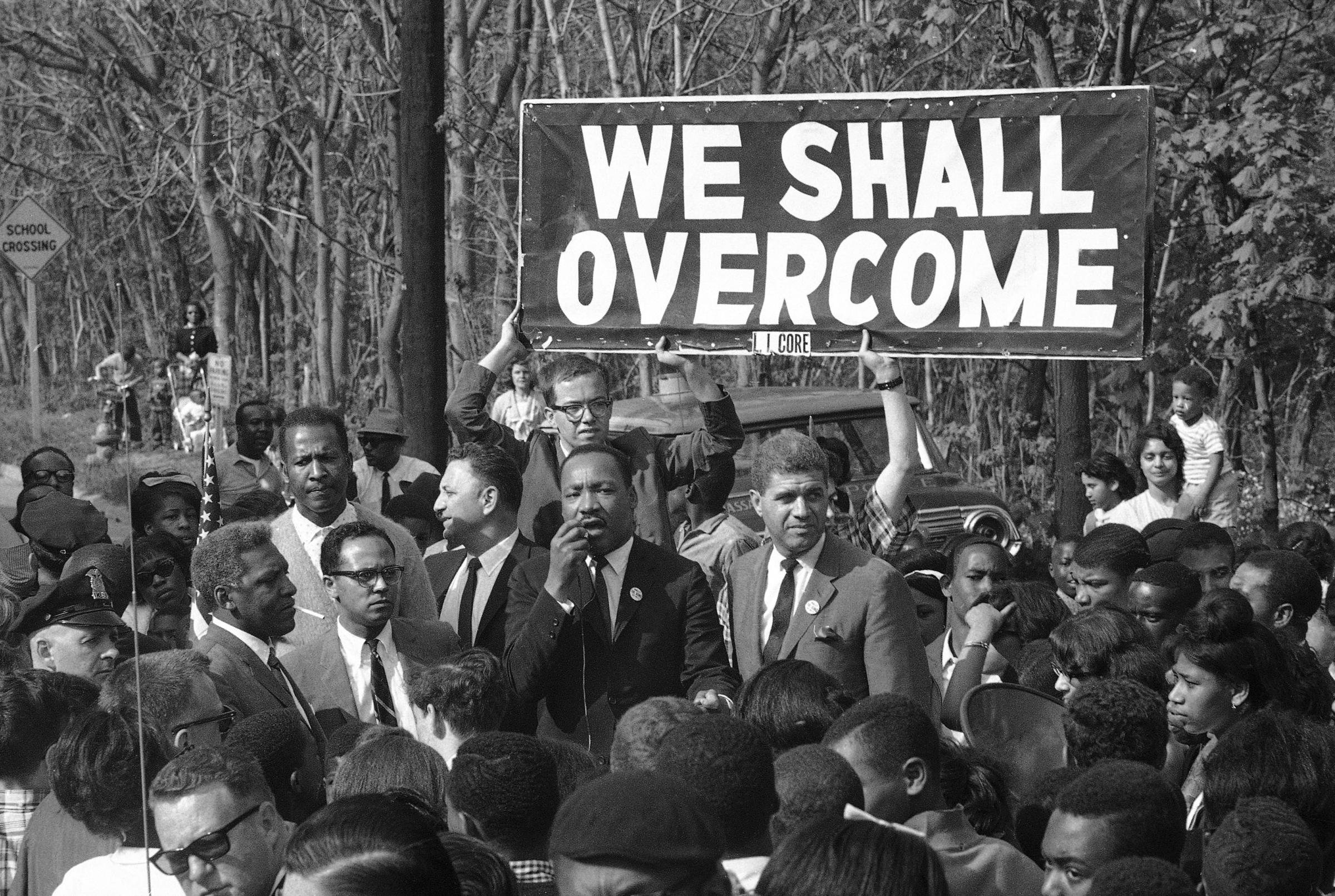
African American spirituals, gospel, and folk music all played an important role in the Civil Rights Movement. They sang songs for multiple purposes: to motivate them through long marches, for psychological strength against harassment and brutality.

folksingers Guy and Candie carawan sing the songs “Tree of Life,” “Eyes on the Prize,” and “We Shall Overcome.” The Carawans worked at the Highlander Folk School in Tennessee, where activists from around the country came to be trained in nonviolent philosophy and learned the songs of the movement.

Activist and folk singer Pete Seeger also remembers how important music was to the Civil Rights Movement in his interview.

So express you emotions by listening music and sing along with it. By listening music you are always feeling free, positive, energised and happy. So give few time to yourself and listen music daily at least 10 minutes.

A tale of two countries:- how the reopened.

As the pandemic increases its foothold over the world, nations worldwide are looking to reopen with varying degrees of success. Various countries have seen a slow decline in the number of cases while some a sudden spike. As the world slowly wakes up from its corona stupor, lets have a look at how two countries have made changes in order to reopen.

Photo by Gustavo Fring on Pexels.com

If the world is a family, I think we can agree that the current US is the crazy cousin who constantly does weird shenanigans. Most countries have gone the traditional way which is a partial reopening followed by a full reopening. However not so in case of America, where the existence of corona is a political debate. Even now, as the entire country staggers some news outlets continue to make scarce of the Covid threat. Amongst the frontrunners is Sean Hannity, a main feature of Fox news, a news outlet that has made its entire existence sculpted to favour Donald J. trump. The channel has constantly reported fake news in order to incite the crowd and further Trump’s image. As the country is hit by several catastrophic events which include the likes of earthquakes, nation wide riots and the ever-looming global pandemic, a few states have opted for the full reopening in order to “save their economy”. However foolish as the idea maybe some companies and brands have taken onto themselves to follow the guidelines. A certain church in USA has seen its pastor greeting their reverends with a squirt gun, in order to bless them. The pastor, wearing a mask and gloves can has been seen greeting the people as the pull up by the church in order to be blessed. While the church tries to see a sense of normalcy, various brands have come up with a new solution to help keep people safe while still being up to trends during this summer. Some designers have come up with a concept being termed as a “trikini” for women looking to enjoy beach season. By providing a mask of similar design in order to look fashionable, some worry about how safe it would actually be, being in a crowd filled beach. Germany has been a country that has seen a good decrease in the number of cases and has safely reopened the country. However, it has not been without some bizarre changes. Germany was the first country to reopen their football league, the Bundesliga which notched up a very large group of viewers who had been starved of action during the pandemic. But there were a number of changes such as no fans being allowed inside the stadium, serious checking of players before and after the matches, going so far as to quarantine a coach of a team who had stepped out of the assigned hotel to buy toothpaste. Even in terms of music being played in public places, a number of changes have taken place. Fans of classical music can see and hear live performances one on one in a designated area in places like airports, museums etc. But a good plan has seen the country come out of the pandemic safely

Thus we see the stark difference in the outcomes of the state of the nations, due to the method used by them to reopen heir countries. What happens in India is still too soon to tell.

THE BACK BONE OF INDIA

Sh Narendra Modi, Hon’ble Prime Minister of India doesn’t require any introduction as the whole world is amazingly acquainted with this man equipped with divine qualities, magnetic oratory, untiring and infinite energy and balanced attitude towards the things.

Now the whole world has become Modi’s fan and as far as the fan following ( On Social Media ) is concerned, he enjoys the second position in the world after the American President Mr Barrack Obama.

Modi has become an icon among the youth of the country. His life-style is observed world-wide and most of the people are trying to emulate him in their own day-to-day activity. Here in this article we are making our best endeavor to bring out some of his qualities that make him very popular among the masses not only of India but abroad as well.

Portfolio – Prime Minister of India
Place of Birth – Gujarat
Date of Birth – 17 – 09- 1950
Loksabha Constituency – Varanasi
Educational Qualification of Modi –

Modi did his Post Graduation in Political Science with First Division from Gujarat University in 1983. First year, he obtained 237 out of 400 and in second year, he obtained 262 out of the same score. His aggregated score was 499 out of 800 marks making it 62.3 %. This information was shared by Central Information Commission after it was sought by Delhi CM Mr Arvind Kejriwal.

Narendra Modi is carrying a big vision for the country. His vision is to see India as a Developed Country. For that he is doing everything he can. Visiting other countries quite frequently, persuading them to invest in the country, creating environment in the country so that foreign investment can flow in. Make in India, Sanitation Drive, Jan Dhan Yojna, Pension Scheme and many more have been initiated with a vision to make India a place, worth- living and worthy of investment. In order to materialize his vision, he doesn’t take a moment’s rest. Besides, his govt has taken some big steps to improve the economic condition of India viz – Demonetization, GST etc.

He keeps working with super-human zeal. The most important thing is that he believes in the strength of the youths. As a result, he keeps interacting with with them. He has written a book called ‘ Exam Warriors ‘ to help these youngsters, especially the students who are to take exams.

Ability of leading from front –

He is a great leader who leads from front. In launching each and every scheme of the Govt, he plays an active role and his participation is cent percent. He takes the progress report of every ministries from time to time. Every now and then he calls Ministers and takes stock of their work. So due to his active participation, the ministers and their departments remain alert.

Know about Sh Narendra Modi Ji – A Short Biography
A Great Demagogue –

It is said that his being a good speaker has won Modi the Loksabha Election and helped him becoming the Prime Minister of India. Modi is undoubtedly one of the greatest orators the country has ever seen. He can sway the masses through is capturing speeches. He has the ability to speak continuously for hours on any of the topics.

NAMO doesn’t use the ready-made speeches. Most of his speeches are extempore as a result produce long-term and desirable effects on the listeners. His speeches carry with heart-touching subjects which show that he can read the mind of his listeners. His Programme Mann ki Baat is a good example of this. The Opposition is scared to death from his speeches.

A Shrewd Politician –

He also knows how to use things to get political mileage. Even he uses modern gadgets and technologies for the propaganda. He feels comfortable with the use of Social Media for political gain. But the amazing thing is that even his political rivals acknowledge his qualities of good and effective leadership.

But besides these good qualities, he has some weaknesses which make him a butt of constant criticism from his rivals. We throw some light on this negative aspect of his life as well –

Some Negative Allegations/ Aspects regarding him as per his oppositions
A Face of RSS –

The whole opposition criticize him of being the face of RSS, a Hindu Organization famous for having Hindu Ideology. Of late many untoward incidents have occurred in the country that have brought bad name on the secular face of the country. The opposition say that Hindu Extremists are behind those incidents. Even some ministers from the Centre have hands in communal tirades which are defiling the harmonious and Secular ambiance of the country. He is keeping mum on such incidents which indicates that he has given mute consent to them and playing in the hand of RSS, his ideological parent. Otherwise being silent is not his nature and style.

No Respect for Opposition –

Though the opposition ( here the Congress Party ) doesn’t deserve any respect for what they have done with the country for the last 67 years, in the democracy the respect to dissenters should to be given. This is a big charge against Modi that he doesn’t pay much heed to the Opposition and this is not good for this temple of democracy. Sometimes the Opposition can also have good ideas to share and they can be a good critic if you take them positively.

Seoul Peace Award for 2018 –

Seoul awarded PM Modi the 2018 Peace Award his contribution to international cooperation and fostering global economic growth. The Indian PM is the 14th recipient of this award. Besides the award, he got Dollar 2 Lakh Cash Prize which he donated the Namami Gange Programme.

Latest about our PM Modi –
NDA has won 2019 Loksabha Elections with handsome seats under his name tag – ” Modi, Modi ….” Only the BJP has got whopping 303 seats on its own. Now he will be our PM for the next five years, i.e. for 2024.

Maldives’ Highest Honour for PM Modi 2019 –

Modi Ji has received the highest honor ” Rule of Nishan Izzudeen ” on 8th of June. It was conferred by the President Ibrahim Mohamad Solih.

Our PM has such a big personality that it doesn’t require words for more description. There is an unending story about him.

The Mc Mahon line: a continuing problem that defies a solution still

At the advent of the 20th century, in the “Great Game” between Russian and British empires, Tibet became a strategic chessboard. Russia aspired to expand its influence across Central Asia. The Manchu empire was diminishing and waning. Britain was afraid that the Russians would come to a weakened China and cause problems to British India. This perception led to the invasion of Tibet in 1903 by British troops headed by Colonel F.E.younghusband. The idea and aim behind this move were to establish a buffer between China and India, secure a border between Tibet and India and gain favourable trade deals with Tibet. The Younghusband expedition spawned a chain of events in the Eastern Himalayan region, the effects of which are still felt in Indo-China relations.

While the Great Game is quite well known, the Mc Mahon line is a less talked about story, that had an impact in East Asia. Immediately after the Younghusband mission, China was alarmed and sent troops to Tibet to occupy the region. While Britan accepted the de facto Chinese control of Tibet, it wanted Indo-Tibetan border demarcated and Tibet to remain a buffer. In 1914 a conference was arranged by Britain in Shimla in which British, Tibetan and Chinese officials were to take part. Sir Vincent Arthur Henry McMahon, a secretary in the foreign department of the British Indian Government represented India in the conference. After a lengthy and prolonged discussion that stretched across months, India and Tibet signed a convention that demarcated the Indo-Tibetan boundary but unfortunately, this convention could not get the signature from the Chinese side, despite the convention’s promise to respect China’s suzerainty over Tibet but not sovereignty. This boundary, the red line drawn by Mc Mahon on the map came to be known as the Mc Mahon linen which is also internationally accepted as a border between India and China in the Eastern sector. However, it happens to be the zone of contention between the two countries. But it must be noted that the Shimla convention, though not signed by China it had not opposed the Mc Mahon line initially. Tibet also witnessed and enjoyed decades of independent rule after the Shimla conference. But the Chinese kept changing their stance very often.

J.J.Singh, the former army chief, Arunachal Pradesh governor and the author of the book the Mc Mahon line: a century discord, happens to be highly critical of the way Nehru handled China’s reoccupation of Tibet in 1950. But china called this liberation of Tibet. Nehru an ardent idealist failed to foresee China’s evil strategy. The author J.J.Singh observes: ” The British strategy of over a century, of having an autonomous as a buffer was put to rest as India looked on passively”. The Chinese take over of Tibet by force exposed the northern borders of India to potential Chinese threat for the first time, highlighting our dangerous vulnerability.

In retrospect, one could debate that India could have done something effectively to prevent China from taking over Tibet. It was a time when one should not forget India had its own problems in Kashmir that was attacked by the Pakistan army, unification of princely states were still underway and Tibet itself had signed an agreement with China after its troops reached Lhasa. India was only a fledgeling democracy encountering multifarious economic, social and political problems. India’s resources were meagre and its army was no match to the Chinese army. Nehru, despite his emphasis on friendly relations with China, had told his ambassador to Peking( Beijing) in 1958 that he didn’t trust ” The Chinese one bit….they are an arrogant, untrustworthy, devious and hegemonic lot.” But Nehru never imagined Chinese aggression on India in 1962 that inflicted a humiliating defeat upon India that also hastened the demise of Nehru, a disheartened leader.

Both India and China have come along way since the 1962 war in spite of several peace talks between the two, the border dispute remains unsolved. However, there have been marked improvements in its bilateral relationship, punctuated by border skirmishes and violations very often. The Chinese after opening up their economy from the early 1980s has become an economic behemoth and militarily modernised with their phenomenal advancement in technology. It has become a superpower next only to the USA. A country whose geographical area, economic and military power that are far greater and beyond the reach of India will have an unquenchable urge to assert itself internationally in an arrogant and immoral manner. However, there are limits to China’s LAC adventurism. The boundary between India and China runs to several thousand kilometres in this there are several places along this border where PLA ( people’s liberation army) is militarily weak while the Indian army has an upper hand so that India could also play mischief. China is also mindful of India’s nuclear capability. The maritime domain of China is its weak spot. And most importantly China will be least inclined to seriously damage the close to $100 billion trade with India with its military adventurism on the LAC. Also, China is fully aware of a close relationship with the US economically and militarily.

The time has come to checkmate Beiing’s military aggression. India should deepen and expand its defensive, offensive and deterrent capabilities. The situation is also a stark reminder for us to get more serious about finalising a border agreement with China. The political leadership of both countries should exhibit more will power to resolve the dispute to establish a stable, political and economic environment over East Asia. India should engage in deepening its engagements with world powers including the USA and Russia. While the avowed goal is the peaceful resolution of the long dispute India should build up it’s economy powerful and militarily strong and formidable. But one should not forget the geopolitical axiom: ” the unilateral desire of a nation to live in peace cannot be a guarantee of its peaceful existence”.

Kanjivaram Silk Sarees

The traditional Kanjivaram Silk saree also known as Kanchipuram Silk saree, is a sort of saree, fabricated in the Kanchipuram district, Tamil Nadu, Southern part of India. These sarees are worn as wedding and extraordinary event by the most of the ladies in Tamil Nadu, Karnataka and Andhra Pradesh. Besides these states the sarees are also popular in other parts of India too such as, northern, eastern and central parts of India and occasionally worn by the ladies of the mentioned  areas. The sarees are known for their energetic hues and eye catching idea, which are basically adopted from the sacred books, like Ramayana, Mahabharata  etc and idols from the shrines of this little town. Since the pallu and the body of the saree vary in shading and structure, you can expect an assortment of differentiating shades as well.The sarees are famously allude a royal look because of their radiance, solidness, and glint from the stunning zari work. The nature of the sarees depends on their materials used for making. The heavier the saree, the better the quality. This saree is best depicted as a brilliant ‘Silk Saree’ with zari work. Zari is metallic string normally produced using gold or silver and interlaced with the silk yarn to make different themes and shades.


Kanjivaram Silk Saree

Design of the saree

Customarily, themes for the traditional Kanjivaram silk Saree are intensely drawn from the style and arts of the sanctuaries, castles and compositions of Pallava Dynasty. The edge of the sarees contains themes of pyramidal sanctuary idea from the images or the idols of the shrines, royal residences and general works of art, and the body incorporates, checks, stripes and botanical buttas. Throughout the years, the customary and very much wanted stripes or brilliant dab structures have offered approach to increasingly representative themes, for example, organic products, creatures, feathered creatures, the sun and the moon, and even stories from folklore.

Weaving Method

The traditional Kanjivaram Silk saree includes a technic of handloom. It is woven from unadulterated mulberry silk yarn that is obtained from the mulberry silkworm, undergoing a lengthy process of spinning method. The sarees are woven in three parts, the pallu, boarder and the body part. To weave a traditional  saree, three transports are utilized. While the weaver deals with the correct side, his associate takes a shot at the left side transport. The border, the pallu, shading and configuration are typical and not quite the same as the body. On the off chance that the pallu and edge of the sarees is woven in an alternate shade, these are  first independently woven and after that is carefully joined to the body part to make a complete saree. The part where the body meets the pallu and boader is regularly indicated by a criss cross line. In the authentic Kanjivaram Silk Sarees, body, pallu and border are woven independently and afterward interlocked togetherly. The joint is woven so unequivocally that regardless of whether the sarees tears, the border won’t disconnect. And this is the unique part of the saree that  separates the traditional kanjivaram silk saree from the others.

The traditional saree undergoes the first brilliant and silver zari is likewise supplanted by a financially savvy metal or copper zari that figures out how to grip the sheen of the surface while diminishing the expense. In any case of possibility you need to assure that the zari used in the saree is real and genuine.

Cost of the the Saree

Making of a unique traditional kanjivaram saree with original silk and  zari of gold and silver may cost from  Rs. 15 k to 2 lacs even more high, depends on the design and material used in it. The heavier the saree, the better the quality. Id

Identify a Kanjivaram Silk Saree

The unique part of a traditional Kanjivaram silk saree is that, the edge, pallu and body shading method that makes the saree different from others and the duplicate ones.

There are less expensive sorts of the mentioned sarees in the market, made using low grade and duplicate zari of copper. These sarees look like original but not the similar in quality. To recognize a duplicate saree you need to be careful and learn more about the materials like fibre, zari and shading of the saree.

To differentiate between an original and phony Kanjivaram silk saree is to pick a couple of free strings from the saree, burn them If the saree is original, it will produce cinders and smell like cowskin or hair . On the other hand burning of atrtificial zari produces no cinders and smell as well.

Another simpler and increasingly possible test is search for the remaining details of zari in the saree. Real zari is made of red silk string, that is then turned with a silver string and plunged in gold. On the other hand if you notice that the colour of zari string is white or some other shading, be sure that there is no authenticity of quality.

Choose for the lebel of Silk Mark that is given to real Kanjivaram silk sarees.

All About World Oceans Day and Coral Reefs

When we think about environment and public health risks, we may skip oceans. However, the health of ocean is intertwined with our health. It is environment that has all the solutions to humankind. Ocean gives us food, help in the regulation of climate, and give rise to most of the oxygen that we breathe. But in spite of their importance, oceans are facing unparalleled threats because of various human activity.

This is one of the various reasons why we should celebrate World Oceans Day. It is an international day that is celebrated on the 8th of June. It was first presented in by Canada’s International Centre for Ocean Development (ICOD) and the Ocean Institute of Canada (OIC) at the Earth Summit in Rio de Janeiro, Brazil in 1992. Later on, World Oceans Day was officially recognised by the United Nations in 2008.

It is celebrated to remind everyone of the vital role the oceans play in our everyday life. They act like the lungs of our planet as they generate most of the oxygen that we breathe. The intend behind celebrating this day is to aware the public about the impact of human actions on the ocean, Evolve a worldwide movement of people for the ocean, and unite the world’s population in order to bring out sustainable management of the world’s oceans.

What are Coral Reefs ?

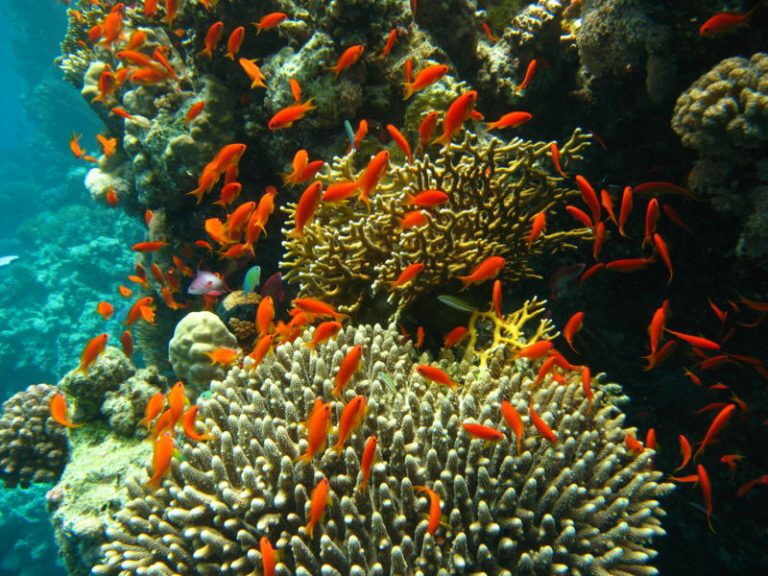
Coral reef in India, Lakshadweep

Oceans consist of coral reefs ecosystems which are diverse and intricate creatures that interact with each other and the physical environment. It is a class of w animal related to jellyfish, hydroids and sea anemones. They play a major role in maintaining the health of our oceans and our economy. But due to the impact of human actions on oceans and its ecosystem, coral reefs faced a huge decline and thus marine ecosystem has been tampered leading to loss of habitat and food for many species.

What can we do to protect Coral Reefs ?

Even if we live far from coral reefs, we can have an impact on reef health and conservation. Here’s some things we can do in order to ensure conservation of reefs:

conserve water: The first and foremost thing we can do is conserve water. The less water we use, the less wastewater and runoff finds it way back to the ocean.

choose sustainable seafood: Fish populations are increasingly being depleted due to loss of habitat, demand, and unsustainable fishing practices. Choose seafood that is both healthy and sustainable.

volunteer: volunteer in government projects if you can such a beach cleanups drive.

Dispose off your trash properly: do not litter places which are near the beach. Don’t leave unwanted fishing nets in the water or on the beach.

plant a tree: trees reduce runoff into the oceans. By planting a tree, we can contribute in reversing the warming of our planet and rising temperature of our water bodies.

use organic fertiliser: even if we live far way from water bodies, these products flow into the oceans and rivers, pollute them and can harm the marine life.

reduce pollution: reduce your carbon foot print and use bicycles, walk or ride the bus. Because emissions from vehicle could lead to ocean warming.

• And finally, stay informed and Spread the Word! Educate yourself about healthy coral reefs and its importance to fish, plants, animals and humankind. Your excitement would help in getting others involved.

Impact of COVID-19 on undergraduate education

COVID-19 has hit India with its absolute force and has put the entire nation under lockdown. This nationwide pandemic has tested various systems of India. The medical sector has suffered the most under its wrath due to the unavailability of staff and equipment. Furthermore, due to lockdown, various business activities have been shut down, this has also taken a toll on India’s economy. While sectors like these are facing issues as of now, the educational sector of India is also under crisis. Colleges/ universities have been shut for over 2 months as it would be unsafe for the students and faculty to attend college at the time of lockdown, while coronavirus continues to spread at a massive rate. Coping with COVID-19 is difficult for everyone including universities, because they serve such an extensive variety of purposes. First and the most significant, they are educational institutions, where undergraduate and postgraduate students acquire skills, knowledge and education and where faculty educate and conduct research. Furthermore, they additionally work as small cities, complete with police forces, energy plants, sports offices, and other civic institutions. They are likewise significant local employers and important drivers of nearby and regional economies. Lastly, many manage hospitals, setting them at the front line of the local healthcare system. Maulana Azad National Institute of Technology (MANIT) has made the students hostel  into a quarantine center as they have more than 300 rooms. Students are in panic as their belongings are still there. 

Despite the fact that most understudies have left grounds, the issues created by COVID-19 have not. Everyone from the workforce to office staff are stressed over their future. Research projects, semester exams and practicals are postponed. Admissions for new courses and staff recruitment are disrupted. Everything is in disorder. Undergraduate and postgraduate students have many questions like: How will their academic credit be determined? Will they be reimbursed for the unused room and lodging? Will there be a farewell ceremony for last year students? Will this affect their athletic scholarship? Would they be able to stay in the country if their student visa is revoked? Would the final year students get their degree this year or not? In short, universities still have various important decisions to make, and to convey to the students and faculty. 

Making an organization that gives a framework to these decisions can help—and is preferable done sooner rather than later. In working with higher-education institutions as well as businesses and public-sector agencies, we have perceived how integrated nerve centers can assist these institutions and organisations with setting a course and follow up. 

COVID-19 has drastically reshaped the manner in which worldwide higher education is taught. Lectures are being conducted online. Examinations and their conduct is uncertain since most of the universities have cancelled exams for now,  as all the education institutions have become virtual. Therefore, higher education institutions are quickly shifting how they impart and operate to meet the advancing needs of students and faculty. And they have successfully met the requirements of the students to a large extent. 


EDUCATION IN TIMES OF CORONA

We all are well informed about the current unfortunate scenario created by the deadly Novel Corona Virus. A lot has been said and discussed how much it has impacted the environment, society and the economy of the countries. This pandemic has tremendously affected the education system, this is also needed to be discussed widely. Almost every day, the teachers and students are facing new challenges. Education is the backbone of a society and the students are the future. Life becomes valueless without education. The suffering of the entire education system is not at all desirable.


From the very beginning, the main mode of education was offline and the basic source was school. But it is obvious that due to this corona outbreak all the offline modes of education are closed for an uncertain period of time. On 14th March the nation’s Prime Minister announced the first nationwide lockdown, and the news dropped like a bombshell for the institutions and teachers, because at that point of time many board exams were going on in schools and colleges and some results were about to be declared.


The lockdown is getting extended in increments since March. Given this situation, it is not possible for the institutions to take a complete break from teaching the students neither it is possible for the students to stop studying since whenever their schools/colleges will reopen they will have to give their due exams. In this situation the only thing that is feasible, is to introduce e-learning in their curriculums. Internet learning was always an option for extra studies for the students, but now that option has become a necessity for almost all the educational institutions.


Education is a basic right for every citizen of a country. But this overnight change of the mode of study from offline to online has made education unreachable to some of the students. Numerous students do not have an internet connection and thus the study materials that are being given to them are becoming unattainable for them. Some of the institutions have even started marking their attendance in the online classes. Those schools/colleges use to allot marks on the attendance of the students, so, those students who aren’t being able to attend these online classes are getting affected severely. All the sources of learning have become unobtainable for these students since their tuitions are also off now. Even the teachers are facing copious issues due to this sudden change. Many teachers are not technologically equipped so along with the students they are also taking time for getting used to it. The teachers are also facing pressures of converting all the teaching materials to digital formats. Even if the majority of the students are getting the facility of attending their classes through online conferences, it can not be apprehended how the pending and future exams will be taken through online mode.


Amidst this situation where all the students and teachers were already struggling to get adjusted with this newly formed learning system, the government of several states announced that the junior classes of the schools and the intermediate semester students of the universities will be promoted to the next class or to the next semester. Regarding this a lot of hassles has been created since most of the universities are still not agreeing to promote their students without taking their tests. Some of the institutions are planning to take their exams very soon even in this crucial situation. The students were already distressed and this being added into their suffering, they are now completely perplexed.


The university students who had their terminal semesters just when the lockdown started, are suffering the most. Most of them had their career plans ready already. Since the entire exam procedure got delayed, they are living in an extremely uncertainty right now. The school kids are facing problems in paying the fees of the schools and tuitions since most of the parents do not have the facility of online banking. The government and the institutions are trying to make things a little less difficult for the students. The sense of insecurity in the students are making them depressed and it has affected their mental health badly. No one knows what the future holds for all of us, but what we can do is to try to keep the students engaged not only with studies but also with creative things so that they can stay healthy and productive in this pivotal situation.

ASHA Workers Fighting the Pandemic: Ground Zero Problems

Community Health Workers (CHWs) play an important role in building awareness, countering stigma and maintaining essential primary healthcare service delivery in different parts of the world. In India’s case they are in the form of Accredited Social Health Activist (ASHA) workers, who are taking full charge of the public health effort for safe working conditions and fair remunerations in this pandemic. It is essential that they are provided adequate Personal Protective Equipment (PPE) and proper training for its usage in the early stages of the dreadful pandemic like COVID-19. It is also appropriate to ensure role clarity, training, supportive supervision, health and well-being for them.

In view of the shortage of human resource in the health system the Government of India recruited ASHA workers to connect marginalised communities with health care under the National Rural Health Mission (NRHM), 2005. There are 9,00,000 ASHA workers, who are acting as a bridge between the government and common citizens. They are working hard in these challenging times as health care facilitators, health activists and service providers and putting their lives at high risk. The current situation of the country has brought out the hidden but no less intense struggle of the ASHA workers. The struggle concerns  the limited support they get from an inflexible and fragile public health system. ASHA workers are also facing increased resistance from communities when they go out in the field to monitor safety measures against the spread of the pandemic. They feel stressed when they fear the mistrust of local people while finding out COVID patients within an allotted area. They face trouble in various places in the country. They appeal for protective measures to save themselves from infection and also to ward off physical attack from hostile people.  Let us have a pan Indian survey to trace some of the problems faced by the ASHA workers.

In Karnataka lack of cooperation from local people and unavailability of safe drinking water and proper sanitation facilities have forced the ASHA workers not to drink water during their duty.

In Gosaiganj, Lucknow, the pink sari-clad ASHA workers stay outdoors most of the day, with ‘makeshift masks’ formed by dupattas. Their allotted work is to survey around thirty to fifty houses in a day depending on the risk levels of the area. They have an increased risk of exposure to the coronavirus, which also endanger their families. Such fears aggravate even further, especially given the gendered nature of domestic care work, forcing many of them out of duty in such challenging times. Lucknow has an ASHA team which has ‘ASHA Sangini’ as the leader. She reported that three of her workers have dropped out from work at present for fear of personal and professional risks.

ASHA workers in Faridabad, Haryana, and Bengaluru, and Belagavi in Karnataka, are facing the ire of local people who are dissatisfied with the government’s handling of the pandemic. People assume that the ASHA workers are in direct contact with political parties and on this pretext they attack the workers conducting surveys. Local people show huge resistance to cooperating with the workers. Now in some places police accompany the workers to protect them. Such protection is important in view of the fact that ASHA workers already face an increase in workload in terms of increase in number of working hours. Apart from their existing duties they also have additional workload now, including spreading awareness of the pandemic, regular check-up by house-to-house visit.

On the top of it, due to delay in payments, ASHA workers in Pedapalli district, Telangana, have decided to leave the work. This is not an exceptional event as delayed payment problem plagues ASHA workers in many parts of India. Very often they are the only source of income for their families. The problem is even more complicated because while they do not get their meagre allowance the medical staff and sanitation workers are receiving regular salaries.

In central Delhi, recently an ASHA worker reported positive for coronavirus. It is not unexpected because they were not provided PPE kits to work in the containment areas. Their meagre payment and inability to pay for treatment lead their families to prevent them from going out to the field and take life risk.

ASHA workers are also coping with the increase in demand of medical supplies and birth control methods of women’s reproductive concerns. Men are not used to be in home for a very long time. The women complain of physical demands their husbands are making on them. Being helpless due to the home quarantines and lockdown extensions they are begging the workers for protections to be used. An ASHA worker in Ajmer had to intervene when the police stopped a pregnant woman on her way to an abortion clinic. The workers are also running out of calcium and iron tablets and facing difficulty in providing them to the concerned people.

An ASHA worker from Barabanki district, Lucknow, reported that the swirls of rumours through social media have made their work more challenging. People have the fear that contact with the virus means immediate death. The workers have to work very hard to clear the confusion among the anxious and distressed people who have never faced such pandemic before.

We must appreciate the role of the ASHA workers, who are working very hard to put the welfare of the community before their own safety. They are putting aside their fear of coronavirus and the nation needs their service more than ever before as the foot soldiers fighting the COVID-19 battle. Their main motto is, “Kaam karna hai, toh karna hai” (work that has to be done, has to be done).

It is amply clear that ASHA workers face multiple problems in such crisis times. But their problems need to be addressed with due care at the governmental level. It is because they at the ground level make the public health system robust and responsive. They are not to be underestimated as “low-level health workers”.