TODAY’S SOCIAL MEDIA

Social media or the internet plays a vital role in our daily lives. Now with these online classes and work from home has proved it’ But there are always advantages and disadvantages.

Social media is a necessity:

Social media is more than a “trend.” It is a means of living. It gets various jobs executed at a time. It constitutes a precise and professional association and establishes you at the front of the profession you want to grow in. it is not a mere extravagance that can be afforded only by affluent people, it has become an essential requirement of life. Because of social media, businesses increase faster and the advertisements of labels and concepts are made for free. Artists and stars have more than one platform to choose from in order to stay connected with their fan base.

Social media builds connection in spite of geographic remoteness:

The Internet epoch has built long-distance interaction dramatically quicker, simpler, and more affordable than ever before. This, it has been claimed, has reduced the consequence of geographic contiguity in social communications, modifying our world from a “global village” into a “borderless society”. The potential lies in the palms of the user, because the person can, within a single click, publish their thoughts and beliefs with anyone in the world at any time through social media. Don’t apprehend the network: the internet is transforming the method we interact for the better.

Social media is informative:

Social media benefits one to access the world of information in one click. One obtains access to plenty of data, be it science, technology, or as simple as booking tickets for a movie. E-commerce has allowed us to deliver everything anywhere easily. Hence, social media is the digital version of people. It benefits us to join, participate, and discover. 

Social media helps in the improvement of entrepreneurs and brands:

The convenience of using social media in marketing is raising brand awareness. Social media can helps a business to grow its brand recognition by improving intercommunications with a business brand. Brand awareness means the total percentage of target people who know the company exists and what the company offers of products or services. When the brand awareness is developed, the probability of purchasing is improved. Thus, attempts should be made to make the brand a part of the mindfulness of consumers.

Social media causes addiction:

Social media is as bad as alcohol and drugs for millennials. The word “addiction” brings to mind alcohol and drugs. Yet, over the past 20 years, a different type of obsession has developed: addiction to social media. It has the potential to provoke long-term destruction to our emotions, habits, and relationships. 

Social media decreases face to face conversation:

Social media has caused people to lose the skill to communicate efficiently. Social media has led us to have fewer interactions with the people that they connect with. The majority of people have access to social media at any time they want via their smartphones, so this only worsens as larger people begin to obtain smartphones. Since it has become more common, social media has made people have a trend to want to communicate with people online rather than in person because it has made the means easier.

Social media spreads a lot of trick messages and rumors:

Rumors and fabrications have been there since the start of time but on social media, it just gets more dangerous because it reaches across millions of people. Rumors begin as one small action and before we understand it has become another huge issue. Rumors have done a lot of harm and always continue to create anxiety and suffering amongst people. Beware, don’t be an associate to promoting rumors.

The Importance Of being Career Oriented.

The importance of Career in today’s era is one of the most important thing a person should have in his life. A life without a set objective is almost worthless because then you become unproductive and contribute nothing to the society as well as to your own soul. Everybody should have career objective because that leads a growth of an individual. It enhances their skills and personality and help them to become a better person.

Just like charity begins at home, the education that one must be career oriented starts from the home of a child or the upbringing and background they come from . The another major role is of the schools they have studied from . A school plays a major part in the development of a student . It is there you learn how to talk ,express and stand firmly on your point of views. The stage fear can be adressed if you have a school that notices it and helps you cope with it. There are parents who at their times could not study in maybe an English medium school but they promise themselves that their child would get the best education and they are ready to work hard for it as much as required. But why , why do these parents know the importance of good education ? Because when they look back at life they have regrets and they don’t want that when their child grows up and looks back at life he has to regret anything, rather they want that all he can see is achievements.

In our India parents are already over enthusiastic when a child is born – They are already ready with their set of goals for their children. He will be an Engineer or She will be a Doctor is what they already declare. But, however , these things are gradually changing by time . Now there are a a lot of parents who support their children in which ever field they want to go to and that is what is IMPORTANT . When a child has supporting parents his life becomes easy. Careers can be in any field .Many aspire to becomes Coreographers, Singers, An Entrepreneur, An Engineer, A doctor, Musician ,A Doctorate etc. Today careers can be in any form. There are youtubers and Fashion bloggers that are earning lakhs of money just because they have the dedication as well as skills towards their interests.

A male should be career oriented because he is also expected to play certain roles in the society. As a son he is expected to earn for the family when his father retires. As a husband he needs to provide his wife a good lifestyle. As a father he needs to be a role model for his child. And as an individual he needs to has to fulfill his social needs. He needs to fulfill his self esteem needs as well his self actualization needs, He needs to feel accomplished.

The importance of being career oriented is major in a Women’s life. Especially in this world today . NO WOMAN SHOULD BE DEPENDENT ON ANYBODY. It is very important that a woman is Independent because it is not like earlier as it was that women will marry men and thus their life is secured. And it should not even be like that . This myth has to be changed . Why does a Woman need a Man for her financial security when she can be financially secured herself. And all the parents out there should educate their girls equally as they educate their boys. There are many parents who support their girls to study hard and achieve their goals and these girls are really lucky to have this oppurtunity because this society still has back school parents who believe girls have to marry one day so why spend? There are a lot of cases today where the husband and wives are separated due to xyz reason . What after that ? If a woman is not educated or has a job or is independent how will she survive in this society who will not let her live peacefully and is always ready to taunt a woman ?Even if the husband and wife lives together, if a woman is expected to contribute in all the ways with her husband she should also be expected to contribute financially. That reduces the burden on one person and brings peace in the family.

Therefore, to complete the purpose of life one should be career oriented. Nothing is impossible. Let’s replace the word CAN I TO I CAN. Your career growth depends on your Hardwork, sacrifice and repetition.you know everything is there is nothing special in that- Kishan Peddulwar

IDEALISM VS REALISM. ?…who wins?

We all face this question everyday in some or the either way. Many times we get stuck and are not able to decide which one to choose. Whether to give more importance to ethics and morals and follow idealism or to give more importance to practicality, pros and cons and personal benefits and follow realism. Many you will say that we should consider the importance of morals and ethics. We should consider the almighty and his supremacy and many of you will also say that in today’s era one should emphasis on one’s personal benefits and practicality. I alone cannot change the world. Nothing will happen if I follow morals every person is only seeking his or her own benefits.

The most important thing which effects our decision making is our mindset and priorities. In oral and in speeches we may give long lectures on idealism but when it comes to personal interest, all morals and principles are kept aside. The most common example is use of Air conditioners. You have seen many people giving speeches on depletion of ozone layer and CFCs but they themselves have ACs in every room. We all promote the use of public transport instead of personal transport but many of us work hard and take loans at high interests to buy a car and show off in society. We have to change this mentality and our hypocrite nature. Until and unless we don’t unite nothing productive is going to happen.

At the end i will conclude that if your realism is not violating any ethics and morals and you did not have intensions of making any false act then your realism is acceptable and if your idealism is not affecting to you severely then your idealism is also accepted because feeding others without having food for yourself is an act of complete foolishness.

Culture and tradition of odisha

Odisha (formerly Orissa) is one of the 29 states of India, located in the eastern coast. It is surrounded by the states of West Bengal to the north-east, Jharkhand to the north, Chhattisgarh to the west and north-west, Andhra Pradesh and Telangana to the south and south-west. Odia (formerly known as Oriya) is the official and most widely spoken language, spoken by 33.2 million according to the 2001 Census.The modern state of Odisha was established on 1 April 1936, as a province in British India, and consisted predominantly of Odia-speaking regions.April 1 is celebrated as Odisha Day.

Odisha has a chequered history of successive rules of different dynasties and assimilation and synthesization of the best of Buddhist, Jain, and Hindu cultures and also Mahima Cult. Odisha in the past has been known as Odra, Utkala, Kalinga, Tosala, or Tosali and Kosala. The name “odisha” derived its name from tribal community inhabited the place in ancient times called “odra” who worshipped the sun god.

The mention of Odisha (Orissa) dates back to 260 BC, the reign of Emperor Ashoka. While spreading the boundaries of his kingdom, the emperor reached the gates of the then Kalinga and invoked its king to fight or flee. In the absence of her father, the princess of the state took reins and fought bravely with the emperor. The war was a true massacre and the bloodshed that took place moved the emperor so much that his killing instinct was capsized. A warrior was thence transformed into a great apostle of Buddhism. Buddhism followed by Jainism held sway until after the reassertion of Hinduism in the state in 7th century AD.The Orissan culture and architecture flourished immensely under the rein of Keshari and Ganga Kings at Odisha (Orissa). A number of masterpieces of that golden era still stand today as mute evidence to a glorious past.

Odisha has a unique culture and Odias call it Jagannath Sanskruti as most of them revolve around Lord Jagannath.The old customs and traditions bind the Odias together in a cultural cocoon where each and every festival is celebrated with equal enthusiasm and gaiety. It is like a bridge between the northern and southern halves of the country. Odia (formerly known as Oriya) is the most spoken language of Odisha.

Jagannatha Temple in Puri, known for its annual  or Car Festival is a unique cultural attraction while the Sun Temple at Konark is also famous for its architectural splendor.

Odisha’s wedding ceremony is a simple affair free from any complexities and lavishness and is considered as a blissful affair with simple rituals followed.The marriage has three major rituals Nirbandha (fixing the marriage), Bahaghara (the main wedding ritual), and Chaturthi (consummation). A wedding in Odisha is not considered complete until Chaturthi. One of the unique things about the Oriya wedding is that the mother of the bridegroom does not attend the wedding ceremony.

The official language of Orissa is Odia (Oriya), which is spoken by the majority of the population and is one of the oldest languages of India. Other languages spoken are Hindi, Urdu, Bengali, and Telugu.

Women in Odisha wear the Oriya Saree, which is often draped with a 5-yard cotton ikat cloth. Traditionally, the women of Odisha dress in sarees of blue, red, and magenta and other deep colors, with ikat patterning.

Odisha is recognized for its handlooms, especially the Odisha sarees. In Odisha, there are many different motifs and designs woven in cotton and silk to create the distinctive sarees of Odisha like Bomkai, Sambalpuri which are also famous in the international markets.

Orissa is a land of temples. The concentration of the largest number of temples all over the state has made it a centre of unique attraction for the scholars and tourists.The Orissan Temple Architecture holds an appeal that is magnetic and almost stupefying in its extravagance and mobility. Exquisitely carved base-reliefs with their numerous halls and the heavily sculptured towers are landmarks of this magnificent architecture. The splendid ruins of Konark, the highly sanctified environs of Jagannath and Lingaraj temples are the symbols of Orissa’s cultural heritage that remain an eye-opener even today.

The artistic skill of the Oriya artists is quite unsurpassable in the world. The murals, cloth and palm leaf paintings of Orissa are as old as its magnificent architecture and sculpture. The Chitrakars or artists were patronised by feudal landlords and kings, leaving them free to scale new heights in creativity in all fields of visual arts.The three main categories of Oriya painting, the Bhitichitra or the murals, the Patachitra or the cloth painting and the Pothichitra or the palm leaf engraving have remained more or less the same in style, down the ages.

The musical accompaniment of Odissi dance is essentially the same as the music of Odissa itself. There are a number of musical instruments used to accompany the Odissi dance. One of the most important is the pakhawaj, also known as the madal. This is the same pakhawaj that is used elsewhere in the north except for a few small changes. One difference is that the right head is a bit smaller than the usual north Indian pakhawaj. This necessitates a technique which in many ways is more like that of the tabla, or mridangam. Other instruments which are commonly used are the bansuri (bamboo flute), the manjira (metal cymbals), the sitar and the tanpura.A land of rich and diverse artistic achievements, Odisha’s art and culture are the products of a long historical process in which the spiritual, philosophical and the humane dimensions have merged to yield the finest effects of cultured civilised life.

Rock art in Odisha dates back to the prehistoric period according to the earliest reports found at Viramkhol in Jharsuguda district. With the reign of Ashoka the great, Buddhist sculptural art gradually changed the degree of Odisha’s artistic flair. Even today, the caves of Ratnagiri, Lalitgiri and Udaygiri have not faltered to showcase the wonderful legacy of sculptural brilliance that some of our finest carvers left behind.

With clean, fine-grained sand and water as its raw materials, this is an indigenous form of art that found its origin recently if a comparison is drawn to the other forms of art. It is practised on the beaches of Puri with subjects ranging from Hindu deities to international occasions. With the help of tourism, this art-form has developed exponentially and found worldwide recognition.

Locally known as ‘Tarakasi’, this art form is about 500 years old. It hails from Cuttack, a.k.a the Silver City of Odisha (now you know why). The process consists of drawing silver through a series of consecutively smaller holes to produce fine strands of wire. Usually, Tarakasi jewellery is used to embellish Durga idols during Durga Puja in Cuttack and by Odissi dancers.

Odisha has a rich heritage of music, which is a delight for all music lovers. Among all Odissi music is a piece of classical music which is very popular internationally. It has all elements such as Tala and Raga. Jayadeva was the first poet to compose musical lyrics.

Odisha music is categorized into 5 types

Tribal music

Folk music

Light music

Light-Classical music

Classical music

Odia filmography’s first production was a talkie. The first Odia talkie Sita Bibaha was made by Mohan Sundar Deb Goswami in 1936. The pace of Odia film production in the initial years was very slow. After Sita Bibaha, only two films were produced until 1951.

Odia Film Industry, especially in the 1960s and 1970s, were highly indebted to Bengali films. Several Bengali directors help their Odia counterparts to help make films. Eminent director Mrinal Sen even directed an Odia film ‘Matira Manisha’ which won National Award for best actor Prashanta Nanda.

Odisha has culinary tradition spanning centuries if not millennia. The kitchen of the famous Jagannath temple in Puri is reputed to be the largest in the world, with a thousand chefs, working around 752 wood-burning clay hearths called chulas, to feed over 10,000 people each day.Rasagolla, one of the most popular desserts in India, is an extension of the cuisine of Odisha and West Bengal. It had been enjoyed in Odisha for centuries and neighbouring Bengal, like the well-known rice pudding, kheeri (kheer), that is relished all over India.In fact, some well-known recipes, usually credited to Bengal, are of Odishan origin. This is because during the Bengal renaissance, Brahmin cooks from Odisha, especially from Puri, were routinely employed in richer Bengali households. They were famed for their culinary skills and commonly referred to as Ude Thakurs (Odia Brahmin-cooks). As a result, many Odia delicacies got incorporated into the Bengali kitchen.Chena Poda is another famous sweet delicacy in Odisha with the origin from Nayagarh District, Odisha.Pakhala, a dish made of rice, water, and yoghurt, that is fermented overnight, is very popular in summer, particularly in the rural areas. Odias are very fond of sweets and no Odia repast is considered complete without some dessert at the end. A typical meal in Odisha consists of a main course and dessert. Typically breads are served as the main course for breakfast, whereas rice is eaten with lentils (dals) during lunch and dinner. The main course also includes one or more curries, vegetables and pickles. Given the fondness for sweet foods, the dessert course may include generous portions of more than a single item. Odia desserts are made from a variety of ingredients, with milk, chhenna (a form of ricotta cheese), coconut, rice, and wheat flour being the most common.

The first great poet of Odisha is the famous Sarala Das who wrote the Mahabharata, not an exact translation from the Sanskrit original, but a full-blown independent work. Sarala Mahabharat has 152,000 verses compared to 100,000 in the Sanskrit version. Among many of his poems and epics, he is best remembered for his Sarala MahabharataChandi Purana and the Vilanka Ramayana are also two of his famous creations. Arjuna Das, a contemporary to Sarala Das, wrote Rama-Bibha, a significant long poem in Odia.

Towards the 16th century, five poets emerged, though there are hundreds year gap in between them. But they are known as Panchashakhas as they believed in the same school of thought, Utkaliya Vaishnavism. The poets are: Balarama Dasa, Jagannatha Dasa, Achyutananada Dasa, Ananta Dasa and Jasobanta Das. The Panchasakhas are very much Vaishnavas by thought. In 1509, Chaitanya, an Odia devotee of Vishnu whose grandfather Madhukar Mishra had emigrated to Bengal, came to Odisha with his Vaishnava message of love. Before him Jayadeva, one of the foremost composers in Sanskrit, had prepared the ground by heralding the cult of Vaishnavism through his Gita Govinda. Chaitanya’s path of devotion was known as Raganuga Bhakti Marga, but the Panchasakhas differed from Chaitanyas and believed in Gyana Mishra Bhakti Marga, which has similarities with the Buddhist philosophy of Charya Literature stated above. At the end of age of Panchasakha, the prominent poets are Dinakrushna Das, Upendra Bhanja and Abhimanyu Samanta Simhar. Verbal jugglery, obscenity and eroticism as the characteristics of Shringara Kavyas, became the trend of this period to which Upendra Bhanja took a leading role. His creations were Baidehisha Bilasa, Koti Brahmanda Sundari, Lavanyabati were proved landmark in Odia literature. Upendra Bhanja was conferred with the title Kabi Samrat of Odia literature for the aesthetic poetic sense and verbal jugglery proficiency. Dinakrushna Das’s Rasokallola and Abhimanyu Samanta Simhara’s Bidagdha Chintamani are prominent kavyas of this time.

There are many more things about our odisha.I am proud to be an odia.

Feminist Movement across the times

The feminist movement (also known as the women’s movement, or simply
feminism) refers to a series of political campaigns for reforms on issues such as
reproductive rights, domestic violence, maternity leave, equal pay, women’s
suffrage, sexual harassment, and sexual violence, all of which fall under the label
of feminism and the feminist movement. The movement’s priorities vary among
nations and communities, and range from opposition to female genital mutilation
in one country, to opposition to the glass ceiling in another.

Feminism in parts of the Western world has gone through three waves. First-wave
feminism was oriented around the station of middle- or upper-class white women
and involved suffrage and political equality. Second-wave feminism attempted to
further combat social and cultural inequalities. Although the first wave of
feminism involved mainly middle class white women, the second wave brought in
women of colour and women from other developing nations that were seeking
solidarity. Third-wave feminism is continuing to address the financial, social and
cultural inequalities and includes renewed campaigning for greater influence of

women in politics and media. In reaction to political activism, feminists have also
had to maintain focus on women’s reproductive rights, such as the right to
abortion. Fourth-wave feminism examines the interlocking systems of power that
contribute to the stratification of traditionally marginalized groups.

Feminism in the United States, Canada and a number of countries in western
Europe has been divided into three waves by feminist scholars: first, second and
third-wave feminism. Recent (early 2010s) research suggests there may be a fourth
wave characterized, in part, by new media platforms.

The women’s movement became more popular in May 1968 when women began
to read again, more widely, the book The Second Sex, written in 1949 by a
defender of women’s rights, Simone de Beauvoir. De Beauvoir’s writing explained
why it was difficult for talented women to become successful. The obstacles de
Beauvoir enumerates include women’s inability to make as much money as men
do in the same profession, women’s domestic responsibilities, society’s lack of
support towards talented women, and women’s fear that success will lead to an
annoyed husband or prevent them from even finding a husband at all. De Beauvoir
also argues that women lack ambition because of how they are raised, noting that
girls are told to follow the duties of their mothers, whereas boys are told to exceed
the accomplishments of their fathers. Along with other influences, Simone de
Beauvoir’s work helped the feminist movement to erupt, causing the formation of
Le Mouvement de Libération des Femmes (The Women’s Liberation Movement).
Contributors to The Women’s Liberation Movement include Simone de Beauvoir,
Christiane Rochefort, Christine Delphy and Anne Tristan. Through this movement,
women gained equal rights such as a right to an education, a right to work, and a
right to vote. One of the most important issues that The Women’s Liberation
movement faced was the banning of abortion and contraception, which the group
saw as a violation of women’s rights. Thus, they made a declaration known as Le
Manifeste de 343 which held signatures from 343 women admitting to having had
an illegal abortion. The declaration was published in two French newspapers, Le
Nouvel Observateur and Le Monde, on 5 April 1971. The group gained support
upon the publication. Women received the right to abort with the passing of the
Veil Law in 1975.

The Women’s movement effected change in Western society, including women’s
suffrage, the right to initiate divorce proceedings and “no fault” divorce, the right
of women to make individual decisions regarding pregnancy (including access to
contraceptives and abortion), and the right to own property. It has also led to broad
employment for women at more equitable wages, and access to university
education.

In 1918 Crystal Eastman wrote an article published in the Birth Control Review,
she contended that birth control is a fundamental right for women and must be
available as an alternative if they are to participate fully in the modern world. “In
short, if feminism, conscious and bold and intelligent, leads the demand, it will be
supported by the secret eagerness of all women to control the size of their families,
and a suffrage state should make short work of repealing these old laws that stand
in the way of birth control.” She stated “I don’t believe there is one woman within
the confines of this state who does not believe in birth control!”

The United Nations Human Development Report 2004 estimated that when both
paid employment and unpaid household tasks are accounted for, on average
women work more than men. In rural areas of selected developing countries
women performed an average of 20% more work than men, or 120% of men’s total
work, an additional 102 minutes per day. In the OECD countries surveyed, on
average women performed 5% more work than men, or 105% of men’s total
work—an additional 20 minutes per day. However, men did up to 19 minutes more
work per day than women in five out of the eighteen OECD countries surveyed:
Canada, Denmark, Hungary, Israel, and The Netherlands. According to UN
Women, “Women perform 66 percent of the world’s work, produce 50 percent of
the food, but earn 10 percent of the income and own 1 percent of the property.”

The feminist movement’s agenda includes acting as a counter to the putatively
patriarchal strands in the dominant culture. While differing during the progression
of waves, it is a movement that has sought to challenge the political structure,
power holders, and cultural beliefs or practices.

Although antecedents to feminism may be found far back before the 18 th century,
the seeds of the modern feminist movement were planted during the late part of
that century. Christine de Pizan, a late medieval writer, was possibly the earliest
feminist in the western tradition. She is believed to be the first woman to make a
living out of writing. Feminist thought began to take a more substantial shape
during the Enlightenment with such thinkers as Lady Mary Wortley Montagu and
the Marquis de Condorcet championing women’s education. The first scientific
society for women was founded in Middelburg, a city in the south of the Dutch
republic, in 1785. Journals for women that focused on issues like science became
popular during this period as well.

The women who made the first efforts towards women’s suffrage came from more
stable and privileged backgrounds, and were able to dedicate time and energy into
making change. Initial developments for women, therefore, mainly benefited white
women in the middle and upper classes.

The Creation Of Women

We often hear a lot of things about the creation of women. But what exactly is the truth?

The truth is….We don’t know. According to the Hindu theology,due to the period of Kaliyuga,many misconceptions and misunderstandings have arised amongst the people. What is Kaliyuga? Well,Kaliyuga has its own history and its own theory and prediction. But…let’s not delve into the concept of Yugas just yet. 

Various theologies have various descriptions about the creation of women. Hindu theology was chosen because  we always like to write about the things which we know. And if we don’t,then we learn and explore. One should never mislead the people’s beliefs. And which is why one should do utmost research about the concept before writing it down. The creation of  Woman,described in  Matsya Purana is as follows:

Lord Brahma is said to be the father of the creator of this universe.  After he created the first man (Manu),he started the creation of the first woman. It is said that even the Gods were sometimes mistaken in the terms of understanding women. So, when Lord Brahma was in the middle of creating the generation of women,a devduta came to Brahma. He asked the lord who created the whole universe in just a minute,why did the creation of a women  took him 6 days!? Brahma said that  this  creation was going to be his best creation until now. Because she,upon completion would be extremely cherishing towards her family. She would be determined and calm in every situation no matter any calamity that arised. Devduta then went to examine the lord’s creation. And then he came to order and exclaimed ,how weak she was! Brahma said that there is a difference between the property of being delicate and weak. Women have the property of being delicate. That does not mean that she does not have the strength to stand for herself. Maybe she is delicate externally,but look inside,she is strong as diamond and will not break. This is women. After this, Devduta  asked , why exactly was she filled with moisture when he touched her? Brahma explained that the moisture was actually the tears that were shed by her. Women,when upset sheds her grief in the form of tears. After her tears were shed,she again returned to be the same,determined and strong as ever. Not only women,but anyone,when someone cries does not mean that they are coward or not strong enough. When one cries,we should not patronise them,but help them during their hardships and if they need some alone time,we should be sensible enough to give it to them that time. After which,Devduta asked that whether she would

have the ability to think wisely. Brahma said that she would be the face of intelligence,who would leave her legacy to her children and would be the educator of the family.

People often criticise one another for not being good at one or the other things. This makes one feel extremely insecure about themself. The thing is,when we talk or converse with anyone,one should think about the consequences and the influence of his talk on the other person. As said by the wise ones,’Words are sharper and cause more harm then most of the weapons’. While talking,we often tend to say many misguiding things which we may not be aware of. We are mere humans,and will make mistakes through our lives,but does that mean to continue those mistakes just thinking that we are merely humans? Life is a teacher when you don’t learn from it,it repeats your own mistakes. We come across many such quotations in our lives. The importance which is actually remembered? Hardly some of them. But does that mean to stop trying at all . And this question remains unanswered. Because this is a space which we have to fill. The question is…Will we?

Thus was the creation of women,and the birth of the first Kshatriyas. We learn many things from our theologies,but the day when we start to apply them in our lives,we change. This does not mean to continue the inhuman practices. Traditions and cultures are bound to be changed with time,because the time has changed,and so will the rituals.

Note: If the above article offends you in any way,kindly tell the reason for it. There is absolutely no  intent to mislead the people in the above article .

Fit India Dialogue 2020

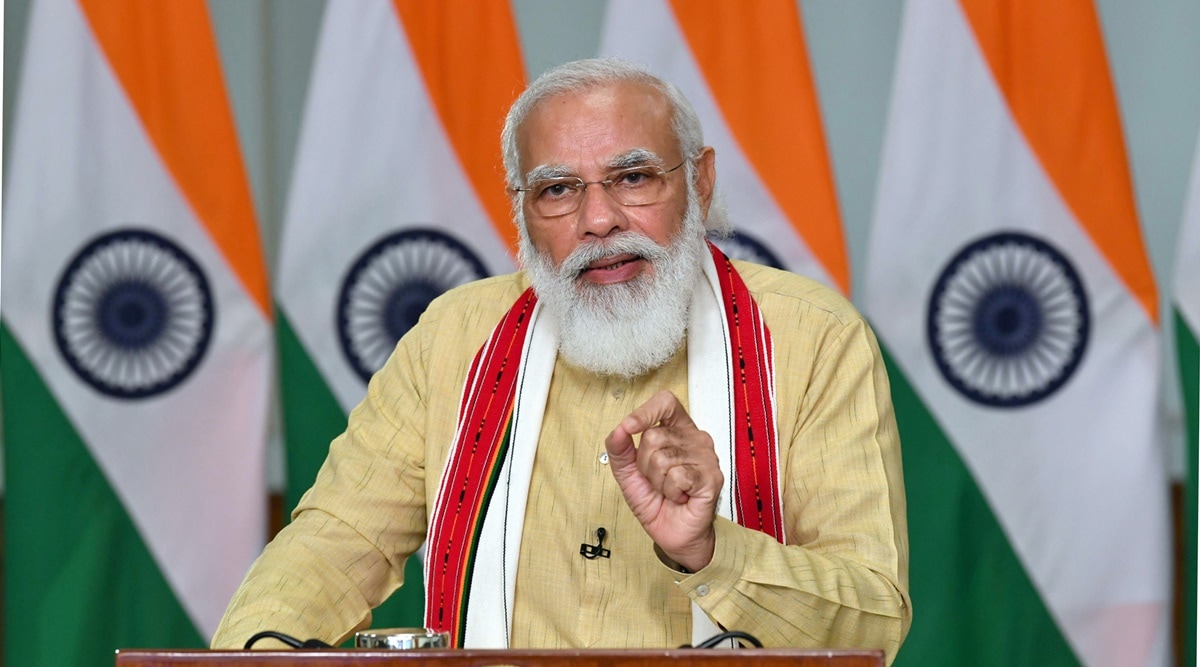
Celebrating the first anniversary of the Fit India movement, Prime Minister Narendra Modi interacted with several fitness influencers, celebrities and citizens in a nationwide, online “Fit India Dialogue”.

Fitness ki dose, aadha ghanta roz,” PM Modi introduced a new slogan to encourage citizens to exercise for at least half-an-hour in a day.

Among the participants were Virat Kohli, Milind Soman, both known to be passionate about fitness, footballer Afshan Ashiq, paralympic javelin gold medallist Devendra Jhajharia, and celebrity nutritionist Rujuta Diwekar, among others.

narendra modi

The online interaction will see participants sharing anecdotes and tips of their own fitness journey while drawing out guidance from PM Modi on his thoughts about fitness and good health. In times of Covid-19, fitness has become an even more important aspect of life. This dialogue will see a timely and fruitful conversation on nutrition, wellness and various other aspects on fitness.

While talking about the importance of fitness and a healthy diet, he recounted how his mother always makes it a point to ask him if he is eating haldi (turmeric) or not. Turmeric has antioxidant properties; here are its other health benefits. While speaking to Diwekar, the Prime Minister also talked about his recipe for making parathas with drumsticks, which he said he still eats once or twice a week.

PM Modi also asked Kohli about the Yo-Yo test, which measures the endurance levels of athletes, to which the cricketer said how it is an important benchmark. He pointed out that India’s Yo-Yo test scores were on the lower side as compared to global standards. He then went on to talk about how his grandmother inspires him to eat healthy, home-cooked food.

Sara Ali Khan reaches Mumbai from Goa with mother Amrita Singh and brother Ibrahim

Sara Ali Khan

The investigation surrounding Sushant Singh Rajput’s demise is getting murkier by the day. What started as a case of checking if his death was a suicide or murder, has now branched out to various charges like money laundering and drug consumption.

Video: Sara Ali Khan returns to Mumbai | Filmfare.com

The recent involvement of the NCB in the investigation has resulted in Bollywood actors like Deepika Padukone, Sara Ali Khan, Rakul Preet Singh and designer Simone Khambatta receiving summons. Sara Ali Khan arrived at the Mumbai airport today with her family. It was pure chaos at the airport. The actress was surrounded by the media as she fought her way to her car. Take a look at the video below.

While Sara Ali Khan and Shraddha Kapoor have been asked to appear before the NCB on September 26, Padukone has been summoned on September 25.

Khan and the three other actors have been named in NCB’s ongoing investigation into the drug angle in Rajput’s death. Earlier this month, NCB arrested actor Rhea Chakraborty and her brother Showik in the same case. According to the NCB, Chakraborty and her brother financed and arranged drugs for Rajput. The NCB has so far arrested over 10 people in the case.

An Anthropological Critique of Development: The Growth of Ignorance

Development is almost a mainstream word is today’s day and age and because of that, there are also negative connotations attached to it. In this book, such aspects of development have been discussed at length and it is edited by Mark Hobart. The subject of western development models has come under intense scrutiny and criticisms in recent times. In fact, western anthropologists have questioned the application of scientific knowledge in processes of development. They argue that despite investing large sums of money, in reality the experience of countries in Africa, Asia and Latin America has been just the opposite. Problems of underdevelopment continue to plague the countries of these regions. Over the last few decades or so, a new paradigm of development has emerged. According to this, local knowledge and very often a ‘bottoms-up’ approach to problem solving are increasingly being advocated and implemented. At the outset, the editor of this collection of essays, Mark Hobart, says that the essays and participants’ voices question the claims of western science to providing solutions to underdevelopment and in understanding the importance of local knowledge and its application.

The 12 contributors to this compendium challenge the Utopian view of western knowledge as the only and successful way in achieving economic and social development. Using ethnographic case studies from Europe, Africa, Asia and Latin America, the contributors examine the ways in which local and indigenous knowledges are often more effective than western knowledge and systems in finding solutions to problems. The essays offer a practical approach of using theory and practice for development that economists, sociologists, and political scientists, among others, will find useful.

The book cogently describes the importance of development in the world today. Development means different things to several people. It is considered ‘important’ for developing nations to receive developmental aid. It is big business for banks and industries. Multilateral agencies help super powers by handing out the promise of loans to developing nations. For many advanced nations, through their development agencies, aid is an important arm of their economic diplomacy. Yet others are able to leverage their aid-giving capabilities to creating markets for their multinational corporations and help further their powerful vested interests in the process. The whole process of development is so one-sided and top-down that it has become the idiom of economics, technology and management. As noted earlier, what is ignored are the knowledges of the peoples being developed.

The essays clearly reveal that local and indigenous knowledge can form the basis of sustainable management and development. Use of technology and western scientific knowledge have to be employed prudently and judiciously. The essays show that local knowledge and a common-sense approach go a long way in problem solving. Local wisdom, sometimes going back in time and history, can still find a place in the modern world. In our own country, Gandhian ideals and thoughts, such as in rural development, self-sufficiency, at the local level and indigenous practices will help our rural areas prosper. These and a healthy mix of wisdom imbibed from our forefathers should help take India forward.

Don’t let yourself to be driven by Social Media

Article by – Shishir Tripathi

Intern at Hariyali Foundation
In collaboration with
Educational News

In the present day times, where the social media has entered the lives of the people so deeply, it becomes very important for an individual to must check that what they are watching whether it is correct on not and whether it is beneficial or harmful for them.

Each day hundreds of messages and news come to a person having an android phone through social media. There are silly forwarded messages some spreading hate and some spreading terror. On the other hand, some messages will literally cry to get forwarded to be at least 15 to 30 people, then only the wish of the person(who’ll be sending the messages) will come true and something good will happen. Whereas, some messages, will give compel you to forward the message, as you love your family and friends. These days social media has become an ultimate way to transfer the garbage of someone’s brain into your brain and ultimately ruin your day and your lovely mood.

Sometimes, when one opens chrome there are some suggestive news below the search button. In the name of providing similar relatable news as per the liking of the user, the browsers have made it so monotonous. Vital news which is itself so important for the nation and its subjects, it is generally not shown to the people. One has to spend hours searching and scrolling for the news which is important.

Not only offline, but there are some online newspapers being read by most of the population, which actually don’t post the exact news describing the situation but there are again changes into the real news in the name of editing and freedom of expression. And in this mean process, the gist of the news gets lost and the news becomes something totally different. For instance it’s like a Gulaab Jamun with no sugar in it at all. And when that happens, it is not Gulaab Jamun at all. But a person who doesn’t knows about the absence of sugar in it, will consume it assuming it to be normal Gulaab Jamun and at a later stage the person will be able to know that what he consumed was not a proper Gulaab Jamun.

The author after this sweet example believes that it must be clear that whatever is being published is not the same as the actual thing. Let’s move further a bit more to realize that how social media controls the life of a person.

There are a number of posts on social networking sites making a particular religion and group of people so naïve, so innocent that all the torture is being done by the entire nation on that community, that religion. But the truth is all well known to the subjects of the nation. To the people who entirely believe the news shown through social media, it is harmful for them because they will carry a bad image for a particular community. In the name Secularism, people are taking the nation and its ethics for granted and spread hate between the citizens of the country.

And also there are some particular slangs being used for the people LGBTQ community and are used without any hitch in social media by silly people for creating a bad image in the minds of the people of the Nation. The opportunists make their way by utilizing different opportunities for crying out their so called pain and for a better reach; they use social media and pollute it.

And also the present government too is responsible for such a situation when so called foreign websites and apps are just crushing the dreams of the youth, the future of the nation. The easy availability of porn and other related materials is actually a very big threat for the nation’s future. It is a full planned mechanism to destroy the youth (the future of the nation) and the force on the borders (the present of the nation).

The readers are expected to distinguish and watch only that news which is important in the growth of the nation. Take good messages and news into the brain. Don’t let any person sitting miles away to make a fool out of you and choose what is important for you and for the mankind.

Brain Drain – A National Crisis

https://www.shutterstock.com/search/brain+drain

 Many problems of an acute nature stare the development of developing countries in the face of modern times. One of them is brain drain. Although this pandemic has proven to be quite a beneficial solution to put a pause in the process. Not to forget this how this lockdown has also substantially caused to improve the environmental conditions. Except for the suffering humans, everything is getting benefitted. Thus nature is healing. 

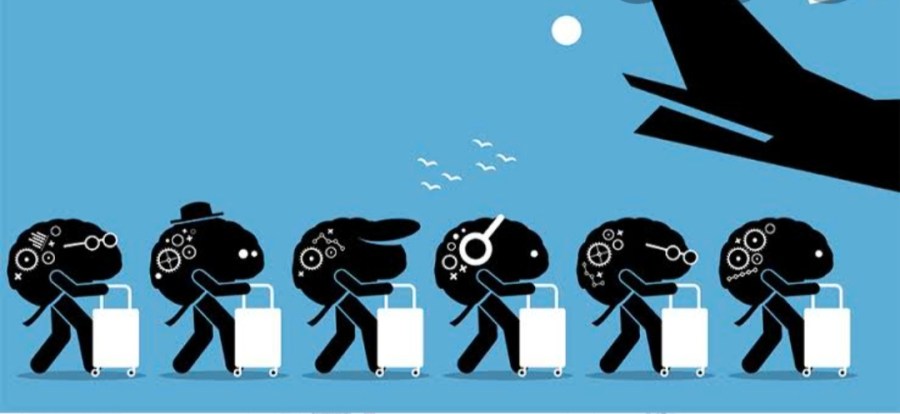
  So, the concept of brain drain is defined as the substantial emigration or migration of individuals. Generally, such child prodigy’s most of whom are trained in different crafts in technologies & different science branches tend to show rising prosperity for better financial profit & prospect. Countless trained technicians, doctors, scientists & engineers leave their motherland in the greed of getting a good life. One reason for brain drain could be turmoil within a nation. 

 Such things severely affect countries that are on the verge of development. Training up these talented students with a great cost, who ultimately face a huge loss by the end, as these students mostly migrate to the USA or UK for higher education. 

 Further discussing there happen to be 3 different categories of brain-draining as mentioned below:

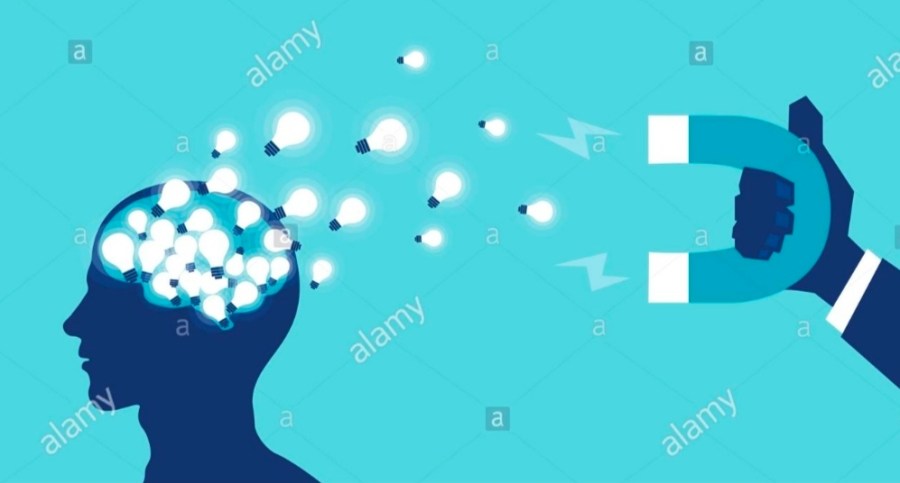
 ‌Geographical Brain Drain– This refers to the emigration of individuals of high-skills and high-brilliance to other nations. This also creates a negative impact on the home country’s economic development.

 ‌Organizational Brain Drain – This refers to the departure of individuals of skill, talent, and experience from one organization to another.

 ‌Industrial Brain Drain – This type involves the migration of skillful workers from one industry to another. 

https://www.alamy.com/

 South Asia experiences a tremendous amount of emigration of talent. Furthermore, this trend is continuously rising with years passing by. Most noteworthy, there is a lot of demand for South Asian skilled, semi-skilled, and unskilled labor in the Gulf. Moreover, other favorite work locations for South Asians include Canada, United States, United Kingdom, and Australia.

  Several reasons are responsible for the cause. Just for instance lack of suitable job opportunities. Besides these developing countries are hopelessly lacking in furnishing facilities for advanced research. On the contrary, the developed countries offer sufficient channels for research & well-objectified jobs with lucrative salaries. It is the need of the hour, for students need to develop a sense of gratitude & patriotism for their homeland that spends so much for their upbringing, training & education. 

Today’s condition of share market

Priya Yadav,

The condition of the stock market has once again become similar to the month of March. In March, the stock market was going through a huge decline due to the spread and lockdown of Corona. In the last few days, once again there is a period of tremendous selling in the stock market. During the fourth trading day of the week i.e. Thursday, Sensex dropped by 1100 points to 36,550 points during trading.
Talking about the Nifty, it fell below 350 points to 10,800. At the end of trading, the Sensex fell by 2.96 percent or 1114.82 points to 36,553.60 points. Talking about the Nifty, it fell 326.30 points or 2.93 percent to 10,805.55 points.

Banking, IT, Auto shares all rolled down
During the trading, all the shares of the BSE index were on the red mark. IndusInd Bank shares fell 8 percent in the last hour of trading. The shares of Bajaj Finance, Tech Mahindra, TCS, Mahindra & Mahindra are also included in the top losers. Stocks of Tata Steel, Infosys, Axis Bank, Maruti, Airtel have also declined.
Position after three in the afternoon
Market condition on Wednesday
Despite the signs of strength from global markets, the decline in the stock market on Wednesday fell for the fifth consecutive day due to weak sentiment. The Sensex ended 65.66 points, or 0.17 percent, down at 37,668.42 at the end of trading. Similarly, the Nifty of the National Stock Exchange closed down 21.80 points or 0.20 percent at 11,131.85 points.

Telecom shares fell
Shares of telecom and financial companies were sold, while the strong market intermediary Reliance Industries and HDFC Bank increased the market losses to some extent. Bharti Airtel was the biggest loser among the Sensex stocks. Its stock was down 7.89 percent. The share of Vodafone Idea has also come down by more than one percent. The company’s stock has come down after the announcement of the aggressive postpaid plan of Reliance Jio a day ago.

President Ramnath Kovind said- make J&K a center of knowledge and innovation by implementing NEP

Priya Yadav

President Ram Nath Kovind said on Sunday that a committed effort should be made to make Jammu and Kashmir a center of knowledge, innovation, and study by literally implementing the new Education Policy (NEP 2020). He said that there is no shortage of intelligent, talented, and innovative children in Jammu and Kashmir, and students will come out with sharp intelligence from the new education policy. Kovind said, “Committed efforts should be made to make Jammu and Kashmir a center of knowledge, innovation, and study by applying NEAP literally. These steps will once again make Jammu and Kashmir “the paradise of the earth and the shining jewel of the crown of Mother Bharti as it used to be in the medieval period.”
The President made this remark during a conference on the implementation of NEP in Jammu and Kashmir. He said, “India has the unique demographic advantage but it can be used positively only when a substantial part of the population is skilled, professionally competitive and genuinely fully educated.” Cited the example of the Mahayana sect of Buddhism, which was popular in Kashmir and said that Indian culture is incomplete without considering them.

He said, “It is important to understand our tradition and rich cultural heritage and this can only happen in our mother tongue. This is the mother tongue that has been encouraged in the new education policy, as it is linked to the cultural ethos of our country. “It is worth mentioning that NEP was approved by the Union Cabinet in July and it replaced the 1986 National Education Policy Will take.

Pollution

Priya Yadav

Due to the harmful air pollution affecting the natural, our youth is getting more chest, they are often away from home. And in the atmosphere, the smoke of the existing factories, mixed in the air around the clock, comes out from the poisonous smoke. Which causes us to breathe. Mumbai’s news has shown that when clothes are put on the roof and when they bring clothes, black and black earrings get fixed in those clothes, and like this, Karna goes into the lungs of humans with the breath. This air pollution is most tolerated by our youth because it is often read outside.

Air pollution
Man has not only polluted the water but has also polluted the air by using its various activities and technical items. The amount of all types of gases in the atmosphere is fixed. There is no specific change in the amount of these gases when there is equilibrium in nature, but due to some reason if the quantity of gases changes, then air pollution occurs.

The effect of air pollution is immediately visible as compared to other pollutants. If there is poisonous gas dissolved in the air, it immediately shows its effect and takes the life of animals and animals nearby. The Bhopal gas scandal is a direct example of this. Different modes of transport have also evolved due to the development of various technologies.

On the one hand, while the new means of transport make traffic smooth and easy, on the other hand, they play an important role in polluting the environment. Petrol and diesel are used as fuel in the modes of transport used in the cities. Smoke resulting from the burning of petrol and diesel pollutes the atmosphere.

The era of industrialization is full of industries. Sulfur dioxide and hydrogen sulfide gases are found in the atmosphere due to the smoke emanating from the chimneys of various small and large industries. These gases reach the earth with rainwater and make sulfuric acid, which is harmful to the environment and its organisms.

Foul gases from the leather and soap manufacturing industries pollute the environment. In industries like cement, a lime, mineral, etc. excessive amount of dust flies and gets into the air, which pollutes the air. By breathing in the dust mixed air, people working and living there often have blood pressure, heart disease, respiratory diseases, eye diseases, and TB. As the chances of getting disease increases.

Due to the huge increase in population, the place of living of human beings is getting smaller day by day, so man is constructing a habitat for his living in deforestation. In cities, LPG and kerosene are used for cooking, which spread a type of foul air.

Some people use wood or coal for firewood, which emits excessive smoke and mixes in the air. Humans do deforestation for places and firewood. Deforestation is decreasing the amount of oxygen in the atmosphere and increasing the amount of carbon dioxide and polluting the air. Explosions, shelling, war, etc. are carried out by humans using various types of technical equipment.

Due to the explosion, an excessive amount of dust is added to the atmosphere and pollutes the air. Due to the use of guns and excessive firing, the smell of gunpowder spreads in the atmosphere. Presently humans use plastic items for their comfort and throw them around in the event of a break or break. Cleaning workers often burn plastic with all types of waste, which causes a foul smell in the atmosphere.

Many types of explosions are carried out and gases are tested in order to make new technological experiments. During this time many types of gas dissolve in the atmosphere and pollute it. The excessive emission of harmful gases leads to ‘acid rain’, which is fatal to humans as well as other living beings and agricultural activities.

Refrigerators and air conditioners used in office and home use produce chloro-fluoro carbon, which damages the ozone layer protecting our skin from ultraviolet rays emanating from the sun. Excess firecrackers also pollute the air on various festive occasions. The environment is highly affected by air pollution.


Water Pollution
Pollution by water, the contaminated water of kal-factories, together with the rivers and rivers, causes severe pollution. If ever a fence comes, this polluted water spreads all over the place, and it dissolves the water, and this dissolved water dissolves in all the sewers and produces many diseases. Which hurts our youth.
Due to the excessive population in cities, the trend of building flats is increasing, so that three to six families can live in a flat easily. These flats require more water at fewer places and there is increasing pressure on the underground water reserves. Deepwater is being exploited while constructing deep boring.

Contaminated water, leftovers, chemical waste, etc., released from excessive construction of industries are dumped into the river through drains. The waste generated by the daily activities of the people living in the flats is dumped on the river, polluting the water of the rivers.

Settlements near the city do not have proper toilets, or even if it does not function properly, people often use the river or pond land or drains to defecate there. In the rain, all this dirt goes to the rivers or ponds.

Due to the lack of proper waste disposal in the slums, people often dump the waste in the pond or river water. In addition to bathing and washing the water of ponds and rivers, it is also used for bathing animals, due to which the dirt of their body dissolves in water. Clothes are washed, garbage, feces, and urine are poured, old clothes are put on the ashes of carcasses, rotten-knotted materials, not only that, sometimes bodies are dumped in rivers.

Humans have polluted the water of rivers, ponds, and groundwater. It also did not release ocean water to pollute. Tourists are visiting many places along the sea, due to which many small and big settlements have been settled along the sea. The people live there by selling various types of materials to tourists.

There is no provision of toilets in those settlements, even if they are not functioning properly, due to which the people of the town defecate in the ocean water and the waste and waste of the house also flow into the ocean water. They pollute the water of the ocean. Due to the development of various technologies, large ships move in the waters of the ocean, which carry the movement of passengers and the materials from one place to another.

Ships after their cleanliness often dump the dirt in the seawater. Sometimes a ship accidentally sinks, then the chemical substances, oil, etc. are found in the seawater and they affect the health of the animals living in it for a long time.

Some organisms die instantly due to water contamination and further pollute the water. Humans also fall ill by consuming aquatic organisms living in contaminated water. Developed countries often dump their country’s dirt and e-waste, due to which water is badly contaminated.

Initially, when technology was not developed, people used to live in harmony with nature and the environment, but due to technological development and industrialization, there was a competition in modern man. In this competition, man can only see his selfishness.

He has forgotten that his existence on this earth is due to nature and the environment. It is also a major cause of environmental pollution. Naturally, water can be polluted only by the death of organisms and bathing of animals, but man uses water not only for his selfishness to bathe and drink but also the waste of household, the waste of industries Also puts.

Farmers use different types of chemical fertilizers in the fields so that their crop is good, there are no insects in the crop, so pesticides are also sprayed. All these chemical elements along with the rainwater go into the ponds and river-drains and pollute the water there.

Industries dump their waste directly into rivers and streams, as well as their smoke is not properly drained, causing the oily fraction of smoke to accumulate as a black layer above the surrounding accumulated water reserves Lives and pollutes the water.

Land pollution
Land provides the basis for all living organisms. It is also not untouched by pollution. Due to population growth, man’s living space is getting reduced, due to which he is fulfilling his need by deforestation. Continuous deforestation is not only increasing the amount of carbon dioxide in the atmosphere and decreasing the amount of oxygen but also deteriorating the balance of living organisms.
Trees protect the top layer of the land from blowing through the wind and flowing in the water and the land remains fertile. Continuous cutting of trees is increasing the chances of the land becoming barren and desert. In this way, deforestation deteriorates the balance of nature. Changes in the balance of nature are the major cause of environmental pollution. Demand for grain has also increased due to population growth.

Farmers use chemical fertilizers for excessive crop production and also spray pesticides to protect the crop from insects, which pollutes the land. Groundwater is being heavily exploited and garbage is being scattered here and there. Excessive exploitation of the minerals present in the land apart from groundwater creates the problem of landslides.

Plastic does not decay as waste. The plant in the place where it is in excessive quantity is not able to grow properly, which contaminates the land. In the technological age, modern humans have invented many new weapons, so that the enemy can be easily destroyed. Due to the use of these weapons in war, there are many people on the battlefield.

Noise pollution
Humans like to live in a quiet environment but nowadays disturbed by the noise of vehicles, noise of factories, traffic noise, noise of motor vehicles, loudspeakers, has created stress problem for our youth.
Noise pollution was not a serious problem in the early stage of the development of human civilization, but as human civilization developed and became equipped with modern equipment, the problem of noise pollution has become acute and severe. Presently, this pollution plays an important role in making human life stressful. The loud voice not only affects our hearing, but it is also the cause of blood pressure, heart disease, headache, insomnia, and mental illnesses.

In the process of industrial development, a wide variety of industries have been established in every corner of the country. The noise emanating from the various devices operating in these industries is polluted. Different routes, be it waterways, airways, or land routes, all produce a loud sound. The horrific roaring of airplanes, rockets, and helicopters in the airways helps in increasing noise pollution.

The noise of ships plying on the waterways and the sound of the engines of vehicles plying on the ground along with their horns are the main causes of noise pollution. Sound is transmitted in a loud voice by various means of entertainment and mass communication. Loudspeakers address the gathering by speaking in the meeting and the processions and information is sent. Songs are played aloud on various festive occasions.

Loudspeakers are also used for public relations campaigns and information is sent to the public. Advertisers also sometimes promote their products in a loud voice. In order to have deep boring done, there is excessive noise in the order of running the crusher machine, digging with the dozer. The excessive noise of musical instruments pollutes the sound on the occasion of marriage, marriage, or religious ritual. In addition, they generate unnecessarily uncomfortable, and unusable noise.


The Importance of Leadership during Remote Work

Now many companies now working remotely. A significant number of employees are now working from home.  For many of us , working from home provides a lot a benefits and reduces the cost of travel.

Despite this positive changes for many of us, the overnight pivot to remote work has thrown up challenges for leaders, who are now needed to show resilience, determination, commitment and provide support and re-assurance in many other ways.

In this article, we are going to reveal the most important three key ways to keep the team enthused and motivated as a leader while everyone is working from home. Scroll it down to read the three key ways.

So without any further delay, let’s begin.

Channels of communications

Employees need a quick and easy steps or ways to start their work. So you have to provide them with proper equipment or best technologies to ensure  the best productivity. It can Microsoft Teams, Zoom or Skype- as everyone now needs to adopt more agile way of working. You have to put in place technology that can facilitates working and also keep in mind that you have to choose a secure or reliable channel. If you are using your home WI-Fi network to get online, it the time to make sure it is as secure as possible.

The sudden shift to working digitally has changed the way we before.  So you have maintain a proper channels  of communication with your colleagues and clients as effectively using the right technology.

Encourage more connections

The style of remote working can be isolating and boring for others, while others like to work independently. So it very much important to be much sensitive to employees performances because some just try to cope with remote working while others need much support. Leadership actually means putting structure in place having a proper scheduled teams check-in times and days.

Virtual visibility and directions from employers , so that people feel connected and the leader there providing re-assurance. It is the gaining of various of tools that caters to the whole work force and work environment. Create virtual meetings in this uncertain times really encourages more connections and it also tailor the needs and preferences of that connections.

Carrying out your culture

Creation of virtual water-coolers are utmost important during times of remote working to keep your company culture thriving.  Try to give your team members the opportunities to share things that are really not related to work. This will allow them to create connections with other members of team and it will help you to carry your culture forward. You can set up a channel for the whole team where people can share experience. This can help a lot to your team to connect virtually and drive the culture of the business.

Even more positives reviews can come when you try to create virtual quizzes, virtual yoga and fitness sessions.

As our working practices suddenly changed dramatically-the rise of new tech has made it far easier to work remotely and flexibly.  So you can try these three key tips. We assure you, it will really a lot in the leadership while working remotely.

Working remotely should be embraced to create a whole new opportunities for the employees as well as the employers to achieve a better work-life balance and reduce stress factor.