SOCIAL MEDIA : BOON OR A BANE ?

YOU DON’T HAVE TO POST IT.TO PROVE IT . You must be wondering (maybe) that why am i using Capitonomy ? Obviously to emphasize. To emphasize on the state of mind a lot of people have that if their opinions are not validated by social media their opinions do not matter. But why ? Why is it so important for people to have opinions of people that do not even matter ? There is no doubt that Social Media has reshaped everything .Social Media has not only reshaped communication industry but has also redefined the ways in which we communicate and express.We have embraced it so tenaciously that social media is now an integral part of our lives. Whatever we do ,whatever we say impacts our lives directly.

I prefer calling the social media both a boon and a bane. Why boon ? Social media has made our lives comfortable than ever. It is just one click and your thoughts are expressed globally. You can talk to anybody at anytime. You can engage to people as many as you want. You can be a youtuber ,you can be a blogger, you can share your cooking recipes, you can earn online, you can teach online ,you can find jobs online , you can do anything and everything just by being on the internet and i don’t deny it at all. Had we not got a platform like this we would still be finding ways of communicating to each other. Today i am writing this article for my viewers to read and it is the easiest way i can do this. Social media has helped marketing to a big extent . Now marketing has entered a different stage. Now, it no more a one way traffic .Now marketers know their customers and customers know their marketers. It is the most cost effective platform one could get to reach a mass audience.You post a video on social media today and it goes viral next day maybe you are a celebrity with a verified ID. Social media is so strong it can make and break both at once.

But, looking at the other end, social media also turns out to be dangerous at times. Why a Bane ? There is a lot of conflict of privacy being hampered of the users. The data you share on the platform is not safe . Then, you get addicted to the social media once you are on it. Another, you start valuing yourself on the opinions of others. You look for validations which is completely not needed. You have to be YOU WITHOUT VALIDATIONS !! You also have to post or speak very specifically and very carefully because one wrong step and it costs you bad. Through social media we also tend to engage with people we do not really know and are characterized as “Internet friends” and you don’t really know who is fake and who is real.

Summing up, everything has a two way traffic. Nothing and Nobody is PERFECT. It is we who have to decide what, how, when and where to use . But, remember in a crowd if you feel something is not right, STAND FOR THE RIGHT EVEN IF IT MEANS STANDING ALONE !


How to learn programming

The most demand skill in today’s world is programming many companies want to hire people who have this skills,it can be said this is the most basic skill in today’s era. Programming is lots of fun and extraordinarily useful. It allows you be creative and also opens up a wide range of new careers for you. Here are a few tips when it comes to learning computer programming.

1. Learn by doing.

With every new subject, the sooner you start playing with the code, the faster you will learn the given concepts. Even if you blaze through an entire chapter of reading and a topic like for loops seems straightforward – so straightforward even a monkey could do it – you’ll still be scratching your head when tasked to implement the code for the first time. You’ll think, “wait, what was that one piece of syntax again?” As the saying goes, you need to “use it or lose it”.

2. Grasp the fundamentals for long-term benefits

As elementary as they may appear at first, programming fundamentals always need to come first: the better you understand them, the easier it is to learn more advanced concepts.

Code by hand. It sharpens proficiency and you’ll need it to get a job

Computer monitors become thinner, hard drives lighter, and programming languages more powerful, but coding-by-hand still remains one of the most effective methods to learn how to program. Be it on a whiteboard or notebook, coding-by-hand requires further caution, precision, and intent behind every line of code. Because unlike on a computer, you can’t run hand-written code midway through the sheet to check if the work is correct. Although more time consuming, this restriction will mold you into a more fundamentally sound developer, both in the classroom and the job market. For college exams and technical interviews – a critical component of the job interview process – you will have to code-by-hand, because not only is this good for learning, but it’s universally known to be the ultimate test for a programmer’s proficiency.So start early and get used to this old-school practice.

4.Seek out more online resources. There’s a wealth of content

If a particular concept doesn’t make sense, be it on codeacademy, in a textbook, or during class lecture, maintain your confidence and look for alternate online resources to learn the same content. Everyone learns differently, and just because one source doesn’t make sense, doesn’t mean there’s something wrong with you. It means that you’re not clicking with the delivery of the material. The online resources to learn computer programming are endless, and there’s always a reddit post, youtube tutorial, or blog explanation that will make the material-at-hand crystal clear.

5 Don’t just read the sample code. Tinker with it!

Reading sample code is not enough to understand how it works. To develop a true understanding, you need to actually run the code and tinker with it. With the additions of comments and instructions, sample code is packaged to be easily digestible by the reader; but in realityit’s pretty difficult to replicate from scratch. Reading is not the same as understanding, and actually trying to write the code yourself, or at least running it, will facilitate the learning process much mo

Conclusion: Keep Calm and Keep On Coding

Despite these tips, the most important ingredient to learn programming faster is to remain confident. To do so, you should expect to fail repeatedly and be patient with your progress; because becoming an expert at anything requires hard work and time. And if a single doubt ever clouds your mind, remember that every programmer has walked this path before – none of them more destined to become a developer than you.

Digital Marketing

With everything getting Digital, how can marketing remain on a traditional level ? Marketing has also entered into the world of being digital. Almost all the businesses now from micro to macro have started selling themselves on the digital platform. For the same purpose of increasing their market share, to expand their customer base, to increase their sales, to maximise profits, for customer retention etc.

What is Digital Marketing ? Digital marketing encompasses all marketing efforts that use an electronic device or the internet. Businesses leverage digital channels such as search engines, social media, email, and other websites to connect with current and prospective customers. Digital marketing has a lot of advantages and big companies like Myntra, Flipkart, Amazon use this platform way more effectively and enjoy a great ride throughout their business journey.

Digital Marketing involves a lot of channels such as :

  1. Search Engine Optimization ( SEO) : This is the process of optimizing your website to “rank” higher in search engine results pages, thereby increasing the amount of organic (or free) traffic your website receives. The channels that benefit from SEO include websites, blogs, and infographics.
  2. Content Marketing : This term denotes the creation and promotion of content assets for the purpose of generating brand awareness, traffic growth, lead generation, and customers.
  3. Social Media Marketing : This practice promotes your brand and promotes your brands on social media platforms like Facebook, Twitter, Instagram etc
  4. Pay per Click : PPC is a method of driving traffic to your website by paying a publisher every time your ad is clicked.
  5. Email Writing : Companies use email marketing as a way of communicating with their audiences. Email is often used to promote content, discounts and events, as well as to direct people toward the business’s website. 
  6. Online PR : Online PR is the practice of securing earned online coverage with digital publications, blogs, and other content-based websites. It’s much like traditional PR, but in the online space.

The above are some examples of how a digital marketer moves through it’s ways of promoting his business from one platform to another . AFTERALL, IN A MARKET WHERE CONSUMER IS THE KING NOW, YOU HAVE TO BE HIS FAVOURITE JACK.

Sita:The Warrior of Mithila

She is described as the daughter of the earth goddess, Bhūmi or Prithvi and the adopted daughter of King Janaka of Videha and his wife, Queen Sunaina. She has a younger sister, Urmila, and the female cousins Mandavi and Shrutakirti. Sita is known for her dedication, self-sacrifice, courage and purity.On auspicious occasion of Sita Navami : The birthplace of Sita is disputed. Janakpur in the Eastern-Madhesh of Nepal and Sitamarhi, Bihar, India are described as Sita’s birthplace. The Sita Kund pilgrimage site is located at Sitamarhi and is viewed as the birthplace of Sita.

The name “Sita” has been derived from a Sanskrit word meaning, “furrow”, to indicate her being found by King Janak while plowing the field. It is also connected to a Vedic goddess of fertility of the land.She is also said to be the daughter of Mother Earth, and hence is also known as “Bhumije”. She was also known as “Vaidehi” during her exile in the forest and as “Rama” for being the beloved of Lord Ram.

An interesting fact about Sita is that she is also considered to be a reincarnation of Vedvati, whom Ravan had tried to molest while she was under penance, so as to become the consort of Lord Vishnu. She then cursed Ravana to become the cause of his destruction in her next birth.

But do you know that  In Sanghadasa’s Jaina version of Ramayana and also in Adbhuta Ramayana, Sita, entitled Vasudevahindi, is born as daughter of Ravana. According to this version, astrologers predict that first child of Vidyadhara Maya (Ravana’s wife) will destroy his lineage. Thus, Ravana abandons her and orders the infant to be buried in a distant land where she is later discovered and adopted by Janaka.

It was Maya Sita who was really kidnapped by Ravana, while the genuine Sita took shelter with the fire god Agni, who took her to the residence of Goddess Parvati. Afterward, she came back to Lord Ram after the war got over. Maya Sita is then said to have been renewed as Draupadi in her next life.


Secondly, there was a custom that only boys were allowed to get the formal education in Ashrams. And girls were not allowed to get the education. Even the teachers (Acharya) in the schools (Ashram) were male brahmins only. No female was allowed to be an Acharya and impart education to disciples. Sita vehemently argued against this misogynistic custom and listening to the insightful arguments of her wise daughter, Janak abolished the eons-old ban on women to get the education and allowed the girls of Mithila to get the formal education in the Ashrams.

Sita was not just an obedient and humble wife but she was a warrior.

बाल शिक्षा

ख्वाबों को दबाना नहीं , उन्हें उड़ाना है।सारे आसमां को आज दिखाना है

जी हां मैं बात कर रही हूं उन नन्ही सी कलियों की जो आज कहीं ना कहीं मुरझा रही है। भारत में आज भी 72 मिलियन बच्चे ऐसे हैं जो शिक्षा से बहुत दूर हैं। और इसका प्रमुख कारण उनकी आर्थिक परिस्थितियां हैं। जिनकी वजह से वो शिक्षा से इतनी दूर आ चुके हैं। इसी वजह से उन्हें ना चाहते हुए भी भीख मांगना चोरी करने जैसे कार्य करने पड़ते हैं और – इसके बाद हम क्या करते हैं हम उन्हें दुत्कार देते हैं।

दोस्तों हम सब ने चलती राह पर बच्चों को हाथ फैलाते तो जरूर ही देखा होगा । पर कभी आपने सोचा कि वो यह करना चाहते हैं या उनकी मजबूरियां हैं ?

तो चलिए आज आपको बताते हैं कि उनकी क्या मजबूरी है – समाज आज एक ऐसे स्तर पर आकर खड़ा है जहां शिक्षा को दर्पण बोला जाता है। और यह बात की बखूबी अपने में एक बड़ा उदाहरण है शिक्षा के महत्व को समझाने के लिए। चाइल्ड वेलफेयर के एक सर्वे में पाया गया कि अधिकतर बच्चे शिक्षा से वंचित इसलिए रह जाते हैं क्योंकि उनके घर की परिस्थितियां अच्छी नहीं होती जिसकी वजह से उनके माता-पिता उन्हें मजदूरी करने पर लगा देते हैं । पिता की 1 दिन की कमाई राशन भी पूरा नहीं कर पाती।

सर्व शिक्षा अभियान चलते हैं पर शायद बच्चों तक पहुंच ही नहीं पाते जिन्हें इसकी जरूरत है। ( बिना शिक्षा एक मानव दानव बन जाता है) और आज के युग में हम इस बात के से भलीभांति परिचित हैं। वो नन्हे हाथ बस किसी के घर में बर्तन धुलने या मिट्टी उठाने में सूख जाते हैं।

तो चलिए एक शुरुआत करते हैं बाल शिक्षा की ।

Dreams & Deeds organisation के संग और देते हैं नन्ही कलियों को एक ऊंची उड़ान, और उनकी खुद की पहचान।

Hypersonic Technology Demonstrator Vehicle

The HSTDV is an unmanned scramjet demonstration aircraft for hypersonic speed flight. It is being developed as a carrier vehicle for hypersonic and long-range cruise missiles, and will have multiple civilian applications including the launching of small satellites at low cost. The HSTDV program is run by the Indian Defence Research and Development Organisation. India is pushing ahead with the development of ground and flight test hardware as part of an ambitious plan for a hypersonic cruise missile.

The Defense Research and Development Laboratory’s Hypersonic Technology Demonstrator Vehicle (HSTDV) is intended to attain autonomous scramjet flight for 20 seconds, using a solid rocket launch booster. The research will also inform India’s interest in reusable launch vehicles. The eventual target is to reach Mach 6 at an altitude of 32.5 km (20 miles).

India is pushing ahead with the development of ground and flight test hardware as part of an ambitious plan for a hypersonic cruise missile.
The Defense Research and Development Laboratory’s Hypersonic Technology Demonstrator Vehicle (HSTDV) is intended to attain autonomous scramjet flight for 20 seconds, using a solid rocket launch booster. The research will also inform India’s interest in reusable launch vehicles. The eventual target is to reach Mach 6 at an altitude of 32.5 km (20 miles).

Initial flight testing is aimed at validating the aerodynamics of the air vehicle, as well as its thermal properties and scramjet engine performance. A mock-up of the HSTDV was shown at the Aero India exhibition in Bangalore in February (see photo), and S. Panneerselvam, the DRDL’s project director, says engineers aim to begin flight testing a full-scale air-breathing model powered by a 1,300-lb.-thrust scramjet engine in near future.

Future strike:
When when ready for test and subsequent use, the hypersonic missiles will considerably augment India’s arsenal, putting it along a a handful of countries that have such weapons. Besides the velocity of over five times the speed of sound (Mach 5), the manoeuvring capability of hypersonic missiles makes maximum very effective offensive weapons capable of defeating enemy missile defence and tracking systems.A Hypersonic missile’s potency is the speed at which it travels, enabling it to have a quick reaction time considered invaluable for both defence and offence.

India has been working on making BrahMos – a supersonic cruise missile – hypersonic and the scramjet will help in the endeavour too. Developed jointly with Russia, the BrahMos now files at Mach 2.8 speed.

Low cost sat launches
Further, on the civilian side, the HSTDV can total satellites at low cost. However, its ability to do so will be restricted. Experts believe that such a vehicle using scramjet can only push satellites into LEO (LOW EARTH ORBIT), and the air breathing engines will not find oxygen at higher altitudes.

According to ISRO, at present, satellites are launched by multistage satellite launch vehicles that can be used only once (expendable). these launch vehicles carry oxidizer along with the fuel for combustion to produce thrust. large vehicles design for one time use are expensive and their efficiency is low because they can carry only 2-4 % of their lift off mass to orbit.

Nearly 70% of the propellant (fuel oxidizer combination) carried by today’s launch vehicles consists of oxidizers. Therefore, the next generation launch vehicles must use a propulsion system which can utilise the atmospheric oxygen during their flight through the atmosphere which will considerably reduced the total propellant and required to place a satellite in orbit. Also, if those vehicles are made reusable, the cost of launching satellites will further come down significantly. Thus, the future reusable launch vehicle concept along with air breathing propulsion is an exciting candidate offering routine access to space at a far lower cost.

A- Sat Capabilities

A Hypersonic vehicle/missile also has the potential to augment India’s anti satellite (A-Sat) capabilities. The country, on March 27 2019, successful be conducted an A-Sat missile test in an operation codenamed ‘Mission Shakti’, making it only the fourth country after the US China and Russia to demonstrate such a capability.

Nation progresses when the villages do!!!


There was a village on the banks of river Ganga. It was a village with 5000 population. The village had blessings of nature. It always rained at the right time and farmers in the village were very happy. The only thing village lacked was the hygiene. There were no toilets in the village. People used to do it in the open. There were many cases of snakebites because of this in the village. The primary health centre was not in good condition. Public hygiene in the village was not maintained. People were totally unaware of public hygiene. There was no road to the village. People had to go from the mud while going out of the village. Village authorities were much idle. They didn’t do anything to solve these major issues.
Many students of the village used to go to college at the district. The college decided to carry out the NSS camp in that village as it would be easy to arrange because of local students. Two programme officers were appointed for the camp. When they came to the village for the first time, they had to park their bikes a km away from the village. They made their way to the village walking through the mud. In the first 10 days camp, both of them simply analyzed the problems of the villagers. When they came back next year, they took a pledge to transform the village. The first initiative they took was to make each family build a toilet at their home. It was a mammoth task. Two men from the city coming to the village and convince people to spend some money and build a toilet. It looked an impossible task. But both of them were very much confident. They carry out activities in the village making people aware of public and personal hygiene. They began it from children in school. They taught them the importance of a toilet at home. They organized many guest lectures of doctors to tell them the importance of hygiene. They even told the villagers how the government will subsidies them if they build the village. The students of the college who lived in the village helped them to convince the villagers. It took so much time to convince the villagers, but now they could feel their efforts are going in the right direction.
All the NSS cadets joined them and all of them together built a canal for the village. Later they built a proper road for the village. These things made a huge impact on the villagers. They now got an assurance that these two men will surely do something good for us. The chief of the village took the initiative and built a toilet first at it’s home. All the villagers got inspired by this act and one by one everybody began to build the toilet. Each villager now could feel the change in the level of hygiene after building the toilet. On Sundays, villagers themselves came together and cleaned the whole village. Later there came a point when every house in the village had a toilet of their own. The village got recognition on the state level.

After making the village open toilet free, both the programme officers left the village. But the spark they generated in the villagers was still there. Villagers unitedly worked together for the betterment of the village. Here both the programme officers were awarded as the best programme officers on the national level. The villagers gave them a beautiful surprise by winning the national level “Nirmal Gram” award. Both the programme officers were very happy when they received this news.
The next year, the villagers called them for a function. The whole village gathered together to honour them. After receiving the award and respect given by the villagers, both of them were into tears and said, ” This is more precious than the national award “!!!

Nuclear Energy

Energy indisputably a resource on which humanity has been dependent. Without energy, we cannot find or administer medicine to cure disease, prepare food, purify water, drive our cars etc. the current energy need is 15TW and this number is projected to increase.in now a days we are more reliable on fossil fuel. Fossil fuels are also a large source pollution and also a non-renewable source of energy.

Nuclear power means the use of nuclear reactions that release nuclear power to generate heat, the most commonly used for the production of electricity in a nuclear power plant by steam turbines. Nuclear fission, nuclear decay and nuclear fusion reactions can provide nuclear energy. Currently, nuclear fission of uranium and plutonium is the source of the overwhelming majority of nuclear power. In niche applications such as radioisotope Thermoelectric Generators, nuclear decay processes are used. International research continues to focus on the generation of electricity from fusion power. This article focuses mainly on nuclear power fission for generation of electricity.

Civil power supplied 2,563 terawatt hours (TWh) in 2018 with electricity, corresponding to approximately 10% of world power generation, and was the second largest low-carbon hydropower source. As of December 2019, there are 443 civilian fission reactors in the world, with a combined electrical capacity of 395 gigawatt (GW). 56 nuclear reactors and 109 reactors are also under construction with a total capacity of 60 GW and 120 GW respectively. The United States is the largest nuclear reactor fleet with an annual average capacity factor of more than 800 TWh of zero emissions.

Compare to other energy sources, nuclear power has one of the lowest mortality levels per unit of generated energy. Coal, oil, gas and hydropower have caused fatalities in each unit of energy, each of which is caused by air pollution and accidents. Nuclear energy has prevented approximately 1,84 million deaths from air pollution and an output of approximately 64 billion tonnes of carbon dioxide equal that would otherwise have arisen from combustion of fossil fuels since its commercializations in the 1970s.

After coal , gas, hydroelectricity and wind power, nuclear power is India’s fifth largest power source. India operates 22 nuclear reactors in 7 nuclear power stations as of March 2018. The total installed capacity of this reactor is 6,780 MW. A total of 35 TWh of nuclear power was produced, and 3.22 percent of Indian power was supplied by 2017. 7 additional reactors with a combined power output of 4 300 MW are under construction.

India developed a nuclear energy capacity plan of 63 GW in 2032 in October 2010. However, numerous anti-nuclear protests have occurred at the proposed nuclear power plants since the 2011 Fukushima nuclear disaster. Mass protests were carried out against the Maharashtra Jaitapur Nuclear Power Project and the Kudankulam Nuclear Power Plant in Tamil Nadu, and the West Bengal Government refused permission for the proposed major nuclear plant near Haripur. The Supreme Court has also brought a Public Interest Litigation ( PIL) against the government’s nuclear programme.

There have been generally low capacity factors associated with nuclear power in India. As of 2017, India ‘s fleet has 63,5 percent weighted lifetime energy availability factor. In recent years, however, capabilities have improved. The Indian reactor availability factor in 2015-2017 was 69.4%. The lack of nuclear fuel is one of the main reasons for the low capacity.

In India progresses with regard to thorium-based fuels, a prototype for a nuclear reactor with the use of thorium and low-enriched uranium, a major part of India’s nuclear three-stage programme, is being designed and developed. In addition to supporting work undertaken by the ITER initiative in the area of fusion power, the country recently reinitiated its involvement in LENR research.

Side Effects of Green Tea on Women

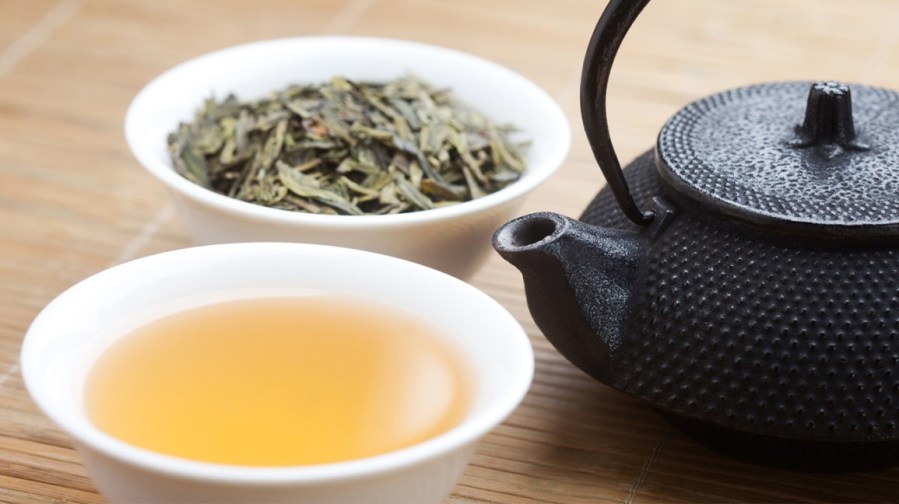
Retrieved from healthline.com

The favorite drink of today and best touted as ‘weight- loss aid,’ green tea is a choice of many but when it is a high source of antioxidants and helps us in many ways, it can have some adverse effect on women’s health according to some studies. It is always suggested that green tea helps women during menstrual days by alleviating cramps and giving relaxation. But some studies have presented the harmful effect on it if drunk in excess. I will try to throw some light on those aspects:

The first side-effect is that drinking green tea in excess may increase premenstrual syndrome commonly known as PMS during periods, due to which she may suffer from headache, mood swings, irritation in body, abdominal pain etc.

The second one is that it increases anxiety as during the menstrual period, a woman goes through hormonal changes and excess caffeine content of green tea restricts blood vessels which triggers tension in the body and the by-product comes in the form of anxiety.

It also causes breast tenderness in women if green tea is drunk in excess as the fluid gets filled inside the breast and forms lumps. It leads to more production of urine and hence leads to dehydration.

The fourth side effect which is really grave is that excess green tea leads to iron deficiency in women as it does not allow body to absorb iron completely which results in anemia and as the women need more blood and iron content in their body during these days it leads them to have more painful journey rather than alleviating the pain and negatively affecting menstrual cycle.

Drinking one or two tea cups of green tea is helpful but drinking more than that can lead to problems. When we hear that something is good for us, we tend to overdo it. And that excessive habit changes the positive effect to negative effect. If anyone is seeing such changes in them, they should definitely go to a health care expert and take advice. 

School Reopening Guidelines: Schools to open from 9th to 12th from 21st September, Ministry of Health released SOP

Priya Yadav

Schools that have been closed for more than 5 months are now going to open in a phased manner. For this, the Ministry of Health and Family Welfare has issued Standard Operating Procedure (SOP). Regarding this, Health Minister Harsh Vardhan said that the schools will be opened in a phased manner. All those coming to school will have to constantly monitor health. Spitting everywhere will be prohibited. The guidelines clearly state that along with the state helpline number in the school, the phone numbers of local health officials will also be displayed.

Such a seating arrangement of students from the laboratory to classrooms will have to be maintained at least 6 feet distance between them. Gathering of students i.e. assembly and sports-related activities will be prohibited as it will risk spreading the infection.

Teachers or staff residing in Containment Zones are not allowed to attend school. Schools that were used as quarantine centers have been instructed to sanitize well before being partially opened. All schools were instructed to sanitize with a hypochlorite solution.

The Union Ministry of Health and Family Welfare has issued the Standard Operating Procedure (SOP) of Corona Prevention for the operation of schools, skill centers, and higher education institutions offering PG and doctoral courses. The Ministry of Home Affairs has given permission to open schools and above grade higher educational institutions from 21 September. The SOP states that before opening schools, colleges, skill institutes, they have to be thoroughly sanitized. However, it will be voluntary i.e. it will be up to the students whether they want to go to school or not.

Schools or institutions in which quarantine centers were built must be completely transitionless. Chairs in classrooms will be placed at a distance of six feet. It will be mandatory for teachers and students to wear masks. Arrangements for thermal screening and hand sanitizing will also have to be done at the entrance gate.

The SOP on behalf of the Union Health Ministry states that permission for online / distance learning will continue. Schools can invite up to 50 percent of their teachers and non-teacher staff for online teaching / Tele counseling and other related activities. Students from ninth to 12th will be allowed if they want to go to school to seek guidance from their teachers. However, they will have to seek written consent from their parents or guardians. Students will also have the option to study online. Precautionary measures in schools will include teachers, staff, and students, including ensuring a physical distance of at least six feet, covering the face, frequent hand washing, adherence to respiratory etiquette, health monitoring, and place- Spitting place not included. People have been asked specifically about this. Online or distance learning should continue to allow and encourage and allow students of classes 9 to 12 to visit the school on a voluntary basis to seek guidance from their teachers.
Students will have the freedom to come to school voluntarily. No student will be forced to come to school. Children will come to school only with the written permission of their parents. The Ministry has also said that distance education and online learning will have to be continued. For this, 50 percent of teachers can be called to the school. The swimming pool at the school will be kept closed. The air conditioner temperature has to be kept between 24-30 degrees Celsius. Humidity will have to be kept between 40-70 percent. Arrangements will have to be made for cross ventilation and clean air.

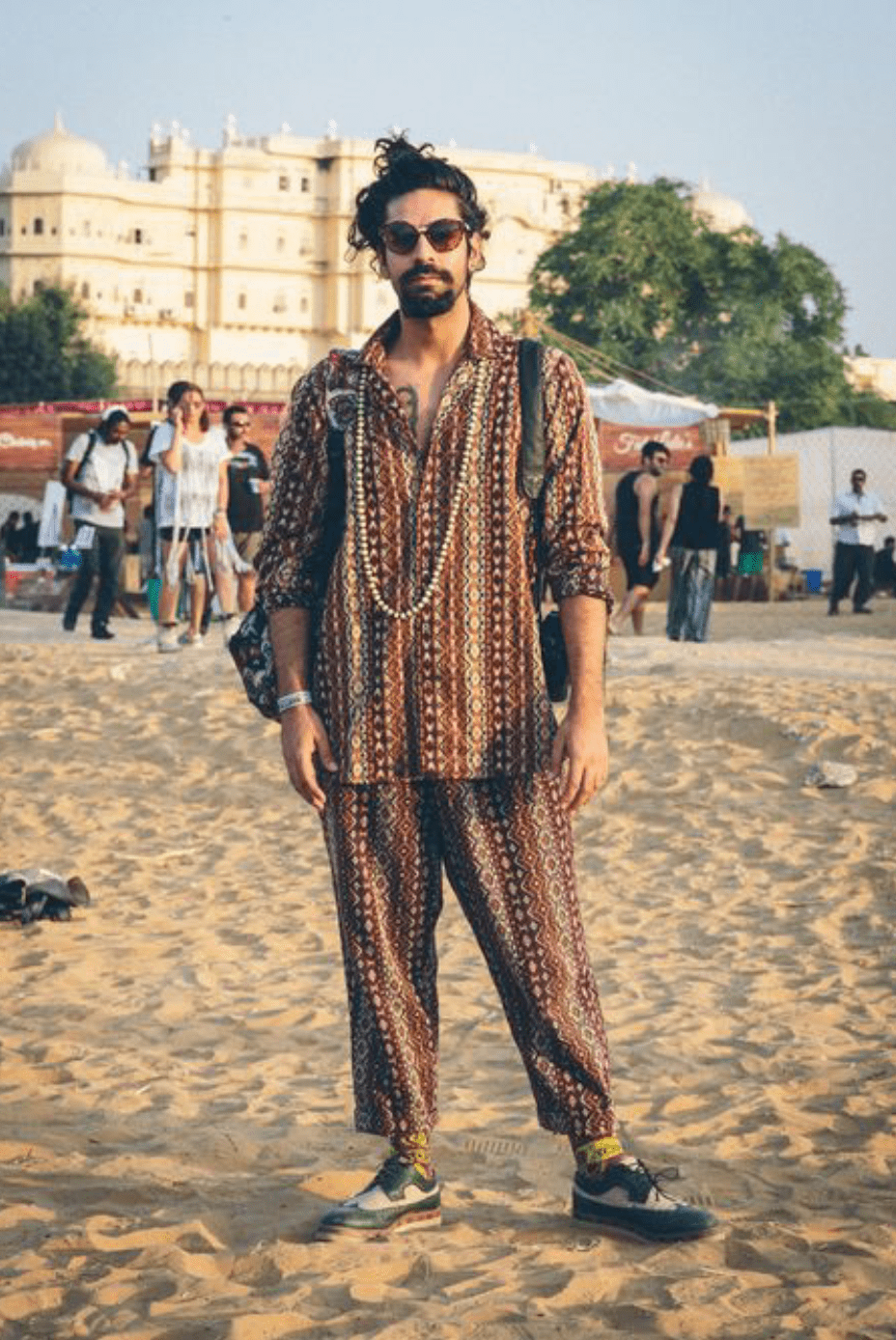
If you like it, wear it.

Fashion styles

Artsy

Colourful and vibrant kind of style. Creative.


Bohemian

Personal favourite. Also known as Hippie fashion. With a modern touch to it looks fabulous on anyone.


Casual

The I-don’t-care-I-feel-comfortable type of style. The simplest of clothes in your wardrobe.


Chic

The girls night out or a date night look where you actually put some effort in choosing the dress and makeup.


#5 Preppy

Basically classic but with bold and clean colours with a structured silhouette.


#6 Rocker

Mostly a leather jacket amd pants. Ripped jeans. Don’t-mess-with-me kind of look.


#7 Sophisticated/classic

Classic.


#8 Sexy

Especially for parties. Outgoing type.


#9 Tomboy

Mostly loose clothes. Boyish, carefree. Billie Eilish’s iconic style.


#10 Vintage

Looks cute. Never goes out of style. Comfortable.

Thank you for reading. Have a nice day!

Book Review : Mastaan 

The Fallen Patriot Of Delhi

Vineet Bajpai

Vineet Bajpai has done it again… after the immensely successful and thrilling Harappa tri-series, he is back with a bang, and how! This time, with a book on the First War of Independence. This book actually surpasses the first 3 with ease; for reasons as to why it is so special, read on! Suffice it to state for the opening paragraph here, that this is a must read for all Indians. Kudos, Vineet – and thanks for a really special landmark book!

I have called it a special, landmark book : the reason for that is that is presents a look at 1857 that is very different from the commonly understood view, that of a spontaneous uprising in anger against the British. The reality, as I have highlighted on my blog through a few articles based on history books including one period book from 1885 – is very different. 1857 was not a revolt neither was it spontaneous. There is evidence to prove it was planned, and had wide support. There is also evidence to support the people’s anger.
However, we must remember this is not a history lesson, and this book is not a history book. It is historical fiction; thus, there has been some deviation. More of that later. More critically, this is a book that helps to popularize the reality of 1857, and takes it much closer to the people. Common people don’t normally read history books, or watch historical videos. But a fiction thriller – it generates conversation, gets consumed, and becomes popular. Thus, if the book helps to propagate the reality and assists in the dissemination of a more correct impression in the public, so much the better.

SBI launches VRS scheme for its bank employees.

India’s largest bank, State Bank of India (SBI) has launched a voluntary retirement scheme (VRS) under which about 30,100 employees are eligible. According to sources, a draft scheme for VRS has been prepared and board approval is awaited. The proposed scheme is aimed at optimising human resources and costs of the bank. The scheme will open on 1st December and will remain open till the end of February 2021.

Eligibility and benifits:

It will provide a respectable exit route to who have reached a level of saturation in their career or want to leave because of their personal issues.

It will be open to all permanent staaf who have put in 25 years of service or completed 55 years of age on the cut-off date.

As per the proposed eligibility criteria, a total of 11,565 officers and 18,625 staff members will be eligible for the scheme.

Except these, other benefits like gratuity, pension, provident and medical benefits will be given to employees seeking VRS.

Punjabi gangs’ claim to shame in organised crime.

Oscar-nominated Canadian filmmaker Deepa Mehta’s flick Beeba Boys, the only movie to have brought the spotlight on Punjabi gangsters in North America, may have got acclaim, but it doesn’t strike a chord with the Canadian police. Violence perpetrated by Punjabi gangs remains a hard reality in Vancouver, Surrey and Brampton today. Bringing professions like trucking and transportation, largely run by Punjabis, under the radar of law enforcement agencies.The annual report of the Canadian police ranks Indo-Canadian gangs at No. 3, in terms of strength in British Columbia, only behind the notorious biker gangs and Asian criminal organisations such as the Triads and Vietnamese drug clans. Punjabi mafia groups include the Dosanjhs, Johals, Adiwals, Buttars, Dhaks, Duhres, Grewals and many more. Some have become dormant over time, while others have been active since the 90s. Gangs like Red Scorpions, Hells’ Angels, Independent Soldiers and United Nations, have members from all ethnic groups; but the immigrants, of whom Indo-Canadians form a major chunk, comprise a sizeable part of these.

School Re-opening: From no sports or canteen to outdoor classes, check complete SOPs for school reopening

After over 5 months, schools are set to re-open in India after September 21, 2020. Ministry of Health & Family Welfare yesterday night released the SOPs or Standard Operating Procedures for school reopening in India. The five page document lists basic measures and specific guidelines to be followed for conducting classes for students of 9 to 12. Among others, the SOPs have forbidden sports periods, assemblies or opening of canteen on school premises.


As per Unlock 4.0 Guidelines released by the MHA, the schools would be allowed to open for 50 per cent capacity for teaching and non-teaching staff. Also, students of classes 9 to 12 would be permitted to go to school – strictly on voluntary basis. The ministry has further stated that schools must ensure that online classes and virtual sessions continue through the period and are encouraged. 


Furthermore, the SOPs also mandate that the students of Classes 9 to 12 would only be permitted under parental consent for seeking guidance from teachers only. The student interaction, thus organized, must also be done in a staggered manner. 

General Guidelines 

Only schools outside the containment zones allowed to open after September 21. Students/ teachers and staff from containment zones will not be allowed to attend the schools. Students and teachers to be advised not visit containment zones while attending school.

Schools that were used as quarantine centres during the lockdown have to be properly sanitized and deep cleaned as per the SOPs released by MoHFW.

Generic Preventive Measures like physical distancing, mandatory use of face covers/ masks, frequent hand washing and self-monitoring of health, reporting of any illness to be followed.

Respiratory etiquettes to be strictly followed. This involves strict practice of covering one’s mouth and nose while coughing/sneezing with a tissue/handkerchief/flexed elbow and disposing off used tissues properly – Spitting to be strictly prohibited.

Installation & use of Aarogya Setu app may be advised and encouraged wherever feasible

The Guidelines also suggest conducting classes in open spaces within the school campuses – weather permitting.

For air-conditioning/ventilation, the guidelines of CPWD shall be followed which emphasizes that the temperature setting of all air conditioning devices should be in the range of 24-30o C, relative humidity should be in the range of 40-70%, intake of fresh air should be as much as possible and cross ventilation should be adequate.

Prior to resumption of activities, all work areas intended for teaching/demonstrations etc., including laboratories, other common utility areas shall be sanitized with 1% sodium hypochlorite solution, with particular attention to frequently touched surfaces.

Mandatory hand hygiene (sanitizer dispenser) and thermal screening provisions to be made at the entrance. Schools also advised to provide multiple gates/separate gates for entry and exit – if feasible. Strict regulation of visitors to the school has to be maintained and followed.

Symptomatic persons – teachers/ staff/ students would not be allowed inside the schools and would be referred to the nearest health centre.