Cost Accounting focuses on company’s total cost of production by assessing the variable and fixed costs at each step of production and selling. It is critical aspect of accounting as cost directly affects the revenue of the company and also helps in determining the pricing strategy of the product/service.
Unlike financial accounting which provides information to external users (Public, Government, Banks etc), Cost accounting provides vital information to the internal users (mainly management) for decision making.
Two main types of costs are Variable and Fixed costs. Fixed cost refers to the part of cost which does not vary or depend on the level of production. For example, Rent of office or factory. It has to be paid even when the facility is not being utilised or there is no production or sales. However, Variable cost varies according to the level of production. For example, labour wages or cost of raw material.
To understand costing better, let’s understand different elements it comprises of-
Cost of material consumed is the sum of all the cost spent to procure a raw material, store it till it gets consumed. All such costs are added with the actual cost of raw material purchased to arrive at the cost of materials consumed.
Employees Benefit expenses- The benefit provided to employees are summarised into four categories:
benefits in the short-term (benefits payable to employees shortly after they provide the service, e.g. a salary)
benefits in the long-term(such benefits may become payable long after the employees provide the service e.g. a long-service award)
benefits ofpost-employment (i.e. after they have retired from employment e.g. a pension)
termination benefits (those that would be payable if the employees were to be terminated before normal retirement age (e.g. a retrenchment package)
Purchases of stock in trade, refers to all the purchases of finished goods that the company buys towards conducting its business.
Other Expenses are not directly related to the business but are ancillary in nature. It is of utmost importance and have to be accurately differentiated from the expenses, as per the prescribed guidelines and based on the nature of the business.
Amortisation and Depreciation expenses- Amortization is a method of spreading the cost of an intangible asset over a specific period of time, which is usually the course of its useful life. The goal in amortizing an asset is to match the expense of acquiring it with the revenue it generates. Depreciation is a method of spreading the cost of a tangible asset over a specified period of time, typically the asset’s useful life. The purpose of depreciation is to match the expense of obtaining an asset to the income it helps a company earn.
In order to reduce costs substantially which ultimately increases the revenue of the company, elements of the total costs need to be analysed and reduced, if possible. It helps in examining the costs step by step, stage of production wise which is an essential process to determine the price per unit and also determining the relationship between each cost and how it affects the Cost of goods sold and the net profit. These elements are grouped together on the basis of their similar nature and hence, it becomes easier to reduce cost element by element.
“Excellent customer service is the number one job in any company. It is the personality of the company and the reason customers come back. Without customers there is no company.”
Connie Elder
An exciting endeavor is to have your own business and company. At first, you start with its services all alone. When you grow gradually, you employ staff to help you out. A company receives its prestige with the amount of staff in it because people usually estimate a company to be ‘big’ because of the amount of people working in it and also because of its quality services that attract a plethora of customers! The amount of people working in it signifies the economic condition of the company which acts as a step towards effective branding! However, this doesn’t imply employing all types of unskilled labor just for showing off your prosperity! Of course, you require skilled individuals to inflate the balloon of prosperity because they would be representing your company. You don’t want a bad impression of your company and its services because of certain amateur employees who would make you lose even your ‘family customers’. When I refer to family customers, I pinpoint towards the regular ones who never fail to pay us a visit and always prefer our brand over the other!
Creating such regular customers requires a great deal of time and patience because you are expected to reach the core of their hearts and win their trust. How will this happen? Surely, by establishing friendly relations with them, solving their queries patiently, providing them the best quality services, interacting with them, being available at all times, and offering to solve their difficulties while using your product or service.
What if I tell you that these qualities could be assigned in a single person who could take this position and help you set things straight? Yes, you guessed it right. The Customer Service is a great initiative to establish and maintain all of the above qualities of your company. The goal of any company is to create convenience for customers. Customer Service is the greatest convenience you could ever offer because the genuineness of your company isn’t under threat and people feel free to interact in a friendly manner conditioned to the personality and skill of your customer service!
If your company isn’t prospering despite having this service then ask yourself and provide a Yes or No answer to the below questions to arrive upon a conclusion!
Is your customer service timely?
Is your customer service friendly?
Is your customer service patient when dealing with consumer problems?
Is your customer service an extrovert with bold orating skills?
Is your customer service having a high pitched and audible conversational tone?
Is your customer service fluent in formal talk and good in vocabulary?
If the answer to all of these is a big Yes, then you are currently on the safe side but if, even one of the questions has No as an answer then expectation of heavy gains from the company must be deflated! A customer service needs to have all of the above qualities to ensure success, reputation, brand, and image of your company in the market!
Let’s consider our own experience. Vodafone would be a good example to go on with.
Imagine that company without a customer service. Would you ever go for their services? Whenever we have network issues or balance issues, we instantly phone the customer service for help and they update us regarding their recent development due to which perhaps the issue has occurred. Now, what if there was no customer service? We lose our internet connectivity suddenly for hours together and have nobody to confront to regarding the same! We feel helpless and impatient without internet because the world can’t survive without it today. We have nobody to ask regarding this and after encountering such issues several times and with no possible interaction, we decide to leave the company and its service once and for all!
So, that’s the beauty of Customer Service. They help maintain good interaction with the consumers which is so very essential when handling a company! Customer Service acts as a mediator or a link between the head (CEO) and consumers. They have the authority to speak on behalf of the head or CEO and transfer calls to the CEO for the consumers, if needed!
That eases some of your burden as a boss, doesn’t it? After all, a boss has several other affairs to look after, like trimming and shaping the services of the company in accordance to the desires of consumers through online surveys for which mailing lists are vital. That too comes with its own hefty steps. Creating a website and providing a follow button while allowing people to jot in their addresses or creating surveys with mailing facility at the end while enquiring regarding the problems of consumers. Since, digital marketing is so great in demand today, one can’t possibly ignore these pivotal steps in the process and compromise with the reputation and smooth functioning of one’s company!
That should explain the Importance of Customer Service as a whole. So, if you are the CEO, work on the services that you offer while your Customer Service responsibly blurts those services out to your consumers while maintaining effective interaction! Unity is strength, isn’t it?
However though some of the answers to what customer service means to you are subtly a part of that long paragraph above, let me provide a brief list of answer samples that could help nail your interview!
Amazing Customer Service is like receiving an additional dollar from your parents as a gift or that extra icing on your favourite cake! Good customer service makes the customer enthralled with your honey dipped marketing as they start feeling sweetness being overloaded!
With Impeccable Customer Service, you are one step away from evangelism marketing.
Customer Service is the art of effectively persuading the customer into always preferring you over the others. That’s exactly why, the first impression of your customer service would decide the return of your customers in the future!
Customer Service is like holding a magic wand and pulling the customers in a state of trance so that they are completely convinced of being your regular or family customers!
Great Customer Service is associated with the feelings of gigantic loyalty and ethics inclined towards your job and clients! Thus, customer service is an ethical mannerism of mesmerizing your customers!
Customer Service is considering your clients as guests and paying them hospitality in the most respectful manner as possible.
Customer Service is actually like coining customer rights and accepting fundamental customer service duties oneself wherein customers’ rights and your duties can’t be violated!
Customer Service is like laying out your resume during an interview wherein constant frustration and nervousness prevails pondering over whether or not our work will be approved.
Customer Service is like giving a competitive examination wherein your answers would determine your marks.
Customer Service needs to be relevant and interesting. Thus, it is the medium of customer satisfaction wherein you don’t fail to reveal the additional perks your customers are exposed to!
Ever seen the advertisement of Oreo cookies being dipped in milk? The ancillary concept of a glass of milk is that efficient customer service which compels and tempts the mob to definitely try the cookie out!
It isn’t necessary to appoint extra staff for customer service because the owner is enough to introduce his services or products in a creative manner so as to indirectly highlight the benefits and the reason for customers to always grace his arena of the ‘best available products’.
Customer Service is like getting your customers ride the giant wheel of words so as to help them enjoy the amusement park of your business to their fullest!
Customer Service is gently abutting the customer’s heart through cupid arrows of words thereby making them fall for your services.
A service that shows a complete disclaimer of the quality of your brand or business. It’s the major factor in helping customers decide whether or not, you are worth their expenses!
Customer Service is like that short trailer which effectively covers the interesting parts of your business in order to bond and attract customers towards checking your business out entirely. Of course, if the trailer is amazing one can naturally assume the movie to ace the theatres!
Customer Service is like dropping before the customer, a transparent veil that only allows partial vision with regards to mellow and patient wordings!
Customer Service is making people blindly trust your commodities so that no finger be pointed at the quality or making of your products and services! Humans have a myopic vision with respect to shopping which makes them easily trust the value of a commodity if a dozen sweet words are shot at them which is why, customer service comes in handy, making it simpler to generate a surplus.
Customer Service can be compared to the clouds wherein fluffy and picturesque words float about the vast sky of your business to make it look genuine and impressive.
Customer Service is a term coined for genuine, honest, patient, committed, devoted, and determined approach towards your business and clients. In short, the collection of perfect ethical behavior is a simple way to win your customers’ heart because the quality of your services is solely based on the characteristics and attributes you exhibit.
Every one of us loves a wee bit of flattering and advice. Customer service does this job. However, along with a few flattering remarks customers also require help with selecting the most suitable product or service according to their personality and budget. During times as such, customer service comes to the rescue wherein we, as businessmen patiently advise customers to opt for the right commodity on the basis of their need.
Customer Service is like accepting a little amount of your favourite creamy cake and offering a whole lot to the customer to create a grand impression in their hearts!
Customers are satisfied when you are with your duties. Thus, customer service is understanding that your job is to impress a hell lot of customers through your sweet words no matter how many attempts of profits fail initially!
Customers come out of the blue. Customer Service is like military training wherein one has to constantly remain alerted of the next approaching client as well as prepare oneself for the most satisfactory interaction every single time.
Considering the word Customer Service closely, one can figure that it actually is a service which means treating every customer equally without any bias or enmity and composing truthful and honest words from which you vow to never back off!
Thus, I would conclude stating that customer service is a highly dignified job wherein each and every customer is given careful attention thereby not disappointing them. The better your service, the more customer satisfaction can be guaranteed, and the better surplus can that particular company experience. Customer service thus, is that quintessential morality that you exhibit in order to win the hearts of your clients who would in turn fetch you potential customers with their precious feedback. Of course, one shouldn’t request customers to recommend their business to others. Why not leave a lasting impression with the quality of your services instead so that good feedbacks automatically drop from their mouths? In short, customer service focusses on the quality aspect, the way you interact and not the amount of words you chose to interact. The perfect marketing skills that you used in an ethical manner and not the incessant blabbering simply praising the product. Why not from now on, focus more on the quality aspect of our services rather than trying to thrust our commodities at a rapid pace without even trying to fine tune our services to emanate customer satisfaction? So, let us work with love and show the same to our customers so that they definitely feel the need to revert.
A bear market is when a market experiences prolonged price declines. It typically describes a condition in which securities prices fall 20% or more from recent highs amid widespread pessimism and negative investor sentiment.
Bear markets are often associated with declines in an overall market, but individual securities or commodities can also be considered to be in a bear market if they experience a decline of 20% or more over a sustained period of time—typically two months or more. Bear markets also may accompany general economic downturns such as a recession. Bear markets may be contrasted with upward-trending bull markets.
Understanding Bear Markets
Stock prices generally reflect future expectations of cash flows and profits from companies. As growth prospects wane, and expectations are dashed, prices of stocks can decline. Herd behavior, fear, and a rush to protect downside losses can lead to prolonged periods of depressed asset prices.
One definition of a bear market says markets are in bear territory when stocks, on average, fall at least 20% off their high. But 20% is an arbitrary number, just as a 10% decline is an arbitrary benchmark for a correction. Another definition of a bear market is when investors are more risk-averse than risk-seeking. This kind of bear market can last for months or years as investors shun speculation in favor of boring, sure bets.
The causes of a bear market often vary, but in general, a weak or slowing or sluggish economy will bring with it a bear market. The signs of a weak or slowing economy are typically low employment, low disposable income, weak productivity, and a drop in business profits. In addition, any intervention by the government in the economy can also trigger a bear market.
For example, changes in the tax rate or in the federal funds rate can lead to a bear market. Similarly, a drop in investor confidence may also signal the onset of a bear market. When investors believe something is about to happen, they will take action—in this case, selling off shares to avoid losses.
Bear markets can last for multiple years or just several weeks. A secular bear market can last anywhere from 10 to 20 years and is characterized by below-average returns on a sustained basis. There may be rallies within secular bear markets where stocks or indexes rally for a period, but the gains are not sustained, and prices revert to lower levels. A cyclical bear market, on the other hand, can last anywhere from a few weeks to several months.
The U.S. major market indexes were close to bear market territory on December 24, 2018, falling just shy of a 20% drawdown. More recently, major indexes including the S&P 500 and Dow Jones Industrial Average fell sharply into bear market territory between March 11 and March 12, 2020. Prior to that, the last prolonged bear market in the United States occurred between 2007 and 2009 during the Financial crisis and lasted for roughly 17 months. The S&P 500 lost 50% of its value during that time.
In February 2020, global stocks entered a sudden bear market in the wake of the global coronavirus pandemic, sending the DJIA down 38% from its all-time high on February 12 (29,568.77) to a low on March 23 (18,213.65) in just over one month. However, both the S&P 500 and the Nasdaq 100 made new highs by August 2020.
The Google every knows about Google, it gives us access to almost all information by typing what you want to know into the search bar. There are some interesting secrets you can have enjoy.
Then why are u waitimg just go with my steps ,
Go with,you have type the phrase “Do a barrel roll” into the search bar of Google and press enter, the entire page spin around once.
Second is a fun trick if you like Chuck Norris jokes. If you type in ‘Find Chuck Norris’ and click ‘I’m feeling lucky’, you will get a little message from Google about being careful what you search for.
Next, and this is one of my favourites, try typing ‘Google Gravity’ into the search bar on Google and pressing search. It will cause the entire page to fall into pieces. Although sometimes this doesn’t work, if you search it and click the first result on the page, it will take you back to the homepage which will then fall. The best part is that you can still search for things even after it has taken effect. It will, however, cause all of the results to fall from the sky and crash down on top of the already fallen homepage.
Finally, my favourite. Type ‘Zerg Rush’ into the search bar and hit enter. This will cause many ‘o’s to appear from all directions! But beware, they are not your friends. You must hover over each of the ‘o’s with your cursor and click like crazy. Soon they will vanish. Attempt this at your own peril, you have been warned.
So there you have it, a few cool things to do with Google when you’re bored. Of course, there are far more tricks to do with Google, but you can always find them by, you know, googling it. A little extra for reading this far: if you leave the search bar blank and click ‘I’m Feeling Lucky’, you’ll be shown all of the Google doodles that have ever been used on special dates.
Here are way more tricks you can do on google.
Do a Barrel Roll. Search for “do a barrel roll” without the quotes, and hold onto your desk for dear life. …
“As I rained blows upon him, I realized there had to be another way!” It’s a Festivus MIIIRACLE! …
A bull market is the condition of a financial market in which prices are rising or are expected to rise. The term “bull market” is most often used to refer to the stock market but can be applied to anything that is traded, such as bonds, real estate, currencies, and commodities.
Because prices of securities rise and fall essentially continuously during trading, the term “bull market” is typically reserved for extended periods in which a large portion of security prices are rising. Bull markets tend to last for months or even years.
Understanding Bull Markets
Bull markets are characterized by optimism, investor confidence, and expectations that strong results should continue for an extended period of time. It is difficult to predict consistently when the trends in the market might change. Part of the difficulty is that psychological effects and speculation may sometimes play a large role in the markets.
There is no specific and universal metric used to identify a bull market. Nonetheless, perhaps the most common definition of a bull market is a situation in which stock prices rise by 20%, usually after a drop of 20% and before a second 20% decline. Since bull markets are difficult to predict, analysts can typically only recognize this phenomenon after it has happened. A notable bull market in recent history was the period between 2003 and 2007. During this time, the S&P 500 increased by a significant margin after a previous decline; as the 2008 financial crisis took effect, major declines occurred again after the bull market run.
Characteristics of a Bull Market
Bull markets generally take place when the economy is strengthening or when it is already strong. They tend to happen in line with strong Gross Domestic Product (GDP),and a drop in unemployment and will often coincide with a rise in corporate profits. Investor confidence will also tend to climb throughout a bull market period. The overall demand for stocks will be positive, along with the overall tone of the market. In addition, there will be a general increase in the amount of IPO activity during bull markets.
Notably, some of the factors above are more easily quantifiable than others. While corporate profits and unemployment are quantifiable, it can be more difficult to gauge the general tone of market commentary, for instance. Supply and demand for securities will seesaw: supply will be weak while demand will be strong. Investors will be eager to buy securities, while few will be willing to sell. In a bull market, investors are more willing to take part in the (stock) market in order to gain profits.
Bull vs. Bear Markets
The opposite of a bull market is a bear market, which is characterized by falling prices and typically shrouded in pessimism. The commonly held belief about the origin of these terms suggests that the use of “bull” and “bear” to describe markets comes from the way the animals attack their opponents. A bull thrusts its horns up into the air, while a bear swipes its paws downward. These actions are metaphors for the movement of a market. If the trend is up, it’s a bull market. If the trend is down, it’s a bear market.
Bull and bear markets often coincide with the economic cycle, which consists of four phases: expansion, peak, contraction, and trough. he onset of a bull market is often a leading indicator of economic expansion. Because public sentiment about future economic conditions drives stock prices, the market frequently rises even before broader economic measures, such as gross domestic product (GDP) growth, begin to tick up. Likewise, bear markets usually set in before economic contraction takes hold. A look back at a typical U.S. recession reveals a falling stock market several months ahead of GDP decline.
How to Take Advantage of a Bull Market
Investors who want to benefit from a bull market should buy early in order to take advantage of rising prices and sell them when they’ve reached their peak. Although it is hard to determine when the bottom and peak will take place, most losses will be minimal and are usually temporary. Below, we’ll explore several prominent strategies investors utilize during bull market periods. However, because it is difficult to assess the state of the market as it exists currently, these strategies involve at least some degree of risk as well.
Buy and Hold
One of the most basic strategies in investing is the process of buying a particular security and holding onto it, potentially to sell it at a later date. This strategy necessarily involves confidence on the part of the investor: why hold onto a security unless you expect its price to rise? For this reason, the optimism that comes along with bull markets helps to fuel the buy and hold approach.
Increased Buy and Hold
Increased buy and hold is a variation on the straightforward buy and hold strategy, and it involves additional risk. The premise behind the increased buy and hold approach is that an investor will continue to add to his or her holdings in a particular security so long as it continues to increase in price. One common method for increasing holdings suggests that an investor will buy an additional fixed quantity of shares for every increase in stock price of a pre-set amount.
Retracement Additions
A retracement is a brief period in which the general trend in a security’s price is reversed. Even during a bull market, it’s unlikely that stock prices will only ascend. Rather, there are likely to be shorter periods of time in which small dips occur as well, even as the general trend continues upward. Some investors watch for retracements within a bull market and move to buy during these periods. The thinking behind this strategy is that, presuming that the bull market continues, the price of the security in question will quickly move back up, retroactively providing the investor with a discounted purchase price.
Full Swing Trading
Perhaps the most aggressive way of attempting to capitalize on a bull market is the process known as full swing trading. Investors utilizing this strategy will take very active roles, using short-selling and other techniques to attempt to squeeze out maximum gains as shifts occur within the context of a larger bull market.
Monetary and fiscal policy refer to the policies of the government aimed to solve the economic problems in a country. A monetary policy is a credit control measure adopted by the central bank of an economy. It deals with the demand and supply of money. Fiscal policy refers to the use of taxation and public expenditure by the government to stabilise the economy. A monetary policy aims at achieving full employment. Unemployment leads to wastage of potential and resources. Price stability is another goal of monetary policy. Changes in price levels lead to uncertainty in the economy. Achieving economic growth and maintaining a favourable balance of payments are some of the objectives of this policy. A fiscal policy aims at achieving full employment, stabilizing the price levels and growth rate of the economy, maintaining equilibrium in the balance of payments. It uses taxation to affect national income, output, prices etc. Monetary policy uses various instruments to achieve it’s goals. Open market operations, bank rate policy, selective credit controls, changes in reserve ratios are some of the instruments of monetary policy. Open Market Operations refers to sale and purchase of securities in money market by the central bank. Bank rate is the minimum lending rate of the central bank. When there is rise in prices, the central bank raises the bank rate and vice versa. Selective Credit Controls are used to influence specific types of credit for specific purposes. A monetary policy can be classified as an expansionary or a contractionary policy. In the former case, monetary policy is used to overcome a recession or deflationary gap. It generally happens when there is a reduction in demand for consumer goods or investment goods. To control this central bank starts an expansionary monetary policy that reduces credit market conditions and leads to upward shift in demand. In the later case, monetary policy is used to curtail aggregate demand. When the economy faces inflationary gap due to rise in demand for consumer goods and increase in business investment, the central bank increases the cost of bank credit. This is often done by selling government securities, rising discount rate etc. Similarly, fiscal policy can be classified as neutral, expansionary and contractionary. Neutral policy is usually undertaken when an economy is in equilibrium. In this instance, government spending is fully funded by tax revenue, which has a neutral effect on the level of economic activity. Expansionary policy is usually undertaken during recessions to increase the level of economic activity. In this instance, the government spends more money than it collects in taxes. Contractionary type of policy is undertaken to pay down government debt and to cap inflation. In this case, government spending is lower than tax revenue. Monetary and Fiscal policy both have their own advantages and disadvantages. Fiscal policy may sometimes result in a domino effect causing one problem to make another and repeat. Fiscal policy can also have issues with time lags. Although monetary policy is not very effective in a recession, it is flexible and works well to slow down the economy. Most people however, prefer fiscal over monetary because its brings low taxes and low interest rates. https://www.ukessays.com/essays/economics/fiscal-and-monetary-policy-economics-essay.php
Top Trending Online Courses in 2021 [For Both Students & Working Professionals]:-
Professional certifications provide excellent avenues for developing your knowledge and skills. They can help you demonstrate your interests and potential to prospective employers while building your profile for lucrative job positions. There are many trending courses lockdown has made prominent once again, to guide and prepare candidates for modern workplaces. We have detailed some of these programs for you below.
Professional courses and certifications have many advantages. They can help you in:
Demonstrating your skills and gaining credibility
Enhancing technical knowledge and upskilling
Qualifying for senior-level jobs
Staying abreast of the latest trends
Acquiring experience and hands-on training
Table of Contents
Top Trending Online Courses
1. Data Science
2. Artificial Intelligence and Machine Learning
3. Big Data
4. Business Intelligence
5. Cloud Computing
6. Project Management
7. Software Development
8. Full-stack development
9. Cybersecurity
10. Networking
11. DevOps
12. Digital Marketing
13. Blockchain
14. Internet of Things
15. Computer Science
Conclusion
Top Trending Online Courses
1. Data Science:-
Study programs in data science typically focus on big data analytics, data visualization, statistics, and predictive analytics. The curriculum is designed for individuals pursuing technical job positions, such as data scientists, data analysts, business analysts, and machine learning engineers.
Whether you are a fresher, a marketing professional, or a software engineer, data science knowledge can advance your career.
Usually, no prior coding experience is necessary for this course. If you have a bachelor level degree and a knack for numbers, you can enroll in a postgraduate level data science program. Many online options are also available, which provide accredited master degrees and diplomas in addition to placement support.
upGrad’s PG Certification in Data Science aims to equip working professionals with the following capabilities:
Python programming
Using Python and SQL for predictive analytics
Data visualization using Python, exploratory analytics, ML algorithms, and so on.
Upon completing the course, you earn a certificate from IIIT-Bangalore and get a chance to connect with a global community of data science professionals from diverse industries. The engaging pedagogy of upGrad courses includes case studies, projects, group coaching, and live sessions to provide personalized feedback and facilitate improvement.
2. Artificial Intelligence and Machine Learning:-
Artificial Intelligence (AI) and Machine Learning (ML) are the exciting technologies of the 21st century. AI and ML certifications can help boost the careers of IT professionals who have a background in mathematical or statistical fields.
Such programs cover various programming languages, tools, and libraries to equip students with the required competencies. Examples of the technologies taught include Python, MySQL, AWS, Docker, Kubernetes, Keras, REST-API, etc. Moreover, learning opportunities would expand when the syllabus is delivered via videos and real-life industry projects.
upGrad offers an online Master of Science in ML & AI for working professionals looking to jump-start their careers. The degree is recognized by Liverpool John Moores University, a prestigious educational institution in the UK, and comes with access to LJMU’s digital library.
And you can attain this qualification at a tenth of the cost of the offline program. Alternatively, you can go for advanced certifications that allow you to specialize in Big Data, Cloud, Deep Learning, and NLP. These upGrad courses arrange for resume feedback, interview preparation, career counseling, and job assistance.
The skills you learn prepare you for lucrative job opportunities like Big Data Analyst, Data Engineer, Machine learning engineer, etc. Hiring partners include Amazon, Flipkart, Myntra, PayTM, Make My Trip, American Express, Accenture, Standard Chartered, Adobe, Genpact, MobiKwik, and many other leading companies.
3. Big Data:-
Big data certifications can help you go after more diverse roles than specific data science jobs. You can opt for different specializations depending on your background and career aspirations. Generally, learning tracks of big data certifications include:
Business Analytics
Data Engineer
Natural Language Processing
Deep Learning
Business Intelligence
For example, the PG Diploma in Data Science from IIIT-B is certified by NASSCOM and delivered in partnership with industry leaders like Actify, Zee5, Uber AI Labs, AIQRATE, Genpact, Flipkart, Myntra, and Gramener.
The course follows an integrated approach to teach you about different programming languages and tools. These include Python, Tableau, MS Excel, Hadoop, PySpark, Power BI, MongoDB, Keras, TensorFlow, AirFlow, and many others.
4. Business Intelligence:-
BI professionals put their numerical ability to work and solve real-world business problems. Their insights can translate into actionable metrics, leading to changes in planning, operations, product development, and strategic management.
Therefore, their primary responsibility is to maximize the use of data in an organization to direct it on the path of successful performance. Training in business intelligence can help IT professionals build aptitude in:
Data mining and analytics
Data visualization
Management reporting
Using Excel, SQL, R, Python, Spark, Hadoop, etc.
The Business Analytics Certification is one of the trending courses 2020 has drawn attention to, especially for those competing for business analyst and managerial roles.
You can also check out upGrad’s Executive MBA program from NMIMS Global Access School. The degree is AICTE-approved and incorporates a three-month capstone project and one-on-one interaction with industry mentors.
The faculty includes subject experts in Analytics, Marketing, Human Resources, Economics, Finance, and Supply Chain, and Operations. The MBA(X) course offers a Business Analytics specialization that qualifies for better job prospects in management consulting, business leadership, and growth and strategy roles.
5. Cloud Computing:-
Cloud computing is one of the top IT fields that is experiencing an emerging trend in 2020. As organizations around the world go after dynamic and scalable applications, the demand for cloud services is only going to rise.
While making the shift, companies encounter many technical challenges. So, having qualified people with domain expertise would be necessary. It is already a top IT job globally. Software developers can go for specialized programs in cloud computing to learn the following things:
Understanding of cloud migration and multi-cloud environments
Knowledge of serverless architecture
Cloud security skills
Building cloud-native technologies, virtual machines, microservices, etc.
PG Diploma in Software Development (cloud computing specialization) is suitable for engineering graduates who want to occupy titles like Cloud Developer, Cloud Architect, Cloud Administrator, and other similar positions.
6. Project Management:-
Project management is one of the trending courses 2020 has generated interest in, for both employers and aspirants. Project managers ensure that work assignments are delivered within time and budget constraints. They assign tasks to the concerned members, set deadlines, and drive the project team to achieve the desired goals.
Those in core IT careers can gain knowledge in this discipline by earning a project management certification or take admission in an MBA program. Nowadays, top universities are offering online degrees in partnership with industry players. The syllabus has everything from core management concepts to business communication to strategy and leadership.
You can consider applying to the online PG Program in Management from IMT Ghaziabad, one of India’s leading business schools. The course is structured to acquaint students with Sales and Distribution, Marketing Management, Business Economics, Organizational Behavior, Accounting and Finance, and Decision Sciences.
These subjects allow candidates to develop their managerial acumen for senior positions. Moreover, the live projects help navigate the entry into work life as they are presented in collaboration with companies like Vodafone M-Pesa, LinkedIn, HP Enterprise, and ITC.
7. Software Development:-
The primary duties of a software development job include designing, managing, and testing software applications. Being successful in this field requires efficiency in writing and implementing code. To build the necessary proficiencies, you can undertake training in Java programming, C programming, automation testing, SQL database, among other topics. Here are some of the job titles associated with this IT career:
Computer systems analyst
IT Coordinator
Network administrator
Systems architect
Computer and information research scientist
Junior software engineer
Senior programmer
Web developer
Online postgraduate degrees in software and technology are among the trending courses lockdown has made feasible. The MSc. in Computer Science from UK’s Liverpool John Moores University can get you the same quality and exposure in 18 months as any on-campus degree.
Moreover, you can choose from seven different specializations, interact with experienced professionals, and network with your fellow LJMU and IIIT-Bangalore alumni.
8. Full-stack development:-
Full-stack development is concerned with both front-end and back-end technologies. A typical full-stack development course would familiarize you with programming languages and tools like Spring, Java, Typescript, Oracle, Git, Hibernate, React, AWS, Selenium WebDriver, and so on. The extensive program structure prepares you to work as:
Full-stack developer
Back-end developer
UI developer
Senior web developer
IT manager
Technical operations officer
After gaining relevant experience and spending several years in the industry, you can occupy senior-level positions like Director of Technology and Chief Technology Officer.
If you are searching for industry-oriented education programs that prepare you to work in a similar domain, upGrad’s PG Diploma in Software Development would be an excellent choice. The specialized learning track in full-stack development would teach you how to create robust and scalable applications, replete with back-end APIs and an interactive web UIs.
This 12-month program is delivered in an online format, dedicating sufficient time for introductory modules, experiential learning activities, and a capstone project.
9. Cybersecurity:-
In recent years, the instances of data breaches and cyber attacks faced by companies have increased. In the wake of rising cyber crimes, the demand for security experts has also picked up. Most software development courses provide a specialized learning path for those interested in cyber security careers. Here is a snapshot of the skills taught in a postgraduate-level cyber security program:
Application security
Network security
Data secrecy and cryptography
Training in Python, Java, git, AWS, etc.
With upGrad and IIIT-B’s advanced PG Diploma, you can study cyber security in a way that goes beyond the classroom. This online software development course packages more than 400 content hours, six programming languages, over seven projects, and more than ten live sessions. In 12 months, you would learn, apply your skills, get mentored, and move ahead in your chosen career path.
10. Networking:-
Hardware and networking professionals build and maintain computer networks and ensure their smooth functioning, thus contributing to organizational success. Their job is not restricted to working behind the scenes on IT infrastructure but also involves aspects of analytics, security, and automation.
A professional credential in networking can serve as a testimonial of your competencies to hiring managers and make a strong first impression. One of the accredited courses that can help you obtain and improve your computer programming skills is Master’s in Data Science.
11. DevOps
As the title suggests, DevOps combines the Development and Operations arms of software applications. In today’s fast-paced marketplace, tech companies need to stay ahead of their competitors. And DevOps enables agile methods in software development. A DevOps-oriented study program would emphasize the following things:
Agile methodologies for integration and deployment
Creation and management of software lifecycle
Continuous deployment through CI/CD practices and many more.
To gain an in-depth understanding of the mentioned concepts, you can enroll in the specialized DevOps course, earning a software development diploma from IIIT-B and a data science certification from upGrad.
12. Digital Marketing:-
Digital marketing is an exciting subject for professionals like brand managers, sales personnel, entrepreneurs, and marketers. With increasing internet penetration and online activity, the scope of traditional marketing has also expanded. Digital marketing encompasses topics like Search Engine Optimization (SEO), content marketing, social media, and marketing analytics.
Some popular examples include PG Certification in Digital Marketing and Communication on upGrad. This online course is offered by MICA, a leading higher education institution in India.
13. Blockchain:-
Blockchain is a rapidly growing discipline capable of bringing about significant transformations in the fields of real estate, healthcare, finance, insurance, among several others. The syllabus of blockchain development certifications comprises Ethereum, Smart Contracts, Hyperledger, Composer, Javascript, NodeJS, Solidity, etc. A background in engineering, mathematics, or computer science is a prerequisite for this stream.
Blockchain is touted to be the disruptive technology that will dominate industries beyond 2020. Having a working knowledge of blockchain can prepare you for software development jobs and assist you in getting an accelerated start in business development, engineering, and operations.
You can also complete an advanced course while working. For instance, IIIT-B & upGrad’s PG Diploma in Software Development (Specialization in BlockChain) requires you to dedicate 10-14 hours per week for 12 months. At the end of the program, you would have learned over ten software tools and worked on business problems for clients like Quora, Imgur, and DCB Bank. Additionally, you would receive comprehensive career support in the form of job fairs, mock interviews, and dedicated mentorship.
14. Internet of Things:-
IoT enables the exchange of information between people, things, and processes. Examples of “things” include wearable health monitors, smart home security systems, wireless inventory trackers, biometric scanners, and other connected appliances.
According to IDC, there would be 41.6 billion connected IoT devices by 2025. The IT research agency forecasts that these devices would experience a compound annual growth rate or CAGR of 28.7 percent from 2018 to 2025. With every new connection, there would be possibilities of new security vulnerabilities and privacy concerns. So, companies adopting IoT would also have to take care of data hazards to maximize customer benefit.
Enrolling in an online IoT course can support your quest for knowledge and keep you engaged during the coronavirus pandemic. You would learn how to develop IoT solutions with the aid of sensors and other functions. After completing the training, you can apply for jobs like IoT developer, IoT architect, IoT cloud engineer, etc.
15. Computer Science:-
The program design of MSc. Computer Science consists of software development, primarily using languages like Java and Python. Online MCS programs allow you to select any specialization from full-stack development to big data to DevOps to Blockchain and IoT. Whether you hold a technical undergraduate degree or already working in an IT company, getting an advanced degree can improve your earning capability.
Recent studies have highlighted that certifications can help candidates stand out in the job market. Having completed a technical course in a specific domain can improve your chances of landing work or scoring a promotion. However, a certificate may not be enough to make a difference.
You would also have to seek out opportunities to gain industry experience and hands-on practice. Here, mentorship and live projects can prove immensely helpful. It is thus best to opt for programs that include such components in the curriculum.
Conclusion:-
With this, we have put across the most relevant and trending courses lockdown has brought to the fore. We attempted to make you aware of the available options and make an informed choice about your career. So, pick a certification that matches your needs and start learning.
5 Free Online Courses that you can take up from Home:-
1. Graphic Designing:-
If the sight of blank papers and sketch pens have always excited you and you spend most of your free time drawing and doodling, then it’s time to take your hobby to another level and learn graphic designing online. If you have a creative bend of mind especially when it comes to express ideas through sketching and designing, try your hands at Photoshop and other popular graphic designing software and learn to build creative websites and much more.
2. Online MBA:-
Online MBA programs are very popular these days especially for working professionals who couldn’t afford to pursue full time MBA. Online MBA programs are offered by various prestigious institutes. They have identical syllabus like that of a full time MBA programs, the only difference being that online MBA course are shorter and have flexible timings for the ease of working professionals.
3. Social Media Marketing:-
If you own a business, you need to to tell the world about it and what could be the best way to disseminate the information other than through social media? The promotion of your business online through social media channels like Facebook, Twitter etc is social media marketing and since everyone is social these days, what could be the best way to attract target audience if not through social media marketing?
4. Programming:-
Programming is a vital part of setting up a website. There are various programming language to learn from. Programmers basically code algorithms in programming languages to run a program successfully. If you are interesting in solving complex algorithms, learn programming online and help solving complex codes on back-end to smoothly run programs on front-end of a website.
6. Foreign Language Courses:-
Learning foreign language can add brownie points to your CV. Additionally, it will help you to improve your vocabulary and interacting skills. With online courses on offer, learning any foreign language of your choice is no more a distant dream. So enroll yourself to your favorite foreign language courses soon. Leaning foreign language can also help you to bag the job of a translator.
There is no perfect person in the world, but the most holy and supreme person has his shortcomings, but I believe that everyone is born innocent, because of course you can’t make mistakes in your childhood. But I think people are not really good or bad or both.
Not all people are good people. No matter how hard you try, everyone has their own shortcomings. I also feel bad about people.
The mistakes they make will anger God; therefore human beings are both. People are bad because someone has to do some naughty or bad things in their lives. No one can be so good, because I believe that if you think you are a good person, you should not do anything at all. Lock yourself in the room. people are bad mainly because of temptation. We have all done some non-model things, sometimes without even realizing it.At some point we are all bad people, but most people are not bad, just like everyone goes to jail, so we keep our balance. So we have good and bad. We have holy days and bad days.
We are not perfect people. When we start to think for ourselves and know what is happening, we will do this to ourselves. Our environment, except when we were young, they told us what to do, and now we can control our lives. Our daily decisions make us who we are today.
Sometimes we can be good, sometimes we can be bad. He mentioned in his sermon that God loves everyone, no matter what. Whether you are good or bad, as long as you are willing to give, God will always find in his heart to forgive your sins.
A joint stock company does not come into existence on its own .
The Indian Companies Actcontains provisions regarding the legal formalities for setting up a company .
The formation of a joint stock company passes through the following stages :-
• Promotion; • Incorporation ; • Raising of Capital ; • Commencement of Business .
Incorporation of a company requires legal documents to be filled with the Registrar of Companies of the State in which the registered office of the company is to be suitable . Therefore, several legal documents and papers are prepared and filed with the Registrar of Companies. Three most important documents include :-
Memorandum of Association of a Company is one of the most important documents. According to Palmer, “It is a document of great importance in relation to the proposed company.”
Memorandum of Association required to be filed with the Registrar of Companies at the time of formation of a company. It defines the objects and scopes of the company’s activities as well as its relation with the outside world. MOA is a document which contains the fundamental rules and regulations regarding the constitution and activities of a company .
MOA states the limits to which a company can proceed. A company is said to be ‘ultra vires’ if it proceeds beyond the limits mentioned in the memorandum.
Memorandum of association is a public document .The entire structure of the company is detailed in the Memorandum of Association. Through the Memorandum of Association he will get all the details of the company. To know the company details one can contract with the company by obtaining the Memorandum of Association ,which can be obtained by paying the required fees to the Registrar of Companies.
Memorandum of Association is a legal document which describes the purpose for which the company is formed. It is a foundation on which the superstructure of the company is built. It is mandatory for every company to have a Memorandum of Association.
Thus , Memorandum of Association is the charter of a company .
Definitions :-
Pc:- Google
“The Memorandum of Association of a company is it’s charter and it defines the limitations of the power of the company . The memorandum contains the fundamental conditions upon which alone the company is allowed to be incorporated.” – Lord Cairns
“The purpose of the memorandum is to enable the shareholders , creditors and those who deal with the company to know it’s permitted range of activities .” – Lord Macmillan.
According to the Indian Companies Act
“Memorandum means the Memorandum of Association of a company ,as originally framed or as altered from time to time in pursuance of any previous Companies Act .” – Section 2(56) of Indian Companies Act , 2013.
Clauses of The Memorandum of Association
Pc:- Google
The Memorandum of Association contains the following clauses :-
1: Name clause :-
•The name of the proposed company is mentioned in this clause. • The name of the a company must end with the word ‘Limited ‘ in the case of public company and ‘ Private Limited ‘ in the case of a private company . •The name should not be identical with the name of the existing company . • The name should not be misleading i.e creating confusion regarding its nature of business .
2: Registered office (i.e domicile ) clause :-
•The name of the ‘State ‘ in which the registered office of the company is to be situated is mentioned in this clause. •This clause determines the jurisdiction of the Registrar of Companies and the court . • This clause also ascertains the nationality of the company . • The full address of the registered office must be communicated to the Registrar of Companies for future communication.
3: Object clause :-
This clause states the object with which the company is proposed to be established . A company is not legally entitled to do any business other than the specified in the object clause .
The object clause should include the following :- •.the main objects to be pursued after incorporation ; • incidental objects ancillary to the attainment of the main objects ;
The object clause must not include anything which is illegal or opposed to the public interest or against the general law of the country or Contradictory to the Companies Act itself.
4: Liability Clause :-
This clause states the nature not the liability of the members of the company i.e whether limited by shares or by guarantee or unlimited . • In the case of a company limited by shares , the member’s liability is limited to the face value of the shares . • In case of a company limited by guarantee ,the liability clause must state the extent of liability of each individual member in the event of its being wound up . • In case of an unlimited company ,the liability clause does not appear in the memorandum of association .
5: Capital Clause :-
•This clause states the total capital of the proposed company . • A company cannot collect funds exceeding the authorised capital.
The division of capital into equity share capital and preference share capital should also be mentioned.The number of shares in each category and their value should be given in the Memorandum.
6: Subscription / Association Clause :-
The name , addresses , signature and descriptions of the signatories to the memorandum are given in this clause
This clause also states the amount and number of shares taken by the signatories of the memorandum . The number of signatories to the memorandum shall not less than : • seven in case of public company • two in the case of a private company.
Importance of Memorandum of Association
1:. Basis of Incorporation :- It is the basis of Incorporation of a company . A company cannot be registered without filing this document .
2: Informing the name , address, object , capital and liability of the company to outsiders :- Every outsider can easily obtain information about the company regarding its name , address , object , capital and liability etc., through the Memorandum of Association.
3: Determine the extent of working of the company :- It lays down the objects and scope of activities outside the scope of the fundamental will be ultra vires’ and void .
4:. Unalterable document :- The provisions of this document cannot be changed without passing a special resolution (passed by 75% majority ) . In certain cases ,the change can be made by seeking permission from the Company Law Board or Central Government .
5: Determining the relationship between the company and others :- It enables outsiders to know whether the company is authorised to enter into a particular transaction or not .
Difference between Memorandum of Association and Articles of Association .
• Memorandum of Association is the fundamental charter of a company whereas articles are subsidiary to the charter .
• Memorandum defines the relationship between the company and an outsider whereas articles contain provisions for internal management of the company .
• Memorandum is the supreme document. It provides the area within the articles are to operate whereas articles are to act within the orbit of the memorandum .
• Memorandum cannot be altered easily whereas alteration of articles is easy .
• Registration of the memorandum is compulsory whereas registration of articles is not necessary in the case of a public company.
Globalization is the process of interaction and integration among people, companies, and governments worldwide. It is used to describe the growing interdependence of world’s economies, cultures, and populations, brought about by cross-border trade in goods and services, technology, flow of investment, people, and information. Countries have built economic partnerships to facilitate these movements over many centuries and years. Globalization has accelerated since the 18th century due to advances in transportation and communication technology. The term gained popularity after the Cold War in the early 1990s, precisely after the fall of the Soviet Union, as these cooperative arrangements shaped the modern daily life.
Importance
This increase in global interactions has caused a growth in international trade and the exchange of ideas, beliefs, and culture. The wide-ranging effects of globalization are complex and politically charged. Economically, globalization involves goods, services, data, technology, and the economic resources of capital. Advances in transportation, like the steam locomotion, steamship, jet engine, and container ships, and developments in telecommunication infrastructure, like the telegraph, Internet, and mobile phones, have been major factors in globalization and have generated further interdependence of economic and cultural activities around the globe. Globalizing processes affect and are affected by business and work organization, economics, socio-cultural resources, and the natural environment. Academic literature commonly divides globalization into three major areas: economic globalization, cultural globalization, and political globalization
Negative Effects
Despite its benefits, the economic growth driven by globalization has not been done without awakening criticism. The consequences of globalization are far from homogeneous: income inequalities, disproportional wealth and trades that benefit parties differently. In the end, one of the criticisms is that some actors (countries, companies, individuals) benefit more from the phenomena of globalization, while others are sometimes perceived as the losers of globalization.
The bandwagon effect is a psychological phenomenon in which people do something primarily because other people are doing it, regardless of their own beliefs, which they may ignore or override. This tendency of people to align their beliefs and behaviors with those of a group is also called a herd mentality. The term “bandwagon effect” originates from politics but has wide implications commonly seen in consumer behavior and investment activities. This phenomenon can be seen during bull markets and the growth of asset bubbles.
Understanding the Bandwagon Effect
The bandwagon effect arises from psychological, sociological, and, to some extent, economic factors. People like to be on the winning team and they like to signal their social identity. Economically, some amount of bandwagon effect can make sense, in that it allows people to economize on the costs of gathering information by relying on the knowledge and opinions of others. The bandwagon effect permeates many aspects of life, from stock markets to clothing trends to sports fandom.
Politics
In politics, the bandwagon effect might cause citizens to vote for the person who appears to have more popular support because they want to belong to the majority. The term “bandwagon” refers to a wagon that carries a band through a parade. During the 19th century, an entertainer named Dan Rice traveled the country campaigning for President Zachary Taylor. Rice’s bandwagon was the centerpiece of his campaign events, and he encouraged those in the crowd to “jump on the bandwagon” and support Taylor. By the early 20th century, bandwagons were commonplace in political campaigns, and “jump on the bandwagon” had become a derogatory term used to describe the social phenomenon of wanting to be part of the majority, even when it means going against one’s principles or beliefs.
Consumer Behavior
Consumers often economize on the cost of gathering information and evaluating the quality of consumer goods by relying on the opinions and purchasing behavior of other consumers. To some extent, this is a beneficial and useful tendency; if other people’s preferences are similar, their consumption decisions are rational, and they have accurate information about the relative quality of available consumer goods, then it makes perfect sense to follow their lead and effectively outsource the cost of gathering information to someone else.
However, this kind of bandwagon effect can create a problem in that it gives every consumer an incentive to free ride on the information and preferences of other consumers. To the extent that it leads to a situation where information regarding consumer products might be underproduced, or produced solely or mostly by marketers, it can be criticized. For example, people might buy a new electronic item because of its popularity, regardless of whether they need it, can afford it, or even really want it.
Bandwagon effects in consumption can also be related to conspicuous consumption, where consumers buy expensive products as a signal of economic status.
Investment and Finance
Investing and financial markets can be especially vulnerable to bandwagon effects because not only will the same kind of social, psychological, and information-economizing factors occur, but additionally the prices of assets tend to rise as more people jump on the bandwagon. This can create a positive feedback loop of rising prices and increased demand for an asset, related to George Soros’ concept of reflexivity.
For example, during the dotcom bubble of the late 1990s, dozens of tech startups emerged that had no viable business plans, no products or services ready to bring to market, and in many cases, nothing more than a name (usually something tech-sounding with “.com” or “.net” as a suffix). Despite lacking in vision and scope, these companies attracted millions of investment dollars in large part due to the bandwagon effect.
Investing is a type of investment that aims to provide tangible social or environmental benefits in addition to monetary gains. Impact investment can take the form of a variety of different resource classes and can produce a variety of different outcomes. This type of investing focuses on using cash and venture capital to achieve positive social results. Impact investing is a rising business that gives funding to address the world’s most important problems. Affordable and accessible sustainable agriculture, renewable energy, conservation, microfinance, and essential services, such as housing, health care, and education, are all examples of these fields.
What are the benefits of impact investing? Impact investing contradicts the long-held belief that social and environmental problems can only be remedied through charitable giving and that market investing should only be concerned with maximising profits. The impact investing sector offers investors a wide range of viable options for promoting social and environmental solutions while also generating financial gains. Many different types of investors are entering the burgeoning impact investing market. The following are some of the most typical investor motivations. Individuals and institutions interested in general or specific social or environmental reasons might find investment options through banks, pension funds, financial advisors, and wealth management agencies. While maintaining or increasing overall donations, institutions and family foundations can use much more assets to accomplish their principal social and/or environmental aims. Government investors and development financial institutions can demonstrate financial viability to private sector investors while pursuing specific social and environmental objectives. Is it true that impact investing is effective? Most impact investors aim for returns that are comparable to market interest rates, with some impact funds even outperforming the market. In general, the rate of return for impact investments is slightly lower than the market average. The average internal rate of return for medium-impact funds was 6.4 percent in a research by the University of California, compared to 7.4 percent for search funds with no impact.
What’s the difference between environmental, social, and corporate governance (ESG) investing and impact investing? Environmental, social, and governance practises are business actions that can have an impact on a company’s performance. Companies that use child labour or discriminate against employees, for example, may find themselves at a competitive disadvantage, particularly when selling to socially sensitive customers. Impact investing, on the other hand, is a type of investment that focuses on achieving objectives other than financial rewards. Clean energy, education, and microfinance are examples of possible investments.
Conclusion Impact investment is one of a growing number of social responsibility initiatives aimed at mitigating the negative consequences of typical business operations. Impact investment generates social and environmental benefits while producing money by backing businesses and sectors that support important causes. The rising impact investment sector has made tremendous progress in the last few years. To be sure, a large portion of the problems can be attributed to the new sector’s growing pains. Impact investing will grow, histories will be created, and decisions about financial execution will be made.
Year after year, Google has been ranked as one of the top companies to work for, so it’s no surprise that the tech giant receives roughly three million applications per year. With an acceptance rate of 0.2%, you’d have a better chance of getting into Harvard.
It is difficult to get a job at Google because of their quality standards and the high number of applications they receive per year. For example, INC reported that Google receives 2 million job applications per year, which means it’s more competitive to get into than Harvard University.
Google is an employer of choice for the world’s top talent, typically receiving hundreds of resumes for every opening, which allows them to be extremely selective in their hiring.The hardest part is getting an interview. If you attend a university, go through campus recruiting.
According to the Pascale, The lowest paid Google employees are Entry Levels at $51,000.Google says there is no degree or prior experience required. In fact, 61% of learners enrolled do not hold a four-year degree. This certificate could be a perfect launchpad to a career in IT.
So if you have a keen interest in working at Google California or at any other branches of Google work hard my friend. More than studies work on yourselves, on your IQ level the interviewees are not going to ask you a question from your syllabus.
The terms short and long-form content gets thrown around a lot in the realm of the internet but if we were to clearly define and differentiate both type of content. Then it becomes much harder to discern between the two.
For instance, if we were to describe, how many word counts define long-form content. Then we will notice that there is no particular amount of words that will fulfill those criteria. For some content creators, 1000 words might be long and for some, it may be short. This same principle can be applied to the viewers as well. Due to these many experts consider long-form and short-form as more of beliefs rather than any specific word count. The word count can also vary according to the type of content and subject.
Now let us transition into the social media platforms instead to understand this phenomenon better. In a nutshell, the rise of short-form of content and marketing sounds likes a great deal but we have to look at the underlying challenges and opportunities that come with it. Tik-Tok, Instagram, and many other platforms have become quite popular but somehow YouTube still manages to be relevant. Why is that?
One of the biggest strengths of YouTube and its encouragement of long-form of content is the higher level of engagement. Long-form of content is easier to monetize, instead of one ad banner in a one-minute video a creator can add multiple advertisement banners in a 20-minute video. Advertisers prefer that and so does the platform, this also incentivizes the content creator to make long-form content. In the advent of the pandemic, many platforms that focused on short-form content have suffered. An example of this is ‘Quibi’, which started as a Netflix alternative on the go, and many people were not traveling and restricted to their homes due to the restriction and lockdowns. The relevance of Quibi shifted to a very volatile situation. Because when a person is at home, he/she prefer to watch a full episode instead of a brief version of that content. We cannot determine the exact failure of Quibi but it’s certainly one of the major contributors to this.
When does short content Work?
This is not to say that short-form content does not work, because the popularity of platforms that cater to short-form content is thriving especially when it comes to images and short videos. This means that it’s very crucial to determine the target audience. Although Tik-Tok and Instagram might not have the original content and monetization possibilities as compared to YouTube. They are still the go-to platforms for many new creators and numerous advertisers.
But things are a little different when the content is in written form. It’s also essential to understand when the short-form content works and when it does not. For instance, Buzzfeed focuses on large volumes of shorter content. Another thing to keep in mind is that multimedia is an integral part of Buzzfeed content and sometimes the content only acts as a supplementary shell for their multimodal content.
Due to a busy work-life balance, people tend to have less time to spare, and short-form content seems like the right choice. It also works well on mobile application platforms. Applications like ‘inshorts’ and ‘dailyhunt’ have perfected the short-form content delivery. While working on short-form content, there are a few more prerequisites that are necessary. For example, the content needs to be on point and needs to convey the whole story succinctly. To keep the engagement the need for multimedia inputs also becomes more important. Due to the digital transformation of the news, the time cycle of news has become compressed, readers demand any kind of news instantly and news is now consumed in binges.
Things to keep in mind and is it good or bad?
Short-form content also requires short-form marketing. This is a challenging area where advertisers are trying to keep the users engaged but they also have to ensure to not annoy them with on the face and bombastic ads. This is one area that is still not well received by the consumers.
There is no particular answer to the question if the rise of short-form content is good or bad. This all depends on the context of the problem. While designing and creating the content, the writer will have to determine the target audience. This essentially solves half the problem. There is a demand for short-form content but this is more relevant concerning video and photo content sharing. Written short-form content needs to be accompanied by multimedia to make it enticing. While the heading needs to be attractive but overly clickbaity headings should be avoided. The epidemic of fake news in instant messaging platforms like Whatsapp has left a sour taste in people’s mouths.
Many predicted that desktops will be wiped out as smartphones arrive but desktops are still relevant and even though a mobile-first strategy is preferential, almost every major website still offers a desktop equivalent to their mobile counterparts. The reason is simple, less bounce and significantly higher average time on the site.
The same can be applied to the long-form content, with long-form content there are more possibilities compared to short-form content. There can be additional content and features like good or bad, or pros and cons, just like I’m doing here! Various examples, references, graphs, etc can be complimented to the content. It also becomes easier to organize content with numerous subheadings to make content much more intelligible. This is not to say that the longer the content is necessarily better because sometimes long-form content results in a point of diminishing returns. In many cases, the topic and subject are much more important than the form of content. Content relevance, internal linking structure, User Experience design, pictures, videos, and the quality of a website or application are very important as well.
In conclusion, we can say that both short-form and long-form of content are relevant, the only catch is to determine which type of content applicable in that particular situation. Short-form content platforms have seen a huge surge of popularity but on the contrary, marketing and monetizing of short-form has their own sets of problems that are needed to be addressed.
Trade cycle or business cycle refers to cyclical fluctuations in economic activities like employment, income, prices etc. It is a characteristic feature of capitalist system. In a trade cycle, there are alternating waves of expansion and contraction. These waves recur frequently and in similar patterns. It comprises of a period of good trade wherein the prices are high and unemployment is low and a period of bad trade wherein the prices are low and unemployment is high. A business cycle usually consists of four phases. These phases do not have a definite time intervals or periodicity. The four phases are: recovery, prosperity, recession and depression. Recovery is the first phase in the trade cycle. It is the revival period. Here entrepreneurs increase the level of investment. This in turn leads to increased employment and income. A increased income level means more purchasing power in the hands of people which leads to more demand for consumer goods. This leads to increase in prices for commodities and eventually leads to profit generation Business expectations improve and optimism prevails. Prosperity is the second phase in the trade cycle. In this stage, demand, output, employment and income are at the peak levels. Increased profits lead to increased stock market values. There is expansion in economic activities. Demand and prices go up. The production level is very high and known as boom. The economy surpasses the level of full employment to reach the level of over full employment. This leads to inflation and is a sign of end of prosperity. Recession is the third phase of the trade cycle. It starts when there is a downward descend from the peak. The level of investment declines and consequently the demand for raw materials decline as well. Liquidity preference rises in the economy. The margin of profit declines and a wave of pessimism spreads in the business. Recession can be mild or severe. Depression is the fourth phase of the trade cycle. It’s characteristic feature is the general fall in all economic activities. Production, employment, income decline. This general decline in economic activities lead to fall in bank deposits. Credit creation declines and bank rate falls. Distribution of national income change and margin of profit declines.
There are several factors responsible for the existence of fluctuations and trade cycles. External factors like political events, growth rate of population, migrations, discoveries, innovations etc are responsible for the cyclical fluctuations in the economy. As far as internal factors are concerned, mechanisms within the economy give rise to repetitive fluctuations. Over investment is one such factor. It is the credit availability by the banks which leads to over investment in capital goods rather than consumer goods. This eventually brings depression in the economy. Competition may be another reason for fluctuations. The profit motive causes firms to anticipate demand and subsequently do excess production. For this, firms hire more workforce and cost of production increases. This raises the prices of the commodities and decline in the demand for them. This ultimately leads to depression.






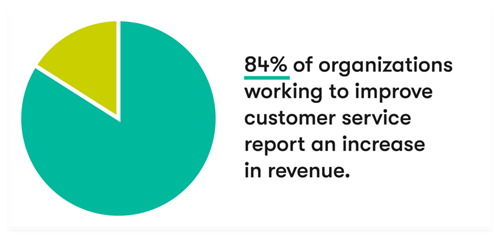












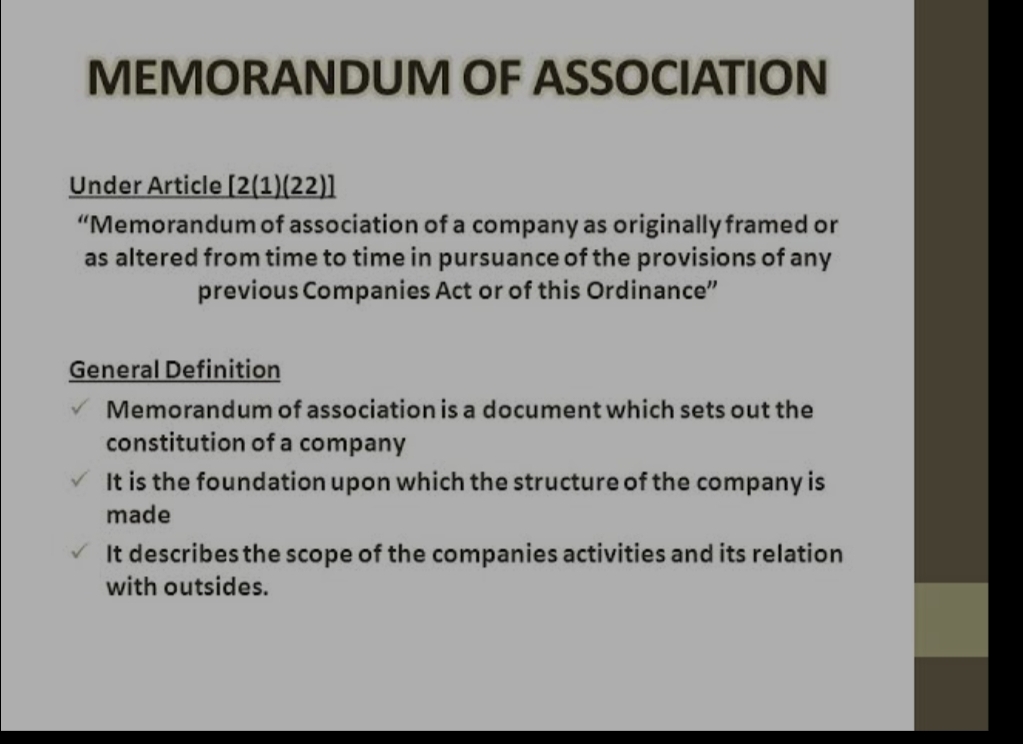






 Eduindex
You must be logged in to post a comment.