All About Bachelor of Journalism & Mass Communication

Mainstream courses are chosen by a majority of people. But if you want to do something creative and different from the usual courses, then a Bachelor of Journalism & Mass Communication (BJMC) is a great option.

It is an undergraduate program for the students who aspire to work in the media industry such as print (newspaper, magazines, books), radio, television, and films. This program is best for inquisitive students, have a good command of the language, have the interest and confidence to report the happenings around the world, and have a grip on writing. Students with an interest in editing software and technical knowledge can also opt for this program.

Bachelors of Journalism & Mass Communication is a degree program for 3 years, which is divided into 6 semesters.

Eligibility Criteria

The students willing to get admission in the BJMC course need a minimum qualification of 10+2 in any stream, with at least a 50% score (varies according to the college requirement).

Admission Process

The admission process varies in different colleges. Some take admissions based on merit lists and some have entrance exams for it. If the admission is based on a merit list, then the result of class 12th is into account. This is also known as direct admission. If the admission is based on the entrance exam, then it is conducted in stages or rounds. The first round includes a written exam, after which the qualified students need to qualify for the personal interview (PI) round and group discussion round. 

If any student has prior work experience or has worked on any project, then on that basis also some colleges select the students for admission.

Some of the common subjects consisted in BJMC course

  • Advertising
  • Film Theory & Practice
  • Media Laws & Ethics
  • Public Relations
  • Basics of Research
  • Basics of Photography
  • Writing for Media
  • Animation Theory & Practice

Career Options in Bachelors of Journalism & Mass Communication

BJMC is a vast field and has a variety of options to pursue your career. It has an opportunity in both government and private sectors. Students willing to get into jobs after completion of their bachelors can do so. Students willing to pursue their higher studies can complete their masters and have better job opportunities and salary packages as they have a much broad perspective in the field.

Students willing to work in the government sector, especially in civil services can give Civil Service Exam conducted by the Union Public Service Commission (UPSC) and become IIS Officers. IIS stands for Indian Information Services. The job of the IIS officer is o communicate the information on behalf of the government. 

List of Job Opportunities for Journalism & Mass Communication Students:

  • Journalist
  • Radio Jockey (RJ)
  • Columnist
  • Animator
  • Public Relations Officer
  • Photo Journalist
  • Video Editor
  • Copy Writer
  • News Analyst
  • Television Anchor
  • News Anchor
  • Film Maker
  • Illustrator
  • Advertisement Agency
  • Fashion Photographer
  • Wildlife Photographer

The list does not end here. The job opportunities are enormous.

Salary Package

A student can earn a handsome amount after the successful completion of his or her course. The salary varies according to job responsibility and the organization. For a fresher, the salary varies from between Rs. 1 lakh to Rs. 4 lakhs. However, the amount tends to rise with time and experience.

GST which stands for Goods and Services tax

Definition and meaning

Goods and services tax is an indirect tax which is levied by government on taxable value of goods, services or both were supplied by persons. It is a value added tax which is charged in every stage of supply.

Goods and services tax came into force in India on 1st July 2017, which is marked as one of the historical dates in India’s tax history.

Goods and services tax which helped remove various taxes under one.

Excise duty, Service tax, VAT, CST, Entry tax, etc. = GST

Goods and Services tax is a destination-based tax which is levied on every stage from the manufacturing level to the final consumer of that goods or services, only on the value addition.

Salient features of GST or GOODS AND SERVICES Tax.

Levy on Good and ServicesGoods and services tax is only levied on taxable goods and services on each stage of transaction a tax on, Except supply of alcohol and liquor for human consumption
Indirect TaxGST is an indirect tax which means tax liability on consumer in indirect they pay tax indirectly to the government.
Dual GST in IndiaIndia is a federal country there fore a Dual GST system has been adopted.

1. On Intra state supply- The GST to be levied on intra state supply of goods or services would be called CGST or SGST. E.g., A transaction took place inside the state.
2. On Inter state supply- The GST to be levied on interstate supply of goods and services would be called IGST. E.g., A supply took place between M.P. and C.G.
Uniform GST law in India.SGST tax of each state is just a copy of CGST act passed by central government, except changing reference from central tax to state tax.
Forms and procedures are all same all over India and rates are also expected to be uniform.
There would be no difficulty for a businessman to set his/her business in many states.
Consumption based TAXGST is a consumption-based tax which means the state which is finally consuming the goods and services.
RegistrationA supplier of Goods and services or both should be registered under GST law –

1. Supplier of goods or/and services within the state.
2. Registration is not required for farmers and supplier of wholly exempted goods.
Multi point TAXGST is applied on every state of transaction.

GST is not only implied in India it is on effect in many parts of the words.

When the GST was not implemented in India and was in the process there were various challenges IN front of the makers. But with continuous efforts GST was implemented successfully in India.

Though the revenue collected from GST in the fiscal year 2019-2020 was about Rupee 10 lakh crore which is less than expected.

A administration is been set up to govern the Goods and services Act properly in India.

Sone of the link just for reference :

GSD WIKI: https://en.wikipedia.org/wiki/Goods_and_services


Difference Between Goods and Services: https://keydifferences.com/difference-between-goods-and-services.html#:~:text=%20The%20basic%20differences%20between%20goods%20and%20services,a%20different%20approach%20of%20carrying%20out…%20More%20

Hope this post helps you..!

Book Reviews

The Books are of  knowledge oceans, from every book we learn some thing new and to improve our knowledge and build our personality

BOOK Defination  

we all know that a lot of English words come from ancient Latin – that’s because the Romans occupied England for almost five hundred years from 54BC to 410 AD. … The word book comes from Old English “boc” which in its turn comes from a Germanic root “*bok-“, which means “beech” – as in the beech tree

Types of Book Reviews

Endorsements: Hand-picking Relevant Reviewers Before Your Book is Published. …

Trade Reviews: Publishing Professionals May Advocate Your Book To The Industry. …

Reader Reviews: Individuals Recommending Your Book To Each Other. …

Editorial Reviews: Third Parties Publishing Reviews About Your Book.

Why write book reviews

Book reviews give books greater visibility and a greater chance of getting found by more readers. On some websites, books that have more book reviews are more likely to be shown to prospective readers and buyers as compared to books with few or no book reviews.

How to write a book review

  • Start with a couple of sentences describing what the book is about. …
  • Discuss what you particularly liked about the book. …
  • Mention anything you disliked about the book. …
  • Round up your review. …
  • You can give the book a rating, for example a mark out of five or ten, if you like!

In this days most of people like to read blogs because they have simple and clear to understand content

Some of people read books by help of Book review, its give simple summary to understand that book

5 courses every upcoming entrepreneur must do

In the current business environment, one must always be eager to adapt and learn new skills in order to survive and grow. Here’s a list of 5 courses a budding entrepreneur must do to flourish in the current environment, keeping in mind the trends and skills essential in the present scenario.

1. Digital Marketing

With businesses taking over social media platforms to increase their reach and improve their customer relations, Digital Marketing is the need of the hour. It is a brilliant way to interact, build and promote the brand. The traditional ways of advertising like print, radio and tv ads are not as effective as email marketing, targeted ads, paid searches, etc. It is the new way of doing business and every entrepreneur must know how to grow their business this way.

On some business-friendly platforms like Instagram and Facebook, one can also use analytical tools to know more about their audience like geographical location, age range, gender etc which can give helpful insights about the target audience of the business.

The course includes Social Media Marketing, Email Marketing, Search Engine Optimisation, Google ads and Google analytics.

2. Successful Negotiation: Essential Strategies and skills

Starting a new business requires efficient communication and negotiation skills. Whether it’s negotiating prices and contracts with vendors, suppliers or the customers, pitching the business plan to potential investors, communicating with the stakeholders of the company, it always comes in handy.

In order to grow a business, every entrepreneur should know how to negotiate and build profitable relationships for the business. This course not only improves the business communication skills of the entrepreneur but also, helps him/her in identifying the interests of the other party while negotiating which successfully helps them in finding a middle ground efficiently.

3. Start-up funding

The first step of officially starting a new business is getting funding, convincing investors, banks, financial institutions that the business plan is viable and has the potential to grow. It is important for an entrepreneur to work on his/her pitching skills in order to communicate effectively with the potential investors of the business. He/she should also know the process of getting the funding and the different sources and instruments he/she can select from according to the nature of the business and the funds required.

4. Business Modelling/Strategy

This course is not only essential for the success and future of the business but also needed to pitch the business plan to potential investors. The mere idea, concept and product/service is not enough to attract investors. Such investments generally involve huge amounts of seed capital and therefore, investors like to study the business model to assess the risk, returns, viability, market research analysis, cost structure of the business to determine its potential.

5. Brand Management

In a world where customer loyalty and retention are the priority, this course would help an entrepreneur learn how to retain and build a relationship with its customers. With every brand’s focus on customer relations, this will give the entrepreneur an edge over its competitors if applied effectively.

Customers value brands that are transparent, environment friendly and ones that value their customers and their feedback. Brand Management not only helps in retaining customers but also helps in building long-term relationships with them, thus establishing a stable and loyal consumer base.

HOW VACCINE WORKS ?

This pandemic has taught us many things, and right now in India as well as in World every other person is talking about vaccines, what are vaccines, how much time is require for development of vaccine including all trails , and how do they work ?

So, for now I would like to answer one of most frequently asked question HOW VACCINE WORKS ? well, for understanding the working of vaccine we must know what is vaccine ?

A vaccine is part of a germ that is exposed to your immune system in a safe way so that it can learn how to fight off that harmful pathogen and protect your body from it in the future. Basically it provides us immunity.

Well let’s see what exactly happens when you get vaccinated

When you get a vaccine, your immune system responds to the vaccine just like real germs.

i. The germs contained in the vaccine are identified as foreign.

ii. The vaccine produces and reacts with antibodies similar to real germs.

iii. Remembering how to destroy germs. If you come in contact with pathogenic germs at any time in the future, your immune system can quickly destroy it before it has a chance to make you sick. This is how you get immunity from vaccines

HOW VACCINE WORKS ?

A vaccine works by training the immune system to detect and protect against viruses or bacteria. To do this, certain molecules from the pathogen must enter the body to boost the immune system. These molecules are called antigens and are found in all viruses and bacteria. If a bacterium or virus reappears, the immune system immediately recognizes the antigen and attacks the disease well before the pathogen spreads.

Vaccines don’t just work on an individual level, they protect entire populations. Once enough people are immunized, opportunities for an outbreak of disease become so low even people who aren’t immunized benefit. Essentially, a bacteria or virus simply won’t have enough eligible hosts to establish a foothold and will eventually die out entirely. This phenomenon is called “herd immunityor “community immunity,” and it has allowed once-devastating diseases to be eliminated entirely, without needing to vaccinate every individual.

So, for now I have only one request that is ”PLEASE GET VACCINATED”, it’s totally safe.

How to start coding? Part-2

This article is in continuation to How to start coding part-1. So now you have decided which programming language to choose from to starting coding. But here comes the tricky part, learning. There are again tons of resources available to learn from. But it is not humanly possible to scrap through all of those. So in this article, I will show you how you choose from the pool of resources available.

Youtube

The pre-eminent of all the resources, Youtube has “python programming” playlists that are quite lucid. These playlists/courses are free to watch. Similar to classroom learning experience from the comfort of your home, Youtube provides content that is worth laudable.

Python programming playlist

W3 Schools

If you are more into learning from reading rather than watching tutorials, then this site is the perfect place for avid readers like you. With laconic content, it will surely bolster your learning experience. The small bits of example try yourself will surely help you get your foundation laid.

W3 schools python

Python org

This official documentation of python also provides with lucid explanation for beginners. Along with the explanation, this site also has all the python version released ready to install on your system. Documentation, community, news, events, jobs, everything related to python under one hood.

Python org

The list does not end here. There are also other popular resources available. It is not feasible for me to cover all these. Hope you find all these resources useful.

How To Find Your Dream Job In 9 Steps

DREAM JOB!

Many people have a job they don’t like. Many take jobs they don’t like. The reason we take jobs we don’t like is because we need money. I can’t think of any other reason people would waste their time doing something that is not passionate about. I challenge you to find your dream job—a job that you love doing 7 days a week. Work that doesn’t feel like work. In that way, you are not only living for the weekend.

Many of us only live on the weekend and after 5 pm on weekdays. ‘The American Time Use Survey’ shows that we spend almost 40% of our time at work. Would you waste 40% of your money? I’ve never heard an average person saying, “I have $10.000 in savings, I’ll just throw $4.000 away.”

Time is more valuable than money. So why would you give away your time? By doing what you love to do, you are doing something of meaning. Stop the busy work and find your dream job! Here are 9 steps that you can use as a guideline.

  1. Decide exactly what kind of job you want. If the job doesn’t exist, create it.
  2. Choose the company or person you want to work for.
  3. Study your potential future employer
  4. Find out what kind of competencies you need to be successful
  5. Do a strengths/weaknesses analysis of yourself. You have to be clear about what kind of value you can offer.
  6. Create a plan of how you’re going to develop your competencies you need further.
  7. Now, apply. Forget about job openings or vacancies. If you can add value to a company, they would be idiots not hiring you.
  8. Once you know what job you want, what the company needs, what competencies you have, and what value you can add, put it on paper. Hire a copywriter or who can help you with his. Or have someone who is in sales look at it. You have to be persuasive.
  9. Find out who has the ‘power’ to hire you. Browse LinkedIn for the senior manager of the department you want to work for. If it is a smaller company, contact the CEO.

This method may take you longer and more analysis of your skills. But it’s worth it to find your dream job. Financially and mentally. By doing something you love you will save yourself many headaches in the long run. You’ll probably earn more money as well. If you follow the standard hierarchy and climb the ladder like everybody else, you will earn exactly the same as everybody else.

Learn More About Finding Your Dream Job

If you’re interested in learning more about finding your dream job, feel free to check out my course.

Web Development

Web development is a method of providing site structure and maintenance and this is work done in the background, intending to keep the site look good, running quickly, and performing well with consistent customer interactions. Web developers use various programming dialects to do this. The dialect used depends on the type of errand. Performance and the stage of their work. Online promotion skills are popular all over the world, and they are well paid, making them an excellent career choice.

This is one of the areas that are easier to open up, and the rewards are more generous because you need not have to struggle with a formal university degree to obtain qualifications. The field of web development is mainly divided into front-end(client-side) and back-end(worker-side).

Comparing Front-End and Back-End Development

The Front-End web developer is responsible for layout, design, and interaction with HTML, CSS, and JavaScript. He takes an idea from the drawing board and implements it. The content you see and use, such as the visual aspects of the website, drop-down menus, and text, is put together by a front-end developer who has written many programs to link and build elements, improve their appearance, and add interactivity. The program runs through the browser. It happened behind the scenes. This is where the data is stored. Without this data, there is no external interface.

The Back-End or the server side of the network consists of the server hosting the website, the application that starts the website, and the database where the website is located. Server-side developers use computer programs to ensure the smooth operation of servers, applications, and databases. Such developers need to analyze the company’s needs and propose effective software solutions. ng uses different server-side languages ​​such as PHP, Ruby, Python and Java.

The Industrial applications

In larger organizations and companies, a Web development team can consist of hundreds of people (Web developers) and follow standard practices such as agile Web development. Small organizations may only need a permanent or contract developer, or assist in the allocation of appropriate positions. As a graphic designer or IT expert. Web development can be collaborative work between departments, rather than the domain of a specific department. Web developer professions are divided into three types: front-end developers, back-end developers, and full-stack developers. Responsible for the actions and images that run in the user’s browser, while the internal developers are responsible for the server.

All of this may seem difficult to understand at first glance, but you don’t need to understand all of them immediately. You will gradually increase your awareness and things will start to click. The good news is that learning to be a developer is easy to get and access. This applies in particular to Open Classrooms.

How to start coding? Part-1

To begin with coding, you need to first learn a programming language. A computer can’t learn the human language. A computer only understands that is in the form of 0’s or 1’s i.e binary language. So to communicate with the computer, you need to learn its language. Programming language is a sort of instructions set that is fed to the computer so that we can get the desired output. There are tons of homogenous programming languages available. Some languages are equivocal. While some are quite the contrary. One such programming language that is most popular today is called “Python”.

Every buzzword around you today is more or less uses Python. Python is an integrated high-level general-purpose programming language. Python is the fastest-growing programming language.

Some of the advantages of coding in the “most popular programming language are”-

It’s easy to read, write and learn code in Python

Python is an interpreted language

Python is free and open-source

Python supports every possible library available

Python is a high-level language

Python is an object-oriented language

Python is portable across Operating Systems

Every coin has two sides, so does Python also has its disadvantages-

Python is quite slow in execution

Python is not so memory efficient.

But, these disadvantages do not anguish its popularity. It may sound perplexing to learn all these keywords. But trust me once you get your hands dirty with coding, you will come to understand these terms.

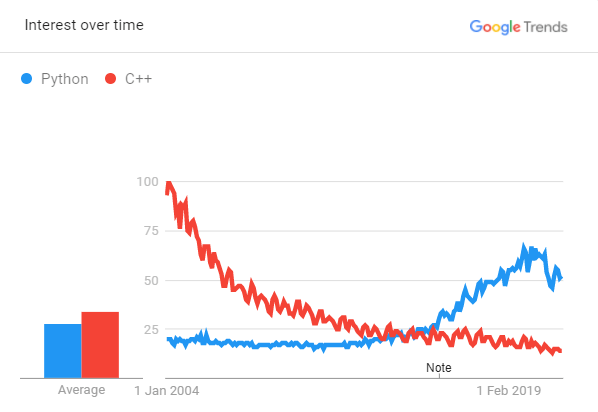
Surge in interest for Python

There are also some analogous programming languages. C, C++, Java are some of these programming languages. They have their advantages and disadvantages. But none of them is even close in terms of usage and popularity with python.

The growth with pythons influence is steadily increasing and will surely see an exponential rise in the near future. Tech giants such as google have left no stone unturned on using python. Due to this increasing demand for python, it’s feasible to learn python. And this will be your stepping stone on your way to learn to code.

3 Common Mistakes Smart People Make

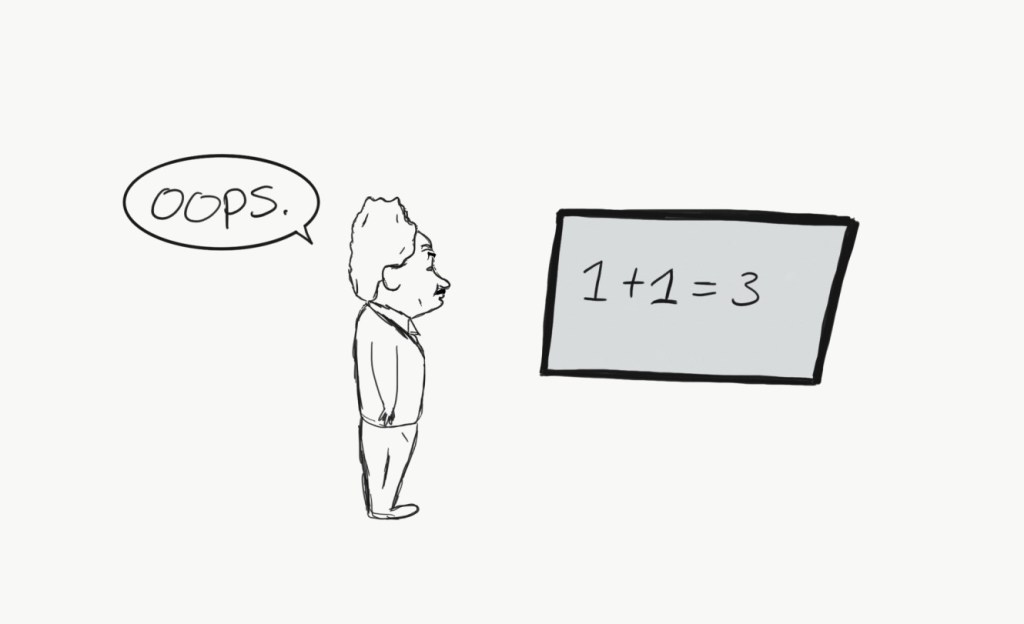
OOPS!

If you believe that only stupid people make these common mistakes, you’re as wrong as I was. The truth is that everyone makes mistakes. Smart people admit that. Stupid people do not.

What’s more, the smartest and most successful people in history have made the most mistakes. Are those two things connected? I think so. This Albert Einstein quote says it all:

“Anyone who has never made a mistake has never tried anything new.”

I used to blame myself for making mistakes in life. I think that’s how our society is. As a kid, you’re punished for making mistakes in school and life. And because of that, we think it’s normal to punish each other as adults.

But why would you punish yourself or another person for making silly mistakes? Most things in life are reversible and small (I’m not talking about committing crimes or adultery here). What matters is that we learn from our mistakes.

One of the best traits one can have in life is to be forgiving. You must go easy on yourself when you screw up. The same is true for the people in our lives. Alexander Pope put it best:

“To err is human, to forgive, divine.”

And when people really cross the line—just move on. No need to make things complicated.

In life, there are lines one should not cross. If you keep yourself to a high moral standard, you’re doing the right thing. And if you make mistakes? So what? No one is perfect.

Here are 5 of those mistakes that smart people make. Remember that you don’t have to make these mistakes yourself. It’s better to learn from other people’s mistakes. They have made them, so we don’t have to.

1. Chasing money

I recently read How To Get Rich by Felix Dennis, who owned one of the biggest magazine publishers in the UK. Contrary to the title, the book actually tries to discourage you to chase money.

Many rich people will tell you the same. The funny thing is that we all know there is more to life than money. And yet, we make it our sole purpose. Dennis writes:

“People who get trapped in the tunnel vision of making money think that is all there is to life.”

There’s nothing wrong with wanting to get rich. We just have to remind ourselves that making money beyond a certain amount has little impact on our happiness. But somehow, we get tunnel vision. Again, trying to get rich is not a mistake. However, it is a mistake if you expect that it’s the answer to all your problems.

2. Ignoring sleep

When you get excited about something, you want to spend all your time on it. That’s a great feeling.

But when your excitement prevents you from having quality sleep, you want to change that. It’s one of my biggest pitfalls. I can read and work all day long—well into the night.

But even when I go to bed at 2 AM and wake up 8 hours later, I still feel tired. Somehow, it’s different when I hit the sack at 11 and wake up at 7. I feel much more energized.

For the past year, I’ve been taking my sleep more seriously. I wake up at the same time every morning. And I turn off my devices exactly one hour before I want to sleep. That means no work or heavy mental activity before bedtime. Just some light reading or journaling.

3. Being connected too much

The past decade has been great for technology. Almost everyone has a smartphone with access to the internet. Within a few years, the whole world will be connected. Even the less developed countries.

Modern technology has changed the world. These developments are great. But remember that too much of a good thing becomes bad.

That also applies to your smartphone, tablet, and laptop. Recent research shows that Generation Z (born after 1995) is distressed and anxious. The American Psychological Association even says they have “the worst mental health of any generation.”

One of the biggest reasons for their mental state? All the signs point towards their smartphones and connectedness. For years, I’ve been limiting my smartphone usage.

And inspired by Cal Newport’s new book, Digital Minimalism, I’m only getting more strict with this.

Time Blocking: Improve Your Focus And Get More Meaningful Work Done

Do you have a list of priorities or goals that you want to achieve this year? And do you struggle with allocating time to them? Time blocking might be helpful.

It certainly helped me. Look, I’m not any different from you. Life can be messy. Most of us juggle a lot of different things at the same time. Even though the simple solution is to stop juggling, it’s not always realistic. Or even needed.

What if you could do more things without losing your time? It’s possible. But you must work in an organized way.

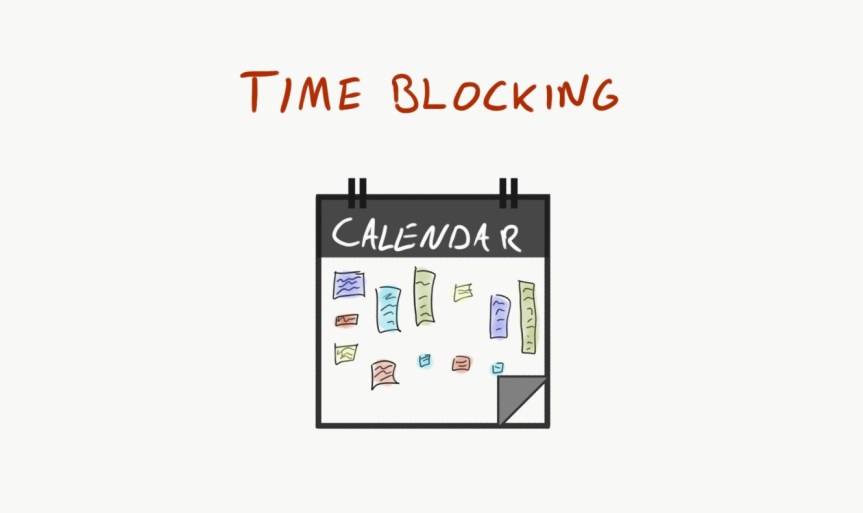
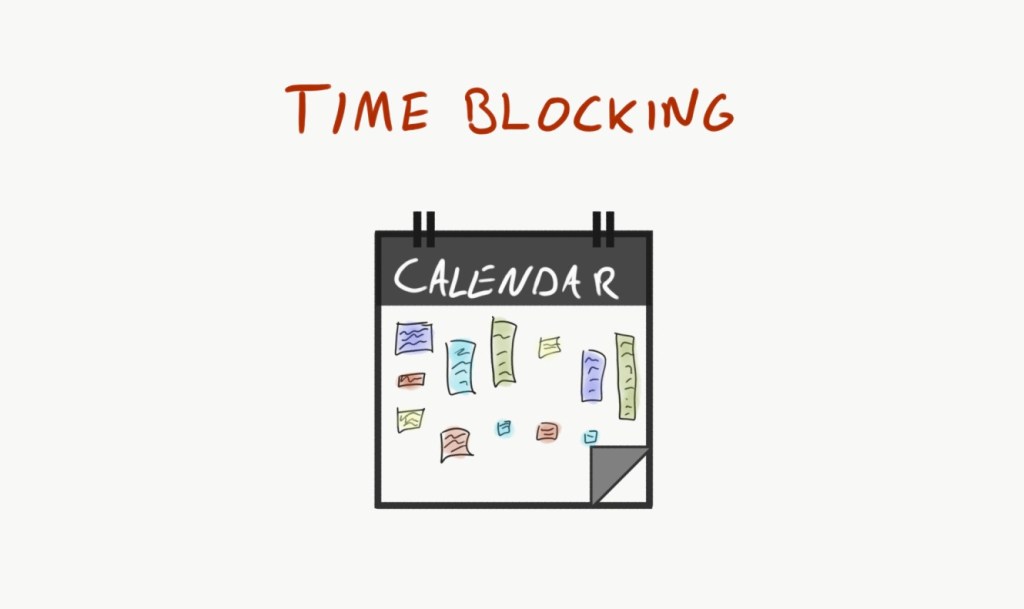
Time Blocking a simple productivity exercise that many people use. It’s not fancy or revolutionary. The only thing you need is a calendar, which is something everyone with a smartphone and computer has.

Time Blocking is simply using your calendar to block time for your most important priorities. During that time, you only work on that one thing. And, you let your calendar lead the way. That way, you don’t have to think, “What should I do next?”

But Time Blocking is more than just a productivity tool. It’s about self-awareness.

The road to high productivity starts with awareness.

For instance, one of my priorities this year is to write a book on pragmatic thinking. However, there’s a problem: I haven’t been writing.

How did I come to this conclusion? I simply looked at my list of priorities for 2017, and I then I looked at my calendar.

I hadn’t scheduled any time for writing in a while. Now, you might think, “do you really have to look at your calendar to realize that?”

Yes, I do. I’m not some kind of supercomputer that remembers everything. I’m a regular human being. I think of something to do, start working on it, life gets in the way, and then I FORGET about it.

It happens to all of us. We need self-awareness and tools that keep us in check. And that’s why I like Time Blocking.

Some people love Time Blocking. Some people hate it.

Computer science professor and author of Deep Work, Cal Newport, also uses time blocking. He says:

“I take time blocking seriously, dedicating ten to twenty minutes every evening to building my schedule for the next day. During this planning process I consult my task lists and calendars, as well as my weekly and quarterly planning notes. My goal is to make sure progress is being made on the right things at the right pace for the relevant deadlines.”

The last sentence is exactly why I schedule everything I want to do. Working is not the same thing as making progress. And Time Blocking helps me to improve my focus so I can get meaningful things done. Things that have an actual impact on my life.

I know there are a lot of successful people who work with empty calendars. I’ve read the articles. They simply work two, three or four hours per day.

And to be honest, that sounds very attractive to me too. However, one must look at his/her own life situation.

What are you trying to achieve?

And more importantly: What resources do you have?

Often, people who don’t have a lot of money, do have a lot of time. So why not use it wisely? Either way, I think that planning serves a purpose.

I plan my days and weeks in advance because I want to make sure I’m working on the RIGHT things. Too often, I get lost in completing daily tasks.

Think about it this way. I’m pretty organized already. And I only work on one big thing per area of my life.

But there are many different areas of my life: My family business, my blog, podcast, online courses, relationship, friends, investments, etc.

It might sound like I’m doing many different things. But it depends on how you look at it. Everything I do leads to one thing: Living a meaningful and independent life.

But let’s not get philosophical here. If you’re lacking focus, not making progress, and want to work in a more organized way, give time blocking a try.

Here are some things I’ve learned that may help:

  • Take 10 minutes every evening and plan your next day. Rearrange blocks if you must create time for other important things.
  • Use recurring blocks for recurring tasks. For instance, I’ve scheduled two hours to write my new book every Tuesday and Thursday.
  • Don’t over-schedule. Realistically, you can’t be productive 10 hours straight. Give yourself some time between tasks.
  • And always schedule more time than you think you need.

“Wow, time blocking sounds like too much planning to me.”

No problem. Plan less. There’s always a counter-movement for everything. People who do the exact opposite and advocate an anti-productivity lifestyle. You know, folks who claim they have empty calendars and don’t care about anything.

People who pretend they are always “enjoying” themselves. They like to go with the flow and daydream.

You know what that reminds me of? Those kids in school always said, “Ah dude, I didn’t have time to study for this class,” but always ended up getting straight A’s.

People just want to make you believe they don’t work hard. It’s facade. And when they do well in life, it seems like it came easy.

As far as I know, achieving meaningful things is hard. I don’t think there’s anything cool about pretending it’s easy. Nor do I believe that it’s cool to work yourself to death.

I often think of this question: Are you an amateur or a pro?

It’s Steven Pressfield’s famous analogy, from his book The War Of Art, for getting work done.

The amateur-only works when inspiration strikes. The pro sits down every day and puts in steady work. The key is steady. Not irregular or extreme.

Pressfield says:

“The sure sign of an amateur is he has a million plans and they all start tomorrow.”

Don’t start tomorrow.

These Six Questions Will Improve Your Decisions

BUT WE CAN KNOW!

To improve your decisions, you want to look at your process for making a decision. Most people assume that good decision making is a matter of picking a course of action that leads to the desired outcome.

That’s a misconception. Decision making refers to your cognitive process. It’s about how you end up with your decision, not what the decision leads to. 

Good decision making can lead to bad outcomes. The opposite is also true. Bad decision making doesn’t mean you always get bad results. For every decision, there are external factors that influence your outcomes.

So how can we improve our decisions? By focusing on the process, not the outcome. The best method for improving your decision making process is to ask yourself critical questions. It’s not enough to ask obvious questions like, “What are my alternatives? What has worked for others? What are the consequences?”

While it’s good to ask yourself those questions, it will not change your decision making process. Those questions only look at what you already know. 

I found a list of six thought-provoking questions in Annie Duke’s book, Thinking In Bets. Notice what the theme is.

  • Why might my belief not be true? 
  • What other evidence might be out there bearing on my belief? 
  • Are there similar areas I can look toward to gauge whether similar beliefs to mine are true? 
  • What sources of information could I have missed or minimized on the way to reaching my belief? 
  • What are the reasons someone else could have a different belief, what’s their support, and why might they be right instead of me? 
  • What other perspectives are there as to why things turned out the way they did?

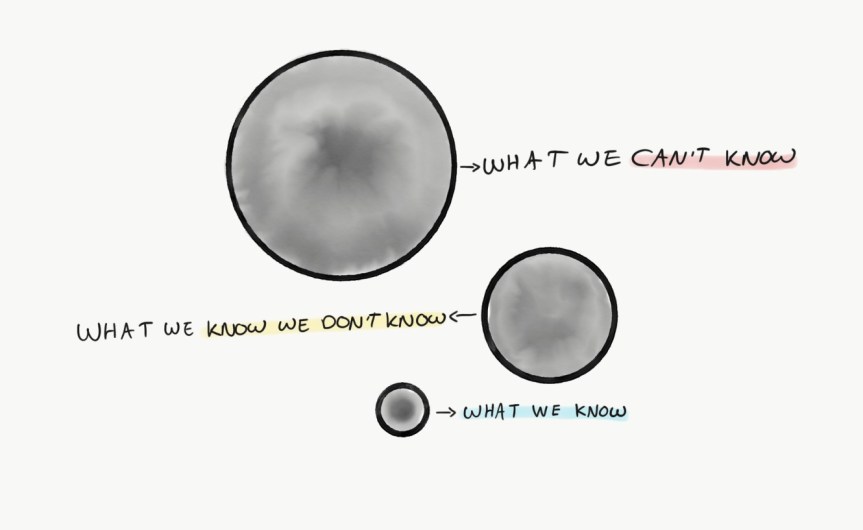
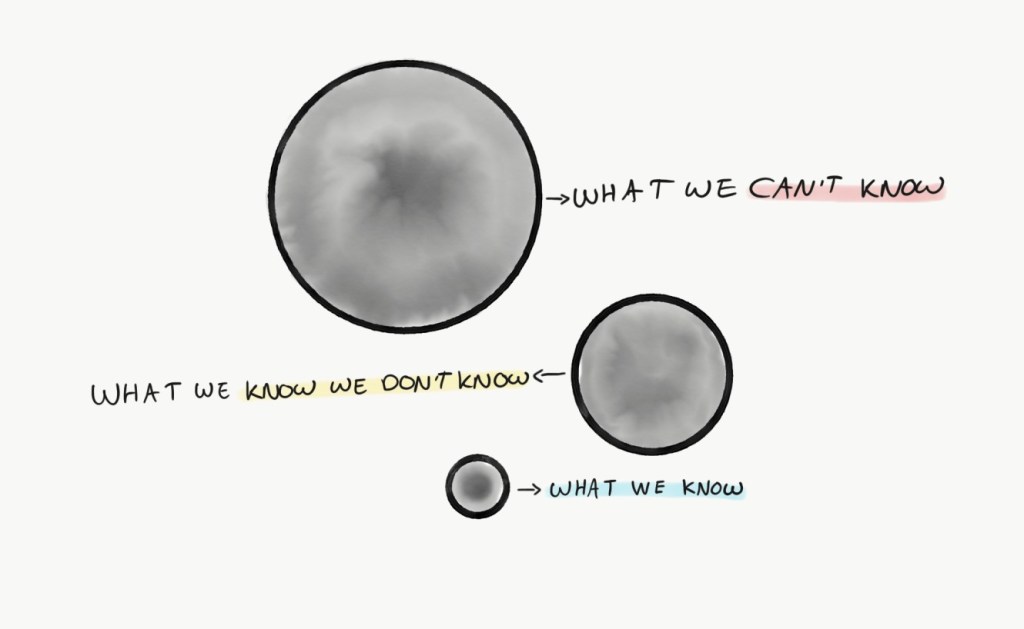
Think About What You Can’t Know

The reason I like these questions from Annie Duke is because they force you to think about what you can’t know. In my experience, that’s what drastically improves your decisions. 

We all know the feeling of talking to an experienced person who shares some insights with us, and we go, “Aha! I didn’t realize that.” That’s what you want. Duke writes the following in Thinking In Bets:

”Just by asking ourselves these questions, we are taking a big step toward calibration. But there is only so much we can do to answer these questions on our own. We only get exposed to the information we have been exposed to, only live the experiences we have experienced, only think of the hypotheses that we can conceive of.”

This is the reason I often turn to my friends, mentors, communities, books, courses, and podcasts for insights that come outside of myself. I want to learn about things I can’t know.

It’s impossible to know and see everything. We haven’t had the experiences of other people. Most of us keep making the same decisions because we never get an outside point of view. We don’t make an effort to improve our decisions.

Open To Beliefs—Not Gullible 

To improve your decisions, ask yourself questions that challenge your existing beliefs. I highly recommend saving those six questions in your note-taking app. I’ve done it and when I face a decision, I often go through these questions and my other notes on decision making.

As you become open to other beliefs and perspectives, keep in mind that other people also don’t have all the answers. Adopt the mindset of a skeptic. Be open to other beliefs, but don’t believe everything instantly. 

Keep looking for evidence and other perspectives. When you have collected enough information, make your decisions. Sometimes people assume you have to listen to everything “experts” have to say. This will only make us gullible. If there’s one thing that harms our decisions, it’s that.

We should always make our own decisions after going through a process. We should avoid making rash decisions based on the opinions of others.

Common Decision Making Pitfalls

Here’s what you should watch for when you’re making decisions (no matter how big or small):

  • Analysis paralysis—This is very common. At some point you get stuck in the process and you can’t make a decision. You go over the process over and over again. This is a big risk. You can NEVER have 100% of the information you need. It also helps that your decisions are not about the outcomes. Don’t let your fear of making the “right” decision paralyze you. There’s no right or wrong outcome. Just outcomes. Deal with it later.
  • Extinction by instinct—The opposite of the above. It’s the belief that instincts are a useful tool in decision making. This leads to rash decisions.
  • Information overload—This is when you ask too many people for their opinion or insights. Stick to trustworthy sources and keep them at a minimum. More information is not better. Reliable information is.

I’m not a fan of complicated theoretical decision-making frameworks to improve your decisions. Those types of formal frameworks might work for large institutions, but for you and me, it’s just not useful. Who makes time to read an 800-page textbook on statistical decision theory? And if you do study it, you probably can’t remember all of that theory. Instead, work with what you have.

When you face a problem, simply look at your options, collect some information, think about what you can’t know (the six questions at the top), evaluate everything, and pull the trigger. Done. Then, move on to the next one.

What is Python programming language?

Python is one of the most popular and fastest-growing programming language. Inherently, it is interpreted, high-level, general-purpose, and object-oriented scripting language, which means the following:

•Interpreted

An interpreter processes the source file at runtime, it reads the lines of code, one by one and performs what is said. Similarly to Perl and PHP, Python does not require that you compile your program before executing it. So, you do not have to invoke a compiler. Instead of running the compiler that helps turn source files into compiled class files, you simply run a .py file. Python byte code compilation is automatic and entirely implicit.

•High-level

Python relies on easy-to-read structures that are later translated into a low-level language, the original code that is run on a computer’s central processing unit (CPU). A high-level language is intended to be used by a programmer and the written code is further interpreted into a low-level language. Like C++ or Java, before running, Python has to be processed. This enables Python’s portability — it can run on different kinds of computers with nearly no modifications.

•General-purpose

Python can be used for nearly everything. It is applicable to almost every field for a variety of tasks. Be it the execution of such short-term tasks as software testing or long-term product development that involves roadmap planning, Python works well for them all, it is applicable all over the map. Its roles are unlimited. It is popular not only among software engineers, but also among specialists in other fields: mathematics, data analysis, science, accounting, and network engineering. Likewise, Python cliques with young people because it’s a very beginner-friendly scripting language.

•Object-oriented

This programming paradigm gives an overall orientation towards scripting and powerful code structuring. This object-oriented approach allows thinking of problems in terms of classes and objects. Then, objects are composed in such a way to make up complex computer programs. Beside the object-oriented programming, Python also supports a procedural paradigm. With OOP being only one of the options, you can make Python programming more advanced by going for an object-oriented programming approach. Developers can create reusable patterns of code thus curtailing redundancy in development projects.

Competitive Programming

“I think everybody in this country should learn how to program a computer, should learn a computer language, because it teaches you how to think.”Steve Jobs

If you are a programmer, you may understand the deep meaning of these words quoted by Steve Jobs, and you may also have this experience even if you turn off the computer, you continue to think about the programming or code you use in it. The project has been written. In programming, you just don’t learn programming, you also learn the “art of thinking“, the method is to break the code into smaller parts, and then use creative, logic-based thinking to solve problems from different angles. Programming is very interesting and it is like brain training. Programming is an intellectual sport. When this sport is practiced by sports programmers on the Internet, it is called competitive programming.

Coding contests or competitions usually require the host to have a series of logical or mathematical questions for the contestants, also called puzzles (ranging from ten to one thousand) problems. Scoring is mainly based on the count of problems solved and the time required to write a successful solution, but other factors (quality of results obtained, execution time, program size, etc.) also do count.

The goal of competitive programming is to write source code for computer programs that can solve specific problems. Most of the problems encountered in the programming Olympics are essentially mathematical or logical problems. Typical problems fall into one of the following categories: combinatorics, number theory, graph theory, algorithm game theory, computational geometry, string analysis, and data structure. Challenges related to deadlines and artificial intelligence are also popular in certain competitions.

These coding contests provides young and talented coders with the opportunity to measure their skills and compare them with other programmers around the world. Some of them are listed as-

1) The ACM-ICPC International Collegiate Programming Contest

2) Google’s Coding Competitions

3) The ICFP Programming Contest

4) BME International 24-hours Programming Contest

5) Microsoft Imagine Cup

6) Facebook Hacker Cup

youtube

YouTube

YouTube the way of leaning

What Are the Main Functions of YouTube?

  • Users can search for and watch videos.
  • Create a personal YouTube channel.
  • Upload videos to your channel.
  • Like/Comment/share other YouTube videos.
  • Users can subscribe/follow other YouTube channels and users.
  • Create playlists to organize videos and group videos together.

What is the main purpose of YouTube?

YouTube provides a simple way for people to store videos online and share them with others. YouTube videos cover any topic anyone cares to upload a video about. These videos are easy to share via other forms of social media, email and websites and can also be embedded in other websites

What are the benefits of being a YouTuber?

Benefits of Having a YouTube Channel

Give the Audience More Content. One really good reason to add video and a YouTube channel to your site is to give the audience more content. …

Extra Source of Traffic. …

Closer Personal Connection. …

Another Source Of Revenue. …

Modernizing. …

Creative Outlet. …

Get Outside Your Comfort Zone.

Teens Like YouTube because?

YouTube is a free to use service and a can be a great space for teens to discover things they like. For many young people, YouTube is used to watch music videos, comedy shows, how to guides, recipes, hacks and more. Teens also use the video-sharing service to follow their favourite vloggers (video blogger), subscribe to other YouTubers and celebrities they are interested in.

By YouTube what the people wish to like ?

The way the their mind sets and Intrest videos

there are different kind of people

Wish to learn new things

spend time on their mind sets

giving live news and events

Advantages and Disadvantages

1.       In education YouTube help in term of provide the video of teaching and learning for the students to get the knowledge from the professors in another part of the world.

2.       The students are able to access to the sources of learning anytime anywhere they want without any payment.

3.       Provide the chance for all the learner to study with the high professional teacher especially for those who have no chance to go university.

4.       There are many skill people who upload their video and we can learn from their skill.

5.       YouTube is the very wide classroom for teaching and learning which we can save our time and budget.

6.        It is a biggest source of study which easy to understand by the video such as video on how to make up, video on how to cook, video on how …etc.