How can online learning influences the education of a Student?

When the world has witnessed one of the most infectious diseases spreading around the globe that affects not only the physical health but also the mental health of people. It was really difficult for any educational institutions, schools, or a college to manage classes physically, But 21st-century technology made it easier and helped institutions with their breathtaking software to conduct online classes and tests.

Photo by Julia M Cameron on Pexels.com

How online education is a new way of learning?

Prior to the COVID-19 pandemic, there were people who used to study on E-platforms, but not often, there were people who didn’t go to school and studied at home. Technology made a click away to explore and learn anything a student wanted to. Now one can carry their textbooks in their pocket, one can meet up anyone face to face on a software, just a click away and one can do learn anything from the internet. After school closed as a result of the pandemic, about 1.8 billion students from 186 different countries, their education was affected, but again technology did not want the student’s life to be ruined by the physical closure of schools. 

Future of Online Education

As per some scholars and economists, it’s highly believed that the overall market for online learning can be up to US $350 Billion in 2025 or more. Parents and students now don’t have to spend extra charges for classrooms, Electricity, or for any other activities that the school asks the students to pay. Parents who used to worry about their kids in school about their bullying, consuming drugs or any other harmful activities now are totally diminished. Now parents can witness their kid’s education during their online classes. Students now can easily study as well as can upgrade their extra skills through e-learning. Many students nowadays do internships, do extra courses, learn new things as well as the technology. Now a 8 year old student knows how to operate a mobile phone or a PC. Some believe that in future online education would be easily available and students don’t have to pay more for their education. “I believe that the integration of information technology in education will be further accelerated and that online education will eventually become an integral component of school education,“ says Wang Tao, Vice President of Tencent Cloud and Vice President of Tencent Education.
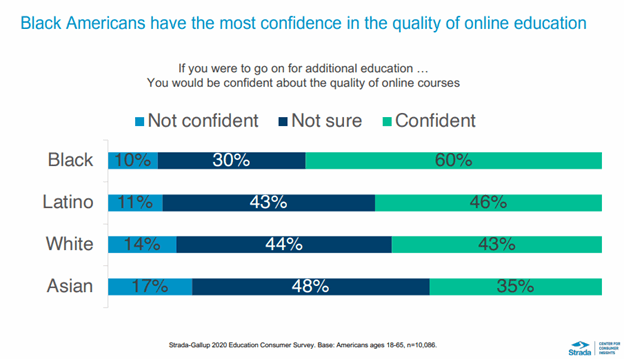
As Online education can also put the students in a bad or harmful influence, there are people who don’t want the online education as a major medium of learning.

Reasons why online education can be a harmful influence for the students?

  • Nowadays, most of the school or college students don’t study and cheat on their online exams or tests. It can be a really bad impact on their future and can be the core reason for the lack of their knowledge.
  • The daily and often use of electronic devices can make a person sick and hits their mental health in a really bad way.
  • Students are well aware of the technology and now are highly active on social media networks and making online friends. One can be good, but there are high number of chances to meet a fraud one. Those frauds assault the kids and ask them to do things which a kid didn’t want to.
  • Nowadays students as well as the adults store their personal information on their electronic devices and one don’t know that there are people on the internet named as hackers, who often used to steal the random people information from their cloud and upload them in the Dark web. There is a high number of chances of a kid or high school student could be one of the victims of online frauds and assault.

Reasons why online education can be a good influence for the students?

  • Firstly, the online education can be done in massive numbers at a time, which in physical classes were not possible. A student can know a number of different answers to a same question which is really helpful for a kid to understand that how an answer could be framed for a question.
  • Question answers from textbooks were limited, but in online education one can know more about a question through exploring it on the internet.
  • Technology is our future generation and learning about it since childhood could be an advantage for a student in their future.
  • In a traditional way of learning, one has to stick by a particular teacher and had to adapt their teaching style, but in online education a student can get through a number of teachers and can stick with the one they liked the most.

Disadvantages of Online education

Schools, Colleges are one of the best moments one could live in and online education can totally dismiss it. The other activities in schools like Upgrading leadership qualities through school/college competitions, Outdoor games for physical health of a student, and more things which a student learns through offline education are not possible through online education. The major and the core problem is, not every student or kid have mobile phones or PC and the access to the internet. They all were dependent on government schools, offline classes and free books from the school for their education. Poor family conditions, Bad environment, Poor Electronic facilities could be reason in the future for a student who might lose their interest in their education through E-Learning.

In the end, the conclusion of learning through online education has more disadvantages than their benefits.

Sources:-

https://www.weforum.org/agenda/2020/04/coronavirus-education-global-covid19-online-digital-learning/
https://www.google.com/url?sa=i&url=https%3A%2F%2Fwww.insidehighered.com%2Fnews%2F2020%2F07%2F30%2Fsurvey-data-reveal-impact-covid-19-perceptions-online-education&psig=AOvVaw28oKObAFVXLJ-UO6vhxiqv&ust=1627984700132000&source=images&cd=vfe&ved=0CAwQjhxqFwoTCKCFmYeKkvICFQAAAAAdAAAAABAK

Reserve Bank Of India

The Reserve Bank of India (RBI) is India’s central bank, also known as the banker’s bank.
The RBI controls the monetary and other banking policies of the Indian government. The Reserve Bank of India (RBI) was established on April 1, 1935, in accordance with the Reserve Bank of India Act, 1934. The Reserve Bank is permanently situated in Mumbai since 1937.

Establishment of Reserve Bank of India

The Reserve Bank is fully owned and operated by the Government of India. The Preamble of the Reserve Bank of India describes the basic functions of the Reserve Bank as;

1)Regulating the issue of Banknotes

2)Securing monetary stability in India

3)Modernising the monetary policy framework to meet economic challenges

The Reserve Bank’s operations are governed by a central board of directors, RBI is on the whole operated with a 21-member central board of directors appointed by the Government of India in accordance with the Reserve Bank of India Act.

The Central board of directors comprise of:
Official Directors – The governor who is appointed/nominated for a period of four years along with four Deputy Governors.
Non-Official Directors – Ten Directors from various fields and two government officials.

Functions of RBI

  1. The Issuer of the Currency: It has the sole authority to produce the currency. It also takes action to stop regulating the passage of fake money.
  2. Banker to the Government: It acts as a financer both to state and central government. It delivers short-term credit. It governs all new matters of government lands, maintaining the government debt unsettled, and taking care of the market for the government securities. It counsels the government on banking and monetary subjects.
  3. Banker’s Bank: It is the bank of all banks in the country as it delivers the loan to banks, rediscounts the invoice of banks and receives the payment of banks.
  4. Lender of Last Resort: All the other banks can borrow from the RBI by keeping qualified securities as a deposit at the time of crisis.
  5. Money Supply and Regulator of Credit: To manage demand and supply of cash in economy by Open Market Actions, Credit Ceiling and much more. It has to meet the credit necessities of the remaining banking system. It requires sustaining price stability and an elevated rate of economic growth.

New Forms of Punishment

Section 53 prescribes five types of punishments to be meted out to a person convicted of a crime under the Code, depending on the nature and gravity of the offence,viz .:

(i) Death; (ii) Imprisonment for life; (iii) Imprisonment, rigorous with hard labour, or simple; (iv) Forfeiture of property; and (v) Fine.

It is suggested to add five new forms of punishment to the existing ones in section 53, IPC with a view to deter particular types of criminals. Such punishments will have more psychological, social and moral impact on the criminals and will go a long way in curbing crimes. The proposed punishments are: (i) Externment, (ii) Compensation to victims of crime, (iii) Public Censure, (iv) Community service, and (v) Disqualification from holding public office.

(i) Externment: Externment or banishment is a form of punishment in which an accused is sent out of the place of his residence to another place for a specified period of time as mentioned in the order issued by the court. This is done to deprive the accused of the company of his family members, friends and associates so that he or she may not indulge in criminal activities. Externment is resorted to primarily in case of anti-social, hardened and habitual criminals.

(ii) Compensation to victims of crime: Unfortunately, the victims of crime in our country do not attract the attention of law makers. Of late, Civil Procedure Code, 1973 in section 357 has empowered the court to award compensation to the victims of crime in very limited cases at the time of passing the judgment. No doubt, the higher judiciary has on times provided compensation to the victims of crime of custodial violence, sexual assault, rape, illegal detention by invoking Article 21 of Constitution, but such instance will not serve the plight of helpless victims.

(iii) Public Censure: Public Censure or social censure is one of the methods of punishment prescribed in some of the countries, such as Russia, Columbia etc., in respect of certain offences of anti-social nature, such as white-collar crimes, tax crimes, food adulteration, etc. In ancient India, public censure was considered suitable punishment for certain class of criminals.

(iv) Community Service: Community service or corrective labour is a form of punishment in which the convict is not deprived of his liberty. Corrective labour is the standard penalty given in those cases where it is considered that the accused need not to be isolated from the society. The period ranges between one month to one year in such cases. This system is used in Soviet Russia with good results. An important feature of this type of punishment is that the accused is not deprived of his liberty and he may go home after the day’s work.

(v) Disqualification from holding public office and contest elections: Disqualification to hold public office and contest election of legislature and local bodies as a form of punishment will have the adequate and desired deterrent sanction, if sincerely implemented. Representation of the People Act, 1951 disqualifies a person convicted for a period of two years or more to contest election for a period of six years. But the provisions are very limited in scope and are being abused with impunity.

Theories of Punishment in Indian Penal Code,1860

Introduction

Punishment is the sanction imposed on an accused for the infringement of the established rules and norms of the society.

Objective

The object of punishment is to protect society from mischievous and undesirable elements by deterring potential offenders, by preventing the actual offenders from committing further offences and by reforming and turning them into law abiding citizens.

Types of Theories

  1. Deterrent Theory
  2. Preventive Theory
  3. Retributive Theory
  4. Reformative Theory
  5. Multi Approach Theory

a) Deterrent Theory: According to this theory, the object of punishment is not only to prevent the wrong-doer from doing a wrong second time, but also to make him an example to others who have criminal tendencies. Salmond considers deterrent aspects of criminal justice to be most important for control of crime. Deterrent punishment is likely to harden the criminal instead of creating in his mind a fear of law. Hardened criminals are not afraid of imprisonment.

b) Preventive Theory: According to Paton:’The theory concentrates on the prisoner and seeks to prevent him from offending again in the future. The death penalty and exile serve the same purpose of disabling the offender’. Critics point out that preventive punishment has the undesirable effect of hardening first offenders, or juvenile offenders, when imprisonment is the punishment, by putting them in association of hardened criminals.

c) Retributive Theory: In primitive society punishment was mainly retributive. The person wronged was allowed to have revenge against the wrong-doer. The principle of ‘an eye for an eye’, ‘a tooth for tooth’, was the basis of criminal administration. According to Justice Holmes: ‘It is commonly known that the early forms of legal procedure were grounded in vengeance’. The advocates of this theory plead that the criminal deserves to suffer.

d) Reformative Theory: According to this theory, the object of punishment is reformation of criminals. The object of the punishment should be to reform the offender. The criminal must be educated and taught some art and craft or industry during his term of imprisonment, so that he may be able to lead a good life and become a responsible and respectable citizen after release from jail.

e) Multi Approach Theory: In fact, a perfect system of criminal justice could never be based on any single theory of justice. Every theory has its own merits and every effort should be made to extract the good points of each and integrate it so that best of all could be achieved. Punishment should be proportionate to the nature and gravity of the crime. The object of any concession given to an offender should be to convince him that normal and free life is better than life in jail.

PERFUME ‘THE STORY OF A MURDERER’BY-Patrick Süskind

Awards: 15 wins & 17 nominations given to the movie made on the story of this Novel.

7.5/10 From 189,052 Users

It has been nearly one year since I have first heard of Patrick Süskind’s literary sensation, Perfume, The Story of a Murderer. I initially thought that it was a biographical work but upon learning it was a fictional work, I was quick to add it to my growing TBR list. Basically, I bought this book for my college assignment. So how do I describe the experience? Was the anticipation worth it? It was both worth it and not I guess. I was expecting so much more and it did, on many levels, lived up to them. I guess the story was a little too short, the story ended too soon. I was so engaged that when the book ended, I was filled with pangs of regret. Lastly, my major takeaway from the story was greediness for something is always injurious.

The screenplay, by Tykwer, Andrew Birkin and Bernd Eichinger, is based on Patrick Süskind’s 1985 novel Perfume. This movie was one of his best known internationally directed thriller films.


In the slums of 18th-century Paris, a baby is born. Jean-Baptiste Grenouille clings to life. The story begins with the sentencing of Jean-Baptiste Grenouille, a notorious murderer. Between the reading of the sentence and the execution, the story of his life is told in flashback, beginning with his abandonment at birth in a French fish market. Raised in an orphanage, Grenouille grows into a strangely detached boy with a superhuman sense of smell.
After growing to maturity as a tanner’s apprentice, he makes his first delivery to Paris, where he revels in all the new scents. He focuses on a redheaded girl selling yellow plums, following her and repeatedly attempting to sniff her, but startles her with his behaviour. To prevent her from crying out, he covers the girl’s mouth and unintentionally suffocates her. After realizing that she is dead, he strips her body naked and smells her all over,
becoming distraught when her scent fades. Afterwards, Grenouille is haunted by the desire to recreate the girl’s aroma. After making a delivery to a perfume shop, Grenouille amazes the Italian owner, Giuseppe Baldini, with his ability to identify and create fragrances. He revitalizes the perfumer’s career with new formulas, demanding only that Baldini teach him how to preserve scents. Baldini explains that all perfumes are harmonies of twelve individual scents, and may contain a theoretical thirteenth scent. Grenouille continues working for Baldini but is saddened when he learns that Baldini’s method of distillation will not capture the scents of all objects. Baldini informs Grenouille of another method that can be learned in Grasse and agrees to help him by providing the journeyman papers he requires in exchange for 100 new perfume formulas. Right after Grenouille departs, Baldini dies when the shaky building, along with his studio, collapses. En route to Grasse, Grenouille decides to exile himself from society, taking refuge in a cave. During this time, he discovers that he lacks any personal scent himself, and believes this is why he is perceived as strange or disturbing by others. Deciding to continue his quest, he leaves his cave and continues to Grasse. Upon arrival in Grasse, Grenouille catches the scent of Laura Richis, the beautiful, redheaded daughter of the wealthy Antoine Richis and decides that she will be his “thirteenth scent”, the linchpin of his perfume. Grenouille finds a job in Grasse under Madame Arnulfi and learns the method of enfleurage. He kills a young lavender picker and attempts to extract her scent using the method of hot enfleurage, which fails. After this, he attempts the method of cold enfleurage on a prostitute he hired, but she becomes alarmed and tries to throw him out.
He murders her and successfully preserves the scent of the woman. Grenouille embarks on a killing spree, targeting beautiful young women and capturing their scents using his perfected method. He dumps the women’s naked corpses around the city, creating panic. After preserving the first twelve scents, Grenouille plans his attack on Laura. In church, after the Bishop of Grasse declares that the murderer has been excommunicated, it is announced that a man has confessed to the murders. Richis remains unconvinced and secretly flees the city with his daughter, telling no one their destination. Grenouille tracks her scent to a roadside inn and sneaks into her room that night, murdering her. Soldiers capture Grenouille moments after he finishes preparing his perfume. On the day of his execution, he applies the perfume on himself, forcing the jailers to release him. The executioner and the crowd in attendance are speechless at the beauty of the perfume; they declare Grenouille is innocent before falling into a massive orgy. Richis, still convinced of Grenouille’s guilt, threatens him with his sword, but he is then overwhelmed by the scent and embraces Grenouille as his “son.” Walking out of Grasse unscathed,
Grenouille has enough perfume to rule the world but has discovered that it will not allow him to love or be loved like a normal person. Disenchanted by his aimless quest, he returns to the Parisian fish market where he was born and pours the remaining perfume over his head. Overcome by the scent and in the belief that Grenouille is an angel, the nearby crowd devours him. The next morning, all that is left are his clothes and the empty bottle, from which one final drop of perfume falls. In this novel, the central theme of the story was how greediness can be harmful and led you to wrong paths and sometimes it can be deadly. The rating of this novel is good with a score of 7.5 out of 10. And was very successful at the time it got released and now also people love to read this novel. The story of the novel was so fantastic that a movie was made on this novel named PERFUME ‘THE STORY OF A MURDERER’ released on [2006] recently Netflix has launched a web series on this theme. If you like thrillers, Suspense, and horror stories then you must read this novel for sure. You can watch this movie on Various OTT platforms like Netflix, Amazon Prime and even on various other sites.

Digital Banking

Digital Banking has completely changed the way we bank in today’s times. With Digital Banking, you can transact with higher speed, ease and convenience.

What is Digital Banking? 

In simple terms, Digital Banking means availability of all banking activities online. Here, you have the luxury to freely access and perform all traditional banking activities 24*7 without having to personally go to a bank branch to get your work done. Some of the major online banking activities include-

(1) Money Deposits, Withdrawals, and Transfer
(2) Checking/Savings Account Management
(3) Applying for Financial Products
(4) Loan Management
(5) Bill Payment
(6) Account Services

Many banks also offer other integrated services like investing in Mutual Funds and other investment options online. Thus, making Digital Banking a widely used concept.

Digital Banking in India

Digital Technology has drastically changed the way banks interact with us. Similarly, it has completely changed the way we transact and interact with the bank. This is especially true in the case of a booming technological and financial economy like India, where more and more people are being connected to Digital Banking Platforms with each passing day. 

With Digital Banking you can perform every transaction, from start to end in a seamless, secure manner. You can withdraw money, deposit money, apply for loans, invest in Mutual Funds- all at a click of a button.

With the introduction of mobile banking you can perform transactions on the go. Mobile banking is a convenient and easy way to finish your transactions. For example, you can do over 125 transactions through HDFC Bank’s mobile banking app. 

The latest addition to mobile banking feature is the Mobile Banking LITE app.The HDFC Mobile Banking app can work without an internet connection, italso doesn’t take up too much space and is quick to install over slow connections. It’s a safe and secure way of making transactions on the go.

Digital Banking services are offered by all major retail banks in the country today and have, in fact, become an integral part of their services. So, one can now bank from the ease of one’s home, with the convenience of smartphone screens.

(1) Indian Financial System Code (IFSC)
The Indian Financial System Code (IFSC) is an 11-character code in alphanumeric format to uniquely identify all bank branches within the NEFT, RTGS, and the Immediate Payment Service (IMPS) network within India. This code is printed on every cheque leaf in your personal or company chequebook. To transfer funds to an account electronically, the receiver must share his IFSC code as it identifies the receiver bank and branch.Magnetic Ink Character Recognition (MICR)
Magnetic Ink Character Recognition (MICR) is a technology used to verify the legitimacy or originality of paper documents, especially cheques. A special ink sensitive to magnetic fields is used in the printing of certain characters. Every bank branch has a unique MICR code, which helps the RBI speed up the cheque clearing process, with MICR readers.

(2)Magnetic Ink Character Recognition (MICR)
Magnetic Ink Character Recognition (MICR) is a technology used to verify the legitimacy or originality of paper documents, especially cheques. A special ink sensitive to magnetic fields is used in the printing of certain characters. Every bank branch has a unique MICR code, which helps the RBI speed up the cheque clearing process, with MICR readers.

(3) Electronic Clearing Service (ECS)
Electronic Clearing Service (ECS) is another method of transferring funds from one bank account to another. It is most often used to pay regular bills (telephone, mobile, credit card, electricity, etc, to make EMI payments (Personal, Car, Home Loan), and SIP investments. This is done by invoking the auto debit facility. ECS is also used by entities for payment of salaries, pensions, distribution of dividend interest etc.

(4) Immediate Payment Service (IMPS)
Since NEFT may not be available for use on weekends and bank holidays, you could try using IMPS or Immediate Payment Service. The service is available 24X7. The minimum transfer value is Rs 1 and the maximum value is Rs 2 lakh.
But to use this service, you will need to register via your bank and provide the mobile number and MMID of the beneficiary as IMPS transfer can also be done through mobile phones. Mobile Money Identifier (MMID) is a seven-digit unique number issued by the bank.

(5) National Electronic Funds Transfer (NEFT)
The National Electronic Funds Transfer (NEFT) system allows individuals, companies, and other entities to transfer funds electronically from one bank to another within India. Normally, funds from the remitting bank will be sent to the RBI within three hours of the transaction. However, the time taken to credit the beneficiary bank’s branch account depends on how long it takes the bank to process the transaction. It should be noted that NEFT operates only during business hours on weekdays. NEFT transactions cannot be done on Sundays, bank holidays, and second and fourth Saturdays of the month. The minimum transfer value is Rs 1 and there is no upper limit.

(6)Real Time Gross Settlement (RTGS)
Another method for transferring money electronically, from bank to bank, within the Indian banking system is Real Time Gross Settlement (RTGS) scheme, where the minimum amount for each transaction is Rs 2 lakh and there is no upper limit. The beneficiary account receives the money immediately.
The RTGS system is primarily meant for large value transactions.With effect from 00:30 hours on December 14, 2020, RTGS facility is available round the clock on all days i.e. 24 hrs. India one of the few countries to operate the system 24×7. This comes within a year of the Reserve Bank of India (RBI) operationalising NEFT 24×7. NEFT is the popular mode for small-value transactions. RTGS, which started on March 26, 2004 with a soft launch involving four banks, presently handles 6.35 lakh transactions daily for a value of Rs 4.17 lakh crore across 237 participant banks. The average ticket size for RTGS in November 2020 was Rs 57.96 lakh, making it a truly large-value payment system. RTGS uses ISO 20022 format which is the best-in-class messaging standard for financial transactions. The feature of positive confirmation for credit to beneficiary accounts is also available in RTGS.
Earlier, the RBI had decided not to levy charges on transactions through NEFT and RTGS in order to promote digital transactions, and had asked banks to pass on the benefits to customers. The RBI used to levy minimum charges on banks for transactions routed through RTGS and NEFT. Banks, in turn, levied charges on their customers. RTGS is meant for large-value instantaneous fund transfers, while NEFT is used for fund transfers of up to Rs 2 lakh.
It should be noted that NEFT, RTGS and IMPS impose transaction fees in slab rates.

(7) Society for Worldwide Interbank Financial Telecommunication (SWIFT)
SWIFT is an acronym for Society for Worldwide Interbank Financial Telecommunication. It is an internationally recognised identification code forbanks worldwide, and is usually used for international wire transfers. Only those banks that are SWIFT-enabled can take part in this system. In EU nations SWIFT is also known as BIC or Bank Identification Code. When dealing with international transfers also be aware of IBAN or International Bank Account Number. IBAN (International Bank Account Number) appears in bank statements and the bank’s online systems. IBAN and BIC (Bank Identification Code ) contain your bank account number and sort code written in an internationally recognised format. All these numbers can make your wire transfers happen quickly and securely.

Rights of Pawnee and Pawnor

The bailment of goods as a security for payment of a debt or performance of promise is called ‘pledge’. The person with whom the goods are pledged is known as ‘Pawnee’ or Pledgee’. The person pledging the goods is known as ‘Pawnor’.

The rights of the pledgee or pawnee are mentioned in Section 173 to 176 of the Indian Contract Act,1872.

Rights of Pawnee

  1. Right to retain the goods pledged (Section 173 and 174): According to Sec. 173, the right of a pawnee to retain the goods pledged shall not be only for payment of the debt or the performance of the promise, but he can also exercise this right for interest on the debt and all necessary expenses incurred by him in respect of the possession or for the preservation of the goods pledged. According to Section 174, a pawnee can retain the goods pledged only as a security for that debt or promise for which they are pledged, but there is a presumption that if there are subsequent advances, they are also the part of the original debt and the pawnee may retain the goods and to recover subsequent advamces also. This is merely a presumption which could be rebutted by contract to the contrary. The pawnee is bound to redeliver the goods after he gets what is due to him.
  2. Right to recover extraordinary expenses incurred by pawnee (Section 175) : According to section 175, the pawnee is entitled to receive extraordinary expenses incurred by him for the preservation of the goods pledged from the pawnor.
  3. Right of suit to recover debt etc., and sale of the pledged goods (Section 176) : Section 176 confers right on the pawnee, including right of selling the pledged goods if the pawnor makes a default in payment of debt or performance of promise at the stipulated time. This section confers following rights on pawnee on the pawnor’s default in fulfilling promise:-. a) he may bring a suit against the pawnor upon the debt or promise and retain the goods pledged as collateral security. b) he may sell the good pledged on giving reasonable notice of the sale to the pawnor.

Right of Pawnor

Right of Pawnor to Redeem (Section 177): The pawnor has right to redeem the goods pledged, i.e., take back the goods from pawnee on payment of the agreed debt or performance of the promise in accordance with the agreement. He can exercise the right to redeem before the pawnee has made an actual sale of the goods.

Legal Heir’s Right to Redeem: In case of death of a pawnor, the pledge made by him can be redeemed by his legal heirs on meeting the liabilities concerning the pledge.

State of Haryana v. Bhajan Lal and Others

Statement of Facts

The first Respondent was a minister and subsequently Chief Minister of Haryana State. Later he became Union Minister. Bhajan Lal at the same time of the case was the Union Minister of Environment and Forests and Devi Lal was elected as the Chief Minister of the State of Haryana. In the same election Respondent 2, Dharam Pal lost the election against Smt. Jasma Devi, wife of Bhajan Lal . Owing to various political rivalries and institutions of various criminal cases there was a lot of bad blood between Bhajan Lal and Devi Lal. Consequently, Respondent 2 placed a complaint before the CM, Devi Lal against Bhajan Lal where he alleged that Bhajan Lal possesses disproportionate property or pecuniary resources compared to his indefinite sources of income. It was also alleged that the accumulation of that much property was far beyond his legal means. Special officer on duty in CM’s secretriat passed the message to the office Director General of Police stating that the CM has sought appropriate action in the said case. The complaint was further passed on to the Superintendent of Police (SP) asking for the necessary measure to be taken and report back. The SP asked the SHO (Station House Officer) to register the case and investigate. Subsequently, a case was filed under Sec. 161 and Sec. 165 of the IPC and Section 5(2) of the Prevention of Corruption Act in November 1987. The copy of the FIR was then sent to the magistrate and the investigation was started.

Issues Raised

  1. Whether just the allegations are enough to constitute a cognizable offences and give the power of investigation to the police?
  2. Whether the action of investigating on the part of SHO on just the order of one word “investigate” from SPis enough as per Sec. 5 of Prevention of Corruption Act, 1947?
  3. Whether the HC was justified in quashing the FIR and criminal proceedings and acted under the ambit of Article 226 of the Constitution and Sections 482, 154 and 157 of Cr.P.C., and to what extent the orders suffer from legal infirmity?

Critical Analysis

Cases of corruption against politocal leaders in India are not rare. This is one of such case that notified the alleged corruption carried out by a significant political figure leading to registration of a case against him by his rival. Inevitably the suit underwent the question of legitimacy that led to the appearance of the same before the SC. The case holds importance as it significantly points out the powers and limitations of various authorities at different points of time throughout the trial of matter. It re-emphasized the power of investigation that police hlods and in what nature of cases, the necessity of filing an FIR, and the extent to which High Courts should use their special power of quashing Criminal proceedings. The case re-established that our Constitution is based on the concept of Rule of Law which serves as an aorta of governance in our democratic system and no one or authority is higher than law and that law is supreme. Everybody exclusively and on the whole is undeniably under the authority of law irrespective of the wealth and power they possess. The case likewise relooks at the complete and resultant backlogs of evils like corruption that exist in our country. Therefore this parasite of bribery if not battled against all fronts and at the levels checked and completelly removed, will destabilize the very establishments of democracy and erode the foundations of rule of law and make the whole administration ineffectual and broken.

How Do I Choose Between Medication and Therapy?

In the last couple of weeks, there have been some big announcements from the medical and mental health communities about the wisdom of using drugs over behavioral methods for various disorders. The meds vs. therapy debate has been an active one for a number of years.But these days, some experts and organizations are questioning, more and more, whether popping pills should really be our go-to treatment, based on the literature. And it seems that for some that have historically used meds as the first line of treatment, the evidence for behavioral methods has mounted to the point where recommendations have shifted in their favor. At least for some things.

Photo by Anna Tarazevich on Pexels.com

Whether you’re leaning toward therapy, medication, or a combination, knowing that a reliable pharmacy partner is part of the care network can bring added reassurance. Many people now use online tools to locate a specialty pharmacy near me, ensuring they can quickly connect with professionals who understand their unique health needs. Therapy or medication? In both children and adults, evidence-based psychosocial therapies have been shown to work for a broad range of mental health disorders, as well as for many life problems. The same can be said for the effectiveness of some medications. The information below is intended to help parents/caregivers choose between treatment options for their child or adolescent, and to decide whether therapy and medication should be combined for the most effective treatment.Medications, psychotherapy and their combination have been shown to help people with emotional or behavioral problems. Different kinds of problems, however, will respond differently to various treatments; therefore, choosing the right treatment can be complicated. Your choice of treatment should be based on the best available scientific evidence, as well as your own willingness to try these treatments and to stick with them. Whatever the choice, these discussions should be reviewed with your physician, psychologist or mental health professional. Here are some things to consider:

Best Evidence

  • For depression, two kinds of psychotherapy called cognitive-behavioral therapy and interpersonal psychotherapy, as well as antidepressant medications, have been shown to be helpful. There is some evidence that combining psychotherapy and medications may be more effective than either treatment alone. People who are suicidal may need to be treated in a hospital.
  • For anxiety disorders, cognitive-behavioral therapy, antidepressant medications and anti-anxiety medications have all been shown to be helpful. Research generally shows that psychotherapy is more effective than medications, and that adding medications does not significantly improve outcomes from psychotherapy alone.
  • For alcohol and drug use disorders, cognitive-behavioral therapy and environment-based therapies, as well as 12-step support programs, have been shown to be helpful. People with severe substance use problems may also benefit from the addition of certain medications that reduce cravings or intoxication effects.
  • For eating disorders, medical management may be necessary to maintain physical safety. Cognitive-behavioral therapy, interpersonal psychotherapy and antidepressant medications have all been shown to be helpful, and some evidence suggests that combining psychotherapy and medications may be more effective than either treatment alone.
  • For schizophrenia or bipolar disorder, most people will require treatment with antipsychotic or mood-stabilizing medications. Research suggests that adding cognitive-behavioral or family psychotherapy to the treatment can improve functional outcomes.
  • For problems with parenting, marriage or adjustment, psychotherapy is usually the first recommendation. This treatment can help you build skills and respond more appropriately to stressors.

Personalizing Your Treatment

  • Different people respond to treatments differently. Therefore, if one treatment does not help, try adding the other. Research shows that psychotherapy can be helpful even for people who do not respond well to medications.
  • Psychotherapy and medications both require that you stick with the treatment. Results usually do not happen overnight. Therefore, only start a treatment if you are willing to continue it long enough for it to help you.
  • You will be most likely to stick with a treatment if it makes sense to you. Therefore, it’s important that you discuss the treatment thoroughly with your doctor, and that the treatment is explained in a way that you can understand.
  • When in doubt, ask your doctor. He/she can inform you of the best evidence and make a specific recommendation for your condition.

ENGAGING CONTENT WRITING TIPS ON AFFILIATE MARKETING

People who are flourishing as an industrialist thinks of a way to grow their business. The best way is to look for an alternate income. An alternate income doesn’t mean starting a new business but, a way of finding customers and supporters.

The best way to earn money is affiliate marketing. If you don’t have an idea on affiliate marketing, have one now. With affiliate marketing, the customer buys the product, the company gets a new customer and the affiliate also gets a commission. Marketing products is an effective way to increase product sales.

So, the content you provide must be engaging that the readers can read and get clarified with their doubts. Here are some tips to write engaging content for affiliate marketing.

10 TIPS TO WRITE ENGAGING CONTENT FOR AFFILIATE MARKETING:

1. UNDERSTAND THE CONCEPT:

     Affiliate marketing is a marketing strategy that makes the product owner earn money by letting on third persons sell or promote their products. The third person is an affiliate. An affiliate promotes the products through blogs, articles, social media platforms, and other possible ways. An affiliate finds the product he likes, promoting it to others, and earns commission by selling it.

Here, this is the basic concept of affiliate marketing. Understanding the concept and using your own words to write the article. Understanding is the basic step in writing engaging content. Without understanding, you can’t write a reader-friendly article.

2. DO RESEARCH:

     For writing an article, you should do research and make notes of the key points you searched. Use advanced search options and avoid the sites with mistakes. The information you gather through research should be reliable.

     The quality of your content relies on the research make. You should do extensive research and follow the content path.

3. INVOLVE PUBLIC OPINION:

     One should know people’s feedback on a product and need to know what they feel about the product. Keep yourself in their shoes and note the pros and cons of a product. An affiliate should gain trust by making people satisfied with the product. By doing so, the people will feel the product you recommend will be trustworthy.

     A writer should include a public opinion on the product and write content based on those opinions. A reader should think the writer cleared all their doubts and queries about the product. The content you write should answer the questions which people search for.

4. ADD RELATED DATA:

     Adding data to content makes readers interested in your article and will read it. Add data and statistics related to the product. Data can be attracted more by people than a word or sentence. Data and statistics have a sight of attraction towards the people. Try to add data related to the product and make the content engaging and reader-friendly.

15 Best Affiliate Marketing Networks in India in 2021

5. USE SIMPLE KEYWORDS:

     Always remember  Search Engine Optimization (SEO) and keyword search play an important role in affiliate marketing. It is not enough just to publish your content on an affiliate website but should also increase web traffic.

You should know the basics of SEO and keyword search which help in increasing web traffic. One must know what keywords people would search for a related topic and use those keywords. Understand how the keyword you use intends the keyword search and analyze it.

For example, A person searches for “How to start a vlog” for content you want to create. A vlog means a video log or video blog where people post their short videos. What the person’s intent behind the search will induce the direction of your article. Whether the person wants to start an individual vlog? Or he wants to know the steps in the vlog? This will lead to a search accordingly.

One fine idea is to search for the keyword yourself in the search engine and get to know more about it. Use anchor phrases that are not wordy or spammy.

6. DRAFT QUALITY CONTENT:

     As we know, content marketing is one of the best ways to advertise a product. Write more simply so that people can understand your thoughts easily. The quality of the content lies in its originality. Try to use your own words to draft it. The content you provide must answer the question “how to” because people search for the sample or product review before buying it. So, your content must clear all the doubts and queries of the reader.

Focus on the main theme of the content. The content you provide must be trustworthy and should be reader-friendly. Writing the content with good English and using simple keywords can make the content engaging. The content you draft must be unique that express your company’s personality.

7. ADD PROPER AFFILIATE LINK:

     Affiliate links help in increasing the online performance of an industrialist. If you want to add some affiliate link, take some time and research it properly. Because affiliate marketing is based on the concept of sharing and publish online platforms.

The content you write must attract the target audience. Furnishing high-quality content will help you to attract the target audience which involves the adding of proper affiliate links. Provide some information about the affiliate link you provide.

For example. High ticket affiliate marketing will be the best one for a beginner affiliate. It is a program that provides commission per referral. This high ticket affiliate marketing will allow you to earn more without any effort from your side. Provide some information about the affiliate link you provide. Promoting high ticket affiliate products is one of the most profitable affiliate programs nowadays.

8. USE SIMPLE ENGLISH AND SHORT PARAGRAPH:

     The content you draft must not be too wordy.

  • Use simple English to draft the content and make it reader-friendly.
  • Avoid the use of passive voice, use active voice instead.
  • Avoid overuse of prepositions.
  • Use contradictable words or sentences.
  • Use a shorter paragraph than a longer one. Because people will like it when it’s simple and understandable. Using longer paragraphs may irritate the readers to finish it.

9. BE SINCERE:

     Be sincere while writing the content. Don’t make up a story that people will buy your product. When you are true, people will always buy the product you recommend. So, give your true research ideas and visual treat. If you find any fault in the product you recommend mention it in your article.

Give the positive as well as the negative feedback of the product. In this way, people will feel your article trustworthy. If the article only has positive views and no negative views, it will make people not trust your article. So, be true to the people and yourself.

10. PROOFREADING:

     Proofreading is a way to correct the errors in the article you drafted. The article may have grammatical errors, punctuation errors, etc. So, take proofreading seriously while writing an article. Proofreading is important because, if the article you drafted is published online and contains some errors, it will influence your career.

Proofread your content with the help of some error-checking tools such as Grammarly etc. Check your content before publishing it. It is important to produce an article without any errors in it.

These are some tips to write engaging content for affiliate marketing. However, affiliate marketing is the best way to earn money without any effort. Just follow the tips and make your content engaging. Then what are you waiting for? Start writing your content soon. Affiliate marketing is a money-making side in which its price will rise to $16 billion in 2021.

Read more;

Sustainable development

Reasonable advancement is a getting sorted out rule for meeting human improvement objectives while at the same time supporting the capacity of regular frameworks to give the normal assets and biological system administrations on which the economy and society depend. The ideal outcome is a condition of society where day to day environments and assets are utilized to keep on addressing human necessities without subverting the uprightness and dependability of the normal framework. Supportable improvement can be characterized as advancement that addresses the issues of the present without compromising the capacity of people in the future to address their own issues. Manageability objectives, like the current UN-level Sustainable Development Goals, address the worldwide difficulties, including neediness, disparity, environmental change, ecological debasement, harmony, and equity.

While the cutting edge idea of supportable improvement is gotten for the most part from the 1986 Brundtland Report, it is likewise established in before thoughts regarding reasonable woods the executives and twentieth-century natural concerns. As the idea of manageable improvement created, it has moved its concentrate more towards the monetary turn of events, social turn of events and ecological assurance for people in the future.

The idea of reasonable advancement has been, and still is, subject to analysis, including the topic of what is to be supported in feasible turn of events. It has been contended that there is nothing of the sort as a feasible utilization of a non-inexhaustible asset, since any certain pace of misuse will ultimately prompt the fatigue of earth’s limited stock this point of view delivers the Industrial Revolution in general unreasonable.

Reasonable advancement has its foundations in thoughts regarding economical backwoods the board which were created in Europe during the seventeenth and eighteenth centuries.[8][5]:6–16 in light of a developing familiarity with the consumption of lumber assets in England, John Evelyn contended, “Planting and planting of trees must be viewed as a public obligation of each landowner, to stop the dangerous over-misuse of regular assets.” in his 1662 exposition Sylva. In 1713 Hans Carl von Carlowitz, a senior mining executive in the help of Elector Frederick Augustus I of Saxony distributed Sylvicultura financial aspects, a 400-page work on ranger service. Expanding upon the thoughts of Evelyn and French clergyman Jean-Baptiste Colbert, von Carlowitz fostered the idea of overseeing woodlands for supported yield.[8] His work affected others, including Alexander von Humboldt and Georg Ludwig Hartig, in the long run prompting the advancement of the study of ranger service. This, thus, affected individuals like Gifford Pinchot, the main top of the US Forest Service, whose way to deal with timberland the board was driven by the possibility of shrewd utilization of assets, and Aldo Leopold whose land ethic was powerful in the advancement of the natural development during the 1960s.

Following the distribution of Rachel Carson’s Silent Spring in 1962, the creating natural development caused to notice the connection between monetary development and improvement and ecological corruption. Kenneth E. Boulding in his powerful 1966 exposition The Economics of the Coming Spaceship Earth distinguished the requirement for the monetary framework to fit itself to the environmental framework with its restricted pools of assets.

Jobs for the Future

There are two reasons why students are interested in sustainable management studies.

Photo by Magnetme on Pexels.com

Youngsters are now facing the impact of climate change themselves. Many of them have experienced-led disasters such as floods and cyclones, more than their previous generation did.

Second, there is growing awareness on the regulatory requirement and the investor’s demand, said Jagdish Ratnani, a Professor.

Nevertheless, the fact is that many jobs of the future will require hordes of managerial talent who understand ESG. Its a great career opportunity, Aditya Shelar, a student at IIM Lucknow, thinks that business in future will think beyond numbers and they would need people who under- stand a range of issues.

The transition to electric vehicles, higher solar power adoption, green practices in real-estate as well as carbon neutral policies will all require manpower that drive these shifts.

Environment and sustainability will have to be embedded in both corporate thought and actions. Its a requirement for branding, for raising funds, and to capture young and aware consumers. Institutions will increasingly adopt that in the classroom and beyond. It was said by Gopal Sarangi of TERI Institute of Advance Studies.

Photo by Angela Roma on Pexels.com

Some firms want to evaluate if their manpower is conscious about ethical business strategies. Some firms want to evaluate if their manpower is conscious about ethical sourcing, environment reservation, SGD goals like equality at workspace, the side effects of child labour and fair wage.

All this will fuel demand for more courses in B- Schools.

Reference

http://www.intershala.com

http://www.timesofindia.com

School vs Workspace

Our children must learn how to acquire knowledge that can be applied across domains and situations.

Photo by samer daboul on Pexels.com

Traditionally, schools and colleges have been cloistered enrollments where students only acquire knowledge. They then move to the next stage of their lives – into work places – where they may or may not apply the knowlege they have.

This separation has ensured that young people who join the work force have no idea about the exigencies of the work environment and are completely unprepared to deal with this situation.

However, future workplaces are likely to be far removes from conventional or current experiences.

In fact, it is estimated that most of tomorrow’s workforce may be contractual. In fact, already many large organizations are tapping into on-demand talent of the gig economy.

Increasingly, these new economy workers will be required to rely on their own knowledge and the skills to provide services and produce products that solve businesses’ and society’s pressing problems.

Photo by Burst on Pexels.com

Our children, therefore, must learn how to acquire relevant knowledge that can be applied in different domains and circumstances. They must discover the joy learning so that they can become learners for life as well as independent learners, capable of handling uncertainty with flexibility.

Schools must therefore re-engineer their systems, curricular and pedagogies to ensure that students have agency over their own learning and lives and learn to learn, unlearn and re-learn with agility.

Schools, therefore, must teach children to be entrepreneurs, expose them to real life work and social environments through projects and experiences so that they know how to tackle challenges that lie ahead and are capable of solving problems independently.

Reference

http://www.timesofindia.com

http://www.wilipedia.com

http://www.hindustantimes.com

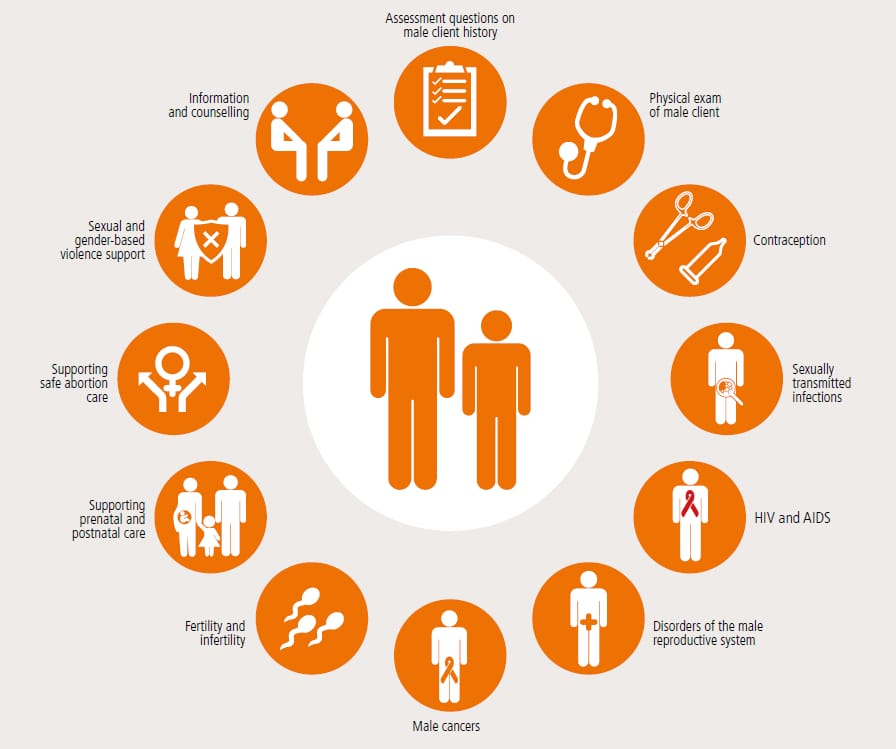
Reproductive Health

Total well being in all aspects of the reproduction such as physically mentally and emotionally is called Reproductive health.

All the reproductive organs should be healthy with normal function.

Major problems associated with reproductive health

Overpopulation

  • Overpopulation causes a scarcity of every basic need.
  • It affect the well-being of reproductive health also.
  • To overcome the problem of overpopulation India started family planning program in 1951.
  • Later it was changed to reproductive and Child Health Care program in 1997.
  • A rapid decline in death rate, maternal mortality rate and infant mortality rate leads to overpopulation.

Small family, happy family

Steps to control population explosion

  • People should be educated about the advantages of smaller family.
  • Raising the marriageable age of male and female is an effective way to control the population.
  • Couples should be motivated to family planning by adopting birth control measures.

Step under reproductive and Child Health Care program

  • Increase in awareness about disease related to reproductive system example – sexual transmitted disease (STDs).
  • Increase in awareness through the audio visual media.
  • Increase in awareness about different contraceptive methods.
  • Increase awareness about sex education.

Female foeticide

  • Female foeticide can affect reproductive and sexual health of a Woman.
  • Due to the use of amniocentesis cases of female foeticide increases.
  • Amniocentesis is the technique in which amniotic fluid is studied for any type of enzyme disorder, chromosomal disorder or other bio-chemical disorder.
  • Amniocentesis method is misused to know the sex of an Unborn baby.

Sex education

  • Due to lack of education, people are not concerned about safe and hygienic sexual practice.
  • Introduction of the education in school and colleges its another step to provide right information to the youth.
  • Sex education can save the young youth people from myths and misconceptions about sex related issues.
  • Should provide knowledge about birth control methods and care of mother and child.

Our health is in our own hand…

Sexually transmitted disease

Chlamydiasis

  • Caused by Gram Negative bacteria Chlamydia trachomatis.
  • Causes urethritis which result in painful urination and pus discharge.
  • In male, it causes infertility by causing oligospermia.
  • It increases the chance of ectopic pregnancy.
  • Treatment
    • Treated by antibiotics.

Gonorrhea

  • Causes by negative bacteria Neisseria Gonorrhea.
  • Causes inflammation of reproductive tract, urinary tract infection, and urethritis.
  • Treatment
    • Newly born child is given 1% AGNO3 dose to prevent eye. infection

Genital herpes

  • Causes by herpes simplex virus
  • Causes painful blisters
    • In male – glans penis and foreskin
    • In female – external genitalia
  • There is no proper treatment
  • Treatment is only to extend life.

Genital warts

  • Caused by human papiloma virus.
  • Causes Cancer of different organs such as-
    • cervical cancer
    • penile cancer
    • vaginal cancer
    • vulvar cancer
    • anal cancer
  • Treatment
    • Alpha interferon
    • cryotherapy
    • electrocautery

It is very important to provide information to the couple or who are in marriageable age group about birth control methods, care of pregnant women, important of breastfeeding, equality to the gender and equal opportunity to the male and female child, reproductive tract infections etc.

The education of reproductive health should be provided to all

MAGIC IN A CUP OF TEA!!!

Every morning won’t be complete without a cup tea right? Many people can’t do their work without a cup pf tea. Tea gives us refreshness and make us active. Though many like coffee, there are people who love tea too. The reason for me to talk about tea is nothing but today’s topic revolves around tea. Let me tell you an essay written by Eric Arthur Blair about a cup of tea.

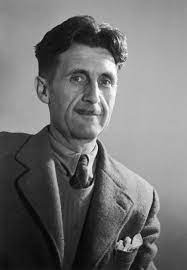
Eric Arthur Blair, known by his pename George Orwell, was an English Novelist, journalist and a critic. He opposed totalitarianism and supported democratic socialism. He is best known for the Allegorical novella ‘Animal farm” and the dystopian novel “Nineteen Eighty Four”. He wrote an essay about ‘A nice cup of tea’ and it was published in London Evening Standards in 1946. It is about the discussion of the art of making tea. He states ten rules to be followed while making tea. Let me tell you about his essay.

Eric Arthur Blair (George Orwell)

The author said that there are no cookery books that has the preparation of tea as a recepie. Countries like Eire, NewZealand and Australia which has tea as a part of civilization. He says that Chinese tea has virtues but there is no much stimulation in it. So the author prefers Indian or Ceylonese tea.

  • The first rule is that one should prefer Indian or Ceylonese tea. One does not feel wiser or more optimistic after drinking it. ‘A nice cup of tea’ literally means Indian tea.
  • Second rule is that tea should be made in small quantities in a tea pot. The teapot should be made of China or earthenware. Silver and birtannia ware tea pots produce inferior tea and enamel parts are worse. In the army, the tea is made in a big cauldron, tastes of grease and whitewash.
  • Thirdly, the pot should be warmed beforehand rather than placing it with water in it.
  • Fourthly, the tea should be strong. He states that one strong cup of tea is better than twenty weak ones. All tea lovers not only love a strong tea but like it a little longer with each year that passes.
  • Fifthly, the tea should be put straight into the pot. Don’t use strainers or muslin bags to imprison the tea. One can swallow tea-leaves in considerable quantities without ill effect and if the tea is not loose in the pot it never infuses properly.
  • Sixthly, one should take teapot to the kettle and no other way about. The water should be boiling at the time, one should keep it on the flame while pouring it.
  • Seventhly, after making the tea, one should stir it, or better give it a good shake allowing the leaves to settle.
  • Eighthly, one should drink it out in a cylindrical type of cup rather than a shallow type of cup. The shallow cup will have the tea half cold before one starts, drinking it.
  • Ninthly, one should pour the cream off the milk before using it for tea. Milk with cream gives a sickly taste.
  • Tenthly, one should pour tea into the cup first and then add milk. By pouring the tea first, one can regulate the amount of milk to be added to the tea. He also says that one should drink tea without adding sugar. Adding sugar, destroys the taste of the tea. He also asks the question to the tea lovers, How can you call yourself a tea lover if you destroy the flavour of your tea by adding sugar into it? He also says that adding sugar is similar to drinking a hot water.

The points said by him are quite controversiable. But try to drink a cup of tea without sugar for a fortnight, and you will never ruin your tea by adding sugar to it. Think about yourself guys. This essay is quite interesting. I like this essay and how about you guys?

Read more;