Cultural history brings to life a past time and place. In this search, cultural historians study beliefs and ideas, much as intellectual historians do. … These are reflected in the products of deliberately artistic culture, but also include the objects and experiences of everyday life, such as clothing or cuisine.
The society went through number of shifts in attitude and behavior over the past 80 years and with all these shifts and transitions, the definitions, meanings, lifestyle etc. of people and the life events have also changes. There is change in the beliefs of the people and the meaning of marriage is also redefined and beliefs relating to marriage have also changed significantly. Marriage requires lifelong commitment and is dependent on an individuals fulfillment and satisfaction. With all these shifting’s, the stigma related with divorce has also been eliminated.
With the help of qualitative and quantitative studies it had been seen that there are number of reasons for divorce and some of the major reasons for divorce are lack of commitment, infidelity, and conflict/ arguing. And the most common final straw is domestic violence, infidelity and substance use. In recent decades, there is an increase in number of divorces. The increasing number of divorce is related to various social aspects.
LACK OF PROPER COMMUNICATIONS : Communication is very important when we’re interacting with someone and bad communication can have many impacts on a marriage. It is important to clarify each other’s meanings and concerns, otherwise, it will lead into suspicion, mistrust and arguments and many times it can affect the marriage severely. Arguments in any relationship is not a bad thing and can have healthy results but they can have bad impacts due to lack of communication.
LACK OF COMMITMENT : According to various studies, the major reason behind divorces is the lack of commitment. The commitment gradually erodes until there was not enough commitment for sustaining the relationship and also due to negative events such as infidelity.
ABUSE : When there is abuse in a marriage or in a family then divorce is the best ending and result possible. In some cases it is the husband. While there are some spouses who are able to end and overcome abuse and sometimes with the help of involvement of in laws and elders, the issues can be solved. But everything depends on the attitude and mindset of the person in relationship.
INFIDELITY : Infidelity is considered as a critical turning point in a destroying a relationship and majority of couples end their relationship if they are cheated and due to infidelity. In some cases it is also seen that couples overcome this challenge and find strength to stay together.
ADDICTIONS : Addictions can be in many forms. It can be in the form of alcohol, gambling etc. In many cases it was found that the addicted partner can recover from it and the marriage can be continued but if there is no change and recovery from addictions then it is best for the spouse and children to separate and see if progress is possible. Depending on the circumstance, it can be decided what to do and when to do.
WOMEN’S INDEPENDENCE : Women have become more independent over these years and they are no more dependent on anyone and are no more mere housewives. Women have now become financially, socially, physically and mentally independent and this affects the old aged mentality of many people who believed that women have only one function to play that is nurturing the family. Besides so much advancements, there are many people who have still been hesitant to see women’s progress. And there men who cannot see the progress of women. There are ego clashes which cause dissatisfaction in marriage and lead to divorce.
‘Life is a carnival. You wait in long lines to enjoy a short ride’.
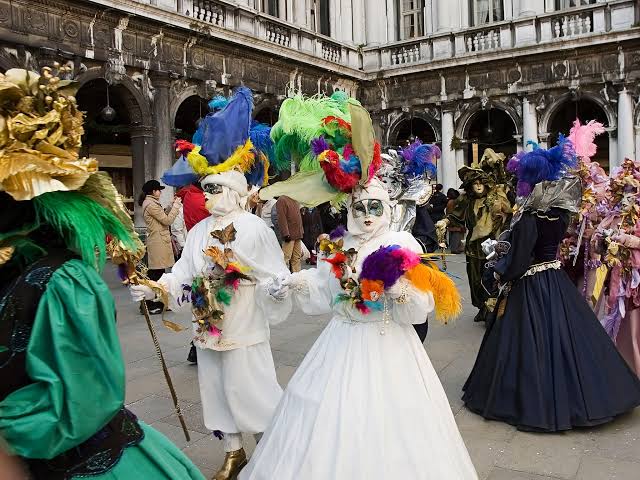
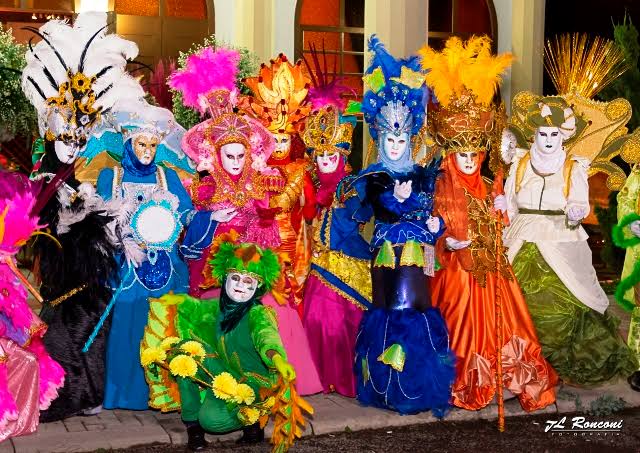
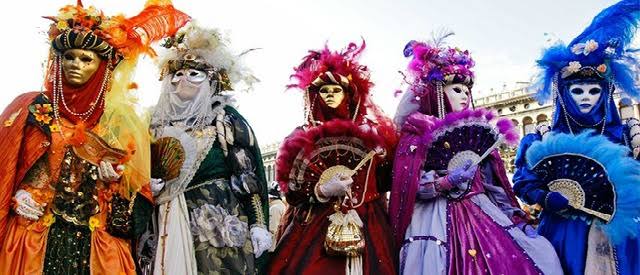
Colors, celebrations, ferry wheels, masks, costumes, merriments, public parades… All these words can be connected with the title of this article. The continuity of traditions is present even now in the city of canals. So, Carnival dye Venezia is one of the popular carnival around the world and the charming characteristic of the city. This carnival also attracts the tourists who visits there with its sumptuous costumes and masks parade. Wearing mask is followed as a traditional one, as it also get to mask the people’s class and status and it also makes fun of aristocracy. Having such carnival creates an enchanting atmosphere with acrobats, jugglers and raffish performances in private cafe and houses.
The carnival takes place in February. It starts before two weeks; prior to the ash wednesday and ends on shrove Thursday. The traces from the official documents of such carnivals are noted before 1094 A.D. as the celebrations that took place before lent. However this tradition was introduced by the act of the senate of the republic of Venice in 1296 A.D. and this has become internationally famous and prestigious during 18th century. But at the end of the century, with French conquest of the Republic 1st in the Austrian occupation and later; the tradition of masks was forbidden and the festivities got survived only in some island of Lagoon. This gradually came back in 19th century and the tradition was restored in 1979, when the Italian government has decided to bring back the history and the culture of Venice.
People would mask themselves as historical characters such as Casanova who had indulged in Venice with wild parties and love affairs and characters tend to interpret comic adventures. Carnival lasts for a couple of weeks and the most important day is last Thursday. St. Mark’s square is found to be the centre of all happenings. A wooden stage would be set around there; and during the last Sunday and last Tuesday, the award will be presented to the best dressed and masked artisans. Every year a theme would be setup and the events would be presented according to it. The theme of art and tradition was followed in the year 2016.
The characters would mask themselves as traditional Venetian artisans. For instance ‘Bata’ is a 17th century character and the masking involves the wearing of white mask under black hat and black cloak. ‘Merrida muda‘ is represented with a dark velvet mask and is often weared by women. Thus the tradition of mask, colour and celebrations tends to attract the tourists. Venice becomes the manufacturer of masks and the parade of traditional 18th century style masks.
Postponed by a year due to the pandemic, the Tokyo Olympics is now less than a month away. Last week, the Union Sports Minister Kiren Rijiju urged the people to extend their support to India’s Olympic-bound athletes, the same way they back India’s cricketers. However, India’s abysmal performances at the Olympics is in striking contrast to India’s immense success at cricket. The model of sports governance and financial irregularities are often blamed for the lack of competitive edge in sports other than cricket. So, the most obvious question that comes to our mind is, how much does India invest in the Olympics?
Money allocated for Sports
In the 2020-21 annual budget, the Government of India allocated Rs 2826.92 crore for sports, which meant an increase of mere ₹ 50 crore from the revised estimates of the financial year 2019-20. The Modi government’s flagship sports programme ‘Khelo India’ received a substantial hike of ₹ 312.42 crore and was allocated ₹ 890.42 crore compared to ₹578 crore in 2019-20. On the other hand, the National Sports Development Fund saw a reduction of ₹ 27.15 crore from ₹77.15 crore in 2019-20 to ₹ 50 crore in 2020-21. National Sports Federations saw the highest decrease after Finance Minister allocated ₹ 245 crore, ₹ 55 crore less than the previous financial year, according to The Wire. Even the budget for meritorious sportspersons saw a 40% reduction from the last financial year. It is important to note that the 2020-21 annual budget was presented in January 2020, when the government had no idea of the coming pandemic. It was also supposed to be the year of the Tokyo Olympics.
Target Olympic Podium Scheme
While these are the broad schemes under which Indian sportspersons are funded, the Target Olympic Podium Scheme (TOPS) provides financial assistance to potential Olympic medal winners. Launched in 2014, TOPS is the flagship programme of the Sports Ministry of India. The top-up funding scheme considers the performance of Indian athletes in the past three years. They are provided with personal coaches and other staff fees, cost of travel during competitions, purchase of equipment, and pocket allowance.
Looking Back At The Last Olympics
In the 2016 Rio Olympic, India spent ₹ 36.85 crore under TOPS, as per Financial Express. Nearly half of that amount was spent on shooting, which was India’s most successful Olympic sport in the previous three games. Shooting is also very expensive, which requires importing equipment from other countries. But shooting failed to bring any medal. Athletics received the second-highest funding of ₹ 7.80 crore in 2016, but India failed to make a mark in the sport. Unfortunately, out of the ₹ 36.85 crore, ₹30.49 crore had gone to disciplines that fell short of goals. Only 1.66 per cent of the total TOPS fund went to the fields that brought India two medals – PV Sindhu in Badminton and Sakshi Malik in wrestling.
Comparison With Other Countries
The United Kingdom allocated close to Rs 9000 crore on sports infrastructure and training in the annual sports budget, whereas India spent only one-third of the UK, Rs 3,200 crore, on youth affairs and sports, before 2016. The UK won 67 medals against India’s two at the Rio Games 2016. Abhinav Bindra had also tweeted back in 2016 that a medal cost UK 5.5 million pounds, and that is the kind of investment India needs to make. Otherwise, we cannot expect much. In the USA, a large number of athletes are privately funded. Individual athletes had started their own funding portal for donations from the general public. Therefore, only 10% of the US Olympic Committee’s finance was spent on athletes in Rio 2016, and the USA finished first. China, on the other hand, is known for its aggressive state-sponsored promotion of sports.
Private Investment In India
Before the 2016 Olympics, Indian Olympic Association (IOA) received donations from Reliance Jio, Amul, Tata Salt, Edelweiss Financial Services, Herbalife, Li Ning, and SBJ. Sakshi Malik had also thanked JSW Sport, a foundation funded by the OP Jindal group, after becoming India’s first medal winner in Rio Games, as reported by Hindustan Times.
However, unlike NSDF, where the contributions and sponsorships are open and documented, private funding to individual athletes is not. And most recently, the JSW Group has come on board to be the official sponsor of Team India in the Tokyo Olympics and has agreed to pledge sponsorship support of ₹ 1 crore to IOA. In 2018, the Sports Ministry earmarked ₹ 100 crore for funding of the athletes for the preparation of Tokyo Olympics 2020, which will take place this year. While the number of medals won cannot be equated to the investments made, since medals are not the only measure of success, India nonetheless needs to invest more and put in a new model of sports governance in action. A
Our environment is degrading day by day. India with its growing population is also keeping up with the waste generation.
Nowadays pollution is everywhere whether its air pollution, water pollution, land pollution, noise pollution, radioactive pollution and the pollution from E waste what not?
Biomedical Waste( BMW) is any waste produced during the diagnosis treatment or immunization of human or Animal Research activities retaining threat or in the production the testing of biological or in health camps.
Let the waste of the ‘sicks’, not ruin the life of the ‘healthy’
Common generator of Biomedical wastes are :-
Hospital
Emergency Medical Services
Medicinal Research Laboratories
offices of physician , dentist, veterinarians
home Health Care
funeral homes
From WHO stats 2000,the improper treatment of medical waste( primary use of infected needles and syringes) caused 21 million hepatitis B infection and 2, 60, 000 HIV infections worldwide.
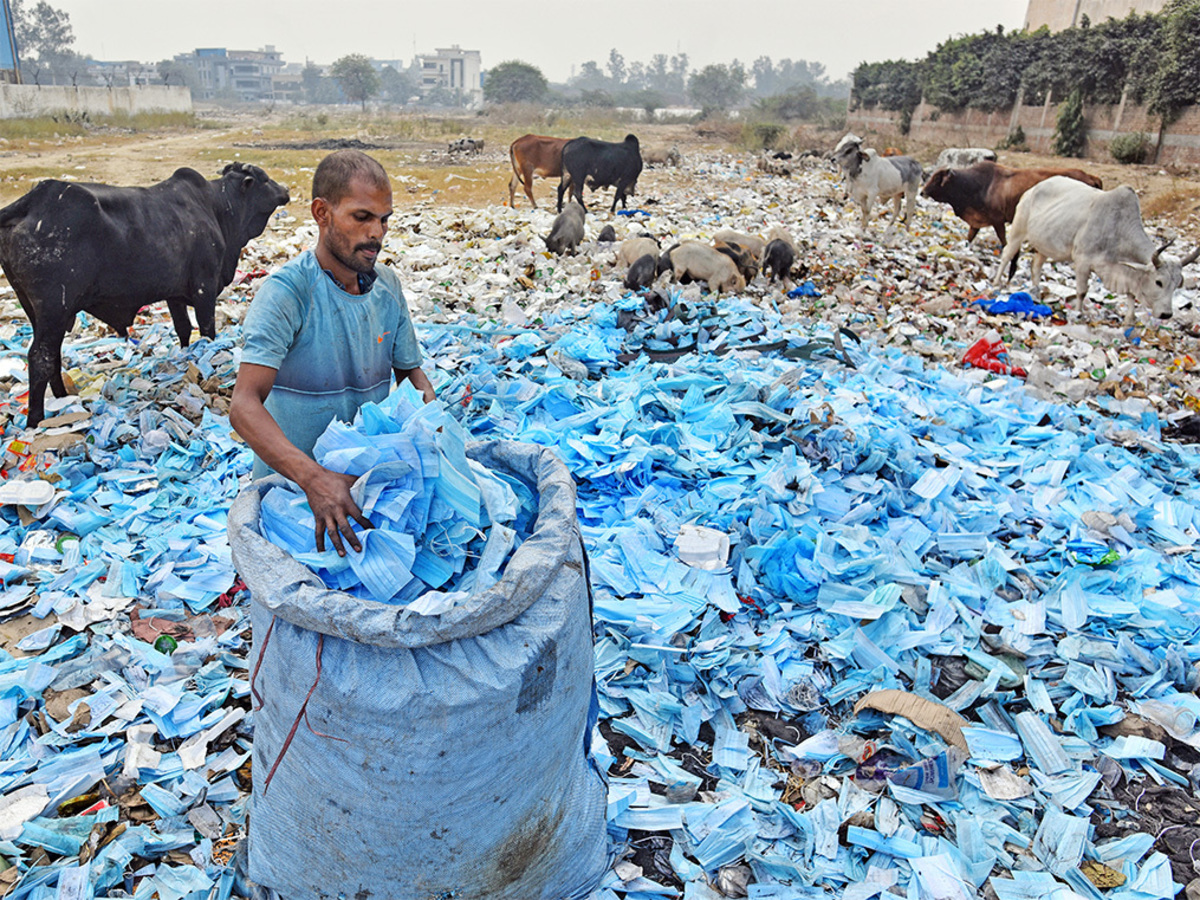
During this pandemic situation, we have witnesses another huge list of Biomedical Waste generation in India. India generated over 18000 tons of covid-19 related biomedical waste in starting 4 months of this pandemic. This includes personal protective equipment (PPE), gloves, face mask, head cover, plastic coverall, hezmet suit and syringes among others.
Biomedical Waste during pandemic
Types of Biomedical Waste
Infectious waste
Suspected of containing pathogen in a sufficiently large quantity or concentration to result in disease in susceptible host.
Cultures and stock of infectious Agent from laboratory.
Waste from operation and autopsies on patient with infectious disease.
Waste having come into contact with infected hemodialysis patient.
Pathological waste
Infectious material containing dead tissue may conceal specially dangerous and communicable infectious Agent.
Include – blood, body fluid, tissues, organs, body parts, human foetus etc.
Subcategory of pathological waste is Anatomical waste.
Consist of identifiable human or animal body parts healthy or otherwise.
Radioactive waste
Colouring code of Biomedical Waste
Waste generated during the different application of radioisotopes in biological research on medicine.
May contain infectious biological components from Anatomical, research or clinical sources.
By product of various nuclear Technology process.
Include-
Nuclear medicine
nuclear research
Nuclear power
Manufacturing
construction
Caol
Rare Earth mining
Nuclear weapon reprocessing
Pharmaceutical waste
Contaminated or expired drugs and vaccine as well as antibiotics and pills.
Result from many activities and location in health care facilities.
Small quantities at households can often be thrown away in the municipal waste stream.
But large quantities kept at pharmacies distribution Centre, Hospital etc. be managed to minimise the risk of release or to exposure to the public.
Genotoxic waste
Waste from drugs that are used in radiotherapy and units.
One of the type of hospital waste that are extremely dangerous and may cause cell mutation or cancer.
Cytotoxic drugs are main components.
Include –
Urine
Faeces
Vomit treated with Chemicals or cytotoxic drug.
Sharps
Object that are Sharp enough to cut or puncture the skin.
Transmit infections directly into the bloodstream.
Generally treated as highly hazardous medical waste regardless of whether they are contaminated or not.
Includes –
knife
Blades
Infusion set
Needles
Broken Glass
Nails
Scalpel
Chemical waste
Contain radioactive element poses particularly difficult problem of disposal.
Includes –
Heavy metal from Medical appliance
Disinfectant
Solvent
Difficulty in disposal are partly technical and partly political
The radioactive constituent that find their way into groundwater and surface water must be kept to exceedingly small amount for very long time.
Fear of mysterious effect of radiation, politician reluctant to consider disposal of radioactive waste in the area of their constituent.
Located in the east Khasi hills 90 kilometers away from Shillong, in the state of meghalaya is this small village with around 600 inhabitants , which was acclaimed to be the cleanest village in India in 2005. In 2003, it was also acclaimed as the cleanest village in Asia. Known as “God’s own garden” , this small village has already made a big impact on the world by showing the world how the following of all the rules and living in harmony with the nature can help in making this world a beautiful place to co-exist.
How did Mawlynnong became the cleanest village
Back in 1887 when India was still under the British rule, Mawlynnong suffered from a devastating plague which the villagers believed to be the wrath of evil witches and didn’t knew what to do. According to history, Welsh Christian missionaries from Bangladesh were sent to help the people recover from the plague there. The missionnaries took care of the people and started to educate them. They also told them that the plague was not the result of wrath of evil witches, rather it was extreme uncleannliness in the village which caused that plague. The villagers then started to clean their houses as well as every nook and corner of the village . The tradition continues till date. Interestingly, villagers link the tradition of cleanliness to Christianity. They say it is the missionaries that changed their lives and taught them ways to reach God through cleanliness and since then they follow the religion of Christianity. This is the true model of how the superstitions if used positively can bring a large impact.
The villagers also decided to have drainpipes to efficiently remove the filth from their houses and now every single house has a proper and efficient drainage system.
The streets there have beautifully carved bamboo dustbins outside every house and in every public place. The villagers turn the wet compost from the domestic use into manure which they use to grow the vegetables and fruits. The village is a model of the adequate use of every resource available and the best example of recycle and reuse.
Other highlights of this wonderful village
Rain water harvesting is another feature of the village. When it rains, which is a verycommon thing in the state of Meghalaya people collect rainwater even in bottles. The base of the bottle is cut and the inverted bottle is then hanged at the place where it can capture rain drops. The mouth of the bottle is attached to a pipe which is then connected to the washroom and is used in toliets and to clean the floor.
Proper sanitization is another prominent feature here where every house has proper toilets and even the public toilets are healthily maintained.
Also, the village has a 100% literacy rate. Nelson Mandela once rightly said that EDUCATION IS THE ONLY WEAPON WHICH CAN BE USED TO CHANGE THE WORLD. Mawlynnong being the best example of this proverbial fact.
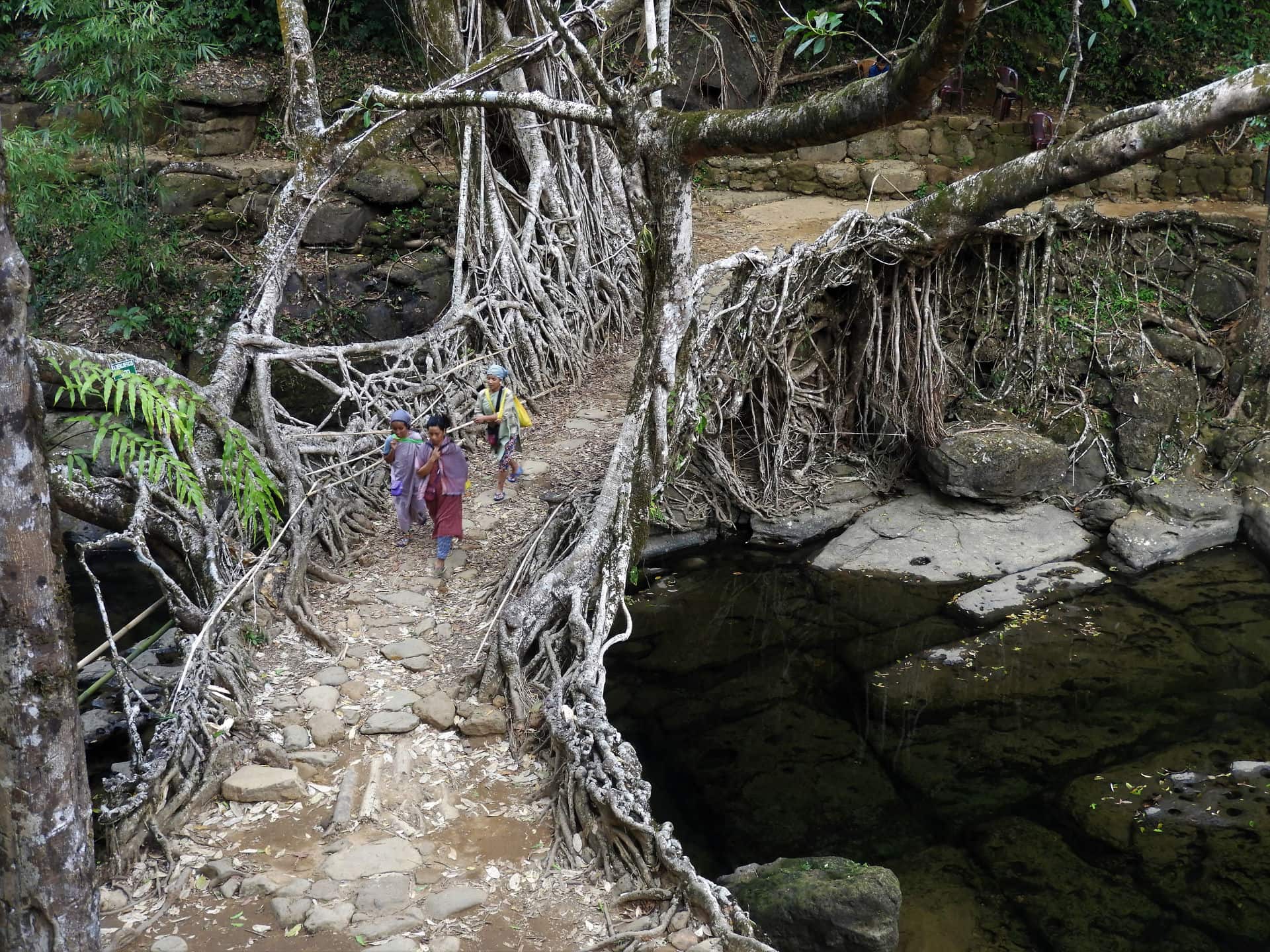
Last but not the least, The living root bridges are the classic feature of the place which also attracts a large number of tourists every year from across the globe. At a time , when humans talk about science and innovation here is an extra ordinary example of bio engineering made by humans in joint partnership with the nature. This man made root bridge was originally constructed by the villagers to cross the overflowing stream during monsoon by intertwining the thick roots of a variety of rubber tree (Ficus elastica), grown on the other side of the stream. The intertwined roots were then kept in a position over the stream such that it can be crossed. The roots were then covered by large rocks and mud to complete the path. Over the years , as the roots grew the bridge became stronger. Each day when any villager spot a new root merging , they immediately join it with the bridge and hence it continued to become strong and stay still bearing the heavy rains of the North Eastern Monsoon.
To see the bridge, one has to take a simple downward trek where the entry fee of Rs. 10 is taken from each visitor to see the bridge which is used for the village development.
How it manages cleanliness even today
Every day at a designated time no matter what the weather is , an appointed set of sweepers come and clean the nook and corner of the village which takes them around an hour. It is the dedication of the people and the fear that if they violate cleanliness even for a day, curse will fall upon them, is the thing which drives them to continuously strive hard to continue with the old age tradition even today.
A place like Mawlynnong which attracts a large number of tourists each year , the cleanliness and the sanitization is hard to maintain but they do it. Plastic bags, smoking and littering is completely banned in the area. Any violators are bound to pay a mandatory hefty fine and sometimes also serve the prison sentence.
It won’t be wrong to say that MAWLYNNONG IS THE TRUE MODEL OF AN IDEAL BEAUTIFUL PLACE which inspires us in so many ways. It tells us that every effort counts .
There is no doubt that emotions play a very important role in the field of games and sports but it is also essential for a sportsperson to have enough control over emotions . If a sportsperson is unable to control his emotion during the competition , it can damage or ruin his sports career . If there is appropriate control over emotions, the emotional energy may be utilised into proper and constructive channels. A number of research studies have shown that we can control our emotions well before the provoking situation occurs. We can prepare ourselves ahead of time. We can take some physical actions , can learn new ways of thinking and understanding how emotions work . Emotions can be controlled up to a desired level by the following methods.
Control your breathing : For appropriate control over your emotions you should try to control your breathing whenever you note certain physiological changes such as dry mouth and elevated heart rate . Find a comfortable place. Take a normal breathe first , then start inhalation. Allow your chest to expand as you fill air into your lungs. Take six to ten deep breaths per minute . In this way, you can control your breathing which will ultimately control your emotions .
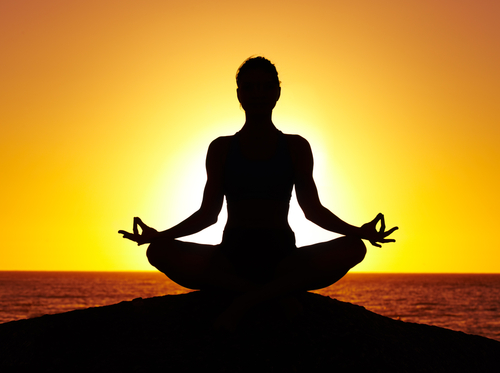
Meditation : Meditation can be used for controlling your emotions. It can be ideal for staying calm in between the rounds of competition . First of all, sit in a comfortable position . After that pick or select a short focus word that has significant meaning for you and that you associate with relaxation . The word may be relax , smooth , calm or easy, etc . Then close your eyes slowly. After that breathe slowly repeating the focus word. Be passive and avoid other thoughts which come into your mind . Continue this process for 10 to 15 times.
Repression: Repression means to avoid the undesirable emotions when these arise in an individual . However , there may be some problems in using this method because sometimes the undesirable emotions may enter into unconscious mind and later on these burst spontaneously with greater force.
Introspection: It may be applicable for educated individuals . They can introspect themselves in the stages of different emotions. As soon as they start introspection into themselves, emotions are usually vented out .
Redirection: Redirection means the change of direction in the display of emotions.
World heritages consist of all the heritage sites that were discovered around the world and the process of exploring and discovering never stops. Heritage is not only about discovering the monuments, civilizations etc but, it holds a special place from three perspective that is past, present, and future. Build in the past, heritage sites are of high value to study the history how people used to live, speciality of a civilization, discovery of unknown facts and so much more. At present research is done, the technology that we have today is advance that the scientist can easily study and preserve the rich heritage for many more years. In future, all the research and evidences the historic sites will turn ten times more valuable.
World heritage day
which is observed every year on 18th April , also known as world monuments and sites day, the purpose is to celebrate the rich heritage from around the world and create awareness about the same. As it is observed that many monuments and sites are need to be preserved from deterioration, we should not loose the heritage in the ongoing development process. Every year a theme is decided for World heritage day this year it was “Complex pasts: Diverse Future” .
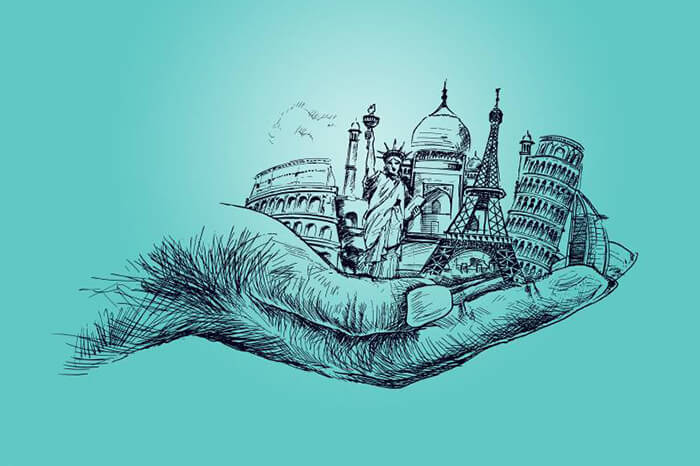
ICOMOS International Council on Monuments and sites is the main body who is also behind all the work that takes place. Pierro Gazallo is the founder of ICOMOS, he is known for working to restore and preserve heritage sites and monuments it was established in the year 1979. ICOMOS gave the suggestion to UNESCO (United National Education, Scientific and Cultural Organisation) which was approved in the 22nd general conference in 1983. India Some of the world heritage sites are Ajanta and Elora caves, western Ghats, Sundarbans national park, Nanda Devi, and valley of flowers, Chola temples etc. World Komodo national park (Indonesia), Lut desert (Iran), Meteora (Greece), town of Bamberg (Germany), Levuka Port town (Fiji), Angkor (Cambodia), Brasilia (Brazil), Rainforest of Atsinanana (Madagascar), Chitwan National Park (Nepal) etc.
Recently in news Liverpool lost its status of world heritage site, the reason was the massive construction that occurred around the place despite several warnings issued by UNESCO, the construction includes building complex, Moore Dock Stadium, and offices. The act of removal of a world heritage site is very rare and disgraceful for the country as they failed to protect a heritage site. The heritage sites and monuments are chosen after the recommendation of ICOMOS and IUCN (International Union of Conservation of Nature) for natural sites. However, UNESCO has laid down some criteria to declare a monument or site heritage which includes: • a place represents genius human creativity • A place that shows human interaction with nature and showcase culture. • A place that illustrates significant stages of human history. • A place that showcases earth’s history in any geographical form. • A place with an exceptional cultural feature or tradition. • A place that displays biological diversity and is valuable for conservation of nature or any species. • A place of human settlement that shows use of natural resources to study the life of people.
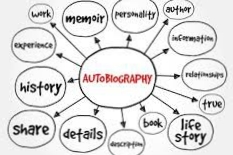
Write in an autobiography the author writes the story of his own life and achievements. It is the successful presentation of personality. It takes its origin in the common human heart to express once-on achievement in the form of writing. The writer may give a full account of his life in detail or he may give only a few anecdotes or events from his life.
The great drawback of an autobiography is that it can never be complete because it comes to an end before the author’s death. Doctor Johnson preferred autobiography to biography saying that every man’s life is best written by himself. The writer of his own life has the full knowledge of the truth through sometimes he made disguise or suppress it in his writings. From the psychological viewpoint also an autobiography is preferable because the writer knows what are the motives, hopes, and omissions that prompted him to decisive moments in his life. Thus while biography is the product of second-hand knowledge, autobiography is the product of the first-hand experience. R.L. Stevenson says, “There is no truer sort of writing than what is to be found in autobiographies, and certainly none more entertaining”.
An autobiography is a candid narration of events in the author’s life. It may take the form of a confession, apology, self-scrutiny, or a mere delightful account. When it is a mere account of facts without reference to the author’s inner conflicts and motives it is an objective autobiography. When an autobiography reveals the character and inner struggle of the writer and the present a searching analysis of his moods, motives, and fancies, it is subjective. St. Augustine’s confession’s, the earliest example of an autobiography, belongs to the subjective kind. So also Rousseau’s ‘Confessions’ written in the 18th century. Three other important autobiographies appeared in the 18th century. Those of David Hume, Edward Gibbon, and Benjamin Franklin.
Chief characteristic of an autobiography:
Truth should be the Hallmark of an autobiography. facts should not be perverted. A true picture of the writer’s personality should emerge from the autobiography. Gandhiji’s autobiography is the best example in this respect.
Courage and frankness are the essential virtues of a good writer of an autobiography. The writer should not be secretive and reluctant. Bertrand Russell’s three-volume autobiography is noted for these qualities.
The author of an autobiography should be objective in dealing with contemporary events and personalities. Autobiographies of Gibbon and Nehru are good examples of this kind.
The author should not be verbose in his description or narration.
Self-consciousness is the very essence of an autobiography. An autobiography should not aim at self-effacement as in the autobiography of T.E. Lawrence. Similarly, the author of an autobiography should not indulge in self-clarification.
The style should be interesting and even entertaining. A natural felicity of expression and flashes of humor and wit are essential attributes of an autobiography.
Some difficulties an autobiographer faces:
He is likely to forget the impressions and emotions connected with the events that happened in the distant past. Sometimes there may be embarrassing episodes he would like to hide or reveal only partially.
It is difficult for anyone to be entirely objective while dealing with contemporary persons and events that have affected his personal life and happiness.
An autobiographer is likely to omit the details of daily life that are common. This may lead to some falsification.
Way back in July 2004, around 30 women walked naked in front of the army quarters in Assam with the slogan, “Indian Army, Rape us.” The movement was in protest of the death of Thangjam Manorama who was brutal ly raped, mutilated and killed by certain members of the Indian army. The army has wide powers under the Armed Forces Special Powers Act (AFSPA), 1958 including search and seizure and arrest and custody. Women have been major victims of sexual offences under this draconian legislation, in parts of the North East and in Kashmir, in particular.
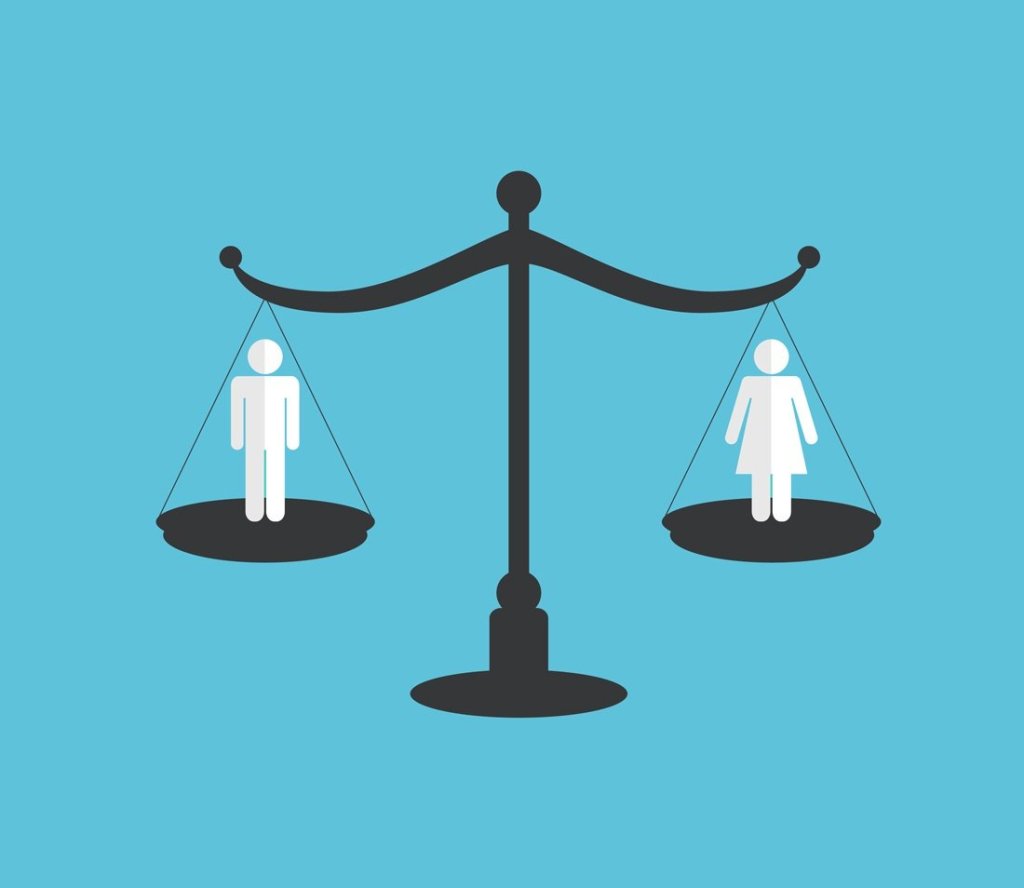
Rape was also often used to shut down voices trying to resist human rights abuses. Sexual offences against women continue in different parts of the country, in different forms, both outside and inside the home. Although the constitutional guarantee of equality stays intact, the reality of gender relations in India is extremely unequal.
It goes without saying that Indian society is deep patriarchal. Women are by birth automatically at a disadvantage simply because our society treats its women much worse than it treats its men. There are different expectations from men and women in terms of behavioural pattern, conduct, mannerisms and actions. Chimamanda Ngozi Adichie, a feminist writer from Nige ria puts it quite neatly, “We teach girls shame. Close your legs, cover yourself. We make them feel as though being born female, they’re already guilty of something. And so, girls grow up to be women who silence themselves. They grow up to be women who cannot say what they truly think. And they grow up- and this is the worst thing we do to girls-they grow up to be women who have turned pretence into an art form.” Adichie is surely right. She indicates a phenomenon that is generally identified as ‘gender stereotyping’.
Gender stereotyping essentially is society’s expectations and beliefs about the behavioural patterns, roles, activities, characteristics, qualities about men and women and sometimes, the third gender. It focuses on what masculine and feminine qualities are expected of men and women. Society decides the type of toys boys and girls should play with, the kind of clothes they should wear and the kind of hobbies they should have and perpetuates the same through habituation. The role played by socialisation, religion, media and often the law in encouraging stereo types is problematic. Even in educated families, the pressure on Indian women to get married at an early age is a reality. Everybody in a given family gets to have a say in the matter of a girl’s marriage, except probably the girl herself. Quite undisputedly, the independence and career options offered for an Indian female is much less compared to that of men.
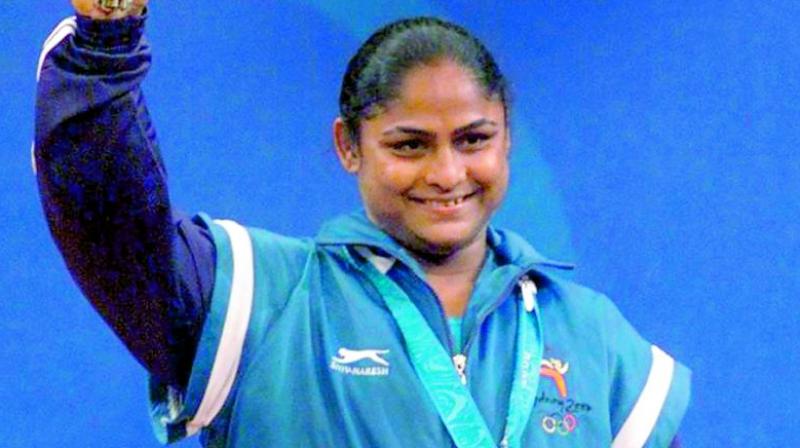
Karnam Malleswari is the first Indian woman to win a medal at the Olympics and first Indian woman weightlifter to win gold at the World Championships.
Saikhom Mirabai Chanu made India proud by getting India’s first medal at Tokyo Olympics 2021. She won silver medal in weightlifting am being the first Indian lifter to do so. But, most of us realized now about first Indian woman to win an Olympic medal in 2000 (Sydney). She won Bronze medal in weightlifting in 2000. Let us remember Honorable Karnam Malleswari.
Karnam Malleswari :-
She was born on 1 June 1975, Voosavanipeta near Amadalavalasa, a hamlet in Andhra Pradesh. Her father Karnam Manohar was a college-level football player. She has four sisters. They are all well trained in weightlifting. It was her mother Shyamala, who encouraged and became her strength till the end Karnam Malleswari to pursue a dream. Her career started when she was 12. She was trained under coach Neelamshetty Appanna.
I feel proud to have created this pathway for our girls and to see them winning Olympic medals. Some even tell me today, ‘Ma’am you started it all’, so I feel delighted to have changed the perception, and it still remains my endeavor.
But Neelamshetty Appanna turned her away for being too weak and thin. Her mom encouraged her to keep going by training hard and proving herself that she can be whoever she wants to be. She was then noticed by Olympic and world champion Leonid Taranenko at a national camp ahead of 1990 Asian camp as a visitor since her sister Krishna Kumari, was selected for the camp. After testing her, he recommend her to the Bangalore Sports Institute.
It was her time to start shining, she broke 9 records in junior national weightlifting championships in 1990; which was her first championship.
Achievements:
Silver in her maiden senior national championship in 1990.
Bronze in her first weightlifting World Championships in 1993.
Gold in her next weightlifting World Championships in 1994, making her the first Indian woman weightlifter to win gold at the World Championships.
Silver at the 1994 Asian Games.
Malleswari won the world title in the 54 kg division in 1994 and 1995. Gold in World Championships in 1995.
Bronze in the World Championships in 1996. – Four consecutive medals in World Championships-
Silver at the 1998 Asian Games.
Bronze in the Olympics Game at Sydney in 2000.
In 1997, she married a fellow weightlifter Rajesh Tyagi, and in 2001 gave birth to a son. She took a maternity leave in 2001. She went to The Olympics at Athens in 2004 but due to severe back injury, she couldn’t give her best. She had to retire after that.
What is she doing now?
She works as the Chief General Manager (General Administration) of Food Corporation of India; Yamunanagar, Haryana.
Awards:
Honored with Arujna Award in 1994.
Rajiv Gandhi Khel Ratna in 1999.
Padma Shri Award in 1999.
NEWS:
On International Olympic Day 2021, the Delhi government appointed India’s first woman Olympic medal winner Karnam Malleshwari as the first vice-chancellor of Delhi Sports University.
With the rapid growth in the usage of social networks worldwide, uploading and sharing of generated content, both text and visual, has become increasingly prevalent.
Today, social media refers to a wide range of Web sites and Internet-based services that allow users to create content and interact with other users. Language is an evolving thing. It’s naive to think that the language of social media isn’t affecting the way we use English in day-to-day life. It’s more appropriate to consider just how much of an effect it’s having on the way we communicate. A whole host of words originating from social media and the wider Internet have become so commonplace that they’ve now slipped into popular usage, and we don’t even realize it.
Just a few interesting words that have their origins in technology are blogosphere (the collective word for personal websites called blogs), troll (someone who creates conflict online by starting arguments or upsetting people)
Modern companies (like Adidas, mad over marketing or even celebrities) use their presence on social media platforms for diverse business goals. Social media present a new and unique way for direct interaction between the company and different users, right down to the customer as well. While most social media platforms offer some way to measure user engagement, many focus on customer conversion, rather than content.
The emphasis on linguistics and user-generated keywords on social sites
Multilingualism:
As of now, and according to the data of http://www.internetworldstats.com, the Internet has eight-hundred fifty million English-speaking users out of one billion five hundred million total users. This means that the market for the English language is more or less than one-third of the total market. All this means that there is an enormous body of information being constantly generated which is also being constantly lost behind language usage this proves language diversity in Internet ecology is of paramount importance.
We consider linguistic features in two classes: variations of English, including spelling, and differences in emotive and personal language, including pronouns, interrogatives, and exclamations but emotive language, and personal informal language are used more frequently than the formal tone.
Variation in Lexical Conventions Tweets in the social chats are more likely to contain apostrophes commas and full stop (such as “can’t”), with missing apostrophes (such as “cant” and “didn’t”) or abbreviations (e.g., “u” for “you” or “k” for “ok”)
Emotive and Personal Language The two collections also show striking differences in tone and the degree to which posts describe personal experiences or opinions. The social community collection has more instances of exclamations and questions, and more non-standard strings of exclamation and question marks. The abundance of exclamations suggests the messages are more likely to be strongly emotive.
Emotions of one kind are also suggested by the number of messages containing any of several dozen grammatically incorrect or swear words or and those all in upper case. Pronouns too are much more prominent in tweets that include the first-person pronoun, and sometimes include the abundance of “ and ” as a word is partly due because we treated “&” as a word boundary.
The infrequent use of the second person pronoun indicates people are not as involved in discussions. Users in this collection also make much greater use of Twitter hashtags to label their posts. We believe this points to more careful use of the posts and a curatorial intent, where hashtags serve to direct a tweet or post to the right audience when the two individuals do not know each other.
There are also instances of online brands becoming so powerful that words have crept into the English language based on them. ‘Google’ is the world’s leading search engine and it has become so universal in its usage that the phrase ‘Google it’ has virtually replaced the phrase ‘search for it’ in common speech. There are examples of this lifted directly from social media too; ‘tweet it’ refers to writing a message using Twitter, but has essentially come to mean ‘share it’
Colors are also being widely used to indicate the source of topics: Topics triggered by the page owners on Instagram or Twitter are highlighted through a light blue color. All data is available in an all-time overview.
To summarise, not all social media language is the same. In our collection, talk in the science or work arena is more formal, with more care taken to address an audience, and more concerned with passing on non-personal information, while the tweets or posts in the social environment are more on a personal note, expressing emotions, describing experiences and asking more questions. This mirrors what could be the equivalent genres in other media: a conversation, on the one hand, scientific writing on the other
The not so scientific techniques of language phrasing on social sites
Some of these tools, such as multi-party chats, discussion forums, blogs, and online reviews, have been a focus of “natural language processing (NLP) research for quite some time now. But within the last decade, NLP work has expanded rapidly to cover an immense variety of new social media content—microblogs such as Twitter, social networks such as Facebook, comments on news articles, captions on user-contributed images such as on Instagram, and forums dedicated to specialized topics and needs (e.g., health and online education)”. Simultaneously, many other research communities are carrying out work using social media data information science, social science, psychology, and linguistics.
Today, a large number of businesses are also centered on or benefit from, analytics and language usage performed on social media. Given these vast research and commercial interests in the social media domain, we are at a time where we should seek to clearly understand what role language has in the field of social media analysis, both in terms of the key and interesting language questions, as well as contributions NLP had made to the research carried out in other fields.
Identifying patterns of usage:
People use the same language for different purposes; most of the time similar content or language used receives millions of views over a week or a course of few hours( likely because of the language which probably have been making the headlines) timing as well play a major role in deciding how fast that particular language or a keyword is being transferred across a particular location for example if there’s a news related to examination during the pandemic chances are the search engines related to that particular news topic will continue to be on the topmost chart among students on a wider range thus making these words ‘lockdown’, ‘online exams’, and covid, etc a specific headlines on Google or social media sites.
Social network and language impact on Cultural awareness
People using social media primarily collect cultural and language examinations through their own experiences and general mobility: by traveling, working, and studying. Nevertheless, they can also gain additional knowledge on languages, cultures, and cultural awareness through social media itself and through other collaborative virtual communities in which they participate.
From unfriend to selfies, social media is having an impact on language and cultural changes. As someone who writes about social media, I’m aware of not only how fast these online platforms change, but also of how they influence the language in which a person writes.
But how much can we trust different categories of social media, such as Instagram for example? The quality and certainty of available materials remain an open question. For that reason, Many researchers suggest the use of authorized materials already available over the Web and in different virtual communities, but not necessarily social media
Most social media users use social media tools for information gaining or cultural acknowledgment particularly through knowing the names of foods consumed by various people over the world, places or the type of clothes worn by people of different cultures and the everyday experiences of populations, (e.g, cottage cheese which is a generic term used around the world is known by a specific name in other world countries like Feta in Greece, Ricotta in Italy, and paneer in India so on )
Conclusion
What social media has done is enable us to communicate with a much larger number of people on a global scale in a way that we only really used to be able to do on a local level. It is a rich playground for experimenting, creating new words, and repurposing old ones; it also provides a platform for people who aren’t consumed by grammatical rules and syntax, giving the freedom to flout the usual maxims of conventional English Language and be innovative, creative and forward-thinking. Language is and always has been ever-evolving. Although the developments and trends we witness in language over time are significant, the foundation of the English language remains as strong and infallible as it always has been.
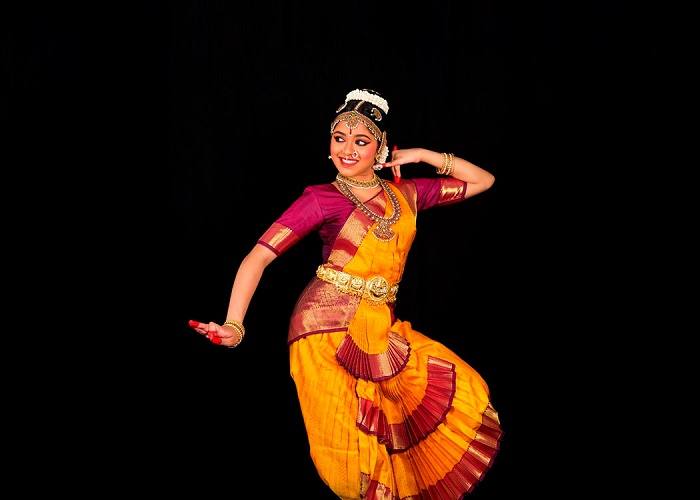
Bharatanatyam is an Indian classical dance that originated in the Hindu temples of Tamil Nadu and neighbouring areas. Let’s take a look at its history, costumes, and exponents.
Bharatanatyam, a pre-eminent Indian classical dance form presumably the oldest classical dance heritage of India is regarded as mother of many other Indian classical dance forms. Conventionally a solo dance performed only by women, it initiated in the Hindu temples of Tamil Nadu and eventually flourished in South India. Theoretical base of this form traces back to ‘Natya Shastra’, the ancient Sanskrit Hindu text on the performing arts. A form of illustrative anecdote of Hindu religious themes and spiritual ideas emoted by dancer with excellent footwork and impressive gestures its performance repertoire includes nrita, nritya and natya. Accompanists include a singer, music and particularly the guru who directs and conducts the performance. It also continues to inspire several art forms including paintings and sculptures starting from the spectacular 6th to 9th century CE temple sculptures.
History & Evolution
According to the Hindu tradition the name of the dance form was derived by joining two words, ‘Bharata’ and Natyam’ where ‘Natyam in Sanskrit means dance and ‘Bharata’ is a mnemonic comprising ‘bha’, ‘ra’ and ‘ta’ which respectively means ‘bhava’ that is emotion and feelings; ‘raga’ that is melody; and ‘tala’ that is rhythm. Thus, traditionally the word refers to a dance form where bhava, raga and tala are expressed. The theoretical base of this dance form, which is also referred as Sadir, trace back to ancient Indian theatrologist and musicologist, Bharata Muni’s Sanskrit Hindu text on the performing arts called ‘Natya Shastra’. The text’s first complete version was presumably completed between 200 BCE to 200 CE, however such timeframe also varies between 500 BCE and 500 CE. According to legends Lord Brahma revealed Bharatanatyam to the sage Bharata who then encoded this holy dance form in Natya Shastra. The text that consists of thousands of verses structured in different chapters divides dance in two specific forms,namely ‘nrita’ that is pure dance comprising of finesse of hand movements and gestures, and ‘nritya’ that is solo expressive dance that comprises of expressions. According to Russian scholar Natalia Lidova, ‘Natya Shastra’ elucidates several theories of Indian classical dances including that of Tandava dance, standing postures, basic steps, bhava, rasa, methods of acting and gestures.
One of the five great epics of Tamil Literature, ‘Silappatikaram’ (~2nd century CE) has a direct reference to this dance form. The Shiva temple of Kanchipuram that is decorated with carvings dating back to a period between 6th to 9th centuries CE manifests the development of this dance form by around the mid first millennium CE. Many ancient Hindu temples are embellished with sculptures of Lord Shiva in Bharatanatyam dance poses. The eastern gopuram of the 12th century Thillai Natarajar Temple, Chidambaram, of Tamil Nadu dedicated to Lord Shiva bears sculptures depicting 108 poses of Bharatanatyam, referred as karanas in ‘Natya Shastra’, that are intricately carved in small rectangular panels. Another notable sculpture can be seen in the Cave 1 of Karnataka’s Badami cave temples dating back to the 7th century where a 5 feet tall sculpture of Lord Shiva is depicted as Nataraja doing Tandava dance. The 18 arms of the Shiva sculpture expresses mudras or hand gestures that are part of Bharatanatyam.
Association with Devadasi Culture
Originating in Hindu temples of Tamil Nadu and nearby regions, Bharatanatyam soon prospered in other South Indian temples. According to some sources the Devadasi culture dating back to 300 BCE to 300 CE evolved under the auspices of the royals that saw the temple dancers called Devadasis, who were dedicated to serve the Lord as dasis or servants, performing the dance form. Eventually the Devadasi culture became an integral part of rituals in South Indian temples. Although ancient texts and sculptures indicate existence of such culture and presence of dancing girls as also exclusive quarters for women in temple compound, there is no concrete evidence either archaeological or text-based that can manifest the Devadasis as prostitutes or courtesans as accused by some colonial Indologists. After analysing evidences, Davesh Soneji, a historian on performance arts and an expert on Bharatanatyam, concluded that courtesan dancing phenomenon commenced during the Nayaka period of Tamil Nadu sometime around late 16th or 17th century.
Opposition & Ban During Colonial Rule
The 18th century saw emergence of rule of the East India Company followed by setting up of British colonial rule in the 19th century. Such developments saw decline of various classical dance forms which were subjected to contemptuous fun and discouragement including Bharatanatyam that through the 19th century remained exclusive to Hindu temples. Eventually social and economic conditions associated with Devadasi culture added with contempt and despicable attitude from the Christian missionaries and British officials, who held the Devadasis of South India and nautch girls of North India as harlots, disgraced such systems. Furthermore the Christian missionaries launched anti-dance movement in 1892 to stop such practice. The Madras Presidency under the British colonial government banned the custom of dancing in Hindu temples in 1910 and with this the age-old tradition of performing Bharatanatyam in Hindu temples also came to an end.
Revival
The Indian community disapproved such ban. The Tamilians were worried that such a rich and ancient custom of Hindu temple dancing was getting persecuted on the pretext of social reform. Many classical art revivalists like Indian lawyer, freedom-fighter, activist and classical artist E. Krishna Iyer questioned such discrimination. Iyer who became involved with the Bharatanatyam revival movement was incarcerated on charges of nationalism and imprisoned. During his prison term he convinced the political prisoners to advocate for this age-old classical dance form. Iyer founded the ‘Madras Music Academy’ and along with Indian theosophist, dancer and Bharatanatyam choreographer Rukmini Devi Arundale, he strived to save Bharatanatyam from dying out. Despite the fact that Hindu temple dances were being suppressed due to laws enforced by the colonial British government, many artists like American dancer Esther Sherman came from the West to learn Indian classical dance forms. She came to India in 1930 and not only learnt classical dances but also adopted the name Ragini Devi and became a part of the ancient dance arts revival movement. As the Indian freedom movement progressed steadily during the early 20th century, an effort to revive Indian culture and tradition seethed with excitement among Indians. Eminent Bharatanatyam dancers like Arundale and Balasaraswati expanded the dance form out of Hindu temples and established it as a mainstream dance form. Later the Tamil Hindu migrants revived this Hindu temple dancing custom in British Tamil temples during the late 20th century. Today this ancient classical dance form also includes technical performances as also non-religious and fusion based themes.
Repertoire
The repertoire of this performance art are categorized into three brackets namely ‘Nritta’, ‘Nritya’ and ‘Natya’ mentioned in ‘Natya Shastra’ and followed by all major Indian classical dance forms. ‘Nritta’ is a technical performance where the dancer presents pure Bharata Natyam movements emphasising on speed, form, pattern, range and rhythmic aspects without any form of enactment or interpretive aspect. In ‘Nritya’ the dancer communicates a story, spiritual themes, message or feelings through expressive gestures and slower body movements harmonised with musical notes. ‘Natyam’ is usually performed by a group or in some cases by a solo dancer who maintains certain body movements for certain characters of the play which is communicated through dance-acting. The dance form typically comprises of certain sections performed in sequence namely Alarippu, Jatiswaram, Shabdam, Varnam, Padam and Thillana.
Costumes
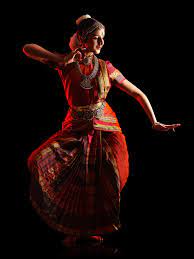
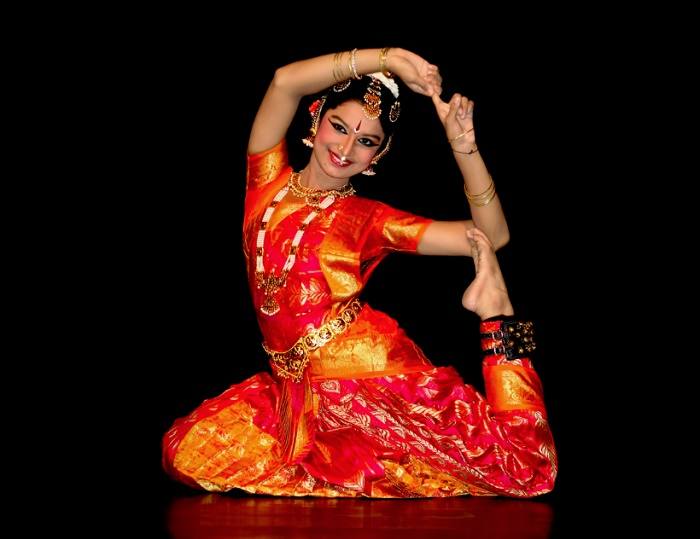
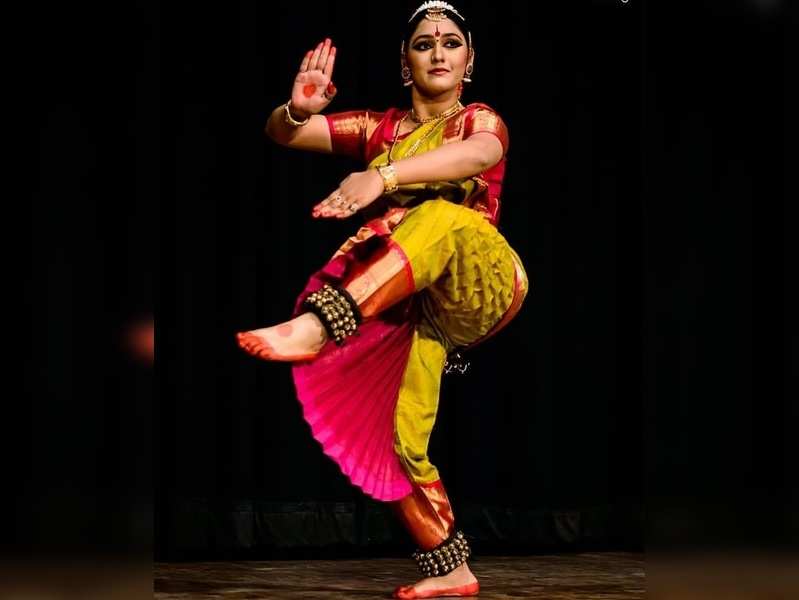
The style of dressing of a Bharatanatyam dancer is more or less similar to that of a Tamil Hindu bride. She wears a gorgeous tailor-made sari that consists of a cloth specially stitched in pleats that falls in the front from the waist and when the dancer performs spectacular footwork that include stretching or bending her knees, the cloth widens up like a hand fan. The sari worn in a special manner is well complimented with traditional jewellery that include the ones that adorn her head, nose, ear and neck and vivid face make-up specially highlighting her eyes so that audience can view her expressions properly. Her hair neatly plaited in conventional way is often beautified with flowers. A jewellery belt adorns her waist while musical anklets called ghunghru made of leather straps with small metallic bells attached to it are wrapped in her ankles. Her feet and fingers are often brightened with henna colour so as to highlight gestures of her hands.
Instruments & Music
The Bharatnatyam dancer is accompanied by a nattuvanar (or taladhari) that is a vocalist who generally conducts the whole performance, a part often executed by the guru. The person can also play the cymbals or any other instrument. The music associated with Bharatanatyam is in South India’s Carnatic style and instruments played comprise of cymbals, the flute, a long pipe horn called nagaswaram, a drum called mridangam and veena. The verses recited during performance are in Sanskrit, Tamil, Kannada and Telugu.
Famous Exponents
The four Nattuvanars namely Ponaiyah, Vadivelu, Sivanandam and Chinnaiya who are renowned as Tanjaore Bandhu and who thrived in the Durbar of Maratha ruler, Sarfoji-II from 1798 to 1832 shaped up the modern day Bharatanatyam. Meenakshi Sundaram Pillai, a dance guru from the village of Pandanallur was a noted exponent of Bharatanatyam who is predominantly known for his style referred as the Pandanallur school of Bharatanatyam. One of his students Rukmini Devi championed and performed the Pandanallur (Kalakshetra) style and also remained one of the leading proponents of the classical dance revival movement. Balasarswati who was regarded as child prodigy by Vidhwans and Pandits also joined hands in reviving the dance form. She was a virtuoso of the Thanjavur style of Bharatanatyam. Other imminent Bharatanatyam artists include Mrinalini Sarabhai, her daughter Mallika Sarabhai, Padma Subramanyam, Alarmel Valli, Yamini Krishnamurthy and Anita Ratnam among others.
To paraphrase a line from Ron Burgundy, the ocean is a big thing. Big enough for scientists to point out that the term “Earth” is a misnomer. Water may be a more accurate name for a world that is nearly 3/4 covered in water, with marine plants contributing a whopping 50 percent or more of the oxygen we breathe. With all of that stated, it’s past time (high tide?) for us to band together to save the resource that has been depleted.
The bad news is that human activity is wreaking havoc on the environment. The good news is that there are several things we can do to help stop (and even reverse!) those detrimental behaviors, which is why this is a message about hope and empowerment rather than doom and gloom.
Plastic pollution is destroying the ocean
A non-profit that works to protect the ocean Every year, 17.6 billion pounds of plastic is estimated to escape into the ocean from land-based sources, according to Oceana. Every 60 seconds, a garbage truck full of plastic is dumped into our waterways. The world’s most renowned (and largest) rubbish dump is located in the ocean.
The Great Pacific Garbage Patch covers 1.6 million square kilometres and contains 1.8 trillion bits of plastic in an estimated 80,000 metric tonne landfill. Plastic garbage in the ocean is believed to kill over one million sea animals each year, including sea turtles, sharks, and coral reef (yes, coral reef is an animal!).
Plastics in the ocean will surpass fish in the ocean (!?) by 2050, according to research, and 99 percent of seabirds will have plastics in their GI tract. Plastic pollution is not only destructive to the ocean; there is also evidence that it is harmful to humans.
Acidification in the ocean
Carbon dioxide emissions absorbed by the oceans over decades have changed the underlying chemistry of our ocean, resulting in an increase in acidity. Acidification causes small decreases in shell density in small creatures, which support entire ecosystems despite their small size.
As the world’s seas warm, species are moving in large numbers to new locations, posing new challenges or simply failing to develop as they should, while millions of people rely on fish as their primary source of nutrition. It’s also causing the Great Barrier Reef to perish. Coral reefs require all of the protection we can provide, given the disastrous effects of climate change.
Because it has the potential to cause the most apparent and immediate human misery, sea-level rise may be the most well-known of these concerns. Low-lying areas such as Miami and the South Pacific islands are growing increasingly vulnerable; 10% of the world’s population lives on the low-lying coast.
Meanwhile, deoxygenation, which is most typically caused by algal blooms fed by nutrient-rich fertilizer run-off, is causing enormous dead zones and suffocating marine life.
Overfishing
Fishing techniques that are illegal, uncontrolled, and unreported are common. Humans have already brought the giant grouper, several skates and rays, and a dozen or more other sturgeon species to the brink of extinction through fishing.
Bluefin tuna is one of the fish species whose populations may never recover as a result of unsustainable fishing techniques. Other apex predators, such as sharks, are among the most endangered.
Places like Monterey Bay National Marine Sanctuary have shown how impactful policy changes can be in helping species rebound.
Ocean conservation isn’t just a hobby for those who enjoy the water. You might not be a scuba diver, a fisherman, or a seaside dweller. Perhaps you have a seafood allergy and despise surfers! Even so, chances are you still breathe air and enjoy life when there is less human suffering.
Plants and trees are oxygen-producing powerhouses. But wait till you see what oceanic greens can accomplish! (Hint: it’s not just trees.) More than half of the oxygen on the earth is produced by marine plants.
Thoughts famous people have about ocean
Jacques Cousteau: “The sea, once it casts its spell, holds one in its net of wonder forever.”
Beyoncé Knowles: “I’m always happy when I’m surrounded by water, I think I’m a mermaid or I was a mermaid. The ocean makes me feel really small and it makes me put my whole life into perspective… it humbles you and makes you feel almost like you’ve been baptized. I feel born again when I get out of the ocean.”
William Wordsworth: “The ocean is a mighty harmonist.”
John F. Kennedy: “We are tied to the ocean. And when we go back to the sea, whether it is to sail or to watch, we are going back from whence we came.”
Step 1: Land and sea are far more intertwined than most people think, and activities taken on land have substantial consequences in the ocean. The good news is that there are a plethora of tools available—Pinterest offers a plethora of ocean-saving categorieS.
2. Opt for Ocean and Earth-Friendly Products
Oceana’s #1 is to demand plastic-free alternatives to items such as plastic water bottles, straws, plastic cutlery, coffee cups, bags, balloons, plastic-wrapped produce, and take-out food containers.
On 15th August 1947, India got its independence. India’s freedom movement was against the British. India got its independence through many struggles and scarifies. Freedom fighters have the main role in India’s independence. In this blog, we are going to see some of the freedom fighters of India.
Freedom fighters of India
Sardar Vallabhbhai Patel
Vallabhbhai Jhaverbhai Patel was born in 1875, he is a very brave man from a very young age. He earned the tittle Sardar after his heroic contribution in BardoliSatyagrah. Originally his profession was lawyer, but he left his profession and joined freedom movement to represent against British. He is also called the ‘Iron man of India’. After the independence of India, he became deputy PM of India.
2. Jawaharlal Nehru
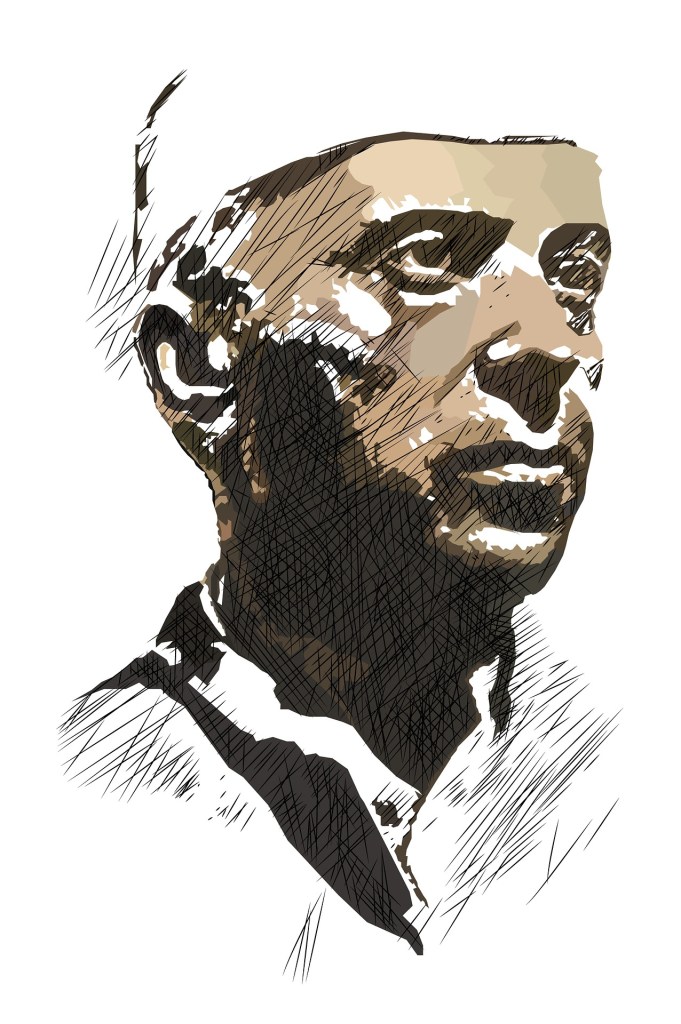
Jawaharlal Nehru was born on 14 November, 1889. He is the only son of his father and mother. He served as the first Prime Minister of India. His passion for India’s independence influenced many people. He is considered one of the greatest statesmen in India. He joined freedom struggle, he became popular as India’s freedom fighter. His birthday is celebrated as Children’s day in India.
3. Mahatma Gandhi
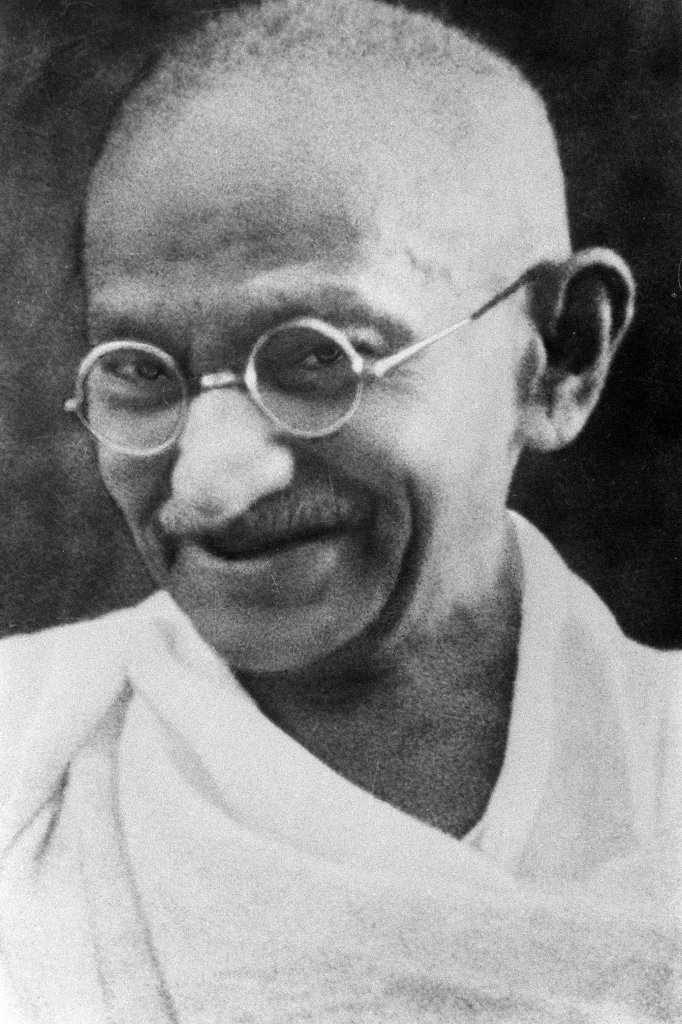
Mohandas Karamchand Gandhi was born on 2nd October he was raised in a Hindu family in Gujarat, 1869. He studied Law in London and went to South Africa to practice. He was entitled the ‘Father of Nation’ of India. After 21 years living in South Africa, he returned to India in 1915, when he was 45 years old. Gandhi ji led many non violent national campaigns for easing poverty, ending untouchability, expanding women rights, and Swaraj. He started Dandi Salt March against the British for imposing salt tax. He started Quit India Movement for British to leave India and many more. He has done many hunger strikes to stop religious fights.
4. Lal Bahadur Sastry
Lal bahadur Sastry was born on 2nd October, 1902. He is a silent freedom fighter. He was participated in many freedom movements such as Quit India movement, Salt Satyagraha Movement, Civil Disobedience movement etc led by Mahatma Gandhi. He served as the Home Minister of India and later as a Prime Minister in 1964. He received the tittle ‘Shastri’ after he completed his education at Kashi Vidyapeeth.
5. Rani Lakshmi Bai
Rani Lakshmi bai was born on 19 November, 1828, Varanasi. She is the queen of Jhansi, She is an important member in 1857 revolution. She became the symbol of resistance to the British raj for Indians. She is the wife of Maharaja Gangadhar Rao. After the dealth of Maharaja Gangadhar Rao, she defended her kingdom jhansi from British force invading it.
6. Bhagat Singh
Bhagat Singh was born on 28th September, 1907 in Banga(Present Pakistan).He was born and raised in a Sikh family of freedom fighters in Punjab. He is a famous revolutionary in India’s independence movement. He joined Non-cooperation movement in 1921 led by Gandhi ji. Chauri Chaura Incident changed him and makes him extreme in his fight against British.
7.Begum Hazrat Mahal
Begum Hazrat mahal was born on 1820, Faizabad. She worked with leaders like NanaSaheb and maulavi. She has participated in 1857 revolution. She single handed defended lucknow from leading troops. She also fought many wars for nepal.
More people need to make their own well being a priority.
To some people self care means face masks, bubble baths, and a glass of malbec. To others it means spending more quality time with your family, friends, or pets.
But one thing seems universal: the need to spend less time grinding and more time enjoying.
How do we do this when we are told to idolize “the hustle?” Told to follow the grind wherever it leads us? Told that we are only successful if we put everything we have into our work?
Over the last few years we have fallen victim to what is now being called “hustle culture.”
Hustle culture does not sleep. Hustle culture does not take lunch breaks. Hustle culture is waking up Saturday morning and making spreadsheets instead of pancakes.
Hustle culture does not take into account what your goals in life really are.
If you have a goal in mind, you need to put your foot on the gas and strategize how you’ll achieve it A S A P., Or else it’s just an idea and a waste of time.
The idea is that we find our value and sense of self in our output or how much work we can get done. So much so that we glamorize the idea of being a “workaholic” and are obsessed with Hyperproductivity.
The bottom line becomes, if you’re not constantly delivering something of perceived value, you’re doing it wrong.
People often admire the “hustle.” “Don’t knock on the hustle,” they say. True enough, in some instances having a hustle culture is a good thing, in a workplace environment the opposite is generally true. Especially in today’s highly competitive and fast-paced lifestyle, hustle culture is becoming the norm for more and more people in the workforce today.
Millennials in particular — especially fresh graduates and singles — are particularly keen on the kind of workaholism that hustle culture perpetuates. It’s all about how “busy” they are, how many million things they’re juggling at the same time. Hustle culture has become the standard for many to gauge things like productivity and performance.
The thing is, hustle culture isn’t really as great as it’s made out to be. It’s dangerous, both to individuals and to a workplace environment in general. It may seem like a good thing on paper, but in practice, there is a lot to at least be extremely cautious about.
In a nutshell, hustle culture (as the name also implies) means constant working. It means devoting as much of your day as possible working — hustling. There is no time out or time in at work. Work is done in the office, outside the office, at home, at coffee shops — anywhere. And in a world constantly on the go and equipped with the tools to achieve that, working constantly on the go is very possible.
Hustle culture is the societal standard that you can only succeed by exerting yourself at max capacity professionally. Everyday.
Hustle Culture pushes the idea that you are only valuable, worthy, or capable of success if you are performing at your maximum capacity at all times.
And it’s a mindset, a philosophy and a life embraced by many, both by individuals and even companies. When you talk of hustle culture, the more you work, the more celebrated you are. Never mind that you miss meals, sleep, and other important events. In hustle culture, taking a break is for the weak. Your brain becomes trained to always be active and always churning out idea after idea after idea.










 Eduindex News
You must be logged in to post a comment.