Howrah Bridge: The Living Heritage of Kolkata

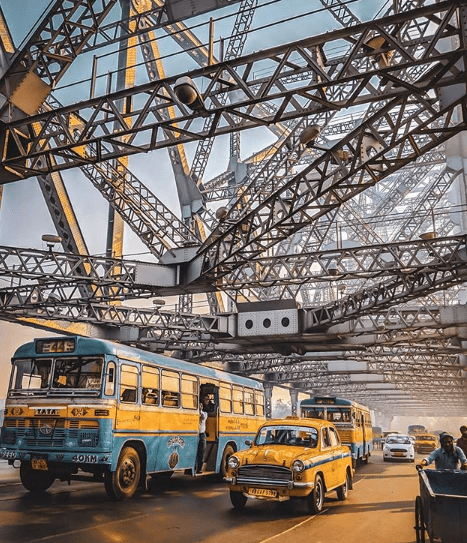
An everyday view of Howrah Bridge

Introduction

Howrah Bridge is an architectural marvel and a well-known Kolkata landmark. It has served as a backdrop for numerous movies since the 1950s, including a 1958 film named after the bridge. One can walk across the bridge and admire its unique construction or glide underneath while on a boat ride along the Hooghly River. With a central span of 1,500 feet (457 meters) between its two towers, this enormous steel structure is one of the longest cantilever bridges of its type in the world. Howrah Bridge extends across the Hooghly River, connecting the city of Howrah to Kolkata.

Historic Background

The construction of the Howrah Bridge  was first proposed in 1862. The Government of Bengal wanted to build a bridge over the Hooghly River. They asked the Chief Engineer of the East India Railway Company to study the feasibility of the idea and come up with a proposal. But for several reasons, his proposal never materialised.

Later in the 1800s, a pontoon bridge or floating bridge was built between Howrah and Kolkata. But it wasn’t strong enough to handle the huge traffic between the two cities or to weather the frequent storms in the area. So the Bengal government continued to look for alternatives and, several decades later, the new bridge was finally commissioned. The contract to build it was awarded to a company called The Braithwaite Burn and Jessop Construction Company.The design of the Howrah bridge was made by Rendel, Palmer and Tritton and the bridge was constructed by Cleveland Bridge & Engineering Company. The construction of bridge was started on 1936 and ended in 1942. It was opened for the public transport on 3 Feb 1943. It was renamed as Rabindra Setu in June 1965 after the first Indian Nobel laureate Rabindranath Tagore.
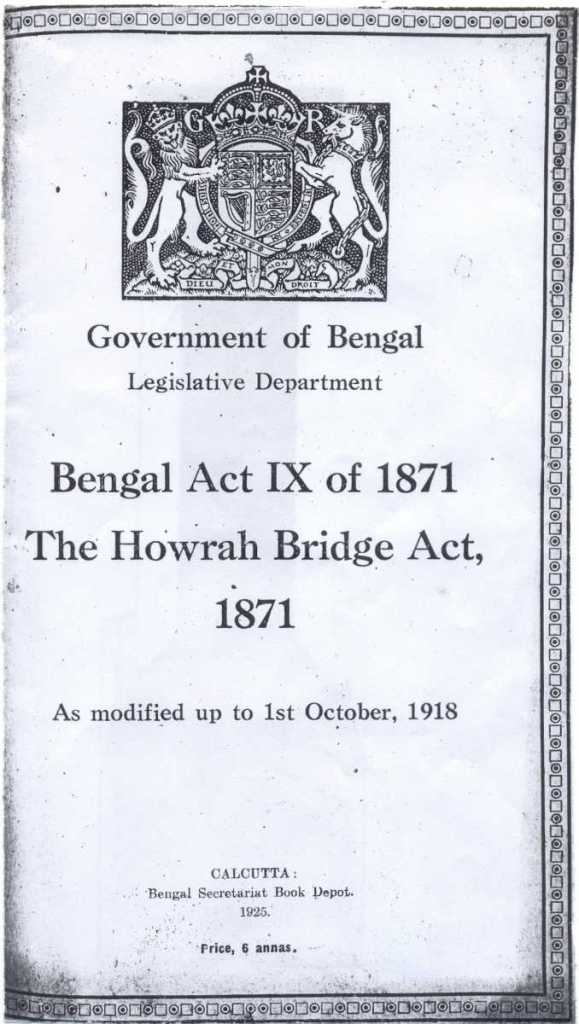
The Act for the construction of Howrah Bridge

Key Structure of The Bridge

The Howrah Bridge is a suspension-type balanced Cantilever Bridge. It has a central span of 1500ft between the main towers. The anchor and cantilever arms are 325ft and 468ft long, respectively.The suspended span has a length of 564ft. The main towers are 280ft-high above the monoliths and 76ft apart at the top. The bridge deck measures 71ft in width and features two footpaths of 15ft on either side.The super-structure is built up with riveted sections made of a combination of high tensile and mild steel. The bridge deck descends from panel points placed in the middle of the towers, which are located in the lower chord of the main trusses through hungers.The bridge deck consists of a 71ft carriageway and a 15ft pathway projected on both sides of the trusses and supported by a fascia girder.The carriageway outside the tower is backed on the ground by an anchor arm. The deck system includes cross girders suspended between pairs of hungers by a pinned connection. Six rows of longitudinal stringer girders are arranged between cross girders and floor beams support transversally on top of the stringers.These joints support a continuous pressed steel troughing system surfaced with concrete. Two main expansion joints are placed at the interfaces in the middle of the suspended span and the cantilever arms.Eight articulation joints exist at the cantilever arms and suspended portions and separate the bridge into segments by a vertical pin connection to allow the deck’s rotational movements. The bridge deck features a longitudinal ruling gradient at each end.The main tower is based on single monoliths with 21 chambers. The minimum vertical clearance for the carriageway is 5.8m and 8.8m for the river traffic.
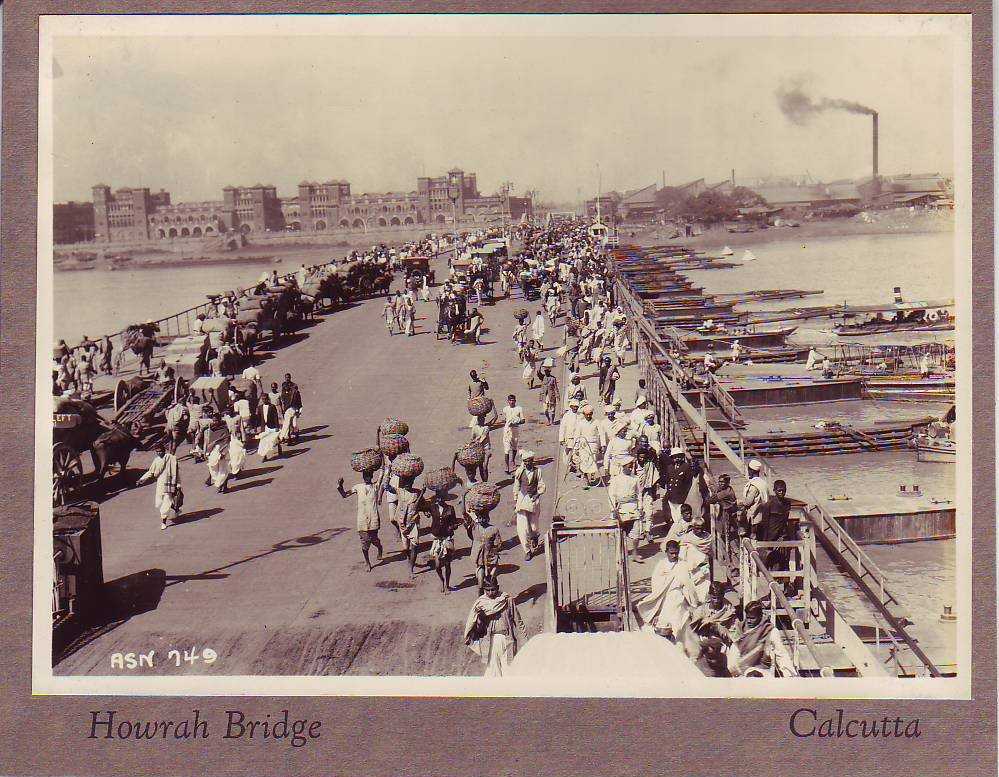
The early days of Howrah Bridge

Specialities of The Bridge: What Made It A Heritage

Constructed without nuts and bolts, the Howrah Bridge was formed by riveting the entire steel structure. The bridge officially opened in 1943 when it was the world’s third longest cantilever bridge. Today, it is the sixth longest bridge of its type in the world. The Howrah Bridge is also thought to be the world’s busiest cantilever bridge.

In 1946, in a census carried out, it said that the bridge saw a daily traffic of 27400 vehicles and 12100 pedestrians. In fact ages ago the bridge had also carried trams that left from Howrah station terminus. However, it seemed like the bridge could not take the weight of the heavy weight and hence running trams on the bridge was discontinued. Currently, the bridge can bear the weight of 60,000 vehicles only but it still carried almost 90000 vehicles daily. The bridge also has a separate foot path for pedestrians to walk.While the bridge remains one of the key attractions in the city, the Howrah Railway Station at its Howrah end is another site of much historical significance as the country’s oldest railway station. At the Kolkata end, the bridge ends right by the stunning and colourful Mallick Ghat flower market, one of the city’s most vibrant markets.
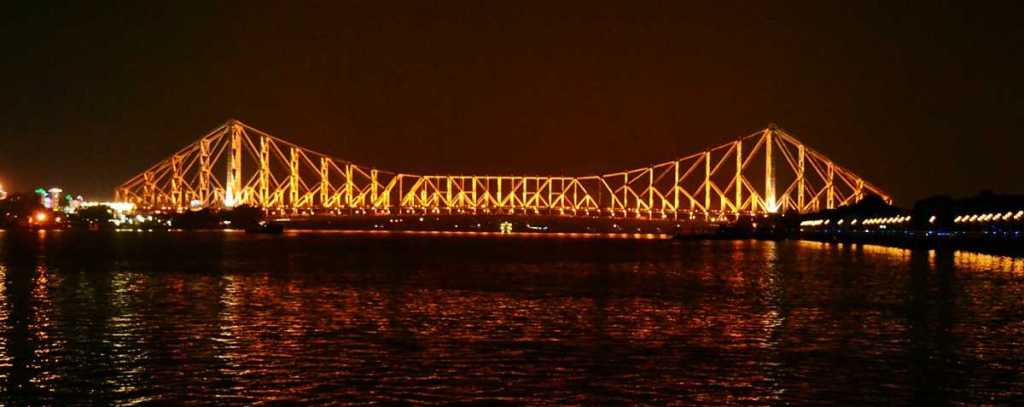
Night View of Howrah Bridge

Cultural Significance of The Bridge

Since the beginning of its journey, the bridge has been featured in numerous Bengali Hindi even International films, such as Do Bigha Zamin (1953), Bari Theke Paliye(1958), Parash Pathar(1958), Howrah Bridge(1958), Neel Akasher Neechey (1959), China Town(1962 ) and Amar Prem  (1971), Teen Devian(1965), Calcutta 71 1972), Padatik (1973), Richard Attenborough’s 1982 Academy Award winning film Gandhi, Paar(1984), Ram Teri Ganga Maili (1985) , Nicolas Klotz’s The Bengali Night(1988), Rolland Joffé’s  City of Joy  (1992), Florian Gallenberger’s  Shadows of Time (2004), Yuva(2004),  Parineeta (2005) and the list goes on.

Recent Renovations of The Bridge

The articulation joints at deck level were renovated in 2008, and the bridge was illuminated in colours of gold and magenta in November 2006.Bridge operator Kolkata Port Trust (KPT) invested Rs35M in the project for laying 13km of cable, 700 lights, a new control tower and a sub-station. Around Rs27.3m was spent on the maintenance of the bridge in 2005.The pylons, the steel-lattice inner structure, the under-deck and the pathway were fixed with white and the upper structure with blue LEDs. Painted in June 2005, the bridge required more than 26,500l of aluminium paint to cover 23,500t of steel, occupying a surface area of 2.2mm².Prime Minister Shri Narendra Modi launched the interactive light and sound show of the bridge in January 2020. The new Rabindra Setu decorative lighting features 650 power-efficient LEDs and spotlight fittings for programmable multi-colour lighting, including a music-syncing show.
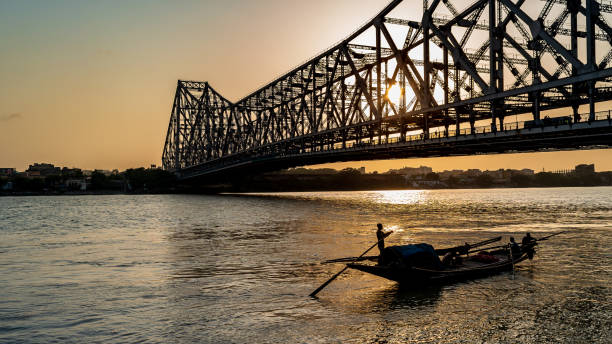
Silhouette of Howrah Bridge at the time of Sunrise. Howrah Bridge is a bridge with a suspended span over the Hooghly River in West Bengal.

Conclusion

The surprising fact about this bridge is that, despite being such a heritage, it has suffered a lot of damage. And the damage is not only because of trams plying heavy load, but it is also because of human spit and bird excreta.The corrosion on the bridge is because of prolonged chemical reaction that has occurred because of continuous bird droppings. Calcutta Port Trust is currently in charge for the maintenance of the bridge. Along with the authority, the citizens should also be responsible for protecting the living heritage of our country.
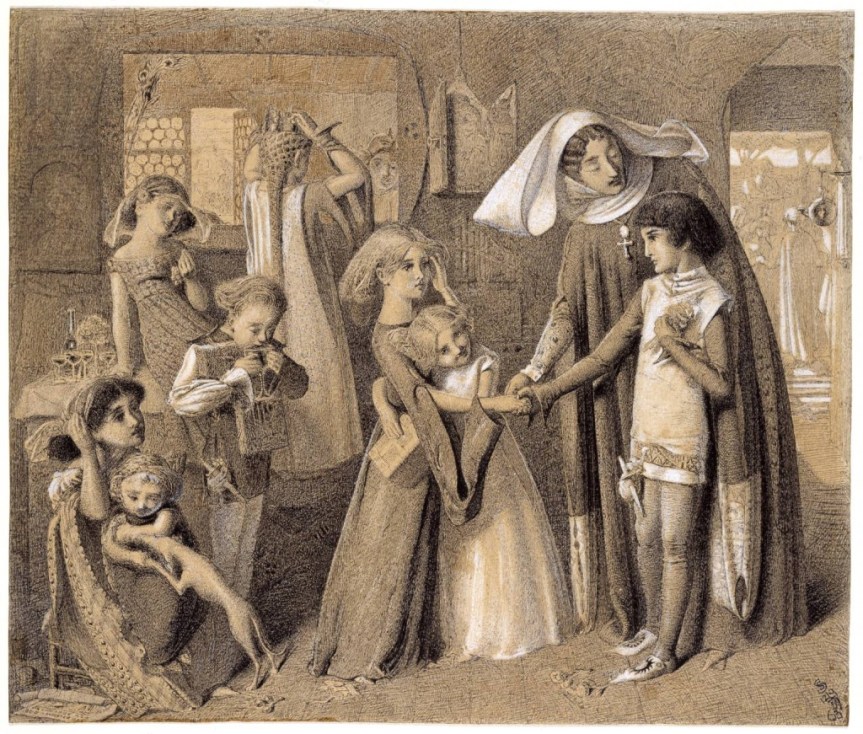
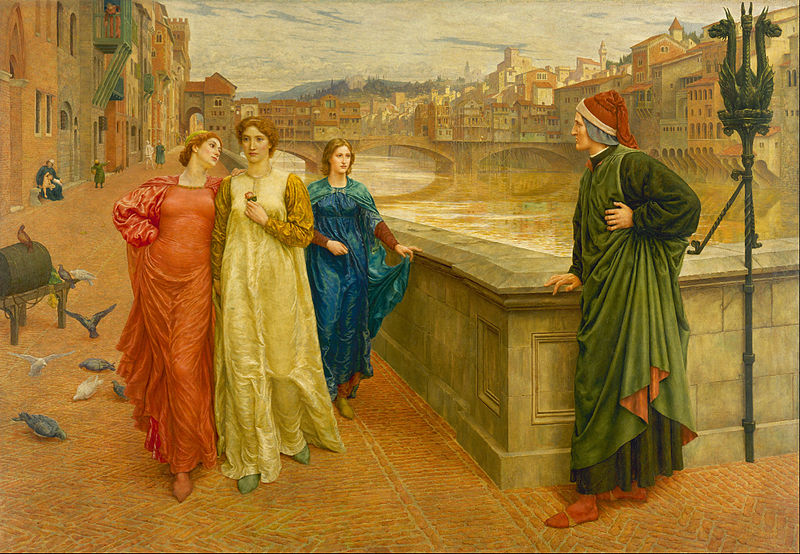
Dante Aligheiri: Connecting His Life, Love and Literature

Dante, looking at Beatrice passing by (Art Work)

Introduction

Dante Aligheiri, the famous Italian poet, is without any debate, one of the most passionate poets of all time who believed in and lived by the true meaning of Love through his exceptional writings . His works are still considered as the Canvases of Human Mind, sparkling and expressing love through words. Though, the love of his own life remained unrequited and that agony fueled his journey of writing as a neverhealed wound, creating some masterpieces of Romantic Literature.

Early Life of Dante

Born in Florence, Italy around 1265, Dante was the son of Alighiero di Bellincione Alighieri and Bella di Abati, and he grew up among Florentine aristocracy. Scholars surmise that he received formal instruction in grammar, language, and philosophy at one of the Franciscan schools in the city. 

Dante’s Love : Beatrice Portinari

Dante first met Beatrice Portinari, daughter of Folco Portinari, when he was only nine years old and he claimed to have fallen in love with her “at first sight”, apparently without even talking with her. He would later write about his instant love for her in “Vita Nuova”, saying “Behold, a deity stronger than I; who coming, shall rule over me.”

When he was 12, however, he was promised in marriage to Gemma di Manetto Donati, daughter of Manetto Donati, member of the powerful Donati family. Contracting marriages for children at such an early age was quite common and involved a formal ceremony, including contracts signed before a notary. Dante claimed to have seen Beatrice again frequently after he turned 18, exchanging greetings with her in the streets of Florence, though he never knew her well.

Dante meeting Beatrice for the first time (Art work)

Beatrice’s Death: Presence in Dante’s work

Beatrice died in 1290 at age twenty four. Beatrice probably never had any idea of the depth of his passion for her, yet she was to become one of literature’s most famous figures.

After Beatrice’s death, Dante withdrew into intense study and began composing poems dedicated to her memory. The collection of these poems, along with others he had previously written in his journal in awe of Beatrice, became La Vita Nuova, a prose work interlaced with lyrics.
Dante describes his meetings with her, praises her beauty and goodness, describes his own intense reactions to her kindness or lack thereof, tells of events in both their lives, and explains the nature of his feelings for her. She represents an idealized love, the kind of love that transcends physicality. Alighieri included her in both La Vita Nuova and Divine Comedy. She is his salvation; the “gentilissima” (most kind) and “benedetta”(blessed). It is Beatrice who serves as his guide in Heaven in Divine Comedy. La Vita Nuova also relates of the day when Dante was informed of her death and contains several anguished poems written after that event. In the final chapter, Dante vows to write nothing further of Beatrice until he writes “concerning her what hath not before been written of any woman.”

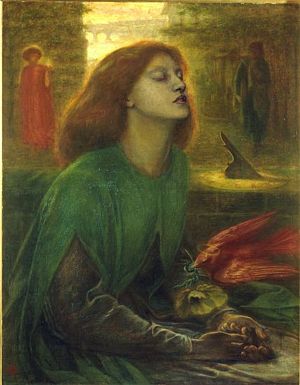
Portrait of Beatrice

Analysis of Dante’s Love and Literature

The promise is fulfilled in the epic poem The Divine Comedy, which he composed many years later. In that poem, he expresses his exalted and spiritual love for Beatrice, who is his intercessor in the Inferno, his purpose in traveling through Purgatorio, and his guide through Paradiso.

Beatrice addresses Dante, the author and a character himself, for the first time in Canto 2 of Dante’s “Inferno”: she descends into Limbo and prays that the poet Virgil can rescue Dante. She then reappears in Canto 30 of Purgatorio, when Virgil disappears.

At first sight of her in Purgatorio, he is as overwhelmed as he was at the age of nine and is dazzled by her presence throughout the journey until she ascends again to her place in heaven, the point closest to God that he is allowed to reach.
This expression of sublimated and spiritualized love ends with Dante’s total absorption into the divine.
Their last meeting is set among the blessed in Heaven at the end of their journey into the afterlife.

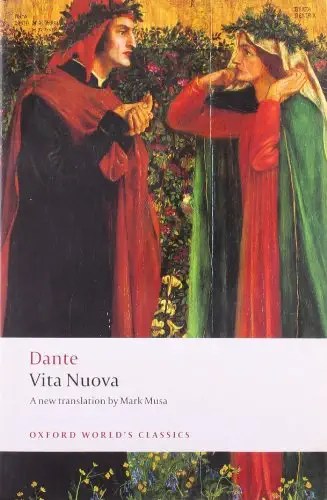
Dante’s work Vita Nuova, heavily influenced by Beatrice

Conclusion

Dante’s love for Beatrice may have been idealized and unattainable, but at the core of that love is admiration, goodness, and respect. That’s a type of love that we don’t see much of in the media of today’s world. We prize the scintillating and love has become synonymous with physical lust.Dante’s love transcends the physical. It is a love of the heart and the intellect. She represented the ideal of beauty and grace, but was also a real woman.
Beatrice appeared to Dante as the woman/angel that guides him through Paradise, but also remained a real woman who made his heart beat in the streets of Florence.

Dhakai Muslin: The Exclusive Bengal Silk from The Past

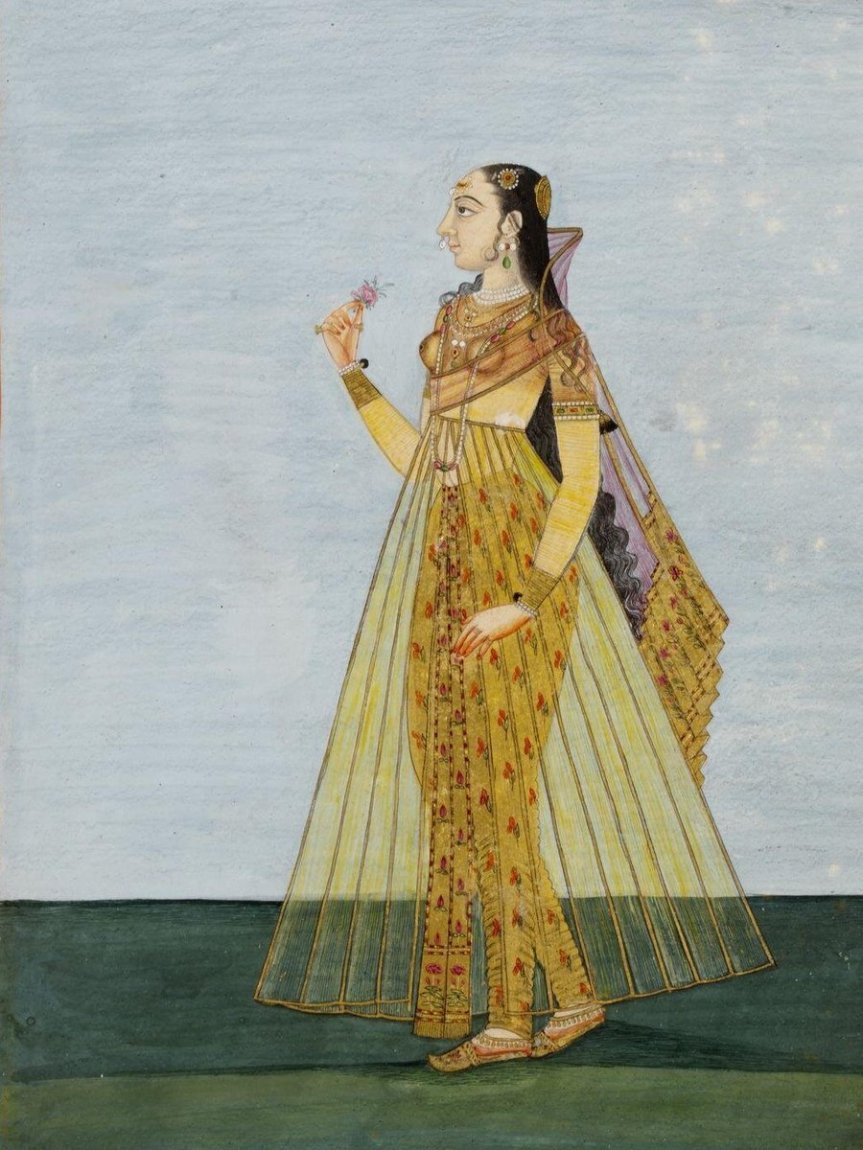
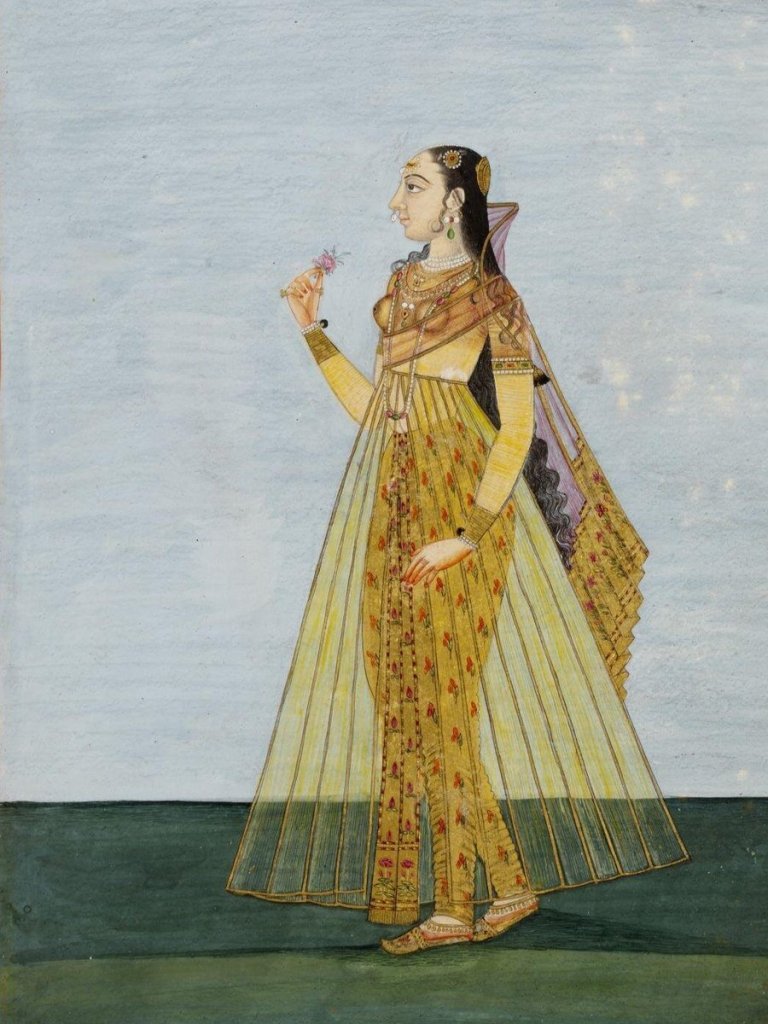
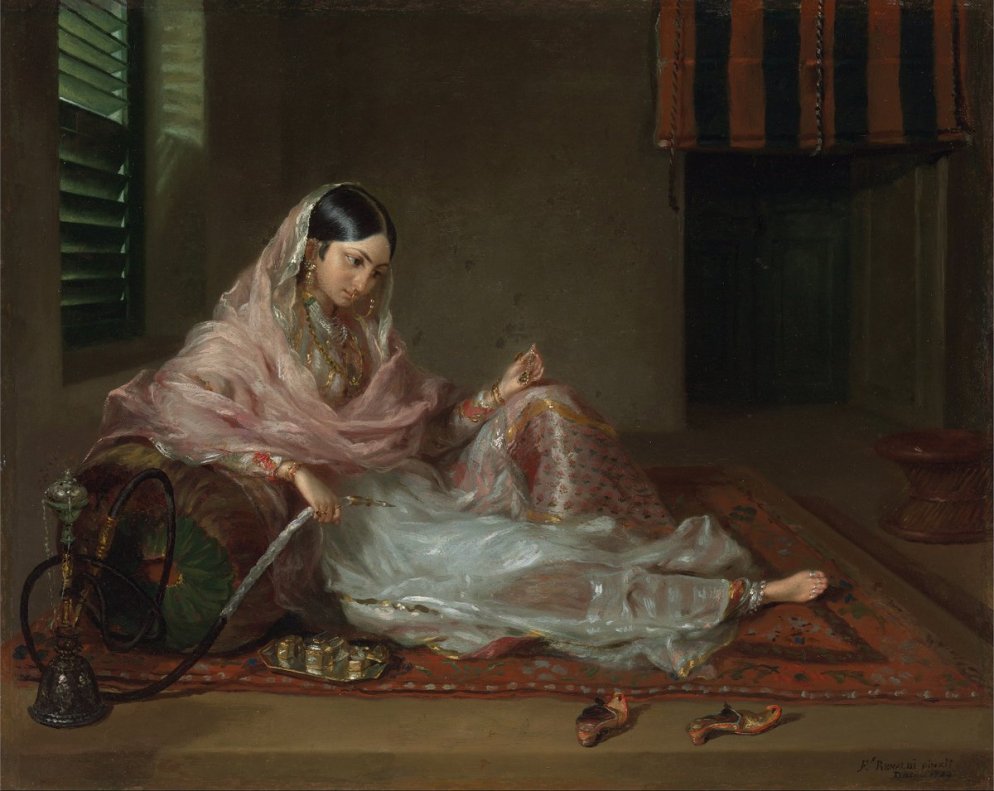
A portrait illustrating how Transparent Muslins were

Introduction

Muslin today has come to mean almost any lightweight, gauzy, mostly inexpensive, machine-milled cotton cloth. The word has lost all connection to the handwoven fabric that once came exclusively from Bengal. Cotton, stated the historian Fernand Braudel, was first used by the ancient civilizations on the Indus, while the art of weaving itself has been traced back to much earlier times. This head start perhaps was why ancient India became proficient in making cotton textiles. They became a staple export commodity to the Roman Empire, and they expanded in volume in the Middle Ages with the growth of the “maritime Silk Road” in the Indian Ocean.

Historic Background

Muslin a brand name of pre-colonial Bengal textile, especially of Dhaka origins. Muslin was manufactured in the city of Dhaka and in some surrounding stations, by local skill with locally produced cotton and attained world-wide fame as the Dhaka Muslin. The origin of the word Muslin is obscure; some say that the word was derived from Mosul, an old trade centre in Iraq, while others think that Muslin was connected with Musulipattam, sometime headquarters of European trading companies in southern India. Muslin is not a Persian word, nor Sanskrit, nor Bengali, so it is very likely that the name Muslin was given by the Europeans to cotton cloth imported by them from Mosul, and through Mosul from other eastern countries, and when they saw the fine cotton goods of Dhaka, they gave the same name to Dhaka fabrics. That the name Muslin was given by the Europeans admits of little doubt, because not only Dhaka cotton textiles, but cotton goods imported by the Europeans from other parts of India like Gujrat, Golconda, etc were also called Muslin.

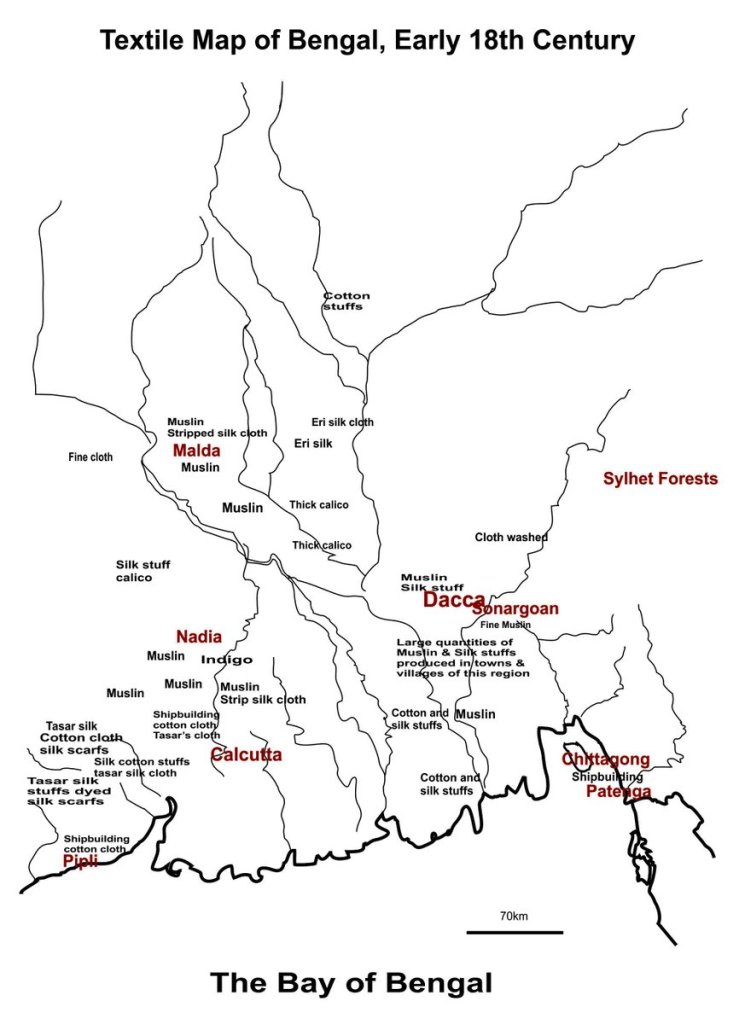
The route connecting the Hubs of Muslin Industry in Bengal

How Muslins Were Made

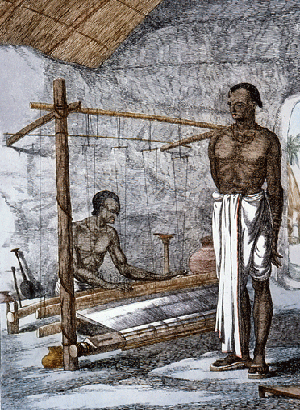
The textile industry of Bengal is very old. Bengal cotton fabrics were exported to the Roman and the Chinese empires and they are mentioned in Ptolemy’s Geography and the Periplus of the Erythraean Sea, and by the ancient Chinese travellers. But Dhaka Muslin became famous and attracted foreign and transmarine buyers after the establishment of the Mughal capital at Dhaka. The Muslin industry of Dhaka received patronage from the Mughal emperors and the Mughal nobility. A huge quantity of the finest sort of Muslin was procured for the use of the Mughal emperors, provincial governors and high officers and nobles. In the great 1851 Exhibition of London, Dhaka Muslin occupied a prominent place, attracted a large number of visitors and the British Press spoke very highly of the marvelous Muslin fabrics of Dhaka. Weavers in Dhaka, Bangladesh, used to make this incredibly fine cloth using a method called the discontinuous weft technique. This technique required the weaver to work two layers of weft – one as fine as spider’s silk to hold the cloth together and the other forming the pattern. Each pattern motif was worked individually, using fine bamboo sticks to interlace the pattern threads with the warp threads.

Weaving of Muslins under the supervision of royal official( Painting, in 1800s)

Types And Variations

The finest sort of Muslin was made of phuti cotton, which was grown in certain localities on the banks of the Brahmaputra and his branches. The other kinds of cotton called bairait and desee were inferior and were produced in different parts of Dhaka and neighbouring areas; they were used for manufacturing slightly inferior and coarse clothes.The productions of Dhaka weavers consisted of fabrics of varying quality, ranging from the finest texture used by the highly aristocratic people, the emperor, viziers, nawabs and so on, down to the coarse thick wrapper used by the poor people. Muslins were designated by names denoting either fineness or transparency of texture, or the place of manufacture or the uses to which they were applied as articles of dress. Names thus derived were Malmal (the finest sort), Jhuna (used by native dancers), Rang (of transparent and net-like texture), Abirawan (fancifully compared with running water), Khasa (special quality, fine or elegant), Shabnam (morning dew) Alaballee (very fine), Tanzib (adorning the body), Nayansukh (pleasing to the eye), Buddankhas (a special sort of cloth), Seerbund (used for turbans), Kumees (used for making shirts), Doorea (striped), Charkona (chequered cloth), Jamdanee (figured cloth). The finest sort of Muslin was called Malmal, sometimes mentioned as Malmal Shahi or Malmal Khas by foreign travellers. It was costly, and the weavers spent a long time, sometimes six months, to make a piece of this sort. It was used by emperors, nawabs etc. Muslins procured for emperors were called Malbus Khas and those procured for nawabs were called Sarkar-i-Ala. The Mughal government appointed an officer, Darogah or Darogah-i-Malbus Khas to supervise the manufacture of Muslins meant for the emperor or a nawab.

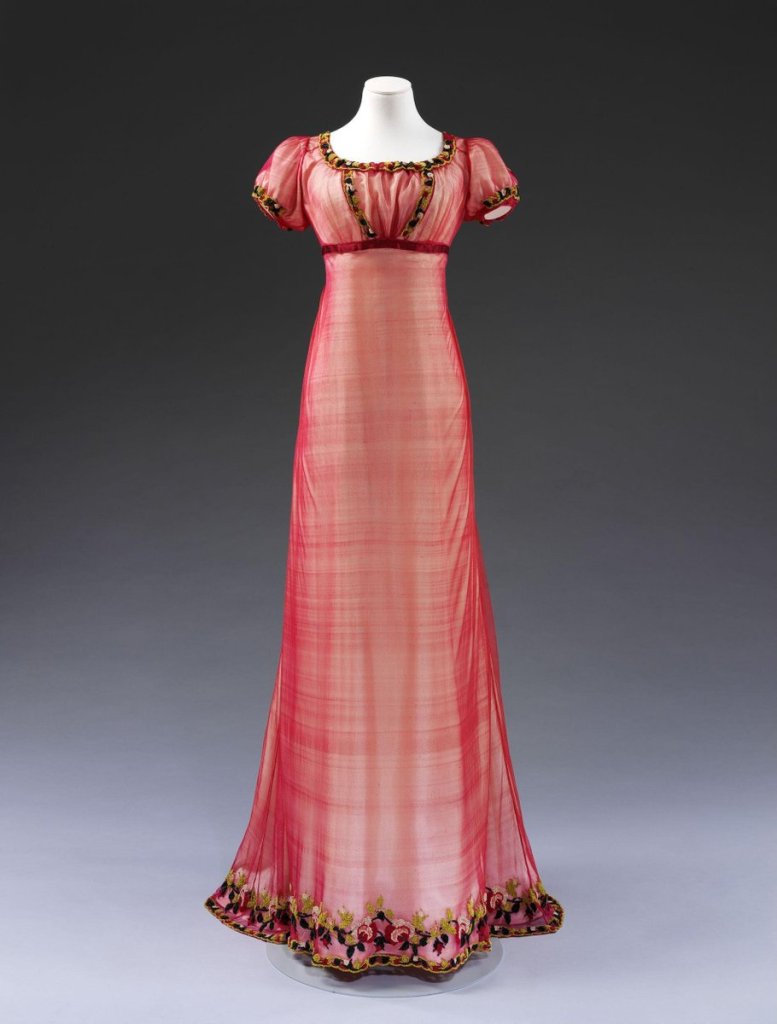
A real Muslin dress exported to England from colonized India

Areas of Production

Weaving was prevalent in the Dhaka district in almost every village, but some places became famous for manufacturing superior quality of Muslins. These places were Dhaka, Sonargaon , Dhamrai, Teetbady, Junglebary and Bajitpur.

Why It Was So Exclusive

The finest of Muslins were honoured with evocative names conjured up by imperial poets, such as “baft-hawa”, literally “woven air”. These high-end muslins were said to be as light and soft as the wind. According to one traveller, they were so fluid you could pull a bolt – a length of 300ft, or 91m, through the centre of a ring. Another wrote that you could fit a piece of 60ft, or 18m, into a pocket match-box. Dhaka muslin was also more than a little transparent.

Muslins were adored by the elites

How The Industry Was Lost

Unfortunately, during the period of the East India Company, European manufacturers all but destroyed the industry by flooding the market with factory produced muslin equivalents. Through a combination of punitive taxes on locally produced textiles and the dissolution of local and influential patrons, Jamdani muslin became uneconomical to produce and the skills were almost lost.

Conclusion

Thankfully, there are organisations in Bangladesh today that are encouraging local weavers to continue to practice their craft. Coupled with the UNESCO listing of Jamdani muslin on its Representative List of the Intangible Cultural Heritage of Humanity, there is more impetus to continuing production, albeit on a very small scale. With the proliferation of mass produced and synthetic fabrics on the market today, it is important that these historical techniques aren’t lost forever. No factory can ever emulate the quality arising out of a skilled artisan. Their skills are part of our textile heritage and it’s wonderful they are being recognised and preserved.

The Toxic Beauty: How Cosmetics Killed Her Highness Queen Elizabeth I

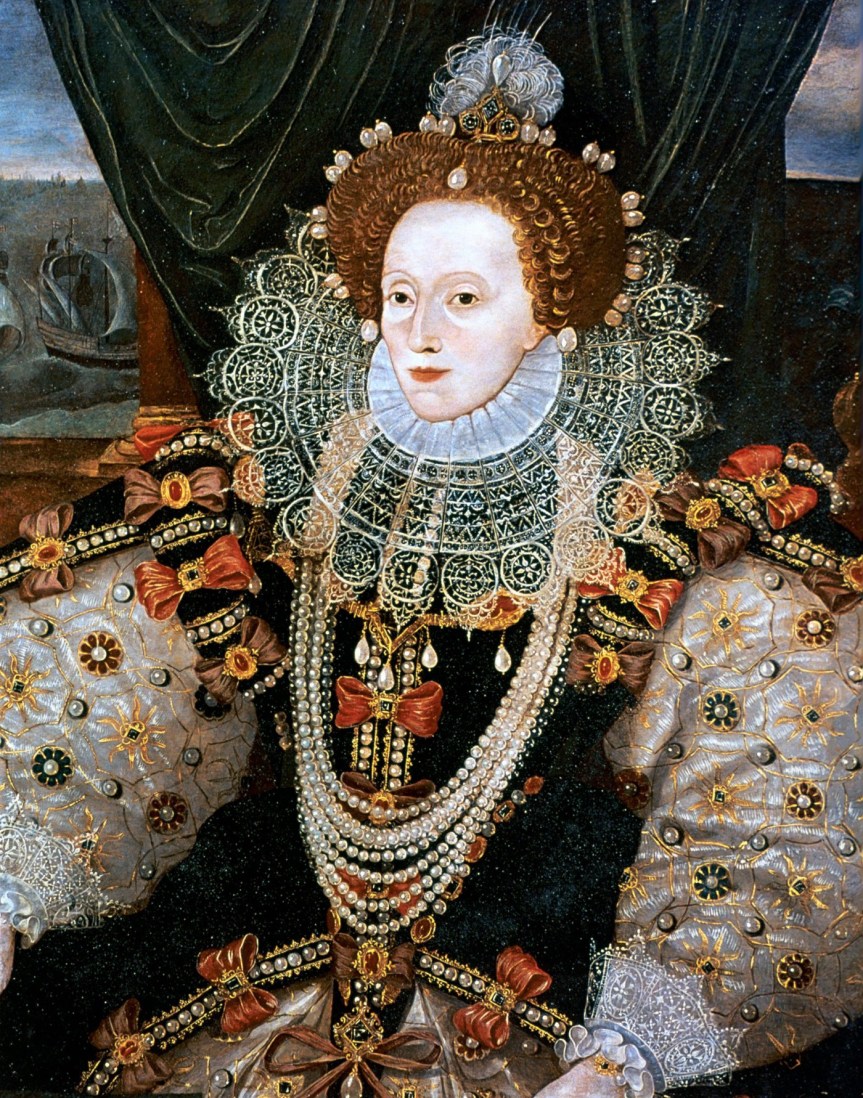
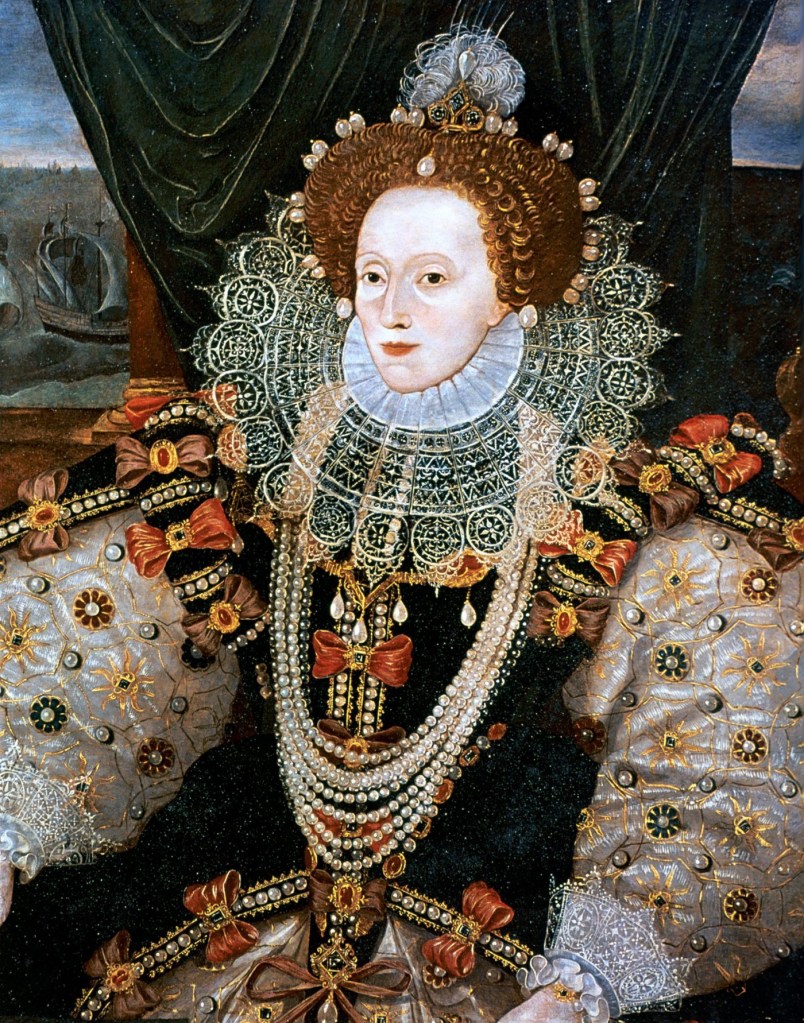
Queen Elizabeth I of England and Ireland

Introduction

Beauty has always been the greatest concern for women since ages. Women , all over the world did what not, to look pretty and presentable throughout the history of Human Civilization. And to address the need of looking flawlessly beautiful, the practice of using cosmetic or make-up came to the play. Women, sometimes, followed bizarre rituals to enhance their look, but sometimes, to their worst, the cosmetic turned out to be toxic and endangered their lives. To look beautiful it cost them a fatal price. Royalties and Elites were victims of the same death trap, including the Great Queen Elizabeth I.

Queen Elizabeth: The Beginning

Elizabeth I was the fifth and last monarch of the House of Tudor. She was born in the Palace of Placentia on 7 September 1533 and was died on 24 March 1603 at the age of 69. Her father was Henry VIII and her mother was Anne Boleyn who was her father’s second wife. On 17 November 1558, she became the Queen of England and Ireland and ruled it for 44 years until her death. She was also called the Virgin Queen and Good Queen Bess. Elizabeth was third in line to become the monarch and she was not even destined to be queen. She was behind her half younger brother Edward VI and half elder sister Mary I. As her father Henry VIII died, on 28 January 1547, her younger brother Edward VI became the monarch at age nine and ruled for six years, dying at the age of 15 because of tuberculosis. After, Mary I became queen and ruled for five years, dying at age 42 on 17 November 1558. Finally, Elizabeth was the last child of Henry VIII to rule England and became the Queen of England, ruling for 44 years.

The Scars in Her Beauty : What Led Her to Toxic Cosmetics

During her 20’s the Queen got infected with smallpox. Though the young queen survived smallpox but the disease left scars and blemishes on her skin and in order to hide those she started using the makeup more vigorously.

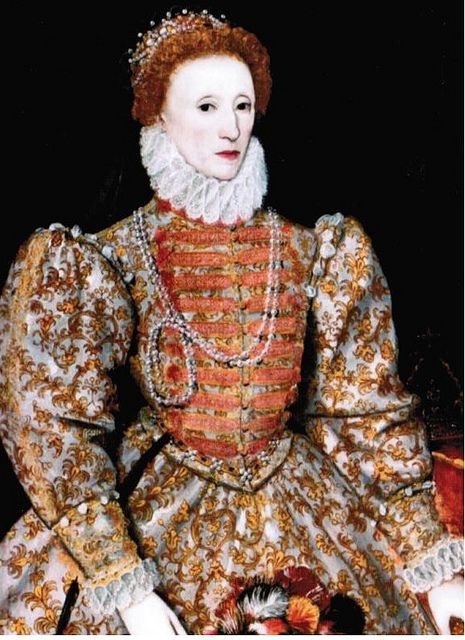
Portrait of the Queen

Bizarre Beauty Standards

The cosmetics that were worn by women in the time of Queen Elizabeth are drastically different from those we wear today. Not only were the materials they used very different but the look they were trying to achieve was very different as well. Standards of beauty change all the time. To understand the cosmetics worn by Elizabethan women, it’s important to understand the effect they were trying to achieve—that “ideal” beauty they wanted to imitate. The ideal Elizabethan female had bright wide-set eyes, snow white skin, rosy cheeks, red lips and fair hair. Pale skin was a sign of nobility, wealth and delicacy was sought after by many. In a time where sunscreen was unheard of, skin problems and pox was a common thing smooth, unblemished skin was a rarity. The pale skin women (and men) wanted was achieved by a number of ways. The most popular being Venetian Ceruse (also known as Spirits of Saturn), a mixture of white lead and vinegar. This white foundation was applied to the face, neck and bosom. Naturally, smearing lead all over one’s skin caused some serious skin damage not only did it make the skin look “grey and shrivelled” there was lead poisoning, hair loss and if used over an extended period of time could cause death. They lined their eyes with black kohl to make them look darker and belladonna eyedrops (used to dilate women’s pupils, an effect considered to be attractive and seductive). Fashion required eyebrows to be thin and arched which would create a high forehead it was considered to be a sign of aristocracy. Rouged cheeks and red lips were very popular. This was obtained with plants and animal dyes.

Her Majesty’ s Royal Makeup

She used ingredients like lead and vinegar in her makeup which is called — “Venetian ceruse. It is said that she was the only monarch that always took a long time to get ready. She used multiple layers of lead and vinegar and applied a thick white mask to her face and neck. The white skin was not a part of racism but it depicted that a woman was of a higher class. she applied was from If you have seen a portrait of Queen Elizabeth you may have noticed that her lips are very red. The red colour cinnabar, a mercury. poisonous substance that contains She used to remove it with a mixture of elements like eggshells, alum, and mercury. Thus, this leads to another use of poison in her makeup. People at that time would say that her skin became soft after makeup re moval but basically, it was peeling one layer at a time. All these caused wrinkles, aging, and the deterioration of her health. And it is assumed by the historians, that continuous use of those deadly chemicals as Cosmetics, led to her death.

Cinematic Portrait of the Queen, played by actress Margot Robbie

Conclusion

The urge of looking beautiful , sometimes proves hard on women’s overall health. body and The obsession of being perfect, has killed many women, including such Royalties like Queen Elizabeth I. Even today, women are insure about their natural beauty and sometimes find it hard to accept body positivity. We should learn to feel confident in our skin first, and the glow then comes from within as our flaws make us Earthly and more humane.

Dhakis of West Bengal: Where They Come From and Where They Go

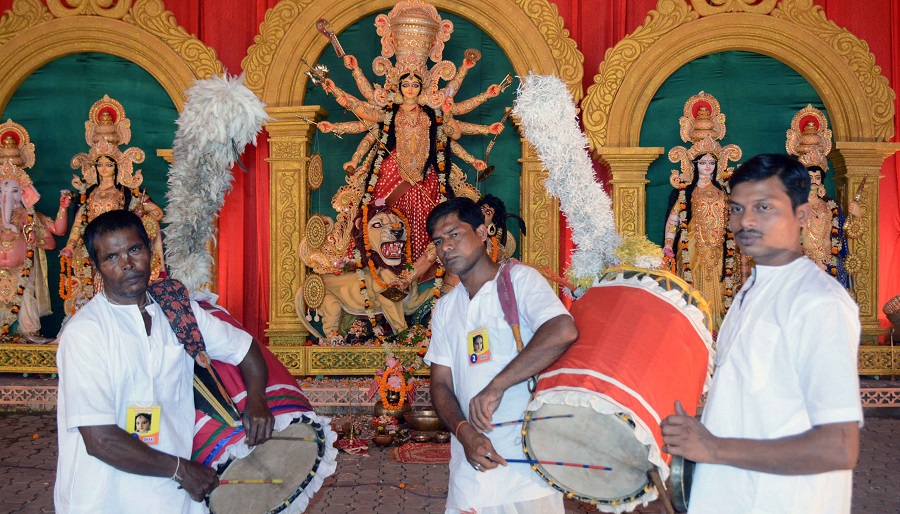
Dhakis playing dhaks in a Durga Puja pandal

Introduction

India is a country of rich cultural diversity and the essence of festivity for each Indian state is unique on its own. The main festival of the Indian state of West Bengal is Durga Puja, which is held during the auspicious Aashwin Durga Navtras in the months of September-October. During the festival the Mother Goddess is welcomed to her home on Earth with 9 long days of celebrations and joy. As a ritual of the festivity both her arrival and departure are rung by hundreds of thousands of “Dhaks” played by the professional drummers, locally called as “Dhakis”.

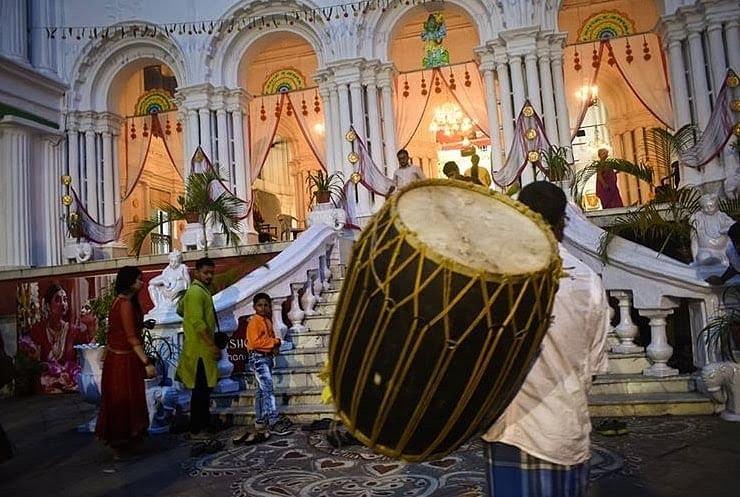
Dhak at a Puja Bari

What “Dhaks” Are: How They Are Made

The word “Dhak” comes from the Austric word “Dhaka” included in the Sanskrit language. The word later became a part of the Bengali script. The dhak is a big membranophone instrument that originally belongs to South Asia. The dhak has become an integral aspect of the widely loved Bengali festival of Durga Puja, other Bengali rituals and festivities. It would have no festive aura if not for the maddening rhythm of the dhak. The dhak is beaten with two sticks loudly to infuse the frenzied beats into the listeners. These beats are enough to raise the spirits and conjure up the feel of the Durga Puja. Without the instrument, the heavily celebrated festival would have felt sombre.

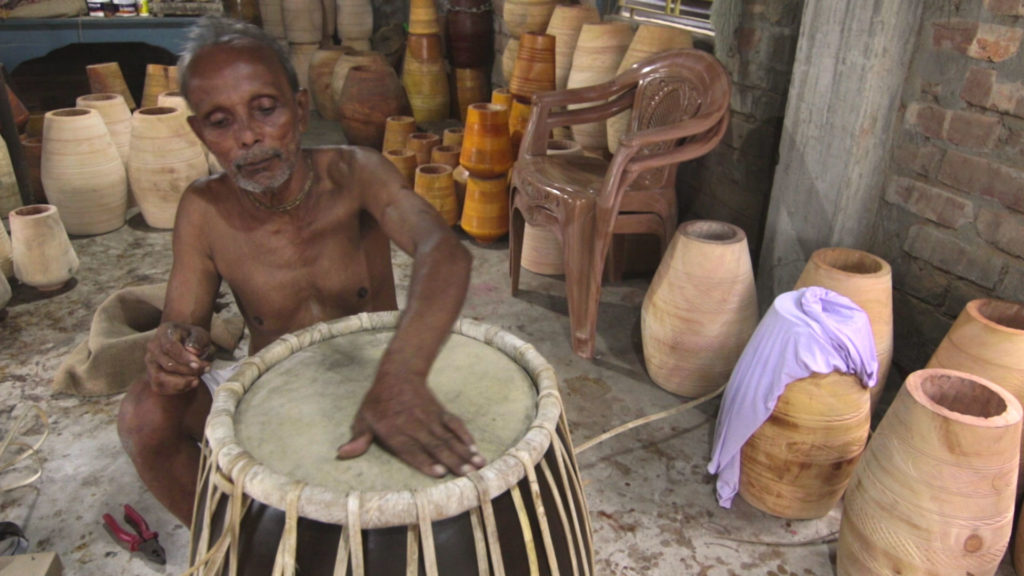
The sound of the dhak depends on a lot of factors like the shape. The shape varies from almost cylindrical to barrel-like. On one hand, the outer portion of the wood is shaved off and carved to create the barrel shaped instrument. On the other hand, the inner side of it is made to be absolutely hollow.The two ends of the dhak are wrapped up with goat skin on the top and calf skin at the bottom. It is said that using these two types of hides bring out the perfect sound texture of the dhak. The manner of stretching the skin over the mouth of the dhak and lacing it is also an important factor in the kind of sound that will be produced. The more the strings on the side of the dhak are pulled the higher the pitch of the dhak gets. The two sticks that are used to beat the dhak are carefully chiseled and formed out of thin cane or bamboo. Because of the drying session of the wooden structure and the intricate handwork and decoration, it takes around one month to reach the perfection in making the instrument.

Making of Dhaks

Who “Dhakis” Are: The Heritage follows

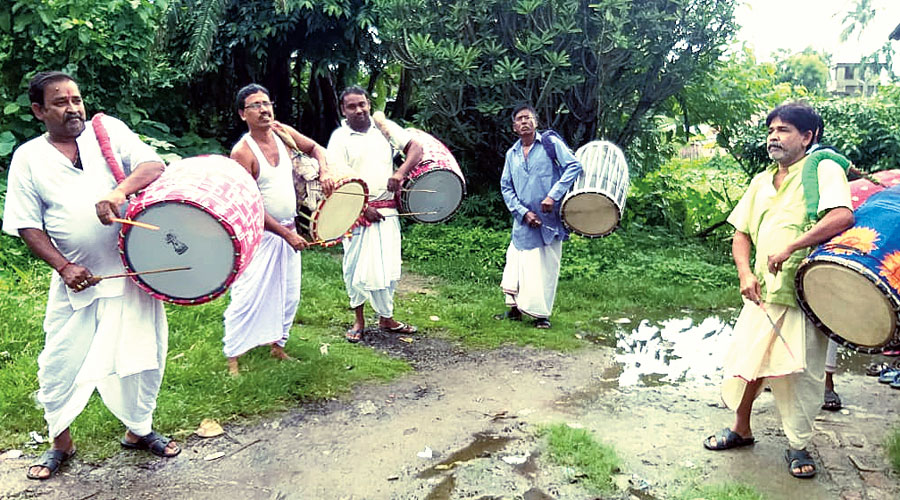
‘‘Dhakis’’ are integral to almost all festivities in Bengal but the art of playing the huge barrel-shaped membranophone instrument is considered as a staple of Bengal’s most celebrated Durga Puja. Most of the ‘dhakis’ or men who play the ‘dhak’ hail from humble rural backgrounds of Murshidabad, Hooghly, Malda, Bankura and Purulia districts of the state. Just like playing any other instrument that is highly associated with a centuries-old cultural heritage, the art of playing dhak, or the business of dhakis are often found to be ancestral and moving in the families since ages. The art of playing such instrument is considered as a living witness, bearing the tradition of the state of West Bengal. The art of playing dhak is passed on from one generation to the next though this art is gradually dying out and losing its focus. One of the reasons for this is the uncertain informal nature of this profession. They still teach the children to play the dhak is to preserve the culture and heritage.

Each part of Durga Puja rituals has a different and unique tune and beat of the dhak right from the arrival of the idols till their immersion. It is played when the idol enters the pandal and even when it exits the pandal on the last day of puja, Dashami. In fact, it is the deafening sound of the dhak that fills the air of immense celebration during the ‘Sandhya Arati’ on Ashtami. This ceremony is absolutely incomplete without the beats of the dhak. Along with that, the ‘Dhunuchi Nach’ is also an essential part where the dhak provides the musical rhythm to which people dance with the ‘dhunuchi’. Another popular tradition is the ‘Dhaker Lorai’ or ‘Fight between Dhaks’ where the grandeur is revealed the best when dhakis play in groups. It is usually a fascinating experience for the audience to see the feathered drums being played by the dhakis dancing to the music produced. Finally, on Dashami, the majestic beats of the dhak helps lift the air of sadness and gloom during the vermilion ritual and ultimately, the immersion.

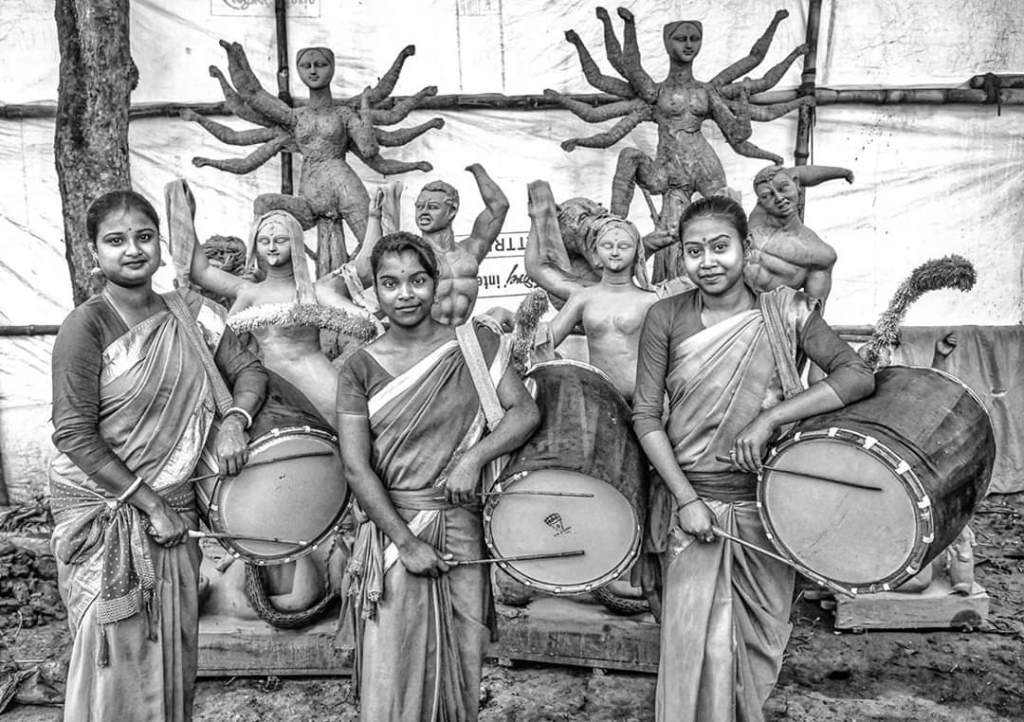
Female artists too have now taken up the responsibility to revive the age old art of playing the dhak. In such a male-dominated profession where carrying the dhak is a major issue, women have proved themselves to be no less than their male counterparts. Teams of women dhakis are finding fame and getting established slowly in their fields.

Dhakis of Bengal

COVID-19 and The Livelihood of Dhakis

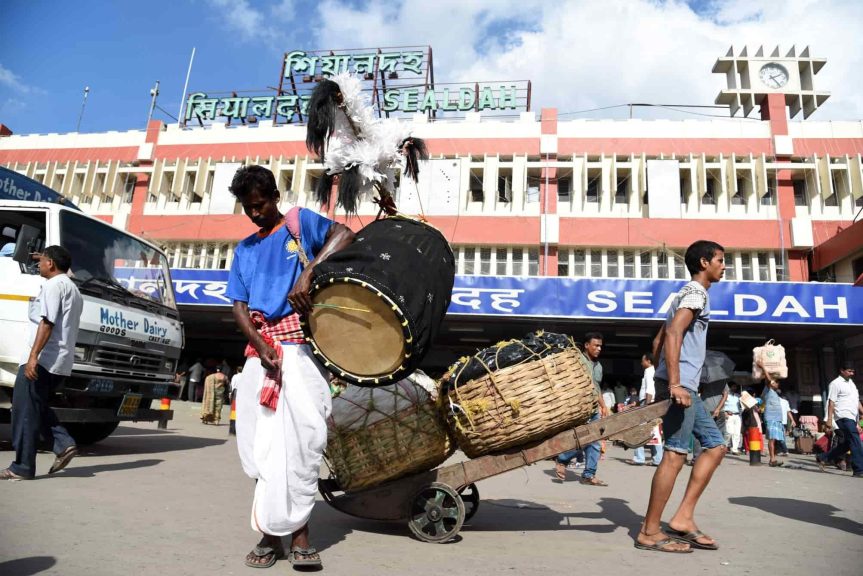
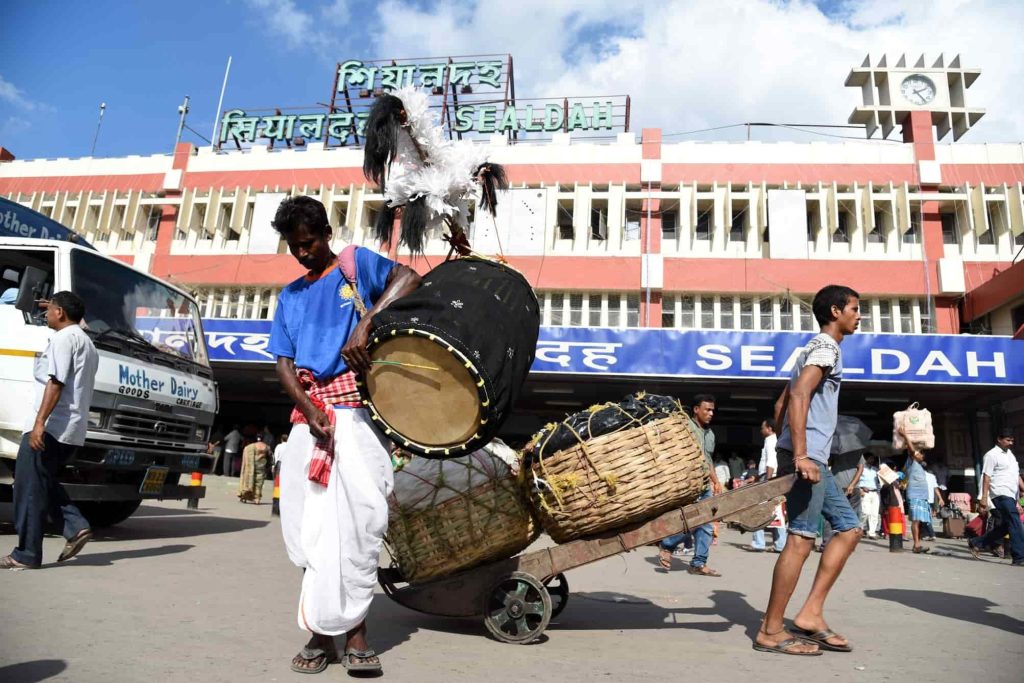
The Impact The drop in the number of Durga Pujas in and outside Bengal amid the novel coronavirus outbreak has taken the rhythm out of the lives of many dhakis (traditional drummers) who look forward to this festive season as their main source of earnings in the year. Every year, the dhakis from different districts and villages of Bengal use to appear at Sealdah station premises before Durga puja. The dhakis used to play the drums in front of Sealdah station every year before puja. From there, various puja committees used to take them in the puja pandals to play the ‘dhak’. But for the past two years the situation is very different, as Puja Committees and Organizers are tight in budget and have to follow a lot of restrictions . Moreover, thousands of dhakis from Bengal districts like East Burdwan, Birbhum, Purulia, Bankura and Hooghly would in other years travel to states such as Assam, Maharashtra, Delhi, Uttar Pradesh to perform at Durga Puja pandals and get higher pay than what they would have got in their home state. But, COVID-19 has restricted that option too for these drummers in past years.

Dhakis at Sealdah station, Kolkata

Where Are They At Now: How We Can Help

Acknowledging the fact that, playing dhak couldn’t be considered as a stable profession and is more inclined to be an occasional source of performing art and earning money, most of the dhakis are often associated with other rural jobs like farming, weaving, fishing to support their livelihood. During Pandemic, the dhakis hope that though they could not travel outside Bengal, they were still lucky if they got calls from Bengal puja organisers. When budgets are low, organisers play recorded beats of the dhaki in pandals. However, several organisers in Bengal have decided to go ahead with dhakis to add the traditional fervour to festivities with the state government offering a dole of Rs 50,000 to each puja committee.

A group of Women Dhakis in front of Goddess Durga idols

Conclusion

Just like of everyday’s, MachhBhaat, Bengal ’s essence of festivity is incomplete without the rhythmic beats of Dhaks. Along with everyone one of us, they are also looking forward for a better situation in the upcoming years, while we can celebrate together the joys of life without fearing for the safety of our health . With the constant effort of the Government and the citizens together , hope we are going to reach that phase very soon.

Facts about Yagnaseni- Draupadi

Draupadi’s birth

Draupadi was the daughter of King Drupada of Panchala. Draupadi was an unwanted child born to him. She was not born from her mother’s womb. Instead, it is said that Draupadi was born out of revenge as an adult. King Drupada was defeated by the Pandava prince Arjuna on behalf of Drona, who then took half of his kingdom. By burning the fire of revenge, king Draupada performed tapas followed by a Yajna to obtain a boy child as a means of blessing who can take revenge from Guru Drona. Draupadi appeared as a beautiful dark-skinned young woman from the sacrificial fire after her sibling Dhrishtadyumna.

Various names of Draupadi

Draupadi is one of the leading characters of Mahabharata. Draupadi is known by several names and each name defines her different qualities.

  • Drupadi – daughter of king Drupad
  • Panchali – Princess of the kingdom of Panchala
  • Parshati – Granddaughter of Prishata
  • Yagnaseni – Born from the sacrificial fire
  • Sairandhri – An expert maid
  • Nityayuvani – One who remains young forever and never becomes old.
  • Malini – One who makes garlands.
  • Krishnaa – Represent for her dark complexion and pure skin, radiating purity, honor, and principality.

Draupadi condition for Pandavas

Draupadi agreed to become the wife of five Pandavas on one condition, i.e., she would never share her household with any other women, which means the Pandavas had no right to bring their other wives to Indraprastha.

Draupadi cursed the Dogs

Draupadi mentioned a condition in front of Pandavas that only one brother was allowed to enter her chamber at a time. The Pandava who will enter her chamber will keep his shoes outside the chamber. The one who will violate this condition will be sent to long-term exile.

But one day, when Yudhisthar was in her chamber, the dog stole his shoes. Unaware of the fact Arjun entered the chamber of Draupadi seeing no shoes outside and saw his brother Yudhisthir with Draupadi copulating. Arjun was sent to exile as per the condition of Draupadi. Embarrassed Draupadi cursed dogs by saying: “All the world will see you copulate in public, stripped of all shame.”

Incarnation of Kali

There is a common belief in South India that Draupadi was also an incarnation of Maha Kali. She was born to assist Lord Krishna to destroy all the arrogant Kings. That is why they are considered brothers and sisters although Draupadi was born from fire.

Avatars of Draupadi

As per Narada Purana and Vayu Purana, she is the combined avatar of;

Goddess Shyamala (wife of Dharma)

Bharati (wife of Vayu)

Shachi (wife of Indra)

Usha (wife of Ashwin)

Parvati (wife of Shiva)

Draupadi blessed to be a virgin

Draupadi is one of Panchakanyas including- Sita( Kunti), Ahalya, Draupadi, Tara, and Mandodari , known as five virgins. She used to walk through fire to regain her virginity and purity before she moved to the next Husband.  Such rules were never perceived before this. Pandavas have other wives, but these wives used to stay with their parents and they used to travel to them to visit their wives in four years.

How ‘ The Great Himalayas ’ were formed?

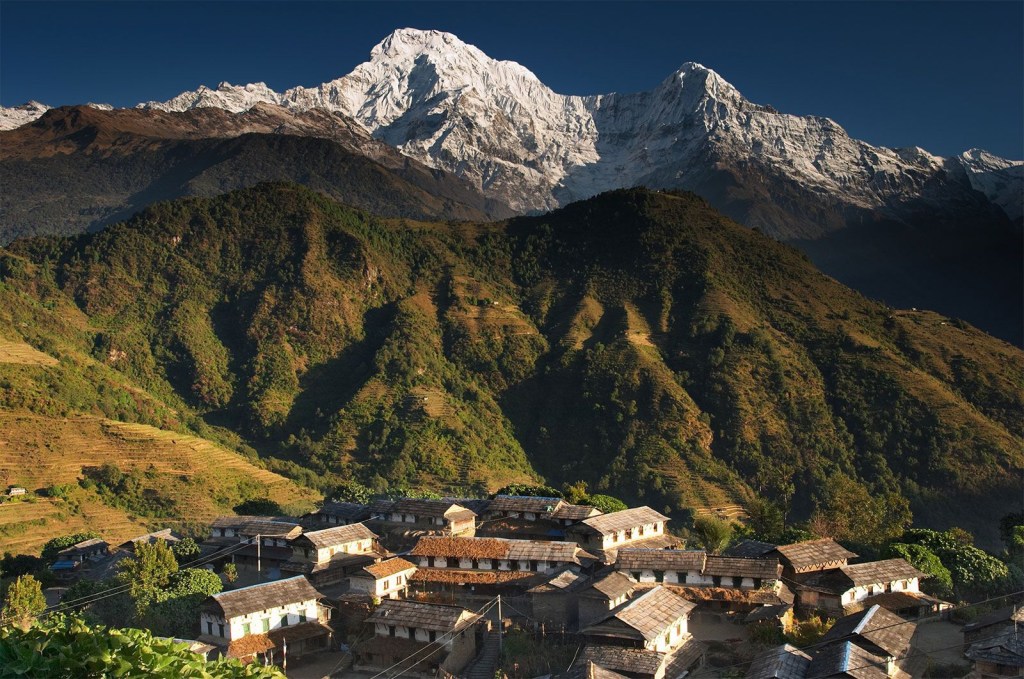
The Himalayan mountain range stretches from Brahmaputra to the Indus River. It ranges over 2500 km and about 250 km thick. So how were these Great Himalayas built?

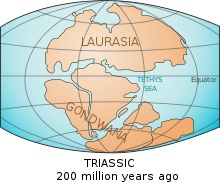
During the late Neoprotozoic era (1000mya-541mya) and early Palaeozoic (541-252mya) , the Indian tectonic plate was a part of the southern Gondwana land .This was separated by the Eurasian plate by the large Tethys ocean . In the early Carboniferous period , an early stage of rifting developed between the Indian subcontinent and the Gondwana land.

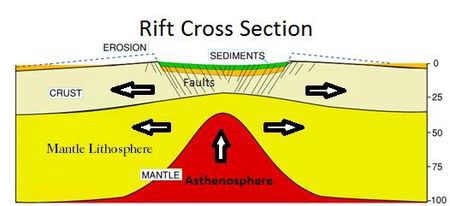
What is a Rift?

A rift is a zone where the lithosphere layer is stretched or pulled apart. In the early stage ,the upper part of the lithosphere starts to extend . As it evolves,some of the fault zones start to connect with each other and become even larger bounding faults .The crust becomes thin causing the rise of Asthenosphere. This way two new tectonic plates are formed from the older single one.

In the Norian period(210 mya), after a major drifting episode the Gondwana land split into two parts. The Indian subcontinent became a part of East Gondwana along with Australia and Antarctica. Later in the early Cretaceous(130 -125 mya), the Indian plate broke off from Australia and Antarctica with the ‘formation’ of Southern Indian Ocean.

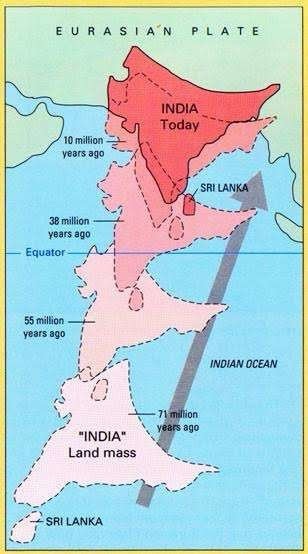
At the end of Cretaceous period ,the Indian plate started drifting northward at speeds of about 18 to 20 cm per year which is the highest among all the continental drifts. It covered a distance of more than 6000 km in that time and rotated about 45° counterclockwise relative to the Eurasian plate. Interaction of the Eurasian plate with the coming Indian plate started at about 65 million years ago with the oceanic crust of the latter subducting under the Eurasian plate.

This started the formation of the youngest mountain ranges of the world , The Great Himalayas . This collision was so strong that till present also the Indian plate is colliding northward and the Himalayas continue to rise more than 5 mm a year but due to the stretching of Eurasian plate horizontally and effect of gravity this rising is affected.

Effect on Climate

According to a report of ‘Nature’ magazine, the Himalayan range ormation may have also started Asia’s monsoon about 8 million years ago and contributed to several ice ages that began 2.5 million years ago. The mountain’s and Tibetan Plateau’s uplift gave rise to a dry Central Asia that resulted in the formation of Gobi and Mongolian deserts.

This may have caused a dustier phase in the earth’s atmosphere . The Himalayan range obstructs the passage of cold continental air from north into India in winter and also forces the south westerly monsoon winds to give up most of their moisture before crossing the range northward.

The Himalayas are gigantic and lively and on the other hand they are calm and tranquil, perfect for the soul to grow spiritually.

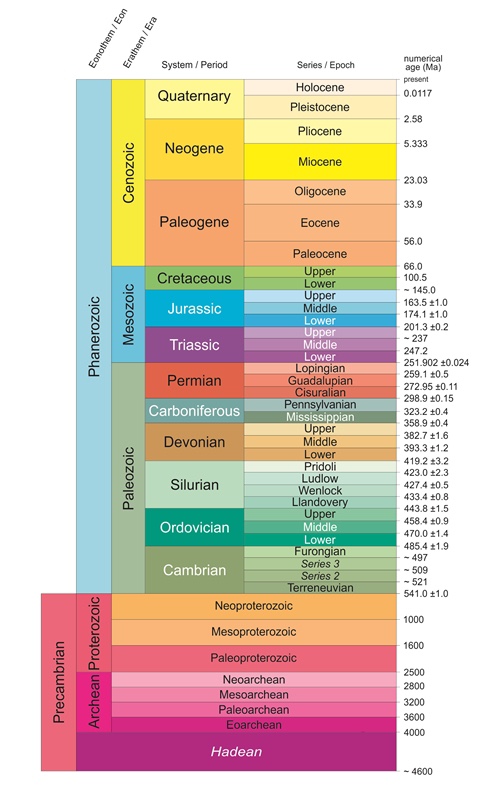
The Geological time scale

Geologists subdivide timescale by events that happened in geological history . These time intervals are unequal in length, geological timescale describes the timings and relationship of those events that changed Earth’s geology. This time scale is developed by carefully studying and analysing the rock layers ,evolution of species, rock dating, fossil samples and atmosphere.

Eons

Eons are the largest divisions in geological Time and span to millions of years . There are four eons catalogued till present day, these are — Hadean, Archean, Protozoic and Phenerozoic eon . The first three eons are collectively referred to as the Precambrian super eon.

Hadean Eon

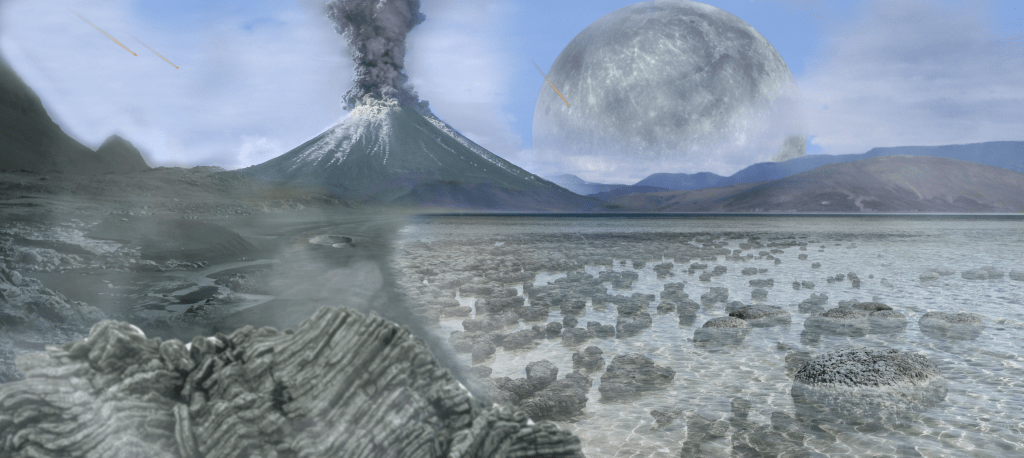
The Hadean eon began when the earth formed about 4.6 billion years ago and ended 4 billion years ago . The planet’s condition was very dynamic , earth was still very hot and frequently collided with other planetary bodies.

Archean Eon

It began about 4 billion years ago till 2.5 billion years . The earth’s crust slowly started cooling and stabilising to form landmass .The earliest lifeform probably anaerobic microbes called stromatolites survived. example – Cyanobacteria, Proteo bacteria , microbial mats. Volcanic activity was very high and Archean rocks were often metamorphosised water segments like volcanic segments and mud rocks.

It is further divided into eras:

Eoarchean

( 4000 mya-3600 mya)

(mya- million years ago)

  • The first Supercontinent Vaalbara appeared.
  • Earth possessed a firm crust for the first time.
  • Prokaryotic microbes called Archaea appeared.

Paleoarchean

( 3600-3200mya)
  • Earliest confirmed evidence of life.
  • Stromatolites may have been created.
  • Microbial mats work present.

Mesoarchean

( 3200-2800mya)
  • Tectonic plates subduction.
  • Expansion of microbial life.
  • Ocean temperatures around 55-85°C
  • High levels of methane and carbon dioxide in the atmosphere.

Neoarchean

(2800-2500 mya)
  • Major development in complex life and continued formation.
  • Rise of oxygen in the atmosphere.

Proterozoic Eon

It spanned the interval from 2500-541 mya . For the first time oxygen appeared in the earth’s atmosphere . Mountain formation activity began because of the continuation of continental accretion .Glaciers began to form . Processes like subduction were active due to high tectonic plate movement. It is further divided into 3 eras-

Paleoproterozoic era

(2500-1600 mya)
  • Longest era
  • Continents stabilised
  • One day duration was 20 hours.
  • Enormous increase in oxygen.
  • Anaerobic life form largely died because oxygen was highly toxic for them.
  • First mass extinction happened.
  • Eukaryotes emerged.
  • Periods in which this era is divided- Siderian, Phyacean and Orosirian.

Mesoproterozoic era

( 1600-1000 mya)
  • Evolution of sexual reproduction.
  • Development of multi cellular organisms.
  • Break up of Columbia supercontinent.
  • Periods – Ectasian and Stenian .

Neoproterozoic era

( 1000-541 mya)
  • Most glaciation.
  • Ice sheets reached equator.
  • Snowball Earth formed.
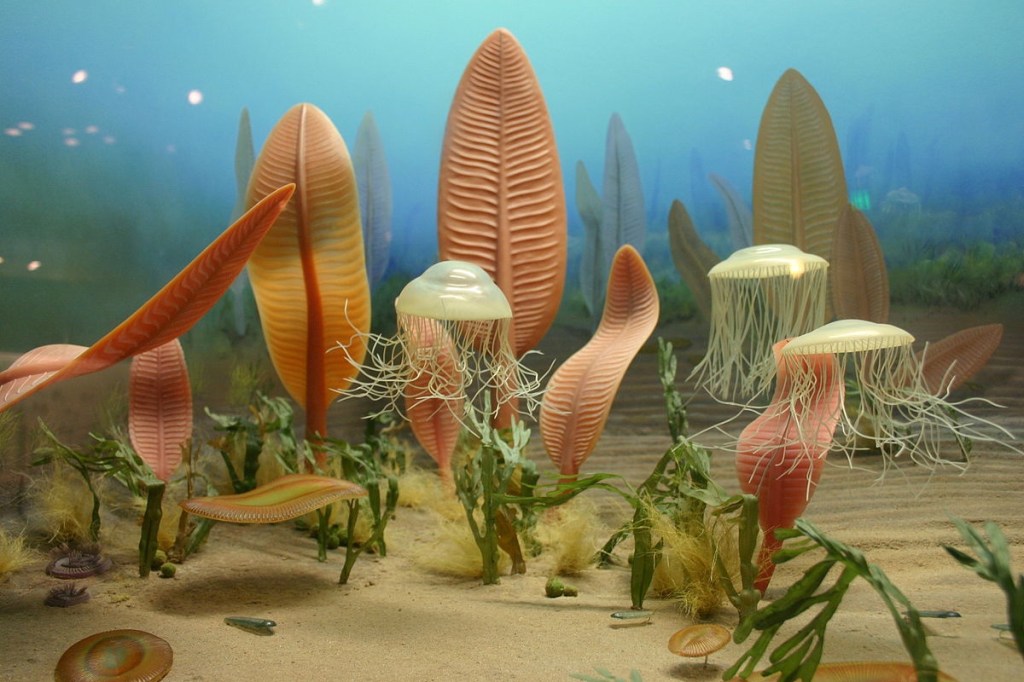
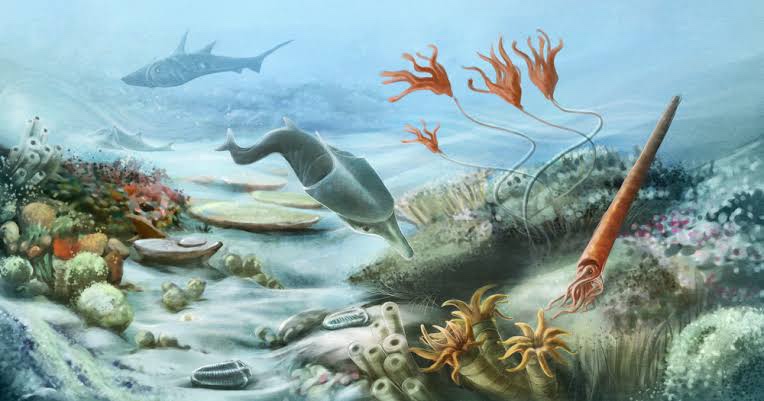
  • First appearance of Trilobites ans Sponges.
  • Periods- Tonian, Cryogenian and Ediacaran.

Phanerozoic Eon

It covers timeline from 541 million years ago to the present. At the start of this eon , complex plants and multi cellular organisms with hardshells appeared . There was a single landmass known as Pangaea. It is divided into 4 eras:

Paleozoic era

(541-252 mya)
  • Most rapid diversification of life called Cambrian explosion.
  • Evolution of arthropods ,fish and amphibians.
  • Life transition to the land.
  • Forests of primitive plants appeared.
  • Largest extinction event called Permian- Triassic extinction event happened.
  • Appearance of invertebrate animals phyla.
  • Reptiles prospered.
  • Periods- Cambrian, Ordovian, Silurian, Devonian, Carboniferrous and Permian.

Mesozoic era

(252-66 mya)
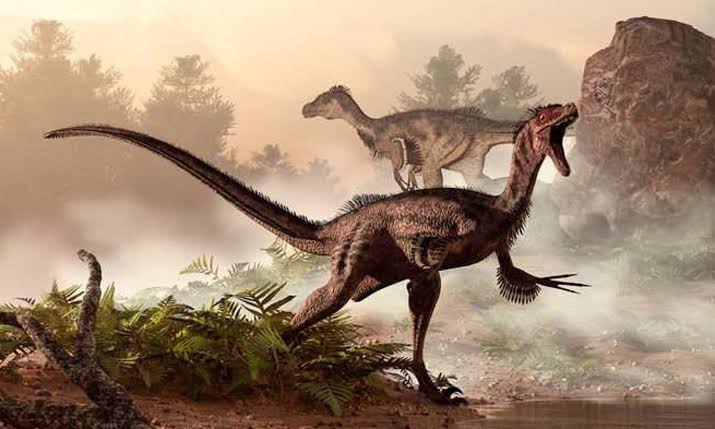
  • Dominance of reptiles like dinosaurs.
  • Abundance of Conifers and Ferns.
  • Breakup of Pangaea.
  • Dinosaurs appeared in mid Triassic period and remained till early Jurassic period (about 150-135 mya).
  • Archaic birds appeared in Jurassic period.
  • Flowering plants appeared in early Cretaceous period.
  • Periods- Triassic, Jurassic and Cretaceous.

Cenozoic era

( 66 mya – present)
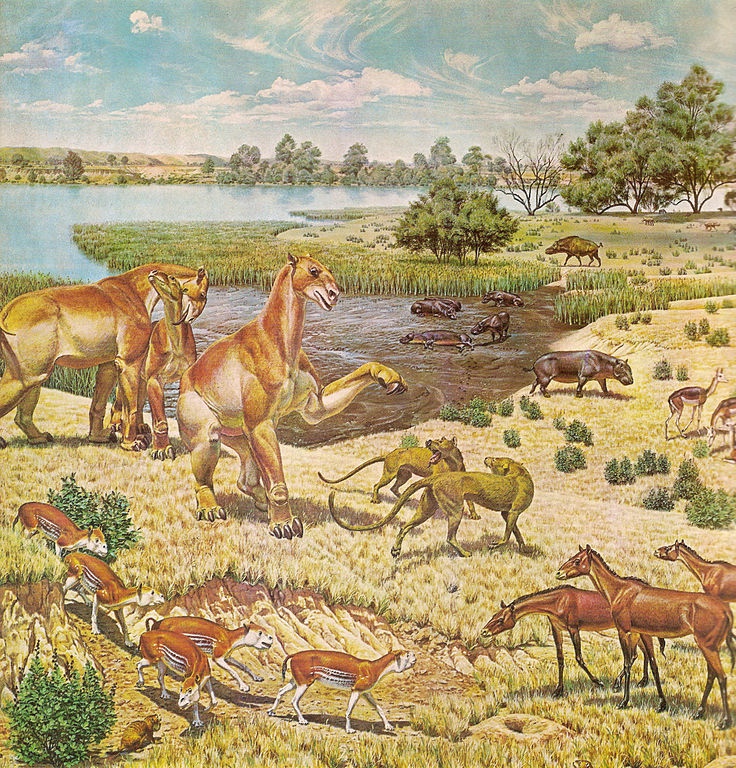
  • Dominance of mammals , birds and flowering plants.
  • Cool and dry climate.
  • Complex life evolved.
  • This error started with mass extinction event called Cretaceous spell Eugene extension event in which many species including non-even dinosaurs became extinct possibly due to a large asteroid impact
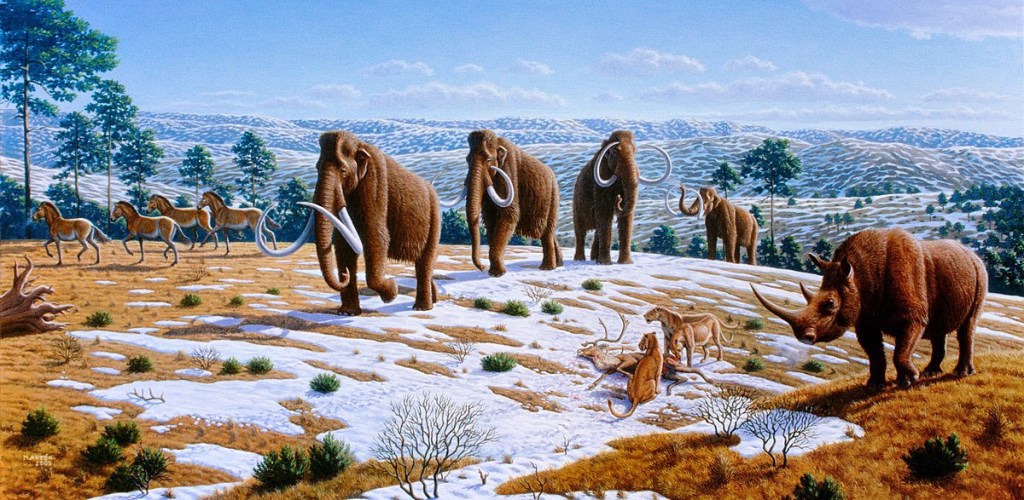
  • The Quarternary period saw Mammoths and wooly animals. It was marked by ice ages due to the cooling trend of earth.
  • Around 50 million years ago , Earth entered a cooling period mainly due to the collision of Indian tectonic plate with Eurasia. This caused the rise in the Himalayas.
  • Periods- Paleogene, Neogene and Quaternary.
The  Earth went through many violent and beautiful events before Homosapians arrived . We must make sure to protect and cherish our dear planet . 

Branches of Philosophy

Aesthetics

This branch of philosophy deals with beauty , art and taste of things. It examines what happens in our minds when we are involved in aesthetic objects like art, music, poetry or while exploring Nature. Aesthetics consider why we like some specific thing over other. Aesthetic judgements may be linked to emotions and mood. When we say an object or art piece is beautiful , it triggers an aesthetic pleasure in ourselves . Beauty is a positive aesthetic value in contrast to ugliness, which is negative.

Epistemology

It deals with questions on nature and scope of knowledge. It focuses on sources of people’s consciousness, cognition ( structure and forms) and the relationship between mind and reality. It examines questions such as ‘ what we mean when we say we know something?’ ; the ability to differentiate between what one knows and what one believes.

Ethics

Ethics is the study of morals and the concept of right and wrong conduct. It deals with questions such as – What is morality ; does morality exists? It has 3 types :

Meta ethics ~ deals with foundations and nature of moral values.

Normative ethics ~ deals with systems of morality and questions on how one ought to act morally.

Applied ethics~ deals with what a person is obliged to do in specific situations.

Logic

It is the act of being rational by application of reason. The reasoning process can be done well or badly. Logic allows human beings to distinguish good reasoning from bad. In logic , we study rules and techniques that enables us to do correct ( whether good /bad ) reasoning. A logic must formulate precise standards for evaluating reasoning by developing proper set of arguments.

Metaphysics

Metaphysics deals with existence. It concerns with the fundamental nature of reality.

Theme 1~ The study of first causes — It studies that which does not change and from which the world has come into play. Some identify it with God.

Theme 2~ The study of being— Study of the fundamental categories of being or which exists. This field is also called Ontology.

It is further divided into disciplines such as cosmology, rational psychology and theology. Specific issues like immortality , free will are discussed.

Philosophy of mind

The branch of philosophy that deals with nature of mind and its relation with body . The aspects of mind such as thought, mental properties , consciousness are studied. It addresses issues like the hard problem of consciousness. It tries to explain how a supposedly non materialistic mind can influence material body and vica-versa. Rene Descartes was the first person to clearly identify mind with consciousness and self-awareness and to distinguish it from the brain , where intelligence lies.

Axiology

It is the study of origin of values or study of worth. Through axiology, one can determine what is valuable and why something can be said to be valuable.

Philosophy of language

It investigates nature of language , meaning, language use and language cognition. It explains how the meaning of complex sentences is derived from the meaning of their parts.

Political philosophy

Political philosophers seek to establish basic principles that will justify the formation of state, show individuals their rights and tell the fair distribution of society’s resources among its members . This usually involves analysing ideas like freedom , justice , authority and democracy and then applying them to institutions in a methodological way.

Philosophy of Science

It studies assumptions , foundation and implications of science. Questions addressed are: What is science; does science lead to certainty and truth; nature of statements and conclusions or how does science explain , predict and harness technology. It deals with the reliability of scientific theories and the ultimate purpose of science .

Philosophy in different parts of the world

The word philosophy means ‘ love of wisdom ’ in Greek. It is the pursuit of wisdom , truth and knowledge. It is the study of life’s fundamental questions involving truth, morality, ethics, reasons, logic and existence. A human being , at some point in his life , has wondered upon questions such as ‘ why am I here’ , ‘what is truth’, ‘what is reality’ , ‘is there a free will’ , ‘ what is right and wrong’ etc. These questions come in the realm of philosophy. It is closely related to natural sciences.

History of philosophy

Western philosophy

The ancient western era was dominated by Greek philosophical school of thoughts. This era was largely influenced by Socrates and Aristotle. The common topics discussed included metaphysics, cosmology, atomism and monism . In the medieval period , with the rise of the Roman Empire and Christianity , questions such as mature of God , evil & good were pondered upon. Modern philosophy concerned with developing a secular foundation and discarded the authority of religion.

Islamic Philosophy

Islamic philosophy is mostly done in Arabic . Two main schools of thought were Kalam ( which focused on Islamic theology) and Falsafa. Philosophers such as Al Kindi , Avicenna and Averroes were greatly influenced by the work of Aristotle whereas Al Ghazali was highly critical of him. The 19th and 20th century Arab world witnessed Nahda movement ( The Awakening or The Arab Renaissance). This shaped the modern Islamic philosophy.

Indian Philosophy

Indian philosophy included concepts like dharma , karma, pramana , dukha-sukha and moksh. It is grouped based on teachings of Vedas and Upanishads . The Himdu philosophers of various orthodox ( astika) schools investigated topics such as metaphysics, ethics , psychology. These schools presented different interpretation within the framework of Vedic knowledge. On the other side , the unorthodox (nastika) traditions rejected the ideas of Atman , Brahman and Ishwara . Jainism accepted atman bit discarded ishwara, vedas and brahman. Buddhism only accepted concept of rebirth and karma.

East Asian Philosophy

The Chinese philosophy saw the rise of schools such as Confucianism , Legalism and Taoism. These traditions developed metaphysical , political and ethical theories such as Tao, Yin & Yang , Ren & Li. Buddhism arrived in China through Silk route and transformed into Chinese form Zen. Many different philosophies such as that of Korea, Japan and Vietnam were influenced by the Chinese philosophy. In modern era, China and Japan philosophers have incorporated ideas of western philosophy. Kokugaku thinker from Japan returned to pure traditions called Shinto that is untainted by foreign influence.

Indigenous American Philosophy

This consists of variety of beliefs including principle of presence of ‘ The Great Spirit’ and concept of Orenda or spiritual power. The practices to access the transcendental experiences of mind came to known as Shamanism. The Nahua metaphysics proposed the concept of an ultimate universal energy which it says is single, vital , self generating sacred force.

Shashi Tharoor and his ideology on British rule in India

An author, politician and former International civil servant, Shashi Tharoor, once said – ” India matters to me and i would like to matter to India.”
He is currently a third-term Lok Sabha MP representing the Thiruvananthapuram constituency. People mostly regard him as “Oxford dictionary”, because of his impeccable knowledge of English Literature. Shashi Tharoor, in his book named An Era of Darkness: The British empire in India that was published in the year 2016 talked about colonization and the
disastrous effects it had on Indians. In his book, he explained about the evils of British rule and how it affected us Indians, deeply explaining how we were being trampled upon by the Britishers and treated as animals without any freedom. Tharoor wrote in details how the Britishers looted India off of it’s rich resources, culture and wealth. In one of the most famous lines from the book, he writes:

“They (the British) basked in the Indian sun and yearned for their cold and fog-ridden homeland; they sent the money they had taken off the perspiring brow of the Indian worker to England; and whatever little they did for India, they ensured India paid for it in excess. And at the end of it all, they went home to enjoy their retirements in damp little cottages with Indian names, their alien rest cushioned by generous pensions supplied by Indian taxpayers.” Tharoor has remarked that every single thing or development that occured in British India such as establisment of Railways, parliamentary democracy, rule of law and others were simply done for their own benefits and luxury and not for Indians or for India’s progress and betterment. Tharoor explains that though some British legacies proves to be useful today, however they were just mere side effects that came along with colonial authoritarianism.
Tharoor genuinely believes that after 200 years of immense brutality and injustice to Indians, Britain owes an apology to India and Indians. Some of the most outrageous events in history of India took place under British reign. For instance, according to recent studies, the Bengal Famine of 1943 that costed millions of lives was caused not only by drought but also by the complete failure of the policy of British India under the Ministry of Winston Churchill, who is remembered as the man who caused the Bengal famine. Furthermore, the horrendous Jallianwala Bagh massacre was a heinous crime committed under British Raj. Today, Indian society is divided along lines of caste, creed, religion and culture but it is little known fact that the Colonial Government ignited such divides and pitted one community against the other. Shashi Tharoor did a marvellous job with the book and made us realise what we had forgotten with passage of time.

The land that worships Living Goddessess!

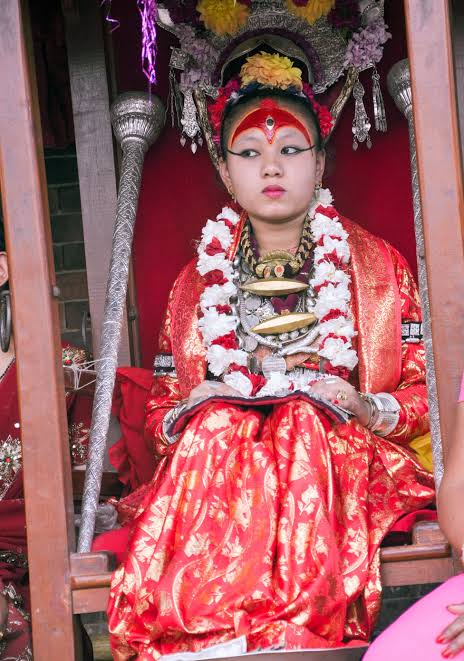
Nepal , also known as The Land of Mount Everest, one can find living goddessess called kumaris. Young girls as young as 3 year olds are worshipped as real life goddessess. These goddesses are not deemed as mortal beings by the people and they lead a very unique life. They can’t talk to anyone except their families, can only eat certain kind of food and are allowed to wear only red. They have to stay inside the Kumari Temple until the end of their reign and can only go outside 13 times a year. Their feet cannot touch the ground, so they are carried all the time. Everyday, the kumari is worshipped by hundreds of people who adorn her with gifts. For hundreds of years, the Nepalese believed that  Kumari is the reincarnation of Hindu goddess  Durga. However, not anyone can become a Kumari. These girls are volunteered by their parents to a special kind of audition where the priest chooses who the next Kumari will be. The girl has to have 32 characteristics of physical perfection. Some of them are flawless skin, black eyes, black hair, high forehead, thighs like those of a deer and many, many more. The child cannot have a scar or wound on her body. After this, the girl has to go through a very unique test where she is put in a room with 108 buffalo heads covered in a pool of blood and with men wearing masks and dancing around. If the girl gets scared or cries , immediately she is disqualified from being a kumari. However, if she doesn’t show any signs of fear, it only means that she has just proved her valour and has become a goddess. She can remain a goddess as long as she doesn’t hit puberty. The moment she gets her first period, the girl is no longer seen as a goddess but she returns back to being a mortal. Many people feel that this tradition is strange and goes against human rights of young girls. Many Nepalese have even protested but it is a tradition that the Nepalese have believed for over hundreds of years and it is a tradition where it gives them an opportunity to interact with a goddess and till this day, it is practised in Nepal.

You Must Try These Bihari Cuisines Before You Die

Dal Poori:

It doesn’t only sounds delicious but it taste even better. We, Indians are crazy for poori’ and dal poori is another level of happiness to the list.The mixture of gram flour with a lil of chatpata masala stuffing of the puri makes it yummier and though it’s a Dussehra special recipe, one need not have to wait for any such special occasions.
The Dal poori is served even in normal days in a Bihari family with a spicy ‘sabji’ or curd.

Dal Poori

Parwal ki Mithai:

The amazingly delicious sweet made of Vegetable! Parwal ki mithai is quite a famous sweet in Bihar. Though it is made out of Parwal which is a vegetable, it is fantabulous to taste, and is made by stuffing the pointed gourd with khoya, giving it the right balance of sweet, salty and healthy. If you havent tasted this unusual mithai, dont give it a miss.

Parwal Ki Mithai

Pedakiya :

Pedakiya is the Bihari version of Gujiya. It is Bihar’s most famous fried sweet, it is made by stuffing flour stuffed with suji (semolina), khoya or grated coconut and is made on almost every festival. Whether its Holi, Teej, Diwali or Chatt you can expect Pedakiya.

Pedakiya

Khaja :

 Another name in the long list of amazing desert from Bihar. This wafery sweet snack is made from flour and sugar, is deep fried and then dipped in hot sugar syrup.Khaja is has a strong sweet taste, so all those who has sweet tooth can taste Khaja for sure. Silao ka Khaja is very famous.

khaja

 Litti Chokha :

The signature dish of Bihar and Biharis. If you have a Bihari friend, you must have tried Litti Chokha at least once in your life time.It is baked from wheat flour dough that is stuffed with a mixture of roasted gram flour, spices, lemon juice and pickle. And is served with chokha.Chokha is baked and pulped vegetables mixed with spices and onion.Litti these days are being served with chicken and mutton gravy as well for non Veg lovers.

littiii

Malpua :

Malpua is that sweetmeat to which all Biharis swear by for every special event and festival. Whether it’s Holi or Eid, Durga Puja or Ramzan the festival is incomplete if you haven’t eaten Malpua. Its batter is made by mixing flour, milk, sugar and mashed bananas and is deep fried in such a way that the edges go all crispy while the center is all soft. Mouth watering isn’t it? Tust me, if you are a sweet tooth, you cannot resist Malpua.

Malpua

Thekua/Khajuria:

Thekua is one of the most important ingredient  of ‘Chatt’ puja in Bihar. Ask any Bihari friend the occasions when this sweet is made at home and they all will say the same.Thekua or Khajuria is a snack made from wheat flour; jaggery or sugar mixed together, molded and deep fried in ghee.

Thekua

Nimki:

Stick Crackers: This snack made of flour and salt is deep fried. It is one of the perfect snack for evening chai.

nimki

The Bihari Kadi budi:

kadhis, from different parts of the country. The Bihari kadhi is a one that uses badi(pakoda) dumplings. It is considered inauspicious in Bihar to prepare plainkadhi without any dumplings.
Kadi badi

Tilkut :

Tilkut or bars of sesame seeds – a sweet cracker made by mixing the seeds either with jaggery or sugar – that is indelibly linked to Gaya, the birthplace of Buddhism, has been growing patrons not only in Bihar, but also in neighbouring countries like Pakistan and Bangladesh, and also the US. Come Makar Sakranti and every possible sweet shop in Bihar will sell one of these.

Bihari Cuisine

Peda:

Bihari peda-

Khurma/ShakarPala:

This snack made of flour, is deep fried and dipped in sugar syrup. As the sugar syrup cools off, it crystallizes.

khurma shakarpala

11 Lessons from Bhagavad Gita Which Teaches The Very Roots Of Our Life

1. Concentrate On Your Goal Do Your Work And Focus Not On The Result

You have a certain goal in mind. To work to the topmost position in your care. Will we take the example of CEO? Your dream is to achieve the coveted position within five years. So, you will have to prepare for the role. Attending team management classes, keeping a hawk eye on the recent tech trends and all. But, you wail away time in dreaming about the perks and rewards of a CEO. Do you feel achievement of the goal is easy? NO, it is difficult.This is the main reason, Bhagavad Gita focuses on the importance of doing your duty rather than on the goal. When you focus on the rewards, you become prone to worries in case of failure. You also get depressed if the result is not positive. So it is always advisable to concentrate on the target. You can get more rewards after attaining the goal.

2. Human Life Is Full Of Battles: Never Shirk In fear – Fight To The Last, Stand Your Ground

The Supreme Power has created an even human being in a separate way – or will we say, Everyone is a MASTERPIECE. When every action you do turns negative against your goal, do not shirk in fear. Do not expect results. Always understand, it is fears and expectations that cause restrictions and limitations. A valuable lesson from Bhagavad Gita that can shape your future.

3. One of the Best Lessons From Bhagavad Gita: Identity, Recognize and Accept Equality in Life

Now, this quote is a difficult one to follow. But, definitely, life will guide any person towards achieving the knowledge. After facing many challenges in life, you tend to see all living and non-living beings as equal. Let it be any circumstance – the feeling of suffering and joy will mean the same. You realize, the bodies are different but the SOUL is one. And that is the ULTIMATE TRUTH.

4. Desires Will Come To Your Mind And Go

As a human being, you are prone to getting desires. Yet, you should neither suppress a desire nor allow it to take control of your life and mind. The lessons in Bhagavad Gita advises you to watch and enjoy the show. Remember, but doing evil actions just for the sake of fulfilling desires is harmful. Getting caught in the chains of desire will always end in harm, stress and the result – rebirth.

5. A Mind Full Of Thoughts About Money Cannot Concentrate Nor Meditate

You can find mentions of meditation in various parts of Bhagavad Gita. Meditation is the best form of non-physical activity to achieve “Inner Peace” and “Sadhana.” The quote says that a human mind hell-bent on only attaining money cannot focus on meditation nor indulge in the “Inner Self.” So, the concerned person’s mind will always be unstable, and meditation is out of reach.

6. Whatever Has Happened Is Only For The Good Future. The Activities That Are Happening At Present Are Also For A Good Cause. The Happenings In The Future, They Are Also For A Good Future

Hope, you understand the above sentences. It emphasizes on the continuance of doing your duty, no matter the result – victory or failure. So, there is no need to sulk. The worst, you can do is to put the blame on others for a failure or seek revenge. Please note, every activity in this world happens for a reason. To make you understand the importance of human life. Remember, there are also many other living beings such as plants and animals. But none can change their fate, but you as a human. So, feel proud to be one and stop dancing to the tunes of small failures.You can bask, one time in glory and there will be a bad phase, where everyone will put you on the firing range. But that is the cycle of life. It is foolish to pay attention to the past. Remember you can design a GREAT FUTURE if you concentrate on the PRESENT.

7. Change is Permanent. This is Universal Law. You can either become a billionaire or Pauper in a second.

Difficult to believe this Lesson from the Bhagavad Gita? Clarification via an explanation. Just imagine, a billionaire has more than his worth of money in the shares market. Suppose, the stock market went for a nose dive? What will be his fate – A pauper? Let us say, a poor man won a lottery worth millions of dollars. Okay, here is the real one. A student who is poor, by using knowledge wins a prize worth a million in a quiz competition.In short, permanence is never in a human life. Even our Mother Earth is in constant rotation. SHE never stops. After the night comes the day. Sweet rain comes only after Summer. All religions consider “pride” a sign of immaturity. When you accept change as a part of life, you can handle all the tough situations in a calm manner.

8. Fear Factor is a Disability

The achievement will be nil if you have the fear factor in the mind. Fear, in other words, means doubts in your ability. It will not only make you forget the goal out of fear but will make you worthless. But in case of fearless souls, the sky is the limit. Fear of the future and self-respect are the two obstacles to reach your goal.

9. You Are Born Empty-Handed, And You Will Leave This Mother Earth Empty-Handed

Are you on the path to gain more wealth? You will be taking none of the wealth nor other material possessions to your grave. You are born without a loin in this world, and your body goes the same way to the other world. Ahem! You cannot take even your mobile phone nor a picture of Ranbir Kapoor.

10. Lust, Anger as well Greed – Ways to Self-destruction

The three mentioned are always harmful to the entire mankind. Extreme craving for sex will turn a human into a sex maniac or nymphomaniac. Anger – people will think you are dominating them and you lose friendships/relationships. Greed – you are always restless. The body becomes host to problems such as high blood pressure and jealousy.

11. A Man Makes His Life Based On His Beliefs

Your thoughts define your life. If you think to be happy even in times of failure, you will be happy. If you let revenge take over the mind even in times of success, you harbor negative impressions. These are but two examples. Superstition, revenge, anger, insults are some negative impressions. They prevent us from becoming a human being.

The Bhagavad Gita is a vast book, but it is vital to learn it under the guidance of a MASTER. In this materialistic world, you are prone to negative feelings. It may be either because of your actions or others’. But when you become the Master of your own mind, you will never again feel the agony of pain or sorrow.

According to ancient texts, a human’s birth is to achieve the highest potential. In every religion, sacred texts show the followers the Divine Path. And Lessons in Bhagavad Gita gives us practical impressions of human principles. Let us read and make our life meaningful!

Top 5 tourist destination of Jaipur that you must visit

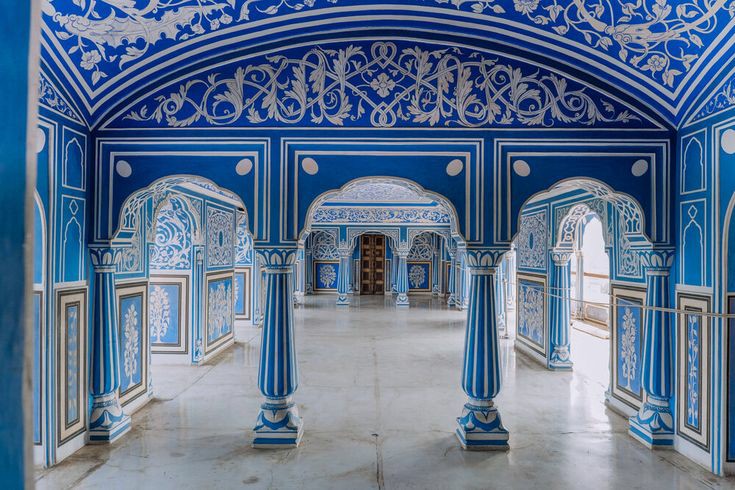
Jaipur is always honored for its magnetic heritage beauty which is indiscreet from more than thousands of years. And, if you are a lover of the wild, culture and history, then travel to Jaipur and celebrate this day by visiting some of its Heritage Sites.No trip to India is complete without spending time in Jaipur. Affectionately nicknamed “The Pink City” for the blushing color of its historic buildings, Jaipur is a princely wonderland of culture and heritage, brimming with architectural gems.

Jaipur, the Pink City of India, is an exotic destination, to say the least. From royal palaces to peppy pubs and from regal forts to plush restaurants, the city offers a fascinating mix of attractions for an avid traveler. And let’s not forget the welcoming vibe of the city, a quality that’s inherent to Rajasthan’s imperial culture and heritage. Even the hotels in Jaipur extend warm hospitality to their guests. When you are in such a warm and vibrant setting, there’s just one thing you should do – soak in the splendor of the city to the hilt. It Jaipur holds the distinction of being the first planned city of India. Renowned globally for its coloured gems, the capital city of Rajasthan combines the allure of its ancient history with all the advantages of a metropolis. The bustling modern city is one of the three corners of the golden triangle that includes Delhi, Agra and Jaipur.

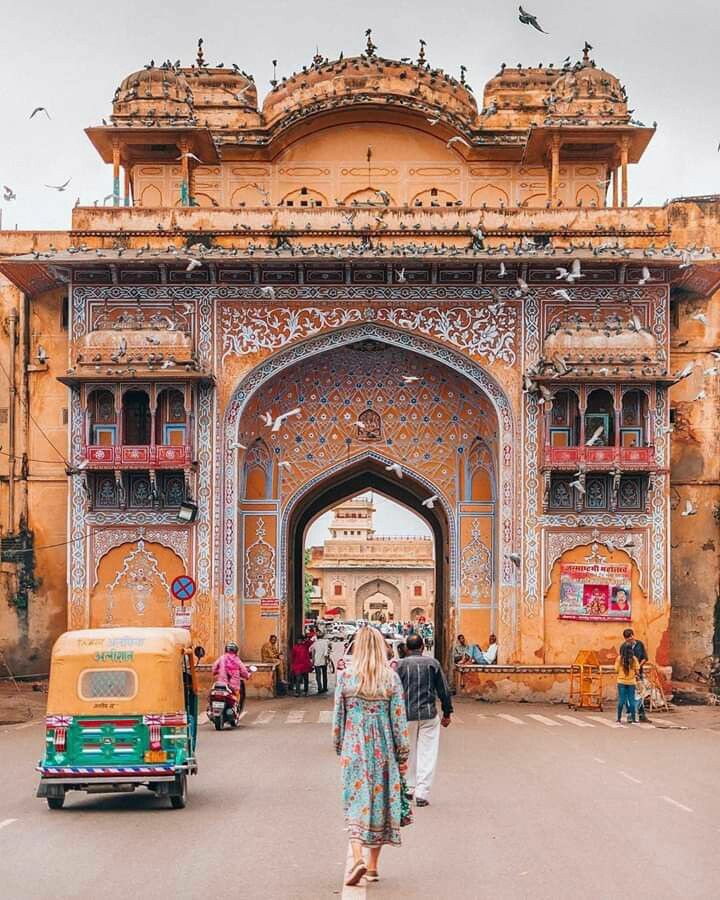
The spatial organization of the historic walled city of Jaipur continues to reflect the 18th century grid-iron plan. The architectural components like the gates and city walls, bazaars, chaupars and chowkris, historic structures, havelis, religious buildings, and water structures reflect the urban ensemble of the walled city of Jaipur as conceived from the 18th to the early 20th centuries. The materials and substance are largely original, primarily lime and stone. The bazaars (market areas) have been recently conserved using traditional materials. In some cases, 20th century structures use cement concrete but recreate the original architectural vocabulary.If you fancy elephant rides, you need to be in Jaipur to have a royal ride on the elephants. You can customize the rides the way you want, take elephant rides on jungles, through villages, in Biological Park and many more.If these are not enough to decide in favor of Jaipur, go ahead and have a look at the top list of attractions in Jaipur.

There is no death of historical places in Jaipur. A city with that embodies vibrant royalty and heritage, Jaipur is a must-visit for history buffs.Here is the list of 5 Top Historical Places In Jaipur & Best Monuments In The City.

1.Hawa mahal

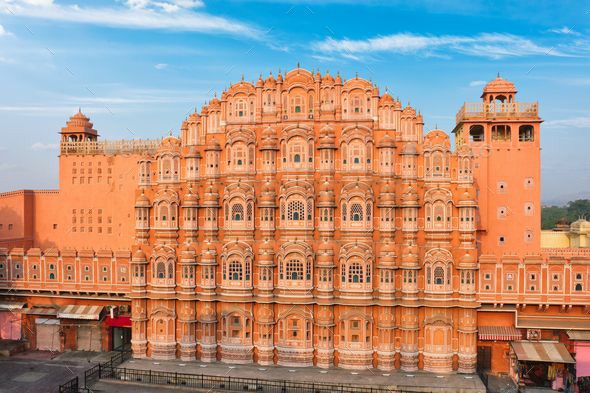
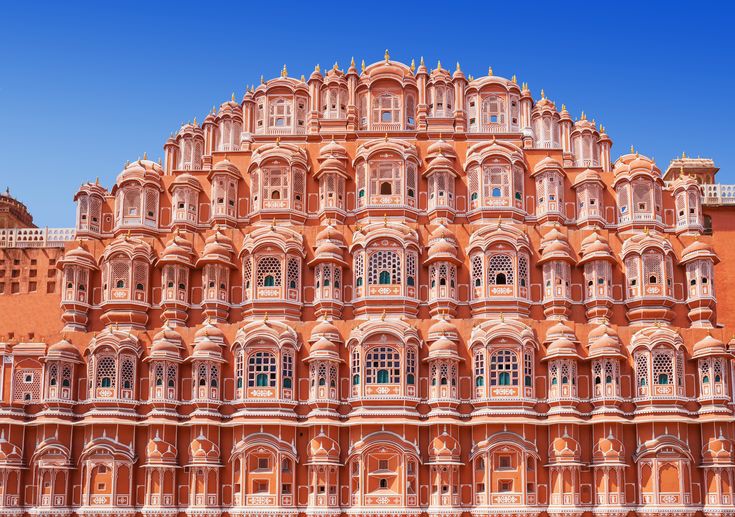
Hawa Mahal is also known as the palace of Winds because of its striking five-storey exterior, which is akin to honeycomb 953 peep windows that keep the palace cool when wind blows. Interestingly, Hawa Mahal is the tallest building in the world without any foundation and there’s isn’t any door in the front; the palace can be entered from behind. It is regarded as the signature building of Jaipur and was built by Maharaja Sawai Pratap Singh. It is an iconic historical place of Jaipur. Hawa Mahal derives its name from its unique structure, which is a mesh of small windows that allowed cool wind to enter the palace and hence kept the palace comfortable during the hot summer months.

2.Amer fort

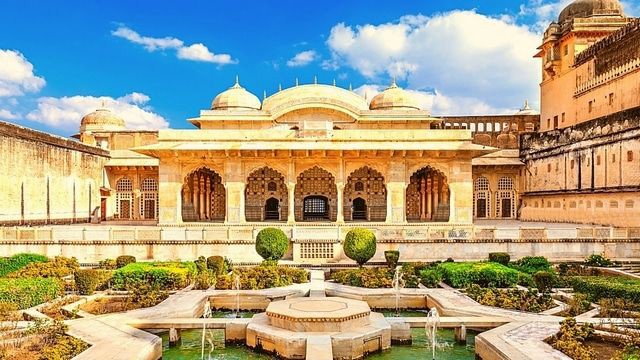
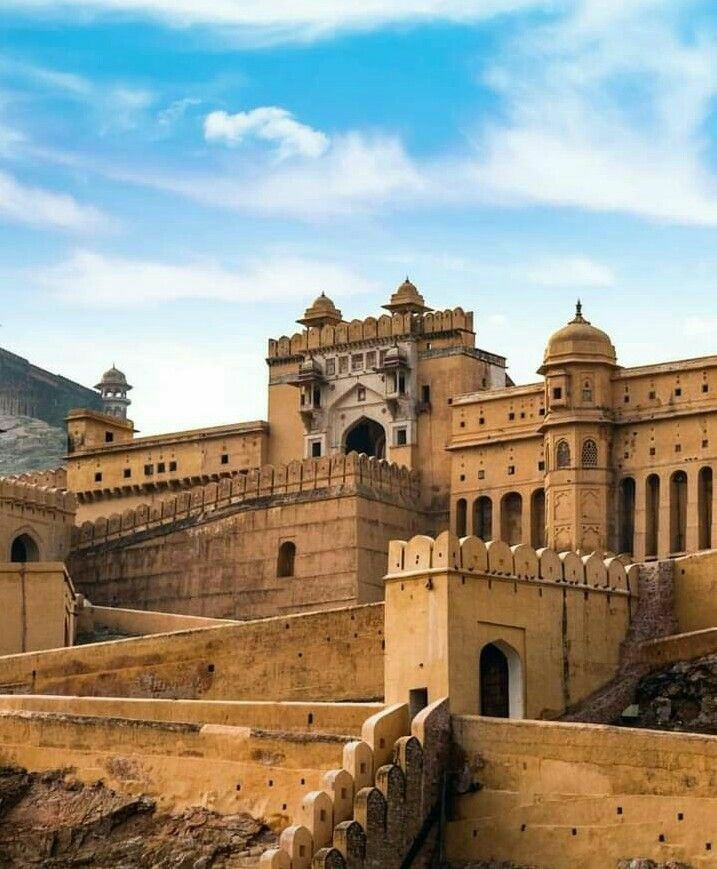
Amer Fort is a majestic citadel built by HH Maan Singh Ji I. The capital of Rajasthan before Jaipur , it is popular among local and overseas tourists for the temples , elephant rides right up to the fort and the Sound and Light Show narrated in Amitabh Bachchan’s baritone, which is a pure tribute to Rajputana heritage. The Sheesh Mahal within the fort, which is festooned with thousands of glass mirrors on its walls and ceiling, offers a fascinating aura to the visitors of this UNESCO’s World Heritage Site in Jaipur. It once served as a capital city of Rajasthan and is one of a prominent tourist attraction today with visitors coming from all over the globe.

3.city palace

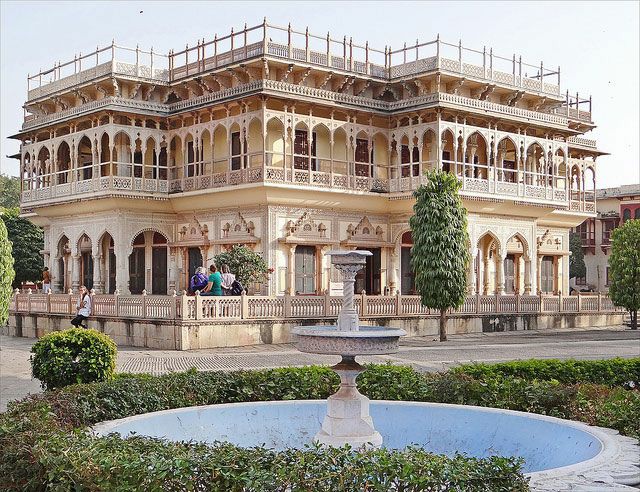
Located in the heart of the city, the City Palace is one of the most remarkable tourist attractions in Jaipur. The architecture of this palace is a splendid blend of Rajput and Mughal styles.Protected by huge guard walls, the fairy-tale-like structure is still the home of Jaipur’s modern-day royal family, and is more extravagant and enchanting than you might imagine. Adorned with sprawling gardens, courtyards, halls, royal residences, and art galleries, every part of this palace reflects Rajputana glory. The palace also houses a museum where you will come across the royal garments used by Maharaja Sawai Man Singh II and Maharaja Sawai Madho Singh I.The current occupants reside in the most eye-catching building, the Chandra Mahal, an elegant structure with curved eaves and domed rooftops. Each of its seven stories features an entirely different style. The ground floor is included in the price of admission, but you’ll need to book a private tour to go upstairs.
4.Nahargarh Fort

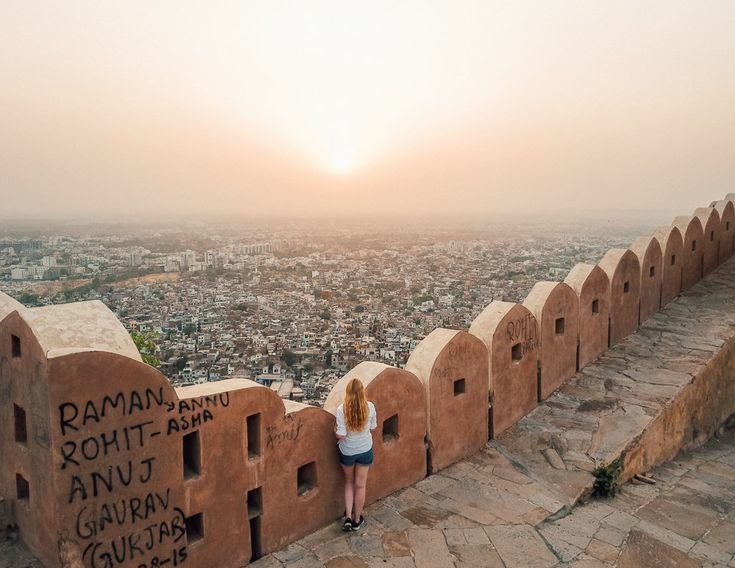
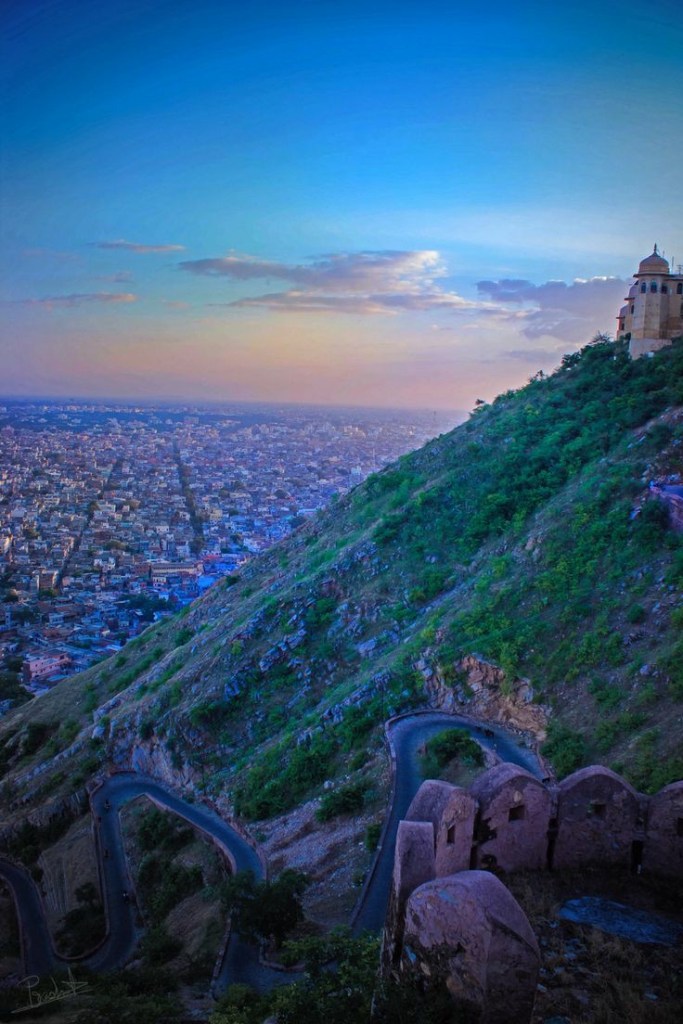
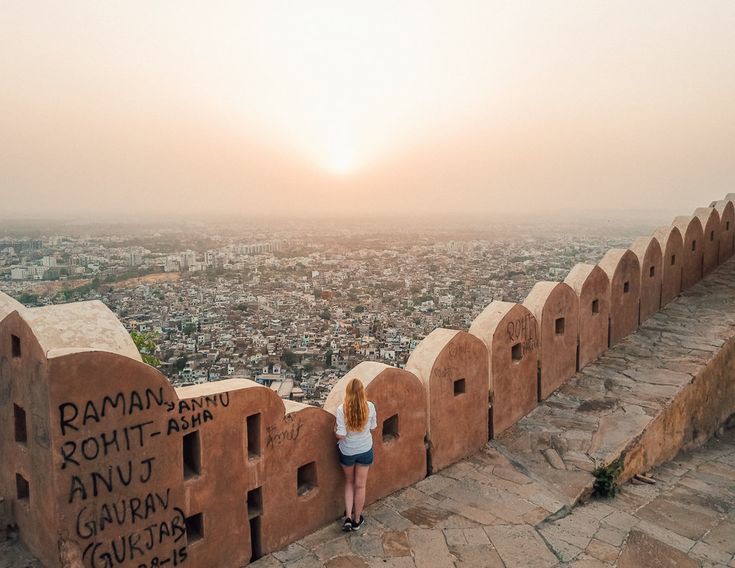
The rocky ridges of the Aravali Hills cradle Nahargarh Fort, a majestic monument that overlooks Jaipur and offers a stunning view of the city’s landscape. Built in 1734 by Jai Singh II, the then Maharaja of Jaipur, Nahargarh Fort was part of the city’s defense circle, along with Amer Fort and Jaigarh Fort. The fort served as a hunting retreat for the royal family. Today it is a splendid viewpoint to watch glorious sunsets over the Pink City. When it comes to sightseeing around Jaipur, the views don’t get better than what you’ll find at Nahargarh Fort.Also known as Tiger Fort, the nearly 300-year-old fort overlooks the entire city from atop the Aravalli Hills—a prime location for the structure to defend Jaipur against enemies many years ago.
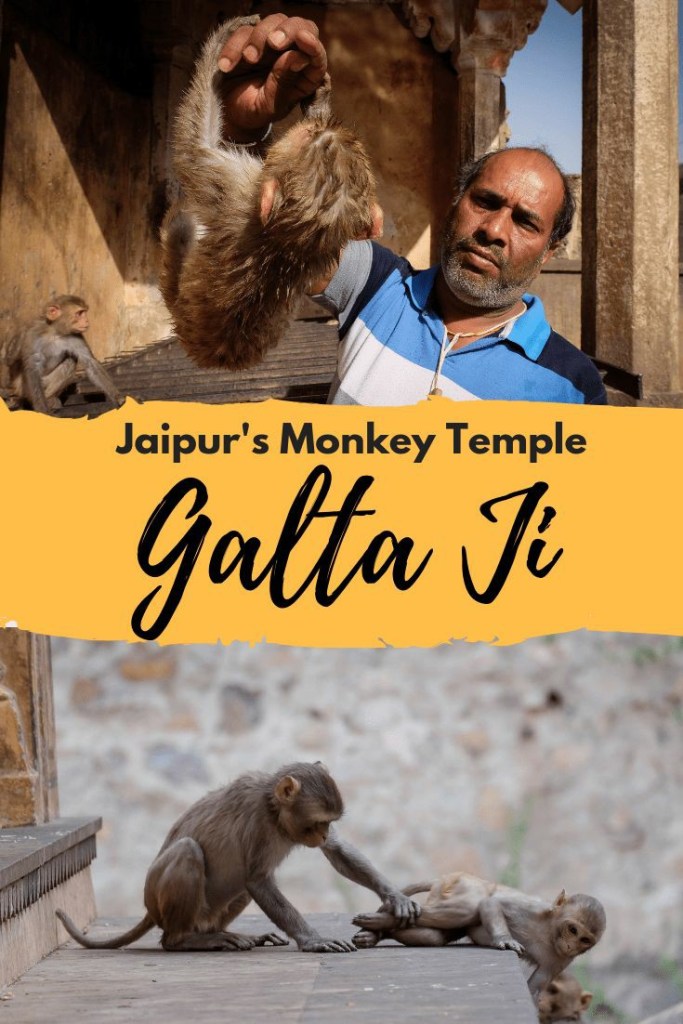
5.Galta Ji

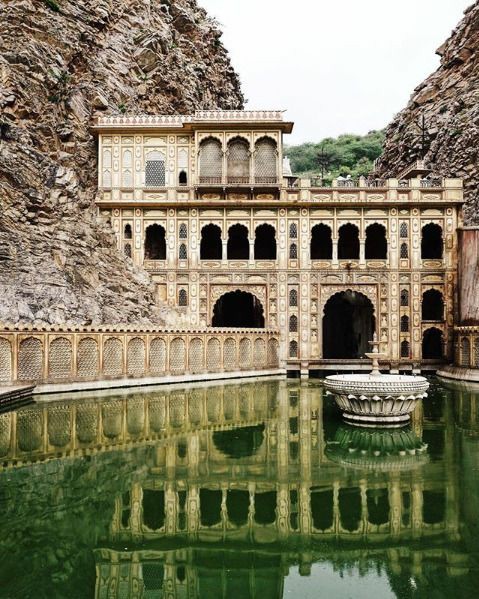
Nestled between cliffs, the temple features a few sacred water tanks, some with modest fountains, as well as frescoes that tell tales about Hindu god Krishna.While the official name for this place is Galta Ji, it’s better known as the Monkey Temple for the hundreds of macaques and langurs that live here. Daring tourists might opt to buy a handful of peanuts at the gate to tempt the monkeys, but you’re better off just watching the rambunctious creatures from a distance.This temple complex is known for its brilliant architecture and religious significance.Visitors and pilgrims can ascend the crevasse, continuing past the highest water pool to a hilltop temple from there are views of Jaipur and its fortifications spreads out across the valley floor. It is believed that a Saint named Galav lived here, practiced meditation, and did penance.

There is no end to the tourist destination in Jaipur but the above mentioned are probably the most famous and most visited destination in Jaipur. No place in india is culturally as rich as jaipur and above all , the various monuments and palaces adds to its beauty. If you are passionate about the strong forts and marvelous architecture that flaunt the expertise of old artisans,then Jaipur is where you need to be on your next vacation.