Safety Of Women In Public Transport

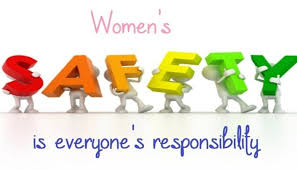
Have you ever travelled in a public transport or in any bus, train, or metro train? Do you think public transports are safe for women? Being a women do you feel safe while travelling in any mode of public transport? Public transport is on essential service that provides individuals with access to work, to an education and to all of life’s opportunities. And yet, the access of many women and girls to safe public transport options is threatend by the potential of being assaulted or victimised. The findings revealed that 59% of women use public transport like buses, trains and on demand taxis as it is affordable but only 9% of women feel public transport is completely safe, while 3% claim it is completely unsafe and rest 47% claiming that they felt somewhat safe using it during the day, but not at night. The fear of molestation, assault, eve-teasing and male-gaze makes women feel unsafe in modes of public transport. Everyday 7 out of 10 women face some kind of bad behaviour, molestation, male-gaze while travelling in a public transport. Travelling late at night alone in train, bus, on demand taxis is a topic of concern for women. As you remember the Nirbhaya case happened in 2012, a 23 year old girl was beaten, gang raped and tortured in a bus in which she was travelling. Lack of road lighting is a key factor behind feeling unsafe, with 40% women stating only major roads were well lit. Sanitisation is also a problem for women in public transport/bus. Train stations and trains are vulnerable spaces for women due to crowded space or, due to isolated areas where there is no one available to intervene and help in case of emergency. Sexual assault, molestation and even rape are reported on trains and have been on the rise. Not reporting sexual harassment is also a common occurence. Only 30% women report the case of molestation as the women fears that reporting the case will degrade her family’s reputation. More than 50% of the cases remain upreported and the culprit live freely in the society.

The cases against women in public transport are on a rise but the following written measures can be taken to stop the increasing and high pace of these evil acts. Improving the lighting on the roads and on railways; bus and metro stations will have a direct influence over the perception of safety. Having more entry and exit prints to ease congestion. Improving infrastructure including toilets; staircase and pedestrain bridges; publicising helpline numbers; having functional and visible helpdesks where women can get immediate assistance; Making reporting incidents simple and easy so that more women do it- this can help show the patterns and trends and lead to pre-emptive solutions.

In conclusion, i would like to say that the world is changing at a rapid pace and we are living in the 21st century in a technological world but still the women in our society doesn’t feel safe while travelling in a public transport. Women fear molestation, rape, assault and male-gaze in public transport. Measures should be taken to safeguard women as women are the important pillar of our society and safeguarding them is the need of the hour. Men and boys should also be taught to respect women instead of disrespecting them and seeing them as a sex object. Both women and men are equal in society and should be treated equally and respected to make the society a better place for living.

Superstitious beliefs

ITCHY PALM- Good luck, BREAKING A MIRROR – Bad luck, FINDING A HORSESHOE- Good luck, BLACK CATS – Bad luck, Don’t go near a Peepal tree in the night, lemon and green chilies to avert, bathe after attending a funeral, don’t cut nails after sunset, avoid sweeping the floors in the evening……..

and there many such superstitions revolving around us where some are considered as good luck and bad luck as well. Technologies has been evolving by leaps and bounds every day but still all these superstitions may tend to hold a major place in many people’s lives. Most of us probably don’t know why we stumble a bit when we see a black cat on our way, give a little shudder when see Friday the 13th looming in the calendar or we say ‘god bless you’ when someone sneezes. Many raise questions of such superstitions the way they are said and others accept them unwittingly. While some superstitions are just meant for fun which should be defied completely, others might have a real hidden fact or science behind them. It is absolutely important to question such beliefs to prevent a slow degradation and to put an end to blindly believing things and perceive the right truth and science. Other than the pointless beliefs termed as superstitions there are also many rituals and scientific procedures that we label as superstitions and tend to avoid it unmindfully.

Futile beliefs

In our country more than half the population literally thrives on pointless superstitions where most of them are illogical and senseless. The most common one is the poor black cats are just blamed for their color, if a black cat crosses your path, its a bad omen which is symbolized that when you come across such a thing the way to your work get delayed. If someone who is not aware of such superstitions and finds a black cat his way, obviously he is not bothered about and gets all his work right, but some just because they come to know such baseless beliefs they stumble themselves become intimidated. When your intellect is strong and you are confident about yourself nothing around can shake you.

Many omit the 13th floor in the building or the 13th room in a floor as they are considered unlucky with no explanations and reasons as the cinemas portray such a weird thing, till date apartments and hotels skip the 13th floor, lets hope that things like this doesn’t become a barrier and hurdle for anybody’s life because every number number is just a number. Can such numbers which are considered unlucky be omitted in all pats of life, isn’t it strange? Keeping onions and knife under one’s bed will drive away bad dreams. When your mind is in peace you will completely have a good sleep and when you are distressed or restless about something there are chances of erratic sleeps and dreams, so just don’t connect all these senseless practices in your life and there are chances of you to get hurt with the knife. Crows shit brings luck. Some believe that it brings money and if that’s the case everyone would be under a tree waiting for a crow to shit and also then crows would’ve been the pets no?

Hidden science/facts behind some beliefs

Not all the superstitions are meaningless because there is always a reason or scientific logic behind it and we should not label them as such because some may turn away from them thoughtlessly. We should make people believe them with right reasons without making them go blind or crazy with things by intimidating and also lets not take all the scientific things beneath superstitions because people hardly believe it.

People were discouraged from venturing near a peepal tree at night to avoid inhaling carbon dioxide so to highlight its importance the ancestors were spinning ghost stories around the trees. Bathing after attending a funeral ceremony was to prevent infection from the dead body because our ancestors did not have vaccination against hepatitis, small pox and other contagious diseases so they came up with a set of rituals to be followed after the funeral rites. Not to cut nails after sunset because in the absence of light one might get hurt because nail clippers were sharp blades which required precision. Sweeping the floor during the evening brings bad luck– This is something which we encounter now and then, the reason behind is that something important might get swept away in the dark so preferably to clean the houses in the morning. To eat curd and sugar before heading out can bring good luck- It is probably not a symbol of good luck, it is to keep oneself cool which provides instant glucose because the consumption of curd has a cooling effect, so this can avoid tension/ trauma before you set to work. A girl should be restricted to certain things at menstruation– because sanitary pads weren’t available those days and would be let to sit and sleep alone, so without knowing the reason behind it still some people follow it as a ritual which is senseless when many medications are available in today’s world. Breaking the mirror, sliding the door lock would bring fight in the family– The reason is anyone in the home can get hurt because of doing so. Plastering the floor with cow dung is auspicious– Before the people did not have luxury to buy bottled commercial disinfectants like we do, so before cowdung was effectively used as a disinfectant against insects and reptiles.

So just educate the budding generation the science and facts of doing such practices and do not label them as superstitions by weaving strange stories.

Rights Of An Agent

An “agent” is a person employed to do any act for another, or to represent another in dealing with third persons. The person for whom such an act is done, or who is so represented, is called the “principal”. Section 182 of the act defines the terms “Agent” and “Principal”.

Rights of an Agent

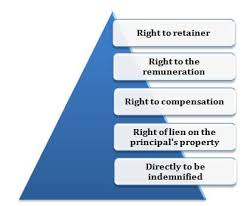
  1. Right to Receive Remuneration: According to Section 219 of the Indian Contract Act, an agent is entitle to his remuneration. But Section 220 of the said act says that, an agent who is guilty of misconduct in the business of an agency is not entitled to any remuneration in respect of that part of the business which he has misconducted.
  2. Right of Lien (Section 221): Agent’s lien on principal’s property- In the absence of any contract to the contrary, an agent is entitled to retain goods, papers and other property, whether movable or immovable, of the principal received by him, until the amount due to himself for commission, disbursements and services in respect of the same has been paid or accounted for to him.
  3. Right to Indemnity: Agent to be indemnified against consequences of lawful acts. Indemnity means promise make good the loss. According to Section 222 of the Indian Contract Act, 1872 “The employer of an agent is bound to indemnify him against the consequences of all lawful acts done by such agent in exercise of the authority conferred upon him. Illustrations: B, at Singapore, under instructions from A of Calcutta, contracts with C to deliver certain goods to him. A does not send the goods to B, and C sues B for breach of contract. B informs A of the suit, and A authorities him to defend the suit. B defends the suit and is compelled to pay damages and costs and incurs expenses. A is liable to B for such damages, costs and expenses.
  4. Right to Compensation: According to Section 225 of the said act, an agent is entitled to claim compensation for the injuries suffered as a consequence or want of skill of the principal. Section 225 reads as follows- “The principal must make compensation to his agent in respect of injury caused to such agent by the principal’s neglect or want of skill. Illustration: A employs B as a bricklayer in building a house, and puts up the scaffholding himself. The scaffholding is unskillfully put up, and B is in consequence hurt. A must make compensation to B.
  5. Right to Retain Sums (Section 217 and 218): The agent has a duty to pay to his principal all sums received on principal’s account. But he also has a right to retain, out of any sums received on account of principal in the business of agency, all money due to himself in respect of advances made or expenses properly incurred by him in conducting such business and also such remuneration as may be payable to him for acting as agent. Similarly, when an agent sells his principal’s goods, he may detain the money received, for his remuneration on account of the goods sold by him. Such right can be exercised by an advocate also but lien must be confined to the costs incurred in that particular case.

Bachchan’s Madhushala – a gem in poetry

“Out of the grapes that are born of my emotions,

I bring forth to you this wine.

My beloved, have a taste of this cup of my emotions, From my very hands…”

Madhushala (the house of wine or the Tavern) is probably one of the most beloved pieces of poetry in Hindi literature. Harivansha Rai Bachchan has brought forth the wine to the lips of every reader and has metaphorised wine to mean every thing in life. It’s a complete book – a poem 145 stanzas long – prasing the tavern as a temple while contrasting the realities India faced in the face of the partition and freedom struggle. The tavern is like his life – the wine and the drinker complement each other just like two people in a relationship. The wine then becomes the sun, soon to become the moon and the drinker a person who is trying to find way through his life.

Call it not lava, though it flows red, like a tongue of flame.
Call it no Alas, he that with eager lips, has not kissed this wine,
Alas, he that trembling with joy, has not touched a brimming goblet,
He that has not drawn close the coy wine-maiden by her hand,
Has wasted this honey-filled tavern of Life.

Few poems could stand as high and mighty as this one. It is a poem that reflects life and India and as much a contemporary material as it was at the time of its inception. It is a story of human emotions more than just a poem and is hence, a very good read!

Life is short. How much love can I give and how much can I drink?
They say, “He departs,” at the very moment that he is born.
While he is being welcomed, I have seen his farewell being prepared.
They started closing the shutters of the tavern, as soon as they were raised.

Happy reading!!!

हरिवंश राय बच्चन की 2 प्रेरणादायक कविताएँ - HamariSafalta.com
Bachachan

The Secret Garden: A book review

A girl is born to a rich household of a British officer in the times of the Raj. As customary to apparently the then tradition of rich households in British India, the child was raised by the local servants. The father and the mother never really bothered to spend some time with her. However, a deadly plague breaks in and everyone dies. Everyone, but the girl child who is now a bitter, unkind girl who has spent a large part of her growing time simply commanding people and repressing her emotions and has a habit of being fed, and bathed and clothed – all by others. The death of her family means she has to now live with her uncle – a lord in the British Isles.

In that cold, dead and open manor, she discovers the meaning of work, expression, friendship and love – not only nurturing back his cousin to health, but also helping her uncle rediscover happiness and let the garden where her wife passed away – the secret garden with no doors open to anyone.

The Secret Garden by Frances Hodgson Burnett - Land of Tales

The secret garden – a British children’s classic for more than a century now – is some of those books which one might not necessarily complete in one go, but would be pressed innately to return to it. The story is very much of a child but it builds up in ways that often evade even adult and contemporary literature. Imagination, revelations and most importantly the fact that the protagonist is but a child – all of it is simply touching. A movie was made on the book in 2020 starring Collin Firth and Julie Walters.

The Secret Garden (2020 film) - Wikipedia

Remember to give it a read!!!

Penpals – Digitalized to be rediscovered!

Letters are probably the most graceful way of communication between people. It probably was the most common way of distant communication for more than 3000 years of our recorded history. Until very recently, letters were used by professionals and by common folks alike. You pick up a culture – Indian, English, American, Japanese etc. – all of them have a dedicated space for letter writing – often considered an art. However, mobile phones, instant messaging and e-mails changed the way in which communication was carried out between people forever. It is not that instant messaging is bad. It is better than what was, but certainly fails to have the element of gracefulness that was imbibed in the culture of letter writing.

However, until very recently, letters were also used for the tradition of penpals. Wikipedia defines penpals as – “Pen pals (or penpals, pen-pals, penfriends or pen friends) are people who regularly write to each other, particularly via postal mail. Pen pals are usually strangers whose relationship is based primarily, or even solely, on their exchange of letters. Occasionally pen pals may already have a relationship that is not regularly conducted in person.” And this was a very flourishing tradition between cultures. But of course, life becomes faster with technology and the social changes that come with it.

However, the ones who love and the ones who adore find more ways to hold on to things than the ways in which the others discard the same. There are several penpal clubs that run through magazines. But COVID has certainly put a halt on a large number of them. However, a better thing happened because of this – the innovation of digital letters. For instance, the 2019 Google Apps winner app Slowly built by a Hong Kong Based firm facilitates letter writing online. The time taken by a letter to reach the recipient is proportional to the distance the letter needs to travel geographically, essentially emulating a real-life letter experience. Several other websites that do not necessarily work on the letter based penpal format i.e. they work more like a chat between strangers erupted in market due to the pandemic. The most famous of them is perhaps Omegle which also offers face-time options.

While many may lament that the smell of paper and ink and the post man coming and delivering letters meant a lot to them, a reality is that our realities have changed. The present generation, mostly people born after 2004 might not have many recollections of letters at all in India- thanks to the massive cell-phone boom that has occurred since. However, letters are a good thing. Because the slow modality ensures that a person works upon his language and choice of words. If that isn’t training for soft skills and practicing writing, one may wonder what is. So, the author wishes the ones now planning to write to new people across the world, all the best!

Is privatization of public sectors good or bad?

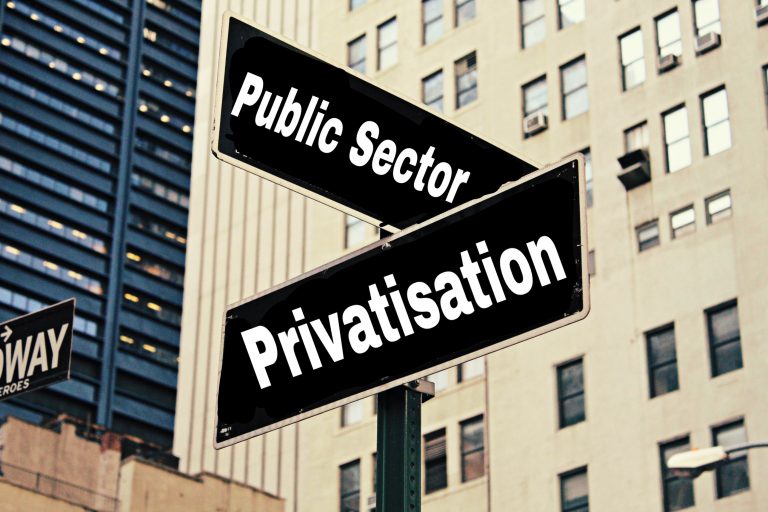
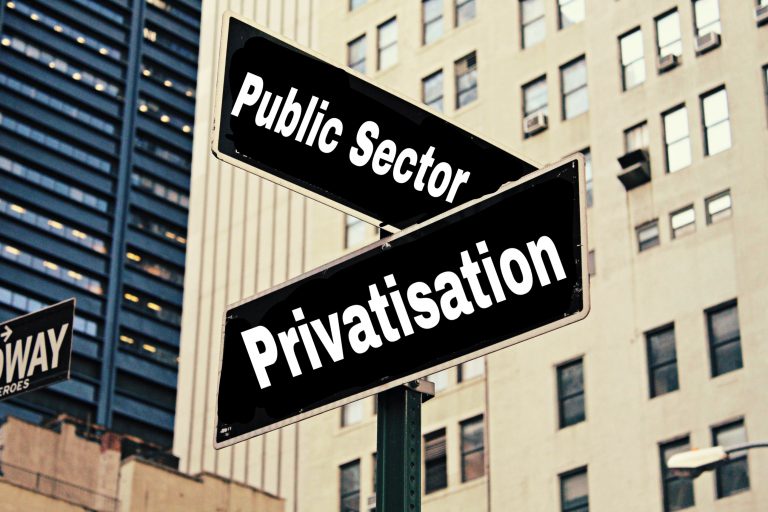
India comprises a mixed economy with the prevalence of both private and public sectors in wide range of fields like banking, education, health care, transport, manufacturing etc. Some are of the view that privatization could gear up the economic growth while other find that the privatization could bring more problems like unemployment taking the economic backward due to its inherent issues. Privatization could be defined as the process of transferring ownership of a business, enterprise, agency or public service from the public sector to the private sector. It is also known as denationalization. It is a situation where the government decides to transfer the control of a public owned resource to private sector either partially or completely. The history of privatization goes back to the Ancient Greece, when governments contracted out almost everything to the private sector in which private entities and companies performed the majority of services including tax collection, army supplies, construction.

Benefits

The proponents of privatization believe that private market factors can deliver goods or services more effectually due to free market competition. One promising reason that people want to privatize is to alleviate corruption. A monopolized function is prone to corruption and decisions are primarily designed for political reasons, personal gain of the decision maker, other than on a economic note. Privatization works on growth and performance. Corruption takes its place in both sectors but it can be effectively reduced by privatization. Private companies take immediate action on those who take bribe, so they are much motivated to work and focusses less interest on corruption.

It is beneficial for the growth and sustainability of the state owned enterprises. It is obliging in keeping the consumer needs uppermost, it helps in increasing long term jobs and promotes competitive efficiency and open market economy. Managers of publicly owned companies are required to be more accountable to the broader community and to political stakeholder, this can reduce their ability to directly and specifically serve the needs of their customers while the managers of privately owned companies are accountable to their owners/shareholders and to the customer and can only exist and thrive where needs are met. Private corporations typically profit more if they serve the needs of the clients well. Corporations of different sizes may target diverse market niches in order to satisfy the demand. If you work for a government run industry managers do not usually share in any profits, however a private firm is interested in making a profit, so it is likely to cut costs and be efficient. Public sectors may be unwilling to invest in infrastructure improvements which will benefit the firm in the long term because they are more concerned about projects that offer a benefit before the election.

Snags

There are also many reasons that accounts for the drawbacks of privatization. The opponents of this term believe that there are many industries which perform an important public service, eg. health care, education and public transport. The profit motive cannot be the primary objective of firms in the long run because in the case of health care, it is feared privatizing health care would mean a greater priority is given to profit rather than quality care to be given to the patients. Privatization would create a private monopoly which might seek to set higher prices which exploit consumers therefore it is better to have a public monopoly. Private companies often face a conflict between profitability and service levels. To please shareholders they may seem to increase short term profits and avoid investing in long term projects, while initial benefits to the consumer may occur, the industry may not be induced to keep prices low unless government controls are exerted. Privatization may limit access to certain industries for people who cannot afford them and the public has little control over a private industry. Public sectors could make education affordable for a wide range of people but when it becomes privatized the cost of education could increase tremendously.

It encompasses a variety of of techniques for shifting functions. Privatization could bring up a lot of problems as well pose some advantages, but if we are really considering privatization, there should a formulation of better maps and ideas to get rid of the challenges.

WATER POLLUTION

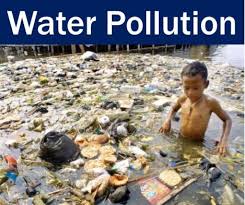
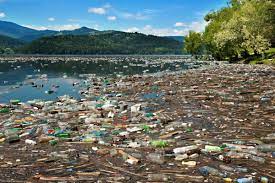
Water pollution is a global problem, affecting every continent and occurring in every type of ecosystem. It can be caused by industrial, agricultural and sewage systems, as well as by natural processes.

Water pollution does not respect political boundaries (or rivers), and can be managed at the international, national and local level. Water pollution occurs when harmful substances—often chemicals or microorganisms that contaminate a stream, river, lake, ocean, aquifer, or other body of water, degrading water quality and rendering it toxic to humans or the environment. Water pollution can come from a number of different sources. If the pollution comes from a single source, such as an oil spill, it is called point-source pollution. If the pollution comes from many sources, it is called nonpoint-source pollution. Most types of pollution affect the immediate area surrounding the source. Sometimes the pollution may affect the environment hundreds of miles away from the source, such as nuclear waste, this is called transboundary pollution.

550+ Water Pollution Pictures | Download Free Images on Unsplash

Water pollution is estimated to cause over 4 billion lost human lives per year. The global costs of water pollution exceed more than $1 trillion per year, making it the most costly environmental health hazard.Globally more than 2.5 billion people lack adequate drinking water, and another 1.8 billion lack adequate sanitation. More than 40% of the world’s population lives in water-stressed areas. The majority of this population lives in developing countries. In developing countries, water pollution is almost wholly due to point source pollution. The majority of the global burden of disease, injury, and premature mortality is estimated to be due to diseases caused by contaminated drinking water, sanitation, and unsafe sewage. Such major pollution events account for about 40 percent of the world’s total estimated disease burden.

It is well known that there are a number of ways in which water pollution can occur.

TYPES OF WATER POLLUTION

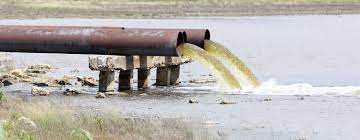
  • Industrial water pollution results when materials that are harmful to humans or the environment are dumped into water. Often industry will be negligent in ensuring that harmful wastes are managed safely.
  • Agricultural pollution derives from the discharge of chemicals to increase crop yields, or pesticides, herbicides, and fertilizers to grow food.
  • Wastewater pollution results from the discharge of human waste, sewage and industrial wastewater.
  • Nonpoint or diffuse pollution is pollution that occurs when substances diffuse into the water from a variety of sources.
  • Point source pollution is the damaging flow of a substance that originates from a single location that can be easily identified, contained or cleaned up.
Water Pollution: The Invisible Threat The World Is Ignoring

EFFECTS OF WATER POLLUTION

  • Virtually all types of water pollution are harmful to the health of humans and animals. Water pollution may not damage our health immediately but can be harmful after long term exposure.
  •  Heavy metals from industrial processes are toxic to marine life such as fish and subsequently to the humans who eat them.They can cause immune suppression, reproductive failure or acute poisoning.
  • Microbial water pollution is a major problem in the developing world, with diseases such as cholera and typhoid fever being the primary cause of infant mortality.
Water pollution - latest news, breaking stories and comment - The  Independent

These are just few effects of water pollution. If you wanna know more do research and know about it.

There are many ways to prevent water pollution and to avoid contaminating the water. Yes, there are various treatment plans to treat polluted water. For example, Sewage treatment plans, denitrification etc. The one thing we can do with the waste water is, Kitchen water can be directed to garden to save water as well as pollution. The things I said today are limited but there are many meaning in it. Hope you know more about it.

Top 6 Causes of Water Pollution and How to Reduce the Risks
SAVE WATER; SAVE LIFE

Read more;

WBYR- White, Black, Yellow, Red

Photo by Daniel Spase on Pexels.com

The names of the colors seemed strange, didn’t they? And I bet the picture above makes it all a lot more bizarre. But here’s the thing, all those colors above are names of lakes, well seas actually, that are spread all over the world. For those who knew we were gonna talk about seas, I bet you don’t know what gives them this distinctive name. Do you? Well, if you do know where they are located and why they are named so, you can skip the article. Or, you can read it, you know. It can be a wonderful revision and you can let me know if I miss something.

Well let’s start with black lake, shall we? The black lake helps the Urals, the Caspian sea and the Caucasus define the boundary between Europe and Asia. It shares its boundary with Ukraine to the north, Russia and Georgia to the east, Turkey to the south, and Bulgaria and Romania to the west. The black sea is connected to the small sea of Marmara (via the Bosporus strait) which is connected to Aegean sea via the strait of Dardanelles Well, this is something about the geography of the black sea. Now, to why it is known as the black sea. In earlier times, sailors and pirates saw the sea’s blue-green water appear all dark and black, especially during severe storms. Black sea has high concentration of hydrogen sulfide. When metal objects, dead plants and animal matter sunk deeper into the sea, they get covered with black sludge due to the hydrogen sulfide.

The next is Yellow sea. A marginal sea(sea bordering continents, separated from open ocean by island arcs and land ridges) of Pacific ocean, located between mainland China and Korean peninsula, the northwest part of East China sea. The sea becomes golden-yellow due to the yellow colored sand particles that flow in from the Gobi desert (located in Northern China and southern Mongolia).

The third is the red sea. It is located between the Arabian peninsula and the African peninsula. To the south lies the gulf of Aden and to the north lies the Sinai peninsula, the gulf of Suez and the gulf of Aqaba. Its name is a direct translation of its ancient Greek name, Erythra Thalassa, and many people believe that it derives its name because its normally blue-green water occasionally turns reddish-brown in the presence of a cyanobacteria called Trichodesmium erythraeum.

The last is the white sea. It is located in the North-west coast of Russia(in Europe) and is the southern inlet of Barents sea . It is covered with ice for 6-7 months every year. The covering of ice gives it a white color and hence the name.

This is all for the day. See you tomorrow with some more interesting phenomenon happening all around us.

Indian Education System

Education plays an important role in the development of an individual and making him a knowledgeable citizen. It is the education that makes an individual self-reliant, helps to suppress the social evils and contribute towards the development of the society and nation as a whole. Education helps in unravelling the mystery of nature. It enables us to understand and improve the working of our society. It creates conditions for a better life. Education brings out the capabilities to fight injustice happening in society. Every individual has the right to education. 

Indian Education is one of the largest and complex education systems in the world along with China. India is committed to providing basic education to its citizens, the framework of which is defined in the National Policy of Education. Elementary education is now compulsory in India. At the time of Independence, only 14% of India’s population was literate. Now after so many decades since Independence, the number of literates has increased by fivefold.

History of Education System

The history of Indian education system comes from the times of Ramayana and Mahabharata. The historic Indian education system is also called the Gurukula system. There were gurus then who are now known as teachers and shishyas who are called students now. The gurus and the shishyas lived together under one roof in Gurukula until the completion of their education. The shishyas were expected to help the guru in all the daily chores as part of their learning. The children belonging to higher strata of the society were taught all the subjects from Sanskrit to Holy Scriptures and mathematics to metaphysics by the gurus. The Gurukulas during those times focused on the practical aspects of life. The students were taught in the open classroom in the surrounding area of nature. This early system of education in India continued for many years until the modern education system came into the picture in the nineteenth century.

In the early 19th century, during the British period, the modern education system was brought into our country by Lord Thomas Babington Macaulay. The basic strength of this modernized education system was the examinations and a well-defined curriculum, which gave importance to subjects like science and mathematics and subjects like philosophy, metaphysics were given a back seat. The brick and mortar classrooms replaced the open classrooms in the Gurukulas. The essence of the guru shishya bond was taken over by a more formal relationship between the teacher and the student. To understand the progress of any student, examinations were conducted at frequent intervals. The focus of the education system shifted from learning to memorizing of the concepts to score good marks in the examinations.

Problems of Indian Education System

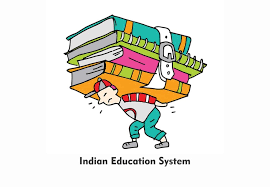
Over a period of time, it has been observed that there are many loopholes in the system of education in India. Instead of understanding the concepts, students started cramming and memorizing the lessons. Knowledge is given a backseat and scoring in high rankings takes importance. The modern parents have tuned their mindsets accordingly and their goal is to ensure that their children score good marks instead of acquiring knowledge right from the primary level. 

Private schools and colleges have been rapidly increasing in the country but the results produced by them are far beyond satisfactory. It has also been observed that the quality of teachers deteriorated with the passing of time. Our examination system is responsible for the wide skill gap. India is producing lakhs of engineers and professionals every year but only a fraction of this number is actually getting employed. This is because the Indian examination system focuses more on scoring good percentages rather than the actual continuous comprehensive evaluation. 

Research and development, which should be the cornerstone of our system, are given the least importance. The private schools and colleges focus on the admission of more students and are least interested in the quality of their education. This is the major reason why the faculties and the teachers lack skills and specialization. This is quite evident from the fact that a single professor is assigned to teach multiple subjects. 

How Can We Improve the Indian Education System?

First and most importantly we should improve the grading system. Rote learning should be discouraged completely. Teachers and faculties should focus more on the analytical skills of the students and grade them accordingly. There should be more focus on comprehensive evaluation instead of scoring only good marks. Workshops must be organized for teachers on a regular basis to keep them updated about the latest developments in the sector of education. At the same time, the curriculum should be reframed according to the present needs of education in India. 

The payroll structure of the teachers and the faculties especially in the government institutions should be improved. This step will help in motivating the teachers to develop their skills and they will take a keen interest in grooming or shaping up a student’s life and career. The government and other entities who are associated with the education sector, need to understand the importance of quality of education. Education should be a holistic process that must focus on the overall development of the physical, emotional, social and cognitive skills of a child. It needs to be a slow and cyclic process and must take place gradually to help the child develop into an autonomous, independent and knowledgeable individual.

Conclusion

An educated individual is an individual who should be able to contribute towards the betterment of the economic and social development of the society as well as the country. The true goal of education must exceed awarding the degrees and certificates to the students. Education is not a tool to earn livelihood but it is a way to liberate the mind and soul of an individual. 

Role Of Todays Youth In Building A Self Reliant India

“Self-reliance is the key to a vigorous life.”

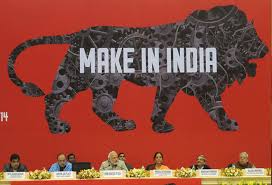
Self-reliant India is the vision of the Prime Minister of India Narendra Modi of making India a self-reliant nation. The first mention of this came in the form of the ‘Self-Reliant India Mission’ during the announcement of the coronavirus pandemic related economic package on 12 May 2020. This self-reliant policy does not aim to be protectionist on nature and as the Finance Minister clarified, ” Self-reliant India does not mean cutting off from rest of the world”. The largest fund in the country worth Rs. 21,000 crore was setup by the IIT Alumni Council with the aim of supporting the mission towards self-reliance.

Everybody knows, that the youth are the future of any country. But India can take lead over many other nations because about 65 percent of the country’s population is below 35 years and 50 percent is below 25 years. With huge, educated young population, India is very uniquely poised to realise the demographic potential amd reap the advantage of this vast powerhouse of human resource talent. The need of the hour is to upgrade the skill or upskill the youth to meet the emloyment needs of technology driven 21st century and accelerate the pace of self-reliance.

The uncertainity created by the pandemic is being seen by many as an opportunity to upgrade knowledge and acquire new skills that will cater to the post-corona virus job scenario. The skills required for tomorrow’s jobs will be completely different from the skill-sets youth possess today.

So, its high time now, we have to make India self-reliant and youth plays the most important role in this mission.

International Workers Day

“Without labour nothing prospers.”

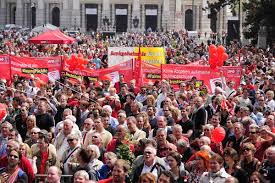
Labour Day or International Workers Day is celebrated annually on 1 May to celebrate the working class and labourers across the world. Socialist and labour unions celebrate this day by organising programmes to improve wages and working conditions of the workforce. In more than 80 countries Labour Day is a national holiday.

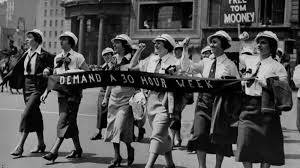
Before a formal Labour Day came into place, deaths, injuries and dangerous working conditions were very common among the working class globally. During the rise of industrialisation, the U.S. exploited the working class during the nineteenth century and made them work upto 15 hours a day under rigorous conditions. The rising death of the workforce in industries forced the working class to raise their voices for their safety. After efforts made by the workers and socialists, eight hours was declared as the legal time for the workers in the late nineteenth century by the American Federation of Labour.

The origin of Labour Day goes back to an incident in Chicago on May 4, 1886 known as the Haymarket Affair. On this day workers assembled as part of a peaceful rally in a strike demanding an eight hour work day. An unknown person threw a dynamite bomb at the police as they acted to disperse the meeting, and the bomb blast and ensuing gunfire resulted in the deaths of seven police officers and atleast four civilians; dozens of others were wounded. The Chicago protests led to many countries and at last they got the proper labour rights.

So, they had a long repression from the society. So, now the time has come to live respectfully and safe. Without labour no country can prosper. They are the ones who make a way towards country’s development. Their hardwork, dedication cherishes the path of development of country. So, respect them and provide safe working conditions to them. The below mentioned lives are aptly quoted;” A worker is a creator and a great asset to every nation”.

New Forms of Punishment

Section 53 prescribes five types of punishments to be meted out to a person convicted of a crime under the Code, depending on the nature and gravity of the offence,viz .:

(i) Death; (ii) Imprisonment for life; (iii) Imprisonment, rigorous with hard labour, or simple; (iv) Forfeiture of property; and (v) Fine.

It is suggested to add five new forms of punishment to the existing ones in section 53, IPC with a view to deter particular types of criminals. Such punishments will have more psychological, social and moral impact on the criminals and will go a long way in curbing crimes. The proposed punishments are: (i) Externment, (ii) Compensation to victims of crime, (iii) Public Censure, (iv) Community service, and (v) Disqualification from holding public office.

(i) Externment: Externment or banishment is a form of punishment in which an accused is sent out of the place of his residence to another place for a specified period of time as mentioned in the order issued by the court. This is done to deprive the accused of the company of his family members, friends and associates so that he or she may not indulge in criminal activities. Externment is resorted to primarily in case of anti-social, hardened and habitual criminals.

(ii) Compensation to victims of crime: Unfortunately, the victims of crime in our country do not attract the attention of law makers. Of late, Civil Procedure Code, 1973 in section 357 has empowered the court to award compensation to the victims of crime in very limited cases at the time of passing the judgment. No doubt, the higher judiciary has on times provided compensation to the victims of crime of custodial violence, sexual assault, rape, illegal detention by invoking Article 21 of Constitution, but such instance will not serve the plight of helpless victims.

(iii) Public Censure: Public Censure or social censure is one of the methods of punishment prescribed in some of the countries, such as Russia, Columbia etc., in respect of certain offences of anti-social nature, such as white-collar crimes, tax crimes, food adulteration, etc. In ancient India, public censure was considered suitable punishment for certain class of criminals.

(iv) Community Service: Community service or corrective labour is a form of punishment in which the convict is not deprived of his liberty. Corrective labour is the standard penalty given in those cases where it is considered that the accused need not to be isolated from the society. The period ranges between one month to one year in such cases. This system is used in Soviet Russia with good results. An important feature of this type of punishment is that the accused is not deprived of his liberty and he may go home after the day’s work.

(v) Disqualification from holding public office and contest elections: Disqualification to hold public office and contest election of legislature and local bodies as a form of punishment will have the adequate and desired deterrent sanction, if sincerely implemented. Representation of the People Act, 1951 disqualifies a person convicted for a period of two years or more to contest election for a period of six years. But the provisions are very limited in scope and are being abused with impunity.

Theories of Punishment in Indian Penal Code,1860

Introduction

Punishment is the sanction imposed on an accused for the infringement of the established rules and norms of the society.

Objective

The object of punishment is to protect society from mischievous and undesirable elements by deterring potential offenders, by preventing the actual offenders from committing further offences and by reforming and turning them into law abiding citizens.

Types of Theories

  1. Deterrent Theory
  2. Preventive Theory
  3. Retributive Theory
  4. Reformative Theory
  5. Multi Approach Theory

a) Deterrent Theory: According to this theory, the object of punishment is not only to prevent the wrong-doer from doing a wrong second time, but also to make him an example to others who have criminal tendencies. Salmond considers deterrent aspects of criminal justice to be most important for control of crime. Deterrent punishment is likely to harden the criminal instead of creating in his mind a fear of law. Hardened criminals are not afraid of imprisonment.

b) Preventive Theory: According to Paton:’The theory concentrates on the prisoner and seeks to prevent him from offending again in the future. The death penalty and exile serve the same purpose of disabling the offender’. Critics point out that preventive punishment has the undesirable effect of hardening first offenders, or juvenile offenders, when imprisonment is the punishment, by putting them in association of hardened criminals.

c) Retributive Theory: In primitive society punishment was mainly retributive. The person wronged was allowed to have revenge against the wrong-doer. The principle of ‘an eye for an eye’, ‘a tooth for tooth’, was the basis of criminal administration. According to Justice Holmes: ‘It is commonly known that the early forms of legal procedure were grounded in vengeance’. The advocates of this theory plead that the criminal deserves to suffer.

d) Reformative Theory: According to this theory, the object of punishment is reformation of criminals. The object of the punishment should be to reform the offender. The criminal must be educated and taught some art and craft or industry during his term of imprisonment, so that he may be able to lead a good life and become a responsible and respectable citizen after release from jail.

e) Multi Approach Theory: In fact, a perfect system of criminal justice could never be based on any single theory of justice. Every theory has its own merits and every effort should be made to extract the good points of each and integrate it so that best of all could be achieved. Punishment should be proportionate to the nature and gravity of the crime. The object of any concession given to an offender should be to convince him that normal and free life is better than life in jail.

Digital Banking

Digital Banking has completely changed the way we bank in today’s times. With Digital Banking, you can transact with higher speed, ease and convenience.

What is Digital Banking? 

In simple terms, Digital Banking means availability of all banking activities online. Here, you have the luxury to freely access and perform all traditional banking activities 24*7 without having to personally go to a bank branch to get your work done. Some of the major online banking activities include-

(1) Money Deposits, Withdrawals, and Transfer
(2) Checking/Savings Account Management
(3) Applying for Financial Products
(4) Loan Management
(5) Bill Payment
(6) Account Services

Many banks also offer other integrated services like investing in Mutual Funds and other investment options online. Thus, making Digital Banking a widely used concept.

Digital Banking in India

Digital Technology has drastically changed the way banks interact with us. Similarly, it has completely changed the way we transact and interact with the bank. This is especially true in the case of a booming technological and financial economy like India, where more and more people are being connected to Digital Banking Platforms with each passing day. 

With Digital Banking you can perform every transaction, from start to end in a seamless, secure manner. You can withdraw money, deposit money, apply for loans, invest in Mutual Funds- all at a click of a button.

With the introduction of mobile banking you can perform transactions on the go. Mobile banking is a convenient and easy way to finish your transactions. For example, you can do over 125 transactions through HDFC Bank’s mobile banking app. 

The latest addition to mobile banking feature is the Mobile Banking LITE app.The HDFC Mobile Banking app can work without an internet connection, italso doesn’t take up too much space and is quick to install over slow connections. It’s a safe and secure way of making transactions on the go.

Digital Banking services are offered by all major retail banks in the country today and have, in fact, become an integral part of their services. So, one can now bank from the ease of one’s home, with the convenience of smartphone screens.

(1) Indian Financial System Code (IFSC)
The Indian Financial System Code (IFSC) is an 11-character code in alphanumeric format to uniquely identify all bank branches within the NEFT, RTGS, and the Immediate Payment Service (IMPS) network within India. This code is printed on every cheque leaf in your personal or company chequebook. To transfer funds to an account electronically, the receiver must share his IFSC code as it identifies the receiver bank and branch.Magnetic Ink Character Recognition (MICR)
Magnetic Ink Character Recognition (MICR) is a technology used to verify the legitimacy or originality of paper documents, especially cheques. A special ink sensitive to magnetic fields is used in the printing of certain characters. Every bank branch has a unique MICR code, which helps the RBI speed up the cheque clearing process, with MICR readers.

(2)Magnetic Ink Character Recognition (MICR)
Magnetic Ink Character Recognition (MICR) is a technology used to verify the legitimacy or originality of paper documents, especially cheques. A special ink sensitive to magnetic fields is used in the printing of certain characters. Every bank branch has a unique MICR code, which helps the RBI speed up the cheque clearing process, with MICR readers.

(3) Electronic Clearing Service (ECS)
Electronic Clearing Service (ECS) is another method of transferring funds from one bank account to another. It is most often used to pay regular bills (telephone, mobile, credit card, electricity, etc, to make EMI payments (Personal, Car, Home Loan), and SIP investments. This is done by invoking the auto debit facility. ECS is also used by entities for payment of salaries, pensions, distribution of dividend interest etc.

(4) Immediate Payment Service (IMPS)
Since NEFT may not be available for use on weekends and bank holidays, you could try using IMPS or Immediate Payment Service. The service is available 24X7. The minimum transfer value is Rs 1 and the maximum value is Rs 2 lakh.
But to use this service, you will need to register via your bank and provide the mobile number and MMID of the beneficiary as IMPS transfer can also be done through mobile phones. Mobile Money Identifier (MMID) is a seven-digit unique number issued by the bank.

(5) National Electronic Funds Transfer (NEFT)
The National Electronic Funds Transfer (NEFT) system allows individuals, companies, and other entities to transfer funds electronically from one bank to another within India. Normally, funds from the remitting bank will be sent to the RBI within three hours of the transaction. However, the time taken to credit the beneficiary bank’s branch account depends on how long it takes the bank to process the transaction. It should be noted that NEFT operates only during business hours on weekdays. NEFT transactions cannot be done on Sundays, bank holidays, and second and fourth Saturdays of the month. The minimum transfer value is Rs 1 and there is no upper limit.

(6)Real Time Gross Settlement (RTGS)
Another method for transferring money electronically, from bank to bank, within the Indian banking system is Real Time Gross Settlement (RTGS) scheme, where the minimum amount for each transaction is Rs 2 lakh and there is no upper limit. The beneficiary account receives the money immediately.
The RTGS system is primarily meant for large value transactions.With effect from 00:30 hours on December 14, 2020, RTGS facility is available round the clock on all days i.e. 24 hrs. India one of the few countries to operate the system 24×7. This comes within a year of the Reserve Bank of India (RBI) operationalising NEFT 24×7. NEFT is the popular mode for small-value transactions. RTGS, which started on March 26, 2004 with a soft launch involving four banks, presently handles 6.35 lakh transactions daily for a value of Rs 4.17 lakh crore across 237 participant banks. The average ticket size for RTGS in November 2020 was Rs 57.96 lakh, making it a truly large-value payment system. RTGS uses ISO 20022 format which is the best-in-class messaging standard for financial transactions. The feature of positive confirmation for credit to beneficiary accounts is also available in RTGS.
Earlier, the RBI had decided not to levy charges on transactions through NEFT and RTGS in order to promote digital transactions, and had asked banks to pass on the benefits to customers. The RBI used to levy minimum charges on banks for transactions routed through RTGS and NEFT. Banks, in turn, levied charges on their customers. RTGS is meant for large-value instantaneous fund transfers, while NEFT is used for fund transfers of up to Rs 2 lakh.
It should be noted that NEFT, RTGS and IMPS impose transaction fees in slab rates.

(7) Society for Worldwide Interbank Financial Telecommunication (SWIFT)
SWIFT is an acronym for Society for Worldwide Interbank Financial Telecommunication. It is an internationally recognised identification code forbanks worldwide, and is usually used for international wire transfers. Only those banks that are SWIFT-enabled can take part in this system. In EU nations SWIFT is also known as BIC or Bank Identification Code. When dealing with international transfers also be aware of IBAN or International Bank Account Number. IBAN (International Bank Account Number) appears in bank statements and the bank’s online systems. IBAN and BIC (Bank Identification Code ) contain your bank account number and sort code written in an internationally recognised format. All these numbers can make your wire transfers happen quickly and securely.