Sports Law in India

Introduction

Sports and games form an essential part of human resource development. Sports is very important for the development and excellence in the international events. Over the years a number of Nationals Sports Federations (NSFs) have come up for development of specific games/ sports disciplines.

One must actively support the sportsperson so that they can achieve their objectives and reach greater heights and also break records at the International Level tournaments like the Olympics. It has been the endeavor of the Government of India to lay down procedures for effective coordination among various agencies involved in the promotion of sports and extend required infrastructure, training and other facilities to the sportsperson for achieving excellence in the international events.

Over the years a number of Nationals Sports Federations (NSFs) have come up for development of specific games/ sports disciplines. The Government of India has been actively supporting these Federations in achieving their objectives.

Guidelines of 2001 laid down the following principles, which now stand subsumed in the National Sports Development Code of India(NSCI) 2011:

i. A clear role of dileanation between NSFs, SAI and the Government.

ii. Grouping of sport disciplines into priority, general and others for the purposes of determining the entitlement for
government assistance.

iii. Detailed guidelines for preparation of Long Term Development Plans (4-year cycle). Provision made for annual
sanction budgets of development plans.

iv. Binding tripartite agreements between NSFs, the Department and the SAI to be drawn up.

v. An emphasis on professionalizing and upgrading the administrative and financial management of Federations.

vi. An emphasis on systems to handle players‘ grievance.

vii. The appointment of registered chartered accountants to ensure maintenance of proper and transparent accounts.

viii. Recognition of the role of sports promoters, particularly in event management.

Recent Developments

Hon‘ble High Court of Delhi, in Civil Writ Petition No.7868 of 2005, in the matter of Indian Hockey Federation, while disposing off the matter vide Order dated 02.03.2010, categorically observed that the Government guidelines governing the NSFs are valid, binding and enforceable; and the tenure clause is not in violation of the International
Olympic Charter. The Hon‘ble Court also observed that the Government of India is fully competent to make regulations on NSFs and IOA. The Hon‘ble Delhi High Court further cited entry 10 and 13 of List I (Union List) which read as under:-

Entry 10: Foreign affairs, all matters which bring the Union into relation with any foreign country.
Entry 13: Participation in international conferences, associations
and other bodies and implementing of decisions made thereat.

Based on the above, the Hon‘ble Court observed that while an NSF has autonomy in the actual conduct of sports, Government recognition is necessary to represent the country. It further observed that international sporting events are an essential part of diplomatic relations of the nations, and several considerations like security concerns of players,apartheid, and perceived human rights violations have guided nations in decisions to participate or not to participate in sporting events in different countries.

Political and diplomatic clearances are, therefore, required by the Indian teams before participation in the international tournaments and forums. The Court pointed out that no State Government has the competence or the jurisdiction to undertake such exercise, which is the sole prerogative of the Union Government.

In another Public Interest Litigation No.195/2010 in the matter of Rahul Mehra Vs. Union of India and Others, the Hon‘ble Delhi High Court took a serious view on the mismanagement of the Sports Sector in the country and expressed deep concern at the inaction on the part of the Government in implementing and enforcing its own guidelines,particularly those relating to age and tenure.

The gist of important new initiatives taken by the Government is indicated hereunder. These have been suitably incorporated in the subsequent paragraphs of Guidelines by replacing the existing provisions and/or adding the new provisions. The new provisions supersede the earlier provisions in the 2001 Guidelines:

Gist of new initiatives taken by Government in the recent past:
1. Restoring the limits on duration of tenure of office bearers of Indian Olympic Association and all recognized National Sports Federations. (Annexure-XIII)


2. Guidelines for Good governance in the context of Basic Universal Principle of Good Governance of Olympic and
Sports Movement‖. (Annexure-XIV)


3. Annual recognition of National Sports Federations.(Annexure-XV)

4. Measures to combat fraud in age of players. (AnnexureXVI)


5. Prevention of sexual harassment of women in sports, etc.(Annexure-XVII)


6. Notifying IOA and NSFs as Public Authority under Right to Information Act. (Annexure –XVIII)


7. Drawal of advance calendar of sporting events both national and international. (Annexure-XIX)


8. National Anti-Doping Rules notified vide gazette notification no 21-4/2008-ID dated 5th February, 2010
(Annexure-XX)


9. Guidelines for efficient management of Coaching Camps, Selection of Coaches, Selection of Athletes, etc.
(Annexure-XXI)


10. Representation of Indian Nationals only, in National Teams (Annexure-XXII)

Objectives of Guidelines

The objective of these Guidelines are three fold:

1. Firstly to define the areas of responsibility of the various agencies involved in the promotion and development of sports.

2. Secondly, to identify NSFs eligible for coverage under these guidelines, to set priorities, and to detail the procedures to be followed by the Federations, to avail of Government sponsorship and assistance.

3. And Lastly, To state the conditions for eligibility to receive government recognition and grant.

WEBSITES REFERRED:

  1. https://yas.nic.in/sites/default/files/File918.compressed.pdf
  2. https://www.chaseyoursport.com/Tokyo-Olympics-2020/The-journey-of-India-at-the-Summer-Olympics/1435
  3. https://sportsauthorityofindia.nic.in/

Updated Guidelines here: Recommencement of Domestic air travel w.e.f. 25.05.2020 in India


The Ministry of Civil Aviation vide Order of even Number dated 21.05.2020 has issued general instructions and detailed guidelines and also Specific Operating Guidelines (SOP) for stakeholders, in connection with the recommencement of domestic air travel from 25th May, 2020.

As per Para. 1(j)(v) of Annexure-II to Order dated 21.05.2020, the passengers have to give a declaration to the effect that they have not tested COVID-19 positive in last two months.

Also it has decided that with regards to the evolving COVID-19 situation in various places where new cases that have been cured which are to be found in large numbers, a need has been felt to update this provision to avoid
hardships in the matter of air travel to the persons cured/recovered from COVID-19.

The Ministry of Civil Aviation has accordingly decided to update the above provision with a clause which is as follows
:- “I/we have not tested COVID-19 positive in the last three weeks (COVID-19 recovered persons fulfilling this condition will be allowed to travel upon showing a COVID-19 recovered/discharged certificate from any institution dealing with COVID-19 subjects).

WEBSITES REFERRED:

  1. https://www.civilaviation.gov.in/sites/default/files/MoCA_OM_dated_29_06_2020.pdf
  2. https://www.123rf.com/photo_68627236_stock-vector-airplane-and-iconic-building-over-india-country-map-with-flag-colors-over-blue-background-vector-ill.html

SPITTING IN INDIA: A PUBLIC NUISANCE

 INTRODUCTION

As you are aware that Smoking/spitting tobacco is also a major public health hazard which contributes to the spreading of communicable diseases like Tuberculosis, Swine Flu, Avian Flu and Pireumonia disease. As India combats the novel coronavirus and ensures the safety of every citizen, the government is making stringent laws to help control the spread of COVID-19 pandemic.

On that note and in view of this there are new laws that can come into force as a bane to many Pan Masala lovers. The national directive on lockdown conditions issued by the Home Ministry on Wednesday, April 15 states that the violators will be punished. It states that “Spitting in public spaces shall be punishable with a fine. There should be a strict ban on the sale of liquor, gutka, tobacco etc.” 

RELEVANT PROVISIONS APPLICABLE

Following are the sections under the Indian Penal Code, 1860:-

  1. Section 268 : Public nuisance:- a person is guilty of a public nuisance who does any act or is guilty of an illegal omission which causes any common injury, danger or annoyance to the public or to the people in general who dwell or occupy property in the vicinity, or which must necessarily cause injury, obstruction, danger, or annoyance to persons who may have occasion to use any public right.
  1. Section 269:- Negligent act likely to spread infection of disease danger­ous to life:—Whoever unlawfully or negligently does any act which is, and which he knows or has reason to believe to be, likely to spread the infection of any disease dangerous to life, shall be punished with imprisonment of either description for a term which may extend to six months, or with fine, or with both.
  1. Section 278 :- Making atmosphere noxious to health:—Whoever voluntarily vitiates the atmosphere in any place so as to make it noxious to the health of persons in general dwelling or carrying on business in the neighbourhood or passing along a public way, shall be punished with fine which may extend to five hundred rupees.

WHAT’S IN IT?

The Union Ministry has made public spitting an offence under the Disaster Management Act. With a daily rise of novel coronavirus, the patients around the country and the State Governments are ensuring strict laws. On that note, Himachal Pradesh police have issued a law for people who spit in public will now be charged with attempt to murder.

The reason for this measure that not only Himachal Pradesh but various states around the country are banning spitting because of its scientific reasons. Medical professionals state that droplets expelled in the air by infected patients via coughing or sneezing are the common means of transmission of the virus. As such, spitting is more dangerous as it can carry the pathogen to a longer distance than even coughing or sneezing could. 

CONCLUSION

Other states in India have their own take when it comes to public spitting. In states like Uttar Pradesh, pan masala products are banned to discourage spitting. Other states including Bihar, Telangana, Haryana, and Assam, have banned smokeless tobacco products and public spitting. Furthermore, the Brihanmumbai Municipal Corporation imposed ₹1000 fine on anyone caught spitting in public. So everyone, do be careful and refrain from spitting in public.  

BOOKS REFERRED

  1.  Pillai’s, P S A Criminal Law Lexis Nexis 13th edition 2017 p. 537

WEBSITES REFERRED

  1. https://curlytales.com/you-can-now-be-charged-with-attempt-to-murder-if-you-spit-in-public-places/#:~:text=The%20national%20directive%20on%20lockdown,%2C%20gutka%2C%20tobacco%20etc.%E2%80%9D
  2. http://pbhealth.gov.in/6e.pdf
  3. https://www.ijlmh.com/wp-content/uploads/2019/04/Law-Relating-to-Public-Nuisance-in-India.pdf
  4. https://indiankanoon.org/doc/734195/#:~:text=%E2%80%94Whoever%20unlawfully%20or%20negligently%20does,with%20fine%2C%20or%20with%20both
  5. https://indiankanoon.org/doc/209076/
  6. https://indiankanoon.org/doc/1368265/#:~:text=278.,extend%20to%20five%20hundred%20rupees.
  7. https://www.dreamstime.com/no-spitting-sign-white-background-illustration-no-spitting-sign-illustration-isolated-white-warning-sign-red-circle-image137114866

Health is wealth

Growing up you might have heard the term ‘Health is Wealth’, but its essential meaning is still not clear to most people. Generally, people confuse good health with being free of any kind of illnesses. While it may be part of the case, it is not entirely what good health is all about. In other words, to lead a healthy life, a person must be fit and fine both physically and mentally. For instance, if you are constantly eating junk food yet you do not have any disease, it does not make you healthy. You are not consuming healthy food which naturally means you are not healthy, just surviving. Therefore, to actually live and not merely survive, you need to have the basic essentials that make up for a healthy lifestyle.

Key Elements Of A Healthy Lifestyle

If you wish to acquire a healthy lifestyle, you will certainly have to make some changes in your life. Maintaining a healthy lifestyle demands consistent habits and disciplined life. There are various good habits that you can adopt like exercising regularly which will maintain your physical fitness. It also affects your mental health as when your appearance enhances, your confidence will automatically get boosted.

Further, it will prevent obesity and help you burn out extra fat from your body. After that, a balanced diet is of great importance. When you intake appropriate amounts of nutrition, vitamins, proteins, calories and more, your immune system will strengthen. This will, in turn, help you fight off diseases powerfully resultant in a disease-free life.

Above all, cleanliness plays a significant role in maintaining a healthy lifestyle. Your balanced diet and regular exercise will be completely useless if you live in an unhealthy environment. One must always maintain cleanliness in their surroundings so as to avoid the risk of catching communicable diseases

Benefits Of A Healthy Lifestyle

As it is clear by now, good health is a luxury which everyone wants but some of them cannot afford. This point itself states the importance of a healthy lifestyle. When a person leads a healthy lifestyle, he/she will be free from the tension of seeking medical attention every now and then.

On the contrary, if you have poor health, you will usually spend your time in a hospital and the bills will take away your mental peace. Therefore, a healthy lifestyle means you will be able to enjoy your life freely. Similarly, when you have a relaxed mind at all times, you will be able to keep your loved ones happy.

Moreover, a healthy lifestyle will push you to do better in life and motivate you to achieve higher targets. It usually happens that people who are extremely wealthy in terms of money often lack good health. This just proves that all the riches in the world will do you no good if there is an absence of a healthy lifestyle.

In short, a healthy life is the highest blessing which must not be taken for granted. It is truly the source of all happiness. Money may buy you all the luxuries in the world but it cannot buy you good health. You are solely responsible for that, so for your well-being and happiness, it is better to switch to a healthy lifestyle

N.E.O.N

N is ‘N’OBLE

E is ‘E’NERGY

O is ‘O’BEDIENT

N is ‘N’IFTY

  • “N” OBLE, Law is a ‘Noble’ Profession as its purpose is to conserve and preserve the moral sanctity that binds the society and it protects and upholds the law, this is depicted in Article 14 as per the Constitution of India, the State shall not deny to any person equality before law or the equal protection of the laws within the territory of India.
  • “E” NERGY, we are full of ‘Energy’ and ‘zeal’ due to Lawyers providing legal aid to all as “Justice delayed is Justice denied”.
  • “O” BEDIENT, as Lawyers  we appear in Hon’ble Court in person at certain place, time and aid the person who seeks justice when the  summons, notice, order, or proclamation proceeding issued from any public servant who is  legally competent to the same as stated  under Section 174 of Indian Penal Code.
  • “N” IFTY meaning Skilful. An Advocate is effective and good in proffering legal assistance, apart from being an avid Listener and an effective communicator.

Books Referred:-

  1. Universal Law Publications :- The Constitution of India by P.M. Bakshi,  15th edition
  2. “Professional Bare Act”:- Indian Penal Code

Websites Referred:-

  1. https://www.lexico.com/en/definition/nifty
  2. https://www.legistify.com/indianpenalcode/details/ipc-section-174-non-attendance-in-obedience-to-an-order-from-public-servant/
  3. https://pib.gov.in/newsite/mbErel.aspx?relid=118011
  4. https://www.hiclipart.com/free-transparent-background-png-clipart-pvuct

TRUTH AND HONESTY: TWO SIDES OF THE SAME COIN

As the saying goes by “Honesty is the best policy”. The power of truth can be known from the fact that nobody, not even the greatest liar in the world, has the courage to say that he is telling a lie or that truth is not good. A man who tells a lie is like a criminal who has committed murder and is pleading not guilty even though all the facts, circumstances and evidences point towards the criminal. And the thing which a criminal pleads guilty for a crime which the hardened criminal is pleading not guilty yet it is that criminal who has committed the murder, one must always be truthful and honest no matter how henious the crime is and also avoid lying and being dishonest.

And when the truth is known, that person is terribly upset and highly afraid. An ordinary criminal may be afraid of fine, imprisonment or other punishment. But if the liar i.e the criminal happens to be a well-known popular figure, that person may be afraid of losing his popularity or reputation. In this respect, truth also becomes an acid test for our inner strength or bravery.

Many people may not be afraid of losing their life with a bullet but there must be few who have the courage to face the bullet of truth. A truly brave person sticks to the truth in all the circumstances. But many succumb to pressure or fear of torture or death like a criminal might. Joan of Arc, a young girl of eighteen, who refused to bow before the church and the government and embraced death by being burnt but she stuck to what she believed to be the truth.

WEBSITES REFERRED

  1. https://www.shareyouressays.com/english-essays/342-words-short-essay-on-the-value-of-truth/3031
  2. https://www.123rf.com/clipart-vector/honesty.html?sti=lj06uh9mvspsnqs4rk|
  3. https://www.dreamstime.com/stock-images-truth-not-lies-board-shows-honesty-image25845894

Consumer Protection Bill 2019, (E-Commerce) Rules, 2020

An Act to provide for protection of the interests of consumers and for the said purpose, to establish authorities for timely and effective administration and settlement of consumers’ disputes and for matters connected therewith or incidental thereto.

The Indian Parliament, on 6 August 2019, passed the landmark Consumer Protection Bill, 2019 which aims to provide the timely and effective administration and settlement of consumer disputes. The Consumer Protection Act, 2019 (New Act) received the assent of the President of India and was published in the official gazette on 9 August 2019. The New Act will come into force on such date as the Central Government may so notify. The New Act seeks to replace the more than 3 (three) decades old Consumer Protection Act, 1986 (Act).

While e-commerce has opened new avenues and has made transactions faster and more convenient, they have also been prone to unfair trade practices. Although e-commerce platforms tried to resolve the grievance of the customers, there was a need to streamline the functioning of the same. With this perspective, the Central government notified the Consumer Protection (E-commerce) Rules, 2020.

From Amazon to Walmart and now Facebook and Google, through Reliance Jio are all betting on India being their next big online consumer market.

Walmart has invested $1.2 billion in Flipkart in an equity round, two years after it bought a 77% stake in the Indian retail giant for $16 billion. Walmart’s investment came just days after Amazon invested ₹2300 crore or $305 million into its Indian arm, following Jeff Bezos’ $1 billion investment promise to India. Earlier this year, Amazon had also signed a long-term business agreement with Kishore Biyani’s Future Group.

Meanwhile, Facebook’s $5.7 billion investment and Google’s $4.5 billion bet on Reliance Jio come at a time when Reliance chairperson Mukesh Ambani is betting on retail as the next big venture. One of the most significant factors of the Facebook-Jio deal was that Reliance Retail and WhatsApp are now in a commercial partnership to accelerate JioMart’s growth. Through JioMart and WhatsApp, the entities will now help support consumer businesses.

E-commerce Rule, 2020

The intention of the Legislature to specifically deal with e-commerce and online transactions was evident from the very enlargement of the definition of consumer under Section 2(7) of the Act by including both online and offline transactions within the scope of ‘buying goods’ and ‘hiring services’. Further, the Act categorically defines relevant e-commerce, electronic service provider and misleading advertisement while specifically addressing the most commonly faced issues such as refusing to take back defective goods or refusing to refund the amount.

The Rules are pretty exhaustive in their sweep and, at the outset, declares its application to:

(i) All goods and services bought or sold over digital or electronic network including digital products;

(ii) All models of e-commerce, including marketplace and inventory models of e-commerce;

(iii) All e-commerce retail, including multi-channel single brand retailers and single brand retailers in single or multiple formats; and

(iv) All forms of unfair trade practices across all models of e-commerce.

A bare perusal of the same demonstrates that the intention of the Legislature is, clearly, to encompass every aspect of e-commerce and keep consumer interests on the highest pedestal while streamlining the functioning of e-commerce platforms. This is also demonstrated from the fact that the Rules clearly define the relevant players of the e-commerce space, such as e-commerce entity, inventory e-commerce entity, marketplace e-commerce entity and seller.

How to leave with respect when laid off

Abdul Kalaam once said – “Love your job but NEVER fall in love with your company”.

Desperate times calls for desperate measures. At least that’s what some of the reputed, well known and no-so-known companies have done in the recent times, owing to the pandemic. Many a companies are trying to cope with the lashes of COVID-19 by cutting costs, eliminating positions and retrenching people. Positions that were once considered to be very crucial to the functioning of the business were just scraped off from the hierarchy and employees occupying those positions were handed a ‘good-bye’ note.

But there is a stark difference in how some of the companies decided to do so. In some companies, the CEO was very transparent in explaining why there is a necessity to lay off people and they felt extremely sorry while doing so. They wrote long, meaningful mails and they at least tried to empathise with the laid off employees. And then there are other companies who’s CEOs just mailed a short message conveying that they are being laid off without any note of sorry or explanation, forget about transparency. But whatever be the mode or the reason of laying off, we as employees should understand that it is best for business and instead of leaving on a bad note, we should make sure to leave with respect and on a good note.

There is no doubt that we might be feeling very smitten inside, but we should not let that feeling empower us to destroy everything that we have accumulated over the years. Now, one must be wondering how to do so amidst such emotional times. I would like to suggest a few ways by which one can leave on a good note even when things might have not worked in their way. Some of those suggestions are:

  1. Try to not dwell on the negative emotions. At the time of lay off, one might feel very low about it, but try not to feed into the negative emotions. Instead of that, one should think about one’ achievements, successes and milestones at the company. Think about what was your best contribution and what worked for you and try to harvest on that.
  2. Try to work out a plan to handover your work. Since one is working remotely, one must be very methodical and careful while handing over very confidential information such as clients’ list project reports and other such documents so that others’ can plan out the work. It is very okay to feel about withholding information, but one should not do so because one should understand that it is not the end of one’s career.
  3. Draft a proper good bye mail. Draft a short and clear mail, intended to one’s colleagues, friends and other people in one’s office network. Make sure to include your contact details – mostly phone number and personal mail id so that people can stay in touch with you. Also one should not forget to give a note of thanks to everyone, in spite of all differences. Such a habit will definitely help one in one’s career while searching for other jobs.
  4. Try to build and amend bridges at the time of leaving. One should talk to the close colleagues, confidantes and the network of peers and mentors, so that they can assist to find a new job in this landscape.

These are the very few steps one should take to ensure that even though things did not quite work out well for you, there is always a way to make things better at some other place.

‘Networking is the key to one’s success.’

Source – Self

Burdens of online classes

I have just been promoted to the second year of my postgraduate course and our dean was very much proactive in launching the online platform by buying a Zoom subscription, providing access to the online private library and even bought subscriptions to buy e-books. A necessary amount of fees was also reduced although there is no reimbursement of the internet or Wi-Fi charges. Around 2-4 classes of duration 90 minutes are usually scheduled each day, with a couple of days off each week. Faculties usually provide assignments with deadlines and we have to prepare presentations almost every week. Everything which one usually does in a MBA college, we are doing everything and even the faculties are trying to replicate the entire offline model of MBA into an online model. Truth to be spoken, they have been successful in their endeavours, but to what extent?

With each passing day, such online classes are becoming more of a burden. Attending classes every day, for such long hours as well as trying to grasp new topics is becoming increasingly difficult. Even though the faculties are trying to make things easy, there is something about this online platform that makes the entire teaching process a mile less effective. Recent trends suggest that the attention span of a normal 25 years old human being ranges from 10 to 20 minutes. This trend is well observed when we are studying a class environment, usually surrounded by friends who help us getting through the class. But coming to the online mode, what usually happens is our attention span gets drastically reduced and since there is no check with the reality, we often drift away from what exactly is happening in the class. What spikes our frustration is the absence of non-verbal cues during the class activities or during presentation. In classes, we can see our audience and change ourselves accordingly, but in online mode, it seems like a one way communication – we only speak without any response from the opposite end. And to add to that, we always face a fear of losing internet connection in the middle of class. And God forbid, the days when that happens, we have no other options but to succumb to our own senses to try and to understand what we have missed.

But that is not all. Post graduate study is so designed that group work is more of necessity which reduces time and increases effectiveness of our study. Studying solo in our rooms is making things harder, and this is piling up day by day.

But what is more frightening and despairing is that unlike the corporate, schools and colleges does not have any mental wellness programs. Hours of online classes with studying solo in our rooms is creating a mental challenge coupled with anxiety and stress. What actually is happening now is that students are trying to cram everything but what is the effectiveness? Are we really being able to retain anything at the end of the day? There is no doubt that the faculties are trying their best, but somewhere they have failed to consider the mental challenge that we are facing in the meantime.

Online class is perfectly fine for those curriculum which have been designed in that way. It does not work, or at least we are not ready to embrace this form as a substitute of offline mode of classes.

Source – Self

Invites for the Frontline COVID Warriors: A special feature of the I-Day 2020 celebrations in India this year

Ministry of Home Affairs | MyGov.in

INTRODUCTION

The Ministry of Home Affairs (MHA) has issued the guidelines for the Independence Day celebrations that will take place amid the cloud of novel coronavirus pandemic. Due to this unfortunate and extraordinary situation the Independence Day celebrations on the 15th August will be subdued and low key.

THE LETTER

Joint Secretary Anuj Sharma has written a letter to all States and Union Territories sharing with them how the celebrations should be carried out in these testing times. In the letter preventive measures like social distancing, wearing of masks that are absolutely imperative have been mentioned in order to make sure that the celebrations are carried out without any collateral damage.

“In view of the spread of Covid-19 pandemic, while organizing various programmes or activities for the Independence Day celebrations, it is imperative to follow certain preventive measures such as maintaining social distancing, wearing of masks, proper sanitization, avoiding large congregations, protecting vulnerable persons, etc.; and follow all guidelines related to Covid-19 issued by the Ministry of Home Affairs and Ministry of Health a Family Welfare,” the letter read. Hence one can assume and infer that all the functions organised countrywide will be deprived of large gatherings.

Happy 74th Independence Day Wishes India | 15th August 2020

CELEBRATIONS AT THE LAL QILA

The Ceremony at Red Fort consisting of the presentation of a Guard of Honour by the Armed Forces and the Delhi Police to the Prime Minister (Pradhan Mantri), unfurling of the National Flag accompanied by playing of the National Anthem and firing of 21-gun salute, speech by the Prime Minister, singing of the National Anthem immediately after PM’s speech, and release of tricoloured balloons at the end. This will be followed by “At Home” reception at Rashtrapati Bhawan. As regards holding of “At Home” reception at Raj Bhawan /Raj Niwas by the Governor/Lt. Governor on the Independence Day, the matter is left to the discretion of Governors/Lt. Governors.

CELEBRATIONS AT THE STATE LEVEL

A ceremony in the morning (after 9.00 AM) in the State/Union Territory Capitals consisting of unfurling of the National Flag by the Chief Minister; playing of the National Anthem; presentation of Guard of Honour by the Police including Para-Military Forces, Home Guards, NCC, Scouts, etc; speech by the Chief Minister; and singing of the National Anthem.

In view of Covid-19 pandemic, large congregation in the ceremony be avoided. It is imperative that social distancing norms, wearing masks, etc., are followed. It would also be appropriate that Covid-19 warriors like doctors, health workers, sanitation workers, etc., are invited in the ceremony as a recognition of their noble service in fight against Covid-19 Pandemic. Some persons cured from Covid-19 infection may also be invited.

CELEBRATIONS AT THE DISTRICTS, SUB DIVISIONAL BLOCS AND PANCHAYAT HEADQUARTERS

The Districts, Sub Divisional blocs, Panchayat headquarters will have to follow similar protocols as the states. In view of the COVID-19 pandemic, preventive measures such as maintaining social distancing, wearing of masks, proper sanitization, avoiding large congregations, protecting vulnerable groups, etc., and other measures as prescribed and recommended by the Ministry of Health a Family Welfare, are to be followed. It would be appropriate that frontline warriors and workers like the doctors, health workers, sanitation workers, etc., are invited in the ceremony as recognition for their noble service in fight against the COVID-19 Pandemic. Some persons who have been cured from the infection may also be invited.

Performance of Police/Military bands may be recorded at places of historic importance associated with the Independence movement; and recorded versions thereof may be displayed through large screens/digital media, during public functions and on social media.

Other functions of the day may include activities like planting of trees; inter-school/inter-college debates on digital platforms; online quiz contests/patriotic essay writing and poetry competitions; launching of any important scheme, singing patriotic songs/delivering patriotic talks by selected boys/girls on the social media; illumination of Government Buildings/State Bhawans, etc; thematic webinars; online campaign by NSS and NYKS centered around patriotic themes; or any other activity deemed appropriate by the State Government/Union Territory Administration befitting the occasion. Other innovative ways of celebrating Independence Day may be considered like propagating patriotic or national integration messages/songs through digital and social media platforms, sound shows/lighting of important public buildings, waving of National Flags by people at rooftops/balconies, etc.

“It would be appropriate that the theme of “Aatmanirbhar Bharat” is suitably spread and publicized amongst the masses through various activities/messages in the functions and on social media during Independence Day celebrations,” the letter signed off with.

WEBSITES REFERRED

  1. https://www.mha.gov.in/sites/default/files/IndependenceDay_24072020.pdf

2. https://www.indiatvnews.com/news/india/independence-day-celebrations-guidelines-covid-19-coronavirus-new-guidelines-mha-636649

3. https://www.ndtv.com/india-news/74th-independence-day-covid-warriors-to-be-invited-on-independence-day-government-to-states-2268156#:~:text=Prime%20Minister%20Narendra%20Modi%20will,Independence%20Day%20on%20August%2015

4. https://secure.mygov.in/group/ministry-home-affairs/

5. https://www.jaborejob.com/happy-74th-independence-day-wishes-india-15th-august-2020/

The 19 Important Laws and Rights which every Indian Citizen must be aware of

A Citizen of India has a vast and wide array of rights from right to protection of life, assets to the right to education etc. These rights aid a Citizen of India so that one can lead their life in a dignified manner. A Citizen of India has been provided these rights and laws in various different provisions of the Indian Constitution. I have explained some basic rights and laws which every Indian National must be aware of and have knowledge of it.

1. Motor Vehicle Act 1988, section -185, 202:- At the time of driving if your 100ml blood contains more than 30mg of alcohol then the police can arrest you without a warrant.

2. Criminal Procedure Code, Section 46:- No woman cannot be arrested before 6 A.M. and after 6 P.M.

Lady Police Arrested A Woman Royalty Free Cliparts, Vectors, And ...

3.  Indian Penal Code, 166 A:- A Police officer can’t refuse to lodge an FIR if he/she does so they could be jailed for up to 6 months to 1 year.

Section 166A in The Code Of Criminal Procedure | Police can not ...

4. Indian Sarais Act, 1887:- Even any 5-star hotel can’t prohibit you from drinking potable water and using its washrooms.

Is there any rule in India that we can enter into any hotel for ...

5.  Motor Vehicle Act, 1988:- As per Section 129 of the Indian Motor Vehicle Act, wearing the helmet is a must for two-wheeler riders. Section 128 of this Motor Vehicle Act limits the maximum two riders on the bikes. The law states and provides for that, if the traffic police officer snatches the key from the car or motorcycle, it is illegal and you shall have the full right to launch a Legal proceeding against the officer.

6.  Domestic Violence Act, 2005:- If a young boy and a girl want to live together in a “live-in relationship”, they can do so because it is not illegal. Even the newborn from this relationship is also a legal son or daughter and this newborn have the full right in the assets of his/her father.

7. Police Act, 1861:- A police officer is always on duty whether he/she wearing a uniform or not. If a person makes a complaint to the officer, he/she could not say that he can’t help the victim because he/ she is not on duty.

8. Maternity Benefit Act, 1961:- No company can fire a pregnant woman. It may be punishable by a maximum of 3 years of imprisonment. If the company (Government or private) has more than 10 employees then the pregnant women employee is eligible to get 84 days paid maternity leave.

9. Income Tax Act, 1961:-  In the case of tax violations, the tax collection officer has the power to arrest you but before arresting you, he/she will have to send a notice to you. Only Tax Commissioner decides how long you will stay in the custody.

10.  Hindu Marriage Act, Section -13: As per the Hindu Marriage Act, 1955 (any husband or wife) may apply for divorce in the court on the basis of Adultery (physical relationship outside of marriage), physical and mental abuse, impotency, to leave home without information, to change Hindu religion and adopt other religion, insanity, incurable disease and no information about husband or wife for seven-year.

11. Code of Criminal Procedure, 1973:- Only women police constable can arrest women.  Male constable doesn’t have the right to arrest women. Women have the right to deny going to police stations after the 6 P.M. and before the 6 A.M. In the case of a serious crime only after receipt of the written order from the magistrate, a male policeman can arrest a woman.

12. As per the Citizen Charter (Indian Oil Corporation website):- There are very few people who know that if their gas cylinder blasts during the cooking of food then the gas agency is liable to pay Rs. 50 lakh to the victim as compensation. To claim this compensation consumers need to lodge an FIR to the nearest police station and submit it to the concerned gas agency.

13. Foreign Contribution Regulation Act (FCRA), 2010:- It would surprise you to know that if you take a gift from any company on the occasion of a festival, it falls into the category of bribery. You can also be sentenced to jail for this crime.

14.  Automotive (Amendment) Bill, 2016,:- If you are fined for a crime (like riding without a helmet or any other reason) then you will not be fined for the same reason in the same day.

15. Maximum Retail Price Act, 2014:- Any Shop keeper can’t charge more than the printed price of any commodity but a consumer has the right to bargain for less than the printed price of a commodity.

16. Limitation Act, 1963:-  If your office does not pay you then you have the power to file an FIR against it within 3 years. But if you report after 3 years, you will not get anything for the due.

17.  Section 294 of the Indian Penal Code:- If you are found involved in “obscene activity” at a public place, you can be imprisoned for 3 months. But in the absence of an exact definition of obscene activity police have always misused this act.

18.  Hindu Adoption and Maintenance Act, 1956:- If somebody belongs to the Hindu religion and has a son or grandson then he can’t adopt a second child. There must be a gap of at least 21 years between you (the adopter) and your adopted son.

19.  Delhi Rent Control Act, 1958, Section 14:- If you are living in Delhi then your landlord does not have the right to forcefully vacate your house without giving prior notice to you.

WEBSITES REFERRED

  1. https://www.facebook.com/notes/meripadhai/19-laws-and-rights-must-be-known-to-every-indian/480097059230223/

2.https://www.jagranjosh.com/general-knowledge/19-laws-and-rights-must-be-known-to-every-indian-1486368049-1

3.https://legodesk.com/legopedia/drunk-driving/

4.https://www.123rf.com/photo_64116772_stock-vector-lady-police-arrested-a-woman.html

5.https://www.google.com/searchq=Indian+Penal+Code+166+A&rlz=1C1CHBD_enIN782IN782&sxsrf=ALeKk00PWxtPznaaUVIMZA9GwifqhJZgqA:1595844030365&source=lnms&tbm=isch&sa=X&ved=2ahUKEwje3a-klu3qAhVJxzgGHWACDKgQ_AUoBHoECA4QBg&biw=1366&bih=576#imgrc=_bLrmlGmEdtXVM

6.https://www.quora.com/Is-there-any-rule-in-India-that-we-can-enter-into-any-hotel-for-water

7.https://in.pinterest.com/pin/614037730417601943/

8)https://www.google.com/amp/s/www.indiatimes.com/amp/news/india/women-in-live-in-relationships-are-like-concubines-says-rajasthan-human-right-s-body-asking-for-ban-375078.html

9)https://www.vecteezy.com/vector-art/242672-police-officer-helping

10)https://www.slideshare.net/mobile/meghaiyer1988/the-maternity-benefits-act-1961

11)https://topcornerjob.com/how-to-respond-to-income-tax-notice-online/

12)https://www.legalsalah.com/blog/mutual-divorce-us-13b-hindu-marriage-act1955/

13)https://in.pinterest.com/pin/734509020455350757/

14)https://kashmirobserver.net/2019/11/30/4-killed-3-injured-in-gas-cylinder-explosion-in-ramban/

15)https://www.kindpng.com/imgv/bxTooo_memo-clip-art-hd-png-download/

Is internet the new crime scene?

Cyber Crime is an unlawful act where the computer is used as a tool or target or both. These days Cyber Crime is a fast-growing area of crime. As the technology is advancing man is becoming dependent on the internet for all his needs as it gives easy access to do shopping, gaming, online studying, social networking, online jobs etc. everything at one place. Apart from other countries, India is also not far where the rate of incidence of cybercrime is increasing day by day.

The bane of the internet, cybercrime refers to any illegal activities carried out using technology. Cybercriminals — who range from rogue individuals to organized crime groups to state-sponsored factions — use techniques like phishing, social engineering, and all kinds of malware to pursue their nefarious plans. Cybercriminals buy and sell malware online (generally on the dark web) while also trading in services that test how robust a virus is, business intelligence dashboards to track malware deployment, and tech support (that’s right — crooks can contact a criminal helpline to troubleshoot their illegal hacking server or other malfeasance!).

The professionalization and proliferation of cybercrime adds up to countless costs in damages every year, impacting individuals, businesses, and even governments. Experts estimate that cybercrime damages will reach $6 trillion annually by 2021, making it one of the most lucrative criminal enterprises.

Criminals are mostly exploiting the speed, convenience and anonymity of the internet, commit various criminal activities and pose the real threat to victims all over the world. These crimes can be phishing, Fraud due to credit card, debit card, bank robbery, illegal downloading, child pornography, distribution of viruses etc.

New technologies create new criminal opportunities but few new types of crime. What distinguishes cybercrime from traditional criminal activity? Obviously, one difference is the use of the digital computer, but technology alone is insufficient for any distinction that might exist between different realms of criminal activity. Criminals do not need a computer to commit fraud, traffic in child pornography and intellectual property, steal an identity, or violate someone’s privacy. All those activities existed before the “cyber” prefix became ubiquitous. Cybercrime, especially involving the Internet, represents an extension of existing criminal behaviour alongside some novel illegal activities.

Most cybercrime is an attack on information about individuals, corporations, or governments. Although the attacks do not take place on a physical body, they do take place on the personal or corporate virtual body, which is the set of informational attributes that define people and institutions on the Internet. In other words, in the digital age our virtual identities are essential elements of everyday life: we are a bundle of numbers and identifiers in multiple computer databases owned by governments and corporations. Cybercrime highlights the centrality of networked computers in our lives, as well as the fragility of such seemingly solid facts as individual identity.

Cyber Laws in India

Cyber Crimes, in India are registered under three main heads, The IT Act, The IPC (Indian Penal Code) and State Level Legislations (SLL).

Cases of Cyber Laws under IT Act:

Tampering with computer source documents – Sec. 65

Hacking with Computer systems, Data alteration – Sec. 66

Publishing obscene information – Sec. 67

Un-authorised access to protected systems – Sec. 70

Breach of Confidentiality and Privacy – Sec. 72

Publishing false digital signature certificates – Sec. 73

Cases of Cyber Laws under IPC and Special Laws:

Sending threatening messages by email – Sec 505 IPC

Sending defamatory messages by email – Sec 499 IPC

Forgery of Electronic records – Sec 463 IPC

Bogus websites, Cyber Frauds – Sec 420 IPC

Email Spoofing – Sec. 463 IPC

Web- Jacking –Sec. 383 IPC

Email abuse – Sec 500 IPC

Cyber Crime under special cells:

Online sale of Arms Act

Online sale of Drugs under Narcotic Drugs and Psychotropic Substances Act

Child Rights equally important

Children and childhood across the world, have broadly been construed in terms of a ‘golden age’ that is synonymous with innocence, freedom, joy, play and the like. It is the time when, spared the rigours of adult life, one hardly shoulders any kind of responsibility or obligations. But, then, it is also true that children are vulnerable, especially when very young. The fact that children are vulnerable, they need to be cared for and protected from ‘the harshness of the world outside’ and around.

This being so, the adult-child relation, parents, in particular, is said to provide ‘care and protection’ – serving thereby the ‘best interests of the child’ and meeting their day-to-day ‘needs of survival and development’. The adult is presumed to be the guardian and in that respect expected to take the responsibility of a child’s welfare and development. Whether or not, the premise underlying this is correct or not, the childhood ‘reality’ on the whole is questionable, demanding critical evaluation. Accordingly, idealistic notions and representations associated with children and childhood have been challenged, especially concerning poverty, disease, exploitation and abuse rife across the globe. Many also believe that childhood is that period during which children are subject to a set of rules and regulations unique to them, and one that does not apply to members of other social categories. It is indeed a period in a person’s life during which she/he is neither expected nor allowed to fully participate in various domains of social life. It is thus not a world of freedom and opportunity but one of confinement and limitation in which children are ‘wholly subservient and dependent’. This being so, childhood is nothing short of a world of isolation, sadness, exploitation, oppression, cruelty and abuse.

The UNCRC outlines the fundamental human rights that should be afforded to children in four broad classifications that suitably cover all civil, political, social, economic and cultural rights of every child:

Right to Survival:

• Right to be born

• Right to minimum standards of food, shelter and clothing

• Right to live with dignity

• Right to health care, to safe drinking water, nutritious food, a clean and safe environment, and information to help them stay healthy

Right to Protection:

• Right to be protected from all sorts of violence

• Right to be protected from neglect

• Right to be protected from physical and sexual abuse

• Right to be protected from dangerous drugs

Right to Participation:

• Right to freedom of opinion

• Right to freedom of expression

• Right to freedom of association

• Right to information

• Right to participate in any decision making that involves him/her directly or indirectly

Right to Development:

• Right to education

• Right to learn

• Right to relax and play

• Right to all forms of development – emotional, mental and physical

CRC and India

Adopted by the United Nations in 1989, the CRC is an international agreement legally binding on the parties signatory to it. It has incorporated in its various articles rights of children without any discrimination whatsoever. It was ratified by India on 11 December 1992. It has a preamble setting out different principles the CRC is built upon.

It is based on four basic principles:

1.  Non-discrimination (Article 2)

2.  Best Interest of the Child (Article 3)

3.  Right to Life Survival and Development (Article 6)

4.  Right to be Heard (Article 12)

Steps that can be taken to improve the lives of children.

·         Strengthen the reporting mechanism on violence against children by making it more accessible to children.

·         Develop a framework for the protection of children from online abuse and ensuring privacy, safety and confidentiality of data shared on digital platforms.

·         Enhance financial investment on child protection components

·         Sensitise parents, service providers and community for early identification and management of children facing abuse and violence; and sensitisation of children, parents and caregivers on gender issues.

·         Create awareness amongst children on safe usage of online platforms and protection from cyber abuse.

·         Strengthen the juvenile justice system in India and provide care, support and rehabilitation to survivors, particularly of sexual violence.

·         Ensure safe schools by integrating safe school principles in curricula, conduct awareness-raising workshops and develop capacities of teachers and other staffs

·         Emphasise on vocational training for children especially those involved in labour after they complete the age of 15 years.

The birth of ROMO

Till the time when everything was ‘normal’, there existed a phenomenon that was quite common and that which caused stress. Termed as ‘FOMO’, and acronym for ‘Fear of Missing Out’ which describes a perception that others are having a better life, experiencing better things and are having much more fun and you are leading just a regular life. This phenomenon has existed for many years, but with the advent and excessive use of social media, this phenomenon has gained too much importance. FOMO usually occurs when a bunch of your ‘social media’ friends post some photos of some event without you (usually displaying the positive aspect while hiding the negative aspect), you tend to measure your life on their scale and you consider your life to be very ‘normal’. You feel like you are missing out on all the fun. Over the years, FOMO has manifested itself due to ‘posts’ on Facebook and Instagram.

But wait, times have changed. COVID-19 has practically faded the phenomenon ‘FOMO’ which concurrently gave birth to ‘ROMO’, an acronym of ‘Reality of Missing Out.’ Not only this pandemic has paralysed the world, it has also erased the feelings of missing out on fun considering the fact that everyone is locked indoors. With ROMO, you know that it is not cool to go outdoors and have fun with friends while breaking the rules of isolation.

ROMO gives a feeling of despair while losing out to go on to even the simplest of things. Like going out for dinner to a nearby restaurant, missing out for an ice-cream treat at park, going out for grocery shopping or even simply just going out for a stroll. The usual feeling of ‘getting bored’ is now substituted by different conflicting feelings such as – ‘Will I die?’, ‘Will my parents be alive?’, ‘Will I ever be able to go out for a nice dinner?’, ‘Will I be able to enjoy life as before?’. Apparently, such questions keep on running across my or anyone’s mind.

Isolation and quarantine has practically crippled the entire world. Everything around us seems to be on hold – like we are waiting for some kind of a miracle to lift the veil of such darkness. Events like religious festivals, sports tournaments, summer parades at my school, convocation at my B-School, to name among a few, got cancelled. It is very heart wrenching to see that life is just pacing forward and we are actually missing our present and that is a very harsh reality. Family members waiting to receive their ‘chemotherapy’ sessions, pre-final year students waiting to get back to their college and grand-parents waiting to visit their children, and we all are waiting, running desperately to reach the end of the tunnel. Our present is fleeting like sand sifting through our fingers, waiting for everything to end.

It is rather funny to think that just a few months back, we all had the opportunity to make choices, deciding where to go and which options need to be thrown out of the window. But think about now. Do we actually have any opportunities to even think over?

Source: https://www.bloomberg.com/opinion/articles/2020-04-26/covid-19-has-taken-us-from-fomo-to-romo

Performance Management lessons from LAGAAN

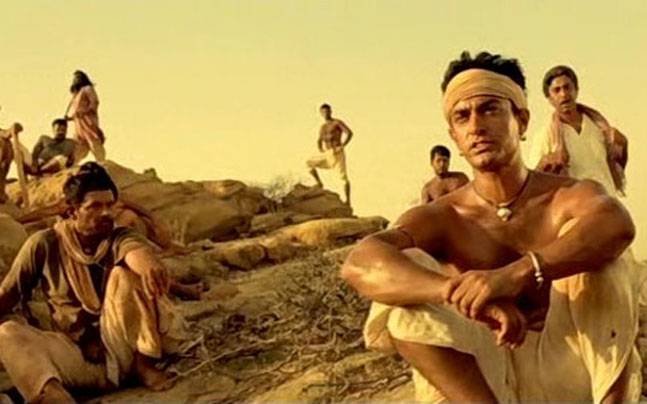
Released in the year of 2001, this sports-based iconic movie was based on a small number of people in a village in the Victorian India where they challenged the British for a game of cricket so as to avoid paying of taxes. The movie is an iconic one because it depicts how the protagonist, Amir Khan as Bhuvan took the responsibility to rescue his fellow villagers and how he taught them to play cricket. And the best part of the movie is that, how in spite of all the major and minor obstacles, Amir Khan won the game against the British and managed to secure an opportunity to not pay taxes for the coming three years.

That being said, this movie is quite extensively used by the B-Schools to teach about the various performance management lessons that can be derived from this movie. So after watching this movie again and following an extensive analysis, I have noticed certain instances which can provide exemplary examples of performance management. Below depicted are some of the instances:

World Water Day: From Lagaan to Well Done Abba, films that ...
  1. At the time when the villagers were unable to pay back the taxes, Bhuvan took the responsibility of all the villagers and acted as a leader to carve out a way of glory for them.
  2. After challenging the British over a game of cricket, Bhuvan took it upon himself to learn the game and then to teach all the fellow members.
  3. During the selection of the cricket team members, Bhuvan believed in instilling diversity and inclusion policy. Kachra was selected in the team because of a deformity in his hand which made him a good bowler, in spite of all the caste based differences. Bhura was selected because he was an expert in running to catch his hens which was identified as a major parameter to catch the ball. Even the drummer who could not speak, was selected because he spent most of his lifetime playing the drums and hence had a good upper body strength. So from these instance, Bhuvan was recognized to identify the differences in the team which can be a source of competitive advantage.
  4. At the onset of the game, Bhuvan and his team did not have the necessary resources. But he was more concerned about the performance of his team than about the scarcity of resources. He gave directions to build the necessity from the scratch and that too by the local folks. Being a leader, Bhuvan turned out to be innovative.
  5. Bhuvan did not just made the team, but he did a good job in allocating roles and responsibilities to each of the team members based on their strengths.
  6. One of the note-worthy point is that Bhuvan set some measurable goals and he supervised and improved the performance of his team members. His mantra was pure hard work but with empathy and compassion, which shows a good sign of performance management.
  7. At the end of the movie, even when Kachra facing the last ball, Bhuvan did not give up. He ran for that single run but then it was turned out to be ‘no-ball’. So as a leader of a team, Bhuvan showed immense amount of trust in his team members and a ‘never give up’ attitude.

Lagaan is definitely a movie to watch if one is trying to understand what it is that a leader truly believes in and does. So next time when you watch this movie, you can watch out for these instances of performance management.

Source: Movie ‘LAGAAN’