Today’s Kalam Foundation was started in the year 2016 in Hyderabad, by a group of intellectuals inspired by Dr. A.P.J.Abdul Kalam, with the main objective of creating more Kalams to lead the way forward.
Mission
To impart quality education and enhance employability
To improve lives by effective health management
To empower women to stand on their own feet
To inspire and bring together intellectuals to contribute in community development
Vision
A reformed society, contributing to national development.
Activities
As of today, 15 Kalam Centers have been set up with over 450 children attending every day. Important national festivals like Independence Day, Republic Day etc are celebrated with gusto.
Currently, Today’s Kalam Foundation is focusing on expanding its activities to reach out to more underprivileged children in the Old City and reduce the consequences of lack of education. They plan to set up 50 more Kalam Centers which will touch the lives of over 1500 deprived children and give them access to education and life skills. Towards this, we are seeking volunteers based out of Hyderabad, trainers who could train volunteers and individual as well as corporate sponsorship
Become a Volunteer Today
Volunteer to teach children in our Kalam centers – Spoken English, Computers, Art & Craft. You can also be a part of the health camps and awareness sessions we conduct.
Please Support. Even 1 Rupee could bring a change.
100% of your contribution will go for this cause.
Today’s Kalam Foundation has been running Kalam Centers for Slum Children since 2017 and benefitting 450 children on daily basis. Kalam Center : TKF volunteers go to slums and choose a group of students who study in Govt. schools or who don’t go to schools. From the same slum a Mentor is employed and a “Kalam center” is established either in the nearby community hall/school premises/rented place. Generally, the Mentors are under/postgraduates. In these centers, the respective Mentors provide after – school support to the students for 2 hours per day. Kalam Centers aims towards the holistic development of children, hailing from an under-resourced section of the society. The project covers various aspects viz., academic education, vocational training, personality development, health tips, hygiene & nutrition awareness, career counseling, and extra curriculum activities. We are run Centers in Riyasatnagar,Hussainialam,Dabeerpura,N.M.Guda, MM Pahadi,Farath nagar,Edi Bazaar,Falaknama,Kanchanbagh,Moinbagh, Bapu nagar,Talabkatta& Babanagar. Background of Children: Most of the Children parents are Daily wagers men go for civil works,auto,road side shops ..etc.Few mothers go for Bangle Making and embroidary works or as servants to other houses. Effect of Corona 2nd Wave:
In the Corona 2nd wave we have seen lot of positive cases in our Kalam Center Children families and as the family is dependant on elders and their income was affected .We have decided to support Corona Positive families with Sustenance Kits. Our Work:
We have good wrapo with the families of Kalam Center Children from 2 years and can understand their pain.So we have decided to be with them during these hard times and decided to support Ration required for Corona Affected Families. Request: Sustenance Kit Rs 1000Home Isolation Kit Rs 800 For more details you can check our website http://www.todayskalam.org
Imposter syndrome basically refers to internal feelings of insecurity or inadequacy that make you believe you are not as competent as people perceive you to be. Basically, it is when we feel like we are frauds, and that anything we have achieved in our lives has been because of pure luck or chance. While in some cases such feelings may cause people to start working harder and meet their own standards of competency, most often they serve as a constant source of anxiety. You may start overworking yourself and spending countless hours trying to get better to make sure no one ‘finds out’ about you.
Especially people who are highly skilled or who have achieved a lot and become successful in a particular field may begin to garner feelings of insecurity and feel that other people are just as skilled, if not even more skilled than them. They start to feel as if they don’t deserve their achievements and success, and that someone more qualified should have got them. Even some of the great people in history like Albert Einstein suffered from this syndrome. He believed himself to be an ‘involuntary swindler’ who did not deserve the recognition his work got. This shows how pervasive and powerful imposter syndrome is, where even a man like Albert Einstein who we now revere as a great scientist that contributed so much to the world, thought of himself as mediocre and undeserving of recognition or praise. This also shows there is no threshold of achievement that puts feelings of inadequacy at rest.
However, it is important to highlight feelings of imposterism are not only felt by highly skilled individuals. Everyone is susceptible to a phenomenon known as ‘Pluralistic Ignorance’ where we each doubt ourselves privately, but think we are alone in thinking that way because no one openly voices their self-doubt. Imposter syndrome is not necessarily a disease or an abnormality, and neither is it always tied to any mental illness like depression or anxiety. Every single person is prone to imposter syndrome, regardless of their race, gender, occupation or mental/physical health. The base cause of this is that we know ourselves from the inside, but we know others only from the outside, so we do not realise that everyone is flawed in some way, not only us. We know all our own shortcomings and weaknesses, but all we know about others is what they tell us, which is far narrower and edited. So we make the mistake of concluding that we have a lot more flaws than others do.
How to deal with Imposter Syndrome?
Perhaps the easiest and most common way to deal with imposter syndrome is to simply talk about it more. We slowly learn that many people around us suffer from the same problem, and become comforted by the fact that we are not alone in such ways of thinking. Once we have this awareness of the syndrome, we can combat it by collecting and revisiting positive feedback and reassuring ourselves of our competence. It also helps us understand that it is simply a negative way of thinking and is not always true.
Apart from this, we must also look inwards and start dealing with it on an internal level as well. This includes things like separating fact from fiction, where we must recognize that even though we have these feelings, they are not objectively true and that we are unreasonably doubting ourselves. We must also stop comparing ourselves with others and try to focus on our own standards of success, not everyone else’s. This is especially important in today’s age of social media, which is the primary cause nowadays for imposter syndrome. We must learn that social media is not real life and that we shouldn’t compare ourselves to what we see on it.
Still, it may be hard to completely eradicate these feelings, but having open conversations about it and self-reflecting and introspection definitely helps us in keeping them controlled. It highlights to us how common these experiences are and that we should not burden ourselves with them. This process of humanizing the world makes us understand that everyone is like us, with their own flaws and problems, and that we all deserve success and fulfilment.
He is one of the most hilarious stand-up comedian that I have come across. He is one of the co founder of a comedy group called All India Bakchod. His YouTube channel is a great source of free laughter therapy. His contents include daily vlogs, gaming streams, video reviews.
(Go and check out all parts of Mummy-Papa Pitai review, you’ll die laughing)
AVANTI NAGRAL
Avanti Nagral is a Artist, Song-writer, Influencer and a You-Tube who has completed a dual degree from Harvard University and Berklee College of Music. She uses her music to convey various social messages and creates YouTube contents tobreak the stereotyped norms by openly discussing sexual topics with her family members in a one-on-one interview, held in a very respectful manner.
(Check out her music video ‘Sun Toh Lo’)
JAY SHETTY
Jay Shetty is a 33 years old monk turned into a life-coach, author, podcaster, you-tuber and an influencer. His channel is inspirational to people of every age group however, his videos focuses on teenagers and young adults. His content includes podcasts and clips where he provides insight on the topics of motivation, wisdom, love and relationships.
THERAPY IN A NUTSHELL
As the name suggests, Therapy in a Nutshell is a YouTube channel owned by Emma McAdam, a Licensed Therapist who makes weekly videos on mental health skills that are easy to understand via YouTube videos and Online Courses. It’s a good platform for people to learn new personal skills and live better. Her video’s cover various topics from Depression, Anxiety, OCD to Sleep disorders and ways to control them. It’s definitely a good investment for people who are curious to learn about mental health.
RANVEER ALLAHBADIA
Ranveer Allahbadia aka BeerBiceps is one of the most famous Indian Youtuber, fitness mentor, social media influencer, and entrepreneur. It’s one of the most informative channels that I have come across. It includes videos on a variety of topics from finance, fashion, etiquette, grooming to meditation, yoga, body-building. They conduct one-on-onepodcasts with famous Celebrities, Nutritionists, Health Experts, Monks, etc. Hence, his channel is a good source of free knowledge.
The Right of Children to Free and Compulsory Education Act or Right to Education Act (RTE), 2009, Article 21A of the Indian constitution, ensures free and compulsory education to everyone between 6 to 14 years of age. 25% of seats in all private institutions are reimbursed by the state to which kids are admitted based on economic status or caste-based reservations.
The Right to education of a specially enabled child (under 18 years of age) has separate legislation that is laid down under the Persons with Disability Act.
Any marriage in which either the boy is under 21 or the girl is under 18, is child marriage.
Prohibition of Child Marriage Act, 2006 serves the following purpose:
Prevents child marriages
Protects the children involved
Prosecutes the offenders
Child marriages, under the above-mentioned act, are cognizable and non-bailable offences. This law also prescribes punishment for performing, conducting and abetting child marriage. Permitting or promoting these marriages by the parents of a child is punishable.
POCSO penalizes penetrative sexual assault on a child by anyone related to the child through marriage
Section 375IPC penalizes sexual acts with a girl below 18 years of age, with or without her consent.
The Trafficking of Persons (Prevention, Protection and Rehabilitation) Bill of 2018 addresses this crime affecting mostly children and women.
This bill addresses:
Aggravated trafficking for forced labour
Begging
Trafficking by administering chemical substances or hormones for the purpose of early sexual maturity
Trafficking for marrying, under the ploy of marriage or after marriage.
Promotion or facilitation of such crimes
So these were some of the children specific laws other basic laws such as the right to equality, right to life, right against discrimination etc. should also be taught to children.
Here are some of the basic ways we can spread awareness:
Including basic laws and fundamental rights in school textbooks.
Making young parents aware of the laws.
Workshops, seminars, etc. in educational institutions.
Including them in cartoon shows and podcasts for children.
To all the parents reading this, ensure your child is safe and comfortable and make them aware of all the laws to ensure their well-being.
To all the children reading this,
If you’re being hurt in any manner, verbal abuse, beatings, bad touch, not being provided with essentials or absolutely anything that is making you feel uncomfortable, REPORT.
Tell a trusted adult, your parents, grandparents, school counsellors or teachers. You can also tell a friends’ parent, or any other adult you trust.
Don’t have an adult you trust, don’t worry as there is support available, you can always call childline number 1098.
As a child being harassed, you might be threatened to stay mum, but it’s important you raise your voice.
If you think any of your friends or someone you know is being abused or suffering in any manner, you should tell your parents or teachers.
Child-friendly mechanisms are used in all stages of your case and you don’t ever need to hesitate to report when something unfair is happening to you. You don’t deserve that ordeal.
Leonardo da Vinci (1452-1519) was a painter, architect, inventor, and student of all things scientific. His natural genius crossed so many disciplines that he epitomized the term “Renaissance man.” Today he remains best known for his art, including two paintings that remain among the world’s most famous and admired, Mona Lisa and The Last Supper. Art, da Vinci believed, was indisputably connected with science and nature. Largely self-educated, he filled dozens of secret notebooks with inventions, observations and theories about pursuits from aeronautics to anatomy. But the rest of the world was just beginning to share knowledge in books made with moveable type, and the concepts expressed in his notebooks were often difficult to interpret. As a result, though he was lauded in his time as a great artist, his contemporaries often did not fully appreciate his genius—the combination of intellect and imagination that allowed him to create, at least on paper, such inventions as the bicycle, the helicopter and an airplane based on the physiology and flying capability of a bat.
Leonardo da Vinci: Early Life and Training
Leonardo da Vinci (1452-1519) was born in Anchiano, Tuscany (now Italy), close to the town of Vinci that provided the surname we associate with him today. In his own time he was known just as Leonardo or as “Il Florentine,” since he lived near Florence—and was famed as an artist, inventor and thinker.
Did you know? Leonardo da Vinci’s father, an attorney and notary, and his peasant mother were never married to one another, and Leonardo was the only child they had together. With other partners, they had a total of 17 other children, da Vinci’s half-siblings.
Da Vinci’s parents weren’t married, and his mother, Caterina, a peasant, wed another man while da Vinci was very young and began a new family. Beginning around age 5, he lived on the estate in Vinci that belonged to the family of his father, Ser Peiro, an attorney and notary. Da Vinci’s uncle, who had a particular appreciation for nature that da Vinci grew to share, also helped raise him.
Leonardo da Vinci: Early Career
Da Vinci received no formal education beyond basic reading, writing and math, but his father appreciated his artistic talent and apprenticed him at around age 15 to the noted sculptor and painter Andrea del Verrocchio, of Florence. For about a decade, da Vinci refined his painting and sculpting techniques and trained in mechanical arts. When he was 20, in 1472, the painters’ guild of Florence offered da Vinci membership, but he remained with Verrocchio until he became an independent master in 1478. Around 1482, he began to paint his first commissioned work, The Adoration of the Magi, for Florence’s San Donato, a Scopeto monastery.
However, da Vinci never completed that piece, because shortly thereafter he relocated to Milan to work for the ruling Sforza clan, serving as an engineer, painter, architect, designer of court festivals and, most notably, a sculptor. The family asked da Vinci to create a magnificent 16-foot-tall equestrian statue, in bronze, to honor dynasty founder Francesco Sforza. Da Vinci worked on the project on and off for 12 years, and in 1493 a clay model was ready to display. Imminent war, however, meant repurposing the bronze earmarked for the sculpture into cannons, and the clay model was destroyed in the conflict after the ruling Sforza duke fell from power in 1499.
Leonardo da Vinci: ‘The Last Supper’ and ‘Mona Lisa’
Although relatively few of da Vinci’s paintings and sculptures survive—in part because his total output was quite small—two of his extant works are among the world’s most well-known and admired paintings.
The first is da Vinci’s “The Last Supper,” painted during his time in Milan, from about 1495 to 1498. A tempera and oil mural on plaster, “The Last Supper” was created for the refectory of the city’s Monastery of Santa Maria delle Grazie. Also known as “The Cenacle,” this work measures about 15 by 29 feet and is the artist’s only surviving fresco. It depicts the Passover dinner during which Jesus Christ addresses the Apostles and says, “One of you shall betray me.” One of the painting’s stellar features is each Apostle’s distinct emotive expression and body language. Its composition, in which Jesus is centered among yet isolated from the Apostles, has influenced generations of painters.
When Milan was invaded by the French in 1499 and the Sforza family fled, da Vinci escaped as well, possibly first to Venice and then to Florence. There, he painted a series of portraits that included “La Gioconda,” a 21-by-31-inch work that’s best known today as “Mona Lisa.” Painted between approximately 1503 and 1506, the woman depicted—especially because of her mysterious slight smile—has been the subject of speculation for centuries. In the past she was often thought to be Mona Lisa Gherardini, a courtesan, but current scholarship indicates that she was Lisa del Giocondo, wife of Florentine merchant Francisco del Giocondo. Today, the portrait—the only da Vinci portrait from this period that survives—is housed at the Louvre Museum in Paris, France, where it attracts millions of visitors each year.
Around 1506, da Vinci returned to Milan, along with a group of his students and disciples, including young aristocrat Francesco Melzi, who would be Leonardo’s closest companion until the artist’s death. Ironically, the victor over the Duke Ludovico Sforza, Gian Giacomo Trivulzio, commissioned da Vinci to sculpt his grand equestrian-statue tomb. It, too, was never completed (this time because Trivulzio scaled back his plan). Da Vinci spent seven years in Milan, followed by three more in Rome after Milan once again became inhospitable because of political strife.
Leonardo da Vinci: Philosophy of Interconnectedness
Da Vinci’s interests ranged far beyond fine art. He studied nature, mechanics, anatomy, physics, architecture, weaponry and more, often creating accurate, workable designs for machines like the bicycle, helicopter, submarine and military tank that would not come to fruition for centuries. He was, wrote Sigmund Freud, “like a man who awoke too early in the darkness, while the others were all still asleep.”
Several themes could be said to unite da Vinci’s eclectic interests. Most notably, he believed that sight was mankind’s most important sense and that “saper vedere”(“knowing how to see”) was crucial to living all aspects of life fully. He saw science and art as complementary rather than distinct disciplines, and thought that ideas formulated in one realm could—and should—inform the other.
Probably because of his abundance of diverse interests, da Vinci failed to complete a significant number of his paintings and projects. He spent a great deal of time immersing himself in nature, testing scientific laws, dissecting bodies (human and animal) and thinking and writing about his observations. At some point in the early 1490s, da Vinci began filling notebooks related to four broad themes—painting, architecture, mechanics and human anatomy—creating thousands of pages of neatly drawn illustrations and densely penned commentary, some of which (thanks to left-handed “mirror script”) was indecipherable to others.
The notebooks—often referred to as da Vinci’s manuscripts and “codices”—are housed today in museum collections after having been scattered after his death. The Codex Atlanticus, for instance, includes a plan for a 65-foot mechanical bat, essentially a flying machine based on the physiology of the bat and on the principles of aeronautics and physics. Other notebooks contained da Vinci’s anatomical studies of the human skeleton, muscles, brain, and digestive and reproductive systems, which brought new understanding of the human body to a wider audience. However, because they weren’t published in the 1500s, da Vinci’s notebooks had little influence on scientific advancement in the Renaissance period.
Leonardo da Vinci: Later Years
Da Vinci left Italy for good in 1516, when French ruler Francis I generously offered him the title of “Premier Painter and Engineer and Architect to the King,” which afforded him the opportunity to paint and draw at his leisure while living in a country manor house, the Château of Cloux, near Amboise in France. Although accompanied by Melzi, to whom he would leave his estate, the bitter tone in drafts of some of his correspondence from this period indicate that da Vinci’s final years may not have been very happy ones. (Melzi would go on to marry and have a son, whose heirs, upon his death, sold da Vinci’s estate.)
Da Vinci died at Cloux (now Clos-Lucé) in 1519 at age 67. He was buried nearby in the palace church of Saint-Florentin. The French Revolution nearly obliterated the church, and its remains were completely demolished in the early 1800s, making it impossible to identify da Vinci’s exact gravesite.
A bug bounty hunter is someone who understands the ins and outs of cybersecurity and is skilled at detecting bugs and weaknesses. Simply defined, a bug bounty hunter examines apps and platforms for bugs that even the in-house development team may overlook. When these professionals find a bug, they report it to the company (or the responsible authority behind the application or platform) and get compensated for their efforts. The advantages aren’t usually monetary in nature.
The concept of a bug bounty is not new, but it has gained hold in India during the previous decade. A bug bounty hunter is not restricted to working for a particular client or firm; instead, all they have to do is find defects and submit them to the appropriate authorities. But why don’t businesses create an in-house bug-hunting team? The rationale behind this is that when a large number of hackers (white hats) are trying to uncover a defect, the chances of the problem being solved fast and easily are substantially higher.
And, if you think about it, firms don’t have to pay their in-house staff on a monthly basis; instead, they can hire people to help them find all the problems and reward them with benefits.
How To Become A Bug Bounty Hunter
Before we get started on how to become a bug bounty hunter, having a cybersecurity expertise or a good understanding of vulnerability assessment will be beneficial.
This is the first and most important item to perform before diving into the getting started process, regardless of the domain. Look for trends in the bug bounty sector, such as what platforms are used, what hacking methods are used, and what tools are used, and so on. This will give you an idea of how to go about getting started as a bug bounty hunter. Cross-site scripting (XSS), SQL Injection, Business Logic, and Information Gathering are some of the major areas to concentrate on.
Training And Education
Cybersecurity is a broad subject that cannot be grasped in a few days. When it comes to studying the ins and outs of vulnerability assessment, people either take a quick course or enroll in a full-fledged course. However, it is entirely up to you and how quickly you want to learn.
You can always enrol in full-time cybersecurity training, such as CEH, if you want to take things a step further. And just because you’re enrolled in a full-time programme doesn’t mean you can’t employ the practical approach. When you first begin to gather expertise, you should start with various online bug bounty programmes.
Another way to learn the game is to read POCs written by other hackers or to watch YouTube lessons. It’s also regarded as one of the most effective strategies to broaden your horizons. When it comes to practising vulnerability assessment or penetration testing, this is one of the most important things to remember. While training colleges give you with a practise platform, self-taught professionals may find it difficult. It is not legal to hack into random websites or platforms on the internet. As a result, setting up a virtual system to practise your talents is always a good idea. You can also try practising on bug bounty programmes on your own. You examine all of the previous year’s bugs, as well as the tactics employed.
From more than a century humankind is asking about could we ever be able to travel with speed of light, Is travel with speed of light is possible?. As space enthusiasts, could space ships shown in movies star trek and star wars be possible, can we make warp drives?
Let us first discuss about speed of light. It is a cosmic speed limit. Speed of light is fastest speed of which any two poles in space can communicate with each other. It is a speed at which light travels. In one second a beam of light can make 8 rotations. The standard speed of light if we convert to km/hr than speed of light is 1,079,252,848.8 km/hr(1.07 billion km/hr). Or we can say 299,792,458 meter/sec. So again question arises can this speed be achievable. If we can make to travel with speed of light then to reach to our nearest star Proxima Centauri it will take 4.2 earth years. So if we travel 5 times speed of light then to reach proxima centauri it will take nearly 1 year.
In 1994 a Mexican physicist Miguel Alcubierre published a theory, in which he showed how a warp drive is possible with Albert Einstein’s Theory of General Relativity. He said that in order to make a warp drive it will require a huge amount of negative energy. Negative energy equivalent t mass of Jupiter.
Alcubierre said that if the lift hand side of Einstein’s equation is for curvature of space-time, right hand side is newton’s gravitational constant with T is stress energy factor, then there requires a negative energy in right side to bend fabric of space-time. Alcubierre determined that the ship needed to stay inside a flat space-time bubble, which is such that it can move with any arbitrary speed.
But, Alcubierre’s theory is as real as fiction. As we know that negative energy is not possible and does not exists. Anti matter exists and is different from negative energy. Anti matter is a regular matter with opposite charge but with it has positive mass.
In 2021 paper by physicist Erik Lentz of Gottingen University showed that space time warp bubble solution is possible by positive energies and theoretically move at any arbitrary speed.
Again we have question that is warp drives be possible? The answer is Yes.
In recent papers published by Advanced propulsion laboratory at Applied Physics authors Alexey Bobrick and Gianni Martire showed that how warp drives are possible without negative energy. They showed that we can travel with some fraction of speed of light, but to travel faster than speed of light you would need a superluminal matter. In other words, you would need a matter that travels faster than speed of light. Accelerating anything with mass to speed of light requires an infinite amount of energy. This would be true for any warp engine design, but is impossible.
Gianni and Bobrick showed that there are four types of warp drives, of which Alcubierre showed class 3 type. They showed that Class 1 type of warp drive is physically possible with positive energy and real matter and they don’t travel with speed of light. These classification is based on speed inside the bubble(Vin) and speed outside the bubble(Vout).
These can be achieved by time dilation. Gianni and Bobrick proposed two ways of time dilation, either you go really fast with 90% of speed of light or you put yourself into a strong gravitational field. The stronger the gravitational speed the slower the time passes for passengers. If we make a ship of super dense material, perhaps close to mass of a neutron star then gravitational field will be strong enough for time dilation. They designed a shape, if the ship has diameter of 620 meter with mass of 10% as of sun then time for the passengers inside the ship will be 1/10. The passengers will travel to Proxima Centauri in 9 Earth years but for passengers inside ship will feel as of 10 months.
But to move such a massive ship we need a powerful engine. If we convert its 13% mass to energy than we can get enough energy. The one way is fusion as it converts 1% of mass to energy. The one Bobrick and Gianni proposed that if we take advantage of Gravitational Accretion Energy. This is disklike flow of dust, gas and plasma orbiting around a massive astronomical object. The friction and loss of angular momentum creates huge amount of energy that potentially be harnessed. Accretion disk can convert 10% of any given mass into energy which is highly sufficient.
Now the question is no longer “If” humanity will achieve warp travel, now the question is “When”.
The bandwagon effect is a psychological phenomenon in which people do something primarily because other people are doing it, regardless of their own beliefs, which they may ignore or override. This tendency of people to align their beliefs and behaviors with those of a group is also called a herd mentality. The term “bandwagon effect” originates from politics but has wide implications commonly seen in consumer behavior and investment activities. This phenomenon can be seen during bull markets and the growth of asset bubbles.
Understanding the Bandwagon Effect
The bandwagon effect arises from psychological, sociological, and, to some extent, economic factors. People like to be on the winning team and they like to signal their social identity. Economically, some amount of bandwagon effect can make sense, in that it allows people to economize on the costs of gathering information by relying on the knowledge and opinions of others. The bandwagon effect permeates many aspects of life, from stock markets to clothing trends to sports fandom.
Politics
In politics, the bandwagon effect might cause citizens to vote for the person who appears to have more popular support because they want to belong to the majority. The term “bandwagon” refers to a wagon that carries a band through a parade. During the 19th century, an entertainer named Dan Rice traveled the country campaigning for President Zachary Taylor. Rice’s bandwagon was the centerpiece of his campaign events, and he encouraged those in the crowd to “jump on the bandwagon” and support Taylor. By the early 20th century, bandwagons were commonplace in political campaigns, and “jump on the bandwagon” had become a derogatory term used to describe the social phenomenon of wanting to be part of the majority, even when it means going against one’s principles or beliefs.
Consumer Behavior
Consumers often economize on the cost of gathering information and evaluating the quality of consumer goods by relying on the opinions and purchasing behavior of other consumers. To some extent, this is a beneficial and useful tendency; if other people’s preferences are similar, their consumption decisions are rational, and they have accurate information about the relative quality of available consumer goods, then it makes perfect sense to follow their lead and effectively outsource the cost of gathering information to someone else.
However, this kind of bandwagon effect can create a problem in that it gives every consumer an incentive to free ride on the information and preferences of other consumers. To the extent that it leads to a situation where information regarding consumer products might be underproduced, or produced solely or mostly by marketers, it can be criticized. For example, people might buy a new electronic item because of its popularity, regardless of whether they need it, can afford it, or even really want it.
Bandwagon effects in consumption can also be related to conspicuous consumption, where consumers buy expensive products as a signal of economic status.
Investment and Finance
Investing and financial markets can be especially vulnerable to bandwagon effects because not only will the same kind of social, psychological, and information-economizing factors occur, but additionally the prices of assets tend to rise as more people jump on the bandwagon. This can create a positive feedback loop of rising prices and increased demand for an asset, related to George Soros’ concept of reflexivity.
For example, during the dotcom bubble of the late 1990s, dozens of tech startups emerged that had no viable business plans, no products or services ready to bring to market, and in many cases, nothing more than a name (usually something tech-sounding with “.com” or “.net” as a suffix). Despite lacking in vision and scope, these companies attracted millions of investment dollars in large part due to the bandwagon effect.
The internet is a fantastic tool for communicating, sharing information, and collaborating, but users of all ages must adhere to specific guidelines in order to stay safe online. Every Internet user leaves a digital trail of data, which includes websites viewed, emails sent, and information provided to online services. Consider the data trail you’re leaving in your wake. Before writing a nasty email, keep in mind that you are leaving your digital footprint, as the message may live online indefinitely. Be more selective about what you post on social networking platforms. While you can usually delete content from social media sites, there’s no guarantee you’ll ever be able to delete digital data once it’s been shared online.
Grooming on the internet
Strangers, or even known people, form an emotional bond with a child or young person online or in person in order to gain their trust for sexual abuse or exploitation. Many youngsters and teenagers begin to acquire feelings of a particular connection or relationship and are unaware that they are being groomed.
To seduce the youngster, the perpetrators are known to utilise a variety of ways, including:
Bribing: This can include giving the child money or presents. In an online game, the gifts could be in the form of even points, lives, and in-game goodies. Flattery: They strive to earn the child’s affection by showering them with praise and attention.Intimacy building and sexualized games: They put the child’s fragility to the test by adding slightly sexual overtones in conversation or during play. If the child responds positively to his overtures, he will try to develop a deeper relationship with him. Desensitization: They show the child pornography and child sexual abuse material in an attempt to desensitise the child to sexual behaviours. Threats and extortion: To acquire access to the youngster, they use forceful coercion. When parents are unsure what the youngster will respond to, they may try all of the above in an attempt to pique the child’s interest and attention.
Sexual exploitation on the internet
The internet has also become a tool for sexually exploiting children, resulting in practises known as “online,” “ICT-facilitated,” or “cyber-enabled” child sexual exploitation, which encompasses all acts of sexual exploitation committed against a child that have, at some point, a connection to the online environment. It includes any use of ICT that leads to sexual exploitation or causes a child to be sexually exploited, or that leads to or causes the production, purchase, sale, possession, distribution, or transmission of photographs or other material documenting such exploitation.
Theft of one’s identity
Personal information such as address, email address, prior addresses, mother’s maiden name, place of birth, pin number, bank account details, Aadhaar number, and passwords is obtained by fraudsters and used in an unlawful manner for personal advantage. Companies or service providers frequently demand this information as part of their verification procedure. They can access other information about the potential victim and make unauthorised financial transactions using the victim’s credit card or bank account, as well as commit other crimes such as illegally entering (or exiting) a country, trafficking drugs, smuggling other substances, committing cyber-crimes, laundering money, and much more, by obtaining some information. They can even exploit the victim’s identity to commit nearly any crime in his or her name.
If a criminal uses another person’s identity to commit a crime, the victim may be suspected by the authorities. The victim may find themselves the subject of a criminal inquiry, and they may find it difficult to prove their innocence in such situations. Victims of financial fraud may face a slew of problems. You might be stuck with debts if your information was utilised in any type of monetary transaction. Most of the time, if you can show that the debts are not your fault, you will not be held guilty. Proving that you are not at blame, on the other hand, can be difficult and time-consuming.
Cyberbullying
When someone utilises technology (such as the internet or a mobile phone) to bully others, this is known as cyberbullying. Being a victim of cyberbullying can be extremely upsetting for a young child, especially when they often have no idea who is tormenting them. Sending threatening text messages or emails, or creating a hate group on a social networking site, are examples of cyberbullying. Bullying can occur at any time of day or night, and the victim is frequently targeted even when they are at home. On the internet, images and text messages may spread quickly and widely, making it difficult to counteract cyberbullying.
A computer virus is a piece of software that can “infect” other programs by modifying them; The modification includes injecting the original program with a routine to make copies of the virus program, which can then go on to infect other programs. A virus can do anything that other programs do. The difference is that a virus attaches itself to another program and executes secretly when the host program is run.
The terminology in this area presents problems because of a lack of universal agreement on all of the terms and because some of the categories overlap. Malicious software can be divided into two categories: those that need a host program, and those that are independent.
Need a host program : The former, referred to as parasitic, are essentially fragments of programs that cannot exist independently of some actual application program, utility, or system program. Examples: Viruses, logic bombs, and backdoors
Independent malware is a self-contained program that can be scheduled and run by the operating system. Examples : Worms and bot programs
Backdoor or Trapdoor
A backdoor, also known as a trapdoor, is a secret entry point into a program that allows someone who is aware of the backdoor to gain access without going through the usual security access procedures. Programmers have used backdoors legitimately for many years to debug and test programs; such a backdoor is called a maintenance hook. It Has been commonly used by developers. A threat when left in production programs allowing exploited by attackers. It is very hard to block in O/S. It requires good s/w development & update.
Logic Bomb
It is one of oldest types of malicious software. The code is embedded in legitimate program. It is activated when specified conditions met Eg presence/absence of some file Particular date/time Particular user When it is triggered it typically damages system, Modify/delete files/disks, halt machine, etc.
Trojan Horse
A Trojan horse is a useful, or apparently useful, program or command procedure containing hidden code that, when invoked, performs some unwanted or harmful function. Trojan horse programs can be used to accomplish functions indirectly that an unauthorized user could not accomplish directly, Which is usually superficially attractive. Eg game, s/w upgrade etc. When it runs performs some additional tasks. Allows attacker to indirectly gain access they do not have directly. Often used to propagate a virus/worm or install a backdoor. Another common motivation for the Trojan horse is data destruction. The program appears to be performing a useful function (e.g., a calculator program), but it may also be quietly deleting the user’s files.
Zombie
Program which secretly takes over another networked computer is called zombie. Then uses it to indirectly launch attacks. Often used to launch distributed denial of service (DDoS) attacks. Exploits known flaws in network systems.
Adultery is a French word that came from the Latin verb “adulterium,” which means “to corrupt”. Adultery is described as a consensual extramarital sexual connection that is considered impolite on social, religious, and moral grounds, as well as earlier on legal ones.
Even if adultery is no longer a criminal offence, it is still considered a delinquent behaviour since it breaches societal norms that an individual is expected to follow.
Religion views adultery as a sin. India is famed for its variety while remaining together. Our country is a secular one, in which all religious views are honoured equally. Every religion has its own set of beliefs and goals. In the case of adultery, however, almost every religion is harshly critical. Adultery is seen differently by many religions, but the underlying view stays the same. Adultery is considered a sin in every faith. Religions, on the other hand, may have different punishments. It is considered a delinquent behaviour since it offends the sacred sentiments of all religions.
Adultery in the eyes of the law Adultery is defined in India under Section 497 of the Indian Penal Code (IPC) 1860 as: “Whoever has sexual intercourse with a person who is and whom he knows or has reason to believe is the wife of another man without that man’s consent or connivance, such sexual intercourse not amounting to the offence of rape, is guilty of adultery and shall be punished with imprisonment of either description for a term that may extend to five years, or with fine or with b The wife shall not be held liable as an abettor in such a case.”
Will infidelity have an impact on alimony? An unfaithful wife is not entitled to maintenance from her husband under section 125 of the CrPC. Initially, whether the husband is maintaining a concubine in the same house or living apart with a concubine, the wife has the right to live separately and sue her husband for support.
Conclusion: The necessity to alter India’s adultery statute has not arisen in the last few years; rather, jurists and attorneys have been clamouring for change for decades. The courts have ruled that a part cannot be struck down just because it is desirable to remove it. However, the study suggests that the section be amended rather than deleted. As a result, the Legislature should make a modification to the law of adultery as soon as possible to eliminate the legislation’s gender prejudice.
Year after year, Google has been ranked as one of the top companies to work for, so it’s no surprise that the tech giant receives roughly three million applications per year. With an acceptance rate of 0.2%, you’d have a better chance of getting into Harvard.
It is difficult to get a job at Google because of their quality standards and the high number of applications they receive per year. For example, INC reported that Google receives 2 million job applications per year, which means it’s more competitive to get into than Harvard University.
Google is an employer of choice for the world’s top talent, typically receiving hundreds of resumes for every opening, which allows them to be extremely selective in their hiring.The hardest part is getting an interview. If you attend a university, go through campus recruiting.
According to the Pascale, The lowest paid Google employees are Entry Levels at $51,000.Google says there is no degree or prior experience required. In fact, 61% of learners enrolled do not hold a four-year degree. This certificate could be a perfect launchpad to a career in IT.
So if you have a keen interest in working at Google California or at any other branches of Google work hard my friend. More than studies work on yourselves, on your IQ level the interviewees are not going to ask you a question from your syllabus.
Sun is something we have seen almost everyday of our lives, yet many of us aren’t aware of it’s health benefits except for the fact that it provides Vitamin D to the body. We all know that Earth revolves around the Sun, but little do we know that so does our mood. A healthy amount of sunlight is considered to promote the production of a hormone called serotonin in the kidney and liver that helps to boost one’s mood, providing more peace and focus. A healthy dose of serotonin helps to balance the amount of a hormone called melatonin that promotes sleep at night and helps one in maintaining a balanced routine. It also helps to promote the metabolism process and even prevent weight gain.
Scientifically speaking, a 15-30mins of sun exposure between 7 a.m. – 9 a.m. few times a week helps to promote enough melatonin to boost one’s mood and reduce the effects of Depression and Anxiety. This form of exercise is called light therapy or phototherapy in clinical terms. The UV-B rays in the Sunlight are responsible for the production of Vitamin D in a human body. Vitamin D is beneficial for a healthy eye sight and promoting strong bone health. It is Scientifically proven that Sun Radiations helps in fighting certain Cancer cells and cures various skin diseases like eczema, acne, etc. However, the effects might differ from body to body so it’s advisable to consult with a dermatologist. Just like the universe, our body work on the law of balance. Excess of anything might do more harm than good. Similarly, excess of sun exposure might have harmful eyes on the eyes, skin and even lead to cancer at times.
1. IGNOU TEE June 2021 Exam Dates Announced, Details Here:-
IGNOU June TEE 2021: The Indira Gandhi National Open University (IGNOU) has announced June 2021 Term End Examination (TEE) dates.
IGNOU June TEE 2021: The Indira Gandhi National Open University (IGNOU) has announced June 2021 Term End Examination (TEE) dates. For undergraduate (UG) and postgraduate (PG) final year students, the exams will be conducted from August 3, along with exams for backlogs.
Similarly, postgraduate diploma (PGD), diploma, postgraduate certificate and certificate exams will also begin on August 3. Detailed date sheets will be released soon on the official website of the university.
“The Term-end Examination (TEE) June 2021 of the University will be conducted from 3rd August 2021 for the final year students of Under Graduate (UG) and Postgraduate (PG) programmes along with their backlogs, if any. The examination of Post Graduate Diploma, Diploma, Post Graduate Certificate and Certificate Programmes will also be held from 3rd August 2021. The Date-Sheet and other details will be notified shortly,” IGNOU said in a statement.
2.Online Classes Keep Students In Maharashtra’s Slums Far From Studies:-
Several parents expressed their hardship over the ordeal of not being able to provide their children with smart phones that have become an essential article of possession.
Nagpur: Amid the COVID-19 pandemic and its subsequent restrictions, students living in Nagpur’s Danteshwari Nagar slum are reeling under the effects of technological inaccessibility that has deprived them of the opportunity to attend online classes.
Several parents expressed their hardship over the ordeal of not being able to provide their children with smart phones that have become an essential article of possession.
“Since the time schools have closed, the lives of students have been severely affected. As we are labourers, we are not able to keep a check on our children. When they were going to school, we were assured that they were studying. We do not have the ability to provide them mobile phones with internet access,” said a parent.
Many other parents who live these slums echoed the same misery.
Nand Kumar Verma said, “We cannot afford smartphones. We have one phone which we need to carry to work. We do not earn so much to afford a smart phone for them. Studying from schools is a more convenient option for our children. Online classes have made things difficult. We are daily labourers and cannot look after their studies.”
His wife Rajini Verma stressed over her fear that her children will end up becoming labourers like themselves.
“Some of their teachers come and tell us to give mobile phones to children. This is not possible as our contractor calls us to give work during the day, and we need to keep it with us. Since they are not studying, we are afraid of how they will get admission for higher studies. We fear they will become labourers like us,” she said.
Students residing in the slum area are well aware of the issue. Laxmi Verma told ANI that she has four brothers and sisters. “It is difficult for all of us to study with one phone. Internet pack is also costly and sometimes there are network issues too,” she said.
Sonia Sahu, another student, said that due to network issues, she could not complete her online examination.
“Sometimes, when we are not able to recharge our phones, we miss out on our classes,” she added.
Jayshree Chikane, a teacher at a nearby government school said, “Students do face issues, especially the young kids. At least 50 per cent of our students do not have smart phone access. We try to send them notes over WhatsApp and tell them to call if they have doubts. Most of the kids in our school live in the slums. I am afraid that when they will rejoin, we will have to start from the very basics. Since they belong to lower-economic sections of society, their parents do not pay attention to them. Small children need their parents’ help to study.”
3. AKTU Even Semester Exams Will Be Held Online, Confirms University:-
Dr APJ Abdul Kalam Technical University (AKTU) even semester exams for the 2021-22 academic session will be conducted online and students will be able to take their exams from a place of their convenience. The exams will begin in August.
New Delhi: Dr APJ Abdul Kalam Technical University (AKTU) even semester exams for the 2021-22 academic session will be conducted online and students will be able to take their exams from a place of their convenience. The exams will begin in August.
Requesting students not to believe in rumours related to exams, the university tweeted: “All the exams of even semester 2020-21 will be conducted in online mode only and students will be able to give their exams from anywhere. Please do not pay attention to any rumours in this regard. In case of any confusion, visit the University website. Best wishes to all the students.”
All the exams of Even Semester 2020-21 will be conducted in online mode only and students will be able to give their exams from anywhere. Please do not pay attention to any rumours regarding this. In case of any confusion, visit the University website. Best wishes to all the students. examination controller
@AktuAcoe— AKTU (@AKTU_Lucknow) July 3, 2021
AKTU in June released the term-end examinations schedule, except final semester. Exams will held in online mode where students will be required to answer objective type questions, the university had said.
4. AKTU To Use UPCET 2021 Scores For MBA Admission:-
According to a statement from the NTA, many students were unable to take CMAT 2021 and therefore UPCET 2021 will also be considered as an eligibility test for AKTU MBA admissions.
New Delhi: In addition to the Common Management Admission Test (CMAT), Dr APJ Abdul Kalam Technical University (AKTU), Uttar Pradesh, will use the Uttar Pradesh Common Entrance Test (UPCET) 2021 for admitting students to the MBA programme, for the 2021-22 academic year. Both the exams are conducted by the National Testing Agency. While results of CMAT 2021 have been announced, UPCET 2021 is yet to be conducted.
According to a statement from the NTA, many students were unable to take CMAT 2021 and therefore UPCET 2021 will also be considered as an eligibility test for AKTU MBA admissions.
“To ensure larger participation and to provide relief to aspirants who could not appear in CMAT 2021, it has now been decided by AKTU that Uttar Pradesh Common Entrance Test (UPCET)- 2021 score will also be used for admission to the MBA programme of AKTU,” an official statement said.
Candidates with any one of the two exam scores –CMAT 2021 or UPCET 2021 – will be eligible to apply for MBA admission at AKTU, it added.
Registration for UPCET 2021 is going on. Students can submit their forms at upcet.nta.nic.in up to July 6, 2021.
Apart from MBA, the university will also use UPCET scores for MCA and some other undergraduate-level professional courses.
For admission to other postgraduate programmes – MTech, MPharm, MArch, MURP, and MDes – the university conducts its own entrance exam – APEE.
Registration for APEE 2021 is going on. The last date to apply is July 15.
5. Education Minister To Launch CBSE’s ‘Innovation Ambassador Programme’:-
The Innovation Ambassador Programme is a collaboration between the CBSE, the All India Council for Technical Education (AICTE) and the Innovation Cell of the Ministry of Education.
New Delhi: Education Minister Ramesh Pokhriyal ‘Nishank’ will launch the Innovation Ambassador – Online Training Programme for CBSE teachers on July 16, 2021, the Central Board of Secondary Education (CBSE) said.
The Innovation Ambassador Programme is a collaboration between the CBSE, the All India Council for Technical Education (AICTE) and the Innovation Cell of the Ministry of Education.
The programme aims to strengthen the mentoring capacity of teachers for nurturing innovative ideas from students.
Schools can register for the programme up to July 10 at mic.gov.in/sia. Each school can nominate up to five teachers to participate in the programme. Training will be provided on a first come, first served basis.
Through this programme, the CBSE aims to train 50,000 teachers – two or three teachers per school – from all affiliated schools as ‘Innovation Ambassadors’. Teachers will be shortlisted from nominations submitted by schools.
Teachers will be trained in four modules – design thinking and innovation, idea generation and ideal hand-holding, intellectual property rights, product/prototype development.
“The first batch of the first module of the first Programme, viz. Design Thinking & Innovation, will start from 20th July 2021,” an official statement said.
The trained teachers, or ‘Innovation Ambassadors’, will help in creating the culture of innovation in their schools, mentor other teachers, students, and provide support to other schools as resource persons, the CBSE had said.
They will also act as evaluators for national-level idea competitions, and act as mentors for the national level programme on innovation and related activities, the board had earlier said.
Jamia Millia Islamia UG, PG and diploma programme applications will be accepted till July 10 at the official website jmicoe.in. “The Vice-Chancellors, JMI on the request of the aspirants has approved the extension in the last date of filing of admission forms for all undergraduate, postgraduate, diploma programmes, etc for the academic session 2021-22 till July 1,” said the official notification read.
Jamia Millia Islamia application forms were released on May 17. Earlier, the last date to fill the application form was June 30.
New departments in Jamia Millia Islamia
The varsity has started new departments, including — Department of Design and Innovation, the Department of Hospital Management and Hospice Studies, the Department of Foreign Languages and the Department of Environmental Sciences.
Information about the new courses and departments can be accessed on the university’s website — jmi.ac.in and portal of the controller of examinations jmicoe.in.
7. CBSE releases important update on Class 12 evaluation:-
CBSE has released an important update regarding the Class 12 evaluation process for students who changed their subjects and for absentee students.
CBSE released a notification on Thursday providing certain key updates on the Class 12 evaluation process for students who changed their subjects and for absentee students.
8. UP Board Class 10, Class 12 Results 2021 declaration date not decided yet: All you need to know:-
Here’s when UP Board Class 10 and Class 12 Results 2021 will be declared by the Uttar Pradesh Madhyamik Shiksha Parishad, UPMSP.
UP Board Results 2021: The Uttar Pradesh Madhyamik Shiksha Parishad, UPMSP is expected to declare the Class 10 and Class 12 board results 2021 soon. All the candidates are advised to keep a close check on the official website of UP Board for latest updates on UP Board Class 10 and Class 12 Results 2021.
9. CBSE invites schools to send in teacher nominations for Innovation Ambassador Programme:-
CBSE has invited affiliated schools to send in teacher nominations for the Innovation Ambassador Programme which was jointly launched with AICTE to train teachers.
CBSE and AICTE joined hands in mid-June to launch the Innovation Ambassador Programme to train teachers. The programme will be launched on July 16 and CBSE schools can now nominate a maximum of five teachers each for this programme.
The recent CBSE notification said the training for the same will be carried out on a first-come-first-serve basis. CBSE schools can register their teachers within July 10 through the website mic.gov.in/sia.
The detailed guidelines, portal user manual and the registration process are available on the above link.
Schools who have already registered their teachers will need to log in at the above link with the registered email ID of an SPOC (Single Point of Contact). As per CBSE’s notification, the password has been emailed to this e-mail ID.
The first batch of the first module of the first Innovation Ambassador Programme will be on Design Thinking and Innovation. It will begin in July 20.
About the Innovation Ambassador Programme
To strengthen the mentoring capacity of teachers, CBSE, in collaboration with the Innovation Cell, AICTE, Ministry of Education, launched the ‘Innovation Ambassador Programme’ in which the teachers from affiliated schools shall be trained on the following five modules:
10. 3 scholarship and fellowship programmes at IIT, JNU and others you can apply for in July 2021:-
Here are 3 major scholarship and fellowship programmes in India you can apply to in July 2021.
chool and college students pursuing graduation can benefit much from ace scholarship programmes. These can build confidence, increase exposure, and give a better idea about what to expect in the job industry after passing certain courses.
Getting through a scholarship programme in reputed institutes such as IIT, JNU, etc. can change the career trajectory of young students. In such programmes, you will get to work beside the top students and faculty of India.
Check out these three major scholarship and fellowship programmes in India you can apply to by July 2021:
(i). Jawaharlal Nehru University School of Environmental Sciences Research Associateship 2021
Jawaharlal Nehru University School of Environmental Sciences (SES) Junior Research Fellowship 2021 is an opportunity offered by JNU, New Delhi to MSc degree holders.
The selected candidate will be working on the project entitled ‘Estimating Mass Balance of Glaciers in the Bhaga Basin, Western Himalaya using GPR and Remote Sensing Methods’.
Eligibility
The fellowship is open for candidates who hold an MSc degree in any branch of Environmental Sciences/ Physical Sciences/Geology/Applied Geology/Chemistry/Biogeochemistry.
They must have research experience in Glaciology, Remote sensing, and GIS with glacier field experience and field data collection and analysis.
Prizes and rewards: As per rules of JNU and MOESADVERTISEMENT
(ii). IIT Gandhinagar Department of Humanities and Social Sciences Post-Doctoral Fellowship 2021
IIT Gandhinagar Department of Humanities and Social Sciences Post-Doctoral Fellowship 2021 is for MA and PhD degree holders. The fellowship is meant for the project titled, ‘Western Indian Glass: Mapping Kapadvanj’.
Eligibility
The fellowship is open for candidates below 35 years of age who hold an MA and PhD degree in Cultural Anthropology/Archaeology, with a good publication record.
They are expected to be proficient in Field research, Data acquisition, and critical analysis alongside having excellent oral and written communication skills.
The candidates must have specialisation in Ethnoarchaeology, Ancient Crafts, Pyro-technology, Ethnohistorical Methods, and Early Historic Medieval Archaeology.
Besides, they must have independent fieldwork experience and good knowledge in Gujarati and Isotope Analysis.
Prizes and rewards: Up to INR 35,000 to 45,000 per month plus other benefits
Digital Bharati Covid Scholarship invites applications from children who are left vulnerable with very little or no financial support for their further education owing to a Covid-led crisis in their family.ADVERTISEMENT
Students who have lost either or both of their parents during the Covid-19 pandemic can apply.
Eligibility
The scholarship is open for Indian students from Classes 1 to 12. Students who have lost one or both of their parents since January 2020.
Prizes and rewards: Vouchers to get educational subscriptions of leading ed-tech companies and access to tablets/laptops
1. Deep tech holds extreme relevance for management students too: Lakshmi Narayanan, Emeritus Vice Chairman, Cognizant:-
Narayanan classified space and aviation, renewable energy, nuclear power and fusion power as high-growth sectors. While explaining about the managerial and business potential lying in these high-growth sectors, he also shared with the students that the highest degree of innovation in these sectors, highest R&D spends, and highest investments globally convinced him and other economists of these being the high-growth sectors globally.
The notion that deep technology is of interest only science and technology scholars is false as it holds extreme relevance to management students as well, said Lakshmi Narayanan, Former CEO, Emeritus Vice Chairman, Cognizant and Chairman, ICT Academy while sharing his thoughts on Deep Technology Management in high-growth sectors as part of the Great Lakes’ Term Zero – CXO Interaction series.
He said he believes that business professionals are expected to deliver benefits to humanity while the scholars pursue knowledge.
Narayanan classified space and aviation, renewable energy, nuclear power and fusion power as high-growth sectors. While explaining about the managerial and business potential lying in these high-growth sectors, he also shared with the students that the highest degree of innovation in these sectors, highest R&D spends, and highest investments globally convinced him and other economists of these being the high-growth sectors globally.
He also spoke about renewable energy streams and the challenges posed by the discoveries of science and technology on the field. As he elaborated on the four sectors that are growing faster than any other industries, globally; he shared critical insights for management and business professional to tap into those high-growth sectors and create a new world order that is free of high carbon emission and allows aversion of the climate crisis that the world is headed towards.
2. Delhi govt schools will conduct physical PTMs from Jul 19-31: Manish Sisodia:-
Deputy Chief Minister Manish Sisodia stated on Wednesday that Delhi government schools will hold physical Parent Teacher Meetings (PTMs) for all classes from July 19 to July 31 to discuss kids’ progress in the new normal.
Delhi government schools will conduct physical Parent Teacher Meetings (PTMs) for all classes from July 19 to 31 to discuss the progress of students amid the new normal, Deputy Chief Minister Manish Sisodia announced on Wednesday. Sisodia, who is also the Education Minister of Delhi, said special PTMs will be conducted for students of class 6 who have joined the government schools this year from municipal schools.
“The schools have been closed in Delhi since March last year. They were briefly opened for senior classes earlier this year but again had to be closed due to the Covid-19 situation and there is no possibility of reopening schools anytime soon right now. However, the online classes are going on as per the schedule of the session,” Sisodia said during an online press conference.
“The meetings will be conducted following all Covid protocols and will be held over a period of two weeks to avoid crowd on a particular day,” he said.
Sisodia said there will be special focus on class 6 students whose PTMs will be conducted jointly by teachers of Delhi government schools and MCD schools.
Every year, nearly 1.7 lakh students from municipal schools join those run by the Delhi government in class 6.
“I have emphasised earlier too that there is a need to increase collaboration between municipal and Delhi government teachers for smooth transition of students in Class 6 from MCD schools to those run by the city government,” he said.
“In order to facilitate this, special PTMs will be conducted for them jointly by Delhi government school teachers and those from MCD schools,” he added.
3. Have some authority to certify if candidate can’t take CA exams due to COVID issues: SC to ICAI:-
The CA exams, conducted by the ICAI in May, were postponed due to the COVID-19 pandemic and are scheduled to be held from July 5-20. A bench headed by Justice A M Khanwilkar said this after it was told that this would be the last opportunity for candidates under the old syllabus and the benefit of opt-out option would be given only to those who would produce positive RT-PCR report.
The Supreme Court on Tuesday asked the Institute of Chartered Accountants of India (ICAI) to look into “all angles” and consider having a competent authority to certify that a candidate of CA examinations scheduled in July is unable to appear due to COVID-19 related issues. Observing that having a negative RT-PCR report may not reflect the fitness of a person as the effects of coronavirus may be felt for months, the apex court said that ICAI should look into all the aspects as the matter relates ..
The CA exams, conducted by the ICAI in May, were postponed due to the COVID-19 pandemic and are scheduled to be held from July 5-20.
A bench headed by Justice A M Khanwilkar said this after it was told that this would be the last opportunity for candidates under the old syllabus and the benefit of opt-out option would be given only to those who would produce positive RT-PCR report.
“This condition of positive RT-PCR, which is pointed out, may be very difficult. Persons who have recovered from COVID may still be shown as positive. Those who have recovered may have long term problems. These are different situations,” said the bench, also comprising Justices Dinesh Maheshwari and Aniruddha Bose.
The apex court was hearing a batch of pleas seeking different reliefs including an opt-out option for the candidates, postponement of the exam, and increase in number of centres this year.
During the hearing conducted through video-conferencing, the bench observed there are instances where the RT-PCR test may be negative but the person shows symptoms of COVID.
“We are asking you to consider evolving a policy and identify a competent authority which can certify that a candidat ..
4. Schools can’t deny admission on ground that child has declared name of one parent: Manish Sisodia:-
This assumes significance from the point of view of children who have lost one or both parents to Covid.
No school in Delhi can deny admission to a child on the ground of declaring the name of just one parent, Deputy Chief Minister Manish Sisodia announced on Monday.
This assumes significance from the point of view of children who have lost one or both parents to Covid.
“No student in Delhi shall deny admission to a child on grounds that the child is declaring name of his or her single parent only,” Sisodia tweeted.
5. Conducive time to hold CA exams as COVID-19 spread substantially low: ICAI to SC:-
The ICAI said the CA exams are normally scheduled to be held in May, but owing to the high number of cases at that time it postponed them, and after evaluating all factors, has now decided to hold the exams this month when the number of COVID-19 cases is comparatively low.
ICAI told the Supreme Court on Monday that it is the most conducive time to hold CA exams as the COVID-19 spread is now at a substantially low level, offering an opportune moment for chartered accountants to further their professional career. The CA examinations which are conducted by the Institute of Chartered Accountants of India (ICAI) in May, were postponed due to the COVID-19 pandemic and are now scheduled to be held from July 5-20.
ICAI told the top court that as on date, the numbers of COVID-19 cases are comparatively low and thus it would be in the best interests of the candidates if the examinations are held as per the schedule and not cancelled or postponed.
A bench of Justices AM Khanwilkar, Dinesh Maheshwari and Aniruddha Bose said that since it has not received the ICAI note, it will hear the matter on Tuesday.
The top court is hearing a batch of pleas seeking different reliefs including an opt-out option for the candidates, postponement of the exam, and increase in number of centres this year.
At the outset, senior advocate Ramji Srinivasan, appearing for ICAI, said that they have circulated a note which if taken into consideration deals with some of the issues raised in the petitions.
Senior advocate Meenakshi Arora, appearing for one of the petitioners, said that they are not seeking deferment but want more centres to be given as many of them have been unilaterally closed by ICAI.
The bench said it will hear the matter on Tuesday and asked Srinivasan to take instruction on the contention raised by Arora.
In the note, ICAI has said the “chartered accountant exams are professional examinations and ought not to be equated with CBSE or other State Board Examinations for Class 10 or 12”, and it is in the interest of the candidates to start their “professional lives and earn livelihoods”.
It said the ICAI has no vested interest in holding the exams but to safeguard the interest of the aspiring CAs, ensuring that the exams are held at the most appropriate and conducive time.
The ICAI further told the top court that whenever the risk has been minimum this court has allowed exams to be held, like Class 12 exams in Kerala and Bihar which were held in April, 2021 and February, 2021 respectively.
“Further, the 3rd wave of COVID-19 cases is expected only by September-October. The Institute of Company Secretaries of India and the Institute of Cost Accountants of India are scheduled to hold examinations in August-September, 2021.
“Many candidates appear for 2 or more of these exams, hence the three Institutes hold the exams in a manner that the same do not overlap. Therefore, since COVID is dynamic in nature, the ICAI has got this very narrow window to hold the exam in July, 2021,” it said.
The ICAI said the CA exams are normally scheduled to be held in May, but owing to the high number of cases at that time it postponed them, and after evaluating all factors, has now decided to hold the exams this month when the number of COVID-19 cases is comparatively low.
It said that the present COVID situation in the country is similar to when this court had allowed ICAI to hold examinations in November, 2020 and there is no reason to believe that it will not take adequate precautions.
About the arrangements, it said that the average number of examinees in an examination room will be 12 and in any case not more than 50 percent of the capacity of the room.
It said there will be 10,820 exam rooms in 847 centres and the total number of examinees will be 3,74,230.
It further added that of these 580 centres have less than 200 candidates, 208 centres have 201-250 candidates, 58 centres have 251-300 candidates and one centre has more than 500 candidates.
It said that candidates are eager to appear in the examination, as out of 3,74,230 candidates, as on June 27, more than 2, 82, 000 candidates have downloaded their admit cards.
“It is understandable that some of the candidates would have inhibitions in appearing for the exams, but that cannot be allowed to jeopardize the aspirations of a majority of the candidates,” it said. MNL ABA SJK SA
6. BMC to start IB board schools in future: Aditya Thackeray:-
Thackeray said BMC would also start one CBSE and one ICSE school in each of the 24 administrative wards under it.
Maharashtra Environment Minister Aditya Thackeray on Friday said International Baccalaureate (IB) board schools would be started by the Brihanmumbai Municipal Corporation (BMC) in the future and students would be provided free education in such facilities.
Thackeray, MLA from Worli and guardian minister of Mumbai suburban district, also said BMC would start one CBSE and one ICSE school in each of the 24 administrative wards under it.
Thackeray on Friday inaugurated the BMC’s new school, with a capacity of 400 students, under the CBSE board in Aziz Baug in the eastern part of the metropolis.
Among those who were present at the function were state minority affairs minister Nawab Malik, Shiv Sena Lok Sabha MP Rahul Shewale, and Mayor Kishori Pednekar.
Thackeray said the opening of this school was a dream come true for him, adding that over 2,000 applications have been received for the 400 seats it has.
Speaking on the occasion, Malik said he is the product of a BMC school, adding that there was need to instill confidence among people about civic-run educational institutions.
7. HP TET 2021: Check admit card release date, last minute revision tips:-
The HP TET 2021 admit card will be released four days before the exam i.e., on July 5, 2021. The exam is scheduled to commence on July 9, 2021.
Himachal Pradesh Board of Secondary Education (HPBOSE) is going to conduct the HP TET 2021 exam from July 9 to 12, as per the official schedule announced by the board. The offline exam is scheduled to be conducted on four consecutive days while the admit card is all set to release soon, now that HP TET 2021 registrations are over.
Although HPBOSE has not specified any exact date of release of the HP TET admit card 2021, as per official notification on the website hpbose.org, the admit cards are set to release four days before the exam. With the offline exam scheduled to commence from July 9, 2021, the HP TET admit card for this year’s exam will therefore be released online on July 5, 2021. Once released, registered candidates will be able to download the admit card by logging in with the application number and date of birth.
Assuming that aspirants have already covered the HP TET syllabus since the exam was notified back in April 2021, the last few days before the exam must be focused on refining preparations by practice and revisions. It is not recommended that candidates start studying entirely new concepts. Instead, one must go back to short notes and revision modules to ensure that whatever they have already learned can be confidently applied in answering the HP TET question paper.
It goes without saying that revisions must form a significant part of one’s preparation during the last few days before the HP TET exam. However, revision does not necessarily require reading the same concepts over and over again without any goal. Questions from topics like child development and pedagogy etc can be of diverse variety. One must go back to the HP TET previous year question papers to know the type and pattern of questions that are most frequently asked in this exam.
An important advantage of referring to past year papers is that candidates get the opportunity to identify the high marks yielding topics in the HP TET question paper. During the last few days, candidates must focus their study strategy on revising and practising the highest marks yielding topics. Aspirants can solve mock tests for the exam and practice solving sample question papers during the last few days before the exam.
While starting to learn an entirely new topic during the last few days is not recommended, candidates may need to go back to the basics if there is any confusion in understanding subject-specific topics. One must aim to be well-versed with important topics including child psychology, pedagogy etc. At the same time, candidates must also be similarly well versed with subject-specific topics.
One last but very important study strategy to improve the HP TET 2021 final score is to study and revise general awareness and current affairs based topics. These are common topics for all types of teacher eligibility tests covered under HP TET and hence candidates must aim to secure the maximum number of good attempts in these sections.
8. NEET-MDS exam: SC seeks response from Centre on plea regarding early counselling for admissions:-
The plea came up for hearing before a bench of Justices D Y Chandrachud and M R Shah which agreed to hear it and issued notices to the Centre and others, including Dental Council of India.
The Supreme Court on Friday sought responses from the Centre and others on a plea filed by nine BDS doctors seeking a direction to the medical counselling committee (MCC) to release counselling dates at the earliest for the NEET-MDS admissions. The exams were held on December 16 last year.
The dental doctors, having a bachelor in dental surgery (BDS) degree, had appeared in the National Eligibility cum Entrance Test (NEET)-MDS conducted on December 16 last year by the National Board of Examination (NBE) for admission to the master in dental surgery (MDS) course.
The plea came up for hearing before a bench of Justices DY Chandrachud and M R Shah which agreed to hear it and issued notices to the Centre and others, including Dental Council of India.
The apex court has posted the plea for hearing on July 12.
Senior advocate Vikas Singh appeared for the petitioners in the matter and said there is no update on counselling. The plea, filed through lawyer Tanvi Dubey, said that these doctors are challenging the unjust and infinite delay caused by the MCC in announcing the counselling schedule for NEET-MDS, 2021.
“Issue an appropriate writ, order or direction…to direct Respondent No.1 (MCC) to release the counselling date at the earliest, but in any event, not later than three weeks,” the plea said.
The plea also sought a direction to the MCC to conduct separate counselling for the NEET-MDS 2021.
The results for admissions in PG courses for BDS candidates were also declared on the scheduled date, which is on December 31, 2020.
“However, after the declaration of the result, i.e., on 31.12.2020 until today i.e. 23.06.2021, there is no update regarding the counselling. It is most respectfully submitted that umpteen efforts were made by the Petitioners to get in touch with the Respondents in order to get an idea about the schedule of the counselling. However, there has been no update about the date of the commencement of the counselling,” the plea said.
It said the dentists, who are also registered with state Dental Council, have obtained provisional or permanent registration and have also undergone compulsory rotatory internship of a year in an approved or recognised dental college.
“That around 30,000 BDS (dental) graduates appeared for the NEET-MDS conducted for admission to over 6,500 seats in the country and till date there has been no update for admissions in PG courses,” it said.
9. IIT-Guwahati and NESAC to jointly offer joint internships, degree programmes:-
Through this partnership, the institutes will follow a multidisciplinary approach to study disasters as northeast India is prone to flood, earthquake, landslide, and riverbank erosions.
The Indian Institute of Technology (IIT) Guwahati and North Eastern Space Application Centre (NESAC) will jointly carry out several initiatives to create a mass of skilled professionals in the field.
Some of the initiatives that would be taken up under this partnership include internship programmes, joint degree programmes, short-term training programmes, student exchange programmes and joint projects, among others.
TG Sitharam, Director, IIT Guwahati, said, “Joint certificate programmes, visiting professorship for teaching few suitable courses along with IITG faculty are few of the initiatives that both institutes could take forward.”
Since northeast India is prone to various disasters such as floods, earthquakes, landslides, and riverbank erosions, among others, the institutes will study these disasters and find suitable solutions.
PLN Raju, Director, North Eastern Space Application Centre (NESAC), said, “The signing of MoU with IIT Guwahati and specifically with CDMR (Centre for Disaster Management and Risk Reduction) at IIT-G focusing on training education and Research will further enhance NESAC in strengthening capacity building, training and research in this region.”
Recently, COVID-19 pandemic has been a learning lesson, which showed that any form of disaster can affect a country’s growth. To work in this direction, recently, IIT Guwahati has established a new Centre for Disaster Management and Research (CDMR).
10. Mumbai University’s IDOL to launch MMS course through distance learning mode:-
The MMS course is a two-year course and is divided into four semesters. IDOL will conduct a separate entrance test for admission to the course.
The Mumbai University‘s Institute of Distance and Open Learning (IDOL) will soon launch a Master of Management Studies (MMS) course through distance education. The university’s academic council has approved the course to be offered through IDOL. This course will begin after the approval of the Distance Education Bureau (DEB) of the University Grants Commission (UGC).
The MMS course is a two-year programme divided into four semesters. The syllabus of MMS offered through regular college and IDOL will be the same.
The proposal will now be sent to the UGC for further approval. After getting their approval, it is our intention to start this MMS course through distance education from the next academic year 2022-23, said the director of Idol, said Prakash Mahanwar, director of IDOL, Mumbai University.
The study material of this MMS course will be prepared in due course of time. There will also be assignments and projects for MMS distance learning students. Direct guidance and demonstrations will be conducted for these students from various study centres. Students will also be given online guidance.
For this, teachers will be appointed for the MMS course in Idol. IDOL will conduct a separate entrance test for admission to the two-year MMS course.
“Many universities in India offer MBA courses in management through distance learning. There was a demand from the University of Mumbai to start distance learning courses as well. This will fulfil the dream of many students to pursue MMS education. This course will be run in a quality manner,” said Suhas Pednekar, VC, Mumbai University.
The word FEMINISM comes from the word FEMININE which means “being a woman”. How is it that out of over a million words in the English language this particular word has created an uproar in the recent times with each woman becoming a “Feminist” proclaiming about her rights under this word and is criticized by others who think this is all a show of gaining attention , popularity and superiority. Read this blog completely to understand what actually caused to the popularity of the word , its implication in Indian terms and how has it helped women.
Feminism
FEMINISM refers to social , political and economic equality to women with respect to the males. Since God has given a woman the power to create life and nurture it , she automatically has a greater emotional quotient and her motherly attributes of being considerate, polite, loving , emotional is taken to be her weakness. Further since she has the organs to produce a human being , she is termed as “delicate” or in real words “WEAK”. WEAK is the term which has led the males believe that they are stronger and more capable and this has led to them ruling a woman since ages. The irony of the situation is that it is not just the males but also few women who thinks the entire woman race to be a subordinate to men and is born just to be a frustration box for the males.
So feminism in simpler words can be termed as a movement which was started to get women equal rights in education, property and employment matters and travelled as far as to the emotional treatment a woman has to suffer. It defines that a woman should be judged on the basis of her mental strength, her capabilities, her behavior rather than being judged for just being a WOMAN. It stands for women standing up to the male dominating world to fight for their self respect .
History of Feminism
The first instance of feminism which was the earliest reported one darts all the way back to 3rd century BCE in Rome where Roman women filled the Capitoline Hill and blocked every entrance to the Forum when consul Marcus Porcius Cato resisted attempts to repeal laws limiting women’s use of expensive goods. Cato’s words “If they are victorious now, what will they not attempt? As soon as they begin to be your equals, they will have become your superiors” proves that he somewhere believed women to be capable of exceeding men and it was this fear of letting that race which was suppressed since ages to be set free without any illogical restrictions bounding them which will make them realise their worth and will subsequently be no longer a personal robotic toy for men.
There was a time when the entire world was suppressing women. Women in each part of the world were denied the rights which would ensure her success instead she was just being treated as a caged animal. Until 19th century Europe did not give the women the right to inherit their father’s property which generally goes to the first child . In the absence of mail heir the property would go to a male relative however distant or evil he maybe. Jane Austen’s novel PRIDE AND PREJUDICE is the best example to this point where the Bennet family which consisted of all females had no right to their ancestral property .
While there were many other rules for women such as they had to step out covering their head as a mark of respect for the “SUPERIOR MALES”, had no right to vote or hold an elective office, cannot participate in any sort of buisness and went as far as to a man getting right to sell of his wife in many parts of the world. These actions proved that women were treated to be a non living enity with no feelings whatsoever.
After several protests, letters addressing women concerns being published, criticism the cause faced by the chauvinists , the woman were granted their rightful rights in many places in the world but the battle is till to be won. Many countries specially the ones in Asia still are treated as the object of male plight and fury.
With different culture the take and views on feminism chnages, let us see what brought about the changes for Indian women though the Feminism here was partly inspired by the west but its meanings and implications are different for the Indian women.
Feminism in India
Women in India are oppressed not only by the males but more by the fellow females. It is like a sort of inheritance being passed from one generation to the other where a girl is told by all the females in her family be it grandmother, mother or aunts that she should always keep all the males in her family above her and sort of idolise them and they are led to believe that if something wrong happens with them then it is the result of their own actions. This is the reason that many women silently suffer all kinds of domestic violence till their last breaths because this was what they had been taught since their birth.
Feminism in India can be divided into broadly three phases.
The first phase was witnessed in mid 19th century when several reforms in education and customs involving women were introduced. Sati, a practice which involved a woman setting herself on the fire by sitting on her husband’s pyre incase he expires before her, was abolished by Raja Ram Mohan Roy in the British Rule. This till date is considered as a biggest step in encouraging a woman where she was told she is much more than being a wife and her life does not ends with her husbands. Rani Lakshmi Bai the woman who fought Britishers with her infant son tied on her back after her husband’s death to save her kingdom from their clutches still continues to be an inspiration for many.
The second phase was witnessed from 1915 till India gained its independence and it started with Mahatma Gandhi incorporating women into his non cooperation movement , a first open political gathering where females were included. After this movement there were various Independent female groups created to fight for the Independence which managed to be off radar and continue their contribution in secrecy as Britishers had no hope that Indian women can step out of their domestic roles.
The third phase was witnessed after independence where women were included in the formation of the world’s largest democracy, has the power to vote and hold an elective office ,get educated and be independent. This phase continues till date and has witnessed many changes along the way. From it becoming normal for girls to get educated and work, to the extension of minimum age of marriage for a girl till 18 years by the Constitution of India to prenatal sex determination and Female Infanticide being considered as a criminal offence with severe punishment it may seem that India has come a long way and the women here are treated with equality and respect which they deserve but sadly this is not the case. Though the upper surface appears to be cleared there are still many horrible trenches inside.
Present Condition of Women in India
Feminism and plight of women in India cannot be sumarised under a single term. The heterogenity of Indian cultures bring with it multiple patriarchies and multiple feminist movements but the basic plight remains the same.
India is a highly patriarchal society where even today in 2021 people claim to be modern and “allowing their women” to have privileges same as that of men but the small privileges of getting educated , working comes at a price. Price of still not be able to take stand when she is wronged , the reason being a woman is pointed every time she becomes a victim while in some case she may act to be a victim hence committing a grievance sin but this minority is turned into making independent decision taking woman being regarded as “too bold” or “unfit” for the society by the chauvinist groups.
****Since even the basic points regarding the topic are indefinitely extended and talked about, it is difficult to make all the basic points in one blog and there will be a continuation to this blog soon.
I would conclude this blog here by stating that feminism is not the superiority of females over the males rather it is about them being treated equally both physically and mentally without any prejudice about them being a woman. It takes a lot to be a woman and to every woman out there be proud of what you are!








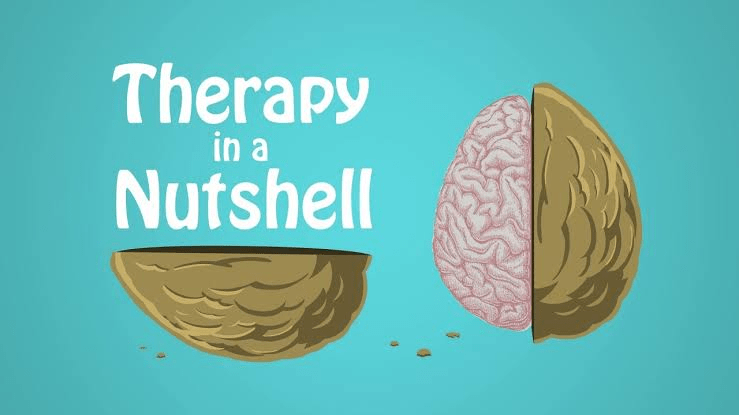
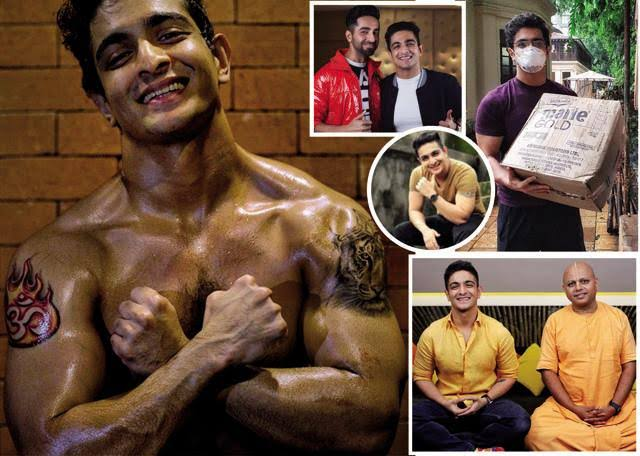
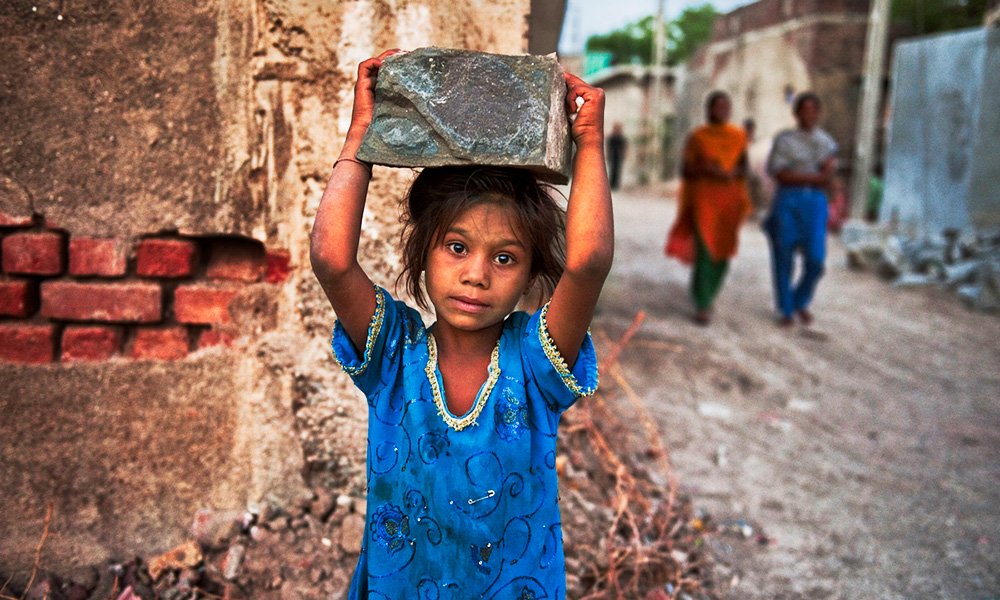
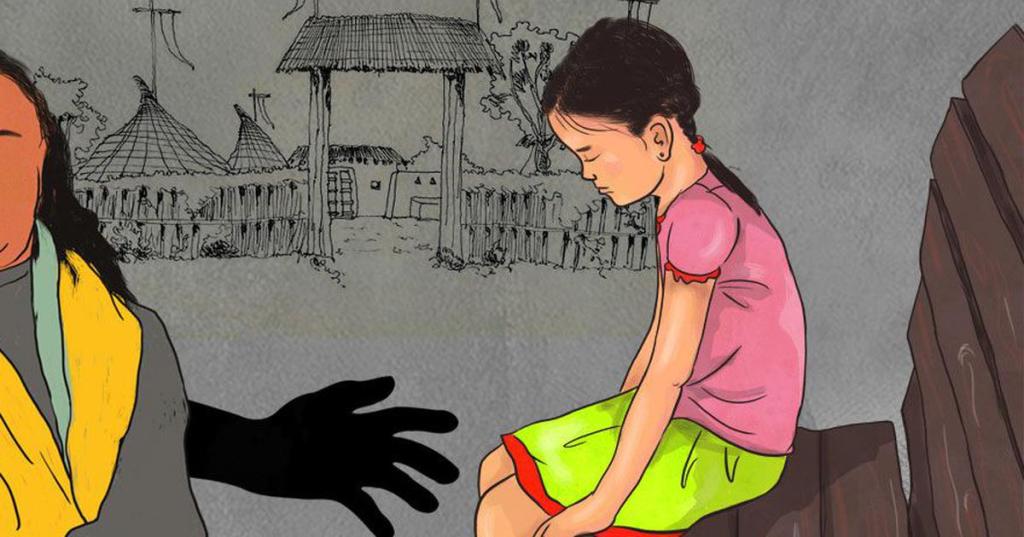
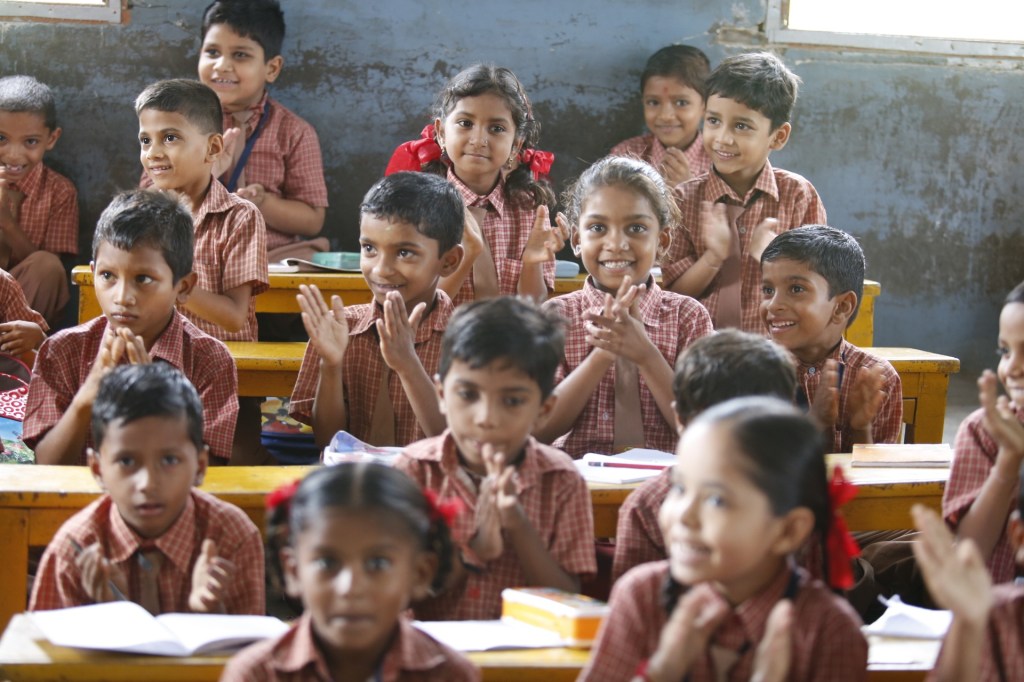
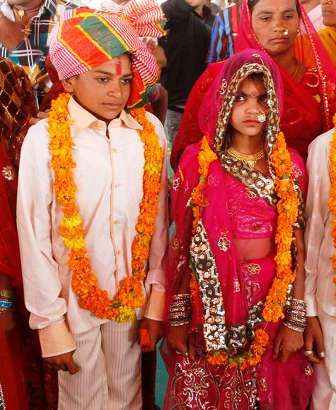


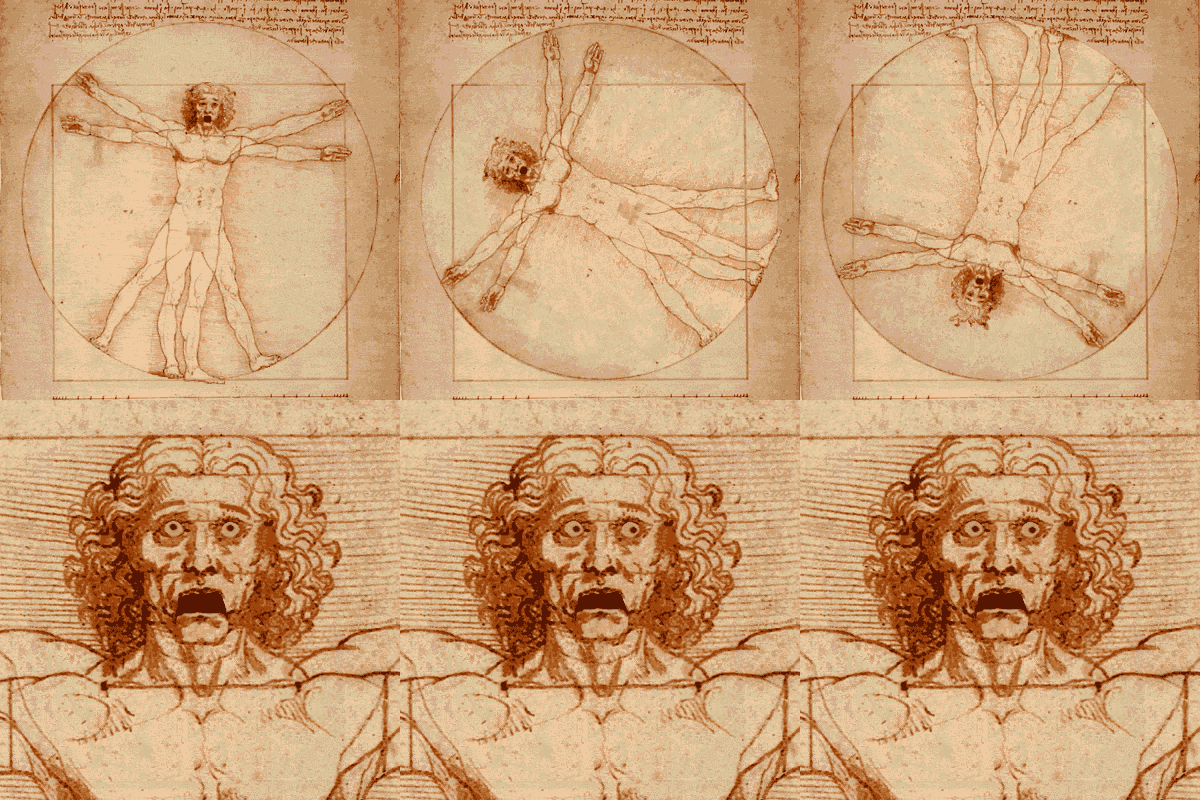
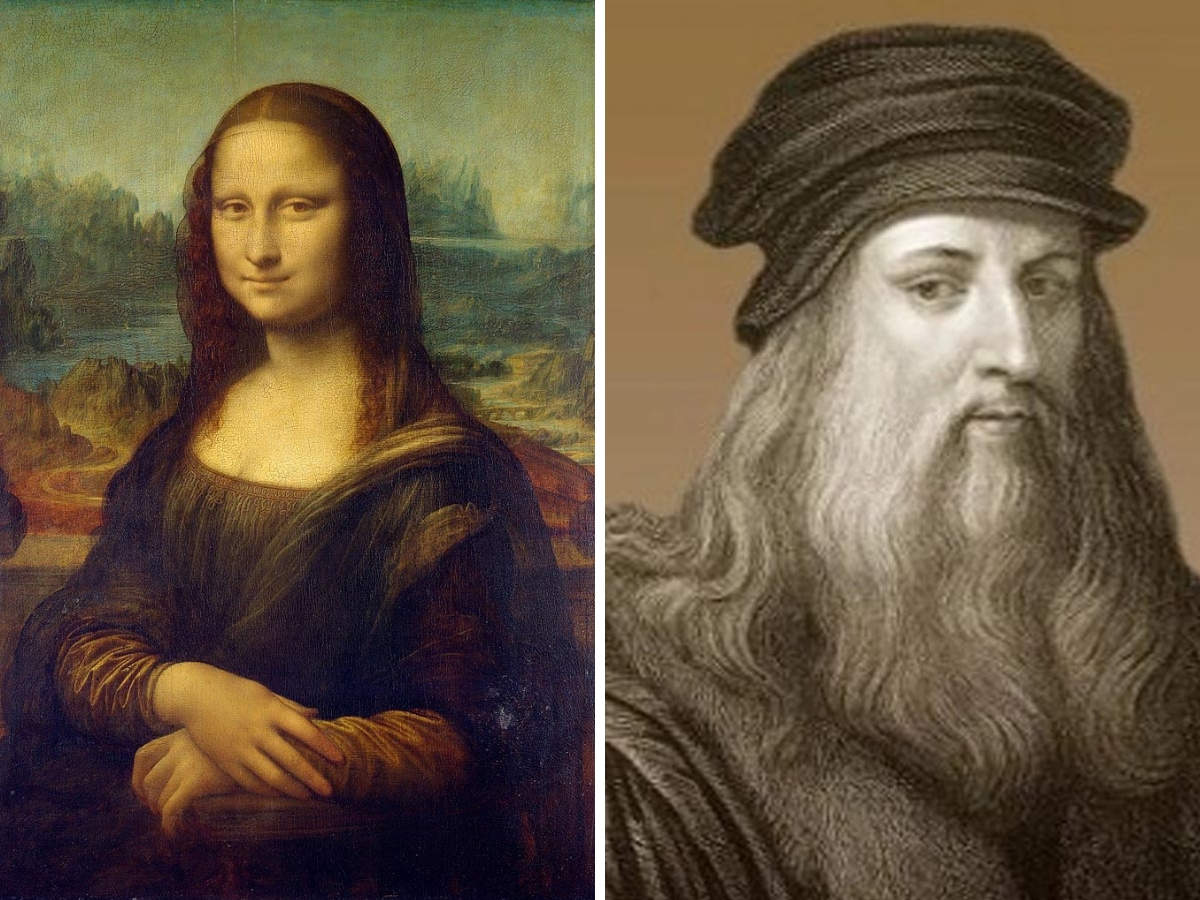







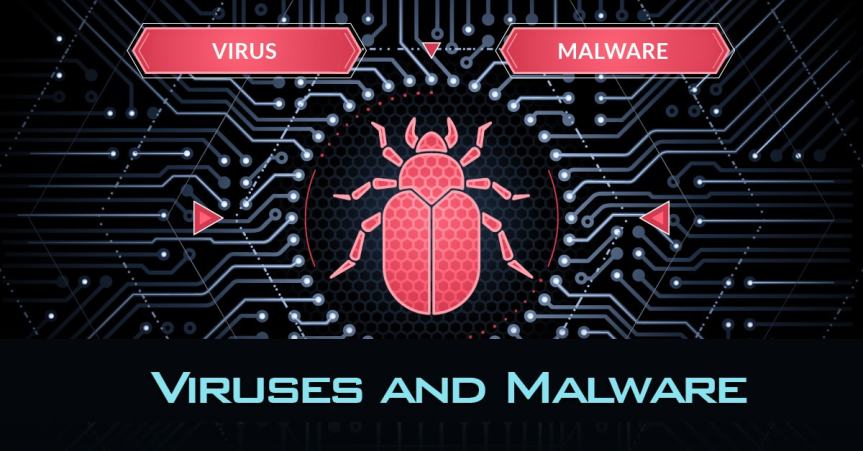




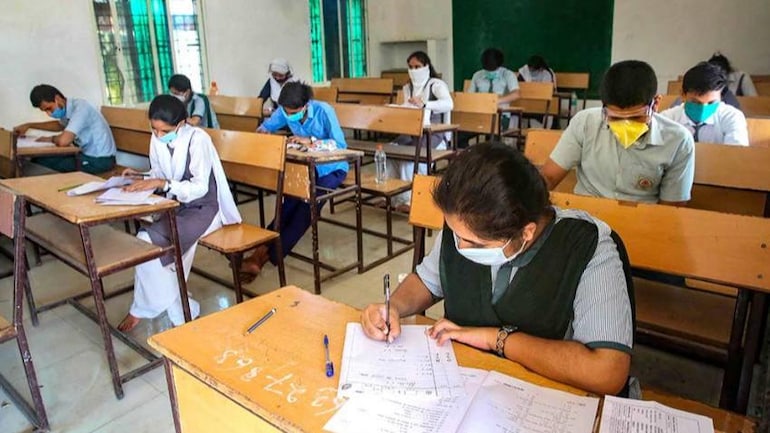
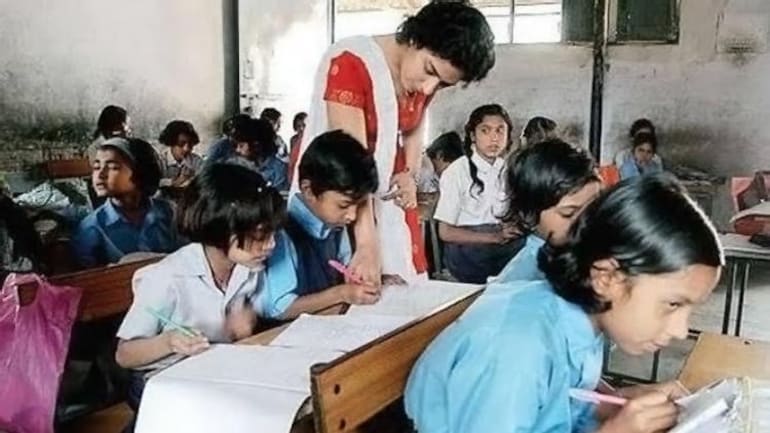


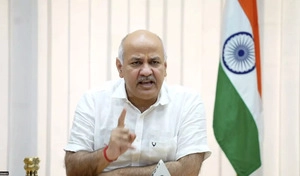
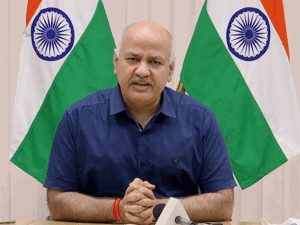



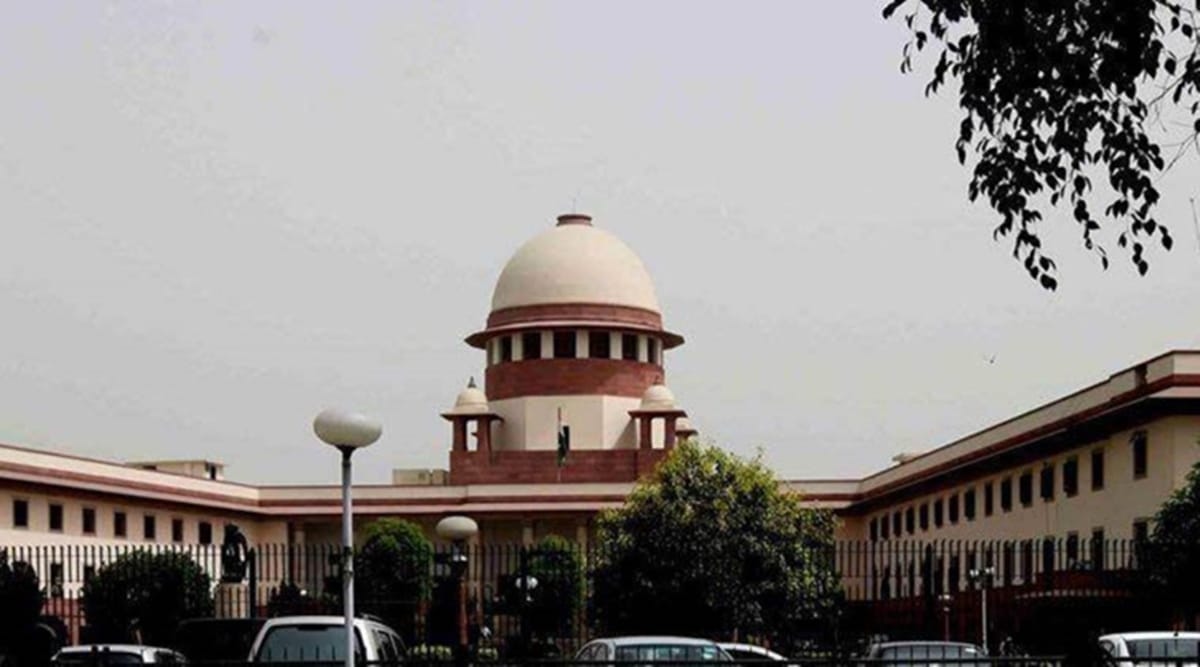

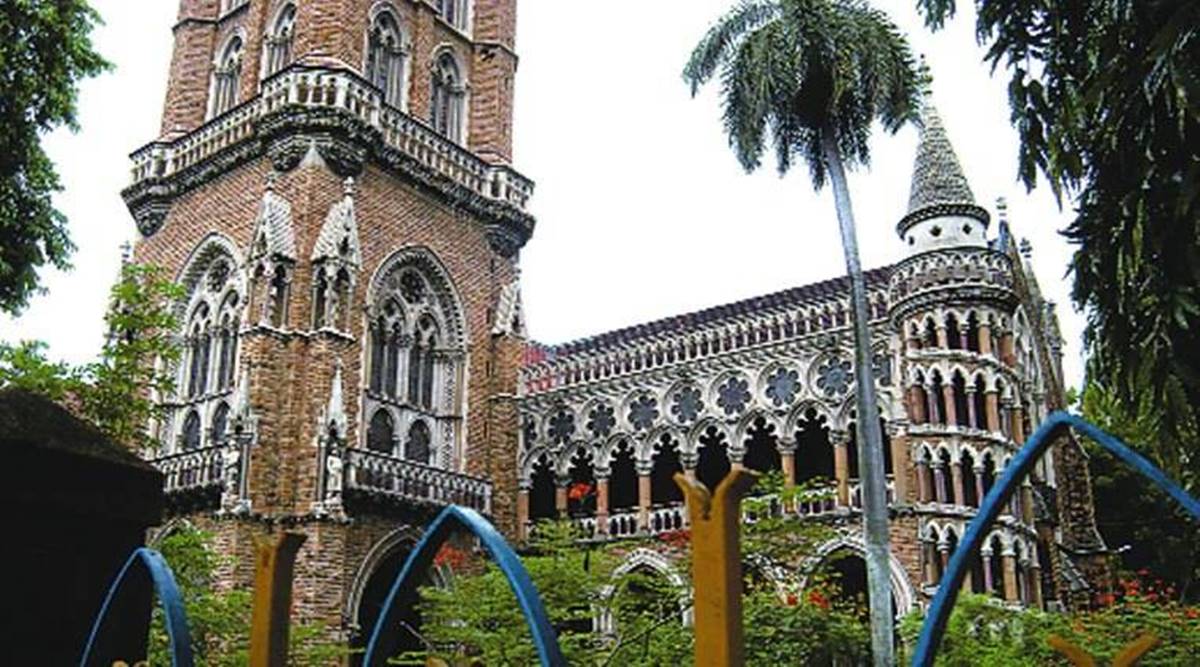
 Eduindex
You must be logged in to post a comment.