THE SCIENTIFIC AND NORMATIVE VALUES ON JUVENILE JUSTICE

Recent breakthroughs in neuroscience, particularly enhanced Magnetic Resonance Imaging (MRI) techniques, have given scientists and policymakers a more comprehensive knowledge of how our brains evolve from birth to adulthood. While these studies are still in their early stages, they have already demonstrated that the brain continues to develop long after an individual becomes a legal adult (i.e., at the age of 18), and that the slow maturation process that occurs in the social context is mirrored by a slow maturation process in the neural domain. Despite the tentative nature and ambiguous meaning of this information (i.e., we don’t yet understand the actual link between brain structure and behavior), neuroscience is becoming increasingly involved in long-standing debates about juvenile justice and the extent to which adolescents can be held legally responsible for their actions. Roper v. Simmons, in which the Supreme Court prohibited the death penalty for juvenile criminals under the age of 18, is the most significant example of this tendency to date. Christopher Simmons’ prosecution, sentencing, and habeas corpus petition were the focus of the case after he brutally murdered an elderly woman during a burglary when he was 17 years old. Although the execution of minors was historically regarded acceptable in American culture, the Court ruled that a national consensus had evolved that such a penalty was cruel and unusual, and thus violated the Eighth Amendment. The majority agreed with Simmons’ assertion that teenagers lack the emotional, intellectual, and biological maturity required to be consistently categorized as criminals. Adolescents should be punished for their misdeeds, but they should not have to pay the ultimate price for impulses they couldn’t control. Simmons’ claim was based on fresh brain imaging findings that suggests the adolescent brain is not as mature as the adult brain.

Neuroscience was conspicuously absent from this debate. Developments in brain research that investigate problems of culpability and “blameworthiness” of adolescent offenders are increasingly informing juvenile justice policy around the world. Simmons was 17 years old in 1993 when he robbed a woman, tied her up with electrical cord and duct tape, and flung her over a bridge, similar to the juvenile implicated in the December 16, 2012 gang rape in New Delhi. He was convicted and condemned to death by a Missouri court in 1994 when the case went to trial. By 2004, the Simmons case had reached the United States Supreme Court, which ruled a year later in a historic judgment that capital punishment for crimes committed while under the age of 18 was unconstitutional. To determine the “age of knowledge,” the decision relied on neuroscience and advances in brain science. So, what does science need to say about the Indian government’s decision to permit 16-18 year olds to be tried and sentenced as adults? Simply said, science does not support the decision.

The age of understanding in India is 18 years old, according to the Juvenile Justice (Care and Protection of Children) Act of 2000. And so, legally, a person beyond that age might be held fully liable for his actions. However, neuro-scientific developments within the past decade prove that brain development continues till the person is well into his twenties.

In 2007, the National Institute of Mental Health (NIMH) in the United States examined the brains of over 1,000 healthy children aged 3 to 18. Researchers conducted the Magnetic Resonance Imaging (MRI) scans and followed the particular physical changes within the adolescent brain; believe that brain maturation peaks around the age of 25. “Part of the brain that assists organization, planning, and strategizing is not completed being built yet,” according to a 2005 research titled Adolescence, Brain Development, and Legal Culpability. It’s a little unfair to expect [adolescents] to have adult organizational skills or decision-making abilities before their brains are finished developing.” According to available neuro-scientific data, the frontal lobe, especially the prefrontal cortex, is among the last parts of the brain to completely mature. The frontal lobes are in charge of impulse control, decision-making, judgment, and emotions, and are thus critical when determining “culpability” in cases of juvenile delinquency. Further, we now know conclusively that teenagers tend to be impulsive and susceptible to mood swings because the limbic system — which processes emotions — remains developing.

Many research works have established that under conditions of chronic and severe stress in rats, the prefrontal cortex can shrink by up to 40 per cent leading in brain cells in this area losing their capacity to process information properly. The hippocampus, which is crucial for forming memories of daily facts and events, additionally damaged during a similar fashion.

Thus, the parts of the brain that is crucial for processing information about specific events, and making careful decisions based on them — such as applying the brakes on high-risk behavior — are severely compromised. The amygdala, the emotional centre of the brain that is involved in fear, anxiety, and aggression, on the other hand, is pushed in the other way by stress by making its neurons grow bigger and stronger. Surprisingly, MRI imaging reveals that people with stress disorders experience identical alterations in their brains.


Measures to deal with Communalism

Remembering partition we are immediately reminded of the immense bloodshed that followed it. The two major communities were at war with each other. This was communal violence. Since Then communalism has been a menace to India. Now and then communal riots erupted in India. People engaged in those riots become faceless the only thing that matters to them is their religious or community identity. Religious identity overrides everything else and they develop the mindset “our belief alone is true and rest is false and incomplete.” 

According to historian Harbans Mukhia,” communalism is the phenomenon of religious differences between groups, often leading to tension and even rioting between them.” 

Measures to deal with communalism:

  • Reforms in the present criminal justice system, speedy trials should be undertaken. Specialized training for the police force to handle communal riots and setting up special investigating agencies can help.
  • Emphasis on value-oriented education with a focus on peace, non-violence, compassion, secularism, and rationalism as core values in children in school and colleges can prove vital.
  • Developing an attitude that all religions are equal and teach us the same values of humanity, humility, and kindness can help maintain peace.
  • Inspiration can be taken from other countries for example Malaysia maintains a perception index to gauge people’s needs and feelings about race relations in their area.
  • Non-governmental organizations can tie-up with the government to create communal awareness build stronger community relations and cultivate values of communal harmony.
  • News channels play a huge role in influencing the views and mindset of people so when they are biased towards one community or religion, this can develop biasness in the attitude of people watching those news channels. So media houses must always present a balanced viewpoint on any issue.

Hence communalism can be combated in the best way when people are able to develop a balance between their religious sentiments and national interests, they need to understand that nation comes first that is nationalism is greater. We have to understand that there will always be anti-nation elements propagating communal tensions but we have to be rational and have a mindset that is free from all kings of biasness towards any religion or community.

Anything violence does, peace can do it better.”

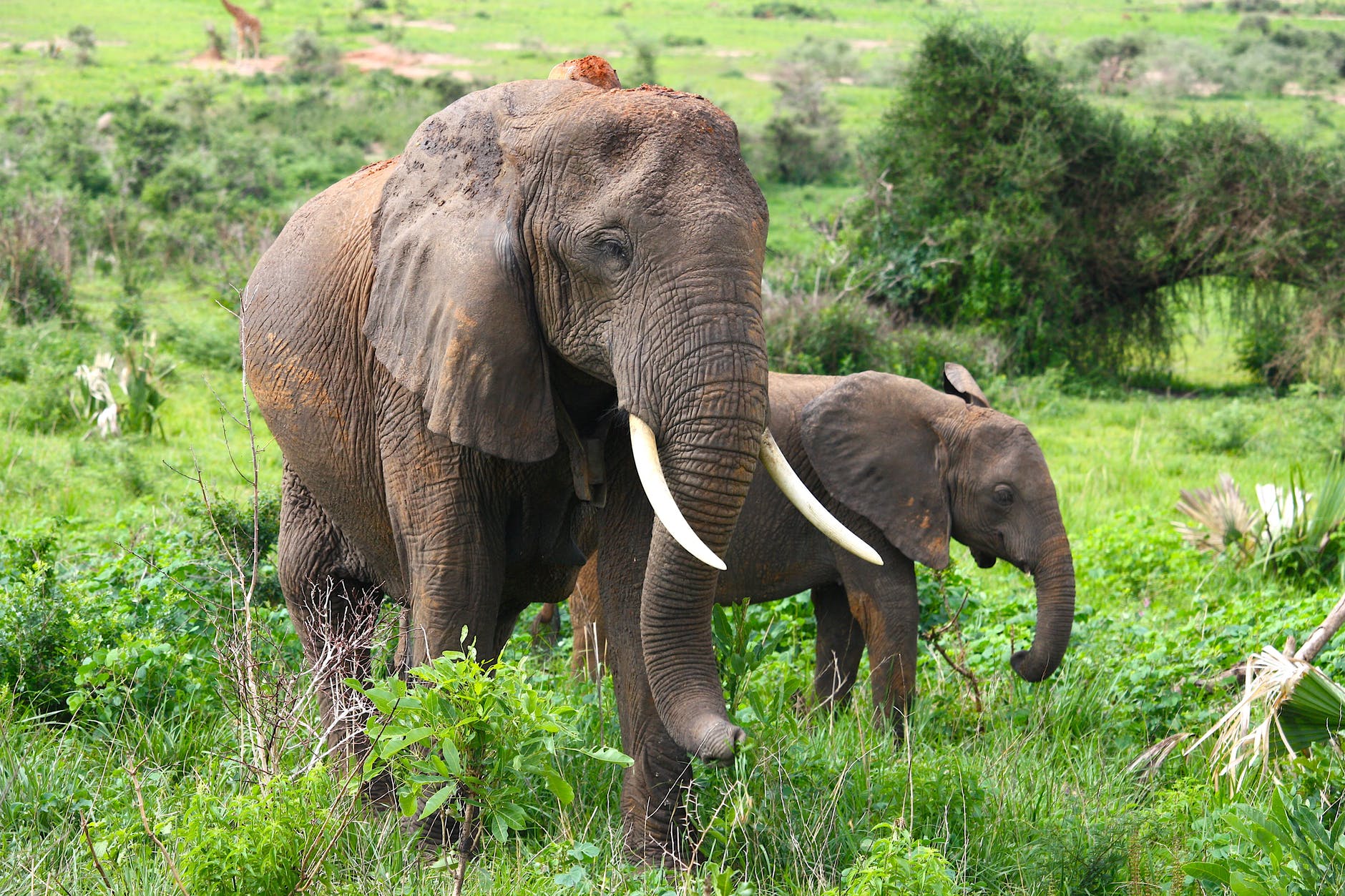
Behind every ivory trinket-is a dead elephant?

It is distressing to see the plight of the tusk-bearing animals these days. Numerous news headlines are daily highlighting the illegal smuggling of ivory. The extortionate value and demand of the ivories are not only in India, but also in the international markets. Wild animals are mercilessly being poached on a massive scale, possessing a major existential threat to wildlife. But do we really care or do enough to stop this inhumane and selfish act?

Let us first understand the connotation of the word ‘poaching’.

Poaching, in simple words, is the illicit act of killing, shooting, hunting or capturing of animals. The aim of this illegal act is mainly for the purpose of trade of animal products like skin, teeth, horn, bone, etc. Poaching plays a decisive role in being a contributor to biodiversity loss. Due to this felonious act, the number of extinctions has increased dramatically over the past decades. It is necessary to understand that poaching is not only about the uncontrolled killing of protected animals or endangered animals but any unlawful killing of animals.

Smuggling of elephant tusks

In India, poaching of elephants is very common and a major challenge to be combated. Ivory trade is in high demand mostly in the Asian countries. About 20,000 elephants are mercilessly killed every single year for their tusks. These ivory tusks are then smuggled in the international markets to eventually end up as ivory trinkets.

Ivory trade has been in practise for millennia. In the 14th century BCE, the exportation of ivory and slaves from Africa and Asia were done extensively. The freshly captured slaves along with the tusks were sold. The ivory was then used to make ornaments and aesthetically pleasing commodities.

On July 6, 2016, a complete ban on commercial trade in African elephant ivory went into effect in the United States. The African elephant population has decreased dramatically. Near about 350,000 elephants are left in Africa, as per 2019 data. It is quite shocking to know that 10,000 to 20,000 elephants are slain every year. Elephant numbers have dropped by 62% over the last decade, and if not brought under control, then they’ll be extinct by the end of the next decade.

Major countries where these tusks are sold

China is the biggest consumer market for ivory products. However, a ban was enforced on ivory trade by China in the year 2017. But it is evident that ivory is in high demand in many countries. Illegal selling of ivory is still rampant. In the year 2011, a whopping amount of 100kg of ivory was seized by Tanzanian officials. That same year several countries including Tanzania and Kenya seized a total of 17 ivory shipments weighing 800 kg.

According to surveys and in-depth interviews the demand for ivory is known to be concentrated in: China, Thailand, Vietnam, the Philippines, and the United States.

Last year, about 8.8 tonnes of ivory items were seized in Singapore.


The adverse effects of tusk-removal on the elephants

I am sure that we have all seen the majestic elephants flaunting big, off-white tusks on either side of their trunks. These tusks are both beautiful on the elephant and of utmost importance in the species’ survival.

Many poachers claim that there are no after effects of tusk-removal. Either the elephants are killed or sedated before removing their beautiful tusks.

An elephant’s tusk is deeply embedded in its skull. When the tusks are removed, there is a big hole left afterwards. The hole is big enough to stick your arm into it. If the tusks are removed at the point where it protrudes from the head, the nerve is exposed. Either way, now the wound is open and vulnerable to all sorts of infection. So, even though the elephant remains alive it is still at risk. Now, suppose there is an ivory poacher. Any poacher will want as much ivory as he can acquire with as little risk as possible. If he opts for the removal of the tusk completely, he/she will have to completely sedate or kill the elephant, because of little time and the fear of getting caught.

But is it just the elephants?

The answer is a ‘Big No’. Ivory has been valuable since ancient times in art and manufacturing a range of items and artefacts. Though elephant ivory is the most important source, ivory of walruses, mammoth, killer whale, sperm whale, hippopotamus, narwhal and warthog are used as well.

The international and national trade of ivory of threatened species such as African and Asian elephants is illegal.

Read about ivory trade and other tusk bearing species at- https://en.m.wikipedia.org/wiki/Ivory_trade#:~:text=The%20ivory%20trade%20is%20the,resulting%20in%20restrictions%20and%20bans.


The Road Not Taken

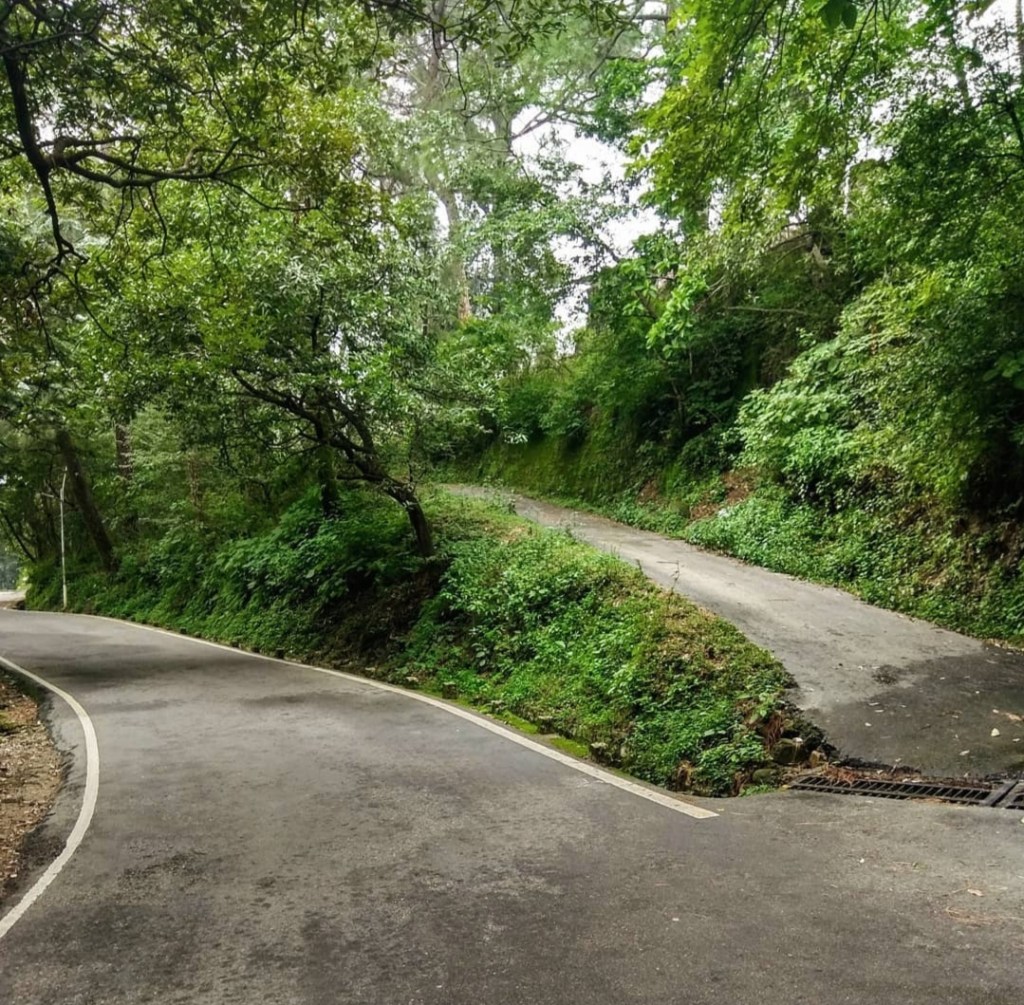
When every choice involves the loss of opportunity, which path will you choose? When your choices come with incomplete information, how can you be certain? How long will you stand still before making your choice? How confident are you when you realize you can’t save the first road for another day when the road you chose tends to lead onward to another? Whichever road you choose will make all the difference. In order to be different and do something great, you have to think different and implement things with a different approach. You have to take a different lane; the road not taken.

Remember the poem “The Road Not Taken” penned by Robert Frost?

Two roads diverged in a yellow wood,

And sorry I could not travel both

And be one traveler, long I stood

And looked down one as far as I could

To where it bent in the undergrowth…

The poem describes someone standing at a fork, or turning point, in a road in the woods, trying to decide which path he is going to take. He looks down one road as far as he can see, and after thinking for another minute, decides to take one because it looks like nobody’s been that way yet, and he is curious about where it leads. He thinks maybe he might come back another day and try out the other path but he has a feeling that the road he has chosen will lead him to new places and discoveries, and he probably won’t be back. He thinks wistfully about that road, which he did not take, and where he might have wound up if he’d gone that way instead. Part of him regrets his decision, but he also realizes that the things he’s seen and the places he’s gone because of the direction he chose has made him who he is.

This poem tells a lot about life in general. Life is all about making choices, whether it’s about choosing to change your daily diet or choosing the right partner. Every choice has its significance in some way or the other.

It makes me remember that past is always dynamic because it shapes my present and therefore, I should be careful about my present as it will take care of my future. Most importantly, this poem makes me think wisely about my choices. It reminds me that I should not make such a choice which I would regret one day and say ‘if I would have taken the other road, it would have been better’. Rather I should be proud of my decision and say ‘Yes! Since I chose the right path, it has led to all this difference’. The difference is what makes it different. Just as Frost ended the poem: “I took the road less travelled, and that’s all that matters”. There are no bad roads, there are only different battles that births different results.

In my opinion, the poet encourages the readers to create opportunities that may be overlooked by us because we all are in search of solutions for our problems rather than trying to sort out the things in the less conventional way.

JAIPUR – Pink City of India (Part – 2)

Jaipur or pink City, is the capital of Indian state of Rajasthan, and its largest city. The city was built in the 18th century by Sawai Jai Singh as India’s first planned city, and today it’s a major tourist attraction for Indians and for international visitors. It is a very picturesque city with splendid palaces, forts and historical monuments. Some of the tourists places are —

1 – City Palace in Jaipur

City Palace has stood at the heart of the Old City of Jaipur for nearly three centuries, shortly after Maharaja Sawai Jai Singh II decided to relocate his court from the city of Amber. Protected by huge guard walls, the fairy-tale-like structure is still the home of Jaipur’s modern-day royal family, and is more extravagant and enchanting than you might imagine.

City Palace is more than a sand-colored regal abode—it’s a sprawling complex of buildings built around a series of landscaped garden courtyards overlooking Jaipur and Lake Palace. The entire property is a stunning display of Rajasthani and Mughal architecture.

The current occupants reside in the most eye-catching building, the Chandra Mahal, an elegant structure with curved eaves and domed rooftops. Each of its seven stories features an entirely different style. The ground floor is included in the price of admission, but you’ll need to book a private tour to go upstairs.

2 – Jantar Mantar

At first glance, Jantar Mantar may look to be nothing more than a bunch of larger-than-life abstract sculptures. But this is not an art gallery—it’s a special collection of astronomical tools started by Rajput ruler Jai Singh II to measure the heavens nearly 300 years ago.

Each of the 20 or so structures at the UNESCO World Heritage Site serves a distinctive purpose. The observatory’s massive sun dial, known as Samrat Yantra, is particularly striking. At 27 meters tall, it casts a huge shadow that accurately measures time down to two seconds.

3 – Hawa Mahal

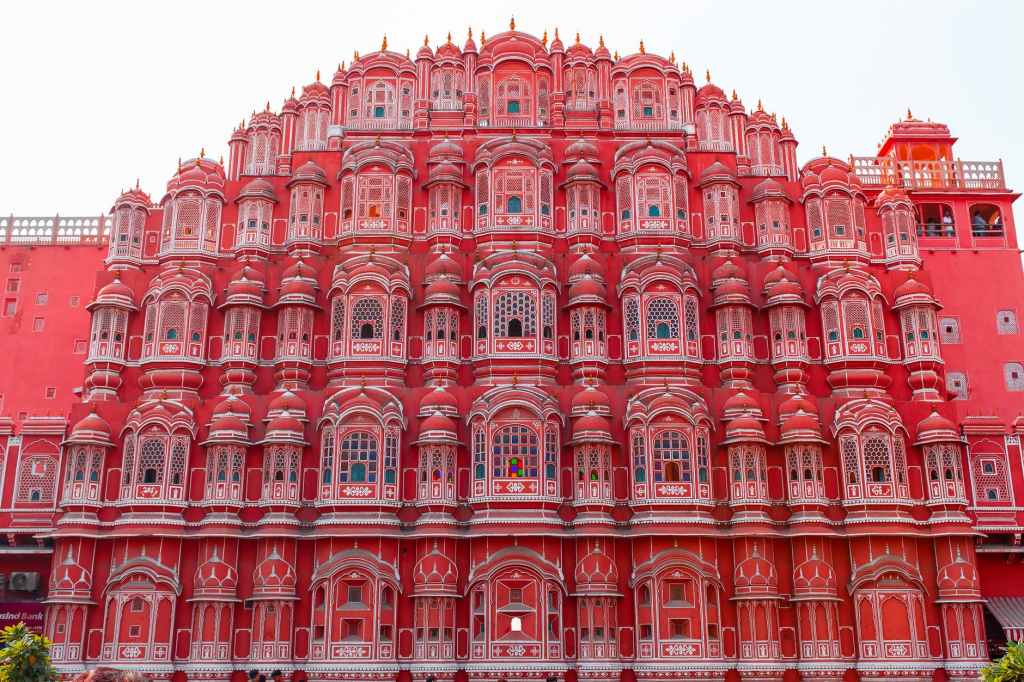
If you had any preconceived notions about how the buildings in Jaipur look, they probably came from Hawa Mahal (Palace of Breeze). It has all of the distinctive architectural features that appear in postcards of the city, from the salmon-pink, honeycombed facade, built to resemble the crown of Hindu god Krishna, to the geometric accents and rows of tiny windows.

The landmark was built in 1799 to allow royal ladies to watch festivals on the street without being seen by the public. Its 953 windows allow plenty of breeze to pass through, making it an ideal summer palace.

4 – Amber Fort

Jaipur is home to one of India’s most-visited forts: Amber Fort. Built in the year 1592, the sandstone and marble monolith stands atop a small hill roughly 20 minute’s driving distance northeast of the center of Jaipur. It’s best known for being a pristine example of Rajasthani architecture.

Getting to Amber Fort typically involves a short uphill hike that’s well worth the effort. It’s decked out with intricate patterns of inlaid marble in nearly every color of the rainbow. The fort is laid out into four separate sections, each of which has a spectacular garden courtyard outside. While you’d never know it from above, you can actually explore the fort’s underground tunnels, some of which have been restored.

5 – Albert Hall Museum

When English writer Rudyard Kipling visited the Albert Hall Museum in Jaipur, he wrote that it was a “rebuke to all other museums in India from Calcutta downwards.” That’s high praise coming from the son of a curator, and fitting for this renowned institution.

The oldest museum in Rajasthan, the Albert Hall Museum boasts an extensive collection of art and historically significant artifacts. Come for the Egyptian mummy, stay to see antique coins from different periods in India’s history, charming permanent exhibits of miniature paintings, 18th-century costumes worn by members of different castes, and a peculiar collection of 19th-century clay figures demonstrating all the yoga poses.

6 – Birla Mandir

In a city that seems to be dipped from top to bottom in pink, the stark white marble Birla Mandir stands out—big time. The Hindu temple pays tribute to Lakshmi, the goddess of wealth and purity, and Vishnu, one of the religion’s main deities.

7 – Nahargarh Fort

When it comes to sightseeing around Jaipur, the views don’t get better than what you’ll find at Nahargarh Fort. Also known as Tiger Fort, the nearly 300-year-old fort overlooks the entire city from atop the Aravalli Hills—a prime location for the structure to defend Jaipur against enemies many years ago.

More than just a formidable barrier though, this fort also contains Madhavendra Bhawan, a summer destination for royalty. The sumptuous Rajasthani building features a dozen identical boudoirs for the queens, which all connect to the king’s suite through mural-filled corridors.

8 – Jal Mahal on Man Sagar Lake

One look at the Jal Mahal, and you might think you’re seeing a mirage. The graceful palace seems to float atop the twinkling Man Sagar Lake , a calm sight compared to the rest of the frenzied city.

While it appears to have just one story, the Water Palace has four other levels submerged beneath a reservoir. Tourists can’t access the site, however, that may change in the future.

Wonders of Western Ghats

Western Ghats, mountain range which is older than the Himalayas, is present parallel to the western coast of Indian peninsula covering 160,000 square km area in a stretch of 1600km. Western Ghats travel through the states of Karnataka, Goa, Tamil Nadu, Kerala, Maharashtra, and Gujarat. UNESCO identifies it as a World Heritage site and it is one of the hotspots of biological diversity in the world. The mountain influences the country’s monsoon. Western Ghats has a rich biodiversity. There are so many species of flora and fauna endemic to the place and make it rich.

Western Ghats has over 7,402 flowering plants species, 1,814 non-flowering plant species, 139 species of mammals, 179 amphibian species, 6,000 insect species and 290 freshwater fish species. There are at least 325 globally threatened species present.

SOME OF THE WONDER SPECIES OF WESTERN GHATS
  1. BENGAL TIGERS: Bengal tigers are known for their beauty and power. they are native to Indian subcontinent. These predators are present in western Ghats also. Western Ghats are home to 10% of the tiger population. they live in the tiger reserve. Ranthambor national park has 585 tigers.
  2. KING COBRA: This is the worlds largest venomous snake. This lives in rainforests and scrubs and grasslands of western Ghats. Adult king cobras are 3.18-4m long and weigh between 11 and 20lbs. Male snakes are little longer than females. They are snake eaters and also eat lizards rats etc. This is the only snake that builds nest for its eggs. Their behavior include aggressiveness and shy nature. It has enough venom to kill an elephant.
  3. INDIAN WILD DOG: It is one of the most dangerous wild animal of Western Ghats. They are classified as endangered and the main reason is habitat destruction. They are also called as Dhole. They can be seen in jungle roads, river beds etc. It has large round ears and hooded eyes. It is a highly social and co-operative animal.
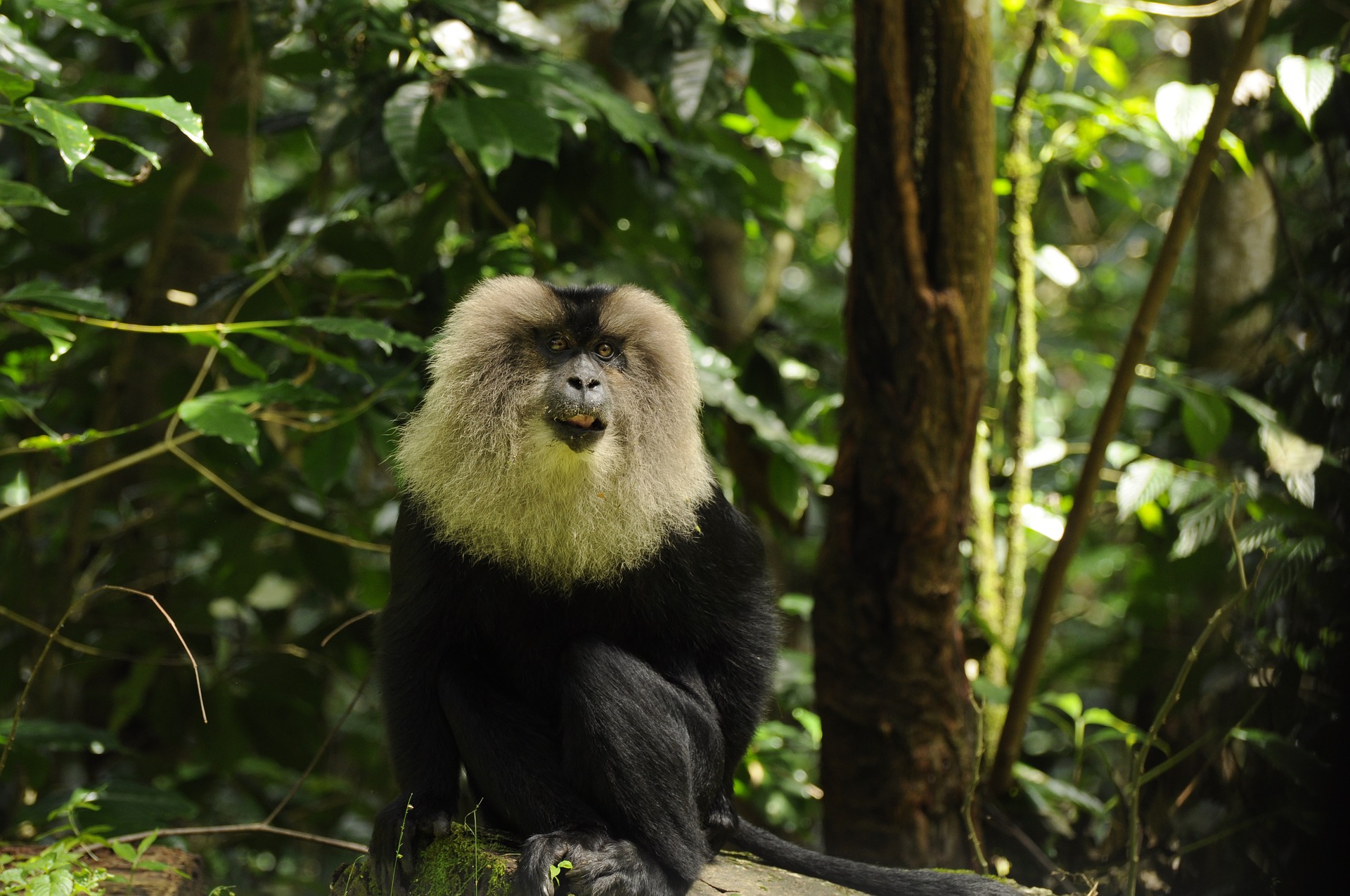
  4. LION TAILED MACAQUE: This animal is endemic to Western Ghats and it is one of the endangered species. their population is below 4000. They are an old world monkey. This magnificent animal is the proof for the wonderful biodiversity of the western Ghats. These are omnivores but fruits are the major part of their diet. These get a part of their required moisture by licking the leaves.
  5. INDIAN GIANT SQUIRRAL: They are also called Malabar giant squirrel. Bhima Shankar wildlife sanctuary has a noticeable population. They mostly live on trees. They build their spherical nest with leaves and twigs. they have a long bushy tail. They are mostly seen solitary or sometimes in pair. They feed on nuts, fruits and bird eggs.
  6. PURPLE FROG: It is also an endangered species because of habitat loss. this species is formally described recently in 2003. They have a bloated body, short hind legs and sucker like mouthparts. Local people consume tadpoles of this frog. These frogs are found in damp soil which is well aerated and loose. Only 135 individuals are identified in which only 3 are females.
  7. MALBAR GREY HORNBILL: This is also endemic to Western Ghats. They have large beak. They are found in dense forest and are mostly fungivores. They are mostly 45cm in length and weigh 240-340g.

JAIPUR – Pink City of India (Part-1)

Jaipur is also known as the Pink City, due to the dominant color scheme of its buildings. It is located 268 km (167 miles) from the national capital New Delhi. Jaipur was founded in 1727 by the Kacchawa Rajput ruler Jai Singh II, the ruler of Amer, after whom the city is named.

Jaipur is the Capital City of Rajasthan. Jaipur is famous for Rajasthani traditional Jewelry, traditional fabrics and handicrafts, and also for traditional rajasthani cuisine.

This nicknames arise from the distinctive architectural features of each city. The Pink City of Jaipur, for example, is so named because its buildings were painted pink in the 19th century, back when India was a British colony, to prepare for a visit by Edward, Prince of Wales.

Maharaja Sawai Ram Singh II, who was the then ruler of Jaipur, in his infinite spirit of hospitality, had the whole city painted pink terracotta in honour of the royal guest. Pink was considered the colour of hospitality. … Historic accounts state the city was coloured in white before it was turned pink.

A romantic dusty pink hue — which has defined the city since 1876, after it was painted pink to welcome Queen Victoria’s husband, Prince Albert — gives Jaipur its status as the “Pink City,” as it is commonly known.

The number of tourists visiting these monuments and paying tribute to the historical traditions of the city, this city’s nickname is Paris of India.

What do you think is globalisation?

Something which caught my attention across all the classes I had was the striking connections between the advantages and disadvantages of globalization. It stopped me  to think of the kind of world we live in. 

People living in the 21st century had turned around the whole concept of globalization with the coming of inventions and technologies. It now connected every single thing in a whole new level. Not just commodities but culture and lifestyles are also exchanged between the people. With these advantages came the disadvantages. People made use of technology with religious fundamentalism making us go way back in time.

The Modern Era came with the cosmopolitan outlook among people and everyone was more secular. People left behind the conservative outlook towards life and were more adapting and absorbing. Or so we thought, because globalization spread the stereotypes of one place to another. Religious identities also were spread among people. A very bad effect of globalization was the spread of terrorism among the nations.

Now terrorists groups could make use of the technology to make large connections around the world, this has resulted in lots of attacks in different places. With the good side of technological advancements came this very bad side. 

People have turned a blind eye to this twisted fact, a very common say that if something has a good side, there definitely will be a bad side. For a minute where we believed that people had changed from being ethnocentric, we directly get a blow from various examples like this.

Internet of Behaviors (IoB)

Definition

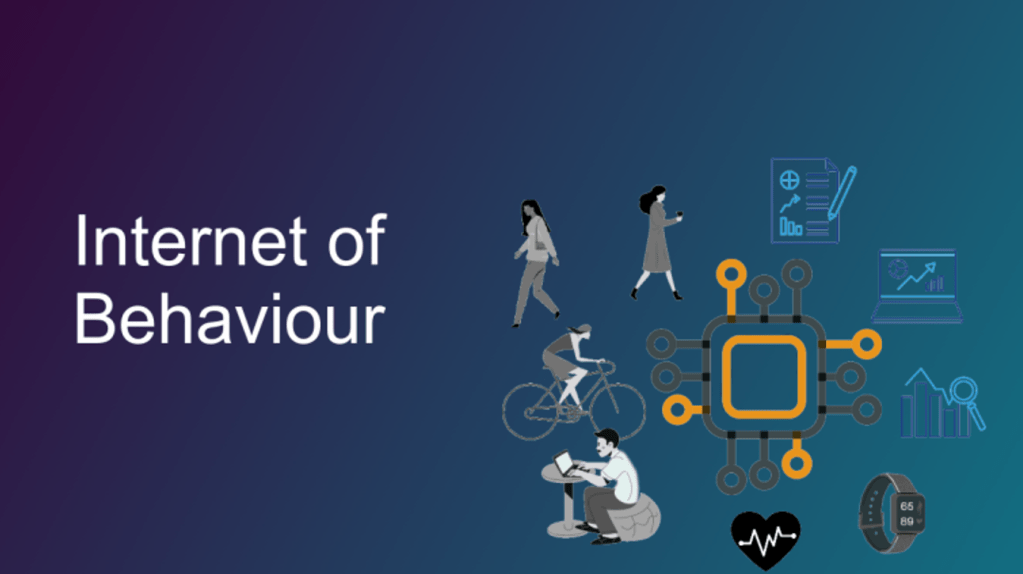
The collection and use of data to drive behaviors is called the Internet of Behaviors (IoB)

An example of it is industrial sites having employed computer vision to determine if employees were complying with mask protocol and then collecting this behavioral data to be analyzed by the organizations to influence people to follow government protocols at work.

What does the IoB mean ?

The purpose of the IoB is to capture, analyze, understand and respond to all types of human behaviors. In a way that allows tracking and interpreting those behaviors of people using emerging technological innovations and developments in machine learning algorithms. People’s behaviors are monitored and incentives or disincentives are applied to influence them to perform towards a desired set of operational parameters. Data collection (BI, Big Data, CDPs, etc.) provides valuable information about customer behaviors, interests and preferences, and this has been referred to as the Internet of Behavior (IoB). The IoB attempts to understand the data collected from users’ online activity from a behavioral psychology perspective. It seeks to address the question of how to understand the data, and how to apply that understanding to create and market new products, all from a human psychology perspective.

The IoB influences consumer choice, but it also redesigns the value chain. For companies, this means being able to change their image, market products more effectively to their customers or improve the Customer Experience (CX) of a product or service. Hypothetically, information can be collected on all facets of a user’s life, with the ultimate goal of improving efficiency and quality.

What does the IoB contribute?

Firstly, before the creation of the application, it is important to imagine the user’s interaction patterns and touch points. Involve them in the creation process, understand their needs, keep the app experience unified and cohesive, make navigation simple and meaningful so that the app is relevant and useful. Once the app is up and running, convey its purpose, create a user guide and reward by gamifying the CX in the app. Strong user engagement is required.

Secondly, solid tools are required such as multi-format support platforms (XML, JSON, PHP, CVS, HTML, etc.) That can connect to any API, that can upload data to the cloud, i.e. the fundamental features of platforms such as Google or Facebook. Platforms should allow for multi-channel personalization, centralized updates that are replicated, sending unique notifications that turn users into contributors to the personalization of the app, allow for social media integration and maintain an interactive interface.

Finally, it is the data captured through the app that serves to model user behavior. And in turn, this is the actionable data that can be sent in the form of pop-ups and notifications to the customer to encourage and incentivise them to adhere to a desired behavior. Analytics are necessary so that essential information can be extracted from all the data.

Benefits of IoB

uAnalyse customer buying habits across all platforms. uStudy previously unattainable data on how users interact with devices and products. uObtain more detailed information about where a customer is in the buying process. uProvide real-time POS notifications and targeting. uResolve problems quickly to close sales and keep customers happy. uCitizen data processed by public-sector uCommercial customer data uGovernment agencies uSocial media uPublic domain uLocation tracking.

Problem with IoB

The problem that can occur with this technology is not of a technical nature. The IoB is confronted with the adversity of how data is collected, stored and used. Its level of access is difficult to control and therefore all companies need to be aware of the liability of IoB use. Google, Facebook or Amazon continue to acquire software that potentially brings the user from a single app to their entire online ecosystem, without their permission. This presents significant legal and security risks to privacy rights, which also vary between jurisdictions around the world

Behavioral data can allow cybercriminals to access sensitive data that reveals customer patterns, collect and sell property access codes, delivery routes and even banking codes. These cybercriminals could take phishing to another level by generating more advanced scams, tailored to the habits of individual users, and thus maximizing the likelihood that users will be scammed. uIt is therefore important to have a secure platform, storage and execution of data with the use of tools such as Confidential Computing, E2E encryption or SDP tools.

BEGINNING WITH PROGRAMMING

Programming is one of the most sought after skills in the professional market. It is an nothing more than an interesting way to solve problems. Programming presents you with unique solutions to real world problems and tends to help develop logical thinking. Many people think programming is memorizing statements and words to make a computer do your bidding but let me tell you otherwise. Programming is  using your knowledge to solve problems thrown at you in the most effective way.

Let me nudge you on the right path to starting programming.

What is your goal ?

Programming can be for different tasks like :-

  • solving problems based around management of data
  • solving problems related to math and statistics
  • creating a utility for a specific task
  • creating games
  • automating daily tasks
  • to develop a new skill

There are many more forms that programming could take but focussing on your end goal will help you achieve it quickly and efficiently. Let me elaborate the aforementioned paths.

Solving Problems based around management of data.

To start with these problems you’ll need some knowledge of data structures so I recommend doing a basic course to learn what data structures are. Not only data structures but you may require knowledge of some oop concepts. There is no specific language specifically made for this task but learning C would be the best path to strengthen oop concepts and data structures as C works very closely with the operating system.

Instead of just starting coding you should first pickup a notebook to practice these concepts logically. Building a strong base of algorithms instead of trying to memorize a set of instructions in a particular language is the most important step.

A simple project can then be made to bolster these concepts. Create a data structure like a linked list, heap or any semi-complex data structure in whatever language you choose. Creating a program even to store and retrieve names would be helpful enough to start your journey.

Solving Problems related to maths and statistics.

To start with these problems you’ll require a knowledge of statistical methods and formulas. In these kind of problems generally data can be manipulated and analysed for interpretation as per requirements. The most recommended language for such problems would be R. It is tailored to be able to work with large data sets and has many inbuilt functions to make working with such data easy.

As our teachers stopped us from using calculators when we were younger I would similarly ask you to first try making the functions yourselves before using the in-built functions as knowing how to solve something manually would help you work through issues when automating the tasks.

A simple project can be undertaken to interpret freely available datasets. These datasets when worked upon can give a plethora of information.

Creating a utility for a specific task

This would depend on the type of utility you want to create. In such a situation you’d want to research the utility you want to make and decide for yourself what language you want to use. You’d want to check for the pros and cons of the technology you would want to use. Every language excels at some specific task and we want to be able to use the advantage to the fullest.

A simple project can be undertaken to set as an end goal while starting to learn the language.

Creating Games

This is a vast field with an even bigger community. To be able to make games you need to know some basics like the geometric world space and logic to be able to craft a game. There are quite a few game engines but probably the most recommended game engine for beginners would be Unity. it uses C# as the backend language so picking up basics of the language would be a good place to start.

Unity boasts a node based system for materials and setting up the scene. Many tutorials are available online for free so they would be your biggest reference points. The online community is not just large but helpful too. A lot of new users post questions about all the aspects of the process so don’t be shy to look something up online.

A simple project to be undertaken to make a basic game to imbue the basics of the process into yourself. There are many tutorials that start off from basics and ultimately combine the concepts to create a complete game.

Automating daily tasks

The use of smart home technology is very prominent in todays world and more and more stuff is being connected to the internet for easier use. The use of IOT can help you automate your house. technology like Arduino uses C or C# as their programming languages while raspberry pi uses node.js and python prominently. These technologies can be used to solve actual real world problems.

Smart switches and devices can be programmed to start up on a predefined time or on a set action. Even software tasks like backups can be automated with some simple shell scripting. Now automation of tasks is a 2 pronged path. Physical tasks can be automated using IOT and software based tasks can be automated using some scripting.

A simple project can be undertaken to bolster these concepts. A simple software automation task would be starting a download manager or torrent client and prioritising the downloads on the basis of speed and importance.

To Develop a new skill

Now this is where the learner has the most control. You can choose whatever language you’d like to learn and not limit yourself to a certain technology you could learn whatever you want to.

Depending on the path you would want to take you could choose to learn a language used for application design, web design, work with databases, etc the possibilities are endless. You just have to commit to the learning process and learn the basics which you could implement in any further projects.

Conclusion

No programming language is particularly difficult or easy to learn. Programming languages are nothing but tools and to wield any kind of tools you need to be capable. When your basics are clear you can implement them in any languages you learn.

Geopolitics

Introduction

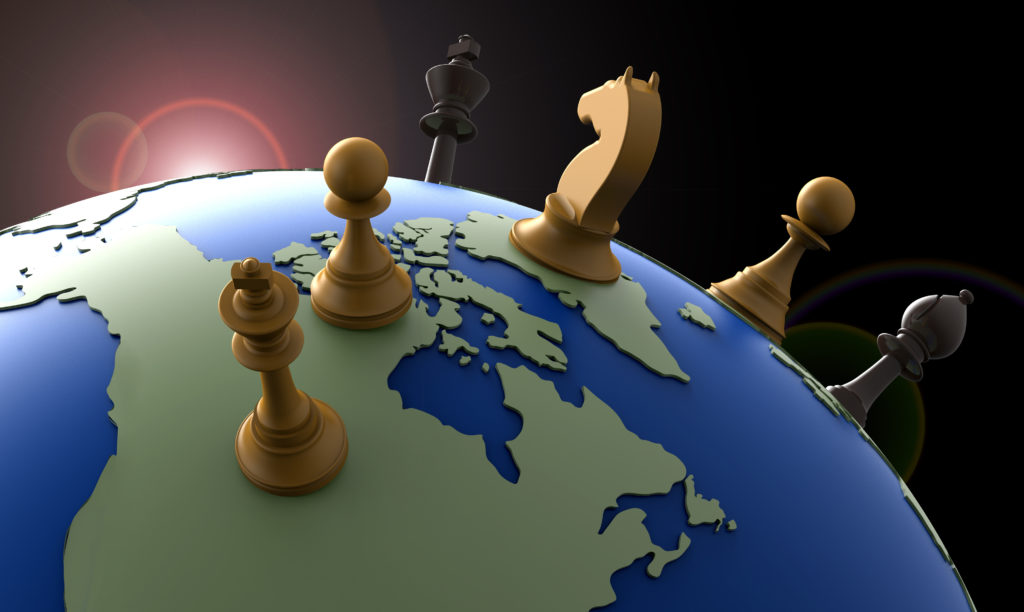
Geopolitics combines the the words Geo, referring Earth and Politics, is the study of the effects of Earth’s geography on politics and international relations. It can also be termed as the study of how political power is reinforced or undermined by geographical arrangements(boundaries, coalitions, spatial networks, natural resources etc.) At international relations level, geopolitics is a way of studying foreign policies, to understand, explain and predict the international political behaviours of the countries and their governments through various geographical variables. These variables include climate, topography, area studies, demographics and natural resources of the regions being evaluated.

Contents

Study of Geopolitics primarily focuses on political power linked to geographic space. Particularly, land territory and territorial waters in relation with diplomatic history. A branch of geopolitics, critical geopolitics, interprets different classical geopolitical theories by showing their political functions for the world’s great powers. There are even some works that follow the geopolitics of renewable energy. Finally, geopolitics clarifies the range of strategic choices, providing a guide for achieving strategic efficiency. While it places particular stress on geographic space as a critically important strategic factor and source of power, it recognizes that geography is only a part of the totality of global phenomena. There are many geopolitical case studies like the Kashmir conflict, Arctic Ocean disputes, China’s disputes in south China sea, US’s foreign policies, annexation of Crimea by Russia, ongoing conflicts in the Middle-East etc.

Future

In today’s world geopolitical studies are becoming more and more important in relations to international relations and diplomacy studies.

https://www.sciencedirect.com/topics/earth-and-planetary-sciences/geopolitics

https://en.wikipedia.org/wiki/Geopolitics

How to maintain healthy relationship with yourself

If you’re searching for that one person that will change your life, take a look in the mirror. The relationship with self defines our inner world, and the way we process information and respond to events in life. Being a great friend to yourself unlocks long-term happiness. Finding a way to stay centered can be invaluable. One way that is beneficial in establishing balance is developing a positive relationship with oneself. Your relationship with yourself is arguably the most important relationship in life. 

What does a healthy relationship with yourself look like?

 A healthy self-relationship is the ability to value yourself as a person, and embrace your strengths and weaknesses.

Here are five ideas on cultivating a good relationship with yourself :

  1. Regularly make time for yourself.

It is very crucial to interact with yourself. Sit quietly for 10 minutes in the morning with your first cup of coffee. But if your mornings are too hectic then try meditation in the evening or even better you could write a  journal. 

  1. Check in with yourself

It’s easy to find yourself wondering, “I don’t know who I am anymore”, if you don’t check in every now and then. 

Question yourself everyday, “How am I feeling? What am I struggling with? What am I interested in? What are my goals?” Come up with a list of questions like these that you can routinely quiz yourself with, so you get a sense of where you’ve been, where you are now and where you are going. 

Self-awareness is key to improvement.

  1. Accept yourself

Part of having a relationship with yourself is understanding who you are and accepting the good and the bad. It is extremely important that you learn to forgive yourself and avoid being overly critical. Acknowledge your strengths and give yourself a pat on the back when you are successful.

  1. Be your own friend

It’s important to evaluate  the relationship you have with yourself. Ask yourself, what can I do to make my day-to-day life easier? It could be something as small as reflecting on a mistake you have recently made and taking the time to sort through it. What could you have done differently? How can you keep that from happening again? 

It is extremely vital to reason with yourself, it gives you perspective and clarity about your life choices.

  1. Enjoy your company

You need to show yourself that you can be happy and have fun without relying on others to experience it with you. Not that you need to shut people out, but you can keep yourself occupied in healthy ways to discover things and laugh with yourself.

You will be your only constant throughout your life. People will come and go. Some relations will last a long time, some won’t. In this life of hustle, one thing that should never take for granted is yourself. Always remember to be kind to yourself. 

Eve Teasing In India

‘Women belong to the weaker elements of the community,’ some remark. As a result, men dominate women and, at times, exploit women for their own amusement. Women are subjected to a wide range of forms of harassment. Sexual harassment is a widespread form of harassment in many regions of the world. Harassment of women in public areas by known and unknown individuals is referred to as eve teasing in India. Eve teasing literally means to bother or disturb women. It is defined as the act of harassing women, whether intentionally or unintentionally, physically or psychologically, in order to amuse, irritate, provoke, annoy, or embarrass them by words, statements, gestures, jokes, physical contact, and taunts. It is a distinct and euphemistic word for South Asia, particularly India. It is not used in the United Kingdom or other European countries.

More and more female students, women, and others are attending educational institutions, workplaces, and other places, and their safety is critical in a civilised and cultured society. The experiences of women and girls in overcrowded buses, metros, and trains are harrowing and terrible. Women now have positions of leadership in practically every industry, but eve teasing remains a social issue. Women are physically, psychologically, and socially impacted. They are embarrassed and would wish to forget the occurrence. Those who are impacted by eve teasing never question the man or resist the behaviour; instead, they play a subservient and tolerant attitude because they believe it will further tarnish their reputation.

FACTS AND FIGURES- According to the NCRB 2019(National Crime Record Bureau) report, a total of 4,05,861 occurrences of crime against women were registered in 2019, representing a 7.3 percent increase over 2018. (3,78,236 cases). The majority of instances under IPC crime against women were reported under ‘cruelty by spouse or his family’ (30.9), followed by ‘assault on women with purpose to violate her modesty’ (21.8%), ‘kidnapping & abduction of women’ (17.9%), and ‘rape’ (17.9%). (7.9 percent ). According to the NCRB study, the crime rate per lakh women population in 2019 is 62.4, up from 58.8 in 2018. Sections 354 and 509 of the Indian Penal Code deal with eve-teasing cases, which show a 13.05 percent increase in assault or criminal force against a woman with the intent to outrage her modesty, and an 18.9 percent decrease in incidents of insulting a woman’s modesty, respectively, from 2015 to 2016.
As a deterrent, a growing number of college-aged women riding Delhi’s public transportation have resorted to carrying pins, pen blades, and even daggers. Others have enrolled in self-defense classes.

According to a recent survey, over 90% of college women in New Delhi had experienced sexual harassment in some form or another. Despite this, it is believed that only approximately 1 in 10000 cases of eve teasing are reported to the p olice.98 percent of women say sexual harassment on the road has harmed their personal or academic growth in some way.These facts may appear to be false and horrific, but they clearly demonstrate the predicament of women in India. Every day, the situation worsens.

HOW TO PREVENT– Many psychologists feel that sex, love, and enjoyment are not the main reasons why men engage in this behaviour. The patriarchal worldview of the Indian male is intimately linked to Eve teasing. Men are socialised to feel that they are more physically and emotionally powerful than women. They believe they are doing nothing wrong by simply having fun. It is also regarded as a growing social issue. This is due to many societal changes such as urbanisation, the influence of Western culture, modernization, and changes in the status of women’s roles, women’s freedom, and democratic changes. Eve teasing is perceived by society as a social deviance at the macro level and at individual micro level as a behaviour problem. Technology has ensured that the globe contracts and restricts itself within the confines of the internet. Technology can be one of the most effective means of putting an end to eve teasing. Set up SOS numbers for your loved ones. Keep the police help lines on speed dial and your GPS tracker turned on at all times. Download safety apps, learn how to use them correctly, and register on connected websites. This ensures that when you are in need, your close and dear ones will be able to reach you quickly. Being self-reliant means being able to defend yourself without the assistance of others. Self-reliance also entails cultivating an attitude and confidence such that a person thinks several times before even being around you, let alone touching or misbehaving. You can always learn martial arts or karate for this. Tae-Kwan-Do will also be used to settle the dispute. Be brave enough to ensure your own safety even if it means sacrificing your dignity.

Conclusion– Eve teasing is a violation of a woman’s honour, dignity, and self-respect. It is excruciatingly painful for her. It should be handled as a separate offence. To regulate it, we need rigorous laws and restrictions. There is an urgent need to address this rapidly rising issue. Eve-teasing may appear to be a less serious crime, but it can quickly escalate into a serious offence if not prevented in its early stages. In a country like India, where women are worshipped alongside the Gods, such behaviour toward women is unjust, unfair, and Hippocratic. We owe it to women to be respectful. Only then would we be on the path to happiness, prosperity, and success.

The Three Types of Hackers

The term “hacker” is commonly linked with hackers with bad intent, although it encompasses much more. A hacker is someone who uses their computer software and hardware skills to break down and circumvent security measures on a computer, device, or network. Hacking is commonly thought to be criminal on principle, although this isn’t the case if the system owner willingly and knowingly gives access. In reality, many private companies and government agencies engage hackers to assist them in maintaining the security of their systems.

The motivations of an individual and the legality of their acts are the two key criteria that determine what type of hacker they are. Hackers are classified as white, black, or grey hats, a naming scheme borrowed from classic western films in which protagonists wore white hats and villains wore black.

1. Black Hat

Malware, which is routinely used to enter computerized networks and systems, is usually created by black hat hackers. They’re usually driven by personal or financial gain, but they’ll also engage in espionage, protests, or just for the pleasure of it. Black hat hackers can range from inexperienced to highly skilled individuals with the goal of spreading malware and stealing private data such as login passwords, as well as financial and personal information. Black hat hackers can either steal, modify, or destroy system data after they gain access to their targets, depending on their motivations.

2. White Hat

They’re also known as “ethical hackers,” and they’re frequently hired or hired by businesses and government agencies to operate as security specialists looking for flaws. While they use the same techniques as black hat hackers, they always receive authorization from the system’s owner, ensuring that their actions are fully legal. Penetration tests, monitoring in-place security systems, and vulnerability assessments are all tactics used by white hat hackers. Independent sources, training, conferences, and certifications can all be utilized to understand ethical hacking, which is the word used to define the nature of a white hat hacker’s conduct.

3. Grey Hat

As the term implies, these individuals combine elements of both black and white hat hackers, although they will frequently look for weaknesses in a system without the consent or knowledge of the owner. They’ll notify the owner of any problems they see, but they’ll also ask for money or an incentive. If the owner does not reply or rejects their proposal, a grey hat hacker may take advantage of the newly discovered problems. Grey hat hackers aren’t evil by nature, but they do want to be compensated for their services. Because grey hat hackers do not have authority from the system’s owner to access the system, their acts are ultimately regarded illegal, regardless of whatever disturbing findings they may uncover.

What is an IP Address? An Overview

A device on the internet or a local network is identified by its IP address, which is a unique address. The Internet Protocol (IP) is a set of rules that govern how data is transmitted across the internet or a local network. IP addresses, in essence, are the identifiers that allow data to be transmitted between devices on a network: they contain location information and make devices reachable for communication. The internet requires a method of distinguishing between various computers, routers, and webpages. IP addresses are a crucial aspect of how the internet operates and provide a means of doing so.

What is an IP?

A string of integers separated by periods makes up an IP address. IP addresses are made up of four numbers; for example, 192.158.1.38 is an example address. The set’s numbers can vary from 0 to 255. As a result, the entire IP addressing range is 0.0.0.0 to 255.255.255.255.

IP addresses are not generated at random. The Internet Assigned Numbers Authority (IANA), a part of the Internet Corporation for Assigned Names and Numbers, creates and assigns them mathematically (ICANN). ICANN is a non-profit organisation based in the United States that was founded in 1998 to assist keep the internet secure and accessible to everyone. Every time someone registers a domain name on the internet, they do so through a domain name registrar, who pays ICANN a nominal fee to do so.

How do IP addresses work

It helps to understand how IP addresses function if you want to figure out why a device isn’t connecting the way you want it to or if you want to troubleshoot why your network isn’t working. Internet Protocol communicates in the same manner that any other language does, by following a set of rules to convey information. This protocol is used by all devices to find, send, and share information with other connected devices. Any computer in any area can communicate with one another if they speak the same language.

IP addresses are most commonly used behind the scenes. The procedure is as follows:

  1. Your device connects to the internet indirectly by first connecting to a network linked to the internet, which then allows your device internet access.
  2. That network will most likely be your Internet Service Provider when you are at home (ISP). It will be your workplace network at work.
  3. Your Internet service provider (ISP) assigns an IP address to your device.
  4. Your internet activity passes through your ISP, which uses your IP address to deliver it back to you. It is their responsibility to issue an IP address to your device because they are providing you with internet connection.
  5. Your IP address, on the other hand, may change. Turning your modem or router on or off, for example, can make a difference. You can also contact your ISP and get it changed for you.
  6. Your home IP address does not go with you while you are out and about – for example, when you travel – and you take your device with you. This is because you will be accessing the internet through a different network (Wi-Fi at a hotel, airport, or coffee shop, for example) and will be allocated a different (temporary) IP address by the hotel, airport, or coffee shop’s ISP.