ANALYSIS OF GAMBLING LAWS IN INDIA

Public Gambling Act of 1867:

As once Ambrose Bierce said “The gambling known as business looks with austere disfavor upon the business known as gambling.” Does mean that Gambling is for entertainment, not for profit. But this generation is pulling all the strings to make it popular and make it legal. But gambling ensures that it is one of the best way for earning more and becoming rich in less time because of probability over possibility. India with a billion plus population does seems to enjoy gambling in most of the entertainment fields  like Cricket being the most popular game in India. Betting on Games even though the fact remains that it is prohibited. Even though it does not stop gamblers from betting. Indian laws for gambling are out-dating and lacking the clarity for current generation. You will often find Online Casinos with a wide variety of different games for players to play. The most popular ways for gambling would be blackjack , poker and roulette. Live dealer are also gaining the popularity among this generation for example Online gambling sites for PC games. For example http://www.gg.bet , http://www.lott.bet , http://www.csgoempire.com etc,. These sites attract the teenagers/adults to their websites because people are drowned in online games and want to earn more and show off to their friends.

The Public gambling act is a central law. The Section 3 states that there is a penalty for running or being in charge of a Public Gambling House. The fine for breaking this law is ₹200 or imprisonment of up to 3 months. Although this act prohibits from visiting a gambling house , a fine of ₹100 or imprisonment of up to 1 month. According to Section 4 whoever found in any such house or place playing or gaming with cards, dice, counters etc., or is found there for purpose of gaming playing for any money , stake , property shall be liable for fine according to the Indian Penal Code (45 of 1860).

Information Technology Act, 2000:

In short the act says that the website hosts and the ISP (Internet Service Provider) are instructed to block access to certain types of content or website. For the most of the part it is based on National security. Things that are based on blasphemous , pornographic , illegal etc., Section 2 item B anything to relating or encouraging money laundering or gambling.

Payment and Settlement Act, 2007:

This act was signed on 20th December 2007 by President Patil, although it went into effect on 12th August 2008. This act gives authority to RBI to have access and regulate all forms of electronic payments. The act states that no one is authorized to operate Payment system, No person other than the RBI shall operate except for the accordance with an authorization issued by the RBI under the provisions of this act.

The Types of Gambling :

Betting : Betting can either be legal or illegal , it just depends on what the betting is placed on. For example if the betting is placed on a game of chance then it is illegal. There are exceptions to the rule that make betting legal. And if the betting is placed on game of skill then it is legal. For example – Dream11 , because Dream11 involves game of skill. Game of skills basically means that people use their analytical talent and prediction on who will win so it makes it legal in India.

Although Dream11 is not legal in all states in India, it is legal in the following states:

Assam , Odisha and Telangana.

Casino : Goa and Sikkim are the only states and Dadra and Nagar Haveli and Daman and Diu  are the only Union territories where casinos are legalized. The fact is that Goa is the only place where live gambling is legal and the first casino opened there in 1999.

Bingo : Bingo can either be considered as a lottery or gambling , it depends under which condition it is taken. It is considered as a lottery if it falls under the lottery law and which allows state governments to organize them under special conditions. And it is considered as gambling when it is a game of chance and thus it will be prohibited.

Lotteries are regulated in Sikkim locally and in Punjab it Is only legal while playing it online, while Madhya Pradesh has completely banned it.

Gambling Regulations in India : The Public Gambling Act was introduced in India as whole but India is a vast country with different cultures and religions. So some states and union territories have different rules and regulations on gambling. This also means that different areas have different view on gambling. Some states like Orissa and Assam have banned gambling totally because of high population of Hindu and Muslims in the areas. Whereas states like Goa and union territory like Daman and Diu have legalized land-based gambling operators with license.

Rajasthan: In the state of Rajasthan both offering to gambling and playing inside a gambling place is an offence. Although many underground gambling places are active in Jaipur even though it is illegal.

Tamil Nadu: In the state of Tamil Nadu , it is one of the few states in India where almost all forms of gambling are prohibited with the exception of Horse riding.

Orissa and Assam: In the states of Orissa and Assam gambling in any sort is completely illegal except for the horse riding in assam. Although Any of those states doesn’t permit staking of money for betting and gambling.

Gujarat and Maharashtra: In the states of Gujarat and Maharashtra casino is illegal in both the states while betting on horse riding and lottery is legal.

Conclusion: In this article I have researched the very essence to provide the reader’s with the knowledge of gambling laws in India and the existence of illegal gambling, Online gambling and legalized gambling in India. Overall India has been through a lot when we talk about gambling and it is still under constant discussions. Well let’s face this that people as players want to chase their dream and want to earn a lot in a less period of time and become millionaires. As of the fact that casinos are already available in a lot of places in India.


Child Custody laws in India

Child custody laws in India

The Best Security blanket a child can have is parents who respect each other”


Marriage is a legally and socially sanctioned relationship, usually between a man and a woman, governed by laws, norms, conventions, beliefs, and attitudes that define the spouses’ rights and responsibilities as well as the status of their children.
When a marriage falls apart or ends in divorce, the children born out of the union are the ones who suffer the most, despite the fact that the parents have the legal right to custody of their children.
The Guardian and Wards Act of 1890 in Indian law gives the court complete authority to choose a child’s guardian. In layman’s terms, it’s known as “Legal Custody.”
The custody of a child after a divorce and the end of a marriage in India is classified as follows:
1.Sole Custody: When a child is cared for by only one parent.

2. Joint Custody :-When both parents are liable and responsible for the child, this is known as joint custody.


3.Third-Party Custody :- It occurs when neither the father nor the mother agrees to hand over custody of their kid to the court.
Then there’s the problem of deciding what to do. Who will assume responsibility for the child’s upbringing? The child’s custody may be given to Grandparents or someone other than the parents (child).The Standard State of Affairs in Indian Society, when throughout divorce cases, they battle over the money for maintenance, i.e. money to be paid by the stable and earning partner to the other.
The method of gaining custody of a kid in order to avoid having to pay child support to the other partner. They are caring for the youngster as a result of this. If the child is of legal age (over 18), they have the right to choose their guardian, and even if the child is a juvenile, the court may request that the youngster express their opinions.


What factors does the court consider when deciding who should be the child’s custodian?


1.The Custodial Parents’ Financial Stability.


2.Custodial parents’ physical and mental well-being.


3.Comfort of the child with his or her custodial parents.


4.Custodial parents’ intention (Wrong or false intention that may harm the child).


5.The judge has complete authority and authority to choose what is best for the child’s future. Additionally, the child has the option of selecting.

Custody of child shall be handed over to such a person who fosters him with care, love and affection” – Honorable Justice Vinod Prasad.

Mutual Funds 1O1- Advantages

Mutual Funds collect small sums of money from a large number of investors. This becomes a large pool of money which is invested into the market and the returns generated are distributed among the investors proportionately.

There are many advantages of investing in Mutual Funds:  

  • Professional Management: Investing directly in Equity is very risky for those who are not experts and lack the ability to track the market regularly.  Mutual Funds are managed by professionals with adequate  qualifications and experience.
  • In house research is undertaken to aid the fund manager. 
  • Top management involvement to guide the investment policy and the fund house philosophy.
  • Competitive performance resulting in constant improvement of portfolio and NAVs are disclosed at record timings.  
  • Diversification: Diversification is nothing but investing your money across different types of investments. An investor with a limited amount of funds might be able to invest in only one or two stocks/bonds. However, Mutual Funds invest in a no. of companies across a broad cross-section of industries and sectors. This diversification reduces the risk because it is unlikely that all the stocks decline at the same time. So Unit holders of a mutual fund achieve this diversification with very less money that an investor cannot do on its own.  
  • Low Cost: Mutual Funds invest huge amounts of money on a regular basis. Therefore they pay very less % of the amount such as brokerage, depository and other types of charges as compared to the individual investors. So mutual funds provide a cost efficient way to invest in the financial market. 
  • Transparency: Mutual Funds have to publish their NAV on a daily basis and they have to periodically share the portfolio investments with the investors. They offer transparency to investors and have to publish their results semi-annually. Any important change in the scheme has to be duly informed to investors. 
  • Attractive Returns: Mutual Funds give very attractive returns in the long or medium term because fund managers invest in stocks after considering the fundamentals, future plans of companies with the help of trained research teams. They use every possible technique to save the investors’ money such as Hedging. So it’s a very good investment avenue used in the financial planning process. 
  • Well Regulated: All the mutual funds have to be mandatorily registered with SEBI. SEBI Mutual Fund Regulations 1996, as amended till date, governs the mutual fund operations and investments. The regulatory system aims to ensure the protection of interest of investors. The fund investments have to be as per the scheme’s objectives and there has to be complete transparency about funds investment and performance. NAV of the fund has to be published daily and scheme’s performance periodically. SID (Society for Information Display) & SAI contains all relevant and important information pertaining to scheme and fund and serves as an important investment document for the investor. Thus mutual funds are a well regulated investment vehicle in India. 
  • Choice of Options: In India, Mutual Funds offer different types of schemes to suit the varying needs of investors. Investors have different goals and objectives, which may range from retirement planning to investing for a vacation. Investor’s needs may include capital appreciation, liquidity, regular income etc. Because of several types of schemes launched by mutual funds catering to different investment requirements, investors have numerous options to choose from the wide range of schemes such as growth plan, regular income plans or Equity oriented plan, Gilt Funds. They also have the choice available in their method of investment. They can invest lump sum money or they can opt for periodic investment in the form of monthly installments through Systematic Investment Plan (SIP). Similarly they can opt for single withdrawal of entire funds when needed or monthly Systematic Withdrawal Plan (SWP). 
  • Liquidity: Open ended mutual funds are very liquid investment avenues because investors. Open-ended schemes are all the time open for subscription and redemption with the fund house itself. Investors can enter and exit from the scheme at any time at the prevailing NAV. Closed ended schemes offer limited liquidity to investors. Investors can buy the units only during NFO (new fund offer) and can exit at the maturity of the scheme when the mutual fund redeems the units at the prevailing NAV. However, all the closed ended schemes have to be necessarily listed on the stock exchanges in India. This provides a secondary market exit route to the investors of closed ended schemes. Though the schemes are listed but practically trading volumes in mutual fund units are negligible and therefore closed ended schemes don’t offer liquidity to investors. 
  • Convenience: Mutual funds provide a very easy and convenient way of investment as well as withdrawal of funds as compared to other investment avenues like Real estate, Debt instruments etc. Investors can invest in any manner either through distributors in the physical form or can buy units online whatever is convenient to them. Units can be held in physical or demat form. 

Mutual Fund is an investment avenue which gives the small investors an option to participate in the capital market with their small funds and limited knowledge of the volatile market.  

The sky-rocketing university cut-offs

The Problem:

97%, 98%, 99% in fact, 100%! These are not Dettol’s bacteria killing percentages, to tell the truth, these are the sky rocketing cut-off figures that are required for admission into the prestigious Delhi University. Although, the cut-offs have been escalating steadily over the prior years, this year, Lady Shri Ram college (LSR) has broken all the previous records by setting 100% cut off for three programs for admission. As a matter of fact, all other DU colleges also have 99% and higher cut offs. The university has refused to bring the bar any lower, even in the dim of this Global Pandemic. The primary motive behind these cut-off figures is that around 5,500 registered candidates for admission to the university have a ‘best-of-four-subjects’ percentage of 100%. I agree that, one of the main reasons for this is the fact that, the number of applicants are more than the available seats. This year alone, 3.5 lakh students have applied and competed for a mere 70,000 seats that are available. The percentage of students scoring above 95 has also increased this year. This results in a vigorous competition. However, 100% cut-off seems highly unreasonable, because certain boards, specially ICSE, do not give full marks in certain subjects. Where does it leave the rest of them, then? Shouldn’t a national university be inclusive of the issues and predicaments of all the students across the country?  In these unprecedented times, these cut-offs seem quite unreasonable and unreal.

Better Methods Of Filtering:

One obvious way to lessen this problem, is by increasing the number of colleges, by opening another campus. However, it is not the silver bullet to the soaring number of applicants appearing every year. It is disappointing to see brilliant students to lose their chance at this respectable institution just by a few marks. Such esteemed universities need a better method of filtering for admission of candidates. For starters, they could shift the weight of admission criteria from marks alone to the overall performance of the candidate. Many a times, marks don’t justify the potential of a student. In fact, most of the top percentile students, hardly have any other achievements under their belt. In my view, a comprehensive all-round performance of a child must be encouraged along with a reasonable cut-off for admission filtering. This will improve the quality of the students and the overall performance of the University. Apart from that, students must not hold DU as their ultimatum. They must be encouraged to try out different alternatives. We as a society, must collectively play a role in encouraging and motivating students in their pursuits and not bringing them down for not getting admissions in certain ‘reputed’ colleges.

Does this Pandemic could co-exist with Good Education ?

The answer is: YES!

It has been quite a salacious topic as to how everyone who studied in a Zoom class is nothing but suffering. But are we really? Teacher’s who aimed at delivering their best and optimising the tools they had over the course of this year have certainly made this experience memorable. Graduating batch of 2021, what a load of expectations we had carried upon us, planned to do all the fun stuffs, even study, because its important but the situation didn’t clearly permit such flexible ideas to help nurture. However, we were able to still get-out-of-the-rut that the University’s put us in with just End Semester Exams, an extremely futile practice, and we were suddenly, introduced to a more integrated system, with Assessments throughout the course of semester.

Seems like a big task when first introduced, but now standing at the end of the tunnel and looking back, it was the best thing to shape us, our personality, as well as give us a glimpse of what a true education,  which is not just inclusive but better in terms of helping understanding the Course as well as giving the students the autonomy to act upon their discretion and prove themselves looks like. Heavy, but ’tis not, some may say it’s ‘toxic’ that the ‘pressure of submissions gets too unbearable’ but if contemplated upon the same, we came out better than a lot of our previous batches, a fresh start — a new page to the system of passive education we are unapologetically fed.

For years, there have been discussion on the pros and cons of examination, consisting at least 80% of a students grade; a cemented archetype that made sense to some, but was shattering to the student itself, and unequivocally created nothing short of unhealthy standards and competition with its tendency to be an open exhibition, but having given 50-50 opportunity to have multiple assessments alongside a small examination gave us the chance to prove ourselves, apply the theory we understood, and what’s not good about this entire method of testing, grading, and evaluating a student? I would like to hear about it in the comments, because such methods help us cope from the shame of being labeled as being cheaters in online examination.

Teachers, most likely than not, on one hand may say that they are burdened with additional hours of work, yes, there are some administrational hurdles that we will face, but if we could resolve it, the result for the effort would be a better, stronger education to the citizens of a country, who have plenty of children to educate and have a future to invest in, in order for a stronger, labor intensive population who can carry their own burden proudly. 

So, the pandemic, gave me a new outlook, a more desirable way to pursue education whilst in India, and instilled a hope to prove myself as a better student by the work I submit, also inculcate qualities to work on deadline, and meet new challenges. So, can’t we receive such opportunities with nothing but welcoming arms?

Covid massacre [ INDIA ]

Did you know INDIA was the first country in the world to beat coronavirus, in jan 2021?

At our peak in May, we had 400,000 cases per day and 4000 death per day. An experts say these figures are a gross underestimate. As we know many death hasn’t be registered in Government data.. Because in village, people were not aware about this. They think people die only with high fever, cough, etc.

Even now rest of the world reopens, We are still suffering. Our people are needlessly Dying. In hospital, there is neither oxygen cylinder nor necessary medicine. Our government has blood on its hand.

There in Feb 2021, Scientists began warning government about the new variants and the rise in cases. And of course, Government ignored.

In march, government refuse to cancel Kumbh Mela,And because of this there has been a significant increase in corona cases.

In April, Many parties leaders attended super spreader rallies in west bengal. So we can say that ” People vote matters, but people life doesn’t. “

Due to this Whole Scenario, Many people were dying everywhere,, Hundreds of death bodies were floating in the Ganga river. Death bodies found in the river of people who cannot afford funeral expenses.

In other hand, we produced more than 60 million vaccine doses for other counties. But we did not make enough vaccine for ourselves.

But nowadays the government is buying vaccines in large quantities from outside countries and is also producing it itself. And they Started large vaccine drive in India. India administered a record 82.7 lakh doses of Covid vaccine on 21 june 2021. i hope everything will be fine soon.

Peace Out.

Introduction to medicaps university

Photo by Monstera on Pexels.com

Medicaps university is one of the most prominent institution located in Indore, Madhya Pradesh. It was evolved in july 2000. And since then it has been providing quality education in every field.

It has been ranked high in top engineering colleges of Madhya Pradesh. It is an autonomous college. Apart from it had a large campus having gymnasium , canteen , computer lab , a bank , hostel , transport facility , auditorium and temple.

Anyone seeking for good college can join this. It also offers great placements. This year in 2021 also companies like tata consultancy services came in campus. The highest placement was 14 lakh in computer science branch. Good campus placement is there in the college.

The courses which is offered by university are in engineering field : btech in all major branches and also in fire technology ,mtech in all major branches.

It also offers courses in management and commerce like BBA,MBA,Bcom. Also specialisation courses like bba in digital marketing is available.

In field of computer also there are courses available like BCA,MCA.

In science stream courses like Bsc, Msc and Bpharmacy are available.

There are specific blocks for each and every disciple. Also largest centeral library is present in university. You can sit and read any book of your choice and also issue 6 books on your card. The fees structure of university is quite affordable. Students need to wear Icard in the campus and university blazers during winter. The dress code for girls is salwar suit and for boys shirt and pant. No jeans and tshirts are allowed in university.

The result is declared in cgpa basis. And you need to earn credits for clearing semesters. The minimum credits are different for different branch.

If you want to know more about university you can visit their website https://www.medicaps.ac.in/

https://www.google.com/url?sa=t&source=web&rct=j&url=https://collegedunia.com/university/56455-medicaps-university-indore/courses-fees&ved=2ahUKEwjsopmkwLrxAhUTXnwKHY_pCH0QFjAQegQIIBAC&usg=AOvVaw0E4zTt4Bqpe6CFXIVBkGua

Ecommerce in India!

So let’s have a look that what does ecommerce mean~ E-commerce is the activity of electronically buying or selling of products on online services or over the Internet.

And if we talk about “Ecommerce in India” then, India has an Internet user base of about 696.77million as of May 2020, about 40% of the population. In 2017, the largest e-commerce companies in India were Flipkart, Snapdeal and Amazon. In 2018, Amazon beat Flipkart and was recorded the biggest ecommerce in India in terms of revenue. And it’s rapidly growing up day by day.

In India, cash on delivery is the most preferred payment method, accumulating 75% of the e-retail activities. Demand for international consumer products (including long-tail items) is growing faster than in-country supply from authorised distributors and e-commerce offerings. Long tail business strategy allows companies to realize significant profits by selling low volumes of hard-to-find items to many customers, instead of only selling large volumes of a reduced number of popular items. The term was first coined in 2004 by Chris Anderson.

In 2017, the largest e-commerce companies in India were Flipkart, Snapdeal and Amazon. In 2018, Amazon beat Flipkart and was recorded the biggest ecommerce in India in terms of revenue.

And some of the ecommerce sites are:

1. Amazon.in

2. Flipkart

3. Snapdeal

4. ebay India

5. IndiaMART

6. Shopclue

And so on…

But one should properly check the product and should take a clear look in the mind that this product is the only one which I want to purchase and they’ve can go on but inspection of the product must be the first priority of the customer.

If Social Media Makes You Feel Bad, Quit Using It

YOU ARE YOUR BOSS!

Just admit it, you’ve thought about it before. Social media is great and all. But you and I both know that it also sucks.

Does this scenario sound familiar?

  • It’s late at night, you’re in bed, you dread waking up early tomorrow because you have to go to work, so you grab your smartphone, you open up Instagram (or whatever app you’re addicted to).
  • And you start browsing, you go from one picture to the next, you watch some videos, you start feeling bad about your life, because all the other people have fun, and you have to go to work in the morning.

Alright, we’re at a very bad place right now in that scenario. Because now the existentialism creeps in slowly. And finally, you think:

“My life is shitty compared to these other people. They look amazing, have money, travel the world, and they are important too. Who am I? I’m nothing. What have I done? Nothing! FML.”

And what do you do besides feeling like shit? Nothing. You just go on with your life and repeat that whole process the next day. And some days you counter the posts from other people by ‘crafting’ your own cool posts.

Just admit it, this whole thing is not cool. Of course, I’m exaggerating, and social media is not the source of all our problems. Don’t expect that your life will be awesome when you get rid of social media. I don’t believe in fairy tales.

But you get my point. Social media has a negative impact on many of us. Some people love it. If that’s you, there’s no need to read this article. But if you ever thought about quitting social media, keep reading.

Actually, just stop reading, and go on and delete the apps that make you unhappy.

Just follow the example of Louis C.K. When asked about why he quit Twitter in an interview, he said:

“It didn’t make me feel good. It made me feel bad instead. So I stopped doing it.”

That makes it very simple. If something makes you feel bad, stop using it.

It’s the opposite of the scientific approach to quitting social media that Cal Newport took. He makes some good points about why social media is bad for you.

But to me, that’s way too rational. And we’re not rational beings. We’re emotional. That’s why I like the approach of Louis C.K.

Here’s why I got rid of my social media.

I only used it for self-promotion. And I don’t like that. I don’t think that’s fair to people who follow you. So I got rid of my Instagram, Facebook, and Snapchat. I only have Twitter and LinkedIn (for now). But if I don’t use them, I’ll get rid of them too.

This article is not about convincing you to do the same. Or about getting rid of all your social media profiles. All I’m saying is this: If you ever thought about quitting social media, just do it already.

You’re limiting yourself by not pulling the trigger. Now, you might say: “It’s just social media. Who cares?”

But you’re not getting off that easily. If you want to live a happy and stress-free life, you have to be decisive. When things linger in your head, it’s all dead weight. And you don’t want that.

What’s it going to be? Do you use social media or not? Does it make you happy? Does it improve your life or business?

I know what you’re thinking. “What if I ever need it?”

You don’t need anything for business or your career.

People who have stakes in social media will never tell you to stop using it. Why? Because their career depends on it.

But what did you think people did before social media? It’s all a matter of perspective. Many successful entrepreneurs I know have never used social media.

Is that why they’re doing well? There’s no way to tell. One thing is sure: You can do well in life with and without social media.

It’s up to you to decide. And it comes down to self-awareness. It’s also about simplifying life. Because it’s already complicated enough. Get rid of shit that doesn’t contribute anything to your life.

So what’s your perspective? Have you ever thought about quitting social media? Why did you never pull the trigger? Let me know in the comments.

BATTLE AGAINST PLASTIC

“It’s just one straw, it’s just one plastic cup, it’s just one plastic bag”

7.8 billion people

Do you ever wonder where “away” is when you throw stuff “away”?

There is no waste that does not degrade in nature. Humans, on the other hand, invented plastic, which, due to its qualities, will always be considered “unnatural” in the ecosystem. Plastic production is low-cost, and the material’s possibilities are limitless. Because of its widespread use, plastic virtually always finds up in the environment, resulting in more plastic pollution. Every day, you come into contact with many sorts of plastic, such as a lunch box or, more commonly, a plastic bag. Plastic pollution has reached every corner of the world. It’s made its way to the depths of our oceans, isolated forest routes, Arctic ice, and island beaches where turtles lay their eggs. And the amount of plastic waste in the oceans is so large that it is referred to as the “7th continent”. By next decade, there will be more plastic in the oceans than fish, if current trends continue. We don’t know how long these plastic will take to degrade (or if it will ever degrade), but we do know that once it’s in our soil, rivers, and oceans, it’s impossible to remove. Away from the seas, plastic waste is a major issue, overflowing landfills, clogging rivers, and polluting the environment through open burning or cremation. Some plastics also contain and absorb harmful substances, putting wildlife and humans at risk.

Now, the first thing which comes to our mind when we think of a solution to this problem is recycling. But truth is only minimal percent of plastic is recycled on a global scale. Even in advanced nations, household plastic recycling rates are frequently less than 50%, with very little of it being transformed back into packaging. The majority of “recycled” packaging waste gets down cycled into lower-value or non-recyclable products, only delaying the plastic’s final trip to the landfill.

What are our options now? Short-term objectives could include reducing needless packaging that is difficult or impossible to recycle and increasing the use of reusable and refillable methods for carrying and storing goods. We’ll need to adjust our consuming habits in the long run.

The most effective strategy to combat this problem is to alter our mindsets and habits with these challenging but really useful methods:

The classroom is an excellent place to begin discussing this problem and possible solutions. Kids may improve their science knowledge and leadership skills while also learning how to make the world a better place. Educators have the power to encourage students to make a difference in the world.

By volunteering or protesting: Citizen Activists are cleaning up riverbanks, parks, and beaches in their communities, and using these events to identify the polluting firms.

There are inventive methods to prevent single-use plastics whether you’re arranging a dinner, a picnic, or even a large-scale community event.

Plastic can pollute the environment if it is not properly managed, yet it also has several benefits, such as resistance. As a result, many plastic things can be reused or adapted to new uses. It is critical to explore how plastic things can be repurposed before discarding them. And support restaurants, food chains, shops that choose to reuse.

The battle against plastic is long and hard but it’s our battle to fight, so that the generations ahead don’t have to bear the consequences of our mistake.

Education for Development

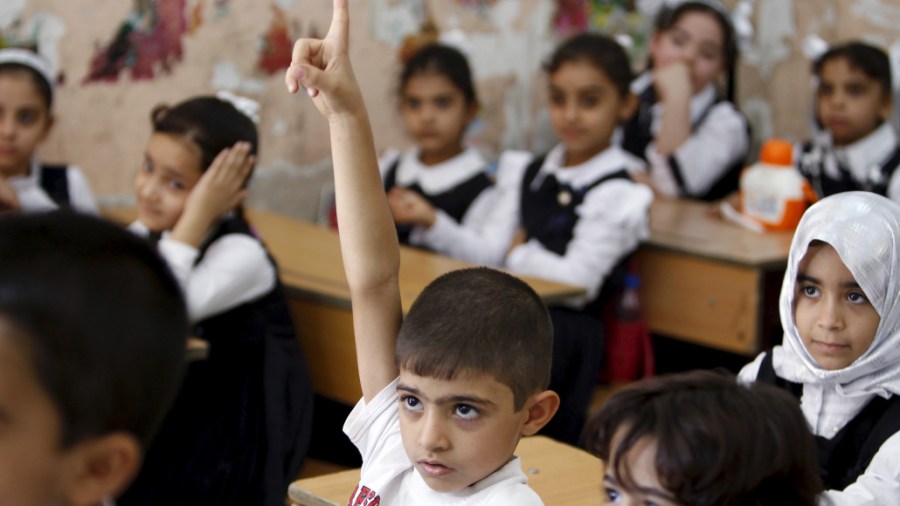
It’s not possible to predict all future educational issues, or know every detail of the sector’s current situation, but in the process of applying for teacher training some research will go a long way in demonstrating your enthusiasm and impressing potential employers.Recruiters are looking to see how much you’re engaging with current issues and are aware of the challenges that these place on a school. Your answers can reveal if you are genuinely interested in education, schools and the world of teaching.Today, education remains an inaccessible right for millions of children around the world. More than 72 million children of primary education age are not in school and 759 million adults are illiterate and do not have the awareness necessary to improve both their living conditions and those of their children.

You may have a question around recent education trends, current issues or new methodologies in education. In your interview you may be asked to create a presentation on current issues in education or asked a question around current issues in schools and in the media. Relate your answers back to the classroom – start with, ‘when I was in the classroom, I noticed…’ or ‘in the staffroom, I heard teachers talk about…’. Take a look at what other teaching interview questions you may be asked.

For many children who still do not have access to education, it is notable because of persisting inequality and marginalization.

In developing and developed countries alike, children do not have access to basic education because of inequalities that originate in sex, health and cultural identity (ethnic origin, language, religion). These children find themselves on the margins of the education system and do not benefit from learning that is vital to their intellectual and social developmentFactors linked to poverty such as unemployment, illness and the illiteracy of parents, multiply the risk of non-schooling and the drop-out rate of a child by 2.

Undeniably, many children from disadvantaged backgrounds are forced to abandon their education due to health problems related to malnutrition or in order to work and provide support for the family..

Universal primary education is a major issue and a sizeable problem for many states.Many emerging countries do not appropriate the financial resources necessary to create schools, provide schooling materials, nor recruit and train teachers. Funds pledged by the international community are generally not sufficient enough to allow countries to establish an education system for all children.

Equally, a lack of financial resources has an effect on the quality of teaching. Teachers do not benefit from basic teacher training and schools, of which there are not enough, have oversized classes.

This overflow leads to classes where many different educational levels are forced together which does not allow each individual child to benefit from an education adapted to their needs and abilities. As a result, the drop-out rate and education failure remain high.

Russia invated by Napoleon and Grand Army

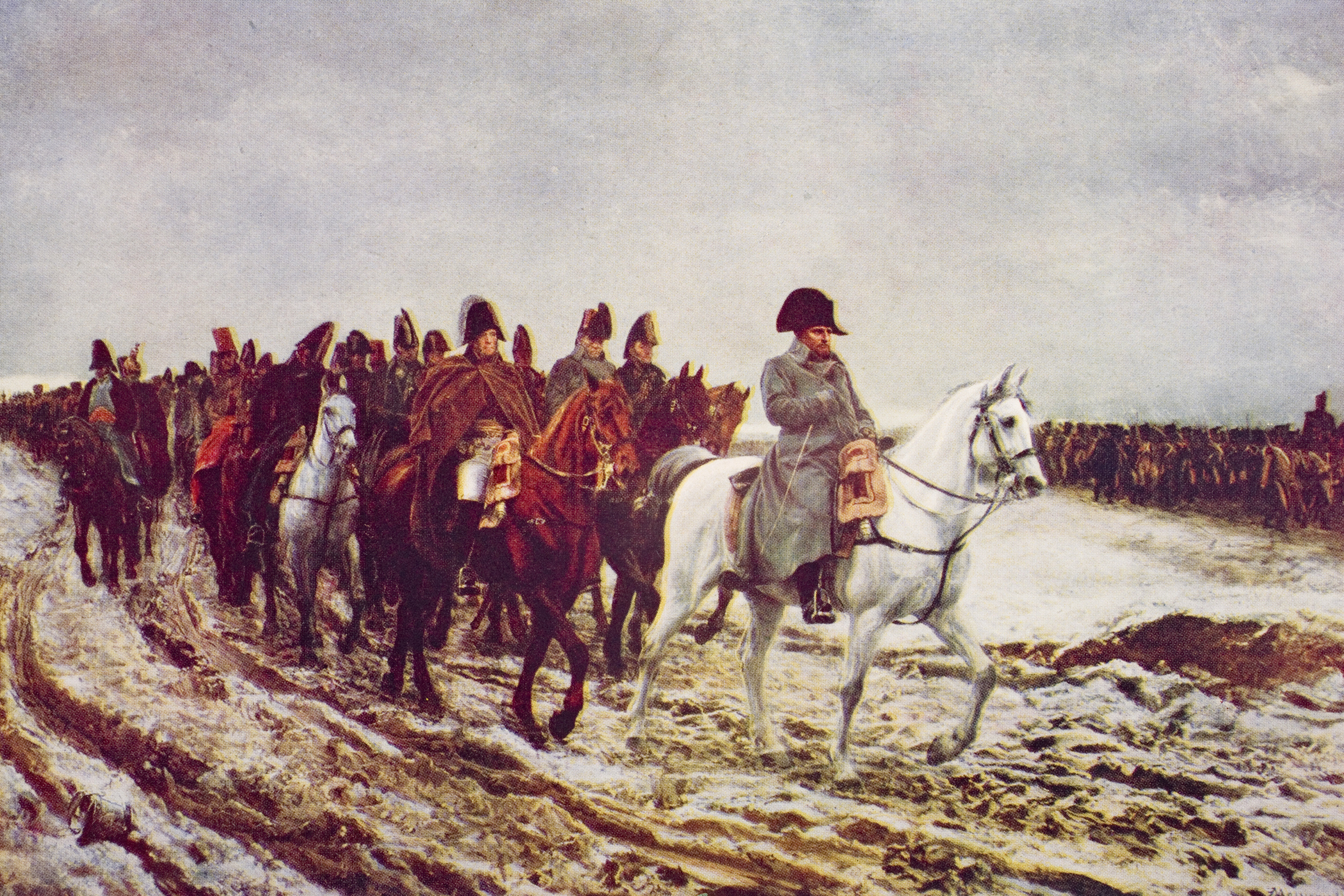
On 24 June, French Emperor Napoleon Bonaparte, crossed the Neman River, invading Russia from present-day Poland. Eventually this resulted in disaster for the French.

To intimidate Alexander, Napoleon massed his forces in Poland in the spring of 1812, but still the czar resisted. On June 24, Napoleon ordered his Grande Armée, the largest European military force ever assembled to that date, into Russia.


Which all started when Russian army refused to engage with Napoleon’s Grande Armée of all most 500,000 European troops. Though the Grande Armée did not have enough supplies or the distribution networks required for such a long march. However french strategists assumed the Grande Armée would be supplied by wagons, or would be able to gather supplies as they went. Furthermore, Grande Armée also failed to prepare for Russia’s harsh winter. Its troops were not dressed or trained for the kind of weather they faced.


Besides the invasion lasted six months, and the Grande Armée lost more than 300,000 men during the process. On the other side Russia lost more than 200,000 too. This single battle resulted in more than 70,000 casualties in one day. The invasion of Russia effectively halted Napoleon’s march across Europe, and resulted in his first exile, to the Mediterranean island of Elba.

How to start coding? Part-1

To begin with coding, you need to first learn a programming language. A computer can’t learn the human language. A computer only understands that is in the form of 0’s or 1’s i.e binary language. So to communicate with the computer, you need to learn its language. Programming language is a sort of instructions set that is fed to the computer so that we can get the desired output. There are tons of homogenous programming languages available. Some languages are equivocal. While some are quite the contrary. One such programming language that is most popular today is called “Python”.

Every buzzword around you today is more or less uses Python. Python is an integrated high-level general-purpose programming language. Python is the fastest-growing programming language.

Some of the advantages of coding in the “most popular programming language are”-

It’s easy to read, write and learn code in Python

Python is an interpreted language

Python is free and open-source

Python supports every possible library available

Python is a high-level language

Python is an object-oriented language

Python is portable across Operating Systems

Every coin has two sides, so does Python also has its disadvantages-

Python is quite slow in execution

Python is not so memory efficient.

But, these disadvantages do not anguish its popularity. It may sound perplexing to learn all these keywords. But trust me once you get your hands dirty with coding, you will come to understand these terms.

Surge in interest for Python

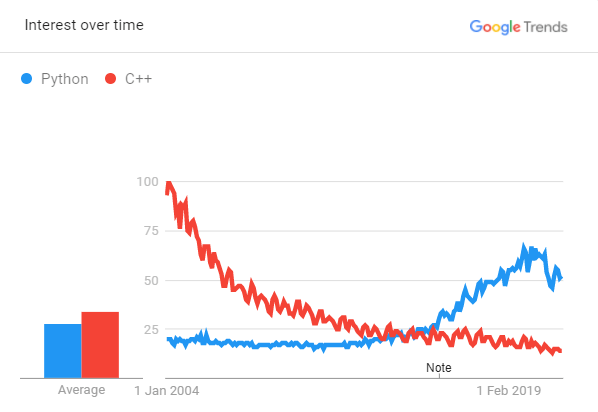
There are also some analogous programming languages. C, C++, Java are some of these programming languages. They have their advantages and disadvantages. But none of them is even close in terms of usage and popularity with python.

The growth with pythons influence is steadily increasing and will surely see an exponential rise in the near future. Tech giants such as google have left no stone unturned on using python. Due to this increasing demand for python, it’s feasible to learn python. And this will be your stepping stone on your way to learn to code.

LIFE CYCLE OF INNOVATION

INNOVATION

Innovation is the action or process involved in improving an existing product/service. It involves new techniques and ideas to create better products that add up value to the customers. Innovation enhances the brand value and is the key to the successful running of the organizations.

Example: Power banks – They are innovative reusable devices that replace conventional chargers in the absence of electricity. Power banks store the battery and give power through USB ports to the devices in need of charging.

LIFE CYCLE OF INNOVATION

The phases of innovation in an innovation life cycle can be the following

  • Ideation – Ideation starts with the necessity of a solution for a problem or to satisfy the customer’s requirements. The problem statement is identified first and the feasible idea to solve it, is generated. Curiosity, Creativity, Involvement gives impetus for a new idea to spark. This may either increment an old one or open a new market. Innovation potentials are generally identified through
    • Targeted search – This involves finding potentials through creativity workshops, idea contests, or LEAD user workshops.
    • Random findings – This involves discovering the new idea randomly while coming across some new products, suggestions, and customer feedback.
  • Research – This is one of the important steps as it involves identifying risks. After the idea is generated, research should be done to conceptualize and bring an idea into a form. Proof of Concept (POC) must be provided and it should prove that neither a similar product is available in the market nor POC is available and patented. This phase should ensure that the idea is possible by analyzing
    • Customer’s requirements – Customer’s unheard problems and needs.
    • Market potential – Market size and attractiveness for the generated idea.
    • Growth potential – Expected opportunities, growth, and scalability.
    • Risks and feasibility – Potential risks, technical barriers and laws, standards, and patterns.
  • Offering – This phase involves offering the product as a complete one to the market. Before it is offered, the availability of resources and scope of the product in the market must be analysed. The feedback from the potential customers must be obtained and incorporated. Use these customers as an anchor to obtain new customers. 
  • Commercialization – This involves launching the product as a commercial one to gain profit from it. The following points should be considered for commercialization
    • Sales plan and marketing strategy – How the product is delivered to the customers and attracting, convincing, and making the customers realize the need for the product.
    • Contracts and license management – Regarding the terms and conditions for using the product
    • Product management and engineering – Involves packaging, delivery, and installation. Striving continuously for future enhancements and updating the versions on a timely basis.
    • Customer support – Customer helpdesks, feedback management, etc.
  • Growth – This phase is to ensure leading the market. Continuous study on the competitors, new arrivals, and customer needs could help retain the market position. The product should be able to sustain the competitive market. Customer acceptance and support should be increased through the performance of the product. Eventually, revenue generation increases. The availability of the product must be expanded.
  • Retirement – A product goes through this phase when there is a replacement of the product by an advanced one. The product tends to lose the market position thereby failing to generate expected revenue. This may happen due to a decrease in demand, the substitution of technology or the product may no longer provide a relevant solution to the customers.

These phases of innovation are considered indispensable in the product’s lifecycle. So, it becomes mandatory to take care of every detail in the life cycle to achieve success and sustain in the market.

Time Blocking: Improve Your Focus And Get More Meaningful Work Done

Do you have a list of priorities or goals that you want to achieve this year? And do you struggle with allocating time to them? Time blocking might be helpful.

It certainly helped me. Look, I’m not any different from you. Life can be messy. Most of us juggle a lot of different things at the same time. Even though the simple solution is to stop juggling, it’s not always realistic. Or even needed.

What if you could do more things without losing your time? It’s possible. But you must work in an organized way.

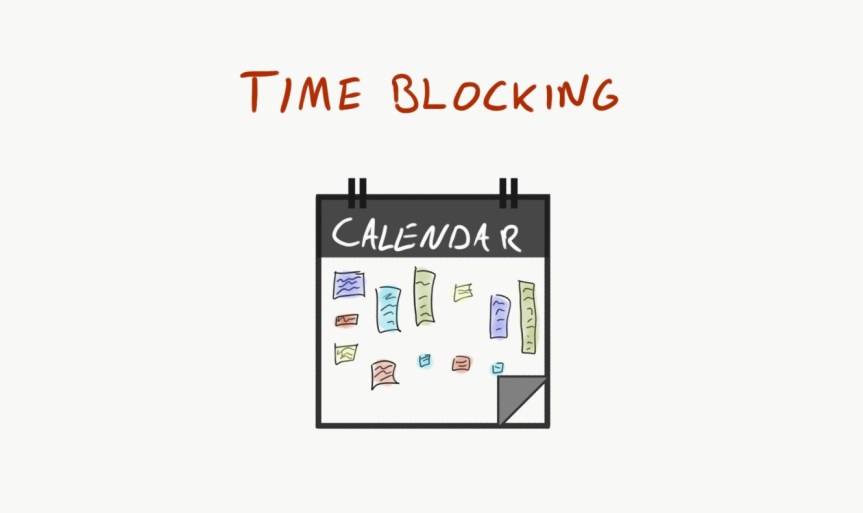
Time Blocking a simple productivity exercise that many people use. It’s not fancy or revolutionary. The only thing you need is a calendar, which is something everyone with a smartphone and computer has.

Time Blocking is simply using your calendar to block time for your most important priorities. During that time, you only work on that one thing. And, you let your calendar lead the way. That way, you don’t have to think, “What should I do next?”

But Time Blocking is more than just a productivity tool. It’s about self-awareness.

The road to high productivity starts with awareness.

For instance, one of my priorities this year is to write a book on pragmatic thinking. However, there’s a problem: I haven’t been writing.

How did I come to this conclusion? I simply looked at my list of priorities for 2017, and I then I looked at my calendar.

I hadn’t scheduled any time for writing in a while. Now, you might think, “do you really have to look at your calendar to realize that?”

Yes, I do. I’m not some kind of supercomputer that remembers everything. I’m a regular human being. I think of something to do, start working on it, life gets in the way, and then I FORGET about it.

It happens to all of us. We need self-awareness and tools that keep us in check. And that’s why I like Time Blocking.

Some people love Time Blocking. Some people hate it.

Computer science professor and author of Deep Work, Cal Newport, also uses time blocking. He says:

“I take time blocking seriously, dedicating ten to twenty minutes every evening to building my schedule for the next day. During this planning process I consult my task lists and calendars, as well as my weekly and quarterly planning notes. My goal is to make sure progress is being made on the right things at the right pace for the relevant deadlines.”

The last sentence is exactly why I schedule everything I want to do. Working is not the same thing as making progress. And Time Blocking helps me to improve my focus so I can get meaningful things done. Things that have an actual impact on my life.

I know there are a lot of successful people who work with empty calendars. I’ve read the articles. They simply work two, three or four hours per day.

And to be honest, that sounds very attractive to me too. However, one must look at his/her own life situation.

What are you trying to achieve?

And more importantly: What resources do you have?

Often, people who don’t have a lot of money, do have a lot of time. So why not use it wisely? Either way, I think that planning serves a purpose.

I plan my days and weeks in advance because I want to make sure I’m working on the RIGHT things. Too often, I get lost in completing daily tasks.

Think about it this way. I’m pretty organized already. And I only work on one big thing per area of my life.

But there are many different areas of my life: My family business, my blog, podcast, online courses, relationship, friends, investments, etc.

It might sound like I’m doing many different things. But it depends on how you look at it. Everything I do leads to one thing: Living a meaningful and independent life.

But let’s not get philosophical here. If you’re lacking focus, not making progress, and want to work in a more organized way, give time blocking a try.

Here are some things I’ve learned that may help:

  • Take 10 minutes every evening and plan your next day. Rearrange blocks if you must create time for other important things.
  • Use recurring blocks for recurring tasks. For instance, I’ve scheduled two hours to write my new book every Tuesday and Thursday.
  • Don’t over-schedule. Realistically, you can’t be productive 10 hours straight. Give yourself some time between tasks.
  • And always schedule more time than you think you need.

“Wow, time blocking sounds like too much planning to me.”

No problem. Plan less. There’s always a counter-movement for everything. People who do the exact opposite and advocate an anti-productivity lifestyle. You know, folks who claim they have empty calendars and don’t care about anything.

People who pretend they are always “enjoying” themselves. They like to go with the flow and daydream.

You know what that reminds me of? Those kids in school always said, “Ah dude, I didn’t have time to study for this class,” but always ended up getting straight A’s.

People just want to make you believe they don’t work hard. It’s facade. And when they do well in life, it seems like it came easy.

As far as I know, achieving meaningful things is hard. I don’t think there’s anything cool about pretending it’s easy. Nor do I believe that it’s cool to work yourself to death.

I often think of this question: Are you an amateur or a pro?

It’s Steven Pressfield’s famous analogy, from his book The War Of Art, for getting work done.

The amateur-only works when inspiration strikes. The pro sits down every day and puts in steady work. The key is steady. Not irregular or extreme.

Pressfield says:

“The sure sign of an amateur is he has a million plans and they all start tomorrow.”

Don’t start tomorrow.