John Stuart Mill

A lot of scholars and philosophers alike have discussed the various notions of freedom for centuries. One such important notion is provided by John Stuart Mill. Mill’s contribution to the conception of freedom is extremely valuable. As one of the pioneers of conceptualizing freedom, his philosophy has shaped the trajectories of liberal democratic political models all over the world, from the 19th and 20th centuries to the present day and age.

His conception of freedom is contingent upon his philosophical method of inductive reasoning and his emphasis on empiricism from which he derives most of his theoretical formulations. Derived from the principle of utility, Mill believes that happiness can only be achieved in an environment of social freedom as stated by Leo Strauss and Joeseph Crospey. This means that in advocating the attainment for higher pleasures, his defence of liberty is consistent with his utilitarian beliefs.

Mill’s basis for defence of liberty rests on the foremost freedom i.e. speech and expression. Jill Gordon states, all ideas as per Mill, must be expressed freely to serve the ultimate end of human progress. Mill opposes all forms of censorship in this respect and advocates ideas to be freely expressed whether the opinion is true or false, he especially upholds the right of minorities to express their opinion.

Irrespective of its share of limitations, Mill’s contribution to political philosophy and other fields of study cannot be negated. In claiming the same, it is important to recognise that Mill’s idea of freedom especially freedom of expression has become the basis for the operation or even the definition of liberal democracies. Hence, the current trajectory of politics needs to be taken into consideration with respect to Mill’s ideas. With China’s growing surveillance with its repressive internet laws and censorship regime, especially with the current trend extending to transnational censorship, there is a need to consider Mill’s conception of freedom not just as a human right but also in context of the individual intellectual development.

The censorship regime in China curbs the intellectual development of citizens into becoming model citizens; according to a unified idea of the state, making subordination, easier. However, the lack of freedom of expression in an authoritarian model like China, does not negate the problems of seeing the former as a panacea in liberal democracies. Here, Mill’s ideas lack his vision in practice, irrespective of their theoretical merit. We see the negatives of unconditional liberty provided to media houses which are becoming all too powerful. Such power has resulted in the generation of fake news; through social media platforms and misinformation dominating public debate.

Though Mill would support the circulation of fake news; as part of intellectual development, the spread of misinformation is detrimental in many ways. When viewed as a panacea, freedom of expression also leads to mob tendencies and formulation of opinion based on bandwagoning. This largely leads to unfavourable democratic decisions. Therefore, while liberty cannot be compromised upon, Mill’s idea of freedom in today’s times needs to be constantly considered, as well as challenged.

Are Our Defences To Fight Against Virus… working?

We all are suffering a crisis,and it does a little by avoiding it. With the vaccines still being months away,our only means of protection are a few only a few things which we can do. But…are they even helping us?

No offence,but my motive in no way is to scare you out and blabber about how the world has become so cruel. No. Just no. The main motive of writing is just so that you  start to be aware of certain things. This makes you buy things in an effective manner without turning a blind eye on anything.

So,what does our defence involve? Okay…let’s see..

  1. Gloves(although they don’t last too long)
  2. Mask(please let your mask stay where it is supposed to be!)
  3. Sanitizers (at least they don’t have anything wrong with them….right?)

There are many more things like the suit in which you look like a lab surgeon etc. Trust me the situation is not to be laughed at. But we can rarely do something when the situation is so sensitive. And while you are out there battling this calamity every single day,why not make it a tinsy bit brighter!

Anyways,though the things which we think ought to protect us,you might want to recheck some products out of them

  • Gloves

What is the sole purpose of gloves? Well,so that the microbe does not make any contact with our hands. But it’s true that the microbe makes contact with the gloves.  This makes it just like our hands, doesn’t it? Unless you sanitize your gloves regularly. See,gloves are useful so that our hands don’t come  in contact with the microbe. But you have to keep in mind that you should avoid any contact of the gloves with your skin.

Photo by Chokniti Khongchum

  • Masks

What could possibly be wrong with masks? Safety masks are supposed to make it so that you do not get the microbe into your body,and as the medium we are dealing with is air,masks are used. But masks are for your safety,not so that you choke yourself. Meaning,buying expensive masks and a normal mask,both work for the sole cause,to protect you. And wearing a mask to cover your chin will not possibly make you safe. 

Photo by Anna Shvets 

  • Sanitizers

Sanitizers are used so that the microbe does not remain on the surface.But the contents in the sanitizers are very important to check. To kill a microbe,a sanitizer must contain about 75 to 80% of ethanol, commonly known as spirit. Ethanol in the Sanitizers is what kills the microbes. But some sanitizers have something called methanol in their sanitizers . Why is methanol? Methanol is commonly known as wood alcohol,and if a sanitizer has any methanol in it,it can potentially be fatal to you. Methanol basically makes your skin really dehydrated and dry and may cause something called dermatitis(skin irritation). The symptoms of metabolism poisoning are as follows:

  1. Nausea
  2. Vomiting
  3. Dizz
  4. Disturbance in your vision
  5. Headache
  6. Unconsciousness
  7. Weakness in body

Now,if you have any of the following symptoms, don’t go running to your doctor. Methanol poisoning maybe one of the factors which are probably making your body react in such a way. If you face by of these problems,first go around and see whether your sanitizer includes any percent of methanol in it. If so, immediately stop the usage of such sanitizers. Even if they are expensive,they are not more than your health. But really,do we even know  the things which are added to the sanitizers which are labelled even genuine? Which is why,do make sure of the contents in the sanitizers.

Photo by Anna Shvets 

You might be wondering,’why is the writer writing these types of articles now…? ‘You see,for a long time I have been brushing off any topics which relate to our present conditions,but at some point of time  I have realised that brushing off things will not make them disappear. Sooner or later,we just have to face them. So..just wanted to clear that. 

I do not blame the system,they are doing wonders out there,but one should always remain alert if anybody is scamming with your money and conning you with their words.

Anyhow,we sort of have adapted ourselves to these conditions and probably will learn to find the fun in this as well!!

Fact: Suppose if you are in contact with a particular microbe for a certain amount of time,your body learns to get immune to the microbe itself! Which means,even if the microbe does enter your body,the body already knows how to kill it!

Reference:

https://www.healthline.com/health-news/fda-says-avoid-9-hand-sanitizers-that-contain-toxic-methanol#:~:text=Agency%20officials%20said%20the%20hand,dermatitis%20to%20the%20affected%20region.

https://en.m.wikipedia.org/wiki/Methanol

Books : Your Friendly Companion


https://in.pinterest.com/

A man cannot simply feel contended by earning bread alone. The mind must be fed with literature, knowledge & ethics for functioning in the right path. One can simply do it by reading books of their favourite genre. And if you are a beginner grab a book that can hold down your interest & a comparatively thinner book. This is the common psychology that every significant reader holds in their initial days. 

  So after the invention of printing by Caxton, different kinds of books in different linguals have flooded bookstalls in every country. But in recent years, as everything is being sought for its alternatives & so are reading books, journals, magazines & newspapers. One can access all of the above-mentioned through different pages on the internet in blog forms or applications. A good book is defined to be the one that makes readers feel good about it. Reading one may feel the urge to make a difference in their life. Again some books in the market compel readers to hold a different viewpoint to each different reader. Good books are like those of Tagore, Bankim, Shakespeare & Tolstoy that can be the constant companions in their loneliness & even in their weals & woes.

  Books of Bibhutibhushan Banerjee or Rabindranath are the kinds that free our minds from depressions & sorrows. While the poetry books of Keats & Wordsworth generate a sense of sweet feelings, pleasant moments & philosophical thoughts. Such books can help one to strengthen their mental power & imparts a calming effect at the time of catastrophes. Again a book on criticism gives us a balanced judgment & appreciation.

On the contrary, a thriller tends to take away all the dullness & boredom from one’s mind. A science book helps one to widen their knowledge of the physical world & makes them keep abreast of the latest phase of human progress. An illustrated book on travel creates a hypnotic influence on one’s mind.  

 A visit to paradise for a book lover would be a book fair. Moreover, it’s a bonus if it is of a wholesale kind. Such an event provides enough scope for bibliophiles to quench their thirst for knowledge. A swarm of readers from all over throng the place. Even book launch events of certain authors are quite an enthusiastic event for book lovers. This gives them a chance to listen & interact with their favourite authors, totally a fanboying moment. 

The Most Venomous Animal is…….a Jellyfish?

Nature never fails to surprise us with its mesmerizing beauty. But the sad part is,we barely even know any of it. Nature can give us extreme bliss with its delicious and luscious fruits,at the same time many plants which we think are pretty may turn out to be horrendous. But the fact that it manages to fascinate us everytime is a wonder.For instance, did you know that snakes had infra-red vision,through which they are able to find their prey?

Photo by Pia

Before getting to know this jellyfish which is said to be the most venomous animal ever known,let’s get to know the characteristics and features of a jellyfish.

  • Jellyfish

What comes to your mind when you think of this animal? Well,a jelly. Partially, that’s exactly what it is. Jellyfishes are invertebrates, actually the term jellyfish is often used to describe any animal which is a made of ‘gelatinious’ material. They are mainly made up of water and protein. These organisms literally exist more than 200 types of these jellyfish,and more of them are yet to be explored.The counting,as to know what exactly is the population of the jellyfish is still unknown,because the larvae of jellyfish are usually found in deep sea-beds. Jellyfish are classified into two types:

  1. Medusae (these are the jellyfish which stings you if you go too close to them. Some of them are also venomous)
  2. Ctenophores( also known as comb jellies,these types of jellies do not sting you, fortunately)

Photo by Buğra Doğan 

Jellyfish use their sting,either if you go too close to them or it the jellyfish is really hungry and is hunting for its prey.

Jellyfish existed even before the Jurassic period. That is,they existed even before the first dinosaur came into being. What are their body parts,you may ask. Well,they don’t specifically have any brains(no offence) but they do have a specific structure which enables them to see. Very much like eyes. If we look in the language of English,a group of jellies are actually named as ‘smack’. When jellyfish go around in a large group,maybe with their friends, scientists give it a new name,probably to make our lives harder, as ‘bloom’.And trust me,by large I mean millions and millions of jellies,swimming together. Jellies are usually found in oceans,although,the possibility of them surviving in fresh water is not particularly known. Jellyfish are deep sea creatures,or that’s what known to us. Opaque would not be a word you would describe them with. Transparent? Nah,translucent would be more correct in their case,I guess. The blooms make it very difficult for fishermen and tourists. But I would not blame them,really. 

  • Lifespan

Jellyfishes don’t live really long. Some survive about less than a ear,whereas some species only for a few days. It totally depends on their species, really. The type of species,their habitat,the food they eat,and their ability to survive play a major role on their lifespan. Jellies have a particular stageat each point of their life. The most known stage is medusa, also known as the adult stage,where all the jellyfish does is swim around and also develops it’s tentacles. The larvae of the jellyfish is called a planulae,which grows by breeding on phytoplanktons(microbe which can photosynthesise),small 

fishes etc. 

Photo by Valdemaras D.

What do they sting? These animals actually have stinging cells inside their body which are called nematocysts. What these tentacles do is that they can actually enter literally inside our skin,maybe through our pores.

  • Are they any good?

Hey! Don’t make them the bad Gillian here! They are some delicacies in some countries,these jellies also provide sort of a living habitat to young and  small fishes in places where there is not much space to hide from predators. They use their tentacles to protect small fishes from their nasty predators. Also,some young crabs,which still can’t swim,prefer a good ride on the jellies’s back rather than all that painful work!

  • The Box Jellyfish

Phew! Now that you know what are jellyfish (I really hope so!)let’s get to know the animal which is probably the most venomous in the world.

From the name,you might’ve guessed that these jellyfish have a box like structure. It is actually !ore of a box -like -bell, I would say. From these bells,in the corners hang four hang four long and hollow tentacles.The body structure of this animal is pretty interesting,all around. We will not go into a lot of details,solely because at some point of time, you might sort of get…….bored? 

Anyways,these jellyfish have a better,and we’ll developed nervous system than the other animals,and they are also the jellies which have true eyes,i.e with retinas,lenses etc.The eyes are located in the outer surfaces of their bell and they are ridiculously fast in swimming.

These species are declared to be called the most venomous but according to a research,only some species actually kill you. These type of Jellyfish have around about 20 species with the exploration of mor species still going on.

The venom in them,if in contact with our skin make our cells so porous( holes in our cell membrane) which makes it easier for potassium to leak. Now, potassium is an element which is needed by our body but in huge doses can also stop your heart. Potassium ,at inappropriate doses can result to be very harmful for humans. And don’t think that you would have time to call someone to your help. Nope. This process literally takes just about 2 to 5 minutes and slowly,may lead to death. And I am not kidding here. In children,this process could be even faster,as their body is smaller. The deaths seem to be more common in the parts of Australia.Most Jellyfish venom make your body almost turn into liquid. Spooky? Oh,you’ve got a long way to cross,buddy..!

All in all,unless you don’t disturb them,they don’t disturb younas well! Initially,we start the write,then…..why do we think they are the one who are ruthless…??

Mahatma Gandhi and Martin Luther King Jr

The starkest commonality between Gandhi and King is undoubtedly their pursuit of a non-violent culture of peace. Non-violence for them, wasn’t a strategy of inaction but rather one of action. Their nonviolent methodology and idea of freedom brought about change not just in external laws and systems of governance, but also affected the minds of fellow humankind at large. So much so that their death wasn’t the end of the legacy but rather their ideas drew strength from it.

In a war-torn century, they stood as firm preachers of the non-violent ideology. This ideology served for their goals as a means to an end, which in the case of the two leaders was varying but the ideology also served as a means itself. While for Gandhi it was for the cause primarily India’s independence from colonial rule. He also focused on the structural violence within the community such as caste system. On the other hand, as for King Jr was concerned with the cause of civil rights movements and used non-violent measures as a form of mobilization for legal purposes. The two leaders developed theories that linked to a system that surpassed governmental laws. Logical reasoning attempted to help justify their approaches towards unjust laws. Gandhi focused a lot of his analysis on defining the true meaning of ‘civilization’ whereas King concerned himself with ceasing injustice. Both Gandhi and King discussed reasons regarding the use of non-violent actions to fight for their rights.

But even as their aims, so to say, were a bit different their legacy often tends to meet at a point. The credit for this goes not just to their non-violent strategy but at the same time, to how they chose to approach this. Gandhi attempted to include egalitarian traditions in Hindu religious thought in his fight against the caste system. Similarly, King summoned traditions of resistance in the African-American Protestant Church, with the idea of freedom at the core of it. Both these iconic leaders had come to recognize that the inner and outer divide, the religious realm, the political, are also related which proved crucial in their understanding of the existence of a fundamental link between personal and social transformations.

Mahatma Gandhi and Martin Luther King Jr, have been criticised by many for their lackluster understanding of the society as a whole, more specifically for having near blind faith in their ideologies. However, credit is indeed given where it’s due. There is a moderate consensus that the relevance of the two has carried forward the ages. A reason we can attribute to this is their basic thinking and vision were universal in nature. Perhaps that is the reason why in parts of the world we are able to still witness non-violence amidst of violence, attempt to seek equality amidst ever rising inequalities.

Born 59 years apart, yet united by ideology. The two great leaders, born, brought up, into different local contexts, may have meant different ways to seek problems, it may have meant difference in the analysis of their successes or failures but it did not mean disassociation between the two. The belief that nonviolent resistance is one of the most formidable weapons available to the oppressed sections were commonly shared by the two. The very fact that their ideologies managed to become synonymous with the idea of ‘people’s movements’ seen in many countries is testimony to the fact that their relevance is by no means over yet. It has stood its ground in the face of adversities. Its success or failure is always open to scrutiny and interpretation. Whether or not it survives the passages of time remains to be seen but it can be said that the bond that holds the legacies of the two stalwarts, lives on amongst us even today.

Evolution

When you think of evolution the first name that comes to one’s mind is that of Charles Darwin. However, the fact is that he was not the first person to put forward the idea of evolution. Lamarck had suggested it earlier but the concept was not popular. In fact zoology professor Robert Grant lost his job because he supported Lamarck theory! An anonymous work titled, ‘The Vestiges of creation’ was ridiculed. It was Charles Darwin who first made the theory acceptable and he was able to do so because he supported it with a huge amount of evidence. Darwin, an English naturalist put forward his theory in a book titled ‘On the origin of the species’. He established that all species descended from common ancestors and that the different species evolved through a process he called natural selection. Darwin’s theory gained acceptance because it was able to explain the diversity of life.


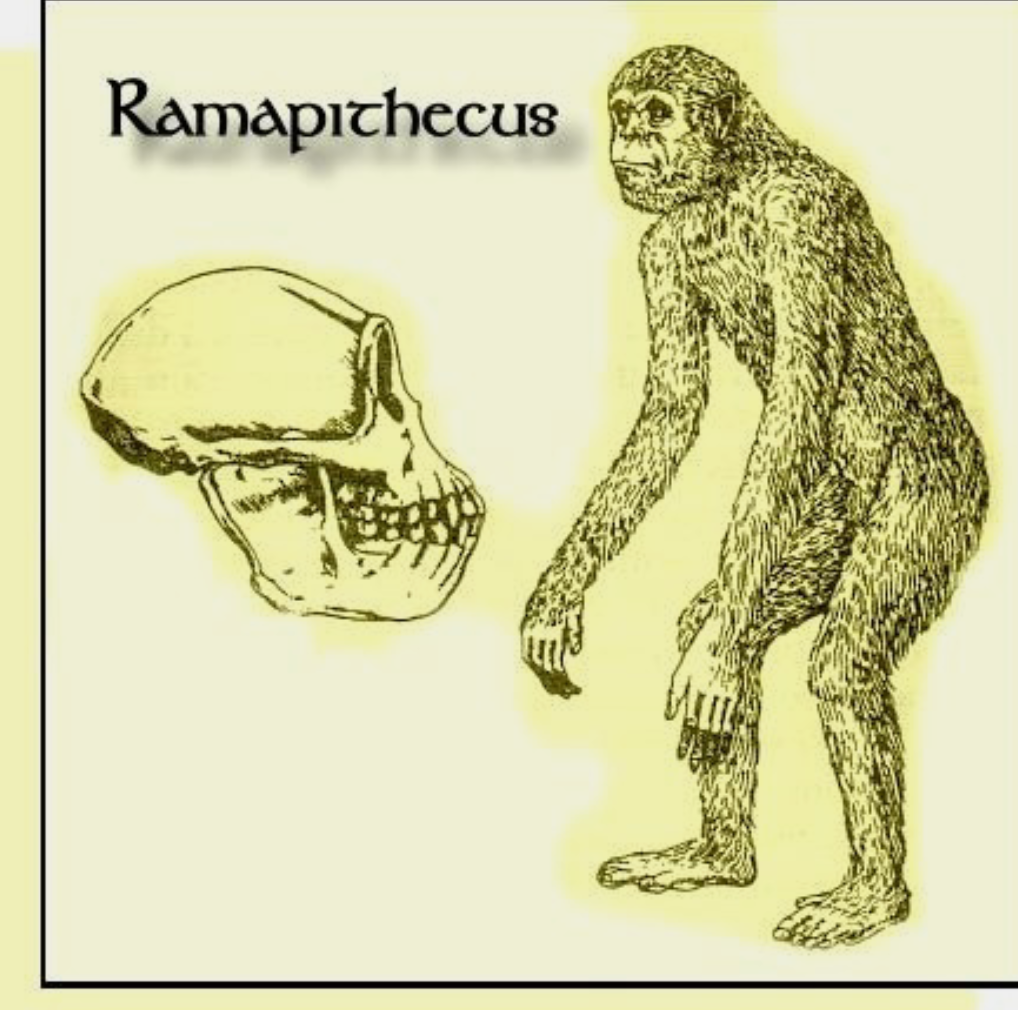
Ramapithecus belongs to an extent group of primates that lived from about 12 to 14 million years ago. Fossils of Ramapithecus were discovered in India and Africa beginning in 1932. Fossil evidence suggested that it had a short face, heavy jaws and enamelled teeth like hominids. Its importance lies in the fact that it was regarded as a possible ancestor of Australopithecus and therefore of modern humans. Later for sale finds indicated that Ramapithecus was more closely related to the orangutan and Ramapithecus is now regarded by many as a member of a group known as Sivapithecus.


It has been long known that humans share a common ancestor with apes but it was only in the last 30 years that techniques for develop to provide strong evidence in support of the theory that humans are more closely related to chimpanzees than they are to gorillas orangutans or Gibbons. The DNA of a chimpanzee is 98% identical to that of a human being. However our bodies adapted for walking on 2 legs. This is possible because the lower portion of the human body evolved to facilitate load bearing and balancing while walking upright. Chimpanzees not only share most of our genes they seem to be able to handle tools and they are able to grasp language pretty well too. Now researchers have found that we share a similar brain pattern when communicating. But in spite of these similarities there are clear differences in body structure intellect and behaviour.


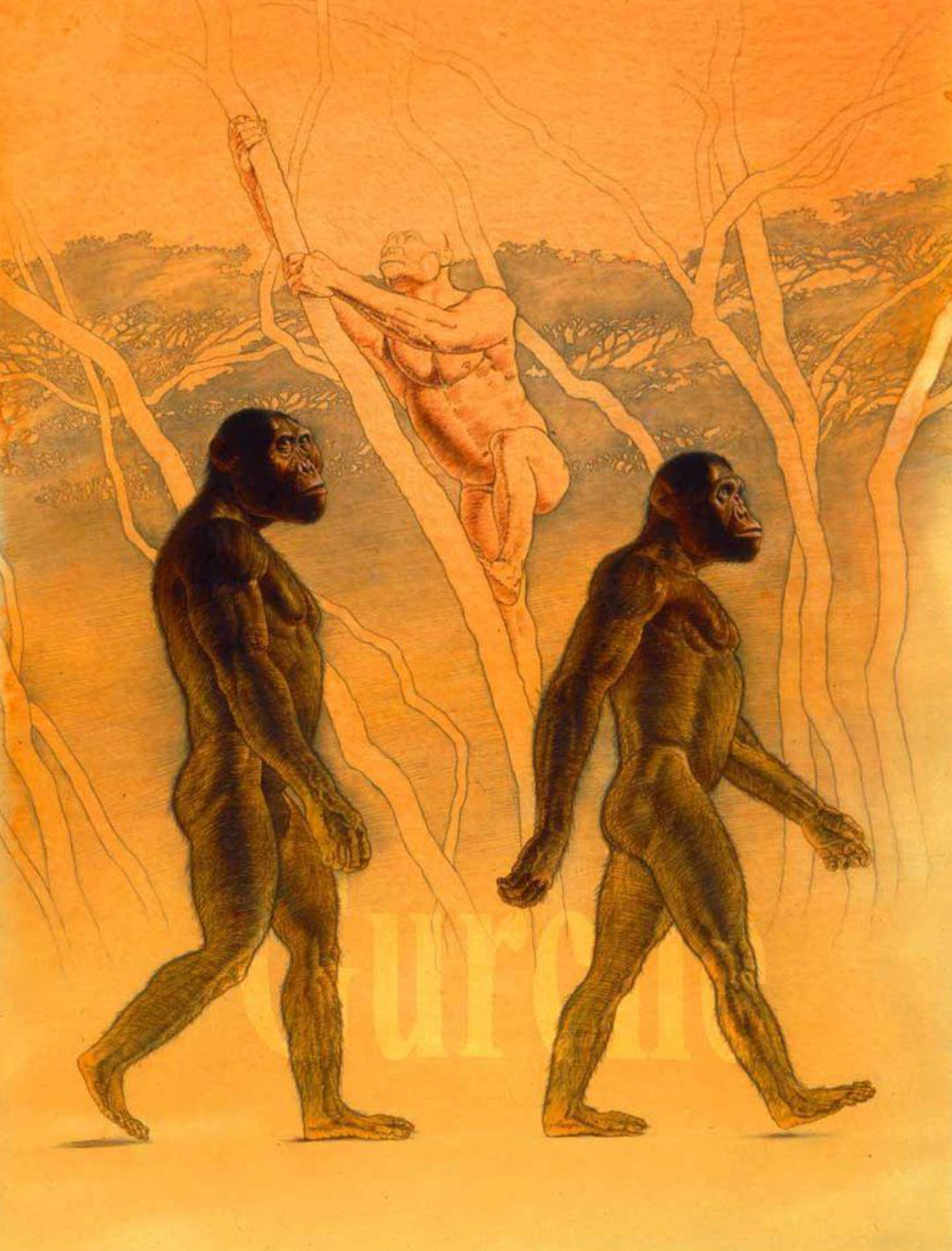
Australopithecus was an early hominid which is now extinct. Fossil evidence suggests that these individuals lived from approximately 4- 2 million years ago after evolving on the continent of Africa. Sense the fossils were recovered from south Africa they were called south African man apes or australopithecines. Australopithecines are believed to have been around 1 to 1.5 metre tall and probably fed on leaves fruits and the remaining of dead animals. Their brains were larger than those of apes but smaller than human brains while their teeth would like human teeth it is believed that Australopithecus eventually evolved into modern humans.


Neanderthal man first appeared in Africa about 200,000 years ago and migrated to the rest of the world around 100,000 years ago. The name Neanderthal comes from Neander valley where an early skull was found. Neanderthals would different from other species of early man. They were much taller and very strong for stop the brains were actually larger than ours are today. They were marvellous hunters. They often used caves as their homes. They were adept at fire making and probably cooked their food routinely. Neanderthals buried their dead. The Neanderthals died out by around 30,000 BC.
Cro-Magnon man lived some 40,000 -10,000 years ago. Their remains were first found in France in 1868 and then throughout other parts of Europe.

Cro-Magnon man was anatomically identical to modern humans and deferred significantly from Neanderthal man who disappeared in the fossil record shortly after Cro-Magnons appearance. Cromagnon man was tall and had an erect posture. He had a prominent chin a surprising forehead and skull shaped like hours. These man was killed hunters toolmakers and artists. Cro-Magnon man was a true human and looked just like us. He is represented by the remains of 5 individuals found in March 18683 adult males one adult female and one child.


•First family.
In 1975 Donald Johansson discovered the remains of at least 13 individuals of all ages at her there in Ethiopia. The sizes of the specimens varied greatly and Johansson believed that they all belong to a single species Australopithecus afarensis in which men were much larger than the females.

Thank you for reading. Have a nice day!🌼

Feminist Movement across the times

The feminist movement (also known as the women’s movement, or simply
feminism) refers to a series of political campaigns for reforms on issues such as
reproductive rights, domestic violence, maternity leave, equal pay, women’s
suffrage, sexual harassment, and sexual violence, all of which fall under the label
of feminism and the feminist movement. The movement’s priorities vary among
nations and communities, and range from opposition to female genital mutilation
in one country, to opposition to the glass ceiling in another.

Feminism in parts of the Western world has gone through three waves. First-wave
feminism was oriented around the station of middle- or upper-class white women
and involved suffrage and political equality. Second-wave feminism attempted to
further combat social and cultural inequalities. Although the first wave of
feminism involved mainly middle class white women, the second wave brought in
women of colour and women from other developing nations that were seeking
solidarity. Third-wave feminism is continuing to address the financial, social and
cultural inequalities and includes renewed campaigning for greater influence of

women in politics and media. In reaction to political activism, feminists have also
had to maintain focus on women’s reproductive rights, such as the right to
abortion. Fourth-wave feminism examines the interlocking systems of power that
contribute to the stratification of traditionally marginalized groups.

Feminism in the United States, Canada and a number of countries in western
Europe has been divided into three waves by feminist scholars: first, second and
third-wave feminism. Recent (early 2010s) research suggests there may be a fourth
wave characterized, in part, by new media platforms.

The women’s movement became more popular in May 1968 when women began
to read again, more widely, the book The Second Sex, written in 1949 by a
defender of women’s rights, Simone de Beauvoir. De Beauvoir’s writing explained
why it was difficult for talented women to become successful. The obstacles de
Beauvoir enumerates include women’s inability to make as much money as men
do in the same profession, women’s domestic responsibilities, society’s lack of
support towards talented women, and women’s fear that success will lead to an
annoyed husband or prevent them from even finding a husband at all. De Beauvoir
also argues that women lack ambition because of how they are raised, noting that
girls are told to follow the duties of their mothers, whereas boys are told to exceed
the accomplishments of their fathers. Along with other influences, Simone de
Beauvoir’s work helped the feminist movement to erupt, causing the formation of
Le Mouvement de Libération des Femmes (The Women’s Liberation Movement).
Contributors to The Women’s Liberation Movement include Simone de Beauvoir,
Christiane Rochefort, Christine Delphy and Anne Tristan. Through this movement,
women gained equal rights such as a right to an education, a right to work, and a
right to vote. One of the most important issues that The Women’s Liberation
movement faced was the banning of abortion and contraception, which the group
saw as a violation of women’s rights. Thus, they made a declaration known as Le
Manifeste de 343 which held signatures from 343 women admitting to having had
an illegal abortion. The declaration was published in two French newspapers, Le
Nouvel Observateur and Le Monde, on 5 April 1971. The group gained support
upon the publication. Women received the right to abort with the passing of the
Veil Law in 1975.

The Women’s movement effected change in Western society, including women’s
suffrage, the right to initiate divorce proceedings and “no fault” divorce, the right
of women to make individual decisions regarding pregnancy (including access to
contraceptives and abortion), and the right to own property. It has also led to broad
employment for women at more equitable wages, and access to university
education.

In 1918 Crystal Eastman wrote an article published in the Birth Control Review,
she contended that birth control is a fundamental right for women and must be
available as an alternative if they are to participate fully in the modern world. “In
short, if feminism, conscious and bold and intelligent, leads the demand, it will be
supported by the secret eagerness of all women to control the size of their families,
and a suffrage state should make short work of repealing these old laws that stand
in the way of birth control.” She stated “I don’t believe there is one woman within
the confines of this state who does not believe in birth control!”

The United Nations Human Development Report 2004 estimated that when both
paid employment and unpaid household tasks are accounted for, on average
women work more than men. In rural areas of selected developing countries
women performed an average of 20% more work than men, or 120% of men’s total
work, an additional 102 minutes per day. In the OECD countries surveyed, on
average women performed 5% more work than men, or 105% of men’s total
work—an additional 20 minutes per day. However, men did up to 19 minutes more
work per day than women in five out of the eighteen OECD countries surveyed:
Canada, Denmark, Hungary, Israel, and The Netherlands. According to UN
Women, “Women perform 66 percent of the world’s work, produce 50 percent of
the food, but earn 10 percent of the income and own 1 percent of the property.”

The feminist movement’s agenda includes acting as a counter to the putatively
patriarchal strands in the dominant culture. While differing during the progression
of waves, it is a movement that has sought to challenge the political structure,
power holders, and cultural beliefs or practices.

Although antecedents to feminism may be found far back before the 18 th century,
the seeds of the modern feminist movement were planted during the late part of
that century. Christine de Pizan, a late medieval writer, was possibly the earliest
feminist in the western tradition. She is believed to be the first woman to make a
living out of writing. Feminist thought began to take a more substantial shape
during the Enlightenment with such thinkers as Lady Mary Wortley Montagu and
the Marquis de Condorcet championing women’s education. The first scientific
society for women was founded in Middelburg, a city in the south of the Dutch
republic, in 1785. Journals for women that focused on issues like science became
popular during this period as well.

The women who made the first efforts towards women’s suffrage came from more
stable and privileged backgrounds, and were able to dedicate time and energy into
making change. Initial developments for women, therefore, mainly benefited white
women in the middle and upper classes.

Brain Drain – A National Crisis

https://www.shutterstock.com/search/brain+drain

 Many problems of an acute nature stare the development of developing countries in the face of modern times. One of them is brain drain. Although this pandemic has proven to be quite a beneficial solution to put a pause in the process. Not to forget this how this lockdown has also substantially caused to improve the environmental conditions. Except for the suffering humans, everything is getting benefitted. Thus nature is healing. 

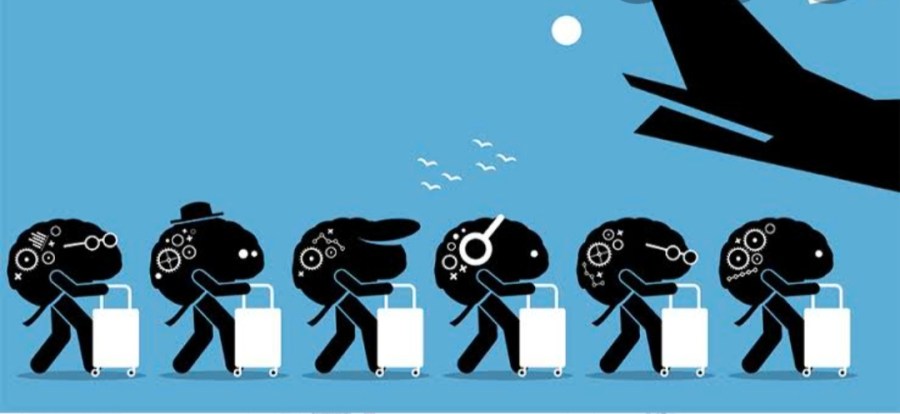
  So, the concept of brain drain is defined as the substantial emigration or migration of individuals. Generally, such child prodigy’s most of whom are trained in different crafts in technologies & different science branches tend to show rising prosperity for better financial profit & prospect. Countless trained technicians, doctors, scientists & engineers leave their motherland in the greed of getting a good life. One reason for brain drain could be turmoil within a nation. 

 Such things severely affect countries that are on the verge of development. Training up these talented students with a great cost, who ultimately face a huge loss by the end, as these students mostly migrate to the USA or UK for higher education. 

 Further discussing there happen to be 3 different categories of brain-draining as mentioned below:

 ‌Geographical Brain Drain– This refers to the emigration of individuals of high-skills and high-brilliance to other nations. This also creates a negative impact on the home country’s economic development.

 ‌Organizational Brain Drain – This refers to the departure of individuals of skill, talent, and experience from one organization to another.

 ‌Industrial Brain Drain – This type involves the migration of skillful workers from one industry to another. 

https://www.alamy.com/

 South Asia experiences a tremendous amount of emigration of talent. Furthermore, this trend is continuously rising with years passing by. Most noteworthy, there is a lot of demand for South Asian skilled, semi-skilled, and unskilled labor in the Gulf. Moreover, other favorite work locations for South Asians include Canada, United States, United Kingdom, and Australia.

  Several reasons are responsible for the cause. Just for instance lack of suitable job opportunities. Besides these developing countries are hopelessly lacking in furnishing facilities for advanced research. On the contrary, the developed countries offer sufficient channels for research & well-objectified jobs with lucrative salaries. It is the need of the hour, for students need to develop a sense of gratitude & patriotism for their homeland that spends so much for their upbringing, training & education. 

Affirmative Action in India : Across these years

Introduction of the Affirmative Action in India

The first backward classes had appeared in India in 1870’s in Madras Presidency. It was under the British they the ‘shudras’ and ‘untouchables’ grouped together as the backward classes. This lead to an increase in the number from 39 to 131 in 1920. In 1925 the depressed classes were separated from the untouchables. After independence Nehru gave them a new name the “other backward classes”, classes other than the untouchables and tribes. The constituent Assembly of that time initiated article 340 which stipulated the president to appoint a commission in charge of identifying the socially and educationally backward classes and suggest measure to improve the condition of OBC’s.

Under Article 340 the first backward commission which is known as the ‘Kaka Kalelkar Commission was appointed in 1953. It submitted it report in 1955. And they included 4 major criteria for classifying the OBC’s

  •  A degraded status
  • Lack of education
  • Under representation in the civil service
  • Under representation in the secondary and tertiary sector

But this report was rejected by the chairman saying that it went against the objective of creating a classless society. The quota system which was introduced by the British in the British India and Princely state based on caste was questioned after independence. The socialist party which was found by Ram Manohar Lohia passed a resolution in favor of reserving 60% of civil services jobs in the OBC. He is an ardent advocate of affirmative action. He called it as positive discrimination. Chaudhary Charan Singh also played a crucial role in mobilizing OBS’s in Uttar Pradesh and formed a party called as the Bharatiya Lok Dal. It had its support among the middle caste peasants and jats.

1967 elections marked the successful win of the backward classes over the congress in 8 states. Even though it won it couldn’t stay in power for a long time since the party was a coalition.

Article 341 and 342 of the constitution had listed a number of castes and tribes who were to get the affirmative policies and they are listed as the Scheduled Caste and Scheduled Tribes. As a result of this a positive discrimination such as reserving seats for these classes were done at the national and state level in university positions and public service commission. In 1979, a commission under the chairmanship of B.P.Mandal – popularly known as the Mandal Commission – was established by the ruling Janata Party under the Prime Ministership of Morarji Desai with the objective of identifying the Other Backward Classes. In 1980, it published its findings, placing a total of 3428 ‘communities’ in the OBC category, comprising 54.4 percent of the country’s population.

 The Mandal Commission recommended that there should be employment quotas in public sector organizations (including nationalized banks and private sector undertakings which received financial assistance from the government in one form or the other) and reserved places in higher educational institutions of 27 percent for OBC in addition to the 25.5 percent job quotas and seats in higher educational institutions that were already in place for SC and ST . The figure of 27 percent was arrived at as the Supreme Court limited total reservations to under 50 percent.

As a matter of fact the need for Affirmative action for the SC/ST was always accepted since the post-independence period by the congress because these people were not a threat to the dominance but this couldn’t be said in the same for OBC since they were in large numbers across the country. The constituent Assembly did not enter into debate over this. Instead it added the Article 340.

The importance of implementing affirmative action laid in its after effects. If this was successfully implemented then the lower castes and classes would be brought into the limelight and would also get the same opportunities as the rich and higher classes do. They will be having equal opportunities in the government sectors. These people who had historically faced discrimination would now be having equal opportunities. This can lead to improved lifestyles for the lower caste people. When more representation is given in the electoral sector, their voices will also be heard. This can serve justice to their unheard voices of the past years. Now with their leader in power they could also come forward.

Government under the then Prime Minister Morarji Desai. The Commission was chaired by an MP, B P Mandal. The chief mandate of the Mandal Commission was to identify the socially or educationally backward classes of Indiaand to consider reservations as a means to address caste inequality and discrimination. The Commission submitted its report to the President on 31st December 1980.

After India achieved independence, affirmative action started for the “Depressed Classes” or the Scheduled Castes and Tribes providing benefits to the most backward and socially ostracised of India’s communities. However, there were no benefits or even a list of the country’s other backward classes, which although not as politically and socially backward as the ST/SCs, but were still marginalised in society, and behind forward castes in fields of education, employment and economic development. To address this problem, the country’s first Backward Classes Commission was set up headed by Kaka Kalelkar in 1953. This was also called the Kalelkar Commission. In 1955, the commission submitted its report which stated that there were 2399 backward groups in India out of which 837 were ‘most backward’ and the major evidence of backwardness cited was caste. However, the Union Government, in its pursuit of ultimately creating a casteless society, rejected its recommendations.

Affirmative Action Policies

Various policies have been taken under Affirmative Action. Some of the important ones are as follows

  • In 1935 itself under the Government of India Act, various castes were listed deserving special treatment. And extensions in the list were made in 1990’s to the OBC’s
  • Reservations in the State and Central legislatures, in the government jobs across all the sectors and in educational institutions too.
  • Caste Disabilities Removal Act of 1850
  • Article 17 of the Indian Constitution
  • Prevention of Atrocities(against SC/ST communities)  Act of 1989.
  • 93rd amendment act provided for reservation

Success of Affirmative Policies

Over time there has been a considerable increase in the share of SCs and STs in government employment and educational institutions. Reservations in the legislature have also provided a space for SCs and STs in the executive and in the decision-making process. The formal reservation policy in the government sector, and the general developmental and empowerment measures in the private sector, have also contributed to an improvement in the human development of SCs and STs. However, during the course of the implementation of India’s reservation policy some problems have become apparent. First, the success of the policy has been uneven across sectors and departments. Second, the policy is limited to the government sector, while more than 90 percent of SC and ST workers are employed in the private sector. Finally, despite the improvement in human development among SCs and STs, disparities in attainment with non-SCs and non-STs persist even to this day. This indicates that addressing social exclusion is often a far more difficult challenge than anti-poverty policy.Reservation is accompanied by other provisions designed to increase the ability of SCs and STs to compete for government jobs. These include the relaxation of minimum age for entry into the service, relaxation in the minimum standard of suitability (subject to a required minimum qualification), the provision of pre-examination training, separate interviews for SCs and STs, and representation of people with SC or ST backgrounds on selection committees.

The Central Government has developed an administrative mechanism for regulating, monitoring and implementing the reservation policy. The main institutions involved are the Department of Personal and Training, the National Commission for SCs and STs, the Committee of Parliament on Welfare of SCs and STs, the Ministry of Social Justice and Empowerment, and the Ministry of Tribal Affairs. The DOPT regulates and monitors the reservation policy in government services. Its main function is to enforce the rules and monitor the fulfilment of the quotas. It is supported by administrative units within each Ministry and/or government supported organisation. The National Commission for SCs and STs has responsibility for investigating specific complaints received from SC or ST employees regarding appointment and promotion matters. The Commission has the power of a Civil Court, and can call employers for enquiry. It also prepares an annual report which has been discussed in the national Parliament in every year since 1950. The Ministry of Social Justice and Empowerment and the Ministry of Tribal Affairs are responsible for the all-round development of SCs and STs, and carry out various schemes related to education and economic development. The Committee of Parliament on Welfare of SCs and STs, which is comprised of the SC and ST members of parliament, is entrusted with examining progress regarding the legislative representation of SCs and STs, and also makes recommendations for effective implementation of policies and programmes.

 The number of SC and ST employees has also increased significantly in public sector undertakings, nationalised banks, and public insurance companies. There are, however, variations between different type of jobs, and quotas are much closer to being met in lower categories of jobs. Reservations in political representation are accompanied by a time limit. They were initially provided for a ten-year period, with a provision for extension every ten years (the present extension is up to 2010). By contrast, in the areas of government services and education it is left to the government to use reservations up to the point where it is considered that discrimination against SCs and STs is no longer a major problem. There is a minority view which expresses concern about the extension of reservation policies without a time limit. Nevertheless, the majority view is in favor of extension as long as discrimination and social exclusion of SCs and STs persists, and there is general support in government for

Over time there has been a considerable increase in the share of SCs and STs in government employment and educational institutions. Reservations in the legislature have also provided a space for SCs and STs in the executive and the decision-making process. The formal reservation policy in the government sector and the informal affirmative action policy in the private sector have also contributed to an improvement in the human development of SCs and STs. However, the rate of improvement has been rather slow, and disparities in human development attainment between SCs and STs on the one hand, and non-SCs and non-STs on the other, continue even today. During the course of the implementation of India’s reservation policy, some problems have become apparent. First, its success has been uneven across sectors and departments. Generally speaking, participation of SCs and STs is close to their population shares in lower categories of jobs, but much lower than their shares in high-grade positions. Due to indirect resistance, the extension and spread of reservation policy to several government sectors has also been slow. Another issue is the demand by SCs and STs to extend formal affirmative action policy to private sector employment and private educational institutions. This is currently under active consideration by the government. reservation policies without explicit time limits.

At the end of the end it is not just in the hands of the government to help them but also they should take initiatives an come into the limelight. Many backward classes people have published books detailing their experiences and so on. More or less people are treated equally but even so sometimes we can hear news of people being discriminated and so on. India has a long way to go in this matter


Implicit and explicit type conversion in C

Some of the primitive sata types in C are int, float, double, char etc. We know that int is a small data type and double is a large data type. We say this by comparing the range of the data types. The data type, it’s storage and range is given in following table.

Data typeStorageRange
char1 byte-128 to 127 or 0 to 255
unsigned char 1 byte0 to 255
signed char 1 byte-128 to 127
int2 or 4 bytes-32,768 to 32,767 or -2,147,483,648 to 2,147,483,647
unsigned int 2 or 4 bytes 0 to 65,535 or 0 to 4,294,967,295
short2 bytes-32,768 to 32,767
unsigned short2 bytes0 to 65,535
long 8 bytes-9223372036854775808 to 9223372036854775807
unsigned long8 bytes0 to 18446744073709551615

Implicit Type Conversion

C permits mixing of constants and variables of different types in an expression. C automatically converts any intermediate values to a proper type so that the expressions can be evaluated without losing any significant. This automatic type Conversion is known as Implicit Type Conversion.

During evaluation, it binds to very strict rule of type conversion. If the operands are of different types then the lower type automatically gets converted into higher type before the operation proceeds. The result is of higher type.

Consider the following expression in C,

int x = 10;
char y = 'a'; 
x = x + y;
printf(“%d”, x) ;

Output: 107

Below is the sequence of rules that are applied while evaluating the expressions.

All short and char are automatically converted to int. Then,

  1. If one of the operands is long double, then the other will be converted i to long double and the result will be in Long double.
  2. Else, If ine of the operands is double, then the other will be converted into double and the result will be in double.
  3. Else, if one of the operands is float, then the other will be converted into float and the result will be in float.
  4. Else, if one of the operands is unsigned long int, then the other will be converted into unsigned long int and the result will be in unsigned long int.
  5. Else, if one of the operands is long int and the other is unsigned int, then 1. If unsigned int can be converted into long int, then unsigned int operand will be converted and the result will be in long int. 2. Else, both Operands will be converted into unsigned long int and the result will be unsigned long int.
  6. Else, if one of the operands is long int, the other will be converted into long int and the result will be in long int.
  7. Else, if one of the operands is unsigned int, the other will be converted into unsigned int and the result will be in unsigned int.

This automatic type conversion of lower data types into higher is called Implicit Type conversion. In implicit Type conversion there is no data loss occurs.

Explicit type conversion

The final result of an expression is converted to the type of the variable on the left of the assignment sign before assigning the value to it. However the following changes may occur during the final assignment.

  1. Float to int causes truncation of fractional part.
  2. Double to float causes rounding of digits.
  3. Long int to int causes dropping off the excess higher order bits.

So here in the above example, the right side expression of the assignment operator is evaluated and will be of type double. But this double value has to be assigned to the variable x, which is of type int, which is lower data type compared to double. The process to convert higher data types to lower types is called explicit type conversion. I explicit type conversion some data loss occurs as said in above there points.

so, to convert higher data types to lower, the syntax is:

lower_data_type_variable = (lower_data_type)higher_data_type_variable;

Example,

int y;
double d=11.22;
y = (int)d; //this gives double value in int by truncating fractional part.
printf(“%d”, y) ;

output: 11

Data Scientist Evergreen Career – Demand for Data Scientist is growing around the World

Data consumption has already increased manifold during the global pandemic anyway. As much data is being generated, its consumption is also being done accordingly. Mobile phones, social media, apps, payment wallets are generating so much data that the need of experts is being felt to manage it.

According to a study, the demand for data scientists around the world is estimated to increase by about 28 per cent. At the same time, India is second after the US in terms of making the most appointments in the field of data science or analytics.

Actually, data scientists study data. By analyzing the data, they help companies or institutions plan for the future. Under this, they first collect data. Then store them and then sort them into different categories i.e. packaging of data. Finally, data delivery takes place. Simply to say that data scientists know how to visualize data better. Apart from all this, they also help in finding the lost data, removing the chaos and avoiding other flaws.

Important skills with academics

To become a data scientist, a candidate must have an M.Tech or MS degree in Maths, Statistics, Computer Science, Engineering, Applied Science. Under Data Science people have to study Maths, Algorithm Techniques, Statistics, Machine Learning and Programming languages like Python, Hive, SQL, R, etc. which requires a lot of hard work, time and patience. The data scientist should also have a good understanding of the business and strong communication skills. Also, it is good to gather complete information about any program or course before selecting it. 

Course

Many top institutes in the country offer courses related to it. For example, the Post Graduate Diploma in Business Analytics (Data Science) program jointly run by IIM Calcutta, ISI Calcutta and IIT Kharagpur is quite popular. Apart from this, you can also do a course from IIIT Bengaluru. If you want to learn online, you can explore the platforms of Simplilearn, Jigsaw Academy, Edureka, Learnbay, etc. According to experts, the maths background is beneficial for making a career in data science.

The possibilities

By 2026, it is expected to be around 11 million new jobs coming in this sector. Talking about India, the demand for data scientists in 2018 was seen to increase by 4.17 per cent, which is likely to continue in the coming time. Youngsters aspiring to pursue a career in this field can work on the profiles of data engineers, data administrators, statisticians, data and analytics managers, etc. There will be good demand in sectors like agriculture, healthcare, aviation, cybersecurity etc.

Hiring will increase even after COVID 19

Data scientists play a key role in building business analytics, data products, and software platforms. Today, 2.5 quintillion bytes of data is being created in the world every day, which will require skilled professionals to manage. There will be tremendous opportunities for them. Especially in Big Data Analytics and IT industry, they will have special demand.

According to a global study, after COVID 19, millions of data science professionals will be needed in the US alone. Global companies will hire a large number of data scientists to manage their businesses.

A similar situation will prevail in India. For this, youth can enrol in postgraduate courses offered in different universities of the country or can also take online courses from Coursera, Metis, MIT (EDX), Harvard or Udemy. But doing a full course would be better. If you can work with machine learning in deep learning frameworks like Neural Networks, TensorFlow, Keras, PyTorch, and have working knowledge of Hadoop and Spark, then there can be golden opportunities to move forward in the industry. It is also important for the data scientist to have critical thinking.

Premier Institutes:

ASI Calcutta

http://www.isical.ac.in

IIM, Calcutta

https://www.iimcal.ac.in/

IIT Kharagpur

http://www.iitkgp.ac.in/

Indian Institute of Management, Bangalore

https://www.iimb.ac.in/

Great Lakes Institute of Management, Tamil Nadu

https://www.greatlakes.edu.in/

IIIT Bangalore

https://www.iiitb.ac.in/

Financial Modeling – An upcoming career in Finance!

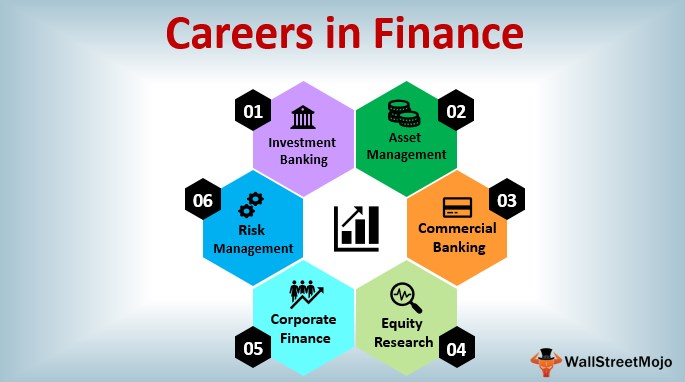
Financial Modeling deals with the analysis of a company’s performance on applicable financial factors. The certification course of Financial Modeling mostly comes along with MS Excel training. It helps professionals to handle finance models applying Microsoft Excel. MBA students, Risk Analysts, Credit Analysts, professionals of project finance, business analysts, investment bankers and IT professionals are the ones who are eligible for this course.

Top 5 Short term courses in Finance in India

Financial Modeling is widely used in investment banking, corporate banking, risk departments, etc. There is a wide range of opportunities and roles available after the completion of this course.

Careers in Finance | Top 6 Options You Must Consider - WallStreetMojo

– Financial Analyst
– Financial Manager
– Business Analyst
– Market Research Analyst

MBA in Finance: A guide for the right choice | College

Why is excel modeling so important?

As a manager, a substantial portion of any MBA graduate’s role is decision – making. Managers are expected to understand complex business processes and provide inputs to the senior management to aid in the process of decision making. While studying these business aspects, managers face numerous challenges on how the different aspects of business are interacting with each other. If these interactions are organized in a structured manner, process understanding is simplified, leading to faster decisions.

Financial Modeling in Excel (Step by Step Free Guide + Template)

Spreadsheet modeling helps in transforming the business decision making process into an organized structure. There are multiple variables that impact any business. Each variable can be individually introduced into the model and the impact of the variable in the overall decision making can be studied.

A financial model is simply a tool (generally built in Excel) to forecast a business’s financial future. It serves as one of the critical inputs for financial analysis and valuation. Knowing how to build an integrated 3-statement financial model and Discounted Cash Flow (DCF) model is a must-have skill for professions like equity research, investment banking and private equity.

Isolation or ‘I Have Solution’

In order to prevent the infection of corona and prevent it to a certain level, all the countrymen are following the lock-down nowadays. Due to this type of lock-down, we are imprisoned in homes. All external activities have stopped in a way. This contrasting situation has affected our psychological aspect the most. If you talk to your neighbours, friends and distant relatives, you will find that they are all going through the same mental state – fear of boredom and survival.

When I say boredom, it simply means that we have nothing new to do. This is because we are not at home of our own free will, we have to stay for a long time without any plan and only when we have nothing new, we call our mood boredom in psychological language. 

Let us understand the psychological reasons behind this. Most of us are accustomed to live life in a certain pattern. For example our daily behaviour, our jobs, our social responsibilities, shopping time and walking etc. In this way, our daily behaviour becomes the product of our fixed life pattern and whenever this pattern changes against our will, it has a direct effect on our behaviour and this is exactly the situation that we are facing right now. The second important thing is the possibility of a crisis in our existence at present. Today this apprehension has made a large population stressed. In this context, I would like to say that it seems that this virus has reached very close to our brain and the most contribution to this is the exaggerated news and analysis that we are seeing or hearing all the days and our mood accordingly is being made. We are forgetting why we are taking stress even when we are taking all precautions and are healthy. This is because we are creating this tension ourselves. 

In this context, I recall a story by the Russian writer ‘Anton Chekhov’ – ‘The Bet’. The story is based on the condition of a lawyer and a banker. As the story opens, a banker misses the opportunity for a bet he made fifteen years ago. At the party they were hosting that day, all the guests got involved in the discussion of capital punishment. The banker saw it as more humane than life imprisonment, while a young lawyer disagreed, stating that he would choose life in prison rather than death. They agreed to a condition. If the lawyer can spend fifteen years in total isolation, the banker will pay him two million rubles. The lawyer has no direct contact with any other person, but he could communicate with the outside world and note down whatever he wishes.

Confined in a guest room on the banker’s property, the lawyer first experiences loneliness and depression but eventually begins to read and study in a wide range of subjects. As he takes advantage of the solitude to be educated and amuses himself in various ways over the years, the banker’s fortunes begin to wane. He realizes that if he loses, paying by stakes will go bankrupt. In the early hours of the day when the fifteen-year period is about to expire, the banker resolves to kill the lawyer, and one night goes to kill him but a note written by the lawyer on the table shows that he has chosen to relinquish the condition, knowing that material things are transitory and have the value of divine salvation more than money. The watchman then reports that the lawyer has gone out from the window and escaped with the property at stake. To prevent the spread of rumours, the banker locked the note in his vault. 

Just today, this story can become an inspiration for us. First of all, for this time period, you need to move away from your fixed life pattern and make new work plans, such as spending personal time with parents and children. This will be a great experience for you. You can engage yourselves creatively by creating new projects for children. Every new task will fill you with a new kind of energy and yes, above all, it is time to make a harmony with nature, because at this time due to lack of human activities, nature is in its purest form, so the open air in the morning of your courtyard Go, see the beauty of the flowers of the garden. There was no time before in your fixed life pattern for this. Then your existence will never put you in crisis, but you will feel connected with your presence.

Stay Home, Stay Safe …..

Advantages & Disadvantages of Online Examination System

With an online examination, all these traditional elements continue to persist, however, the mode of test-taking has changed – instead of a physical examination hall, students instead log into an online examination system through which they access the question paper and share their answers. Evaluation and the publication of results also happen within this system.

What are the advantages of an online examination system? 

  • Environmentally Friendly 

Straight out of the gate, an online examination system cuts down the negative impact traditional pen and paper exams have on the environment.

  • Technologically Forward

Another key advantage to using the online examination system is that it integrates well into a technologically rich world. The use of pen and paper in professional situations is reducing. Most work is done using email, text messages, computers for presentations, computer-based design, etc. 

  • Saves on Time Investment 

Creating, administering and evaluating a test are time-intensive tasks for everyone involved from the student to the teachers. Using an online examination system allows some amount of reduction in the time investment required of the examination process as a whole. 

What are the disadvantages of an online examination system? 

  • Open Book Exams 

Due to the nature of the format of an online examination system, exams administered through this platform to some degree become open book exams. Unlike traditional examination settings that did not allow external materials into the physical space the exam was being conducted, nothing stops students from referring to their course materials during an online exam.

  • Onboarding onto New Technology 

The implementation of an online examination system necessitates a period of familiarisation on part of all users. Any change in structure will require some investment in onboarding on behalf of the educational institution in question. 

  • Not suited for Collaborative Evaluations or Group Projects 

The very nature of examinations in the online examination system prevents certain modes of evaluation being implemented at the school. The most obvious one here is that it is not an ideal platform for collaborative evaluations or group projects. This is because the nature of the platform is objective, preventing subjective evaluations where points are handed out to a group for subjective efforts, rather than points awarded on an existing framework. 

Jayaprakash Narayan

Jayaprakash Narayan was an Indian independence activist and political leader. Popularly referred to as JP or Lok Nayak which means “The People’s Hero”. He was born on October 11, 1902 in rural Bihar. He moved to United States in 1922 to pursue higher studies. He did several odd jobs there to pay for his education and these experiences were critical is shaping his ideas regarding the difficulties faced by the working class. According to his biographers, Allan and Wendy Scarfe, he returned to India from America ‘convinced that the central problem of human society was inequality of wealth, property, rank, culture and opportunity’. (Reference- Book: J.P, His Biography, page 33)

In the budding stage of his political mind, it was the influence of Marxism Socialism that had the strongest impact on him. He was convinced about dialectical materialism and the necessity of class war. But when he came to India, the Current of nationalism was most powerful subsiding the possibility of a communist revolution, he decided to join freedom movement. For this purpose, he joined the Indian National Congress. He opposed Gandhi’s social philosophy and argued that it gives an opportunity to the princes to exploit the paupers.

He rejected Gandhism as ‘timid economic analysis’ ‘ineffective moralising’ and therefore made Marxian Socialism as the basis of his ideas of socio-economic order. However, he was drawn towards Gandhism with regard to its emphasis on decentralisation in administration and commitment to certain ethical values in politics.

In 1948 he, along with most of the Congress Socialists, left the Congress Party and in 1952 formed the Praja Socialist Party. Soon he become dissatisfied with party politics, he announced in 1954 that he would thenceforth devote his life exclusively to the Bhoodan Yajna Movement, founded by Vinoba Bhave, which demanded that land be distributed among the landless. His interest in politics was re-ignited in the late 1950s and once again he became active in political activities. In 1974, he burst on the Indian political scene as a severe critic of what he saw as the corrupt and undemocratic government of Prime Minister Indira Gandhi. He led the Bihar Movement which was initiated by students in Bihar in 1974 in protest against the corruption in the government of Bihar. Also, called Total Revolution Movement (Sampoorna Kranti) and JP Movement, it later turned against PM Indira Gandhi’s government at the centre and became a satyagraha of sorts.

Among his major works is his ‘Why Socialism’ where he advanced his arguments for adopting socialism in India. He made an analysis of the socio-economic conditions of India. He stated that the main cause of inequalities is the inequality of rank, of culture and of opportunity. The unequal distribution of wealth, accumulation and concentration of wealth results in exploitation as the accumulation and concentration of wealth makes it easier for some to exploit money.

He believed that a democratic society offers the chances for socialism to come into existence. Otherwise the bureaucratic state emerges with the support of the capitalist class. At this point people will resort to violent means. Hence, democracy is the only system for a free, non-violent socialist society.

Reference- J. P., His Biography [Book by Allan Scarfe]