Resume writing

The word resume is originated from a french word meaning ‘summary’. Just like the meaning suggests, a resume is a document that summarizes one’s educational, work experience and background details. It is one of the main documents used by the employer in order to screen the job applicants. Every person who seeks for a job should have a resume. It is a tool used by the companies to screen the applicants. The real purpose of a resume is to make you shortlisted for the job you have applied for. So, it is important that a resume should be attractive and it should stand out from others. A resume should be written effectively always. Let’s look what all components can make an excellent resume.

  • Personal information. This has to be written first in the resume for reference. Always make sure the details provided are accurate and up to date. Personal information should contain your name, address, contact number( keep in mind that the number that you provide will be the one that the companies use for further communication), your professional email address. Based on the company you applied for, you can add any website link or portfolio link. Keep in mind that this is optional and is not mandatory all times. You need not add a photograph in your resume unless the organisation asks for it.
  • A powerful opening statement. This section of your resume will let the reader know why you are considered yourself as perfect candidate for the particular job. The open statement has to grab attention and it should stand out from all others. This section will probably the shortest one in the resume.
  • Work experience. This is the most important and relevant section in the resume. You are supposed to share all your work experience in this section. Your current job, previous jobs you have done, and internships etc. can be mentioned in this section. Make sure the organisation’s name the job profile and time period of your experience are mentioned correctly.
  • Educational details. This section should summarizes your educational details. Add the details in reverse chronological order. So that, the recent degree you have done will be appeared in the first row.
  • Skills and expertise. This section can make an impression about yourself to the readers. You can list out the relevant skills and talents you possess.
  • Achievements and awards. This part of the resume will help you to mention the achievements that you have acquired in your life which is relevant to the job that you are looking for.

Summer vacation

During the middle of the summer season, a holiday period is called summer vacations. Also, all the colleges and schools become closed due to high temperature during the summer months (Half may and complete June and sometimes first one or two weeks of July). Also, the kids relax and enjoy this time of the years as they do not have to go to school or colleges. Most of the children either go to a cool place like a hill station or visit their native village to have fun with cousins, and friends. Apart from that, some kids choose to stay at home and join hobby classes or learn new skills. In this essay on summer vacation, we are going to discuss various ways of enjoying summer vacation.

Things You Can Do In Summer Vacation

Overall summer vacation is a long period of time for someone to get bored with them. But you can do a lot of things that will keep you interested and busy during the holidays. Here we are going to discuss various activities that you can perform in your summer vacation apart from going on trips.

  • You can join any activity classes or summer camp. Also, they will give you activities on a daily basis so that your interest remains with you.
  • Also, you can make a new habit like readingwriting, collecting, and observing. These habits not only prove useful in your future life but also improve your knowledge.
  • Apart from that, you can join sports clubs to learn your favorite sports like swimming, athletics, boxing, and taekwondo, etc.

Places That You Can Visit

Most of the people either visit their native village or go to the cool hill station with the family. But visiting the same place multiple times can become quite boring after a few years. Also, if you go to different places every summer vacation then you can learn new things about those places. Also, you can see new and famous things or places of that location.

Summer is a month of hotness and you want to stay indoors as much as possible. But if you will show a little courage to stand in the sun then you can travel a lot of places in your life. Also, the vacation covers a period of almost 2 months and within this time you can visit your native village or town and also can travel to a new place.

Ways Of Enjoying Summer Vacation

Anyone can enjoy summer vacations the way they like but according to me the best way to enjoy summer vacation is to learn or read something. Also, learning and reading not only help you in your school and college life but also proved very useful in the future. But everyone has their opinion about enjoying the summer vacation. On one hand, there are people who like to go outdoor and on the other, there are people who like to spend their entire time indoors.

Summer vacation is a quality time of the year for children. So, they should try to utilize that time not only in playing games but also doing some activities that will make them more active. Also, at this time they can do anything they want to do. They can enjoy this quality time with their parents, friends, and neighbors.

Introduction to Fundamental Rights

The fundamental rights are defined as the basis humar rights of all citizens. These rights, defined in part 3rd of the constitution. Applied irrespective of caste, creed, place of birth, religion etc. They are enforceable by the court, subject to specific restrictions.

What is the purpose of fundamental rights ?

1. Preserve individual liberty,

2. Equality of all members of society,

3. Dr Ambedkar said that the responsibility of the legislature is just not to provide fundamental rights but also and rather,  to safeguard them.

List of fundamental rights 

There are six fundamental rights of Indian constitution along with to constitutional article.

Right to equality (article 14-18)

Right to equality guarantees equal rights for everyone irrespective of their caste, creed, birth of place, religion or race. This right also includes the abolition of titles as well as untouchability.

Right to freedom (article 19-22)

Freedom is one fo the most important ideals enhanced and cherished by the democratic country. Without freedom the democracy is meaningless. The freedom right includes many rights such as freedom of speech, freedom of expression, freedom of association And freedom to practice any profession and religion.

Right against exploitation (article 23-24)

This right implies the prohibition of traffic in human beings, beggar and other forms of force labour. It also implies the prohibition of child labour. The constitution prohibits the employment of children under 14 years in hazardous conditions.

Right to freedom of religion (article 25-28)

There is equal importance given to all religions. There is freedom of conscience, profession, practice and propagation of religion. The state has no official religion. Every person has the right to choose his/her religion.

Cultural and educational rights (article 29-30)

Special protection provided in the constitution to preserve and develop the language, Culture and religion of minorities. Every culture has the right to conserve it’s language, culture and religious practices.

Right to constitutional remedies (article 32)

Article 32 provide a guaranteed remedy, in the form of a fundamental right itself, for enforcement of all the other fundamental rights, and the supreme court is designated as the protector of these rights by the constitution.the supreme court has the jurisdiction to enforce the fundamental rights even against the private bodies. And in case of violation, award compensation as well as to the affected individual.

Right to privacy

Right to privacy is the latest right of our country being recently approved by the supreme court of india. According to this right we are liable to keep our material private and without our permission no one can interfere in our private matter.

Right to property was removed from the Indian constitution in 1978. It is no longer counted as a fundamental right.  

Burdens of online classes

I have just been promoted to the second year of my postgraduate course and our dean was very much proactive in launching the online platform by buying a Zoom subscription, providing access to the online private library and even bought subscriptions to buy e-books. A necessary amount of fees was also reduced although there is no reimbursement of the internet or Wi-Fi charges. Around 2-4 classes of duration 90 minutes are usually scheduled each day, with a couple of days off each week. Faculties usually provide assignments with deadlines and we have to prepare presentations almost every week. Everything which one usually does in a MBA college, we are doing everything and even the faculties are trying to replicate the entire offline model of MBA into an online model. Truth to be spoken, they have been successful in their endeavours, but to what extent?

With each passing day, such online classes are becoming more of a burden. Attending classes every day, for such long hours as well as trying to grasp new topics is becoming increasingly difficult. Even though the faculties are trying to make things easy, there is something about this online platform that makes the entire teaching process a mile less effective. Recent trends suggest that the attention span of a normal 25 years old human being ranges from 10 to 20 minutes. This trend is well observed when we are studying a class environment, usually surrounded by friends who help us getting through the class. But coming to the online mode, what usually happens is our attention span gets drastically reduced and since there is no check with the reality, we often drift away from what exactly is happening in the class. What spikes our frustration is the absence of non-verbal cues during the class activities or during presentation. In classes, we can see our audience and change ourselves accordingly, but in online mode, it seems like a one way communication – we only speak without any response from the opposite end. And to add to that, we always face a fear of losing internet connection in the middle of class. And God forbid, the days when that happens, we have no other options but to succumb to our own senses to try and to understand what we have missed.

But that is not all. Post graduate study is so designed that group work is more of necessity which reduces time and increases effectiveness of our study. Studying solo in our rooms is making things harder, and this is piling up day by day.

But what is more frightening and despairing is that unlike the corporate, schools and colleges does not have any mental wellness programs. Hours of online classes with studying solo in our rooms is creating a mental challenge coupled with anxiety and stress. What actually is happening now is that students are trying to cram everything but what is the effectiveness? Are we really being able to retain anything at the end of the day? There is no doubt that the faculties are trying their best, but somewhere they have failed to consider the mental challenge that we are facing in the meantime.

Online class is perfectly fine for those curriculum which have been designed in that way. It does not work, or at least we are not ready to embrace this form as a substitute of offline mode of classes.

Source – Self

20 Tips for Mastering the Art of Public Speaking

When my class was asked to describe our greatest fear- some said spiders while some said ghosts. But when the fingers were pointed at me and the entire class was staring at me for an answer, I froze. That is exactly when I knew my greatest fear was public speaking. The best way one can get over their fear is by practising it hence I made it my goal to be an ace at it. Today I’m a teacher and I speak in front of my students with ease and charisma.

The Wolf of Wall Street': A howling disappointment

Here are some of the tips that helped me through my process of practising public speaking:

1. Know your audience.

If you are speaking in front of an audience, there is usually a reason. Know who you are speaking to and what they want or need to take away. If it’s friends and family, entertain them. If it’s a corporate event, teach and inspire them. Knowing the demographic of the audience is imperative.

2. Rehearse, rehearse, rehearse.

Nothing becomes muscle memory unless you practice relentlessly. If you have a big speech coming up, make time every day to practice. Prepare your goals and the content well ahead of time. This can be done while driving, exercising, in the car, on a plane…anywhere.

3. Practice with your friends and family.

Once I know the content, I like to add a little bit of distraction to test how well prepared I really am. Turn on the TV or rehearse while pushing your child in the swing. Anything that adds a little more challenge. While taking a shower or even while dinner with your parents.

4. Maintain your own style.

Different events will often require a different approach or style. Sometimes reading a prepared speech is fine. But know it backward are forward so you’re not staring down at the pages the whole time. Some use notes. Others prefer to be 100 percent scripted and memorized. If that’s your style, memorize the content so well that you can go off script if needed — and so you don’t sound like you’re reciting a poem. Use the proper approach for the appropriate event.

5. Know the environment.

Know the venue where you will be speaking. Get there well ahead of time. Walk the room. Walk the stage. Get a feel for the vibe of the environment so you are more comfortable when its “go time.”

6. Test all equipment.

Nothing sucks more that last-minute technical difficulties. Avoid adding even more stress by testing any and all equipment and audio visual functions ahead of time. And have backups.

7. Practice in front of a mirror.

Practicing in front of a mirror is a good way to learn the proper amount of body motion, hand usage and facial expressions.

8. Take every opportunity to speak.

The only way to get better at anything is to do it all the time. Rehearsing is good, but nothing compares to actually getting up in front of an audience and doing it for real.

9. Practice body language and movement.

Remember, communication is much more about tone and body language than the words we say. The words of course matter, but emphasis comes with movement and body language.

10. Slow down.

We have some great sayings in the SEAL teams: “slow is smooth, and smooth is fast, ” and “don’t run to your death.” Nothing shows nerves more than racing through your presentation. If you want to impact the audience in a meaningful way, make sure they actually hear what you are saying. Slow it down.

11. Make eye contact, but avoid heavy body movements.

This one is very important, and it doesn’t matter how big the audience is. Make eye contact with as many people as possible. It makes the audience members feel like you are speaking directly to them. And don’t just stick to people in the first couple rows. Look at the people in the back too.

12. Know your material.

If your goal is to become a thought leader or actually teach the audience something, only a truly authentic understanding of the material will get you there.

13. Take long pauses.

Similar to slowing things down, make a point to take long pauses. And make them longer than you even think is appropriate. It can have a great impact on emphasizing key points and emotionally connecting to the audience.

14. Practice tone and voice modulation.

Don’t just eek your way through a speech using the same tone and volume. Tone and projection add a layer of entertainment and help keep the audience fully engaged from start to finish. These too must be practiced religiously.

15. Use humor and emotion.

It doesn’t matter what you are talking about. There is always a place for emotion or humor, or both. I find self-deprecating humor to work the best. And if you are starting to get emotional, so what? Use it. The audience may not remember everything you said, but they will remember how you made them feel. 

16. Mentally prepare.

Find time during the hour before your speech for some solitude. Get your mind right. Clear your head. If it’s five minutes before, just relax. The time for making sure you know the material perfectly has passed.

17. Exercise before you go on.

It’s almost impossible to feel stress and anxiety after a good workout. If you have the time, exercise. The closer to your speech, the better. It’s also a good time to practice. I like to rehearse while running or swimming.

18. Project confidence.

The more you project confidence, the more confident you are likely to feel. Get out there and own the room. Even if you are terrified. Fake it. Look people in the eye and command their attention.

19. Don’t go over the allotted time.

When in doubt, go under the allotted time. Less is sometimes more. But never, ever, go over. It’s poor speaking etiquette and shows you are not prepared. It’s also disrespectful of the agenda for the event. Again, just practice.

20. Ask for feedback.

Most of us don’t like to ask for feedback, especially when we know the response may include some constructive criticism.

However feedbacks if taken positively can do wonders for your speech improvisation especially from a third-party point of view.

Why Are We Clapping? - A History of Applause

Speaking is a great way to connect with people and a skill we all should master.

It’s a must for leaders and managers. It’s a must for sales. It’s basically a requirement for all entrepreneurs and business leaders.

So go on and practice this skill which will be your life saver!

Chaloung Sukapha in the light of a recent controversy

Chaolung Sukapha, the founder of Ahom kingdom, was recently referred to as a “Chinese invader”. The name-calling broke media as it showed the illiteracy of knowing his/her own history and culture. To know of Chaolung Sukapha is the least we can do to pay a tribute.

This 13th-century ruler founded the Ahom kingdom that went on to reign over Assam for six centuries.

The contemporary scholars have traced his roots which evidentially belong to Myanmar. He is also widely referred to as the architect of Assam that is recalled as “Bor Asom” or “Greater Assam”. This shows the gratitude given by the indigenous people towards his successful efforts to assimilate so many different communities and tribes that make today a dignified society.

As the state today is fighting with floods, it is the best time to commemorate Sukapha and his rule, which Assam celebrates as “Asom Divas” on the 2nd of December every year.

The Ahom Kingdom ruled from 1228 to 1824. In the 13th century, the Ahoms migrated from the regions of present-day Myanmar to the Brahmaputra valley.

In 1253, this tributary ruler established his capital at Charaidau, Assam. They recognized new states by suppressing the older political systems of the landlords locally called as Bhuiyas. The same was done in 1523 by conquering one of the powerful kingdoms of those times, the Chhutiyas and in 1581 the Koch-Hajo. By the 16th century, Sukapha had subjugated different tribes into their community.

These unpopular kingdoms faced many invasions from the south-western areas of the Indian subcontinent on a repetitive basis and remained under as shackles as they were finally defeated by the Mughals in 1662.

The Burmese invasion of Assam ended the dynasty of this kingdom and later the subsequent annexation was done by the British East India Company which followed the Treaty of Yandaboo in 1826.

The Administration of Ahom society was then divided into clans or khels.  A khel in turn was often in control of several villages. A census was done and the people were transferred from the more populated to the less populated areas.

By the beginning of the 17th century, the administration transformed into almost a centralised version.

The administration involved labourers called ‘paiks’, system of forced labour prevalent in the Ahom kingdoms, who in the name of economic structure were sent and received from each village by rotation.

The Men of the kingdoms were mostly involved in agriculture, construction of dams and other similar public works. During the times of wars, the men also served in the armies. There were also employed in different home manufacturers and cottage industries.

Inclusive of this, the State impressively saw flourishment as the agriculture thrived. It saw many new methods of rice cultivation which were developed by the Ahoms.

The Culture of the Ahoms was originally the worshipping of their tribal gods. But gradually with other developments, Hinduism became a predominant religion during the mid-eighteenth century due to the rule of Hindu kings. However, the entire community of the Ahoms did not adopt Hinduism completely.

Various arts and literature also had a separate culture in the Ahom kingdoms. The Poets and Scholars were specifically given land grants on their valuable performances. Theatre was encouraged thoroughly as well.

The translation works carried out from Sanskrit into the local languages with time. It involved the historical works, known as Buranjis, to be written and converted into first the Ahom language and then in Assamese language.

The technology in the Ahom Kingdoms as the usages of firearms suggest even in the 1530s reflect advancement. The kingdom began to make gunpowder and cannons by 1660s.

The kingdom may not be highlighted by bright colors but their reflection is very well noticed in the developments of the State and importantly, the country as a whole. To be giving them terms without proper knowledge only reflects signs of disrespect towards our own country.

SECTION 10 AND 11, COMPETENCY TO CONTRACT

WHAT IS A CONTRACT?

The contract is an agreement between various parties which is validated and framed by Indian Contract Act, 1872. It defines the term “Contract” under its section 2 (h) as “An agreement enforceable by law”. An agreement is a deliberate, mutual, legally binding between two or more competent parties. The Agreement creates reciprocal legal obligations between two private parties. Generally, contracts are written, but they may be implied or spoken. A contract is therefore a legal agreement that provides special rights (as specified by the contract itself) to the parties as well as responsibilities that all parties to the contract have created, established, and agreed upon.

SECTIONS 11 AND 12 AS GIVEN IN ICA,1872

SECTION 11: Every person is competent to contract who is of the age of majority according to the law to which he is subject,1 and who is of sound mind and is not disqualified from contracting by any law to which he is subject.

SECTION 12: A person is said to be of sound mind for the purpose of making a contract, if, at the time when he makes it, he is capable of understanding it and of forming a rational judgment as to its effect upon his interests.”

A person who is usually of unsound mind, but occasionally of sound mind, may make a contract when he is of sound mind.

A person who is usually of sound mind, but occasionally of unsound mind, may not make a contract when he is of unsound mind. 

PROVISIONS UNDER SECTION 11

  • Attaining the age of majority
  • Sound minded
  • Not a disqualified person by law from contracting

ATTAINING THE AGE OF MAJORITY

The age of majority in India is specified as 18 years, according to the Indian Majority Act of 1875. Any person who has not reached 18 years of age and is a resident of India is considered a minor.

Contract with minor is void

Because a person under the age of 18 does not have the potential to enters a contract, any agreement entered into with a minor is void or void ab-initio.  However, if a minor entered a contract, he cannot ratify it even though the majority has been reached because the contract is invalid.

Conditions when contract with minor is not void

A minor could be a beneficiary of a contract:

While a minor may not be able to enter into a contract, he may be the beneficiary of one.

A minor is always given the advantage of being a minor:

Even if a minor falsely represents himself as a major and takes a credit or enter into an agreement, he may plead a minority.  The estoppel rule will not be extended against him/her.

Contract by a guardian:

In certain conditions, the guardian of a minor may enter into a valid contract on behalf of the minor. Such a contract entered into by the guardian for the benefit of the minor.

Insolvency:

A minor cannot be declared insolvent because he cannot afford debts.

A Minor and an Adult shared contract:

In the case of a joint contract between an adult and a minor, performed on behalf of the minor by the guardian, the adult shall be held liable for the contract.

SOUND MINDED PERSON

According to Section 12 of the Indian Contract Act , 1872 describes the principle of soundness of brain as follows:

A person is said to have a sound mind if he or she is capable of comprehending the contract and its effect on his or her interests. Besides, who is typically of a sound mind, but occasionally of an unsound mind, cannot enter a contract during the period of his/her unsound mind. Similarly, a person who is normally of an unsound mind, but occasionally of a sound mind, can make a contract when he is of a sound mind.

Analogy between English law and Indian law:

In England, mere unsoundness of mind is no defense; a lunatic’s contract is binding on him, unless he can prove that he was entirely incapable of comprehending what he/she was doing at the time of entering the contract and that the other party was known to his/her lunaticism. In India, the contract of a person with an unsound mind is void.

PERSONS DISQUALIFIED BY LAW

A person who is blacklisted person by law. Grounds for disqualification by law include political affiliation, legal status, etc. Some of such people are foreign sovereigns and ambassadors, alien enemies, convicts, insolvents, etc.

Alien enemy: A person who is not an Indian citizen is called an alien or non-citizen of the Republic of India. An alien enemy is a person whose country is at war with India.

Convicts: A convict is a person, who is sentenced by a competent court to the death sentence or imprisonment.

Insolvent: There is no prohibition against a contract by an insolvent after the insolvency proceedings have commenced but before adjudication.

Foreign sovereigns and diplomats: Foreign sovereigns have some special privileges. Generally, they cannot be sued unless they, themselves surrender under the jurisdiction of the Indian court of law.

Corporations: A corporation’s ability to establish a contract varies according to the corporation’s character. A corporation is an artificial entity created by law and is capable of contracting but its contractual power is subject to the limitation.

CONCLUSION

Some of the most important conditions for making an arrangement legal and enforceable in a court of law is the integrity of the parties to contract.

A contract made by a person who does not have the intellectual capacity to understand the meaning of the contract and its effects is void ab initio. In the other hand, arrangements with lunatics can / may not be void for persons under the influence of the drug depending on the circumstances surrounding the case.

A person regains the legal capacity to contract if any of the disqualifications are removed.

Fiscal Policy

Fiscal policy is the guiding force that helps the government decide how much money it should spend to support the economic activity, and how much revenue it must earn from the system, to keep the wheels of the economy running smoothly.


Fiscal policy in India:

Fiscal policy in India is the guiding force that helps the government decide how much money it should spend to support the economic activity, and how much revenue it must earn from the system, to keep the wheels of the economy running smoothly. In recent times, the importance of fiscal policy has been increasing to achieve economic growth swiftly, both in India and across the world. Attaining rapid economic growth is one of the key goals of fiscal policy formulated by the Government of India. Fiscal policy, along with monetary policy, plays a crucial role in managing a country’s economy.


What is meant by Fiscal Policy in India?

Example of Fiscal Policy in India:
Through the fiscal policy, the government of a country controls the flow of tax revenues and public expenditure to navigate the economy. If the government receives more revenue than it spends, it runs a surplus, while if it spends more than the tax and non-tax receipts, it runs a deficit. To meet additional expenditures, the government needs to borrow domestically or from overseas. Alternatively, the government may also choose to draw upon its foreign exchange reserves or print additional money.
For example, during an economic downturn, the government may decide to open up its coffers to spend more on building projects, welfare schemes, providing business incentives, etc. The aim is to help make more of productive money available to the people, free up some cash with the people so that they can spend it elsewhere, and encourage businesses to make investments. At the same time, the government may also decide to tax businesses and people a little less, thereby earning lesser revenue itself.
Main objectives of Fiscal Policy in India:
• Economic growth: Fiscal policy helps maintain the economy’s growth rate so that certain economic goals can be achieved.
• Price stability: It controls the price level of the country so that when the inflation is too high, prices can be regulated.
• Full employment: It aims to achieve full employment, or near full employment, as a tool to recover from low economic activity.

The objective of fiscal policy is to maintain the condition of full employment, economic stability and to stabilize the rate of growth.
Generally following are the objectives of a fiscal policy in a developing economy:

  1. Full Employment:
    The first and foremost objective of fiscal policy in a developing economy is to achieve and maintain full employment in an economy. Therefore, to reduce unemployment and under-employment, the state should spend sufficiently on social and economic overheads. These expenFull Employment:ditures would help to create more employment opportunities and increase the productive efficiency of the economy.
    In this way, public expenditure and public sector investment have a special role to play in a modern state. A properly planned investment will not only expand income, output and employment but will also step up effective demand through multiplier process and the economy will march automatically towards full employment. Besides public investment, private investment can also be encouraged through tax holidays, concessions, cheap loans, subsidies etc.
  2. Price Stability:
    In developing economies, inflation is a permanent phenomena where there is a tendency to the rise in prices due to expanding trend of public expenditure. As a result of rise in income, aggregate demand exceeds aggregate supply. Capital goods and consumer goods fail to keep pace with rising income.
    In short, fiscal policy should try to remove the bottlenecks and structural rigidities which cause imbalance in various sectors of the economy. Moreover, it should strengthen physical controls of essential commodities, granting of concessions, subsidies and protection in the economy. In short, fiscal measures as well as monetary measures go side by side to achieve the objectives of economic growth and stability.
  3. To Accelerate the Rate of Economic Growth:
    Primarily, fiscal policy in a developing economy, should aim at achieving an accelerated rate of economic growth. But a high rate of economic growth cannot be achieved and maintained without stability in the economy. Therefore, fiscal measures such as taxation, public borrowing and deficit financing etc. should be used properly so that production, consumption and distribution may not adversely affect. It should promote the economy as a whole which in turn helps to raise national income and per capita income.
  4. Optimum Allocation of Resources:
    Fiscal measures like taxation and public expenditure programmes, can greatly affect the allocation of resources in various occupations and sectors. As it is true, the national income and per capita income of underdeveloped countries is very low. In order to gear the economy, the government can push the growth of social infrastructure through fiscal measures. Public expenditure, subsidies and incentives can favorably influence the allocation of resources in the desired channels.
    Tax exemptions and tax concessions may help a lot in attracting resources towards the favoured industries. On the contrary, high taxation may draw away resources in a specific sector. Above all, direct curtailment of consumption and socially unproductive investment may be helpful in mobilization of resources and the further check of the inflationary trends in the economy.
  5. Equitable Distribution of Income and Wealth:
    To reduce inequalities and to do distributive justice, the government should invest in those productive channels which incur benefit to low income groups and are helpful in raising their productivity and technology. Therefore, redistributive expenditure should help economic development and economic development should help redistribution.
  6. Economic Stability:
    Fiscal measures, to a larger extent, promote economic stability in the face of short-run international cyclical fluctuations. These fluctuations cause variations in terms of trade, making the most favourable to the developed and unfavourable to the developing economies. So, for the purpose of bringing economic stability, fiscal methods should incorporate built-in-flexibility in the budgetary system so that income and expenditure of the government may automatically provide compensatory effect on the rise or fall of the nation’s income.
    What is the difference between fiscal policy and monetary policy?
    The government uses both monetary and fiscal policy to meet the county’s economic objectives. The central bank of a country mainly administers monetary policy. In India, the Monetary Policy is under the Reserve Bank of India or RBI. Monetary policy majorly deals with money, currency, and interest rates. On the other hand, under the fiscal policy, the government deals with taxation and spending by the Centre.
    Importance of Fiscal Policy in India:
    • In a country like India, fiscal policy plays a key role in elevating the rate of capital formation both in the public and private sectors.
    • Through taxation, the fiscal policy helps mobilise considerable amount of resources for financing its numerous projects.
    • Fiscal policy also helps in providing stimulus to elevate the savings rate.
    • The fiscal policy gives adequate incentives to the private sector to expand its activities.
    • Fiscal policy aims to minimise the imbalance in the dispersal of income and wealth.

Book Review: The Monk Who Sold His Ferrari – A fable about fulfilling your dreams and Reaching Your Destiny


Publisher: JAICO publishing house
Author: Robin Sharma
Published year: 1997
Genre: Motivational Fable
About the Author:
“Robin Sharma is CEO of Sharma leadership international. Author of 11 international
bestseller books such as the monk who sold his Ferrari, who will cry when you die, the secret
letters. Highly influential blogger plus motivational speaker.”

“Everything is created twice, first in the mind and then in reality.”

Robin Sharma

Narration:
The story revolves around conversation between Julian Mantel, an unsatisfied
lawyer in spite of having all things one can imagine and John. Its narrative book that
narrates how he disguised himself and made a journey to India took advantage of all ancient
techniques to master thoughts. And how his journey to India brought change and why he left
and came back to his own country with an aim imparting the knowledge learned by him.

Plot and setting of story:
This book talks about seven virtues that have potential to transform your life within the span
of 21 odd days if practiced daily with dedication. This book supports each and every point with
practical examples that make it more beautiful.Every word, sentences, examples make book so
lively that while reading this book one can connect oneself and imagine oneself as a listener –
John in such a way that whatsoever doubts arise in your mind while reading are answered in book
by Julian while conversing with John and that’s magical. Once you start reading the book,throughout
there will be a smile on your face with a ray of knowledge reflecting within your mind.
So, Yes! That serves the purpose of keeping the plot of the story narrative very well.

Evaluation:
This book have the power that can hit you hard to change your age-old procrastinating behavior.
Language of books shakes you from questions such as – ‘How you can spread love
if you don’t know how to learn oneself.’
This is one of those books which talks about ‘The price of greatness is responsibility over
each of your thoughts.’ which simply makes yourself accountable for dusky days and
shinning nights. This book talks about Indian Monks – who master in the art of living. This
book is a story of a lawyer and his journey from being old to young. Yes! you read that right,
This story is more of realistic fable rather than fairy tales dreams and that’s the reason you
should grab one copy of the book if you are one of those reader like who feel the fragrance of
book first and then read book by highlighting the line you loved the most or else if you are
one who like reading on tab with a coffee and popcorn than you can go through this link:
https://www.apnamba.com/Ebookspdf/The%20Monk%20who%20sold%20his%20ferrari%2 0-%20Robin%20Sharma%20(PDF)%20%5BQwerty80%5D.pdf to read once and make your own review.

Rating:
I would like to give 4 stars out of 5 because of minimal efforts on language but that is not
exactly the case as the idea of living life is so complex that the author wanted to use the
simplest form of language to express complexity of life with a message that, “There is no
quick fix in life.”

By Sonu Chaturvedi

Raising an ECO-FRIENDLY Generation

We as a generation were born with resources available to us at a switch of a button. But would that be the same considering our irresponsible usage?

Let’s make a few lifestyle changes and teach our kids to become eco-friendly and live in a sustainable environment and household.

  • WATER CONSERVATION:
Cropped image of woman putting toothbrush under water - Stock ...

Do not encorage your kids to take long showers. Teach them to take a bucket water bath and advice them on keeping the taps shut. If they brush their teeth with running tap water, show them how water is needed only while rinsing the mouth. Tell them the importance of water in our lives and how it is essential to survive.

  • PAPER WASTAGE:
Using Technology To Reduce Paper Waste - Food & Nutrition Magazine

Encourage your children to use both sides of the paper. Tell them how papers are made from trees and the importance of trees in our lives. Adopt paper savvy techniques like using of eco-friendly notebooks and e-newspapers instead of hardback papers.

  • PLANT TREES, INHALE FRESH:
How to start your own tree planting project — TreeSisters

Plant trees in your backyard with them. You can teach them the art of gardening and also tell them about compost pits. It is a good hobby for your kids to row up nurturing a living organism and to be compasssionate towards others.

  • BEST OUT OF WASTE:
Best Out Of Waste Ideas : Best Things Made From Car Tyres

Making interesting and useful objects at home from waste will be a good bonding activity. One can make creative items like newspaper wall hangings, old plastic bottles can be made into show pieces or pen stands,etc.Show them how to reusee than discarding and hence creating less wastage.

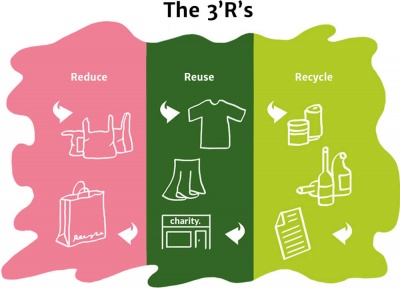
  • REUSE- REDUCE -RECYCLE:
Reduce, Reuse, Recycle - Knowledge Bank - Solar Schools

Use tote bags or bins when shopping, say no to the plastic shopping bag. Select packaging that does not have a lot of excess waste. Use dinnerware that can be washed instead of paper plates and plastic ware. Only buy things that you will use in the immediate future.

Give your discards a chance at a second life by holding a yard sale or donating items to Goodwill, the Salvation Army, Habitat for Humanity, or other charitable outlets.  Contact schools and nursery schools to find out different types of items they reuse for art projects.  Donate used books to the Library.  Several organizations take used cars and even boats. 

India as the elected Non-Permanent member of the UNSC

India has been elected as a non-permanent member of the UN Security Council.

For this two-year term, India is the only endorsed candidate from the Asia Pacific States. The country has won 184 votes out of the 192 ballots cast in the entire elections.

The country’s term as the non-permanent member of the UNSC would commence from January 1, 2021. It of course, isn’t the first time when India has served in this position as the country is all set for its 8th term as the non-permanent member at the Security Council.

The previous eight years for India have been for the terms 1950-1951, 1967-1968, 1972-1973, 1977-1978, 1984-1985, 1991-1992 with the last term being in 2011-2012.

The countries such as Ireland, Norway and Mexico have also won the Security Council elections along with India for the non-permanent membership.

Ministry of External Affairs had launched a brochure during the election campaign which outlined India’s priorities. According to that, the country will be directed by five priorities under the predominant theme of New Orientation for a Reformed Multilateral System (NORMS). These priorities include would include:

Firstly, the new opportunities for progress. As a constructive contributor to the security of the global commons and undoubtedly a rule-abiding democracy, India will work positively with the partners with the aim to bring inclusive and innovative solutions which would foster development. The objective specifically revolves for greater engrossment of women and youth to shape a new paradigm. The idea behind it is to present a platform for a coherent, nimble, pragmatic and effective collaboration to ensure complete sustainability of peace in a generation of rapidly shifting global security landscape.

To an effective response to International terrorism, India had also planned to pursue strong and result-oriented action by the Council which is aimed at addressing the abuse of the Information and Communication Technology by terrorists. It is also aimed at disrupting their nexus with transnational organised criminal entities and their sponsors. Additionally, it will also be halting the flow of terror finance. Thus, strengthening operative and normative frameworks for greater coordination with other multilateral mediums.

Reforming the mentioned multilateral system will also commence. Thereby addressing the widespread concerns of the inadequacy and lack of existing multilateral establishments to deliver outcomes or meet the new challenges.

The reformation of the multilateralism is looked as a must for the post-COVID19 era. The first and the most vital step which is sought at the moment is the reform of the Security Council itself. It looked to amend so that it reflects contemporary realities in order to be more effective.

A comprehensive approach which will also be taken towards the International peace and security as India’s vision for the same is steered by the dialogue and cooperation, mutual respect, and ofcourse its commitment to international law.

However, streamlining the UN peacekeeping is an overdue task. Greater clarity, professionalism, direction must be ensured in the UN Peacekeeping Operations.

Thus, promoting the technology with a human governance stands as a driver of solutions. To this, India mentions to encourage partnerships which will harness the benefits of technological innovations. Ultimately reducing the human suffering, enhancing the ease of living and building resilient communities.

The country looks to pursue these priorities through the Five-S approach plan: Samman (Respect), Sahyog (Cooperation), Samvad (Dialogue), Samriddhi (Prosperity) and Shanti (Peace).

The 19 Important Laws and Rights which every Indian Citizen must be aware of

A Citizen of India has a vast and wide array of rights from right to protection of life, assets to the right to education etc. These rights aid a Citizen of India so that one can lead their life in a dignified manner. A Citizen of India has been provided these rights and laws in various different provisions of the Indian Constitution. I have explained some basic rights and laws which every Indian National must be aware of and have knowledge of it.

1. Motor Vehicle Act 1988, section -185, 202:- At the time of driving if your 100ml blood contains more than 30mg of alcohol then the police can arrest you without a warrant.

2. Criminal Procedure Code, Section 46:- No woman cannot be arrested before 6 A.M. and after 6 P.M.

Lady Police Arrested A Woman Royalty Free Cliparts, Vectors, And ...

3.  Indian Penal Code, 166 A:- A Police officer can’t refuse to lodge an FIR if he/she does so they could be jailed for up to 6 months to 1 year.

Section 166A in The Code Of Criminal Procedure | Police can not ...

4. Indian Sarais Act, 1887:- Even any 5-star hotel can’t prohibit you from drinking potable water and using its washrooms.

Is there any rule in India that we can enter into any hotel for ...

5.  Motor Vehicle Act, 1988:- As per Section 129 of the Indian Motor Vehicle Act, wearing the helmet is a must for two-wheeler riders. Section 128 of this Motor Vehicle Act limits the maximum two riders on the bikes. The law states and provides for that, if the traffic police officer snatches the key from the car or motorcycle, it is illegal and you shall have the full right to launch a Legal proceeding against the officer.

6.  Domestic Violence Act, 2005:- If a young boy and a girl want to live together in a “live-in relationship”, they can do so because it is not illegal. Even the newborn from this relationship is also a legal son or daughter and this newborn have the full right in the assets of his/her father.

7. Police Act, 1861:- A police officer is always on duty whether he/she wearing a uniform or not. If a person makes a complaint to the officer, he/she could not say that he can’t help the victim because he/ she is not on duty.

8. Maternity Benefit Act, 1961:- No company can fire a pregnant woman. It may be punishable by a maximum of 3 years of imprisonment. If the company (Government or private) has more than 10 employees then the pregnant women employee is eligible to get 84 days paid maternity leave.

9. Income Tax Act, 1961:-  In the case of tax violations, the tax collection officer has the power to arrest you but before arresting you, he/she will have to send a notice to you. Only Tax Commissioner decides how long you will stay in the custody.

10.  Hindu Marriage Act, Section -13: As per the Hindu Marriage Act, 1955 (any husband or wife) may apply for divorce in the court on the basis of Adultery (physical relationship outside of marriage), physical and mental abuse, impotency, to leave home without information, to change Hindu religion and adopt other religion, insanity, incurable disease and no information about husband or wife for seven-year.

11. Code of Criminal Procedure, 1973:- Only women police constable can arrest women.  Male constable doesn’t have the right to arrest women. Women have the right to deny going to police stations after the 6 P.M. and before the 6 A.M. In the case of a serious crime only after receipt of the written order from the magistrate, a male policeman can arrest a woman.

12. As per the Citizen Charter (Indian Oil Corporation website):- There are very few people who know that if their gas cylinder blasts during the cooking of food then the gas agency is liable to pay Rs. 50 lakh to the victim as compensation. To claim this compensation consumers need to lodge an FIR to the nearest police station and submit it to the concerned gas agency.

13. Foreign Contribution Regulation Act (FCRA), 2010:- It would surprise you to know that if you take a gift from any company on the occasion of a festival, it falls into the category of bribery. You can also be sentenced to jail for this crime.

14.  Automotive (Amendment) Bill, 2016,:- If you are fined for a crime (like riding without a helmet or any other reason) then you will not be fined for the same reason in the same day.

15. Maximum Retail Price Act, 2014:- Any Shop keeper can’t charge more than the printed price of any commodity but a consumer has the right to bargain for less than the printed price of a commodity.

16. Limitation Act, 1963:-  If your office does not pay you then you have the power to file an FIR against it within 3 years. But if you report after 3 years, you will not get anything for the due.

17.  Section 294 of the Indian Penal Code:- If you are found involved in “obscene activity” at a public place, you can be imprisoned for 3 months. But in the absence of an exact definition of obscene activity police have always misused this act.

18.  Hindu Adoption and Maintenance Act, 1956:- If somebody belongs to the Hindu religion and has a son or grandson then he can’t adopt a second child. There must be a gap of at least 21 years between you (the adopter) and your adopted son.

19.  Delhi Rent Control Act, 1958, Section 14:- If you are living in Delhi then your landlord does not have the right to forcefully vacate your house without giving prior notice to you.

WEBSITES REFERRED

  1. https://www.facebook.com/notes/meripadhai/19-laws-and-rights-must-be-known-to-every-indian/480097059230223/

2.https://www.jagranjosh.com/general-knowledge/19-laws-and-rights-must-be-known-to-every-indian-1486368049-1

3.https://legodesk.com/legopedia/drunk-driving/

4.https://www.123rf.com/photo_64116772_stock-vector-lady-police-arrested-a-woman.html

5.https://www.google.com/searchq=Indian+Penal+Code+166+A&rlz=1C1CHBD_enIN782IN782&sxsrf=ALeKk00PWxtPznaaUVIMZA9GwifqhJZgqA:1595844030365&source=lnms&tbm=isch&sa=X&ved=2ahUKEwje3a-klu3qAhVJxzgGHWACDKgQ_AUoBHoECA4QBg&biw=1366&bih=576#imgrc=_bLrmlGmEdtXVM

6.https://www.quora.com/Is-there-any-rule-in-India-that-we-can-enter-into-any-hotel-for-water

7.https://in.pinterest.com/pin/614037730417601943/

8)https://www.google.com/amp/s/www.indiatimes.com/amp/news/india/women-in-live-in-relationships-are-like-concubines-says-rajasthan-human-right-s-body-asking-for-ban-375078.html

9)https://www.vecteezy.com/vector-art/242672-police-officer-helping

10)https://www.slideshare.net/mobile/meghaiyer1988/the-maternity-benefits-act-1961

11)https://topcornerjob.com/how-to-respond-to-income-tax-notice-online/

12)https://www.legalsalah.com/blog/mutual-divorce-us-13b-hindu-marriage-act1955/

13)https://in.pinterest.com/pin/734509020455350757/

14)https://kashmirobserver.net/2019/11/30/4-killed-3-injured-in-gas-cylinder-explosion-in-ramban/

15)https://www.kindpng.com/imgv/bxTooo_memo-clip-art-hd-png-download/

TOP 9 Small Business & Start-Up Ideas for 2020 (ONLINE FROM HOME)

Today, we’re going to talk about TOP business ideas for 2020. They are not going to be those obvious ideas that you can think of yourself like starting a restaurant or a car wash; we are going to talk about ideas based on recent trends, recent growing markets.

How To Start A Business

A very important rule! If you decide to start your own business, your motivation shouldn’t be because someone said: “It’s going to be a great business!”. Your perfect business idea should consist of the following things: it should be something you like doing and it should be something you are really good at.

1. Coworking Space

Remote workers are spurring on a new revolution for white-collar professionals, as many roles traditionally set in the office space transition to working via the web. Since loneliness is an all-too-common affliction for remote workers and working from a coffee shop isn’t always the quietest choice, the appeal of shared coworking spaces grows each year.

2. Posture Corrector

Nowadays, people constantly hunch over their phones and laptops, it’s no surprise that there’s been a rise in back and neck pain. The keyword “posture corrector” gets about 74,000 monthly searches proving to be a great startup idea for new entrepreneurs.

3. Fitness Tech

Apps related to diet and fitness account for 3.31% of all app on the Apple Store. People are constantly on the move. Making it possible for consumers to fit daily workouts conveniently into their crazy schedules closes another barrier to a healthy lifestyle.

4. Men’s Cosmetics

Men’s cosmetics industry is worth approximately $3.4 billion. One of the most popular niche products targeting men is beard oil, a part of the male grooming industry that makes approximately $6 billion in annual sales. Approximately 39% of American men have beards.

5. Food truck

Food trucks represent all the benefits of a restaurant but without the initial investment of a brick and mortar business space. Only 10-20% of food trucks fail, whereas the failure rate for new restaurants can be as high as 90%.

6. Healthy Fast Food

Think about why people flock to their favorite fast-food chains. The price, speed, and convenience offer consumers a quick way to eat on the go and on a budget. With high demand and low competition, healthy fast food makes a great business idea for 2020.

7. Reusable Bags

As people become more conscious of the waste they produce in their homes, some are starting to use reusable bags to lower the amount of plastic waste. Business ideas centered around preserving the environment can help you build a socially conscious brand.

8. Smart Apparel

With smart apparel’s surging growth rates, this niched industry is looking to net over $4 billion by 2024. This subsector is still so new, making it fresh for innovative ideas from budding entrepreneur techies.

9.Travel Consulting

If traveling is your passion and you are always updated about things like best airplane ticket options and hotel deals, then you fit the bill. You can start by helping your family and friends, securing the best travel deals and selling rewards flights.

Hope these ideas are useful to young budding minds out there looking forward to being Entrepreneurs of tomorrow!

7 Online Business Anyone Can Start (No Scam No Investment)

Earning money has always been associated with and restricted to traditional ‘offline’ route. With the Internet taking over a large part of our lives, more people are looking to ways to earn money online to increase their financial inflows.

Photo by Andrea Piacquadio on Pexels.com

However, you should be careful of the platform that you opt for. While there are numerous ways to earn money online, some of these might be fake, thus taking you for a ride. Also, do not expect to earn a huge amount quickly when using online avenues.

1- TEESPRING

Teespring is a free platform that lets you create and sell over 50 kinds of products with no upfront cost or risk. We handle everything, from printing to shipping to customer service. Teespring is for everyone—from entrepreneurs looking to start their own online business, to Creators wanting to offer awesome merch to their fans, to charities looking for a hassle-free way to raise funds, and everyone in between.

Use Teespring tools like stores, promotion codes, buyer messaging, and more to maximize your sales! We can even list your products within the most powerful global marketplaces like Amazon, eBay, and more through Teespring’s Boosted Network.

How do I make money using Teespring?

You choose the selling price and profit for all of your products. When a product sells you get to keep the profit. For example, the base cost of a t-shirt is $10 and your selling price is $24; when you sell a shirt you will earn $14. Once the orders are processed your profit will be available for withdrawal in the Payouts section of your Teespring account. Don’t forget the more you sell the more profit you can earn per product per month.

2- Merch by Amazon

Basically, if you have 100 t-shirts in your account, you could expect to make about … This is a conservative estimate, about $150 a month. If you have 1,000 t-shirts in your account, you can expect to make maybe $1,500 a month. If you have 8,000 t-shirts in your account, you could expect to make about $12,000 a month.

Merch by Amazon is a very cool startup type program by Amazon. It is a pod program where you can sell tshirts, sweatshirts and hoodies in USA. Anyone can participate as long as you have payoneer. For Indians, there is a 15% tax on earnings. (No wonder taxation is theft as we have to pay tax on those earnings in India as well. But then IRS are a bunch of thieves)

3- REDBUBBLE

The designers earn royalties from the sale of their creations. They receive a percentage of the profit and the rest of the funds account for the fee paid to Redbubble and the manufacture of the merchandise. The site then handles the inventory and shipping transactions on your behalf.

The designers earn royalties from the sale of their creations. They receive a percentage of the profit and the rest of the funds account for the fee paid to Redbubble and the manufacture of the merchandise. The site then handles the inventory and shipping transactions on your behalf

4- UDEMY

One of the best features of selling classes on Udemy is the fact that it can become an excellent source of passive income. Once you create and post a course, it can earn you money for a long time without additional work. It just might take more work to market your course to potential students.

For example if a student purchases your course using an Instructor Coupon code, either from promotions to your own audience (e.g., your email list or YouTube subscribers) you can make 97% revenue share. Alternatively if the course is sold via an Affiliate, the split is 50% affiliate, 25% Instructor and 25% Udemy.

5- AFFILIATED MARKETING

Affiliate marketing is one of the oldest marketing practice which gains affiliates a commission in the case of sale based on the affiliate’s recommendation. It is one of the cheapest and easiest ways of marketing as you don’t need to create and sell a product. Just one thing you need to do is to enable a linked connection between buyer and seller and take your commission when the sale is made.

As you see, affiliate marketing is a passive income source. It is highly competitive it is true but still it may be so easy to make money online with affiliate marketing. To be successful, you need to learn what works and what doesn’t while promoting your products.

There are many affiliate marketing works. So, you need to be patient. You can feed your website with qualified content to get high ranking positions and raise awareness, attend affiliate marketing events, seminars or webinars and join a discussion forum or online communities to meet new people. All make a great contribution to develop you. Naturally after these contributions you will be more passionate to make money from affiliate programs. If you are patient enough you will make money with affiliate programs. 

6- YOUTUBE AFFILIATED MARKETING

You can make money on YouTube by doing affiliate marketing, which is including links to products you review and use in your videos that will track a purchase. If someone makes a purchase using your affiliate link, you receive a small commission for the sale.

Another thing about affiliate marketing is the payout percentages as well as how these people track your viewers who are clicking on these links. Every time someone clicks on one of your special tracking affiliate links, a little cookie is put onto that person’s computer to track what they purchase. The best part about the cookies is that if you link to a specific product, they don’t have to purchase that product. Anything they purchase on that website, you get commissions for. So they could click over with your affiliate link and that cookie and decide not to purchase that, but purchase a whole bunch of other things, and you get paid commission off it.

7- EBATES REFERRALS

You can still make money without a blog! In fact, you can make some major coin with the Rakuten Referral Program simply by inviting friends and family, using your social media networks to the fullest – including Pinterest – and even promoting in neighborhood groups and forums.

Have friends and family share your link. If you are saving for something special, and they feel like they can be a part of it, they will likely glady share the opportunity with their followers.

Of course, using the strategies above won’t hurt either. Pay special attention to numbers 3 through 5 and remember – have fun with it, but own it!

India-Australia Relations

A virtual bilateral summit was held virtually for the first time between the Prime Ministers of India and Australia.

A few of the major outcomes of the Summit was the Elevation of the bilateral Strategic Partnership to Comprehensive Strategic Partnership. The Elevation of the “2+2” engagement to the level of Foreign and Defence Ministers, where strategic discussions will be taking place every two years. India previously has had such mechanisms with USA and Japan.

Memorandum of Understanding (MOU) was established for cooperation in the field of mining and processing of Critical and Strategic minerals. Along with it, the Mutual Logistics Support Agreement was also signed. A Joint declaration on the shared vision for Maritime Cooperation in the Indo- Pacific region was also emphasized upon.

India- Australia Relations is not a ‘today affair’ as the two countries began their alliances during the cold war period back since when Australia was United States’ closest ally, also remembered to when India opted for non-alignment. The end of the Cold War and the launch major economic reforms in 1991 provided the first positive move towards development of closer ties between these two nations.

However, this could not last long as India’s nuclear status outside the nuclear Non-Proliferation Treaty (NPT) resulted in Australia taking a particularly strong stance against India’s 1998 nuclear tests.

 With the changing global scenario in 21st century, Australia looked at India as an important partner in promoting regional security and stability. This led to up progression of their bilateral relationship to a ‘Strategic Partnership’, as well as a Joint Declaration on Security Cooperation in 2009.

Talking of the Economic and commercial relations, the Bilateral goods and services trade between these two nations was about $30.3 billion in 2018-19, and the level of two-way investment was $30.7 billion in 2018.

Australia announced implementation of “An India Economic Strategy to 2035” in 2018. A vision document to shape India- Australia bilateral ties. India is also preparing an Australia Economic Strategy Paper (AES) on these similar outlines.

The two countries have also decided to re-engage meetings on a Comprehensive Economic Cooperation Agreement (CECA). These discussions first started in 2011, and the last time it happened was in 2015.

In the Defence and security cooperation field, there was a Civil Nuclear Cooperation Agreement signed between the two in 2014 which had also enabled India to secure uranium from Australia.

Both of the countries also contracted Mutual Legal Assistance Treaty (MLAT), Extradition Treaty and the Social Security Agreement.

Maritime Security cooperation is seen in the form of joint exercises like AUSINDEX 2019, AUSTRAHIND, Exercise Pitch Black and Kakadu biennial exercise (Hosted by the Australian Navy).

Some concerns that remain in India-Australia relations is the Comprehensive Economic Cooperation Agreement (CECA) which is still unsettled after nine rounds of negotiations. India had also earlier opted out from Regional Comprehensive Economic Partnership (RCEP). Among other things, India and Australia could not reach to agreement on the market access over agriculture and dairy products.

Furthermore, an Australia-India Strategic Research Fund commenced in 2006 for scientists to collaborate on leading-edge research. Agreement on Cyber and Cyber-Enabled Critical Technology was also signed of late to promote cooperation in the extents of digital economy, cyber security, critical and emerging technologies.

The economy of Australia has been quite heavily dependent on China, as China is one of Australia’s largest trading partners and accounts for 26 % of its world trade. Chinese aggressions and assertive foreign policies are common apprehensions between the two nations and certainly has brought both the democracies closer.

Both the countries have also shown similar interests in the vision of an open, free inclusive and rules-based Indo-Pacific region. Australia’s Pacific Step Up and India’s Forum for India-Pacific Islands Cooperation (FIPIC) give reaffirmation of their cooperation in the South Pacific region.

Both also have co-operated in various multilateral fora including QUAD security dialogue, G-20, Indian Ocean Rim Association (IORA), East Asia Summits, ASEAN Regional Forum etc.

The People to People Relations have found a different edge for these countries as the Indian diaspora, estimated at nearly 7 lakhs is the fastest growing in Australia and has become a constructive factor in the bilateral relations. Including that, almost 1 lakh Indian students are enrolled for studying in Australia and the under New Colombo Plan of Australian government, Australian undergraduates have studied and completed numerous internships in India.

Australia Government has also affirmed to help in establishing a world class Sports University in India.