Deliberate practice refers to a special type of practice that is purposeful and systematic. While regular practice might include mindless repetitions, deliberate practice requires focused attention and is conducted with the specific goal of improving performance.
The greatest challenge of deliberate practice is to remain focused. In the beginning, showing up and putting in your reps is the most important thing. But after a while we begin to carelessly overlook small errors and miss daily opportunities for improvement.
This is because the natural tendency of the human brain is to transform repeated behaviors into automatic habits. For example, when you first learned to tie your shoes you had to think carefully about each step of the process. Today, after many repetitions, your brain can perform this sequence automatically. The more we repeat a task the more mindless it becomes.
Mindless activity is the enemy of deliberate practice. The danger of practicing the same thing again and again is that progress becomes assumed. Too often, we assume we are getting better simply because we are gaining experience. In reality, we are merely reinforcing our current habits—not improving them.
Claiming that improvement requires attention and effort sounds logical enough. But what does deliberate practice actually look like in the real world
Deliberate practice always follows the same pattern: break the overall process down into parts, identify your weaknesses, test new strategies for each section, and then integrate your learning into the overall process.
Consider the following example:
Basketball: Consider the following example from Aubrey Daniels, “Player A shoots 200 practice shots, Player B shoots 50. The Player B retrieves his own shots, dribbles leisurely and takes several breaks to talk to friends. Player A has a colleague who retrieves the ball after each attempt. The colleague keeps a record of shots made. If the shot is missed the colleague records whether the miss was short, long, left or right and the shooter reviews the results after every 10 minutes of practice. To characterize their hour of practice as equal would hardly be accurate. Assuming this is typical of their practice routine and they are equally skilled at the start, which would you predict would be the better shooter after only 100 hours of practice?
The Unsung Hero of Deliberate Practice
Perhaps the greatest difference between deliberate practice and simple repetition is this: feedback. Anyone who has mastered the art of deliberate practice has developed methods for receiving continual feedback on their performance.
The Promise of Deliberate Practice
Humans have a remarkable capacity to improve their performance in nearly any area of life if they train in the correct way. This is easier said than done.
Deliberate practice is not a comfortable activity. It requires sustained effort and concentration. The people who master the art of deliberate practice are committed to being lifelong learners—always exploring and experimenting and refining.
Deliberate practice is not a magic pill, but if you can manage to maintain your focus and commitment, then the promise of deliberate practice is quite alluring: to get the most out of what you’ve got.
A thing to remember always is that if you don’t climb the cliff you won’t ever be able to see the view from top up there all you can see would be a view from the ground and the key to climb that tree is only through practise, the longer you persist it the more you would grow in terms of success.
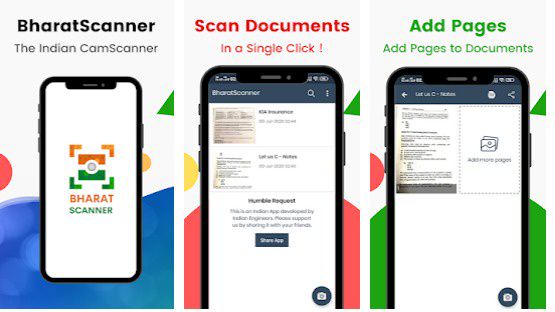
The BharatScanner mobile app, an Indian alternative to cam scanners, has been launched. In this app, users have got the facility from scanning documents to creating PDFs. The special thing is that this app is completely free and users will not have to pay a separate charge to use any feature.
Rating of 4.4 points found on Google Play Store
Bharat Scanner app is available on Google Play Store for users. This app has downloaded more than 10 thousand users so far and it has got a rating of 4.4 points on the Google Play-Store. At the same time, this app size is 36 MB. .
Features of BharatScanner .
Some current features of BharatScanner are as follows: .
Users can scan documents easily.
Filters have been supported in this app.
Users can keep their documents as PDF.
Users have got the facility to share documents in this app on mail and Whatsapp.
Indian government imposes ban on Chinese mobile app .
Under Section 69A of the Information Technology Act, the Government of India decided to block 59 apps as these apps were a threat to India’s sovereignty and integrity, defense of India, security of the state and public order. The government had received many complaints about these apps from various sources, including about the misuse of many mobile apps. These apps were stealing data from both iPhone and Android users.
Ban on these Chinese apps
Tiktok, CamScanner, Shareit, Kwai, UC Browser, Baidu Map, Shein, Clash of Kings, DU Battery Saver, Helo, Likee, YouCam makeup, Mi Community, CM Browers, Virus Cleaner, APUS Browser, ROMWE, Club Factory, Newsdog these 59 apps are banned, including BeutryPlus, WeChat, UC News, QQ Mail.
The US order of July 7 stating that F1 visas will not be renewed for students if they are attending only online- lectures in the US is a concerning mater for India since the highest number of foreign students in the US are from India. The US government has announced those F-1 and M-1 (non-academic and vocational students) visa holders attending only online classes will not be allowed to remain in the US.
India on Thursday said it has reported its concerns to the US govt about the new rule on F1 visa and urged to keep in mind the role education have played in the developing relationship between the two countries.
The concerns were expressed during the virtual foreign office consultations between Foreign Secretary Harsh Vardhan Shringla and US political affairs secretary David Hale on Tuesday. Ministry of External Affairs’ spokesperson Anurag Srivastava said that the US government has looked into the concern regarding the new rule.
During virtual meeting, Srivastava said that India is concerned about the possibility of the return of a large number of Indian students studying in the US due to new rules in visa.
The Immigration and Customs Enforcement (ICE), an agency of the US Department of Homeland Security (DHS) on Monday said that the foreign students pursuing courses in the US must return to their country if their institutes are conducting only online course due to covid-19 pandemic.
“Why is abortion abnormal, but police brutality, hate crime, suicide abetment just the way of life? I choose not to bring a life into this world, that I am not ready to care for. I am protecting my unborn by keeping it away from this patriarchal world.”
Anonymous
What is ABORTION?
Abortion refers to the termination of pregnancy by the removal or expulsion of an embryo or fetus. It is also referred to as termination of pregnancy.
Why is it Important to Have a Safe and Informed Abortion?
Each year 6.4 million fetuses are aborted, 3.4 million of which are unsafely performed using unsanitary methods. Each day, approximately 13 women die as a result and thousands more suffer severe reproductive health issues.
Unsafe Abortions are the 3rd most leading cause of mortality amongst women.
Further, a huge chunk of our population are unaware of the legality of abortions and opt for unsanitary alternatives.
Not every General Practitioner, Gynaecologist, nor Obstetrician is legally allowed to carry out abortions nor prescribe medications.
Safe abortions don’t limit to just the procedure. Abortions have a huge impact on a woman’s body and frequent check-us are vital. Carrying out proper treatment is the only way to avoid other medical conditions.
Reasons for Abortion:
There are multiple reasons why women might want to abort. A few reasons include:
When the parent(s) is financially unprepared
Unplanned/Accidental
Bad/Abusive Partner
Conception by Rape, Incest, or any other sexual assault
Teen/Early Pregnancy
Health Issues
Dependent and/or Unprepared
Addiction
No longer want kids
Delaying Parenthood
Unwilling to be a parent
Not ready to have a kid
Pregnancy interfering with Education, Work, Promotion.
Any other unique reason a woman wants to terminate her pregnancy.
When is a Pregnancy Unsafe?
There are many situations where medical complications harm or might harm the mother and baby. Some situations might end in abortion because of unsafe pregnancies.
It is important to routinely have check-ups, take prenatal vitamins and other prescribed medications, and avoid taking any stress or straining yourself physically.
A few warning signs and complications of unsafe pregnancy:
(NOTE: these warning signs don’t always lead to abortion, but please contact your doctor immediately)
Heavy bleeding and abdominal pain
Severe Nausea
Nausea is common in pregnancy, many women have morning sickness.
Uncontrollable vomiting and not eating and drinking properly can make you dehydrated and harm you and the baby
Significant Decline in Baby’s activity
Contractions early in the 3rd trimester
When your water breaks early
Gestational Diabetes
Macrosomia
The baby is much larger than normal
When the mother’s blood had too much glucose, the pancreas of the fetus converts the extra glucose into fat
Flu-Like symptoms
Amniotic Fluid Complications
Too much or too little amniotic fluid in the sac
Difficulty in breathing
Prenatal diabetes
Ectopic Pregnancy
The development of the fetus outside of the uterus.
Placental Complications
Placental Abruption – detached placenta from the uterine wall
Placental Previa – the condition in which the placenta is attached too close to the cervix.
Preeclampsia or Eclampsia
Pregnancy-induced high blood pressure
Can lead to seizures, coma, and death
Who is Allowed to get an Abortion in India?
Medical Termination of Pregnancy (MTP) Act legalized the termination of pregnancy (still not using the word abortion) with several conditions up to 20 weeks (from the first day of the last menstrual period). The conditions are:
“When continuation of pregnancy is a risk to the life of a pregnant woman or could cause grave injury to her physical or mental health;
When there is substantial risk that the child, if born or dead would be seriously handicapped due to physical or mental abnormalities;
When pregnancy is caused due to rape (presumed to cause grave injury to the mental health of the woman);
When pregnancy is caused due to failure of contraceptives used by a married woman or her husband (presumed to constitute grave injury to mental health of the woman).”
The Indian Abortion Laws are not liberal and do not permit women to terminate a pregnancy because they are not ready or unprepared. More information on the legal details of abortion in India can be found here.
Who is allowed to Perform an Abortion in India?
The MTP Act also specifies who is legally allowed to terminated a pregnancy, a practitioner who
“has a recognized medical qualification under the Indian Medical Council Act,
whose name is entered in the State Medical Register, and
who has experience or training in gynecology and obstetrics.”
Not every Gynaecologist and/or Obstetrician is legally allowed to perform abortions. Be sure to check their license and get a safe and secure abortion if and when needed.
Consent for Abortion?
In India, an adult woman does not need consent from her husband, father nor the father of her unborn child until 20 weeks of gestation. Minors, however, require a legal adult’s consent.
Once the pregnancy crosses 20 weeks, a woman needs special permission from the courts and two other people’s consent to be able to terminate her pregnancy.
To get an abortion, there are a legal-forms one needs to fill and sign. It is important to be aware of what documents you are signing and the terms you are agreeing to.
The Price for abortions is fixed, a first-trimester abortion is approximately, Rs.500-1000 while a second-trimester abortion cost around, Rs.2000-3000.
It is important to know your rights and pay only the correct rate. If a doctor charges more, you are entitled to report them.
Many doctors are known to charge Rs,10,000, and more.
Procedural Blueprint:
Courtesy of Vardaan Hospital, Delhi.
There is a procedure that mot doctors follow. You are entitled to find out the procedure before-hand and report anyone for misbehavior.
There are two methods, oral and surgical.
Oral Method Procedure:
If the pregnancy is less than 6 weeks, a mother can opt for the oral method
Ultrasound – to check for the duration of pregnancy or to see if it is a tubal pregnancy
Medication is prescribed
Blood tests are done
2 doses are given 48hrs apart.
Surgical Method Procedure:
Ultrasounds and Blood tests
Depending on the duration of the pregnancy, medication is prescribed to dilute the uterus.
One of the below
Vacuum Aspiration.
Dilation and Evacuation.
Dilation and Curettage.
Suction evacuation.
Follow Up:
Courtesy of Vardaan Hospital, Delhi.
Oral Method:
Bleeding is common in the 24-48 hours whole taking the dose and lasts for a week
Tissue might retain in some cases which leads to incomplete abortion. Suctional evacuation is important.
Confirmation of a complete abortion is done by another ultrasound.
Surgical Method:
The pain during and after the process varies for each woman.
General:
Maintain a proper diet
Take proper medications on time
Avoid exercising and moving around a lot
Counseling is important to recover
Avoid tampons during the menstrual cycle
No sexual contact for at least a month.
When is Abortion not Safe?
Abortion is unsafe if a woman:
Is more than 70 days pregnant (counted from the first day of the last menstrual period)
Has bleeding problems or is taking blood-thinning medication
Has chronic adrenal failure or is taking certain steroid medications
Cannot attend the medical visits necessary to ensure the abortion is completed
Does not have access to emergency care
Has uncontrolled seizure disorder (for misoprostol)
Has acute inflammatory bowel disease (for misoprostol)
Risks of Abortions:
Abortion has serious effects on a woman’s body. The following are a few risks associated with abortion:
Heavy bleeding
Infections
Incomplete abortions
Damage to the cervix
Scarring of the uterine lining
Perforation of the uterus
Damage to internal organs
Miscarriages in future pregnancies
Death
Eating Disorders
Suicidal thoughts
Guilt
Relationship problems
Depression
Sexual dysfunction
Prone to addiction
When to Call your Doctor?
It is normal to contact your doctor after an abortion with any queries.
These are the signs of complications where calling your doctor is important:
Excessive Bleeding
Bleeding is normal, but excessive bleeding is not.
No bleeding in the first 24 hours.
Signs of infection
Headache
Muscle aches
Dizziness
Fever
Severe abdominal pain
Fever that lasts for more than 4 hours
Vomiting for more than 4-6hours
Sudden belly swelling
Rapid heart rate
Smelly vaginal discharge
Pain, redness, and swelling in the genital area
Any other unexplainable symptoms
After a surgical abortion, follow up with one or more of these medical exams:
Prime Minister of India is the head of the government. He is appointed by the Indian President after the political party wins a general election and nominates a candidate for the post. The leader of that political party is thereafter appointed as the Prime Minister of India.
Jawaharlal Nehru (15 August 1947 – 27 May 1964)
Jawaharlal Nehru referred as the Constructor of Modern India. He was the Longest serving prime minister of India (17 Years) and also he was the first prime minister to died in office.
Gulzarilal Nanda (Acting) (27 May 1964 – 9 June 1964)
Gulzarilal Nanda is the First Acting Prime Minister of India. He was the shortest serving Prime Minister of India.
Lal Bahudur Sastri (9 June 1964 – 11 January 1966)
Lal Bahadur Sastri was PM after sudden death of the Jawaharlal Nehru. He was given the famous slogan Called “Jai Jawan Jai Kisan”. He was the only Prime minister to die in abroad.
Gulzarilal Nanda (Acting) (11 January 1966 – 24 January 1966)
Gulzarilal Nanda is second Acting Prime Minister too of India.
Indira Gandhi (24 January 1966 – 24 March 1977)
Smt Indira Gandhi was the first female Prime Minister of the India. She was famous for her remarkable financial and foreign inclusions like Nationalization of Banks and divide East and West Pakistan in 1971 War.
Morarji Desai (24 March 1977 – 28 July 1979)
Morarji Desai was the Oldest Prime Minister of India. He was also first Prime Minister to resign from Office. He was the only the Prime Minister to celebrate his birthday for every 5 years since his birthday is on 29 February.
Charan Singh (28 July 1979 – 14 January 1980)
He was the first Prime Minister Who did not attend the single session of parliament. He was well known for his remarkable steps towards welfare of the Farmers.
Indira Gandhi (14 January 1980 – 31 October 1984)
Indira Gandhi was the First Prime to get assassinated and First Prime Minister to lost her seat in a General Elections.
Rajiv Gandhi (31 October 1984 – 2 December 1989)
Rajiv Gandhi was the Youngest prime minister of the India. In his reign Anti-Defection was proposed and came into existence.
V.P Singh (2 December 1989 – 10 November 1990)
His full name is Viswanath pratap Singh. He was referred as the pioneer of the Reservation System for Employment and Education system in India.
Chandra Shekhar (10 November 1990 – 21 June 1991)
He was the Second least serving Prime Minister of India after the Charan Singh.
P.V Narasimha Rao (21 June 1991 – 16 May 1996)
P.V Narasimha Rao was referred as the father of Modern Economic Reforms. He was well known for his tax system in India with help of his Cabinet Finance Minister Dr Manmohan Singh. He was the first Prime minister from southern India.
Atal Bihari Vajpayee (16 May 1996 – 1 June 1996)
Atal Bihari Vajpayee was the 14 days Primebecause his government was collapsed the after Jayalalitha Led AIADMK withdrawn its support from coalition.
H.D Deve Gowda (1 June 1996 – 21 April 1997)
Before becoming a Prime minister of India he was the Chief Minister of Karnataka.
I.K Gujral (21 April 1997 – 19 March 1998)
Inder Kumar Gujral was the one of the well educated Prime Ministers of India. He was served as Cabinet Minister for different portfolios like Ministry of Planning, Tele-communications, Minister of Information and Technology.
Atal Bihari Vajpayee (19 March 1998 – 22 May 2004)
This was the Second term for him as the Prime Minister. He was well known for his remarkable achievements in Nuclear Tests.
Manmohan Singh (22 May 2004 – 26 May 2014)
Manmohan singh was the first Sikh PrimeMinister. He was worked as both FinanceMinister, RBI Governor. He was the FinanceMinister one who introduced the Service Taxsystem In India in 1993-94 Budget session.
Narendra Modi (26 May 2014- Till date)
His full name is Narendra Damodar Das Modi. In his reign BJP Could get the full majority both in 2014 and 2019 General Election (Loksabha Elections) to form the Government without help of the other Parties. He was the most influent Prime Minister in India. He known as tough guy who takes tough decisions like demonetization, Gst, etc.
Are you motivated to do something? It’s what we call it but people will call it as influencing. They didn’t betray you, you trusted them. You are easy target for them. It’s you whom you should change. People are easy target for them. It’s us who should make us strong. Beleiving is good, but trusting is not better. They create a impression on your brain that you get attracted to them. It’s not your weakness, it’s their strength. Try to make yourself from such incidents.
Trusting blindly will not happen all of sudden. It’s a slower process where they crate a impact of them on you. People with clarity will definitely fake the people who actually wanted to fake us. So be careful while choosing friends. It’s easy to get influenced because it’s difficult to influence. Believing and betraying is a cycle. People who got betrayed will become the people will betray. it’s a never ending cycle. It ends when people start betraying. It only happens when people stop betraying. Have clarity over such things. There are too smart to catch. They influence you with their magical words which create a direct impact on your brain. Escape from such things.
Have a true life rather than making people suffer. Be kind and gentle atleast to yourself. Anyone no one gonna live permanent. People will betray someone untill people stop betraying. Have guts to earn something by working hard. Believe in your work and have confidence in you. Be happy with what you have rather than wasting your time on something that you never get. Go in a truthful manner and definitely right yhing will happen.
You definitely do what your friend had done because you too wanted to do what he did. It’s good it it’s good but if you do something wrong them that’s completely wrong. You will definitely get influenced by your friends unknowingly. You should have a control over your thoughts on this issue. It becomes serious if you do something that shouldn’t be done.
Better access to clean and pure water, best sanitation services creates tremendous impact in the growth of economic development. Water is linked to many economic activities and there are many complex channels through which water affects the overall economic growth. Some African countries like Kenya, Zambia installed water kiosk (booths for the sale of tap water) in order to improve the water supply and sanitation for poor rural areas, which provided some sort of income to water kiosk vendors and to public toilet caretakers. There are myriads of multinational companies like food companies, irrigation related corporations, for which water has been the main and unavoidable component. The presence of water ranges from small family farms to big companies. Thus it can be said that water plays an important role the socio economic development of a country. If the importance of water is neglected by the people and government, it can eventually collapse the world. Business ranging from small family farms to major corporations encounter multiple problems without water. So it is important to preserve water for the future generation. Here are some of the ways that can be done to conserve water and improve sanitation;
Recycle water
This is one of the effective and basic ways to control the usage of water. There are many plenty of technologies that are available to recycle rainwater and other water. The recycled water can be reused for many other purpose such as irrigation, gardening or in agricultural fields. This method allows us to use less amount of water for many purposes.
Educate the masses
There are still a lot of people who are unaware about the importance of water and the impact it has on our existence. These masses need to be educated about how to use water consciously. Awareness classes and social campaigns can be arranged in order to make people aware about the significance of water.
Improve sewage system
Fresh drinking water comes with a clean sewage system. Water in an area can get easily polluted without proper sanitation. This may lead to many water-borne diseases. Thus improving the sewage system can lead to a hygienic environment and also lead to get fresh drinking water.
Rainwater harvesting
Rainwater harvesting also called harvesting is a method of collecting rainwater from the surface on which the rain falls, filtering it and finally storing it for multiple purposes. One of the main advantages of this method is that, its costs are relatively modest.
It is the common tendency of human beings to get attracted to something new. Man never gets tired of inventing new things, instead always would love to update himself. He is never satisfied with the present possessions he has, but always crave for more. This is what caused the origin of new media. But unlike other inventions, this one hooked man in such a manner that he is now completely immersed into it. The advantages provided by the new media makes people forget about the traditional media. Some of the advantages that social media provides are;
TWO WAY COMMUNICATION
The communication process is said to be completed only when the listener’s feedback is received by the speaker. New media makes this possible. It helps to create, maintain and sustain two way conversation with the public. Unlike, traditional media like television and radio, social media are able to know the viewpoints of the public. Even though, mediums like newspaper and television reach a mass audience, the feedback from the audience is limited.
IMMEDIACY
New media has the unique ability to publish information as soon as they happens. Traditional media, especially newspaper cannot inform every information instantly. Television and radio can have immediacy compared to newspaper. But it cannot be matched with online media. Today, any event happened in any part of the globe can be viewed live by everyone.
MULTI MEDIUM
The incorporation of multimedia elements is another advantage of online media. Unlike radio, magazines and newspapers, this new media comprises of text, images, video, audio, pictographs, charts and symbols. This wide variety of tools help in effective and essential communication.
WIDE REACH
Almost all the traditional media including television, newspaper, radio and magazines share information and messages only under a specific geographical area. The coverage of these media are limited within a particular area. But new media has coverage over worldwide. Once any information or message is uploaded in the online media, it is accessible to everyone in the globe irrespective of their place.
COST EFFECTIVE
The production cost is very expensive in the case of traditional media, especially television. Too many crew members are involved in the making of advertisements and other videos in television. It is very costly to run a newspaper either. Collection of paper, production of newspaper and distribution takes lot of effort and money. Social media/new media is very cost effective compared to these. It doesn’t require any raw materials and manual efforts. Everything is done virtually. Hence, this medium can be considered as cost effective.
SEARCH BASED INFORMATION
People are not interested any every information that surrounds them. Television and newspapers provide every information. It is very hard for the audience to find what he wants to read. He will be bombarded with too many information. But new media gives the option to get a specific area of interest. People can simply search about the information that he/she would like to read. The new media also provides links and hyperlinks which help the audience to know more about that particular content.
It is an irrefutable fact that the media that is used for communication have undergone myriads of changes and its ability in improvement never tends to end. The world has witnessed drastic changes in the development of media over the years. According to these drastic changes, the media can be categorized as traditional and new media. Traditional media also refers to the old media that incorporates linear model of communication. Even though this media is meant for a mass audience, it leaves less chance for interaction and feedback. New media are the ones that try to fix the drawbacks of traditional media.
Digital media, online media, social media are some of the terms that are associated with New media. Basically these are the channels that uses internet to disseminate information and ideas. Digital media comprises of photos, videos, audios, text, graphs, charts, pictographs, animations, and links. Thus it can also be referred as ‘multimedia’. This wide variety of tools help in essential and effective communication. It began to establish when the text were put on to the internet instead of piled on paper as it was previously. Images were also taking its place soon after the text. Thus, the growth of new media happened in a short period of time. Today, it provides everything that a person needs to know. The information is transmitted virtually in these media. It seems magical to realize that the new media needs no physical effort to pass or transmit the information from one place to another. Everything is possible through the virtual world. It also incorporates multidimensional flow of communication. Unlike television or radio, new media not only provides required information but also give the users a chance to respond. New media provides free flow of information where a person is free to express his opinions or ideas. The only thing he/she needs is accessibility to internet. But there is a slight difference between digital and new media when it is observed deeply. Even though all these terms are similar in nature, the definition of new media can be explained in a different way. New media refers to the digital media where any individual has the freedom to access and edit the content. Thus new media can be called as an extension of digital media where any person can act as creator or a part of the content. Wikipedia can be considered as an example for new media. It is a famous website which is edited by common internet users.
New media thus give the opportunity to not just access information digitally but also to actively participate in the content. It allows anyone, irrespective of their levels of education, to be the creator of digital content. Many social media such as youTube, Instagram, Facebook etc. can be considered as new media because they give the power to create content and edit the already existing content. New media do not include television programs, films, or paper based publications until they contain technologies that enable digital interactivity. One of the main benefits of new media is that, it is very much cost effective. Unlike traditional media, it doesn’t require much time and money for the production. Media like television radio and newspaper includes production, distribution, circulation which all are expensive. But in new media everything is done virtually. Another advantage of new media is the immediacy. With the improvement in technologies, people don’t have to wait to access the information he/she requires. It also help the people to find the data easily without any delay. The users can simply type the keywords about the topic that he/she wants to read. Unlike television and radio, the new media provides links and hyperlinks which help the users to know more about that particular content. Thus finding related articles has been way too simple in new media.
It is true that new media has changed the way a person receives the information. In the past decades, television, radio, newspapers were the only media used for receiving content. The number of channels were limited. Sharing information was also considered as a difficult task. Only the people who were experts in the media field were the main source of information. People do not participate in the creation of the programs. But today, the whole concept has been changed. With the arrival of new media, everyone became worthy to create and share information and ideas. People don’t even need to be educated about the topic. They are free to create content and share information on internet whether it is true or not. This freedom has badly affected the credibility of people on new media. Information perceived from new media are less likely to believe by the users compared to the traditional media since there is no control in the flow of communication in new media.
ICSE, ISC Exam 2020 Result: The Council for the Indian School Certificate Examination (CISCE) on Thursday said that ICSE (class 10) and ICS (class 12) exams results will be declared tomorrow at 3 PM, on the official website ‘cisce.org’ and ‘results.cisce.org. All students who have appeared for the exams are advised to keep an eye on the website and check their results.
To check the results once they are out, follow this steps:
step 2-Go on the ‘Careers’ portal on the homepage.
Step 3: Now, click on the relevent exam link.
Step 4: Enter all the details asked including your roll number, click submit
Step 5: You result will now appear on the screen.
Step 6: Download and take a print-out for a future reference.
To get results on SMS, students can send their Unique id to 09248082883 in this format: ‘ICSE/ISC (Unique ID)’.
Earlier in the day, the CISCE board reduced 25 per cent syllabus from this year’s curriculum in view of the coronavirus pandemic.
According to the latest notification issued by the ICSE Board, the decision to reduce the syllabi will be applicable for Class 9 to Class 12 students and has been taken to reduce the burden amid limited teaching via online classes. The CISCE stated that the reduced syllabus aims to cope with the loss of instructional hours due to the difficulties faced in the academia in the lockdown situation.
Organic farming is an alternative agricultural system which originated early in the 20th century in reaction to rapidly changing farming practices. Organic agriculture is a production system that sustains the health of soils, ecosystems and people. It relies on ecological processes, biodiversity and cycles adapted to local conditions, rather than the use of inputs with adverse effects. Organic agriculture combines tradition, innovation and science to benefit the shared environment and promote fair relationships and a good quality of life for all involved. It is defined by the use of fertilizers of organic origin such as compost manure, green manure, and bone meal and places emphasis on techniques such as crop rotation and companion planting. Biological pest control, mixed cropping and the fostering of insect predators are encouraged. Organic standards are designed to allow the use of naturally occurring substances while prohibiting or strictly limiting synthetic substances.
Advantages of organic farming
Reasons for advocation of organic farming include advantages in sustainability, openness, self-sufficiency, autonomy/independence, health, food security, and food safety. Organic methods can increase farm productivity, repair decades of environmental damage and knit small farm families into more sustainable distribution networks leading to improved food security if they organize themselves in production, certification and marketing. During last few years an increasing number of farmers have shown lack of interest in farming and the people who used to cultivate are migrating to other areas. Organic farming is one way to promote either self-sufficiency or food security. Use of massive inputs of chemical fertilizers and toxic pesticides poisons the land and water heavily. The after-effects of this are severe environmental consequences, including loss of topsoil, decrease in soil fertility, surface and ground water contamination and loss of genetic diversity..
How is organic farming different from conventional farming?
While conventional agriculture uses synthetic pesticides and water-soluble synthetically purified fertilizers, organic farmers are restricted by regulations to using natural pesticides and fertilizers. An example of a natural pesticide is pyrethrin, which is found naturally in the Chrysanthemum flower. The principal methods of organic farming include crop rotation, green manures and compost, biological pest control, and mechanical cultivation. These measures use the natural environment to enhance agricultural productivity: legumes are planted to fix nitrogen into the soil, natural insect predators are encouraged, crops are rotated to confuse pests and renew soil, and natural materials such as potassium bicarbonate and mulches are used to control disease and weeds. Genetically modified seeds and animals are excluded.
While organic is fundamentally different from conventional because of the use of carbon based fertilizers compared with highly soluble synthetic based fertilizers and biological pest control instead of synthetic pesticides, organic farming and large-scale conventional farming are not entirely mutually exclusive. Many of the methods developed for organic agriculture have been borrowed by more conventional agriculture. For example, Integrated Pest Management is a multifaceted strategy that uses various organic methods of pest control whenever possible, but in conventional farming could include synthetic pesticides only as a last resort.
Nutrient management in organic farming
In organic farming, it is important to constantly work to build a healthy soil that is rich in organic matter and has all the nutrients that the plants need. Several methods viz. green manuring, addition of manures and biofertilizers etc can be used to build up soil fertility. These organic sources not only add different nutrients to the soil but also help to prevent weeds and increase soil organic matter to feed soil microorganisms. Soil with high organic matter resists soil erosion, holds water better and thus requires less irrigation. Some natural minerals that are needed by the plants to grow and to improve the soil’s consistency can also be added. Soil amendments like lime are added to adjust the soil’s pH balance. However soil amendment and water should contain minimum heavy metals. Most of the organic fertilizers used are recycled by-products from other industries that would otherwise go to waste. Farmers also make compost from animal manures and mushroom compost. Before compost can be applied to the fields, it is heated and aged for at least two months, reaching and maintaining an internal temperature of 130°-140°F to kill unwanted bacteria and weed seeds. A number of organic fertilizers / amendments and bacterial and fungal biofertilizers can be used in organic farming depending upon availability and their suitability to crop.
Limitations of organic farming
Proponents of organic farming have claimed that organic agriculture emphasizes closed nutrient cycles, biodiversity, and effective soil management providing the capacity to mitigate and even reverse the effects of climate change and that organic agriculture can decrease fossil fuel emissions
Nitrogen leaching, nitrous oxide emissions, ammonia emissions, eutrophication potential and acidification potential were higher for organic products. Excess nutrients in lakes, rivers, and groundwater can cause algal blooms, eutrophication, and subsequent dead zones. In addition, nitrates are harmful to aquatic organisms by themselves.
Organic farming requires 84% more land for an equivalent amount of harvest, mainly due to lack of nutrients but sometimes due to weeds, diseases or pests, lower yielding animals and land required for fertility building crops.While organic farming does not necessarily save land for wildlife habitats and forestry in all cases.
The variable nature of food production and handling makes it difficult to generalize results, and there is insufficient evidence to make claims that organic food is safer.
COMPANY COMPLIANCES DURING THE COVID-19 ERA: AN INTRODUCTION
The global outbreak of the novel coronavirus has taken the world by storm. While the issue pertaining to the public health is the talk of the town, the impact of COVID-19 on businesses and corporates seems to be least talked about.
Day to day business of the corporates is being affected due to decreased inflow of the human resource and a decrease in the workflow. While technologies have provided a relief to the human resource for physical attendances and conferences, there seemed to be unsettled trouble regarding legal compliances that required various filings and physical meetings.
Pursuant to the ongoing global COVID-19 pandemic and the Finance Minister, Ms. Nirmala Sitharaman’s announcements on March 24, 2020, the Ministry of Corporate Affairs (“MCA”) has issued various circulars to provide relief to companies from certain compliances under the Companies Act, 2013 (“Act”) and associated rules. This has been done as a measure to reduce the compliance burden on entities during the unprecedented health and economic situation caused by COVID-19. Following are the measures:-
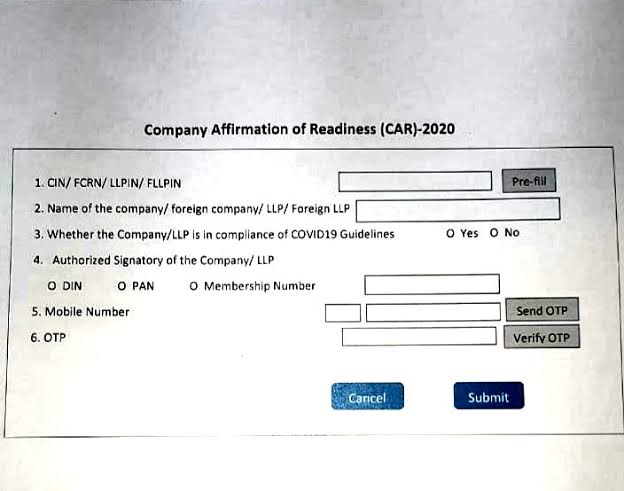
1. Company Affirmation of Readiness towards COVID-19
Social distancing has gained its importance as a way to contain the spread, morbidity, and mortality of COVID-19. Government of India (“GOI”), responsible for the public welfare at large, has realised that social distancing can be achieved in its true sense only if the employers of the Indian public make the same application in their respective premises.
Considering that major employers of the nation belong to the companies or limited liability partnership (“LLP”) type entity, GOI as part of disaster management have advised all companies/LLPs to put in place an immediate plan to implement the “work from home” policy as a temporary measure up till March 31, 2020.
Further, in case of a requirement of physical visits of the essential staff to such offices by the employers, staggered timings may be followed in order to minimize physical interactions of all kinds.
A simple webform for companies/LLP shall be deployed by MCA on March 23, 2020, in order to confirm the readiness of the employers to deal with COVID-19 threat. The webform shall be called CAR (Company Affirmation of Readiness towards COVID-19) and would be required to be signed and submitted by the authorised signatory of the company/LLP.
Therefore, it shall be expected by each company/LLP to ensure reporting of the compliance through CAR instantly from the date of its deployment.
2. Companies Fresh Start Scheme 2020
The MCA issued a circular on March 30, 2020, introducing the Companies Fresh Start Scheme, 2020 which, inter alia, grants a one-time opportunity to defaulting companies to complete all belated filings, including, without limitation, annual filings and filings required under IEPFA (Accounting, Audit, Transfer and Refund) Rules, 2016 in relation to transfer of money remaining unpaid or unclaimed for a period of seven years under Section 124(5) of the Act and transfer of relevant shares in the name of the ‘Investor Education and Protection Fund’ under Section 124(6) of the Act, with the MCA21 registry, without incurring additional fees on account of any delay.
This scheme came into force on April 1, 2020, and is valid till September 30, 2020. The application for seeking immunity for belated filings under this scheme should be made within a period of six months from September 30, 2020, through Form CFSS-2020. Thereafter, an immunity certificate will be provided by the designated authority on the basis of the declarations made in such form.
However, no immunity shall be provided under the scheme in a matter where (i) an appeal or management dispute is pending before any court or tribunal, or (ii) a court has ordered a conviction, or the adjudicating authority under the Act has imposed a penalty, and in respect of such orders, no appeal has been filed prior to the scheme coming into force.
Further, the scheme shall not apply: (i) where an application has been filed or an action for final notice for striking off the name of the company has already been initiated; (ii) where the company has been amalgamated; (iii) when application of obtaining dormant status has been filed; (iv) to vanishing companies; and/or (v) where charge related documents or an increase in authorised capital is involved.
3. CSR Spending
The MCA has by way of circular dated March 23, 2020 and the office memorandum dated March 28, 2020, clarified that the spending of CSR funds by companies in relation to COVID-19, including by way of contribution to the PM CARES Fund, is an eligible CSR expenditure under the Act.
The MCA has further clarified by way of FAQs dated April 10, 2020 that contributions made to the State Disaster Management Authority will also be eligible CSR activity, but contributions towards (a) ‘Chief Minister’s Relief Fund’ or ‘State Relief Fund for COVID-19’; and (b) payment of salary/ wages to employees and workers (including contract labour/ temporary/ casual/ daily wage workers) during the lockdown period will not be considered as eligible CSR expenditure.
However, ex-gratia payment over and above the disbursement of wages to temporary/ casual workers/ daily wage workers, specifically for the purpose of fighting COVID-19, will be admissible towards CSR expenditure, provided there is an explicit declaration to that effect by the board of the company, which is duly certified by the statutory auditor.
4. Meetings of Board and the Shareholders
The Companies (Meetings of Board and its Powers) Rules, 2014 were amended by a notification dated March 19, 2020, to enable companies to hold board meetings on the following matters (which earlier had to be necessarily held at a physical meeting) through video-conferencing or other audio-visual means (collectively “VCC”) till June 30, 2020: (i) approval of annual financial statements and board’s report; (ii) approval of prospectus; (iii) audit committee meetings for consideration of financial statements; and (iv) approval of amalgamation, merger, demerger, acquisition and takeover.
MCA has, by way of a general circular dated April 8, 2020, requested companies to pass all decisions of an urgent nature requiring shareholder approval, other than those of ordinary business or business where any person has right to be heard, through postal ballot/ e-voting in accordance with the relevant statutory provisions without holding a physical general meeting. However, in cases where holding an extraordinary general meeting (“EEGM”) is unavoidable, these have now been permitted to be held through VC until June 30, 2020. The circular further lays down certain conditions to be met for conducting an EGM through VC and the key conditions, inter alia, include: (i) attendance of at least one independent director (where a company is required to appoint one) and auditor (or his authorised representative who is qualified to be the auditor); (ii) maintenance of recorded transcripts of the EGM and, in case of a public company, such transcripts to be uploaded on the company website (if any); and (iii) e-voting facility being available. All other provisions relating to general meetings under the Act (and relevant rules) will continue to apply.
Due to difficulties faced by various stakeholders in serving and receiving notices/responses by post on account of COVID-19, the MCA, on April 13, 2020, provided that notice of EGMs to be held through VC (and for passing shareholder resolutions through postal ballot/ e-voting) may now be given to shareholders only through email addresses of the shareholders registered with the company or with the depository participant/ depository. This circular also specifies various conditions which companies must comply with while sending email notices to shareholders.
CONCLUSION
Business entities in India are requested and expected to keep an eye on the major government websites to ensure timely compliance with all such immediate requirements and mandates issued by GOI as need of the hour from time to time.
WEBSITES REFERRED:-
1) MCA General Circular No. 10/20 dated March 23, 2020 on Clarification on spending of CSR for COVID-19.
2) MCA General Circular No. 12/20 dated March 30, 2020 on Companies Fresh Start Scheme, 2020
3) MCA Notification dated March 19, 2020 on Companies (Meetings of Board and its Powers) Amendment Rules, 2020
4) MCA General Circular No. 14/2020 dated April 8, 2020 on Clarification on passing of ordinary or special resolutions by companies under the Companies Act, 2013 and rules made thereunder on account of threat posed by Covid-19.
5) MCA General Circular No. 17/20 dated April 13, 2020 on clarification on passing ordinary and special resolutions by companies under the Companies Act, 2013 and rules made thereunder on account of threat posed by COVID-19.
2020 has been driving at the highest paces as every person in the country is finding themselves locked more often than not. Amidst all the negativity, India has specifically positive things to look forward as it celebrates the 100th-year anniversary of the Malabar uprising next year i.e in the year 2021.
The Rebellion is not much talked about except locally. The Malabar rebellion, is also commonly known as the Moplah rebellion. This rebellion by the Mappila Muslims of Kerala was one of a kind as it was an armed revolt staged against their Hindu landlords and the British authorities in 1921. The duration of the revolt says a lot of their efforts and neglect as India pauses to salute the six-month long movement. Despite being one of the first cases of nationalist uprisings in Southern India, it was actually occurred within the broader spectrum of the Non-cooperation movement led by Mahatma Gandhi, which is also popularly called as the Khilafat movement.
Moplahs or the so called Mappilas were of two known cultures. One being the Muslim tenants also called as Kanamdars and the other were the cultivators, locally called as Verumpattamdars. These two cultures resided in the Malabar region, a place where most of the landlords were upper caste Hindus. The majority having a say is particularly evident today as well as which gives us the idea on how the dominance could have been unprecedented then and totally shrilling. The Moplahs however, had gained some prominence when Hyder Ali and Tipu Sultan invaded Mysore. But the domination of the Hindu landlords was re-established soon following the 3rd Anglo-Mysore war, also around time after British occupation of Malabar in 1792. And in no time, the Mappilas found themselves at the mercy and under the shackles of their Hindu landlords who ultimately served as British agents and were sustained by them.
The history of feudal conflicts in the Malabar region was nothing but the years of pressured ostracizing as it particularly stands as one of the causes of the revolt. The tenant-landlord relations were historically strained. A total 32 uprisings between 1836 and 1919 were evidently organized by the Moplahs against their high caste Hindu landlords, the relatives of the landlords and also against the assistants of British officials.
The economic condition of Mappila tenants had deteriorated overtime which brought in Agrarian discontent among them. It was caused by the oppressions on them by the draconian British policies which had increased taxation, unsecured their tenancy, racked the renting, forced numerous evictions etc. This had also given rise to anti-feudal and anti-British sentiments among the Moplahs.
The Congress, specifically Gandhi, had tried to reached out to the Mappila cultivators to mobilize support and encourage them for independence through the non-cooperation movement. This led to the formation of Khilafat in Malabar in June 1920, which with time became increasingly active. Consequently, in August 1920, Gandhi along with Shaukat Ali, the leader of the Khilafat movement in India, visited Calicut with an aim to spread the idea of Khilafat and message of non-cooperation among the residents of Malabar. By January of 1921, the Mappilas under the shed of Mahadum Tanga, their religious head, had pledged to support the proposed movement.
But it was only under the leadership of Variyamkunnath Kunjahammed Haji that the Mappilas took up arms in August 1921 after the arrest of their Khilafat leader Ali Musaliyar. The immediate cause was led by a widespread rumour that the prominent mosque in Thirurangadi was raided.
The course of the rebellion largely took the shape of guerrilla-type attacks on the police, troops and janmis. The symbols of the colonial state including the stations, telegraph lines, courts, offices etc. alongwith the houses of the landlords were attacked.
The rebellion spread across the Malabar district so much that the British officers and the local police officers had to escape leaving the huge territory under the control of the rebels.
The territory was then declared an ‘independent state’ under the ruling of Haji in August 1921. The territory headquartered in Nilambur and also had its own separate currency, system of taxation and passport for nearly six months. The Khilafat regime was run parallelly along with the state affairs. The local tenants were granted the power over their lands in which they cultivated and grew along with tax incentives.
Although the movement started off explicitly as a protest against British authorities, it had acquired the sights of communal implications that later culminated into communal violence. The independency did not last long as the British suppressions of the revolt led to the British government responding largely to the movement with much more aggression. They returned to bring in Gurkha regiment with the aim to suppress it. They succeeded and had imposed martial law.
Approximately 60 Mappila residents were sent on their way to a prison and suffocated to death in a closed railway goods wagon from which the movement is also referred to have given birth to the ‘Wagon Tragedy’. By January 1922, the British had taken back all the areas which were held by the rebels by capturing all the key Mappilan leaders. In this process, Haji was also arrested to be sentenced to death.
The ending in this particular rebellion is not celebratory but the struggles of the ancestors have certainly been. The courage, the revolts and the first uprisings which eventually led to India’s Independency is undoubtedly the kind of happy forward motivation the residents need as we are fighting the small little struggles of our own against as deadly a pandemic as Covid-19. So, with open arms, the 100th year of Malabar Rebellion is all welcome!
“No woman can call herself free until she can choose consciously whether she will or will not be a mother.”
Margaret Sanger
What is ABORTION?
Abortion refers to the termination of pregnancy by the removal or expulsion of an embryo or fetus. It is also referred to as termination of pregnancy.
What is PRO-CHOICE?
Pro-Choice refers to the argument that the mother has the choice to decide to either carry-out the pregnancy or terminate the fetus. A woman alone has the right to her body and no one holds the authority to decide on her behalf. The choice is about who gets to make the decision, WOMEN do.
What is PRO-LIFE?
Pro-Life is the argument that a fetus, no matter how small, is entitled to basic Human Right to life. From the moment a pregnancy is conceived, a fetus is considered a human.
What is PRO-ABORTION?
Pro-Abortion refers to the possibility for a woman to get an abortion, just to delay parenthood or because she doesn’t want a baby. Pro-abortion is vital for a mother and child’s health. Pro-Abortion is different than Pro-Choice, in the sense that Pro-Life is for when a woman who contemplates whether or not to terminate the pregnancy, but Pro-Abortion is for women who know for sure they want to terminate the pregnancy.
India’s Abortion Laws History:
Until 1971, Abortion was a criminal offence under Section 312 of the Indian Penal Code, 1860. The IPC didn’t (still doesn’t) include the word abortion, and instead referring to it as “intentionally causing miscarriage.” This had to be as a result of centuries of patriarchy. Except for in cases where abortions were carried out to save the mother’s life, it was a crime. Women have been denied basic rights including freedom of speech, education, and freedom to choose anything for themselves. Denying women reproductive rights is one more pillar of patriarchy.
In 1960, 15 countries legalized abortion, and as a result, debates around the abortion laws started in India. In 1964, the Ministry of Health and Family Welfare (MoHFW) and the Government of India set up a committee led by Shantilal Shah to make a better decision. The committee carried out an extensive review of the socio-cultural, legal, and medical aspects of abortion and found that 6.5 million abortions took place each year, most unsafe and unsanitary.
In 1971, the Medical Termination of Pregnancy (MTP) Act legalized the termination of pregnancy (still not using the word abortion) with several conditions up to 20 weeks (from the first day of the last menstrual period). The conditions are:
“When continuation of pregnancy is a risk to the life of a pregnant woman or could cause grave injury to her physical or mental health;
When there is substantial risk that the child, if born or dead would be seriously handicapped due to physical or mental abnormalities;
When pregnancy is caused due to rape (presumed to cause grave injury to the mental health of the woman);
When pregnancy is caused due to failure of contraceptives used by a married woman or her husband (presumed to constitute grave injury to mental health of the woman).”
The MTP Act specifies who can terminate a pregnancy, till when a pregnancy can be terminated, where a pregnancy can be terminated.
The MTP Act also specifies who is legally allowed to terminated a pregnancy, a practitioner who, “has a recognized medical qualification under the Indian Medical Council Act, whose name is entered in the State Medical Register, and who has experience or training in gynaecology and obstetrics.”
India’s Abortion Laws:
Abortion in India is only legal when performed on various grounds until 20 weeks of pregnancy. In exceptional cases (rape, incest, medical emergency), any Indian court may allow the termination after 20 weeks.
While India’s abortion laws seem liberal, they are far from it. India’s abortion laws, although legal, are neither pro-choice, pro-life nor pro-abortion.
The MTP Act doesn’t allow women to terminate their pregnancy to delay parenthood or because they don’t want to be a mother. Unless a woman’s life is at substantial risk or if her pregnancy is causing her physical, emotional, and psychological distress, she isn’t allowed to abort.
Instances Where the Indian Abortion Laws have been Problematic
Savita Sachin vs Union of India
Indian court rejected the request to terminate a 27-week pregnancy on the base that there was no physical harm to the mother
The fetus, however, had several physical anomalies.
Alakh Alok Srivastava vs Union of India
A 10-year-old rape victim was denied permission to abort her 32-week pregnancy
The court felt responsible for the fetus’s life.
May 2017
Patna High Court denied an abortion for a 26-week pregnant, HIV-positive rape victim because the court felt responsible to keep the child alive.
Why do Women decide to ABORT?
There are multiple reasons why women might want to abort. A few reasons include:
When the parent(s) is financially unprepared
Unplanned/Accidental
Bad/Abusive Partner
Conception by Rape, Incest, or any other sexual assault
Teen/Early Pregnancy
Health Issues
Dependent and/or Unprepared
Addiction
No longer want kids
Delaying Parenthood
Unwilling to be a parent
Not ready to have a kid
Pregnancy interfering with Education, Work, Promotion.
Any other unique reason a woman wants to terminate her pregnancy.
Why is this discussion important?
Each year millions of women, terminate their pregnancies. 56% of whom have unsafe abortions, resulting in death and other serious physical, reproductive, and psychological problems.
Most of India’s rural population is unaware of the legality of abortions and even more, have to travel 20-30kms to get an abortion. Those who know, are unaware of the legalities and terms attached.
Furthermore, a woman is the one carrying a child and has many medical implications during pregnancy and after childbirth. Apart from the physical strain on the body, many women go through postpartum depression. She holds the sole right to choose to either carry or terminate her pregnancy. Unfortunately, many countries, including India do not give that right to women.
Until a woman has the right to make that decision herself, women will never be truly free from this Patriarchal prison.
Further, a fetus is considered human by many pro-life activists. What they fail to understand is a fetus comes into this world and becomes a child. If an unwilling mother births a child and neglects them, then a child is traumatized for years to come. Millions of children are orphans and in the foster system. A mother’s responsibility doesn’t end at childbirth. It carries on for the rest of the child’s life. If a person unwilling to take on that kind of responsibility, it is better to terminate that pregnancy than to birth a kid who’d have to suffer later in life.
The world population is also another factor in support of Pro-Choice and Pro-Abortion. Willing Partners (who don’t want kids) can adopt kids and provide them a loving and safe environment.
How does Pro-Choice vs Pro-Life affect others?
Abortion was introduced first by the Roman Law, performed only on the biological father’s consideration. For centuries, women who had an abortion without consent from their partners were exiled or sentenced to death.
Many Asian and Middle-Eastern countries still permit abortion only after consent from the biological father. A mother who aborts without consent can be sued by the father, but a father who gets the mother to abort the fetus without the mother’s consent cannot take any legal action. The double standard that exists even in the 21st Century is outrageous.
Abortion is a serious and important decision. While it is the woman who carries the child, the partner has a right to the baby as well. Both partners need to discuss because abortion affects men as well.
Fathers do not hold any rights over their unborn child. It is a hard fact that most times when a mother doesn’t want to carry out a pregnancy, the father might want. A child, however, still, in this day and age is more a mother’s responsibility. The father provides and the mother cares for the child and house. Despite the ongoing patriarchy, many women are standing strong with full-blown careers and don’t want to settle down with a kid.
Men with kids have a career advantage, they are paid more and are considered trustworthy. Women with children are considered a liability and are affected by the Motherhood Penalty.
While it is true that men too are humans and form an attachment with their unborn children, the repercussions of childbirth are more severe on women than men.
Armin Bortt said, “A woman can legally deprive a man of his right to become a parent or force him to become one against his will.” While Armin Brott is right, he forgets that this works both ways. A man too legally deprives a woman of her right to become a parent or forces her to become one against her will. Parenthood should include two consenting parents who want a child.
It’s been almost close to 5 months with already half the year gone by. We are still on the road to recovery with hike in corona positive cases almost on a daily basis. With some states of the country extending the lockdowns and others taking drastic measures to control the spread of the virus. Still somehow we are falling back and missing out on something. With a scare that community transmission of the virus has started in India and the WHO confirming that the deadly virus can also be airborne and transit through air, it’s quite a terrible situation.
There is a lot of ‘what ifs’ and assumptions that people have conceived through various means which is not exactly true. I would like to burst some myths of this fatal virus in this article in order to educate people on the actual facts. This will benefit many by and large I hope.
So here are some facts about the corona virus that the World Health Organisation has stated.
FACT: People should NOT wear masks while exercising
People should NOT wear masks when exercising, as masks may reduce the ability to breathe comfortably.
Sweat can make the mask become wet more quickly which makes it difficult to breathe and promotes the growth of microorganisms. The important preventive measure during exercise is to maintain physical distance of at least one meter from others.
FACT: The likelihood of shoes spreading COVID-19 is very low
The likelihood of COVID-19 being spread on shoes and infecting individuals is very low. As a precautionary measure, particularly in homes where infants and small children crawl or play on floors, consider leaving your shoes at the entrance of your home. This will help prevent contact with dirt or any waste that could be carried on the soles of shoes.
FACT: The coronavirus disease (COVID-19) is caused by a virus, NOT by bacteria
The virus that causes COVID-19 is in a family of viruses called Coronaviridae. Antibiotics do not work against viruses.
Some people who become ill with COVID-19 can also develop a bacterial infection as a complication. In this case, antibiotics may be recommended by a health care provider.
There is currently no licensed medication to cure COVID-19. If you have symptoms, call your health care provider or COVID-19 hotline for assistance.
FACT: The prolonged use of medical masks* when properly worn, DOES NOT cause CO2 intoxication nor oxygen deficiency
The prolonged use of medical masks can be uncomfortable. However, it does not lead to CO2 intoxication or oxygen deficiency. While wearing a medical mask, make sure it fits properly and that it is tight enough to allow you to breathe normally. Do not re-use a disposable mask and always change it as soon as it gets damp.
* Medical masks (also known as surgical masks) are flat or pleated; they are affixed to the head with straps or have ear loops.
FACT: Most people who get COVID-19 recover from it
Most people who get COVID-19 have mild or moderate symptoms and can recover thanks to supportive care. If you have a cough, fever and difficulty breathing seeks medical care early – call your health facility by telephone first. If you have fever and live in an area with malaria or dengue seek medical care immediately.
FACT: Drinking alcohol does not protect you against COVID-19 and can be dangerous
The harmful use of alcohol increases your risk of health problems.
FACT:Thermal scanners CANNOT detect COVID-19
Thermal scanners are effective in detecting people who have a fever (i.e. have a higher than normal body temperature). They cannot detect people who are infected with COVID-19. There are many causes of fever. Call your healthcare provider if you need assistance or seek immediate medical care if you have fever and live in an area with malaria or dengue.
FACT: There are currently no drugs licensed for the treatment or prevention of COVID-19
While several drug trials are ongoing, there is currently no proof that hydroxychloroquine or any other drug can cure or prevent COVID-19. The misuse of hydroxychloroquine can cause serious side effects and illness and even lead to death. WHO is coordinating efforts to develop and evaluate medicines to treat COVID-19.
FACT: Adding pepper to your soup or other meals DOES NOT prevent or cure COVID-19
Hot peppers in your food, though very tasty, cannot prevent or cure COVID-19. The best way to protect yourself against the new coronavirus is to keep at least 1 metre away from others and to wash your hands frequently and thoroughly. It is also beneficial for your general health to maintain a balanced diet, stay well hydrated, exercise regularly and sleep well.
FACT: COVID-19 is NOT transmitted through houseflies
To date, there is no evidence or information to suggest that the COVID-19 virus transmitted through houseflies. The virus that cause COVID-19 spreads primarily through droplets generated when an infected person coughs sneezes or speaks. You can also become infected by touching a contaminated surface and then touching your eyes, nose or mouth before washing your hands. To protect yourself, keep at least 1-metre distance from others and disinfect frequently-touched surfaces. Clean your hands thoroughly and often and avoid touching your eyes, mouth and nose.
FACT: Being able to hold your breath for 10 seconds or more without coughing or feeling discomfort DOES NOT mean you are free from COVID-19
The most common symptoms of COVID-19 are dry cough, tiredness and fever. Some people may develop more severe forms of the disease, such as pneumonia. The best way to confirm if you have the virus producing COVID-19 disease is with a laboratory test. You cannot confirm it with this breathing exercise, which can even be dangerous.
These are a few important facts. Please check the validity of any news you come across on any platform. Make sure you follow only authoritative source. And please do not panic. Stay safe!









 Eduindex
.png?sfvrsn=afa995ff_2)
.png?sfvrsn=86f79761_2)
You must be logged in to post a comment.