How to travel the world for free

Whenever I ask readers what the number one thing holding them back from traveling is I almost always get the same answer: Money.

Travelling the world with no money sounds like an impossible dream. But it is possible, and you can do it responsibly without breaking the bank. It should be said that there are some expenses you shouldn’t compromise on (like travel insurance) but there are tons of ways you can travel the world on a budget — including plenty of ways you can travel for free.

Travelling for free entails taking advantage of free accommodation, transportation, and activities that are already out there, thereby reducing your cost to zero. Here, you sacrifice comfort and convenience to extend your travels as long as possible.

And yeah don’t even worry about your food budget the restaurant often has eating challenges just take an insane challenge and fill your paunch

Hope you liked it

One thousand ways to make $ 1000

HOW TO START YOUR OWN BUSINESS

W
HEN Gustavus Swift, a youngster in knee breeches, dressed and sold his first
calf to the fisherfolk of Cape Cod, he laid the foundation of the largest meatpacking business in the world. The desire to make money—to have a business of
his own—was a driving force in the make-up of young Swift. In Barnstable, he
was known as a chap with a lot of “get up and go” to him. So it was not
surprising that when he felt the desire to make money, he didn’t waste his time
wishing, but took his courage in his two hands and started in the dressed beef
business in his dad’s backyard.

No doubt there were other young men in Barnstable who wanted to make money
too. But while they were wondering how they could make it, Gus Swift cut the
Gordian knot. It meant work for him. It was not a pleasant way to make money.
There was the possibility of his not being able to sell his calf after he had dressed
it. He had to walk miles in order to market his veal, for Cape Cod in those days
was a “spread out” sort of place.

But Swift didn’t care.

He wanted money

The work, the walking and the adventure were fun. And because he regarded
making money as fun instead of work, he later was able to come to Chicago and
start the great Swift packing business. How different from the average young
men of today! They are usually more interested in having a good time than they
are establishing themselves in a business of their own. Being in business is so
confining! So they concentrate on enjoying themselves, serene in their
philosophy that tomorrow is another day. If these people, and they are not all
young people either, worked half as hard at making money as they do at having a
good time, they would be rich.

Then there are people who are willing to work and do work hard at making
money, but they are not successful because they lack a target. They are like the
chap who hunts big game with a shotgun. They do a lot of shooting, but they bag
very little game. Next to being willing to pay the price of success in hard work,
the most important thing is to have a definite, clear-cut objective. Since it is
necessary to crawl before you walk, it is suggested that you make that objective
$1,000.

What you about this story of hard work and dedication

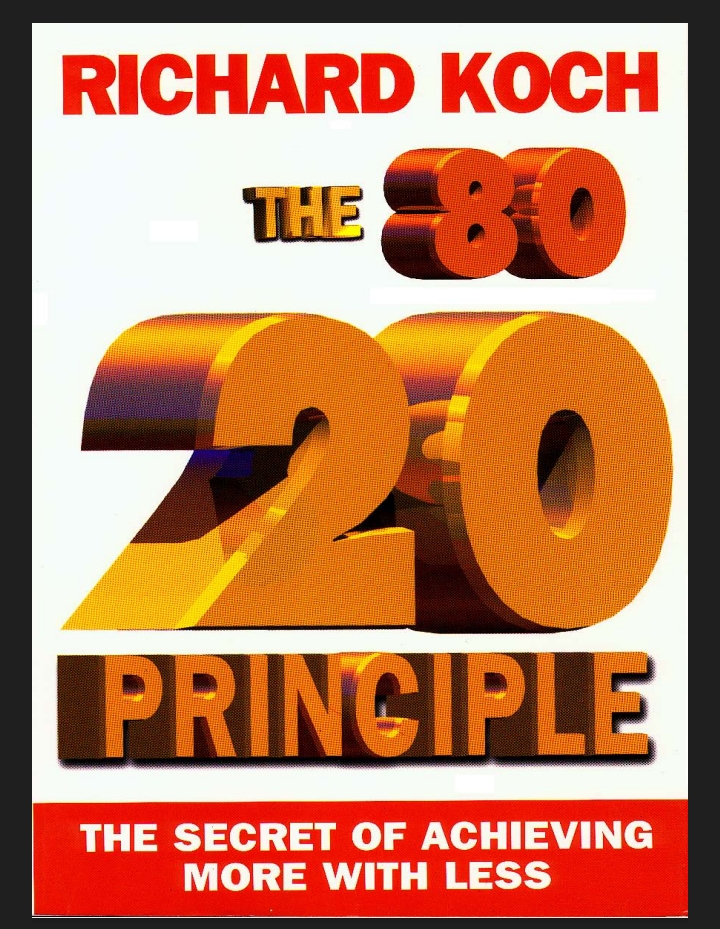
The remarkable and incredible 80/20 principal

In business, many examples of the 80/20 Principle have been validated.
20 per cent of products usually account for about 80 per cent of dollar sales
value; so do 20 per cent of customers. 20 per cent of products or customers
usually also account for about 80 per cent of an organization’s profits.

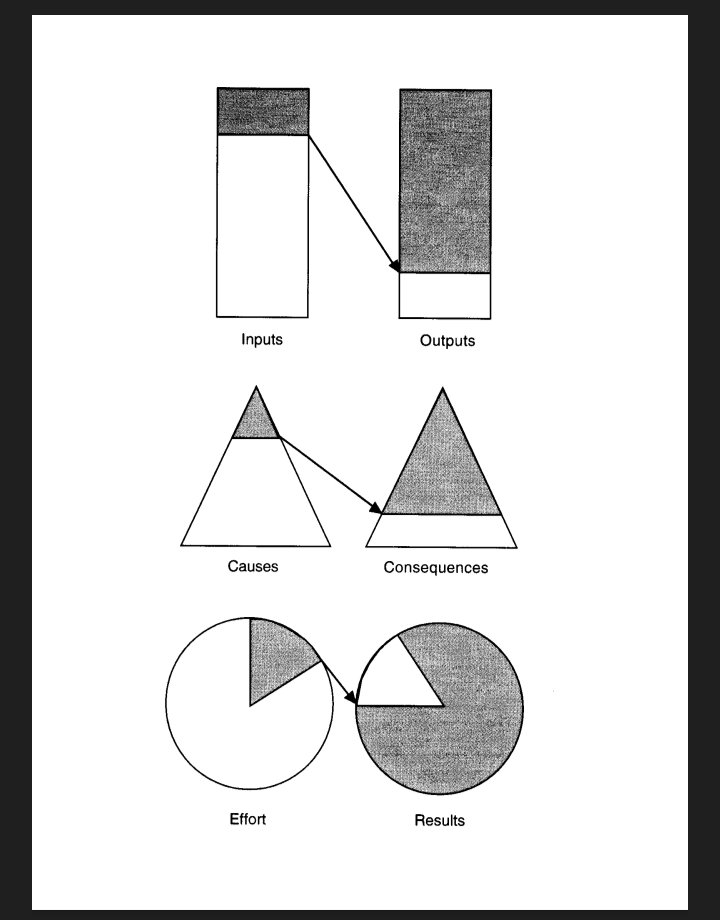
The 80/20 Principle asserts that a minority of causes, inputs or effort usually
lead to a majority of the results, outputs or rewards. Taken literally, this
means that, for example, 80 per cent of what you achieve in your job comes
from 20 per cent of the time spent. Thus for all practical purposes, four-
fifths of the effort—a dominant part of it—is largely irrelevant. This is
contrary to what people normally expect. So the 80/20 Principle states that
there is an inbuilt imbalance between causes and results, inputs and outputs,
and effort and reward.

The pattern underlying the 80/20 Principle was discovered in 1897, exactly
100 years ago, by Italian economist Vilfredo Pareto (1848–1923). His
discovery has since been called many names, including the Pareto Principle,
the Pareto Law, the 80/20 Rule, the Principle of Least Effort and the
Principle of Imbalance; throughout this book we will call it the 80/20
Principle.

By a subterranean process of influence on many important
achievers, especially business people, computer enthusiasts and quality
engineers, the 80/20 Principle has helped to shape the modern world. Yet it
has remained one of the great secrets of our time—and even the select band
of cognoscenti who know and use the 80/20 Principle only exploit a tiny
proportion of its power.

So what did Vilfredo Pareto discover? He happened to be looking at
patterns of wealth and income in nineteenth-century England. He found that
most income and wealth went to a minority of the people in his samples.
Perhaps there was nothing very surprising in this. But he also discovered
two other facts that he thought highly significant. One was that there was a
consistent mathematical relationship between the proportion of people (as a
percentage of the total relevant population) and the amount of income or
wealth that this group enjoyed.4 To simplify, if 20 per cent of the population
enjoyed 80 per cent of the wealth,5 then you could reliably predict that 10
per cent would have, say, 65 per cent of the wealth, and 5 per cent would
have 50 per cent. The key point is not the percentages, but the fact that the
distribution of wealth across the population was predictably unbalanced.

What do you about this principle

What beauty means to you

  • Beauty is power; a smile is its sword. …
  • Life is full of beauty. …
  • There is no definition of beauty, but when you can see someone’s spirit coming through, something unexplainable, that’s beautiful to me. …
  • Let us live for the beauty of our own reality.

One difficulty for understanding beauty is due to the fact that it has both objective and subjective aspects: it is seen as a property of things but also as depending on the emotional response of observers. Because of its subjective side, beauty is said to be “in the eye of the beholder”.

It has been argued that the ability on the side of the subject needed to perceive and judge beauty, sometimes referred to as the “sense of taste”, can be trained and that the verdicts of experts coincide in the long run.

This would suggest that the standards of validity of judgments of beauty are intersubjective, i.e. dependent on a group of judges, rather than fully subjective or fully objective.

Conceptions of beauty aim to capture what is essential to all beautiful things. Classical conceptions define beauty in terms of the relation between the beautiful object as a whole and its parts: the parts should stand in the right proportion to each other and thus compose an integrated harmonious whole. Hedonist conceptions see a necessary connection between pleasure and beauty, e.g. that for an object to be beautiful is for it to cause disinterested pleasure. Other conceptions include defining beautiful objects in terms of their value, of a loving attitude towards them or of their function.

What comes to your mind when you think of beauty?

Comment below 😇

Father of western philosophy- Socrates

Socrates is one of the most prominent philosophical figures in the history of western philosophy. He laid the bricks for the very same idea on which philosophers like Plato and Aristotle built upon in the coming years.

Firstly let’s dissect the term “philosophy”, it comes from the Greek word philo- meaning love and sophia- meaning wisdom, i.e., the love for wisdom. 

Socrates’s lifestyle

Socrates followed his love for wisdom/knowledge for as long as he lived, he pursued knowledge in it’s absolute true sense, he thought that pursuing knowledge was the ultimate purpose of life and Socrates didn’t just think that he lived by these words, his actions reflected his ideas in the purest form. But he was born in 469 BC in Athens during a time when court trials were on the basis of the intensity of the arguments made and not facts, so no points for guessing that Socrates’s ideas were not received well by the Athenian population. 

And you can’t really blame them, that was a long long time ago, a time when women were thought to be inferior than men, it was a time when slavery was normal. On the other hand socrates did not do a very good job at dealing with people either, he was not the most hygienic person of that time, he did not shower for days and would go around the city asking random people questions and if that wasn’t enough he would tell them they were wrong. This is what Socrates loved to do, question and not because he knew more than an average Athenian citizen or that he wanted to massage his own ego; on the contrary Socrates admitted that he knew nothing. There is a very well known quote by Socrates that goes “One thing only I know, and that is that I know nothing”, that is why he went around Athens asking everybody questions hoping to one day find some answers, spoiler alert he didn’t. The Athenian population wasn’t very fond of him, and found him to be annoying.

Socrates- the martyr

And just to make it more clear, he annoyed the people so much that they united together and eventually he was put on trial. At this point you might think that Socrates would have given up on his unapologetic attitude but he didn’t. He stood by his principles even though he knew it would lead to his death. Socrates was a smart person, he could have very easily won that trial by making a strong argument but if he did then all his ideas and all his actions would have been in vain. In that trial, Socrates said that the people of Athens should be thanking him for asking them questions and showering upon them his own wisdom, this did not sit well with the jury and about many more dialogues later the jury declared Socrates guilty and was later sentenced to death by drinking poison.

Socrates died a martyr, a martyr for philosophy, he died defending his ideas. Socrates might have died but he made sure to immortalize his ideas.

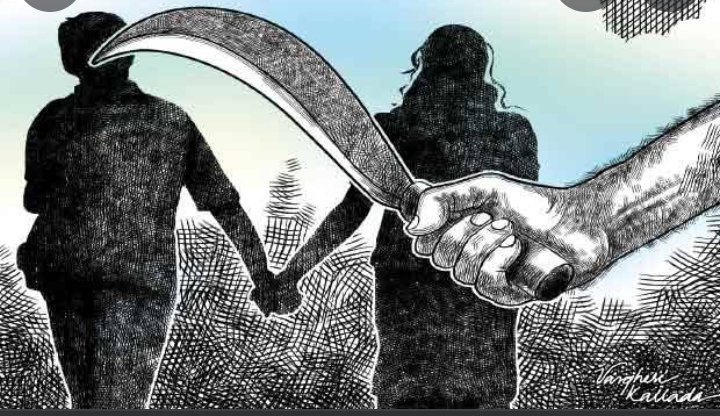
There is no honour in killing

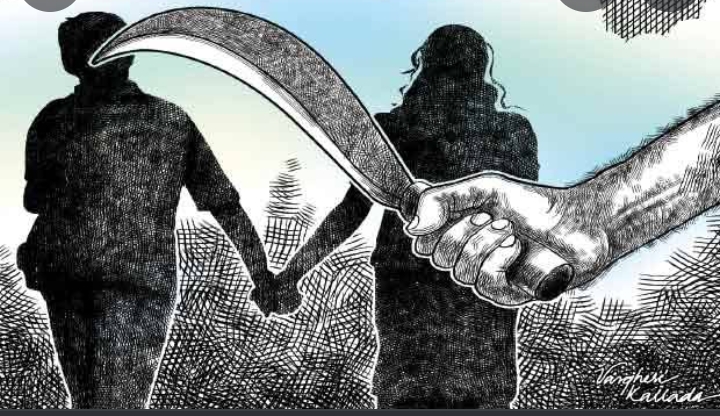
An honor killing or shame killing  is the murder of an individual, either an outsider or a member of a family, by someone seeking to protect what they see as the dignity and honour of their family.

Honor killings are often connected to religion, caste and other forms of hierarchical social stratification, or to sexuality, and those killed will often be more liberal than the murderer rather than genuinely “dishonourable”. Most often, it involves the murder of a woman or girl by male family members, due to the perpetrators’ belief that the victim has brought dishonor or shame upon the family name, reputation or prestige.

Honor killings are often associated with rural and tribal areas, but they occur in urban areas too.

Though both men and women commit and are victims of honor killings, in many communities conformity to moral standards implies different behavior for men and women, including stricter standards for chastity for women. In many families, the honor motive is used by men as a pretext to restrict the rights of women.

Although such crimes are widely suspected to be underreported, the United Nations Population Fund estimates that as many as 5,000 women are killed annually for reasons of honor. These crimes take place throughout the world and are not limited to one specific religion or faith. However, they have rather significantly and consistently occurred in various parts of the Middle East and South Asia, with nearly half of all honor killings occurring in India and Pakistan.


Although such crimes are widely suspected to be underreported, the United Nations Population Fund estimates that as many as 5,000 women are killed annually for reasons of honor. These crimes take place throughout the world and are not limited to one specific religion or faith. However, they have rather significantly and consistently occurred in various parts of the Middle East and South Asia, with nearly half of all honor killings occurring in India and Pakistan.null

In the 21st century, there was an increased international awareness of honor killing, however, some countries remained reluctant to take the necessary steps to effectively criminalize it. In the relatively uncommon event that a man was prosecuted for the killing, the subsequent trial would often focus on the woman’s alleged behaviour, rather than the violence committed against her. When a man was found guilty, the defendant could claim that the crime had been committed to restore sullied family honor and petition the court for a reduced sentence. In India, for example, the government enacted strict penalties for violence against women during the 1980s. However, honor killings based on intercaste and interreligious marriages continued to take place in rural areas, where they were largely unreported to police because of direct or indirect support among village residents. Such murders were often ruled as accidents when reported. A woman beaten, burned, strangled, shot, or stabbed to death could be ruled a suicide, even if there were multiple wounds and there was no possibility the woman could have killed herself.

Body parts that you can trade for money

It’s will amuse you to know that you can sell your body parts and People will pay hundreds, and sometimes thousands, of dollars for certain body parts.

Note that “selling” a body part isn’t the same as putting your futon up for sale on Craigslist. Except for selling ad space on your skin, most forms of giving body parts are technically donations, but it’s common practice to be compensated in cash. 

Being compensated for all of the parts listed below is legal, but we don’t necessarily recommend it. There are other — more conventional — ways to supplement your income.

1. Hair up to $1,000

Like blood, hair is easy enough to donate to a good cause (like Locks of Love). But it’s also entirely possible to sell it at a pretty sweet price point.

The trick is to keep it as long and “virginal” as possible. That means no harmful hair dyes or other chemical treatments that could damage the quality. Buyers are likely looking to make wigs, and they’re not going to be interested in your split ends.

According to Wisebread, one woman made as much as $1,000 on her locks in just a week by posting an ad on TheHairTrader.org.

2. Sperm: $ 125 per sample

The going rate: $125 for each acceptable sperm sample — which can add up to about $600 per month — according to the Sperm Bank of California.

You’ll have to meet some very specific qualifications first. Here’s the list of requirements for potential donors at SBC:

• Between ages 20 and 39

• At least 5’7″

• Can make a six to 12 month commitment

• Live within 25 miles of the office

• Can provide a family medical history

• Are able to work legally in the US

• Have completed or are pursuing a college degree

Look for sperm banks near you.

How to grow your Instagram!

Are you someone who struggles with low Instagram traffic? Do you want to grow your business with Instagram? Well if you are someone who is using Instagram just to pass time and for entertainment then this article is not for you. But if you are a small business owner or an influencer and someone wondering to know ways to grow Instagram. Then you are at the right blog. I will be telling you how you can grow your Instagram and your business too.

Firstly let me make you conscious of some missteps that you might be doing.
• Having no plan
• No structure of post
• Not posting consistently
• Not engaging with the audience and other relating accounts.
• Having a confusing profile
• Neglecting story and reels.

Now as there are many mistakes that someone makes on Instagram similarly there are certain steps by which you can grow your Instagram. To grow your Instagram you have to work on certain areas of your account
1. Profile and feed
2. Content quality
3. Stories and reels
4. Going with the Trend

Working on the profile and feed
• As a social media person firstly you need to have a well-structured profile. Change your account to a business profile. Think of your profile photo. Now if you are someone who is an influencer then put your face on the profile. But if you are someone running a business then it will be good to put your logo on the profile. Write a clear and crisp bio description of you on the profile, that should make an impact on the visitors. Introduce you and your business on the profile so that visitors don’t face any confusion regarding your profile.
• Having a theme-based feed is also a not a bad idea. But you can organize your feed in a theme-based manner. Your feed will make a noticeable impact on the visitors. When someone will see your profile feed and will feel attraction he or she will engage with it.
• If you have a website or store then put that on your profile. It will enhance visitor trust in your profile.

Working with the content
When it comes to content the only key is following a niche profile. Post a good quality content. Posting something irrelevant is surely of no use. The other thing that works great is the entertainment. No doubt many people scroll through Instagram for entertainment. They are someone who opens Instagram with no prior things in their mind. But just think of that if you can provide them their entertainment then they will engage with you. If you show them something entertaining and relating ut with your product it is obvious that your product will leave an impact on viewers’ minds. The person who opened Instagram with no idea will have your product in his mind and it will be a great possibility that he will react to your content.

Getting on with the trend
• Link your account to the trend. Makes a post relating them to a Trend this is going. Recreate trending reels with your content. Use trending songs to showcase your products.
• Go with the trending memes. Connect your content to the memes. People find memes very entertaining so they react to them.
• Research with the trend and find which Trend fits your niche or profile. And then go for it.

Now let’s talk about the strategy.

1. Content plan
2. Engaging with the audience
3. Analysing insights and performance

Content plan: Have a plan before posting anything. Write the idea. Decide what you have to post? Think in terms of story and reels. Make sure you do the proper research. Go through the hashtags that are following the content post. Use some trending hashtags to get random traffic. As we talked earlier about the trend, so trends can the high ups for your profile. People like to see what they connect to, make a connection between your post and people. They must feel connected so they can react.

Post: Post clear and use high-quality images in the feed. Use valid and niche hashtags. Make a theme-based feed.

Story: Posting a story and showing up yourself in the story makes a personal connection with the audience. They get to know that you are constantly active. Stories have so many interactive options by which you can conduct a poll, ask a question, these are the best way to engage with the audience.

Reels: Reels are the new gig that everyone should try. Talking about why you should try reels? Instagram shows your reel to the relevant audience. Reels give a huge opportunity to go viral increase your branding. Instagram allows you to make a reel for up to 30 seconds. Post reels with trading topics and connects them with your product. Make entertaining videos. Your audience will enjoy and engage with you.

IGTV: The idea of IGTV is to serve a long video. IGTV is much a way similar to television channels. Instead of searching content by topics, flip to IGTV as you please. The challenge that adds up with IGTV is they can’t be reached with hashtags. So it makes it harder to reach new followers through IGTV. To get success from IGTV you need to have a large following. You can post tutorial videos, introduction videos, FAQ videos, on IGTV.

Engaging with the audience

Don’t just do posting and ghosting. It’s very important to engage with the audience after you post. Reply to comments. Connect with other followers who reacted to your previous post. Try to know the behavior of the audience. Make a connection with followers through polls, quizzes, and DMs.

How can someone dare to ignore the Instagram algorithm? While no one can crack the Instagram Algorithm, these are the things you can proactively do to equalize its effects.

Analyzing insights and performance

It’s important to analyze your post. Keep a track of reports. Note what worked for you and what didn’t. Engage with the audience through comments, story polls, and DMs. Look through what the audience wants from you. Understand your audience before building your connection.

A tip that can be used to grow your Instagram is connecting other social platforms. Post on other platforms like tik-tok, Pinterest, Facebook, Twitter,… etc. This will increase your audience for sure. And if you are someone who is running a business they will surely help you gain more clients. Instagram have a great user base, but it’s not easy to reach.

Lastly, do what you like. This is not a rule that more followers lead to more engagement and more clients. Engage with what you have. And this will take you to expansion.

What amazements can a good credit system does


You can survive with bad credit, but it’s not always easy and not cheap. Establishing a good credit score will help you save money and make your financial life much easier. If you’re looking for reasons to maintain your good credit, here are some great benefits to having a good credit score.

Low Interest Rates on Credit Cards and Loans

The interest rate is one of the costs you pay for borrowing money and, often, the interest rate you get is directly tied to your credit score. If you have a good credit score, you’ll almost always qualify for the best interest rates, and you’ll pay lower finance charges on credit card balances and loans. The less money you pay in interest, the faster you’ll pay off the debt and the more money you have for other expenses.

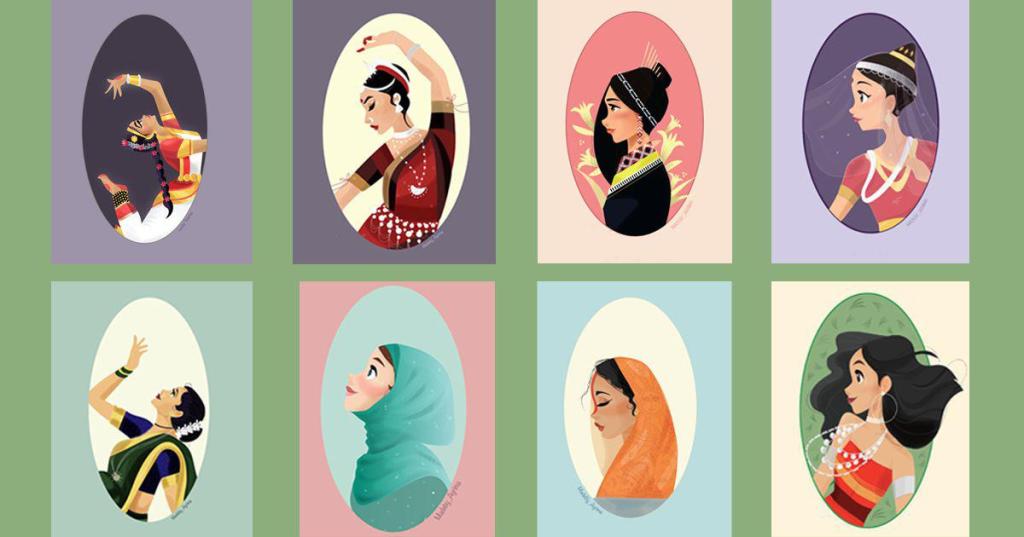
The Beauty of Diversity – INDIA

India a name when comes to your mind, what is the the picture of india for you? If you know about india and had lived here than you will have a picture of where some wear dhoti other lungi and some other pajama. There is even diversity in the way of wearing saree like bangali, Gujarat, assami, marathi, orria and much more.

The real beauty of India

India is actually a planet in it self, where there are numerous festivals, people, issues etc all of a different kind but in one nation. Where you will find a Hindu enjoying eid with Muslim, a Muslim taking care of a Hindu temple, a Sikh serving langer to each and every being on this earth who wants to have it.

In India everything is diverse our geography, climate, culture, attaire, language, cuisine, looks, religion, festivals etc. But one thing is common in everyone that is we are Indians and we love our india. We celebrate eachother’s festivals, we enjoy eachother’s cuisine, we wear eachother’s attaire, ultimately we are united.

We fight among ourself (which I agree is not a good thing), but when anyother tries to offend our country we unites.

India’s is really an amazing country, whose real essence is ‘unity in diversity’.

Indicators of Women’s Status in India


There are different forms of violence on women, which act as threats to women’s independent identity and
dignity. Forms of violence are:
1) Female foeticide & infanticide- According to a survey by British medical journal, Lancet, nearly 10
million female abortions have taken place in India in the last 20 years, which is rampant amongst the
educated Indian middle class as well.
There are organizations like Swanchetan, which are working towards educating & bringing awareness in
people against the ghastly act.

Women at a rally in support of the Equal Rights Amendment in Detroit’s Kennedy Square, June 30, 1981.


2) Rape, sexual harassment & abuse- It acts as a deterrent to women’s freedom & perpetuates the notion
that women are the weaker sex. Every 2 hours, a rape occurs somewhere in India!
The recent Dec. 16 Delhi Gang rape case, shook the entire country and led to protests all across the
country, setting up of Justice Verma panel & helped in the fast track judgment of the case. However
rampant cases of rape of Dalit women, acid attacks, eve teasing go unnoticed.
3) Domestic violence and dowry deaths- Violence on women in the family were considered family
problems and were never acknowledged as “crimes against women” until recently. It is prevalent in all
classes of society.
4) Prostitution- A large number of women destitute or victims of rape who are disowned by family fall prey
to prostitution forcibly. There are no governmental programs to alleviate the problem of prostitution.
5) Objectification of women- Indecent Representation of Women(Prohibition) Act, 1986 prohibits indecent
representation of women through advertisements or in publications, writings, paintings etc. However a
whole lot of indecent representation of women is done through literature, media, paintings etc
upholding the “right to freedom of expression”.

As per World economic forum survey, India’s Global Gender Gap Index 2011 ranking is 113 out of 134 countries
with neighbors like Bangladesh at 69 & China at 60.
1) Sex Ratio –Sex ratio is used to describe the number of females per 1000 of males. As per census 2011
sex ratio for India is 940 females per 1000 of males, i.e. females form a meager 47% of the total
population. The State of Haryana has the lowest sex ratio in India and the figure shows a number of 877
of females to that of 1000 males while Kerala has the highest of 1084 females per 1000 males
2) Health – Studies on hospital admissions and records have shown that males get more medical care
compared to girls. 2% of the female population is absolute anaemic. 12% of the female population of the
country suffers from repeated pregnancy (80% of their productive life is spent in pregnancy) & lack of
nutrition.

3) Literacy – The female literacy levels according to the Literacy Rate 2011 census are 65.46% where the
male literacy rate is over 80%. While Kerala has the highest female literacy rate of 100% , Bihar is at the
lowest with only 46.40%
4) Employment – Of the total female population 21.9% are a part of Indian workforce.
Majority of women are employed in the rural areas and in agriculture. Amongst rural women workers
87% are employed in agriculture as laborers, cultivators, self employed like hawkers etc i.e in the
unorganized sector which almost always remains invisible.
Despite the equal remuneration Act 1976, women are paid lower wages, occupy lower skilled jobs, have
less access to skill training and promotion.
5) Political status – Though India had a women Prime Minister Late Ms Indira Gandhi, women are not fairly
represented in the Parliament & other State & Local bodies. With only around 9 per cent women in
upper house and around 11 per cent in the lower house of parliament, India ranks 99th in the world in
terms of female representation among MPs.
However 73rd & 74th amendments to the constitution have ensured the participation of women in
PRIs with a reservation of 1/3rd for women. Today more than 30 million women are actively participating
in the political decision making process at the grass root.

This contains an image of: {{ pinTitle }}

“Without economic freedom other aspects of women equality would not be realized”
-Jawaharlal Nehru
Women’s work participation rate in general has been declining over the decades. The decline has occurred due
to several factors:
1) Absence of comprehensive and rational policy for women’s emancipation through education, training
and access to resources such as land, credit and technology etc.
2) The perception of male as the breadwinner of the family despite the fact that in low income households
women’s income is crucial for sustenance. This perception adversely affects women’s education &
training. Employers also visualize women workers as supplementary workers & also cash in on this
perception to achieve their capitalistic motives by keeping the wage low for women.
3) Structural changes in the economy e.g decline in traditional rural industries or industrialization.
4) Lack of assets (land, house) in their own name in order to have access to credit and self employment
opportunities
5) Huge demand

This contains an image of: {{ pinTitle }}

of time and energy of women for various tasks at home like child bearing and rearing etc
in addition to participation in labour force leave them with little time for education, training and self
development
6) Division of labour based on the gender between men and women & technological advancements work
against women. They are the last to be hired and first to be sacked.
7) Govt. programs to increase employment and productivity are focused more on men & women are seen
as beneficiaries rather than active participants

Terrorism, Extremism, Radicalization

When a decision is made that fear, terror and violence are justified to achieve ideological, political
or social change, radicalization to violent extremism occurs’
Terrorism, radicalization and extremism are subjective concepts that have different meanings for
different people. Furthermore, their meanings are constantly evolving as they manifest
themselves in different ways in different parts of the world, exploiting new vulnerabilities,
technologies and approaches.
1.1. Terrorism
‘Terrorism is a complex and contested issue, as are the associated labels of extremism, violent
extremism and radicalization’
There is no single universally accepted definition for terrorism because the concept is invariably
political and cannot be framed in a manner that excludes the state. Most acceptable words to
understand terrorism are ‘acts committed with the objective of seriously intimidating a
population, destabilizing or destroying structures of a country or international organization or
making a government abstain from performing actions’.
1.2. Extremism
‘Violent extremist ideologies have found fertile ground in fragile communities characterized by
little access to development’
Extremism is generally understood as constituting views that are far from those of the majority
of the population. Accordingly, one definition describes extremism as ‘activities (beliefs,
attitudes, feelings, actions, strategies) of a character far removed from the ordinary’. Though this
is clearly a relative term which invites disagreement regarding benchmarks, it is broadly agreed
that extremist views are not necessarily illegal and do not automatically lead to violence or harm.
Indeed those with extremist views, who may also choose to observe extreme practices with no
impact on the civil liberties of fellow citizens, are rightly protected under fundamental freedoms
and human rights norms.
Extremism becomes a concern when those views threaten democratic and tolerant societal ideas,
or promote the use of violence to coerce their followers or to achieve their objectives. This form
of extremism is described as violent extremism, a term which remains contested, but which
generally refers to the creation of ideologically motivated or justified violence, as well as support
for such acts.
1.3. Radicalization
‘Radicalizer’s work by pointing to social, political and economic injustice around their followers.’
Like terrorism and violent extremism, radicalization is a contested term with various definitions.
It is commonly understood, however, as the social and psychological process of incrementally
experienced commitment to extremist political and religious ideologies. It does not necessarily
mean that those affected will become violent. However, when a decision is made that fear, terror
and violence are justified to achieve ideological, political or social change, radicalization to violent
extremism occurs.

ROLE OF MEDIA IN INTERNAL SECURITY CHALLENGES

This contains an image of: {{ pinTitle }}

Any communication channel through which any kind of information, news, entertainment,
education, data, promotional messages etc. can be disseminated is called media.
Mass media refers to communication devices, which can be used to communicate and interact
with a large number of audiences in different languages. Be it the pictorial messages of the
early ages, or the high-technology media that are available today, mass media has become an
inseparable part of our lives. Media can be broadly classified as:
• Print Media (newspapers, magazines, books and Brochures, Billboards, etc.)
• Electronic Media (news websites, social networking sites, mass SMS schemes, television,
internet, radio, cinema etc.)
• New Age Media (Mobile Phones, Computers, Internet, Electronic Books)

This contains an image of: {{ pinTitle }}

Where Media is Misleading? – Threat to Internal Security
• Indian media does not have a wider perspective of India’s national security issues.
• Indian media is in no mood to apply brakes or observe self-restraint on its wayward and
insensitive treatment of national security issues.
• Indian media’s (especially electronic media) analysis and over-analysis of national security
issues by groups of former diplomats, generals and academia’s arm chair strategists distort
national security perspectives. All these gentlemen can only draw on their outdated
experience and none of them are privy to latest inputs. Also in many cases, reticence is
their first casualty after retirement.
• Indian TV anchors discussing national security issues do not have the political and strategic
maturity to discuss national security issues as their Western counter-parts do.
• Indian TV debates on national security issues tend to cut out development of contrary
views and perspectives by imposing commercial breaks, or go hectoring themselves.

For a country like India, the backbone of its democracy and the propagator of its national
interests remains the access to information and expression. It helps citizens to make
responsible and objective choices, to promote accountability by its officials, to provide solutions
to conflict resolution, and also to encourage diverse views of its diverse people. This access of
information has allowed the Indian media to play the role of watchdog that holds the
Government accountable in all its activities, and also functions as the only mode of expression
for its people.

This contains an image of: {{ pinTitle }}


The role of media in a democracy like India, therefore, can be summed up as to:
• Inform and educate people objectively, impartially and in an unbiased manner about
security threats and challenges
• Unbiased reporting with the restraints of self regulations
• Promotion of the principles of healthy democracy
• Respect for the Constitutional Provisions
• To build a bridge between people and governments at the national level
• Uphold fairness, justice, national unity and international cooperation
• Inform, educate, entertain, publicize and most importantly correct the excesses in any
society.
• Highlight the trouble spots in the society and press the government and public to devise
suitable mechanisms to eliminate them
• Shape the perceptions of government, influence public opinion, promote democracy, good
governance as well as influence peoples’ behavior and support people- oriented policies
Following the globalization, the responsibilities of media have also widened. It has to play a role
for preserving and pursuing the national interests of the state and highlighting its perspective
along with the global issues. It has to examine the conduct of international relations and again
to highlight the trouble spot at global level in lieu of global security.

“The internet is the largest experiment involving anarchy in history. (…) It is a source for
tremendous good and potentially dreadful evil, and we are only just beginning to witness its
impact on the world stage.”

  • Eric Schmidt, Executive Chairman, Google and Jared Cohen,
    Director, Google Ideas

Safeguard yourself knowing Cyber security!

As per Information Technology Act, 2000, “Cyber security means protecting information,
equipment, devices computer, computer resource, communication device and information
stored therein from unauthorized access, use, disclosure, disruption, modification or
destruction.”

This contains an image of: {{ pinTitle }}


1.1. Cyberspace
India’s Cyber Security Policy 2013 defines cyberspace as a complex environment comprising
interaction between people, software and services, supported by worldwide distribution of
information and communication technology devices and networks.

Common Cyber Threats


1.2. Cyber threats
Cyber threats can be disaggregated into four baskets based on the perpetrators and their
motives – Cyber Espionage, Cyber Crime, Cyber Terrorism, Cyber Warfare.
1.2.1. Cyber Crime/ Cyber Attacks
Cyber-attack is “any type of offensive maneuver employed by individuals or whole organizations
that targets computer information systems, infrastructures, computer networks with an
intention to damage or destroy targeted computer network or system.”
These attacks can be labeled either as Cyber-campaign, Cyber-warfare or Cyber-terrorism
depending upon the context, scale and severity of attacks. Cyber-attacks can range from
installing spyware on a PC to attempts to destroy the critical infrastructure of entire nations.
1.2.2. Cyber terrorism
Acts of Terrorism related to cyber space or act of terrorism executed using Cyber technologies is
popularly known as ‘cyber terrorism’.
“Cyber terrorism is the convergence of terrorism and cyber space. It is generally
understood to mean unlawful attacks and threats of attacks against computers,
networks, and information stored therein when done to intimidate or coerce a
government or its people in furtherance of political or social objectives, Further, to
qualify as cyber terrorism, an attack should result in violence against persons or
property or at least cause enough harm to generate fear, Serious attacks against critical
infrastructures could be acts of cyber terrorism depending upon their impact.”
It should be noted here that if they create panic by attacking critical systems/infrastructure,
there is no need for it to lead to violence. In fact such attacks can be more dangerous.
Besides, terrorists also use cyberspace for purposes like planning terrorist attacks, recruiting
sympathizers, communication purposes, command and control, spreading propaganda in form
of malicious content online to brain wash, funding purposes etc. It is also used as a new arena
for attacks in pursuit of the terrorists’ political and social objectives.

This contains an image of: {{ pinTitle }}

Cyber Security has assumed strategic and critical importance because of following reasons:
• Cyberspace has become key component in the formulation and execution of public policies.
• It is used by government to process and store sensitive and critical data which if
compromised can have devastating impact.
• Taking down cyberspace will result into disruption of many critical public services like railways,
defense systems, communication system, banking and other financial system etc.
• Several states are developing the capabilities in the area of cyber attacks which can alter
outcomes in the battlefield.
• Individuals are using internet based services at a growing pace making them vulnerable to
cybercrimes, such as- online bank frauds, surveillance, profiling, violation of privacy etc.

Government has taken a number of steps to acquire and increase capacity in the field of
cyber security. Some of which are discussed below.

National Cybersecurity Policy 2013

Information Technology Act 2000 (As Amended in 2008)

National Telecom Policy 2012,etc.

About that artist- Van Gogh

Vincent van Gogh perhaps, one of the greatest artists to have ever lived, was born in 1853, in the Netherlands. He was the eldest of six children to his parents, and was only in touch with 2 of his siblings later in life. His brother Theo Van Gogh was the closest to him.

 Van Gogh is considered as the greatest post impressionist (post impressionism is a French art movement, mainly characterized by vivid hues and exuberant brush strokes). Unfortunately, His artwork did not receive much success while he was alive

Van Gogh died at an early age of 37 and was not around to witness his work being recognized and appreciated.

Introduction to art

At the age of 16, he apprenticed at the art dealers Goupil and Cie at The Hague branch through his uncle. He worked at the Goupil in London and Paris as well in the following years. The everyday exposure to art seemed to intrigue him. Artists such as Frans Hals, Jean Francois Millet started to grow on him and greatly inspired him throughout his life.

He became extremely successful during his time at the Goupil but art dealing did not satisfy him at all, in fact he despised it and was dropped off from the Goupil during his time in Paris after which he took up a couple of different jobs and had to experience some unfortunate events led him to become devout and extremely pious. During his time back home he used to translate the verses of the bible in English and French.

One of his jobs included working as a missionary among the less privileged section of the society at a coal mining region, where he lived among the poor and gave away his possessions, this did not sit well with the religious authorities, and the church later banished him.

This left him feeling dejected and out of sorts. He felt abandoned by society and isolated himself. It was during this time that he used painting as a form of expression.

He moved to Brussels to learn drawing, and then later he moved to Hague to work under the guidance of Anton Mauve, a Dutch painter.

Van Gogh and Mental Health

Van Gogh went on to produce great paintings in the subsequent years, these years also saw his artwork evolve greatly. He worked with Paul Gaugin for an ephemeral time of about two months.

This was a time of absolute distress for him, he was tortured by his own head and his solitude did not side with him.  In fact he was so troubled that one night he cut off his own year with a blade.

After this event, he was hospitalized where he kept experiencing psychotic episodes and yet was able to give the world some of the best paintings like The Starry Night, Olive Trees, Garden Of The Asylum and many more.

Van Gogh made his best paintings during the last two, extremely disturbing years of his life. Consumed by loneliness and the voices in his head, Van Gogh succumbed to his own mind. At the age of 37, he shot himself.

Vincent Van Gogh was a highly inspirational artist who had the ability to express emotions through a simple stroke of his brush. He expressed his pain through his brush which gave birth to an alluring piece of art that can make you feel emphatic emotions. And keep in mind that he was able to do this despite his ill mental health.