Purushartha

Purushartha is a key concept in Hinduism and Indian Philosophy. The word Purushartha comes from the Sanskrit word “Purushartha”, where ‘Purush’ refers to human beings and ‘Artha’ means purpose, object of desire or meaning. 

Together the word Purushartha translates to ‘purpose of human being’ or ‘object of desire’. There are 4 main Purusharthas or aims of human life that one must attain.

The first Purushartha is Dharma. Dharma means truth, the right way of living or the accepted behaviours one should follow to maintain the order of things in the world. On a larger scale Dharma refers to the cosmic law or rules that created the universe. On an individual scale however, it refers to the ethics on which we should live our lives. Dharma advocates that humans should be obedient to their teachers and elders, follow law and justice and practice good virtues such as Ahimsa in life.

The second Purushartha is Artha. Artha signifies means of life. In simpler terms it refers to wealth and materialistic things. It is believed that if you have the security of material comfort then you can live in the world with much ease. Artha does not reject the materialistic nature of the world but teaches us to accept and be content with the material benefits that we are provided with. Some of the examples that Artha include are career, love knowledge, friendships and good health.

The third Purushartha is Kama which means ‘pleasure’. The most common misconception that people have when talking about Kama is the belief that Kama means only sexual pleasure and this is completely wrong. Kama in reality refers to sensual pleasure. Anything that provides pleasure to our 5 senses is a way to obtain Kama. For e.g. apart from sexual intercourse, humans feel pleasure while listening to music, looking at art or other aesthetic entities. Love is also a part of Kama.

The fourth and last Purushartha is moksha. Moksha is the ultimate Purushartha as it is the most difficult to obtain. Moksha means liberation, to free or let go. In Indian Philosophy it is believed that our souls are eternal and never die. It is believed that souls just inhabit one body after another leading to a cycle of deaths and births. Moksha refers to the freedom from this cycle of birth and rebirth. It is also believed that when one attains Moksha, the soul (atman) is truly able to become one with the Ultimate Reality (Brahman). Moksha is also said to cease Karma. Because Karma is the major factor responsible for birth and rebirths. Therefore when one attains Moksha all his Karma ceases and so does his cycle of death and rebirth. In addition to all this, in Hinduism, Moksha is defined as a state of complete bliss and knowledge.

It’s important to know the types of Purushartha as they are heavily discussed in Indian Philosophies. Each of the Purushartha, if toned down to simpler meanings can be applied to our daily modern life and help us achieve self-improvement. Because if you have a clear mind then you have a clear focus.

Internet- Boon or Bane

Photo by Teona Swift on Pexels.com

INTERNET stands for Interconnected Network that is a network system that connects millions of web servers. . Let us simply know its definition first. Internet is a hug network that connects computers all over the world. It has become the most significant medium for sharing information and communication from anywhere in the world.

Internet got introduced in India in 1986 but it took a decade to make it available for the public. VSNL first launched the internet in India on August 15, 1995. Today it has taken such a place in our life that a person can manage anything but they can’t survive without internet.

Recently, a study reported that the number of IP addresses has crossed the total limit, with the increase in the number of internet users across the world. With this huge development in this field one question also remains whether Internet is a boon or bane? For this we can have different opinions because some people consider it as a boon as they are just seeing the advantages and entertainment they are being provided by the internet while the rest will have some other arguments.

Everything has some pros and cons so as the internet. We can get alot of opportunities through the internet we can carry our business at a global level ,we can entertain ourself and also education can be provided by the internet and many more else . But on the other hand we are aware of various incidents that take place regularly of cyber crimes which is a big threat amd virus can also enter in our system which will also disturb our information and harm our privacy.

Internet is one the biggest tool that is making our life very easy. Just think if in this COVID-19 there will be no internet how will you get yourself updated? And attend your online classes? So its basically important that the reason and the time period for which internet is used must be the priority concern and it must be used with all the necessary precautions to keep it as a problem solver instead of a problem creator.

I sometimes wonder how we spent leisure time before satellite television and Internet came along…and then I realise that I have spent more than half of my life in the ‘dark ages’!
— Arthur C. Clarke

Photo by Katerina Holmes on Pexels.com

MULTIMIDEA IN MARKRETING

Services | Enforcer Web Solutions & Multimedia Marketing

Advertising has become very prevalent in our daily lives , so for a product to stand apart , it is very essential to present it in a dynamic , visually stimulating manner to grab the attention of consumers . The business world is slowly rejecting run of the mill tradition methods (such as placing ads in yellow pages , distributing pamphlets , etc.) and adopting solutions from the electronic era . Only companies with a nerve to radically change their marketing strategies for the new millennium will survive and be able to cater to ever- changing customer’s mindset . Applications of multimedia in the marketing field include the following :

  • Presentations for launching the products of a company . Reaching the target audience with necessary technical services or products requires clear communication stating the benefits and features , outlining its applications and any other product -related details , all presented in a well- designed and interactive manner so that the users can be familiarized faster . Multimedia presentations helps in motivating , informing and captivating audiences via PCs , laptops , plasma screens or kiosks delivered via CD-ROM or the Internet .
  • Multimedia is used to create interactive product catalogues , training tutorials , buyer guides and information directories with adequate search and navigation facilities to guide the user to easily trace the desired information . A buyer guide can list the nearly dealers , a comparison of the top brands , maps of the city and other helpful guest services .
  • E-mail advertising or placing banner ads on the internet is an extremely cost -effective method of launching a product , promoting an event or selling services . Effective use of multimedia in advertising can make potential clients sit up and make notice .
  • Multimedia applications help in building brand loyalty as well as improving sales .Brand loyalty will be improved as the users are provided a custom application which entertains ; informs or assists them .
  • Graphical elements , animations , as well as audio and video can be used to more effectively deliver sales instructional or marketing messages , thereby differentiating a firm from its competitors .

Personal Values: How to Know Who You Really Are

Throughout the previous few years, I’ve had a thought for an ironical self improvement article called, “The Productivity Secrets of Adolf Hitler.” The article would include all the famous self improvement sayings—objectives, perceptions, morning schedules—aside from communicated through the adventures of Hitler.

“Hitler begins his day at 5 AM every morning with a fast round of yoga and five minutes of journaling. With these methodologies, he’s ready to zero in his psyche on his exceptionally yearning objectives.”

“Hitler found his life reason in a lager corridor in his 20s and has since followed it persistently, hence imbuing his existence with energy and rousing great many others such as himself.”

“Adolf is a severe veggie lover, and makes a point to figure out time in his bustling timetable of massacre and global control to investigate his inventive side: he saves a couple of hours every week to pay attention to drama and paint his scenes.”

I realize that I would discover the article clever. However, that is on the grounds that I’m a wiped out, contorted fuck. In any case, eventually, I’ve never fully gathered the mental fortitude to compose the thing, for clear and clear reasons.

I’ve been doing this long enough to realize that a) a lot of individuals would get outraged and give themselves totally to destroying my week with irritating messages and web-based media tirades, b) the parody would fly right by a lot of people and they’d feel that I was really a Nazi, and c) some dreadful distribution some place would run the feature, “Smash hit writer outs himself as far right neo-Nazi” or some poop and my vocation would be finished.

Thus, I’ve never composed the article. Consider me a weakling. Be that as it may, it stays unwritten.

This bugs me a tad since I think parodying Hitler’s extraordinary efficiency and impact consummately encapsulates a point I’ve since quite a while ago made about the self improvement world: making progress in life isn’t close to as significant as our meaning of accomplishment. On the off chance that our meaning of achievement is awful—like, say, global control and butchering millions—then, at that point working more enthusiastically, laying out and accomplishing objectives, and training our brains all become something awful.

In the event that you eliminate the ethical abhorrences from Hitler, on paper, he’s perhaps the best independent individuals in world history. He went from being a poor, bombed craftsman, to laying hold of a whole nation and the most remarkable military on the planet in merely twenty years. He activated and propelled millions. He was resolute and smart and strongly centered around his objectives. He ostensibly impacted world history as much as any individual who has at any point lived.

In any case, the entirety of that work went toward psychotic, dangerous points. What’s more, a huge number of individuals kicked the bucket terribly because of his turned, misinformed values.

Individual qualities are the gauges by which we figure out what is an effective and significant life.

At the point when someone says, “I need to be acceptable,” that meaning of what is “acceptable” is an impression of what they esteem. Some will see “being acceptable” as achieving cash. Others will consider it to be building a family. Others will consider it to be having a great deal of energizing encounters. Whatever it will be, it is controlled by our own qualities.

Along these lines, you can’t discuss personal growth without likewise discussing values. It’s insufficient to just “develop” and become a “superior individual.” You should characterize what a superior individual is. You should choose in which course you wish to develop. Since, supposing that you don’t, indeed, we may all be in a bad way.

A many individuals don’t understand this. A many individuals fanatically center around being cheerful and feeling great constantly—not understanding that if their qualities suck, feeling kindness hurt them more than help them. In the event that your greatest worth on the planet is grunting Vicodin through a swirly straw, indeed, then, at that point feeling better is simply going to aggravate your life.

At the point when I composed my book, The Subtle Art of Not Giving a F*ck, practically the whole book was truly a slippery method to get individuals to consider their qualities all the more plainly. There are 1,000,000 self improvement guides out there that show you how to more readily accomplish your objectives, however few really question what objectives you ought to have in any case. My point was to compose a book that did exactly that.

In the book, I purposefully tried not to get excessively profound into what benefit/bad qualities are—what they resemble, and why they work or don’t work—part of the way since I would not like to push my own qualities onto the peruser. All things considered, the general purpose of your qualities is that you embrace them yourself, not on the grounds that some buddy with a repulsive orange book cover advised you to. However, truth be told, I additionally didn’t get excessively profound into characterizing values since it’s an extraordinarily troublesome point to expound on well.

Thus, this article is my endeavor to at last do that. To discuss values. What’s more, what they are as well as why they are. Why we discover certain things significant, what the results of that significance are, and how we can approach finding and changing what we find significant. It’s anything but a basic subject. Also, the article is very long. So enough of me gabbing, how about we continue ahead with it.

You Do What You Value

Each snapshot of consistently, if you understand it, you are settling on a choice of how to invest your time, of what to focus on, of where to coordinate your energy.

The present moment, you are deciding to peruse this article. There are a limitless number of things you could be doing, however this moment, you are deciding to be here. Perhaps in a moment, you choose you need to pee. Or on the other hand perhaps somebody messages you and you quit perusing. At the point when those things occur, you are making a basic, esteem loaded choice: your telephone (or your latrine) is more significant to you than this article. What’s more, your conduct follows that valuation appropriately.

Our qualities are continually reflected in the manner we decide to act.

This is basically significant—on the grounds that we as a whole have a couple of things that we think and say we esteem, however we never back them up with our activities. I can tell individuals (and myself) for what might seem like forever that I care about environmental change or the risks of online media, yet on the off chance that I go through my days cruising all over in an inefficient SUV, continually invigorating my newsfeeds, then, at that point my practices, my activities recount an alternate story.

Individual Values – individuals strolling

Activities don’t lie. We accept we need to land that position, yet all things considered, we’re generally sort of calmed that nobody got back to us so we can withdraw to our computer games once more. We advise our better half we truly need to see her, yet the moment our person companions call, our timetable mysteriously appears to open up like screwing Moses separating the Red Sea.

The Great Value Disconnect

A large number of us state esteems we wish we had as an approach to conceal the qualities we really have. Along these lines, yearning can regularly turn into another type of aversion. Rather than confronting who we truly are, we lose ourselves in who we wish to turn into.

Find Your Personal Values

I have a 50-page PDF guide clarifying individual qualities and how to create your own. It’s free. Simply fly in your email underneath to get it.

Email

Put another way: we lie to ourselves since we don’t care for our very own portion esteems, and we, along these lines, don’t care for a piece of ourselves. We would prefer not to concede we have certain qualities and that we wish we had different qualities, and it’s this inconsistency between self-insight and reality that typically gets us into a wide difficult situation.

That is on the grounds that our qualities are expansions of ourselves. They are what characterize us. When something great happens to a person or thing you esteem, you feel better. At the point when your mother gets another vehicle or your significant other gets a raise or your matches group dominates a title, you feel better—like these things happened to yourself.

The inverse is valid too. On the off chance that you don’t esteem something, you will feel great when something terrible happens to it. Individuals rampaged cheering when Osama Bin Laden was killed. Individuals arranged a gathering outside the jail where the chronic executioner Ted Bundy was executed. The annihilation of somebody saw as malevolent felt like some incredible good triumph in the hearts of millions.1

Thus, when we are separated from our own qualities—we esteem playing computer games the entire day yet accept we esteem aspiration and difficult work—our convictions and thoughts get detached from our activities and feelings. Furthermore, to connect that distinction, we should become silly, about both ourselves and about the world.2,3

Discretionary Gray Box of Doom: Why People Who Hate Themselves Hurt Themselves

Similarly as we either worth or debase anything in our lives, we can esteem or degrade ourselves. Also, similar as individuals celebrating when Ted Bundy got seared, in the event that we disdain ourselves however much individuals despised Ted Bundy, we will commend our own annihilation.

This is the thing that individuals who don’t detest themselves don’t comprehend about individuals who do: that implosion feels great in some profound, dull way. The individual who despises themselves feels that they are ethically mediocre, that they merit some dreadful thing to make up for their own awfulness. Furthermore, regardless of whether it’s through medications or liquor or self-hurt or in any event, hurting others, there’s a revolting piece of themselves that searches out this annihilation to legitimize the entirety of the torment and wretchedness they have felt.

A large part of crafted by the confidence development during the 70s and 80s was to take individuals from self-hatred to self-cherishing. Individuals who love themselves don’t get any fulfillment from hurting themselves. Maybe, they get fulfillment from dealing with themselves and working on themselves.

This adoration for self is urgently important.4 But it is additionally not adequate all by itself. Since, supposing that we just love ourselves, then, at that point we become self-ingested cunts and apathetic regarding the misery or issues of others.

Eventually, we as a whole need to esteem ourselves yet in addition something above ourselves.5 Whether it’s God or Allah or some ethical code or cause, we need to esteem something above ourselves to make our lives fe


Two must-read books of Paulo Coelho

Book: The Alchemist

Book Plot:

A Sheppard boy who wandered most of the places in Andalusia with his flock of sheep. Once he was sleeping in an abandoned church, he dreamed of going to the pyramid. He already had that dream once before. So in a place Tarifa he accidentally met a gypsy lady and she told that there in Egypt he will find his treasure. The followed story is about the adventure taken by the Sheppard boy to reach his Destiny.

About the Book:

  • Through this book, the author motivates us to listen to our hearts while we pursue our dreams. a philosophical fiction and Paulo Coelho gave him at best.
  • The Sheppard boy’s name is Santiago. But, the author never mentions his name except in the first line of the story. We must learn that trick from Paulo Coelho.
  • Paulo Coelho always concentrates on his story. No puns, no scribbles, no long narrations, no heroic entries, and especially no circumlocution. Just a plot and beautiful words to make it a novel. That’s why he is one of my favorite authors.

Quotes:

It is not what enters men’s evil mouths that’s evil… It is what comes out of their mouth that is.

There is only one thing that makes a dream impossible to achieve: the fear of failure.

There is only one thing that makes a dream impossible to achieve: the fear of failure.

when you want something, all the universe conspires in helping you to achieve it.

Tell your heart that the fear of suffering is worse than the suffering itself

Book: The Archer

Book Plot:

Tetsuya, a man once famous for his prodigious gift with a bow and arrow but retired from public life. The boy who comes searching for him wants him to teach the way of the bow, and the archer illustrates the way of the bow and the tenets of life.

Quotes:

What is a master? I would say that he is not someone who teaches something, but someone who inspires the student to do his best to discover the knowledge he already has in his soul.

The bow is life: the source of all energy. The arrow will leave one day. The target is a long way off. But the bow will stay with you, and you must know how to look after it.

Elegance is not the most comfortable of postures, but it is the best posture if the shot is to be perfect.

Why you must read these books:

  • Paulo Coelho is an inspirational person who never disappoints us through his books, he suffered a lot and searched the way out of his hell through philosophy, religion, and faith.
  • I don’t know why Paulo Coelho’s books come under the genre of fiction? For real, it is a self-motivational book. His words are simple his books are the only books that I read in a single sitting.
  • If you are a person who fears failure, rejection, and humiliation… You must read these books. After reading these books you will do something you love to do or you will at least think about what do you love to do.

WHAT MAKES 18 JULY A SIGNIFICANT DAY ?

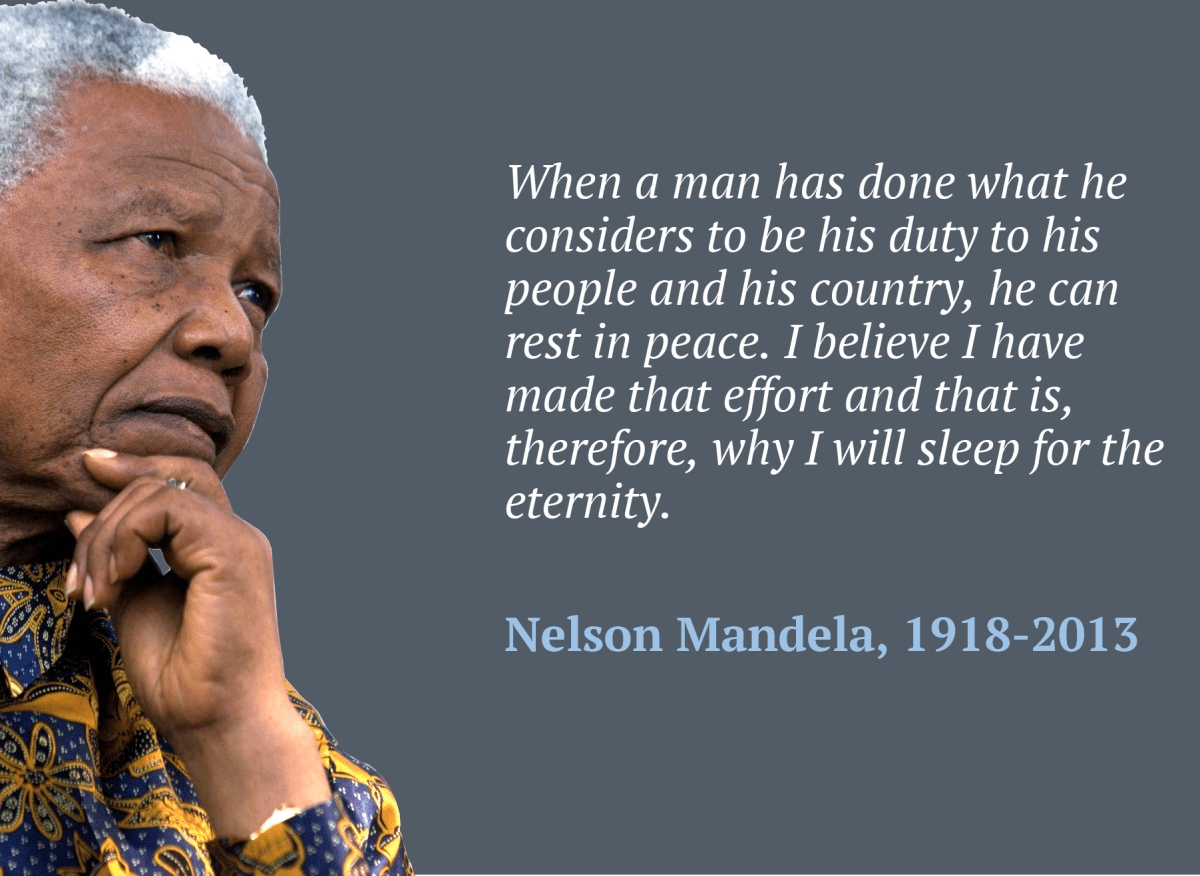
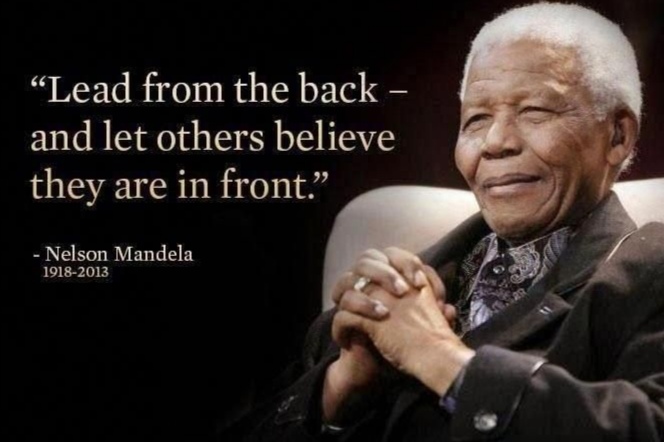
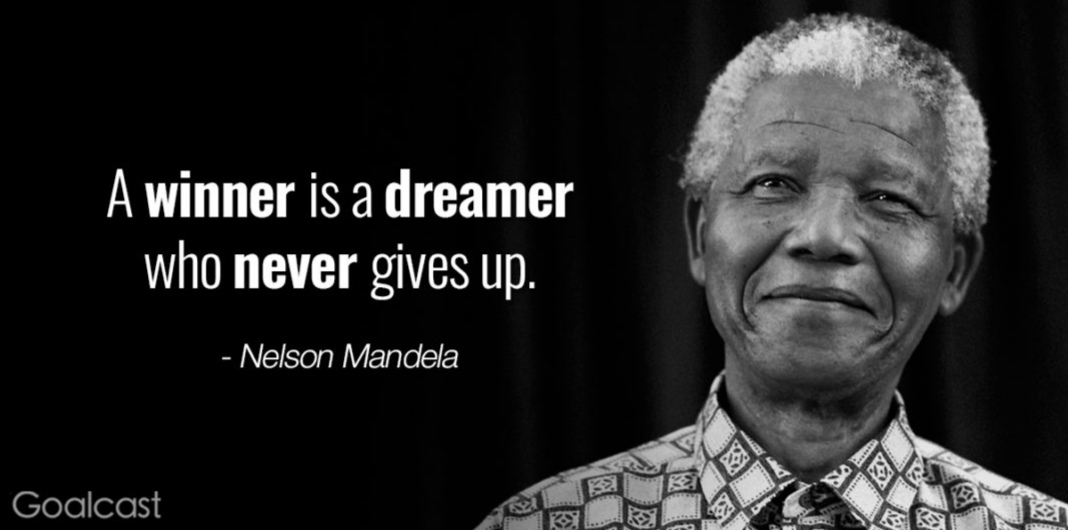
18th July marks the birth of an iconic figure who vanquished South Africa’s apartheid system. The great personality who fought for human rights and was an international peacemaker. This person who played a very vital role in shaping the society and conserving the human rights was Nelson Rolihlahla Mandela.

 “It is easy to break down and destroy.
The heroes are those who make peace and build.” 

 – Nelson Mandela

ABOUT NELSON MANDELA

Nelson Rolihlahla Mandela (18 July 1918 – 5 December 2013) was a South African anti-apartheid revolutionary, who served as President of South Africa from 1994 to 1999. The main focus of his government was on knocking down the apartheid regime by fostering racial reconciliation and tackling institutionalized racism. Nelson Mandela is an iconic figure who was an human rights lawyer, a prisoner of conscience and an international peacemaker. He is that great personality who vanquished South Africa’s apartheid system and was the first democratically elected president of free South Africa. Nelson Mandela was born Nelson Rolihlahla Mandela in Transkei, South Africa on 18 July, 1918. His strategy was to bring change through Legal Revolution but not through actual violence. He began his journey towards by following the path of non-violence, later embracing violence, and then adopting a non-violent approach for negotiation and reconciliation.

ABOUT NELSON MANDELA INTERNATIONAL DAY

Nelson Mandela International Day (or Mandela Day) is celebrated in honor of Nelson Mandela, the former South African President, on his birthday, that is on 18 July. This day was declared officially by the United Nations in November 2009 and the first Mandela Day was thus held on 18 July 2010. There are many other groups who celebrated this day before 2010 also, that is from 18 July 2009.

The UN General Assembly (UNGA) declared 18th July as “Nelson Mandela International Day” for paying tribute and for recognizing his contributions for achieving and promoting peace and freedom. Mandela Day reminds us that “Each individual has the potential and power to bring a positive change, transform and ability to make an impact.”

MESSAGE OF MANDELA DAY CAMPAIGN

Nelson Mandela fought for peace and harmony. He fought for bringing social justice for over 67 years. This day urges the people of Mother Earth to fight poverty and promote peace, reconciliation and cultural diversity.

While establishing this international day, UNGA recognized the values and dedication of Nelson Mandela for serving the humanity. He constantly fought for democracy and for promoting cultural peace throughout the world. Some other values for which he fought are:

  1. Conflict Resolution
  2. Race Relations
  3. Promotion and Protection of Human Rights
  4. Reconciliation
  5. Gender Equality
  6. Rights of Children and other vulnerable groups
  7. Fight against Poverty
  8. Promotion of Social Justice

The contribution of Nelson Mandela to the society can never be measured and his works remind us that “Everyone has the ability and the responsibility to change the world for the better!” Mandela Day is one such occasion which urges all to take action and inspire change.

WHY DO WE CELEBRATE NELSON MANDELA DAY ?

Nelson Mandela International Day is celebrated every year to remember the legacy of a man who shaped the present with his fight for 67 years and provided a better world and society for the future generation. Nelson Mandela changed the 20th century and helped shape the 21st century and future of the world. This day exhorts us to renew the values and principles of Nelson Mandela and to take actions for building a better society.

ENTRY STRATEGIES OF AN ENTREPRENUERSHIP

Entrepreneurship can be defined as the recognition of opportunities and the use of creation of resources to implement innovative ideas for new, thoughtfully planed ventures. The essential characteristic of an entrepreneur is identifying the opportunity and elaborating that opportunity into a formal but it is also important to have an entry strategy while setting up a startup. So, today in this article we are going to learn the entry strategies and risk reduction strategies that are applied by every entrepreneur is explained clearly.

ENTREPRENEURIAL STRATEGIES:

Entrepreneurial strategy involves identifying and choosing among a set of distinct choices that define a company as it translates an idea into a meaningful value proposition. So, setting up a strategy clearly describes ” what not to do? ” that is, a strategy act as a back bone for an entrepreneurship. The four strategies that can be explored for an idea are as follows:

FUNDAMENTAL ENTREPRENEURIAL STRATEGIES

1 INTELLECTUAL PROPERTY STRATEGY:

Entrepreneurs who pursue intellectual property strategy for their ideas choose to invest in control over their underlying innovation in order to construct a value chain through collaboration with incumbent firms in industry to create value for the final end consumers.

  • This type of startups focuses on idea generation and development to avoid the cost of down stream, customer facing activities. because cooperation requires alignment with incumbent activities. Simply, the startup which use this strategy probably choose technological investments with existing systems.

2 DISRUPTION STRATEGY:

This type of strategy highlights about decision to compete directly with incumbents emphasizing commercialization of idea and rapid growth of market share rather than control on ideas of development. Disruption entrepreneur aims to redefine established value chain.

  • Therefore, a disruption startup chose the competition orientation against established firms in the industry by choosing to compete through execution. Disruption strategy founders will inevitably face threat of imitative competition from incumbents and new entrants alike because of choosing invest in execution than in getting control over their idea.
  • Even value chain strategy is also similar to the disruption strategy where entrepreneurs choose to invest in execution rather than control but the only difference is that, they create value with the cooperation of industry incumbents.

3 ARCHITECTURAL STRATEGY:

The final strategy in the entrepreneurial strategy framework is architectural strategy. Unlike the other type of strategies , architectural strategy is about architecting an entire new value chain in the market place rather than boosting the performance of an existing value chain.

  • This type of strategy requires entrepreneurs to figure out how to build a new and integrated value chain that delivers value to customers while also building an economic support by maintaining control over their idea as they compete directly against incumbents.
  • Architectural entrepreneurs establish competitive advantage through the traditional strategic approaches. Compared to other strategies, architectural strategy used entrepreneurs must be committed to their vision and plan.

RISK REDUCTION STRATEGIES:

The situation that threatens the capability of the startup or a company to achieve its financial goals is considered as a risk to the business. There may be ma strategies in order to manage and reduce the financial loss to the company. The three type of risk reduction strategies are as follows:

1 NARROW SCOPE STRATEGY: Narrow-scope strategy offers a small product range to a small number of customer groups to satisfy a particular need. The narrow scope can reduce the risk that the firm will face competition with larger firms. A narrow-scope strategy is vulnerable to the risk that market demand does not materialize as expected. Having a narrow-scope strategy is like putting all your eggs in one basket that is, it reduces some competition-related risks but also increases the risks associated with market uncertainties.

2 BROAD SCOPE STRATEGY: Broad scope strategy highlights portfolio approach dealing with uncertainties about attractiveness of different market segments. By offering a range of products the entrepreneur gains knowledge on whole market through a process of trial and error. A broad-scope strategy reduces risks from market uncertainties, but it increases the exposure of competition. When the risk of competition is great and market uncertainties are minimal, a narrow-scope strategy is more effective at reducing risk but when a new firm entered into market with same sort of creation then, a broad-scope strategy reduces the major risk of uncertainties over customer preferences.

3 IMITATION STRATEGY: Imitation strategy copy’s the best practices of other firms in order to minimize the risk of downside loss associated with new entry in to the market. An imitation strategy has the potential of reducing the entrepreneur’s costs associated with R&D and also reduces the customer uncertainty over the firm. Imitation strategy makes the new entry to look legitimate from day one onwards. This imitation strategy is also known as me too strategy.

Why Group Discussion is important ?

A GD is a methodology used by an organization to gauge whether the candidate has certain personality traits and/or skills that it desires in its members. In this methodology, the group of candidates is given a topic or a situation, given a few minutes to think about the same, and then asked to discuss the it among themselves for 15-20 minutes.

Why GDs :

The reason why institutes put you through a Group discussion and an interview, after testing your technical and conceptual skills in an exam, is to get to know you as a person and gauge how well you will fit in their institute. The Group discussion tests how you function as a part of a team. As a manager, you will always be working in teams, as a member or as a leader. Therefore how you interact in a team becomes an important criterion for your selection. Managers have to work in a team and get best results out of teamwork. That is the reason why management institutes include GD as a component of the selection procedure.

Company’s Perspective :

Companies conduct group discussion after the written test so as to check on your interactive skills and how good you are at communicating with other people. The GD is to check how you behave, participate and contribute in a group, how much importance do you give to the group objective as well as your own, how well do you listen to viewpoints of others and how open-minded are you in accepting views contrary to your own. The aspects which make up a GD are verbal communication, non-verbal behavior, conformation to norms, decision-making ability and cooperation. You should try to be as true as possible to these aspects.

Reasons for having a GD 

  • It helps you to understand a subject more deeply.
  • It improves your ability to think critically.
  • It helps in solving a particular problem.
  • It helps the group to make a particular decision.
  • It gives you the chance to hear other students’ ideas.
  • It improves your listening skills.
  • It increases your confidence in speaking.
  • It can change your attitudes. 

Strategies for Improving GD Skills

  1. Observe : Attend as many seminars and tutorials as possible and notice what other students do. Ask yourself:
  • How do other students make critical comments?
  • How do they ask questions?
  • How do they disagree with or support arguments?
  • What special phrases do they use to show politeness even when they are voicing disagreement?
  • How do they signal to interrupt, ask a question or make a point?

2. Practice : Start practicing your discussion skills in an informal setting or with a small group. Start with asking questions of fellow students. Ask them about the course material. Ask for their opinions. Ask for information or ask for help.

3. Participate : Take every opportunity to take part in social/informal discussions as well as more structured/formal discussion. Start by making small contributions to tutorial discussions; prepare a question to ask, or agree with another speaker’s remarks.

Do’s

  • Speak pleasantly and politely to the group.
  • Respect the contribution of every speaker.
  • Remember that a discussion is not an argument. Learn to disagree politely.
  • Think about your contribution before you speak. How best can you answer the question/ contribute to the topic?
  • Try to stick to the discussion topic. Don’t introduce irrelevant information.
  • Be aware of your body language when you are speaking.
  • Agree with and acknowledge what you find interesting.

Don’t

  • Shout. Use a moderate tone and medium pitch.
  • Lose your temper. A discussion is not an argument.
  • Use too many gestures when you speak. Gestures like finger pointing and table thumping can appear aggressive.
  • Dominate the discussion. Confident speakers should allow quieter students a chance to contribute.
  • Draw too much on personal experience or anecdote. Although some tutors encourage students to reflect on their own experience, remember not to generalise too much.

Book Review: 1984 by George Orwell

Book Plot:

Winston Smith is a low-ranking member of the party. In his country Oceania, everything was controlled by the head of the party who is known as “Big Brother”. There will be cameras fixed everywhere like public places, apartments and even in our own houses including our bedrooms. We will be watching 24×7. The party controlled and monitored every people of the country, they decided everything of what must people talk, write even they controlled people from thinking about something which will be lead the party down. (Thoughtcrime) they say that and punish the people in secret ways. Sometimes people suddenly vaporize from society due to the crimes they commit. These all things made Winston depressed and he wanted to rebel against the party with his lover Julia. They both wanted to rebel against the current party that is ruling the country Oceania. How did they start their plan? With whom did they join to abolish the party? Who helped them? Who was against their ideas? And did they uprooted the party? Are questions will occupy our minds until the end of the book.

About the book:

This book is completely a dystopian novel by George Orwell who is famous for his dystopian and unique novels. Through this book, Orwell beautifully illustrated how it must be to be in the future.
This book was written in 1948 itself. And also adapted as a movie. If you don’t have time to read this full novel you can watch it virtually.
If you think “this plot reminds me of your school history subject” I say No… it’s beyond history. Orwell made a timeless satirical attack on the social and political structures of the world.
People in a higher position will create rules and make us obey them. If we don’t, They will give us what we need most and convince us to obey them. Or They will give pain or fear and persuade us to obey them.
Even though it’s a classic novel. The words are not that difficult. so, if you hate classic books due to their language. You can try this one. You don’t find it hard to follow it.
Why you must read this book?
George Orwell is a genius. Who is loot us from our reality? And left us alone in the place which is created by him. That is none other than his works. So, if you want to escape reality and get yourself into some unbearable works. You must try this one.
If you are a classic lover you can read it and would eventually start to love Orwell’s works.
If you are a literature student. This book and George Orwell’s “Animal Farm” book will help you with major paper and their background studies.

Quotes from this book:

Who controls the past controls the future.Who controls the present controls the past.

If you want to keep a secret, you must also hide it from yourself.

If you loved someone, you loved him, and when you had nothing else to give, you still gave him love.

Power is in tearing human minds to pieces and putting them together again in new shapes of your choosing.

Nelson Mandela International Day

Nelson Mandela was a South African anti apartheid Revolutionary Statesman.

He served as president of South Africa from 1994 to 1999.

Nelson Mandela was first black head of state and the first elected in a fully representative democratic election.

Nelson Mandela is known as Gandhi of South Africa.

Nelson Mandela was born on 18 July 1918.

We died on 5th December 2013.

Nelson Mandela International Day is celebrated on 18 July every year.

Today is 103rd birth anniversary of Nelson Mandela.

Nelson Mandela opposes the racist system of Apartheid in South Africa and dedicated his life to establishing social equality for all.

Nelson Mandela was awarded the prestigious Nobel Peace Prize in 1993.

He involved in anti colonial and African Nationalist politics, joining the AMC in 1943 and co-founding its youth league in 1944.

In 1962, He was arrested, imprisoned and subsequently sentenced to life imprisonment for conspiring to overthrow the state following the Rivonia trial.

He served 27 years in prison.

  • Nelson Mandela was also known as Madiba.
  • Nelson Mandela was birth name Rolihlahla Mandela.
  • Nelson name was given by his Primary school teacher.
  • In 1931, he begin his College degree at University College of Fort hare.
    • Nelson Mandela was expelled for participating in a protest against the universities policies.
  • Nelson Mandela received his law degree from University of South Africa in 1989.
  • The king of his village threatened him and his cousin with arrange marriages but they both ran away.
  • Nelson Mandela along with his fellow AMC member established South Africa’s first black law practice in 1952.
  • Nelson Mandela was banned from leaving the country
    • In order to leave the country he used the name David Motsamayi to get out of country in secret.
  • In prison, he was mentor to to other prisoner and taught them about nonviolent resistance.
  • Nelson Mandela believed that sports has the power to change the world, it has the power to inspire,. It has the power to unite people in a way that letter else does. It speaks to youth in a language they understand. Sport can create hope where one there was only dispair. It is more powerful than government in Breaking Down racial barriers.
  • He was released from prison in 1990 by president Frederick William De klerk.
  • Nelson Mandela was 76 year old when he was elected as president of South Africa.

Theme of national Mandela International Day 2021

  • The theme of this year is One Hand Can Feed Another.
  • Last year’s theme was Take Action, Inspire change.
  • The theme highlighted the importance of Government and citizen working together to build a peaceful equitable and sustainable world for all.

Book Review-The diary of a young girl Anne Frank

Anne Frank (born June 12, 1929, Frankfurt am Main, Germany—died February/March 1945, Bergen-Belsen concentration camp, near Hannover), Jewish girl whose diary of her family’s two years in hiding during the German occupation of the Netherlands became a war classic.

Photo by Ava Sol on Pexels.com

Anne’s father, Otto Frank (1889–1980), a German businessman, moved his wife and two daughters to Amsterdam early in Adolf Hitler’s Nazi government. After German forces conquered the Netherlands in 1941, Anne was forced to switch from a public to a Jewish school. She was given a red-and-white plaid diary for her 13th birthday on June 12, 1942. She started writing in the book that day.

“I hope I will be able to confide in you about anything, as I have never been able to confide in anybody before, and I hope you will be a wonderful source of comfort and support.”

The Franks went into hiding in the backdoor office and warehouse of Otto Frank’s food-products firm on July 6, 1942, when Anne’s sister, Margot, was facing deportation (allegedly to a forced-labor camp).

The Frank family and four other Jews—Hermann and Auguste van Pels and their son, Peter, and Fritz Pfeffer—were confined to the “hidden annex” with the help of a few non-Jewish friends, including Miep Gies, who brought in food and other supplies. During this period, Anne kept a diary, documenting day-to-day life in hiding, from little irritations to the terror of being discovered.

She talked about usual adolescent concerns as well as her future ambitions, which included becoming a journalist or writer. On August 1, 1944, Anne wrote her final diary entry. The annex was discovered three days later by the Gestapo, who were acting on a tip from Dutch informers.

On September 3, 1944, the Frank family was taken to Westerbork, a transit camp in the Netherlands, and then to Auschwitz, a concentration camp in German-occupied Poland, on the last train to leave Westerbork for Auschwitz. The following month, Anne and Margot were moved to Bergen-Belsen.

Anne’s mother died in early January, only days before Auschwitz was liberated on January 18, 1945. The Dutch government determined that Anne and Margot perished in a typhus outbreak in March 1945, just weeks before Bergen-Belsen was liberated, however experts disclosed new evidence in 2015, including examination of archival data and first-hand reports, showing that the sisters might have perished in February 1945.

When Soviet troops seized Auschwitz on January 27, 1945, they discovered Otto Frank sick there.

The papers left behind by the Gestapo were eventually given to Otto Frank by friends who examined the hiding site after the family was apprehended. He discovered Anne’s diary among them, which was later published as Anne Frank: The Diary of a Young Girl (originally in Dutch, 1947).

It follows her emotional evolution in the face of adversity and is precocious in style and insight. “I still think, despite everything, that humans are truly wonderful at heart,” she wrote. The Holocaust Diary, which has been translated into over 65 languages, is the most widely read Holocaust diary, and Anne Frank is undoubtedly the most well-known Holocaust victim.

The Diary was also adapted into a play, which premiered on Broadway in October 1955 and won the Tony Award for Best Play as well as the Pulitzer Prize for Best Drama in 1956. In 1959, George Stevens directed a film adaptation of the book.

The play was controversial: screenwriter Meyer Levin criticised Otto Frank and his chosen screenwriters, Frances Goodrich and Albert Hackett, for sanitising and de-Judaizing the storey in an early version of the play (later realised as a 35-minute radio play) and accused them of sanitising and de-Judaizing the storey.

The drama was revived (with additions) on Broadway in 1997–98 after being played in high schools all around the world.

Photo by Pixabay on Pexels.com

The revised English translation of the Diary, published in 1995, includes material that was cut out of the first version, making it nearly one-third longer than the first. The Frank family’s hideaway on Amsterdam’s Prinsengracht canal has since become a museum that is consistently among the city’s most popular tourist attractions.

ANNE FRANK’S QUOTES

“How wonderful it is that nobody need wait a single moment before starting to improve the world.”

“I know what I want, I have a goal, an opinion, I have a religion and love. Let me be myself and then I am satisfied. I know that I’m a woman, a woman with inward strength and plenty of courage.”

“Everyone has inside of him a piece of good news. The good news is that you don’t know how great you can be! How much you can love! What you can accomplish! And what your potential is!”

“What is done cannot be undone, but one can prevent it happening again.”

“I don’t think of all the misery but of the beauty that still remains.”

EYE GLASSESS OR LENS ??

Whether you choose to wear eyeglasses or contact lenses for vision correction mostly depends on personal preferences. Lifestyle, comfort, convenience, budget and aesthetics should all factor comes into your decision-making process.

I can just say what is the pros and cons of each in order to make you analyze things in more systematic manner.

WHY EYEGLASSESS ?

Pros :

  1. Eyeglasses offer many benefits over contact lenses.
  2. They require very little cleaning and maintenance, you don’t need to touch your eyes to wear them .
  3. Glasses are cheaper than contact lenses in the long run since they don’t need to be replaced as often.
  4. They can adjust the amount of light entering your eye for optimum comfort and vision.
  5. Eyeglass lenses block 100% UV and protect not only the inside of the eye from UV, but the exterior of the eye and eyelids as well.
  6. Wearing glasses reduces the need to touch your eyes, which in turn reduces the likelihood of irritating your eyes or developing an eye infection.
  7. If you have dry or sensitive eyes, glasses won’t exacerbate the problem like contact lenses can.

Cons:

  1. Some people don’t like how they look in glasses and feel it detracts from their facial aesthetics or hides their features.
  2. Some frames can exert constant pressure on your nose and behind your ears, leading to headaches and general discomfort.
  3. Your vision can be obstructed or blurred when they fog up in cold weather.
  4. If you have a strong prescription, your glasses might make your eyes appear unnaturally minified or magnified.
EYE GLASSES

WHY LENS ?

Pros:

  1. Contacts conform to the curvature of your eye, providing a wider field of view and causing less vision distortions and obstructions
  2. Contact lenses don’t get in the way when playing sports and exercising.
  3. Contact lenses won’t clash with what you’re wearing.
  4. Contacts typically aren’t affected by weather conditions and won’t fog up in cold weather like glasses.
  5. If you want to see how you would look with a different eye color, you can experiment with color contact lenses.
  6. Some contact lenses can reshape your cornea while you sleep. Overnight orthokeratology (Ortho-k) temporarily corrects myopia, so you can see clearly the next day without the need for glasses or contacts.

Cons:

  1. If you work at a computer often, wearing contact lenses will likely contribute to symptoms of computer vision syndrome.
  2. Contacts require proper lens care and lens case cleaning each day, to avoid potentially serious eye infections. 
  3. It doesn’t block UV rays as much as eyeglasses.
  4. If you accidentally fall asleep while wearing daily wear contacts, your eyes typically will be dry, gritty, red and irritated when you wake.
  5. Contact Lenses are costlier as it has to be changed periodically
  6. It doesn’t protect you from wind and dust instead it will make eye irritated.
  7. They don’t adjust light entering into your eye.
LENS

Nelson Mandela International Day

Nelson Mandela came into this world on July 18th, 1918. He hailed from a small village in Umtata, South Africa. His entire life story symbolizes a struggle against institutionalized racism in South Africa. It wasn’t easy for him to fight against the prevailing situations, as he was also one of those who were burdened by the impartial system.

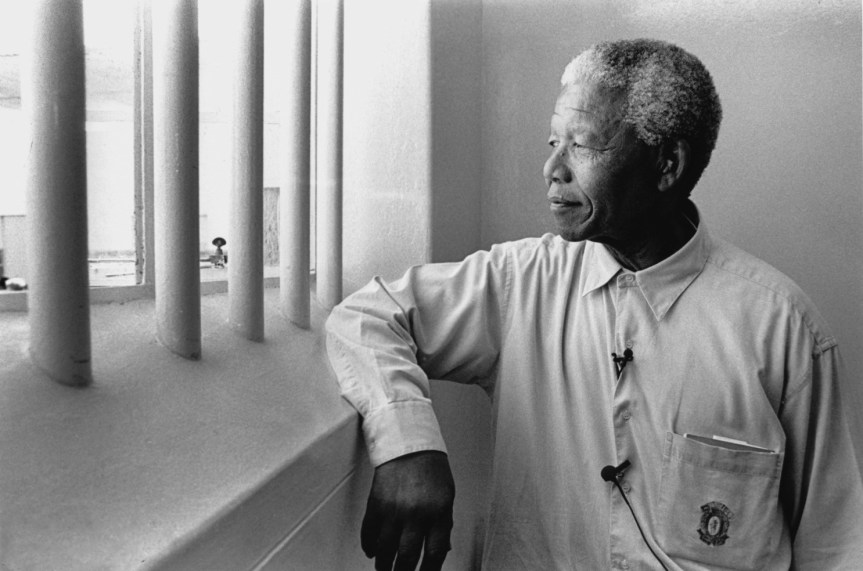
Before getting actively involved in protesting against anti-apartheid fight, Nelson Mandela survived several years of his life being a subject of colonization. As an African child, Mandela suffered being a prey of the European expatriate project that involved ‘civilizing’ native communities. In 1960’s, Nelson Mandela was put behind the bars for standing against the racist regulations of the government. He spent around three decades of his life in prison but did not compromise his demand for seeking equality and justice for the common people.

Being an uncompromising and courageous leader, Nelson Mandela was characterized as a man of strength, integrity and principles. In the year 1994, he alone led the nation to put an end to racial discrimination. He was the 1st black president ever to get nominated in South Africa. He served as the South African President for five years ranging from 1994 to 1999.

After Nelson Mandela retired from his public life, he continued to symbolize the dreams and hopes of an equal and free world. In December 2013, he left this world forever. He was of 95 years at that time. Nelson Mandela had to his credit more than two hundred and fifty awards and honors that included the “1993 Nobel Peace” Prize, the Medal of Freedom, and the Bharat Ratna.

Life of Nelson MandelaHe has conducted comprehensive traveling since his release from prison when he spoke. Nelson Mandela claims: “The biography of Pandit Nehru helped me prepare for my discharge. Who wrote about what’s going on when you leave prison.My daughter Zinzi claims she grew up without a dad who became the nation’s dad when he came back. This has put on my shoulders a huge burden.And wherever I travel, I instantly start missing the familiar–the mine dumps, the uniquely South African color and smell, and especially the individuals. I don’t like being away for a long moment. There’s no place like home for me.Mandela accepted the Nobel Peace Prize as a tribute to all those who worked for peace and opposed racism. This individual has been awarded as much as it has been to the ANC and all the individuals of South Africa.

Outsourcing of Services

A Business refers to a set of organised activities for production and exchange of goods and services, with an objective to earn profits.

It includes several services to complete the process for managing business enterprise.

There are certain important services that are rendered outside the business to enable the enterprise perform its primary functions smoothly.

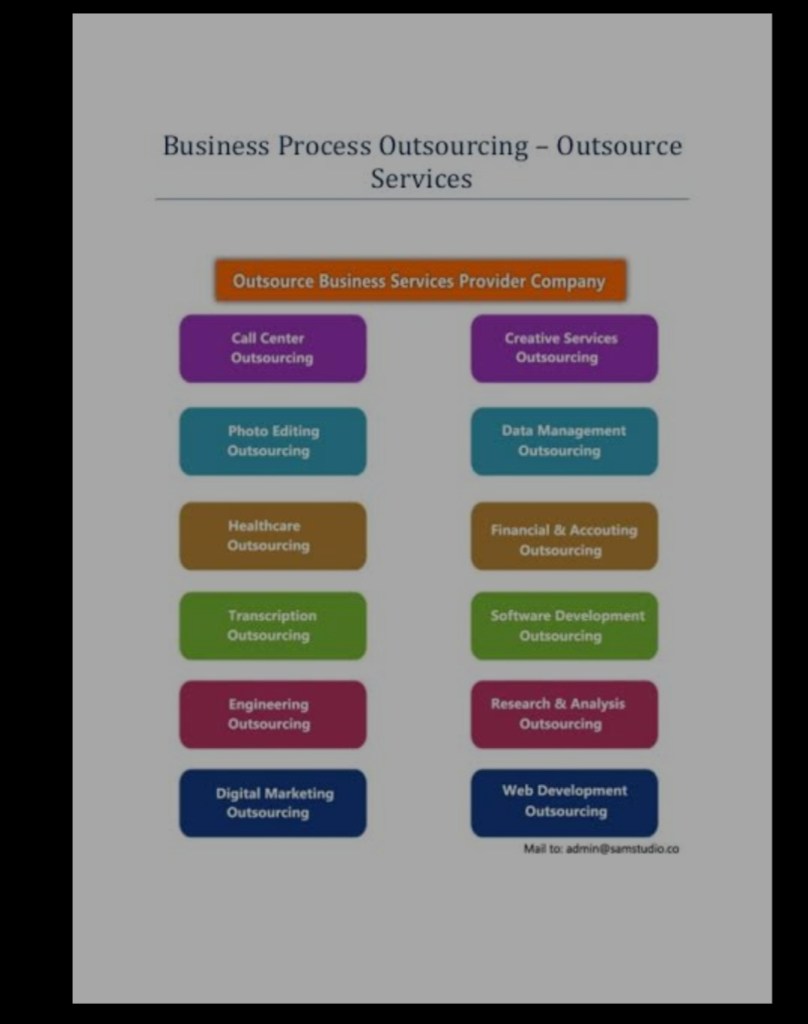
These services include financial services , advertising services , customer support services , etc.

Services done through specialised agencies outside the business enterprise are known as outsourcing of services .

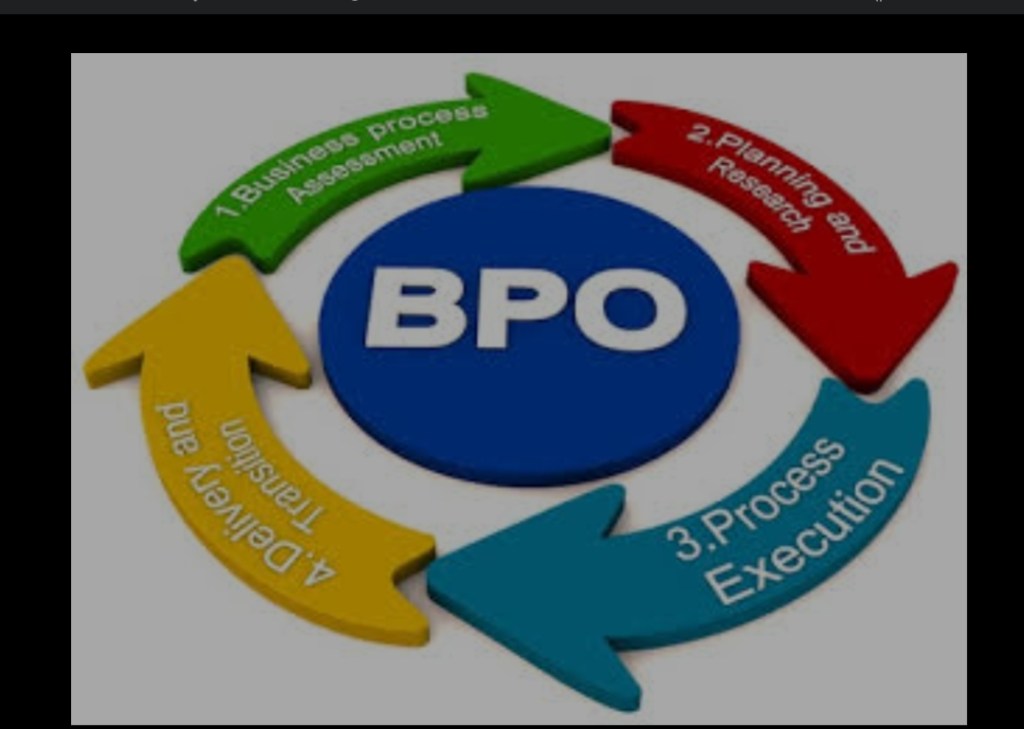
This practice is called Business Process Outsourcing (BPO ) .

Outsourcing means getting an external source service rather than an internal source of the enterprise.

Hence , instead of setting up it’s own department business enterprise outsource it from other external specialised agencies.

A business enterprise prefers to outsource those services that are specialised in nature and performed on a regular basis. These services include accounting data processing, content development , customer care , customer contact , legal services , repair work , advertising services, fittings , employment of employees , training of employees, payroll accounting,etc.

The outside company,  the service provider or a third-party provider, arranges for its own system of labour and technical activities  to perform the tasks or services by the hired  company .

In today’s competitive environment ,the main focus is to concentrate on core specialization and core – competency areas and outsource the rest activities. 

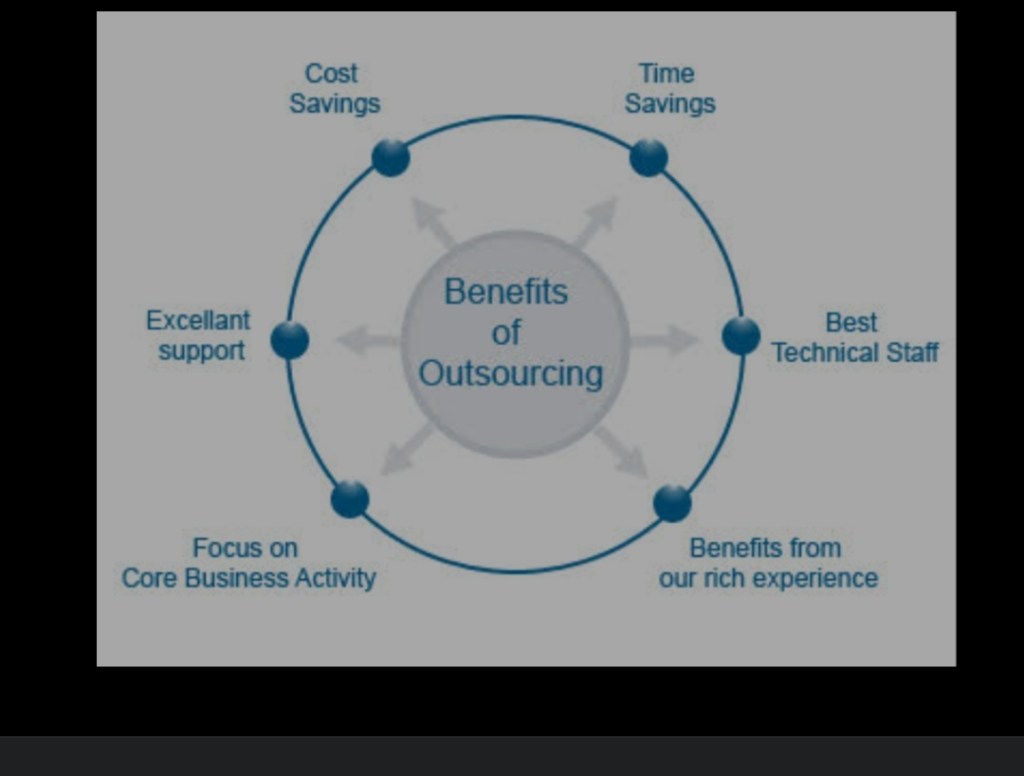
The main intention of outsourcing service is that the business enterprise can concentrate on its core areas of competence and leave the additional work to be outsourced . Outsourcing of services is preferred for better quality and economy .As a result a business enterprise can focus its core task through the front office and leave the rest work meant for the outsourcing.

Business enterprises  often outsource as a way to lower costs, improve efficiencies and gain speed . The benefit underlying this  service is that because the third-party provider focuses on that particular task, it is able to do it better, faster and cheaper than the hiring company could.

Given such benefits, companies often decide to outsource supporting functions within their businesses so they can focus their resources more specifically on their core competencies, thereby helping them gain competitive advantages in the market. ___________________________________________

Concept of BPO and KPO 

Business Process Outsourcing (BPO ) :- 

BPO involves contacting external agencies for performing specific business functions . 

Services like call centre jobs meant for customers , contact and payroll preparation , accounting services , courier services , advertising services , customer related services , etc. are some BPO jobs .

BPO job is often divided into two categories 

• Bank office outsourcing which includes internal business functions such as billing , purchasing etc. 

• Front office Outsourcing which includes customer related services such as marketing , technical support etc.

five BPO exporters according to NASSCOM are Genpact , TCS , WNS Global Services , Wipro and Aegis LTD.

 Broadly there are a few different types of BPO  based on the distance between the two members of the relationship. These types are:

On – shoring :- . Relocating work or services to lower-cost locations in the company’s own country.

Off-shoring:- Relocating work or services to third-party providers overseas.

Near-shoring:- . Relocating work or services to people in nearby, often bordering regions and countries

BPO helps the company to focus on its core competencies without being burdened with routine activities. It helps in increasing the speed of various business processes  and allows business enterprises to retain their entrepreneurial speed and agility .

Knowledge Process Outsourcing ( KPO ) :-

KPO stands for knowledge process outsourcing. Outsourcing of knowledge results in the emergence of a new business activity known as KPO .

 Knowledge process is a high value added process that depends on the skills , knowledge and experience of the people carrying out various activities .

KPO calls for application of highly specialised knowledge .

India still maintains the competitive advantage for providing the most cost – effective and high quantity manpower . KPO derives its strength from the depth of knowledge , experience and judgement factor.

The scope of KPO is vast and it covers information technology (IT) enabled services ,legal processes , intellectual property patent related services , engineering services , web development application , CAD / CAM applications , business research analytics ,legal research , clinical research , publishing market research, etc .

Advantages of Outsourcing :-

• Getting good quality services :-  A business enterprise cannot be expected to have specialization in all activities . As a result , the need for outsourcing services is generally necessary.  Expert advice from outside agencies facilitates success of the business.

• Concentrating on core activities :-  Outsourcing ensures overall better performance of the business enterprise as it can concentrate on core activities of its strength and competence . This has a positive effect on the quantity of service.

• Avoiding Labour Trouble :- Outsourcing reduces the employee related problems as the agencies include their own staff which are not included as enterprise staff . 

• Cost effective Services :- Sometimes , it is economical to outsource some services instead of maintaining a separate department for it which may cost more than expected budget and leads to increase in cost production.

• Avoiding Fixed Investment :- Instead of investing for a separate department a business enterprise gets service from outsourcing . This results in investment savings which can be used for profiting business .

Hence , outsourcing has been viewed as a way to lower costs and gain efficiencies, it is increasingly becoming a strategic tool for companies.

___________________________________________

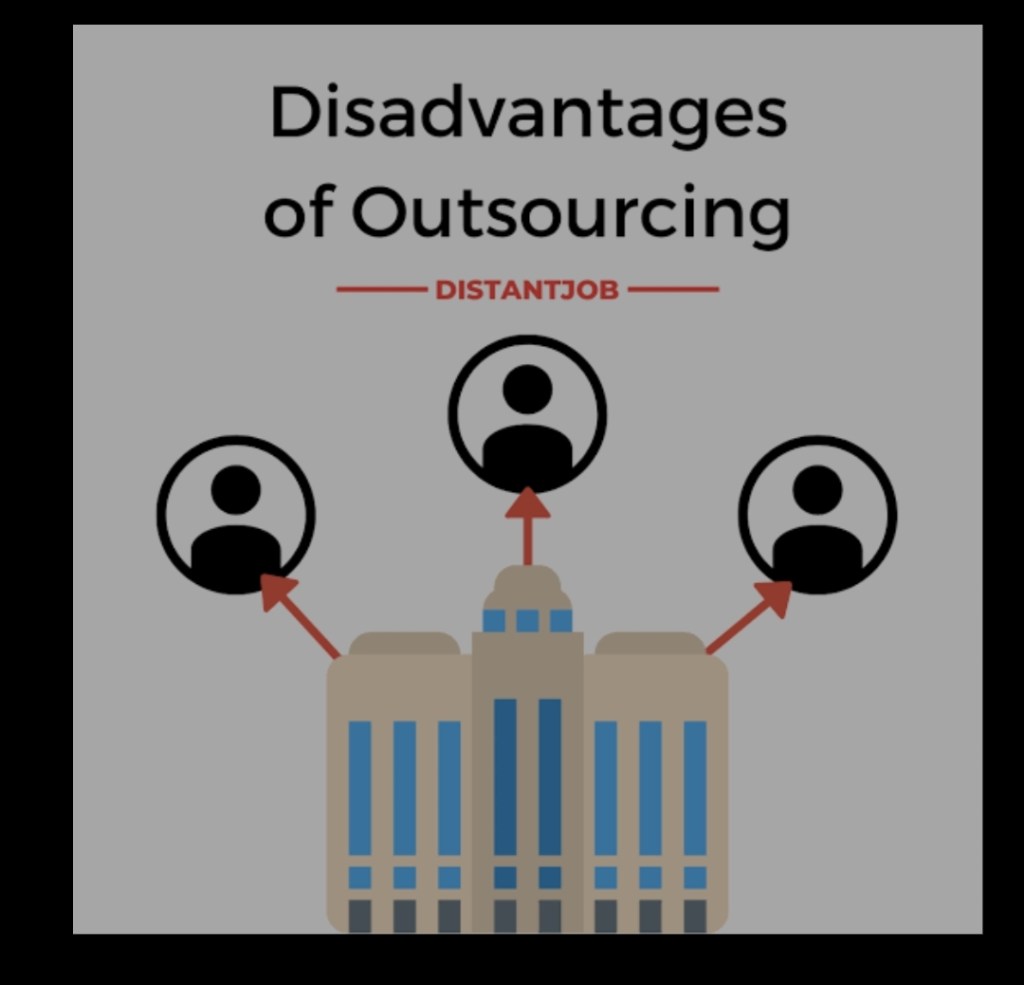
Disadvantages of Outsourcing .

There are certain Disadvantages that come along with outsourcing .

Disadvantages such as  ,

• Outsourcing Supplier No Longer Able To Supply the service to the Business enterprise which can cause emergency problems .

•. Confidentiality Risk that a business enterprise takes when it selects the option of Outsourcing .

•  By giving away a function of business to an outsource the  enterprise gains the advantage of having an expert for the service but  loses control over that particular function .

• The service may Be more costly than actually expected causing an increase in cost of production.

• Maintaining and securing a trusted relationship is essential in outsourcing efforts and is more complex than establishing service levels and relationships.

Despite disadvantages , outsourcing is opted by my many business enterprises .

The  disadvantages or problems could be avoided by having a trusteeship outsourcing contract and by  examining service level agreements, timeframes ,  rewards, and regular review strategies . 

___________________________________________

What is communication skills

What is communication? What do you understand by communication skills? Why it is important to have a communication?

Imagine your life with being able to communicate your thoughts. You will feel frustrated because, in that situation you won’t be able to convey your thoughts, share your idea and express your emotions.

Just saying something is not enough. Unless what you have said has made an impact, there has been no successful communication.

Excellent communication skills are important and will take you far in life. From your professional ambitions, to your personal goals, communication skills play an important role in each. Therefore, its importance cannot be stressed enough. However, there are many people who struggle with communication. There could be many reasons behind it. But one need not worry as communication skills can be worked upon.

 Being able to communicate effectively is one of the most important life skills to learn. Communication is defined as transferring information to produce greater understanding. It can be done vocally, through written media, visually or non-verbally. All of these means of communication are essential Soft Skills that are vital for a successful Career.

Communication plays a vital role in human life. It helps facilitate the exchange of information and knowledge, and develop relationships with others. Therefore, the importance of communication skills in our day-to-day life cannot be underestimated.

Communication skills are the abilities you use when giving and receiving different types of information.

Communication skills can be defined as the skills used in practical life, whereby a person conveys ideas, concepts, or information to others. Another person, in turn, responds to that message according to his understanding of it.

Communication skills play a major role in promoting the individual, whether when applying for a job, qualifying for a specific program that depends on competition between him and others, entering one of the elections, proposing to a girl, or sending a meaningful message, etc.

Having strong communication skills aids in all aspects of life – from professional life to personal life and everything that falls in between. From a business standpoint, all transactions result from communication. Good communication skills are essential to allow others and yourself to understand information more accurately and quickly.

In contrast, poor communication skills lead to frequent misunderstanding and frustration. In a 2016 LinkedIn survey conducted in the United States, communication topped the list of the most sought-after soft skills among employers.

Communication skills have become one of the basic requirements for personal and institutional development.

Well-developed communication skills are essential for a child’s academic success and successful future career. At all levels of education, students should be able to communicate effectively.

Communication skills are an essential leadership function and a major characteristic of a good leader.

Communication skills and effective leadership styles are closely intertwined. Lack of communication skills can make team members uncomfortable and unenthusiastic about their work while good communication skills help a team work together to achieve the desired goals.

Communication skills are also very important in business. They can help foster a good working relationship between you and your employees, which in turn can improve morale and efficiency.

Communication skills help you develop meaningful relationships with subordinates, change their attitudes, raise their spirits, and seek their cooperation.