‘Macbeth’ and ‘Throne of Blood’. Does adaptation distorts original text?

Adapting material from some origin is not something new that the film industry invented. Classical Greek playwrights adapted myths that had been passed in through oral tradition. And as soon as the
cinematographers recognized that presenting a story in moving picture required “good story”, so they started adapting story from novels, plays, short stories. Robert Stam discusses different sources of hostility towards the practice of adaptation. According to him, many have long viewed literature as being superior to film. He goes on to analyze the process of adaptation and the ways in which tie and
space are used differently in the two mediums. As per his view, “fidelity in adaptation is literally impossible. A filmic adaptation is automatically different and original due to the change of medium.”
(Downloaded from Google.com)

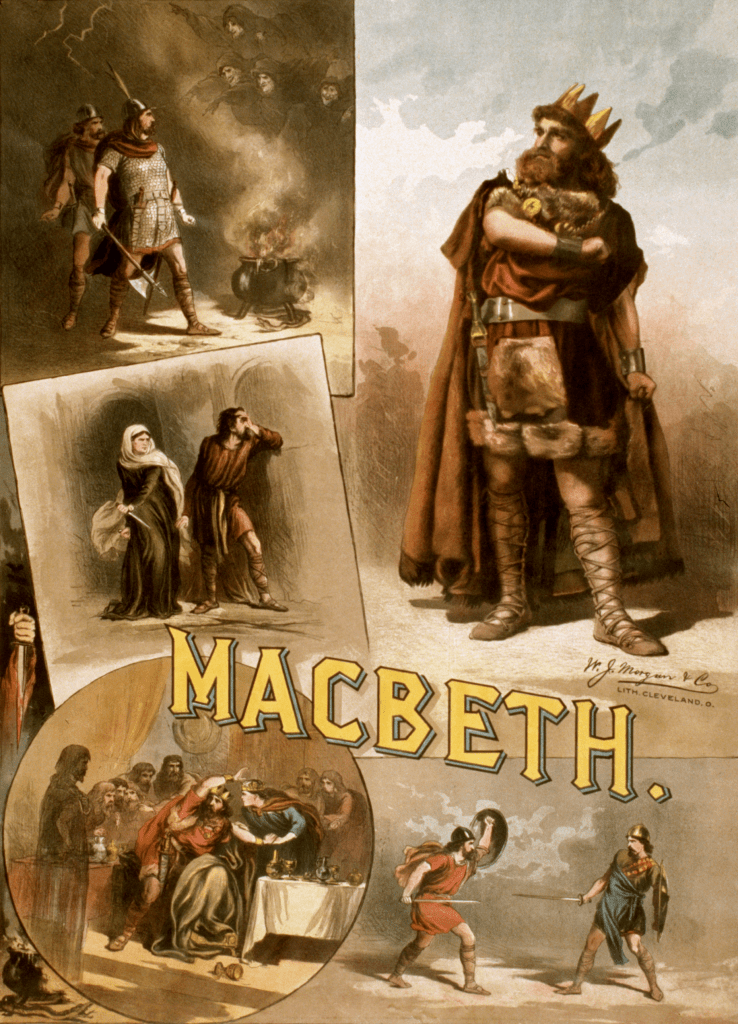
Macbeth’ is one of the finest and acclaimed works by Shakespeare. The play also has an easy to understand plot line which has lent itself to numerous adaptations.
(Downloaded from Google.com)

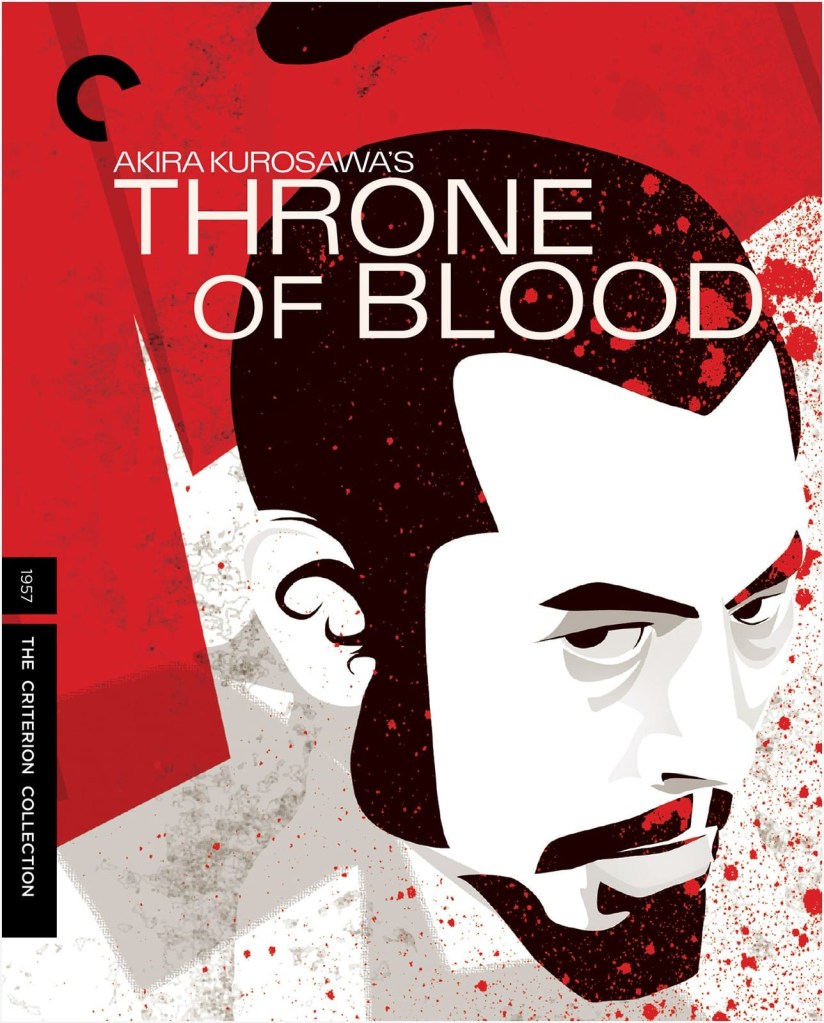
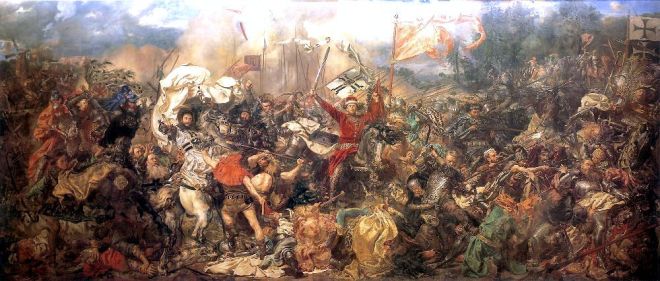
And one of those notable adaptations is the ‘Throne of Blood’ by Akira Kurosawa set in feudal Japan. Needless to mention that the central themes of the movie consist of tragedy, treachery, credulity and fallacy. However, to commence with the dissimilarities between the play Macbeth and Kurosawa’s movie, one among the other possible differences is their depictions of the battle at the opening stages of the plot.
(Downloaded from Google.com)

The play Macbeth opens with grotesque imagery of the revolt, and the weather all muddles up, as informed by the witches seen in medias res (amidst) of their conversation. The captain reporting about the battle even describes Macbeth as unseeming one of his opponents. This type of gory imagery, however, is nowhere to be found at the start of Kurosawa’s film ‘Throne of Blood’,
(Downloaded from Google.com)

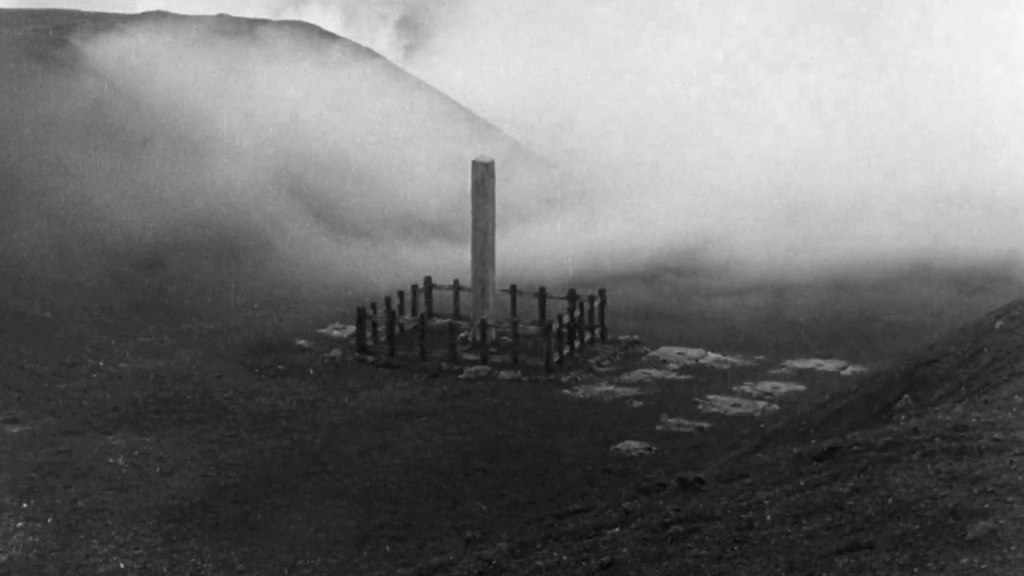
instead it opens with the vast fog with a seemingly deserted and peaceful castle depicted behind the fog with a lamenting song, “Look upon the ruins of the castle of delusion haunted…”. It also features various captains reporting about the battle, but there are no depictions about the battle. The use of fog and the lack of violence, in the opening scene, set an uncertain tone for the rest of the film, and Washizu is not seen killing anyone that makes his future actions even more shocking. In fact, we witness Washizu’s innocence when he strongly resists the prophecy. As wherein Macbeth, the brutal portrayal of the battle in the beginning set a violent and dark tone right away, and thus, it makes Macbeth’s future killings somewhat less surprising. The shock factor of Washizu’s actions is also due o the fact that there are no witches at the start of the movie.
(Downloaded from Google.com)

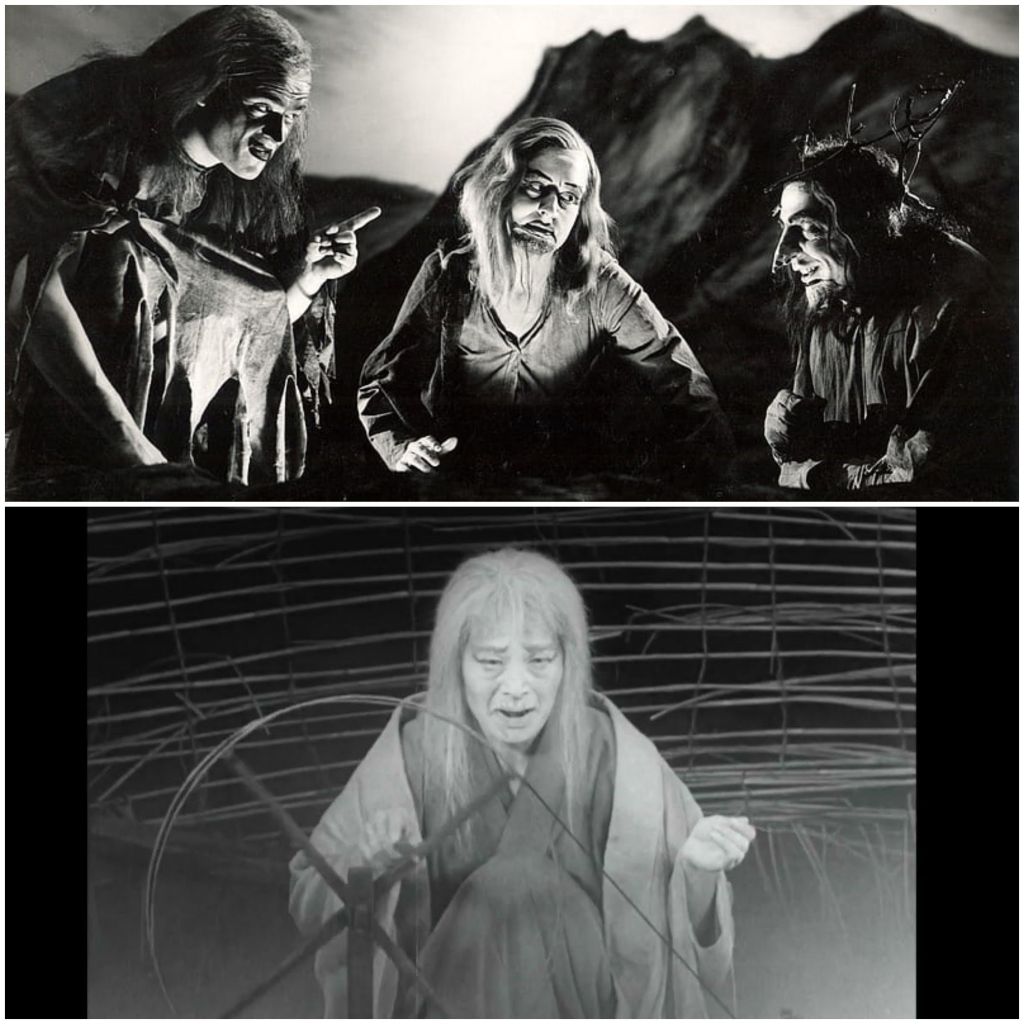
On the other hand, we encounter that the witches start the play by invoking the name of Macbeth, leaving a sense of suspicion in the mind of the reader that Macbeth may not be who he appears. In the movie, three witches are replaced with a single-spirit who is seen chanting a song that introduces Japanese traditions, Buddhism and feelings of humanity. The song mentioning karma and reincarnation comes straight from the Buddhist beliefs.

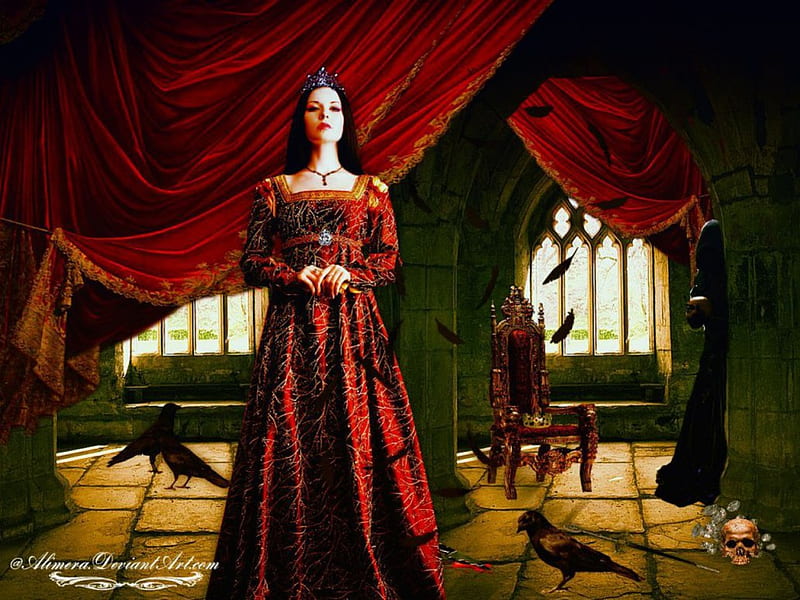
Kurosawa’s Throne of Blood and Shakespeare’s Macbeth also differ greatly in their portrayals of Lady Macbeth and Lady Asaji respectively.
(Downloaded from Google.com)

In the play, Lady Macbeth makes her presence and intentions felt in her very first moments. She states, “Fill me from the crown to the toe topful of direst cruelty. Me thick my blood. Stop up the access and passage to remorse.” This quotation by her immediately warns the reader of her growing plans of evil.
(Downloaded from Google.com)

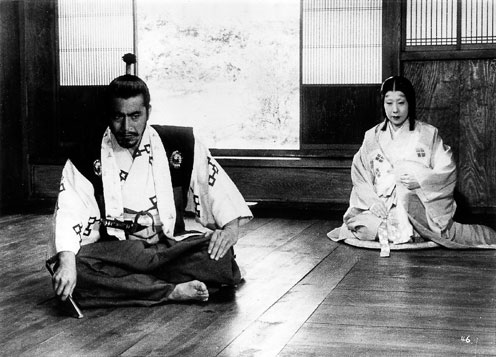
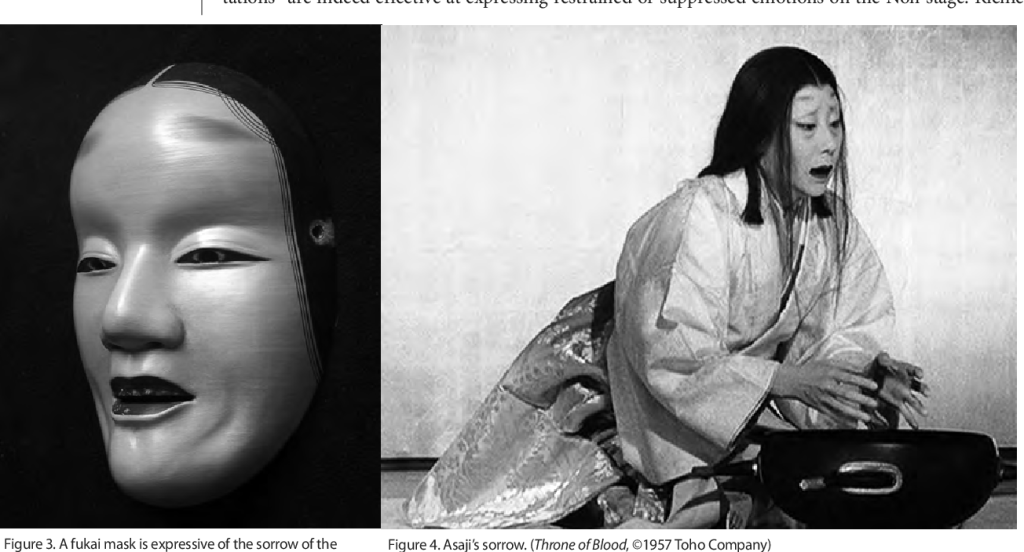
Contrarily, in the movie, Lady Asaji (the equivalent to Lady Macbeth) makes it much more subtle entrance. She is first seen sitting peacefully in Washizu’s castle appearing as submerged in deep contemplation. Throughout her attempts to convince Washizu to kill Tshuzuki, she remains completely sedentary and shows no sign of any emotion, unlike Lady Macbeth who passionately uses strong imagery and vehement speech to ty to persuade Macbeth. And Asaji’s fixed expressions portray the use of Noh mask. As far as the movie is concerned, predominantly the character of Asaji, Kurosawa has adopted the aesthetic of the Noh elements.
(Downloaded from Google.com)

It’s a cultural asset of Japanese theatre. It’s a classical form of dance-drama originated in Japan, and is popular since 14th century. There are several types of these masks used in Japanese theatre. And surprisingly, they are used by Kurosawa commendably through dramatis personae of Asaji. Director Kurosawa was overwhelmingly magnetized by Noh, “I like [Noh] because it is the real heart, the core of all Japanese drama. Its degree of compression is extreme, and it is full of symbols, full of subtlety. It is as though the actors and the audience are engaged in a kind of contest and as though this contest involves the entire Japanese cultural heritage . . . I wanted to use the way that Noh actors have of moving their bodies, the way they have of walking, and the general composition which the Noh stage provides.” (Extracted from an article by Minae Yamamoto Savas)

Lady Macbeth does not give Macbeth much of a reason to kill Duncan other than to solely attain power. Lady Asaji, on the other side, presents Washizu with the idea that Miki will inform about the prophecy to Tsuzuki that Washizu will ascend to the throne which in turn will lead to Washizu’s death at the hands of Tsuzuki. Despite her reserved nature, she is very deceptive and possesses contriving persona as she uses the prophecy of the witch to implant fear in the mind of Washizu. She also tries to justify the killing of Tsuzuki because Tsuzuki himself attained his throne by murdering someone, and also attempts to convince him that deep down Washizu himself carrying and watering the ambition to attain power, which is also the first time that she looks directly at him in the film. Lady Asaji like Lady Macbeth is a strong evil presence although she is portrayed in a much different manner.

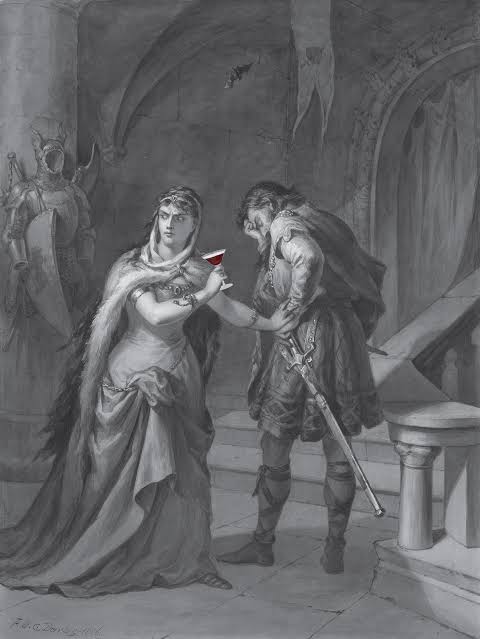
Another difference between the movie and the play is existence of the lack of recognition of eternal ramification for Washizu’s actions in the movie, whereass, in the play, apprehension regarding the afterlife plays a prominent role in Macbeth’s psychological struggles with respect to his decision to kill Duncan.
(Downloaded from Google.com)

In Act 2, scene 1, Macbeth states, “I go, and it is done. The bell invites me. Hear it not Duncan, for it is a knell that summons thee to heaven or to hell.” He knowingly chooses temporal power on earth rather than eternal glory in heaven, a decision that he later realizes that he cannot undo which leads to his supposedly eternal damnation in hell. And in Kurosawa’s Throne of Blood, however, heaven and hell are never referred to. This is ofcourse largely because of the film’s Japanese origin. Instead, it’s Washizu’s contemplation of the goodness of his friend Miki that drives his inner conflict perpetrated by his wife.

The adaptation of literary works into films do distorts the original text. But we should not forget that these adaptations, like what Kurosawa did, are filmed establishing the text on different period of time, background, and geo-political settings. Although film was initially regarded by some as sucking the life out of a literary text, a view forcefully articulated by Theodore Dreiser in 1932, “Film adaptation of novels is not so much a belittling as a debauching process, which works harm to the mind of the entire world. For the debauching of any good piece of literature is – well, what? Criminal? Ignorant? Or both? I leave it to the reader.”


Citations

Which is the most favourite beach destination for Indians?see report.

A new search report from US-based vacation rental firm Airbnb reveals that for domestic travellers, Kerala is a more popular beach destination than Goa, apart from the hills of Himachal Pradesh and Uttarakhand, as well as the North-Eastern regions.

Under these categories, Airbnb saw over 375 percent increase in searches for Kerala from Q3 2021 to Q3 2022, followed by Goa (almost 275 percent increase in searches) and Pondicherry (over 200 percent increase).

The report, which compared search data from Q3 2021 to Q3 2022, also stated that hill stations of Uttarakhand witnessed over 100 percent increase in searches, while Himachal Pradesh saw over 50 percent rise in the same period.

More importantly, the North Eastern region has proved to be a trending destination among travellers. Airbnb’s search data showed an increase of over 450 percent in searches for stays in Meghalaya, over 400 percent increase in searches for Assam, and almost 300 percent increase in searches for Nagaland from Q3 2021 to Q-3 2022.

India climbs to 5th spot in top global 500 list released by Hurun.

India, with 20 of the most valuable companies in the world, has moved into the fifth position among countries that are home to the world’s top 500 firms. Last year, it ranked ninth with eight companies. The US continued to top the charts, according to the 2022 Hurun Global 500 list.

Of the 20 Indian companies featuring on the list this year, 11 are based in Mumbai, four in Ahmedabad and one each in Noida, New Delhi, Bengaluru and Kolkata. The list, released by the Hurun Research Institute, is a compilation of the 500 most valuable non-state-controlled companies in the world. Companies were ranked according to their market capitalisation (for listed companies) and valuations for non-listed companies.

Led by energy giant Reliance Industries with market capitalisation of $202 billion, the list includes Tata Consultancy ($139 billion) and HDFC Bank ($97 billion).

Billionaire Gautam Adani controlled Adani Group has debuted in the global top 500 companies list with four companies — Adani Enterprises ($63 billion), Adani Transmission ($44 billion), Adani Total Gas ($43 billion) and Adani Green Energy ($40 billion). The other new entrants in the list from India include ITC ($52 billion), Avenue Supermarts ($33 billion), Axis Bank ($33 billion), Bajaj Finserv ($32 billion) and Larson & Toubro ($32 billion)

Powerhouse behind Good American and SKIMS

Joining as a guest in season 14 of Shark tank, Emma Grede is a self-made businesswomen and the first black women to hold an investor position on the popular ABC show, Shark Tank.

In 2008, she established the marketing firm ITB Worldwide for fashion and entertainment.

She is also known for brands such as SKIMS, Good American and Safely.

She is also the chairwoman of the Fifteen Percent Pledge, a campaign that calls on stores to provide Black-owned firms 15% of their shelf space.

The Kardashian clan

Grede is a close business partner with the Kardashian-Jenner family, being the co-founder and CEO of Good American, a size-inclusive clothing line, in 2016 with Khloe Kardashian.

She is a founding partner and the chief product officer of shapewear company SKIMS, owned by Kim Kardashian where her husband is the CEO.

Along with Kris Jenner, she also co-founded the plant-based cleaning company Safely.

History and the start of the career

Born and raised in East London, England by a single mother, she started a side job when she was 12 years old and used her savings to purchase fashion magazines.

She attended the London College of Fashion to study business and left after landing an internship at Gucci.

Post that she quickly drew the attention of Inca Productions, one of Europe’s top producers of fashion shows and events.

Emma oversaw the department that handled sponsorship and endorsement deals after beginning as a producer.

She helped Inca establish the field of “designer collaborations,” which are partnerships between high fashion and consumer brands.

She did this by working with some of today’s top designers, including Alexander McQueen, Christopher Kane, Vivienne Westwood, and Zac Posen, as well as companies like Chivas, Mercedes-Benz, and Sky.

itb

Emma was appointed managing director of the newly established Independent Talent Group and Saturday Group joint venture, ITB, which represents brands’ interests in the entertainment industry, in 2008.

She was appointed CEO of ITB Group when the company bought the licensing firm Brand 360 in 2010.

She is currently the chairman of the business, which has offices in London, New York, and Los Angeles and serves customers like H&M, Calvin Klein, and Net-a-Porter.

ITB Group is active in the fields of artist representation, brand development, and entertainment marketing.

Good American and beyond

As a co-founder she established the Good American company in 2016 with Khloe Kardashian .

It is a US-based luxury clothing brand that supports the idea of a healthy physique and offers a wide range of sizes.

Sales of upwards of $1 million on the first day of the brand’s launch in October 2016 made it the largest apparel launch in history, further demonstrating a void in the market before Good American’s entry.

Instead of the straight body found in the traditional fashion establishment, Good American has been created to serve to a curvier, sexier, and stronger type of woman.

The company backs the nonprofit Step Up, which assists young women in reaching their full potential.

Soon after collaborating with Khloe’s sister and celebrity Kim Kardashian, they launched SKIMS, a all-women type shapewear affordable by the masses.

Recently she also collaborated with Kris Jenner herself for the plant based cleaning company Safely.

Emma Grede with her husband Jens Grede and four children, Grey, Lola, and twins Lake and Rafferty

Today, due to accumulating massive amount of success with so many brands, Forbes declared Emma Grede as one of the top 100 in America’s self-made woman.

Currently she has a net worth of $360 million and is happily married to Swedish entrepreneur Jens Grede. the couple reside in Los angles with their four kids.

Web Series

Web series

Introduction

The rise of Web series,episodic video entertainment produced for the internet and mobile devices and look into the motivations of their creators which first emerged in the late 1990s and became more prominent in the early 2000s.

Definition:Web SeriesAlso called Web Shows,A series of scripted or non scripted online videos that are available in the form of episodes and seasons uploaded on Websites.Web Shows,A series of scripted or non scripted online videos that are available in the form of episodes and seasons uploaded on Websites.

  In early days Individuals had to watch their favourite shows on Television with time barriers and even with a trauma of missing shows because there were no any features that can recap or replay the missed episodes.But Nowadays it’s became easy to resume or play any show anywhere that are broadcasting on websites.An individual can access for their entertainment ,interest and for their spending time.Individuals make up over 70% of the population of India,and the majority of them use the Internet.The new generation’s tendency is now using the internet.Due to the tendency of young people to become addicted to social Media,web series are easily produced and are becoming more and more popular in India.

Types of Web Series 

It is based on genre are given below:

  • Action/Thriller/crime 
  • Fantasy/Romantic
  • Comedy/Drama
  • Documentary
  • Anime
  • Horror
  • Sci-fi
  • For Children
  • Anthology
  • Sports
  • Award-Winning
  • Bollywood/Hollywood
  • Hindi/English/Bengali/ Malayalam/Telugu/Tamil/Marathi 
  • Stand-up Comedy 

 Providers of Web Series

      Websites called Providers on which all series are available to watch anytime anywhere.Out of them, there are many series available free to watch but for more to watch one have to subscribe or can say have to take subscription (Amount are different for different websites).

Here are those website:

  • Netflix 
  • Amazon Prime Video 
  • Hotstar
  • Jio Cinema 
  • MX Player 
  • Voot
  • Zee5 and more.

   On these platforms individuals can watch their favourite and interest based series, movies and episodes that inspires one whether they want to watch episode to episode or binge-watching.

Binge-watch– The practice of watching content like streaming services for a long time span, usually a single series or show.

In India it’s going fastest in this field of watching Web Series/Shows. In this context Hum log, India’s first series, debuted in 1984-1985 and ran for 154 episodes,making it the longest series in India history at the time of its finale. A 60 million strong audience watched it. The last episode lasted approximately for 55 minutes,while each episode lasted around 25 minutes.

And now web series have become more popular as it provides all types of entertainment and the majority of the series at the end leave some moral for the viewers. It has the chance to “go viral” by being viewed online and by people all over the world. It also has the potential to be “picked up,” or given a distribution deal, by well-known TV and film studios. There have been numerous web series awarded their own television shows.

Web series is the new favorite entertainment source among Indian youth.

The OTT platforms and web series are getting increasingly popular among the youth especially during the COVID -19 lockdown and also post pandemic too. Many research points out that the OTT platforms are a much more customized medium than television and the youth can more relate to the content of the new breed of web series. The recent breed of Indian web series is causing a paradigm shift from traditional television viewing among millennials. It’s a further shift of a traditional audience of a film from 70mm theatre screen and 40 inches television to ultimately in 6 inches mobile screen.

A web series is a series of scripted or non-scripted online videos, generally in episodic form, released on the Internet and part of the web television medium”.  To put it simply, a web series is a series of video episodes that are released over time to tell a story, over the internet.

A survey conducted by Adamas University stated that.

Netflix is the most popular platform with 62.8% followed by Amazon Prime with 53.1% and Hotstar (51.3%). However, MX Player and Hoichoi are not far behind. Some not so popular names include TVF, Addatimes, Popcorn, Viu, Zee5, etc. Voot is being watched by 21% of the respondents.

The survey also found out that the comedy genre was preferred by 82% of the respondents whereas as many as 75% said they also like romance genre. The other popular genres which the audience desired are action, crime, and drama. A small portion of the audience said they should bring out more content based on sci-fi and horror stories. So, we also have viewership for and space for such content and it also provides a scope for profits. But, the comedy and romance genre dominates. So, while making web series, the producers can focus on diverse content to attract a larger audience.

Some of the most popular among the respondents are Sacred games, Byomkesh, Kota factory, Little things, Girl in the City, Mirzapur, Stories by Tagore, A Family man, Ghost stories, etc. So, we can say that the youth are not only consuming international content but also Indian content.

Psychology

Psychology has become a very important and popular subject today. It deals with many problems of everyday life. Psychology helps us to understand the behaviour of people around us, to find out why they behave differently and what forces are responsible to make them so different from others.It tries to explain wide array of factors involved in what we human beings do. The principles explained by psychology give us a rational basis of understanding of what we and others do. Psychology has been defined in many ways. In ancient days people were analysing the behavioural aspects on the basis of philosophy. They believed that there is a soul in every individual and this is responsible for all our activities.
This view led to the opinion that the subject matter of psychology must be the study of soul. But this definition could not answer the questions regarding the existence of soul and its accessibility for study. This condition led to a new definition by Greek philosophers who defined psychology as a ‘science of mind’. But this definition was also rejected on the same grounds as soul was rejected.

Gradually, as a result of the development of scientific outlook people started thinking on scientific basis and began to define psychology as a science of behaviour. Finally, it is JB Watson (1913) defined psychology as a science of behaviour of human as well as animal beings.Today this is the most accepted definition. In this definition the term behaviour includes the cognitive activities like thinking, reasoning, intelligence, imagining, memory, etc., co-native activities like walking, dancing, fighting, attacking and other action tendencies and also the affective activities like feeling, joy, happiness, sympathy, anger, jealousy, etc. in a person. This definition also includes the behaviour not only of human beings and animals, but also all living organisms and their mental processes.

Psychologists do experiments and make observations which others can repeat; they obtain data often in the form of quantitative measurements which others can verify. Like any other positive science psychology is also systematic in its approach. Measurement in psychology is often more difficult of course, than it is in other sciences.However, psychologists have devised many ingenious tests to assign numbers to data. Psychology is following all the principles of science like principles of behaviour,objective experimentation, analysis of data and behaviour, formulation of hypothesis, verification and generalization, etc.As a result of such a scientific approach many theories have been developed to explain the behaviour. Psychology believes in cause and effect relationship in behaviour. It is considered as a behavioural science as it deals with behaviour of the organism.

However, because of its objectivity in analysis of behaviour through experiments, it may be considered as a developing positive science of behaviour.


Psychology has a long past, but only a short history

History of India & Indian National Movement.

Early times the Indian subcontinent appears to have provided an attractive habitat for human occupation. Toward the south it is effectively sheltered by wide expanses of ocean, which tended to isolate it culturally in ancient times, while to the north it is protected by the massive ranges of the Himalayas, which also sheltered it from the Arctic winds and the air currents of Central Asia. Only in the northwest and northeast is there easier access by land, and it was through those two sectors that most of the early contacts with the outside world took place.

Within the framework of hills and mountains represented by the Indo-Iranian borderlands on the west, the Indo-Myanmar borderlands in the east, and the Himalayas to the north, the subcontinent may in broadest terms be divided into two major divisions: in the north, the basins of the Indus and Ganges (Ganga) rivers (the Indo-Gangetic Plain) and, to the south, the block of Archean rocks that forms the Deccan plateau region. The expansive alluvial plain of the river basins provided the environment and focus for the rise of two great phases of city life: the civilization of the Indus valley, known as the Indus civilization, during the 3rd millennium BCE; and, during the 1st millennium BCE, that of the Ganges. To the south of this zone, and separating it from the peninsula proper, is a belt of hills and forests, running generally from west to east and to this day largely inhabited by tribal people. This belt has played mainly a negative role throughout Indian history in that it remained relatively thinly populated and did not form the focal point of any of the principal regional cultural developments of South Asia. However, it is traversed by various routes linking the more-attractive areas north and south of it. The Narmada (Narbada) River flows through this belt toward the west, mostly along the Vindhya Range, which has long been regarded as the symbolic boundary between northern and southern India.

India’s movement for Independence occurred in stages elicit by the inflexibility of the Britishers and in various instances, their violent responses to non-violent protests. It was understood that the British were controlling the resources of India and the lives of its people, and as far as this control was ended India could not be for Indians.

On 28 December 1885 Indian National Congress (INC) was founded on the premises of Gokuldas Tejpal Sanskrit School at Bombay. It was presided over by W.C Banerjee and attended by 72 delegates. A.O Hume played an instrumental role in the foundation of INC with an aim to provide Safety Valve to the British Government.
A.O Hume served as the first General Secretary of INC.
The real Aim of Congress is to train the Indian youth in political agitation and to organise or to create public opinion in the country. For this, they use the method of an annual session where they discuss the problem and passed the resolution.
The first or early phase of Indian Nationalism is also termed as Moderate Phase (1885-1905). Moderate leaders were W.C Banerjee, Gopal Krishna Gokhale, R.C Dutt, Ferozeshah Mehta, George Yule, etc.
Moderates have full faith in British Government and adopted the PPP path i.e. Protest, Prayer, and Petition.
Due to disillusionment from Moderates’ methods of work, extremism began to develop within the congress after 1892. The Extremist leaders were Lala Lajpat Rai, Bal Gangadhar Tilak, Bipin Chandra Pal, and Aurobindo Ghosh. Instead of the PPP path, they emphasise on self-reliance, constructive work, and swadeshi.
With the announcement of the Partition of Bengal (1905) by Lord Curzon for administrative convenience, Swadeshi and Boycott resolution was passed in 1905.


ONE INDIVIDUAL MAY DIE; BUT THAT IDEA WILL, AFTER HIS DEATH, INCARNATE ITSELF IN A THOUSAND LIVES.

-Netaji Subhash Chandra Bose

NCT’s taeyong open up about this struggle being the leader of Nct

On July 8 Nct’s taeyong took ‘bubble’, fans- idol communication platform, to express his worries about being the leader of the popular kpop group. As an idol being entered their 7th year in his career, he indicates the pressure put upon the leaders by their agency sm entertainment.

Nct At present has four subunits which are nct u, nct 127, nct dream and wayv. Their glorious success made sm entertainment plans to debut two more groups: nct Hollywood and nct Tokyo. Currently, there are 22 members in nct.

27-year Taeyong left a bunch of messages on ‘bubble’ which eventually worried the fans as he seems to have gone through a tough phase throughout his career. He revealed the pressure and pain he felt after his teacher told him, he will be at fault “if NCT fails”

‘Sticker’ singer revelted “At this very moment, this very year, I plan to give my everything as the leader. We are seven years into our career, and to be honest, I felt a lot of burden on my shoulders. But I plan to give the largest baggage to my burden [this year].”

Even after all the hardships, he has gone through he always highlighted his co-members strengths and talents. Taeyong told the fans on the bubble “This team isn’t just about me, but everyone in the team. I always want to prove that all of this is possible because of my members. So I will try to bring out the best I could give and energy from all my members.”

“Favourite” singer then went on to reveal the reason he cried during NCT 127’s recent “NEO: CITY: JAPAN – THE LINK”, he stated he felt relieved after realizing the success of nct so then he don’t have to carry heavy pressure on him and knowing that he can put trust on his Co – members.

“Seeing all the members who grew up well, I think I should trust the members and move forward,” the “kick it” singer stated. “I honestly think this year will be hard without your support. Is this the dilemma of seven years?”

Later on, taeyong went on to expressing his concernt about the fact that fans support specific members cause nct follows the system where they divide the member into subunits. He wishes fans to support all the members since everyone is extremely talented and hardworking.

“Because of the system that NCT follows, it makes you support more individual members, and it can’t be helped that your attention is focused on more noticeable members,” he continued. “But at least for this time, I wish there would be many of you who would love and support all of us.”

After nct’s taeyong bubble massage circulated on internet eventually netizens got worried and show their support to ‘make a wish’ singer. Soon after is heartwarming letter on bubble, fans traded ‘taeyong best leader’. They too pour all the emotions to support and praise the 27 year old for his constant effert in making nct one of the most successful brand in kpop history.

“Black Tiger” Of India Ravindra Kaushik.

Ravindra Kaushik who served in (R&AW) ,famously known as Black Tiger was born in Sri Ganganagar, Rajasthan on 11 April 1952 in a Brahmin family.
Ravindra during his graduation days used to do drama plays and during this time Kaushik displayed his talent at the national level dramatic meet in Lucknow, Uttar Pradesh, which was witnessed by officials from the Research and Analysis Wing. After which he was contacted and offered a job of being an undercover Operative for Research and Analysis Wing in Pakistan.

After agreeing to work for R&AW Kaushik was given extensive training in Delhi for two years. He underwent circumcision so he could pass as a Muslim. He was taught Urdu, given Islamic religious education and acquainted with the topography and other details about Pakistan. Being from Sri Ganganagar, a city near Rajasthan’s border with Punjab, he was well versed in Punjabi, which is widely understood in Punjab and Pakistan as well., India. In 1975, at the age of 23, He was sent to Pakistan.
Kaushik was given the cover name “Nabi Ahmed Shakir” and entered Pakistan in 1975. He was successful in getting admission in Karachi University and from where he completed his LLB. He then joined Pakistan Army as a commissioned officer and eventually promoted to the rank of a major. While living in Pakistan under his cover he married a local girl named Amanat, the daughter of a tailor in one of the army units, and with whom he fathered a boy .

From 1979 to 1983, while working as an officer, he passed on valuable information to R&AW which was of great help to India. He was given the title of ‘Black Tiger’ by India’s then home minister late S. B. Chavan.

In September 1983, R&AW sent a low-level operative, Inyat Masih, to get in touch with Kaushik. However, Masih was caught by Joint Counterintelligence Bureau of Pakistan’s ISI and blew Kaushik’s cover. Kaushik was then captured, tortured for two years at an interrogation center in Sialkot. He was given the death sentence in 1985. His sentence was later commuted to a life term by the Supreme Court of Pakistan. He was kept in various jails in various cities, including Sialkot, Kot Lakhpat and in Mianwali jail for 16 years. He managed to secretly send letters to his family in India, which revealed his poor health condition and the trauma faced by him in Pakistani jails.He also adresses his thoughts on his country and department. In one of his letters he wrote:
“Kya Bharat jaise bade desh ke liye kurbani dene waalon ko yahi milta hai?” (Is this what people who sacrifice their lives for a big country like India get?”
In November 2001, he was caused with pulmonary tuberculosis and heart disease in Central Jail Mianwali in Pakistan.
He served for Research and Analysis Wing from 1975 to 1983.

“Writing about magic is harder than writing about spies because you’re dealing with something that doesn’t really exist.”

-Anthony Horowitz

Drive in the Rain

“When it rains, it pours.”

A statement that holds a lot of emotion during rainy season in India. You never know how much will it rain. Sometimes it pours, sometime it just gives a short peek and passes by for us to enjoy the rainbow. In India, power cuts, roads filled with water, unseen manholes are opened, people driving in hurry to reach their destination, couples in love sharing hot food to the sides of the road, people removing helmets to feel the strong connection to earth, some standing by for it to pass and many more.

As a bike rider, I enjoy driving during the time it rains. I don’t care if it pours or drizzles, there is something about that moment that holds me close to it. The smell of petrichor, the slow drive, the sound of rain hitting the skin, and music just makes this meal heavenly. The destination may not be fulfilling but it’s the journey that fills me with a sense of joy. 

As a person, I connect with mother earth on a deeper level during rain. It gives me a feeling of belonging to a deeper purpose. Mother Earth causes rain to hydrate herself and add water to it’s lovely citizens. As a student, it’s my best bet if the college would be cancelled. The sound of rain on a Monday morning always lifts my spirits because I knew school/college would be cancelled. Now, the same rain helps me find peace from the worldly pains.

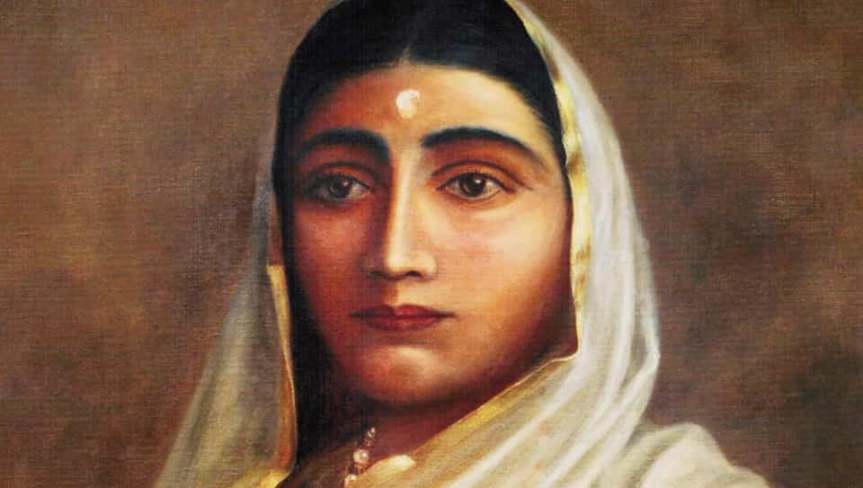
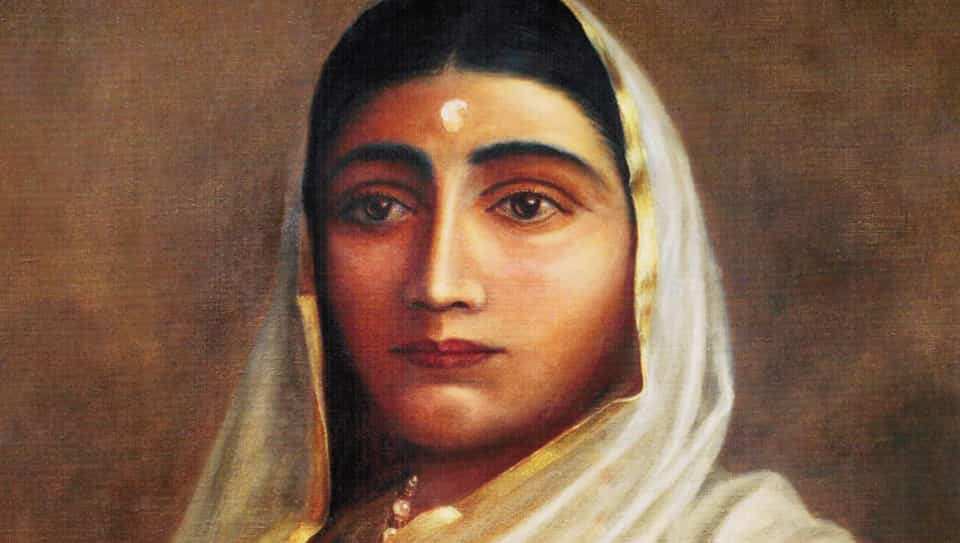
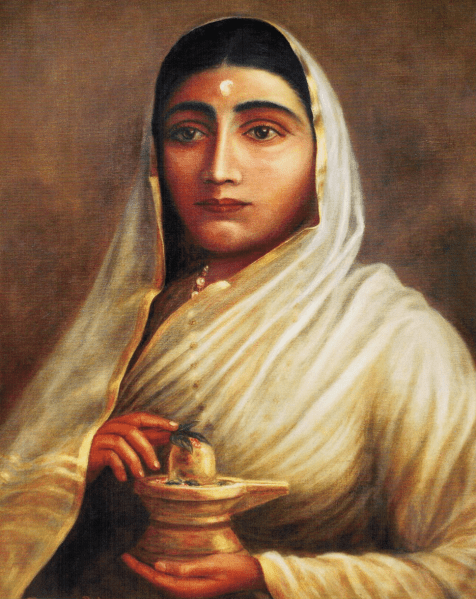
Noble Queen of the Maratha Empire Rani Ahilyabai.

Ahilya Bai was born write to Mankoji Shinde and Sushila Shinde in the village of Chaundi (now Ahmednagar district) in Maharashtra, and was born in the Marathi Hindu family. His father, Mankoji Shinde, a descendant of the magnificent Dhangar family, served as a patil. At that time, the woman were not allowed to attend school , but her father taught her how to read and write.


According to one legend, Ahiliya once stopped by Chaundi on her way to Pune, where Bajirao I, commander of the Maratha army, and Marhar Rao Holker, the ruler of Malwa, saw eight-year-old Ahilya in a temple worship service. Impressed by her devotion and her personality, Marhar, on the advice of Peshwa, married Ahilya and his son Khande Rao. She married Khande Rao in 1733. Ahilya accompanied Khande Rao on many campaigns. Throughout her marriage, she was raised by her mother-in-law, Gautama Bai. Gautama Bai is believed to have played an important role in bringing out the values that she had planted in Ahiliya. She trained them in administration, accounting, politics, etc. and finally delivered their Khasgi Jagir in 1759.

In 1754, Candelao, along with his father Marharla O’Holker, besieged Fort Kumar in Jatrajas Rajimar in Bharatpur at the request of Imadulmark and General Mirbakshi of Mugar Emperor Ahmadsha Bahadur. Suraj Mal supported Emperor Mugar’s rebellious Wajir Safdar Jang. Khande Rao was inspecting his army with an open litter when a shell fired by the Jat army during the battle hit him and died.
After the death of her husband, Ahilya Bye was prevented from playing sati by her father-in-law. After the death of her husband, she received military training by Malhar Rao Holker. After the death of Khande Rao.Ahilya Bai gave up all the desires of life and decided to perform a sati to accompany her husband’s funeral cremation. Her people urged her not to commit sati, but she said her husband promised to accompany her for the rest of her life, and now he walked in the middle of her. Finally, when she decided to play Sati and did not forgive her, it was her father-in-law, Malhar Rao, who made a fervent emotional plea to stop her from doing suicide. .


Marhar Rao Holker died in 1766, twelve years after his son Khande Rao died. Male Rao,the grandson of Marhar Rao and the only son of Khande Rao became the ruler of Indole under the rule of Ahilya Bai in 1766, but he also died within a few months in April 1767.

Ahiliya Bai died on August 13, 1795, at the age of 70. The reign of the modern woman Ahiliya Bai is remembered as a golden age in the history of the Maratha Empire. Ahiliya Bai was taken over by her nephew Tucozy Rao Holker, her commander-in-chief. He immediately abandoned the throne in 1797 in support of his son Kashi Rao Holker.

Ahiliya Bai was a great pioneer and builder of Hindu temples and built hundreds of temples and Dharmashala throughout India. Especially well known for the refurbishment and re-dedication of some of the most sacred sites of Hindu pilgrimages that were desecrated and destroyed by Emperor Aurangzeb in the last century.

Integration of Indian States of Independent India.

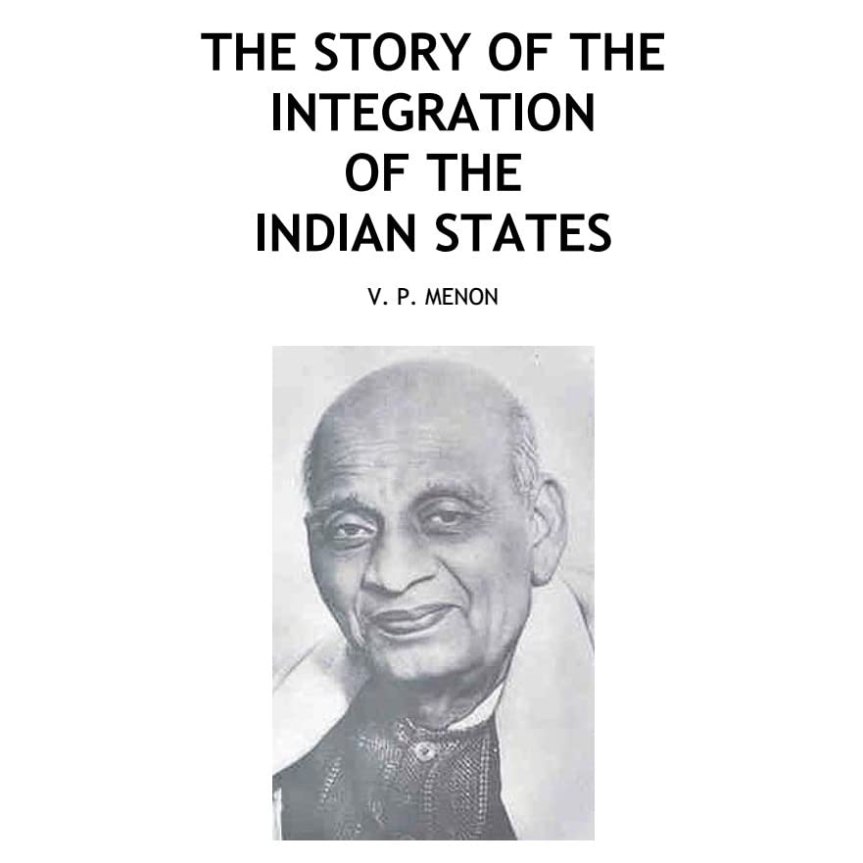
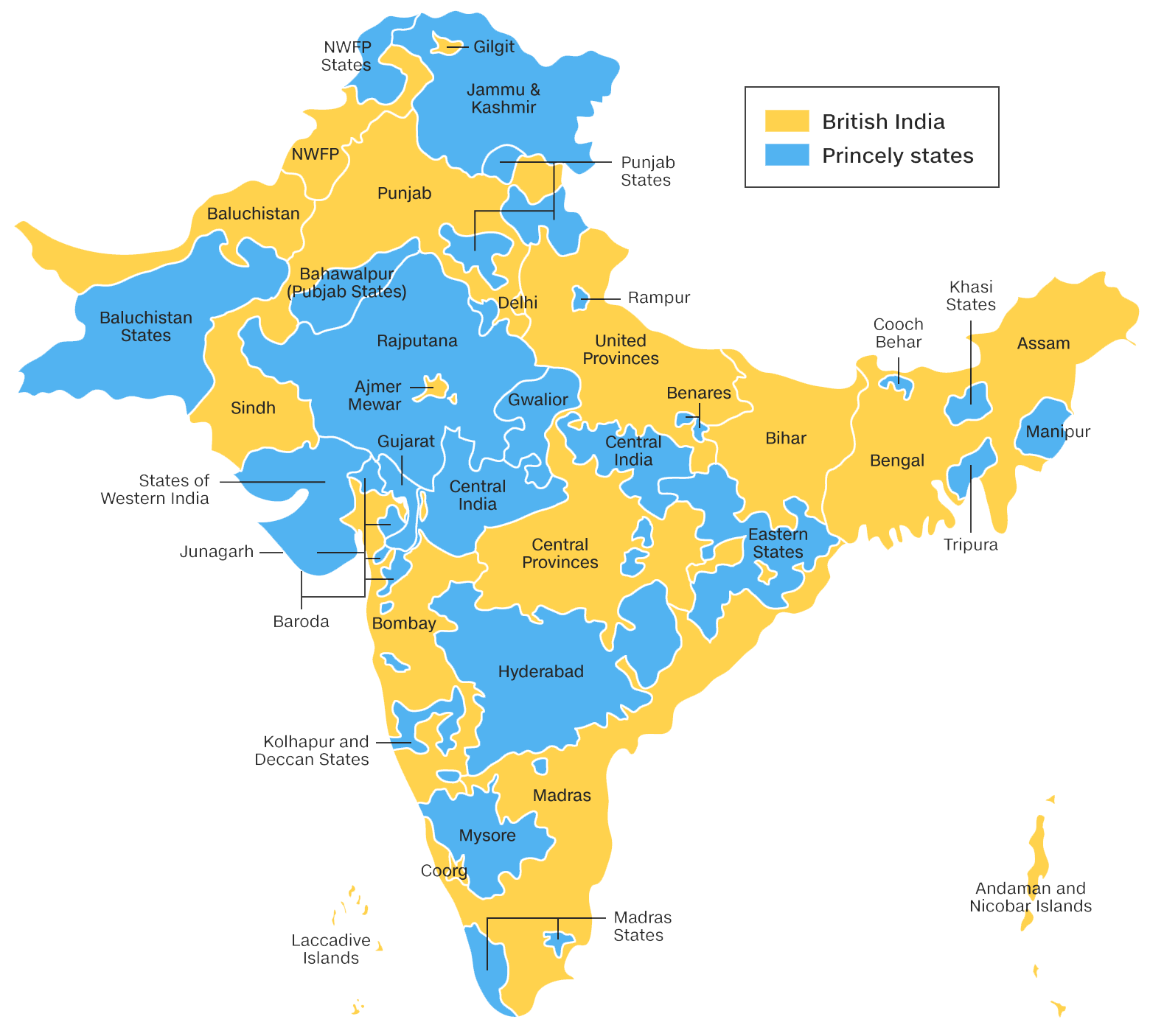
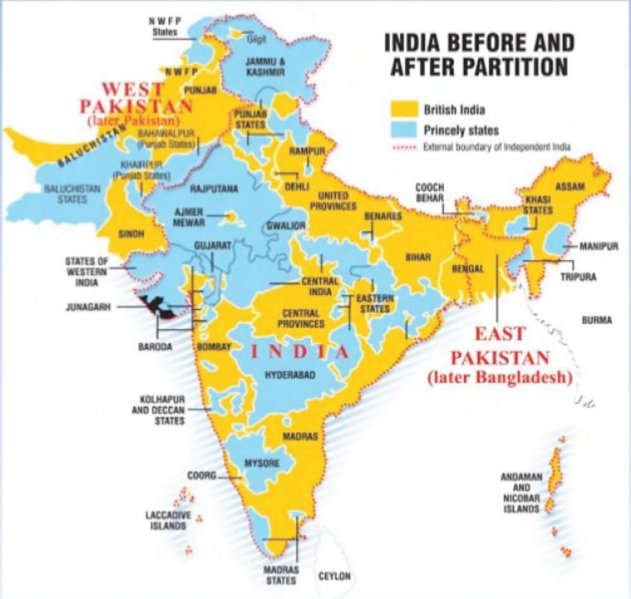
Sardar Vallabhbhai Patel played an important role in the integration of the princely state into the Dominion of India. This achievement laid the foundation for Patel’s popularity in the post-independence era. He is still remembered as the man who united India today. In this respect he is compared to Otto von Bismarck, who united many German states in 1871. The June 3 plan gave more than 565 princely states the option of joining India or Pakistan or choosing independence. Most Indian nationalists and the masses were afraid that most people and territories would be fragmented without the participation of these states. Parliament and British officials considered Patel to be the best man on a mission to secure the conquest of the princely state from Indian rule. According to Gandhi only Patel could solve this problem. Patel had practical insight and determination to accomplish monumental work. Patel asked V.P. Menon, a senior official involved in the division of India, to become his right-hand man as Principal Secretary of State. Patel used a social gathering and informal setting to involve most monarchs and invite them to their home in Delhi for lunch and tea. At these meetings, Patel stated that there was no essential conflict between Congress and the prince’s order. Patel aroused the patriotism of the Indian monarchs and urged them to embrace the independence of their country and act as responsible rulers who care for their people’s future. He persuaded the rulers of 565 states about the impossibility of independence from the Republic of India, especially in the face of rising opposition from their subject. He proposed favorable conditions for the merger, including the creation of a secret purse for the descendants of the ruler. Patel encouraged the rulers to act patrioticly, and to thought about his states people and their futur, but he did not rule out violence. He emphasized the need for the princes to join India in good faith and gave them to sign the membership certificate until August 15, 1947. All but three states were willing to join the Indian Union. Only Jammu and Kashmir, Junagad and Hyderabad were States which were tough to brought under Indian Dominion.


Junagadh being situated in Gujrat it was very important for Patel to bring it under Indian’s dominion. This was also important because there was the super-rich Somnath Temple (a temple where different stones were their including emeralds, diamonds, and gold which were looted by Mohd. Ghazni) in the Kathiawar district. Bieng under the pressure from Sir Shah Nawas Bhutto, a Nawab who joined Pakistan. However, it was far from Pakistan, with 80% of its state population being Hindus.Patel combining diplomacy and power, Pakistan invalidated Pakistan’s accession and demanded that Nawab join India. Patel sent troops to occupy the three principalities of Junagadh to show his determination. After widespread protests and the formation of the civilian government, or Aarzi Hukumat, both Bhutto and Nawab fled to Karachi, and under Patel’s orders, Indian troops and police forces invaded the state. A later organized referendum resulted in 99.5% of the votes in favor of the merger with India. After taking over, Patel, who spoke at the University of Bahauddin in Junagad, emphasized his sense of urgency regarding Hyderabad. He believes this is more important to India than Kashmir.


Hyderabad was the largest of the princely states and which included States parts of which are now Telangana, Arndra Pradesh, Karnataka and Maharashtra. Its ruler, Nizam Osman Ali Khan, was Muslim, but more than 80% of the population of state was Hindu. Nizam called for independence or accession to Pakistan. Under Kasim Razvi, an army of Nizam-faithful Islamic troops called Razakar urged Nizam to confront India and at the same time organize an attack on the people of India’s soil. The standstill agreement was signed by Lord Mountbatten’s in desperate efforts to avoid the war, but Nizam refused to trade and changed his position. At a cabinet meeting in September 1948, Patel emphasized that India should stop speaking and reconciled Nehru and Governor Chakravarti Rajgoparachari with military action. After preparation, Patel ordered the Indian troops to invade Hyderabad (in his position on behalf of the Prime Minister) when Nehru traveled to Europe. This action, called Operation Polo, in which thousands of Razakar troops were killed , but Hyderabad was secured and integrated into the Republic of India. Mountbatten and Nehru’s main goal was to avoid forced annexation to prevent the outbreak of Hindu and Muslim violence. Patel argued that if Hyderabad was allowed to survive as an independent state surrounded by India, the government’s fame would decline and neither Hindus nor Muslims would feel reassured in their empire. After defeating the Nizam, Patel held him as the head of state of the ritual and met with him. India had 562 princely states after addition of Junagarh, Heydrabad and Jammu& Kashmir.

Story of a fierce Queen, Rani Karnavati.

Rani Karnavati was a princess and temporary ruler from Bundi, India. She married Rana Sanga of Mewar in Chittorgarh, the capital of the Kingdom of Mewar. She was the mother of Rana Vikramaditya and Rana Uday Singh, and the grandmother of the legendary Maharana Pratap. During 1527 to 1533 the minority years of her sons she served as a regent for Mewar. She died on 8th March 1535.

After Babur seized the throne of Delhi in 1526, Rana Sanga of Mewar led a coalition of Rajput Kings against Babur to seize the throne of Delhi. In the starting Rana Sanga was able to defeat Babul in the Battle of Bayana, but in the Battle of Kanua, he was defeated because of Babur’s excellent tactics, guns, and artillery.Rani Karnavati took over as regent on behalf of his eldest son Vikramaditya who was a minor at that time. Meanwhile, Mewar was attacked a second time by Gujarat’s ruler Bahadur Shah against whom Vikramaditya had previously been defeated. It was very important issue for Rani Karnavati.

The nobles of Mewar Kingdom did not want to fight for Vikramaditya, and as the upcoming battle will certainly be another stain in the history of Sisodias. Rani Karnavati was able to persuade nobles to fight for Mewar and honor of Sisodias . Their only condition was that Vikramaditya and Uday Singh should go to Boondi for their personal security during the war. In some legends some also said, that Rani Karnavati also sent Rakhi to Emperor Humayun of Mugals calling him his brother and asking for help. Therefore, her name was irreparably linked to the Raksha Bandhan Festival. However, this is not supported by modern writers, and modern historians such as Satish Kumar consider it a fable rather than a historical fact.

Rani Karnavati agreed to send her sons to Bundi ,while knowing the situation being very critical and which can be dangerous for her two sons and send her trusted maid Panna Dai to accompany them and take care of them. Panna hesitated, but she left for Bundi with Vikramaditya and Uday Singh and accept the Queen’s wishes.

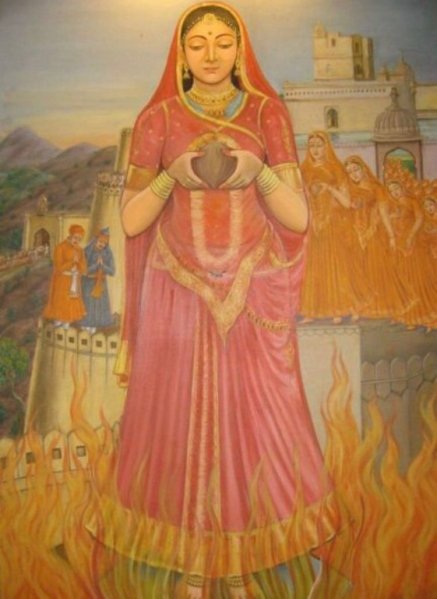
The Sisodias dynasty fought bravely, but the army of Mewar was outnumbered by Bahadur Shah army and they were defeated. Bahadur Shah entered Chittorgarh and it was his second attack on Chittor. The male nobles donned with saffron cloths fought with the enemy till thier death and commited Saka.Karnavati and other noble court women realized that defeat was imminent and to save their honour they committed suicide on March 8, 1534, in a fire called Jauhar. This was the second of the three Jauhar to take place in Chittor.

History of Television in India.

Television was founded by John Baird. The first television service was started in 1936 by British Broadcasting Corporation (BBC) of Britain . In 1939, television broadcasts began in the United States. In 1953 the first successful programme in colour was transmitted by Columbia Broadcasting System (CBS) in USA. In today՚s world, television has become one of the most powerful means of mass communication . It can impart education, information and entertainment . Television has end up becoming an necessary a part of our lives.


HISTORY
India’s first television station was established on October 24, 1951, in the Department of Electronics and telecommunications at Government Engineering College in Jabalpur. Television began in India as an experiment on September 15, 1959. It was first started as two hours programmes a week under the authority of AIR. Early programs of these experimental broadcasts were generally educational programs for children and farmers. By 1975, only seven Indian cities were using television services. The Satellite Instructional Television Experiment (SITE) was an important step by India for the use of television for the development of people and the country. Initially, the show was mainly produced by Doordarshan (DD), who was part of AIR at the time. Transmissions were made twice a day, morning and evening. In addition to information on agriculture, health and family planning, other important topics covered in these programs were audience education and awareness raising. Entertainment was also included in the form of dance, music and cinema. In 1976 Television services were separated from radio . Color television was introduced to the Indian market in 1982.

In the late 1980s, more and more people began to own televisions. There was only one channel, but the TV show was saturated. Therefore, the government opened another channel, partly broadcasting nationally and locally. This channel was called DD2 and was later renamed to DD Metro. Both channels were broadcast on the ground. In 1997, Prasar Bharati, was established.Doordarshan, along with AIR, was incorporated into a state-owned enterprise under Prasar Bharati. Transponders of the American satellites PAS-1 and PAS-4 assisted in the transmission and broadcasting of shows on DD. An international channel called DD International was launched in 1995 and broadcasts programs abroad 19 hours a day to Europe, Asia and Africa via PAS-4 and to North America via PAS-1.The 1980s were the prime time for DD, with shows like comedies such as Hum Log (1984-1985), Wagle Ki Duniya (1988), Buniyaad (1986-1987). Epics like Ramayan (1987–1988) and Mahabharat (1989–1990) brought millions to Doordarshan and later on Chandrakanta (1994–1996). Song-based programs for Hindi movies such as Chitrahaar and Rangoli, and crime thrillers such as Karamchand and Byomkesh Bakshi. Children’s shows such as Tenali Rama ,Vikram Betal and Malgudi Days .


Private Channels influence:
The introduction of communication channels was a revolutionary move to reach so many people. It became an opening for Private and Commercial broadcasters in our country. The emergence of private channels began in India in the 1990s after CNN aired the Gulf War. Hong Kong-based STAR (Satellite Telivision Asia Region ) enterned in a contract between an Indian company and Zee TV. It became the first Private Indian Hindi satellite channel. During this time, several local stations have emerged. Apart from local ones various international channels such as Channel, CNN, BBC, Discovery, etc were also available for Indian TV viewers. Their were various categories of channels available for viewers,such as the 24-hour news channel, Religious channels, cartoon channels, movie channels, something for everyone .


Changes and Evolution:
A significant change that has occurred is the use of different methods of delivering television programming. Just a while ago their were satellite-based antennas, but now the mode has converted to dishes. Other shipping methods are are delivery via cable network and direct satellite transmission. Now you can watch TV shows on your mobile phone , the technology behind it is called Internet Protocol Television. The emergence and spread of televisions and computers and the access to content anytime, anywhere, everyone has brought revolutionary change and access to the world of entertainment.

“I always say film is art, theater is life and television is furniture .”

Kenny Leon