Energy drinks are widely promoted as products that increase energy and enhance mental alertness and physical performance. Next to multivitamins, energy drinks are the most popular dietary supplement consumed by American teens and young adults. Men between the ages of 18 and 34 years consume the most energy drinks, and almost one-third of teens between 12 and 17 years drink them regularly. Energy drinks are supposed to do just what the name implies — give you an extra burst of energy. As it turns out, most of that “energy” comes from two main ingredients: sugar and caffeine. A typical energy drink can contain up to 80 milligrams of caffeine (about the same amount as a cup of coffee). By comparison, a 2006 study found that the average 12-ounce soda contains 18 to 48 mg of caffeine.
Other than caffeine levels, how do energy drinks differ from sodas and sports drinks? Soft drinks are mainly water, sugar and flavouring. They don’t do anything for your body; they’re just supposed to taste good. Sports drinks are designed to replenish fluids lost during activity. They typically contain water, electrolytes and sugar. Energy drinks have added caffeine and other ingredients that their manufacturers say increase stamina and “boost” performance. They’re designed for students, athletes and anyone else who wants an extra energy kick.
Energy drinks became popular in Asia long before they reached the United States. In 1962, Japanese pharmaceutical company, Taisho, released its Lipovitan D drink. It was designed to help employees work hard well into the night. Lipovitan D contains taurine, the same ingredient found in many of today’s energy drinks.
The very first “energy” drink to reach the United States wasn’t an energy drink at all — it was more of a hyped-up soft drink called Jolt Cola. The “jolt” in the cola was a lot of added sugar and caffeine. Introduced in the 1980s, Jolt Cola quickly became a staple of college campuses.
There are two kinds of energy drink products. One is sold in containers similar in size to those of ordinary soft drinks, such as a 16-oz. bottle. The other kind, called “energy shots,” is sold in small containers holding 2 to 2½ oz. of concentrated liquid. Caffeine is a major ingredient in both types of energy drink products—at levels of 70 to 240 mg in a 16-oz. drink and 113 to 200 mg in an energy shot. (For comparison, a 12-oz. can of cola contains about 35 mg of caffeine, and an 8-oz. cup of coffee contains about 100 mg.) Energy drinks also may contain other ingredients such as guarana (another source of caffeine sometimes called Brazilian cocoa), sugars, taurine, ginseng, B vitamins, glucuronolactone, Yohimbe, carnitine, and bitter orange.
Consuming energy drinks raises important safety concerns.
Between 2007 and 2011, the number of energy drink-related visits to emergency departments doubled. In 2011, 1 in 10 of these visits resulted in hospitalization.
About 25 per cent of college students consume alcohol with energy drinks, and they binge-drink significantly more often than students who don’t mix them.
The CDC reports that drinkers aged 15 to 23 who mix alcohol with energy drinks are four times more likely to binge drink at a high intensity (i.e., consume six or more drinks per binge episode) than drinkers who do not mix alcohol with energy drinks.
Drinkers who mix alcohol with energy drinks are more likely than drinkers who do not mix alcohol with energy drinks to report unwanted or unprotected sex, driving drunk or riding with a driver who was intoxicated, or sustaining alcohol-related injuries.
In 2011, 42 per cent of all energy drink-related emergency department visits involved combining these beverages with alcohol or drugs (such as marijuana or over-the-counter or prescription medicines).
A growing body of scientific evidence shows that energy drinks can have serious health effects, particularly in children, teenagers, and young adults. In several studies, energy drinks have been found to improve physical endurance, but there’s less evidence of any effect on muscle strength or power. Energy drinks may enhance alertness and improve reaction time, but they may also reduce the steadiness of the hands. The amounts of caffeine in energy drinks vary widely, and the actual caffeine content may not be identified easily. Some energy drinks are marketed as beverages and others as dietary supplements. There’s no requirement to declare the amount of caffeine on the label of either type of product.
LLP is a corporate business vehicle that enables professional expertise and entrepreneurial initiative to combine and operate in flexible, innovative and efficient manner, providing benefits of limited liability while allowing its members the flexibility for organizing their internal structure as a partnership.
The Limited Liability Partnership Act, 2008(LLP Act) does not provide an exhaustive definition. Sub-section (n) of section 2 of the Act states that “limited liability partnership” means a partnership formed and registered under this Act.
NATURE AND CHARACTERISTICS OF LLP
1. The LLP is a body corporate having separate entity from its partners and perpetual succession.
2. An LLP in India is governed by the Limited Liability Partnership Act, 2008 and, therefore, the provisions of Indian Partnership Act, 1932 are not applicable to it.
3. Every Limited Liability Partnership shall use the words “Limited Liability Partnership” or its acronym “LLP” as the last words of its name.
4. An LLP is a result of an agreement between the partners, and the mutual rights and duties of partners of an LLP are determined by the said agreement subject to the provisions of LLP Act, 2008.
5. The LLP being a separate legal entity is liable for all its assets, with the liability of the partners limited only to the amount of contributed by them just like a company. No partner will be individually liable for any wrongful acts of other partners. However if the LLP was formed for the purpose of defrauding creditors or for any fraudulent purpose, then the liability of the partners who had the knowledge will be unlimited.
6. There must be at least two designated partners in every LLP of whom one shall be resident in India.
7. Every LLP shall maintain annual accounts to show its true state of affairs. It must prepare a statement of accounts and solvency every year and file with the Registrar.
8. The Central Government may, whenever it thinks fit, investigate into the affairs of an LLP by appointing a competent Inspector.
9. A firm, private company or an unlisted public company have the option to convert itself into LLP as per the provisions of the Act. Upon such conversion, the Registrar will issue a certificate to that effect. After issuance of a certificate of registration, all the property of the firm or the company, all assets, rights, obligations relating to the company shall be vested in the LLP so formed, and the firm or the company stands dissolved.
10. The name of the firm or the company is then removed from the Registrar of Firms or Registrar of Companies, as the case may be. Like the company, an LLP can be wound up either voluntary or by the Tribunal established under the Companies Act, 2013
11. The LLP Act 2008 also enables the Central Government to apply the provisions of the Companies Act whenever it thinks appropriate.
ADVANTAGES OF LLP
Easy to form: Forming an LLP is an easy process. It is less complicated and time consuming unlike the process of formation of a company.
2. Liability: The partners of the LLP is having limited liability which means partners are not liable to pay the debts of the company from their personal assets. No partner is responsible for any other partner’s misconduct.
3. Perpetual succession: The life of the Limited Liability Partnership is not affected by death, retirement or insolvency of the partner. The LLP will get wound up only as per provisions of the LLP Act.
4. Management of the company: An LLP has partners, who own and manage the business. This is different from a private limited company, whose directors may be different from shareholders.
5. Easy transferability of ownership: There is no restriction upon joining and leaving the LLP. It is easy to admit as a partner and to leave the firm or to easily transfer the ownership to others.
6. Taxation: an LLP is not subject to Dividend Distribution Tax. (DDT). Distributed profits in the hands of the partners is not taxable. For Income Tax purposes, LLP is treated on par with partnership firms.
7. No compulsory audit required: Every business has to appoint an auditor for checking the internal management of the company and its accounts. However, in the case of LLP, there is no mandatory audit required. The audit is required only in those cases where the turnover of the company exceeds Rs 40 lakhs and where the contribution exceeds Rs 25 lakhs.
8. Fewer compliance requirements: An LLP is much easier and cheaper to run than a private limited company as there are just three compliances per year. On the other hand, a private limited company has a lot of compliances to fulfil and has to compulsorily conduct an audit of its books of accounts.
9. Flexible agreement: The partners are free to draft the agreement as they please, with regard to their rights and duties.
10. Easy to wind-up: Not only is it easy to start, it is also easier to wind-up an LLP, as compared to a private limited company.
DISADVANTAGES OF LLP
Restricted Access to Capital Markets: LLPs are small form of business and cannot get its shares listed in any stock exchange through initial public offerings. With this restriction, limited liability partnerships may find it difficult to attract outside investors to buy the shares.
2. Rights of partners: An LLP can be structured in such a way that one partner has more rights than another. So it isn’t a one vote per share system. So, some lesser partners may feel compromised if higher shareholders choose to move the business in a direction that affects their interests.
3. Public Disclosure of LLP Information: A LLP must file its Annual Returns, Financial Statements etc to the Registrar of LLPs annually. Which become public document once filed with Registrar of LLPs and may be inspected by general public including competitors by paying some fees to the Registrar of LLPs. Information disclosure can make an entity competitively disadvantaged. Competitors – especially those not required to disclose any documents – can access that information and use it to improve their own business.
4. Limitations in Formation of LLP: LLP cannot be formed by a single person. A non – resident Indian and a Foreign National willing to form a LLP in India must have one person resident in India to act as Designated Partner. Further FDI in LLP is allowed only through government route only and that too in those sectors only where 100% FDI is allowed under automatic route under the FDI Policy. This limitation makes LLP an unattractive form of business.
5. Offenses and penalties: Limited Liability Partnership Act, 2008 provides that for non-compliance on procedural matters such as delay in filing of e-forms, one has to pay default fee for every day for which the default continues. Such default fee would be payable at the rate of rupee one hundred per day after the expiry of the date of filing up to a period of three hundred days. The offense can result in either:-
(i)through payment of fine or
(ii) through payment of fine as well as imprisonment of the offender.
6. Exit Options are Not Easy for LLPs in default of Filings: A LLP who has defaulted in filings its statement of accounts and annual return with the Registrar of LLPs, willing to shut down its operations and wind up, will have to make its default good first by filing necessary e-forms with late filing fee. This provision is making LLP an unattractive form of business as in India there are many businesses that are ignorant about compliances.
7. Limitation in External Commercial Borrowings (ECB): Limited Liability Partnerships are not allowed to raise ECB. Therefore, a LLP cannot avail commercial loans from its foreign partners, FIIs, Foreign Banks, and any financial institution located outside India.
PROCEDURE FOR AN INCORPORATION OF LLP
The incorporation document shall be filed in Form FiLLiP (Form for incorporation of Limited Liability Partnership) with the Registrar having jurisdiction over the State in which the registered office of the limited liability partnership is to be situated.
If an individual required to be appointed as designated partner does not have a DPIN or DIN,application for allotment of DPIN shall be made in Form FiLLiP The application for allotment of DPIN shall not be made by more than two individuals in Form FiLLiP: an application for reservation of name may be made through Form FiLLiP: Provided also that where an applicant had applied for reservation of name under rule 18 in Form RUN-LLP (Reserve Unique Name-Limited Liability Partnership) and which has been approved, he may fill the reserved name as the proposed name of limited liability partnership.
THE SUMMARIES PROCEDURE FOR
Incorporation of LLP is as under:
Procure DSC and DIN:
Procure DSC and DIN for the individuals acting as Designated Partners of LLP. A person, who already has a DIN, is not require to obtain any new DIN. Existing DIN to be used for Designated Partner (However, DIN should have all latest details such as resident of India, name, address etc.). Any person proposed to become the Designated Partner in a new LLP shall have to make an application through eform FiLLiP. An application for allotment of DIN up to two Designated Partners, shall be filed in an e-form FILLiP with the Registrar, in case of proposed Designated Partners not having approved DIN.
2. Name reservation: The first step in incorporation of an LLP is reservation of name of the proposed LLP. There are two ways of reserving name of the proposed LLP.
i. File an application under LLP-RUN for ascertaining availability and reservation of the name of an LLP.
ii. Name can be proposed in eform FiLLiP, an application for incorporation of LLP.
3. Incorporate LLP: After reserving a name under LLP-RUN, applicant should file eform FiLLiP for incorporating a new LLP. eform FiLLiP contains the details of LLP proposed to be incorporated, Partners’/ Designated Partners’ details and consent of the Partner/ Designated Partners to act as Partners/ Designated Partners. On approval of the form, the RoC will issue the certificate of incorporation.
Where the Registrar, on examining Form FiLLiP, finds that it is necessary to call for further information or finds such application or document to be defective or incomplete in any respect, he shall give intimation to the applicant to remove the defects and re-submit the e-form within fifteen days from the date of such intimation given by the Registrar.
After re-submission of the document, if the Registrar still finds that the document is defective or incomplete in any respect, he shall give one more opportunity of fifteen days time to remove such defects or deficiencies: Provided that the total period for re-submission of documents shall not exceed thirty days.
Documents to be attached with form FiLLiP:
i. Consent of the partners.
ii. In case of the partners who are body corporates, certified true copy of the board resolution is passed by such body corporate partners.
iii. Proof of address of registered office of LLP.
iv. Subscribers’ sheet including consent.
v. Detail of LLP(s) and/ or company(s) in which partner/ designated partner is a director/ partner.
vi. Copy of approval obtained from any sectoral regulator/in-principle approval.
vii. Identity and address proof of individuals acting as Partner and/or Designated Partner.
viii. List of main objects of an LLP.
ix. If the name proposed is liked to registered trademark, NoC from the trade mark owner.
x. NOC of foreign body corporate for usage of name (In case of foreign entities intending to incorporate LLPs in India).
The companies can be divided into different types based on parameters such as Size of company, a number of its members, Control of ownership, Liability to shareholders, need of capital from public & On the basis of the manner in which capital can be accessed. A company is popularly referred as a group of person coming together with resources in terms of capital, manpower, and skill for the common objective of making profits.
In old companies Act 1956 a company should have at least 2 persons as its member or shareholder. However, the companies Act 2013 introduced a new concept of One Person Company in India wherein only one Indian person who is a citizen of India can register a private limited company with some limitation, the different types of companies can be classified based on different parameters.
CLASSIFICATION OF THE COMPANIES
1. Classification on the basis of Incorporation: Companies may be Incorporated under the following categories:
(a) Statutory Companies: These are constituted by a special Act of Parliament or State Legislature. The provisions of the Companies Act, 2013 do not apply to them. Examples of these types of companies are Reserve Bank of India, Life Insurance Corporation of India, etc.
(b) Registered Companies: The companies which are incorporated under the Companies Act, 2013 or under any previous company law and registered with the Registrar of Companies, fall under this category.
2. Classification on the basis of Liability: Under this category there are three types of companies: –
(a) Unlimited Companies: In this type of company, the liability of members of the company is unlimited, Section 2(92) of the Companies Act, 2013 provides that unlimited company means a company not having any limit on the liability of its members, Such companies may or may not have share capital. They may be either a public company or a private company. . The members is liable to the company and to any other person.
(b) Companies limited by guarantee: Section 2(21) of the Companies Act, 2013 provides that a company that has the liability of its members limited to such amount as the members may respectively undertake, by the memorandum, to contribute to the assets of the company in the event of its being wound-up, is known as a company limited by guarantee. The members of a guarantee company are, in effect, placed in the position of guarantors of the company’s debts up to the agreed amount. the members is liable to the company and to any other person.
(c) Companies limited by shares: A company that has the liability of its members limited by the liability clause in the memorandum to the amount, if any, unpaid on the shares respectively held by them is termed as a company limited by shares. Section 2(22) of the Companies Act, 2013 provides that “company limited by shares” means a company having the liability of its members limited by the memorandum to the amount, if any, unpaid on the shares respectively held by them.
For example,a shareholder who has paid Rs. 75 on a share of face value Rupees 100 can be called upon to pay the balance of Rupees.25 only’. Companies limited by shares are by far the most common and it may be either public or private.
3. Other Forms of Companies
(a) Section 8 Companies: a person or an association of persons proposed to be registered under this Act as a limited company and proved to the satisfaction of the Central Government that the company –
i. has in its objects the promotion of commerce, art, science, sports, education, research, social welfare, religion, charity, protection of environment or any such other object;
ii. intends to apply its profits, if any, or other income in promoting its objects; and
iii. intends to prohibit the payment of any dividend to its members such person or association of person may be allowed to be registered as a limited company without addition to its name of the word “limited” or private limited by the Central government by issuing a license and by prescribing specified condition.
The association proposed to be registered under section 8 shall not be proposed to be an unlimited company. However the same may be company limited by guarantee or a Company limited by shares.
(b) Government Companies: As per section 2(45) of the Companies Act, 2013 the Government company” means any company in which not less than fifty-one per cent of the paid-up share capital is held by the Central Government, or by any State Government or Governments, or partly by the Central Government and partly by one or more State Governments, and includes a company which is a subsidiary company of such a Government company;
(c) Foreign Companies: As per section 2(42) of the Companies Act, 2013 the “foreign company” means any company or body corporate incorporated outside India which,-
(a) has a place of business in India whether by itself or through an agent, physically or through electronic mode; and
(b) conducts any business activity in India in any other manner.
(d) Holding and Subsidiary Companies; As per section 2(46) of the Companies Act, 2013 46) the “holding company”, in relation to one or more other companies, means a company of which such companies are subsidiary companies and the expression “company” includes any body corporate.
As per section 2(87) of the Companies Act, 2013 “subsidiary company” or “subsidiary”, in relation to any other company (that is to say the holding company), means a company in which the holding company –
(i) controls the composition of the Board of Directors or
(ii) exercises or controls more than one-half of the 19[total voting power] either at its own or together with one or more of its subsidiary companies:
Provided that such class or classes of holding companies as may be prescribed shall not have layers of subsidiaries beyond such numbers as may be prescribed.
Explanation.- For the purposes of this clause, –
(a) a company shall be deemed to be a subsidiary company of the holding company even if the control referred to in sub-clause (i) or sub-clause (ii) is of another subsidiary company of the holding company;
(b) the composition of a company’s Board of Directors shall be deemed to be controlled by another company if that other company by exercise of some power exercisable by it at its discretion can appoint or remove all or a majority of the directors.
(c) the expression “company” includes any body corporate.
(d) “layer” in relation to a holding company means its subsidiary or subsidiaries.
As per section 2(11) of the Companies Act, 2013, the “body corporate” or “corporation” includes a company incorporated outside India, but does not include –
(i) a co-operative society registered under any law relating to co-operative societies and
(ii) any other body corporate (not being a company as defined in this Act), which the Central Government may, by notification, specify in this behalf.
(e) Associate Companies/ Joint Venture Company: As per section 2(6) of the Companies Act, 2013 the “associate company”, in relation to another company, means a company in which that other company has a significant influence, but which is not a subsidiary company of the company having such influence and includes a joint venture company.
Explanation.- For the purpose of this clause, –
(a) the expression “significant influence” means control of at least twenty per cent. of total voting power, or control of or participation in business decisions under an agreement.
(b) the expression “joint venture” means a joint arrangement whereby the parties that have joint control of the arrangement have rights to the net assets of the arrangement.
(f) Investment Companies: the term “investment company” includes a company whose principal business is the acquisition of shares, debentures or other securities 13[and a company will be deemed to be principally engaged in the business of acquisition of shares, debentures or other securities, if its assets in the form of investment in shares, debentures or other securities constitute not less than fifty per cent. of its total assets, or if its income derived from investment business constitutes not less than fifty per cent. as a proportion of its gross income.
(g) Producer Companies: Producer Company means a body corporate having objects or activities specified in section 581B of the Companies Act, 1956 and registered as Producer Company under the Companies Act.
The objects of the Producer Company shall relate to all or any of the following matters, namely:
i. production, harvesting, procurement, grading, pooling, handling, marketing, selling, export of primary produce of the Members or import of goods or services for their benefit: Provided that the Producer Company may carry on any of the activities specified in this clause either by itself or through other institution ;
ii. processing including preserving, drying, distilling, brewing, vinting, canning and packaging of produce of its Members ;
iii. manufacture, sale or supply of machinery, equipment or consumables mainly to its Members.
iv. providing education on the mutual assistance principles to its Members and others.
v. rendering technical services, consultancy services, training, research and development and all other activities for the promotion of the interests of its Members.
vi. generation, transmission and distribution of power, revitalisation of land and water resources, their use, conservation and communications relatable to primary produce.
vii. insurance of producers or their primary produce.
viii. promoting techniques of mutuality and mutual assistance.
ix. welfare measures or facilities for the benefit of Members as may be decided by the Board.
x. any other activity, ancillary or incidental to any of the activities referred above or other activities which may promote the principles of mutuality and mutual assistance amongst the members in any other manner.
xi. financing of procurement, processing, marketing or other activities specified above which include extending of credit facilities or any other financial services to its Members.
(h) Nidhi Companies: A nidhi company is a type of company in the Indian non-banking finance sector, recognized under section 406 of the Companies Act, 2013 their core business is borrowing and lending money between their members.
They are also known as Permanent Fund, Benefit Funds, Mutual Benefit Funds and Mutual Benefit Company. These companies are regulated under the Nidhi Rules, 2014 issued by the Ministry of Corporate affairs.
(i) Dormant Companies covered under Section 455 of the Companies Act. 2013 and includes a company which is formed and registered under the Act for a future project or to hold an asset or intellectual property and which has not been carrying on any business or operation, or has not made any significant accounting transaction during the last two financial years, or has not filed financial statements and annual returns during the last two financial years.
(j) Non-banking Financial Companies: A Non-Banking Financial Company (NBFC) is a company registered under the Companies Act, 1956 / 2013 engaged in the business of loans and advances, acquisition of shares/stocks/bonds/debentures/securities issued by Government or local authority or other marketable securities of a like nature, leasing, hire-purchase, insurance business, chit business but does not include any institution whose principal business is that of agriculture activity, industrial activity, purchase or sale of any goods (other than securities) or providing any services and sale/purchase/construction of immovable property.
A non-banking institution which is a company and has principal business of receiving deposits under any scheme or arrangement in one lump sum or in installments by way of contributions or in any other manner, is also a non- banking financial company.
(k) Listed Company: “listed company” means a company which has any of its securities listed on any recognised stock exchange.
Application under section 14 for conversion of public company into private company.
(1) An application under the second proviso to sub-section (1) of section 14 for the conversion of a public company into a private company, shall, within sixty days from the date of passing of special resolution, be filed with Regional Director in e-Form No. RD-l along with the fee as provided in the Companies (Registration Offices and Fees) Rules, 2014 and shall be accompanied by the following documents, namely:-
(a) a draft copy of Memorandum of Association and Articles of Association , with proposed alterations including the alterations pursuant to sub-section (68) of section 2 of the Act;
(b) a copy of the minutes of the general meeting at which the special resolution authorising such alteration was passed together with details of votes cast in favour and or against with names of dissenters;
(c) a copy of Board resolution or Power of Attorney dated not earlier than thirty days, as the case may be, authorising to file application for such conversion;
(d) declaration by a key managerial personnel that pursuant to the provisions of sub-section (68) of section 2 of the Act , the company limits the number of its members to two hundred and also stating that no deposit has been accepted by the company in violation of the Act and rules made thereunder;
(e) declaration by a key managerial personnel that there has been no non-compliance of sections 73 to 76A, 777 , 178,185,186 and 188 of the Act and rules made thereunder;
(f) declaration by a key managerial personnel that no resolution is pending to be filed in terms of sub- section (3) of section 779 and also stating that the company was never listed in any of the Regional
Stock Exchanges and if was so listed, all necessary procedures were complied with in full for complete delisting of the shares in accordance with the applicable rules and regulations laid down by Securities Exchange Board of India: Provided that in case of such companies where no key managerial personnel is required to be appointed, the aforesaid declarations shall be filed any of the director.
(2) Every application filed under sub-rule (1) shall set out the following particulars, namely:-
(a) the date of the Board meeting at which the proposal for alteration of Memorandum and Articles was approved;
(b) the date of the general meeting at which the proposed alteration was approved;
(c) reason for conversion into a private company, effect of such conversion on shareholders, creditors, debenture holders, deposit holders and other related parties;
(d) details of any conversion made within last five years and outcome thereof along with copy of order;
(e) details as to whether the company is registered under section 8.
(3) There shall be attached to the application, a list of creditors, debenture holders, drawn up to the latest practicable date preceding the date of filing of application by not more than thirty days, setting forth the following details, namely:-
(a) the names and address of every creditor and debenture holder of the company;
(b) the nature and respective amounts due to them in respect of debts, claims or liabilities;
(c) in respect of any contingent or unascertained debt, the value, so far as can be justly estimated of such debt: Provided that the company shall file an affidavit, signed by the Company Secretary of the company, if any, and not less than two directors of the company, one of whom shall be managing director, where there is one, to the effect that they have made a full enquiry into affairs of the company and, having done so, have formed an opinion that the list of creditors and debenture holders is correct, and that the estimated value as given in the list of the debts or claims payable on contingency or not ascertained are proper estimates of the values of such debts and claims that there are no other debts, or claims against, the company to their knowledge.
(4) A duly authenticated copy of the list of creditors and debenture holders shall be kept at the registered office of the company and any person desirous of inspecting the same may, at any time during the ordinary hours of business, inspect, and take extracts from the same on payment of ten rupees per page to the company.
(5) The company shall, at least twenty-one days before the date of filing of the application
(a) advertise in the Form No.INC.25A, in a vernacular newspaper in the principal vernacular language in the district and in English language in an English newspaper, widely circulated in the State in which the registered office of the company is situated;
(b) serve, by registered post with acknowledgement due, individual notice on each debenture holder and creditor of the company; and
(c) serve, by registered post with acknowledgement due, a notice to the Regional Director and Registrar and to the regulatory body, if the company is regulated under any law for the time being in force
(6)(a) Where no objection has been received from any person in response to the advertisement or notice referred to in sub-rule (5) and the application is complete in all respects, the same may be put up for orders without hearing and the concerned Regional Director shall pass an order approving the application within thirty days from the date of receipt of the application.
(b) Where the Regional Director on examining the application finds it necessary to call for further information or finds such application to be defective or incomplete in any respect, he shall within thirty days from the date of receipt of the application, give intimation of such information called for or defects or incompleteness, on the last intimated e-mail address of the person or the company, which has filed such application, directing the person or the company to furnish such information, to rectify defects or incompleteness and to re-submit such application within a period of fifteen days in e-Form No. RD-GNL-5:
Provided that maximum of two re-submissions shall be allowed
(c) In cases where such further information called for has not been provided or the defects or incompleteness has not been rectified to the satisfaction of the Regional Director within the period allowed under sub-rule (6), the Regional Director shall reject the application with reasons within thirty days from the date of filing application or within thirty days from the date of last re-submission made. as the case may be.
(d) Where no order for approval or re-submission or rejection has been explicitly made by the Regional Director within the stipulated period of thirty days, it shall be deemed that the application stands approved and an approval order shall be automatically issued to the applicant.
(9) (i) Where an objection has been received or Regional Director on examining the application has specific objection under the provisions of Act, the same shall be recorded in writing and the Regional Director shall hold a hearing or hearings within a period thirty days as required and direct the company to file an affidavit to record the consensus reached at the hearing, upon executing which, the Regional Director shall pass an order either approving or rejecting the application along with reasons within thirty days from the date of hearing, failing which it shall be deemed that application has been approved and approval order shall be automatically issued to the applicant.
(ii) In case where no consensus is received for conversion within sixty days of filing the application while hearing or otherwise, the Regional Director shall reject the application within stipulated period of sixty days: Provided that the conversion shall not be allowed if any inquiry, inspection or investigation has been initiated against the company or any prosecution is pending against the company under the Act.
(10) On completion of such inquiry inspection or investigation as a consequence of which no prosecution is envisaged or no prosecution is pending, conversion shall be allowed.
(11) The order conveyed by the Regional Director shall be filed by the company with the Registrar in Form No. lNC-28 within fifteen days from the date of receipt of approval along with fee as provided in the Companies (Registration Offices and Fees) Rules, 2014.
(1) Appointment process of independent directors shall be independent of the company management; while selecting independent directors the Board shall ensure that there is appropriate balance of skills, experience and knowledge in the Board so as to enable the Board to discharge its functions and duties effectively. Independent director may be selected from Databank.
(2) The appointment of independent director(s) of the company shall be approved by the company at the meeting of the shareholders.
(3) The explanatory statement attached to the notice of the meeting for approving the appointment of independent director shall include a statement that in the opinion of the Board, the independent director proposed to be appointed fulfils the conditions specified in the Act and the rules made thereunder and that the proposed director is independent of the management. It shall also indicate the justification for choosing the appointee for appointment as Independent Director.
(4) The appointment of independent directors shall be formalized through a letter of appointment, which shall set out:
(a) The term of appointment;
(b) The expectation of the Board from the appointed director; the Board-level committee(s) in which the director is expected to serve and its tasks;
(c) The fiduciary duties that come with such an appointment along with accompanying liabilities;
(d) Provision for Directors and Officers (D and O) insurance, if any;
(e) The Code of Business Ethics that the company expects its directors and employees to follow;
(f) The list of actions that a director should not do while functioning as such in the company; and
(g) The remuneration, mentioning periodic fees, reimbursement of expenses for participation in the Boards and other meetings and profit related commission, if any.
(5) The terms and conditions of appointment of independent directors shall be open for inspection at the registered office of the company by any member during normal business hours.
(6) The terms and conditions of appointment of independent directors shall also be posted on the company’s website.
(7) He shall be hold office for a term of upto 5 consecutive years of a company. [Section 149(10)]
RE-APPOINTMENT OF AN INDEPENDENT DIRECTOR
The re-appointment of independent director shall be on the basis of report of performance evaluation. (
Schedule IV – Code for Independent Directors)
Section 149(11) provides that the Independent Director shall be eligible for re-appointment on passing of special resolution. He shall not hold office for more than 2 consecutive terms, but such independent director shall be eligible for appointment after the expiration of 3 years of ceasing to become an independent director. However, he shall not, during the said period of 3 years, be appointed in or be associated with the company in any other capacity, either directly or indirectly.
Covid-19 crisis has severely impacted almost all industries but disruptions in the airline industry is so profound and it has manifold implications that it is assumed to be greater than the combined crises of 9/11 terror attack in the US and the 2008 global financial crisis combined to put together.
The Government of India (acting through DGCA) (“GoI”) has vide its (i) order dated March 23, 2020, passed under Section 88(1) of the Aircraft Act, 1934; and (ii) orders dated March 26, 2020, and April 14, 2020, directed inter alia all aircraft operators to suspend the operations of all the domestic flights and all scheduled international commercial passenger services until May 3, 2020.
The forward air travel bookings are far outweighed by the cancellations due to which the air travel demand is in its all-time low and drying up in ways that are unprecedented with no semblance of normalcy on the horizon.
CURRENT SCENARIO DUE TO COVID-19
For an industry which is already in stress, the Covid-19 pandemic has only accelerated the process of a bankruptcy filing by several companies (like Virgin Australia and Air Mauritius).
Those airline companies which are still in business have also suffered huge losses and misfortunes as the novel coronavirus-forced lockdowns due to which the airlines had to keep their fleets at bay and grounded.
As per the market sources, apart from the pay cut, several airline companies from the likes of Indigo, Go Airlines etc in India have also taken other cost-cutting measures including furloughs.
Due to the turbulence caused by the outbreak of Covid-19 virus, the airline industry must focus on the horizon as there is always a silver lining in these tough times so that it can successfully navigate a wide array of challenges (including legal, financial and operational) which are likely to surface once the pandemic is behind us.
Future flight plan post the COVID-19 pandemic for the airlines will be influenced to a great extent by factors such as avoiding the countries that have been the virus epicentres and gauging government responses on the type and duration of travel restrictions and the conditions under which they might be relaxed.
Governments across the globe may likely consider imposing specific restrictions/limitations which is akin to the security measures put in place after terrorism events for inbound and outbound passengers.
RESTRICTIONS/ LIMITATIONS
Health screenings or certificates form prescribed by the medical practitioners before the boarding is a must. In the Post-COVID era, megatrends such as the dramatic rise in remote working, government or organisation-imposed limitations/restrictions on air travel, greater reliance on locally-oriented supply chains as well as avoiding non-essential travels will impact the recovery demand in the aviation industry and may lead to a major overhaul in the management and operation of the airline industry.
To fly safely through this turbulent time, it is of utmost importance that the airline companies launch a crisis management team or as its being coined by some in the industry – “Plan Ahead Team”. This Plan Ahead Team will be responsible for collecting forward-looking intelligence and provide a Post Covid-19 flight plan to guide and accelerate decision making.
CHALLENGES/ CONSIDERATIONS
Following are some of the challenges/considerations which airline companies in India may consider while formulating their Post Covid-19 flight plan.
Third-party contractor agreements/Hedging arrangement for jet fuel prices:
To determine the optimal size and dimensions of their networks and fleet, this will hold the key to the survival of airline companies. These companies may have to revamp their strategies vis-à-vis the air travel restrictions imposed by the governments to identify routes that are most likely to recover basis demand, regulatory and market structure scenarios.
The determination of routes that are most likely to recover will determine which fleet/route to recommission. For the routes that could not be recommissioned or are partially commissioned post-COVID-19 and withdrawal of lockdown orders, the airline companies may have to renegotiate/re-assess the legal risk that may arise according to their contracts with third-party contractors engaged for inter alia refuelling; catering; runway/taxiway construction and repair; aircraft maintenance and overhaul; crew training; and flight dispatch.
Further, airline companies must also consider revisiting/re-negotiating their existing contracts for hedging the jet fuel prices. Most of the airline are locked into contracts for hedging the jet fuel prices. There has been a steep drop and the prices of jet fuel is at an all-time low due to the upshot of the current crisis.
Accordingly, the airline companies will have to pay their higher hedged amount for jet fuel, creating hedging loses. In this context, the existing provisions of these contracts become relevant to determine the leverage of discussions from a legal rights perspective.
Financing Arrangements:
Given that the airline companies have suspended all their business, it would be imperative to ascertain if defaults would get triggered under the various financing agreements entered by the airline companies.
Where an event of default is only triggered upon a ‘voluntary’ suspension of business, it may be argued that such temporary cessation of business due to the virus outbreak is a direct consequence of the government regulations and therefore it is outside the purview and scope of such provision.
Further, it would be relevant to check if an event of default is qualified by a requirement that a suspension of business has a “material adverse effect” on the borrower’s ability to perform its contractual obligations.
If there is a significant impact on the borrower’s ability to pay, this will likely satisfy the test of ‘material adverse effect. Additionally, it is expected that post-COVID-19 and lifting of the lockdown orders, for reasons including financial and operational difficulties, the airline companies may not be able to commence operations in all the sectors or may not be in a position to recommission their entire fleet.
Given the aforesaid, it would be relevant for the airline companies to review an event of default provision relating to ‘cessation of business’ in their financing agreements.
Cessation of Business would typically include events where a company ‘threatens’ to suspend or cease to carry on its business and therefore, one may argue that such temporary closures post Covid-19 and/or lifting of lockdown orders, would constitute a ‘cessation’ of business. It would be prudent for airline companies to review their facility agreements when contemplating Covid-19 related measures and consider the impact of such measures may have on their financing arrangements. These tests can be carried out during the period of lockdown, such that the provisions can be re-considered by the parties.
Aircraft Lease Agreements:
The airline companies may have to revisit/review their aircraft lease agreements. The airline companies may consider approaching the lessors for seeking concessions concerning the lease obligations including ‘rental holiday’ on account of liquidity crunch consequent to fall in ticket receipts post Covid-19.
While the lessors may be entitled to decline requests for concessions on lease obligations, the commercial reality may well be that lessors will have to assess whether supporting an airline in some way may improve their financial health in the aftermath of the crisis or whether such benevolence will only delay the end of a business that was struggling in any case.
It may be worthwhile to consider that the relief package/concessions which an airline company may seek from the lessors may include inter alia a standstill for an agreed period with an agreed repayment schedule to recapture the unpaid rents, forbearance on event of default at a cost.
Governmental Support: Globally, the market structure for the airline industry is set to witness a major revamp. This change will be significantly influenced by government responses to the crisis and types and levels of support extended to the airline industry.
In the absence of specific announcements/ relief measures, the airline companies in India may consider approaching the Ministry of Civil Aviation and/or the GoI for relaxation/waiver concerning various fees/licenses including airport charges, AAI and Private Airport Operators’ space rentals and infrastructure charges which are to be paid by them.
This waiver may specifically be sought concerning air spaces/sectors, which the airline companies suspect will not be recommissioned or sectors where the travel demand likely to rebound slowly.
Resolution/Restructuring: Globally there are several airline companies which have filed for bankruptcy. Per CAPA-Centre of Aviation, most world airlines would be bankrupt by the end of May. In this context, the Ministry of Finance (“MoF”) has on March 24, 2020, indicated that if Covid-19 crisis continues beyond April 30, 2020, it may consider suspending Section 7, 9 and 10 of the Insolvency and Bankruptcy Code, 2016 for six months to stop companies from being forced into insolvency proceedings in such force majeure causes of default under the commercial agreements (e.g. financing agreements, lease agreements).
Import Duties and Trade barriers: Government of India is considering putting in place several trade restrictions/embargo on the import of goods from China.
CONCLUSION
As COVID -19 continues to spread across the globe, the challenges triggered by it are numerous and unprecedented. As COVID -19 continues to spread across the globe, the challenges triggered by it are numerous and unprecedented. The Indian tourism and hospitality industry is severely affected by the outbreak of COVID-19.
Once the COVID-19 crisis is contained, the GoI may inter alia consider developing an appropriate messaging/advertising campaign (similar to ‘Incredible India’ tourism campaign) to provide the necessary impetus to the recovery of the aviation industry post-COVID-19.
WEBSITES REFERRED
Covid-19: Flight Plan for Indian Aviation Industry by Subhojit Sadhu & Shrey Srivastava on May 6, 2020,
The Government of India had vide its circular dated April 14, 2020, has decided that all scheduled international commercial passenger services shall remain closed until May 3, 2020. Additionally, a collated list of the Global and regional Government measures related to Covid-19
Post 9/11, it is customary to have long lines at the airport and extensive security checks. The enhanced security measures are being monitored and implemented by the Transportation Security Administration (TSA). The TSA was created as a direct result of the 9/11 attacks
“Cyber” is a prefix used to describe a person, thing, or idea as part of the computer and information age. Taken from kybernetes, the Greek word for “steersman” or “governor,” it was first used in cybernetics, a word coined by Norbert Wiener and his colleagues. The virtual world of internet is known as cyberspace and the laws governing this area are known as Cyber Laws and all the netizens of this space come under the ambit of these laws as it carries a kind of universal jurisdiction.
Cyberlaw can also be described as that branch of law that deals with legal issues related to use of inter-networked information technology. In short, cyber law is the law governing computers and the internet. The growth of Electronic Commerce has propelled the need for vibrant and effective regulatory mechanisms which would further strengthen the legal infrastructure, so crucial to the success of Electronic Commerce. All these regulatory mechanisms and legal infrastructures come within the domain of Cyberlaw.
Cyberlaw is important because it touches almost all aspects of transactions and activities on and involving the internet, World Wide Web and cyberspace. Every action and reaction in cyberspace has some legal and cyber legal perspectives.
Cyberlaw encompasses laws relating to:-
Cybercrimes
Electronic and digital signatures
Intellectual property
Data protection and privacy
WHY IS CYBER LAW THE NEED OF THE HOUR IN INDIA?
Firstly, India has an extremely detailed and well-defined legal system in place. Numerous laws have been enacted and implemented and the foremost amongst them is The Constitution of India. We have inter alia, amongst others, the Indian Penal Code, the Indian Evidence Act 1872, the Banker’s Book Evidence Act, 1891 and the Reserve Bank of India Act, 1934, the Companies Act, and so on.
However, the arrival of Internet signalled the beginning of the rise of new and complex legal issues. It may be pertinent to mention that all the existing laws in place in India were enacted way back keeping in mind the relevant political, social, economic, and cultural scenario of that relevant time.
Nobody then could really visualize about the Internet. Despite the brilliant acumen of our master draftsmen, the requirements of cyberspace could hardly ever be anticipated. As such, the coming of the Internet led to the emergence of numerous ticklish legal issues and problems which necessitated the enactment of Cyber laws.
Secondly, the existing laws of India, even with the most benevolent and liberal interpretation, could not be interpreted in the light of the emerging cyberspace, to include all aspects relating to different activities in cyberspace. In fact, the practical experience and the wisdom of judgment found that it shall not be without major perils and pitfalls, if the existing laws were to be interpreted in the scenario of emerging cyberspace, without enacting new cyber laws. Hence, the need for enactment of relevant cyber laws.
Thirdly, none of the existing laws gave any legal validity or sanction to the activities in Cyberspace. For example, the Net is used by a large majority of users for email. Yet till today, email is not “legal” in our country. There is no law in the country, which gives legal validity, and sanction to email. Courts and judiciary in our country have been reluctant to grant judicial recognition to the legality of email in the absence of any specific law having been enacted by the Parliament.
As such the need has arisen for Cyberlaw. Fourthly, the Internet requires an enabling and supportive legal infrastructure in tune with the times. This legal infrastructure can only be given by the enactment of the relevant Cyber laws as the traditional laws have failed to grant the same.
E-commerce, the biggest future of the Internet, can only be possible if necessary legal infrastructure compliments the same to enable its vibrant growth. All these and other varied considerations created a conducive atmosphere for the need for enacting relevant cyber laws in India.
CYBERCRIME ON THE RISE
As per the cybercrime data maintained by the National Crime Records Bureau (NCRB), a total of 217, 288, 420 and 966 Cyber Crime cases were registered under the Information Technology Act, 2000 during 2007, 2008, 2009 and 2010 respectively.
Also, a total of 328, 176, 276 and 356 cases were registered under Cyber Crime related Sections of Indian Penal Code (IPC) during 2007, 2008, 2009 and 2010 respectively.
A total of 154, 178, 288 and 799 persons were arrested under the Information Technology Act 2000 during 2007-2010. A total number of 429, 195, 263 and 294 persons were arrested under Cyber Crime related Sections of Indian Penal Code (IPC) during 2007-2010.
Crime head-wise and age-wise profile of the offenders arrested under Cyber Crimes (IPC) for the year 2011 reveals that offenders involved in 9 forgery cases were more in the age-group of 18-30 (46.5%) (129 out of 277). 50.4% of the persons arrested under Criminal Breach of Trust/Cyber Fraud offences were in the age group 30-45 years (65 out of 129).
Meanwhile, 9 out of 88 mega cities did not report any case of cybercrime i.e., neither under the IT Act nor under IPC Sections during the year 2011. And 53 megacities have reported 858 cases under the IT Act and 200 cases under various sections of IPC.
There was an increase of 147.3% (from 347 cases in 2009 to 858 cases in 2011) in cases under IT Act as compared to the previous year (2010), and an increase of 33.3% (from 150 cases in 2010 to 200 cases in 2011) of cases registered under various sections of IPC. Bangalore (117), Vishakhapatnam (107), Pune (83), Jaipur (76), Hyderabad (67) and Delhi (City) (50) have reported a high incidence of cases (500 out of 858 cases) registered under IT Act, accounting for more than half of the cases (58.3%) reported under the IT Act.
Delhi City has reported the highest incidence (49 out of 200) of cases reported under IPC sections accounting for 24.5% followed by Mumbai (25 or 12.5%). A major programme has been initiated on development of cyber forensics specifically cyber forensic tools, setting up of infrastructure for investigation and training of the users, particularly police and judicial officers in the use of this tool to collect and analyze the digital evidence and present them in Court.
Indian Computer Emergency Response Team (CERT-In) and Centre for Development of Advanced Computing (CDAC) are involved in providing basic and advanced training of Law Enforcement Agencies, Forensic labs and judiciary on the procedures and methodology of collecting, analyzing and presenting digital evidence.
Cyber forensic training lab has been set up at Training Academy of Central Bureau of Investigation (CBI) to impart basic and advanced training in Cyber Forensics and Investigation of Cyber Crimes to Police Officers associated with CBI.
In addition, Government has set up cyber forensic training and investigation labs in Kerala, Assam, Mizoram, Nagaland, Arunachal Pradesh, Tripura, Meghalaya, Manipur and Jammu & Kashmir.
In collaboration with Data Security Council of India (DSCI), NASSCOM, Cyber Forensic Labs have been set up at Mumbai, Bengaluru, Pune and Kolkata. DSCI has organized 112 training programmes on Cyber Crime Investigation and awareness and a total of 3680 Police officials, judiciary and Public prosecutors have been trained through these programmes.
Indian Computer Emergency Response Team (CERT-In) issues alerts, advisories and guidelines regarding cybersecurity threats and measures to be taken to prevent cyber incidents and enhance the security of Information Technology systems.
IMPORTANT TERMS RELATED TO CYBER LAWAS PER INFORMATION TECHNOLOGY ACT,2000
“Access” with its grammatical variations and cognate expressions means gaining entry into, instructing or communicating with the logical, arithmetical, or memory function resources of a computer, computer system or computer network. (Sec.2(1)(a) of IT Act, 2000)
“Addressee” means a person who is intended by the originator to receive the electronic record but does not include any intermediary. (Sec.2(1)(b) of IT Act, 2000.
“Affixing Electronic Signature” with its grammatical variations and cognate expressions means adoption of any methodology or procedure by a person for the purpose of authenticating an electronic record by means of Electronic Signature. (Sec.2(1)(d) of IT Act, 2000)
“Asymmetric Crypto System” means a system of a secure key pair consisting of a private key for creating a digital signature and a public key to verify the digital signature. (Sec.2(1)(f) of IT Act, 2000).
“Certifying Authority” means a person who has been granted a license to issue an Electronic Signature Certificate under section 24. (Sec.2(1)(g) of IT Act, 2000)
“Communication Device” means Cell Phones, Personal Digital Assistants (Sic), or combination of both or any other device used to communicate, send or transmit any text, video, audio, or image. (Sec.2(1)(ha) of IT Act, 2000)
“Computer” means any electronic, magnetic, optical or other high-speed data processing device or system which performs logical, arithmetic, and memory functions by manipulations of electronic, magnetic or optical impulses, and includes all input, output, processing, storage, computer software, or communication facilities which are connected or related to the computer in a computer system or computer network (Sec.2(1)(i) of IT Act, 2000)
“Computer Network” means the interconnection of one or more Computers or Computer systems or Communication device through- (i) the use of satellite, microwave, terrestrial line, wire, wireless or other communication media; and (ii) terminals or a complex consisting of two or more interconnected computers or communication device whether or not the interconnection is continuously maintained. (Sec.2(1)(j) of IT Act, 2000).
“Computer Resource” means computer, communication device, computer system, computer network, data, computer database or software. (Sec.2(1)(k) of IT Act, 2000)
“Computer System” means a device or collection of devices, including input and output support devices and excluding calculators which are not programmable and capable of being used in conjunction with external files, which contain computer programmes, electronic instructions, input data, and output data, that performs logic, arithmetic, data storage and retrieval, communication control and other functions. (Sec.2(1)(l) of IT Act, 2000)
“Cybercafe” means any facility from where access to the Internet is offered by any person in the ordinary course of business to the members of the public. (Sec.2(1)(na) of IT Act, 2000)
“Cyber Security” means protecting information, equipment, devices, computer, computer resource, communication device and information stored therein from unauthorized access, use, disclosure, disruption, modification or destruction. (Sec.2(1)(nb) of IT Act, 2000) (o)
“Data” means a representation of information, knowledge, facts, concepts or instructions which are being prepared or have been prepared in a formalized manner, and is intended to be processed, is being processed or has been processed in a computer system or computer network and may be in any form (including computer printouts magnetic or optical storage media, punched cards, punched tapes) or stored internally in the memory of the computer. (Sec.2(1)(o) of IT Act, 2000)
(p) “Digital Signature” means authentication of any electronic record by a subscriber by means of an electronic method or procedure in accordance with the provisions of section 3. (Sec.2(1)(p) of IT Act, 2000)
“Electronic Form” with reference to information means any information generated, sent, received or stored in media, magnetic, optical, computer memory, microfilm, computer generated micro fiche or similar device. (Sec.2(1)(r) of IT Act, 2000) “Electronic Record” means data, record or data generated, image or sound stored, received or sent in an electronic form or microfilm or computer generated microfiche. (Sec.2(1)(t) of IT Act, 2000)
“Electronic signature” means authentication of any electronic record by a subscriber by means of the electronic technique specified in the second schedule and includes a digital signature. (Sec.2(1)(ta) of IT Act, 2000)
“Function”, in relation to a computer, includes logic, control, arithmetical process, deletion, storage and retrieval and communication or telecommunication from or within a computer. (Sec.2(1)(u) of IT Act, 2000)
“Information” includes data, message, text, images, sound, voice, codes, computer programmes, software and databases or microfilm or computer generated microfiche. (Sec.2(1)(v) of IT Act, 2000)
“Intermediary” with respect to any particular electronic records, means any person who on behalf of another person receives, stores or transmits that record or provides any service with respect to that record and includes telecom service providers, network service providers, internet service providers, web 14 hosting service providers, search engines, online payment sites, online-auction sites, online market places and cyber cafes. (Sec.2(1)(w) of IT Act, 2000)
“Key Pair”, in an asymmetric cryptosystem, means a private key and its mathematically related public key, which are so related that the public key can verify a digital signature created by the private key. (Sec.2(1)(x) of IT Act, 2000)
“Originator” means a person who sends, generates, stores or transmits any electronic message or causes any electronic message to be sent, generated, stored or transmitted to any other person but does not include an intermediary. (Sec.2(1)(za) of IT Act, 2000)
“Private Key” means the key of a key pair used to create a digital signature. (Sec.2(1)(zc) of IT Act, 2000)
“Public Key” means the key of a key pair used to verify a digital signature and listed in the Digital Signature Certificate. (Sec.2(1)(zd) of IT Act, 2000)
“Secure System” means computer hardware, software, and procedure that -: (a) are reasonably secure from unauthorized access and misuse; (b) provide a reasonable level of reliability and correct operation; (c) are reasonably suited to performing the intended functions, and (d) adhere to generally accepted security procedures. (Sec.2(1)(ze) of IT Act, 2000)
“Subscriber” means a person in whose name the Electronic Signature Certificate is issued. (Sec.2(1)(zg) of IT Act, 2000)
ABOUT INFORMATION TECHNOLOGY ACT, 2000
Information Technology Act, 2000 is India’s mother legislation regulating the use of computers, computer systems and computer networks as also data and information in the electronic format. This legislation has touched varied aspects pertaining to electronic authentication, digital (electronic) signatures, cyber crimes and liability of network service providers.
The Preamble to the Act states that it aims at providing legal recognition for transactions carried out by means of electronic data interchange and other means of electronic communication, commonly referred to as “electronic commerce”, which involve the use of alternatives to paper-based methods of communication and storage of information and aims at facilitating electronic filing of documents with the Government agencies.
This Act was amended by Information Technology Amendment Bill, 2008 which was passed in Lok Sabha on 22nd December 2008 and in Rajya Sabha on 23rd December 2008. It received the assent of the President on 5th February 2009 and was notified with effect from 27/10/2009.
The IT Act of 2000 was developed to promote the IT industry, regulate eCommerce, facilitate e-governance and prevent cybercrime. The Act also sought to foster security practices within India that would serve the country in a global context.
The Amendment was created to address issues that the original bill failed to cover and to accommodate further development of IT and related security concerns since the original law was passed. The IT Act, 2000 consists of 90 sections spread over 13 chapters [Sections 91, 92, 93 and 94 of the principal Act were omitted by the Information Technology (Amendment) Act 2008 and has 2 schedules.[ Schedules III and IV were omitted by the Information Technology (Amendment) Act 2008].
SALIENT FEATURES OF THE INFORMATION TECHNOLOGY ACT, 2000
The term ‘digital signature’ has been replaced with ‘electronic signature’ to make the Act more technology-neutral.
A new section has been inserted to define ‘communication device’ to mean cell phones, personal digital assistance or combination of both or any other device used to communicate, send or transmit any text video, audio or image.
A new section has been added to define cyber cafe as any facility from where the access to the internet is offered by any person in the ordinary course of business to the members of the public.
A new section has been added to define cyber cafe as any facility from where the access to the internet is offered by any person in the ordinary course of business to the members of the public.
A new definition has been inserted for an intermediary.
A new section 10A has been inserted to the effect that contracts concluded electronically shall not be deemed to be unenforceable solely on the ground that electronic form or means was used.
The damages of Rs. One Crore prescribed under section 43 of the earlier Act of 2000 for damage to computer, computer system etc. has been deleted and the relevant parts of the section have been substituted by the words, ‘he shall be liable to pay damages by way of compensation to the person so affected’.
A new section 43A has been inserted to protect sensitive personal data or information possessed, dealt or handled by a body corporate in a computer resource which such body corporate owns, controls or operates.
If such body corporate is negligent in implementing and maintaining reasonable security practices and procedures and thereby causes wrongful loss or wrongful gain to any person, it shall be liable to pay damages by way of compensation to the person so affected.
Sections 66A to 66F has been added to Section 66 prescribing punishment for offences such as obscene electronic message transmissions, identity theft, cheating by impersonation using computer resource, violation of privacy and cyber terrorism.
Section 67 of the IT Act, 2000 has been amended to reduce the term of imprisonment for publishing or transmitting obscene material in electronic form to three years from five years and increase the fine thereof from Rs.100,000 to Rs. 500,000. Sections 67A to 67C have also been inserted.
While Sections 67A and B deal with penal provisions in respect of offences of publishing or transmitting of material containing sexually explicit act and child pornography in electronic form, Section 67C deals with the obligation of an intermediary to preserve and retain such information as may be specified for such duration and in such manner and format as the central government may prescribe.
In view of the increasing threat of terrorism in the country, the new amendments include an amended section 69 giving power to the state to issue directions for interception or monitoring or decryption of any information through any computer resource. Further, sections 69A and B, two new sections, grant power to the state to issue directions for blocking for public access of any information through any computer resource and to authorize to monitor and collect traffic data or information through any computer resource for cybersecurity.
Section 79 of the Act which exempted intermediaries has been modified to the effect that an intermediary shall not be liable for any third party information data or communication link made available or hosted by him if; (a) The function of the intermediary is limited to providing access to a communication system over which information made available by third parties is transmitted or temporarily stored or hosted; (b) The intermediary does not initiate the transmission or select the receiver of the transmission and select or modify the information contained in the transmission; (c) The intermediary observes due diligence while discharging his duties.
However, section 79 will not apply to an intermediary if the intermediary has conspired or abetted or aided or induced whether by threats or promise or otherwise in the commission of the unlawful act or upon receiving actual knowledge or on being notified that any information, data or communication link residing in or connected to a computer resource controlled by it is being used to commit an unlawful act, the intermediary fails to expeditiously remove or disable access to that material on that resource without vitiating the evidence in any manner.
A proviso has been added to Section 81 which states that the provisions of the Act shall have overriding effect. The proviso states that nothing contained in the Act shall restrict any person from exercising any right conferred under the Copyright Act, 1957.
OVERVIEW OF THE INFORMATION TECHNOLOGY ACT, 2000
The Information Technology Act was enacted with a view to give a fillip to the growth of electronic-based transactions, to provide legal recognition for e-commerce and e-transactions, to
facilitate e-governance, to prevent computer-based crimes and ensure security practices and procedures in the context of the widest possible use of information technology worldwide.
APPLICABILITY OF THE ACT
The Act will apply to the whole of India unless otherwise mentioned. It applies also to any offence or contravention thereunder committed outside India by any person.
The Act shall not apply to the following documents or transactions –
A negotiable instrument as defined in Sec.13 of the Negotiable Instruments Act, 1881;
A power of attorney as defined in Sec.1A of the Powers of Attorney Act, 1882;
A trust as defined in Section 3 of the Indian Trusts Act, 1882;
A Will as defined in Sec.2(h) of the Indian Succession Act, 1925 including any other testamentary disposition by whatever name called;
Any contract for the sale or conveyance of immovable property or any interest in such property.
SCHEME OF THE ACT
Chapter – I – Preliminary
Chapter – II – Digital Signature and Electronic Signature (Sections 3 & 3A)
Chapter – III – Electronic Governance (Sections 4 to 10A)
Chapter – IV – Attribution, Acknowledgement and Dispatch of Electronic Records (Sections 11 to 13)
Chapter – V – Secure electronic records and secure electronic signatures (Sections 14 to 16)
Chapter – VI – Regulation of Certifying Authorities (Sections 17 to 34)
Chapter – VII – Electronic Signature Certificates (Sections 35 to 39)
Chapter – VIII – Duties of Subscribers (Sections 40 to 42)
Chapter – IX – Penalties, Compensation and Adjudication (Sections 43 to 47)
Chapter X – The Cyber Appellate Tribunal (Sections 48 to 64)
Chapter XI – Offences (Sections 65 to 78)
Chapter XII – Intermediaries not to be liable in certain cases (Section 79)
Chapter XIIA – Examiner of Electronic Evidence (Section 79A)
Chapter XIII – Miscellaneous (Sections 80 to 90)
First Schedule – Documents or Transactions to which the Act shall not apply
Second Schedule – Electronic signature or Electronic authentication technique or procedure
IMPORTANT PROVISIONS OF THE ACT
A) Digital signature and Electronic signature:
Digital Signatures provide a viable solution for creating legally enforceable electronic records, closing the gap in going fully paperless by completely eliminating the need to print documents for signing. Digital signatures enable the replacement of slow and expensive paper-based approval processes with fast, low-cost, and fully digital ones.
The purpose of a digital signature is the same as that of a handwritten signature. Instead of using pen and paper, a digital signature uses digital keys (public-key cryptography). Like the pen and paper method, a digital signature attaches the identity of the signer to the document and records a binding commitment to the document.
However, unlike a handwritten signature, it is considered impossible to forge a digital signature the way a written signature might be. In addition, the digital signature assures that any changes made to the data that has been signed cannot go undetected.
Digital signatures are easily transportable, cannot be imitated by someone else and can be automatically time-stamped. A digital signature can be used with any kind of message, whether it is encrypted or plaintext. Thus Digital Signatures provide the following three features:-
(i) Authentication– Digital signatures are used to authenticate the source of messages. The ownership of a digital signature key is bound to a specific user and thus a valid signature shows that the message was sent by that user. Integrity – In many scenarios, the sender and receiver of a message need assurance that the message has not been altered during transmission. Digital Signatures provide this feature by using cryptographic message digest functions.
(ii) Integrity– In many scenarios, the sender and receiver of a message need assurance that the message has not been altered during transmission. Digital Signatures provide this feature by using cryptographic message digest functions.
(iii) Non-Repudiation – Digital signatures ensure that the sender who has signed the information cannot at a later time deny having signed it.
A handwritten signature scanned and digitally attached with a document does not qualify as a Digital Signature. An ink signature can be easily replicated from one document to another by copying the image manually or electronically. Digital Signatures cryptographically bind an electronic identity to an electronic document and the digital signature cannot be copied to another document.
B) ELECTRONIC SIGNATURE
This has also been dealt with under Section 3A of the IT Act, 2000. A subscriber can authenticate any electronic record by such electronic signature or electronic authentication technique which is considered reliable and may be specified in the Second Schedule.
Any electronic signature or electronic authentication technique will be considered reliable if-
The signature creation data or the authentication data are, within the context in which they are used, linked to the signatory or, as the case may be, the authenticator and of no other person;
The signature creation data or the authentication data were, at the time of signing, under the control of the signatory or, as the case may be, the authenticator and of no other person;
Any alteration to the electronic signature made after affixing such signature is detectable;
Any alteration to the information made after its authentication by electronic signature is detectable; and
It fulfils such other conditions which may be prescribed. An electronic signature will be deemed to be a secure electronic signature if-
(i) the signature creation data, at the time of affixing the signature, was under the exclusive control of signatory and no other person; and
(ii) the signature creation data was stored and affixed in such exclusive manner as may be prescribed. (Sec.15)
An Amendment to the IT Act in 2008 introduced the term electronic signatures. The implication of this Amendment is that it has helped to broaden the scope of the IT Act to include new techniques as and when technology becomes available for signing electronic records apart from Digital Signatures.
There are various other provisions of the IT Act which are important which are as follows:
E-Governance
Attribution, Acknowledgement and Dispatch of Electronic Records
Certifying Authorities
Controller of Certifying Authorities (CCA)
Root Certifying Authority of India (RCAI)
Certifying Authorities
Under the IT Act the licensed Certifying Authorities (CAs) are –
Safescrypt
NIC
IDRBT
TCS
MTNL
Customs and Central Excise
(n)Code Solutions CA (GNFC)
e-Mudhra
NOW LET’S COME TO THE POINT THAT “WHO CAN BECOME A CERTIFYING AUTHORITY”?
The following persons can apply for the grant of a licence to issue Digital Signature Certificates, namely:-
(a) an individual, being a citizen of India and having a capital of five crores of rupees or more in his business or profession;
(b) a company having–
(i) paid-up capital of not less than five crores of rupees; and
(ii) net worth of not less than fifty crores of rupees: No company in which the equity share capital held in aggregate by the Non-resident Indians, Foreign Institutional Investors, or foreign companies, exceeds forty-nine per cent of its capital, will be eligible for grant of licence.
(c) a firm having – (i) capital subscribed by all partners of not less than five crores of rupees; and (ii) net worth of not less than fifty crores of rupees. No firm, in which the capital held in aggregate by any Non-resident Indian, and foreign national, exceeds forty-nine per cent of its capital, will be eligible for grant of licence.
(d) Central Government or a State Government or any of the Ministries or Departments, Agencies or Authorities of such Governments.
There are various other important provisions also that are to be kept in mind in relation to the certifying authority:-
Submission of performance bond
Submission of application:- Every application for a licensed Certifying Authority should be made to the Controller in the form given in Schedule I of the Information Technology (Certifying Authorities) Rules, 2000. Rule 10 of IT (Certifying Authorities) Rules, 2000 prescribes what all are the documents to be submitted along with the application.
Issuance of licence
Security Guidelines for Certifying Authorities
Commencement of Operation by Licensed Certifying Authorities
Procedures to be followed by Certifying Authorities
Audit of Certifying Authority
Registration Authority (RA)
ELECTRONIC SIGNATURE CERTIFICATES
Provisions relating to Electronic/Digital signature certificates are covered in Chapter VII i.e. Secs.35 to 39 of the IT Act, 2000 and Rules 23 to 30 of the IT (Certifying Authorities) Rules, 2000 and IT (Certifying Authority) Regulations, 2001. A Digital Signature Certificate is an electronic document which uses a digital signature to bind together a public key with an identity — information such as the name of a person or an organization, their address, and so forth. Digital certificates are the digital equivalent (i.e. electronic format) of physical or paper certificates. Examples of physical certificates are driver’s licenses, passports or membership cards.
Depending upon the requirement of assurance level and usage of Digital Signature Certificate, the following are the classes of Digital Signature Certificates:-
1) Class -1 Certificate
2) Class – 2 Certificate
3) Class – 3 Certificate
Different types of digital signature certificates that are issued:–
1) Individual Digital Signature Certificates (Signing Certificates)
2) Server Certificates
3) Encryption Certificates
Certificate Revocation
Digital Signature Certificates are issued with a planned lifetime, which is defined through a validity start date and an explicit expiration date. A certificate may be issued with a validity of up to two years. Once issued, a Certificate is valid until its expiration date. Under such circumstances, the issuing CA needs to revoke the certificate. In case a Digital Signature Certificate is compromised, one should immediately contact the respective CA to initiate revocation. The CA will then put the certificate in the Certificate Revocation List.
Duties of Subscribers
“Subscriber” means a person in whose name the Electronic Signature Certificate is issued. Chapter VIII i.e. Secs.40 to 42 of the IT Act, 2000 deals with the duties of subscribers.
CASE LAWS
i) State of Tamil Nadu Vs Suhas Katti
The Case of Suhas Katti is notable for the fact that the conviction was achieved successfully within a relatively quick time of 7 months from the filing of the FIR. Considering that similar cases have been pending in other states for a much longer time, the efficient handling of the case which happened to be the first case of the Chennai Cyber Crime Cell going to trial deserves a special mention.
The case related to the posting of obscene, defamatory and annoying message about a divorcee woman in the yahoo message group. E-Mails were also forwarded to the victim for information by the accused through a false e-mail account opened by him in the name of the victim.
The posting of the message resulted in annoying phone calls to the lady in the belief that she was soliciting. Based on a complaint made by the victim in February 2004, the Police traced the accused to Mumbai and arrested him within the next few days. The accused was a known family friend of the victim and was reportedly interested in marrying her.
She, however, married another person. This marriage later ended in divorce and the accused started contacting her once again. On her reluctance to marry him, the accused took up the harassment through the Internet. On 24-3-2004 Charge Sheet was filed u/s 67 of IT Act 2000, 469 and 509 IPC before The Hon’ble Addl. CMM Egmore by citing 18 witnesses and 34 documents and material objects.
The same was taken on file in C.C.NO.4680/2004. On the prosecution side, 12 witnesses were examined and entire documents were marked as Exhibits. The Defence argued that the offending mails would have been given either by the ex-husband of the complainant or the complainant herself to implicate the accused as accused alleged to have turned down the request of the complainant to marry her.
Further, the Defence counsel argued that some of the documentary evidence was not sustainable under Section 65B of the Indian Evidence Act. However, the court relied upon the expert witnesses and other evidence produced before it, including the witnesses of the Cyber Cafe owners and came to the conclusion that the crime was conclusively proved. Ld.
Additional Chief Metropolitan Magistrate, Egmore, delivered the judgement on 5-11-04 as follows: ” The accused is found guilty of offences under section 469, 509 IPC and 67 of IT Act 2000 and the accused is convicted and is sentenced for the offence to undergo RI for 2 years under 469 IPC and to pay fine of Rs.500/-and for the offence u/s 509 IPC sentenced to undergo 1-year Simple imprisonment and to pay fine of Rs.500/- and for the offence, u/s 67 of IT Act 2000 to undergo RI for 2 years and to pay fine of Rs.4000/- All sentences to run concurrently.” This is considered as the first case convicted under Section 67 of the Information Technology Act 2000 in India.
ii) Syed Asifuddin and Ors. V. The State of AP. & Anr., 2005CriLJ4314
Tata Indicom employees were arrested for manipulation of the electronic 32-bit number (ESN) programmed into cell phones that were exclusively franchised to Reliance Infocomm. The court held that such manipulation amounted to tampering with computer source code as envisaged by section 65 of the Information Technology Act, 2000.
Reliance Infocomm launched a scheme under which a cell phone subscriber was given a digital handset worth Rs. 10,500/- as well as a service bundle for 3 years with an initial payment of Rs. 3350/- and monthly outflow of Rs. 600/-. The subscriber was also provided with a 1-year warranty and 3-year insurance on the handset.
The condition was that the handset was technologically locked so that it would only work with the Reliance Infocomm services. If the customer wanted to leave Reliance services, he would have to pay some charges including the true price of the handset. Since the handset was of a high quality, the market response to the scheme was phenomenal.
Unidentified persons contacted Reliance customers with an offer to change to a lower-priced Tata Indicom scheme. As part of the deal, their phone would be technologically “unlocked” so that the exclusive Reliance handsets could be used for the Tata Indicom service.
Reliance officials came to know about this “unlocking” by Tata employees and lodged a First Information Report (FIR) under various provisions of the Indian Penal Code, Information Technology Act and the Copyright Act.
The police then raided some offices of Tata Indicom in Andhra Pradesh and arrested a few Tata Tele Services Limited officials for reprogramming the Reliance handsets. These arrested persons approached the High Court requesting the court to quash the FIR on the grounds that their acts did not violate the said legal provisions.
Some of the issues raised by the defence in the case were – It is always open for the subscriber to change from one service provider to the other service provider; The subscriber who wants to change from Tata Indicom always takes his handset, to other service providers to get service-connected and to give up Tata services; The handsets brought to Tata by Reliance subscribers are capable of accommodating two separate lines and can be activated on principal assignment mobile ( NAM 1 or NAM 2).
The mere activation of NAM 1 or NAM 2 by Tata in relation to a handset brought to it by a Reliance subscriber does not amount to any crime; A telephone handset is neither a computer nor a computer system containing a computer programmed; there is no law in force which requires the maintenance of “computer source code”. Hence section 65 of the Information Technology Act does not apply.
Following were the observations of the Court –
As per section 2 of the Information Technology Act, any electronic, magnetic or optical device used for storage of information received through satellite, microwave or other communication media and the devices which are programmable and capable of retrieving any information by manipulations of electronic, magnetic or optical impulses is a computer which can be used as a computer system in a computer network.
The instructions or programmed given to a computer in a language known to the computer are not seen by the users of the computer/consumers of computer functions. This is known as source code in computer parlance. ESN and SID come within the definition of “computer source code” under section 65 of the Information Technology Act.
When ESN is altered, the offence under Section 65 of Information Technology Act is attracted because every service provider has to maintain its own SID code and also give a customer-specific number to each instrument used to avail the services provided.
OTHER IMPORTANT CASE LAWS
P.R. Transport Agency Vs. Union of India (UOI)
SMC Pneumatics (India) Private Limited v. Jogesh Kwatra
Sports and games form an essential part of human resource development. Sports is very important for the development and excellence in the international events. Over the years a number of Nationals Sports Federations (NSFs) have come up for development of specific games/ sports disciplines.
One must actively support the sportsperson so that they can achieve their objectives and reach greater heights and also break records at the International Level tournaments like the Olympics. It has been the endeavor of the Government of India to lay down procedures for effective coordination among various agencies involved in the promotion of sports and extend required infrastructure, training and other facilities to the sportsperson for achieving excellence in the international events.
Over the years a number of Nationals Sports Federations (NSFs) have come up for development of specific games/ sports disciplines. The Government of India has been actively supporting these Federations in achieving their objectives.
Guidelines of 2001 laid down the following principles, which now stand subsumed in the National Sports Development Code of India(NSCI) 2011:
i. A clear role of dileanation between NSFs, SAI and the Government.
ii. Grouping of sport disciplines into priority, general and others for the purposes of determining the entitlement for government assistance.
iii. Detailed guidelines for preparation of Long Term Development Plans (4-year cycle). Provision made for annual sanction budgets of development plans.
iv. Binding tripartite agreements between NSFs, the Department and the SAI to be drawn up.
v. An emphasis on professionalizing and upgrading the administrative and financial management of Federations.
vi. An emphasis on systems to handle players‘ grievance.
vii. The appointment of registered chartered accountants to ensure maintenance of proper and transparent accounts.
viii. Recognition of the role of sports promoters, particularly in event management.
Recent Developments
Hon‘ble High Court of Delhi, in Civil Writ Petition No.7868 of 2005, in the matter of Indian Hockey Federation, while disposing off the matter vide Order dated 02.03.2010, categorically observed that the Government guidelines governing the NSFs are valid, binding and enforceable; and the tenure clause is not in violation of the International Olympic Charter. The Hon‘ble Court also observed that the Government of India is fully competent to make regulations on NSFs and IOA. The Hon‘ble Delhi High Court further cited entry 10 and 13 of List I (Union List) which read as under:-
Entry 10: Foreign affairs, all matters which bring the Union into relation with any foreign country. Entry 13: Participation in international conferences, associations and other bodies and implementing of decisions made thereat.
Based on the above, the Hon‘ble Court observed that while an NSF has autonomy in the actual conduct of sports, Government recognition is necessary to represent the country. It further observed that international sporting events are an essential part of diplomatic relations of the nations, and several considerations like security concerns of players,apartheid, and perceived human rights violations have guided nations in decisions to participate or not to participate in sporting events in different countries.
Political and diplomatic clearances are, therefore, required by the Indian teams before participation in the international tournaments and forums. The Court pointed out that no State Government has the competence or the jurisdiction to undertake such exercise, which is the sole prerogative of the Union Government.
In another Public Interest Litigation No.195/2010 in the matter of Rahul Mehra Vs. Union of India and Others, the Hon‘ble Delhi High Court took a serious view on the mismanagement of the Sports Sector in the country and expressed deep concern at the inaction on the part of the Government in implementing and enforcing its own guidelines,particularly those relating to age and tenure.
The gist of important new initiatives taken by the Government is indicated hereunder. These have been suitably incorporated in the subsequent paragraphs of Guidelines by replacing the existing provisions and/or adding the new provisions. The new provisions supersede the earlier provisions in the 2001 Guidelines:
Gist of new initiatives taken by Government in the recent past:
1. Restoring the limits on duration of tenure of office bearers of Indian Olympic Association and all recognized National Sports Federations. (Annexure-XIII)
2. Guidelines for Good governance in the context of Basic Universal Principle of Good Governance of Olympic and Sports Movement‖. (Annexure-XIV)
3. Annual recognition of National Sports Federations.(Annexure-XV)
4. Measures to combat fraud in age of players. (AnnexureXVI)
5. Prevention of sexual harassment of women in sports, etc.(Annexure-XVII)
6. Notifying IOA and NSFs as Public Authority under Right to Information Act. (Annexure –XVIII)
7. Drawal of advance calendar of sporting events both national and international. (Annexure-XIX)
8. National Anti-Doping Rules notified vide gazette notification no 21-4/2008-ID dated 5th February, 2010 (Annexure-XX)
9. Guidelines for efficient management of Coaching Camps, Selection of Coaches, Selection of Athletes, etc. (Annexure-XXI)
10. Representation of Indian Nationals only, in National Teams (Annexure-XXII)
Objectives of Guidelines
The objective of these Guidelines are three fold:
1. Firstly to define the areas of responsibility of the various agencies involved in the promotion and development of sports.
2. Secondly, to identify NSFs eligible for coverage under these guidelines, to set priorities, and to detail the procedures to be followed by the Federations, to avail of Government sponsorship and assistance.
3. And Lastly, To state the conditions for eligibility to receive government recognition and grant.
The Ministry of Civil Aviation vide Order of even Number dated 21.05.2020 has issued general instructions and detailed guidelines and also Specific Operating Guidelines (SOP) for stakeholders, in connection with the recommencement of domestic air travel from 25th May, 2020.
As per Para. 1(j)(v) of Annexure-II to Order dated 21.05.2020, the passengers have to give a declaration to the effect that they have not tested COVID-19 positive in last two months.
Also it has decided that with regards to the evolving COVID-19 situation in various places where new cases that have been cured which are to be found in large numbers, a need has been felt to update this provision to avoid hardships in the matter of air travel to the persons cured/recovered from COVID-19.
The Ministry of Civil Aviation has accordingly decided to update the above provision with a clause which is as follows :- “I/we have not tested COVID-19 positive in the last three weeks (COVID-19 recovered persons fulfilling this condition will be allowed to travel upon showing a COVID-19 recovered/discharged certificate from any institution dealing with COVID-19 subjects).
As you are aware that Smoking/spitting tobacco is also a major public health hazard which contributes to the spreading of communicable diseases like Tuberculosis, Swine Flu, Avian Flu and Pireumonia disease. As India combats the novel coronavirus and ensures the safety of every citizen, the government is making stringent laws to help control the spread of COVID-19 pandemic.
On that note and in view of this there are new laws that can come into force as a bane to many Pan Masala lovers. The national directive on lockdown conditions issued by the Home Ministry on Wednesday, April 15 states that the violators will be punished. It states that “Spitting in public spaces shall be punishable with a fine. There should be a strict ban on the sale of liquor, gutka, tobacco etc.”
RELEVANT PROVISIONS APPLICABLE
Following are the sections under the Indian Penal Code, 1860:-
Section 268 : Public nuisance:- a person is guilty of a public nuisance who does any act or is guilty of an illegal omission which causes any common injury, danger or annoyance to the public or to the people in general who dwell or occupy property in the vicinity, or which must necessarily cause injury, obstruction, danger, or annoyance to persons who may have occasion to use any public right.
Section 269:- Negligent act likely to spread infection of disease dangerous to life:—Whoever unlawfully or negligently does any act which is, and which he knows or has reason to believe to be, likely to spread the infection of any disease dangerous to life, shall be punished with imprisonment of either description for a term which may extend to six months, or with fine, or with both.
Section 278 :- Making atmosphere noxious to health:—Whoever voluntarily vitiates the atmosphere in any place so as to make it noxious to the health of persons in general dwelling or carrying on business in the neighbourhood or passing along a public way, shall be punished with fine which may extend to five hundred rupees.
WHAT’S IN IT?
The Union Ministry has made public spitting an offence under the Disaster Management Act. With a daily rise of novel coronavirus, the patients around the country and the State Governments are ensuring strict laws. On that note, Himachal Pradesh police have issued a law for people who spit in public will now be charged with attempt to murder.
The reason for this measure that not only Himachal Pradesh but various states around the country are banning spitting because of its scientific reasons. Medical professionals state that droplets expelled in the air by infected patients via coughing or sneezing are the common means of transmission of the virus. As such, spitting is more dangerous as it can carry the pathogen to a longer distance than even coughing or sneezing could.
CONCLUSION
Other states in India have their own take when it comes to public spitting. In states like Uttar Pradesh, pan masala products are banned to discourage spitting. Other states including Bihar, Telangana, Haryana, and Assam, have banned smokeless tobacco products and public spitting. Furthermore, the Brihanmumbai Municipal Corporation imposed ₹1000 fine on anyone caught spitting in public. So everyone, do be careful and refrain from spitting in public.
BOOKS REFERRED
Pillai’s, P S A Criminal Law Lexis Nexis 13th edition 2017 p. 537
“N” OBLE, Law is a ‘Noble’ Profession as its purpose is to conserve and preserve the moral sanctity that binds the society and it protects and upholds the law, this is depicted in Article 14 as per the Constitution of India, the State shall not deny to any person equality before law or the equal protection of the laws within the territory of India.
“E” NERGY, we are full of ‘Energy’ and ‘zeal’ due to Lawyers providing legal aid to all as “Justice delayed is Justice denied”.
“O” BEDIENT, as Lawyers we appear in Hon’ble Court in person at certain place, time and aid the person who seeks justice when the summons, notice, order, or proclamation proceeding issued from any public servant who is legally competent to the same as stated under Section 174 of Indian Penal Code.
“N” IFTY meaning Skilful. An Advocate is effective and good in proffering legal assistance, apart from being an avid Listener and an effective communicator.
Books Referred:-
Universal Law Publications :- The Constitution of India by P.M. Bakshi, 15th edition
As the saying goes by “Honesty is the best policy”. The power of truth can be known from the fact that nobody, not even the greatest liar in the world, has the courage to say that he is telling a lie or thattruth is not good. A man who tells a lie is like a criminal who has committed murder and is pleading not guilty even though all the facts, circumstances and evidences point towards the criminal. And the thing which a criminal pleads guilty for a crime which the hardened criminal is pleading not guilty yet it is that criminal who has committed the murder, one must always be truthful and honest no matter how henious the crime is and also avoid lying and being dishonest.
And when the truth is known, that person is terribly upset and highly afraid. An ordinary criminal may be afraid of fine, imprisonment or other punishment. But if the liar i.e the criminal happens to be a well-known popular figure, that person may be afraid of losing his popularity or reputation. In this respect, truth also becomes an acid test for our inner strength or bravery.
Many people may not be afraid of losing their life with a bullet but there must be few who have the courage to face the bullet of truth. A truly brave person sticks to the truth in all the circumstances. But many succumb to pressure or fear of torture or death like a criminal might. Joan of Arc, a young girl of eighteen, who refused to bow before the church and the government and embraced death by being burnt but she stuck to what she believed to be the truth.
The word Euthanasia originiates from the Greek words: Eu (good) and Thanatos (death) and it means “Good Death”, “Gentle and Easy Death.” It is also known as Mercy killing. It was first used in a medical context by Francis Bacon in the 17th century, to refer to an easy, painless, happy death, during which it was a “physician’s responsibility to alleviate the ‘physical sufferings’ of the body”.
According to the World Medical Association Euthanasia means:
Deliberate and intentional action with a clear intention to end another person’s life under the following conditions: The subject is a competent informed person with incurable illness. Who voluntarily asked for ending his life. The person who is acting knows about the state of this person and about his wish to die and is doing this action with an intention to end life of this person. The action is done with compassion and without any personal profit.
TYPES OF EUTHANASIA
Following are the types of euthanasia:-
Passive or Negative euthanasia means the withdrawal of necessary medical treatment with the deliberate intention to hasten the death of a terminally-ill patient is a must. In order for the death to be voluntary, the medicines which aids in saving lives will be discontinued so that death is brought about voluntarily. A common practice of this is a patient signing a ‘Do Not Resuscitate’ (DNR) document. It implies discontinuing or not using extraordinary life sustaining measures to prolong life. Others include act of omission such as failure to resuscitate a terminally ill or incapacitated patient (e.g. a severely defective new-born infant).
2. Active or Direct euthanasia means when one induces death by giving or providing medication or treatment leading to death.
3. Voluntary Euthanasia, sometimes called “assisted suicide”, is used in cases where the sufferer has made it clear that s/he wishes to die and has requested help to bring this about. When the euthanasia is practiced with the expressed desire and consent of the person concerned
4. Involuntary Euthanasia is one which is conducted without the consent and where an individual makes a decision for another person who is incapable of doing so. E.g. prolonged comma, old age, etc. It occurs when no consent or wish to die is expressed by the sufferer. When the euthanasia is practiced against the will of the person and also involuntary Euthanasia is one where patients can express a wish to die but don’t (this equates to murder).
5. Non- Voluntary Euthanasia is one where patients cannot express a wish to die. Patients who are in comas, infants, profound mentally retarded, severely brain damaged, cases of extreme senile dementia, those who cannot communicate for other reasons.
LEGAL VALIDITY IN INDIA
Passive euthanasia is legal in India. As per the 2018 ruling, The Supreme Court has held that the right to die with dignity is a fundamental right.
WHAT IS THE LEGAL POSITION AND TRENDS OF EUTHANASIAIN DIFFERENT COUNTRIES?
The Laws around the world vary greatly with regard to euthanasia, and are constantly subject to change as cultural values shift and better palliative care, or treatments become available. It is legal in some nations, while in others it may be criminalized. In some countries there is a divisive public controversy over the moral, ethical, and legal issues of euthanasia. Those who are against euthanasia may argue for the sanctity of life, while proponents of euthanasia rights emphasize alleviating suffering, and preserving bodily integrity, self-determination, and personal autonomy. Countries which have legitimized euthanasia are The Netherlands,Belgium, Oregon and Washington in the USA. In Switzerland only assisted suicide is legal. In India as mentioned above only passive euthanasia is legal.
LANDMARK CASE IN INDIA
Aruna Ramchandra Shanbaug vs Union Of India
FACTS OF THE CASE
Aruna Shanbaug, a nurse who was assaulted by a ward boy, and went into a vegetative state in 1973. • She remained blind, deaf, paralyzed and in a vegetative state till her death in 2015. A Writ Petition was filed by Pinki Virani claiming that her right to life guaranteed by the constitution had been violated. The petition was rejected by the court after medical examination. However, later in Aruna Ramchandra Shanbaug vs Union Of India, the Supreme Court in March 2011 held that passive euthanasia could be given a nod in case of exceptional circumstances and under strict monitoring of the apex court.
On 7 March 2011 the Supreme Court of India legalized passive euthanasia by means of the withdrawal of life support to patients in a permanent vegetative state. The decision was made as part of the verdict in a case involving Aruna Shanbaug, who had been in a Persistent Vegetative State (PVS) for 42 years until her death in 2015.
The Supreme Court of India specified two irreversible conditions to permit Passive Euthanasia:
The Brain-Dead for whom the ventilator can be switched off.
Those in a Persistent Vegetative State (PVS) for whom the feed can be tapered out and pain-managing palliatives be added, according to laid-down international specifications.
GUIDELINES LAID DOWN BY APEX COURT:
The following guidelines were laid down: A decision has to be taken to discontinue life support either by the parents or the spouse or other close relatives, or in the absence of any of them, such a decision can be taken even by a person or a body of persons acting as a next friend. It can also be taken by the doctors attending the patient. However, the decision should be taken bona fide in the best interest of the patient.
Even if a decision is taken by the near relatives or doctors or next friend to withdraw life support, such a decision requires approval from the High Court concerned. When such an application is filled the Chief Justice of the High Court should forthwith constitute a Bench of at least two Judges who should decide to grant approval or not.
A committee of three reputed doctors to be nominated by the Bench, who will give report regarding the condition of the patient. Before giving the verdict a notice regarding the report should be given to the close relatives and the State. After hearing the parties, the High Court can give its verdict.
WHAT ARE THE ARGUMENTS FOR AND AGAINST EUTHANASIA?
Benefits of Legalizing Euthanasia (Arguments For)
Provides relief to extreme pain.
Relieves physical, mental and psychological pain for the patient and the family.
Provides more facilities and funds for other patients needing medical treatment and attention.
Euthanasia provides a way of relief when a person’s quality of life is low.
It is another case of freedom of choice – the right to commit suicide.
People should not be forced to stay alive.
Speedy termination of physical and emotional suffering.
Organs can be put to good use.
Relieve mental suffering for the patient and his relatives.
Consequences of legalizing Euthanasia(Arguments Against)
The ‘living will’ could be misused
Religious beliefs could pose as a conflict in few scenarios
The person might not be well informed of the possible treatment options
Guidelines of the content of ‘living will’ has to be standardized
Euthanasia demeans and devalues the sanctity of human life.
Euthanasia can become a means of health care cost containment.
Euthanasia will become non-voluntary.
Euthanasia would not only be for people who are terminally ill.
It amounts to murder and it is only God who can take away human life.
It destroys life, which has potential that could be yet unknown to the patient, doctor or the family members.
It discourages scientists who are looking for a cure for incurable ailments.
Food is the most fundamental among the essential necessities of life . Food squander is the serious issue in our nation which brings down country head with disgrace because numerous individuals passes on every day because of craving.
FOOD WASTAGE
Food wastage primary rotates around any type of food , crude or cooked utilized or unused disposed of or proposed .At wide level it is additionally enhanced into different classes and suggestions, for example, the sort of food squander, the structure it is delivered/created by and materials and wellspring of waste.
ABOUT THE MAGNITUDE OF FOOD WASTAGE IN INDIA
As per reports by the UN’s Food and Agriculture Organization (FAO), about 40 percent of India’s new products of the soil – worth a yearly $8.3bn or thereabouts – perishes before arriving at buyers. Every year, some 21m metric huge amounts of wheat, particularly grain – a sum practically equivalent to Australia’s all out yearly creation – spoils in India in light of ill-advised capacity in the guardianship of the legislature controlled Food Corporation of India.As indicated by an ongoing report by the Indian Institute of Management in Kolkata, cold storerooms are accessible for only 10 percent of India’s transitory produce – and are for the most part utilized for potatoes – to meet India’s hearty interest for chips. The investigation gauges that India needs stockpiling offices for another 370m metric huge amounts of short-lived produce.
CAUSES
1.Weddings blamed for colossal food squander
The monetary development of India won’t tally if the nation individuals bite the dust for hunger.
For imagining families are simply squandering the nation food by surpassing the food things to show there freshly discovered affluence. 1/5 of food served at weddings and get-together s is disposed of, “It’s a criminal waste,” The huge amounts of food squandered at get-together s the nation over every day stands out pointedly from the food deficiencies, frequently verging on constant starvation, looked by a huge number of poor Indians.
2.Inadequate capacity framework
In spite of a great many Indians heading to sleep on an eager stomach, the nation is letting food worth an incredible Rs 44,000 crore go squander every year because of absence of sufficient stockpiling infrastructure.The Saumitra Chaudhuri Committee, comprised by the Planning Commission in 2012, has assessed the nation’s cool stockpiling prerequisite as 61.3 million ton as against the current limit of around 29 million ton.
Awareness
What to state illetrate individual , educated are doing same thing.People are uninformed of the issue the nation is confronting bcz they have cash and they usuallu would prefer not to mind at all until and except if they face a similar circumstance. Indeed, even adminstration resembles a visually impaired framework simply disregarding the fundamental development of the country.
4.Food Waste-to-Energy Conversion
The problem of waste administration stumbles into geologies and its gravest causal specialist, i.e., urban ism, is a worldwide wonder. In any case, its implications are moderately progressively articulated in creating countries by virtue of improved ways of life and changing utilization designs. The developing populace and expanding customer request are prompting unnecessary utilization of accessible assets and age of gigantic measure of various sort of squanders, which is rising as a chronic issue in urban social orders.
5.Lack of transport offices
We in India need appropriate transportation offices to connect with the market just as chilly stockpiling’s for new produce and food crates.The new produce carried on these long excursions is once in a while cooled or concealed, but instead oppressed – particularly in summers – to the rankling sun, making high paces of waste.
Remedies
As an individual,” Food that we BUY, EAT and WASTE is legitimately identified with the Global emergency we are confronting. It may be know to all of you that once in a while we eat everything that we purchase. So how about we make it a highlight BUY WHAT WE NEED and EAT WHAT WE BUY”.
At the shopper level, we can diminish our commitment to food and vitality
squander by taking basic, fundamental strides at home, in the supermarket and at cafe’s.
first of all, plan a food menu before each outing to the supermarket so it’s simpler to monitor when vegetables, products of the soil perishables should be eaten consistently.
Careful consideration ought to likewise be given to how food is put away and enclosed by the fridge so it doesn’t ruin as fast, and shoppers ought to make sure to purchase just what they will eat.
We ought not squander food in our plate , any place we are bcz the food which is going to squander or squandered is the guardian angel of others life.
Modernization in the food flexibly chain and increment foriegn speculation , better gathering machines , advancements , food bundling and so forth steps should received by the organization. Japanhas different laws relating to the various reasons for food wastage, for example, Container and Packaging Recycling Law’, ‘Food Wastes Recycling.
“ARRANGE YOUR BAD HABITS AS WASTE NOT FOOD”
Its an opportunity to wake up and this isn’t the obligation of just organization however every single individual .So before squandering a solitary bit of food consistently recall that we are just answerable for Food emergency.
Starvation is a very deadly condition which results in malnutrition and even loss of life. India and starvation have been going hand in hand for a very long time. It is so because the people living below the poverty line in India are very high. Moreover, starvation is a cause of so many deaths every year that it needs to be stopped. We must recognize the causes of starvation in India so we can work better to eradicate them. Furthermore, when we eradicate starvation we will also be ending a lot many problems.
Causes of Starvation in India
There are a number of causes due to which starvation happens in our country. First, we will look at the regions hit most by this condition. The areas of North Bengal, Jharkhand and Madhya Pradesh suffer the most in this aspect. The most important reason is that of poor implementation of government schemes. The government of India has released numerous schemes which aim to eradicate this problem; however, there is a very poor implementation of these. Corruption makes it difficult to let these schemes become a success. Moreover, the officials who are appointed with distributing grains or monitoring this procedure have the least interest in the welfare of the people. Thus, it makes it impossible to make an adequate supply of food available to people.
Furthermore, the state does not exactly specify which people come under the ‘poor’ sector. While the National Food Security Bill promises to offer people facilities like mid-day meals and health care schemes for pregnant women, it does not specify who is eligible for this. Therefore, this vague description often contributes to the failure of such well-intended schemes.
It’s Not Just About Food
When we talk about the issue of starvation, the conversation does not merely limit to food. There are bigger problems at bay which we must be talking about. The deaths due to starvation go beyond the matter of food. It indicates how the government fails to help the underprivileged when they need it most. Furthermore, there is also the issue of illiteracy. When people won’t know what their rights are and what they are being promised, they will fail to ensure its execution. In other words, the people do not raise a voice against the corruption of the officials who are handled the task of distributing food. This is because they are not aware of their power. Similarly, they also do not go for medical treatments in these cases due to a lack of awareness. Therefore, we all need to come together to eradicate this issue completely. While there are people wasting food, there are many who die due to not getting some. This inequality must be stopped. The government must ensure their schemes are being implemented properly by honest officials.
Moreover, the NGO’s must work to feed people so there are no deaths due to starvation. Similarly, we all must volunteer for this cause and donate food whenever we can. In addition, we must also help out these NGO’s through funds and donations.














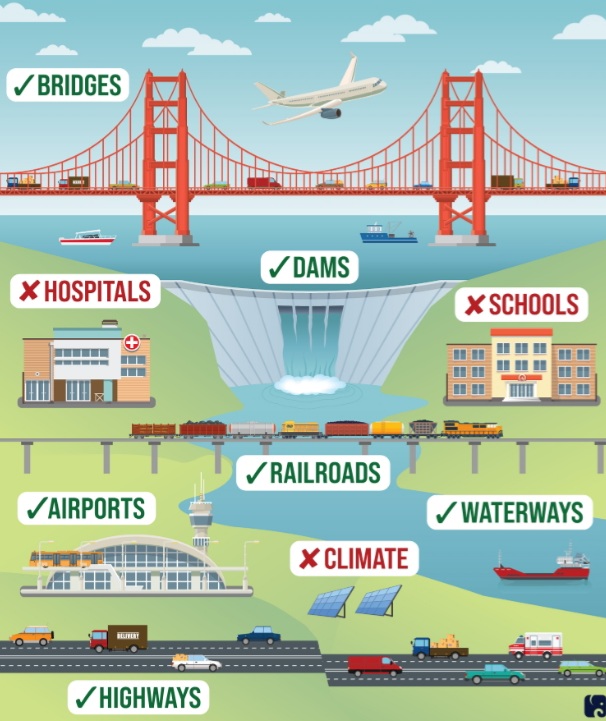

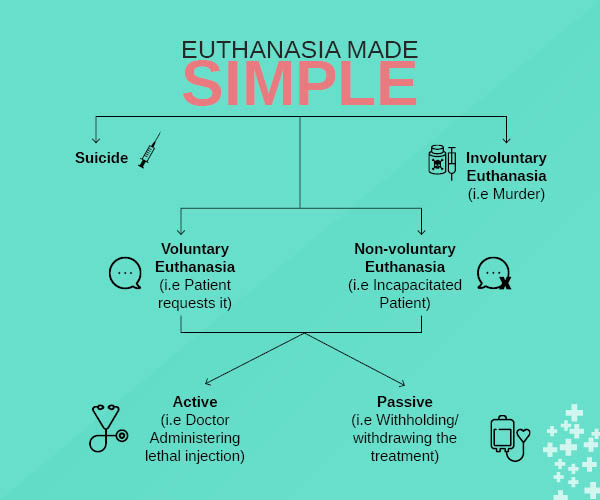

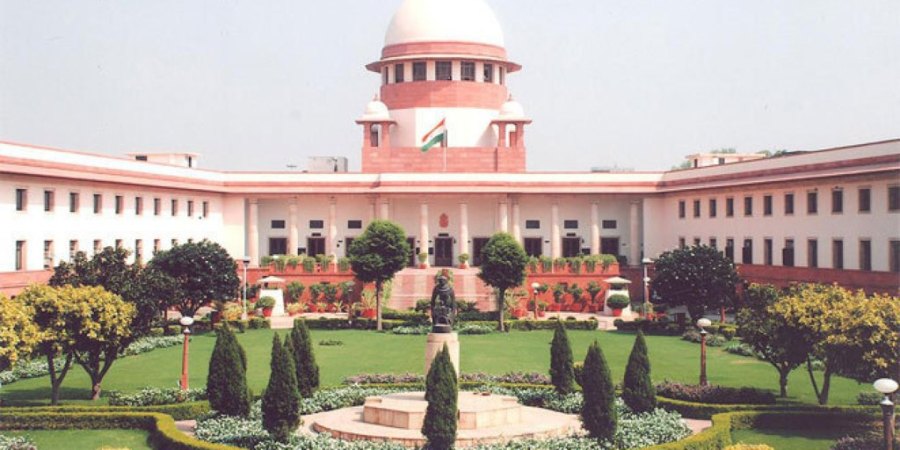
 Eduindex
You must be logged in to post a comment.