Forced migration- a major crisis in Uttarakhand

Forced migration can be described as mass movement of people of a particular area out of threat to their lives and livelihoods. People unwilling to leave their home towns and countries are forced to migrate to nearby, or sometimes far away, cities, towns and countries to have access to better facilities.

In context to Uttarakhand, forced migration or distressed migration has arisen as one of the major issues in recent times. In particular, male-specific outmigration has become a trend in the hills. The people have been migrating not just to seek better employment but also to have access to better healthcare and educational facilities. The educated ones are the first to leave as they get good opportunities in the cities and settle there forever. However, the elderly population is not yet ready to leave their home land because of the affection and attachment to the place.

More than 5 lakh people have migrated from Uttarakhand within the last 10 years. According to 2011 census, a total of 1,18,961 people from 6,338 village panchayats have migrated out of Uttarakhand permanently, while 3,83,726 people have migrated in search of work and prefer to visit their native places in the hills frequently. Out of 16,500 villages in Uttarakhand, 734 have become ghost villages. Also, there are 664 villages with negligible population and 3,900 other villages in the state that have a population of 50 or less.

The state of Uttarakhand was formed in the year 2000 after separation from Uttar Pradesh to ensure development in the hilly region. Though the purpose doesn’t seem to be served yet. Well structured roads and good health facilities continue as the basic requirements of the people. The lack of educational facilities is also among the majors reasons of migration.

Moreover, the decreased fertility of soil is a major concern for the locals affecting the agricultural productivity. Since it is an ecologically fragile state prone to natural disasters with half of the population’s workforce on farm, scope for other employment opportunities reduces.

Changing time brings along changes in basic needs which might not be fulfilled by the traditional methods and style of Uttarakhand. It proves to be a major cause of the shift. People now prefer to settle in the cities permanently in order to enjoy the relaxing life and lucrative opportunities offered there as compared to their home towns in the hills where the daily routine is tough and hectic and a decent livelihood has become a challenge.
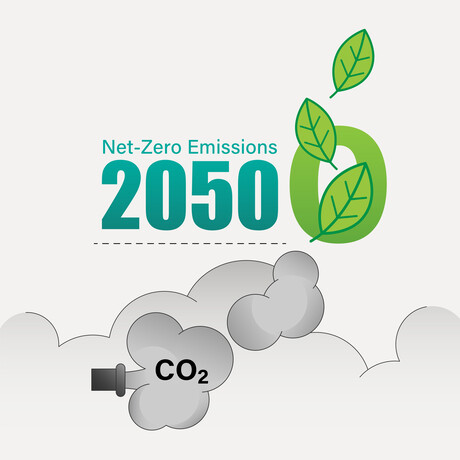
Explained: Net Zero and India’s stand on it

Lately, in April 2021, the US conducted a virtual summit on climate change with 40 world leaders to take bold pledges and chalk out prominent decisions on climate change. The summit has committed to achieving the Net-Zero target by 2050.

What is the Net Zero target?


Net Zero also referred to as carbon-neutrality is that situation where the entire man-made greenhouse gas from the atmosphere has been removed.

The summit held in April decided to achieve a balance on the emission of greenhouse gases and the removal of the same from the atmosphere.
Canada, South Korea, Japan, and Germany have committed to attaining a net-zero future.
India is the third-largest emitter of carbon after the US and China. And India plays a major role in global climate actions.

We all know that there has been a continuous rise in greenhouse gas emissions from industries, transportation, and livestock, resulting in global warming and prominent changes in climate patterns.
These harmful gases trap the heat and don’t allow them to escape the earth, causing temperature rise. The continuous change in climate patterns are causing severe floods, droughts, cyclones, and whatnot thereby leading to mass destruction of lives and property.

“The global temperature rose a total of 4 to 7 degrees Celsius over about 5,000 years. In the past century alone, the temperature has climbed 0.7 degrees Celsius, roughly ten times faster than the average rate of ice-age-recovery warming” as observed by NASA World Observatory.
“Models predict that Earth will warm between 2 and 6 degrees Celsius in the next century”.

If the global temperature rose at this pace, it would prove catastrophic. So in 2015, the 21st meeting of the United Nations Climate change conference took place to collectively agree to limit carbon emission by 1.5 degrees Celsius.

How to achieve Net Zero target?


Thus, the countries jointly agreed to become carbon-neutral or Net Zero carbon emitter by 2050. In achieving so the countries would have to balance their carbon emissions by removing the carbon from the atmosphere.

The countries have to develop renewable energy resources instead of burning fossil fuels, replacing fuel-based vehicles with electric vehicles, developing efficient technologies, etc. Also, the energy, transportation, and manufacturing sectors need to adopt net-zero targets.

Plants and water bodies are great carbon sinks as they absorb carbon from the air. Hence, expanding more forest cover would eliminate the carbon content from the atmosphere.
There are other technological techniques for containing atmospheric carbon.
Carbon sinks are a man-made reservoir where carbon-containing compounds are stored for an indefinite period for future usage, thereby decreasing the CO2 concentration from the atmosphere.

Measures adopted by countries:


Bhutan is the only country in the world that is “carbon negative” which means that it absorbs more carbon than it emits.
Countries like UK and France, have already enacted laws promising to achieve a net-zero emission by the middle of the century. China has promised to go net-zero by 2060.

India’s stand:


For India the scenario is different. India still has to reach the peak of emission, as for over next 2-3 decades the carbon emission would to grow because the country has to pull millions of people out of poverty.
Also, the carbon removal technologies are either unreliable or very expensive.
So, it’s not that India is straightaway striking out the carbon neutrality target by 2050, it’s that India at this point does not want to internationally announce any commitments.

Thus, the decision of attaining the Net Zero target is very arduous and challenging. The developed countries responsible for great carbon emission historically must take urgent steps and help developing nations with technology and capital to fulfill the cause.

Being introvert

An introvert is often thought of as a shy, quiet, calm and reserved individual having minimal social interactions. Social engagements and special attention are not what an introvert looks for. Instead, introverts find more comfort in solitude and focusing on inner thoughts and ideas. Investing more of their time in reading, writing, creativity, music and art is what energises them. Social gatherings might not be their interest but alone time is what they prefer most.

Following these traits introverts are often misunderstood.

Misconception no.1: Introverts are shy

Being shy is not the same as being introvert. Introverts enjoy solitude and tend to be reserved and prefer being alone or in small groups. This is often mistaken as being shy.

Misconception no.2: Introverts are rude

Introverts value their privacy and don’t believe much in expressing their emotions publicly. This tends people to dislike them and mistake them for being rude or weird at times.

Misconception no.3: Introverts are boring

Socializing in gatherings and parties and hanging out with peers might not be their kind of thing but that doesn’t make introverts boring. Time spent with inner circle of friends and family in a low key environment is more valuable for them.

Misconception no.4: Introverts can’t make friends

Introverts need their time to open up to new relationship. When it comes to befriending someone, introverts choose to have close friends, though less in number. They prefer smaller circle and high quality relationships.

Misconception no.5: Introverts are underconfident

Our society equates confidence with boldness, strong statements and actions directed externally which come naturally to extroverts. On the other hand, introverts don’t believe in the public display of confidence. Even though they feel confident inside, they don’t show much of it on the outside. Keeping emotions to themselves is natural in introverts.

Misconception no.6: Introverts are emotionless

Keeping emotions to themselves is natural in introverts. They have great control on their emotions and avoid expressing the same publicly. Though introverts might not seem to be emotionally engaged but usually that’s not the case.

Misconception no.7: Introverts wish to be extroverts

Sometimes, introverts might envy the abilities of extroverts to fit quickly and naturally to any social environment. But they do take great joy in being themselves and the delight of being in their own inner world. Being introvert is a gift where one enjoys equally self company and the company of others and wishing to be someone else is not the desire.

Misconception no.8: Introverts can turn into extroverts some day

Introversion is a personality trait which can either degrade or upgrade but never change. It is similar to wine which will only get better with aging but never change into something else i.e. one can grow up to be a mature introvert but not an extrovert.

We live in a fast growing world where chatty behaving individuals are preferred over the quite listeners. Many introverts find it difficult making their way through this scenario. However, introversion must be observed as a gift- a gift of thoughtfulness, compassion and creativity. Introverts are considerate, compassionate, deep thinkers, natural writers, problem solvers, keen observers, good listeners and readers- everything the world needs today.

Reasons to learn content writing

Content writing is a step wise process of planning, writing and editing. It usually includes content for blogs, articles, speeches, video and podcast script etc. Content writing helps construct a great relationship with the audience and intrigue them in coming back for more. The power of good content should never be underestimated keeping in intellect the sum of difference it can make with just the help of words.

Let’s take a look at some reasons to learn content writing:

>Improves vocabulary

Content writing is one of the good ways to improve vocabulary. It’s not usually about using high level language tending readers to look into the dictionary every minute but using the most appropriate language and words to convey one’s thoughts to the readers in the simplest of the ways.

>Tickles creativity

Content writing covers a range of writing styles from imagination to originality. The purpose is to express thoughts and ideas through literary devices. While learning to create good content, one also learns how to be creative and original at the same time. Content writing gives opportunities to explore various topics and themes with no restrictions giving rise to new ideas paving way to creativity.

>Helps acquire research skills

Learning content writing also includes researching over a wide variety of topics which helps in creating meaningful content. To provide a genuine and verified content one goes through multiple web searches in order to acquire the most accurate information regarding the respective content.

>Exposure to global knowledge

Content writing is also a good way of learning. It tends one to know about the world and its whereabouts. Exposure to vast knowledge of different fields is one of the many benefits of content writing.

>Boosts confidence

Enrolling oneself in content writing boosts confidence. One gets to learn so many new things which automatically lift up self confidence.

>Path to freelance content writing

Freelance writers are always much in demand and enjoy flexibility and independence. Moreover, freelancing can be done part time as well making it easier to juggle with everyday work. Even in this time of pandemic where almost everyone is losing jobs, content writing still finds a place in the market. Otherwise as well, content writing as career is growing at a fast rate.

Forbidden places in the world

Considering the rate of global expansion it is impossible to imagine any place unexplored and far from the reach of humans. However, there do exist certain places around the world which are forbidden from public viewing.

>Poveglia Island, Italy

Considered one of the most haunted islands in the world Poveglia Island is rumoured to have about 50% of its soil consisting of human remains. Located in between Venice and Lido the island was used as a quarantine station for plague infected people from 1793 to 1814. Also, evidences from past have proved that the island was used by Napoleon to store weapons in early 1800s. By the year 1922, until 1968, the buildings there were converted into mental asylum for the ill. It is believed that mentally ill patients were brutally tortured and killed at the hospital. Afterwards the island was used for agricultural purpose.

>North Sentinel Island, India

Located in the Bay of Bengal, North Sentinal Island is apart of the Andaman and Nicobar Islands. It is home to the Sentinelese an indigenous tribe often known as ‘uncontacted’ people. According to the Andaman and Nicobar Islands Protection of Aboriginal Tribes Act prohibits people from outside the island to travel here. It is believed the Sentineleses have inherited the island from generations and wish to remain in no contact with the outside world. Out of respect to their voluntary isolation the island is banned for travelling.

>Tomb of Qin Shi Huang, China

The tomb of Qin Shi Huang, the first Qin emperor of China is situated in Lintong District, Xi’an, Shaanxi province of China. constructed over 38 years, from 246 to 208 BC, and is situated underneath a 76-meter-tall tomb mound shaped like a truncated pyramid. It is preserved in the respect of the late emperor.

>Bhangarh Fort, India

Built in the 16th century, Bhangarh Fort is located in Rajasthan, India. Claimed as one of the most haunted forts in India, trespassing near Bhangarh is legally prohibited between the sunset and sunrise. However, according to government claims, visiting the place after sunset is prohibited due to dense forest cover, the presence of wild animals and no street lighting facilities.

>Ilha da Queimada Grande, Brazil

Also known as Snake Island, Ilha da Queimada Grande is an island off the coast of Brazil in the Atlantic Ocean. As the name suggests, it is known for its snake population having an average of five snakes per mile. It is home to an endangered snake species, Bothrops insularis, a golden lancehead pit viper. The snakes became trapped on the island when rising sea levels covered up the land that connected it to the mainland. Considering the danger from one of the deadliest serpents in the world the Brazilian government has made it illegal for anyone to visit the island.

Cyclone Tauktae

The Tropical Cyclone Tauktae has crossed Kerala, Karnataka, Goa, Mumbai. The cyclone made it way north towards Gujarat on Monday evening.


There were heavy rains along the regions covering the coastline of the Arabian Sea. The winds blew stronger and the rains were heavier today in Maharashtra. Even though many cities are still in lockdown and everyone is safely in their homes sheltered the cyclone has caused a few damages and also cost lives. The state of Maharashtra has also experienced heavy rainfall rains in Konkan, Mumbai, Palghar, Raigad and Thane regions on 17th of May that is Monday.


The Indian Meteorological Department or IMD had informed that Mumbai is not under the direct threat of the cyclone Tauktae. However, it was predicted to pass through the sea cost of Mumbai. The India Meteorological Department (IMD) is an agency of the Ministry of Earth Sciences of the Government of India. It is mainly responsible for meteorological observations, weather forecasting and studying the changes in the tectonic plates and prediction of earthquakes and other natural disasters.
The news channels showed pictures of the sea, the high tides, water getting accumulated on the roads causing the vehicles to get stuck, potholes getting filled with rain water and trees falling on the road. The power lines have been cut off in some areas for a certain period of time and issues in the internet connectivity is seen due to the cyclone.


15 fishermen who went to sea are found missing in Kozhikode. Kozhikode is also know as Calicut, a city in Kerala. The water level in many dams across Kerala increased immensely after heavy rains were seen. The Cyclone Warning Division of the Indian Meteorological Department (IMD) informed that the wind speed is expected to increase to 150-160 km per hour. Around 1.5 lakh people are being shifted from low lying coastal areas in Gujarat and 54 teams of the National Disaster Response Force (NDRF) and State Disaster Response Force (SDRF) have been deployed in Gujarat beforehand.
It is very important that we keep ourselves updated with the latest incoming news regarding the cyclone in order to keep ourselves braced and prepared for emergency situations like this.


Precautions to take when informed about a cyclone beforehand are given below:
Keep the mobile phones fully charged for emergency.
Keep in handy the emergency numbers of Disaster Management National / District / Region or Maharashtra Control Room contact information.
Do not keep the mobile phone on charging and use it simultaneously.
Make sure that torches or other emergency lights are in working condition.
It is important to keep food, especially medicines and other essential things stored in the house to avoid stepping outdoors unnecessarily.
Keep the important documents handy and keep them all together in a safe place.
The gas pipeline should be switched off when not needed.
Stay away from broken buildings and structures since they are more prone to damage.
Vehicles should be safely parked in the areas where there is less possibility of water getting accumulated.

What is happening in Palestine?

In the beginning of holy month of Ramadan on 13th of April the Israeli security forces installed metal barriers outside the Damascus Gate not allowing access of Palestinians in the area. Ramadan is the holiest month for Muslims where they fast, pray, donate and go to pilgrimages.


The conflict kept rising between them starting from May 7th to May 10th. Clashes took place in the Eastern Jerusalem region. The Israeli forces stormed Al Aqsa Mosque in East Jerusalem. Al Aqsa Mosque is the third most holiest pilgrim place for Muslims around the world. The Israeli security forces used tear gas while people were in the middle of their prayer. There was a video that went viral on the internet that showed that the Israeli forces were dropping tear gas on them in the middle of their prayer. They used stun grenades and rubber tipped bullets on the worshippers. More than 900 hundred Gazans have being injured 31 of them being children since the day of attack. This took place during the final week of Ramadan. Since the evening of May 10th around 250 rockets were launched from Gaza which a city in Palestine into the Israel territories.


Social media platforms are deleting certain posts showing the footage of the violence taking place in Palestine. Freedom of Speech and Right to Information and Mass Media is a fundamental right of every citizen and that is being taken away too. People are scared for their lives. “We felt like we were in a horror movie,” said a local resident Salwa Al-Attar, who escaped the bombardment with her family. “The planes were above us, and the tanks and navy were bombing – and we could not move. The children, women and men were screaming.” This statement is from a BBC news article.
On Friday, May 14th which is yesterday seven Palestinians were killed after Israel launched an airstrike on a house in Gaza City. On Saturday May 15th, Israeli airstrike destroyed a high rise building Al Jalzeera and The Associated Press and other media offices in the Gaza Strip. The airstrike happened an hour after the Israeli military ordered people to evacuate the building. The building had The Associated Press, Al Jazeera and a number of offices. Israeli air strike in Gaza city today killed at least 10 Palestinians majority being women and children.

As each moment passes by the Palestinians are scared and living in terror. They are living with the fear of losing their loved ones. We should post about it, tweet and share it on our stories to spread the awareness and amplify to stand in support of the suppressed. It is the least we can do in the middle of this pandemic that has already cost so many lives.


We can see the unity amongst different countries as they unite and stand together. 100,000s of people were seen in London marching for peace between the two. There are over 70 protests in support of Palestinians across UK, USA, Japan and Jordan. You don’t have to be a Muslim or belong to Palestine to be in support of them it is merely for the sake of humanity.

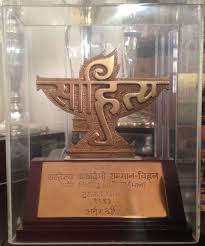
National literature award- Sahitya Akademi awards for 2020 announced

The prestigious Sahitya Akademi Award

The Sahitya Akademi has announced its annual Sahitya Akademi Awards and selected 20 creators, including senior Congress leader Sri M.Veerappa Moily and Hindi poet Ms. Anamika, for the Academy Award of the year 2020. The Sahitya Akademi Award is a literary honour in India, which the Sahitya Akademi, India’s National Academy of Letters, annually confers on writers of the most outstanding books of literary merit published in any of the 24 major Indian languages, i.e., English and the 22 listed languages.

Anamika is the first female poet to be nominated for the Sahitya Akademi Award for Hindi poetry. The names announced on this academy on Friday include seven poets, four novelists, five short-stories writers, two playwrights and one memoir and epic writer.

According to the academy, the awards in 20 Indian languages ​​have been declared, while the names of those in Malayalam, Nepali, Oriya and Rajasthani languages ​​will be announced later. Moily is being awarded for the Kannada epic “Sri Bahubali Ahimsadigvijayam”, while Ms.Arundhati Subramaniam is given the Academy Award for the English poetry “When God Is a Traveller”.

Ms.Anamika to be honored for ”Tokri mein Digant” in her Hindi poetry collection “Their Gatha-2014”.
Other honored authors include Sri Harish Meenashru in Gujarati, Sri R.S. Bhaskar in Konkani, Sri Irungbam Deven in Manipuri, Sri Roopchand Hansdah in Santhali, Sri Maheshchandra Sharma Gautam in Sanskrit and Sri Nikhileshwar in Telugu. For novels Nanda Khare in Marathi, Imaiyam in Tamil and Hussain-ul-Haq in Urdu are included.

The short story will be awarded to Sri Apurba Kumar Saikia in Assamese, late Sri Dharanidhar Owari in Bodo, late Hirday Koul Bharti in Kashmiri, Sri Kamalkant Jha in Maithili and Sri Gurdev Singh Rupana in Punjabi. Sri Gian Singh in Dogri and Sri Jetho Lalwani in Sindhi for his plays, while Bengali writer Sankar (Manishankar Mukhopadhyay) has been chosen for the memoir. All these will be honored with a cash of one lakh rupees, a shawl with a copper-plaque. The date for the ceremony of honor has not been set yet. 21 child authors and 18 teen authors were nominated for Baal sahitya and Yuva Sahitya Akademi awards respectively.

Green Warriors ~ Women in woods

“Two roads diverged in a wood , and I took the one less traveled by , and that has made all the difference…”

These lines fit well on those women who choose the paths which aren’t meant for them , according to the society.

On 8th March, everyone talks about the women in space , in politics , in engineering , in mining , in medical , in Police, in writing , in this , in that. So I think I should also write about the women in most underrated service of India, The Forest Services.

Well , I searched a lot , but couldn’t get any extra information about the first Green Warrioress of India except their names and their years of joining the woods.

” In 1980,three young Women, C.S.Ramalakshmi, Veena Sekhari and Meera Agarwal, made history by entering into the Indian Forest Service. “

Later , Veena Sekhari was also appointed as the principal chief conservator of forests of Uttarakhand in 2015. She was the first woman to reach at the post of PCCF.

Presently, there are 284 women IFS officers , three of them are heads of forest force in different states.

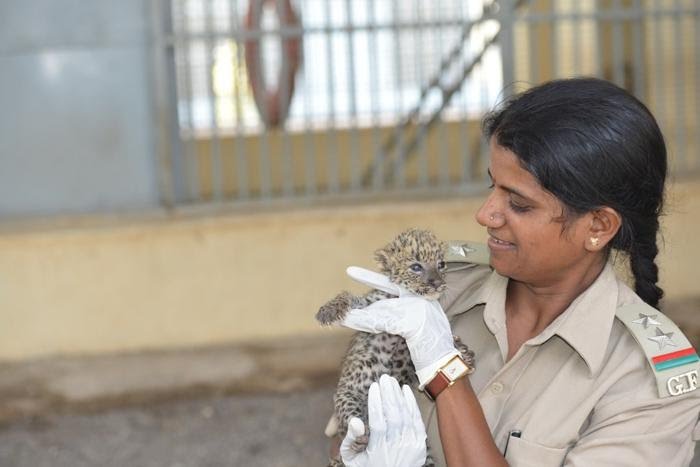
But women aren’t only limited to the post of IFS. It was only in year 2007, the Gujarat Forest Department recruited its first batch of 43 women.One of them was Rasila Wadher who was the first woman to join the the Forest Department in Gir. Since then she has managed to rescue around 1,100 animals.

Rasila Wadher, one of the lion queen of India.
~ From the forest guard to the head of Gir’s Rescue Department ~

Life in woods, isn’t that much easy , as everyone thinks. Unlike a policeman/woman in a city , a forest ranger is in a situation where there’s no one to help. They spend their nights and days in maintaining the coordination between humans and wild animals.

From the forest officers to forest guards, green warriors work not only for the welfare of forest and wildlife but also for the local tribes.And of course dangers are always there, from wild animals to bullets of poachers, from the rough terrains to the angry locals. Well , this explains that why I’m calling them Green Warriors.

And yes, the training is that much difficult & comprehensive as the job is. From the horse riding , shooting , swimming, rafting , trekking ,scuba diving to paragliding, it teaches the trainees everything from the endurance to the courage.

But these challenges are the love of our Green Warrioress ~

“We didn’t join as women guards, but as guards”, that’s what female guards say.

“Life needs purpose & empowerment needs confidence , IFS gives you both.” thinks a female IFS officer.

Women have came a long way , but still there’s a long way ahead. But as our inspiring warriors are risking their lives to save the wild & the wood, I remember these beautiful lines —-

“Woods are lovely dark & deep, but we have promises to keep.”🤝

I believe that there’s still beauty, peace & magic left in the world , & that’s in the forests. But these woods also have challenges. Ohh yeah , magic comes up with some challenges & responsibilities. If you also think of joining the green warriors club , then All The Very Best…

May the peace prevail on our Earth. May the hope abide in our Hearts. 🕊️

Happy Reading…🙂

Save Trees…💚🌱

Youth demands employment

12670 applicants gave the interview for the post of Chaprasi(Peon). These includes engineers, graduates & post graduates

What are your reactions after seeing the above picture ? Well , whatever your reaction is, just think over that.

Youth, the age group which decides the progress of a country. And we Indians are lucky to have a large no. of youths. Every 5th( 20%) out of the total youth population in the world resides in India.India, at present, is home to the largest population of youth in the world. 

By having such a large population of youth, we could easily be the largest economy of the world. We could easily achieve all the sustainable development goals.

But where are we ? Just see India’s rankings in the fields of poverty, hunger,equality, corruption, unemployment. Out of 189 countries ,India’s ranking was 131 on Human Development Index 2020.

And why are we at such position ? Well , there’s no need to define , the first picture of this blog is self explanatory. Just imagine how would you feel if you’re post graduate but are applying for the exam whose demand is just 8th class. Just think.

We are turning our ‘would be asset’ into a liability.

No. of educated youth is higher than the uneducated ones. Aren’t we indicating that ,”if you want employment , don’t study ?”At the one hand we talk about literacy rate , and on the other hand there’s no job for the literate ones.

And yes, the angry Indian youth is opposing the Indian government. Just see the image below –

Angry Indian Youth tweeted more than 50Million tweets in just an hour on february 25th in demand of employment.

Why is Indian youth not getting proper employment ? Why is there so much anger among the youth ?

Lack of skill training is what everyone calls , the cause of unemployment. But now,let’s not discuss over that.

Let’s discuss the other reason lack of jobs in Indian job market. The no. of jobs is not increasing at the rate the population is increasing in India. If the government invests in creating new jobs and the government policies are well implemented then we could have jobs for our every citizen.

Of course a lot of jobs could be created,which fit well to the need of time. And yes , that skill training portion is also the need of time.There’s a huge share of engineering people in jobless market. And the main reason behind this is lack of skills. The curriculum of Indian universities is still a decade old. There’s no focus on the need of market.

The dream of seeing , our love, our India, leading the world could be fulfilled if and only if we get succeed in turning our youth into asset rather than liability.

Let the peace prevail…🙂🙃🙂

Happy Reading..🙂

Glassophobia 🎤🤐😰

Glassophobia & shyness are two different things. But people often misunderstood themselves as shy.If you also think that you are just shy of speaking in public, then you need to rethink if it’s just shyness or something worser than this, a phobia of public speaking.

Shyness when crosses the limits then turns to the glassophobia.Sometimes the past negative experiences cause or intensify the fear. It all starts with the thoughts like what will people think about me ? what if I will stumble over my words ? what if I will forget what to say ? what if people start laughing at me ? With time these thoughts intensify and may cause physical and mental problems. Sometimes it may cause the person to suffer from inferiority complex.

Glossophobia is the medical term for the fear of public speaking. It isn’t a dangerous disease but yes it can lead to stress in the extreme cases. It may be due to lack of preparation , & in this case it doesn’t cause that much harm. It’s cause may be one of the most common psychiatric disorders, . Social anxiety disorder.

Anxiety due to lack of preparation or due to amaturity is common to many.In fact, some experts estimate that as much as 77% of the population has some level of anxiety regarding public speaking.Of course many people are able to manage the fear.

But about 10 percent are genuinely terrified and are physically debilitated by even the thought of public speaking. True glossophobics will go to great lengths to avoid speaking in a group situation.If you are the one who faces problems in work,school or in social life due to this anxiety, then it’s possible that you suffer from a phobia of speaking out.

Even the thought of presentations, group activites & answering a question can cause the anxiety.Such people start thinking of excuses to avoid the events where they are going to be the centre of attention.

Physical symptoms of glassophobia may include – Sweating , Increased heart rate , Raise in blood pressure ,Dry mouth , Difficult breathing , Nausea or vomiting in extreme cases, Headache, Muscle tension, Dizziness, Dilation of pupils, need to urinate, vocalised pauses , Shaking or quivering voice , weakened voice tone , Trembling , Panic attack , Feeling lack of energy.

Of course it’s difficult to overcome the fear , but it’s not impossible. Psychotherapy, medication,exposure therapy and herbal remedies , different ones can be applied , depending on the severity of fear. Many people are able to overcome their glossophobia with cognitive behavioural therapy(CBT). There are other ways one can try at home. Like practicing in front of mirror , talking with close ones & then asking them to analyze you , focusing on your way of speaking. According to me , Meditation is the best way to overcome any fear.

Remember , everything you want is on the other side of fear. Choose fight instead of flight.

Happy Public Speaking…🙂

Recent reports show an increase in number of the malnourished in India

According to the Center for Science and Environment (C.S.E.) State of India Environment Report – 2021, the corona epidemic has had a lasting impact on the health and economic conditions of 37.5 million children across the country.

CSE Director General Dr. Sunita Narayan, said that children from new-born to 14 years will have more health-related problems. There is a possibility of low weight of children, lack of physical development according to age and increase in mortality.

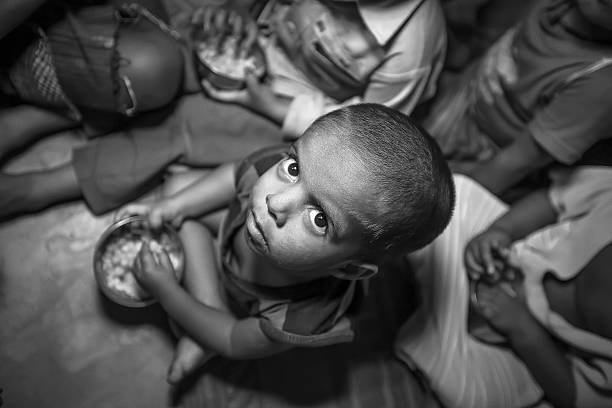
Child from a poverty stricken family gets a free meal at his school.The schools are run by some volunteer organisations or individuals and have inadequate facilities. Yet some people are working relentlessly to help these poor children.

One of the reasons could be India’s struggling with Covid-19 lock down interrupted crucial government schemes that benefit hundreds of millions of women and children. But that still doesn’t explain the rise in malnutrition rates in the years leading up to the outbreak of Covid-19 in 2020.

According to reports, India’s latest National Family Health Survey (NFHS), which shows that children in several states are more undernourished now than they were five years ago, is based on data collected in 2019-20. The survey was conducted in only 22 states before the onset of the pandemic – so experts fear the results will be much worse in the remaining states, where the survey began after the lock down ended.

In rural places the problem seems to have begun earlier. Rural areas have seen a steep rise in the proportion of undernourished children compared with 2015-16, when the last survey was conducted.

Due to malnutrition in infants and young children stunting in growth and even experience wasting away of muscle and anemia. The proportion of severely underweight children has risen. Stunting refers to lower than expected height for age, wasting shows lower than expected weight for height, and anemia is a deficiency of hemoglobin in blood.

Most of the Indian women are anemic and poor women, especially so. According to the experts, the worsening rate of malnutrition could be a result of women struggling to access nutrition benefits because undernourished mothers give birth to undernourished babies.

Migration to cities is also a reason for this. Many families migrate to cities to make a better living. But that also means being left out of massive government schemes that are mostly delivered at local level – so benefits aren’t easily transferred across districts or states.

The National Family Health Survey-5 report, the latest data set on health and nutrition, showed that of the 22 states and Union Territories in the year 2019-20, a majority reported an increase in malnutrition parameters such as stunting and wasting of children, anemia in children and in women between 15-49 years of age.

Due to poor health of children, there may be adverse effects on education and workplace too. This report released online, has been prepared by 60 environmental and other experts from all over the world. The epidemic forced approx. 50 crore children over all the world to leave school. More than 50 percent of these children are in India. Dr. Sunita Narayan said, “An additional 115 million people have come under extreme poverty due to the epidemic.” Most of them live in South Asia.

Given this situation, there is a need to enhance allocations for government schemes to address child malnutrition as well as for schemes promoting nutrition for pregnant and lactating mothers. A group of people should be assigned who provide health and nutrition counseling to pregnant mothers. Better health care and nutritious meals for the pregnant mother, because with proper pre-natal care, adequate food and timely health check-ups, a pregnant woman stays fit and gives birth a healthy child and for that there is a need for huge amount of investments. Different sectors of the government need to coordinate to handle this problem effectively. There are some independent organizations who are working actively to help the unprivileged sections of India and educating others about the problem and with enough funds and support from us maybe they can tackle with the problem more effectively.

FUEL PRICE SURGE ADDS TO THE WOES OF PANDEMIC HIT INDIA

The oil marketing companies have continuously been surging the price of fossil fuels for the past few weeks which resulted in the prices reaching an all-time high. During a time when the country is struggling to recover from the covid crisis, the fuel price hike is sure to have a tremendous impact on its citizens and economy. The rise in the price of commodities and public transportation are expected along with a significant dip in the automobile industry. Today, the price of LPG cylinders have been increased by 25 rupees, resulting in a cumulative hike of about 200 rupees within the past three months.

India, being the third-largest importer of oil in the world has always ended up on the suffering end whenever the crude oil price has seen a surge in the international market. The recent firming of international crude oil rates in addition to the high taxes levied on fuel by central and state governments is the major reason for the extremely high fuel price in the country. Since India follows a dynamic system for altering fuel rates, oil marketing companies are mostly responsible for the recent hikes and the government has no control over it. However, the government does impose a tax on the base price of fuel. At the moment, Indians pay one of the highest taxes on fuel in the world.

By late January, the price of extra premium petrol has touched the magic digit of 100 at Rajasthan, with Madhya Pradesh and many other states following the trend in early February. The price of diesel has also set the record of reaching an all-time high in the past days. A remarkable fact is that the Indian citizens are paying about 200% of the actual fuel price as taxes, by far the highest anywhere in the world. Sources close to the oil companies have reported that the fuel prices might see a further hike as the companies will be forced to meet the global developments to avoid making losses on the sale of the fuels. The price of LPG is also on the rise with the surge being constantly climbing higher for the third in this month itself. Within the last 10 days, the price of LPG was increased by more than 50 rupees.

The government is looking forward to getting the situation under control as the surge in the price of auto fuels can directly reflect in its economy and might even result in inflation. Though short term remedies like cutting down taxes and other related costs are in line, the major emphasis is on turning towards sustainable and renewable energy resources and reducing the dependency on fossil fuels in the long run. Plans have already been laid on increasing the natural gas share in the energy basket and to cut short the reliance on fossil fuels to about 60% of the total energy share by 2030.

Green nanotechnology and Sustainability

Everybody knows what is nanotechnology, it is the study and control of matter at the nano-scale, rearranging atoms and molecules. Nanotechnology has made marvelous contributions in the world of science especially in computer science and medical science.

But have you heard of green nanotechnology? The name itself suggests that it has something to do with greenery. It is the study of how nanotechnology can benefit the environment, such as by using less energy during the manufacturing process, the ability to recycle products after use and using Eco-friendly materials.

It builds on the principles of green chemistry and green engineering, and focuses on using the unique effects that occur in nano-scale materials.

Green nanotechnology can help to provide clean water to billions of people via novel filtration techniques, and has the ability to decontaminate dirty water. It can help in increasing the use of renewable energy and help in waste management too.

It can also influence the design of nano-materials and products by eliminating or minimizing pollution from the production of these materials.

It is all about making green nano-products and using them in support of sustainability. Sustainable development refers to a development that meets the needs of the present of the present, without compromising the ability of future generations to meet their own needs. It will aim at producing nano-materials without harming environmental or human health.

Nanotechnology can help reduce agricultural waste and bring down pollution levels. Scientists are working on nano-engineered enzymes that will allow simple and cost-effective conversion of cellulose from waste plant parts into ethanol.

Another example is rice husk that can become a source of renewable energy with nanotechnology. When rice husk is burned into thermal energy or bio-fuel a large amount of high quality nano-silica is produced, which can be further utilized to make other materials such as glass or concrete.

Nano sensors dispersed in the field can also detect presence of plant viruses and the level of soil nutrients.

Nanotechnology can reduce manufacturing costs for solar cells as a result of using a low temperature process.

Nanotechnology is being hailed as the next sunrise industry for India. The Department of Science and Technology of the Central Government has announced a national initiative in nano-materials, while the Jawaharlal Nehru Center for Advanced Scientific Research, Bangalore, has pioneered the study of nanotechnology in India. Prof. C.N.R Rao and the center has done world class research in nanotechnology using state of the art equipment.

A stream of nanotechnology-based products is beginning to emerge in India, with applications in the security realm. Besides D.R.D.O. (Defense Research & Development Organization) serious researches are also taking place in institutions like IIT, and Madras University.

Hopefully, in the near future as we advance further in the field of green nanotechnology, it will help us in replacing existing products with Nano-products that are more environment friendly.

WHEN THE ‘TOOLKIT’ BECOMES THE TOOL

In light of the recent ‘Farmer’s protest toolkit controversy’, a 22-year-old environmental activist from Bengaluru, Disha Ravi has been arrested by the Delhi police on Sunday 14th February 2021. She is now under five-day police custody as the Delhi Magistrate decided to remand her following the arrest. She has been booked under Indian Penal Code Sections 124(a) for sedition, 153(a) for promoting enmity between different sections of the society and 120(b) for criminal conspiracy. She is accused of involvement in the composition of the “toolkit”, an online document shared by the International environmental activist Greta Thunberg, which consists of action plans to protest against the farm bill. Police claimed that the toolkit had the violence on 26th January as one of its “action plans” to protest against the farm bill, in addition to the pro-Khalistani elements.

Since last October, thousands of farmers have been camping on the national capital borders, protesting against the three newly passed farm laws introduced by the NDA government. On the republic day, the tractor rally conducted by the protesting farmers has resulted in great commotion as the farmers attempted to enter the national capital region, storming the Red Fort complex and clashing with the police and security forces. The police allege that plans for such actions were formulated in the online document, described as a “toolkit” that Ravi created and shared with Thunberg. “The main aim of the toolkit was to create misinformation and disaffection against the lawfully enacted government,” said a police official. “The toolkit sought to artificially amplify the fake news through various tweets which they have created in the form of a tweet bank. The document that they drafted had secessionist and pro-Khalistani content embedded into it through links and texts” he added. 

The arrest of Disha has instigated furious criticism against the fascist actions of the government regarding the farmers protest. The efforts made by the government to silence and oppress the voice of the farmers and the people supporting them is more of a provocative manner than a call for peace.